PEDRO MIGUEL
CRAVINHO LOPES
UMA
JANELA
ABERTA
PARA
UM
MUNDO
DIFERENTE: ENCONTROS COM O JAZZ NA
TELEVISÃO EM PORTUGAL (1956-1974)
AN OPEN WINDOW TO A DIFFERENT WORLD:
ENCOUNTERS WITH JAZZ ON TELEVISION IN
PORTUGAL (1956-1974)
2018
PEDRO MIGUEL
CRAVINHO LOPES
UMA
DIFERENTE: ENCONTROS COM O JAZZ NA
JANELA
ABERTA
PARA
UM
MUNDO
TELEVISÃO EM PORTUGAL (1956-1974)
AN OPEN WINDOW TO A DIFFERENT WORLD:
ENCOUNTERS WITH JAZZ ON TELEVISION IN
PORTUGAL (1956-1974)
Tese apresentada à Universidade de Aveiro para cumprimento dos requisitos necessários à obtenção do grau de Doutor em Música - Etnomusicologia, realizada sob a orientação científica da Doutora Maria do Rosário Pereira Pestana, Professora Auxiliar no Departamento de Comunicação e Arte da Universidade de Aveiro, e sob co-orientação do Doutor Nicholas Gebhardt, Professor of Jazz and Popular Music Studies, na School of Media da Birmingham City University.
Apoio financeiro da FCT e do FSE no
âmbito do III Quadro Comunitário de Apoio.
For Carla and Gonçalo, without whose love, work and support, this thesis would not exist
O júri
Presidente Professor Doutor Valeri Skliarov
Professor Catedrático, Universidade de Aveiro, Portugal.
Doutor José Carlos de Abreu Dias
Senior Lecturer. Manchester Metropolitan University, Reino Unido.
Doutor Ricardo Nuno Futre Pinheiro
Professor Adjunto Convidado, Instituto Politécnico de Lisboa, Portugal
Doutor Paulo Jorge dos Santos Perfeiro
Professor Adjunto Convidado, Instituto Politécnico do Porto, Portugal
Doutor Jorge Manuel de Mansilha Castro Ribeiro Professor Auxiliar, Universidade de Aveiro, Portugal
Doutora Maria do Rosário Correia Pereira Pestana (orientadora) Professora Auxiliar, Universidade de Aveiro, Portugal
Doutor Nicholas Gebhardt (co-orientador)
Professor de Jazz and Popular Music Studies, Birmingham City University, Reino Unido
My PhD research benefited immeasurably from the funding support of the Portuguese Fundação para a Ciência e Tecnologia. In its later stage, also benefitted from a significant support from Birmingham City University Faculty of Arts, Design and Media Research Investment Scheme. This was only possible, thanks to the Associate Dean for Research, Professor Tim Wall, formal invitation to join the Birmingham Centre for Media and Cultural Research, and work under the co-supervision of Professor Nicholas Gebhardt. This allowed my staying in Birmingham for an extended period to complete the writing of my dissertation.
Given the course of this project, I will try, as possible, to organise my thanks throughout the different stages of a long research journey, which was conducted throughout distinct places in Europe. However, before starting, foremost on the long list of people to whom I feel indebted for their important support and encouragement over the years it has taken to finish this dissertation are both my supervisors Professor Rosário Pestana from the
Universidade de Aveiro, in Portugal, and Professor Nicholas Gebhardt from the
Birmingham City University, in England. I am incredibly grateful for their confidence, assistance and criticism, and most of all, for opening me to entirely new perspectives of understanding my complex object the study. My contact with Professor Rosário Pestana dates from my university course while an undergraduate student. Throughout those years, especially during my PhD research, Professor Rosário Pestana scholarship and knowledge have to a large extent helped me to define my research scope, and modes of enquiry. As regards Professor Nicholas Gebhardt, we met in the first Rhythm Changes Conference in Amsterdam. However, only over the last years with my staying at the Birmingham City University is that I would come to enjoy his scholarship, knowledge, and friendship, becoming an essential element in guiding this project.
Special thanks go to both Manuel Jorge Veloso, and Jorge Costa Pinto, for their ‘memories’. In the case of Jorge Veloso, the endless talks and interviews extended throughout this project have gradually developed ties of friendship. For his untiring, and continued willingness to answer my countless questions, my eternal thanks.
From the Departamento de Comunicação e Arte at the Universidade de Aveiro, I would like to thank many people. Special thanks go to Professor Susana Sardo that gave me the confidence to transform a set of ideas into a PhD proposal at its initial stage. To both, Professor Óscar Mealha and Professor João Pedro Oliveira for this project proposal support. To my ethnomusicologists ‘mates’ Rui Paulo Simões, Isaac Raimundo, Eduardo Lichuge, António Padilha, and Marcos Fontoura, together with Dr Jorge Castro Ribeiro, and Dr Iain Foreman for the inspiring group discussions. To my colleagues Luís Figueiredo, and Pedro Almeida for sharing their ‘Jazz Messenger’ research. Last but not least, to Cristina Silva for her friendship, and support throughout all my long PhD research journey abroad.
history. To Dr Manuel Deniz Silva, and the Visiting Professor Michael Saffle’s Music and Television Workshop. To Professor João Soeiro de Carvalho, as this project’s inception proposal external examiner, for his valuable comments and encouragement to continue with my research project. To Dr José Dias, now a Senior Lecturer in Music at the Metropolitan Manchester University, for his support and friendship over the years.
During an early stage of research, my presence at the University of York as Doctoral Visiting Researcher in the Department of Music was only possible thanks to a group of people who helped me from day one. To both Professor Ambrose Field, Head of the Department of Music, and Catherine Duncan, Departmental Administrator for their support. To the colleagues and professors at the Department of Music Research Seminars for the inspiring group discussions. To Professor Williams Brooks for giving me access to the Ray Spencer Archive. All of this only was possible, thanks to the significant support, and friendship of Dr Jonathan Eato (who also introduced me to the Spring). To Jonathan Eato, Hannah Bruce and all the ‘London crew’: Tom, Gemma and ‘baby’ Stevie, my sincere thanks.
My sincere thanks to the staff at the libraries and archives where I conducted my core research. Without their precious help, I would hardly have had access to a myriad of essential materials to my research. In the Portuguese Public Television (RTP) archives, I counted on many and precious help. In an initial phase of my research at the Gabinete de Estudos e Documentação (RTP-GED), my thanks go to Manuel Lopes and his team, special to Silvia Garriapa that throughout my multiple and sometimes long stayings was always available to help. Manuel Lopes also provided me essential contacts within other RTP department’s archives and access to the RTP audiovisual archive database. Thanks to Eduardo Leite, Director of the RTP radio archive. Nevertheless, I consider that the significant moment of my research took place during my visit to the RTP Direcção e Aquisição de Grelha (RTP-DAG) microfilm archive records. As such, I cannot continue without expressing the sincere and eternal thanks to both Isabel de Carvalho and José Nunes. The intense and long days spent together with José Nunes in the visualisation of RTP microfilmed jazz programmes processes revealed crucial, not only to map a timeline of those RTP jazz programmes, but especially throughout our discussions on the processes, personnel involved, and various issues related to the RTP production procedures. The attention, organisation and dedication that Jose Nunes devotes in everyday life to his microfilm archive, despite the meagre resources, and unfortunately not yet computerised, it is a note of my sincere admiration. I would also like to say a word of thanks to the RTP’s Casa de
Pessoal. Lastly, I do not want to forget my enthusiastic passage through the
RTP photographic archive, and the immediate disillusionment I had after meeting and dealing with the person responsible, at the time. Not only, due to the conditioned access to some materials, and the refusal of others, but also by the pertinence in questioning the relevance of the research projects financed by the Portuguese Foundation for Science and Technology within the RTP scope. During my few visits to this specific archive made me think of the complex diversity of human beings that are part of the world in which we live. We can only extol one’s good qualities in comparison with their antonyms. Fortunately, this was a unique and isolated case in all the archives I visit throughout my research, either in Portugal or abroad, thus confirming the maximum; that there is no rule without exception.
Access Division, and the support of his team. At the Portuguese National Library – Biblioteca Nacional de Portugal –, my special thanks to Luís de Sá. In the Biblioteca Pública de Braga, my thanks to Elísio Araújo, José Gomes, António Gonçalves, and precious help of Eugénio Constantino. In the Hot
Clube de Portugal my thanks to Inês Cunha Homem and special thanks to
Miguel Lourenço from the Núcleo museológico do Hot Clube de Portugal. In Belgian, at La Maison du Jazz (Liège), to Jean-Pol Schroeder precious help on my inquiries gave me access to a vast collection of written documentation, and audiovisual materials. Special thanks to Sam Pierot, and his family, for their friendly welcome during my Liège journey. At the SONUMA – Archives
Audiovisuelles de la Radiotélévision Belge de la Fédération Wallonie Bruxelles,
special thanks to Monsieur Loze, and Madame Maria Dias Pereira for accessing specific EUROVISION RTBF jazz television contents. My thanks to the staff at the Institut Histoire ouvrière, économique et Sociale de la
Fédération Wallonie Bruxelles. In England, at the BBC’s Written Archive Centre
(Caversham), my thanks to the archivist Jeff Walden helped me with my inquiries, digging out files, documentation and microfilms. In the British Library Sound Archive, Steven Dryden helped me accessing the BBC-2 JAZZ 625 sound recordings, and at the British Film Institute, my thanks to Adrienne Rashbrook-Cooper. At the National Jazz Archive special thanks to David Nathan. In Norwegian, at the Music, Film and Broadcasting section in the National Library of Norway my thanks to Ingrid Romarheim Haugen, and Tonje Tafjord, for all their support, and further NRK contacts, which allowed me to access to valuable EUROVISION NRK jazz television contents. In Finland, special thanks to Dr Kaarina Kilpiö, the Coordinator of the Finnish Doctoral Programme for Music Research at the Sibelius Academy, University of the Arts Helsinki, at the time I visit Helsinki, for helping me establishing several important contacts. To Janne Mäkelä, and Maaret Storgårds at the Finnish Jazz & Pop Archive, for their support. To Mattio Laiptio for the conversations, and important help in finding some old YLE archive info related to specific EUROVISION YLE jazz television contents.
The second phase of my project, the course of writing, I was lucky to be based in Birmingham. To my ‘international’ Coppice flatmates, Ivelina Ivannova, Coline Pat, Andrea Del Ben, Rebecca Kümmerle, and Jacky Xu, followed by Carlos Reina Oliva, and Sara Lepidi in a later period, my deep thanks for such stimulating multi-cultural experience, and friendship. Special thanks to Ivelina Ivannova for her friendship, coffees, and precious help in designing an image included in this dissertation. The Birmingham Centre for Media and Cultural weekly-based Research Seminars made me make contact with a diversity of guest researchers, and colleagues based at the Birmingham City University. More importantly, I had the opportunity to work alongside an amazing and stimulating regular jazz researcher group (JAZZ @ BCU) led by Professor Nicholas Gebhardt. My thanks to Professor Tim Wall, Professor Tony Whyton, Professor Roger Fagge, Dr Loes Rush, Dr Hans Koller, Dr Mike Fletcher, Percy Pursglove, John O’Gallager, Andrew Bain, Tony Duddley-Evans, and Josep Pedro among many others colleagues, either jazz musicians, promoters, researchers and teachers, reflecting an important, vibrant, and multifaceted jazz research group.
It has been my pleasure to share ideas and parts of this thesis with many colleagues that resulted in different ideas or news perspectives. Throughout my journey, I had the opportunity to present my research at various conferences, and research seminars always generating constructive and challenging feedbacks. Sections of this dissertation were presented at the Escola Superior
de Música de Catalunya (Barcelona), the University of Salford (Manchester),
the Università Cattolica de Sacro Cuore (Milan), the Université de Nantes (Nantes), the Universitat de València (Valencia), the Casa da Música (Oporto), the Escola Superior de Música e Artes do Espectáculo (Oporto), the Sapienza
Università di Roma (Roma), the Universidade Nova de Lisboa (Lisbon),
(Amsterdam), and the University of Surrey (Surrey).
I wish to single out some, whose contribution to this dissertation – directly or indirectly – had an impact. Dr Eduardo Viñuela, from the University of Oviedo, Spain for an early discussion about the ‘televisión en España’. To Professor Andreas Fickers, Director of the Luxembourg Centre for Contemporary and Digital History, for an early discussion on media, and particularly his generosity for providing access to important audiovisual materials related to my ongoing research. To Dr Heli Reiman, for and her friendship, continuous talks over the years, and for introducing me to Mieke Bal’ works. Special thanks to Dr Stephanie Fremaux for her scholarship and willingness in discuss my research. To Professor Xavier Kendrick, Director of Graduate Studies in the School of Media at the Birmingham City University, scholarship, an insight that deepened my understanding of textual film analyses. To Simon Goddard from the Birmingham City University Centre for Academic Success, those despite a busy schedule read parts of the text, and help me on the English-language.
Four dramatic events occurred during my PhD journey, the death of my father, mother, and both maternal grandparents. Mournfully, I regret that my parents – my father, a jazz-lover who introduced me to jazz – did not live to see this moment. To my wife Carla parents, José Castro and Conceição Castro, and sisters in law Daniela, Anabela and Teresa for their unconditional and unfailing support to our ‘multi-sited family project’ over the last years. To my ‘little’ sister Ana and family (Mariana, Inês, and Pedro), for her continued support during my prolonged absence in their lives.
Lastly, my faithful companions in this adventure, my wife Carla and my son Gonçalo for their continuously support and love. Gonçalo, a young gift musician that despite my long absences was always by my side with his deep affection. Strong in mind and character, tender in heart, as ever, Carla offered unfailing encouragement allowing my ‘isolation’ and necessary time in my study required to finish this thesis. I am looking forward to spending much more time with them.
Palavras-chave Jazz, Portugal, Estado Novo, Radiotelevisão Portuguesa, Produção Televisiva, Manuel Jorge Veloso
Resumo A presente dissertação apresenta uma abordagem etnomusicológica à
produção televisiva de música jazz no âmbito da Radiotelevisão Portuguesa, entre 1956-1974. A partir de meados do século XX, a sociedade portuguesa passou por profundas transformações, directa ou indirectamente, relacionadas com o advento da televisão (Barreto 2000). Essas mudanças de comportamento e mentalidade, que Rosas descreve como “mudanças invisíveis”, ocorreram durante a Guerra Fria sob a influência dos Estados Unidos da América num contexto de isolamento do país do resto do mundo sob a governação do regime do Estado Novo (Rosas 2001). Em Março de 1957, a televisão surge como instrumento de unificação e conformação do povo português à ideologia dominante e às políticas culturais do regime, ou em ruptura com esses valores através da circulação na esfera pública nacional de
novos conteúdos culturais transnacionais, assumindo-se como uma ‘janela
aberta para um mundo diferente’.
Consequentemente, a televisão deu um contributo significativo para a difusão do jazz em Portugal, como prática social e musical, que até então se restringia principalmente à esfera privada (clubes, concertos e festivais), transmitindo não só os conteúdos da televisão nacionais mas também produzindo no exterior. No entanto, não contribuiu apenas para a disseminação do jazz na esfera pública portuguesa. Também proporcionou um contraponto cultural significativo às políticas coloniais do regime do Estado Novo. No sentido de compreender a complexidade desses processos, quer ao nível da diversidade da programação televisiva de jazz, quer a sua potencialidade subversiva, esta tese recorre ao estudo do percurso profissional do Assistente de Produção Musical da RTP, Manuel Jorge Veloso (1937-). É traçada a sua trajectória pessoal e musical no âmbito da cena jazzística portuguesa, assim como analisada a sua actividade profissional tripartida no âmbito da programação televisiva de jazz em Portugal: enquanto produtor, apresentador e músico de jazz.
Tratando-se de um ‘território inexplorado’ no quadro da investigação em Portugal, esta dissertação realiza um exame aprofundado da produção televisiva dedicada ao jazz na âmbito da RTP, assim como do influente papel de Manuel Jorge Veloso nesse processo, recorrendo a pesquisa arquivista, bibliográfica e trabalho de campo. Desta forma, pretende oferecer um contributo para uma reflexão sobre o papel da televisão enquanto meio de disseminação do jazz em Portugal e para o mapeamento da programação televisiva dedicada ao jazz que foi transmitida pela Radiotelevisão Portuguesa durante o regime do Estado Novo (1956-1974).
Keywords Jazz, Portugal, Estado Novo, Radiotelevisão Portuguesa, Television Production, Manuel Jorge Veloso
Abstract This dissertation presents an ethnomusicological approach to the television
jazz production within the scope of Radiotelevisão Portuguesa between 1956-1974. From the mid-twentieth century onwards, Portuguese society underwent profound transformations, directly or indirectly, related to the advent of television (Barreto 2000). Those changes in behaviour and mentality, which Rosas describes as ‘invisible changes’ occurred during the Cold War era, under significant influence of the United States of America, in a context of isolation of Portugal from the rest of the world under the rule of the Estado
Novo regime (Rosas 2001). In March 1957, television emerges either as an
instrument of unification and conformation of the Portuguese people to the dominant ideology and regime's cultural policies, or in rupture to those values through the circulation within the domestic public sphere of new transnational cultural contents, assuming itself as an ‘open window to a different world’.
Consequently, television gave a significant contribution to the dissemination of jazz in Portugal, as social and music practice, which until then had remained confined mainly to the private sphere (clubs, concerts and festivals), broadcasting not only domestic television's contents but also produced abroad. However, it did not contribute only to the dissemination of jazz in the Portuguese public sphere. It also provided a significant cultural counterpoint to the Estado Novo's regime colonial policies. In order to understand the complexity of those processes, both in the diversity of jazz television programming and its subversive potentiality, this thesis is based on the study of the professional career of RTP's Music Production Assistant, Manuel Jorge Veloso (1937-). His personal and musical trajectory is traced in the context of the Portuguese jazz scene, as well as his tripartite professional activity in the field of jazz television programming in Portugal: as a producer, presenter and jazz musician.
Since this is an unexplored field of research in Portugal, making use of archival, bibliographical and fieldwork research, this dissertation carries out a profound examination of the television jazz production within the scope of RTP, as well as Manuel Jorge Veloso’s influential role in this process. Thus, it aims to contribute to the reflection on television as a means of disseminating jazz in Portugal, and for the mapping of television programming dedicated to jazz broadcasted by Portuguese Public Television during the Estado Novo regime (1956-1974).
C
ONTENTS
List of abbreviations xix
List of figures xxi
Proem xxiii
Introduction 1
E
PISODE
1
|
T
HEORETICAL
F
UNDAMENTALS
Problematic and aims 7
The state of the art 29
Methodology 49
Structure of the chapters 61
E
PISODE
2
|
S
OUNDS
,
I
MAGES AND
P
OLITICS
:
T
HE
DEVELOPMENT OF
J
AZZ IN
P
ORTUGAL
(1920
S
-1960
S
)
Introduction 67
2.1 The Music and the Modern Dances: The reception of jazz in Portugal during the First Republic (1910-‐1926) 73
2.2 “The King of Jazz comes to Portugal”: Jazz, cinema, and the Portuguese Military Dictatorship years (1926-‐1933) 83
2.3 “The music of our time is jazz”: Jazz and radio during the New State regime early years (1933-‐1945) 89
2.4 The consolidation of a Lisbon’ jazz scene: The Hot Club of Portugal, and the first jazz concerts (1950-‐1958) 97
2.5 “At the same time we promoted jazz, we promoted the fight of the Negros”: The
Clube Universitário de Jazz years (1958-‐1961) 107
2.6 ‘The export of jazz’: The Cold War and the United States of America jazz influence in Portugal 113
E
PISODE
3
|
S
TATE
,
T
ELEVISION AND
P
OLITICS
:
T
HE
EMERGENCE
OF THE
P
ORTUGUESE
P
UBLIC
T
ELEVISION
S
ERVICE
Introduction 123
3.1 “Cantando espalharei por toda a parte”: The New State regime and the media 125
3.2 “Television is an instrument for action”: The establishment of the Portuguese Public Television Service (1953-‐1956) 131
3.3 “A window opened to an external world”: The early transmissions of the Portuguese Public Television (1956-‐1957) 141
xviii
3.4 “On air”: The start of the regular Portuguese Public Television broadcastsing 153
3.5 Under USA influence: The expansion of Portuguese Public Television Service 157
E
PISODE
4
|
“J
AZZ
,
THAT UNKNOWN
”:
E
NCOUNTERING
JAZZ ON EARLY
P
ORTUGUESE TELEVISION
(1957-1963)
Introduction 167
4.1 ‘The place of jazz on television’: An international historical overview 169
4.2 “Vinte Minutos de Jazz”: Luís Villas-‐Boas, and the earlier RTP jazz production 181
4.3 “Live! Live on the air”: Jorge Costa Pinto and the large jazz ensembles 205
4.4 “Jazz U.S.A.”: Manuel Jorge Veloso and the RTP Newport Jazz Festival mini-‐series 215
4.5 “Have Jazz Will Travel”: Manuel Jorge Veloso and the Jack van Poll Trio 235
E
PISODE
5
|
T
HE JAZZ
‘
SUBVERSIVE
’:
M
ANUEL
J
ORGE
V
ELOSO
(1963-1974)
Introduction 245
5.1 The TV JAZZ: Manuel Jorge Veloso, and the inception of a RTP jazz milestone 253
5.2 “In The World Of Jazz”: Manuel Jorge Veloso, and the Jazz Scene U.S.A. episodes 265
5.3 Jazz in the Studios: The TV JAZZ and the Eurovision television jazz contents 273
5.4 “The new British jazz series”: The TV JAZZ, and the BBC-‐2 JAZZ 625 episodes 289
5.5 On and off stage: Manuel Jorge Veloso and the International Cascais Jazz Festival
(1971-‐ 1974) 317
C
ONCLUSION
Conclusion 333B
IBLIOGRAPHY
347A
PPENDICES
379
List of abbreviations
AEIST Jornal da Associação de Estudantes do Instituto Superior Técnico de Lisboa
ANTT Arquivo Nacional da Torre do Tombo
BBC British Broadcast Corporation
BBC-‐2 British Broadcast Corporation Television Channel Two BBC-‐WAC British Broadcast Corporation Written Archives Centre BE Belgium
BNP Biblioteca Nacional de Portugal
BFI British Film Institute BCU Birmingham City University CBS Columbia Broadcast System
CCIR International Radio Consultative Committee CEJ-‐UA Centro de Estudos de Jazz da Universidade de Aveiro
CIA Central Intelligence Agency CUJ Clube Universitário de Jazz
DGS Direcção Geral de Segurança
DVD Digital Video Disk 1
EBU European Union of Broadcasting
EOEC European Organisation for Economic Cooperation EN Estado Novo
ENR Emissora Nacional de Radiodifusão
ERP European Recovery Programme FCT Fundação para a Ciência e Tecnologia
FIJC Festival International de Jazz de Cascais
HCP Hot Clube de Portugal
INET-‐MD Instituto de Etnomusicologia – Centro de Estudos em Música e Dança
IHOES The Institut d’histoire ouvrière, économique et sociale de la Fédération Wallonie-Bruxelles
JACC Jazz Ao Centro Clube
JAPA Finnish Jazz & Pop Archive MTV Music Television 2
NATO North Atlantic Treaty Organisation
NBC North American National Broadcasting Company NJA National Jazz Archive
NRK Norsk Rikskringkasting AS 3
OCDE Organisation for Economic Cooperation and Development PIDE Polícia Internacional de Defesa do Estado
PT Portugal
PVDE Policia de Vigilância e de Defesa do Estado
RAI Radiotelevisione Italiana 4
RCA Radio Corporation of America
RTBF The Archives Audiovisuelles de la Radio-télévision belge de la Fédération Wallonie-Bruxelles
1 Also known as digital versatile disc it is a digital optical disc storage format.
2 MTV (initials of Music Television) is a North American cable and satellite television channel owned by Viacom (initials for Video & Audio and Communication) through Viacom Media Networks.
3 The Norwegian Radio and Television Public Broadcasting Company. 4 The Italian Public Service Broadcasting Company.
xx
RTP Rádio Televisão Portuguesa
RTP-‐GED Rádio Televisão Portuguesa - Gabinete de Estudos e Documentação
RTP-‐DAG Rádio Televisão Portuguesa – Direcção e Aquisição de Grelha
RTP-‐PM Rádio Televisão Portuguesa – Processo Microfilmado
RTP1 Portuguese Public Television Channel One RTP2 Portuguese Public Television Channel Two SEIT Secretaria de Estado da Informação e Turismo
SNI Secretariado Nacional de Informação, Cultura Popular e Turismo
SNP Secretariado Nacional de Propaganda
UA Universidade de Aveiro
UK United Kingdom UM Universidade do Minho
UN United Nations
UNL Universidade Nova de Lisboa
UoY University of York
USA United States of America 5
USIA United States Information Agency YLE Yleisradio Oy 6
WWI First World War WWII Second World War
5 In some citations, especially in texts produced in American English, authors sometimes use the following abbreviations U.S.A. or US. In these particular cases, the citation was reproduced according to the original text; otherwise, I use the abbreviation USA whenever I refer to the United States of America.
List of figures
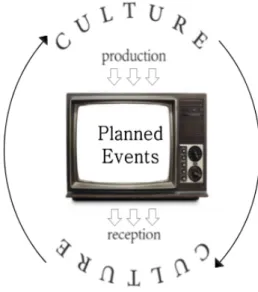
Figure 1 The NATO’s poster (1950s) 12 Figure 2 The Marshall Plan’s propaganda in Portugal (1950-‐1951) 13 Figure 3 The RTP’s promotional flyer (1956) 16 Figure 4 The circuit of the television jazz broadcasts as televised planned
events
25 Figure 5 Advertisement of Lisbon’s Ballroom Dancing Academy (1926) 83 Figure 6 Flyer of the ‘King of Jazz’ premiere at the Teatro Circo, Braga
(1931)
87 Figure 7 The Orquestra de Jazz da Emissora Nacional de Radiodifusão
(1935) 93
Figure 8 The Willie Lewis Orchestra’s at the Casino do Estoril (1941) 98 Figure 9 The JAZZ – Clube Universitário de Jazz (No 1 -‐ August 1958) 109 Figure 10 The USA Radio Free Europe Station’s at Glória do Ribatejo (1950s) 114 Figure 11 The USA Radio Free Europe transmitters’ at Glória do Ribatejo
(1950s) 115
Figure 12 The “United States Has Secret Sonic Weapon – Jazz” 117 Figure 13 The United States Information Service in Portugal – “Informação”
(Feb. 1956) 118
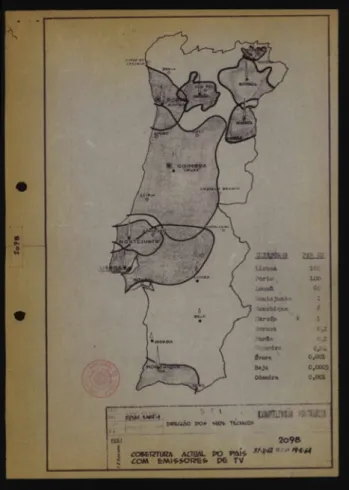
Figure 14 The RTP’s studio 150 Figure 15 Coverage of the television signal in Portugal (1964) 154 Figure 16 The Luís Villas-‐Boas appearence at the RTP (1958) 187 Figure 17 Photograph of Pierre Cornevin’s Quartet RTP live broadcast
(1957)
193 Figure 18 Domingos Vilaça’s Dixiland (1957) 195 Figure 19 The Claude Luter’s Sextet Lisbon concert (1959) 201 Figure 20 The Bill Coleman’s Orchestra Lisbon concert programme (1959) 202 Figure 21 The Quincy Jones’s Orchestra Lisbon concert (1960) 207 Figure 22 The Louis Armstrong’s Lisbon reception (1960) 210 Figure 23 Flyer of a jazz conference organised by Coimbra’s CJO (1966) 217 Figure 24 Photograph of the Hot Club of Portugal Quartet at Comblain-‐la
Tour (1963)
254 Figure 25 Photograph of Manuel Jorge Veloso (1963) 268 Figure 26 The International Jazz Festival Comblain-‐la-‐Tour Programme
(1964)
276 Figure 27 The International Jazz Festival Comblain-‐la-‐Tour (Bill Evans Trio) 276 Figure 28 The Luisiana Jazz Club’s announcemnet (1965) 282 Figure 29 The TV JAZZ Proc. No 2263-‐62, presenter script, page 1 (1965) 285 Figure 30 A jam session held during the First Jazz Week of Coimbra (1966) 291 Figure 31 The Duke Ellington’s Orchestra and Ella Fitzgerald Lisbon concert
(1966)
292 Figure 32 The Oscar Peterson’s Trio Lisbon concert (1966) 298 Figure 33 RTP Service Note (July 28, 1966) 302 Figure 34 The Bossa Jazz 3’s Divulgação I (1968) 310 Figure 35 The Benny Goodman’s Orchestra Lisbon concert (1970) 313 Figure 36 The FIJC’s 1971 poster (November, 1971) 321 Figure 37 The Dexter Gordon’s Quartet (FIJC 1971) 323 Figure 38 SEIT Information Service No. 35/72 DGCE-‐GD (FIJC 1972) 325 Figure 39 The Millikin University Jazz Lab’s Lisbon concert (1973) 326
xxii
THIS PAGE INTENTIONALLY LEFT BLANK
Proem
One of my biggest dreams as a teenager was to be an architect. However, this was not the path I followed; instead, I became a musician. Living in Oporto in the late 1980s, after finishing high school while waiting for the beginning of my compulsory military service, like most of the young Portuguese males at the time, I enrolled in a temporary employment agency called Manpower. A few days later, I received a telephone call to a job interview at the Portuguese Public Television North delegation located in Vila Nova de Gaia. An individual that I found quite peculiar conducted the interview. Quickly, after pointing to dozens of invoices on top of a table, he told me to imagine that I was a producer of a TV contest featuring two teams and a jury composed of four members. To that, I had a fixed budget for spends with each side and members of the board. I would have some time to organise all those invoices to justify similar costs – restaurants, accommodation, and travels –, between the two teams and each member of the jury. After the explanation he left, informing me that would be back soon. It was my first contact with the Portuguese television producer Mário Rui. I began to organise all the invoices balancing the amounts to justify the similar spending in both teams and members of the jury. After a while, Mário Rui returned, and then noticed that the invoices were already all organised, as asked; he said something like ‘Great! You start next week’. In the following week I began my first professional experience at the Portuguese Public Television (RTP) in the
Gabinete de Apoio à Produção (lit. Production Support Office) supervised by Mr
Matos. During the following months, I worked three days at the RTP office, and two days at the Studio 100 in Oporto with the RTP television producer Mário Rui. Unfortunately, I was obliged to leave to do my compulsory military service. A few years later, I returned to the northern RTP studios, this time as the bassist of the Portuguese pop band Três Tristes Tigres (lit. Three Sad Tigers) to a live broadcast music show hosted by the Portuguese pop singer Luís Represas.7 In both
7 The members of the Três Tristes Tigres, with whom I participated in this ‘live’ televised performance from the RTP studios (Monte da Virgem), were Ana Deus (vocalist), Alexandre Soares (electric guitar), Telmo Marques (piano), and Carlos Moura (drums).
xxiv
occasions, I never imagined that one day I would play jazz, or even conduct a PhD about jazz on the Portuguese Public Television.
Introduction
All human beings are granted a limited time on this earth and limited stocks of energy and aptitudes. I, the author of this book, and you, its readers, are no exception. Since we cannot do everything, to lead a life is, unavoidably, to make choices. And this is no less true of how we choose to deploy our intellectual energies and the social resources necessary to that deployment. Thus the choice of a field or object of study, and within that field the questions posed and the methodologies used, have to be justified against some hierarchy of priorities – some things are more important and more interesting than others.
(Garnham 2000, 1)
The scope of this dissertation explores the cultural politics of jazz on television broadcasts in Portugal during the right-‐wing colonialist Estado Novo (lit. New State) regime, between September 1956 and April 1974. Over the period under investigation, the Portuguese society went through profound changes that were related, directly or indirectly, to the emergence of this new medium (Barreto 2000). Those changes of behaviour and mentality, which Rosas describes as ‘invisible changes’ took place during the Cold War in a context of political and social domestic repression, and isolation of the country from the rest of the world. Synthesised metaphorically by the Portuguese dictator, António de Oliveira Salazar, expression ‘proudly alone’ (Rosas 2001). During this period, driven by the ongoing European Recovery Programme (ERP), informally known as the North American Marshall Plan, a new medium began to emerge in Portugal, television. As a consequence, given the dynamics of transatlantic cultural televised production, an increasing internationalisation of the Portuguese media occurred. I argue that the television musical production played a significant role in the cultural openness of the Portuguese society. The televised jazz performances were part of this process. Although jazz has previously circulated on the radio, with television not only intensified its dissemination but also came to acquire a significant visual dimension within the public sphere (Habermas 1991; Rutherford 2000), which until that time, was mostly confined to the private sphere (clubs, concerts and festivals). With this dissertation, I intend to contribute to the understanding of those processes.
In fact, those ‘invisible changes’ resulted from different factors (Rosas 2001). A significant domestic migration to the coastal cities; a massive illegal emigration seeking for better jobs in other European countries, that continue unabatedly during the 1960s due to the extreme poverty in which a large part of the Portuguese population lived. The deepening of the tertiary sector of the economy; a gradual growing level of education, and an increasing generalisation of consumption in the principal Portuguese urban centres mainly due to the impact of the media (Loff 2006). From the late 1950s onwards, in the Portuguese coastal cities mostly due to the advent of television gradually witnessed an extensive range of social and cultural changes. In a period in which television broadcasts were not continuous the daily life of the Portuguese was guided by a set of routines to which the new medium was added (Monteiro and Policarpo 2011). From a cultural perspective, television became crucial for the Portuguese people to access information about the ‘world outside’ (ibid.). Consequently, television took over, either the unifier role of reinforcement the New State regime dominant ideology or of its disruption.
As soon as the Radiotelevisão Portuguesa (lit. Portuguese Public Television) service was established; music became an indispensable component of the daily programming (Silva and Teves 1971). Gradually, television music broadcasts became part of the daily lives in most of the Portuguese urban areas informing and influencing their perceptions. Moreover, the Portuguese Public Television (RTP) directors and other professionals were eager to produce televised musical performances with a direct and incisive mode of entertainment (Silva and Teves 1971, 159). However, there is a lack of studies focuses on the presence of music on the Portuguese Public Television broadcasts. Nevertheless, it is essential to draw attention to the ongoing work carried out by João Ricardo Pinto, and Sofia Lopes related to the Portuguese Public Television. Pinto’s conducts his PhD research on the RTP’s musical production processes between 1956, with the inception of the experimental broadcasts, and 1964, with the use of videotape. Lopes’s conducts her PhD research on the Portuguese Festival RTP da Canção (1964-‐2017) (lit. the RTP Song Festival).
Taking this into consideration, I realise the importance of understanding how RTP producers’ aesthetic, cultural and political commitments also influenced the production and circulation of jazz on television in Portugal, during the period under investigation. Mainly, how the RTP television jazz producers engaged and articulated with the musical, and non-‐musical registers, not only involving specific national and international jazz scenes agendas but also specifically their interests. In part, because the RTP televised jazz performances resulted as a form of cultural, social, and political interactions generating “historically and culturally situated relationships” whose outcome and impact extended far beyond television studios (Higgins 2016, 339). Some factors influenced the development of jazz in Portugal during the right-‐wing colonialist New State regime, especially after the WWII (see the second chapter). Nonetheless, from the 1950s onwards, it is essential to take into consideration the Portuguese Public Television Service role in the dissemination of jazz. Surprisingly, there is an absence of knowledge about that television jazz production. As Heile, Elsdon and Doctor observed, by watching jazz on television it is possible to evaluate who is featuring on the screen, on and off stage; the chosen repertoires, either diegetically or nondiegetically; and how jazz musicians communicated and interacted not only with each other but also with their listeners. In fact, from a historical perspective by reviewing the diversity of television jazz production, allows us to a better understanding of both the genre and the media throughout the twentieth-‐century development (Heile, Elsdon and Doctor 2016, 19). In this sense, I intend to examine how jazz was produced and mediatised by the RTP television producers as televised planned events from both cultural and technological perspectives.
My approach will be multidisciplinary with a profound historical character that forces a selection of appropriate analytical tools to move towards the object of study. However, to carry out this study it was necessary to make an essential distinction between music on television and music in television. In other words, between televised music performances (diegetically) and programmes whose performers are unseen in the television screens (non-‐diegetically). This thesis is about jazz on television, the televised jazz performances, its production, the