J. res.: fundam. care. online 2013.dec. 5(6): 306-314
306
Epidemiological profile of leprosy in municipality of Sao Luis - Ma from 2006 to 2010 Perfil epidemiológico da hanseníase no Município de São Luis - Ma de 2006 a 2010
Perfil epidemiológico de la lepra en São Luis - Ma 2006-2010
Líndia Kalliana da Costa Araújo Alves Carvalho1, Isabela Bastos Jácome de Souza2, Amanda de Andrade Gomes Silva3,
Ian Sibele Alves Pereira4, Rafaelle Cristina Cruz da Silva5, Fabrício Ibiapina Tapety6
ABSTRACT
Objective: To analyze the epidemiology of leprosy in St. Luis - MA from 2006 to 2010. Method: This was a descriptive study, quantitative exploration of leprosy cases in St. Luis - MA, in 2006 and 2010. Data were collected at the Department of the Unified Health System (DATASUL). Incidence rate, operational classification, age and clinical form: the information was collected. Results: The present study showed high incidence rates being highest in 2006. The multibacillary form was the most diagnosed with apex in 2009, as the predominant age group older than 15 years. The predominant clinical forms were borderline and tuberculoid. Conclusion: Health professionals should be aware of preventive, assessment and treatment measures to prevent these numbers continue to grow and avoid physical disabilities. Descriptors: Leprosy, Epidemiology, Public health.
RESUMO
Objetivo: Analisar o perfil epidemiológico da Hanseníase em São Luís - MA no período de 2006 a 2010. Método: Trata-se de um estudo descritivo, exploratório, quantitativo de casos de hanTrata-seníaTrata-se no município de São Luis- MA, em 2006 a 2010. Os dados foram coletados no Departamento de Informática do Sistema Único de Saúde (DATASUS). Foram coletadas as informações: taxa de incidência, classificação operacional, faixa etária e forma clínica. Resultados: O presente estudo demonstrou altas taxas de incidência sendo a mais alta em 2006. A forma multibacilar foi a mais diagnosticada com ápice em 2009, quanto a faixa etária predominou os maiores de 15 anos. As formas clínicas predominantes foram a dimorfa e a tuberculóide. Conclusão: Os profissionais de saúde devem conhecer medidas profiláticas, avaliação e tratamento para evitar que esses números continuem crescendo e evitar assim incapacidades físicas. Descritores: Hanseníase, Epidemiologia, Saúde pública.
RESUMEN
Objetivo: Analizar el perfil epidemiológico de la Lepra en São Luís - MA en el período de 2006 a 2010. Método: Tratase de un estudio descriptivo, exploratorio, cuantitativo de casos de lepra en el municipio de São Luis-MA, en 2006 a 2010. Los datos fueron recolectados en el Departamento del Sistema Único de Salud (DATASUS). Fueron recolectadas informaciones: tasa de incidencia, clasificación operacional, edad y forma clínica. Resultados: El presente estudio mostró altas tasas de incidencia siendo la más alta en 2006. La forma multibacilar fue el más diagnosticado con ápice en 2009, cuanto la edad predominó los mayores de 15 años. Las formas clínicas predominantes fueron dimorfa y tuberculóide. Conclusión: Los profesionales de salud deben conocer medidas de prevención, evaluación y tratamiento para evitar que estos números continúen creciendo y así evitar discapacidades físicas. Descriptores: Lepra, Epidemiología, Salud pública.
1 Nurse. Master student in Family Health by UNINOVAFAPI University Center. E-mail: [email protected]. 2 Nurse. Master student in Family Health by UNINOVAFAPI University Center. E-mail: [email protected]. 3 Graduanting of Nursing of UNINOVAFAPI the University Center. E-mail: a.manda.andrade @ hotmail.com.
4 Nurse. Graduate from St. Louis College. E-mail: [email protected].
5 Nurse. Specialist in Family Health and the Public Health Institute Laboro. E-mail: [email protected]. 6 Dentist. PhD in Clinical Dentistry. Post-doctoral in dental implants. UNINOVAFAPI. E-mail: [email protected].
J. res.: fundam. care. online 2013.dec. 5(6): 306-314
307
Leprosy is an infectious, endemic disease inunderdeveloped regions, slow evolution caused by acid -fast bacilli (AFB ), manifested by signs and symptoms dermatoneurológicos : skin lesions, peripheral nerves, especially in the eyes, hands and feet. It is considered heterogeneous because of the wide variation in prevalence rate in different regions of country.1,3
Besides the physical damage, the condition of the carrier is presented because of the pre - concept, marked by suffering, abandonment, deformities and psychosocial problems that may occur. Social discrimination and economic damage also occurs, leading to disease transcendente.4
It is a chronic , treatable and etiologic agent is able to infect a large number of people for their highly infectious disease. However, few individuals get sick because the bacillus has low pathogenicity . Your immunogenic power is responsible for the high potential of crippling hanseníase.5
Because it is considered a public health problem, the proposed World Health Organization (WHO) for the elimination of leprosy in 1991, was based on reducing the prevalence to less than 1 case per 10,000 habitantes.3 Even with all the effort , Brazil ranks 2nd in the world in absolute number of leprosy cases with approximately 94 %, being the first of Americas.6
The disease is endemic throughout the country, albeit with uneven distribution. The North, Midwest and Northeast regions are respectively 5.41 , 3.72 and 3.13/10,000, setting the highest detection rates. Maranhão occupies the 4th place in Brazil with the incidence rate
6.78/10,000 and St. Louis with 6.4/10,000 habitantes.7, 8
The etiologic agent of leprosy is an obligate intracellular bacterium called Mycobacterium leprae, which has a prolonged incubation, chronic evolution and that primarily affects the skin and nerves periféricos.9
Transmission occurs through contact of a healthy person with a sick individual and not treated to eliminate the bacilli infecting susceptible persons. The upper airways are considered the gateway to the body susceptible, as well as the route of elimination of bacilo.10
The network determines the causes of the disease currently takes into account the molecular biology of Hansen's bacillus, genetic and immunological aspects of the host - even still not fully known - the social determinants, such as the quality of life, sanitation, practices Culture, poverty and other aspectos.11
From an operational standpoint , targeting the multidrug therapy (MDT) patients, rating has been adopted by WHO is: paucibacillary leprosy (PB) (patients indeterminate, tuberculoid and borderline tuberculoid most of all smear negative) and multibacillary leprosy (MB) (borderline borderline , and lepromatous dimorfovirchowianos, all smear-positive , no matter how many crosses presented).12
Leprosy can present itself in four ways. The Indefinite form is characterized by the small number of skin lesions. The spot is the usual lesion that can be characterized by a lighter color than normal skin (hypochromic spot).13
With the evolution of spots decreased sweating or slight alopecia may occur and may be indicative of a trend to tuberculoid form. Also characterized by the absence of deformities resulting from thickening trunks nervos.14
J. res.: fundam. care. online 2013.dec. 5(6): 306-314
308
To confirm the diagnosis must be of anindeterminate lesion is not necessary that one has doubt as to sensory impaired the same.15
The tuberculoid form, in most cases, arises from the indeterminate untreated, patients with good resistance imunológica.16
The lesions have a tendency to spread not keeping the initial limited spots, and in some cases progress to spontaneous cure. The papules or tubercles on the surface of the stain suggests the evolution of Indefinite for Tuberculóide.16
Evolutionarily without treatment, the number of elements papulóides tends to increase and the initial spot disappear, giving rise to a lesion in placa.17
A borderline form is characterized by its immunological instability, which means that there is great variation in their clinical manifestations, is the skin, nerves, or systemic involvement. Skin lesions are revealed numerous and merges aspects of their morphology and Vichowiana Tuberculoid, now may be a predominance of one, now of another kind. Comprise erythematous, hypopigmented spots with ferruginous edges, erythematous or brownish spots, with sharp inner edge and inaccurate external boundaries, erythematous- violaceous plaques or ferruginous, with sharp inner edges and diffuse external boundaries (faveolares lesions).4
Most often, virchowian, arises from the evolution of Indefinite untreated patients with low resistance to the bacillus of Hansen. Over time, without initial treatment to evolve erythematous spots and infiltrative forms, with edges occurring inaccurate loss of normal skin limits in some cases the appearance of lesions can occur without the aforementioned precedence of an initial injury HI.18
Over time, the appearance of tuberculoid papules, plaques and infiltrating lesions
circumscribed, generally termed hansenomas occur. Eyebrows, eyelashes and eyebrows have marked hair loss (madarosis). With intense and diffuse infiltration, accentuation of the natural grooves profoundly alters the physiognomy giving aspect called " leonine facies ".14
Leprosy diagnosis is performed by dermatologic clinical examination.7 Through him, looking up signs of disease in the patient, which happens to be considered a case of leprosy presenting one or more of the following characteristics: presence of lesions or skin lesions with abnormal sensitivity, involvement of one or more nerves associated with the presence of neural and / or thickening smear positiva.3
In the absence of such signals, the simple thickening of the nerve, loss of sensation or muscle weakness can be considered a case Hanseníase.3
The bacillus has affinity for the skin and peripheral nerves of the peculiar characteristics of the disease, which may facilitate its diagnosis in most cases.13
Skin lesions can be confused with other skin diseases, so the Ministry of Health defines as leprosy case when one or more of the following clinical evidence are present: a dermal lesion may be single or multiple, generally less pigmented than normal skin around the lesion. Sometimes the lesion is reddish or one color acobreada.15,9
The treatment of leprosy patients is done through specific chemotherapy by Multidrug therapy (MDT) associated monitoring to identify and treat possible complications and complications of the disease as well as promote the prevention and treatment of 20 physics disabilities.3
In recent decades the prevalence rates were declining as a result of consolidation chemotherapy treatment because the MDT dormant bacilli making it unaffordable and avoiding the continuity of the disease, preventing disabilities
J. res.: fundam. care. online 2013.dec. 5(6): 306-314
309
and deformities caused by it, leading to healing,because the killed bacillus is unable to infect other people, breaking the epidemiological chain of disease.13 Thus , with the beginning of treatment , disease transmission is soon interrupted and, if carried out completely and correctly , ensures cure disease.10
Considering the high rates of leprosy in Brazil and Maranhão, this study aims to analyze the epidemiology of leprosy in St. Luis - MA from 2006 to 2010, in order to propose strategies to control this disease.
This is a descriptive, exploratory study with a quantitative approach of leprosy cases in St. Luis - MA , in the period 2006-2010 .
The study was conducted in St Luis, the capital city of the state of Maranhão, located on the island of Upaon - Acu, in the South Atlantic, between the bays of San Marcos and San Jose Ribamar. With a population of 997 098 inhabitants covers an area of 828.01 km ², located in the northeastern region of Brazil. The city of St. Louis has coverage of 83 Family Health Teams deployed, federal health establishments, state, municipal and private, with basic assistance, medium and high complexity within their difficulties do everything possible to provide good medical care.
Epidemiological data were collected in October 2012 from the online database of SINAN (Information System Reportable Diseases) available at the Department of the Unified Health System (DATASUL), Ministry of Health.
Year of notification, operational classification, age and clinical form in the
notification: The following information was collected.
Having the data of interest to the study, and statistical analysis using Excel program was held. The data obtained in this study were analyzed and presented in tables showing the frequency and percentage of all variables in this study questioned.
During the research all aspects contained in the resolution of the National Health Council (CNS) 196/96, which deals with research on human subjects were observed.
According to Figure 1, we can see that in 2006 there was a high incidence of leprosy (65,41/100,000). Since that year, a decline occurs, returning to raise rates in 2009 (61,78/100,000). But in 2010 the incidence rate decreases reaching 60.8 cases per 100,000 inhabitants.
Figure 1 - Incidence rate of leprosy between 2006 and 2010 in São Luis - MA.
Source : SINAN / Datasus
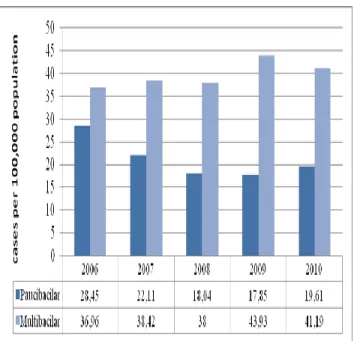
Figure 2 shows the incidence rate according to the clinical classification, with multibacillary
J. res.: fundam. care. online 2013.dec. 5(6): 306-314
310
diagnosed more frequently. Have thepaucibacillary form had its highest rate in 2006, with a decline in the years between 2007 to 2009 to increase again in 2010.
Figure 2 - Incidence rate of leprosy according to operational classification in St. Luis - MA from 2006 to 2010.
Source: SINAN/Datasus
According to Table 1, it can be noticed that leprosy has a high incidence in people over 15 years. It was also observed that in 2006 this rate reached its peak at approximately 77.24 cases per 100,000 inhabitants. Already in under 15 the high incidence occurred in 2006 with 34.26 cases per 100,000 inhabitants.
Table 1. Distribution of the incidence rate of leprosy by age group in St. Luis – MA
from 2006 to 2010
Table 2 lists the year with the clinical form of the disease at diagnosis. It can be observed that the predominant clinical forms are dimorphic, followed by tuberculoid, lepromatous and indeterminate. In 2010 there was a higher incidence of borderline clinical form with 23 % and a lower incidence in the year 2006 with 15 % indeterminate.
Table 2 - Distribution of new cases of leprosy notified SINAN second clinical form in São
Luís, MA from 2006 to 2010
Source: SINAN/DATASUS
Leprosy had a high incidence rate in the period studied, but studies conducted in other counties show rates well above those found in this study as in the study conducted in Teresina -PI when found an incidence rate of 100 cases per 100,000 habitantes20.
In contrast, other studies show rates well below those found in our study when in Rio de Janeiro (RJ) in 2001 found the incidence was 20.3 cases per 100,000 inhabitants. In 2006 the number of new cases was 16.7/100,000 and last year of his study reached 12.4 cases per 100,000 inhabitants, showing that investment in worker training and basic network in diagnosis and treatment and the development of campaigns to detect new cases is the best choice for a work eficaz.21
As for the number of new cases of leprosy, a municipality can be classified, according to the
J. res.: fundam. care. online 2013.dec. 5(6): 306-314
311
latest MS parameters: (a) hyperendemic - 40.00cases per 100,000 population or more, (b) very high - from 20.00 to 39 99 cases per 100,000 population, (c) high - 10.00 to 19.99 cases per 100,000 population, (d) average: 2.00 to 9.99 cases per 100,000 population, (e) low - when less than 2 , 00 cases per 100,000 inhabitants. Therefore, it is observed in graph 1 in St. Luis, the rates remained high between 2006 and oscillating between the years 2007-2010, being classified as hyperendemic, showing that there is continuity of transmission of doença.20
The number of new cases detected in an area can be influenced by the implementation of educational measures, population coverage of measures of disease control and competence of health professionals to perform accurate diagnosis and precoce.22
Regarding the operational classification of leprosy in the year 2010 were 34,894 new cases diagnosed in Brazil , with 40.9 % (14,263) with multibacilares clinical forms.22
This can be proved in a study that found an incidence of multibacillary cases on paucibacilares.23 - 4
This finding is very important as they are the multibacillary cases the main source of transmission of the disease, since they have high bacterial load in the dermis and mucous membranes and can eliminate bacilli in the external environment. Through this data it is possible to determine the treatment and the type and time, ie, the appropriate chemotherapy regimen to caso.25 - 6
In relation to age, corroborates the results obtained in this work a study conducted in the city of Davinópolis in the majority of cases were in individuals aged to 15 year, 24 also similar to results found in another study in Maranhão where
there was predominant age 14-44 years, with 63.3 % .27
Similarly another study28 reported a prevalence of young adults between the ages of 15-30 years (32.3 %) and this percentage increases if we take into account the population up to 60 years of age, which is worrisome from a socioeconomic perspective.
Its high disabling potential can affect the productive and social life of the patient, determining economic loss and psychological trauma. These impairments have been responsible for the stigma and discrimination of patients. One of the most effective ways to evaluate whether the diagnosis of leprosy being this early is to identify the presence of physical disability at the time of diagnosis. The higher the proportion of disability and severity of disability at diagnosis, reveals the later detection of doença.20
We observed in this study, the presence of children under 15 affected by the disease. The long with the bacillus in the early years of life is common in regions where transmission occurs intense form.27
Therefore, we need to keep watch on the younger population because the identification of many cases in children under 15 years can be an indicator of increased active TB patients without treatment in communities, which translates into reduced control actions disease.28
The predominance of multibacillary this study is consistent with several studies showing that the most diagnosed clinical forms were dimorphic, followed by tuberculoid, lepromatous and indeterminate as well as in another study where dimorphous was the most prevalent, with 23.3 %.29-30
The high incidence of borderline fashion shows delay in diagnosis , it can be inferred that the Basic Health Unit is not detecting cases in the
J. res.: fundam. care. online 2013.dec. 5(6): 306-314
312
early forms of the disease , affecting the evolutionto Lepromatous or Dirmorfa forms. 25
It is noteworthy that the borderline or lepromatous forms are recognized by the great power transfer and high level of residual disability. These data should be particularly discussed among health professionals as awareness strategy for diagnosis and precoces.23
It is important that health professionals are aware of the measures of prevention, assessment and treatment in order to avoid this increasing number of people infected, as well as disabilities caused by the disease. This leads to reflection on the diversity of factors involved in the detection of new cases, as the training of human resources and the level of access to information about the disease in the media.
Campaigns should be encouraged to ensure that their patients lose this prejudice, to reduce the number of cases, expand access to treatment and improve the diagnosis are the main challenges in the fight against leprosy, which still afflicts millions of people.
1. Sanches LAT, Pittner E, Sanches HF, Monteiro MC. Detecção de casos novos de hanseníase no município de Prudentópolis, PR: uma análise de 1998 a 2005. Revista da Sociedade Brasileira de Medicina Tropical. 2007; 40(5): 541-5.
2. Auto HJF. Doenças Infecciosas e Parasitarias. Rio de Janeiro: Revinter, 2002.
3. Brasil. Secretaria de Políticas de Saúde. Departamento de Atenção Básica. Guia para controle da hanseníase. Brasília: Ministério da Saúde, 2002.
4. Lana FCF, Amaral EP, Lanza FM, Lima PL, Carvalho ACN, Diniz LG. Hanseníase em menores de 15 anos no Vale do Jequitinhonha, Minas Gerais, Brasil. Revista Bras. Enfermagem. 2007; 60(6): 696-700.
5. Brasil. Departamento de Informática do SUS. População estimada segundo município – 2007.
6. Andrade M, Bomfim FS. Considerações sobre hanseníase e reações hansenicas. Informe – se em promoção da saúde. 2008; 4(1): 13-5.
7. Brasil. Secretaria de Políticas de Saúde. Departamento de Atenção Básica. Hanseníase: Atividades de Controle e Manual de Procedimentos. Brasília, DF 2001.
8. Brasil. Ministério da Saúde. Departamento de Vigilância em Saúde. Blocos de Dados∕a 2007. Brasília, DF, 2008.
9. Martelli CMT, Stefani MMA, Penna GO, Andrade ALSS. Endemias e epidemias brasileiras, desafio e perspectivas de investigação cientifica: hanseníase. Revista Brasileira de Epidemiologia. São Paulo, 2007; 5(3): 273-85.
10. Brasil. Secretaria de Vigilância em Saúde. Departamento de vigilância Epidemiológica. Doenças infecciosas e parasitarias: Guia de Vigilância Epidemiológica. 6 ed. Brasília, DF,2005.
11. Magalhães MCC, Rojas LI. Diferenciação territorial da hanseníase no Brasil.
CONCLUSION
J. res.: fundam. care. online 2013.dec. 5(6): 306-314
313
Epidemiologia e Serviços de Saúde. 2007;16(2): 75-84.
12. Barbosa B. Hanseníase: O perfil da doença. [Monografia]. Rio de Janeiro (RJ): Faculdades Integradas de Jacarepagué‐ RJ, 2009.
13. Araújo MG. Hanseníase no Brasil. Revista da Sociedade Brasileira de medicina Tropical. Uberaba.2003; 36(3): 373-82.
14. Talhari S, Neves RG, Penna GO, Oliveira MLV. Hanseníase: Dermatologia Tropical. 4ºed. Manaus (AM): 2006.
15. Opromolla DVA. Noções de Hansenologia. Bauru: Ed. Editar, 2005.
16. Rodrigues Júnior AL, Tragante do Ó V, Motti VG. Estudo espacial e temporal da hanseníase no estado de São Paulo, 2004 – 1006. Revista de Saúde Pública. São Paulo. 2008; 42(6): 1012-20.
17. Batista ES, Campos RX, Queiroz RCG, Siqueira SL, Pereira SM, Pacheco TJ et al. Perfil sócio- demográfico e clínico-epidemiológico dos pacientes diagnosticados com hanseníase em campos dos Goytacazes, RJ. Revista Brasileira Clínica Medica. São Paulo. 2011; 9(2): 101-6.
18. Santos AS, Castro DS, Falqueto A. Fatores de Risco para Transmissão da Hanseníase. Revista Brasileira de Enfermagem – REBEn. Brasília. 2008, 61: 738-743.
19. Brasil. Ministério da Saúde. Secretaria de Vigilância em Saúde. Departamento de Vigilância Epidemiológica. Programa Nacional de Eliminação da Hanseníase. Plano Nacional
de Eliminação da hanseníase em Nível Municipal, 2006 – 2010. Brasília, 2006.
20. Pereira EVE, Machado HAS, Ramos CHM, Nogueira LT, Lima LAN. Perfil epidemiológico da hanseníase no município de Teresina, no período de 2001 – 2008. Ans Bras Dermatol, 2011; 86 (2):235-40.
21. Valle, CLP. Situação da hanseníase no estado do Rio de Janeiro no período de 2001 a 2009. Revista Hospital Universitário Pedro Ernesto, URRJ. Rio de Janeiro. 2011 jan/mar.[periódico na Internet]. [Acesso em: 15 de novembro de
2012]. Disponível em:
http://revista.hupe.uerj.br/detalhe_artigo.as p?id=132
22. Organização Mundial da Saúde. Estratégia global aprimorada para redução adicional da carga da hanseníase: período do plano: 2011-2015. Brasília: Organização Mundial da Saúde: 2010.
23. Ribeiro SL. Situação epidemiológica da hanseníase no município de Santa Maria do Salto – MG. [periódico na Internet]. [Acesso em: 02 de novembro de 2012]. Disponível em: http://www.nescon.medicina.ufmg.br/bibliote ca/imagem/3738.pdf
24. Lanza FM, Cortez DN, Gontijo TL, Rodrigues JSJ. Perfil Epidemiológico da Hanseníase no Município de Divinópolis, Minas Gerais. Rev. Enferm. UFSM, 2012, 2(2): 365- 374.
25. Garcia ACM. Caracterização dos pacientes diagnosticados com hanseníase no município de Campina Grande- Paraíba no período de 2001 a 2008. . [periódico na Internet]. [Acesso
J. res.: fundam. care. online 2013.dec. 5(6): 306-314
314
em: 22 de outubro de 2012]. Disponível em:http://dspace.bc.uepb.edu.br:8080/xmlui/bits
tream/handle/123456789/387/PDF%20-%20Augusto%20C%C3%A9sar%20Marques%20Garc ia.pdf?sequence=1
26. Simpson CA, Fonseca LCT, Santos VRC. Perfil do doente de hanseníase no estado da Paraiba. Hansen Int, 2010; 35(2): 33 – 40.
27. Paes ALV, Santos HV, Borges MMG, Penha PGC. Perfil clínico- epidemiológico de portadores de hanseníase.2010; 24(3). [periódico na Internet]. [Acesso em: 02 de novembro de
2012]. Disponível em:
http://files.bvs.br/upload/S/0101-5907/2010/v24n3-4/a2341.pdf
28. Aquino DMC, Caldas AJM, Silva AAM, Costa JML. Perfil dos pacientes com hanseníase em área hiperepidêmica da Amazônia do Maranhão, Brasil. Revista da Sociedade Brasileira de Medicina Tropical. 2003; 36(1):57 – 64.
29. Ferreira IN. Busca ativa de hanseníase na população escolar e distribuição de endemia no município de Paracatu – MG. [Tese de doutorado]. Faculdade de Ciencias da Saúde, Universidade de Brasília. Programa de Pós Graduação em Ciências da Saude. Brasília, DF, 2008.
30. Antônio Filho J, Andrade LG, Fernandes PN, Souza CAS, Xavier MAS, Norberg NA. Perfil epidemiológico da hanseníase no município de Nova Iguaçu.Revista de Ciência & Tecnologia. Rio de janeiro, Brasil. 2011; 11(2). [periódico na Internet]. [Acesso em: 02 de novembro de
2012]. Disponível em:
http://unig.edu.br/facet/Revista%20de%20Cie ncia%20e%20Tecnologia_Volume_11_Numeo_2_ DEZ2011.pdf#page=46