655
Brazilian Journal of Poultry Science Revista Brasileira de Ciência Avícola
ISSN 1516-635X Oct - Dec 2017 / v.19 / n.4 / 655-662
http://dx.doi.org/10.1590/1806-9061-2017-0511
Effects of Origanum Syriacum Essential Oil on Blood
Parameters of Broilers Reared at High Ambient Heat
Author(s)
Tekce EI Gül MII
I Faculty of Applied Sciences, Bayburt University, Bayburt 69000, Turkey
II Animal Nutrition and Nutrition Disease, Atatürk University Erzurum, Turkey
Mail Address
Corresponding author e-mail address Emre Tekce
Organic Agriculture Management, Faculty Of Applied Sciences, Bayburt University, Bayburt 69000, Turkey.
Tel: +90 458-333-20-33
Email: [email protected]
Keywords
Broiler, Origanum Syriacum essential oil, Biochemical and Hematological.
Submitted: 03/March/2017 Approved: 15/August/2017
ABSTRACT
The biochemical and hematological blood values of broilers fed under heat stress and that were administered Origanum syriacum
(OS) essential oil were investigated in this study. In total, 400 male broilers (Ross-308; age, 1 day) were used for the period of 42-days of the study. The experiment included ten groups (n = 50/group; each group divided into five sub-groups): normal heat, 22°C: basal feed (BF)-positive control group (PC), BF + 100 ppm OS; BF + 300 ppm OS; BF + 600 ppm OS). Heat stress, 36°C: BF-positive control group (PC), BF + 100 ppm SOS; BF + 300 ppm OS; and BF + 600 ppm OS). Biochemical and hematological parameters were measured in blood collected into EDTA tubes. Total bilirubin, cholesterol, low-density cholesterol, Na+, Ca2+, and Mg2+ increased, whereas alanine aminotransferase, aspartate aminotransferase, creatine kinase (CK), CK-MB, urea, uric acid, Cl–, and K+ decreased (p<0.05); however, no changes were detected in the other hematological values.
INTRODUCTION
Stress emerges from endogenous (nutrition and feeding problems, fast growth, sexual maturation period, and infection) and exogenous factors (climate, high density insufficient ventilation), and causes dire economic losses in poultry (Chenga & Muırb, 2004; Olanrewaju et al., 2006; Hadımlı et al.,2007). One stressor is high temperature which causes hyperventilation, blood pH > 7, and a decrease in plasma pyruvate kinase along with an increase in CO2 density in the lungs; thus, causing livestock to perish within a short period (Hartlova et al., 2002; Lin et al., 2006; Al-fataftah & Abu-dieyeh, 2007) .Antibiotics have been used in the poultry industry to reduce the impact of stress, increase stock performance, and regulate gastrointestinal microflora. Nevertheless, the European Union (EU) banned antibiotics when the World Health Organization reported that microorganisms can become immune to specific antibiotics over time thus causing the emergence of resistant bacteria that pose a risk to human health (Gue et al., 2004; Yörük
et al., 2008). In addition, growing sensitivity towards issues, such as human health, food safety, and environmental pollution, have emerged among consumers despite the progresses achieved in food production techniques and slaughterhouse hygiene in EU countries (Mazmanoğlu, 2008). Therefore, growing organic products by adding natural feed additives as an alternative to synthetic additives has begun in recent years. One of these alternative feed additives is thyme. Thyme is a herb in the Lamiaceae family with 40 species worldwide. Thyme contains carvacrol and thymol along with various phenolic monoterpenes.
Origanum syriacum (OS) is an aromatic herb within the thyme family
656
Tekce E, Gül M Effects of Origanum Syriacum Essential Oil on Blood
Parameters of Broilers Reared at High Ambient Heat
Za’atar, and marjoram (Alma et al., 2003; IUCN, 2005; Lukas, 2010) . While the fatty acids in the OS essential oil generally contains polymorphic compounds, such as thymol and carvacrol, compounds, such as γ-terpinene, P-cymene, and thymoquinene, can also be found depending on the growing area (Lukas et al., 2009) . Some studies have reported that essential fatty acids in OS have antioxidant (Luna et al., 2010; Tavarez et al., 2011), anti-microbial (Mitsch et al., 2004;Gürakan
et al., 2008),anti-inflammatory (Yoshino et al., 2006), anti-viral (Pilau et al., 2011), anti-tumoral (El-desoukya
et al., 2009; Al-kalaldeh et al., 2010), anti-ulcer (Afify
et al., 2012), anti-fungal (Manohar et al., 2001), and anti-parasitic (Değerli et al., 2012; Remmal et al., 2013) properties, all of which have positive effects on stock performance (Jang et al., 2007; Tekçe & Gül, 2016).
In this study, the effects of various doses of OS essential oil added to feed as an alternative to antibiotics in broilers fed under nominal heat (22°C) and heat stressed (36°C) conditions on biochemical and hematological parameters were studied.
MATERIALS AND METHODS
Animals, Experimental Design, Feeds
In this study, 400 1-day-old Ross-308 male broilers were used in the experiment. During the 7-day adaptation and a 35-day fattening period, the animals were kept indoors in 121 × 110 × 108 cm cages at
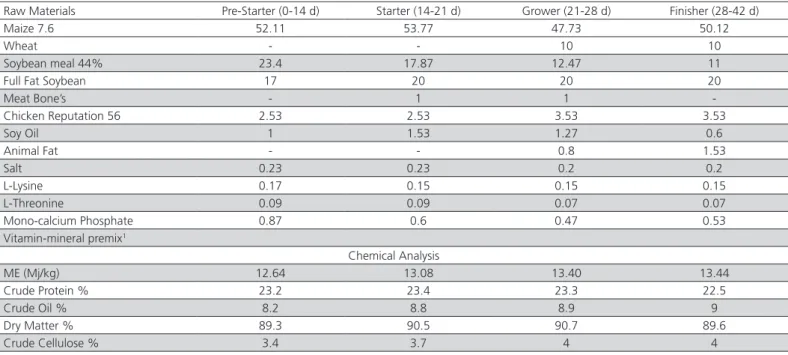
Atatürk University Veterinary Faculty Husbandry Research and Practice Unit; each group consisted of 10 animals. For each of the experimental periods, 5 treatments were prepared by supplementing the standard commercial ration with 100 mg/kg of Avilamycin antibiotic (Kartal chem, İstanbul, Turkey) or 0 mg/kg (PC), 100 mg/kg, 300 mg/kg or 600 mg/ kg of OS. The animals were equal in live weight, and were separated into ten groups (PC, A-100, OS-100, OS-300, OS-600, NC,SA-100, SOS-100, SOS-300, and SOS-600) each of which contained 50 animals. Then, all groups were separated into five sub-groups each of which consisted of 10 animals. During the experimental period, the groups: positive control (PC, A-100, OS-100 ppm, OS-300 and OS-600 were exposed to a temperature of 22°C, while the NC, SA-100, SOS-100, SOS-300 and SOS-600 groups were exposed to 36°C. Basal broiler feed was given to the animals every day at the same hour (around 17:00). The PC and NC groups were provided with only the basal broiler feed, whereas the diets of the 100, 300, OS-600, SOS-100, SOS-300, and SOS-600 groups were supplemented with 100, 300, 600, 100, 300, and 600 ppm OS essential oil (Mahan cosmetic, Antakya, Turkey), respectively. Four different basal broiler feeds were given to the animals at certain intervals (Table 1). This study was approved by the ethics committee of Atatürk University Veterinary Faculty (25.10.2013/ 5/126).
Table 1 – Composition and analyses of the basal diet (g/kg).
Raw Materials Pre-Starter (0-14 d) Starter (14-21 d) Grower (21-28 d) Finisher (28-42 d)
Maize 7.6 52.11 53.77 47.73 50.12
Wheat - - 10 10
Soybean meal 44% 23.4 17.87 12.47 11
Full Fat Soybean 17 20 20 20
Meat Bone’s - 1 1
-Chicken Reputation 56 2.53 2.53 3.53 3.53
Soy Oil 1 1.53 1.27 0.6
Animal Fat - - 0.8 1.53
Salt 0.23 0.23 0.2 0.2
L-Lysine 0.17 0.15 0.15 0.15
L-Threonine 0.09 0.09 0.07 0.07
Mono-calcium Phosphate 0.87 0.6 0.47 0.53
Vitamin-mineral premix1
Chemical Analysis
ME (Mj/kg) 12.64 13.08 13.40 13.44
Crude Protein % 23.2 23.4 23.3 22.5
Crude Oil % 8.2 8.8 8.9 9
Dry Matter % 89.3 90.5 90.7 89.6
Crude Cellulose % 3.4 3.7 4 4
657
Tekce E, Gül M Effects of Origanum Syriacum Essential Oil on Blood
Parameters of Broilers Reared at High Ambient Heat
Origanum Syriacum Essential Oil Compo-sition
The OS essential oil contained 28.9% carvacrol, 19.9% ɤ-terpinene, 12.4% p-cymene, 7.1% thymol, and 6.5% α-terpinene.
Poultry House Heat Moisture and Illumina-tion
The general temperature of the poultry house was 32–33°C during the first 2 days and 27–28°C during the next 5 days. On the other hand, a 36°C temperature and 75–85% relative humidity were applied to the groups subjected to heat stress, while 22°C temperature and 55–60% relative humidity were applied to the others. All groups were provided with illumination (60 W) for 24 hours
.
Feed Analyses
A proximate analyses of the feeds used for this research was performed in accordance with the methods stated in A.O.A.C2005.
Blood Analyses
On day 42 of the study, the chickens were fasted overnight for biochemical analyses. Then, 100 animals (10 from each group) were slaughtered randomly by cervical dislocation. Blood samples were collected into 10 ml biochemistry tubes and 5 ml EDTA hemogram tubes (Becton Dickinson Co. Brea, CA, USA), centrifuged at 4,100 rpm for 12 min at 4°C (NF 1200R, Nüve, Ankara Turkey), and the serum was transferred to Eppendorf tubes. Serum levels of glucose, albumin (ALB), creatinine, globulin, total protein, urea, alanine aminotransaminase (ALT), aspartate aminotransaminase (AST), glutamic pyruvate transaminase, total cholesterol, triglycerides (TG), high density lipoprotein cholesterol (HDL), low density lipoprotein cholesterol (LDL), very low density lipoprotein cholesterol (VLDL), Ca2+, P, Mg2+, Cl–, Fe2+, amylase, gamma-glutamyl transferase, alkaline phosphatase, and uric acid were assayed at the Erzurum Technical Chemistry and Medical Laboratories using a Cobas-8000 auto-analyzer, which is a closed spectrophotometric system, with Roche kits (Mannheim, Germany).
Statistical Analyses
The data were analyzed using SSPS 17.0. software (SPSS Inc., Chicago, IL, USA). Data are presented as mean ± standard error. Repeated-measures analysis of variance was used to identify if differences existed
in the blood values between the groups. Duncan’s multiple range test was applied to identify the group differences. A p-value < 0.05 was considered significant.
RESULTS
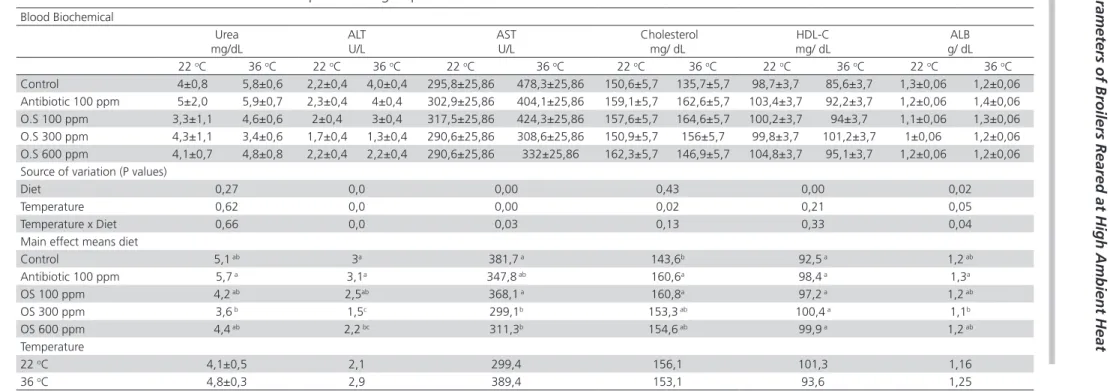
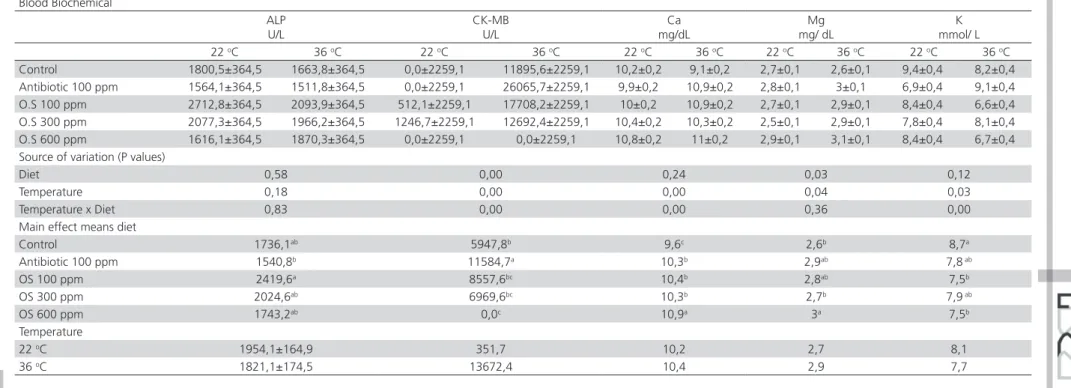
The effects of the OS essential oil added at different dosages (100, 300, and 600 ppm) on the metabolic, blood, and biochemical values are shown in Tables 2–5. Some of the serum values in broilers fed under heat stress and control conditions are as follows: glucose (22°C control: 270 vs. 36°C OS 300 ppm: 263.9 vs. 36°C O.S 600 ppm: 258.7 mM; p<0.01; ALT (22°C control: 2.2 vs. 36°C OS 300 ppm: 1.3; p<0.00); AST (22°C control: 295.8 vs. 36°C OS 300 ppm: 308.6;
p<0.01, ALB (22°C control: 1.3 vs. 36°C OS 300 and 600 ppm: 1.2; p<0.04); CK-MB (22°C control: 0 vs. 36°C OS 600 ppm: 0; p<0.01); Ca2+ (22°C control: 10.2 vs. 36°C OS 600 ppm: 11; p<0.01); K+ (22°C control: 9.4 vs. 36°C OS 300 ppm: 6.6; p<0.01). Adding the OS essential oil at various dosages had no effect on most hematological values compared to the values after administering the antibiotic or heat stress. However, the OS oil did have an effect on glucose
(p<0.01), liver enzymes (ALT and AST) and CK-MB
(p<0.01), which indicates heart and skeletal muscle degeneration. The 600 ppm OS essential oil dosage completely protected the muscles against various pathological defects (p<0.01.
DISCUSSION
658
Tekce E, Gül M
Ef
fects of Origanum Syriacum Essential Oil on Blood
Parameters of Broilers Reared at High Ambient Heat
Table 3 – Serum biochemical values in the experimental groups. Blood Biochemical
Urea mg/dL
ALT U/L
AST U/L
Cholesterol mg/ dL
HDL-C mg/ dL
ALB g/ dL
22 oC 36 oC 22 oC 36 oC 22 oC 36 oC 22 oC 36 oC 22 oC 36 oC 22 oC 36 oC
Control 4±0,8 5,8±0,6 2,2±0,4 4,0±0,4 295,8±25,86 478,3±25,86 150,6±5,7 135,7±5,7 98,7±3,7 85,6±3,7 1,3±0,06 1,2±0,06
Antibiotic 100 ppm 5±2,0 5,9±0,7 2,3±0,4 4±0,4 302,9±25,86 404,1±25,86 159,1±5,7 162,6±5,7 103,4±3,7 92,2±3,7 1,2±0,06 1,4±0,06
O.S 100 ppm 3,3±1,1 4,6±0,6 2±0,4 3±0,4 317,5±25,86 424,3±25,86 157,6±5,7 164,6±5,7 100,2±3,7 94±3,7 1,1±0,06 1,3±0,06
O.S 300 ppm 4,3±1,1 3,4±0,6 1,7±0,4 1,3±0,4 290,6±25,86 308,6±25,86 150,9±5,7 156±5,7 99,8±3,7 101,2±3,7 1±0,06 1,2±0,06
O.S 600 ppm 4,1±0,7 4,8±0,8 2,2±0,4 2,2±0,4 290,6±25,86 332±25,86 162,3±5,7 146,9±5,7 104,8±3,7 95,1±3,7 1,2±0,06 1,2±0,06
Source of variation (P values)
Diet 0,27 0,0 0,00 0,43 0,00 0,02
Temperature 0,62 0,0 0,00 0,02 0,21 0,05
Temperature x Diet 0,66 0,0 0,03 0,13 0,33 0,04
Main effect means diet
Control 5,1 ab 3a 381,7 a 143,6b 92,5 a 1,2 ab
Antibiotic 100 ppm 5,7 a 3,1a 347,8 ab 160,6a 98,4 a 1,3a
OS 100 ppm 4,2 ab 2,5ab 368,1 a 160,8a 97,2 a 1,2 ab
OS 300 ppm 3,6 b 1,5c 299,1b 153,3 ab 100,4 a 1,1b
OS 600 ppm 4,4 ab 2,2 bc 311,3b 154,6 ab 99,9 a 1,2 ab
Temperature
22 oC 4,1±0,5 2,1 299,4 156,1 101,3 1,16
36 oC 4,8±0,3 2,9 389,4 153,1 93,6 1,25
Table 2 – Serum biochemical parameters in the experimental groups. Blood Biochemical
Glucose(mg/ dL) Triglycerides (mg/ dL) LDH
U/L
Uric acid mg/ dL
Na mmol/ L
CI mmol/ L
22 oC 36 oC 22 oC 36 oC 22 oC 36 oC 22 oC 36 oC 22 oC 36 oC 22 oC 36 oC
Control 270,8±5,4 265,9±6,0 28,6±1,6 32,8±1,6 1399,7±160,8 2366,1±179,8 6,7±1,3 10,7±1,1 159,8±1,8 155,3±1,5 126,8±1,6 121,2±1,3
Antibiotic 100 ppm 245,9±5,4 252,6±6,0 29,6±1,6 38±1,6 1894,7±160,8 2206,7±179,8 6,4±3,3 10,3±1,2 158,0±4,5 154,7±1,6 122,0±4,0 119,1±1,4 O.S 100 ppm 237,7±5,4 280,2±6,0 32,8±1,6 37,3±1,6 1653,6±160,8 1999,1±169,5 6,0±1,9 7,3±1,1 157,3±2,6 161,8±1,5 123,0±2,3 122,7±1,3
O.S 300 ppm 242,0±5,4 263,9±6,0 33,7±1,6 34±1,6 2164,4±160,8 1596,0±169,5 4,0±1,9 5,3±1,1 155,0±2,6 156,8±1,5 120,3±2,3 121,7±1,3
O.S 600 ppm 258,3±5,4 258,7±6,0 30,6±1,6 38,3±1,6 1545,4±160,8 1868,4±160,8 5,6±1,2 6,5±1,4 160,9±1,6 162,5±1,8 125,0±1,4 124,0±1,6 Source of variation (P values)
Diet 0,00 0,00 0,01 0,04 0,98 0,20
Temperature 0,01 0,08 0,36 0,06 0,03 0,19
Temperature x Diet 0,00 0,10 0,00 0,71 0,15 0,29
Main effect means diet
Control 268,6a 30,4 b 1829,2 a 9,1 a 157,1bc 123,4 a
Antibiotic 100 ppm 248,9b 33,3 ab 2033,4 a 9,8 a 155,1c 119,4 b
OS 100 ppm 257,8ab 33,8 a 1817,3 a 6,9 ab 160,6 ab 122,8 ab
OS 300 ppm 252,4b 34,6 ab 1895,2 a 5,0 b 156,3 c 121,3 ab
OS 600 ppm 258,5ab 34,9 a 1706,9 a 5,0 b 161,5 a 124,5 a
Temperature
22 oC 250,9 31,1 1731,6 5,74 158,2 123,4
659
Tekce E, Gül M
Ef
fects of Origanum Syriacum Essential Oil on Blood
Parameters of Broilers Reared at High Ambient Heat
Table 4 – Serum biochemical values in the experimental groups. Blood Biochemical
ALP U/L
CK-MB U/L
Ca mg/dL
Mg mg/ dL
K mmol/ L
22 oC 36 oC 22 oC 36 oC 22 oC 36 oC 22 oC 36 oC 22 oC 36 oC
Control 1800,5±364,5 1663,8±364,5 0,0±2259,1 11895,6±2259,1 10,2±0,2 9,1±0,2 2,7±0,1 2,6±0,1 9,4±0,4 8,2±0,4
Antibiotic 100 ppm 1564,1±364,5 1511,8±364,5 0,0±2259,1 26065,7±2259,1 9,9±0,2 10,9±0,2 2,8±0,1 3±0,1 6,9±0,4 9,1±0,4
O.S 100 ppm 2712,8±364,5 2093,9±364,5 512,1±2259,1 17708,2±2259,1 10±0,2 10,9±0,2 2,7±0,1 2,9±0,1 8,4±0,4 6,6±0,4
O.S 300 ppm 2077,3±364,5 1966,2±364,5 1246,7±2259,1 12692,4±2259,1 10,4±0,2 10,3±0,2 2,5±0,1 2,9±0,1 7,8±0,4 8,1±0,4
O.S 600 ppm 1616,1±364,5 1870,3±364,5 0,0±2259,1 0,0±2259,1 10,8±0,2 11±0,2 2,9±0,1 3,1±0,1 8,4±0,4 6,7±0,4
Source of variation (P values)
Diet 0,58 0,00 0,24 0,03 0,12
Temperature 0,18 0,00 0,00 0,04 0,03
Temperature x Diet 0,83 0,00 0,00 0,36 0,00
Main effect means diet
Control 1736,1ab 5947,8b 9,6c 2,6b 8,7a
Antibiotic 100 ppm 1540,8b 11584,7a 10,3b 2,9ab 7,8 ab
OS 100 ppm 2419,6a 8557,6bc 10,4b 2,8ab 7,5b
OS 300 ppm 2024,6ab 6969,6bc 10,3b 2,7b 7,9 ab
OS 600 ppm 1743,2ab 0,0c 10,9a 3a 7,5b
Temperature
22 oC 1954,1±164,9 351,7 10,2 2,7 8,1
36 oC 1821,1±174,5 13672,4 10,4 2,9 7,7
Table 5 – Serum hematological in the experimental groups. Blood Hematology
WBC 10^3/µL
RBC 10^6/µL
HGB g/dL
HCT %
MCV fL
MCH pg
MCHC g/dL 22 oC 36 oC 22 oC 36 oC 22 oC 36 oC 22 oC 36 oC 22 oC 36 oC 22 oC 36 oC 22 oC 36 oC
Control 279,2±7,4 298,3±7,4 2,4±0,8 2,7±0,8 10,8±0,3 12,1±0,3 37,9±1,2 42,6±1,2 155,8±1,4 156,9±1,4 44,6±0,4 44,8±0,4 28,6±0,2 28,5±0,2 Antibiotic 100 ppm 285,7±7,4 307,8±7,4 2,4±0,8 2,7±0,8 10,5±0,3 12,1±0,3 37,1±1,2 41,9±1,2 152,8±1,4 154,8±1,4 43,3±0,4 44,9±0,4 28,3±0,2 29,1±0,2 O.S 100 ppm 289,5±7,9 306,2±7,4 2,5±0,9 2,8±0,8 11,1±0,4 12,7±0,3 38,1±1,3 43,8±1,2 150,2±1,4 153,7±1,4 43,6±0,5 44,5±0,4 29,0±0,2 28,9±0,2 O.S 300 ppm 279,8±7,4 298,7±7,4 2,4±0,8 2,7±0,8 10,6±0,3 12,2±0,3 37,6±1,2 42,1±1,2 156,9±1,4 153,9±1,4 44,3±0,4 44,6±0,4 28,2±0,2 29,1±0,2 O.S 600 ppm 305,1±8,4 303,4±7,4 2,5±0,9 2,7±0,8 11,5±0,4 12,4±0,3 39,8±1,4 42,9±1,2 153,2±1,5 156,5±1,4 44,4±0,4 45,2±0,4 28,9±0,2 28,9±0,2 Source of variation (P values)
Diet 0,239 0,392 0,247 0,579 0,021 0,323 0,065
Temperature 0,003 0,000 0,000 0,000 0,111 0,009 0,014
Temperature x Diet 0,573 0,823 0,733 0,898 0,127 0,500 0,004
Main Effect Means Diet
Control 288,7 2,6 11,5 40,3 156,4a 44,7 28,6b
Antibiotic 100 ppm 296,8 2,6 11,3 39,5 153,8ab 44,1 28,7ab
OS 100 ppm 298,4 2,7 11,9 41,1 152,0b 44,1 28,9a
OS 300 ppm 289,3 2,6 11,4 39,8 155,4a 44,5 28,6ab
OS 600 ppm 304,1 2,7 12,0 41,6 155,1a 44,9 28,9a
Temperature
22 oC 287,9±3,47 2,48±0,03 10,9±0,15 38,1±0,56 153,7±0,62 44,0±0,20 28,6±0,07
660
Tekce E, Gül M Effects of Origanum Syriacum Essential Oil on Blood
Parameters of Broilers Reared at High Ambient Heat
within the normal range for broilers (Reece, 2009). In our study, the effects of adding OS essential oil at different dosages to the diets of the heat stressed and unstressed groups were incompatible with some previous data (Khan et al., 2002; Khaksar et al., 2012;
İsmail et al., 2013).
Thymol and carvacrol, which are the main components of OS, have been reported to have a cholesterol lowering property by inhibiting hepatic 3-hydrox-3-methylglutaryl coenzyme A reductase, which is a cholesterol synthesis enzyme ( Mazmanoğlu, 2008). Al-Kassie, (2009) reported that adding 200 ppm thyme oil to broiler feed significantly reduces cholesterol level. Khaksar et al. (2012) determined that 1 g/kg thyme oil in the feed of Japanese quail significantly reduces total cholesterol and TGs. Hong
et al. (2012)reported that a mixture of 125 ppm
thyme, anise seed, and citrus peel oils added to broiler feed significantly reduces cholesterol level. Sarıca et al. (2005) stated that 1 g/kg thyme powder added to broiler feed significantly reduces total plasma cholesterol. In contrast, Demir et al. (2005) reported that 1 g/kg origanum powder added to broiler feed significantly increases total cholesterol and TG levels, and Bölükbaşı et al. (2006)obtained similar results with 200 ppm thyme oil. In the present study, 100, 300, and 600 ppm OS added to the feed of the heat stressed broiler group (Tables 2 and 3) significantly increased HDL, LDH, TG, and total cholesterol levels. This may be attributed to decreased hepatic 3-hydrox-3-methylglutaryl coenzyme A reductase enzyme activity. The high-fat diet also increased the capacity of the liver to store lipids and reduce liver function (Chawda et al., 2014).OS also reduced CK-MB (Zhang et al., 2014) and liver enzymes (ALT and AST) levels compared to the control and antibiotic groups.
Urea and uric acid are protein metabolites. Serum protein levels are important for preserving the immune system, and these values can increase under diseased or stressed conditions, such as toxicity (Arslan, 2012).Uric acid is an antioxidant that eliminates free radicals as a result of xanthine oxidase activity (Koizumi et al., 1991). Al-kassie (2009)reported that 200 ppm origanum oil in boiler feed increases total serum protein, whereas Demir et al. (2005)found the same result with 1 g/ kg origanum powder. In contrast, Köksal et al.(2012) reported a decrease in serum total protein in response to 0.75 g/kg essential oil mix (Origanum vulgare,
Thymus vulgare, garlic, anise seed and raziyane). OS (300 ppm) significantly reduced urea and all dosages decreased uric acid levels in the heat stressed groups compared with those in the control and antibiotic
groups in the present study. The literature has few data on urea and uric acid in broilers.
In summary, the OS essential oil showed some protective effects against heat stress in broilers. We believe that it is necessary to better understand teh effcets of origanum syriacum essential oil by testing it under various stress conditions in further future research.
ACKNOWLEDGEMENTS
This study was funded and supported by the scientific research projects commission of Atatürk University, Erzurum, Turkey (Project code: 2013-34). This manuscript is a summary of a PhD thesis from Atatürk University Institute of Health Sciences and has presented a poster in the 3rd Internatıonal Vetıstanbul Group Congress, May 17- 20, 2016, Bosnia and Herzegovina.
REFERENCES
Al-Fataftah AA, Abu-Dieyeh MHZ. Effect of chronic heat stress on broiler performance in Jordan. International Journal of Poultry Science 2007;6:64-70.
Afify MRA, Esawy SH, El-Hadidy ME, Abdel-Salam ALM. Antı-ulcer actıvıty of oregano (origanum syriacum l.) agaınst gastrıc ulcer ın rats. Advances in Food Sciences 2012;34:145-149.
Al-Kalaldeh JZ, Abu-Dahab R, Afifi FU. Volatile oil composition and antiproliferative activity of Laurus nobilis, Origanum syriacum, Origanum vulgare, and Salvia triloba against human breast adenocarcinoma cells. Nutrition Research 2010;30:271-278.
Al-Kassie GAM. Influence of two plant extracts derıved from thyme and cınnamon on broıler performance. Pakistan Veterinary Journal 2009;29:169-173.
Alma MH, Mavi A, Yildirim A, Digrak M, Hirata T. Screening chemical composition and in vitro antioxidant and antimicrobial activities of the essential oils from Origanum syriacum l. growing in Turkey. Biological and Pharmaceutical Bulletin 2003;26:1725–1729.
AOAC. Official methods of analysis of AOAC International. 18th ed. Rockville: Association of Official Analytical Chemists; 2005.
Bölükbaşi SC, Erhan MK, Özkan A. Effect of dietary thyme oil and vitamin E on growth, lipid oxidation, meat fatty acid composition and serum lipoproteins of broilers. South African Journal of Animal Science 2006;36:189-196.
Chawda HM, Mandavia DR, Parmar PH, Baxi SN, Tripathi CR. Hypolipidemic activity of a hydroalcoholic extract of Cyperus scariosus Linn.root in guinea pigs fed with a high cholesterol diet. Chinese Journal of Natural Medicines 2014;12:819-826.
Chenga HW, Muirb WM. Chronic social stress differentially regulates neuroendocrine responses in laying hens:II. Genetic basis of adrenal responses under three different social conditions. Psychoneuroendocrinology 2004;29:961–971.
661
Tekce E, Gül M Effects of Origanum Syriacum Essential Oil on Blood
Parameters of Broilers Reared at High Ambient Heat
Demir E, Sarica Ş, Özcan MA, Suiçmez M. The use of natural feed addivites as alternative to an antibiotic growth promoter in broiler diets. Archiv für Geflügelkund 2005;69:110–116 .
El-Desoukya SK, Ibrahima FL, Kawashtya SA, El-Ansaria MA, Kimb YS, Chongb HS, et al. Phytochemical constituents and biological activities of Origanum syriacum. Zeitschrift für Naturforschung 2009;64:447-451.
Gue FC, Kwakkel RP, Williams BA, Li WK, Li HS, Luo JY, Li XP, Wei YX, et al. Effects of mushroom and herb polysaccharides, as alternatives for an antibiotic, on growth performance of broilers. British Poultry Science 2004;45:684-694.
Gümüş R, İmik H. The effect of Yucca schidigera powder added to lamb feed on fattening performance some blood parameters the immune system and the antioxidative metabolism of the hepatic tissue. Turkısh Journal of Veterınary and Anımal Scıences 2016;40:263-270.
Gürakan GC, Aksoy C, Ögel ZB, Ören NG. Differentiation of Salmonella Typhimurium from Salmonella Enteritidis and other Salmonella Serotypes using random amplified polymorphic DNA analysis. Poultry Science 2008;87:1068–1074.
Hadimli HH, Kav K, Erganiş O. Sicaklik stresinin broiler piliçlerin humoral bagışıklıkları üzerine etkisi. Veteriner Bilimler Dergisi 2007;1:37-40.
Hartlova H, Blaba J, Koubkoval M, Draslarováz J, Fucftova A. Influence of heat stress on the metabolıc response ın broıler chıckens. Scıentıa AgrıcuIlturae Bohemıca 2002;33:145-149
Hayirli A, Esenbuğa N, Macit M, Laçin E, Karaoğlu M, Karaca H, et al. Nutrition practice to alleviate the adverse effects of stress on laying performance, metabolic profile, egg quality in peak producing hens:I. The humate supplementation. Asian-Australasian Journal of Animal Sciences 2005;18(9):1310-1319.
Hong JC, Steiner T, Aufy A, Lien TF. Effects of supplemental essential oil on growth performance, lipid metabolites and immunity, intestinal characteristics, microbiota and carcass traits in broilers. Livestock Science 2012;144:253–262.
IUCN – International Union for Conservation Nature. A Guide to medicinal plants in north africa. 2nd ed. Glande: Centre For Mediterranean Cooperation; 2005.
Ismail IB, Al-Busadah KA, El-Bahr SM. Oxidative stress biomarkers and biochemical profile in broilers chicken fed zinc bacitracin and ascorbic acid under hot climate, American Journal of Biochemistry and Molecular Biology 2013;3:202-214.
Jang IS, Ko YH, Kang SY, Lee CY, Effect of a commercial essential oil on growth performance, digestive enzyme activity and intestinal microflora population in broiler chickens. Animal Feed Science and Technology 2007;134:304–315.
Khaksar V, Van Krimpen M, Hashemipour H, Pilevar M, Effects of thyme essential oil on performance, some blood parameters and ıleal microflora of Japanese quail. Japan Poultry Science Association 2012;49:106-110.
Khan WA, Khan A, Anjum AD, Rehman ZU. Effects of ınduced heat stress on some biochemical values in broiler chicks, Internatıonal Journal of Agrıculture & Bıology 2002;4(1):74–75.
Koizumi L, Suzuki Y, Kaneko JJ, Studies on the fatty acid composition of intramuscular lipids of cattle, pigs and birds. Journal of Nutritional Science Vitaminology 1991;37:545-554.
Köksal BH, Küçükersan MK. Effects of humate and vegetable extract mixture supplementation to diets on growth performance, some ımmunity and serum biochemistry parameters in broiler chickens . Journal of the Faculty pf Veterınary Medıcıne Kafkas Unıversıty 2012;18:103-108.
Lin H, Decuypere E, Buyse J. Acute heat stress induces oxidative stress in broiler chickens. Comparative Biochemistry and Physiology 2006;144:11-17.
Lukas BM. Molecular and phytochemical analyses of the genus Origanum (lamiaceae) [thesis]. Wien (AUS): Üniversitat Wien; 2010
Lukas B, Schmiderer C, Franz C, Novak J, Composition of essential oil compounds from different Syrian populations of Origanum syriacum L. (Lamiaceae). Journal of Agricultural and Food Chemistry 2009;57:1362–1365.
Luna A, Lábaque MC, Zygadlo JA, Marin RH. Effects of timol and carvacrol feed supplementation on lipid oxidation in broiler meat, Poultry Science 2010;89:366–370.
Manohar V, Ingram C, Gray J, Talpur NA, Echard BW, Bagchi D, et al. Antifungal activities of origanum oil against Candida albicans. Molecular and Cellular Biochemistry 2001;228:111–117.
Mazmanoğlu G. Effects of dietary antibiotic, essential oil mixture and organic acid supplementation;on performance, some organ weights and blood parameters in broilers [thesis]. Istanbul (TUR): İstanbul University, Institute of Health Science, Department of Animal Nutrition and Nutritional Diseases; 2008.
Mitsch P, Zitterl-Eglseer K, Kohler B, Gabler C, Losa R, Zimpernik I, The effect of two different blends of essential oil components on the proliferation of Clostridium perfringens in the ıntestines of broiler chickens. Poultry Science 2004;83:669–675.
Olanrewaju HA, Wongpichet S, Nthaxton JP, Dozier WA, Branton SL. Stress and acid-base balance in chickens. Poultry Science 2006;85:1266– 1274.
Pilau MR, Alves SH, Weiblen R, Arenhart S, Cueto AP, Lovato LT. Antıvıral actıvıty of the lıppıa graveolens (mexıcan oregano) essentıal oıl and ıts maın compound carvacrol agaınst human and anımal vıruses. Brazilian Journal of Microbiology 2011;42:1616-1624.
Reece OW. Functional anatomy and physiology of domestic animals. 4th ed. Hoboken: Wiley-Blackwell; 2009.
Remmal A, Achahbar S, Bouddine L. Oocysticidal effect of essential oil components against chicken Eimeria oocysts. International Journal of Veterinary Medicine 2013;1-8.
Sarica S, Ciftci A, Demir E, Kilinc K, Yildirim Y. Use of an antibiotic growth promoter and two herbal natural feed additives with and without exogenous enzymes in wheat based broiler diets. South African Journal of Animal Science 2005;35:61-72.
Seven İ , Seven PT , Aslan AS , Yıldız N. The effects of dietary bee pollen on performance and some blood parameters in japanese quails (Coturnix Coturnix Japonica) breeding under different stocking densities. Journal of Faculty of Veterinary Medicine Erciyes University 2011;8(3):173-180.
Tavarez MA, Boler DD, Bess KN, Zhao J, Yan Y, Dilger C, et al. Effect of antioxidant inclusion and oil quality on broiler performance, meat quality, and lipid oxidation. Poultry Science 2011;90:922–930.
Tekce E, Gül M, Effects of Origanum syriacum essential oil added in different levels to the diet of broilers under heat stress on performance and intestinal histology. European Poultry Science 2016;80:1-11.
Toplu HDO, Tunca R, Aypak SU, Coven F, Epikmen ET, Karaarslan S, et al. Effects of heat conditioning and dietary ascorbic acid supplementation on heat shock protein 70 expression, blood parameters and fear-related behavior in broilers subjected to heat stress. Acta Scientiae Veterinariae 2014;42:1-8.
Yoshino K, Higashi N, Koga K. Antioxidant and anti-inflammatory activities of oregano extract. Journal of Health Science 2006;52:169-173.
Yörük MA, Laçin E, Hayirli A, Yildiz A,. Effects of humate and prebiotic supplementation on laying performance, egg quality and blood parameters of Japanese quails reared in different cage densities, Faculty of Veterinary Medicine VYY University 2008;19:15-22.