ALGARVE UNIVERSITY ECONOMICS FACULTY
DEFINING MARKETING-AS-PRACTICE AND IDENTIFYING MARKETING TOOLS USED BY PRACTITIONERS IN THE ALGARVE
DENISE VAN DIJK, 45183
Dissertation
Master Degree in Marketing
Thesis conducted under the guidance of: Prof. Doctor Carlos Cândido Prof. Doctor Maria Manuela Guerreiro
ALGARVE UNIVERSITY ECONOMICS FACULTY
DEFINING MARKETING-AS-PRACTICE AND IDENTIFYING MARKETING TOOLS USED BY PRACTITIONERS IN THE ALGARVE
DENISE VAN DIJK, 45183
Dissertation
Master Degree in Marketing
Dissertation conducted under the guidance of: Prof. Doctor Carlos Cândido
Prof. Doctor Maria Manuela Guerreiro
iii
DEFINING MARKETING-AS-PRACTICE AND IDENTIFYING MARKETING TOOLS USED BY PRACTITIONERS IN THE ALGARVE
DISSERTATION AUTORSHIP STATEMENT
I declare that I am the author of this dissertation, which is original and unprecedented. The authors and works consulted are properly cited in the text and are included in the references list.
Denise van Dijk
__________________________________________
© Copyright (Denise van Dijk)
Algarve University has the right, perpetual and without geographical limits, to archive and publish this work through printed copies reproduced in paper or digital form, or by any other means known or that may be invented, to disclose through scientific repositories and admit this copy and distribution with educational or research objectives, non-commercial purpose, as long the credit is given to the author or publisher.
iv
v
ACKNOWLEDGEMENTS
The development of this thesis has the support of many people, which directly and indirectly contribute to the final result. To all, my thanks.
However I want to emphasize some people who had a more steady and prevalent influence, whom I wish to express a special acknowledgment.
In first instance I would like to thank my counsellors, Prof. Doctor Carlos Cândido, and Prof. Doctor Maria Manuela Guerreiro, who encouraged and supported me throughout this bumpy journey, sharing their knowledge and experiences, with which I learned a lot.
My thank you to all companies’ managers of Algarve that have taken the time to participate in this study, providing essential data for the development of the thesis. Also a special thanks to the two managers who shared their professional experience and knowledge about the companies’ evolution in Algarve region.
I would like to give a special attention to Dr. Graham Lovatt, who showed me a whole new perspective of what happens in the reality of the companies, based on his professional and personal experiences obtained throughout his long career, which allowed me have a more critical vision about the various concepts applied in this dissertation.
On a more personal level, I want to thank the endless support of my family, who not only accompanied the development of the thesis, but also helped throughout this process.
Finally, I would like to give a very special thanks to my boyfriend Jemiklive Mateus Fortes Silva, my sisters Lonneke van Dijk and Stephanie van Dijk and my daughter Nicole van Dijk Fortes Silva, which during this academic journey, in accordance with professional progressions and personal challenges, provided all the patience, time and knowledge that allowed me to complete this thesis.
vi
RESUMO
Com a evolução exponencial do mercado e consequente aumento da concorrência direta e indireta, as empresas cada vez mais procuram utilizar abordagens e ferramentas de marketing inovadoras e adequadas às suas condições empresariais, procurando estar em consonância com a missão e objetivos definidos.
As empresas desde sempre procuram vender os seus produtos/serviços a clientes, utilizando para tal métodos e abordagens comumente associada ao marketing. O que alterou nos anos mais recentes, como resultado de fatores económicos, tecnológicos e científicos, foi a forma como as empresas utilizam as practices e ferramentas de marketing. A adição de uma filosofia de gestão baseada numa pespetiva de marketing poderá influênciar a sobrevivência, prosperidade e crescimento da empresa.
Dada a importância do marketing no contexto da competitividade dos negócios, torna-se assim crucial analisar quais as practices e respetivas ferramentas utilizadas pelos practitioners de marketing no dia-a-dia das organizações, de forma a ser possível comparar com a concorrência, verificar tendências inovadoras e adequadas ao seu setor de atividade.
De acordo com a revisão bibliográfica, foi encontrada uma lacuna nesta área de conhecimento: inexistência de uma abordagem específica capaz de aferir de forma simples e organizada quais as practices e respetivas ferramentas utilizadas pelas empresas. Foi no entanto possível identificar um modelo da área Estratégica, denominado Strategy-as-Practice, cujos atributos poderiam ser interessantes para a construção de uma nova abordagem. O modelo Strategy-as-Practice tem como fundamento base responder às seguintes questões: “Quem pratica?”; “O que fazem?”; “Como fazem?”; “O que utilizam?”; e “Que implicações tem no desenvolvimento da Estratégia?”. Este modelo surgiu com o mesmo objetivo para o qual a abordagem do Marketing-as-Practice foi criada, devido à insatisfação das empresas às abordagens convencionais de estratégia existentes. Foi também realizado uma análise dos vários conceitos, para que a abordagem do Marketing-as-Practice detivesse informação simples, atualizadas e inovadoras.
O presente estudo propõe o desenvolvimento de uma nova abordagem para analisar o problema de investigação, aplicando-o às empresas da região do Algarve. Foi então
vii
definido como objetivo geral a determinação das practices e respetivas ferramentas de marketing utilizadas pelas empresas. Para que fosse possível atingir este objetivo geral estabelecido, foram criados alguns passos delineadores do projeto: examinar o modelo Strategy-as-Practice e os seus três eixos; desenvolver a abordagem do Marketing-as-Practice, baseado no modelo Strategy-as-Practice; e por fim aplicar os conceitos incluídos na abordagem Marketing-as-Practice determinando quais são os practices utilizadas pelas empresas da região do Algarve.
Para justificar algumas decisões tomadas ao longo da dissertação, solicitou-se a opinião de dois gestores da região. Estes enfatizaram que as empresas da região do Algarve ainda são um pouco retógradas relativamente ao conceito geral do marketing e utilização das consequentes ferramentas, comparativamente com outras regiões de Portugal, sendo expectável que os resultados obtidos direcionassem para um grau de importância mais elevado respeitante a practices mais antigos, simples e de realização a curto-prazo. Os gestores ainda fizeram notar que muitas das empresas continuam a optar por recorrer a outsourcing, no que respeita ao marketing.
O inquérito, com 51 questões distribuídas por duas secções, foi aplicado via internet à amostra definida, referente a empresas do Algarve. Cada questão remetia diretamente a uma ferramenta incluído na abordagem criada, dentro do eixo practices. As duas secções que repartiam as respetivas questões são marketing estratégico e marketing operacional. Dentro do marketing operacional foi ainda considerado pertinente reparti-los consoante os 4P’s do marketing mix, produto, preço, distribuição e comunicação.
Os resultados foram analisados com recurso às estatísticas descritiva, nomeadamente a mediana, moda e grau de importância de cada nível; e não paramétrica, inclusive Runs Test e Wilcoxon Test.
No Wilcoxon Test considerou-se interessante averiguar se existem diferenças significativas na avaliação de cada uma das questões colocadas aos inquiridos, consoante duas zonas do Algarve: Barlavento e Sotavento. Foi possível concluir que se obtém resultados similares relativamente ao grau de importância dados por estas empresas, a cada uma da practices.
Por fim, são sugeridas formas de melhorar a abordagem e o inquérito criado e apontadas as limitações do estudo e as oportunidades de desenvolvimento do processo de investigação nesta matéria.
viii Face aos resultados obtidos foi possível realçar algumas recomendações:
a) Formação de gestores, como ida a seminários/palestras, para que haja um melhor entendimento dos conceitos do marketing moderno;
b) Contratar consultores para introduzir aspetos específicos do marketing adequadas à empresa em questão;
c) Aumentar o investimento de pesquisa do marketing, ou torná-los mais eficientes;
d) Instalar processos formais de definição de orçamentos, associados às despesas de marketing.
Esta dissertação apresentou claramente algumas limitações associadas, prendendo-se a primeira com a análise das practices de marketing utilizadas pelas empresas do Algarve com base na nova abordagem criada, que ainda carece de aprofundamento. Sugere-se ainda que o inquérito possa ser aplicado a uma realidade maior, nomeadamente a uma amostra com maior dimensão, quer da região do Algarve como outras regiões do país. Serão certamente obtidos dados mais interessantes e que permitam testes estatísticos mais fortes e fidedignos. Neste sentido ainda foi apontado a necessidade de também se obter dados de gestores intermédios e marketing practitioners, e não apenas da direção de topo.
Por fim, é possível concluir que a análise destes resultados com outros testes estatísticos e a par de indicadores que as empresas facultem, nomeadamente referente a rácios de rentabilidade, níveis de satisfação/insatisfação de clientes e orçamentos associados a custos de marketing, seriam certamente enriquecedores para o corpo empresarial Algarvio e de outras regiões e ajudariam a explicar os motivos de utilização de determinadas practices e respetivas ferramentas, em detrimento de outras.
ix ABSTRACT
With the exponential evolution of the corporate market and consequent increase in direct competition, companies increasingly pursue to use innovative and appropriate marketing approaches and tools. Given the importance of marketing in competitiveness corporate context, becomes crucial to analyse which are the practices used by practitioners in their daily company life, in order to compare results with the competition, check innovative and appropriate trends to it activity sector.
When developing the literature review, was revealed a gap in this knowledge area: nonexistence of a specific approach capable of assess in a simple and organized way which are the practices and respective tools used by companies. However, it was possible identify an interesting model of the strategic area, denominated Strategy-as-Practice, whose attributes could be relevant for the construction of the new approach. It was also accomplished an analysis of the several concepts included in the approach, so that the Marketing-as-Practice approach held updated information.
The present study proposes the development of a new approach that allows analyses the research problem, applying it to Algarve region companies. To justify the decisions taken along the dissertation, was solicited the opinion of two managers of the region.
The survey, with 51 questions distribute over two sections, was applied via internet to the sample set. The results were postimously analysed, using therefore descriptive and non-parametrical statistics.
Finally, are suggested ways to improve the approach and the survey created and evidenced the study limitations and the opportunities of research development in this area.
x
TABLE OF CONTENTS
TABLE OF CONTENTS ... x
FIGURES INDEX ... xiv
GRAPHICS INDEX ... xvi
TABLES INDEX ... xvii
ABBREVIATIONS LIST ... xviii
1. INTRODUCTION ... 1
1.1. Introduction ... 1
1.2. Relevance of the subject to be investigated ... 1
1.3. General and specific objectives ... 3
1.4. Work structure ... 4
1.5. Conclusion ... 4
2. LITERATURE REVIEW ... 5
2.1. Introduction ... 5
2.2. From marketing concept to marketing-as-practice ... 5
2.3. Strategy-as-Practice model ... 9
2.3.1. Strategy-as-Practice: practitioners, praxis and practices ... 10
2.3.2. Practitioners and praxis ... 10
2.3.3. Practices ... 12
2.3.4. Conclusion ... 14
2.4. Marketing tools and concepts analysis ... 14
2.4.1. Strategic Marketing ... 14
2.4.1.1. Annual plan, long-range plan and strategic plan ... 16
2.4.1.2. Mission ... 17
2.4.1.3. Strategic objectives ... 18
2.4.1.4. SWOT analysis ... 19
xi
2.4.1.6. Product/maket expansion grid ... 24
2.4.1.7. Marketing plan ... 26
2.4.1.8. Marketing organisation ... 27
2.4.1.9. Microenvironment/macroenvironment ... 28
2.4.1.10. Neuromarketing ... 29
2.4.1.11. Marketing information system ... 32
2.4.1.12. Tracking customer satisfaction ... 34
2.4.1.13. Value chain ... 37
2.4.1.14. Six sigma ... 38
2.4.1.15. Relation revenues/costs ... 39
2.4.1.16. The 8C’s competitive domain ... 40
2.4.1.17. Segmenting ... 41
2.4.1.18. Targeting ... 42
2.4.1.19. Differentiation and positioning ... 43
2.4.1.20. Competition analysis ... 44
2.4.2. Operational marketing ... 45
2.4.2.1. Product ... 46
2.4.2.1.1. Levels of products ... 46
2.4.2.1.2. Product classification ... 48
2.4.2.1.3. Individual product decisions, life decisions and product-mix decisions ... 49
2.4.2.1.4. Branding strategy ... 53
2.4.2.1.5. Product life-cycle strategies ... 54
2.4.2.2. Price ... 58
2.4.2.2.1. Customer perception of value, product cost and other internal and external conditions ... 58
2.4.2.2.2. New-product pricing strategies ... 60
2.4.2.2.3. Product-mix pricing strategies ... 61
xii
2.4.2.2.5. Price changes ... 63
2.4.2.3. Promotion ... 64
2.4.2.3.1. The promotion-mix ... 64
2.4.2.3.2. Steps developing effective communication ... 66
2.4.2.3.3. Setting total promotion budget and mix ... 67
2.4.2.3.4. Social responsible marketin communication ... 68
2.4.2.3.5. Advertising ... 68
2.4.2.3.6. Public relations ... 69
2.4.2.4. Place ... 70
2.4.2.4.1. Marketing channel decisions ... 70
2.4.2.4.2. Channel design decisions ... 71
2.4.2.4.3. Channel management decisions ... 74
2.4.2.4.4. Marketing logistics and supply chain management ... 75
2.5. Marketing-as-Practice approach ... 76
2.5.1. Marketing practitioners ... 78
2.5.2. Marketing praxis ... 82
2.5.3. Relation between practitioners and praxis ... 83
2.5.4. Marketing practices ... 88
2.6. Conclusion ... 90
3. METHODOLOGY ... 91
3.1. Introduction ... 91
3.2. Population analysis and sample ... 93
3.3. Survey ... 98
3.4. Survey pre test and results ... 105
3.5. Data collection process ... 111
3.6. Conclusion ... 112
4. RESULTS AND DISCUSSION ... 113
xiii
4.2. Sample characterization ... 113
4.2.1. Characterization of the practices used by practitioners ... 114
4.3. Statistical tests ... 126 4.3.1. Runs test ... 126 4.3.2. Wilcoxon Test ... 129 4.4. Conclusion ... 134 5. CONCLUSION ... 135 APPENDICES ... 139 Appendix 1 ... 139 Appendix 2 ... 140 Appendix 3 ... 151 BIBLIOGRAPHY ... i
xiv FIGURES INDEX
Figure 1.1 - Strategy-as-Practice model ... 3
Figure 2.1 - Marketing process ... 7
Figure 2.2 - Considerations underlying the societal marketing concept ... 8
Figure 2.3 - Marketing concept ... 8
Figure 2.4 - Strategic Marketing ... 16
Figure 2.5 - SWOT analysis ... 19
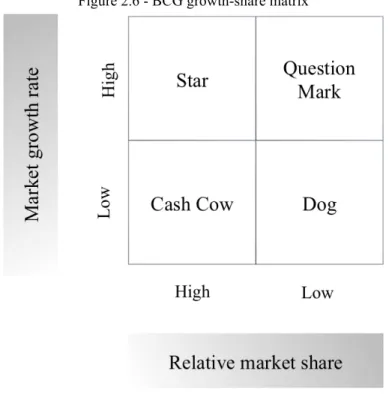
Figure 2.6 - BCG growth-share matrix ... 21
Figure 2.7 - GE's strategic business planning grid ... 22
Figure 2.8 - Shell directional policy matrix ... 23
Figure 2.9 - Product/Market growth grid ... 25
Figure 2.10 - Principal actors in company's microenvironment ... 28
Figure 2.11 - Six major forces in company's macroenvironment ... 29
Figure 2.12 - Maslow's hierarchy of need ... 31
Figure 2.13 - Marketing information system ... 32
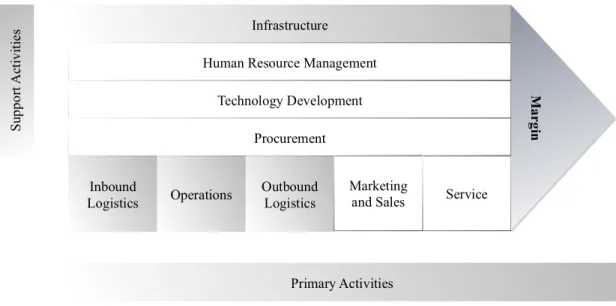
Figure 2.14 - Value chain ... 37
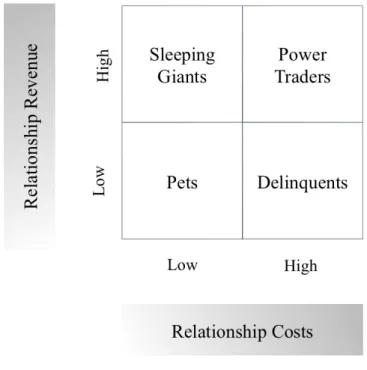
Figure 2.15 - Comparing customer relationship revenues with relationship costs ... 39
Figure 2.16 – The 8 Cs competitive domain ... 40
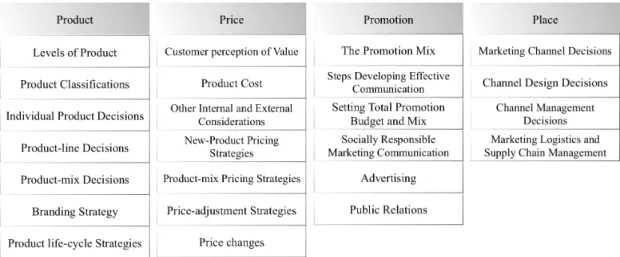
Figure 2.17 – Operational marketing ... 46
Figure 2.18 - Levels of product ... 47
Figure 2.19 – New-product development process ... 55
Figure 2.20 - Marketing-as-Practice base approach ... 78
Figure 2.21 - Marketing-as-Practice approach practitioners ... 80
Figure 2.22 - Marketing-as-Practice approach praxis ... 82
Figure 2.23 - Levels of Marketing-as-Practice research ... 84
Figure 2.24 - Marketing-as-Practice approach practices ... 89
Figure 2.25 - Strategic Marketing ... 89
xv Figure 2.27 – Marketing-as-Practice approach ... 90
xvi GRAPHICS INDEX
Graphic 3.1 - Number of companies by region, 2014 ... 93
Graphic 3.2 - Number of companies in Algarve region, by territory ... 94
Graphic 3.3 - Number of companies in Algarve region, by sector ... 94
Graphic 3.4 - Total gross value added in Algarve, by territory ... 95
Graphic 3.5 - Total turnover in Algarve region, by sector ... 95
Graphic 3.6 - Comparison between universe and sample, by Sector ... 97
Graphic 3.7 - Comparison between universe and sample, by Territory ... 97
Graphic 4.1- Companies distribution by activity sector ... 114
xvii TABLES INDEX
Table 3.1 – Survey details ... 98
Table 3.2 - Comparison of sent surveys by post, fax and internet ... 106
Table 3.3 - Importance level given to the practices ... 108
Table 4.1 - Importance level of strategic marketing practices ... 119
Table 4.2 - Importance level of operational marketing practices product ... 121
Table 4.3 - Importance level of operation marketing practices price ... 123
Table 4.4 - Importance level of operational marketing practices promotion ... 124
Table 4.5 - Importance level of operation marketing practices place ... 125
Table 4.6 - Runs Test strategic marketing ... 126
Table 4.7 - Runs Test operational marketing product ... 127
Table 4.8 - Runs Test operational marketing price ... 127
Table 4.9 - Runs Test operational marketing promotion ... 128
Table 4.10 - Runs Test operational marketing place ... 128
xviii ABBREVIATIONS LIST
BCG - Boston Consulting Group. GE - General Electric.
MaP – Marketing-as-Practice. SaP – Strategy-as-Practice.
SPSS – Statistical Package for Social Sciences.
1
1. INTRODUCTION
1.1. Introduction
This section will predominantly focus on the subject to be investigated and determine the objectives that will define the way forward. It is pertinent to explore each objective and indicate its relevance to the research subject.
At the end of the Introduction, will be described the whole structure of the work that will serve as the basis for the entire thesis development process.
1.2. Relevance of the subject to be investigated
Companies have always sought sell their products and services to customers, using methods and approaches commonly associated with marketing. As quoted by Lindon et al (2011), what has changed in recent years, as a result of economic, technological and scientific factors, is the way companies practice and use their tools. The addition of a management philosophy based on a marketing perspective may actually condition the survival, prosperity and growth of a company.
Over the years the concept of marketing has suffered numerous changes due to modifications of the market, where companies seeks to be always one step ahead. Currently, Kotler et al (2008) defines marketing as the process in which companies search to create value for customers and build strong relationships with them, i.e., retain them. Today, marketing must not only be associated with the act of selling and promoting a product or service, but also to satisfying the needs and wishes of customers and society in general. Marketing is the activity, set of institutions and processes of creating, communicating, delivering and exchanging offerings that have a certain value for customers and their partners (AMA, 2016).
Kotler et al (2008) also provides a model oriented to the marketing process that should serve as support to companies:
a) Comprehend the market, by analysing which are the needs and wishes of the customers;
2
c) Build an integrated marketing program, which offers value to customers; d) Add profitable relationships and create customer satisfaction;
e) Capture customer value, creating income.
Despite the constant evolution of the concept and process of marketing, nowadays companies still need to question:
a) What is marketing?
b) Who practices marketing in organizations? c) What does a marketing practitioner do? d) What does a marketing analyst do?
e) How can organizational and social theory form a MaP (Marketing-as-Practice) analysis?
Since the 90’s, consumers have become more careful in spending their money, looking for a higher value in the products and services they purchase (Kotler et al, 2008).
Nowadays, companies increasingly seek to be prepared for the challenges of the present and future, due to the growing competition, in constantly changing markets. Companies are also searching to be ready for potential and emerging threats to their markets.
The adoption of a marketing philosophy by companies is crucial. The way that is accepted and implemented by the entire company can dictate the success of the strategies that have been formulated. When companies understand the importance of marketing for the success and prosperity of their organization, it becomes essential to use practices and tools that address the combination of their company, market and customers. Therefore, companies should define an appropriate strategy and provide an integrated and suitable program.
The choice of this subject to be investigated is primarily justified by the importance that marketing has in the survival and prosperity of a company.
But that is not the only reason for the choice of this theme. All my academic and professional development encompasses the areas of Business Management and Marketing. Given the combination of personal, academic and professional factors, the development of this thesis will be based on models and definitions of marketing.
3
The new approach named Marketing-as-Practice, will enable the identification in an organized and structured manner, of the practices and tools, used by companies, in the marketing area. Also, it will facilitate the identification of who actually practices marketing in a company, that is to say who are the practitioners.
Finally, it will also allow determine if the practices and tools used by the companies are adequate and efficient.
1.3. General and specific objectives
As quoted by Pardal et al (1995), the subject of investigation must be defined through both theoretical and empirical elements, collected during the exploration that helps define the paths and modes of approach.
The starting point of an investigation is always the definition of the subject, formulated with the objective to understand and explain the reality.
The following principal objective for this thesis was defined as:
ü Determine which marketing practices and respective tools are used by practitioners in companies.
Having set the general objective, it is necessary to consider the following steps: a) Examine the SaP (Strategy-as-Practice) model and its three aspects:
Figure 1.1 - Strategy-as-Practice model
(Source: Whittington, 2006)
b) Develop MaP approach, based on the SaP model;
c) Apply the MaP approach, determine which are the practitioners, praxis and practices of companies.
It becomes possible accomplish the general objective, which is to developed a MaP approach that is based on the SaP model.
4
1.4. Work structure
This dissertation is structured in six chapters: introduction, literature review, methodology, results, discussion and conclusion.
a) The Introduction chapter illustrates the relevance of the topic to be studied, as well as the principal and specific objectives and the planned work structure; b) The Literature Review presents what has already been produced scientifically,
with regard to the subject in question. It also highlights the concepts, approaches and instruments used in the study of the subject to be investigated. Finally, in the literature review is justified the need of a new approach (MaP), being developed an attempt to create MaP approach. Still allows the development de questionnaire for the research methodology.
c) The Methodology chapter presents the methodological aspects upon which the study is based and the reasons supporting the decisions made;
d) Chapter four presents the Results. The results will be grouped and sorted in a logical sequence, they will be accompanied by tables, graphs or pictures and include interview excerpts and field notes, for better clarity;
e) In the Discussion chapter will interpret the data collected based on the findings of the literature review and the results. Will also be made reference to limitations of results and comparisons with the outcomes found in other studies; f) In the Conclusion chapter will be highlighted the main issues addressed during
this investigation, completed with recommendations for the future developments in this area.
1.5. Conclusion
This point includes the process of definition of the thesis subject, creating therefore the principal objective and guidelines that will orient the whole project.
Finally, was created a synthesis of the dissertation, in which was provided a brief summary of what will be presented in each chapter.
5
2. LITERATURE REVIEW
2.1. Introduction
This chapter will illustrate the conceptual framework that involves the study of marketing efficiency. The objective is to exemplify the importance of marketing to the survival and prosperity of companies and the fact that the marketing models and tools are not organizes in the best way, justifying in this way the development of the Marketing-as-Practice approach.
Included in this literature review there will be developed an analysis of the numerous issues connected to the subject. This will allow a deeper reflection about the subject of the thesis, enabling implications to be drawn, and help provide evidence and conclusions for the investigation.
Also, by understanding the concepts included in the SaP model, will become possible to determine which theories should or shouldn’t be used in the new marketing approach.
2.2. From marketing concept to marketing-as-practice
The marketing concept has been in the centrepiece in management thinking for several decades. It is possible to check the major changes in its definition by authors such as Deming (1953), Drucker (1954) and Kotler (1967) (Allen et al, 1998).
“The marketing concept arose in 1950s, when thinkers like Levitt realized that companies that made what the customer wanted were more successful than those that simply sold what the company made.” (Smith, 2005: 336).
Some trends such as the increasingly intense competition, changes in the market environment and the growing demand of consumers led organisations to focus on customers. Therefore Smith (2005) considers it useful to check three major divisions of strategising:
a) Understanding the Market; b) Choosing the Strategy; c) Deciding the Action.
6
The words of Peter Drucker (1954) about marketing involving the whole business is still celebrated and much quoted even today.
In a world of major changes in media and markets, there is a need to take a fresh look at marketing (Wind, 2008). Many leaders have recognized the need to challenge the existing marketing models. A group of marketing thinkers including Philip Kotler, J.Walker Smith, John K. Johanson, Raj Sisodia, Frederick Webster, Jr., Jag Sheth and Elen Urban, have examined the implication of issues such as ethics, changing consumer attitudes, information overload, to the changing role of marketing in companies (Sheth et al, 2006).
These discussions point to modifications that require analysis of the approaches, tools and theories of marketing used by companies (Wind, 2008).
In the 1950s, Peter Drucker famously defined the purposes of the companies as to create a customer (Drucker, 1954). It took many years for the world to adopt this customer-centric view of the companies, and many organizations are still struggling to do more than pay lip service to this concept.
Wind (2008) questions if is actually the customers that create the companies? This challenges the way we look at marketing and the role it takes within the broader companies.
The marketing concept needs to embrace new realities. As quoted by Wind (2008) we need to challenge the role of marketing functions, current concepts and theories. Marketing as an opportunity to lead the way in bridging silos and developing new models and approaches to address these challenges.
Marketing still encompasses the entire business (Drucker, 1954).
The marketing concept argues that achieving the objectives of the companies depends on determining the needs and wishes of the target markets and to contribute their satisfaction more effectively and efficiently than competitors (Kotler et al, 2008). Kotler et al (2008: 7) debate that if “the marketer understands consumer needs, develops products and services that provide superior customer value, and prices, distributes and promote them effectively, these products will sell easily”. According to Peter Drucker (1954), the goal of marketing is to make selling unnecessary. The aim is to know and understand the customer so well that the product or service sells itself.
7
So marketing is the “process by which companies create value for customers and build strong customer relationships in order to capture value from customers in return” (Kotler et al, 2008: 7). In a business context, marketing involves building profitable, value-laden exchange relationships with customers.
Kotler et al (2008) presents a five-step model of the marketing process. The first four steps refer to companies working to understand consumers, creating customer value and building strong customer relationships. The final step being companies reaping the rewards of creating superior customer value.
Figure 2.1 - Marketing process
(Source: Kotler et al, 2008)
Ambler (2003) states that all companies in the world follow marketing in a primary way, because otherwise they would all be bankrupt.
Robert Keith (1960) refers that in the future, it will be true that all company activities – from finances to sales – will aim at the satisfaction of customer’s needs and wishes. Only when this phase of development is reached, the marketing revolution will be completed.
Kotler et al (2008) also questions if a firm that satisfies the immediate needs and wishes of target markets is always doing what is best for consumers in the long run? “The societal marketing concept holds that marketing strategy should deliver value to customers in a way that maintains or improves both the consumer’s and society’s well-being” (Kotler et al, 2008: 19).
8
Figure 2.2 - Considerations underlying the societal marketing concept
(Source: Kotler et al, 2008)
Kotler et al (2008) defends that the marketing concept takes an outside-in perspective. The marketing concept starts with a well-defined market, focuses on customer needs and integrates all the marketing activities that affect customers.
In turn, companies receive the profits creating lasting relationships with the right customers.
Figure 2.3 - Marketing concept
(Source: Kotler et al, 2008)
At this level, Nanver et al (1990) gave an important first step to carry out a study that validates the relationship between marketing orientation and organisations performance, which according to the author gives a base beyond mere hunch to recommend the superiority of a market orientation.
Peter Drucker (1954) made it clear that marketing cannot be separated from the business.
Deming (2013) determines an important question that should be always considered “What cannot be measured cannot be improved”, so it is essential to implement methods that monitors the process to get a measurement indicator for comparing what is made against what the customer really wants.
9
The disorganization of the existing models and tools, make it complicated to analyse the potential of marketing in the companies. Thus, the development of the new marketing-as-practice approach allow in addition to organizing the marketing tools and practices, analyse which are effectively used by Algarvian companies, in a structured way.
2.3. Strategy-as-Practice model
The SaP model defines strategy as something that people do rather than something that a firm possesses (Whittington, 2006).
SaP as a research topic refers to the doing of strategy: a) Who does it?
b) What they do? c) How they do? d) What they use?
e) What implications this has for shaping strategy?
The growth of SaP into a field of research arises in large part from an increasing dissatisfaction with conventional strategy research.
The SaP perspective is concerned with the day-to-day activities of those engaged in strategy making, with its political, cultural and interactional aspects, and with how strategizing is embedded in the wider practices of industries, markets and societies. There is a curious absence of human actors and their actions in most strategy theories (Johnson et al, 2003). Most studies are reduced to a set of demographics such as age, tenure and functional background, which can be examined for statistical regularities in relation to some aspect of company performance. Increasingly, therefore, strategy research has been influenced by wider concerns to humanize management and organization research by bringing the individual back in (Whittington et al, 2002). The developing field of SaP research has taken this concern seriously, bringing human actors and their actions and interactions to the centre stage of strategy research (Jarzabkowski et al, 2009).
It becomes essential to reflect about the three axes of this model: Practitioners, Praxis and Practices.
10 2.3.1. Strategy-as-Practice: practitioners, praxis and practices
From a SaP perspective, strategy has been defined “as a situated, socially accomplished activity, while strategizing comprises those actions, interactions and negotiations of multiple actors and the situated practices that they draw upon in accomplishing that activity” (Jarzabkowski et al, 2007: 7).
SaP has defined its broad research parameters as studying three objects of analysis (Jarzabkowski et al, 2007):
ü Practitioners – Those people who do the work of strategy;
ü Practices – The social, symbolic and material tools through which strategy work is done;
ü Praxis – The flow of activity in which strategy is accomplished.
The objective is to analyse these three interrelated concepts and the way they are used in companies. First will be examined the concepts of practitioners and praxis, developing a typology based on the way in which different studies conceptualize the strategy practitioner and the level of strategy praxis that they aim to explain. Then will also be analysed the concept of practices, which has been adopted widely within the SaP literature.
2.3.2. Practitioners and praxis
In this point will be explained how existing papers conceptualize or empirically study the relationship between practitioners and praxis.
SaP research examines strategy as something that people do, indicating an important focus on strategy practitioners.
Strategy practitioners are defined widely, to include both those directly involved in making strategy (most prominently managers and consultants) and those with indirect influence (policy-makers, media, gurus and business schools who shape legitimate praxis and practices) (Jarzabkowski et al, 2008).
Empirical studies indicated that strategy practitioner might refer not only to individual practitioners but also to groups of practitioners, indicating the need for a meaningful
11 categorization of the different types of practitioners in order to map the field (Jarzabkowski et al, 2009).
Within existing papers, was possible recognise two main ontological dimensions for identifying practitioners:
a) Practitioner as an individual or an aggregate actor.
Some identify strategy practitioners as individuals, examining data for what an individual did and attributing specific activities to that individual.
Others studies identify practitioners as an aggregate actor, a class of actors, such as top management, middle management, engineering and so forth.
So, these studies inspect data, even where they are collected from individuals, to explain what an aggregate actor do and attribute specific activities to that aggregate actor (Jarzabkowski et al, 2009);
b) Practitioner is inside the organization or outside the organization.
A practitioner can be classified as internal, meaning having an allocated hierarchy, line or staff role within the organization’s structural and governance arrangements, such as middle manager, CEO or project manager.
Alternatively, a practitioner can also be external, meaning categories of actor that might influence the strategy of a focal organization but do not have an allocated hierarchy, line or staff role within that organization’s structural and governance arrangements. While such actors are also inside their own organizations, the literature conceptualizes them as actors outside a focal organization, whose actions and interactions have an impact upon that organization’s strategy (Jarzabkowski et al, 2009).
Whittington et al (2003) considers that external actors include consultants, gurus and institutional actor, such as chamber of industry and commerce, regulator, trade unions, media or other interest groups.
Praxis refers to the stream of activity through which strategy is accomplished over time.
As there are different nuances in the way that the term praxis is used, the best explanation of praxis is located in a recent editorial paper by Jarzabkowski et al (2007) and Reckwitz (2002).
These authors define praxis as a stream of activity that interconnects the micro actions of individuals and groups with the wider institutions in which those actions are
12 located and to which they contribute. They propose that this definition is helpful in linking the macro and micro in SaP research.
Praxis is where operation and action meet, a dialectic synthesis of what is going on in a society and what people are doing. Is possible to distinguish three levels within the literature (Jarzabkowski et al, 2009).
a) Micro refers to those studies that explore and attempt to explain strategy praxis at level of the individual or group’s experience of a specific episode, such as decision, meeting or workshop;
b) Meso refers to studies that explore and attempt to explain strategy praxis at the organizational or sub-organizational level, such as a change of programme, or a strategy process, or a pattern of strategic actions;
c) Macro refers to studies that explore and attempt to explain strategy praxis at the institutional level, which is most typically associated with enlightening patterns of action within a specific industry.
SaP is capable of transforming a meso level investigation into strategizing in construction, and beyond, because it provides a set of approaches, concepts and methodologies that seek to understand how strategies are translated beyond senior manager and policy documents into everyday contexts.
For SaP researches, the concept of praxis picks up on the same concern for activity, what people actually do in their strategy work (Whittington, 2006).
The SaP field has to rise to the challenging research agenda it has set in outlining a range of strategy practitioners and levels of strategy praxis. It may do so by drawing upon wider theoretical resources available in other fields to design appropriate empirical studies that can better inform all the domains of our typology (Jarzabkowski et al, 2009).
2.3.3. Practices
Having already delineated the relationship between practitioners and praxis, this chapter looks at strategy practices, which are an essential element of the SaP research agenda (Whittington, 2003).
13 Identifying a central concept of practice has been a challenging task, because so many different concepts of practices are used within the SaP field. So, first is necessary begin to study some definitions of practices within the wider practice literature and examine how these relate to definitions within the SaP field.
One of the problems with identifying practices is that they are entangled and interrelated elements of activity. It is thus hard to separate one particular practice from the interwoven fabric of practices (Jarzabkowski et al, 2009).
By drawing together some definitions of practices, it is possible to see that practices are a complex bundle involving social, material and embodied ways of doing that are interrelated and not always articulated or conscious to the actor involved in doing them.
The SaP field has attempted to translate this complex set of concepts into the practices involved in doing strategy.
“Practices involve the various routines, discourses, concepts and technologies through which this strategy labour is made possible – not just obvious ones such as strategy reviews and off-sites, but also those embedded in academic and consulting tools” (Jarzabkowski et al, 2008: 101).
Despite numerous definitions and a strongly advocated research agenda into strategy practices, the SaP literature, particularly the empirical literature, reveals no dominant view on the concept of practices (Jarzabkowski et al, 2009).
Practices refer to the various tools, norms, and procedures of strategy work, from analytical frameworks such as Porter’s Five Forces to strategic planning routines such as Strategy Workshops (Whittington, 2006).
This chapter outlines various concepts of practices that inform the SaP field, as well as examines the SaP research agenda to study the practices. It was possible note that there has been considerable work on theorizing practices that has, as yet, to be brought to life empirically.
14 2.3.4. Conclusion
Chapter 2.3. Strategy-as-Practice model, was structured around the interrelated concepts of practices, practitioners and praxis that have been identified as the research parameters of the SaP model.
This chapter allows understanding what is meant by strategy practitioner and how this concept has been realised, respectively, as an individual, an aggregate actor or an extra-organizational actor. Also it emphasises the notion that practitioners do not always mean individuals, but may well extend to classes of practitioners. At that point, it is also possible discover three levels of strategy praxis, micro, meso and macro, which have been espoused in SaP research.
This information allowed examining how practices have been treated in SaP research, finding a lack of consistent use of the term practices. This data is consistent with the analysis conducted about marketing, allowing developing a marketing-as-practice approach based on strategy-as-practice model.
As a nascent and emerging field, there has been tremendous energy in outlining an ambitious research agenda (Jarzabkowski et al, 2009).
2.4. Marketing tools and concepts analysis
In order to organise the marketing models, tools and concepts in a structured way, they will be categorized in the same logic used by Kotler el al (2008), Lindon et al (2011) and Wienclaw (2015): Strategic Marketing and Operational Marketing.
2.4.1. Strategic Marketing
In order for a company’s marketing effort to be effective and successful, it needs to be based on a strategic marketing plan to help ensure that the goals and objectives of the effort are appropriate to the needs of the market place.
Kotler et al (2008: 128) defends that “no one strategy is best for all companies. Each company must find the way that makes most sense, given its situation, opportunities, objectives and resources”.
15 There are a number of factors that should impact the development of a strategic marketing plan (Wienclaw, 2015):
ü Internal factors. Assets and skills of the company and the organizational culture. ü External factors. Various market drivers, market or industry lifestyle, and nature
of the competition.
This author defends that no matter how good a company’s products or services are, unless their value can be communicated to potential customers, the company will fail in its mission.
Strategic marketing examines the market place to determine the needs and wishes of potential customers and the nature of the competitor in the market and then attempts to develop a strategy that will enable the company to gain or maintain a competitive advantage in the marketplace.
“Many companies operate without formal plans” (Kotler et al, 2008: 128). ü Managers of new companies are sometimes too busy for planning;
ü Managers of small companies may think that only large corporations need planning;
ü Managers of mature companies may argue that they have done well without formal planning, so it can not be very important.
“Failing to plan means planning to fail” (Kotler et al, 2008: 128). Planning helps the company to anticipate and respond quickly to environmental changes and to prepare better for sudden developments.
Paley (2006) reveals that companies with written plans enable CEOs to manage more critical business functions, grow faster and achieve a higher proportion of revenues from new products and services than those whose plans are unwritten. Additionally, “growth companies with a written strategic plan have increased their revenues 69 per cent faster” than those without written plan (Paley, 2006: 202).
16
Figure 2.4 - Strategic Marketing
(Source: Developed by Denise van Dijk)
2.4.1.1. Annual plan, long-range plan and strategic plan
Which are the plan(s) that companies effectively develop? Theoretically there are many advantages for companies in creating annual plan, long-range plan and strategic plan, because as previously stated this enables companies to predict, anticipate and prepare them self for market changes. Paley (2006) emphasises that strategic planning can be used effectively to grow markets, recognize new product innovations and stay alert to new opportunities.
a) Annual plan. A short-term plan that explains the “current situation, company objectives, the strategy for the year, action programmes, budgets and controls” (Kotler et al, 2008: 129);
b) Long-range plan. This plan incorporates the factors and forces affecting the company during the next several years. Kotler et al (2008) highlights that this long-range plan should be updated each year so that the company always has a current long-range plan;
c) Strategic plan. This is the process whereby a company ensures it develops and maintains a strategic fit between its goals, capabilities and the changing market opportunities and challenges.
17 Regardless of the importance that authors such as Paley (2006), Kotler et al (2008) and Wienclaw (2015) gives to these plans, many companies still do not give enough credit to it.
2.4.1.2. Mission
Following this guideline, the next concept to be considered is the definition of the company Mission. A mission statement mainly “states the purpose of a company.” (Kotler et al, 2008: 130).
The American Marketing Association (2016) defines the mission as “an expression of a company’s history, managerial preferences, environmental concerns, available resources, and distinctive competencies used to serve their target market segments and to guide a firm’s decision-making and strategic planning.”
To create an effective mission state, Kotler et al (2008) recommends companies to first answer the following questions:
a) What business are we in? b) What do consumers value? c) What are we in business for? d) What sort of business are we? e) What makes us special?
“Successful companies continuously raise these questions and answer them.” (Kotler et al, 2008: 130). A clear mission statement guides people in the company, so that they can work independently and yet collectively towards the overall organizational goals.
The mission statement has received much less attention in marketing literature, despite its perceived importance in marketing strategy (Amato et al, 2002).
King et al (1979) recommend that companies carefully develop a written mission statement in order to reap the following benefits:
ü Ensure that all employees and managers understand the company’s purpose or reason for being;
ü Provide a basis for prioritization of key internal and external factors used to formulate reasonable strategies;
18 ü Provide a basis for the allocation of resources;
ü Deliver a basis for organising work, departments, activities and segments around a common purpose.
Wisely prepared mission statements are widely recognized by marketeers as the first step in strategic marketing, as they are critical to the development of company objectives (Powers, 2012).
Historically, marketeers are most often not involved in the definitions of the mission, partly because the statements lack a customer’s perspective.
2.4.1.3. Strategic objectives
The company’s mission needs to be turned into strategic objectives to guide management. “The mission states the philosophy and direction of a company, whereas the strategic objectives are measurable goals.” (Kotler et al, 2008: 134).
When a marketeer establishes the company objectives and goals, it becomes essential for them to analyse the broad impact that the defined objectives will have on the company.
Objectives should be short enough to be realistic and achievable in an increasingly volatile marketplace, yet long enough to be visionary about the impact of new technologies, changing behavioural patterns, the global market place, emerging competitor and changing demographics (Paley, 2006).
The definition of strategic objectives is directly dependent on the creation of the mission statement. All objectives defined must be consistent with the mission state by the company.
In order to create a cycle of setting the objectives it is necessary to formulate a common list of expectations regarding the way in which the team should work to focus them on the achievement of the objectives (Drucker, 1999).
As a result of the effects of the economic and financial crisis in companies, in recent years there has been a tendency to concentrate functional departments on their own objectives, neglecting the general interests and the mission statement defined by the company, producing inconsistency and deviation in the behaviour and direction of individual function in a company (Schiopoiu, 2008).
19 Obviously the lack of objectives leads to taking subjective decisions imposed under pressure, which will lead to the sacrifice of the important tasks in support of the strategic objectives.
2.4.1.4. SWOT analysis
After the definition of the mission and strategic objectives, the company needs to become prepared for eventualities arising outside the company, so they must continuously analyse the opportunities and possible threats that the market could bring to their company.
SWOT (Strengths, Weaknesses, Opportunities and Threats) Analysis corresponds to a brief list of critical success factors in the market, and rate the strength and weaknesses against the competition (Kotler et al, 2008).
Figure 2.5 - SWOT analysis
(Source: Kotler et al, 2008)
SWOT analysis is one of the most popular tools in use for defining a company’s strategic action, however it does have its weaknesses (Coman et al, 2009):
ü No straightforward methodology has been proposed to identify strengths and weaknesses;
ü Most SWOT analyses lack clear focus by concentrating on an excessive number of companies’ strengths and weaknesses, which subsequently makes it difficult to translate the findings into actions;
ü There is no indication of causality among the strengths and weaknesses, nor are they ranked into any hierarchy;
ü SWOT analysis is typically a one-time lacking mechanism for action upon and monitoring the changes in strengths and weaknesses over the longer term.
20 Despite the problems involved in its use, SWOT analysis remains a major strategic tool for listing the strengths and weaknesses of a company, for recording the major strengths and translating them into value (Coman et al, 2009).
Marketeers must identify the main threats and opportunities that their company faces. Companies should not challenge to list all their strengths and weaknesses but only those relating to critical success factors (Kotler et al, 2008). A failure in identifying its true strengths and weaknesses can be really dangerous for a company and cause it to take inappropriate decisions.
The mutability and instability of the external environment suggests the use of a corresponding system of management (Kolbina, 2015). This appears to be the principal reason why the use of SWOT analysis is spreading.
Currently, SWOT analysis is a model broadly applied in a number of different areas. Any kind of company can use it, so the majority of marketeers consider SWOT analysis as a necessary tool of strategic planning (Kolbina, 2015).
2.4.1.5. BCG, GE and Shell
Following this evaluation of the strategic marketing perspective, it is appropriate to discuss the importance of the development of a Business Portfolio by a company. The business portfolio relates to the “collection of businesses and products that make up the company” (Kotler et al, 2008: 139). The best business portfolio is the one that fits the company’s strengths and weaknesses to opportunities in the environment. Kotler et al (2008) indicates that to create an effective and reliable business portfolio, the company must:
a) Analyse its current business portfolio and decide which businesses should receive more, less or no investment at all;
b) Develop growth strategies for adding new products or businesses to the portfolio.
The best-known portfolio-planning models are Boston Consulting Group, General Electric and Shell.
In the late 1960’s the BCG (Boston Consulting Group) offered a new way to look at strategic planning activities (Henderson, 1973).
21 In order to envision the role played by each company unit, BCG developed the growth-share matrix, in which all businesses in a firm are plotted on a four-quadrant grid (Hax et al, 1983).
Figure 2.6 - BCG growth-share matrix
(Source: Kotler et al, 2008)
The horizontal axis refers to the market share enjoyed by a business relative to its major competitor. Corresponds to a way of characterizing the strength of the company in that business (Hax et al, 1983). Relative market share serves as a measure of company strength in the market.
The circles that must be included in the model represents each business, with the area within them proportional to total sales.
Hax et al (1983) state that the BCG growth-share model is helpful in three ways: ü Graphic display that offers a powerful and concise picture of the strengths of the
businesses in the company’s portfolio;
ü Identifies the capacity of each business to generate cash and also reveals its requirements for cash. Thus it assists in balancing the firm’s cash flow.
ü Shows the distinct characteristics of each business unit. It can also suggest strategic directions for each business.
A striking characteristic of the growth/share matrix is its simplicity. Hax et al (1983) indicates that this model captures the complexities of a company’s portfolio in a graphical representation with only two indicators.
22 Each business has a life cycle. Many business start ups have question marks and move into the star category, if they succeed. They later become cash cows as market growth falls, then finally die off or turn into dogs towards the end of their life cycle.
Planning developed in a period of steady growth, when the past was generally a good indicator of the future, are not appropriate to the unpredictable and fast-changing arena in which management must operate today (Gluck, 1986).
GE (General Electric) is the pioneer in the introduction of strategic planning in the 1960s and the much referred to model of the strategically managed company in the 1970s.
Similarly to BCG, GE’s uses a matrix with two dimensions. One representing the industry attractiveness and another demonstrating company strength in the industry. Accordingly Kotler et al (2008), GE approach considers many factors besides market growth rate as part of industry attractiveness:
ü Industry attractiveness index; ü Market growth rate;
ü Industry profit margin; ü Amount of competition;
ü Seasonality and cycle of demand; ü Industry cost structure.
Figure 2.7 - GE's strategic business planning grid
23 Accordingly to Kotler et al (2008), the green cells refers to the strong businesses in which the company should invest and seek to grow. The yellow diagonal cells contain businesses that are medium in overall attractiveness. The companies in these categories should maintain their level of investment in these businesses. The three red cells indicate businesses that are low in overall attractiveness. In these cases, the company should give serious thought to harvesting or divesting these businesses. The circles that will be introduced in the matrix, represents the company’s businesses and the pie slices within the circles represents each businesses’ market share.
The development of this matrix by General Electric was primarily motivated by the immense planning problems it was encountering as a multiproduct, multi-market company (Bownlie, 1985).
The Shell Chemical Company discover that traditional financial measure for guiding the allocation of resources within a diversified business, such as forecasted rate of return on capital employed were, in some respects, becoming inadequate aids to strategic decision making (Wind et al, 1981).
The Shell matrix also uses multivariate dimensions to measure attractiveness and capabilities. The application of Shell matrix involves identifying, firstly, the main criteria by which judge the prospects for a business sector. Secondly, those criteria by which a company’s position in a sector may be mediated as strong, average or weak. These criteria are then used to establish the separate ratings of the two principal dimensions (Bownlie, 1985).
Figure 2.8 - Shell directional policy matrix
24 The dimensions regarding Shell direction policy matrix are thought to be generally representative of the more significant elements of a company’s internal and external environment, from which arises the strengths and weaknesses and strategic threats and opportunities (Dhalla et al, 1976).
Since there is no universal means of allowance the importance of strategic variables independently of the specific business context, assigned weighting will tend to be arbitrary in nature, resulting in a need for a considerable qualitative input in the form of specialist management judgement and foresight (Brownlie, 1985).
Brownlie (1985) states that it would be naïve and misleading to argue that the matrices can be applied to all situations without modification. The prudent view is these three matrices provide a way of organising the company’s thinking about its marketing strategy.
Such as Brownlie (1985), Kotler et al (2008) also mention the limitations of these matrices. They point out that they can be difficult, time consuming and costly to implement. Additionally, these approaches focus on classifying current businesses, but provide little advice for future planning.
Of course, despite these and other problems, although many companies have dropped formal matrix methods in favour of customised approaches better suited to their situations, most companies remain firmly committed to strategic planning (Kotler et al, 2008).
2.4.1.6. Product/maket expansion grid
Nowadays it is possible to approach the development of growth strategies, via the elaboration of the product/market growth grid.
Growth strategy is one of the most important enterprise strategies, as many companies struggle to grow in a competitive environment, the features of which illustrated by the product/market growth grid (Ansoff, 1965).
According to Ansoff (1965), the product/market growth grid is a widely recognised model that conceptualizes market diversification, which is also a marketing strategy and growth strategy. This model includes market penetration, market development, product development and diversification.
25
Figure 2.9 - Product/Market growth grid
(Source: Kotler et al, 2008)
Market penetration is a “strategy for company growth by increasing sales of current product to current market segments without changing the product.” (Kotler et al, 2008: 146).
Accordingly Nagayoshi (2015), there are three major approaches to increase a current product’s market share:
a) Encourage current customers to buy more; b) Attract competitors’ customers;
c) Convince non-users to use the product.
Product development corresponds to a “strategy for company growth by offering modified and new products for current market segments.” (Kotler et al, 2008: 146). Correspondingly Nagayoshi (2015) indicates that intensive growth strategies could be to:
a) Developed new features;
b) Develop different quality levels; c) Improve the technology.
Nagayoshy (2015) considers three approaches to develop the market: a) Expand distribution channels;
b) Sell in new locations; c) Identify potential users.
Diversification makes enhanced sense as better opportunities are found outside a company.
26 Accordingly to Nagayoshy (2015), when a new product is launched in a new market, the diversification strategies are of three types such as:
a) Concentric diversification strategy. Develop new products with an earlier technology for new segments;
b) Conglomerate diversification strategy. Develop new products for new market; c) Horizontal diversification strategy. Develop new product with new technology
for existing customers.
“Companies spend vast amounts of money and time launching new brands, leveraging existing ones and acquiring rivals.” (Kotler et al, 2008: 149). But surprisingly, most companies do not analyse their brand portfolios from time to time to check if they might be selling too many brands, to identify weak ones and kill unprofitable ones.
2.4.1.7. Marketing plan
By developing a strategic plan, it is essential to remember the importance of creating marketing plans for each business, product or brand. Why? Accordingly Kotler et al (2008), within a well-focused company product classes can face hugely different circumstances.
Clark (2016) states that a marketing plan is a critical document to have for an organization’s future success. It outlines how a company plans to reach its target audiences, communicate its products/services and effectively grow the business. This author notices that one of the biggest limitations of the marketing plan is that companies in general only give importance to marketing plans in the first months, comparing it to “new year’s resolution”. It often starts with a high level of determination and commitment in the believe that the plan will somehow automatically maintain a high priority. The reality is that as time goes by management rapidly allows, adherence to the plan to be replaced by action responding to short term demands, influences and pressures. So he propose four tips when executing a marketing plan:
a) Keep a schedule. An effective schedule should be broken down week-by-week. Giving an assignment deadline is one way to put emphasis throughout the
27 company that these marketing tasks need to be completed and need to be finished on time;
b) Set realistic goals. A marketing plan may end up a failure just because the marketeer did not set realistic objectives at the beginning of the year;
c) Clearly define who is responsible for the successful delivery of the plan. Someone in the company needs to be responsible for the marketing plan. When something does not get done, who is the person you ask “Why?”.
d) Celebrate milestones. This author supports the view that people enjoy and are motivated by being responsible for or being part of a successful process or team. A company therefore has much to gain by ensuring success is given recognition whether this is celebrated privately or publicly. It is particularly important in marketing as a means of motivating even higher levels of achievement.
Curnow (2007) considers that a lot of companies are sceptical of the value of marketing in general and marketing plans in particular. Common criticisms are:
ü It is expensive and a waste of money;
ü The quality of products/services should speak for themselves and not rely on advertisements and other forms of marketing communication;
ü Management and employees should focus on the development of products/services and not rely on what is perceived as expensive advertising.
2.4.1.8. Marketing organisation
Kotler et al (2008) states that a company must design a marketing organisation that is capable of creating and implementing effective marketing strategies and plans.
In small companies one person may fulfil all marketing functions for example market research, statistical analysis, selling, advertising, marketing communications, customer service. However, in large companies, marketing departments typically employ many specialists.
The expansion of marketing responsibilities has created greater divisions of labour within the modern marketing unit and greater coordination challenges (Olson et al, 2005).