The Brazilian Journal of
INFECTIOUS DISEASES
w w w . e l s e v i e r . c o m / l o c a t e / b j i d
Original article
Epidemiological and molecular characterization of
community and hospital acquired
Staphylococcus aureus
strains prevailing in Shenyang, Northeastern China
Dan Dan Sun
a,1, Xiao Xue Ma
a,∗,1, Jian Hu
a, Yuan Tian
a,
Long Pang
a, Hong Shang
b, Long Zhu Cui
caDepartment of Medical Microbiology and Parasitology, College of Basic Medical Sciences, China Medical University, Shenyang, People’s
Republic of China
bDepartment of Clinical Laboratory, First Affiliated Hospital of China Medical University, Shenyang, People’s Republic of China
cResearch Center for Anti-infectious Drugs, Kitasato University, Sagamihara, Kanagawa, Japan
a r t i c l e
i n f o
Article history:
Received 21 December 2012 Accepted 15 February 2013 Available online 31 July 2013
Keywords:
CA- and HA-MRSA SCCmec
PFGE
spa
pvlgene
a b s t r a c t
In order to obtain adequate information for the treatment of methicillin resistant
Staphy-lococcus aureus(MRSA) infections, it is crucial to identify trends in epidemiological and
antimicrobial resistance patterns of localS. aureusstrains. Community and hospital acquired
S. aureusisolates (n= 202) were characterized using staphylococcal cassette chromosome
mec(SCCmec) typing, pulse field gel electrophoresis (PFGE) analysis,spatyping and mini-mal inhibitory concentration (MIC) determination. The prevalence of the Panton-Valentine leukocidine (pvl) and several antibiotic resistance genes among the isolates were also detected by PCR. All of theS. aureusisolates were susceptible to vancomycin, daptomycin and linezolid. Three hospital isolates were resistant to teicoplanin while 14 showed inter-mediate resistance to teicoplanin. The resistance patterns of community-acquired MRSA (CA-MRSA) isolates to other antimicrobials were similar to those of hospital-acquired MRSA (HA-MRSA) isolates except for clindamycin and gentamicin. There was excellent correlation between phenotypes and genotypes in the determination ofS. aureusresistance to eryth-romycin, gentamicin, and tetracycline. The SCCmectype II and SCCmectype IV were the predominant types detected in hospital and community isolates, respectively. The most frequently encounteredspatypes were t002 and t030 both in HA- and CA-MRSA isolates. Pulsotype A was the most predominant pulsotype identified among the isolates tested, fol-lowed by pulsotype B. Seventy-two hospital isolates (19 HA-MRSA and 53 HA-MSSA) and 10 CA-MRSA were positive for thepvlgene. This study shows that the combination of sus-ceptibility testing and various molecular methods has provided useful information on the antibiotic resistance and molecular diversity ofS. aureusin a specific region of China. The high proportion ofpvlpositive MSSA and MRSA isolates observed in this study indicates that adequate measures are needed to curtail the spread of those MRSA and MSSA clones prevailing both in hospital and the community.
© 2013 Elsevier Editora Ltda. All rights reserved.
∗ Corresponding author at: Department of Medical Microbiology and Parasitology, College of Basic Medical Sciences, China Medical
University, No. 92, North 2-Road, Heping District, Shenyang 110001, People’s Republic of China. E-mail address: [email protected] (X.X. Ma).
1 These two authors contributed equally to this work.
b r a z j i n f e c t d i s .2 0 1 3;1 7(6):682–690
683
Introduction
Methicillin resistantStaphylococcus aureus (MRSA) is one of the most prevalent nosocomial bacterial pathogens.1–5 caus-ing a wide variety of diseases such as skin and soft tissue infections, bloodstream infections, pneumonia, osteomyelitis and endocarditis, as well as toxin-mediated syndromes like toxic shock and food poisoning.1,4 MRSA was first identified in England in 1961 after which it emerged worldwide.3MRSA is now responsible for infections with significant morbidity and mortality and it has developed resistance to multiple antimicrobial agents complicating the clinical treatment of infections.4–8Since the 1990s, MRSA colonization and infec-tions have been increasingly reported among the general population/community and are referred to as community-acquired MRSA (CA-MRSA) strains.2 CA-MRSA strains have been reported in numerous countries such as Australia, New Zealand, the United Kingdom, Canada and the United States.5 In 2008, a study performed in a teaching hospital in Wen-zhou, China described and compared the characteristics of hospital and community acquiredS. aureusstrains.9Isolates of CA-MRSA are distinct from those of hospital-acquired MRSA (HA-MRSA) in many characteristics which include susceptibil-ity to antimicrobial agents, the type of genetic staphylococcal cassette chromosomemec(SCCmec) elements, and exotoxin gene repertoire.10
Currently, MRSA has become a notorious etiologic agent both in health care facilities and in the community in China, and several studies have shown that this tendency is increasing.2 According to a study published in 2005, the mean incidence of MRSA across China was over 50% with the prevalence in Shanghai being over 80%.11 It is, therefore, of paramount importance to understand the molec-ular epidemiology and to potentially predict the trends in antibiotic-resistance patterns of MRSA strains both in hospi-tals and within the community.
It appears that under the selective pressure caused by the extensive use of antibiotics, MRSA clones which carry resistance genes can better adapt to environmental change.6 These resistant genes include theermgenes (ermA,ermB,ermC) encoding erythromycin resistance, the tet genes (tetK, tetL,
tetM, tetO) encoding tetracycline resistance and the aac(6′
)-aph(2′′),aph(3′)-IIIandant(4′)-Igenes that encode gentamicin
resistance.12,13 Resistance determinants can be transposed from one strain to another, sometimes across the species barrier by conjugation, mobilization, phage-mediated trans-duction, and via as yet unknown mechanisms, resulting in the wide dissemination of antibiotic resistance among circulating staphylococcal strains. Therefore, there is a con-tinuous requirement to determine the effectiveness of these antibiotics againstS. aureusinfections and the enactment of effective drug policies in China.
The aim of the present study was to investigate the local epidemiological and antimicrobial resistance patterns of S.
aureusstrains in Shenyang, which is considered necessary
to establish empirical and specific therapy guidance for S.
aureustreatment. We identified the antibiotic susceptibility
patterns and the molecular characteristics of isolates using several methods, including SCCmec typing, pulsed-field gel
electrophoresis (PFGE) analysis, spa typing, assessment of several antibiotic resistance genes and minimum inhibitory concentration (MIC) determination. Since MSSA isolates car-ryingpvlhave been reported in the hospital environment and are thought to evolve into MRSA strains through acquisition of a type of SCCmecelement that harborsmecAgene,6,14 the prevalence of Panton-Valentine leukocidine (pvl) gene9among the isolates was also assessed.
Materials and methods
S. aureus isolate collection
The Shengjing hospital, a 2045-bed tertiary care center located in Shenyang, is one of three affiliated hospitals of the China Medical University. The hospital serves patients mostly com-ing from three large provinces located in the northeast of China and admits over 70,000 patients annually.
The hospital-acquiredS. aureusisolates were obtained from individual patients between January and October 2008 at the Shengjing Hospital of China Medical University in Shenyang from the following departments: internal medicine, nephrol-ogy, hematolnephrol-ogy, gastroenterolnephrol-ogy, endocrinolnephrol-ogy, intensive care unit, respiratory medicine, surgical department, surgery intensive care, neurosurgery, thoracic surgery, and pediatrics. In total, 180 hospital-acquiredS. aureuswere obtained from different clinical specimens, which included sputum (n= 94), pus (n= 41), blood (n= 25), urine (n= 9), prostatic fluid (n= 4), catheter tips (n= 3), drainage fluids (n= 3), and ascites (n= 1). The definition of hospital-acquired S. aureus infection was as follows: (1) anS. aureusinfection identified at least 48 h after admission to a hospital; (2) a history of hospitaliza-tion, surgery, dialysis, or residence in a long-term care facility within one year of the positive culture date; (3) a permanent indwelling catheter or percutaneous medical device (e.g. tra-cheostomy tube, gastrostomy tube or Foley catheter) present at the time of culture; or (4) a known positive culture forS.
aureusprior to the study period.15As a comparison, 2103
third-year students from China Medical University (located in the same region as Shengjing hospital) were screened for nasal carriage of S. aureusfrom whom 22 MRSA were identified. These MRSA strains were deemed to be of community origin since the students were all healthy and health care-related risk factors were absent.2
Only one isolate from each patient or student was used. Isolates were first cultured on sheep blood agar (Becton Dickinson, Cockeysville, MD) at 35◦C for 48 h. Phenotypic
iden-tification ofS. aureuswas initially based on colony morphology which was then confirmed using the Pos Combo type 41 MicroScan panels (Baxter Diagnostics, Inc., West Sacramento, CA). All the isolates were stored in a storage solution (80% glycerol, 20% brain heart infusion) at−80◦C.
Antimicrobial susceptibility test
MO), cefoxitin (Fujisawa Pharmacy Co., Osaka, Japan), van-comycin (Sigma Chemical, St. Louis, MO), teicoplanin, clindamycin, daptomycin, linezolid, rifampicin, levofloxacin (Daiichi Pharmaceutical Co., Tokyo, Japan), chlorampheni-col and trimethoprim-sulfamethoxazole (SXT). The reference strainS. aureusATCC 29213 was used as a control standard in each test.
DNA extraction
Genomic DNA was obtained from 2 mL overnight cultures of each isolate using a Biospin Bacteria Genomic DNA Extrac-tion Kit (Biotechs Biological Technology Co., Ltd) and by following the manufacturer’s instructions. Five microlitres of lysostaphin (100g/mL) were added to digest the bacterial cell wall at 37◦C for 60 min.
PCR detection of the mecA gene and SCCmec typing
Methicillin resistant phenotypic identification of theS. aureus
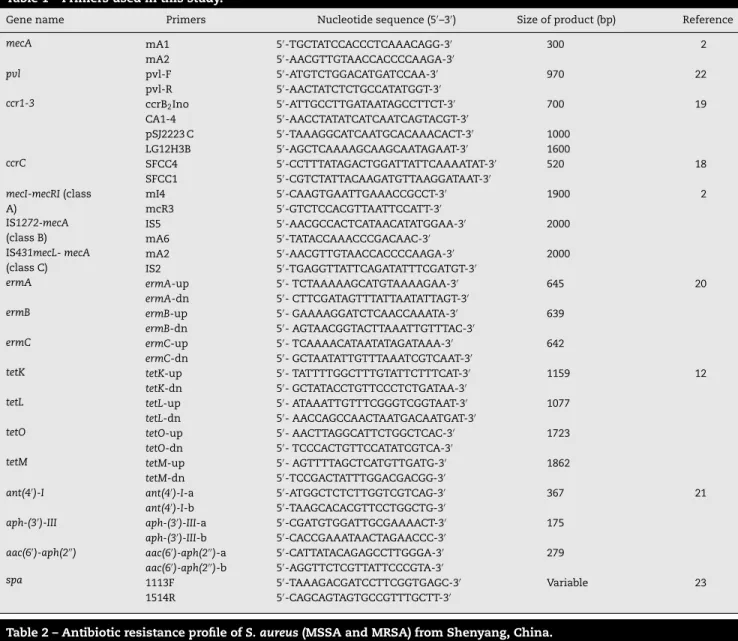
isolates was confirmed by the detection of the mecAgene. All isolates were subjected to mecA gene detection by PCR using primers mA1 and mA2 (Table 1). SCCmectyping was performed using PCR according to previous reports.18,19MRSA strains NCTC10442, N315, 85/2082, CA05 and WIS were used as reference standards for SCCmectyping (I, II, III, IV and V).
Detection of antimicrobial resistance genes and pvl gene
Antibiotic resistance genes associated with macrolide resis-tance (ermA, ermB and ermC), aminoglycoside resistance
(aac(6′)-aph(2′′),aph(3′)-III,ant(4′)-I) and tetracycline resistance
(tetK, tetL tetM, tetO) were detected by PCR using previously
published protocols and primers as shown in Table 1.12,20,21
All S. aureus isolates were screened for the pvl toxin gene
by PCR with primers pvl-1 and pvl-2 as described previously (Table 1).6,22 MRSA strains MW2 was used as a reference standard forpvlgene identification.
spa typing
The spa gene encoding protein A of S. aureus was used for MRSA typing and amplified by PCR with primers 1113F and 1514R (Table 1).23 Sequencing of the spa gene was performed by the Beijing Gene Institution (Beijing, China) using standard methods. The nucleotide sequences were ana-lyzed using the RIDOM Staph-Type software (Ridom GmbH, Germany) to assign a spa type to the various isolates (http://www.ridom.de/spaserver/).
PFGE analysis
Chromosomal DNAs from the MRSA isolates were digested withSmaI and separated by PFGE using a Gene Path system (CHEF-DR, PULS WAVE.760; Bio-Rad, Hercules, USA) according to the manufacturer’s instructions. A 48.5 kb ladder was used as a DNA size marker (Bio-Rad, cat. # LS:170-3635). Isolates were considered identical when their PFGE patterns contained the same number and sizes of fragments. PFGE patterns with fewer than 4 band differences between an existing genotype
were defined as subtypes of that genotype.2,24Genotypes were categorized alphabetically.
Statistical analysis
Statistical comparisons were applied to determine the signifi-cance of differences in resistance rates using Pearson’s2test (SPSS version 12.0).p-Values of less than 0.05 were considered statistically significant.
Results
Antimicrobial susceptibility
Of the 180 hospital-acquiredS. aureusisolates identified, 107 were MRSA and 73 were MSSA. Table 2 indicates that all isolates were susceptible to vancomycin, daptomycin, and linezolid. Two HA-MRSA (1.9%) and one HA-MSSA (1.4%) iso-lates were resistant to teicoplanin and 13 HA-MRSA (12.1%) isolates and one HA-MSSA (1.4%) isolate showed intermediate resistance to teicoplanin. There was no significant difference in the prevalence of teicoplanin resistance between HA-MRSA and HA-MSSA isolates (p> 0.05). All of the CA-MRSA isolates were susceptible to vancomycin, daptomycin, linezolid, and teicoplanin. In addition to the antibiotics above, the resis-tant rates to penicillin G, cefoxitin, erythromycin, levofloxacin, tetracycline, gentamicin, clindamycin were higher for HA-MRSA isolates, at 98.1%, 98.1%, 97.2%, 96.2%, 93.4%, 91.6%, and 87.9%, respectively. In contrast, the resistant rates to rifampicin, chloramphenicol, and SXT were moderately low, at 45.8%, 9.3%, and 10.3%, respectively. The resistance patterns of CA-MRSA isolates to the antibiotics tested were similar to those of the HA-MRSA isolates for most of the antimicrobial agents except for clindamycin and gentamicin.
Compared to HA-MRSA isolates, the HA-MSSA isolates pre-sented lower resistant rates to almost all antibiotics tested. HA-MSSA isolates showed resistance only to penicillin G, erythromycin, clindamycin, tetracycline and gentamicin to some degree. The predominant antibiotypes among the HA-MRSA isolates were resistant to penicillin G, oxacillin, cefox-itin, erythromycin, tetracycline, gentamicin, levofloxacin, and clindamycin. The predominant antibiotypes among the HA-MSSA isolates were those showing resistance to penicillin G, erythromycin, and clindamycin.
Antimicrobial resistance genes
Table 3 shows that theermAgene was frequently detected in both HA-MRSA (93/107, 86.9%) and HA-MSSA (59/73, 80.8%) iso-lates while the detection rates of theermBandermCgenes were significantly higher in HA-MSSA isolates (51/73, 69.9%; 58/73, 79.5%) compared to HA-MRSA isolates (49/107, 45.8%; 50/107, 46.7%). The triple combination ofermA, ermBand ermCwas present in 17.8% of HA-MRSA isolates and 49.3% of HA-MSSA isolates. In contrast, the CA-MRSA isolates only possessed the
ermAgene, which was detected in 13 (59.1%) erythromycin-resistant isolates.
b r a z j i n f e c t d i s .2 0 1 3;1 7(6):682–690
685
Table 1 – Primers used in this study.
Gene name Primers Nucleotide sequence (5′–3′) Size of product (bp) Reference
mecA mA1 5′-TGCTATCCACCCTCAAACAGG-3′ 300 2
mA2 5′-AACGTTGTAACCACCCCAAGA-3′
pvl pvl-F 5′-ATGTCTGGACATGATCCAA-3′ 970 22
pvl-R 5′-AACTATCTCTGCCATATGGT-3′
ccr1-3 ccrB2Ino 5′-ATTGCCTTGATAATAGCCTTCT-3′ 700 19
CA1-4 5′-AACCTATATCATCAATCAGTACGT-3′
pSJ2223 C 5′-TAAAGGCATCAATGCACAAACACT-3′ 1000
LG12H3B 5′-AGCTCAAAAGCAAGCAATAGAAT-3′ 1600
ccrC SFCC4 5′-CCTTTATAGACTGGATTATTCAAAATAT-3′ 520 18
SFCC1 5′-CGTCTATTACAAGATGTTAAGGATAAT-3′ mecI-mecRI(class
A)
mI4 5′-CAAGTGAATTGAAACCGCCT-3′ 1900 2
mcR3 5′-GTCTCCACGTTAATTCCATT-3′ IS1272-mecA
(class B)
IS5 5′-AACGCCACTCATAACATATGGAA-3′ 2000
mA6 5′-TATACCAAACCCGACAAC-3′ IS431mecL-mecA
(class C)
mA2 5′-AACGTTGTAACCACCCCAAGA-3′ 2000
IS2 5′-TGAGGTTATTCAGATATTTCGATGT-3′
ermA ermA-up 5′- TCTAAAAAGCATGTAAAAGAA-3′ 645 20
ermA-dn 5′- CTTCGATAGTTTATTAATATTAGT-3′
ermB ermB-up 5′- GAAAAGGATCTCAACCAAATA-3′ 639
ermB-dn 5′- AGTAACGGTACTTAAATTGTTTAC-3′
ermC ermC-up 5′- TCAAAACATAATATAGATAAA-3′ 642
ermC-dn 5′- GCTAATATTGTTTAAATCGTCAAT-3′
tetK tetK-up 5′- TATTTTGGCTTTGTATTCTTTCAT-3′ 1159 12
tetK-dn 5′- GCTATACCTGTTCCCTCTGATAA-3′
tetL tetL-up 5′- ATAAATTGTTTCGGGTCGGTAAT-3′ 1077
tetL-dn 5′- AACCAGCCAACTAATGACAATGAT-3′
tetO tetO-up 5′- AACTTAGGCATTCTGGCTCAC-3′ 1723
tetO-dn 5′- TCCCACTGTTCCATATCGTCA-3′
tetM tetM-up 5′- AGTTTTAGCTCATGTTGATG-3′ 1862
tetM-dn 5′-TCCGACTATTTGGACGACGG-3′
ant(4′)-I ant(4′)-I-a 5′-ATGGCTCTCTTGGTCGTCAG-3′ 367 21
ant(4′)-I-b 5′-TAAGCACACGTTCCTGGCTG-3′
aph-(3′)-III aph-(3′)-III-a 5′-CGATGTGGATTGCGAAAACT-3′ 175 aph-(3′)-III-b 5′-CACCGAAATAACTAGAACCC-3′
aac(6′)-aph(2′′) aac(6′)-aph(2′′)-a 5′-CATTATACAGAGCCTTGGGA-3′ 279 aac(6′)-aph(2′′)-b 5′-AGGTTCTCGTTATTCCCGTA-3′
spa 1113F 5′-TAAAGACGATCCTTCGGTGAGC-3′ Variable 23
1514R 5′-CAGCAGTAGTGCCGTTTGCTT-3′
Table 2 – Antibiotic resistance profile ofS. aureus(MSSA and MRSA) from Shenyang, China.
Antimicrobials Total no. of isolates (n= 202)
HA-MRSA (n= 107) CA-MRSA (n= 22) HA-MSSA (n= 73)
Resistant Intermediate Susceptible Resistant Intermediate Susceptible Resistant Intermediate Susceptible
PEN 105 (98.1) 0 (0.0) 2 (1.9) 22 (100.0) 0 (0.0) 0 (0.0) 67 (91.8) 0 (0.0) 6 (8.2) OXA 107 (100.0) 0 (0.0) 0 (0.0) 22 (100.0) 0 (0.0) 0 (0.0) 0 (0.0) 0 (0.0) 73 (100.0) FOX 105 (98.1) 0 (0.0) 2 (1.9) 22 (100.0) 0 (0.0) 0 (0.0) 1 (1.4) 0 (0.0) 72 (98.6) VAN 0 (0.0) 0 (0.0) 107 (100.0) 0 (0.0) 0 (0.0) 22 (100.0) 0 (0.0) 0 (0.0) 73 (100.0) TEC 2 (1.9) 13 (12.1) 92 (86.0) 0 (0.0) 0 (0.0) 22 (100.0) 1 (1.4) 1 (1.4) 71 (97.3) CLI 94 (87.9) 1 (0.9) 12 (11.2) 6 (27.3) 0 (0.0) 16 (72.7) 38 (52.1) 0 (0.0) 35 (47.9) RIF 49 (45.8) 1 (0.9) 57 (53.3) 7 (31.8) 0 (0.0) 15 (68.2) 1 (1.4) 0 (0.0) 72 (98.6) GEN 98 (91.6) 2 (1.9) 7 (6.5) 3 (13.6) 0 (0.0) 19 (86.4) 19 (26.0) 0 (0.0) 54 (74.0) LVX 103 (96.3) 0 (0.0) 4 (3.7) 18 (81.8) 0 (0.0) 4 (18.2) 6 (8.2) 1 (1.4) 66 (90.4) CHL 10 (9.3) 0 (0.0) 97 (90.7) 0 (0.0) 0 (0.0) 22 (100.0) 2 (2.7) 1 (1.4) 70 (95.9) ERY 104 (97.2) 0 (0.0) 3 (2.8) 20 (90.9) 0 (0.0) 2 (9.1) 56 (76.7) 1 (1.4) 16 (21.9) SXT 11 (10.3) 0 (0.0) 96 (89.7) 2 (9.1) 0 (0.0) 20 (90.9) 2 (2.7) 2 (2.7) 69 (94.5) LINE 0 (0.0) 0 (0.0) 107 (100.0) 0 (0.0) 0 (0.0) 22 (100.0) 0 (0.0) 0 (0.0) 73 (100.0) DAPT 0 (0.0) 0 (0.0) 107 (100.0) 0 (0.0) 0 (0.0) 22 (100.0) 0 (0.0) 0 (0.0) 73 (100.0) TCY 100 (93.5) 1 (0.9) 6 (5.6) 18 (81.8) 0 (0.0) 4 (18.2) 20 (27.4) 2 (2.7) 51 (69.9)
braz
j
infect
dis.
2013
;
1
7(6)
:682–690
Table 3 – Characterization of hospital isolates from Shenyang based on antibiotic susceptibility patterns and detection of antibiotic resistance genes.
Erythromycin Tetracycline Gentamicin No. of
isolates (%)
Pattern (R or S)
Resistance genes No. of isolates
(%)
Pattern (R or S)
Resistance genes No. of isolates
(%)
Pattern (R or S)
Resistance genes
ermA ermB ermC tetM tetK tetL tetO aac(6′)-aph(2′′) aph(3′)-III ant(4′)-I
HA-MRSA (n= 107)
R + + − 30 (28.0) R + + − − 38 (35.5) R + − − 91 (85.0)
R + − + 25 (23.4) R + − − − 33 (30.8) R + + − 6 (5.6)
R + + + 19 (17.8) R + + − + 8 (7.5) R − − − 5 (4.7)
R + − − 19 (17.8) R + − − + 8 (7.5) S + − − 5 (4.7)
R − − + 3 (2.8) R + − + − 6 (5.6)
S − − − 8 (7.5) R − − − − 6 (5.6)
S − − + 3 (2.8) R + + + − 3 (2.8)
S − − − − 3 (2.8)
S + − − − 2 (1.9)
CA-MRSA (n= 22)
R + − − 13 (59.1) R + − − − 8 (36.4) R + − − 10 (45.5)
R − − − 8 (36.4) R − − − − 11 (50.0) R − − + 2 (9.1)
S − − − 1 (4.5) S − − − − 3 (13.6) R − − − 7 (31.8)
S − − − 3 (13.6)
HA-MSSA (n= 73)
R + + + 29 (39.7) R + + − − 7 (9.6) R + − − 15 (20.5)
R + − + 15 (20.5) S + − − − 22 (30.1) S − − − 44 (60.3)
R + + − 8 (11.0) S + − − + 15 (20.5) S + + − 7 (9.6)
S + + + 7 (9.6) S − − − − 15 (20.5) S + − − 7 (9.6)
S − + − 7 (9.6) S − + − − 7 (9.6)
b r a z j i n f e c t d i s .2 0 1 3;1 7(6):682–690
687
andtetL(11.2% versus 9.6%) genes and less likely to contain
tetO(15.0% versus 30.1%) than the HA-MSSA isolates. Among the CA-MRSA isolates, 86.4% (19/22) were resistant to tetracy-cline. Only eight of these isolates possessed thetetMgene.
The aminoglycoside-resistance gene aac(6′)-aph(2′′) was
identified most frequently in HA-MRSA isolates (102/107, 95.3%). Theaph(3′)-IIIgene was detected in six (5.6%) HA-MRSA
and in seven (9.6%) HA-MSSA isolates but was not detected in any of the CA-MRSA isolates. Interestingly, theant(4′)-Igene
was detected in two CA-MRSA isolates (9.1%) but was not detected in any of the hospital isolates.
Molecular characteristics of CA-MRSA and HA-S. aureus isolates
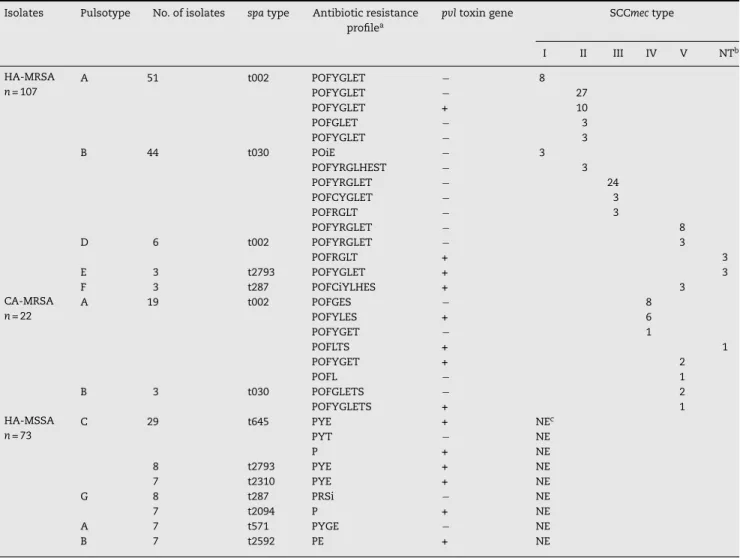
SCCmec types were identified in 107 HA-MRSA and 22 CA-MRSA isolates as shown in Table 4. Six HA-CA-MRSA and one CA-MRSA isolate(s) could not be assigned SCCmectypes using the established protocols. For the HA-MRSA isolates, the most frequently detected SCCmectypes were SCCmectype II (43.0%, 46/107) and SCCmectype III (28.0%, 30/107), followed by SCCmec
type V (13.1%, 14/107) and SCCmectype I (10.3%, 11/107). For the CA-MRSA, SCCmectype IV (68.2%; 15/22) and V (27.3%; 6/22) were the most frequently found.
Thespatypes were assigned by sequencing analysis of PCR products of thespagene (Table 4). Ninespatypes (t002, t030, t645, t2793, t287, t2310, t2094, t571 and t2592) were found in 180 of the hospital-acquired isolates and two (t002 and t030) were found in 22 of the CA-MRSA isolates. The most frequently encounteredspatypes were shown to be t002 and t030 both in HA-MRSA (n= 57;n= 44) and CA-MRSA isolates (n= 19;n= 3).
A total of seven pulsotypes were identified among the iso-lates and they were classified into seven major groups (A to G) according to their band patterns (data not shown). As shown in Table 4, the majority of theS. aureusisolates (n= 77), including both hospital- and community-acquired isolates, belonged to the pulsotype A cluster, followed by pulsotypes B, C and G.
Prevalence of the pvl gene
Of 202S. aureus isolates tested, 72 HA isolates (e.g., 19 HA-MRSA and 53 HA-MSSA) and 10 CA-HA-MRSA isolates were positive for thepvlgene. All of the 53 HA-MSSA isolates posi-tive forpvlwere obtained from pus while 19 of thepvlpositive HA-MRSA isolates were obtained from 13 sputum and 6 ascite samples. Further statistical analysis showed that patients withpvlpositive HA-MRSA isolates were older thanpvl pos-itive HA-MSSA carriers (65.8 year versus 11.9 year;p< 0.05). Two SCCmectypes were identified among the 19pvlpositive HA-MRSA isolates, namely the SCCmectype II (10/107; 9.3%) and type V (3/107; 2.8%). Among the 22 CA-MRSA isolates, the
pvlpositive isolates were SCCmectype IV (6/22; 27.3%) and type V (3/22; 13.6%).
Discussion
This study reveals that the HA-MRSA, HA-MSSA and CA-MRSA isolates differ significantly in antimicrobial susceptibility (Table 2). Considering the low resistance rates of HA-MRSA
and CA-MRSA to vancomycin, teicoplanin, chloramphenicol, daptomycin, linezolid and SXT, these antimicrobials may still be effective in therapy for S. aureusinfections. In contrast, the high resistance rates of isolates to penicillin, oxacillin, cefoxitin, levofloxacin, erythromycin, tetracycline, strongly indicates that the use of these antibiotics should not be encouraged for treating patients with suchS. aureusinfections in the Shenyang region of China.
AllS. aureusisolates were susceptible to vancomycin,
dap-tomycin and linezolid. However two (1.9%) HA-MRSA and one (1.4%) HA-MSSA isolates were resistant to teicoplanin while 13 (12.1%) HA-MRSA and one (1.4%) HA-MSSA isolate showed intermediate resistance to this antibiotic. Glycopep-tides including vancomycin and teicoplanin are of great importance in the treatment of patients with penicillinase-producing and methicillin-resistantS. epidermidisandS. aureus
infections.25However, along with the increasing use of van-comycin and teicoplanin in clinical practice, there have been numerous reports on the emergence of MRSA with reduced susceptibility to glycopeptides in addition to teicoplanin ther-apy failure.26–28 Since our study showed that teicoplanin resistance was present in HA-MRSA and HA-MSSA isolates, it would seem prudent to routinely screen both MRSA and MSSA isolates for reduced susceptibility to both vancomycin and teicoplanin. Our results also indicated that daptomycin and linezolid remain effective in treating those MRSA or MSSA strains exhibiting teicoplanin intermediate resistance.
As shown in Table 2, about 97.2%, 93.5%, 91.6% and 87.9% of the HA-MRSA isolates were resistant to erythromycin, tetracycline, gentamicin and clindamycin, respectively. In addition, 13.6% and 27.3% of CA-MRSA isolates were resistant to gentamicin and clindamycin. Compared to the HA-MRSA isolates, the CA-MRSA isolates were therefore more likely to be susceptible to gentamicin and clindamycin. Clindamycin is recommended by current guidelines as an option for the man-agement of CA-MRSA infections.29Nevertheless, resistance to clindamycin was detected in 27.3% of the CA-MRSA in this study, a fact that should be taken into consideration in the future management of CA-MRSA. Most of the HA-MSSA and CA-MRSA isolates manifested susceptibility to several antimi-crobials excluding the-lactams (e.g. penicillin G, oxacillin, cefoxitin), and both CA-MRSA and HA-MSSA isolates showed low resistance to gentamicin. However, compared to CA-MRSA, HA-MSSA isolates were more likely to have high-level resistance to clindamycin. It may be that the HA-MSSA iso-lates demonstrate reduced susceptibility to clindamycin due to the selective pressures in the clinical setting.
Table 3 demonstrates that ermAwas the most common gene encoding macrolides resistance in both the hospital and community acquiredS. aureus isolates. TheermB andermC
genes were more prevalent in HA-MSSA than in HA-MRSA isolates. Other investigators have also found thatermAis the dominantermgene inS. aureus.13 Table 3 shows that three HA-MRSA and 21 HA-MSSA isolates were susceptible to eryth-romycin even though they possessed at least one of the three
Table 4 – Molecular characteristics of isolates from hospital and community settings and detection of virulence genes.
Isolates Pulsotype No. of isolates spatype Antibiotic resistance profilea
pvltoxin gene SCCmectype
I II III IV V NTb
HA-MRSA n= 107
A 51 t002 POFYGLET − 8
POFYGLET − 27
POFYGLET + 10
POFGLET − 3
POFYGLET − 3
B 44 t030 POiE − 3
POFYRGLHEST − 3
POFYRGLET − 24
POFCYGLET − 3
POFRGLT − 3
POFYRGLET − 8
D 6 t002 POFYRGLET − 3
POFRGLT + 3
E 3 t2793 POFYGLET + 3
F 3 t287 POFCiYLHES + 3
CA-MRSA n= 22
A 19 t002 POFGES − 8
POFYLES + 6
POFYGET − 1
POFLTS + 1
POFYGET + 2
POFL − 1
B 3 t030 POFGLETS − 2
POFYGLETS + 1
HA-MSSA n= 73
C 29 t645 PYE + NEc
PYT − NE
P + NE
8 t2793 PYE + NE
7 t2310 PYE + NE
G 8 t287 PRSi − NE
7 t2094 P + NE
A 7 t571 PYGE − NE
B 7 t2592 PE + NE
a O, oxacillin; P, penicillin G; T, tetracycline; F, cefoxitin; S, trimethoprim-sulfamethoxazole; E, erythromycin; G, gentamicin; V, vancomycin; L,
levofloxacin; R, rifampicin; C, Teicoplanin; Y, clindamycin; H, chloramphenicol; i, intermedial.
b NT, nontypable. c NE, not determined.
resistant to erythromycin but did not possess any erythromy-cin resistance genes as determined by PCR (Table 3). This might be explained by the location of these genes on small plas-mids, which were occasionally lost.20,31,32The most frequently identified gene implicated in aminoglycoside resistance in our study wasaac(6′)-aph(2′′), which was found in 95.3% of
HA-MRSA, 45.5% of CA-MRSA and 39.7% of HA-MSSA iso-lates, respectively. TheAph(3′)-IIIgene, infrequently found in
S. aureus, was identified in 5.6% of HA-MRSA and 9.6% of
HA-MSSA isolates, respectively. The ant(4′)-I gene, another
infrequently found gene inS. aureus, was detected in 9.1% of CA-MRSA isolates.
The use of several different molecular methods is cur-rently necessary for the accurate typing of MRSA, both in outbreak situations and for international comparisons.33In this study, PFGE analysis indicated that the HA-MRSA isolates could be grouped into five different types (Pulsotype A, B, D, E and F), pulsotype A was the most predominant type (51/107; 47.7%), followed by pulsotype B (44/107; 41.1%). Concurrently, CA-MRSA isolates were grouped into two different types (Pul-sotype A and B), 19 belonged to pul(Pul-sotype A and three strains
belonged to pulsotype B. Thespatyping revealed fourspatypes including t002, t030, t2793 and t287 among the HA-MRSA iso-lates, while twospatypes of t002 and t030 were identified in CA-MRSA. The results demonstrated that the predominantspa
types (t002 and t030) and pulsotypes (A and B) in commu-nity acquired MRSA were also predominant among hospital isolates, which suggested that they shared the same clonal origin. This also indicates that the cross-transmission ofS.
aureusstrains between the community and hospital
environ-ment may have occurred which is in accordance with previous reports documenting increasing colonization and infection due to MRSA strains of community origin in hospitals and vice versa.34,35
SCCmectyping of HA-MRSA isolates revealed that 13.1% (14/107) strains carried SCCmectype V, which is mainly car-ried by CA-MRSA isolates36 indicating that HA-MRSA and CA-MRSA isolates might not be distinguished merely by iden-tifying their SCCmecgenotypes. Ma et al.10 reported that 49 of 51 strains (96.0%) isolated from both community- and healthcare-associated cases in Uruguay carried either SCCmec
b r a z j i n f e c t d i s .2 0 1 3;1 7(6):682–690
689
have been numerous reports describing nosocomial outbreaks caused by strains harboring SCCmec type IV, which was originally identified in CA-MRSA strains.37,38 Compared with SCCmectype I, II and III, SCCmectype IV and type V are small in size and are more prone to transfer between staphylococcal species, presumably via phage-associated transduction.2,18,36 In this study, seven MRSA strains could not be assigned SCCmectypes using the established protocols. Presently work is being undertaken to assign SCCmectypes to those seven strains using recently reported primers.45
Worldwide pandemic MRSA clones have been reported as the New York/Japan clone (ST5-type II SCCmec), the pediatric clone (ST5-type IV SCCmec), the archaic clone (ST250-type I SCCmec), the Iberian clone (ST247-SCCmectype 1A), and the Brazilian/Hungarian clone (ST239-type III SCCmec) by Oliveira et al.39 In the present study, we identified several different MRSA clones that were distinguishable based on SCCmec typ-ing,spatyping, and distinct antimicrobial resistance profiles (Table 4). We conclude thatspatypes t030 and t002 were the two most common spatypes identified in this study. Most of the t030 belong to the Brazilian ST239-MRSA-III epidemic clones while the t002 belong to both the New York/Japan ST5-MRSA-II and the pediatric ST5-MRSA-IV epidemic clones which are the most prevalent in Asian countries, especially China.11,40
It is known that thepvl gene locus is carried on bacte-riophages, namelyPVL,SLT,Sa2mw and108PVL, which encode pvl components. S. aureus isolates producing PVL have been strongly associated with severe skin and soft-tissue infections (SSTIs), and occasionally, severe necrotizing pneumonia.6 Some previous studies have described a low prevalence ofpvlgenes (<5%) in HA-MRSA,41,42whilepvl pos-itive CA-MRSA clones have spread globally.2,43 In our study, thepvlgene was identified in 17.8% (19/107) of HA-MRSA and 45.5% (10/22) CA-MRSA isolates, respectively. In Taiwan, dur-ing 2005 the prevalence ofpvlpositive MRSA isolates was 23.3% in hospitals.44Yu et al. also reported the prevalence of thepvl gene among clinical isolates ofS. aureusin a teaching hospi-tal, and most of thepvlpositive isolates were SCCmectype III.9 Furthermore, in this study we also found a high prevalence of
pvlpositive MSSA isolates of hospital origin.
Overall, the present study suggests a bi-directional move-ment ofS. aureusstrains between healthcare and community settings in Shenyang, China. The spread ofpvlpositive MRSA clones with specific genotypes within hospitals and the com-munity is a particular cause of concern and could have important implications for the implementation of effective infection control strategies and measures.
Conclusions
This study has shown that the combination of susceptibility testing and various molecular methods provides useful infor-mation on the antibiotic resistance and molecular diversity of
S. aureusin a region of Northeastern China. Although the
num-ber ofS. aureusisolates available for our investigation together with relevant epidemiological data was limited, the high pro-portion ofpvlpositive MRSA and MSSA isolates observed in this study indicates that adequate measures are needed in
order to curtail and control the spread and establishment of such MRSA and MSSA isolates in Chinese health care institu-tions.
Conflicts of interest
The authors declare no conflicts of interest.
Acknowledgments
The authors thank professors Keiiti Hiramatsu and Teruyo Ito (Juntendo University) for providing MRSA strains as SCCmec
typing standards. This work was supported by the National Natural Science Foundation (No. 30972520) and the Ministry of Education in China (No. [2009] 1001).
r e f e r e n c e s
1. Wang WY, Chiueh TS, Sun JR, Tsao SM, Lu JJ. Molecular typing and phenotype characterization of methicillin-resistant
Staphylococcus aureusisolates from blood in Taiwan. PLoS
ONE. 2012;7:e30394.
2. Ma XX, Sun DD, Wang S, et al. Nasal carriage of
methicillin-resistantStaphylococcus aureusamong preclinical medical students: epidemiologic and molecular
characteristics of methicillin-resistantS. aureusclones. Diagn Micr Infec Dis. 2011;70:22–30.
3. Lee AS, Huttner B, Harbarth S. Control of methicillin-resistan
Staphylococcus aureus. Infect Dis Clin N Am. 2011;25:155–79.
4. Shittu AO, Okon K, Adesida S, et al. Antibiotic resistance and molecular epidemiology ofStaphylococcus aureusin Nigeria. BMC Microbiol. 2011;11:92–9.
5. Ma XX, Ito T, Tiensasitorn C, et al. Novel type of staphylococcal cassette chromosomemecidentified in community-acquired methicillin-resistantStaphylococcus
aureusstrains. Antimicrob Agents Chemother.
2002;46:1147–52.
6. Ma XX, Ito T, Chongtrakool P, Hiramatsu K. Predominance of clones carrying panton-valentine leukocidin genes among methicillin-resistantStaphylococcus aureusstrains isolated in Japanese hospitals from 1979 to 1985. J Clin Microbiol. 2006;44:4515–27.
7. Cooper BS, Kypraios T, Batra R, et al. Quantifying type-specific reproduction numbers for nosocomial pathogens: evidence for heightened transmission of an Asian sequence type 239 MRSA clone. PLoS ONE. 2012;8:e1002454.
8. Qiu JZ, Niu XD, Wang JF, et al. Capsaicin protects mice from community-associated methicillin-resistantStaphylococcus
aureuspneumonia. PLoS ONE. 2012;7:e33032.
9. Yu F, Chen Z, Liu C, et al. Prevalence ofStaphylococcus aureus
carrying Panton-Valentine leukocidin genes among isolates from hospitalized patients in China. Clin Microbiol Infect. 2008;14:381–4.
10. Ma XX, Galiana A, Pedreira W, et al. Community acquired methicillin-resistantStaphylococcus aureus, Uruguay. Emerg Infect Dis. 2005;11:973–6.
11. Liu YD, Wang H, Du N, et al. Molecular evidence for spread of two major methicillin-resistantStaphylococcus aureusclones with a unique geographic distribution in Chinese hospitals. Antimicrob Agents Chemother. 2009;53:512–8.
12. Trzcinski K, Cooper BS, Hryniewicz W, Dowson CG. Expression of resistance to tetracyclines in strains of
13. Martineau FF, Picard FJ, Lansac N, et al. Correlation between the resistance genotype determined by multiplex PCR assays and the antibiotic susceptibility patterns ofStaphylococcus
aureusandStaphylococcus epidermidis. Antimicrob Agents
Chemother. 2000;44:231–8.
14. Green SM, Marsh P, Ahmad N, Jefferies JMC, Clarke SC. Characterization of community and hospitalStaphylococcus
aureusisolates in Southampton, UK. J Med Microbiol.
2010;59:1084–8.
15. Naimi TS, LeDell KH, Como-Sabetti K, et al. Comparison of community- and health care-associated methicillin-resistant
Staphylococcus aureusinfection. JAMA. 2003;290:2976–84.
16. CLSI. Performance standards for antimicrobial susceptibility testing. Nineteenth informational supplement. M100-S19; 2009. Wayne, PA.
17. CLSI. Methods for dilution antimicrobial susceptibility tests for bacteria that grow aerobically; approved standard, eighth edition, M07-A8; 2009. Wayne, PA.
18. Ito T, Ma XX, Takeuchi F, Okuma K, Yuzawa H, Hiramatsu K. Novel type V staphylococcal cassette chromosomemecdriven by a novel cassette chromosome recombinase,ccrC.
Antimicrob Agents Chemother. 2004;48:2637–51.
19. Chongtrakool P, Ito T, Ma XX, et al. Staphylococcal cassette chromosomemec(SCCmec) typing of methicillin-resistant
Staphylococcus aureusstrains isolated in 11 Asian countries: a
proposal for a new nomenclature for SCCmecelements. Antimicrob Agents Chemother. 2006;50:1001–12. 20. Yin J, Yu Sj, Liu XR, et al. Prevalence and mechanism of
resistance to antimicrobial agents in group G streptococcal isolates from China. Antimicrob Agents Chemother. 2011;55:402–4.
21. Ida T, Okamoto R, Shimauchi C, Okubo T, Kuga A, Inoue M. Identification of aminoglycoside-modifying enzymes by susceptibility testing: epidemiology of methicillin-resistant
Staphylococcus aureusin Japan. J Clin Microbiol.
2001;39:3115–21.
22. Ma XX, Ito T, Kondo Y, et al. Two different Panton-Valentine leukocidin phage lineages predominate in Japan. J Clin Microbiol. 2008;46:3246–58.
23. Aires-de-Sousa M, Boye K, de Lencastre H, et al. High interlaboratory reproducibility of DNA sequence-based typing of bacteria in a multicenter study. J Clin Microbiol.
2006;44:619–21.
24. Tenover FC, Arbeit DR, Goering RV, et al. Interpreting chromosomal DNA restriction patterns produced by pulsed-field gel electrophoresis: criteria for bacterial strain typing. J Clin Microbiol. 1995;33:2233–9.
25. Atahan E, Gul M, Ergun Y, Eroglu E. Vascular graft infection by
Staphylococcus aureus: efficacy of cefazolin, teico planin and
vancomycin prophylaxis protocols in a rat model. Eur J Vasc Endovasc Surg. 2007;34:182–7.
26. Rybaka MJ, Chaa R, Cheunga CM, Mekad VG, Kaatz GW. Clinical isolates ofStaphylococcus aureusfrom 1987 and 1989 demonstrating heterogeneous resistance to vancomycin and teicoplanin. Diagn Microbiol Infect Dis. 2005;51:119–25. 27. Park YJ, Kim M, Oh EJ, et al. Screening method for detecting
staphylococci with reduced susceptibility to teicoplanin. J Microbiol Meth. 2000;40:193–8.
28. Biedenbach DJ, Bell JM, Sader HS, et al. Antimicrobial susceptibility of Gram-positive bacterial isolates from the Asia–Pacific region and an in vitro evaluation of the bactericidal activity of daptomycin, vancomycin, and teicoplanin: a SENTRY Program Report (2003–2004). Int J Antimicrob Agents. 2007;30:143–9.
29. Frei CR, Miller ML, Lewis II JS, Lawson KA, Hunter JM, Oramasionwu CU. Trimethoprim-sulfamethoxazole or clindamycin for community-associated MRSA (CA-MRSA) skin infections. J Am Board Fam Med. 2010;23:714–9.
30. Sekiguchi J, Hama T, Fujino T, Araake M, Irie A, Saruta K. Detection of the antiseptic- and disinfectant-resistance genes qacA, qacB, and qacC in methicillin-resistantStaphylococcus
aureusisolated in a Tokyo hospital. Jpn J Infect Dis.
2004;57:288–91.
31. Coutinho VLS, Paiva RM, Reiter KC, Paris F, Barth AL, Machado AB, et al. Distribution ofermgenes and low prevalence of inducible resistance to clindamycin amongstaphylococci
isolates. Braz J Infect Dis. 2010;14:564–8.
32. Zmantar T, Kouidhi B, Miladi H, Bakhrouf A. Detection of macrolide and disinfectant resistance genes in clinical
Staphylococcus aureusand coagulase-negative staphylococci.
BMC Res. 2011;Notes 4:453–61.
33. Vainio A, Kardén-Lilja M, Ibrahem S, et al. Clonality of epidemic methicillin-resistantStaphylococcus aureusstrains in Finland as defined by several molecular methods. Eur J Clin Microbiol Infect Dis. 2008;27:545–55.
34. Nichola KA, Adama HJ, Hussainc Z, et al. Comparison of community-associated and health care-associated
methicillin-resistantStaphylococcus aureusin Canada: results of the CANWARD 2007–2009 study. Diagn Microbiol Infect Dis. 2011;69:320–5.
35. Chambers HF. Community-associated MRSA-resistance and virulence converge. N Engl J Med. 2005;352:1485–7.
36. Arakere G, Nadig S, Ito T, Ma XX, Hiramatsu K. A novel type-III staphylococcal cassette chromosome mec (SCCmec) variant among Indian isolates of methicillin-resistantStaphylococcus
aureus. FEMS Microbiol Lett. 2009;292:141–8.
37. Regev-Yochay G, Rubinstein E, Barzilai A, et al. Methicillin-resistantStaphylococcus aureusin neonatal intensive care unit. Emerg Infect Dis. 2005;11:453–6.
38. Adler A, Givon-Lavi N, Moses AE, Block C, Dagan R. Carriage of community-associated methicillin-resistantStaphylococcus
aureusin a cohort of infants in Southern Israel: risk factors
and molecular features. J Clin Microbiol. 2010;48:531–8. 39. Oliveira DC, Tomasz A, Lencastre H. The evolution of
pandemic clones of methicillin-resistantStaphylococcus
aureus: identification of two ancestral genetic backgrounds
and the associated mec elements. Microb Drug Resist. 2001;7:349–61.
40. Song JH, Hsueh PR, Chung DR, et al. Spread of methicillin-resistantStaphylococcus aureusbetween the community and the hospitals in Asian countries: an ANSORP study. J Antimicrob Chemother. 2011;66:1061–9.
41. McClure JA, Conly JM, Lau V. Novel multiplex PCR assay for detection of the staphylococcal virulence marker
Panton-Valentine leukocidin genes and simultaneous discrimination of methicillin-susceptible from -resistant staphylococci. J Clin Microbiol. 2006;44:1141–4.
42. Hermos CR, Yoong P, Pier GB. High levels of antibody to Panton-Valentine leukocidin are not associated with resistance toStaphylococcus aureus-associated skin and soft-tissue infection. Clin Infect Dis. 2010;51:1138–46. 43. Tristan A, Bes M, Meugnier H, et al. Global distribution of
Panton-Valentine leukocidin-positive methicillin-resistant
Staphylococcus aureus, 2006. Emerg Infect Dis. 2007;13:
594–600.
44. Takano T, Saito K, Teng LJ, Yamamoto T. Spread of community-acquired methicillin-resistantStaphylococcus
aureus(MRSA) in hospitals in Taipei, Taiwan in 2005, and
comparison of its drug resistance with previous
hospital-acquired MRSA. Microbiol Immunol. 2007;51:627–32. 45. Zhang KY, McClure JA, Elsayed S, Conly J. Novel
staphylococcal cassette chromosome mec type, tentatively designated type VIII, harboring class A mec and Type 4 ccr gene complexes in a Canadian epidemic strain of