
doi: 10.15171/rdme.2016.012 http://journals.tbzmed.ac.ir/rdme
The relationship between attributional style and spiritual intelligence
and job performance of employees of Tabriz University of Medical
Sciences
Mina Jasour1, Sadegh Maleki Avarsin2*
1Medical Education Research Center, Tabriz University of Medical Sciences, Tabriz, Iran 2Department of Educational Administration, Tabriz Branch, Islamic Azad University, Tabriz, Iran
Introduction
Nowadays, universities throughout the world are known as professional organizations that play both a significant role in human growth and training and a decisive role in the growth and productivity of the country. Some univer-sities and scientific/research centers of the world have tak-en major steps in this field, but the developmtak-ent of univer-sities in this regard is not acceptable and new policies are necessary. Successful universities guarantee the develop-ment of the country from cultural, political, economic and social points of view, and because of this the role of ad-ministrative staff of the universities is not less significant than that of their academic board members. Researchers have found that job performance has a relationship with
many factors, such as motivation, ability, job recognition, environmental and organizational factors, locus of con-trol and personality characteristics.1 Considering that the
nature of job performance in an organization is affected by individual and organizational factors, the psycholog-ical characteristics of people are especially important. Accordingly, it is essential to recognize these character-istics and at the same time investigate their relationship with job performance of individuals.2 Educational, service
and treatment organizations must have manpower with high-quality performance due to the significance and importance of having professional careers, because work failure of this group will have irrecoverable costs due to their significant role. Lack of job satisfaction, motivation
*Corresponding Author: Sadegh Maleki Avarsin, Email: [email protected]
© 2016 The Authors. This is an Open Access article distributed under the terms of the Creative Commons Attribution License Publishing
Group
TUOMS
Article Type: Original Research
Article History: Received: 2 Apr. 2016 Accepted: 2 Oct. 2016 epublished: 22 Dec. 2016
Keywords: Attributional style Spiritual intelligence Job performance Internal locus of control External locus of control Tabriz University of Medi-cal Sciences
Abstract
Background:The aim of this study was to investigate the relationship between attributional style and spiritual intelligence (SI) with job performance of employees of Tabriz University of Medical Sciences in 2015.
Methods: The study population consisted of the employees of 8 faculties of Tabriz University of Medical Sciences (n = 647), of which 243 staff members were selected using a stratified sampling method. Data collection was performed using standard Amram Spiritual Intelligence Questionnaire, Paterson Job Performance Questionnaire and Rotter Locus of Control Questionnaire. Data were analyzed using Pearson correlation coefficient and multiple regressions using SPSS.
Results: Based on Pearson correlation coefficient, SI was significantly correlated with job performance among the employees. In addition, there was a significant correlation between internal locus of control and job performance; however, external locus of control did not exhibit any correlation with job performance. Furthermore, the results showed a significant relationship between SI components and job performance (P = 0.000). The results of the regression analysis revealed that all the components of SI were predictors of variables for job performance (R2 = 0.26).
Conclusion: Considering the tests, it was revealed that there is a positive and meaningful relation between the internal control of attributional style and the elements of the SI with personnel job performance. However, based on the result of the regression with the fixed amount of 26 percent, it seems necessary to pay attention to other effective elements on the performance of personnel, except internal control and elements of SI.
Article info
and attempts for promoting the scientific level and practi-cal skills that result in increasing risk in specialized work areas, efficiency and performance, and the low quality of services provided for the clientele and colleagues are the main problems that exist in the job performance field of the staff of Tabriz University of Medical Sciences.3
Poor performance of personnel results in pessimism, lack of motivation and dissatisfaction, creating an organiza-tional environment in which hypo function, absenteeism, lack of responsiveness to responsibilities and lack of atten-tion to the outcomes or products, i.e. humans, prevail. In addition, changes in the era of information do not except any system or technique, including the educational sys-tem, which is in fact on the summit of the development pyramid of each community. The performance of per-sonnel is the principal key to the success of organizations; personnel exhibiting quality and productivity believe that the aims of the organization are their own aims, they ex-hibit commitment and loyalty in order to achieve the aims of the organization and implement the programs of the organization. Their behaviors conform to the values and norms of the organization, resulting in the success of the organization. Therefore, many attempts have been made to find ways to improve the performance of the staff and personnel.4
Considering the significance of job performance and its role in individual and organizational efficiency, the neces-sity for precise investigation of these variables, recognition of their consequences and creating factors for achieving organizational goals is felt more than ever.4
Organizations do not operate in a vacuum, but are always affected by factors and pressures that are imposed on them from inside and outside the organization. In the past, the environment was risk-free and there was more security for organizations, but the present world is the world of de-velopments and changes; nowadays, these changes always create opportunities and risks for organizations. In the meantime, organizations are successful that adapt them-selves to these conditions and accommodate the changes, and only organizations that have staff with high spiritual intelligence (SI) can act this way.5
Good performance in organizations, companies and in-stitutes is attributed to different factors. In addition, there are different ways to solve the problems that lead to poor performance, including concentration on the personality traits of the personnel in the organization.1 A large
num-ber of studies have shown that personality can predict job performance under certain conditions.6
Individuals with spiritual attitudes accept changes more easily, seek aims and concepts for their organization, un-derstand the importance of being connected to a larger entity and have a personalized understanding and ex-pression of spirituality. Such individuals have a sufficien-cy viewpoint, i.e., they believe that sufficient resources are available for all and there is no need for competition. Therefore, individuals trust each other more easily, share their information and duties and cooperate with their col-leagues and group members to achieve their final aims.
In the hierarchy of organizations with spiritual attitudes, individuals make attempts to improve each other’s capabil-ities and use win-win strategies in conflicting situations.7
In addition, there is a relationship between the individ-uals’ cognitive attitudes and job performance. Although job stresses might be exerted simultaneously on all the personnel in an organization, personality traits are unique and cause the individuals to evaluate their environments differently, and attributional style is one of these traits. In general, individuals exhibit a more positive reaction to situations over which they can exert control compared to situations over which they do not have such control.8
Krishnakumar and Neak believe that the outcomes of promotion of spirituality in an organization consist of im-provements in creativity, honesty, trust, a personal sense of gratification, organizational commitment and finally an
improvement in organizational performance.9 In a study
on a group of nurses with high occupational stress, it was shown that a positive attributional style resulted in an in-crease in the ability to solve problems and a dein-crease in conflicts and stress and such a strategy had a close rela-tionship with job satisfaction.10 The positive outcomes of
this study might result in positive attitudes in mangers and staff in the university. Improving SI in personnel will lead to positive outcomes such as improvements in creativity, honesty, trust and commitment. Individuals with high SI devote a part of their activities to spirituality and exhibit humbleness, forgiveness, sympathy and gratitude. These individuals also exhibit critical thinking and discuss the nature and existence of the universe itself and metaphys-ical subjects.
Considering the significance of job performance for the success of an organization and considering the fact that the university is the basic system of education for future generations, the question that is raised here is whether at-tributional styles and high SI can predict job performance promotion. This research was undertaken in Tabriz Uni-versity of Medical Sciences.
Job performance is an important criterion for organiza-tional outcome and success. Performance is defined as a behavior. However, it can be non-observable, such as solu-tions and decisions.4
An important aspect of performance is the fact that it should be under the control of the individual. Campbell defines job performance as the behavior that an individu-al manifests. Based on this definition, job performance is different from the outcome and is not the final outcome of the individuals’ performance in an organization; rather, other factors affect it, too.2
Campbell defines job performance as an individual-level variable, or something a single person does.11 This
performance existent (to a greater or lesser extent) across all jobs.
Another way to break down performance is in terms of task and contextual (citizenship and counterproductive) behaviors. While task performance defines obligatory be-haviors, contextual behaviors are behaviors that do not accomplish specific aspects of the job’s required role. Citi-zenship behaviors are described as behaviors that contrib-ute to the goals of the organization through their effect on social and psychological conditions. However, counter-productive behaviors are intentional actions by employees that circumvent the aims of the organization.12
SI is a set of abilities people use to apply, show and include spiritual resources, values and qualities in ways that in-crease daily functioning and well-being.13
Amram clarified, expanded and assembled the themes into major themes that appeared as nearly universal across the spiritual traditions and participants. These themes are: Conscience: Nurturing of refined consciousness and self-knowledge, featuring intuitive trans- rational know-ing, mindfulness and sacred displines.
Grace: Living in order with the holy, manifesting trust in and love for life that is based on respect, beauty and joy. Meaning: Experiencing importance in daily activities through a sense of aim and a call for service, including that in the face of pain and suffering.
Transcendence: To go far off the separate egoic self into an interconnected integrity, including a universal sys-tem worldview and the developing human relationship through empathy, compassion, loving-kindness and I-Thou orientation.
Truth: Living in open acceptance, remission, curiosity and love for all that is (all creation), including respect for the wisdom of numerous spiritual rituals.
Peaceful surrender: Peacefully yielding to a high-er self (god, truth, absolute or true nature), including self-freedom, inner-integrity, equanimity, modesty and selflessness.
Inner-directedness: Inner freedom is associated with re-sponsibly, wise action, including insight, wholeness and freedom from conditioning attachments and fears.14
In addition, Emmons suggested five elements for SI: (a) ability to use spiritual resources to solve problems, (b) ability to penetrate heightened states of consciousness, (c) ability to provide everyday activities and relationships with a sense of the sacred, (d) capacity for ascendency of the physical and material, and (e) capacity to be good.14
Attributional styles, attribution or the relation is a process in which human beings begin to search for the reason(s) for events. Therefore, the word pattern or style is used since the human mind uses the same or similar approach for the analysis of the positive and negative events around him.15
The style of attribution is a cognitive variable of the char-acter that reflects on people based on their habits. It traces the events in life; in other words, attributional style is a method that people use to determine the positive or nega-tive results of their successes and defeats.16
It is referred to a process through which persons decide on reasons for some events like competence, attempt and level of difficulty.17 As Heider believes, humans have two
main attributional or interpretation methods for introvert and extrovert behaviors.18 In internal attribution, the
be-havior is attributed to individual specifications, internal reasons, and stable and general attributions; in external attribution, it is referred to social and environmental pres-sures, external reasons, and unstable and specific attribu-tions. Therefore, attribution of unpleasant and unfavor-able behaviors to external elements decreases the fault and feeling of responsibility for the actions by the individual.19
On the other hand, attribution of negative events to inter-nal, unstable and specific reasons is a type of incompatible attribution that will bring along some problems for indi-viduals. Therefore, attributive interpretations in accepting the responsibility of actions or transferring the responsi-bility to others will play a determining role.19
Materials and Methods
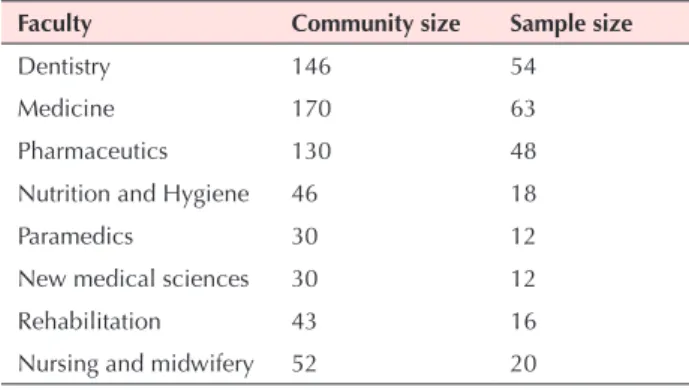
Data were collected from the study field in this correlative practical research. The study population consisted of the administrative personnel of different faculties of Tabriz University of Medical Sciences, comprising 647 employees (Table 1). According to the data available in Krejcie-Mor-gan table, and considering the size of the statistical com-munity, the sample size in this research was calculated at 243 in different departments with relative classification. The samples were divided into groups and separate class-es according to the following table, and samplclass-es were se-lected randomly from each class. The tools used for data collection consisted of questionnaires in addition to li-brary studies. The questionnaires included Paterson Job Performance Questionnaire, Standard Amram Spiritual Intelligence Questionnaire and Rotter Locus of Control Questionnaire.
Shekarkan and Neami translated Paterson’s Job Perfor-mance Questionnaire 1992 into Persian in 2001. The questionnaire consists of 15 questions and each question should be answered based on a 5-point Likert scale from very low (1) to very high (5). The reliability coefficient of this questionnaire is 0.74 based on Cronbach α and 0.67 based on the bisection technique.20
Table 1. The study community size and the statistical samples separately in each faculty
Faculty Community size Sample size
Dentistry 146 54
Medicine 170 63
Pharmaceutics 130 48
Nutrition and Hygiene 46 18
Paramedics 30 12
New medical sciences 30 12
Rehabilitation 43 16
Rotter’s control source questionnaire consists of 29 items, with each item consisting of a pair of questions (a and b). The respondents receive a score of 1 for providing a pos-itive response to the internal choices and receive a score of zero for selecting the external choices. The total score of each individual shows his/her internal control rate and individuals with a higher rate of internal control receive a better score.21
The SI index was constructed by Amram and Dryer12 in
2007 after interviews with 71 individuals. Based on the study, 22 principal characteristics were identified as the characteristics of spiritual individuals in all the religions. These 22 characteristics were divided into 7 sections in the form of 45 questions.7
The reliability and validity of the questionnaire
Since the job performance and SI questionnaires use the Likert scale for scoring, Cronbach α was used to evalu-ate their validity. As the control source questionnaire is in the form of zero and 1, the Kuder-Richardson formula was used. The alpha coefficient was >0.7 for all three vari-ables. Therefore, all three variables were considered valid (Table 2).
Descriptive statistical methods (frequencies, percentages, means and standard deviations) were used for the analysis of data. In the analytical statistics sections, Pearson cor-relation coefficient was used for the evaluation of the hy-pothesis. To test the research question, i.e., the role of each variable in deterring the job performance, multiple regres-sion analysis was used. Data were analyzed with SPSS.
Table 2. The validity and reliability of the researcher-made questionnaires
Variables No. of questions α Test
Job performance 15 0.75 Cronbach α
SI 45 0.9 Cronbach α
Control Source 23 0.75 Kuder–Richardson
Abbreviation: SI, spiritual intelligence.
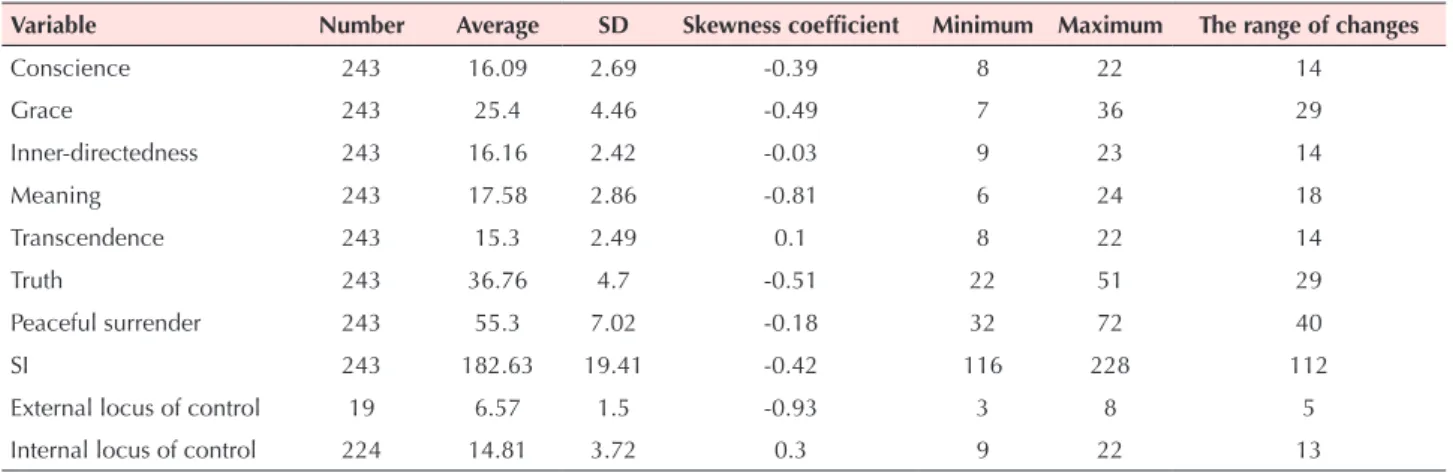
Table 3. The distribution of dispersion of SI and its elements and locus of control
Variable Number Average SD Skewness coefficient Minimum Maximum The range of changes
Conscience 243 16.09 2.69 -0.39 8 22 14
Grace 243 25.4 4.46 -0.49 7 36 29
Inner-directedness 243 16.16 2.42 -0.03 9 23 14
Meaning 243 17.58 2.86 -0.81 6 24 18
Transcendence 243 15.3 2.49 0.1 8 22 14
Truth 243 36.76 4.7 -0.51 22 51 29
Peaceful surrender 243 55.3 7.02 -0.18 32 72 40
SI 243 182.63 19.41 -0.42 116 228 112
External locus of control 19 6.57 1.5 -0.93 3 8 5
Internal locus of control 224 14.81 3.72 0.3 9 22 13
Abbreviations: SD, standard deviation; SI, spiritual intelligence.
Results
The results are presented in Tables 3, 4, 5 and 6.
Generally speaking, the multiple correlative coefficient resulted from the influence of SI element that is equal to R = 0.53 and the coefficient for determining the purity is
2
R = 0.26, which means that the elements of SI determine
the job performance as 26% and 74% of the variance for job performance is determined by variables that are not subject to this research.
Discussion
The aim of this study was to evaluate the relationship of attributional style and SI with job performance of employ-ees of Tabriz University of Medical Sciences.
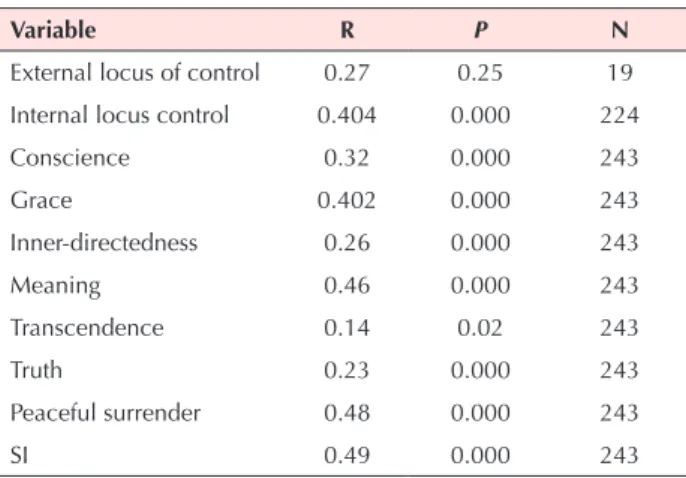
In the present study, 243 staff members of Tabriz Univer-sity of Medical Sciences were evaluated based on Pearson correlation coefficient, and SI was significantly correlated with job performance among the employees. In addition, there was a significant correlation between internal locus of control and job performance; however, external locus of control did not exhibit any correlation with job per-formance. Furthermore, the results showed a significant relationship between SI components and job performance (P = 0.000). The results of regression analysis revealed that all the components of SI were predictors of variables for job performance (R2 = 0.26).
The principal aim of the present study was to determine the relationship between SI and job performance based on Pearson correlation coefficient at P = 0.000 and r = 0.49. There was a direct and significant relationship between these two variables. Based on linear regression analy-sis R2 was calculated at 0.24, i.e., it is possible to predict
job performance at a rate of 24% based on SI. Marques et al22 reported that spirituality in the job environment, as
a result of optimism and individual good will, results in a motivational organizational culture and an increase in overall performance, finally leading to sustained organi-zational promotion. Based on King’s viewpoint,23 SI can
fa-cilitation of solving daily problems, determination of aims and achieving these aims.
Najafi Abyaneh and Askarian showed that SI is a prereq-uisite for better adaptation to an environment and indi-viduals with higher SI exhibit greater tolerance in the face of life pressures and greater ability to adapt.7Rasteghar
and Jafarian24 reported a positive and direct relationship
between SI and spiritual leadership, with a positive effect on the work environment. They also reported a positive, direct and significant effect of spirituality in the work environment on the performance of managers. A study by Azad Marzabadi et al25 showed a positive and
signifi-cant relationship between organizational spirituality and psychological capabilities, creativity and job stresses. In addition, they showed a significant relationship between job experience and organizational spirituality. Finally, spirituality is considered one of the variables affecting personnel’s capabilities and creativity, and organizations’ policy-makers should use spirituality to be able to utilize the personnel’s maximum abilities to achieve the aims of
Table 4. The correlation of SI and its elements and locus of control with job performance
Variable R P N
External locus of control 0.27 0.25 19
Internal locus control 0.404 0.000 224
Conscience 0.32 0.000 243
Grace 0.402 0.000 243
Inner-directedness 0.26 0.000 243
Meaning 0.46 0.000 243
Transcendence 0.14 0.02 243
Truth 0.23 0.000 243
Peaceful surrender 0.48 0.000 243
SI 0.49 0.000 243
Abbreviation: SI, spiritual intelligence.
Table 5. The coefficient of remaining variables in regression
The order of entering independent variables in the shape
Raw coefficients Standardized coefficient
T P
B SE Beta
Constant 23.85 6.86 3.47 0.001
Conscience 0.161 0.3 0.039 0.52 0.6
Grace -0.127 0.23 -0.051 -0.54 0.58
Inner–directedness 0.316 0.28 0.069 1.11 0.26
Meaning 0.91 0.31 0.236 2.88 0.004
Transcendence -0.339 0.28 -0.077 -1.21 0.22
Truth 0.199 0.15 0.085 1.27 0.2
Peaceful surrender 0.507 0.15 0.322 3.31 0.001
Table 6. Multiple correlation coefficient for predicting job performance of personnel
Mistake in esimaion scale Pure determinaion coeicient Determinaion coeicient Muliple correlaion coeicient
9.49 0.26 0.28 0.53
the organization.
Zarei et al26 showed that understanding and awareness
cannot be achieved only through logical and emotional intelligence and such an aim requires the use of intelli-gence beyond the two above, which is SI.
Ghorbanzadeh27 reported that the use of SI methods
re-sults in full manifestation of personnel’s capabilities, and superior behaviors are exhibited by entering the world of spirituality. Abdul Rani et al28 showed that SI affected job
performance; however, age and experience had no effect on it. Aydin and Ceylan29 focused on the effect of
spiri-tuality and SI on organizational relationships and the ef-fect of this variable on the development of leadership and the success of the personnel in organizations. A study by George30 showed that SI in organizational relationships
affects inter-personal understanding, changes in manage-ment and removal of obstacles. Hyson31 reported that SI
has a vital role in the efficacy of management and perfor-mance of the personnel in public sectors. Garcia-Zamor carried out a study and concluded that a spiritual work en-vironment with personnel exhibiting high SI has a direct effect on the success of organizations, resulting in an im-provement in the capability of the personnel and decreas-es in personnel displacements, fatigue and absenteeism.32
Evaluation of the relationship between attributional style and job performance with the use of external source con-trol based on Pearson correlation coefficient showed a P value of 0.25 and r = 0.27, with no significant relationship
between the two variables. Ahanchiyan et al19 reported
that attributing unfavorable behaviors to external sources decreases the feeling of guilt and the feeling of responsibil-ity for actions in individuals. Rio33 believes that individuals
ex-hibit negative performance. However, Pearson correlation coefficient revealed a P value of 0.000 and r = 0.404 for in-ternal control source. Therefore, there was a moderately significant and direct relationship between the two vari-ables. Based on the linear regression analysis carried out, R2 was calculated at 0.16, indicating that it was possible to
predict the job performance of personnel based on the in-ternal control source of attributional styles at a rate of 16%. Rio believes that positive events of life occur as a result of meticulous programming and continuous efforts of indi-viduals who have an internal source of control. Therefore, they accept the responsibility for their actions and behav-iors and accept their consequences. According to Rotter hypothesis,34 individuals with internal control source
be-lieve that they are responsible for their own lives and are interested in working in conditions in which their skills and efforts result in success. As a result, the responsibility aspects of Whiner’s hypothesis have a significant relation-ship with the concepts presented by Rotter hypothesis in relation to the control source. Individuals with an internal control source can more properly conquer problems in the environment and job stresses, increase their satisfaction and improve their job performance and exhibit superb performance in the work environment compared to those with an external control source.34
Is answering the main question of the research, “What is the role of each component of SI in predicting job perfor-mance?” and in order to explain the job performance of the staff by SI, multiple regression was used, and finally based on data it can be observed that overall, the multiple correlation coefficient of the effect of conscience, grace, inner-directedness, peaceful surrender and meaning, transcendence and truth was R = 0.53 and the coefficient
of determination was R2 = 0.28, with a pure
determina-tion coefficient of R-2 = 0.26. In other words, overall the
SI components explain the job performance up to 26%, and 74% of job performance variance can be explained by variables beyond the scope of this research.
Some of the limitations of the present study are as follows: Since the present study was carried out in Tabriz Univer-sity of Medical Sciences, care should be exercised in ex-tending its results to other organizations and locations. A questionnaire was used in the present study to collect data; therefore, since a questionnaire is considered a self-survey tool, the respondents might exhibit bias in their respons-es. In addition, there were many questions because three questionnaires were used, and the respondents might not have had sufficient patience to answer all the questions ac-curately; therefore, the responses might not be very accu-rate. In this study, three questionnaires of three theorists were used and other aspects of SI, job performance and attributional style were not dealt with from the viewpoints of other theorists.
Conclusion
Considering the tests in the study, it was revealed that there is a positive and meaningful relation between the internal control of attributional styles and elements of SI
with job performance of personnel. On the other hand, based on the result of the regression with fixed amount of 26%, it seems necessary to pay attention to other effective elements on performance of personnel besides internal control and elements of SI. In future studies, it is advisable to investigate defects in SI in the staff and managers of governmental organizations, and also the degree of SI of the staff of the governmental organizations in comparison to that of the staff of private organizations.
Ethical approval
The ethics of this study were reviewed and approved by review board of Islamic Azad University of Tabriz.
Competing interests
No competing interests to be declared.
Acknowledgments
This study was prepared based on thesis in MSc of Educational Management. The authors are grateful to employees of Tabriz University of Medical Sciences for their contribution and help in this study.
References
1. Alirezaei N, Massah H, Akrami N. The relationship between
job conscience and job performance. The Quarterly of Ethics in Science and Technology. 2013;8(2):82-93. [Persian].
2. Haghighatian M, Sadeghi S, Shahcheraghi F. Evaluation of
the effect of cultural IQ on the job performance of the staff of Welfare Organization in Isfahan. The Journal of Applied Sociology. 2014;25(4):59-72. [Persian].
3. Seyyednazari N. The role of job rotation in job commitment
and performance of the staff of health centers of Tabriz University of Medical Sciences [dissertation]. Tabriz: Islamic Azad University, Tabriz Branch; 2013.
4. Abu-Alayi B. Performance management: managers’
guidelines for the evaluation and promotion of the performance of the personnel. Tehran: Industrial Management Organization Publications; 2010. [Persian].
5. Faraj M, Lotfollahzadeh A. Evaluation of factors affecting
strengthen of staff in organizations. The Academic Promotional Quarterly of Human Resources of NAJA. 2011;6(25):115-140. [Persian].
6. Tett RP, Burnett DD. A personality trait-based interactionist
model of job performance. J Appl Psychol. 2003;88(3):500-17. doi: 10.1037/0021-9010.88.3.500.
7. Najafi Abyaneh Z, Askarian M. Evaluation of the relationship
between spiritual intelligence and organizational commitment of teachers in public high schools in Tehran. The First International Congress on Culture and Religious Thinking; 2013; Bushehr. [Persian].
8. Heydari M. The relationship between the internal-external
control sources and occupational fatigue syndrome [dissertation]. Roudehen: Roudehen Branch of Islamic Azad University; 2001. [Persian].
9. Krishnakumar S, Neak CP. The “what”, “why” and
“how” of spirituality in the workplace. Journal of Managerial Psychology. 2002;17(3):153-64. doi: 10.1108/02683940210423060.
2007;70(2):312-25. doi: 10.1016/j.jvb.2006.10.006.
11. Campbell JP. Modeling the performance prediction problem in industrial and organizational psychology. In: Dunnette MD, Hough LM, eds. Handbook of Industrial and Organizational Psychology. 2nd ed. Palo Alto, CA: Consulting Psychologists Press, Inc;1990. p. 687-723. 12. Borman WC, Motowidlo SM. Expanding the criterion
domain to include elements of contextual performance. In: Schmitt N, Borman WC, eds. Personnel Selection in Organizations. San Francisco: Jossey-Bass;1993. p. 71-98. 13. Amram Y, Dryer C. The integrated spiritual intelligence
scale (ISIS): Development and Preliminary Validation. Palo Alto, CA: Institute of Transpersonal Psychology; 2007. 14. Emmons RA. Is spirituality an intelligence? Motivation
cognition and the psychology of ultimate concern. Int J Psychol Relig. 2000;10(1):3-26. doi: 10.1207/ S15327582IJPR1001_2.
15. Rosenhan D, Seligman M. Abnormal psychology.
Mohammadi SY, translator. 2nded. New York: Norton;
1995.
16. Hassanzadeh Z, Mazaheri M, Khosrawi M. Evaluation of the relationship between attribute style andsence of life satisfaction. Quarterly Journal of Rostamieh. 2001;3(1):24-29. [Persian].
17. Weiner B. Human Motivation: Metaphors, Theories and
Research. 28thed. Newbury Park, CA: Sage Publication;
1996.
18. Heider F. Social perception and phenomenal causality. Psychol Rev. 1944;51:358-374. doi: 10.1037/h0055425. 19. Ahanchiyan M, Arfaa F, Bahmanabadi S. The association
between attribution style and self regulation among students of School of Nursing and Midwifery in Mashhad University of Medical Sciences during 2011-12 academic years. Iranian Journal of Medical Education. 2014;14(4):350-362. [Persian].
20. Shekarkan H, Neami A. Evaluation of the relationship between job satisfaction and organizational civil behavior and jobs performance in the personnel of some factories in Ahwaz. The Psychology and Education Journal of Ahwaz Shahid Chamran University. 2001;8(3,4);1-22. [Persian]. 21. Nouri A, Molavi H, Talebpour A. Evaluation of the effect
of cognitive education on the control source, progress motivation and scholastic performance of Shahed students in high schools in Shahin Shahr. Journal of Psychology. 2001;6(21):18-29. [Persian].
22. Marques J, Dhiman S, King R. Spirituality in the workplace:
developing and integral model and a comprehensive definition. J Am Acad Bus. 2005;7(1):81-91.
23. King D. Rethinking Claims of Spiritual Intelligence: A Definition, Model, and Measure. Ontatio, Canada: Trent University; 2008.
24. Rasteghar A, Jafarian Y. The relationship between spiritual intelligence and spiritual leadership and the performance of headmasters in schools in Ahwaz and the effect of spiritual mediation in job environment. The International Conference on Management Challenges and Guidelines; 2013. [Persian].
25. Azad Marzabadi E, Houshmandja M, Pour Khalil M. The relationship between organizational spirituality and psychological capability, creativity, spiritual intelligence, occupational stresses and job satisfaction among university staff. The Journal of Behavioral Sciences. 2012;6(2):181-7. [Persian].
26. Zarei M, Kheirandish M, Jahani H. Identification and determination of spiritual intelligence parameter and work environment: a case study of Tehran Labbafinejad hospital. Journal of General Management Studies. 2011;12(4):71-94. [Persian].
27. Ghorbanzadeh O. The effect of spiritual intelligence on the performance of the personnel in the organization [dissertation]. Bojnourd: Bojnourd Branch of Islamic Azad University; 2013.
28. Abdul Rani A, Abidin I, Ab Hamid MR. The impact of spiritual intelligence on work performance. Macrotheme Rev. 2013;2(3):46-59.
29. Aydin B, Ceylan A. The effect of spritual leadership on organizational learning capacity. Afr J Bus manag. 2009;3(5):185-190. doi: 10.5897/AJBM09.015.
30. George M. Practical application of spiritual intelligence
in the workplace. Hum Resour Manag Int Digest.
2006;14(5):3-5. doi: 10.1108/09670730610678181.
31. Hyson P. The spirited leader: the potential of spiritual intelligence to improve leadership. Int J Leaders Public Serv. 2013;9(3/4):109-15. doi: 10.1108/IJLPS-10-2013-0028. 32. Garcia-Zamor JC. Workplace sprituality and organizational
performance. Public Adm Rev. 2003;63(3):355-363. doi: 10.1111/1540-6210.00295.
33. Rio J. Motivation and Excellence. Translated by Seyed
Mohammadi SY. 25thed. Tehran: Virayesh; 2015.
![Association Between Organizational Citizenship Behavior and Educational Performance of Faculty Members in Tabriz University of Medical Sciences- 2014 [Res Dev Med Educ 2015;4(1):81-84]](data:image/gif;base64,R0lGODlhAQABAIAAAP///wAAACH5BAEAAAAALAAAAAABAAEAAAICRAEAOw==)