w w w . j c o l . o r g . b r
Journal
of
Coloproctology
Original
Article
Effect
of
postconditioning
and
atorvastatin
in
preventing
remote
intestinal
reperfusion
injury
Carlos
Henrique
Marques
dos
Santos
∗,
Doroty
Mesquita
Dourado,
Trícia
Luna
Sampaio,
Letícia
do
Espirito
Santo
Dias,
Murillo
Henrique
Martins
de
Almeida,
João
Victor
Durães
Gomes
Oliva,
Ian
de
Oliveira
Chaves,
Henrique
Budib
Dorsa
Pontes
UniversidadeAnhanguera-Uniderp,CampoGrande,MS,Brazil
a
r
t
i
c
l
e
i
n
f
o
Articlehistory:
Received17June2017 Accepted13August2017
Availableonline1September2017
Keywords:
Ischemia Reperfusion
Ischemicpostconditioning Hydroxymethylglutaryl-CoA reductaseinhibitors Smallintestine
a
b
s
t
r
a
c
t
Objective:Toevaluatethecapacityofischemicpostconditioningandatorvastatininprevent orminimizereperfusioninjuryinsmallbowelofratssubjectedtoischemiaandreperfusion byabdominalaortaclamping.
Methods:41Wistarnorvegicratsweredistributedinto5groups:ischemiaandreperfusion, ischemicpostconditioning,postconditioning+statin,statinandSham.Afteranesthesia, laparotomyanddissectionoftheinfra-renalabdominalaortawereperformed;exceptthe Shamgroup,allothersweresubjectedtoaortaclampingfor70min(ischemia)and with-drawal of clamp for70min (reperfusion).In the IPCand IPC+S groups,fourcycles of postconditioningwereperformedbetweenthephasesofischemiaandreperfusionlasting 30seach.InIPC+SandSgroups,3.4mg/dayofatorvastatinwasgivenforsevendaysper gavage;1cmoftheileumwereremovedforhistologicalstudyandtheresultsweresubjected tostatisticaltreatmentconsideringsignificantp<0.05.
Results:Theaverageofintestinallesionwas2intheI/Rgroup,0.66intheIPCgroup,0inthe IPC+Sgroup,0intheSgroup,and0intheSHAMgroup.
Conclusion: Theischemicpostconditioning andatorvastatinwerecapableofminimizing intestinalreperfusioninjury,eitheraloneorincombination.
©2017SociedadeBrasileiradeColoproctologia.PublishedbyElsevierEditoraLtda.This isanopenaccessarticleundertheCCBY-NC-NDlicense(http://creativecommons.org/ licenses/by-nc-nd/4.0/).
∗ Correspondingauthor.
E-mail:[email protected](C.H.Santos).
http://dx.doi.org/10.1016/j.jcol.2017.08.001
Efeito
do
pós-condicionamento
e
da
atorvastatina
na
prevenc¸ão
de
lesão
de
reperfusão
intestinal
remota
Palavras-chave:
Isquemia Reperfusão
Pós-condicionamentoisquêmico Hidroximetilglutaril-CoA redutase,inibidoresda Intestinodelgado
r
e
s
u
m
o
Objetivo: Avaliaracapacidadedopós-condicionamentoisquêmicoedaatorvastatinapara prevenirouminimizaralesãodereperfusãonointestinoDelgadoderatossubmetidosà isquemiaereperfusãoporpinc¸amentodeaortaabdominal.
Métodos: 41 ratos noruegueses Wistar foram distribuídos em 5 grupos: isquemia e reperfusão,pós-condicionamento isquêmico,pós-condicionamento+estatina,estatina e simulacro.Depoisdaanestesia,procedeu-seàlaparotomiaedissecac¸ãodaaorta abdomi-nalinfrarrenal;excetonogrupodesimulacro,todososdemaisgruposforamsubmetidosao pinc¸amentodaaortadurante70minutos(isquemia)eàretiradadopinc¸amentotambém durante70minutos(reperfusão).NosgruposPCIePCI+E,foramefetuadosquatrociclosde pós-condicionamentoentreasfasesdeisquemiaedereperfusão,comdurac¸ãode30 segun-doscada.NosgruposPCI+EeE,foramadministrados3,4mg/diadeatorvastatinadurante 7diasporgavagem;procedemosàremoc¸ãode1cmdoíleoparaoestudohistológico,eos resultadosforamestatisticamentetratados.Consideramosp<0,05comoestatisticamente significativo.
Resultados: Asmédiasparaaslesõesintestinaisforam2nogrupoI/R,0,66nogrupoPCI,0 nogrupoPCI+E,0nogrupoE,e0nogrupoS.
Conclusão:Oprocedimentodepós-condicionamentoeatorvastatinademonstraram capaci-dadedeminimizaralesãodereperfusãointestinal,tantoisoladamentecomoemconjunto. ©2017SociedadeBrasileiradeColoproctologia.PublicadoporElsevierEditoraLtda.Este ´eumartigoOpenAccesssobumalicenc¸aCCBY-NC-ND(http://creativecommons.org/ licenses/by-nc-nd/4.0/).
Introduction
Reperfusion is a fundamental step in the treatment of ischemia.However,clinicalandexperimentalevidenceshows thatthemaineventsleadingtocellandtissuedysfunctionare relatedtoreperfusion.1
Theischemiaand reperfusion(IR) injuryisa pathophy-siologicaleventcommontoseveraldiseasesofdailyclinical practice.TheintestinemaybethetargetofIRinjurydirectly, asinmesentericischemia,orbereachedatadistance,asin casesofshockorreperfusioninjuryinotherorgans,suchas aorticclamping,usedinaneurysmsurgeries.2
Increasingevidenceisemergingthatthegutcanbeaffected by remote reperfusion injury, since toxic reactive oxygen species(ROS) actsystemically. Insurgeries withtemporary aorticocclusion,intestinalvascularinvolvementisafrequent complication,withamultifactorialetiology,including reper-fusioninjury.3
Regardless ofwhere ischemiaoccurs, when reperfusion happens,thereisasystemicimpairmenttoagreaterorlesser extent.IRisassociatedwiththeproductionoftumornecrosis factor(TNF).InjuryoftheintestinalmucosabyIRallowsthe releaseofendotoxinintotheportalcirculation,inducingthe productionofTNF bylivermacrophages. IncreasedTNF in thesystemiccirculationiscapableofleadingtoinflammatory lunginjury,characterizedbytheaccumulationofneutrophils. ThissequenceofeventswasdemonstratedbyCatyetal.4in
amodelofIRbytemporaryocclusionofthesuperior mesen-teric artery in rats. After reperfusion, endotoxin levels in portalvenousbloodandTNFwereincreasedinthesystemic
circulation.Inparallel,therewasaccumulationofneutrophils inthelungsandincreasedpulmonarycapillarypermeability. Sometechniquesforprotectionagainstreperfusioninjury havealreadybeentriedandtested,andamongthem,ischemic postconditioning(IPC),whichconsistsofoneormoreshort cyclesofreperfusion,followedbyoneormoreshortcyclesof ischemia, immediatelyafterthe ischemicphaseandbefore permanent reperfusion occurs. Although IPC has already demonstrated aprotectiveeffectinmanyorganssubmitted toIRaswellasindistanceprotection,5itsefficacyinthe
pre-ventionofremoteintestinallesionisstillveryearly.6
Much has been studied about the pathophysiology of reperfusion injury and some mechanisms have already been well evidenced such as the role of free radicals, vascular endothelial dysfunction, and neutrophil-mediated injury.1 Recently, there has been an increase in interest
in statins, drugs known for their anti-dyslipidemic effect, this time due to its pleiotropic effect, which is character-ized by anti-inflammatory properties, immunomodulatory, antithrombogenic andendothelialfunction.7 Recent
experi-mentalstudies8haveshownpromisingresultswiththeuse
ofstatinsdemonstratingtheirroleintheprotectionagainst IRinjury,afactthatledustoinquireaboutitsbenefitsinthe faceofreperfusioninjury,theobjectiveofthisstudybeingto evaluatethecapacityofIPCandstatinsinreducingintestinal injury,aloneandincombination.
here, it is fundamental that such research be performed. Thus,theobjectiveofthisstudy istoevaluatethecapacity ofischemicpostconditioningandatorvastatininpreventor minimizereperfusioninjuryinsmallbowelofratssubjected toischemiaandreperfusionbyabdominalaortaclamping.
Methods
ThestudywasapprovedbytheCommitteeofEthicsin Ani-malExperimentationoftheUniversityAnhanguera-Uniderp. Atotalof41Wistarnorvergicmaleratsweighing250–300g werecollectedfromtheAnhanguera-UniderpUniversity Ani-malHospital. The animals were kept in cages atambient temperatureofapproximately23◦Cwith12hlightcyclesand receivedwaterandfeedadlibitum.
The number of animals of each group was made by a samplecalculationandbasedonpreviousresearchesofour group,followingtheethicalprincipleofusingasfewanimals aspossibleforresearch.Theanimalsweredistributedinthe followinggroups:
- Ischemiaandreperfusiongroup(I/R):Nineratswere sub-mittedtoischemiafor70minbyaorticclamping,followed byreperfusionof70min.Thedurationoftheischemiaand reperfusionphasesof70minwasdefinedbasedonprevious publications that demonstrated that this time was suffi-cienttocauseremotelesionand,consequently,allowthe evaluationoftheprotectiveeffectofthemethodsused.5,6
- Ischemicpostconditioninggroup(IPC):Nineratswere sub-mitted to the ischemia procedure for 70min by aortic clamping and reperfusion for 70min. Between ischemia andreperfusion,fourcyclesofreperfusion(30seach)were performed,interspersedwithfourcyclesofischemia(30s each).
- Ischemicpostconditioning+statingroup(IPC+S):Ninerats receivedadoseof3.4mg/dayofatorvastatin,onedoseper daythroughthegavagemethod,forsevendaysandwere submitted to the ischemia procedure for 70min by aor-ticclampingandreperfusionfor70min.Betweenischemia andreperfusion,fourcyclesofreperfusion(30seach)were performed,interspersedwithfourcyclesofischemia(30s each).
- Statingroup(S):Nineratsreceivedadoseof3.4mg/dayof atorvastatin,onedoseperdaythroughthegavagemethod, for sevendays, and then subjected tothe ischemia pro-cedurefor70minbyaorticclampingand reperfusionfor 70min.
- SHAMgroup:Fiveratssubmittedtolaparotomy,dissection andisolationofinfra-renalabdominalaortaartery.
Theanimalswere anesthetizedbyintraperitoneal injec-tionofa2:1solutionofCetamineHydrochloride(Cetamin®, Syntec, Cotia-Brazil), 50mg/mL, and Xilazin Hydrochloride (Xilazin®, Syntec,Cotia-Brazil),20mg/mL, respectively, ata doseof0.1mL/100g.
After anesthesia, the rats were submitted to median longitudinallaparotomy ofapproximately fourcentimeters, exteriorizationofthesmallintestine,identificationand dis-sectionofinfra-renalabdominalaortaartery.
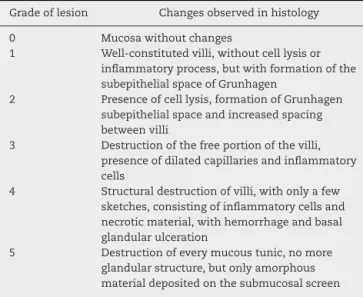
Table1–Classificationofintestinallesiondegrees accordingtoChiuetal.9
Gradeoflesion Changesobservedinhistology
0 Mucosawithoutchanges
1 Well-constitutedvilli,withoutcelllysisor inflammatoryprocess,butwithformationofthe subepithelialspaceofGrunhagen
2 Presenceofcelllysis,formationofGrunhagen subepithelialspaceandincreasedspacing betweenvilli
3 Destructionofthefreeportionofthevilli, presenceofdilatedcapillariesandinflammatory cells
4 Structuraldestructionofvilli,withonlyafew sketches,consistingofinflammatorycellsand necroticmaterial,withhemorrhageandbasal glandularulceration
5 Destructionofeverymucoustunic,nomore glandularstructure,butonlyamorphous materialdepositedonthesubmucosalscreen
In all groups except SHAM, the abdominal aorta was occluded by atraumatic vascular clamp that remained for 70min(ischemiaphase).Afterclamp placement,the small intestinewasrepositionedintotheabdominalcavityandthe surgicalwoundwasclosedwithcontinuoussuturingofthe skinwith4-0monofilamentnylonthread.Aftertheischemia phase,theabdominalwallwasreopenedbyremovalofthe sutureandintheI/RandSgroupsthevascular clampwas removed,initiatingthereperfusionphase,lasting70min.In theIPCandIPC+Sgroups,precedingthereperfusionphase, the ischemicpostconditioningwasperformedthrough four cycles of reperfusion (removal of the atraumatic vascular clamp ofthe abdominal aorta) with duration of 30s each, interspersedwith fourcycles ofischemia (occlusionofthe abdominalaortaarterybyatraumaticvascular clamp),also withdurationof30seach.
In all groups after started the reperfusion phase, the abdomenwasagainclosedbycontinuoussuturingoftheskin with4-0monofilamentnylonthreaduntiltheendofthe exper-iment.
IntheSHAMgroup,onlyamedianlongitudinallaparotomy ofapproximatelyfourcentimeterswasperformed, exterior-izationofthesmallintestine,identificationanddissectionof infra-renalabdominalaortaartery.
Afterthereperfusionphase,allanimalswereresectedone centimeter of the ileum, five centimeters proximal to the ileocecalvalve,andthespecimenswerewashedwithsaline solutionandplacedin10%formaldehydesolutionfor histo-logicalanalysis.
Euthanasiawasperformedbyintraperitoneal administra-tion of a lethal dose of Cetamine+Xylazine hydrochloride (0.4mL/100g).
Slideswerepreparedwiththeharvestedmaterial,which werestainedwithhematoxylin–eosinandanalyzedbyoptical microscopybyasingleobserver,withoutpriorknowledgeofit onthegroupbelongingtoeachrat.
2
1.5
1
0.5
0
I/R IPC IPC+S S
a
SHAM
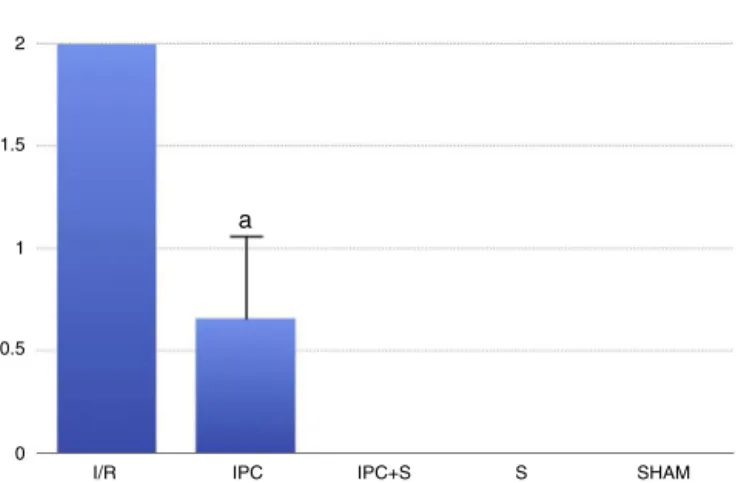
Fig.1–Comparisonofthedegreesofintestinallesion amongthedifferentgroupsanalyzed(Kruskal–Wallis;
p=0.0006;“a”p<0.05inrelationtotheI/Rgroup).
After the analysis of the data, the results were sub-mitted to statistical treatment, using the non-parametric Kruskal–Wallistest,beingconsideredsignificantp<0.05.
Results
Afterthehistologicalanalysisofeachslide,themeanofthe degreeofintestinallesionofeachanimal wasdefined, fol-lowingthe methodusedbyother researcherswithastudy designsimilartotheoneusedhere.Themeansofthe intesti-nallesiongradeswere2intheI/Rgroup,0.66intheIPCgroup, and0intheIPC+S,SandSHAMgroups(Table1andFig.1). Allgroupshadalowerdegreeoftissueinjurywhencompared tothecontrolgroupwithastatisticallysignificantdifference (p<0.05betweencontrolandIPC;p=0.0006betweencontrol andIPC+S,SandSHAM).
Discussion
Ischemiafollowedbyreperfusionmayinduceapoptosisand aninflammatoryresponsethataffectstissuerepair,especially thelung.Asaresult,manyhaveevaluatedtheimpactofIPCon subsequentapoptoticandinflammatoryresponses.In exper-imentalIRmodelsinratswith30minofischemiaand3hof reperfusiontherewasasignificantdecreaseintissue necro-siswithPCI.ThereisalsoadecreaseinROSgenerationand protectionofmitochondrialintegrity,suggestingthatthe pro-tectiveeffectofIPCmaybetheresultofareductioninthe inflammatoryresponse.However, fewstudies havedirectly assessedthe impactofIPConinflammation.IPCmay limit theexpressionofP-selectin,whichisrequiredforneutrophil bearingand itsrecruitment.Inaddition, it mayreducethe accumulationofneutrophilsintheaffectedregion,decrease adhesionto ischemicvascular endothelium, and attenuate theendothelialdysfunctionoftheinvolvedvessel,eventsthat normallyoccurinIR.10
Inthe present study intestinal protectionwas observed withIPC,demonstratingtheefficacyofthemethodagainst thisIRmodel,whichmay bejustifiedbythefactthat ROS, regardless of where they are produced, when reperfusion
occurs are scattered throughout the organism causing the remotereperfusioninjury,somuchsothatintheI/Rgroup itwasobservedgradetwointestinallesion,thatis,moderate. ByactingasamoderatorofROSproduction,IPCcausesless localanddistantinjury.
Thestudyofthereperfusioninjuryatadistanceonthe intestineisarelativelynewsubject,therefore,lacking publica-tionsthatallowustofurthercomparewiththepresentresults. Turóczietal.7alsoperformedaorticclampingischemiaand
evaluatedtheprotectiveeffectofIPC,confirmingtheresults presented here that this method may decrease the degree of intestinal damage. Another study that obtained similar resultswasthatofYanget al.,11 inwhich theauthorsalso
appliedinfra-renalaorticclampingasamethodofischemia andobtainedintestinalprotectionwithIPC.
Asseen,therearefewpublicationsaimedatevaluatingthe remoteintestinaldamageagainstIR,especiallyusingIPCasa protectionmethod.Existingpublicationspointtoapromising role inthismethod,similartootherIRconditionsinwhich IPCprovidestissueprotection.12 Despitethis,thereare few
studies that haveusedIPC inclinical practice,which rein-forcestheimportanceoffindingapharmacologicalmethod thatpresentsthesameorhigherefficacy,inawaythatis grow-inginterestforsafedrugssuchasstatinsandthatatleasttheir pleiotropiceffectcouldbeusefulinsuchsituations.
In the present study intestinal protectionwas obtained withtheuseofatorvastatin,atthesameintensityaswithIPC. Astherearenostudieswiththesamedesignusedhere,i.e., aorticclampingandatorvastatinuse,thecomparisonwiththe literatureisalsoimpaired.Moreover,sincetheuseofstatins forthepreventionofreperfusioninjuryisrelativelynew,the bestrouteofadministrationandidealdoseareitemstobe bet-terclarifiedinfutureresearch.Ithasbeenchosenbygavage administrationwiththeintentionofsimulatingwhatis prac-ticedinhumans,thatis,theabsorptionbythegastrointestinal tract,aimingatitsclinicalapplicability.
Statinshavebeensuccessfullytestedforthispurposein several situations. Wu et al.13 performed renal IR in rats
and demonstrated that atorvastatin decreasedtissue dam-age comparedtothe controlgroup.Thesame resultswere obtainedbyCusomanoetal.14 intherenalIRofrats using
atorvastatin.
StatinsalsoprotectothertissuesinthecourseofIRsuchas heart,15–17nervoussystem18andliver.19Inthelung,the
effi-cacyofstatinshasalsobeendemonstrated,asdemonstrated by Matsuo et al.,20 however, with amethod different from
theoneusedhere,sincetheseauthorsperformedIRdirectly onthepulmonaryhilumandwerethereforenotaprotective studyofremotereperfusioninjury.Inaddition,theseauthors usedrosuvastatinasaprotectivedrugandnotatorvastatinas inthepresentstudy.
cellularfunctions,andtheinhibitionofthesepathwaysmay determineimportantcomponentsofthe pleiotropiceffects ofstatins. The Rho pathwayis related to oxidative stress, atherosclerosis and elevated blood pressure. Rac pathway signaling is involved in two crucial mechanisms, such as cytoskeletalremodelingandROSsynthesis.15
Inthedevelopmentofthisprojectwedidnotknowthatthe therapeuticmethodsappliedwouldachievetheresults pre-sentedhere,sothatanassociationgroupwascreated(IPC+S) aimingatenhancingtissueprotection.However,therewasno advantageinthe association,sinceinisolationthese ther-apeutic methods obtainedstatisticallysimilar mean tissue lesiontotheSHAMgroup,i.e.,itwouldnotbepossibletohave alowerlesionthanhadalreadybeenachieved.Thus,itcan beverifiedthatatorvastatinhasthecapacitytoprotectthe intestineinsituationsofreperfusionatadistance,atthesame intensityasIPC,anditispossibletoinvestinresearchthat confirmsthebestmethodofusingthesetherapiesinorderto applytheminclinicalpractice.
Althoughthemethodusedhereissimilartothatofother publications,whichallowedustomakecomparisonsofour results,itshouldbeemphasizedasalimitationofthestudy thatweuseonlyhistologicalevaluation.Futureresearchmay bedoneusingothermethodsofevaluatinglocalandremote reperfusioninjurysuchastissueandplasmatic malondialde-hyde,whichmayoffergreatervaluetotheresults.
Inconclusion,ischemicpostconditioningandatorvastatin were able to minimize intestinal reperfusioninjury, either aloneorincombination.
Conflicts
of
interest
Theauthorsdeclarenoconflictsofinterest.
r
e
f
e
r
e
n
c
e
s
1. HausenloyDJ,YellonDM.Preconditioningand postconditioning:newstrategiesforcardioprotection. DiabetesObesMetab.2008;10:451–9.
2. SotoudehA,TakhtfooladiMA,JahanshahiA,AslAHK, TakhtfooladiHA,KhansariM.EffectofN-acetylcysteineon lunginjuryinducedbyskeletalmuscleischemia-reperfusion: histopathologicalstudyinratmodel.ActaCirBras.
2012;27:168–71.
3. GelmanS.Thepathophysiologyofaorticcross-clampingand unclamping.Anesthesiology.1995;82:1026–60.
4. CatyMG,GuiceKS,OldhamKT,RemickDG,KunkelSI. Evidencefortumornecrosisfactor-inducedpulmonary microvascularinjuryafterintestinalischemia–reperfusion injury.AnnSurg.1990;212:694–700.
5. SantosCHM,AydosRD,NogueiraNetoE,MiijiLNO,Cassino PC,AlvesII,etal.Evaluationofpulmonaryreperfusioninjury inratsundergoingmesentericischemiaandreperfusionand protectiveeffectofpostconditioningonthisprocess.BrazJ CardiovascSurg.2015;30:533–7.
6.DorsaRC,PontesJCDV,AntoniolliACB,SilvaGVR,BenfattiRA, SantosCHM,etal.Effectofremoteischemicpostconditioning ininflammatorychangesofthelungparenchymaofrats submittedtoischemiaandreperfusion.BrazJCardiovasc Surg.2015;30:353–9.
7.TurócziZ,FülöpA,CzigányZ,VargaG,RoseroO,TökésT, etal.Improvementofsmallintestinalmicrocirculationby postconditioningafterlowerlimbischemia.MicrovascRes. 2015;98:119–25.
8.BianB,YuX,WangQ,TengT,NieJ.Atorvastatinprotects myocardiumagainstischemia–reperfusionarrhythmiaby increasingConnexin43expression:aratmodel.EurJ Pharmacol.2015;768:13–20.
9.ChiuCJ,McArdleAH,BrownR,ScottHJ,GurdFN.Intestinal mucosallesioninlow-flowstates.AmJSurgArch. 1970;101:478–83.
10.JivrajN,LiewF,MarberM.Ischaemicpostconditioning: cardiacprotectionaftertheevent.Anaesthesia. 2015;70:598–612.
11.YangM,DongJX,LiLB,CheHJ,YongJ,SongFB,etal.Local andremotepostconditioningdecreaseintestinalinjuryina rabbitischemia/reperfusionmodel.GastroenterolResPract. 2016;2016:2604032.
12.SantosCHM,GomesOM,PontesJCDV,MiijiLNO,BispoMAF. Tratamentodaisquemiamesentéricapelo
pós-condicionamentoisquêmico.RevBrasColoproct. 2008;28:187–92.
13.WuK,LeiW,TianJ,LiH.Atorvastatintreatmentattenuates renalinjuryinanexperimentalmodelof
ischemia–reperfusioninrats.BMCNephrol.2014;15:14–8.
14.CusumanoG,RomagnoliJ,LiuzzoG,CiavarellaLP,SeverinoA, CopponiG,etal.N-acetylcysteineandhigh-doseatorvastatin reduceoxidativestressinanischemia–reperfusionmodelin theratkidney.TransplantProc.2015;47:2757–62.
15.KisváriG,KovácsM,SeprényiG,VéghÁ.TheactivationofPI 3-kinase/Aktpathwayisinvolvedintheacuteeffectsof simvastatinagainstischaemiaandreperfusion-induced arrhythmiasinanaesthetiseddogs.EurJPharmacol. 2015;769:185–94.
16.HanQF,WuL,ZhouYH,WangLH,ZhangDY,LiuT,YaoHC. Simvastatinprotectstheheartagainstischemiareperfusion injuryviainhibitingHMGB1expressionthroughPI3K/Akt signalpathways.IntJCardiol.2015;201:568–9.
17.KelleI,Akkoc¸H,UyarE,Erdinc¸M,Evliyao ˘gluO,Sarıbas¸S, etal.Thecombinedeffectofrosuvastatinandischemic pre-orpost-conditioningonmyocardialischemia–reperfusion injuryinratheart.EurRevMedPharmacolSci.
2015;19:2468–76.
18.FangX,TaoD,ShenJ,WangY,DongX,JiX.Neuroprotective effectsanddynamicexpressionsofMMP9andTIMP1 associatedwithatorvastatinpretreatmentin
ischemia–reperfusionrats.NeurosciLett.2015;603:60–5.
19.KocakFE,KucukA,OzyigitF,TosunM,KocakC,KocakA,etal. Protectiveeffectsofsimvastatinadministeredinthe
experimentalhepaticischemia–reperfusioninjuryratmodel. JSurgRes.2015;199:393–401.
20.MatsuoS,SaikiY,AdachiO,KawamotoS,FukushigeS,Horii A,etal.Single-doserosuvastatinameliorateslung