R E S E A R C H
Open Access
Effects of animal-assisted activity on
self-reported feelings of pain in hospitalized
children and adolescents
Tatiane Ichitani
1*and Maria Claudia Cunha
2Abstract
Animal-assisted intervention (AAI) is an approach recently introduced into the hospital environment to improve the quality of hospitalization and provide important benefits for patients with chronic diseases and long-term hospitalizations. This work aims to verify the effects of animal-assisted activity (AAA) on the expression and quality of self-reported pain in hospitalized children and adolescents, while considering the subjects’subjectivity. The participants were 17 hospitalized children/adolescents of both genders, aged 7 years and older, who complained of pain. Two therapy dogs were selected for the intervention according to the criteria of international protocols. The participants were asked an open question (“How would you describe your pain?”). After the question, an AAA session, which lasted between 5 and 10 min, was held with random activities spontaneously chosen by the subject. The open question was asked again at the end of the session, without the presence of the dog. Positive effects were observed in this population with regard to a decrease in self-reported pain. These results suggest that there is a possible symbolic elaboration of pain by the subject, in which the dog might represent acceptance and affection at a moment of great emotional suffering.
Keywords: Animal-assisted intervention, Animal-assisted therapy, Pain, Hospitalization, Child, Adolescent
Background
Animal-assisted intervention (AAI) is an approach that is increasingly used in the context of health and education and encompasses animal-assisted therapy (AAT), a therapeutic intervention that is guided, structured, and planned with a defined purpose and monitored by healthcare professionals; animal-assisted education (AAE), an intervention with an objective that is guided, structured, planned, directly connected to education, and always monitored by a teacher and/ or educationalist; and animal-assisted activity (AAA), an informal yet planned intervention with educational, motivational, and recreational purposes (IAHAIO 2014).
AAI has been introduced in the hospital environment in the last decades with the goal of improving the quality of hospitalization. According to Barker et al. (2003), pediatric patients in contact with therapy animals have
reduced levels of stress and anxiety during painful pro-cedures. In addition, the interaction draws the attention of children and parents towards the animals, improves the interpersonal relationship with the healthcare team, promotes self-care, fights depression, diminishes feelings of loneliness, and motivates physical activity while inter-acting with the animal. According to Morales (2005), AAI offers important benefits for patients with chronic diseases and long hospitalizations. The contact with the animal facilitates adaptation to the new and stressful en-vironment, which helps to diminish anxiety, blood pres-sure, stress, and pain.
In a case report, a hospitalized child requested the company of their own dog, which shows that AAT pro-vides therapeutic benefits to the patient’s psychological health by providing moments of relaxation and human-ized assistance for both the patient and their family (Bussotti et al. 2005).
In a study carried out in Italy, hospitalized children who were engaged in AAA increased their contact with their family members and medical team and stated that * Correspondence:[email protected]
1Pontifícia Universidade Católica de São Paulo, Rua Assungui, 700 ap 191,
São Paulo, SP CEP 04131-001, Brazil
Full list of author information is available at the end of the article
they felt motivated to communicate and strengthen their relationships, which suggests that the presence of the dog facilitated emotional expression (Caprilli and Messeri 2006).
Tsai et al. (2010) noticed a decrease in heart rate after AAT and suggested that the effects of AAT might last beyond the intervention. The authors also showed that the presence of a dog might be more effective than a visit from a person for alleviating physiological stress in hospitalized children and provides physiological and psy-chological benefits for family members and nurses.
Wu et al. (2002) observed that physical contact with a dog through AAI established harmony and produced positive feelings. At a pediatric oncology unit, bringing the child to the ground, putting the dog on the bed, or walking it along the hallway made patients and parents more satisfied. The presence of the animal made the hospital environment cozier, safer, and protected; pro-moted feelings of relaxation; and provided a normalizing experience for the children. Gagnon et al. (2014) ob-served that AAT eased the emotional suffering of chil-dren and parents (companions), facilitated adaptation to the therapeutic process, and promoted well-being during hospitalization.
Hospitalization is one of the most stressful events for a child and might cause high levels of anxiety, fear, and pain (Mahat and Scoloveno 2003). Pain can be defined as “an unpleasant sensory and emotional experience associated with actual or potential tissue damage, or described in terms of such damage” (IASP 2015). Pain encompasses sensitive, emotional, cognitive, and evaluative components (Frutuoso and Cruz 2004). Some factors might influence the expression of pain in children and adolescents, such as age, gender, cognitive level, previous experiences, cultural standards, family relationships, and repercussions on their routine (Puccini and Bresolin 2003).
Viana et al. (2006) confirmed that the evaluation of pain in children also depends on the nurse-patient-family interaction. Building the nurse’s awareness can in-crease the confirmation of pain and optimize treatment because there are subjective aspects of this profession that can influence the assessment of pain in intensive care patients. Silva et al. (2011) also observed that most professionals are extremely engaged in verifying pain in hospitalized patients, but are restricted pharmacologic-ally, which makes it necessary to amplify this view as a whole and improve pain management.
In all cultures, pain is considered an unpleasant sensa-tion. Its perception is acquired through self-observation and learning, and verbalization is one of the ways of communicating this sensation. Therefore, verbalization is helpful in conjunction with evaluation instruments be-cause they make it possible to assess the psychological aspects of pain (Frutuoso and Cruz 2004).
According to Rossato and Angelo (1999), a child should be observed as someone who has a personal story and needs resources to evaluate pain in a more compre-hensive way that accounts for the global experience of pain. The feelings and emotions used to express pain should not be discarded but should be taken into con-sideration as a part of the diagnosed pain and strategy for intervention.
AAI has been shown to significantly decrease the feel-ings of pain in addition to its effects on other important aspects of hospitalization, for example, promoting relax-ation, pleasure, and acceptance (Sobo et al. 2006); redu-cing suffering and improving cognitive, social, and emotional functions (Vagnoli et al. 2015); and having a positive impact on the patient’s family members and medical team (Marcus et al. 2012).
In this sense, this research intends to complement dis-cussions on the topic by verifying the effects of AAA on the expression and quality of self-reported pain in hospi-talized children and adolescents, while considering the subjects’subjectivity.
Methods
This research was carried out according to the regulat-ing guidelines and norms of studies involvregulat-ing human subjects issued by the National Health Council, Reso-lution 196/96. Only subjects authorized by their parents or caretakers participated in the study after signing the Informed Consent Term.
This project was approved on 4 August 2014 by the PUC-SP Ethics Committee under CAAE number 31880314.4.0000.5482.
This research utilizes a qualitative intervention. Ac-cording to Denzin and Lincoln (2006), qualitative re-search involves an interpretive approach to the world because the researchers study things in their natural set-tings and attempt to understand the meaning that people attach to the phenomena. According to Creswel (2007), qualitative research uses the natural environment as the direct source of data. The researcher is the main instrument, and the data they collect are predominantly descriptive. In addition, Creswel (2007) suggests that more concern is placed on the process than the product, which suggests that when studying a particular issue, the goal of the researcher is to determine how the issue is manifested in the activities, procedures, and interactions.
Casuistry
Participants
Inclusion criteria
The inclusion criteria included hospitalized children and adolescents in the admission center (private rooms) that have the capacity for verbal expression (which justifies the established age range of the patients); have pain complaints associated with any core pathology; are re-ceptive to contact with the dogs; are in a physical condi-tion that allows for interaccondi-tion with the animal; have preserved cognition; are awake and conscious; and are able to answer the open question (even if unable to get out of bed).
Exclusion criteria
The exclusion criteria included hospitalized subjects in isolation who are severely allergic to dog hair and saliva, severely immunocompromised, and afraid of interacting with the dogs and who have difficulty communicating using verbal language.
Location
The study was conducted at the admission center of the pediatric care unit at the Hospital Infantil Sabará– HIS (Sabará Children’s Hospital) in São Paulo, SP. HIS has an Education and Research Center (PENSI Insti-tute), whose purpose is to conduct research and pro-mote education in the field of child and youth health and is where the first contact was made to obtain authorization for the study.
Therapy animals
Two therapy dogs participated in the study—Bruce, an 8-year-old Old English Sheepdog (large breed), and Sheep, a 6-year-old Shih-Tzu (small breed). Both dogs were neutered and underwent constant behavioral and health assessments for their own safety and the safety of the subjects. A total of two dogs were used in this study to allow the dogs to take turns with the patients, which ensured the animals’ well-being during the data collec-tion period.
Procedure
Health and behavior protocol used in this research
To ensure safety during the data collection, the follow-ing important health and behavior procedures, which were based on international protocols, were followed (Lefebvre et al. 2008):
a) Hand hygiene:
– The hands of the patient, companion, and team were cleaned before and after contact with the animal.
– The hands of the researcher were cleaned before and after each intervention with the patient. b) Character of the animal:
– The animal’s character and behavior are evaluated by examining the animal’s reactions before strangers; reactions to loud sounds and/or a new stimulus; reactions to aggressive voices or Table 1Description of subjects
Subject Age Gender ICDa Disease/symptomb
1 11 years 1 month F R10 Abdominal and pelvic pain
2 08 years 11 months F R10 Abdominal and pelvic pain
3 10 years 08 months F R52 Acute pain
4 12 years 04 months M R10 Abdominal and pelvic pain
5 12 years 06 months F R51 Headache
6 09 years 11 months M R10 Abdominal and pelvic pain
7 17 years 04 months F R51 Headache
8 13 years 04 months M D58 Hereditary spherocytosis
9 10 years 04 months F J18 Bronchopneumonia, unspecified
10 14 years 06 months M J03 Streptococcal tonsillitis
11 17 years 04 months M L03 Cellulitis of the finger and toe
12 07 years 06 months M R10 Abdominal and pelvic pain
13 11 years 10 months F R10 Abdominal and pelvic pain
14 13 years 00 months F R10 Abdominal and pelvic pain
15 14 years 08 months F M30 Polyarteritis nodosa
16 08 years 10 months M A97 Dengue
17 11 years 01 month M R10 Abdominal and pelvic pain
aInternational Statistical Classification of Diseased and Related Health Problems
—ICD
threatening gestures; reactions to crowded places; reactions to strong, clumsy caressing; reactions to strong hugs; and reactions to other animals and the ability to follow commands given by the trainer.
– Visits were suspended if the animal behaved with fear or aggressiveness.
c) Health of the animal:
– The animals were vaccinated against rabies, V8 or V10, giardia, and kennel cough.
– The animal was not allowed to make the visit and stayed under observation for a week in cases of vomit or diarrhea, urinary or fecal incontinence, cough or sneeze of unknown causes, open wounds, ear infections, skin infections, or heat.
– The dogs were monitored and assessed by a veterinarian to control for fleas, ticks, and parasites and were withdrawn and treated for infestations.
– The dogs were routinely examined for parasites. d) For the visits:
– The animal’s fur was brushed before the visit.
– The animal was bathed within 24 h of the visit.
– The animal’s nails were trimmed.
– The collars and leashes were kept clean and odorless.
– The animals were not allowed to have contact with immunocompromised or isolated patients.
Introducing the therapy dogs to the hospital environment The therapy dogs were introduced to the environment at HIS to become familiarized with the general rou-tine, noises, and smells. Two 30-min introductory visits were performed each week (one with each dog) during the month of September in the year 2014. One of the hospital’s nurses was responsible for ac-companying the dog during this procedure and to show them the admission center and the most appro-priate places for the animals to be.
Selection of the subjects
Data were collected between October of 2014 and April of 2015.
The therapy shifts were conducted twice a week, one with each dog, on predetermined days. During the shift, the nurse who supervised the admission center passed by all the floors to assess the patients for complaints of pain. After the assessment, the patients who complained of pain were selected.
Once the hospital’s protocol was effective regarding the use of procedures to ease the patient’s suffering, it was difficult to obtain a high number of subjects.
Data collection protocol
Stage 1: The researcher entered the room without the dog. An open question was asked (“How would you describe your pain?”). A mobile recorder was turned on at this time and stayed on until the end of stage 3. Stage 2: The AAA session, which lasted from 5 to 10 min, was conducted with the dog. The dog’s leash was removed during all interventions under the following conditions: the complexity of the patient was low, the environment was highly controlled with regard to noise and the circulation of people or equipment, and the dog had plenty of experience with AAI, which made it safe for all the parties involved. The activities were spontaneously chosen by the subject, and no suggestions were made by the researcher. The researcher kept her interference in the activities to a minimum and spoke only to answer questions, which were always about the dogs. Relevant comments from patients and caretakers were used in the results. Stage 3: The open question was asked again at the end of the session, without the presence of the dog. At the end of the session, the recorder was turned off.
Results interpretation criteria
The interpretation of the material was based on a cat-egorical analysis as described by Bardin (2010). This pro-cedure involves the reorganization of dialogue according to theme categories that are established a posteriori based on the incidence and relevance of the themes with the aim to regroup the content of the dialogue around the objectives of the research. The content was analyzed using the following three steps. (1) Panalysis: the re-searcher chose the documents to be analyzed, formu-lated the hypotheses and objectives, and developed the indicators to substantiate the final interpretation. (2) Analytical description: the material was subjected to a thorough study that was guided by the hypotheses. Pro-cedures such as coding, categorization, and classification are basic at this stage. (3) Referential interpretation: re-flection and intuition based on the empirical materials to establish relationships and connections between the ideas. At this stage, the researcher deepens the analysis and reaches more specific results.
Relevant material recorded during the session was also interpreted but without categorization.
Results
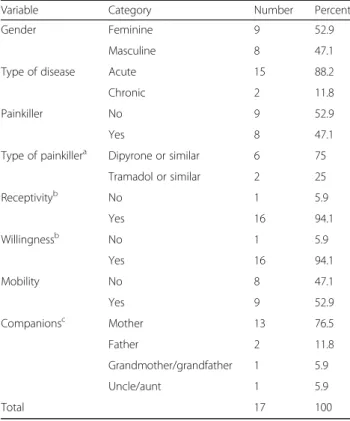
The most frequent painkiller was dipyrone (or similar), followed by tramadol (or similar). The average time be-tween the ingestion of the medicine and the start of the AAA session was 129.6 min (sd = 78.4 min, median = 106.5 min, minimum = 53 min, and maximum = 266 min). The results showed that 58.8 % (10 patients) of the ac-tivities were performed with the dog Bruce. Because it is a convenience sample, the number of activities with each of the dogs depended on the number of patients during each shift. It is worth highlighting that all the subjects performed at least two activities with the dogs during each session. The most common activities were“petting” and “talking,” followed by “taking photos,” “offering treats,” “playing,”and“asking for obedience command.”
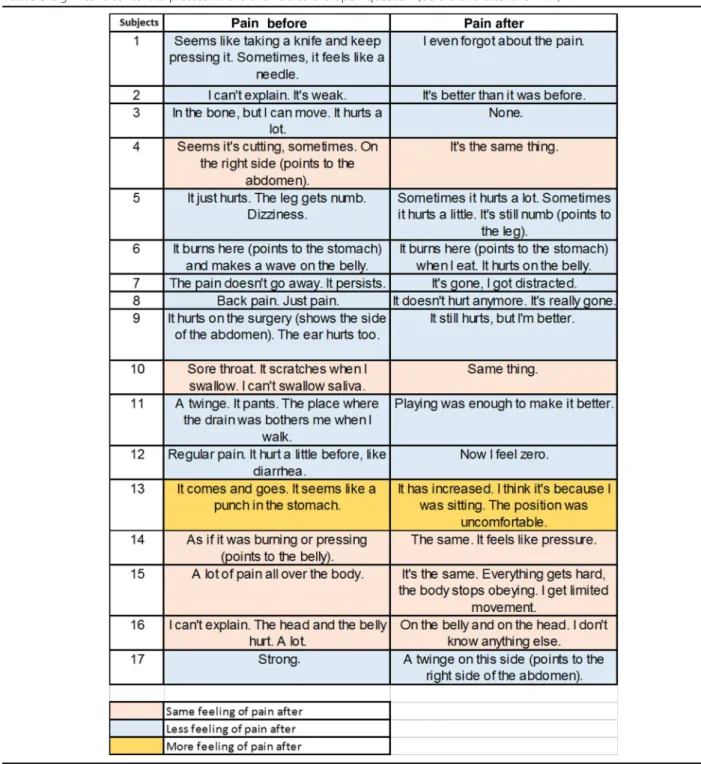
Table 3 shows the significant content expressed in the answers to the open question (before and after the AAA).
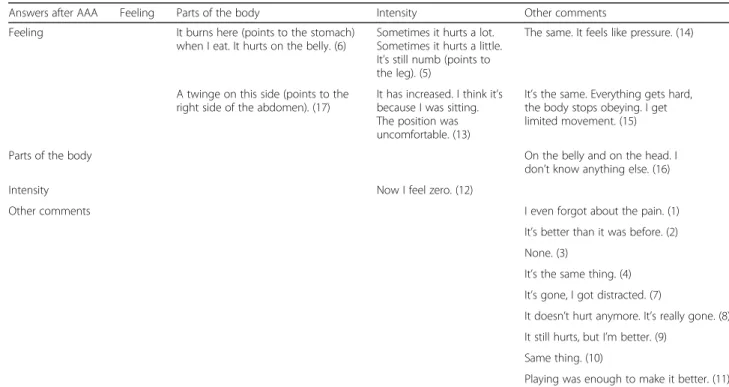
The responses to the open question were grouped into the following four categories, which were defined a pos-teriori from the main responses of the sample:
1. Feelings (impression of the pain) 2. Part of the body (location of the pain) 3. Intensity of the pain
4. Other comments
Table 4 (attached) shows the answers that were given before the intervention with the dog.
Table 5 (attached) shows the answers that were given after the AAA.
Some important data were observed during the collec-tion of data; however, it was not part of the protocol.
On all the shifts, hospital professionals from several areas had some type of contact with the dogs. The dogs were identified at the entrance of the hospital and were recognized by the guards, receptionists, nurses, cleaning staff, and others. Parents and companions of many of the patients (not only the participating subjects) also interacted with the dogs.
At the beginning of the intervention, most of the sub-jects in this study were lying in bed (some in the dark), with the windows of their rooms closed. As soon as the dog came in, there was a change in these aspects; the pa-tients got out of bed or asked that the back of the bed was lifted, the windows were opened, the lights were turned on, and the patients asked that their hair was brushed and their clothes were changed.
Some of the subjects, although not referring to a de-crease in pain after the AAA, showed improvement in mood and motivation as reported by their companions. One of the patient’s companions stated that the child was not motivated to talk that day, but that after the ar-rival of the dog, the patient talked and smiled. Another companion reported that the patient only wanted to lie down due to the pain, but that in the presence of the dog, they sat up.
We highlight that the only subject that reported an in-crease in pain after the AAA credited it to the uncom-fortable position (seating) that they were in during the intervention, which might have caused by their com-plaint (abdominal pain); however, they did not make any reference to this discomfort during the procedure. In contrast, this patient interacted with the dog, pet him, smiled, and told stories about their own dog.
One highlight of the results concerned a subject who answered negatively to the assessment of receptiveness and willingness to interact with the dog and, when con-sulted about participating, was crying and dispirited be-cause of their disease, treatment, and having to answer the open question. However, after they were asked the question, they started asking the researcher questions about the animal, such as“Is he big or small?”;“Does he lick?”; and“Is he going to jump on me?” Subsequently, this patient changed their mind, stopped crying, re-quested the presence of the dog, and happily interacted with him.
Some of the nurses, upon informal request, appointed patients to the AAA who had no complaints of pain but were in a poor emotional state. We considered that these subjects—a girl with a panic syndrome, a boy Table 2Number and percentage of hospitalized subjects,
according to demographics and clinical characteristics
Variable Category Number Percent
Gender Feminine 9 52.9
Masculine 8 47.1
Type of disease Acute 15 88.2
Chronic 2 11.8
Painkiller No 9 52.9
Yes 8 47.1
Type of painkillera Dipyrone or similar 6 75
Tramadol or similar 2 25
Receptivityb No 1 5.9
Yes 16 94.1
Willingnessb No 1 5.9
Yes 16 94.1
Mobility No 8 47.1
Yes 9 52.9
Companionsc Mother 13 76.5
Father 2 11.8
Grandmother/grandfather 1 5.9
Uncle/aunt 1 5.9
Total 17 100
aPercentage referring to the cases who took painkillers
bThe subject, at first, refused the presence of the dog, but changed their mind and realized the whole protocol
whose mother passed away while he was hospitalized, a boy with leukemia who was “sad,” and a baby who had been crying for over 30 min—could benefit from the presence of the dog.
Discussion
In this study, we verified that some of the subjects in the study population showed positive reductions in self-reported feelings of pain following the AAA.
Table 4Answers before the intervention, by categories (in parenthesis, the number corresponded to the subject)
Answers before AAA Feeling Parts of the body Intensity Other comments
Feeling Seems like taking a knife
and keep pressing it. Sometimes, it feels like a needle. (1)
Seems it’s cutting, sometimes. On the right side (points to the abdomen). (4)
Regular pain. It hurt a little before, like diarrhea. (12)
It just hurts. The leg gets numb. Dizziness. (5)
It burns here (points to the stomach) and makes a wave on the belly. (6)
Sore throat. It scratches when I swallow. I can’t swallow saliva. (10)
A twinge. It pants. The place where the drain was bothers me when I walk. (11) It comes and goes. It seems like a punch in the stomach. (13) As if it was burning or pressing (points to the belly). (14)
Parts of the body It hurts on the surgery (shows
the side of the abdomen). The ear hurts too. (9)
I can’t explain. The head and the belly hurt. A lot. (16)
Back pain. Just pain. (8)
A lot of pain all over the body. (15)
In the bone, but I can move. It hurts a lot. (3)
Intensity Strong. (17) I can’t explain. It’s weak. (2)
The pain doesn’t go away. It persists. (7)
Other comments
Table 5Answers after the intervention, by categories (in parenthesis, the number corresponded to the subject)
Answers after AAA Feeling Parts of the body Intensity Other comments
Feeling It burns here (points to the stomach)
when I eat. It hurts on the belly. (6) Sometimes it hurts a lot.Sometimes it hurts a little. It’s still numb (points to the leg). (5)
The same. It feels like pressure. (14)
A twinge on this side (points to the right side of the abdomen). (17)
It has increased. I think it’s because I was sitting. The position was uncomfortable. (13)
It’s the same. Everything gets hard, the body stops obeying. I get limited movement. (15)
Parts of the body On the belly and on the head. I
don’t know anything else. (16)
Intensity Now I feel zero. (12)
Other comments I even forgot about the pain. (1)
It’s better than it was before. (2) None. (3)
It’s the same thing. (4) It’s gone, I got distracted. (7)
It doesn’t hurt anymore. It’s really gone. (8) It still hurts, but I’m better. (9)
Same thing. (10)
Improvement following AAA was also observed in the physiological indicators of pain, such as a reduction in heart rate, blood pressure, body temperature, respiration, and pupillary constriction, which suggests relaxation (Cole and Gawlinski 2000) and a decrease in pain.
In addition, the research suggests that AAI can lead to distraction from/redirecting of a problem, which is a possible explanation for the decrease in pain. One study indicated that the dog diverts the attention of the child who is under emotional distress (Johnson et al. 2008).
In Table 4, we can observe comments such as“I forgot about the pain” and “I got distracted.” Moreover, some subjects made a point to show photos of their own dog, whereas others suggested that their own dog could visit them at the hospital. According to Tsai et al. (2010), AAA is often more effective at easing symptoms of stress and anxiety in hospitalized children than a visit from a person.
It is worth highlighting that both the patient’s compan-ions and the hospital professionals also sought to inter-act with the dogs, which fostered an atmosphere of ease and relaxation. These data corroborate the findings of Marcus et al. (2012), who stated that AAI benefits health professionals, which are regularly exposed to stressful work conditions. Another study showed that there was a significant decrease in salivary cortisol (stress hormone) in hospital professionals after 5 min of contact with a dog (Barker et al. 2005).
The subjects who changed their attitude prior to inter-acting with the dog (asking someone to open the window, brush their hair, or change their clothes) corroborate the findings of Souter and Miller (2007), who showed that AAI significantly reduces depression symptoms, and Banks and Banks (2005), who demonstrated a decrease in feelings of loneliness (particularly in individual visits). From this per-spective, it is also possible to associate the psychological benefits with the decrease in the feelings of pain.
As for the subject who reported increased pain after the AAA and the one who did not want to see the dog at first, both fit the findings of Kaminski et al. (2002), who verified the positive effects of AAA on the mood of hospitalized children, which might justify the motivation of these subjects to participate in the AAA despite their discomfort and emotional suffering.
In this study, two therapy dogs of different sizes were used. It is worth highlighting that in situations where the subject was unable to leave the bed, Sheep (the small dog) was put on their lap or a chair beside their bed. In this same context, Bruce (the large dog) rested his head on the bed so he could be petted. Both forms facilitated and motivated affectionate and close interactions.
However, the large dog triggered the following import-ant positive identifications: the children admired his strength and size, commenting:“He probably never gets sick, right?”; “One day, I want to take him for a walk!”;
and “Does he eat a lot?” In many cases, identification1 and projection2 were noticed, which suggests symbolic elaboration by the subject before the experience. Ac-cording to Levinson (1969), the child sees the possibility of incorporating the animal’s strength through identifica-tion because the animal also possesses feelings such as sadness, anger, and loneliness.
One of the subjects got out of bed and hid objects for the small dog to find, pretending they were hidden trea-sures. According to Winnicott (1975), playing has an im-portant role in the elaboration of the subject’s internal issues and is a possible way to control anxiety, ideas, and impulses, which suggests that the interaction with the animal can create a potential space that makes it pos-sible to have a creative experience of elaboration and reorganization between the external and internal world.
Regarding the verbalization of feelings of pain, Table 3 shows the answers given before the intervention with the dog. Verbalization, in most cases, revolves around feeling +parts of the body. The subjects described their
pain as a“scratchy throat,” “pressure on the belly,” “like a punch in the stomach,” or something more defined and concrete. Table 4 shows the answers given after the AAA. Verbalization centers on the “other comments” category, which indicates vague feelings of pain after contact with the dog. These results suggest that the pain had “diluted” and was not the main focus anymore, and the comments ranged from “It doesn’t hurt anymore,” “It’s gone,” and “No pain.” In these cases, the subject’s verbalization before and after the AAA lead to symbolic elaboration of their feeling and also corroborate the findings of Sobo et al. (2006), whose research subjects, in an interview, identified the dog as something that cre-ated a distraction and entertainment.
In the cases where pain was still present after the AAA, the answers were “It still hurts, but I’m better,” “It’s better than before,”or“Playing was enough to make it better,” which suggests that the subjects felt better than before the intervention, as suggested by Cole and Gawlinski (2000). Although the physical pain remains, the dog is able to reduce, neutralize, and potentiate the negative feelings and sensations so that the patient be-comes more tolerant to pain and replaces the absence of affection and feelings of neglect and abandonment (Mo-raes and Melo 2014).
Both the subjects and companions made contact with the animal during the intervention, which sug-gests that the dog promotes increased expression of emotions and provides support during difficult pe-riods such as hospitalization. The parents/companions must also address feelings of powerlessness, changes in their routine, and giving up the comfort of their homes. The dog can also help them face the disease and treatment (Bussotti et al. 2005).
Patients who were informally appointed by the nurses and did not have complaints of pain but were fragile also benefited from the contact with the dog. Through the sessions, we verified that nurses are professionals who are very sensitive to their patient’s condition and seek to improve their well-being and humanize their care (Kawakami and Nakano 2002).
The concept that AAI can be an important tool in the hospital environment is justified by the human-ized approach to healthcare, in which dogs, in par-ticular, have offered significant contributions based on numerous accounts of experiences in the field. How-ever, the topic lacks solid scientific evidence, which should be gathered through intensive theoretical and methodological research.
Limitations of this research
The first limitation is the relationship between the nurse and patient. The nurse identified the patients with pain; therefore, we cannot rule out the question of empathy in this relationship, which is completely subjective.
The second limitation is the difference in the route of application (oral or intravenous) and type of analgesics (dipyrone, paracetamol, tramal, or morphine), which could change the effects of the medication on pain and interfere with the results.
According to the results and the finding by Odendaal (2000), the amount of time the patients interacted with the dog (maximum 10 min) did not correspond to the peak release of hormones such as oxytocin (15 to 20 min), which are directly linked to feeling less pain. However, there was a decrease in the sensation of pain sensation. Is this a result of the possible symbolic elabor-ation during the interaction? Are distraction and chan-ging focus from the pain sufficient to reduce pain in some patients? How long do the effects of the inter-action persist after the session ends?
The type of interaction with the dog can also be con-sidered a limitation of the study because we did not spe-cify the activity to be performed. The type of interaction can also be influenced by whether the patient has a pet at home, which was not considered during this study.
The sample size can also be considered a limitation. Future research should be conducted with a larger sample.
Conclusions
Positive effects of AAA have been observed regarding decreased self-reported feelings of pain in children. It was suggested that AAA may cause symbolic elaboration of the subject’s pain and that the dog can represent ac-ceptance and affection at a moment of great emotional suffering. Both physiological and psychological issues should be taken into consideration in an integrated way.
Another key finding is that the introduction of the ani-mals to the hospital environment generally resulted in clear benefits. This work begins the discussion of animal-assisted intervention, which is extremely import-ant because it is a topic that increases each day in our country and is already used by many health and educa-tional professionals.
Endnotes
1
The identification mechanism enables the subject to “assimilate an aspect, a property, an attribute of the other, and is totally or partially transformed according to the other’s model”(Laplanche and Pontalis 2001, p. 226).
2
Projection is a defense mechanism that makes it possible to locate and deposit in the other feelings and desires that the subject refuses in him- or herself (Laplanche and Pontalis 2001).
Authors’contributions
TI conceived the study, participated in its design, and draft and authored the manuscript. MCC participated in the study design and interpretation of the data and drafted the manuscript revisions. Both authors read and approved the final manuscript.
Competing interests
The authors declare that they have no competing interests.
Author details
1Pontifícia Universidade Católica de São Paulo, Rua Assungui, 700 ap 191,
São Paulo, SP CEP 04131-001, Brazil.2Pontifícia Universidade Católica de São Paulo (PUC-SP), Rua Ministro Godoi, 969–4º andar–sala 4E-13–Perdizes, São Paulo, SP CEP 05015-901, Brazil.
Received: 12 July 2016 Accepted: 26 September 2016
References
Banks, M. R., & Banks, W. A. (2005). The effects of group and individual animal-assisted therapy on loneliness in residents of long-term care facilities.Anthrozoös, 18(4), 396–408.
Bardin, L. (2010).Análise de conteúdo, Lisboa(70th ed., p. 281).
Barker, S. B., Knisely, J. S., McCain, N. L., & Best, A. M. (2005). Measuring stress and immune response in healthcare professionals following interaction with a therapy dog: a pilot study.Psychological Reports Journal, 96(3), 713–29. doi:10.2466/pr0.96.3.713-729.
Barker, S. B., Pandurangi, A. K., & Best, A. M. (2003). Effects of animal-assisted therapy on patient’s anxiety, fear and depression before ECT.The Journal of
ECT, 19(1), 38–44.
Braun, C., Stangler, T., Narveson, J., & Pettingell, S. (2009). Animal-assisted therapy as a pain relief intervention for children.Complementary Therapies in Clinical
Practice, 15(2), 105–109. http://dx.doi.org/10.1016/j.ctcp.2009.02.008.
Bussotti, E. A., Leão, E. R., Chimentão, D. M. N., & Silva, C. P. R. (2005). Assistência Individualizada:“Posso trazer meu cachorro?”Revista da Escola de Enfermagem
Caprilli, S., & Messeri, A. (2006). Animal-assisted activity at A. Meyer Children Hospital: a pilot study.eCAM, 3(3), 379–83. http://dx.doi.org/10.1093/ecam/nel029. Cole, K., & Gawlinski, A. (2000). Animal-assisted therapy: the human-animal bond.
American Association of Critical-care Nurses Clinical Issues, 11(1), 139–149.
doi:10.1097/00044067-200002000-00015.
Creswel, J. W. (2007).Projeto de pesquisa: método qualitativo, quantitativo e misto (2nd ed.). Porto Alegre: Artmed.
Denzin, N. K., & Lincoln, Y. S. (2006). Introdução: a disciplina e a prática da pesquisa qualitativa. In N. K. Denzin & Y. S. Lincoln (Eds.),O planejamento da pesquisa
qualitativa: teorias e abordagens(2nd ed., pp. 15–41). Porto Alegre: Artmed.
Frutuoso, J. T., & Cruz, R. M. (2004). Relato verbal na avaliação psicológica da dor.
Avaliação Psicológica, 3(2), 107–114.
IAHAIO. (2014).IAHAIO white paper. www.iahaio.org/new/fileuploads/9313IAHAIO %20WHITE%20PAPER%20TASK%20FORCE%20-%20FINAL%20REPORT.pdf. Retrieved 3 October 2016.
IASP. http://www.iasp-pain.org/Taxonomy#Pain. Retrieved 3 October 2016. Johnson, R. A., Meadows, R. L., Haubner, J. S., & Sevedge, K. (2008). Animal-assisted
activity among patients with cancer: effects on mood, fatigue, self-perceived health, and sense of coherence.Oncology Nursing Forum, 35(2), 225–232. Kaminski, M., Pellino, T., & Wish, J. (2002). Play and pets: the physical and emotional
impact of child life and pet therapy on hospitalized children.Children's Health
Care, 31(4), 321–335. http://dx.doi.org/10.1207/S15326888CHC3104_5.
Kamioka, H., Okada, S., Tsutani, K., Park, H., Okuizumi, H., Handa, S., Oshio, T., Park, S., Kitayuguchi, J., Abe, T., Honda, T., & Mutoh, Y. (2014). Effectiveness of animal-assisted therapy: a systematic review of randomized controlled trials.Complementary
Therapies in Medicine, 22(2), 371–390. http://dx.doi.org/10.1016/j.ctim.2013.12.016.
Kawakami, C. H., & Nakano, C. K. (2002).Relato de experiência: terapia assistida por
animais (TAA)—mais um recurso na comunicação entre paciente e enfermeiro.
Simpósio Brasileiro de Comunicação em Enfermagem, 8, São Paulo.
Laplanche, J., & Pontalis, J. B. (2001).Vocabulário de Psicanálise(4ªth ed.). São Paulo: Martins Fontes.
Lefebvre, S. L., Golab, G. C., Christensen, E., Castrodale, L., Aureden, K.,
Bialachowski, A., Gumley, N., Robinson, J., Peregrine, A., Benoit, M., Card, M. L., Horne, L. V., & Weese, J. S. (2008). Guidelines for animal-assisted interventions in health care facilities.American Journal of Infection Control, 36(2), 78–85. http://dx.doi.org/10.1016/j.ajic.2007.09.005.
Levinson, B. M. (1969).Pet-oriented child psychotherapy. Springfield: Charles C. Thomas. Mahat, G., & Scoloveno, M. (2003). Comparison of fears and coping strategies
reported by Nepalese school-age children and their parents.Journal of Pediatrics
Nursing, 18(5), 305–313. http://dx.doi.org/10.1016/S0882-5963(03)00102-7.
Marcus, D. A., Bernstein, C. D., Constantin, J. M., Kunfel, F. A., Breuer, P., & Hanlon, R. B. (2012). Animal-assisted therapy at an outpatient pain management clinic.Pain
Medicine, 13(1), 45–57. http://dx.doi.org/10.1111/j.1526-4637.2011.01294.x.
Moraes, H. S., & Melo, M. M. (2014).A relação do sujeito contemporâneo e o animal
doméstico: uma análise a partir do filme Marley e Eu(MOSTRA DE INICIAÇÃO
CIENTÍFICA DO CURSO DE PSICOLOGIA DA FSG. Anais da mostra de iniciação científica do curso de psicologia da FSG, pp. 127–151).
Morales, L. J. (2005). Visita terapêutica de mascotas em hospitales.Revista chilena
de infectología, 22(3), 257–263.
http://dx.doi.org/10.4067/S0716-10182005000300007.
Odendaal, J. S. (2000). Animal-assisted therapy—magic or medicine?Journal of
Psychosomatic Research, 49(4), 275–280.
http://dx.doi.org/10.1016/S0022-3999(00)00183-5.
Puccini, R. F., & Bresolin, A. M. B. (2003). Dores recorrentes na infância e na adolescência.
Jornal de Pediatria (Rio J), 79(1), S65–S76. doi:0021-7557/03/79-Supl.1/S65.
Rossato, L. M., & Angelo, M. (1999). Utilizando instrumentos para avaliação da percepção de dor em pré-escolares face a procedimento doloroso.Revista
da Escola de Enfermagem da USP, 33(3), 236–49. http://dx.doi.org/10.1590/
S0080-62341999000300005.
Silva, M. S., Pinto, M. A., Gomes, L. M. X., & Barbosa, T. L. A. (2011). Dor na criança internada: a percepção da equipe de enfermagem.Rev Dor, 12(4), 314–320. Sobo, E. J., Eng, B., & Kassity-Krich, N. (2006). Canine visitation (pet) therapy: pilot
data on decreases in child pain perception.Journal of Holistic Nursing, 24(1), 51–7. doi:10.1177/0898010105280112.
Souter, M. A., & Miller, M. D. (2007). Do animal-assisted activities effectively treat depression? A meta-analysis.Anthrozoös, 20(2), 167–180.
Tsai, C. C., Friedmann, E., & Thomas, S. A. (2010). The effect of animal-assisted therapy on stress responses in hospitalized children.Anthrozoös, 23(3), 245–258. Vagnoli, L., Caprilli, S., Vernucci, C., Zagni, S., Mugnai, F., & Messeri, A. (2015). Can
presence of a dog reduce pain and distress in children during venipuncture?Pain
Management Nursing, 16(2), 89–95. http://dx.doi.org/10.1016/j.pmn.2014.04.004.
Viana, D. L., Dupas, G., & Pedreira, M. L. G. (2006). A avaliação da dor da criança pelas enfermeiras na Unidade de Terapia Intensiva.Pediatria, 28(4), 251–261. Winnicott, D. W. (1975).O brincar e a realidade. Rio de Janeiro: Imago. Wu, A. S., Niedra, R., Pendergast, L., & McCrindle, B. W. (2002). Acceptability and
impact of pet visitation on a pediatric cardiology inpatient unit.Journal of
Pediatric Nursing, 17(5), 354–362.
Submit your manuscript to a
journal and benefi t from:
7Convenient online submission 7Rigorous peer review
7Immediate publication on acceptance 7Open access: articles freely available online 7High visibility within the fi eld
7Retaining the copyright to your article