J. Braz. Chem. Soc., Vol. 17, No. 7, 1223-1228, 2006. Printed in Brazil - ©2006 Sociedade Brasileira de Química 0103 - 5053 $6.00+0.00
Article
*e-mail: [email protected]
Bioactive Flavonoids and Triterpenes from
Terminalia fagifolia
(Combretaceae)
Fernanda R. Garcez,*,a Walmir S. Garcez,a Andréa L. B. D. Santana,a Milene M. Alves,a Maria de Fátima C. Matosb and Anne de M. Scaliantea
a
Departamento de Química and bDepartamento de Farmácia-Bioquímica, Universidade Federal de Mato Grosso do Sul, 79070-900 Campo Grande-MS, Brazil
Da madeira e das cascas do caule de Terminalia fagifolia foram isolados dois 1,3-diarilpropanos, 1-(4’-hidróxi-2’-metóxifenil)-3-(3”-metóxi-4”-hidróxifenil)-propano e 1-(2’-hidróxi-4’,6’-dimetóxifenil)-3-(3”-metóxi-4”-hidróxifenil)-propano, sete flavanonas, naringenina, 5-hidróxi-4’,7-dimetóxiflavanona, sakuranetina, isosakuranetina, 7,4’-5-hidróxi-4’,7-dimetóxiflavanona, 7-hidróxi-4’-metóxiflavanona, 7-metóxi-4’-hidróxiflavanona, duas chalconas, 2’,4’-diidroxi-4-metóxichalcona e 2’-4-diidroxi-4’-metóxichalcona, uma flavana, 7,4’-diidróxi-3’-metóxiflavana e nove triterpenos pentacíclicos, ácido arjúnico, arjunetina, arjungenina, arjunglucosídeo I, ácido arjunólico, arjunglucosídeo II, 23-galoilarjunglucosídeo (isolado como seus derivados mono-, di- e trimetilados após metilação com diazometano), ácido betulínico e acetato do ácido ursólico, além de ácido gálico e sitosterol. Os diarilpropanos representam os primeiros membros desta classe em Combretaceae e as flavanonas e chalconas estão sendo descritas pela primeira vez na família. As substâncias isoladas foram avaliadas quanto às atividades citotóxica in vitro (células Hep2 e H292,
carcinomas de laringe e mucoepidermóide de pulmão humanos, respectivamente) e antioxidante. As chalconas, o diarilpropano 1-(2’-hidróxi-4’,6’-dimetóxifenil)-3-(3”-metóxi-4”-hidróxifenil)-propano e os derivados di- e tri-metilados de 23-galoilarjunglucosídeo foram os mais ativos quanto à atividade citotóxica.
Two 1,3-diarylpropanes, 1-(4’-hydroxy-2’-methoxyphenyl)-3-(3”-methoxy-4”-hydroxyphenyl)-propane and 1-(2’-hydroxy-4’,6’-dimethoxyphenyl)-3-(3”-methoxy-4”-hydroxyphenyl)-propane, seven flavanones, naringenin, naringenin-4’,7-dimethyl-ether, sakuranetin, isosakuranetin, liquiritigenin-4’,7-dimethyl-ether, liquiritigenin-7-methyl-ether and liquiritigenin-4’-methyl-ether, two chalcones, isoliquiritigenin-4-methyl-ether and isoliquiritigenin-4’-methyl-ether, one flavan, 7,4’-dihydroxy-3’-methoxyflavan, nine triterpenes, arjunic acid, arjunetin, arjungenin, arjunglucoside I, arjunolic acid, arjunglucoside II, 23-galloylarjunglucoside II (isolated as its mono-, di- and tri-O-methyl derivatives after methylation with diazomethane), betulinic acid and ursolic acid acetate, along with gallic acid and sitosterol were isolated from the heartwood and trunk bark of of Terminalia fagifolia.The flavanones and chalcones obtained in the present work are new in the Combretaceae and this is the first report of the occurrence of 1,3-diarylpropanes in this family. The isolated compounds were evaluated for their in vitro cytotoxic activity against two human cancer cell lines (Hep2 larynx carcinoma
and H292 lung mucoepidermoid carcinoma) and antioxidant properties.
Isoliquiritigenin-4-methyl-ether, isoliquiritigenin-4’-methyl-Isoliquiritigenin-4-methyl-ether, 1-(2’-hydroxy-4’,6’-dimethoxyphenyl)-3-(3”-methoxy-4”-hydroxyphenyl)-propane and the di- and tri-O-methyl derivatives of 23-galloylarjunglucoside II were the most active in the cytotoxic assay.
Keywords: Terminalia fagifolia, Combretaceae, diarylpropanes, cytotoxic activity, antioxidant activity
Introduction
Terminalia fagifolia Mart. & Zucc. (Combretaceae), popularly known as “cachaporra do gentio” and
“capitão do seco”, is a tree found in the “cerrado” of Mato Grosso do Sul, Brazil and in the Brazilian folk medicine the trunk bark is used for the treatment of
tumors and aphthas.1 To date, no phytochemical or
1224 Bioactive Flavonoids and Triterpenes J. Braz. Chem. Soc.
In a continuation of our study on constituents of plants of the Terminalia genus which occur in the central-western region of Brazil,2,3 we have examined the composition of
the ethanol extracts from the heartwood and the trunk bark of T. fagifolia. Herein we describe the isolation and structural identification of twelve flavonoids, comprising seven flavanones (1-7), one flavan (8), two chalcones (9
and 10), two diarylpropanes (11 and 12) and nine pentacyclic triterpenes (13-21), in addition to gallic acid and sitosterol. The flavanones and chalcones are new in the Combretaceae. To date, diarylpropanes were mostly reported in members of the Myristicaceae and this is the first report for their occurrence in the Combretaceae family. The structural elucidation of these isolates was established on the basis of 1D and 2D NMR spectroscopic techniques.
The evaluation of the in vitro cytotoxic activities of sixteen compounds against two human cancer cell lines (Hep2 and H292), as well as the antioxidative properties of eighteen isolated compounds are also reported.
Results and Discussion
After a series of partition procedures and a combination of column chromatography separations of the ethanol extracts from the heartwood and trunk bark, twelve flavonoids (1–12) and nine triterpenoids (13–21) were isolated, together with gallic acid (22) and sitosterol (23). Compounds 1–7 are known flavanones and identified as naringenin-4’,7-dimethyl-ether,4 isosakuranetin
(naringenin-4’-methyl-ether),5 naringenin,6
liquiritigenin-4’,7-dimethyl-ether (7,4’-dimethoxyflavanone),7,8
liquiritigenin-4’-methyl-ether,9
liquiritigenin-7-methyl-ether8,9 and sakuranetin,10 respectively, which have not
been described in the Combretaceae yet. Since the 13
C-NMR data of 5 have not been reported, the carbon signals of this compound were assigned and are listed in Table 1.
Compound 8, identified as
7,4’-dihydroxy-3’-methoxyflavan, was previously isolated from T. argentea.3
Beyond 8,only two flavans have been obtained from members of this genus.11
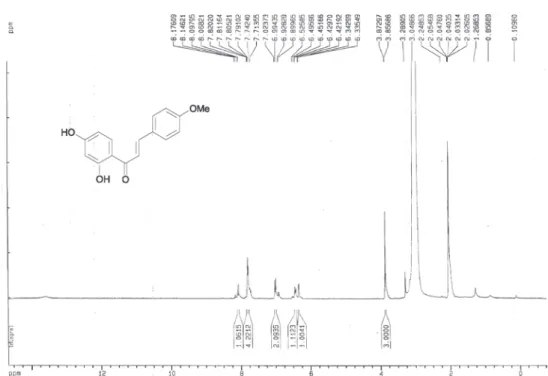
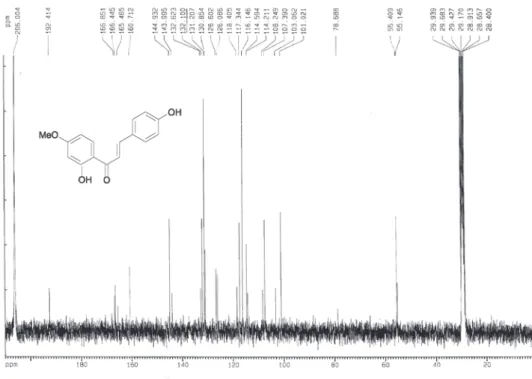
The isomeric chalcones 9 and 10 differed only by the hydroxyl or methoxyl groups at C-4 and C-4’ and were identified as 2’,4’-dihydroxy-4-methoxychalcone (isoliquiritigenin-4-methyl-ether)9 and
2’,4-dihydroxy-4’-methoxychalcone (isoliquiritigenin-4’-methyl-ether),8,12
respectively, which had not been previously isolated from any member of the Combretaceae. The occurrence of flavanones and chalcones in a Terminalia species is of particular interest since to date only four flavanones and one chalcone have been isolated from Terminalia species.13
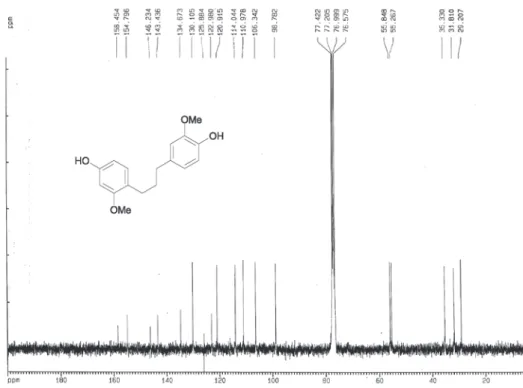
Compounds 11 and 12 were identified as the
diarylpropanes 1-(4’-hydroxy-2’-methoxyphenyl)-3-(3”-methoxy-4”-hydroxyphenyl)-propane, also known as virolane (11) and
1-(2’-hydroxy-4’,6’-dimethoxyphenyl)-3-(3”-methoxy-4”-hydroxyphenyl)-propane (12).14
Although the presence of diarylpropanes is, with very few exceptions, restricted to members of the Myristicaceae family, this is the first report of the occurrence of this class of compounds in the Combretaceae. With regard to the spectroscopic NMR properties of 11 and 12 only 1H
data have been reported and to date no 13C NMR values
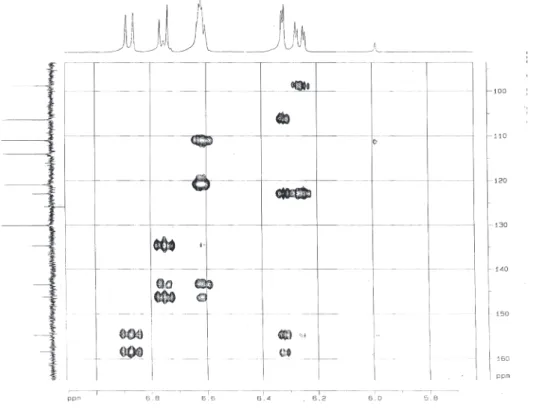
are available for these compounds. In the present study, several 1D and 2D NMR data, including those from 1
H-1H COSY, NOESY, HMQC and HMBC experiments, were
assigned accordingly for all carbon resonances of 11 and
12 (Table 1).
Compounds 13-18 and 20, known pentacyclic
triterpenes whose occurrence is not uncommon in the genus Terminalia, were identified as arjunic acid, arjunetin, arjungenin, arjunglucoside I, arjunolic acid, arjunglucoside II and betulinic acid, respectively, and their corresponding NMR spectral data were in full agreement with those reported in the literature.15,16 23-Galloylarjunglucoside II
(19) has been formerly obtained solely from T. macroptera17
and in the present work it was isolated and characterized after methylation with diazomethane as its mono-, di- and tri-O-methyl derivatives 23-(4”-O-methyl)-galloylarjun-glucoside II (19a),
23-(3”,4”-di-O-methyl)-galloylarjun-Table 1.13C (75 MHz) NMR spectral data for 5, 11 and 12 (δ, CDCl 3)
C 5 11 12
1 - 134.7 134.6
2 79.9 111.0 110.9
3 44.1 146.2 146.3
4 191.0 143.4 143.5
5 129.4 114.0 114.1
6 110.5 120.9 120.9
7 164.0 -
-8 103.4 -
-9 162.5 -
-10 115.1 -
-1’ 130.7 123.0 108.9
2’ 127.7 158.5 154.7
3’ 114.2 98.8 93.3
4’ 160.0 154.8 159.0
5’ 114.2 106.3 91.3
6’ 127.7 130.1 159.2
α - 31.8 30.9
β - 35.3 35.3
β’ - 29.2 22.2
OMe-2’ - 55.3
OMe-4’ 55.4 - 55.6
OMe-6’ - - 55.3
OMe-3 - 55.9 55.8
1225 Garcez et al.
Vol. 17, No. 7, 2006
glucoside II (19b) and
23-(3”,4”,5”-tri-O-methyl)-galloylarjunglucoside II (19c). The carbon signals of 19a
-19c were very similar to those of 19, except for the signals attributable to the galloyl moiety, which were consistent with the presence of methoxy groups at C-4” in 19a, C-3” and C-4” in 19b and C-3”, C-4” and C-5” in 19c, as shown in Table 2. Compound 21 was identified as ursolic acid acetate15 and in spite of the wide distribution of this
triterpene in other plant genera, no record is available for its presence in Terminalia.
Compounds 2, 3, 6, 8-16, 19a-19c and 22 were assayed in vitro against the Hep2 (larynx carcinoma) and H292 (lung mucoepidermoid carcinoma) human cell lines. As depicted in Table 3, compounds 9, 10, 12, 19b and 19c displayed significant cytotoxic activity on both cell lines (IC50 values in the range of 9.7-23.2 µg mL-1), while 11 and 13
exhibited weak cytotoxicity in this assay (IC50 values in the range of 30.7 - 41.4 µg mL-1). The cytotoxic
anti-tumor drug cisplatin was taken as positive control (IC50 5.1 and 7.8 µg mL-1). The detection of cytotoxic
compounds in Terminalia fagifolia associated to its use in the Brazilian folk medicine for the treatment of tumors requires further investigations.
In the antioxidant assay, compounds 8, 11-13 and 19a
-19c strongly inhibited bleaching of β-carotene on TLC plates, while 14-16 and 22 showed moderate activity. On the other hand, compounds 2-6 and 9-10 were inactive. Although the antioxidative properties of a number of ortho-dioxygenated flavonoid derivatives are well known and several oxygenated pentacyclic triterpenes have also been reported as antioxidant compounds,18,19 there is no
report for the antioxidant activity of diarylpropanes 11
and 12 and triterpenes 19a-19c. Recently arjungenin (15) and its glucoside (16) were found to show a moderate free radical scavenging activity in the DPPH model, while arjunic acid (13) and arjunetin (14) exhibited no significant activity in the same assay.19 However, in the present work
13 and 14 showed strong and moderate activities,
respectively, in the autography assay towards β-carotene. Table 2.13C (75 MHz) NMR spectral data for 19, 19a, 19b and 19c (δ,
Py-d5)
C 1917 19a* 19b* 19c*
1 47.8 47.6 47.7 48.0
2 68.3 68.2 68.2 68.3
3 77.6 77.5 77.3 77.3
4 43.2 43.1 43.0 43.1
5 48.9 48.8 48.7 48.7
6 18.8 18.6 18.5 18.5
7 32.9 32.7 32.7 32.9
8 39.9 39.8 39.8 39.9
9 48.5 48.4 48.4 48.5
10 38.2 38.1 38.1 38.2
11 23.9 23.8 23.7 23.8
12 122.2 122.4 122.4 122.6
13 144.2 144.0 143.9 144.0
14 42.1 42.0 41.9 41.9
15 28.0 27.9 27.8 27.9
16 23.4 23.2 23.1 23.1
17 47.0 46.9 46.8 46.8
18 41.8 41.7 41.5 41.5
19 46.2 46.0 45.9 46.0
20 30.7 30.6 30.5 30.6
21 34.0 33.8 33.7 33.7
22 32.5 32.3 32.2 32.3
23 67.0 67.2 67.6 66.9
24 14.0 13.8 13.7 13.8
25 17.3 17.4a 17.3b 17.3c
26 17.6 17.1a 17.1b 17.2c
27 25.9 25.7 25.7 25.6
28 176.5 176.4 176.4 176.4
29 33.1 32.9 32.8 32.9
30 23.6 23.5 23.4 23.5
Glucose moiety
1’ 95.7 95.6 95.5 95.5
2’ 74.0 73.9 73.8 73.9
3’ 78.8 78.7 78.6 78.7
4’ 71.0 70.9 70.9 70.9
5’ 79.3 79.2 79.1 79.1
6’ 62.2 62.1 62.0 62.0
Galloyl moiety
1” 121.5 122.6 126.3 125.9
2” 110.0 109.8 104.9 107.1
3” 147.5 152.3 153.6 153.5
4” 140.7 141.3 141.7 142.8
5” 147.5 152.3 152.0 153.5
6” 110.0 109.8 111.9 107.1
7” 167.1 166.6 166.2 165.9
OMe-3” - - 55.7 55.9
OMe-4” - 60.1 60.3 60.5
OMe-5” - - - 55.9
*Assignments confirmed by HMQC and HMBC experiments. a, b, c
Inter-changeable signals.
Table 3. Cytotoxicity of compounds 2-3, 6, 8-16, 19a-19c and 22 against Hep2 and H292 cell lines
Compound IC50 / (µg mL-1)
Hep2 H292
2 > 50 > 50
3 > 50 > 50
6 > 50 > 50
8 > 50 > 50
9 19.81 20.70
10 22.62 18.42
11 32.41 30.66
12 22.02 23.19
13 41.36 38.07
14 > 50 > 50
15 > 50 > 50
16 > 50 > 50
19a > 50 > 50
19b 15.81 16.23
19c 16.93 9.70
22 > 50 > 50
Cisplatin* 5.10 7.80
1226 Bioactive Flavonoids and Triterpenes J. Braz. Chem. Soc.
Although a large number of cytotoxic constituents from different flavonoid classes has been described, to the best of our knowledge this is the first report on the cytotoxicity of 1,3-diarylpropanes. In addition, the isolation of this class of compounds from a member of the Combretaceae adds new phytochemical data, which might have chemotaxonomical importance.
Experimental
General experimental procedures
IR spectra were recorded as KBr pellets on a Bomem-Hartmann & Braun FT IR spectrometer. 1H and 13C 1D
and 2D NMR spectra were recorded at 300 MHz (1H) and
75 MHz (13C) on a Bruker DPX-300 spectrometer.
Standard pulse sequences were used for homo - and heteronuclear correlation experiments. Column chromatography procedures were performed on silica gel 70-230 mesh and 400 mesh, RP-18 silica gel 230-400 mesh, and Sephadex LH-20. Preparative TLC was carried out on silica gel PF254 plates. Reversed phase semi-preparative HPLC separations were performed with a
Shimadzu LC-6AD pump, using a RP-18, 25 × 250 mm,
5µm particle size, Shim-Pack PREP-ODS(H) column, with a flow rate of 10 mL or 14 mL min-1 and monitoring at
254 or 280 nm.
Plant material
Heartwood and trunk bark of Terminalia fagifolia Mart. were collected in Aquidauana, Mato Grosso do Sul, Brazil, in June 2002. The plant material was identified by MSc. Ubirazilda M. Resende, CGMS Herbarium, Universidade Federal de Mato Grosso do Sul, Brazil, where a voucher specimen (No. 0938) was deposited.
Extraction and isolation of chemical constituents
Air-dried and powdered heartwood (2684 g) was extracted at room temperature with EtOH. After concentration in vacuo, the residue was partitioned between hexane/CH3CN/CHCl3/H2O (20:34:10:10). The CH3CN/CHCl3 phase (21.4 g) was applied to a silica gel CC (70-230 mesh) eluted with hexane/EtOAc and EtOAc/ MeOH gradient systems. The fractions showing similar spots by TLC were combined to give nineteen fractions (I→XIX). Fraction III (hexane/EtOAc 9:1, 282.0 mg) was further separated by CC over Sephadex LH-20 (hexane/ CH2Cl2 1:4). Compound 1 was identified as the major component of fractions 10-13 (50.0 mg) whereas 23 (30.0
mg) was obtained from fractions 17-18. Fraction V (hexane/EtOAc 1:1, 259.0 mg) was chromatographed on a Sephadex LH-20 column using hexane/CH2Cl2 (1:4) followed by CH2Cl2/acetone (3:2) as solvents. Fractions 13-16 (hexane/CH2Cl2 1:4) from this column provided 4
(3.0 mg) while fractions 53-56 (CH2Cl2/acetone 3:2) yielded 2 (7.2 mg) and 10 (6.2 mg), after semi-preparative
HPLC (MeOH/H2O 17:3 and MeOH/H2O 8:2,
respectively). Fractions 57-69 (CH2Cl2/acetone 3:2) contained a mixture of 2, 5 and 9 and were again separated by CC on Sephadex LH-20 (CHCl3/MeOH 3:2) to give 5
(4.0 mg) and an unresolved mixture of 2 and 9 which was further separated by semi-preparative HPLC (MeOH/H2O 8:2) to yield 2 (3.6 mg) and 9 (2.3 mg). Separation of fraction VI (hexane/EtOAc 1:1, 311.8 mg) by repeated
CC on Sephadex LH-20 (CHCl3/MeOH 3:2) gave two
main fractions. The former furnished 6 (5.9 mg) and 12
(7.5 mg) while the latter gave 11 (3.8 mg) and further amounts of 12 (10.5 mg), after semi-preparative HPLC (MeOH/H2O 7:3 and CH3CN/H2O 11:9, respectively). Fraction VII (hexane/EtOAc 1:1, 202.0 mg) was subjected to CC on Sephadex LH-20 (CHCl3/MeOH 3:2). Fractions 12-19 from this column yielded 7 (12.4 mg), after semi-preparative HPLC (MeOH/H2O 7:3) while fractions 23-25 consisted of 3 (12.8 mg). Fraction IX (EtOAc, 2.88 g) afforded 13 (12.1 mg) and 22 (34.6 mg), fraction XII (EtOAc/MeOH 9.5:0.5, 1.30 g) yielded 15 (186.0 mg)
and 17 (6.0 mg) and fraction XIV (EtOAc/MeOH 9:1,
504.6 mg) gave 14 (13.6 mg), after a series of CC on Sephadex LH-20 (MeOH), followed by CC on silica gel
230-400 mesh (CHCl3/MeOH 97:3 and CHCl3/MeOH
9:1). Fraction XV (EtOAc/MeOH 9:1, 1.28 g) was subjected to CC on Sephadex LH-20 (MeOH). Fraction 9 from this column provided 18 (4.0 mg), while fractions 11-12 (171.0 mg) consisted of a complex mixture which was treated with an ethereal solution of diazomethane to give, after successive CC separations on Sephadex
LH-20 (MeOH) and silica gel 230-400 mesh (CHCl3/MeOH
95:5), the corresponding three O-methyl derivatives of compound 19: 19a (7.9 mg), 19b (8.0 mg) and 19c (12.4 mg). Compound 16 (29.1 mg) was isolated from fraction XVII (EtOAc/MeOH 9:1, 1.49 g) after CC on Sephadex LH-20 (MeOH) followed by CC on silica gel 230-400 mesh (CHCl3/MeOH 9:1).
1227 Garcez et al.
Vol. 17, No. 7, 2006
Figure 1. Chemical constituents from T. fagifolia.
yield twelve combined fractions (I→XII). Fraction V (CH2Cl2, 306.5 mg) was chromatographed on a Sephadex LH-20 column (CHCl3/MeOH 3:2). Fractions 12-13 from this column were again subjected to CC on silica gel 230-400 mesh developed with hexane/acetone (9:1) followed by hexane/acetone (8.5:1.5) to give 21 (4.7 mg). Fraction VI (CH2Cl2, 1.16 g) was separated on a Sephadex LH-20
column eluted with CHCl3/MeOH (3:2). The major
constituent of fractions 7-8 (130.0 mg) was found to be
20, which was not further purified. Fractions 15-19 (36.2
mg) yielded a mixture of 2 and 7 (6.0 mg) and of 9 and 10
1228 Bioactive Flavonoids and Triterpenes J. Braz. Chem. Soc.
In vitrocytotoxic assay
In vitro cytotoxic activities were measured against Hep2, a human larynx carcinoma cell line and H292, a human lung mucoepidermoid carcinoma cell line, obtained from Instituto Adolfo Lutz (São Paulo, SP, Brazil). Cells were cultivated in DMEM medium supplemented with 10% foetal calf serum, 100 µg mL-1
streptomycin, 100 U mL-1 penicillin and 0.25 µg mL-1
anfotericin B, at 37 oC in a humidified incubator with 5%
CO2. Cellular viability was assessed by formazan
production from methylthiazolyldiphenyltetrazolium bromide (MTT colorimetric assay) as described previously.20
Bleaching experiments on β-carotene
The test was carried out on TLC plates, using a solution of β-carotene as a spraying reagent and α-tocopherol as the reference compound.21 Sample solutions of 2-6, 8-16,
19a-19c and 22 at similar concentrations were applied on TLC plates. After developing and drying, the plates were sprayed with a 0.02% solution of β-carotene in CH2Cl2 and subsequently placed under natural light until discoloration of the background.
Acknowledgments
The authors are grateful to FUNDECT-MS, CPq-PROPP-UFMS and PROAP-CAPES for their financial support and to CAPES and CNPq for the scholarships awarded. Thanks are also given to the Department of Morphophysiology (CCBS-UFMS) and Agência Estadual de Defesa Sanitária Animal e Vegetal (IAGRO, MS) for providing the laboratory facilities.
Supplementary Information
Supplementary Information is avaliable free of charge at http://jbcs.sbq.org.br, as PDF file.
References
1. Almeida, S. P; Proença, C. E. B.; Sano, S. M.; Ribeiro, J. F.;
Cerrado – Espécies Vegetais Úteis, Empresa Brasileira de
Pesquisa Agropecuária: Planaltina, 1998.
2. Garcez, F. R.; Garcez, W. S.; Miguel, D. L. S.; Serea, A. A. T.; Prado, F. C.; J. Braz. Chem. Soc. 2003, 14, 461.
3. Garcez, F. R.; Garcez, W. S.; Martins, M.; Lopes, F. A.; Biochem.
Syst. Ecol.2003, 31, 229.
4. Rossi M. H.; Yoshida, M.; Maia, J. G. S.; Phytochemistry1997,
45, 1263.
5. Vasconcelos, J. M. J.; Silva, A. M. S.; Cavaleiro, J. A. S.;
Phytochemistry 1998, 49, 1421.
6. Niwa, M.; Otsuji, S.; Tatematsu, H.; Liu, G. Q.; Chen, X. F.; Hirata, Y.; Chem. Pharm. Bull. 1986, 34, 3249.
7. Gottlieb, O. R.; Maia, J. G. S.; Ribeiro, M. N.; Phytochemistry
1976, 15, 773.
8. Pelter, A.; Ward, R. S.; Gray, T. I.; J. Chem. Soc., Perkin Trans. I 1976, 2475.
9. Achenbach, H.; Stocker, M.; Constenla, M. A.; Phytochemistry
1988, 27, 1835.
10. Agrawal, P. K.; Thakur, R. S.; Bansal, M. C. In Carbon-13
NMR of Flavonoids; Agrawal, P. K., ed.; Elsevier: Amsterdam,
1989, ch. 3.
11. Valsaraj, R.; Pushpangadan, P.; Smitt, U. W.; Adsersen, A.; Christensen, S. B.; Sittie, A.; Nyman, U.; Nielsen, C.; Olsen, C. E.; J. Nat. Prod.1997, 60, 739.
12. Veitch, N. C.; Sutton, P. S. E.; Kite, G. C.; Ireland, H. E.; J.
Nat. Prod.2003, 66, 210.
13. Srivastava, S. K.; Srivastava, S. D.; Indian J. Chem. 2004, 43B, 2731; Srivastava, S. K.; Srivastava, S. D.; Chouksey, B. K.;
Fitoterapia2001, 72, 106; Srivastava, S. K.; Srivastava, S. D.;
Chouksey, B. K.; Proc. Phytochem. Soc. Eur. 2000, 45, 107; Nagar, A.; Gujral, V. K.; Gupta, S. R.; Planta Med. 1979, 37, 183; Srivastava, S. K.; Srivastava, S. D.; Chouksey, B. K.;
Fitoterapia 1999, 70, 390.
14. De Lima, R. A.; Franca, N. C.; Diaz, P. P.; Gottlieb, O. R.;
Phytochemistry 1975, 14, 1831; Diaz, P. P.; Diaz, A. M. P.;
Phytochemistry 1986, 25, 2395.
15. Ahmad, V. U.; Rahman A.; Handbook of Natural Products Data.
Volume 2. Pentacyclic Triterpenoids, Elsevier: Amsterdam, 1994.
16. Zhou, X.; Kasai, R.; Ohtani, K.; Tanaka, O.; Nie, R. L.; Yang, C. R.; Zhou, J.; Yamasaki, K.; Phytochemistry1992, 31, 3642; Nandy, A. K.; Podder, G.; Sahu, N. P.; Mahato, S. B.;
Phytochemistry 1989, 28, 2769; Romussi, G.; De Tommasi,
N.; Pharmazie 1992, 47, 877.
17. Conrad, J.; Vogler, B.; Klaiber, I.; Roos, G.; Walter, U.; Kraus,
W.; Phytochemistry 1998, 48, 647.
18. Gulcin, I.; Mshvildadze, V.; Gepdiremen, A.; Elias, R.; Phytother. Res.2006, 20, 130; D’Abrosca, B.; Fiorentino, A.; Monaco, P.; Oriano, P.; Pacifico, S.; Food Chem.2006, 98, 285; Montilla, M. P.; Agil, A.; Navarro, C.; Jimenez, M. I.; Garcia-Granados, A.; Parra, A.; Cabo, M. M.; Planta Med. 2003, 69, 472.
19. Pawar, R. S.; Bhutani, K. K.; Phytomedicine 2005, 12, 391. 20. Mosmann, T.; J. Immunol. Methods 1983, 65, 55.
21. Pratt, D. E.; Miller, E. E.; J. Am. Oil Chem. Soc. 1984, 61, 1064.
J. Braz. Chem. Soc., Vol. 17, No. 7, S1-S27, 2006. Printed in Brazil - ©2006 Sociedade Brasileira de Química 0103 - 5053 $6.00+0.00
Supplementary Information
*e-mail: [email protected]
Bioactive Flavonoids and Triterpenes from
Terminalia fagifolia
(Combretaceae)
Fernanda R. Garcez,*,a Walmir S. Garcez,a Andréa L. B. D. Santana,a Milene M. Alves,a Maria de Fátima C. Matosb and Anne de M. Scaliantea
a
Departamento de Química and bDepartamento de Farmácia-Bioquímica, Universidade Federal de Mato Grosso do Sul, 79070-900 Campo Grande-MS, Brazil
2 Bioactive Flavonoids and Triterpenes J. Braz. Chem. Soc.
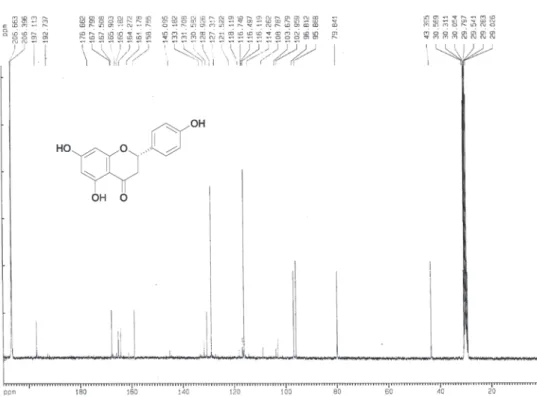
Figure S2.13C NMR spectrum of compound 1(75 MHz, CDCl 3).
3 Garcez et al.
Vol. 17, No. 7, 2006
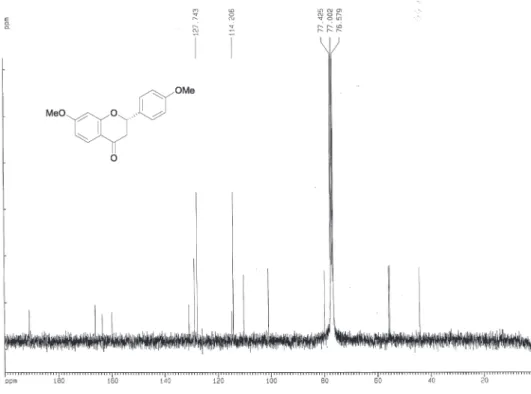
Figure S4.13C NMR spectrum of compound 2(75 MHz, CDCl 3).
4 Bioactive Flavonoids and Triterpenes J. Braz. Chem. Soc.
Figure S6.13C NMR spectrum of compound 3 (75 MHz, acetone-d 6).
5 Garcez et al.
Vol. 17, No. 7, 2006
Figure S8.13C NMRspectrum of compound 4 (75 MHz, CDCl 3).
6 Bioactive Flavonoids and Triterpenes J. Braz. Chem. Soc.
Figure S10.13C NMR spectrum of compound 5 (75 MHz, CDCl 3).
7 Garcez et al.
Vol. 17, No. 7, 2006
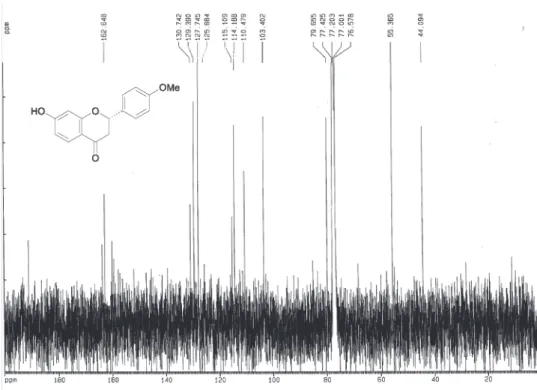
Figure S12.13C NMR spectrum of compound 6 (75 MHz, CDCl 3).
8 Bioactive Flavonoids and Triterpenes J. Braz. Chem. Soc.
Figure S14.13C NMR spectrum of compound 8 (75 MHz, CDCl 3).
9 Garcez et al.
Vol. 17, No. 7, 2006
Figure S16.13C NMR spectrum of compound 9 (75 MHz, acetone-d 6).
10 Bioactive Flavonoids and Triterpenes J. Braz. Chem. Soc.
Figure S18.13C NMR spectrum of compound 10 (75 MHz, acetone-d 6).
11 Garcez et al.
Vol. 17, No. 7, 2006
Figure S20.13C NMR spectrum of compound 11 (75 MHz, CDCl 3).
12 Bioactive Flavonoids and Triterpenes J. Braz. Chem. Soc.
Figure S22. HMBC experiment of compound 11.
13 Garcez et al.
Vol. 17, No. 7, 2006
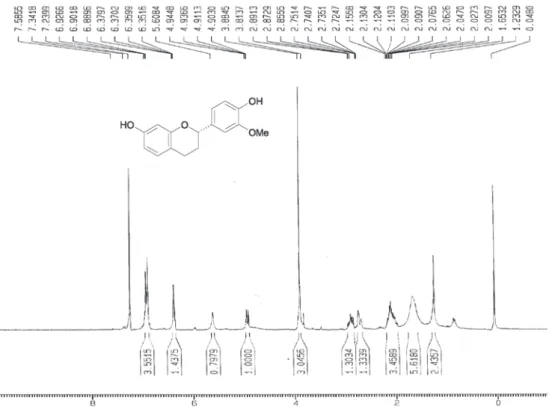
Figure S24. 1H NMR spectrum of compound 12 (300 MHz, CDCl 3).
14 Bioactive Flavonoids and Triterpenes J. Braz. Chem. Soc.
Figure S27. HMBC experiment of compound 12.
15 Garcez et al.
Vol. 17, No. 7, 2006
Figure S28. HMBC experiment of compound 12.
16 Bioactive Flavonoids and Triterpenes J. Braz. Chem. Soc.
Figure S30.1H NMR spectrum of compound 13 (300 MHz, Py-d 5).
17 Garcez et al.
Vol. 17, No. 7, 2006
Figure S32. 1H NMR spectrum of compound 14 (300 MHz, Py-d 5).
18 Bioactive Flavonoids and Triterpenes J. Braz. Chem. Soc.
Figure S34.1H NMR spectrum of compound 15 (300 MHz, Py-d 5).
19 Garcez et al.
Vol. 17, No. 7, 2006
Figure S36.1H NMR spectrum of compound 16 (300 MHz, Py-d 5).
20 Bioactive Flavonoids and Triterpenes J. Braz. Chem. Soc.
Figure S38.1H NMR spectrum of compound 17 (300 MHz, Py-d 5).
21 Garcez et al.
Vol. 17, No. 7, 2006
Figure S40.1H NMR spectrum of compound 18 (300 MHz, Py-d 5).
22 Bioactive Flavonoids and Triterpenes J. Braz. Chem. Soc.
Figure S42.1H NMR spectrum of compound 19a (300 MHz, Py-d 5).
23 Garcez et al.
Vol. 17, No. 7, 2006
Figure S44. HMBC experiment of compound 19a.
24 Bioactive Flavonoids and Triterpenes J. Braz. Chem. Soc.
Figure S46.13C NMR spectrum of compound 19b (75 MHz, Py-d 5).
25 Garcez et al.
Vol. 17, No. 7, 2006
Figure S48.13C NMR spectrum of compound 19c (75 MHz, Py-d 5).
26 Bioactive Flavonoids and Triterpenes J. Braz. Chem. Soc.
Table S2.13C (75 MHz) NMR spectral data for 4, 5 and 6 (d, CDCl
3)
C 4 5 6
2 79,8 79,9 79,7
3 44,1 44,1 44,1
4 190,8 191,0 191,1
5 128,7 129,4 128,8
6 110,2 110,5 110,3
7 166,2 164,0 166,3
8 100,9 103,4 100,9
9 163,6 162,5 163,7
10 114,8 115,1 114,7
1’ 130,8 130,7 130,8
2’ e 6’ 127,7 127,7 128,0
3’ e 5’ 114,2 114,2 115,7
4’ 160,0 160,0 156,2
OMe 55,7; 55,4 55,4 55,6
Table S1.13C (75 MHz) NMR spectral data for 1, 2 (d, CDCl
3) and 3 (acetone-d6)
C 1 2 3
2 79,0 79,0 79,8
3 43,2 43,1 43,4
4 196,0 196,0 197,1
5 164,1 164,3 165,2
6 95,1 96,7 96,8
7 167,8 164,8 167,8
8 94,2 95,5 95,9
9 162,9 163,2 164,3
10 103,1 103,1 103,0
1’ 130,4 130,3 130,6
2’ e 6’ 127,7 127,7 128,9
3’ e 5’ 114,2 114,2 116,1
4’ 160,0 160,0 158,8
OMe 55,7; 55,4 55,4 —
27 Garcez et al.
Vol. 17, No. 7, 2006
Table S7.13C (75 MHz) NMR spectral data for 17 and 18 (d, Py-d 5)
C 17 18 C 17 18
1 47,5 47,5 19 46,3 45,9
2 68,7 68,7 20 30,8 30,5
3 78,0 78,0 21 34,1 33,7
4 43,5 43,4 22 32,7 32,3
5 48,0 48,0 23 66,3 66,2
6 18,4 18,3 24 14,2 14,1
7 33,1 32,7 25 17,4 17,6
8 39,7 39,8 26 17,2 17,4
9 47,7 47,7 27 26,0 25,9
10 38,2 38,2 28 180,3 176,4
11 23,8 23,6 29 33,1 32,9
12 122,3 123,9 30 23,6 23,4
13 144,8 144,0 1’ ___ 95,6
14 42,1 42,0 2’ ___ 73,8
15 28,1 28,0 3’ ___ 78,6
16 23,8 23,2 4’ ___ 70,9
17 46,5 46,8 5’ ___ 79,1
18 41,8 41,5 6’ ___ 62,0
Table S5.13C (75 MHz) NMR spectral data for 13 and 14 (d, Py-d 5)
C 13 14 C 13 14
1 45,9 47,4 19 81,3 80,9
2 68,2 68,5 20 34,6 35,4
3 83,3 83,7 21 27,5 28,8
4 39,0 38,5 22 32,6 32,8
5 55,2 55,9 23 28,4 29,2
6 18,3 18,9 24 16,7 16,7
7 32,3 33,0 25 16,2 17,4a
8 39,4 40,1 26 16,5 17,5a
9 47,7 48,3 27 24,3 24,7
10 38,1 39,7 28 180,9 177,2
11 23,5 24,1 29 27,9 28,6
12 123,9 123,5 30 24,6 24,5
13 143,4 144,2 1’ — 95,7
14 41,2 42,0 2’ — 74,0
15 28,1 28,9 3’ — 78,7
16 29,1 27,8 4’ — 70,9
17 44,9 46,3 5’ — 79,1
18 43,7 44,5 6’ — 62,0
Table S6.13C (75 MHz) NMR spectral data for 15 and 16 (d, Py-d 5)
C 15 16 C 15 16
1 47,3 47,2 19 81,0 80,7
2 68,8 68,7 20 35,6 35,2
3 78,0 77,9 21 29,0 28,7
4 43,5 43,4 22 32,8 32,7
5 47,8 48,2 23 66,2 66,2
6 18,5 18,5 24 14,1 14,0
7 33,5 32,6 25 17,5c 17,4c
8 39,9 40,0 26 17,1c 16,9c
9 48,3 47,7 27 24,7 24,4
10 38,4 38,3 28 180,9 177,1
11 24,2 24,0 29 28,7 28,5
12 123,3 123,4 30 24,7 24,6
13 144,7 144,0 1’ ___ 95,6
14 42,1 41,9 2’ ___ 73,8
15 28,2 27,7 3’ ___ 78,6
16 29,0 28,7 4’ ___ 70,8
17 45,9 46,2 5’ ___ 79,0
18 44,6 44,3 6’ ___ 61,9
Table S4.13C (75 MHz) NMR spectral data for 9 and 10 (d, acetone-d 6)
C 9 10
a 118,6 118,4
b 144,0 144,9
b’ 192,0 192,4
1 128,0 126,6
2 e 6 130,9 131,2
3 e 5 114,7 116,1
4 162,3 160,7
1’ 113,5 114,6
2’ 166,1 166,4
3’ 103,2 101,0
4’ 167,1 166,8
5’ 108,6 107,4
6’ 132,7 132,1
OMe 55,3 55,4
Table S3.13C (75 MHz) NMR spectral data for 8 (d, CDCl
3)
C 8 C 8
2 78,0 10 114,2
3 24,6 1’ 133,6
4 30,1 2’ 108,6
5 130,2 3’ 146,6
6 107,9 4’ 145,4
7 154,8 5’ 114,2
8 103,5 6’ 119,2