www.reumatologia.com.br
REVISTA BRASILEIRA DE
REUMATOLOGIA
Original article
Immediate infusional reactions to intravenous
immunobiological agents for the treatment of autoimmune
diseases: experience of 2126 procedures in a non-oncologic
infusion centre
Ingrid Bandeira Moss
a, Monique Bandeira Moss
a,b, Debora Silva dos Reis
a,
Reno Martins Coelho
a,*
a Center of Diagnostic Investigation – Infusion Centre, Rio de Janeiro, RJ, Brazil
b Universidade Federal do Rio de Janeiro (UFRJ), Rio de Janeiro, RJ, Brazil
a r t i c l e i n f o
Article history:
Received 18 June 2013 Accepted 28 October 2013
Keywords:
Immediate infusional reactions Immunobiological
Autoimmune diseases
a b s t r a c t
Introduction: With the increasing use of immunobiological drugs (IBD), the knowledge about their effectiveness and safety has increased.
Objective: To analyze the immediate infusional reactions (IIR) to intravenous IBD: inliximab (IFX), rituximab (RTX), abatacept (ABT) and tocilizumab (TCZ) on the treatment of autoim-mune diseases.
Method: 2126 infusions performed in the Infusion Centre - CID in 268 patients were
ana-lyzed. The used drug, its clinical indication, infusion time, and use of premedication were determined by the prescribing physician. All intercurrences presented during infusion and/ or during a thirty minutes observation period were considered as IIR. The approach ad-opted in IIR followed the protocols of the Infusion Centre - CID.
Results: Regarding the type of IBD, the infused drugs given were: IFX (1584, 74.5%), TCZ (226, 10.63%), RTX (185, 8.7%) and ABT (131, 6,16%). IIR were described in 87 procedures (9.4%): 77 - IFX group and 10 - RTX group. IIR were not described in ABT and TCZ groups. Most were considered as mild (n = 5; 41.17%) or moderate (n = 50, 58.81%) reactions; there were no seri-ous reactions. Regarding to discontinue infusions, 79 (92.9%) were resumed and completed successfully. Only six (0.28% of infusions) were not completed because of IIR.
Conclusion: Despite the differences between the number of procedures per drug, ours is a
“real life” analysis, where the incidence of IIR was similar to that described in the literature. The low incidence of IIR corroborates the safety data, both quantitatively and qualitatively, and underscores the importance of specialized medical support during infusion.
© 2014 Elsevier Editora Ltda. All rights reserved.
* Corresponding author.
E-mail: [email protected] (R.M. Coelho).
Reações infusionais imediatas a agentes imunobiológicos endovenosos no tratamento de doenças autoimunes: experiência de 2.126
procedimentos em um centro de infusão não oncológico
Palavras-chave:
Reações infusionais imediatas Imunobiológicos
Doenças autoimunes
r e s u m o
Introdução: Com o crescimento do uso de drogas imunobiológicas (IBD) ampliamos o
conhe-cimento sobre sua eicácia e segurança.
Objetivo: Analisar as reações infusionais imediatas (RII) às IBD endovenosas – inliximabe
(IFX), rituximabe (RTX), abatacepte (ABT) e tocilizumabe (TCZ) – no tratamento de doenças autoimunes.
Método: Avaliamos 2.126 infusões feitas no CID (Centro de Infusão) em 268 pacientes. A
droga usada, a indicação clínica, o tempo de infusão e o uso de pré-medicação foram deter-minados pelo médico prescritor. Foram consideradas RII todas as intercorrências apresen-tadas durante a infusão e/ou período observacional de 30 minutos. A conduta adotada nas RII seguiu os protocolos do CID.
Resultados: Em relação ao tipo de IBD, as infusões foram distribuídas em: IFX (1.584; 74,5%), TCZ (226; 10,63%), RTX (185; 8,7%) e ABT (131; 6,16%). As RII foram descritas em 87 procedi-mentos (4,09%): 77 no grupo IFX e 10 no grupo RTX. Não foram descritas RII nos grupos de ABT e TCZ. A maioria foi considerada leve (n = 5; 41,17%) ou moderada (n = 50; 58,81%) e não houve reações graves. Das infusões interrompidas, 79 (92,9%) foram reiniciadas e concluí-das com êxito. Apenas seis (0,28%) não foram concluíconcluí-das por causa concluí-das RII.
Conclusão: Apesar da diferença entre o número de procedimentos por droga, trata-se de
uma análise de “vida real”, na qual a incidência de RII foi semelhante à descrita na literatu-ra. A baixa incidência de RII corrobora os dados de segurança tanto de forma quantitativa como qualitativa e ressalta a importância do acompanhamento médico especializado du-rante a infusão.
© 2014 Elsevier Editora Ltda. Todos os direitos reservados.
Introduction and objectives
With the growing use of immunobiological drugs (IBD) in the treatment of various autoimmune diseases, it has been possible to increase our knowledge about their effectiveness and safety.
Currently several substances with different mechanisms of action and routes of administration are available, and their use is becoming increasingly common in specialties such as Rheumatology, Dermatology and Gastroenterology.1
Much of the knowledge about immediate infusional reac-tions (IIR) of intravenous (IV) IBD is based on results of phase II and III clinical studies, or on experiences during oncology treatment protocols.2,3 It is therefore necessary to deepen these studies in patients with autoimmune diseases, as well as to apply them in groups of patients in everyday clinical practice;. the “real life”. This study aimed to describe the prev-alence, severity and outcomes of IIR from the use of IV IBD in a Non-Oncology Infusion Centre (CID) – a “real life” scenario of the application of these drugs in the treatment of different autoimmune diseases.
Materials e methods
Sample
A total of 2126 infusions of IBD IV: inliximab (IFX), tocili-zumab (TCZ), rituximab (RTX) and abatacept (ABT), were
performed in a total of 268 patients undergoing treatment for autoimmune diseases (rheumatoid arthritis, ankylosing spondylitis, psoriatic arthritis, inlammatory bowel disease, psoriasis, systemic lupus erythematosus, Sjogren's syndrome, systemic vasculitis, uveitis, dermatomyositis, pemphigus and antiphospholipid antibody syndrome), were evaluated. These infusions were held on the premises of the Infusion Centre - CID, from October 2006 to November 2011.
The administered drug and its dose, clinical indication, infusion time (provided the adherence to the minimum infusional time of each drug given in the package insert: IFX,4 2 hours; TCZ,5 1 hour; RTX,6 4 hours; ABT,7 30 m) and with or without premedication were determined by the at-tending physician, according to prescriptions and medical reports, except for the RTX group, in which pre-infusional medication was used in all procedures, which necessarily included corticosteroids and anti-histamines PO or IV. The premedication used during IFX, TCZ and ABT infusions var-ied according to the prescription of the attending physician, but in all cases consisted of corticosteroids IV and/or anti-histamines PO or IV.
Regarding the dose of IV IBD, only in RTX group a standard dose of 1 g/infusion was used. For the other drugs, the dosage established by the prescribing physician was kept. The differ-ent doses used in groups IFX, TCZ and ABT, as well as the drip type used for drug infusion are detailed in Table 1. An infusion pump was only used in RTX infusions.
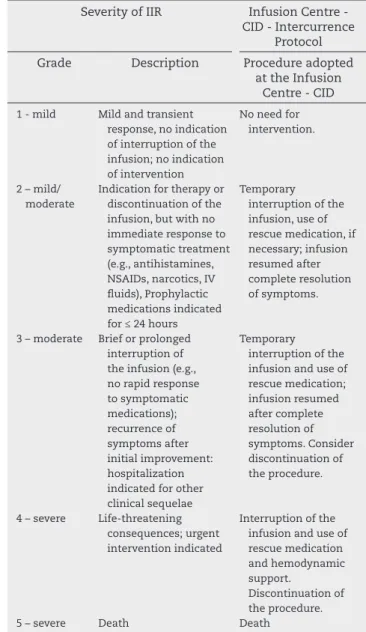
Table 2 – Classiication of the severity of IIR according to NCI and Infusion Centre - CID protocol of intercurrences. Adapted from Common Adverse Events Terminology Criteria v4.02 (CTCAE).8
Severity of IIR Infusion Centre - CID - Intercurrence
Protocol Grade Description Procedure adopted
at the Infusion Centre - CID
1 - mild Mild and transient response, no indication of interruption of the infusion; no indication of intervention
No need for intervention.
2 – mild/ moderate
Indication for therapy or discontinuation of the infusion, but with no immediate response to symptomatic treatment (e.g., antihistamines, NSAIDs, narcotics, IV luids), Prophylactic medications indicated for ≤ 24 hours
Temporary interruption of the infusion, use of rescue medication, if necessary; infusion resumed after complete resolution of symptoms.
3 – moderate Brief or prolonged interruption of the infusion (e.g., no rapid response to symptomatic medications); recurrence of symptoms after initial improvement: hospitalization indicated for other clinical sequelae
Temporary interruption of the infusion and use of rescue medication; infusion resumed after complete resolution of symptoms. Consider discontinuation of the procedure.
4 – severe Life-threatening consequences; urgent intervention indicated
Interruption of the infusion and use of rescue medication and hemodynamic support.
Discontinuation of the procedure.
5 – severe Death Death
No data on the use of concomitant drugs, disease activity indexes or treatment failure were collected.
Immediate reactions
For the present study, IIR were considered as the intercurrenc-es, symptomatic or not, present during the infusion and/or subsequent observational period of 30 minutes. These IIR were classiied according to the type of event, severity and time of event after the start of infusion (Table 2). To facilitate the reac-tion classiicareac-tion, these were grouped according to systems, adopting the following division: angioedematous, cutaneous, gastrointestinal, hemodynamic, musculoskeletal, neurologi-cal, respiratory or mixed (when there was multisystemic in-volvement). To assess the severity of IIR, the National Cancer Institute event severity scale8 was used (Table 2). The approach adopted in IIR followed the protocols for intercurrences of the Infusion Centre - CID, dividing cases regarding the use or lack of rescue medication, with or without temporary interruption of the infusion and/or cessation of infusion (Table 2).
Statistical analysis
Data was stored using a Microsoft Access 2007 database and analyzed with Prism 4.0 software. The results were presented
in absolute percentage (%), considering the total number of infusions; and relative percentage (%), considering the sub-groups analyzed (type of drug and IIR). Due to the retrospec-tive nature of the analysis, informed consents were not ob-tained, but patients' data were protected by numeric codes.
Results
IBD infusions
During the period between October 2006 and November 2011, a total number of 268 patients with autoimmune dis-eases were treated with IV IBD at the Infusion Centre, total-ling 2126 infusions performed. Regarding the type of drug used, the infusions were distributed as follows, in order of prevalence: IFX, n = 1584 (74.50%); TCZ, n = 226 (10.63%); RTX,
Table 1 – Distribution of IIR by drug × number of drug infusions and elapsed infusion time.
Inliximab 1584 Reactions = 77
n (%)
Rituximab 185 Reactions = 10
n (%)
Total 2126 87 n (%) Number of infusions
1st 13 (16.88) 6 (60) 19 (21.83)
2nd to 4th 23 (29.87) 4 (40) 27 (31.03)
5th to 8th 18 (23.37) - 18 (9.19)
9th to 16th 16 (20.77) - 16 (18.39)
After 16th 7 (9.09) - 7 (8.04)
Infusion Time
< 30 min. 21 (27.27) - 21 (26.25)
30-60 min. 26 (33.76) 2 (20) 28 (35)
60-120 min. 16 (20.77) 3 (30 19 (22.5)
> 120 min. 5 (6.49) 1 (10) 6 (6.25)
NI 9 (11.68) 4 (40) 13 (17.56)
Outcome
Resumed after initial measures, and inalized
69 (89.61) 10 79 (90.8)
Suspension of procedure after initial measures
4 (5.19) 0 4 (4.59)
New IIR after initial steps - successful completion
2 (2.59) 0 2 (2.29)
New IIR after initial steps - suspension of procedure
n = 185 (8.7%); and ABT, n = 131 (6.16%) (Fig. 1). The distribution of patients by drug and means of infusions performed in each group are presented as follows: IFX = 168 (62.68%) patients with a mean of 9.42 infusions/patient (1-32); RTX = 59 (22.01%) patients with a mean of 3.13 infusions/patient (1-12); TCZ = 26 (9.70%) patients with a mean of 8.60 infusions/patient (1-23); and ABT = 15 (5.59%) patients with a mean of 8.70 infusions/ patient (1-39).
It is important to note that, considering the characteris-tics of the study, a single patient may have been subjected to more than one type of treatment. Regarding the distribution of the registered diagnosis, the most frequent diagnosis was rheumatoid arthritis, n = 805 (37.86%), followed by inl amma-tory bowel disease, n = 416 (19.56%), ankylosing spondylitis, n = 376 (17.68%), psoriasis, n = 237 (11,14%), psoriatic arthri-tis, n = 185 (8.7%), and others (systemic lupus erythematosus, Sjogren's syndrome, systemic vasculitis, uveitis, dermatomy-ositis, pemphigus and antiphospholipid antibody syndrome), n = 107 (5.03%). All RTX infusions were preceded by pre-medi-cation, also used in 530 IFX infusions (33.45%), 1 TCZ infusion (0.44%) and 1 ABT infusion (0.76%). As to the dose used, 925 IFX infusions (58.39%) doses applied were between 3 and 5 mg/kg, 582 infusions (36.74%) with doses > 5 mg/kg and 77 infusions (4.86%) with doses < 3 mg/kg. In TCZ group, doses ≤ 8 mg/kg were used in 143 procedures (63.27%); in 83 infusions (36.72%) doses > 8 mg/kg were used. For the ABT group, the most widely used dose was 750 mg/infusion, totalling 99 infu-sions (75.57%), followed by 500 mg, with 22 infuinfu-sions (16.79%) and 250 mg, with 10 infusions (7.63%).
Immediate infusion reactions (IIR)
Of 2126 infusions, IIR were documented in 87 procedures (4.09% of total infusions), with 77 events in the IFX group (88.50% of total reactions and 4.86% of IFX infusions) and 10 in the RTX group (11.49% of total reactions and 5.40% of RTX infusions). In groups ABT and TCZ, IIR were not described (Fig. 1, Table 3).
Regarding severity, IIR classii ed as moderate were the most frequent, reported in 50 (57.47%) infusions; followed by mild IIR, occurring in 37 procedures (42.52%) (Table 3). No seri-ous reaction was reported.
In terms of clinical presentation, the most common reac-tions were purely cutaneous (rash, itching, redness, urticari-form lesions), described in 21 IIR (24.13%) cases, followed by 19 mixed (multisystemic) (21.83%), 17 hemodynamic
(tachy-cardia, changes in blood pressure) (19.54%), 9 angioedema-tous (10.34%), 7 gastrointestinal (nausea, vomiting, abdominal pain) (8.04%), 5 respiratory (bronchospasm, dyspnea, coughing) (5.74%), 5 musculoskeletal (low back pain, arthralgia, myalgia) (5.74%), and 3 neurological (headache, drowsiness, confusion) (3.44%) reactions (Table 3). In the present study, the relation be-tween IIR and underlying disease was not addressed.
Regarding post-IIR outcomes in 60 cases of IIR (68.96% of total IIR), the drip was discontinued as an initial measure, and in 72 cases (82.75%) the use of rescue medication (antihista-mines, corticosteroids, analgesics, adrenaline) was required (Table 3). Of the IFX related IIR, 36 (46.75%) occurred until the fourth infusion, and 54 (70.12%) until the eighth; in the major-ity of the cases, 47 (61.03%), IIR occurred within the i rst hour of the procedure (Table 1). Regarding infusions of RTX, the 10 IIR cases reported occurred until the fourth infusion of the drug, and eight (80%) were reported at the i rst infusion of the application cycle (D0) and 2 (20%) during the second infusion (D15). Importantly, the two cases of IIR in D15 occurred in pa-tients who had already suffered IIR in D0.
Regarding the dose used, most of the IFX related IIR oc-curred at doses of 3 mg/kg and 5 mg/kg (50 - 64.93%), followed by doses > 5 mg/kg (26 - 33.76%) and < 3 mg/kg (1 - 1.29%).
In the present study, the use of premedication was de-termined by the prescribing physician. The preparation was
Fig. 1 – Total and percentage of infusions and IIR by drug.
Table 3 – Classii cation of IIR by drug, severity, clinical presentation and behaviour.
Inl iximab 1584 n (%)
Rituximab 185 n (%)
Total 2126 n (%) Immediate infusional reaction (IIR)
Yes 77 (4.86) 10 (5.40) 87 (4.09)
No 1507 (95.14) 175 (95.60) 2039 (95.91)
Severity
Mild 33 (42.87) 4 (40) 37 (42.52)
Moderate 44 (57.13) 6 (60) 50 (57.47)
Severe - -
-Reaction type
Angioedema 6 (7.79) 3 (30) 9 (10.34)
Purely cutaneous 19 (24.67) 2 (20) 21 (24.13) Purely
gastrointestinal
5 (6.49) 2 (20) 7 (8.04)
Purely neurological 1 (1.29) 2 (20) 3 (3.44) Purely
musculoskeletal
4 (5.19) 1 (10) 5 (5.74)
Purely respiratory 5 (6.4) - 5 (5.74)
Purely
hemodynamic
17 (22.07) - 17 (19.54)
Multisystemic 19 (24.67) - 19 (21.83)
Other 1 (1.29) - 1 (1.14)
Infusion interruption
Yes 56 (72.72) 4 (40) 60 (68.96)
No 21 (27.27) 6 (60) 27 (31.03)
Rescue medicationa
Yes 65 (84.41) 7 (70) 72 (82.75)
No 12 (15.58) 3 (30) 15 (17.24)
a Antihistamines, corticosteroids, analgesics, adrenaline.
2126 (100)
total IFX RTX TCZ ABT
1584 (74.5)
N total (%)
IIR (%)
77 (4.86)
185 (8.7)
226
(10.63) 131
(6.16)
0 0
10 (5.4) 87
prescribed in 33.72% of infusions, and in 52.87% of IIR cases, patients were pre-medicated. Of the six procedures in which the infusion could not be completed due to IIR, 3 ( 50%) were preceded by premedication.
Of all IIR observed, 79 (90.8%) cases were solved using ini-tial manoeuvres (interruption of the infusion and/or use of rescue medication) and the procedure was successfully con-cluded, with no further intercurrences. In two IFX infusions, there was no recurrence of reactive symptoms after initial measures, even after required further intervention, which re-sulted in a successful procedure. In 6 infusions, all from the IFX group (7.79% of IIR cases with IFX use and 0.37% of total IFX infusion), it was not possible to complete the procedure due to the severity or non-resolution of the reactive picture, and the infusion was discontinued. All IIR related to RTX were reversed and the procedure was completed successfully. As an overall result, of the 2126 procedures, only 6 (0.28%) were not completed due to IIR.
Discussion
General reactions
Essentially, the infusional reactions are classiied in allergic (IgE-mediated or of hypersensitivity type I) and non-allergic (non-IgE, generally attributed to cytokine release) reactions.9,10 The majority of infusional reactions related to the infusion of monoclonal antibodies pertain to the non-allergic type,11 but in practice, as the symptoms are very similar, it is dif-icult to classify clearly the nature of the reaction, especially for autoimmune diseases, which exhibit differentiated patho-physiological patterns in relation to neoplastic diseases.3 In practice, we found that the reactions mediated by the release of cytokines, in contrast to those that are mediated by IgE, usually resolved with temporary drip suspension and by ad-ministration of antihistamines; these procedures allowed to return to infusion.
Acute reactions to the infusions of monoclonal antibod-ies are described mostly as mild to moderate [levels 1 and 2, according to the classiication published by the National Can-cer Institute (Table 2)], and the incidence of severe reactions is small.11-14 In studies using monoclonal antibodies to treat cancer, the reactions are described as more frequent during the irst infusions, and generally managed successfully after a temporary reduction or cessation of infusion and the use of an appropriate rescue medication. Most patients tolerate well the subsequent infusions with the use of premedication.6,15,16 The results of this study are in line with literature data, since most of the observed reactions allowed resuming the infusion after initial measures and occurred more often in the initial procedures.
One added obstacle in the analysis of comparative stud-ies is the lack of standardization of nomenclature and of the reaction classiication of the series, since the designation “in-fusional reaction” can be found as “allergic reaction”, “acute infusional reaction”, “immediate infusional reaction” and other terms, generating a possible bias in the interpretation of results. In our analysis, considering that all intercurrences were classiied as IIR, without distinction as to whether or not
allergic in nature, the results should be interpreted consider-ing this broader and less speciic concept. It is also necessary to emphasize that the overall percentages of IIR observed in our study may also have been inluenced by the pre-medical consultation conducted by medical staff of the Infusion Cen-tre - CID before every infusion, with the main goal of an early detection of absolute contraindications prior to the infusion.
Inliximab
IFX is a chimeric (murine-human) monoclonal antibody that binds to TNF (tumour necrosis factor), used successfully for the control of several autoimmune diseases.1 Among the IV IBD evaluated in this study, IFX is the one that has most indi-cations in the package insert (i.e., rheumatoid arthritis, pso-riatic arthritis, ankylosing spondylitis, inlammatory bowel disease and psoriasis). Since the recommended dosages are different for each disease indicated (from 3 to 10 mg/kg/infu-sion),4 it was necessary to divide the analyzed procedures by dose/kg body weight (Table 1).
In a study that compared percentage of discontinuation of IFX, etanercept and adalimumab (two other IBD acting on TNF, but whose route of administration is subcutaneous), the proportion of discontinuations caused by IIR in IFX users was 23.9%, above the average of the other anti-TNF (16%) and of each drug considered individually.17 Possibly because IFX is the only anti-TNF agent for IV use available in Brazil, it is the drug most related to IIR occurrence in its group. In the lit-erature, the risk of IIR in IFX users ranges from 0.8% to 8.8% by infusion.18-24 In most cases, the IIR are considered mild or moderate. Reports describe a frequency of severe reactions around 0.5%, and only 2% of patients discontinued the treat-ment due to infusional reaction.
In patients with Crohn's disease, the reported frequency of IIR is 4%-5%, half of which occur until the third infusion (25% until the second infusion).25 These values are closer to those observed in our study (4.86%), which included patients with different pathologies.
We emphasize that from the procedures analyzed at the Infusion Centre - CID, in 21 cases of IIR (27.27%) there was no need to interrupt the drip, and in two cases even after a recur-rent reactive manifestation, it was possible to complete the procedure. Only in 6 procedures (7.79% of IIR and 0.37% of all infusions of IFX performed) the infusion was not completed when it became imperative to discontinue the medication.
The symptoms most frequently described in IIR are head-ache, dizziness, nausea, rash and pruritus.21,23,24,26 In our study a greater relative proportion of hemodynamic changes (hypo- or hypertension, tachycardia) was noted, being second in fre-quency only for cutaneous reactions.
of IIR, which determines a bias in data analysis. However, we emphasize the low frequency of IIR among patients not pre-medicated (5%), which agrees with the literature and suggests that the routine use of premedication is not justiied in pa-tients naïve to previous reactions. Likewise, and even in face of the small number of events, the use of the drug preparation apparently did not change the IIR outcome, since there was no difference for this criterion among the suspended proce-dures due to IIR.
Tocilizumab
TCZ is a recombinant humanized monoclonal antibody that blocks interleukin-6 receptor that plays a fundamental role in the pathophysiology of rheumatoid arthritis. The reported frequency of infusional reactions in the literature is around 7%. The most common symptoms are transient elevation of blood pressure, redness at the site of venipuncture, head-ache, nausea and rashes.29,30 Usually, IIR are mild and tran-sient, allowing the treatment maintenance. The absence of IIR related to TCZ in this study should be interpreted with caution, due to the small number of procedures performed, 226, which accounted for only 10.63% of all procedures. We believe that the results obtained in our study favour the in-fusional safety of TCZ.
Rituximab
RTX is a chimeric (murine-human) anti-CD20 monoclonal antibody originally used for the treatment of non-Hodgkin lymphoma protocols, and is also approved for the treatment of rheumatoid arthritis.6 In other autoimmune diseases such as systemic lupus erythematosus, dermatomyositis and some systemic vasculitides. RTX has shown eficacy and presents itself as a good off-label therapeutic option. Compared to studies of non-Hodgkin lymphoma and leukemias, diseaser where RTX is commonly used for extended amounts of time, the knowledge about the use of this drug for autoimmune dis-eases is still limited.18 Perhaps this is one reason to explain the large discrepancy between data about RTX infusional safety.
As determined in previous studies and recommendations of the manufacturer,6 infusions of RTX must be preceded by some drug preparation (antihistamines, corticosteroids and acetaminophen). This protocol, developed for the treatment of lymphoma, is also adopted in the care of patients with autoimmune diseases, and has been used in infusions per-formed at the Infusion Centre - CID.31,32
Studies show that the incidence of IIR related to RTX use can be greater than 70%, but there is evidence that this num-ber may vary according to the indicated disease, and the reac-tions are more frequent in the treatment of neoplasms (12% in systemic vasculitis, 27% in rheumatoid arthritis and 77% in non-Hodgkin lymphoma), for unknown reasons.33 A study that analyzed the safety of RTX only for autoimmune diseases in 370 patients showed a much lower incidence of IIR (around 18%), and only 2.4% of treatment discontinuations for severe reaction were required. When a secondary analysis was tak-en, it was found that the risk of reaction per patient did not exceed 2%, and there was no statistically signiicant differ-ence between the conditions.35
Similar to anti-TNF reactions, the RTX reactions are more common during the initial infusions, and occur most fre-quently within the irst two hours of infusion. The proportion of IIR dropped by half from the irst to the fourth infusion.12,34 The most common symptoms reported are urticaria, hypo-tension, angioedema, hypoxia and bronchospasm, but there are also reports of respiratory failure, myocardial infarction, cardiogenic shock and severe anaphylaxis.28
As severity, most IIR are of mild to moderate intensity. The literature describes around 10% of severe reactions, in rare cases leading to death. Certain information of particular in-terest is that 80% of cases of death related to the infusion of RTX occurred at the irst round of infusion of the drug.34 In our series, the incidence of IIR related to RTX (in 69.72% of cases with indication of rheumatoid arthritis treatment) was much lower (5.40%), however with a similar pattern to that described in the literature. All IIR were considered of mild or moderate intensity (no severe reactions in this series), and oc-curred until the second infusion, 60% of them during the irst procedure. Despite the reactions presented, all 185 infusions of RTX held at the Infusion Centre - CID in the study period were completed successfully. During no procedure the dis-continuation of the infusion due to IIR was needed.
Abatacept
ABT is a fusion protein that blocks and modulates a key co-stimulatory signal, promoting downregulation of T cells.7 The condition most commonly used for are rheumatoid arthri-tis36,37 and juvenile idiopathic arthritis.38
The frequency of IIR assigned to ABT use in the literature is about 9%.39 Speciic studies in juvenile idiopathic arthritis show percentages around 4%.38 A systematic review describes that the rate of discontinuation of ABT because of serious adverse events (including severe anaphylaxis) is signiicant-ly lower than that of IFX.39 A subgroup analysis, however, pointed out that the frequency of adverse events is higher in patients with chronic obstructive pulmonary disease and diabetes mellitus. Considering that it was not the aim of our study to evaluate the relationship of IIR with comorbidities, it was not possible to attribute the absence of IIR to the use of ABT due to patient characteristics; however, it should be emphasized that the existence of obstructive lung disease is a contraindication related to the use of ABT.
Regarding the absence of IIR in the 131 infusions (6.16% of infusions) of ABT in this study, the same comments for the TCZ group and the expectation of equally promising results in relation to the infusional safety proile of this drug are per-tinent.
We recognize that the main limitation of the combined data analysis in our study was the discrepancy among the number of IFX infusions, when compared to the other three drugs. Some conditions justify this inding:
2) Number of indications in the package insert: IFX has ive indications: rheumatoid arthritis, ankylosing spondylitis, psoriatic arthritis, Crohn's disease, ulcerative colitis and psoriasis, while other drugs have only one indication: rheumatoid arthritis.
3) Posologic schedule (frequency of infusion): IFX: infusions every 6-8 weeks, with plus 3 infusions/year in the case of induction therapy; RTX: maximum of 4 infusions/year (2 infusions, twice a year); TCZ: infusions every 4 weeks; and ABT: infusions every 4 weeks, plus one infusion/year in case of induction therapy.
Thus, the presented results cannot be interpreted in a comparative manner between different drugs, but are signii-cantly useful to relect the practical treatment routine of au-toimmune diseases with IV IBD.
Conclusions
Despite a heterogeneous distribution of the number of proce-dures for these drugs, we believe that the results relect the analysis of a “real life” sample, where the frequency of IIR was not higher than that described in the literature. The form of presentation, behaviour, severity and outcomes were similar to those described in different series.
We emphasize that the low prevalence of IIR corroborates security data, both quantitatively and qualitatively, of the various IV IBD. However, we must emphasize that, despite the expansion of the experience with the use of these drugs, a specialized medical monitoring is still considered essen-tial during infusion, either in the immediate handling of the event, as for the decision of infusion resuming.
Conlicts of interest
IBM received payments for lectures from laboratories Abbvie and Pizer. RMC participated on boards of Janssen laboratory, and also received payments for lectures from AstraZeneca, Bristol, Roche and Janssen laboratories. The other authors de-clare no conlicts of interest.
R E F E R E N C E S
1. Moraes JCB, Aikawa NE, Ribeiro ACM, Saad CGS, Carvalho JF, Pereira RMR et al. Complicações imediatas de 3.555 aplicações de agentes anti-TNFα. Rev Bras Reumatol. 2010;50(2):165-170.
2. Chung CH. Managing premedications and the risk for reactions to infusional monoclonal antibody therapy. Oncologist. 2008;13(06):725-732.
3. Heinz JL. Management and preparedness for infusion and hypersensitivity reactions. Oncologist. 2007;12:601-609. 4. Remicade. [Bula]. Malvern: Centocor Inc.; 2006. 5. Actemra. [Bula]. San Francisco: Genentech Inc.; 2011. 6. Rituxan. [Bula]. South San Francisco: Genentech Inc.; 2006. 7. Orencia. [Bula]. Princeton: Bristol-Myers Squibb; 2008. 8. National Institutes of Health National Cancer Institute.
Common Terminology Criteria for Adverse Events (CTCAE).
Version 4.02: Sep 2009. Avaliable from ftp://ftp1.nci.nih.gov/ pub/cacore/EVS/CTCAE/Archive/CTCAE_4.02_2009-09-15_ QuickReference_8.5x11.pdf
9. Vogel WH. Infusion reactions: diagnosis, assessment, and management. Clin J Oncol Nurs. 2010;14(2):E10-21.
10. Dillman RO, Hendrix CS. Unique aspects of supportive care using monoclonal antibodies in cancer treatment. Support Cancer Ther. 2003;1(1):38-48.
11. Breslin S. Cytokine-release syndrome: overview and nursing implications. Clin J Oncol Nurs. 2007;11(1):37-42.
12. Kang SP, Saif MW. Infusion-related and hypersensitivity reactions of monoclonal antibodies used to treat colorectal cancer – Identiication, prevention, and management. J Support Oncol. 2007;5(9):451-457.
13. Kimby E. (MabThera). Tolerability and safety of rituximab. Cancer Treat. Rev. 2005;31:456-473.
14. Zanotti KM, Markman M. Prevention and management of antineoplastic induced hypersensitivity reactions. Drug Saf. 2001;24:767-779.
15. Dillman RO. Infusion reactions associated with the therapeutic use of monoclonal antibodies in the treatment of malignancy. Cancer Metastasis Rev. 1999;18:465-471. 16. Du Pan SM, Dehler S, Ciurea A, Ziswiler HR, Gabay C, Finckh
A. Comparison of drug retention rates and causes of drug discontinuation between anti-tumor necrosis factor agents in rheumatoid arthritis. Arthritis Rheum. 2009;61(5):560-568. 17. Kapetanovic MC, Larsson L, Truedsson L, Sturfelt G, Saxne T, Geborek P. Predictors of infusion reactions during inliximab treatment in patients with arthritis. Arthritis Res Ther. 2006;8:R131.
18. Botsios C, Ostuni P, Todesco S. Incidence and management of infusion reactions to inliximab in 186 italian patients with rheumatoid arthritis: the Padua experience. Reumatismo. 2005;57:44-51.
19. Baeten D, Kruithof E, Van den Bosch F, Herssens A, Mielants H, Keyser F et al. Systematic safety follow up in a cohort of 107 patients with spondyloarthropathy treated with inliximab: a new perspective on the role of host defense in the pathogenesis of the disease? Ann Rheum Dis. 2003;62:829-34.
20. Barbaud A, Granel F, Waton J, Poreaux C. How to manage hypersensitivity reactions to biological agents? Eur J Dermatol. 2011;21(5):667-74.
21. Shergy WJ, Isern RA, Cooley DA, Harshbarger JL, Huffstutter JE, Hughes GM et al. Open label study to assess inliximab safety and timing of onset of clinical beneit among patients with rheumatoid arthritis. J Rheumatol. 2002;29:667-77. 22. Cheifetz A, Smedley M, Martin S, Reiter M, Leone G, Mayer L
et al. The incidence and management of infusion reactions to inliximab: a large center experience. Am J Gastroenterol. 2003;98:1315-24.
23. Thaler KJ, Gartlehner G, Kien C, Van Noord MG, Thakurta S, Wines RCM et al. Drug class review: targeted immune modulators: inal update 3. Portland: Oregon Health & Science University; 2012.
24. Hanauer SB, Feagan BG, Lichtenstein GR, Mayer LF, Schreiber S, Colombel JF et al. Maintenance inliximab for Crohn’s disease: the ACCENT I randomised trial. Lancet. 2002;359(9317):1541-1549.
25. Augustsson J, Eksborg S, Ernestam S, Gullström E, Van Vollenhoven R. Low-dose glucocorticoid therapy decreases risk for treatment limiting infusion reaction to inliximab in patients with rheumatoid arthritis. Ann Rheum Dis. 2007;66:1462-6.
27. Wasserman MJ, Weber DA, Guthrie JA, Bykerk VP, Lee P, Keystone EC. Infusion-related reactions to inliximab in patients with rheumatoid arthritis in a clinical practice setting: relationship to dose, antihistamine pretreatment, and infusion number. J Rheumatol. 2004;31:1912-7. 28. Tanaka T, Ogata A, Narazaki M. Tocilizumab for the
treatment of rheumatoid arthritis. Expert Rev Clin Immunol. 2010;6(6):843-54.
29. Nishimoto N, Hashimoto J, Miyasaka N, Yamamoto K, Kawai S, Takeuchi T et al.
Study of active controlled monotherapy used for rheumatoid arthritis, an IL-6 inhibitor (Samurai): evidence of clinical and radiographic beneit from an x ray reader-blinded
randomised controlled trial of tocilizumab. Ann Rheum Dis. 2007;66(9):1162-7.
30. Davis TA, White CA, Grillo-Lopez AJ, Velasquez WS, Link B, Maloney DG et al. Single-agent monoclonal antibody eficacy in bulky non-Hodgkin’s lymphoma: Results of a phase II trial of rituximab. J Clin Oncol. 1999;17:1851-1857.
31. Davis TA, Grillo-Lopez AJ, White CA, McLaughlin P, Czuczman MS, Link BK et al. Rituximab anti-CD20 monoclonal antibody therapy in non-Hodgkin’s lymphoma: safety and eficacy of re-treatment. J Clin Oncol. 2000;18:3135-3143.
32. Maloney DG, Grillo-Lopez AJ, White CA, Bodkin D, Schilder RJ, Neidhart JA et al. IDEC-C2B8 (rituximab) anti-CD20 monoclonal antibody therapy in patients with relapsed low-grade non-Hodgkin’s lymphoma. Blood. 199;90:2188-2195. 33. Plosker GL, Figgitt DP. Rituximab: a review of its use in non-
Hodgkin’s lymphoma and chronic lymphocytic leukemia. Drugs. 2003;63:803-843.
34. Tony HP, Burmester G, Schulze-Koops, H, Grunke M, Henes J, Kotter I et al. Safety and clinical outcomes of rituximab therapy in patients with different autoimmune diseases: experience from a national registry (GRAID). Arthritis Res Ther. 2011;13:R75.
35. Kremer JM, Dougados M, Emery P, Durez P, Sibilia J, Shergy W et al. Treatment of rheumatoid arthritis with the selective costimulation modulator abatacept: twelve-month results of a phase iib, double-blind, randomized, placebo-controlled trial. Arthritis Rheum. 2005;52(8):2263-2271.
36. Schiff M, Pritchard C, Huffstutter JE, Rodriguez-Valverde V, Durez P, Zhou X et al. The 6-month safety and eficacy of abatacept in patients with rheumatoid arthritis who underwent a washout after anti-tumour necrosis factor therapy or were directly switched to abatacept: the ARRIVE trial. Ann Rheum Dis. 2009;68(11):1708-1714.
37. Ruperto N, Lovell DJ, Quartier P, Paz E, Rubio-Pérez N, Silva CA et al. Abatacept in children with juvenile idiopathic arthritis: a randomised, double-blind, placebo-controlled withdrawal trial. Lancet. 2008;372(9636):383-391.
38. Singh JA, Wells GA, Christensen R, TanjongGhogomu E, Maxwell L, Macdonald JK et al. Adverse effects of biologics: a network metaanalysis and Cochrane overview. Cochrane Database Syst Rev. 2011;(2):CD008794.