Pedro Miguel Coelho de Almeida
Mestre em Microbiologia Aplicada
Microbe Domestication and the
Identification of the Wild Genetic Stock of
Wine Yeasts
Dissertação para obtenção do Grau de Doutor em
Biologia
Orientador: Doutor José Paulo Sampaio, Prof. Associado, FCT/UNL
Co-orientador: Doctor Douda Bensasson, Assistant Prof., University of Georgia
Júri:
Presidente: Prof. Doutor Fernando Manuel Anjos Henriques
Arguentes: Profª. Doutora Maria João Marques Ferreira Sousa Moreira Doutora Lília de Fátima Gomes Perfeito
Vogais: Prof. Doutor José Paulo Nunes de Sousa Sampaio
Prof. Doutor Manuel José de Carvalho Pimenta Malfeito Ferreira Doutora Patrícia Filipa Homem de Campos Tavares de Brito
Pedro Miguel Coelho de Almeida
Faculdade de Ciências e Tecnologia,
Universidade Nova de Lisboa
Microbe Domestication and the Identification
of the Wild Genetic Stock of Wine Yeasts
Copyright por Pedro Almeida, FCT/UNL e UNL:
i
Acknowledgments
I want to express sincere gratitude to my thesis advisors. To Prof. José Paulo Sampaio I am very thankful for the opportunity to take on this project with me. His guidance and thoughtful suggestions shaped the path to this thesis. Without his care and patience nothing of what is presented here would have been possible. To Prof. Douda Bensasson I want to thank for having received me and made me feel so comfortable in her laboratory while at the University of Manchester. I learned much during this period and her continued support and helpful guidance along these years were really important.
I would also like to thank Prof. Paula Gonçalves and Dr. Patrícia Brito, members of the thesis committee, for the knowledge transfer and helpful discussions that helped to improve this work.
To all my colleagues of the Yeast Genomics Lab (formerly Lab. 305…). A special thanks to Carla Gonçalves, Raquel Barbosa, Marco Coelho, Márcia Palma e Margarida Gonçalves for the valuable discussions and support in my scientific work.
To Fundação para a Ciência e Tecnologia thanks for financially supporting this thesis through the PhD scholarship SFRH/BD/77390/2011.
iii
Resumo
A utilização de leveduras do género Saccharomyces na produção de alimentos e bebidas tem uma história milenar, promovendo involuntariamente a sua domesticação. No entanto, pouco se sabe sobre sua ecologia, distribuição e história natural. Esta tese teve como objetivo investigar a distribuição geográfica e estrutura populacional de novas linhagens selvagens e a sua relação com estirpes domesticadas do vinho em duas leveduras industrialmente importantes, S. cerevisiae e a espécie próxima criotolerante S. uvarum.
A utilização de uma colecção extensa e à escala global de novos isolados selvagens combinada com abordagens genómicas, permitiu mostrar que populações geográficas em S. cerevisiae e S. uvarum ocupam habitats naturais e têm uma história genética independente dos variantes industriais. Em ambas as espécies foram encontradas linhagens selvagens directamente relacionadas com estirpes domesticadas. No entanto, enquanto que em S. cerevisiae as estirpes domesticadas do vinho formam uma linhagem distinta dos seus putativos ancestrais selvagens dos carvalhos Mediterrâneos, em S. uvarum as estirpes do vinho e de cidra não puderam ser resolvidas dos seus parentes selvagens do Holárctico, nem ao nível filogenético nem populacional, o que indica diferentes vias na transição de selvagem para domesticado. Em ambos os casos, introgressões e regiões transferidas horizontalmente representaram as maiores descontinuidades entre estirpes do vinho e estirpes selvagens, e possivelmente representam impressões digitais de domesticação relevantes em leveduras do vinho de ambas as espécies. Adicionalmente, as estirpes do vinho e de carvalhos Mediterrâneos de S. cerevisiae também apresentaram uma extensa divergência nucleotídica em locais não-codificantes e em proteínas de ligação ao DNA, possivelmente como um subproduto de domesticação.
Os resultados apresentados aqui constituem uma primeira indicação molecular de domesticação em S. uvarum e também apontam para uma história populacional mais complexa do que se pensava em S. cerevisiae. No seu conjunto, esta investigação oferece novas ideias sobre os mecanismos gerais de adaptação em microrganismos eucariotas e ilumina a evolução de estirpes industriais modernas a partir de variantes selvagens.
Palavras-chave: Saccharomyces cerevisiae, Saccharomyces uvarum, genómica populacional de
v
Abstract
For millennia that humans have used yeasts of the genus Saccharomyces in the production of foods and beverages, unwittingly fostering their domestication. However, little is known about their ecology, distribution and natural history. This thesis aimed to investigate the geographic distribution and population structure of new wild lineages and their relationship with domesticated wine stocks in two industrially important yeasts, S. cerevisiae and its cryotolerant relative S. uvarum.
Using an extended collection at a global scale of previously uncharacterised wild isolates combined with population genomic approaches, it is shown that geographic populations in S. cerevisiae and S. uvarum thrive in natural habitats and have genetic histories independent of the industrial variants. Wild lineages closely related to domesticated stocks were found in the two species. However, whereas in S. cerevisiae the domesticated wine strains form a distinct lineage from their putative wild ancestors of Mediterranean oaks, in S. uvarum wine and cider strains and their wild Holarctic relatives could not be resolved at the phylogenetic and population structure levels, indicating different routes for the transition from wild to domesticate. In both cases, introgressions and horizontally transferred regions represented major discontinuities between wine and wild strains, and are likely to denote relevant domestication fingerprints in wine yeasts of both species. In addition, wine and Mediterranean oaks strains of S. cerevisiae also showed extensive sequence divergence at non-coding sites and DNA binding proteins, which is interpreted as a by-product of domestication.
The results presented here constitute a first molecular indication of domestication in S. uvarum and also highlight a more complex population history in S. cerevisiae than previously thought. Altogether, these findings provide new insights into the general mechanisms of adaptation in eukaryotic microbes and illuminate the emergence of modern industrial microbial strains from wild variants.
vii
Index
Acknowledgments ... i
Resumo ... iii
Abstract ... v
Index ... vii
Index of Figures ... xi
Index of Tables ... xiii
Abbreviations ... xv
CHAPTER 1 General Introduction ... 1
1.1 Microbe Domestication ... 3
1.1.1
Lactic Acid Bacteria (LAB) ... 4
1.1.2
Filamentous Fungi ... 5
1.2 Saccharomyces Species and Their Relevance for Food and Beverage Fermentations .... 5
1.2.1
The
Saccharomyces
Species Complex ... 6
1.2.2
Ecology ... 7
1.2.3
Reproduction and Life Cycle ... 8
1.2.4
Hybridization and Introgression Among
Saccharomyces
Yeasts ... 10
1.2.5
The Case of Domestication in Lager Beer Yeasts ... 11
1.3 Saccharomyces Wine Yeasts ... 11
1.3.1
The Success of
Saccharomyces
in Alcoholic Fermentations ... 12
1.3.2
Archaeological Evidence of Wine Yeast Domestication ... 13
1.3.3
Diversity and Natural History of Wine Yeasts ... 14
1.3.4
Phenotypic Evidence of Wine Yeast Domestication ... 15
1.3.5
Molecular Evidence of Wine Yeast Domestication ... 16
1.4 Tracing the Origins of Wine Yeasts ... 17
1.4.1
The Winery/Vineyard Hypothesis ... 17
1.4.2
The Wild vs. Domesticated Model ... 18
1.5 Aims and Structure of the Thesis ... 20
CHAPTER 2 A Gondwanan imprint on global diversity and domestication of wine and cider yeast Saccharomyces uvarum ... 21
2.1 Summary ... 22
2.2 Introduction ... 22
2.3.1
Yeast isolation, identification and crosses ... 22
2.3.2
Quality filtering and alignment to reference genome ... 23
2.3.3
Phylogeny, population structure and polymorphism analyses ... 23
2.3.4
Bayesian coalescent analysis ... 25
2.3.5
Phylogeny of the genus
Saccharomyces
... 25
2.3.6
Screening for foreign genes in the genomes of
S. uvarum
... 26
2.3.7
Screening for introgressions from
S. eubayanus
... 26
2.3.8
Gene Ontology (GO) analysis ... 26
2.3.9
de-novo
assemblies and analysis of
FZF1
and
ZRT1
sequences ... 27
2.4 Results ... 27
2.4.1
Occurrence of
S. uvarum
in the Southern Hemisphere ... 27
2.4.2
Population structure and phylogeography of
S. uvarum
in South America ... 30
2.4.3
Limited genetic diversity of the Holarctic population ... 31
2.4.4
Introgressions from other
Saccharomyces
species ... 33
2.5 Discussion ... 37
CHAPTER 3 A population genomics insight into the Mediterranean origins of Saccharomyces cerevisiae wine yeasts ... 41
3.1 Summary ... 42
3.2 Introduction ... 42
3.3 Materials and Methods ... 42
3.3.1
Strain isolation, identification and typing ... 42
3.3.2
Microsatellite analysis ... 43
3.3.3
Genome sequencing, read alignment and genotype calling ... 43
3.3.4
Network, phylogeny and population structure ... 44
3.3.5
Polymorphism and divergence analyses ... 44
3.3.6
Demographic analyses ... 45
3.3.7
de-novo
assemblies and survey for the horizontally transferred regions A, B and C
... 46
3.3.8
Multi-locus sequence analysis ... 46
3.4 Results ... 46
3.4.1
A geographically and genetically diverse collection of wild isolates ... 46
3.4.2
Population structure and admixture ... 48
3.4.3
Genetic relationships among populations ... 50
3.4.4
The diversity of domesticated wine yeasts is equivalent to that of wild
Mediterranean oaks yeasts ... 55
ix
3.4.6
Domestication fingerprints ... 59
3.5 Discussion ... 60
CHAPTER 4 From Wild to Domesticated – Divergence and Adaptive Evolution Between Wine and Wild Yeasts ... 63
4.1 Summary ... 64
4.2 Introduction ... 64
4.3 Materials and Methods ... 65
4.3.1
Genome Sequencing, Read Alignment, and Genotype Calling ... 65
4.3.2
Phylogenetic Inference ... 65
4.3.3
Data Filtering ... 65
4.3.4
SNP Polymorphisms and Allele Frequency Differences ... 66
4.3.5
Genome Scans of Divergence and Polymorphism ... 66
4.3.6
Gene Ontology Analyses ... 67
4.3.7
Screening for introgressions from other Saccharomyces species ... 67
4.3.8
Analysis of
FZF1
,
SSU1
and
DTR1
introgressions ... 67
4.4 Results ... 68
4.4.1
Population Genomic Data ... 68
4.4.2
Distribution of Single Nucleotide Polymorphisms (SNPs) ... 69
4.4.3
Genomic Scans of Divergence Between Natural and Domesticated Yeast
Populations ... 72
4.4.4
Divergence in
FZF1
is Caused by an Introgression in the Mediterranean Oaks
Population ... 77
4.4.5
SSU1
, a regulatory target for
FZF1
, is also introgressed in the MO population ... 81
4.4.6
European
S. paradoxus
and
S. cerevisiae
harbour two divergent copies of
SSU1
... 81
4.5 Discussion ... 83
4.5.1
Divergence and gene flow ... 83
4.5.2
Patterns of Selection During Wine Yeast Domestication ... 84
4.5.3
Genomic Divergence Between Wine and Wild Yeasts ... 85
4.5.4
New roles for old genes? The case of
FZF1
and
SSU1
... 86
4.5.5
Adaptation in wild and domesticated populations ... 87
CHAPTER 5 Concluding Remarks and Future Perspectives ... 89
5.1 Characterisation of the global diversity of wild lineages of S. cerevisiae and S. uvarum 90 5.2 Multiple Domestication trajectories in Saccharomyces ... 92
REFERENCES ... 95
APPENDIX II Supporting Information for Chapter 3 ... 123
APPENDIX III Supporting Information for Chapter 4 ... 133
xi
Index of Figures
Figure 1.1 | Literature survey by year for terms related with domestication and microbe domestication
... 3
Figure 1.2 | Schematic cladogram of the genetic relationships among Saccharomyces species and their key industrial hybrids ... 7
Figure 1.3 | S. cerevisiae and S. paradoxus phylogenomics ... 14
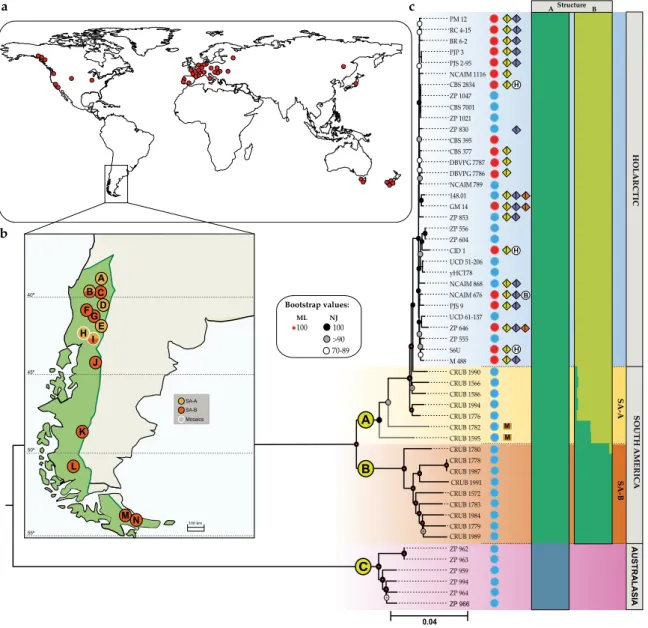
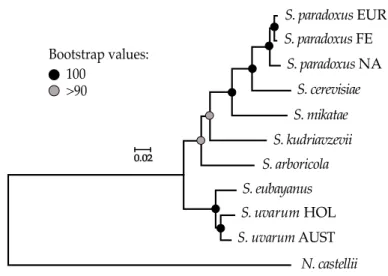
Figure 2.1 | Geographic distribution, phylogeny and population structure of Saccharomyces uvarum . 28 Figure 2.2 | Phylogenetic relationships between species and populations of Saccharomyces ... 29
Figure 2.3 | Sliding window analysis showing the mosaic nature of the genome of CRUB 1782, a South American strain of S. uvarum ... 31
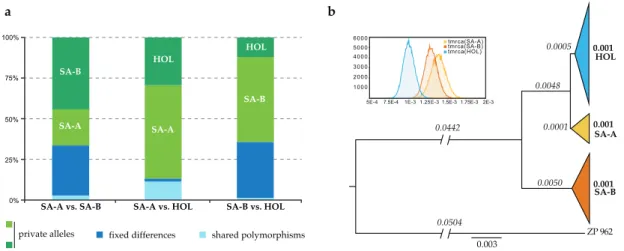
Figure 2.4 | Proportion of shared and privately segregating polymorphisms and coalescence analysis in the South American and Holarctic (HOL) populations ... 32
Figure 2.5 | Sliding window analysis of S. eubayanus introgressions in S. uvarum genomes ... 34
Figure 3.1 | The global diversity of Saccharomyces cerevisiae is shaped by both ecology and geography ... 47
Figure 3.2 | Population structure and admixture in S. cerevisiae ... 48
Figure 3.3 | Co-ancestry and population clustering in S. cerevisiae ... 50
Figure 3.4 | Whole-genome phylogenetic relationships between S. cerevisiae strains ... 51
Figure 3.5 | Whole-genome phylogeny of the large strain dataset (145 strains) depicting those identified as mosaics by STRUCTURE at K=2 and the presence / absence of the wine-related regions A, B and C sensu Novo et al. 2009 ... 52
Figure 3.6 | Multilocus phylogeny of S. cerevisiae including the Chinese lineages ... 53
Figure 3.7 | Joint allele frequency spectrum for the Wine and Mediterranean oaks populations of S. cerevisiae and comparison with the expected frequency spectrum for different demographic scenarios ... 57
Figure 3.8 | Competing models for the demographic scenario between wine and Mediterranean oaks populations incorporating an unsampled population ... 58
Figure 4.1 | Genetic relationships between Saccharomyces cerevisiae strains ... 68
Figure 4.2 | Distributions of FST and !B values and corresponding Z transformations for all 5 kb windows (n=22486) ... 73
Figure 4.3 | Genomic landscape of divergence between Wine and Mediterranean oaks populations. (a) divergence was estimated in 5 kb sliding windows with 500 bp step ... 74
Figure 4.4 | Boxplots contrasting nucleotide diversity and Tajima's D statistic between divergence outliers and genomic background in wine and Mediterranean oaks (MO) populations ... 77
Figure 4.5 | Detection of the introgression of gene FZF1 from S. paradoxus in the S. cerevisiae population associated with Mediterranean oaks ... 78
Figure 4.6 | Diagram illustrating the distribution of FZF1 and SSU1-DTR1 introgressions in the Mediterranean oaks (MO) population ... 79
Figure 4.8 | Detection of the introgression of the region encompassing DTR1-SSU1 from S. paradoxus in the S. cerevisiae population associated with Mediterranean oaks ... 83
Figure AI.1 | Phylogeny of the complete set of Saccharomyces uvarum strains used in this study ... 119 Figure AI.2 | Genetic clusters of S. uvarum for K=2 to K=6 inferred with STRUCTURE and considering
all but the Australasian sequences. ... 120 Figure AI.3 | 5’ Alignment of the promoter region of FZF1 in S. uvarum and S. eubayanus ... 121 Figure AII.1 | Network analysis showing ecological and geographic separation of Saccharomyces
xiii
Index of Tables
Table 2.1| Whole-genome diversity values for Saccharomyces uvarum populations ... 30 Table 2.2 | Pairwise whole-genome divergence comparisons between S. uvarum populations and to S.
eubayanus ... 30 Table 2.3 | Estimated contributions of S. uvarum, S. eubayanus, S. cerevisiae, and S. kudriavzevii to the
complex genomes of two triple hybrid strains (CBS 2834 and CID 1), the S. uvarum x S. cerevisiae hybrid S6U, and to S. bayanus ... 35 Table 2.4 | Detection of horizontally transferred regions A, B and C in S. uvarum. ... 37 Table 3.1 | Pairwise whole-genome divergence between populations of Saccharomyces cerevisiae ... 54 Table 3.2 | Proportion of shared polymorphisms, fixed differences and private polymorphisms in
pairwise comparisons of the wine group with other populations of S. cerevisiae ... 54 Table 3.3 | Comparison of polymorphisms (mean values) at coding and non-coding regions between
the Wine and Mediterranean oaks (MO) groups ... 55 Table 3.4 | Whole-genome diversity within populations of S. cerevisiae ... 56 Table 3.5 | Best-fit parameter estimates of three alternative demographic models for the joint allele
frequency spectrum for the Wine and Mediterranean oaks populations ... 58 Table 3.6 | Best-fit population demographic parameters ... 59 Table 4.1 | Fixed differences and polymorphism in coding and non-coding DNA between Wine and
Mediterranean oaks (MO) populations ... 69 Table 4.2 | Significant Gene Ontology (GO) terms in function and process categories for ∆AF > 0.8 SNPs
in replacement sites ... 70 Table 4.3 | List of ORFs within the candidate divergent regions between natural and domesticated
populations of Saccharomyces cerevisiae ... 75 Table 4.4 | Summary of DNA variation in the coding sequences of the three genes where an
introgression of S. paradoxus (Sp) was detected in the Mediterranean oaks (MO) lineage ... 80 Table 4.5 | Screening for the translocation of SSU1-R in wine and wild yeasts ... 82
Table AI.1 | List of strains used in Chapter 2 and relevant information pertaining to them ... 110 Table AI.2 | Carbon source assimilation and maximum growth temperature for Saccharomyces uvarum
strains from different populations ... 114 Table AI.3 | Growth rates with glucose and melibiose as sole carbon and energy sources of an
Australasian (ZP 964) and a Patagonian (CRUB 1595) strain of S. uvarum at different temperatures ... 114 Table AI.4 | Spore viability values from crosses of different lineages of S. uvarum and comparison with
Table AIII.2 | Top 15 Yeast GO Slim Mapper results in Process category for the ORFs with two or more
high differentiated (ΔAF > 0.8) SNPs in the 500 bp upstream sequence ... 136 Table AIII.3 | Top 15 Yeast GO Slim Mapper results in Process category for the ORFs with two or more
high differentiated (ΔAF > 0.8) replacement SNPs ... 137 Table AIII.4 | Yeast GO Slim Mapper results in Process category for the ORFs within the candidate
regions ... 138 Table AIII.5 | Yeast GO Slim Mapper results in Function category for the ORFs within the candidate
regions ... 140
Dataset D1 | Complete list of Saccharomyces eubayanus introgressed genes into S. uvarum ... 141 Dataset D2 | Significant Gene Ontology (GO) terms for the introgressed S. eubayanus genes found in S.
xv
Abbreviations
I .. XVI chromosome names in the reference genome of Saccharomyces cerevisiae, strain S288C
AD anno domini
AIC Akaike information criterion
AUS Australasia
BAM binary SAM format
BC before Christ
BP before present
bp nucleotide base-pair
CNV copy-number variation
D1D2 domains 1 and 2 of the 26S rDNA
DNA deoxyribonucleic acid
EM expectation-maximization algorithm
EUR Europe
FE Far East
GO gene ontology
GTR general time reversible
HGT horizontal gene transfer
HOL Holarctic
ITS internal transcribed spacer
kb nucleotide kilobase-pair
LL log likelihood
Mb nucleotide megabase-pair
MCMC Markov chain Monte Carlo
ML maximum likelihood
MO Mediterranean oaks
Mya million years ago
NA North America
NCBI National Center for Biotechnology Information
nd not determined
NJ neighbour joining
NNI nearest neighbour interchange
ORF open reading frame
PCR polymerase chain reaction
QTL quantitative trait loci
rDNA ribosomal DNA
RNA ribonucleic acid
SA South America
SAM sequence alignment/map format
sd standard deviation of the mean
SGD Saccharomyces Genome Database
SGRP Saccharomyces Genome Resequencing Project
SNP single-nucleotide polymorphism
SPR subtree pruning and regrafting
UCSC University of California, Santa Cruz
VCF variant call format
WGD whole-genome duplication
Abbreviations of Relevant Culture Collections
AWRI Wine Microorganism Culture Collection of the Australian Wine Research Institute, Australia
CBS Centraalbureau voor Schimmelcultures, The Netherlands
CRUB Centro Regional Universitario Bariloche yeast culture collection, Argentina DBVPG Industrial Yeasts Collection, University of Perugia, Italy
EXF Culture Collection of Extremophilic Fungi, Department of Biology, Biotechnical Faculty, University of Ljubljana, Slovenia
IFO Institute for Fermentation, Japan (collection transferred to NBRC)
NBRC National Institute of Technology and Evaluation Biological Resource Center, Japan NCAIM National Collection of Agricultural and Industrial Microorganisms, University of
Horticulture and Food Industry, Hungary
NCYC National Collection of Yeast Cultures, Institute of Food Research, UK NRRL Agriculture Research Service (ARS) Culture collection, Peoria, Illinois, USA
PYCC Portuguese Yeast Culture Collection, UCIBIO, Faculdade de Ciências e Tecnologia, Universidade Nova de Lisboa, Portugal
UCD Phaff Yeast Culture Collection, University of California, Davis, USA
UWOPS Culture collection of the University of Western Ontario, Department of Biology, Canada
Abbreviated species names
A. oryzae Aspergillus oryzae
A. flavus Aspergillus flavus
L. acidophilus Lactobacillus acidophilus
P. camemberti Penicillium camemberti
P. roqueforti Penicillium roqueforti
S. arboricola Saccharomyces arboricola
S. cerevisiae Saccharomyces cerevisiae
S. eubayanus Saccharomyces eubayanus
S. kudriavzevii Saccharomyces kudriavzevii
S. mikatae Saccharomyces mikatae
S. paradoxus Saccharomyces paradoxus
The early domestication of plants and animals represents a critical development in modern human history. It was so important that it has been coined as the “Neolithic Revolution” because it marks a crucial transition in human lifestyle, from hunting and gathering to settled farming communities, triggering the raise of civilizations and the rise of technological innovation (Bar-Yosef 1998; Diamond 2002).
Darwin was one of the first scientists who became interested in the evolutionary perspectives of domestication. He documented several cases of phenotypic variation in domesticates compared with their wild ancestors, which were later used to support his theory of evolution (Darwin 1876). Since then, a large body of literature has accrued, detailing phenotypic as well as genetic modifications via human intervention in almost all domesticated animals and plants (Doebley et al. 2006; Larson & Fuller 2014; Wang et al. 2014). This knowledge provides a better understanding of the evolutionary mechanisms underlying changes in domesticated species, while it also helps to identify specific genes or loci controlling important traits associated with domestication. The genomic basis of domestication therefore represents an important model system for studying the genetic variation that shapes phenotypic diversity. This is directly relevant to improve existing crops and livestock and also to harness new domesticated species (Zeder 2015). In a more applied agricultural perspective, such advances can now be potentially translated into improvement programs targeting enhanced food security and sustainability (Womack 2005; Bevan & Uauy 2013; Ronald 2014).
CHAPTER 1
3 In this thesis, the term domestication will be used to define the man-driven changes in an organism, which make it genetically distinct from its wild ancestors in ways that it becomes more useful to humans - who, at least in plants and animals, control its reproduction. Largely derived from a genetic perspective of domestication (Diamond 2002), this definition summarises the direct relationship between humans and target species, without necessarily implying foresight and intentionality (Zeder 2015), and the consequences of this relationship. It is also broad enough to be applied to microorganisms, in which changes in behaviour are difficult, when not impossible, to quantify and the variation at the genetic level is usually the best tool to determine relationships between closely related taxa.
1.1
Microbe Domestication
The production of fermented foods and beverages can be traced back to the onset and expansion of agriculture (McGovern et al. 1996; Ross et al. 2002; Sicard & Legras 2011; Dietrich et al. 2012; Salque et al. 2013), being an ancient practice that is now widespread and can be found among almost every human culture. These fermentations depend on the activities of microorganisms which transform the substrate and inhibit or supress the growth or activity of other microbiota. The reasons for the early adoption of this technology are not entirely clear but it was probably harnessed unwittingly as a consequence for the need to accumulate and maintain increasing amounts of foodstuffs while avoiding their deterioration, increasing their digestibility and supplementing the own diet (Steinkraus 1996). Furthermore, the presence of ethanol and other metabolites in alcoholic beverages also contributed for important social habits of many civilisations (Joffe 1998; McGovern et al. 2013).
In contrast to the majority of fermentations practiced nowadays with controlled starter cultures, traditional fermentations rely on natural occurring microorganims in the fermentation substrate. Either through intentional back-slopping, a method that carries a small portion of a previously fermented batch to start a new batch, or by the simple persistence of these microbial “factories” in the processing environment, traditional artisanal fermentations practiced in many cultures resulted in the long-term,
Figure 1.1 | Literature survey by year for terms related with domestication and microbe domestication. The search was made on the Web of Science server, accessed on 15 July 2016, using the keywords “domestication” (blue) and “domestication AND (bacteria OR yeast OR fungi)” (red) in the Topic field. The citation index on the Web of Science server is only available after 1970, and results are only presented until the end of 2015.
500 2000
4000 Domestication Microbe Domestication
0 100 200
≤ 2000 2001 - 2005 2006 - 2010 2011 - 2015
Counts
Counts
Years Years
500 2000
4000 Domestication Microbe Domestication
0 100 200
continuous specialised adaptation and genetic differentiation of isolated microbial populations to specific environmental conditions (Gibbons & Rinker 2015). The best batches were probably propagated for longer as a route to the preservation of a good microbial inoculum (Steinkraus 1996). Intentional back-slopping practices are thought to have been already well established in ancient Egypt for baking and brewing (Spencer & Spencer 2009) and probably also in ancient winemaking practices (McGovern 2007). Thus, it is likely that these ancient practices were on the origin of increased selection for the wine, brewer’s and baker’s yeast, S. cerevisiae, leading this species to its status as today’s prime domesticated microorganism. A hypothesis for the progression towards microbial domestication has been recently proposed (Gibbons & Rinker 2015). In this model, wild microbes better pre-adapted to the spontaneous fermentative environment dominate other microbial communities and the long-term passage of the “winners” through multiple rounds of fermentation promotes adaptation and specialisation, ultimately leading to the pure cultures of domesticated microbes used today in more controlled and stable fermentations. In microorganisms, the molecular mechanisms responsible for this progression towards domestication usually include, among others, novel mutations, hybridisation and horizontal gene transfer (HGT) (Douglas & Klaenhammer 2010; Gibbons & Rinker 2015).
The most widely used microorganisms in the food and beverage industries include prokaryotic lactic acid bacteria (LAB) and some eukaryotic filamentous fungi and yeasts (Douglas & Klaenhammer 2010). LAB and filamentous fungi will be briefly introduced in this section as a way of providing a general overview of the diversity of domesticated microbes. Yeast domestication, in particular the domestication of wine yeasts, is the focus of this thesis and therefore will be considered in more detail throughout the following sections.
1.1.1 Lactic Acid Bacteria (LAB)
CHAPTER 1
5 sequences and clustered independently from strains from other sources (Bull et al. 2014), probably reflecting genetic bottlenecks and artificial selection.
1.1.2 Filamentous Fungi
Filamentous fungi are highly valuable for the secretion of a vast number of enzymes and some saprophytic species play an important role in the food and beverage fermentation industry. The most extensively studied filamentous fungi at the genomic level have been Penicillium species, commonly associated with the production of some types of cheese and fermented meat, and species of Aspergillus, important in the production of miso, soy sauce and also in koji, which is used in the brewing of a variety of traditional alcoholic beverages in Japan. Koji is the saccharification of rice or barley, in which the starch-rich substrate is broken into simple sugars that can be used in subsequent fermentation stages by yeasts such as S. cerevisiae or bacteria. Koji prepared from rice is used as a substrate for sake fermentations. The domestication history of A. oryzae used in the brewing of sake was investigated recently, with phylogenetic and population genomic analyses supporting a single domestication of A. oryzae from the wild species A. flavus (Machida et al. 2008; Gibbons et al. 2012). The genetic diversity within A. oryzae is only about one fourth of that of A. flavus (Gibbons et al. 2012), therefore suggesting a strong genetic bottleneck and possibly strain selection.
Domestication had important effects in the genomes of filamentous fungi. A remarkable example of this is the loss of the ability to produce toxins in A. oryzae. While A. flavus is the producer of the potent carcinogen aflatoxin, the biosynthetic pathway for aflatoxin is downregulated in A. oryzae, rendering this species non toxigenic (Chang et al. 2005; Tominaga et al. 2006; Gibbons et al. 2012). Because S. cerevisiae is sensitive to aflatoxin (Keller-Seitz et al. 2004), it has been proposed that the non-toxicity of A. oryzae might have been selected by its impact on yeast survival (Gibbons et al. 2012). In contrast to this apparent loss of function in Aspergillus, Penicillium species used as starter cultures for cheese, namely P. camemberti and P. roqueforti, acquired recently through horizontal transfer a large 575 kb-long genomic block (Cheeseman et al. 2014). The donor genome of this transfer has not been identified yet but the region contains genes predicted to be involved in the regulation of spore production and in antimicrobial activities, suggesting that it may confer adaptive advantage in competition with other microorganisms (Cheeseman et al. 2014).
1.2
Saccharomyces
Species and Their Relevance for Food and Beverage Fermentations
almost entirely intron-less open reading frames (ORFs) distributed over 16 nuclear chromosomes. With a highly packed and small genome, fast generation times in the laboratory and powerful methods for genetic manipulation, new genome-wide technologies are usually developed first in S. cerevisiae before being applied to any other eukaryotic organism (Cherry et al. 2012). Furthermore, the ease of large scale genetic crosses and screening of hybrids is bringing S. cerevisiae to the forefront of quantitative genomic analyses (Ehrenreich et al. 2010; Liti & Louis 2012). With the availability of complete genome sequences for other species of the genus Saccharomyces (Liti et al. 2009; Scannell et al. 2011), there is now the opportunity to carry out detailed studies between species of existing and potential industrial relevance. Surprisingly, in spite of the advances in comparative genomics studies involving multiple Saccharomyces species, relatively little is known about the mechanisms that contributed to shape their within-species diversity and dynamics of natural populations.
1.2.1 The Saccharomyces Species Complex
CHAPTER 1
7
1.2.2 Ecology
S. cerevisiae was the first species of the genus to be described: “Saccharomyces” meaning sugar mould and “cerevisiae” meaning beer. This species is readily isolated from spontaneous and industrial fermentative environments worldwide and associated habitats such as vineyards (Vaughan-Martini & Martini 2011). Outside fermentations, it is found in the intestinal tract of Drosophila fruit flies (Phaff et al. 1956; Chandler et al. 2012; Buser et al. 2014), wasps (Stefanini et al. 2012) and birds (Francesca et al. 2012) and in association with various fruits (Naumov et al. 2006; Wang et al. 2012). Moreover, S. cerevisiae is also frequently isolated from arboreal habitats in the Northern Hemisphere, especially the bark and surrounding soil of oak trees (Quercus spp., Fagaceae family) (Naumov et al. 1998; Sniegowski et al. 2002; Sampaio & Gonçalves 2008; Wang et al. 2012; Hyma & Fay 2013), where it is often found along with S. paradoxus (Sniegowski et al. 2002; Sampaio & Gonçalves 2008). However, in contrast to S. cerevisiae, its sibling species S. paradoxus has only been isolated from natural environments – mostly associated with oak trees – and it is not associated with human fermentations (Replansky et al. 2008; Vaughan-Martini & Martini 2011). S. mikatae, S. kudriavzevii and S. arboricola are represented by only a few number of strains isolated in Eastern Asia, usually from decaying leaves and soil or the bark of Fagaceae trees (Naumov et al. 2000a; Wang & Bai 2008). The geographic distribution of S. kudriavzevii has been recently extended with the discovery of a new population on oak trees in Portugal, which is genetically and phenotypically divergent from the Japanese population (Sampaio & Gonçalves 2008; Hittinger et al. 2010). S. uvarum is commonly found in human fermentations or related habitats (Naumov et al. 2000b, 2001), sharing the same artificial ecological niches with S. cerevisiae. In the wild, it has been sporadically isolated from insects (Mesophylax adopersus and Drosophila), mushrooms, tree
Figure 1.2 | Schematic cladogram of the genetic relationships among Saccharomyces species and their key industrial hybrids. The tree topology on the left and the genetic contributions of the hybrids on the right were adapted from Hittinger 2013. Maximum growth temperatures were obtained from Gonçalves et al. 2011 and Libkind et al. 2011. Note that the hybrids S. pastorianus and S. bayanus were given species names.
S. cerevisiae
S. eubayanus S. mikatae
S. arboricola
S. uvarum S. kudriavzevii S. paradoxus
S. bayanus S. pastorianus
S. cerevisiae
X
S. kudriavzevii
41 - 42 ºC
37 - 38 ºC
36 - 37 ºC
33 - 34 ºC
34 - 35 ºC
34 - 35 ºC
34 - 35 ºC
NaturalSaccharomycesspecies Key industrial hybrids
exudates and oak trees in the Northern Hemisphere (Naumov et al. 2003, 2006; Sampaio & Gonçalves 2008). Interestingly, in the Southern Hemisphere, Nothofagus trees (southern beeches) occupy the same ecological niches as oak trees in the Holarctic. A recent ecological survey in Patagonia using an enrichment protocol with incubation at low temperature (10ºC) (Libkind et al. 2011), readily discovered two populations of Saccharomyces species in the bark and soil of Nothofagus spp. and in the stromata of Cyttaria hariotii (an obligate ascomycete parasite of Nothofagus spp.), S. uvarum and a new described species, S. eubayanus, suggesting that these species could be well established in this region.
The dispersal of Saccharomyces yeasts between regions and substrates is still poorly understood. It is known that these yeasts are not typically airborne (Mortimer & Polsinelli 1999), therefore relying on some sort of vector to travel. As noted above, S. cerevisiae and S. uvarum are occasionally isolated from insects, most often from Drosophila spp., and S. paradoxus has also been isolated from Drosophila (Naumov et al. 2000a). Drosophila fruit flies can transport yeasts in their body parts, such as in the abdomen (Christiaens et al. 2014), or in their gut (Reuter et al. 2007). Additionally, wasps can harbour S. cerevisiae cells during overwintering, suggesting that these insects, apart from the potential role as yeast vectors, can also act as a natural reservoir of yeasts during all seasons. Yeasts can also be disseminated by migratory birds and although living S. cerevisiae cells were shown to persist only for up to 12h after ingestion by birds this interval may be sufficient to cover long migration distances (Francesca et al. 2012).
Within Saccharomyces, S. uvarum, which is commonly associated with low-temperature wine and cider fermentations (Giudici et al. 1998; Naumov et al. 2000b, 2001), S. kudriavzevii and S. eubayanus are often considered cryotolerant species given their lower maximum growth temperatures (Sampaio & Gonçalves 2008; Gonçalves et al. 2011; Libkind et al. 2011; Salvadó et al. 2011) (Figure 1.2). On the other hand, S. cerevisiae and S. paradoxus tolerate higher growth temperatures than the former group and for this reason are generally considered thermotolerant (Sampaio & Gonçalves 2008; Gonçalves et al. 2011; Salvadó et al. 2011) (Figure 1.2). Interestingly, variation in temperature preferences might represent an important evolutionary trait allowing species pairs to frequently co-exist in temperate woodland forests in various geographic regions (Sweeney et al. 2004; Sampaio & Gonçalves 2008). The application of an isolation protocol with parallel enrichment at high and low temperature, 30ºC and 10ºC respectively, identified sympatric populations of thermotolerant and cryotolerant Saccharomyces species that can even share the bark of the same oak tree (Sampaio & Gonçalves 2008). Within species, temperature-dependent fitness components have also been shown to correlate with the distribution of S. paradoxus populations in North America (Leducq et al. 2014). These findings coupled with increased evolutionary rates in glycolytic genes between pairs of co-occurring species suggest that growth temperature profiles could be an important trait that is under divergent selection in the evolution and ecological speciation of Saccharomyces yeasts (Gonçalves et al. 2011).
1.2.3 Reproduction and Life Cycle
CHAPTER 1
9 an ascus with four resistant haploid spores (tetrad), two of each mating type (a and α). When suitable conditions are restored, ascospores germinate and, although they can continue to reproduce clonally as haploids via mitosis, opposite mating types will usually mate to form a new diploid vegetative cell (Herskowitz 1988). Mating often occurs within the ascus between haploids of the same meiosis product (intra-tetrad mating) but spores can also outcross with others from a different tetrad. Moreover, Saccharomyces isolates are usually homothallic, meaning that mitotic spores can switch mating types to mate with their own clonemates (haplo-selfing or autodiploidization), producing homozygous diploids. All three modes of reproduction have been documented indirectly in a wild population of S. paradoxus found in Europe (Johnson et al. 2004). Furthermore, population genomic analyses of two S. paradoxus wild populations estimated the occurrence of a sexual cycle (meiosis) approximately once in every 1000 asexual generations, with a frequency of matings of 94% from within the same tetrad, 5% of haplo-selfing and 1% outcrossed (Tsai et al. 2008). Outcrossing breaks linkage disequilibrium between linked genetic markers. Using whole-genome data, it has been estimated that linkage disequilibrium decays to half its maximum much faster in S. cerevisiae than in S. paradoxus, indicating more opportunities for mating and recombination in the former (Liti et al. 2009; Schacherer et al. 2009). It has been suggested that human association might create greater chances in S. cerevisiae for the movement of yeast strains, bringing them into proximity more often (Liti et al. 2009; Zhang et al. 2010), or for spore dispersal by insect vectors (Reuter et al. 2007). Indeed, digestion of sporulated S. cerevisiae yeasts by fruit flies is associated with an increased outbreeding rate (Reuter et al. 2007), and the intestine of social wasps has also been recently shown to favour its outcrossing probability (Stefanini et al. 2016). However, increased rates of outcrossing in S. cerevisiae might also be related with differences in life-history traits between species. For example, mate choice assays using strains isolated from sympatric natural populations of S. cerevisiae and S. paradoxus at a single woodland site in North America observed a marked difference in mating propensity between the two species, with S. cerevisiae showing a more promiscuous behaviour than S. paradoxus (Murphy et al. 2006).
1.2.4 Hybridization and Introgression Among Saccharomyces Yeasts
Although natural Saccharomyces species other than S. cerevisiae and S. uvarum are rarely associated with human-driven fermentations, several are often found as contributors to interspecies hybrids in fermentative environments, such as beer, wine and cider (Masneuf et al. 1998; Le Jeune et al. 2007; Lopandic et al. 2007; González et al. 2008; Sipiczki 2008; Libkind et al. 2011) (Figure 1.2). In fact, the most economically important industrial yeast after S. cerevisiae is the allotetraploid hybrid S. pastorianus which is used to brew lager beer and combines the genomes of S. cerevisiae and the cryotolerant S. eubayanus (Libkind et al. 2011). Other hybrids harbouring genomic contributions from S. cerevisiae and a distinct cryotolerant species, such as S. uvarum, S. eubayanus or S. kudriavzevii, are commonly found among strains used to produce Belgian-style beers and wines fermented at low temperatures (Nguyen & Gaillardin 2005; González et al. 2006; Lopandic et al. 2007; González et al. 2008; Libkind et al. 2011; Nguyen et al. 2011; Erny et al. 2012) (Figure 1.2). Such hybrids often have superior combinations of properties than the parental strains, as shown by an increase tolerance to different stresses found in artificial environments (Belloch et al. 2008; Sipiczki 2008; Morales & Dujon 2012). For example, hybrids between S. cerevisiae and S. kudriavzevii inherited competitive traits from either parental species to tolerate better both high concentrations of ethanol and lower temperatures, respectively (Belloch et al. 2008). Some inherited traits can also contribute for a greater production of esters or fruity thiols, influencing the aromatic complexity of the final product (González et al. 2007; Lopandic et al. 2007; Swiegers et al. 2009).
Introgressions are the result of rare interspecies hybridization events followed by successive backcrossing with one of the parental species. In addition to hybrids, introgressions between Saccharomyces species are also frequently observed in fermentation associated strains (Doniger et al. 2008; Naumova et al. 2011; Dunn et al. 2012; Pérez-Través et al. 2014) and in clinical S. cerevisiae samples (Muller & McCusker 2009; Strope et al. 2015). Although hybrid genotypes are only rarely observed in natural strains (Liti et al. 2005), cases of introgression have been detected in natural Saccharomyces populations. For example, a subtelomeric segment of 23 kb from the left arm of chromosome XIV has introgressed from S. cerevisiae into European S. paradoxus, becoming fixed in this population (Liti et al. 2006). More recently, an ecological survey of S. cerevisiae from natural habitats in Brazil revealed multiple introgressions from S. paradoxus (Barbosa et al. 2016).
CHAPTER 1
11
1.2.5 The Case of Domestication in Lager Beer Yeasts
Lager beer yeasts are a classic example of highly successful interspecies hybrids driven by domestication. Originally from Bavaria, lager-type beers have been brewed since the 15th century (Meußdoerffer 2009). Lager yeasts, commonly referred to as S. pastorianus (synonym S. carlsbergensis), are specialised strains characterised by their low brewing temperatures. However, although it has been long known that S. pastorianus was a hybrid combining the genomes of a S. cerevisiae ale yeast with that of a cryotolerant Saccharomyces species (Dunn & Sherlock 2008), the identity of this unknown species was only recently clarified; strains of S. eubayanus collected in association with Nothofagus trees in Patagonia were shown to share ~99.5% sequence identity to the non-S. cerevisiae moiety of the S. pastorianus genome (Libkind et al. 2011) (Figure 1.2). Recent work has identified other S. eubayanus isolates in North America (Peris et al. 2014) and in China (Bing et al. 2014), with phylogenetic and sequence analyses suggesting that lager yeasts originated from East Asia rather than Patagonia (Bing et al. 2014). Lager yeasts consist of two distinct lineages, Saaz and Frohberg, and a comparative genomic study further suggested that hybridization between S. cerevisiae and S. eubayanus may have occurred independently at least twice generating the different lager lineages (Baker et al. 2015). Interestingly, non-hybrid S. eubayanus strains have not yet been found in Europe and are not known to be associated with human-controlled fermentations (Rodríguez et al. 2014; Gibson & Liti 2015).
1.3
Saccharomyces
Wine Yeasts
Winemaking is the microbiological crafting of varied and complex wines from simple sugars present in the grape juice. In contrast to lager-type beers (see section 1.2.5), the production of wine over millennia is mostly associated with pure lineages of Saccharomyces. The primary yeast responsible for this process, S. cerevisiae, is very often referred to simply as “the wine yeast”; S. cerevisiae is the workhorse of wine production, and many other industrial processes. Spontaneous grape juice fermentations are consistently dominated by S. cerevisiae (Fleet 1998, 2003) and since the middle of the
20th century, strains with good oenological properties are available as starter cultures to ensure stable
and reproducible fermentations (Borneman et al. 2016). When colonisation of the grape juice or dominance of the fermentation by S. cerevisiae does not happen, only low concentrations of ethanol are produced (Goddard 2008) and the grape must is rapidly dominated by spoilage microorganisms (Jolly et al. 2014).
and ethanol content, low pH and high sulfite concentrations (Sipiczki 2008). However, S. uvarum differs from S. cerevisiae in a number of oenological properties, with low ethanol tolerance at 24ºC and production of high levels of 2-phenylethanol and its acetate as discriminative technological traits distinguishing the two species (Masneuf-Pomarède et al. 2010). Moreover, the phenotypic differences between S. uvarum and S. cerevisiae have been associated with pronounced proteomic differences (Blein-Nicolas et al. 2013). Apart from wine, S. uvarum is also frequently associated with cider fermentations, which are usually performed at lower temperatures (Naumov et al. 2001; Valles et al. 2007). Nonetheless, evidence of domestication in S. uvarum is not yet clear and much of what is know about the molecular and cellular mechanisms behind wine fermentation have so far been learned from S. cerevisiae.
1.3.1 The Success of Saccharomyces in Alcoholic Fermentations
The success of Saccharomyces yeasts in alcoholic fermentations is notorious and surpasses that of any other microorganism. Grape musts naturally contain a rich microbial community with more than forty identified species of yeasts (Jolly et al. 2014). However, the highly selective ecological conditions during must fermentation lead to the succession of this natural microbiota with the rapid decrease in yeast diversity, leaving Saccharomyces as the dominant yeast to successfully complete the alcoholic fermentation (Fleet et al. 1984). The main characteristics behind this achievement have been attributed to unique traits that are unusual among other yeast genera: the ability to propagate anaerobically (Pronk et al. 1996; Møller et al. 2001), and the preference to degrade sugars, usually six-carbon
carbohydrates such as glucose or fructose, into ethanol and CO2 via fermentation independently of the
CHAPTER 1
13 differences between S. cerevisiae and S. paradoxus under oenological conditions are mostly not significant (Williams et al. 2015), however S. paradoxus is not usually associated with wine fermentations. Thus, it still remains to be elucidated why only some of the species are chief contributors in human fermentations.
1.3.2 Archaeological Evidence of Wine Yeast Domestication
Winemaking was probably one of the first human uses of microbial fermentations because the process did not require the addition of an initial inoculum. The oldest archaeological and biomolecular evidence for a fermented beverage revealed a mixed fermentation made of rice, honey and fruit, dated back to 7000 BC from a Neolithic village in China’s Yellow River valley (McGovern et al. 2004). The first evidence of grape wine was found in 5400 – 5000 BC ancient narrow-necked jars, presumably used for liquids, from Iran’s Northern Zagros mountains in Mesopotamia (McGovern et al. 1996). The detection of substantial amounts of tartaric acid – which occurs in large amounts only in grapes – and terebinth (Pistacia) resin – widely used as a medicine and additive in antiquity – in the amphorae suggests that the fermentation of grapes was intentional. Further indication for the early production of wine in this region was found in southeastern Armenia from artefacts of the Late Chalcolithic dating to around 4000 BC (Barnard et al. 2011). Excavations in this site revealed a grape platform, possibly used to flow liquid into large ceramic jars, and the remains of crushed grapes and grape seeds, likely indicating that it could represent an ancient winery. The earliest evidence for winemaking in the eastern European Mediterranean is from a contemporary Neolithic site in Dikili Tash in northern Greece dated to 4500 – 4000 BC. Besides the chemical detection of tartaric acid in a pot, grape pressing practices were also evident at this site, thus suggesting that wine was already present in the Mediterranean region at the time (Valamoti et al. 2007; Valamoti 2015). These findings can have at least two interpretations regarding the beginnings of wine technology: either it was discovered independently in different areas along the Mediterranean, or it started in a single region and spread rapidly via networking between cultures and regions.
Whether these ancient wines were made from wild or cultivated grapes it is not known. Seeds of domesticated grapes have been discovered in Georgia and Turkey dating to about 8000 BC (This et al. 2006). Indeed, the domestication of grape seems tightly linked with winemaking and is believed to have started around the same geographic area – although it is unclear which process begun first (This et al. 2006). However, viticulture is not a precondition for wine making as wild grapes can naturally ferment, for example when crushed in harvesting pots. Moreover, the distribution of the modern wild grapevine (Vitis vinifera subsp. sylvestris) occupies a wide area across all the Mediterranean basin, from western Europe to the Trans-Caucasian zone, and wild and domesticated grape remains have both been recovered from Neolithic sites with confirmed wine jars (McGovern 2007).
that S. cerevisiae yeasts were already part of the microbial consortium utilised in ancient wine fermentations. The European expansion of wine occurred between 800 and 400 BC and progressed through west across the Mediterranean Sea probably following the Phoenicians, Etruscans and Celts (McGovern et al. 2013). By 500 BC wine was already being produced in the region now occupied by Portugal and Spain and in Northern Africa (Pretorius 2000). The spread to Northern Europe occurred only later (100 AD) with the Catholic Church, and only more than one thousand years later it did arrive to the Americas (1500 AD) (Pretorius 2000).
1.3.3 Diversity and Natural History of Wine Yeasts
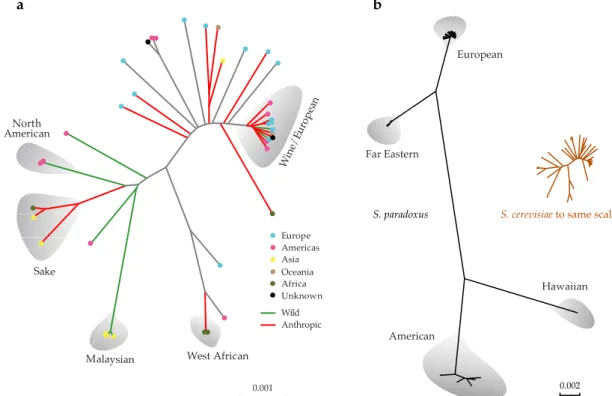
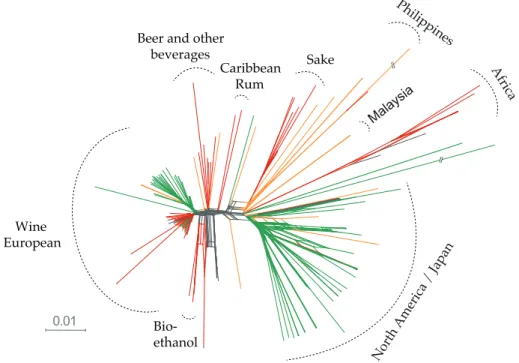
The recent accumulation of complete genome sequence data and population genomic surveys in S. cerevisiae is starting to provide insights into its population structure and evolutionary history. Isolates collected from different ecological sources and geographic locations worldwide have been analysed at the whole-genome level using different molecular methods. These results support a complex global population structure with many strains showing a mosaic genome architecture involving only a few defined lineages that mainly reflect their technological or ecological origin (Figure 1.3a) (Liti et al. 2009; Schacherer et al. 2009; Cromie et al. 2013; Strope et al. 2015; Ludlow et al. 2016). The lineage commonly described as Wine/European contains primarily wine- and vineyard-associated strains from almost every continent but also includes a low number of European soil and clinical isolates (Liti et al. 2009; Schacherer et al. 2009). Similarly, strains used in sake fermentations form a unique lineage that also includes other isolates from Asian food products (Cromie et al. 2013). West Africa fermentation and Malaysia fruit strains have been identified as separate lineages too (Liti et al. 2009), although more strains with more diverse genotypes need to be analysed to strengthen this interpretation.
Figure 1.3 | S. cerevisiae and S. paradoxus phylogenomics. Whole-genome phylogenetic trees of (a) S. cerevisiae, depicting clean lineages highlighted in grey and admixed strains, and (b)S. paradoxus, with S. cerevisiae tree drawn at the same scale. Figures adapted from Liti et al. 2009.
0.001 Europe
Unknown Africa Oceania Asia Americas
Win e/Eur
opea n
North American
Sake
Malaysian West African
S. paradoxus S. cerevisiaeto same scale
0.002
Far Eastern
European
American
Hawaiian
a b
CHAPTER 1
15 Similar analyses in S. paradoxus showed a different pattern (Figure 1.3b) (Liti et al. 2009). S. paradoxus has a global distribution in which sequence divergence increases with increasing geographical distance at different geographical scales and, traditionally, it is considered a truly wild species that is not associated with anthropic environments (reviewed in Replansky et al. 2008). Furthermore, population structure in S. paradoxus is markedly shaped by geographical boundaries with independent lineages evolving in Europe, Far East and the North America continents (Figure 1.3b) (Koufopanou et al. 2006; Replansky et al. 2008; Liti et al. 2009). The complex genetic structure observed in S. cerevisiae therefore contrasts markedly with the one found in S. paradoxus, where in the latter genetic differentiation between populations is high and admixture between them is rarely observed (Liti et al. 2009). In fact, the lower diversity observed in S. cerevisiae seems to be unusual for the genus (Liti et al. 2009; Hittinger et al. 2010; Hittinger 2013; Peris et al. 2014). However, this low diversity could reflect the incomplete sampling of natural strains, as illustrated by the recent discovery of an unprecedented genetic diversity in natural Chinese populations (Wang et al. 2012). Thus, it is important to include additional strains collected from natural habitats across the world to improve our understanding of the population structure, biogeography and diversity of natural S. cerevisiae populations.
Concerning the domestication of the yeast S. cerevisiae, wine yeasts sampled around the world are genetically similar and clearly distinct from wild populations or other domesticated lineages, thus suggesting a single wine-related domestication event that occurred independently of other domestication processes in this species, such as for sake, beer or bread strains (Fay & Benavides 2005; Legras et al. 2007; Liti et al. 2009; Cromie et al. 2013). The wine group includes strains isolated from wine must, grapes and vineyard soil in different wine-producing regions worldwide and, in spite of geographic heterogeneity, this group was found to have less genetic diversity than other groups assumed to represent wild populations, supporting the model of wine yeast domestication (Fay & Benavides 2005; Liti et al. 2009). Estimates of divergence time within the wine group place the diversification of the wine lineage posterior to the last glaciation era, at approximately 11000 BP indicating a relatively recent origin for the wine group (Fay & Benavides 2005; Legras et al. 2007). Incorporating natural yeast samples collected around the Mediterranean basin in molecular genetic studies could, in principle, shed light on the origins and timing of divergence between wine and wild populations.
1.3.4 Phenotypic Evidence of Wine Yeast Domestication
utilize xylose as a carbon source (Wenger et al. 2010) and under winemaking fermentative conditions, life-history and metabolic traits show strong divergence between industrial and wild strains. Whereas industrial strains behave as “grasshoppers”, reproducing slowly and reaching a small carrying capacity with a big cell size in fermentation, wild strains or “ants” reproduce quickly, reach a large carrying capacity and have a small cell size (Spor et al. 2009). Moreover, strains isolated from sugar-rich environments such as wine yeasts and strains collected from fruits have a better fermentative capacity than natural strains isolated from environments that are poor in sugar content, such as oaks (Camarasa et al. 2011). Wine strains also produce wine with fruitier and more floral characteristics than wild strains, suggesting the evolution of sensorial phenotypes relevant in wine production (Hyma et al. 2011).
1.3.5 Molecular Evidence of Wine Yeast Domestication
Wine yeasts also harbour important variations associated with relevant functions related to winemaking that have been mapped at the genomic level. The genetic variability of wine yeasts has been studied at many different levels, from nucleotide and transcriptional changes to changes in copy-number variation (CNV) of key genes and in ploidy level and also the detection of structural variations, introgressions and HGT (Cavalieri et al. 2000; Dunn et al. 2005; Novo et al. 2009; Rossouw et al. 2010, 2012). Such modifications in wine yeasts are potentially the result of the strong selective pressures that are present in wine environments and may serve as the main genetic adaptive signatures of wine yeast domestication (Querol et al. 2003). Many of these modifications however, such as CNVs, aneuploidies and other structural variations, are observed in only a minority of wine strains, which could indicate either adaptation to particular fermentative environments or transient intermediates to further stable adaptive mechanisms (Yona et al. 2012).
Examples of potential widespread adaptation among wine yeasts are the increase tolerance to sulfite (Park & Bakalinsky 2000; Pérez-Ortín et al. 2002) and copper (Fay et al. 2004; Warringer et al. 2011), two widely used chemicals in winemaking practices. Copper is present in older containers where fermentations took place and is also used as a fungicide to control powdery mildew (Fay et al. 2004). Wine yeasts and sake yeasts both developed copper tolerance associated with a CNV of CUP1 gene ( Fay et al. 2004; Warringer et al. 2011), which encodes for a copper-binding metallothionein, therefore indicating evolutionary convergence due to man-directed selection for industrial production (Warringer et al. 2011).
CHAPTER 1
17 winemaking and therefore sulfite resistance is an important characteristic of wine yeasts. Sulfites have been used in wineries since the Egyptians (Pérez-Ortín et al. 2002), and this practice is likely to have led to the selection of strains with increase resistance. The effect of the most common SSU1 translocation VIII-t-XVI is likely to be more profound as it may also serve as a post-zygotic genetic barrier reducing the spore viability between wine and oak strains (Hou et al. 2014; Clowers et al. 2015), and enforces ecological differentiation between these populations (Clowers et al. 2015). Sulfite resistance is controlled by FZF1, the transcriptional activator of SSU1. Both genes are highly polymorphic, with evidence of diversifying selection acting on SSU1 coding sequence, possibly as an adaptation to the exposure of sulfur-based microbicides (Aa et al. 2006). Interestingly, divergence in sulfite resistance between S. cerevisiae and S. paradoxus has been linked to coding and non-coding nucleotide changes in FZF1, suggesting a major role of single transcription factors in driving both gene expression and phenotypic divergence between wine and wild yeasts (Engle & Fay 2012).
Another remarkable domestication fingerprint identified in a large number of wine associated yeasts, but not in other non-wine industrial yeasts, consists in the presence in the genomes of these yeasts of up to three genomic regions (named A, B and C) acquired independently from distant yeast species through horizontal gene transfer and containing a total of 39 genes (120 kb in total) with potentially relevant functions for the winemaking process such as in sugar and nitrogen metabolism (Novo et al. 2009; Galeote et al. 2010, 2011; Marsit et al. 2015; Borneman et al. 2016). The donor species of the region B as been identified to Zygosaccharomyces bailii, a major contaminant of wine fermentations (Novo et al. 2009; Borneman et al. 2011; Galeote et al. 2011). Recently, the region C has been identified to have originated from a recent transfer of a 158-kb genomic region from Torulaspora microellipsoides, a yeast species that is also present in the wine environment (Marsit et al. 2015). The region C has been characterised in more detail, and includes a high-affinity fructose/H+ symporter, FSY1, possibly advantageous when fructose is the most abundant sugar at the end of the wine fermentation (Galeote et al. 2010; Marsit & Dequin 2015), and also two tandemly duplicated genes, FOT1 and FOT2, that encode for oligopeptide transporters (Marsit et al. 2015). In competition experiments, FOT genes were shown to provide a strong competitive advantage in natural grape must fermentation ( Marsit et al. 2015). These results highlight the possible evolutionary advantage of HGT genes in the genomes of Saccharomyces yeasts. Indeed, HGT events are known to represent a major source of innovation since these can readily contribute with genetic diversity, novel genes and new functions, eventually facilitating the adaptation to new environments (Wisecaver & Rokas 2015).
1.4
Tracing the Origins of Wine Yeasts
1.4.1 The Winery/Vineyard Hypothesis
People from the antiquity knew the uses of fermentation but, apart from that, nothing else about