Carolina Pires Maruta 1 UNIVERSIDADE DE LISBOA
FACULDADE DE MEDICINA DE LISBOA
PRIMARY PROGRESSIVE APHASIA:
NEUROPSYCHOLOGICAL ANALYSIS AND EVOLUTION
Carolina Pires MarutaDoutoramento em CIÊNCIAS BIOMÉDICAS Especialidade de NEUROCIÊNCIAS
Carolina Pires Maruta 2 UNIVERSIDADE DE LISBOA
FACULDADE DE MEDICINA DE LISBOA
PRIMARY PROGRESSIVE APHASIA:
NEUROPSYCHOLOGICAL ANALYSIS AND EVOLUTION
Carolina Pires MarutaProfessora Doutora Manuela Guerreiro Professor Doutor Alexandre de Mendonça
Doutoramento em CIÊNCIAS BIOMÉDICAS Especialidade de NEUROCIÊNCIAS
Todas as afirmações efetuadas no presente documento são da exclusiva responsabilidade do seu autor, não cabendo qualquer responsabilidade à Faculdade de Medicina de Lisboa pelos conteúdos nele apresentados.
Carolina Pires Maruta 3
A impressão desta tese foi aprovada pelo Conselho Científico da
Faculdade de Medicina de Lisboa em reunião de 23/06/2015.
Carolina Pires Maruta 4
“Daß die Welt meine Welt ist, das zeigt sich darin, daß die Grenzen der Sprache (der Sprache, die allein ich verstehe) die Grenzen meiner Welt bedeuten”*
Ludwig Wittgenstein in Tractatus Logico-Philosophicus, 1922
*[The world is my world: this is manifest in the fact that the limits of language (of the language which alone I understand) mean the limits of my world]
Carolina Pires Maruta 5
LIST OF PUBLICATIONS
Scientific productions from the present thesis were submitted to peer-review publication in the following original articles/book chapters:
Farrajota, L.*, Maruta, C.*, Maroco, J., Martins, I. P., Guerreiro, M., & De Mendonça, A. (2012). Speech therapy in primary progressive aphasia: a pilot study. Dementia and Geriatric Cognitive Disorders Extra 2012; 2: 321-331.
*co-first authors
Maruta, C.*, Makhmood, S.*, Downey, L. E., Golden, H. L., Fletcher, P. D., Witoonpanich, P., Rohrer, J. D., & Warren, J. D. (2014). Delayed auditory feedback simulates features of nonfluent primary progressive aphasia. Journal of Neurological Sciences; 347(1-2): 345-8.
*co-first authors
Maruta, C.*, Pereira, T.*, Madeira, S., De Mendonça, A., & Guerreiro, M. (2015). Classification of primary progressive aphasia: do unsupervised data-mining methods support a logopenic variant? Amyotrophic Lateral Sclerosis and Frontotemporal Degeneration 2015; Early online: 1-13.
*co-first authors
Maruta, C., Maroco, J., De Mendonça, A., Guerreiro, M. (2015). Behaviour symptoms in primary progressive aphasia variants. In A. Verdelho & M. Pereira (Eds.), Neuropsychiatric Symptoms of Cognitive Impairment and Dementia (Chapter 1.4.). London, UK: Springer (under review).
Maruta, C. (2015). The musician entrapped in the aphasic mind: The tragic story of Maurice Ravel. (submitted).
Maruta, C. (2015). Primary Progressive Aphasia: A literature review. (manuscript in preparation).
Carolina Pires Maruta 6
ACKNOWLEDGEMENTS
À Professora Doutora Manuela Guerreiro e ao Professor Doutor Alexandre de Mendonça, agradeço a inestimável orientação, sem a qual a presente tese não teria sido possível. Agradeço, sobretudo, os desafios colocados, a confiança e autonomia, presentes desde o primeiro dia, e que enriqueceram a minha experiência no mundo da investigação científica.
I am also extremly grateful to Professor Jason Warren, from Dementia Research Centre (DRC), Institute of Neurology (IoN), University College of London (UCL), for having accepted me as his trainnee, for the opportunity to show my research skills, and, most of all, for sharing his expertise and encouraging me to think “outside the box”.
À Professora Doutora Sara Madeira e à Telma Pereira, do INESC-ID, por terem aceite colaborar neste trabalho, pela sua disponibilidade para me ensinarem novas métodos de análise de dados e por esclarecerem, prontamente, todas as minhas dúvidas.
À Fundação para a Ciência e Tecnologia pela atribuição de uma Bolsa Individual de Doutoramento (ref.: SFRH/BD/75710/2011), a qual me permitiu desenvolver, em pleno, todo este trabalho.
À Professora Doutora Isabel Pavão Martins, directora do Laboratório de Estudos de Linguagem (LEL), pelo estímulo e pela responsabilidade permanentemente depositadas em mim, ambos decisivos para o meu crescimento profissional. É um prazer e um privilégio poder trabalhar a seu lado.
Aos Terapeutas da Fala, Gabriela Leal, Luísa Farrajota e José Fonseca, agradeço todos os ensinamentos, pessoais e profissionais, que me transmitiram nestes (quase) oito anos de permanência no LEL. À Terapeuta Luísa Farrajota, em especial, o meu obrigada pelo seu contributo na consolidação dos meus conhecimentos e interesse pela Afasia Progressiva Primária, sem os quais não teria sido possível ultrapassar momentos difíceis.
Não posso deixar de agradecer a todos os doentes e familiares, sem os quais este trabalho nunca teria sido possível. De todos, particularmente daqueles com quem lidei mais de perto, recordarei a sua enorme resiliência para lidar com esta devastadora doença.
À (minha) Elisabete Lopes, não tenho palavras para agradecer tudo o quanto tem feito por mim, ao longo destes anos. Nos momentos maus, mas, ainda mais, nos momentos bons. O seu profissionalismo, os seus conselhos, as suas chamadas de atenção, o seu carinho, a sua amizade têm sido e serão sempre uma referência e a força motriz para aprender a enfrentar um mundo cada vez mais difícil de compreender. Obrigada por tudo.
Carolina Pires Maruta 7 À Vanda e ao José Castro, agradeço a amizade, a cumplicidade, o apoio e a paciência ao longo destes quatro anos alucinantes. É um privilégio poder “caminhar” a vosso lado. E que esse caminho predure por muitos mais anos. Ao Pedro Pereira e à Sara Marques, agradeço, igualmente, a amizade e os momentos que me permitiram desligar de todos os problemas.
À Clara Loureiro, agradeço tudo o que me ensinou, o carinho, as palavras positivas e o seu enorme coração. Estando fisicamente longe, estás incrivelmente perto!
A todos as outras pessoas, amigos e família, sem excepção, agradeço o apoio e incentivo incondicional.
Muito para além de quatro anos de trabalho intensivo, a presente tese representa a última etapa de um ciclo. Um ciclo repleto de alegrias e desilusões, de ganhos e de perdas, tanto no plano académico, como no plano afetivo.
Como tal, e em primeiro lugar, dedico esta tese às duas pessoas que me ensinaram a linguagem dos afectos e de quem mais sinto a falta, mas que ocuparão eternamente um lugar na minha memória e no meu coração: os meus avós, João e Manuela. Em particular, à minha avó, agradeço a inspiração que me permitiu redigir a tese. Serena-me o espírito saber que ainda cheguei a tempo de te dizer que a primeira versão estava pronta. Por isso, esta tese, mais do que minha, é tua.
Em segundo lugar, dedico esta tese aos meus pais, pelo seu exemplo de força, coragem, e entrega incondicional, valores estes que me formaram enquanto pessoa. Obrigada pelo vosso apoio e “empurrão” para enfrentar todas as adversidades da vida e por serem os melhores pais do mundo. Dedico, também, esta tese ao Hugo, o meu eterno companheiro e metade de mim, pelo seu exemplo de determinação e por me mostrar que a maioria dos nossos sonhos é alcançável, mesmo quando tudo e todos nos dizem o contrário. E por essa imprescíndivel capacidade para aturar o meu mau-feitio e para me fazer rir, quando tudo parece desmoronar-se. Por fim, mas jamais menos importante, dedico esta tese à Glória, o nosso anjo da guarda, a melhor amiga e a minha segunda mãe.
Carolina Pires Maruta 8
SUMMARY
Frontotemporal lobar degeneration (FTLD) is the second leading cause of early-onset (< 65 years) dementia. Some of its forms may begin by isolated language deficits, which are known as Primary Progressive Aphasia (PPA). PPA is defined as the insidious onset and progressive loss of linguistic abilities in the absence of major deficits in other areas of cognition or in activities of daily living, which are not explained by a focal brain lesion. The most recent criteriaand the increasing focus on the establishment of disease-modifying therapies in FTLD, which are presently lacking, highlight the importance of neuropsychology for an early and accurate diagnosis. In light of the new classification, understanding the neuropsychology of progressive aphasias may help to early differentiate disease patterns and predict their underlying pathology. This is particularly relevant since PPA is a language-based neurodegenerative disorder that evolves to a broader cognitive decline to the point where daily-living activities will also become compromised. Thus the main objective of the present thesis was to study the contribution of neuropsychology to the identification of different clinical profiles and defining features relevant for diagnosis and management of PPA. In order to pursue the objective, four studies were conducted. The first study approached the pathophysiology of nonfluent PPA, which remains poorly understood. Here, we compared quantitatively speech parameters in patients with nonfluent PPA versus healthy older individuals under altered auditory feedback, which has been shown to modulate normal speech output. Patients (n=15) and healthy volunteers (n=17) were recorded while reading aloud under delayed auditory feedback (DAF) with latency 0, 50 or 200 ms and under DAF at 200 ms plus 0.5 octave upward pitch shift. DAF in healthy older individuals was associated with reduced speech rate and emergence of speech sound errors, particularly at latency 200 ms. Up to a third of the healthy older group under DAF showed speech slowing and frequency of speech sound errors within the range of the nonfluent PPA cohort. Our findings suggest that (in addition to any anterior, primary language output disorder) these key features of nonfluent PPA may reflect distorted speech input signal processing, as simulated by DAF. DAF may constitute a novel candidate pathophysiological model of posterior dorsal cortical language pathway dysfunction in nfvPPA.
The objective of the second study was to test whether data mining techniques, through an unsupervised learning approach, support the three-group diagnostic model of PPA versus the existence of two main/classic groups. A series of 155 PPA patients observed in a
Carolina Pires Maruta 9 clinical setting and subjected to at least one neuropsychological/language assessment was studied. Several demographic, clinical and neuropsychological attributes, grouped in distinct sets, were introduced in unsupervised learning methods (Expectation Maximization, K-Means, X-Means, Hierarchical Clustering and Consensus Clustering). Unsupervised learning methods revealed two main groups consistently obtained throughout all the analyses (with different algorithms and different set of attributes). One group included most of the nonfluent and some logopenic PPA cases while the other was mainly composed of semantic and logopenic PPA cases. Clustering the patients in a larger number of groups (k > 2) revealed some clusters composed mostly by nonfluent or by semantic PPA cases. However, we could not evidence any group chiefly composed of logopenic PPA cases. Hence, findings obtained with the application of unsupervised data mining approaches do not clearly support a logopenic PPA. However further, supervised learning studies may indicate distinct results.
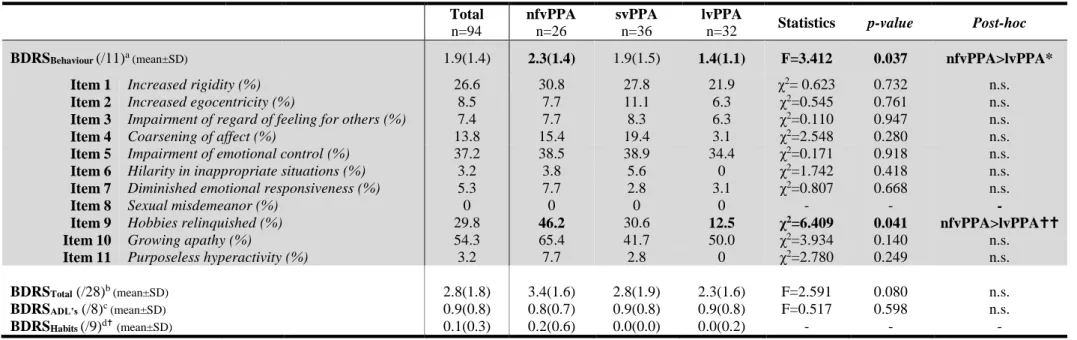
Behaviour changes may occur early in PPA but the frequency of these symptoms across the three variants is still controversial. In the third study, 94 consecutive PPA patients (26 nonfluent, 36 semantic, 32 logopenic) underwent language and neuropsychological assessments. The presence of behavioural changes was ascertained by semi-structured informant-based interviews using the Blessed Dementia Rating Scale. Eighty-two percent of the cases endorsed at least one behaviour change. Nonfluent patients presented significantly more behaviour changes and scored more often (46.2%) the item “hobbies relinquished” when compared to logopenic patients. These differences in behaviour symptoms probably reflect distinct underlying neurodegenerative diseases.
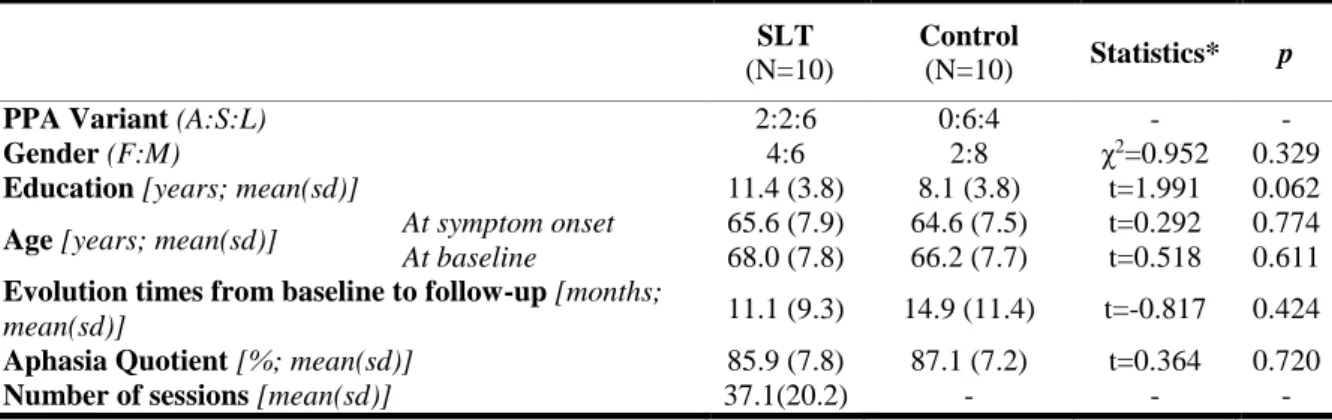
PPA is a neurodegenerative disorder with no effective pharmacological treatment. Cognition-based interventions are adequate alternatives, but their benefit has not been thoroughly explored. The aim of this last investigation was to study the effect of speech and language therapy (SLT) on naming ability in PPA. An open parallel prospective longitudinal study involving two centers was designed to compare patients with PPA submitted to SLT (1 h/week for 11 months, on average) with patients receiving no therapy. Twenty patients were enrolled and undertook baseline language and neuropsychological assessments; among them, 10 received SLT and 10 constituted an age- and education-matched historical control group. The primary outcome measure was the change in group mean performance on the Snodgrass and Vanderwart Naming Test between baseline and follow-up assessments. Intervention and control groups did not significantly differ on
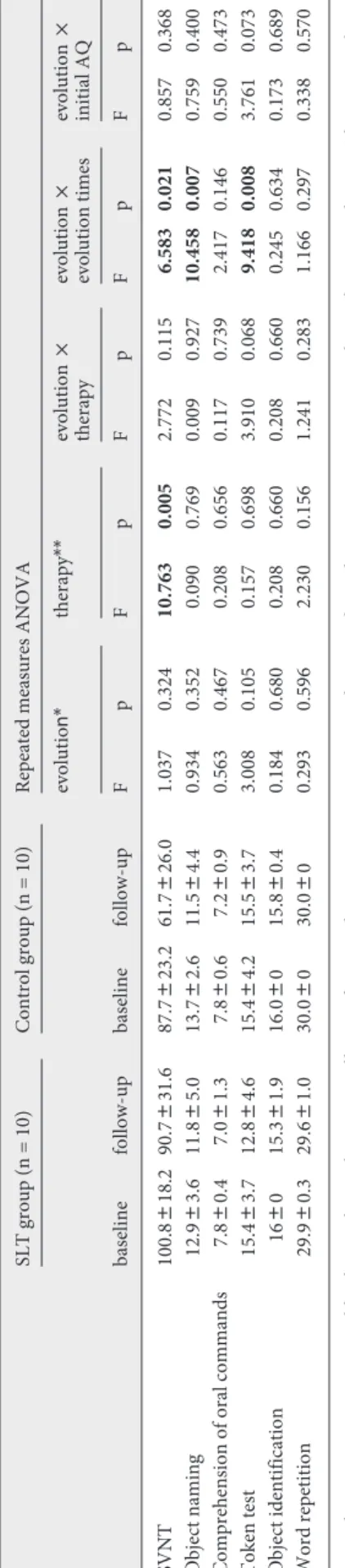
Carolina Pires Maruta 10 demographic and clinical variables at baseline. A mixed repeated measures ANOVA revealed a significant main effect of therapy (F(1,18) = 10.763; p = 0.005) on the performance on the Snodgrass and Vanderwart Naming Test. Although limited by a non-randomized open study design with a historical control group, the present study suggests that SLT may have a benefit in PPA, and it should prompt a randomized, controlled, rater-blind clinical trial.
Conclusion: Despite the recent harmonization efforts, the delineation of certain PPA
variants is still controversial. The present results show that neuropsychology is a key instrument not only for the clear definition of PPA subtypes but also for the study of the abnormal mechanisms and features underlying the main forms of PPA. Moreover, a neuropsychological approach to disease management seems to be feasible. Specifically, SLT emerges as an alternative and adequate approach to tackle the increasing language deficits experienced in all PPA phenotypes for some time. The emergence of promising disease-modifying therapies in the context of FTLD, in association with these cognitive-based interventions, will certainly be the future of PPA disease management.
Key-words: Primary Progressive Aphasia, nonfluent variant, semantic variant, logopenic
variant, Neuropsychology
Carolina Pires Maruta 11
RESUMO
A Degenerescência Lobar Fronto-Temporal (DLFT) é a segunda principal causa de demência de início precoce (< 65 anos). Algumas formas desta doença iniciam-se por défices isolados da linguagem, sendo designadas por Afasia Progressiva Primária (APP). A APP é uma entidade clínica que se define pela perda progressiva dos diferentes domínios da linguagem, na ausência de quaisquer outros défices cognitivos ou funcionais e que não resulta de uma lesão focal. Dado o crescente reconhecimento de que esta síndrome apresenta diferentes manifestações clínicas, foram, recentemente, propostos critérios de diagnóstico formais para a classificação das três variantes conhecidas da APP. Esta harmonização, aliada à premente necessidade de se encontraram novas terapias farmacológicas, modificadoras do curso da doença, numa altura em que as alternativas terapêuticas a oferecer a estes doentes são limitadas, colocam em evidência o papel da neuropsicologia no diagnóstico precoce. Tal como outras doenças neurodegenerativas, a APP evolui no sentido de afetar outros domínios cognitivos e de comprometer o desempenho em atividades instrumentais e básicas de vida diária. À luz dos novos critérios de classificação, compreender as características neuropsicológicas da APP reveste-se de particular importância admitindo-se que a obtenção de perfis neuropsicológicos poderá ajudar a predizer a doença neurodegenerativa de base. Como tal, o objetivo principal da presente tese é o de estudar a neuropsicologia da APP, contribuindo para a identificação de diferentes perfis clínicos e para definição de características eventualmente relevantes para o diagnóstico, bem como para o seguimento destes doentes. Para tal, foram realizados quatros estudos:
O primeiro estudo debruçou-se sobre o estudo de aspetos patofisiológicos associados à variante não fluente, a qual permanece pouco estudada. O discurso de doentes com a variante não-fluente da APP foi comparado quantitativamente com o discurso produzido por indivíduos idosos saudáveis sujeitos a um paradigma experimental no qual se procedeu à alteração do feedback auditivo. Sabe-se que a modificação do feedback auditivo induz modificações na produção normal de discurso. Foram gravados os discursos produzidos pelos doentes (n=15) e os discursos produzidos pelos controlos saudáveis (n=17) numa tarefa de leitura em voz alta sob o efeito de feedback auditivo diferido (FAD) à latência de 0, 50 e 200 ms e combinando o FAD à latência de 200 ms com um aumento do tom em 0.5 oitavas. Nos indivíduos saudáveis, o FAD associou-se a uma redução do débito do discurso e à emergência de erros nos sons da fala, em particular, à latência de 200 ms. Cerca de um
Carolina Pires Maruta 12 terço dos indivíduos saudáveis sob o efeito de FAD evidenciaram lentificação do discurso e uma frequência de erros de produção dos sons da fala dentro do intervalo dos doentes. Estes achados sugerem que estas características típicas da variante não fluente da APP podem refletir uma perturbação do discurso secundário a uma distorção do processamento do sinal de entrada, aqui simulada pelo FAD. O FAD pode constituir um novo modelo patofisiológico da disfunção posterior da via dorsal do processamento da linguagem em doentes com APP não fluente.
O objetivo do segundo estudo foi o de testar se técnicas de data-mining de aprendizagem não supervisionada suportam o modelo de diagnóstico tripartido da APP ou se favorecem, apenas, a existência de dois subtipos clínicos, classicamente descritos na literatura. Uma série clínica composta por 155 doentes com o diagnóstico clínico de APP foi sujeita a pelo menos uma avaliação neuropsicológica e de linguagem. Foram definidos diferentes conjuntos de atributos ou variáveis, nomeadamente, variáveis demográficas, clínica e neuropsicológicas, os quais foram analisados através de diferentes métodos de aprendizagem não supervisionada (Expectation Maximization, K-Means, X-Means, Hierarchical Clustering and Consensus Clustering). Estes métodos revelaram, de forma consistente, em todas as análises, utilizando diferentes algoritmos e diferentes conjuntos de atributos, a emergência de dois grupos principais. Um desses grupos consistia, na sua maioria, em doentes não fluentes e alguns logopénicos, sendo o segundo grupo maioritariamente composto por doentes semânticos e logopénicos. O agrupamento dos casos em mais do que dois grupos (k > 2) revelou que os clusters obtidos eram compostos por doentes não fluentes ou semânticos. No entanto, não foi possível evidenciar um grupo exclusivamente composto por casos logopénicos. Como tal, os resultados obtidos através da aplicação de uma abordagem de análise de dados não supervisionada não apoia uma distinção clara da variante logopénica como uma entidade clinica distinta.
As alterações de comportamento podem ocorrer precocemente na APP mas a frequência com com que estes sintomas ocorrem nas suas três variantes é ainda controversa. No terceiro estudo aqui apresentado, 94 doentes consecutivos com o diagnóstico de APP (26 não fluentes, 36 semânticos e 32 logopénicos) foram submetidos a avaliação neuropsicológica e de linguagem. A presença de alterações de comportamento foi avaliada num formato de entrevista semiestruturada com os cuidadores utilizando, para tal, a Escala de Demência de Blessed. Cerca de 82% dos casos evidenciou, pelo menos, um sintoma comportamental. Os doentes não fluentes apresentaram, significativamente, mais
Carolina Pires Maruta 13 alterações de comportamento e pontuaram significativamente mais (46.2%) no item “abandono dos interesses”, quando comparados com os doentes logopénicos. Estas diferenças nos sintomas comportamentais podem, com efeito, refletir doenças neurodegenerativas distintas.
Por fim, o último trabalho teve por objetivo estudar o efeito da Terapia da Fala na capacidade de nomeação em doentes com APP. Até à data, não existem tratamentos farmacológicos conhecidos para a APP. As intervenções baseadas na estimação de determinadas capacidades cognitivas parecem ser alternativa adequadas mas o seu benefício carece de um estudo sistemático, em particular, na APP. Para tal, foi desenhado um estudo longitudinal prospetivo e paralelo envolvendo dois centros para comparar um grupo de doentes com o diagnóstico clínico de APP sujeito a um programa de Terapia da Fala (sessões semanais com a duração de uma hora, durante, em média, 11 meses) com um grupo de doentes com APP que não realizaram qualquer tipo de intervenção. Foram recrutados vinte doentes, os quais realizaram uma primeira avaliação de linguagem e neuropsicológica (correspondendo ao baseline). Dez destes doentes receberam Terapia da Fala. Os restantes 10 doentes consistiram em controlos históricos, emparelhados por idade e escolaridade. A medida de outcome primária foi definida como mudança entre avaliação baseline e a avaliação de seguimento no desempenho médio do Teste de Nomeação de Snodgrass e Vanderwart. No baseline, os grupos de intervenção e de controlo não diferiram nas variáveis demográficas nem clínicas. A análise de variância (ANOVA) de medidas repetidas revelou um efeito estatisticamente significativo da terapia (F(1,18) = 10.763; p = 0.005) no desempenho médio do Teste de Nomeação de Snodgrass e Vanderwart. Apesar da limitação inerente à ausência de aleatorização dos doentes em cada um dos braços e da utilização de um grupo de controlo composto por doentes históricos, o presente estudo sugere que a TF pode ser benéfica na APP. Os resultados deste estudo estimulam a realização de um ensaio aleatorizado, controlado e em ocultação do avaliador.
Conclusão: Apesar dos esforços de harmonização da classificação da APP, a delineação
desta entidade clinica do ponto de vista neuropsicológico, bem como das suas variantes clínicas, continua a ser controversa. Os resultados apresentados na presente dissertação demonstram que a neuropsicologia é um instrumento útil e muito relevante não só na caracterização das diferentes formas de apresentação desta síndrome, como também para o estudo dos mecanismos de doença alterados em cada uma das variantes. Além disso, a
Carolina Pires Maruta 14 Terapia da Fala emerge igualmente como uma alternativa adequada para lidar com as dificuldades de linguagem crescentes e que são comuns a todas as variantes. A emergência, num futuro próximo, de terapias modificadoras do curso da doença, quer na APP em particular, quer na DLFT em geral, aliadas a intervenções não farmacológicas, parecem ser prometedoras.
Palavras-chave: Afasia Progressiva Primária, variante não fluente, variante semântica,
variante logopénica, Neuropsicologia
Carolina Pires Maruta 15
CONTENTS I. GENERAL INTRODUCTION ………. 20
II. LITERATURE REVIEW ……… 26
1. The musician entrapped in the aphasic mind: The tragic story of Maurice Ravel ……… 27
2. Primary Progressive Aphasia (PPA) ……… 29
2.1. Historical perspective ……….. 29
2.2. PPA under the Frontotemporal Lobar Degeneration spectrum ….. 30
2.3. Clinical presentations ……….. 35
2.3.1. Nonfluent variant ………... 36
2.3.2. Semantic variant ……… 41
2.3.3. Logopenic variant ……….. 51
III. GENERAL OBJECTIVE AND THESIS OUTLINE ……….. 58
IV. STUDIES ……….. 59
1. Delayed auditory feedback simulates features of nonfluent primary progressive aphasia ………. 59
2. Classification of primary progressive aphasia: Do data-mining methods support a logopenic variant? ………... 69
3. Behaviour symptoms in primary progressive aphasia variants ………….. 91
4. Speech therapy in primary progressive aphasia – A pilot study ………….. 103
V. DISCUSSION, FINAL CONCLUSIONS AND FUTURE RESEARCH …. 115 VI. REFERENCES ……… 120
APPENDICES ... 147
A. Diagnostic criteria ………... 147
B. Facsimile of the published manuscripts ………... 152
Carolina Pires Maruta 16
LIST OF ABBREVIATIONS
11C-PiB 11C-Pittsburgh compound B
18F-FDG 2-[fluorine-18]-fluoro-2-deoxy-d-glucose
3R Three-repeat isoform 4R Four-repeat isoform
aMCI amnestic Mild Cognitive Impairment Aβ Beta-amyloid protein
AAF Altered auditory feedback AD Alzheimer’s Disease AGD argyrophilic grain disease ALS Amyotrophic Lateral Sclerosis ANCOVA Analysis of Covariance ANOVA Analysis of Variance AoS Apraxia of Speech APOE Apolipoprotein E gene ATL Anterior temporal lobe
BDRS Blessed Dementia Rating Scale
bvFTD behavioural variant Frontotemporal Dementia CBD Corticobasal Degeneration
CBS Corticobasal Syndrome
CHMP2B chromatin-modifying protein 2B CJD Creutzfeld-Jakob Disease CSF Cerebrospinal fluid DAF Delayed auditory feedback DN dystrophic neurites DTi diffusion tensor imaging FTD Frontotemporal Dementia
FTLD Frontotemporal Lobar Degeneration
FTLD-U ubiquitin positive Frontotemporal Lobar Degeneration FUS fused in sarcoma
GM grey matter
GRN Progranulin
LPA Logopenic Progressive Aphasia
lvPPA logopenic variant Primary Progressive Aphasia MAPT microtubule associated protein tau
MCI Mild Cognitive Impairment
MND-ALS Motor Neuron Disease – Amyotrophic Lateral Sclerosis MSTD multiple system tauopathy with dementia
NCI neuronal cytoplasmic inclusions nfvPPA nonfluent Primary Progressive Aphasia NII neuronal intranuclear inclusions NTFs intracellular neurofibrillary tangles PET Positron emission tomography PiD Pick’s Disease
PNFA Progressive Nonfluent Aphasia PPA Primary Progressive Aphasia
PPAoS Primary Progressive Apraxia of Speech
PPA-G Primary Progressive Aphasia with agrammatism PPA – L logopenic Primary Progressive Aphasia
PPA - M mixed Primary Progressive Aphasia PPA – S semantic Primary Progressive Aphasia PSP Progressive Supranuclear Palsy
PSPS Progressive Supranuclear Palsy Syndrome
SD Semantic Dementia
SLT Speech and Language Therapy STP superior temporal plane
svPPA semantic variant Primary Progressive Aphasia TARDBP TAR DNA-binding protein
Carolina Pires Maruta 17
TDP-43 transactive response DNA-binding protein with molecular weight 43 kDa VCP valosin-containing protein
VIF Variance Inflation Factor WAB Western Aphasia Battery
WAIS Wechsler Adult Intelligence Scale
WM white matter
wpm words per minute
Carolina Pires Maruta 18
LIST OF TABLES
Table 2.1. Demographic characteristics ………... 78
Table 2.2. Neuropsychological data of the sample ……….. 79
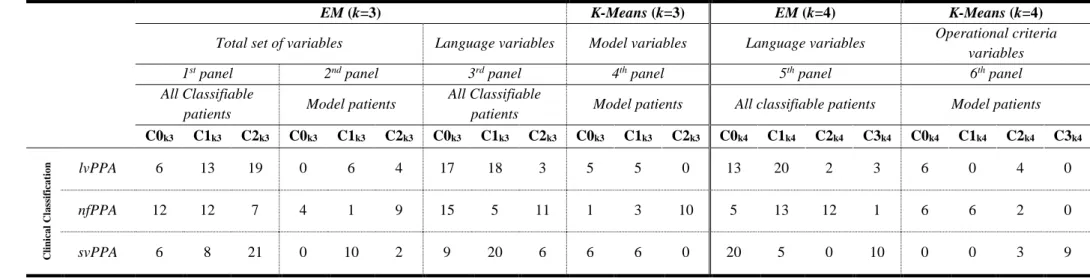
Table 2.3. Clustering results when k=3 (left hand side): dataset with the total set of
variables for all classifiable patients (first panel), model patients (second panel) and language variables for all classifiable patients (third panel), using EM, and model variables for model patients, using K-Means (fourth panel); Clustering results when k=4 (right hand side): dataset with language variables for all classifiable patients using EM (fifth panel); data set with operational criteria
variables for model patients, using K-Means (sixth panel) ……… 82
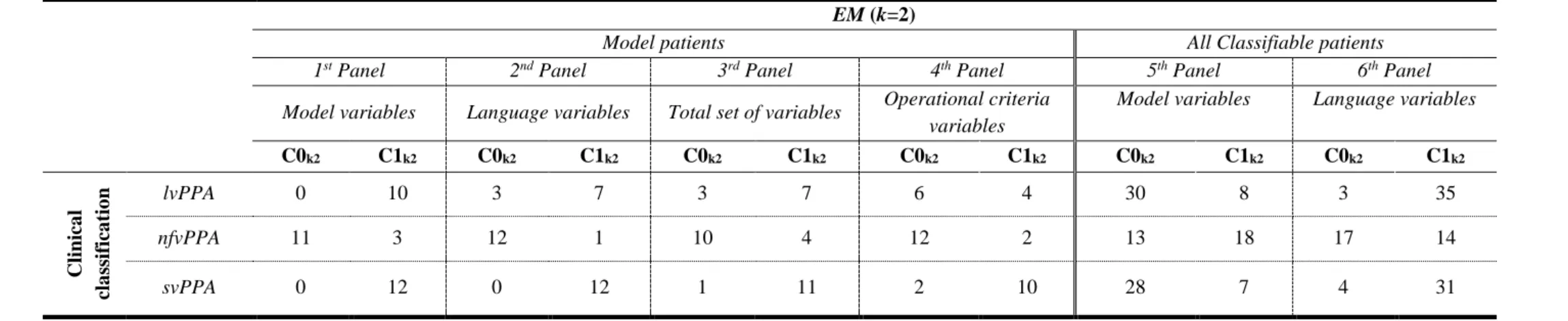
Table 2.4. Clustering results when k=2: dataset with model patients and the set of
model (first panel), language variables (second panel), total set (third panel) or operational criteria variables (fourth panel), dataset with classifiable patients and the set of model (fifth panel) or language variables (sixth panel), using EM ……… 84
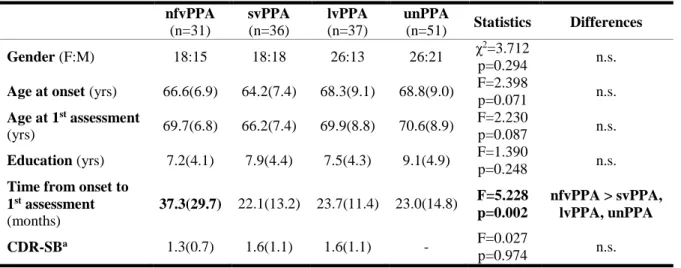
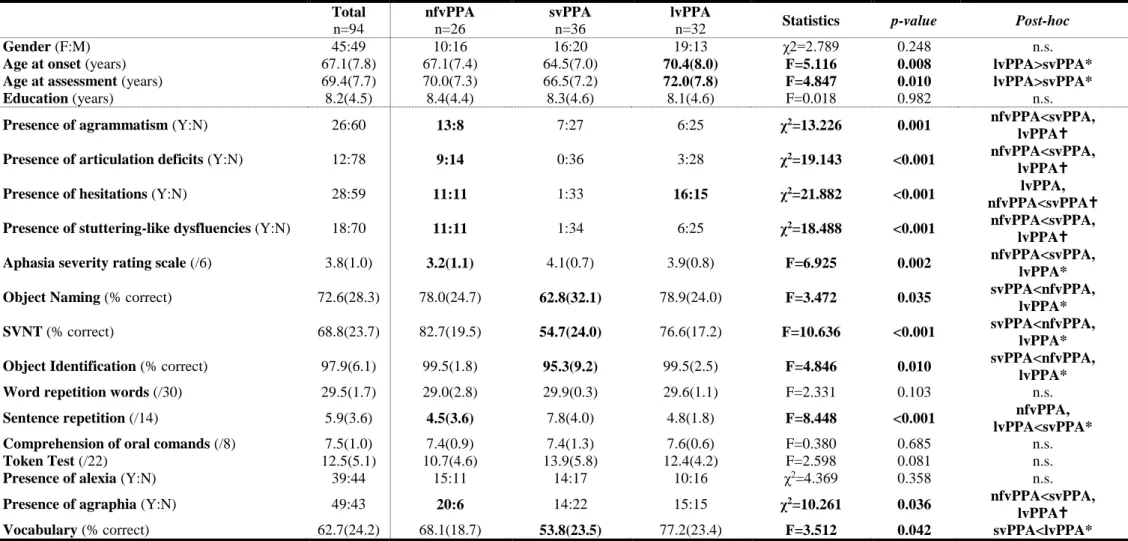
Table 3.1. Demographic data and performance in selected language tests in
patients with nonfluent, semantic and logopenic primary progressive aphasia
variants ………... 97
Table 3.2. Blessed Dementia Rating Scale scores and frequency (%) for
nonfluent, semantic and logopenic primary progressive aphasia
variants………... 98
Table 4.1. Demographic and clinical results in speech therapy and control group. 109
Table 4.2. Effect of the Speech and Language Therapy on primary and secondary
outcome variables ………... 110
Carolina Pires Maruta 19
LIST OF FIGURES
Figure A. Maurice Ravel in 1925 and Boléro music sheet ……… 28
Figure B. Clinical, pathologic and genetic frontotemporal lobar degeneration
(FTLD) spectrum ………. 32
Figure 1.1. The Grandfather Passage (Van Riper, 1963) ……… 62
Figure 1.2. Plots of individual raw scores for mean speech rate and total error
scores for healthy older participants under each AAF condition and for patients
with nonfluent primary progressive aphasia on reading aloud ……… 65
Figure 2.1. Diagram illustrating the two-step approach designed to obtain the
Consensus Clustering ………... 77
Figure 2.2. Dendograms obtained by applying hierarchical clustering to: (A) all
classified patients with the total variables, and (B) model patients with the model
variables ………... 86
Carolina Pires Maruta 20
I. GENERAL INTRODUCTION
Communication can be defined as the sharing of information by means of a symbol system in order to express a particular idea. It is present in many animal species and facilitates complex social relationships and interactions. Human language is a unique system of communication. It involves the use of arbitrary signs and symbols, reliant on phonology and rules of syntax to express lexical or semantic meaning (i.e. using words) (Mesulam, Rogalski, et al., 2014; Schaefer & Hebben, 2014).
Aphasia can be defined as an acquired selective impairment of language components (phonology, morphology, syntax, semantics, pragmatics), modalities (speaking, reading, writing, signing) and functions (expression and comprehension) that results from a brain lesion to the areas and structures involved in language processing, located in the language-dominant hemisphere (Papathanasiou & Coppens, 2013). Such definition should be differentiated from those language disturbances arising from neurodevelopmental conditions like mental retardation, hearing impairment, autism, malformation of vocal apparatus or emotional disturbances. It should also be differentiated from the developmental disorders of language (occurring in the absence of any of the above mentioned causal disabilities), known as specific language impairments (Bishop, 2009), which predispose children to fail in the acquisition and use of normal language at or near the expected age, typically in the context of otherwise normal development (Tallal, Sainburg, & Jernigan, 1991). Finally, aphasia should also be differentiated from dementia.
Aphasia can manifest itself in different signs and symptoms, depending on the size and location of the lesion. Thus, describing a specific type of aphasia and its features helps to identify a particular brain lesion location and possibly suggest a specific brain pathology or a specific locus of dysfunction (Ellis & Young, 1988; Damásio, 1992). Paul Broca, in the 19th Century, established the important connection between speech production and the inferior frontal gyrus of the left cerebral hemisphere (Broca, 1863) and Carl Wernicke, related sensory aphasia (i.e. loss of memory for words) to the left temporal lobe (Wernicke, 1874). Both discoveries represent the first framework for anatomically and functionally differentiating types of language dysfunction. Moreover, Wernicke was the first author to formulate a theory of how different brain regions responsible for expressive and receptive functions interact with each other. His ideas were further developed by Lichteim and re-addressed by Geschwind (Geschwind, 1965a, 1965b), creating the so called Wernicke-Lichteim-Geschwind model. According to this model, different brain centers are
Carolina Pires Maruta 21 interconnected and a lesion in a specific brain area/center or in the pathways connecting different centers may result in a more or less well-defined aphasic syndrome. In addition, Geschwind observed that the anatomical disconnection of a white matter tract connecting the posterior portion of the superior temporal lobe to the inferior frontal lobe (i.e. arcuate fasciculus) caused a different type of aphasia from those described by Broca and Wernicke a century before (i.e. conduction aphasia). He also proposed that damage to the concept center, or the connections between this and others, explained the features of two other aphasic conditions: motor and sensory transcortical aphasia (Geschwind, 1970, 1972). These findings, together with the extensive work of Harold Goodglass and Edith Kaplan on the neuropsychological characterization of the fluency of aphasic patients and on the development of the most widely known comprehensive, multifactorial battery to evaluate a broad range of language dysfunctions that often underlie the various aphasic syndromes, the Boston Diagnostic Aphasia Examination – BDAE (Goodglass & Kaplan, 1972), led to delineation of the so called “classical aphasia syndromes”: Broca’s, Wernicke’s, Conduction, Anomic, Transcortical Motor, Transcortical Sensory, Mixed Transcortical and Global aphasias.
According to a more contemporary conceptualization, which was largely based on functional imaging studies (Wylie & Regner, 2014), language and its organization are considered to be mediated by an asymmetrically distributed large scale network. The network components are located in the perisylvian cortex and surrounding parts of the frontal, parietal and temporal lobes of the language dominant (usually left) hemisphere of the brain (Hickok & Poeppel, 2007; Saur et al., 2008; Xiang, Fonteijn, Norris, & Hagoort, 2010; Wilson et al., 2011; Schwartz, Faseyitan, Kim & Coslett, 2012). These components can be divided into dorsal (involved in the phonological encoding, fluency, and grammatical structure) and ventral (playing an important role on the lexical-semantic processing) pathways, conforming to the so-called “dual stream model” (Hickok & Poeppel, 2004; Saur et al., 2008). The major contribution from these recent models has been the refinement of functional anatomical localization and specification of language sub processes not taken into account in the previous classical approach.
Research into language has traditionally and largely concentrated on aphasias caused by focal brain damage, in particular, cerebrovascular disease. In recent years, interest has shifted to encompass language disorders appearing in the context of progressive neurodegenerative brain disorders. These diseases represent an opportunity to
Carolina Pires Maruta 22 study the neural components of the large-scale language network and how this network is selectively vulnerable to the deleterious effects of neurodegeneration. The present thesis will, hence, focus on the role of neuropsychology in the study of language-based neurodegenerative diseases, called Primary Progressive Aphasias (PPA).
PPA is a group of clinical syndromes characterized by a progressive, isolated deterioration of language abilities, during, at least, a two-year period, in the absence of marked impairment in other cognitive and behavioural domains, which result from the neurodegeneration of the language dominant cerebral hemisphere (Mesulam, 1982, 1987, 2001). A historical perspective of the concept, and the formal definition and pathological characterization of this clinical entity will be reviewed in Chapter II-2.1 and 2.2, respectively.
A neuropsychological approach to PPA is important for several reasons. First of all, neuropsychology conveys an important diagnostic purpose. Due to its progressive nature, PPA evolves to the point where the remaining areas of cognition begin to deteriorate, and instrumental activities of daily living (ADLs) become increasingly compromised. At this point, patients are considered to have entered a dementia phase that is sometimes called “aphasic dementia” or “PPA plus” (Rogalski & Mesulam, 2009). This phase may occur many years after or within a relatively short time frame from diagnosis. Here,
neuropsychological assessment will aim to exclude the presence of concurrent dementia
(or prominent deficits in cognitive domains other than language) for the diagnosis of PPA to be made. This is not a straightforward task, even for neuropsychologists with vast experience in assessing patients with dementia. The majority of neuropsychological tests imply verbal instructions and require verbal responses, which puts every aphasic patient in disadvantage. For instance, lower performances on verbal episodic memory tasks may be observed but they may reflect word retrieval deficits rather than a true memory problem. As such, non-verbal tests are preferred instead. However, the application of any neuropsychological test (either verbal or non-verbal) can be virtually compromised in cases presenting with a severe form of aphasia. In the impossibility to obtain a quantitative neuropsychological profile, diagnosis is largely based on the information of functional status, which can only be obtained with the caregiver. Functional scales, which assess the autonomy on instrumental and basic ADLs (e.g. Blessed Dementia Rating Scale, Instrumental Activities of Daily Living, Disability Assessment for Dementia, among others) (Blessed, Tomlison, & Roth, 1968; Lawton & Brody, 1969; Gélinas, Gauthier, McIntyre,
Carolina Pires Maruta 23 & Gauthier, 1999) may constitute, in these cases, crucial information to establish the diagnosis.
Once the diagnosis of PPA is made, one must characterize the pattern of deficits observed. PPA is a devastating condition that evolves to compromise the ability to communicate even the most simple thoughts and needs. The very mild word-finding deficits and anomia that characterize the early stages of the disease are followed by the revealing of core language deficits, which may persist for years until they give rise to a more generalized language disruption. Neuropsychology has, then, a second important role, which is the identification of the language abilities that are impaired or otherwise preserved to define a neuropsychological profile. The dynamic nature of the aphasia in PPA, together with the emergence of subtle dissociations of language functions that are less likely to arise in patients with stroke aphasia, soon led clinicians and researchers to consider PPA cases heterogeneous enough not to fit into the classic aphasic syndromes (Mesulam, Rogalski, et al., 2014). Accordingly, a whole different terminology to these cases was formally proposed (Gorno-Tempini et al., 2011). The distinctive clinical, imaging and pathological signatures of each PPA variant will be subject of a detailed revision in the Chapter II-2.3 of the present thesis.
The importance of neuropsychology to understand different aspects of PPA is reflected in a series of original studies joined together in Chapter IV of this thesis.
As previously stated, the definition of a neuropsychological profile implies a thorough assessment of all linguistic abilities. These should include the analysis of spontaneous speech (how the message is generated, its content, grammar and motor programming features), confrontation naming, single-word and sentence comprehension, object/people knowledge, word and sentence repetition, reading, writing and spelling, sentence generation/completion and motor assessment (e.g. repetition of syllables) (Rohrer et al., 2008; Gorno-Tempini et al., 2011). Sensitive cognitive tests are needed to identify subclasses of patients based on these features. In fact, the last years have seen an effort to create such measures. Some batteries, like the Western Aphasia Battery (WAB) revised, have been proposed for the differentiation of PPA variants with high accuracy (Kertesz, McMonagle, Blair, Davidson, & Munoz, 2005; Kertesz, 2007; Kertesz, Jesso, Harciarek, Blair, & McMonagle, 2010). The creation of new batteries (e.g. Sydney Language Battery) (Savage et al., 2013) or the development of novel linguistic measures like the Northwestern Anagram Test (which assesses the grammaticality of sentence production by
Carolina Pires Maruta 24 asking the patient to assemble single printed words to create sentences describing pictures) (Weintraub, Mesulam, Wieneke, Rogalski, & Thompson, 2009) have also shown to be adequate to differentiate subtypes. Moreover, the same authors developed an empirical quantitative template resulting from the combination of performance on this novel task and a single-word comprehension measure (e.g. Peabody Picture Vocabulary Test). This template accurately classified patients, even at very mild stages, and showed good correlation with cortical atrophy patterns, hence displaying biological validity (Mesulam et al., 2009; Mesulam, Wieneke, Thompson, Rogalski, & Weintraub, 2012). Another classification approach, based on four key speech and language variables (motor speech disorders, agrammatism, single-word comprehension and sentence repetition) has also been proposed. This algorithm classified correctly 45 of 47 (96%) of patients regarding PPA variants and showed high concordance with the gold standard expert clinical diagnosis, based on the International Consensus Criteria (Leyton et al., 2011). Despite all this development in the field of cognitive testing, classification currently remains problematic and unclassified cases are relatively frequent (Wicklund et al., 2014). From our experience, some PPA cases at very early stages can hardly be classified. In others, the severity of language deficits may also prevent an accurate diagnosis into one of the variants. Others even never reach a plausible diagnosis, which leads us to think that the current classification model should be subjected to further refinements in order to include, for instance, other disease profiles. These caveats will be addressed in the Study 2 of the Chapter IV, conducted to test the applicability of sophisticated data driven analysis to extensive neuropsychological data to test the current classification model of PPA.
In an era marked by the search for disease-modifying drugs specifically created to tackle neurodegeneration even at pre-symptomatic stages (Rohrer et al., 2015), the emergence of pathological in-vivo biomarkers (such as the new imaging techniques using Aβ and tau ligands) are certainly relevant for an accurate clinical diagnosis. However, the use of neuropsychology to characterize a global cognitive profile, aside the linguistic pattern, typical of each PPA variant, may improve clinical classification and identify signatures of disease progression. As previously stated, neurodegeneration selectively targets specific regions of the cerebral cortex. Even within areas of prominent cortical atrophy, some neuronal populations are affected and others might be preserved, which creates a pattern of distorted neural network connectivity, distinct from the entire loss of function seen in vascular aphasia (Sonty et al., 2007; Mesulam, Rogalski, et al., 2014).
Carolina Pires Maruta 25 Neuropsychology has thus an important role in testing novel paradigms of disruption of selective neural networks. In this context, Study 1 of the Chapter IV consists of an experimental investigation primarily conducted in healthy individuals to test the hypothesis of disruption of the dorsal language pathway in a subgroup of PPA patients. The results of this study shed light on the probable disrupted mechanisms underlying specific clinical features. On the other hand, Study 3 of the Chapter IV will revise the state of the art concerning the presence of behavioural changes in PPA as a relevant clinical feature implicated in the differential diagnosis among PPA variants that may correspond to Alzheimer’s disease (AD) or Frontotemporal Lobar Degeneration (FTLD) pathologies.
Research has now taken us to the stage where neuropsychology allows the description of different patterns of impairment and retained abilities. This assumption suggests that different profiles and, most of all, different stages of disease require different types of management (Maxim & Bryan, 2006). Cognitive interventions, such as Speech and Language Therapy (SLT) are aimed at improving cognitive and functional abilities and quality of life for patients and for their caregivers, in a time where a pharmacological treatment is still unavailable. Even here, neuropsychology is relevant to manage communication disabilities, since an accurate and specific diagnosis is the foundation from which a treatment strategy should evolve. Understanding of which language capabilities and other cognition functions are retained, as well as those which show breakdown, is essential to plan an intervention in the individual patient, and to identify the most adequate outcome measures for clinical trials, in the expectation that the resources given to the patient can be translated into everyday function, hopefully improving quality of life. As such, the Study 4 of the Chapter IV will focus on the impact of a SLT program on PPA patients and its implications on disease management.
The findings of these original studies illustrate the relevance of neuropsychology to understand different aspects of PPA, and have implications for future research which will be discussed in the Chapter V of the present thesis.
Carolina Pires Maruta 26
II. LITERATURE REVIEW
Maruta, C. (2015). The musician entrapped in the aphasic mind: The tragic story of Maurice Ravel. (submitted).
Maruta, C. (2015). Primary Progressive Aphasia: A literature review. (manuscript in preparation).
The candidate made substantial contribution to the conception and design of the present works, drafted and revised critically the manuscripts for important intellectual content.
Carolina Pires Maruta 27
1. The musician entrapped in the aphasic mind: The tragic story of Maurice Ravel
Joseph-Maurice Ravel (1875 – 1937) was a French composer known especially for his melodies, masterful orchestration, richly evocative harmonies and inventive instrumental textures and effects (Cytowic, 1976). Along with Claude Debussy, he became one of the most prominent figures associated with the Impressionist movement in music. While celebrated for his musical legacy, he also represents a fascinating neurological case-study.
His condition is stated to have begun in 1927, when he was 52 years old, by a progressive deterioration of writing and subsequent word-finding problems. Interestingly, these symptoms emerged one year before the completion of his masterpiece Boléro and the Piano Concerto for the Left Hand (the latter being commissioned by the Austrian pianist Paul Wittgenstein). Boléro is one of those compositions that is hardly forgotten once heard (Figure A). Much of its impressiveness is certainly the result of how it was written: by alternating between two main melodic themes, repeating the pair eight times with increasing volume and layers of instrumentation. On explaining the idea for the piece, Ravel stated that his intention was “(…) to repeat it a number of times on different orchestral levels but without any development (…)” thus having “(…) no music in it (…)” (Ravel, 1927; sic. Burnett, 1987). In the last decade, some authors have argued that this musical technique was already revealing signs of his disease because it appeared to present a compulsive, structured, even perseverative nature (Amaducci, Grassi, & Boller, 2002). In fact, despite the extraordinary complexity of this piece, it is sufficiently different from other earlier compositions to raise the question whether something was already going wrong with Ravel’s brain. Yet, this is a matter still in debate, especially because other pieces that followed the creation of Boléro do not seem to show such a pattern (Warren, 2003).
Ravel became aware of his inability to make familiar gestures during the summer of 1933. However, the signs of this ideomotor apraxia were, in fact, present earlier in the course of the disease as they were accompanied initially by tremor of hand, and manifested by blunders in writing, erasures and slowing of gestures. To his horror, the ability to write both in verbal and musical terms became largely compromised: he found increasing difficulty in putting his musical thoughts on paper, coping became impossible and he could no longer play the piano.
Carolina Pires Maruta 28
Figure A. Maurice Ravel in 1925 and Boléro music sheet
Sources: Bibliothèque nationale de France; http://www.diarezzo.de
His last creative work, Ronsard à son Âme, is known to have been written down to Ravel’s “(…) laborious dictation (…)” (sic. Henson, 1988) in 1933. The following year he wrote, with major difficulties, his last letter and signed for the last time his own name. By that time, he also “(…) scarcely attempted to speak (…)” (sic. Henson, 1988), which suggests that his speech production was already very disturbed at this stage, almost near mutism. Despite the growing spoken and written language impairments, Ravel was able to recognize through audition his productions and whether musical instruments were out of tune, indicating that at least auditory perception was preserved (Warren, 2003). In short, Ravel’s intact affectivity, aesthetic sensitivity and musical thinking contrasted with his extreme difficulty in expressing such dimensions, which made it impossible for him to produce music. Like a writer who no longer can translate his ideas and images into words, Ravel could no longer translate the patterns which were his music into symbols: he was agraphic for music. In his own words “(...) this opera is here, in my head, I hear it, but I will never write it (...) I can no longer write my music. (...)” (sic. Amaducci et al., 2002).
In his clinical notes, Théophile Alajouanine, his neurologist between 1933 and 1936, concluded that Ravel’s slowly progressive apraxia and aphasia pointed towards a cerebral atrophy with prominent involvement of the left hemisphere. Since an autopsy was never performed, one can only speculate that Ravel’s disease was compatible with
Carolina Pires Maruta 29 Frontotemporal Lobar Degeneration (FTLD), probably overlapping Pick’s disease (PiD) or a Corticobasal Degeneration (CBD) (Baeck, 1996; Amaducci et al., 2002). Until his death in 1937, at the age of 62, due to complications resulting from an attempt of neurosurgical treatment (a right sided craniotomy), he remained socially active, making us think that he never actually reached a dementia stage.
2. Primary Progressive Aphasia (PPA)
2.1. Historical perspective
In 1892, Arnold Pick first described a patient with a history of gradually progressive speech disturbance associated with atrophy of the left temporo-polar region and posterior two thirds of the frontal lobe, in the context of a progressive social disorder characterized by disinhibited, socially inappropriate behaviour (Pick, 1892). In Pick’s description, the language disturbance resembled that of a transcortical sensory aphasia, and this case became known as the first description of Semantic Dementia (SD) (Kertesz & Harciarek, 2014). However, the first case reporting a progressive difficulty limited to language, with declining speech fluency but unremarkable memory, social, or visuospatial abilities was provided one year later by Paul Sérieux. His paper described a woman who presented a progressive loss of spoken word comprehension and in whom “(…) la mémoire et l’intelligence de la maladie étaient suffisament conservées (…)”. Her brain was later examined by Déjerine who observed a bi-temporal cortical atrophy and neuronal loss (Sérieux, 1893). Additional sporadic cases of slowly progressive focal neuropsychological deficits due to probable brain atrophy in relatively young patients (sometimes in the late forties) started to emerge in the literature (Déjerine & Sérieux, 1897; Pick, 1904, 1906; Rosenfeld, 1909; Ernst, Dalby, & Dalby, 1970; Wechsler, 1977; Mitsuyama, Tobo, & Itoi, 1978; Anderson & Barlow, 1980). However, it was only in the early eighties of the 20th century that a syndrome of progressive aphasia in the absence of dementia was again brought to clinical attention, by the hand of Marsel Mesulam.
In a case-series published in 1982, he described six right-handed patients, who in the presenium experienced the insidious onset and gradual progression of an aphasic disorder. In all but one, the language disturbance resembled an anomic aphasia, mostly characterized by a slow, laboured speech, containing several word-finding pauses with
Carolina Pires Maruta 30 spared repetition and comprehension. The pattern of fluctuating fluency without frank agrammatism of classic vascular nonfluent aphasia led Mesulam to coin the term “logopenia” [derived from the Greek ‘λόγος’(logos), meaning “word” and ‘πενία’ (penia), which means “deficiency”] as a clinical state intermediate between nonfluent and fluent aphasia (Mesulam, 2007). One patient had pure-word deafness. Activities of daily living were essentially well preserved and patients showed good judgment and insight into their difficulties. In four of these patients, the gradual deterioration culminated in behavioural changes and a more generalized state of dementia may have emerged in the other two, but only after seven or more years of disease evolution. Atrophy involving the left perisylvian region was described in all these patients (Mesulam, 1982). Mesulam introduced the concept of “slowly progressive aphasia without generalized dementia” to refer to this clinical picture: “slowly” as opposed to the progressive but relatively faster course of certain brain tumours; “progressive” as opposed to aphasia resulting from an acute stroke event; “without generalized dementia” in order to differentiate it from typical Alzheimer’s Disease (AD), a memory-based dementia (Mesulam, 2007).
By the time Mesulam published his paper, some skeptical opinions regarding the true existence of such a condition rose in the scientific milieu (Foster & Chase, 1983). However, several similar cases followed Mesulam’s paper (Foster, Patronas, DeLaPaz, & et al., 1982; Wechsler, Verity, Rosenschein, Fried, & Scheibel, 1982; Heath, Kennedy, & Kapur, 1983; Kirshner, Webb, Kelly, & Wells, 1984; Morris, Cole, Banker, & Wright, 1984; Assal, Favre, & Regli, 1985; Maeda, Ono, Shimizu, & Iizuka, 1988; Sapin, Anderson, & Pulaski, 1989), being decisive to the delineation of the clinical picture of “Primary Progressive Aphasia” (PPA) (Mesulam, 1987).
2.2. PPA under the Frontemporal Lobar Degeneration spectrum
PPA is a clinical syndrome led by a progressive, relatively selected language impairment, variably affecting word-finding, object naming, syntax, phonology, morphology, spelling or word comprehension, without an identifiable cause other neurodegeneration (ruling out other possible causes for the language deficit, such as stroke or brain tumours) (Mesulam, 2001, 2003) (Appendix 1). This aphasic disorder should be the most prominent deficit (i.e. primary) at symptom onset and in the initial phases of the disease, and should be solely responsible for impaired activities of daily living for, at least, one to two years. This temporal criterion was originally introduced to exclude rapidly
Carolina Pires Maruta 31 progressive dementias like Creutzfeld-Jacob Disease (CJD) with an aphasic onset, or other dementia syndromes where language deficits emerge in the context of equally prominent amnestic, behavioural or visuospatial deficits (Mesulam, 2001). Despite this rule, it has been acknowledged that establishing an exact onset of a neurodegenerative disease is not straightforward and the two-year rule should be interpreted with caution (Mesulam, 2007). Recommendations state that a differential diagnosis should be made between a primary vs a secondary form of progressive aphasia that typically arises in other dementia syndromes with other initial prominent deficits (e.g. memory, visuospatial skills, behaviour, praxis or motor functions). In this case, and according to Mesulam’s criteria, such patients should not be diagnosed with PPA but classified as having a progressive aphasia in conjunction with the dominant syndrome (Mesulam, Rogalski, et al., 2014). In fact, memory for recent events, reasoning, visuospatial and social skills are relatively well preserved in PPA, at least, during the initial stages (Wicklund, Johnson, & Weintraub, 2004). Prominent behavioural disturbances should also be absent in order to make a root diagnosis of PPA (Mesulam, 2001).
PPA is the result of a selective/focal degeneration of the left language-dominant cerebral hemisphere. In the majority of cases, this is attributable to a spectrum of disease processes grouped under the umbrella term of Frontotemporal Lobar Degeneration (FTLD). FTLD encompasses a group of clinical, pathological and genetically heterogeneous disorders, which are outlined in Figure B. Three major clinical subtypes associated with degeneration of the frontal and temporal lobes can be distinguished based on the early and predominant symptoms and signs. The first is characterized by an early and progressive decline in social behaviour and personal conduct, with disinhibition, apathy, loss of sympathy, perseverative and stereotyped behaviours (behavioural variant of Frontotemporal Dementia - bvFTD) (Neary et al., 1998; Rascovsky et al., 2011). The second are the language variants of FTLD, which can be further divided into nonfluent (also referred to as Progressive Nonfluent Aphasia - PNFA) and semantic variants (also referred to as Semantic Dementia - SD) (Neary et al., 1998). Both are categorized as PPA. The third are the overlap syndromes, which include parkinsonian syndromes like Corticobasal Syndrome (CBS) (Armstrong et al., 2013) and Progressive Supranuclear Palsy Syndrome (PSPS) (Litvan et al., 2003) and motor neurone-disease, in particular, amyotrophic lateral sclerosis (MND – ALS) (Brooks, 1994).
Carolina Pires Maruta 32
Figure B. Clinical, pathologic and genetic frontotemporal lobar degeneration (FTLD) spectrum
Legend: aFTLD – atypical frontotemporal lobar degeneration with ubiquitinated inclusions; AGD - argyrophilic grain disease; ALS – amyotrophic lateral sclerosis; BIBD – basophilic inclusion body
disease; bvFTD – behavioral variant frontotemporal dementia; C9ORF72 - chromosome 9 open reading frame 72; CBD – corticobasal degeneration; CBS – corticobasal syndrome; CHMP2B – charged multivesicular body protein 2B; FTD-MND – frontotemporal dementia with motor neuron disease; FTLD-TDP-43 – frontotemporal lobar degeneration with transactive response DNA-binding protein with molecular weight 43 kDa; FTLD-UPS – frontotemporal lobar degeneration with proteins of the ubiquitin proteasome system; FUS – fused in sarcoma; GRN – progranulin; MAPT – microtubule associated protein tau; MSTD - multiple system tauopathy with dementia; NFID – neuronal intermediate filament inclusion disease; PNFA – progressive nonfluent aphasia; SD – semantic dementia; PiD – Pick’s disease; PSP – progressive supranuclear palsy; PSPS – progressive supranuclear palsy syndrome; TARDBP - TAR DNA-binding protein; VCP – valosin containing protein.
Note: Diagram based on Rohrer & Rosen (2013), Laforce (2013) and Villemagne, Fodero-Tavoletti, Masters, & Rowe (2015)
Carolina Pires Maruta 33 Apart from the sporadic cases, between 30% and 50% of patients with FTLD have a strong positive family history of the disease (Seelaar et al., 2008) but only 10 to 30% of family pedigrees show an autosomal dominant inheritance pattern (Riedl, Mackenzie, Förstl, Kurz, & Diehl-Schmid, 2014). In a recent study, 36% of the overall PPA series had a family history and only 5 (5%) had a genetic mutation detected (Flanagan et al., 2015). Common mutations associated with FTLD are found in microtubule associated protein tau (MAPT) gene (Heutink et al., 1997; Hutton et al., 1998) and progranulin (GRN) genes (Baker et al., 2006), both located in the chromosome 17. The latter has already been associated with PPA phenotypes although the H1/H1 haplotype on chromosome 17 coding for tau also appears to be associated with PPA (Sobrido et al., 2003). More recently, an abnormal expansion of a GGGGCC hexanucleotide repeat in a noncoding region of chromosome 9 open reading frame 72 (C9orf72) gene was identified as a common pathogenic mutation linking familial FTLD with ALS (Renton et al., 2011). Other less common mutations include cases of inclusion body myopathy with Paget’s disease of the bone, caused by mutations involving the valosin-containing protein (VCP) gene on chromosome 9 (Watts et al., 2004; Forman et al., 2006), chromatin-modifying protein 2B (CHMP2B) gene on chromosome 3 (Skibinski et al., 2005),a mutation of TARDBP on chromosome 1 (Chiò et al., 2010), and a mutation involving cases with ubiquitin inclusions consisting of an accumulation of proteins encoded by the fused in sarcoma (FUS) gene located on the chromosome 16 (Yang, Warraich, Nicholson, & Blair, 2010). FUS and frontotemporal dementia with parkinsonism linked to chromosome 17 pathology are not commonly reported in PPA (Lashley et al., 2011).
With respect to FTLD spectrum pathology, it can be broadly separated into three major types of abnormal accumulation of proteins. Tauopathies, characterized by the accumulation of hyperphosphorylated microtubule-associated protein tau in neurons and glia (FTLD-tau) (Andreadis, Brown, & Kosik, 1992; Mackenzie et al., 2010), typically present in cases of familial FTLD caused by MAPT mutations (Morris et al., 1984), and cases with the neuropathology of PiD, PSP, CBD, argyrophilic grain disease (AGD), multiple system tauopathy with dementia (MSTD) and frontotemporal dementia with parkinsonism linked to chromosome 17 (Mackenzie et al., 2010). In addition, the biochemical form of tau is known to vary among different conditions and three-repeat (3R) and four-repeat (4R) isoforms have been identified (Dickson, Kouri, Murray, & Josephs, 2011). Ubiquitin-positive, tau-negative inclusions (FTLD-U) are the second major subtype of FTLD, the most common being the transactive response DNA-binding protein with
Carolina Pires Maruta 34 molecular weight 43 kDa (TDP-43) (Neumann et al., 2006; Sampathu et al., 2006). The majority of ALS cases present this pathological changes which provide further evidence for the continuum between this clinical entity and FTLD (Neumann et al., 2006; Kwong, Neumann, Sampathu, Lee, & Trojanowski, 2007). Four different FTLD-TDP subtypes have been conceptually harmonized (Mackenzie et al., 2011): Type A includes cases with moderate to numerous TDP43-immunoreactive neuronal cytoplasmic inclusions (NCI) and short dystrophic neurites (DN) predominantly in the upper cortical layers II/III; type B refers to cases with moderate to numerous TDP43 immunoreactive NCI and sparse DN across all cortical layers; type C is assigned to cases in which long DN are present predominantly in the upper cortices and NCI; and type D, corresponding to cases with numerous lentiform neuronal intranuclear inclusions (NII). This nomenclature is helpful to predict syndromic presentation. Specifically in PPA, the subtypes of FTLD pathological change typically observed include TDP-43 types A, B and C (Harris & Jones, 2014) and PiD, CBD and PSP. Finally, some FTLD-U TDP-43 negative cases present with an abnormal accumulation of FUS protein (Neumann et al., 2009; Urwin et al., 2010). This group include atypical FTLD with ubiquitinated inclusions (aFTLD-U) (Mackenzie, Foti, Woulfe, & Hurwitz, 2008), neuronal intermediate filament inclusion disease (NIFID) (Bigio, Lipton, White, Dickson, & Hirano, 2003) and basophilic inclusion body disease (BIBD) (Mackenzie et al., 2010). The distribution of overall pathological deposits in PPA has been found to be asymmetrical, with the left hemisphere more severely affected (Harris & Jones, 2014; Mesulam, Weintraub et al., 2014).
Some forms of PPA have also been associated with Alzheimer’s disease (AD) pathology (Rabinovici et al., 2008; Grossman, 2010; Gorno-Tempini et al., 2011), which is characterized by amyloid β (Aβ) plaques and intracellular neurofibrillary tangles (NTFs) comprising hyperphosphorilated tau (Braak & Braak, 1991). When Alzheimer pathology is detected, the neurofibrillary tangles show lower entorhinal-to-neocortical ratios and greater leftward asymmetry in PPA than in the typical amnestic dementia of AD (Mesulam, 2013). Cases with focal spongiform degeneration (Kirshner, Tanridag, Thurman, & Whetsell, 1987), particularly CJD (Shuttleworth, Yates, & Paltan-Ortiz, 1985; Yamanouchi, Budka, & Vass, 1986) involving the left peri-sylvian cortex are also part of the literature concerning the underlying pathology in PPA.