Repositório ISCTE-IUL
Deposited in Repositório ISCTE-IUL: 2019-03-28Deposited version: Pre-print
Peer-review status of attached file: Unreviewed
Citation for published item:
Sharma, P., Davcik, N. & Pillai, K. G. (2016). Product innovation as a mediator in the impact of R&D expenditure and brand equity on marketing performance. Journal of Business Research. 69 (12), 5662-5669
Further information on publisher's website: 10.1016/j.jbusres.2016.03.074
Publisher's copyright statement:
This is the peer reviewed version of the following article: Sharma, P., Davcik, N. & Pillai, K. G.
(2016). Product innovation as a mediator in the impact of R&D expenditure and brand equity on marketing performance. Journal of Business Research. 69 (12), 5662-5669, which has been
published in final form at https://dx.doi.org/10.1016/j.jbusres.2016.03.074. This article may be used for non-commercial purposes in accordance with the Publisher's Terms and Conditions for
self-archiving.
Use policy
Creative Commons CC BY 4.0
The full-text may be used and/or reproduced, and given to third parties in any format or medium, without prior permission or charge, for personal research or study, educational, or not-for-profit purposes provided that:
• a full bibliographic reference is made to the original source • a link is made to the metadata record in the Repository • the full-text is not changed in any way
The full-text must not be sold in any format or medium without the formal permission of the copyright holders.
Serviços de Informação e Documentação, Instituto Universitário de Lisboa (ISCTE-IUL) Av. das Forças Armadas, Edifício II, 1649-026 Lisboa Portugal
Phone: +(351) 217 903 024 | e-mail: [email protected] https://repositorio.iscte-iul.pt
Marketing Performance
Piyush Sharma, School of Marketing, Curtin Business School
Curtin University, Bentley WA 6102, Australia
Email: [email protected]
Nebojsa S. Davcik, Instituto Universitario de Lisboa (ISCTE-IUL), Business Research Unit
(BRU-IUL), Av. das Forcas Armadas, 1649-026, Lisbon, Portugal
Email: [email protected]
Kishore Gopalakrishna Pillai, University of Bradford School of Management
Emm Lane, Bradford, West Yorkshire BD9 4JL, United Kingdom
Email: [email protected]
Submission: October 2015 Revision: January 2016
Accepted: March 2016
The authors are grateful to Nicholas Grigoriou of Monash University, Sunway Campus, Malaysia for sharing his ideas at the early stage of this research.
Pre-print archiving statement: This is a pre-print of an article that will be published in the Journal of Business Research.
Suggested citation:
Sharma, P., Davcik, N.S., & Pillai, K.G. (2016). Product Innovation as a Mediator in the Impact
of R&D Expenditure and Brand Equity on Marketing Performance. Journal of Business
Product Innovation as a Mediator in the Impact of R&D Expenditure and Brand Equity on
Marketing Performance
Abstract
This paper combines the signaling theory and dynamic marketing capabilities perspective to investigate the mediating role of product innovation in the influence of R&D expenditure and brand equity on marketing performance. The study shows that MNC firms are able to use R&D expenditure to improve their product innovation and market share to a greater extent compared to SME and retailer firms. However, the stronger brand equity of MNC firms may actually hurt the performance of their new products by inhibiting product innovation. The authors use regression and probit analysis to study a panel data for 1,356 food brands. Overall, this research provides fresh insights into the process by which R&D expenditure and brand equity affect product innovation and marketing performance in highly competitive product categories.
Keywords: Brand equity; marketing performance; market share; product innovation; R&D expenditure, dynamic marketing capabilities; signaling theory
1. Introduction
Innovation is a major driver of business growth and expansion because it allows firms to transform their dynamic capabilities to become more adaptive and develop the ability to learn and exploit new ideas, given that every firm possesses a bundle of resources, skills and competencies as argued by the resource-based theory of the firms (Peres, Muller, & Mahajan, 2010). Product innovation is particularly important in marketing context because it allows firms to not only develop new market segments but to also expand its current market segments and product portfolios (Gupta, Raj, & Wilemon, 1986; Slotegraaf & Pauwels, 2008). However, product innovation may also lead to higher costs (Lynn, 1998) as well as higher risks and management challenges (Danneels & Kleinschmidt, 2001); hence despite growing research on product innovation, its effect on firm performance remains unclear (De Luca & Atuahene-Gima, 2007). Besides these effects, the relationship between product innovation and brand strategy may vary across different product categories. For instance, Sriram, Balachander, and Kalwani (2007) argue that product innovation lead to brand equity, whereas Beverland, Napoli, and Farrelly (2010) suggest that firm’s ability
to innovate depends on brand portfolio strategy. In contrast to these opposite views, Slotegraaf and Pauwels (2008) assert the importance of interaction effects between brand equity and product innovation to affect sales.
Consumers often use brand equity to assess firms and their product or service offerings in the absence of reliable information about firms’ internal resources and capabilities, because it reduces their information search costs and increases their overall utility (Erdem & Swait, 1998; Erdem, Swait, & Valenzuela, 2006). Signalling theory argues that brands act as signals of the overall quality of a product or service and thereby help consumers resolve their uncertainty caused by a lack of information about a product or a company (Erdem & Swait, 1998). Strong brands signal unobservable quality and product performance expectations (Rao & Ruekert, 1994). Brands also give customers a positive emotional experience during the processes of information search, decision-making, purchase, consumption and ownership (Schmitt & Simonson, 1997).
Notwithstanding their useful theoretical contribution, prior studies on brand equity generally focus on the link between consumers’ perceptions of brand equity and their behavioral intentions and
outcomes such as repeat purchase and brand loyalty at individual consumer level and not at the level of brands or product categories. Hence, there is still little clarity about the exact mechanism by which brand equity may affect marketing performance (e.g., market share) in a highly competitive marketplace. It is also unclear how marketing and intellectual proprietary assets interconnect with other resources to create a competitive advantage through a core business process, such as product innovation (Rust et al., 2004).
In this paper, the authors address these two research gaps by combining signaling theory and the dynamic marketing capabilities (DMC) perspective from resource-based theory (RBT) to model the mediating role of product innovation in the influence of brand equity and research and development (R&D) expenditure on marketing performance. Specifically, this paper explores both direct and indirect effects of brand equity and R&D expenditure on product innovation and marketing performance in the Italian packaged food market. The authors also examine the differences in the influence of brand equity and R&D expenditure on marketing performance for different types of firms (retailer, small and medium enterprises [SME] and multinational companies [MNC]). Finally, the authors discuss the implications of their results and suggest several directions for future research.
2. Theoretical framework and hypotheses
2.1. Dynamic Marketing Capabilities and Signaling Theory
DMC assert the role of marketing resources and organizational routines in firm processes, such as generating revenue by satisfying current customers, exploiting existing products and distribution channels, and advertising existing brands (Barrales-Molina et al., 2014; cf. Bruni & Verona, 2009). Prior research (e.g., Barney, 1991; Kozlenkova et al., 2014; Wilden & Gudergan, 2015) recognizes the role of marketing resources, such as brands and customer and distribution relationships, in gaining and sustaining competitive advantages (Combs & Ketchen, 1999) but has
generally ignored the fundamental processes by which resources are transformed into customer value (Srivastava, Fahey, & Christensen, 2001). Similarly, researchers focus on the role of DMC in developing competitive advantage in inter-firm competition, but ignore the intra-firm distribution of resources and how different brand signals from heterogeneous brand offers (brand portfolio and brand extension strategies) affect consumers, brand value and brand performance (Davcik et al., 2015).
Both marketing (e.g., Aaker, 1996; Keller, 1993) and strategy (e.g., Amit & Schoemaker, 1993) literatures show that brands represent valuable firm resources. Firms develop strong brands using substantial investments in marketing communications (particularly advertising) to create strong consumer awareness and superior consumer attitudes toward the brand (Rossiter & Percy, 1997). One such value creation mechanism is a firm’s brand equity and its market performance (Madden, Fehle, & Fournier, 2006). Brand equity is an important marketing concept because it provides theoretical and business mechanisms for understanding how marketing resources in the form of market knowledge and marketing assets affect brand performance, which in turn affects the overall prospect of a firm’s competitive advantage.
Brands have the ability to indicate dependability and performance based on a firm’s positioning goals (Erdem & Swait, 1998). A brand may be able to leverage its entrenched reputation for product quality to indicate comparative attributes for new products released onto the market under the same name (Wernerfelt, 1988). Brands as market signals improve consumer perceptions of brand attributes and increase confidence in the brands’ claims (Erdem & Swait, 1998). Because unobservable product quality is quite common, scholars investigate the effects and implications of signals such as price (Ippolito, 1990), advertising (Kirmani, 1990), and product quality (Rao, Qu, & Ruekert, 1999). Despite such importance of brand equity as a signal, there are few studies using a holistic approach that combines different classes of
signals, hence it is still unclear how firms utilize their resources to meet their customer expectations and achieve competitive advantage. In this context, brand equity paradigm and investments in R&D activities have important monetary underpinnings in signaling theory (Rao et al., 1999).
< Take in table 1 here >
2.2. Product Innovation – Antecedents and Outcomes
Product innovation provides opportunities for firms to expand and grow into new areas; however, it may also require greater firm resources (Lynn, 1998) and lead to higher risk and management challenges (Danneels & Kleinschmidt, 2001). Despite growing research interest, conceptualization of product innovation and its effects on firm performance remain unclear, as prior studies consider it as an independent, dependent or even a moderator variable (Danneels & Kleinschmidt, 2001).
Using the food industry as an example, with the growing trend toward healthier lifestyles, food safety and higher value for consumers, investments in R&D help create new technologies, production procedures and standards. For example, use of beneficial bacteria may improve the functional properties of food products as well as reduce the dependence on potentially harmful chemicals. As a result, it is almost impossible to find brands in today’s supermarkets that do not use organic and/or functional innovations. Danone, a leading European multinational food company has conventional (Evian), organic (Happy Family) and functional (Activia) brands in its portfolio. Similarly, Tesco, a major global retailer, has Tesco Organic and ‘Free From’ in addition to the conventional brands in its portfolio. The ability to make creative strategic decisions about market segmentation and product differentiation can have a positive effect on customers’ perceptions about a new brand's ability to fit their needs. Hence, this paper focuses on two types of product innovation – functional and organic.
2.3. Role of R&D Expenditure
Research and development (R&D) is an important dynamic capability (Eisenhardt & Martin, 2000; Wilden & Gudergan, 2015) as well as a driver of product innovation (Gupta et al., 1986). Prior research suggests that R&D intensity is low in the food industry (the setting for our research) with the lowest R&D-to-sales ratios in comparison to other industrial sectors (Khan et al., 2013; Bigliardi & Galati, 2013). Traditionally, innovations in the food industry included the development of new production technologies and standards (organic vs. conventional) or changes in product formulations in response to regulations. However, the introduction of functional foods has ushered in the application of new technology and radical innovation in production (e.g., product formulation, production standards etc.) and marketing (e.g., branding, consumer segmentation, stakeholder expectations, etc.).
2.4. Role of Brand Equity
Marketing practitioners face increasing pressure to demonstrate their contribution to firm’s financial performance and demands for resource allocation to achieve the best possible firm performance (O’Sullivan & Abela, 2007). However, the exact mechanism through which brand equity translates into consumer demand, preference and market share, is still unclear. Some studies show that product innovation may lead to brand equity (Sriram et al., 2007), whereas others argue that a firm’s ability to innovate may depend on the positioning of a brand within its competitive space (Beverland et al., 2010) or brand equity and product innovation may interact with one another to affect sales (Slotegraaf & Pauwels, 2008). For example, product innovation may be a route to success for an existing brand such as Apple, with new innovative products such as Apple iPhone or iPod, especially in a high-growth category, such as consumer electronics. In contrast, having highly successful brands in mature food product categories may allow firms such as Unilever and Nestle to make continuous investments in product development to develop innovative products.
In other words, brand equity may not just have a simple direct effect on product innovation; instead it may interact with other variables (e.g., R&D expenditure) and their combined impact on product innovation and marketing performance may also vary across different product categories.
2.5. Role of Firm Type
Unlike the direct effect of brand equity and R&D expenditure on product innovation as suggested by prior marketing research, the strategy literature suggests a different causality (e.g., Hitt et al., 1997). Specifically, companies with greater product diversification are less likely to invest in R&D for further product innovation. Business managers are under constant pressure to deliver financial performance of their brands and/or business units, and such overemphasis on financial controls may make them ignore the changing preferences and needs of their consumers as well as the market response of their competitors to these changes. Instead, managers may avoid further expansion of their brand portfolios by lowering investments in R&D and by attempting to extend their consumer base with existing brands (Hitt et al., 1997).
Despite having more resources than smaller firms, large firms do not always excel at innovation because of their bureaucratic processes, centralized control systems and routines that inhibit the development of technology-market knowledge links (Dougherty, 1992; cf. Hitt et al., 1997). Interestingly, some studies find significant differences among smaller firms in different industries, such as manufacturing and knowledge-intensive services, after controlling for firm size (de Jong & Vermeulen, 2006). However, many of these studies focused on differences between broad categories of industries rather than exploring differences among various types of firms within a specific product or service category.
Emergence of retail brands (also known as private labels) have taken a sizeable portion of the market share of more established MNC brands by offering
similar product quality and variety; however, such brands still lag behind the established brands in terms of brand image and equity (Burt, 2000). Most retailers tend to follow MNC firms in offering new products, because they can afford to invest in new products and use the economy of scale to get a considerable market share. For instance, Khan et al. (2013) suggest that consumers do not consider private labels in the functional food sector as a weak alternative in comparison to branded food products; and retailers may easily manage the quality and price using their market power.
Based on the above, it seems that with multinational companies should be able to better leverage their strong brand equity into product innovation by developing and launching a greater variety of products and flavors, which may in turn lead to greater market share. In contrast, intra-firm competition for limited resources will make SME companies focus their limited resources on the most lucrative brands (Davcik et al., 2015). Interestingly, retailers generally have a wide product portfolio but they must also improve their performance using economies of scale and price optimization (Khan et al., 2013). Therefore, the positive effects of brand equity and R&D expenditure are likely to be stronger for MNC firms compared to SME firms and retailers respectively, as follows:
H1: The positive effect of R&D expenditure on market share is stronger for a) MNC firms compared to SME firms, and b) SME firms compared to retailers.
H2: The positive effect of brand equity on market share is stronger for, a) MNC firms compared to SME firms, and b) SME firms compared to retailers.
2.6. Product Innovation as a Mediator
Prior research argues that signalling is most effective for products whose quality is unknown prior to purchase because a brand name can be an effective
signal of unobserved quality (Rao et al., 1999), which helps consumers resolve their classification problem in the face of potential deception by the seller (Boulding & Kirmani, 1993). Assuming that consumers and firms are rational and capable of interpreting one another’s moves, signaling specifies the market conditions under which firms can resolve information asymmetry and deliver product quality information to consumers by manipulating elements of the marketing mix such as price or advertising (Kirmani, 1990). Erdem and Swait (1998) define brand signals as a firm’s past and present marketing mix strategies and activities associated with its brand, wherein brands communicate unobservable quality in products as a result of firms’ investments (e.g., product design) in building brand equity. However, brand image and equity may not be the only signals of product quality and firm capabilities; product innovation itself could be a signal to consumers that a firm has the ability to invest in R&D and to develop innovative products that provide greater satisfaction to consumers. Therefore, product innovation is likely to partially mediate the effects of R&D expenditure and brand equity on market share, as follows:
H3: Product innovation partially mediates the positive effect of R&D expenditure on market share, such that it is stronger for, a) functional; and b) organic, compared to conventional product categories.
H4: Product innovation partially mediates the positive effect of brand equity on market share, such that it is stronger for, a) functional; and b) organic, compared to conventional product categories.
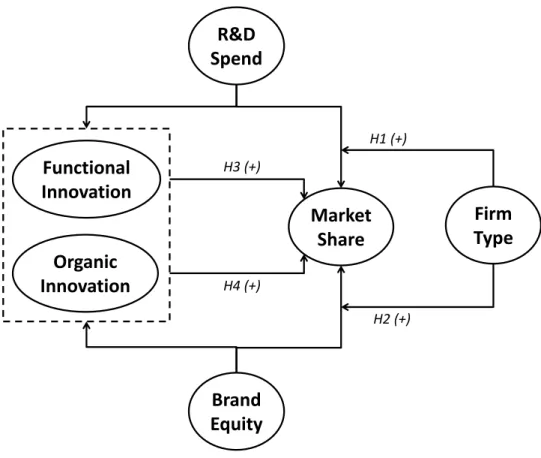
Figure 1 summarizes all these hypotheses graphically.
< Take in figure 1 here >
3. Methodology
3.1. Research Setting
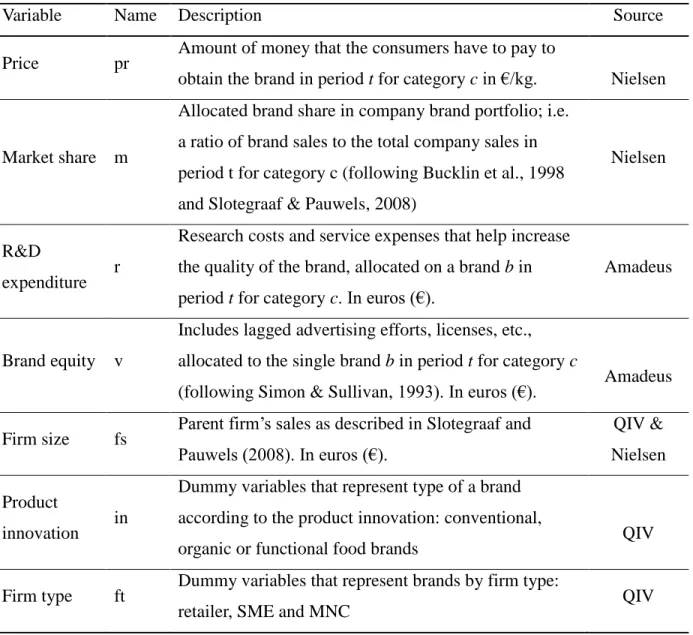
This study uses enriched-food brands in three product categories (juice, milk and yogurt) as the research setting because these are a major contributor to the FMCG industry. Moreover, these products use high levels of applied technology, marketing know-how and ethical consciousness. Enriched-food brands include a broad category of healthy products, such as organic foods, functional foods and conventional foods with added value (Davcik & Sharma, 2015). Product innovation exists at three levels: conventional food brands, organic food brands (food produced according to organic production standards; e.g., NOP [USA]; EC 834/2007 [EU], etc.) and functional food brands (e.g., products with beneficial bacteria) food brands (Davcik & Sharma, 2015). Therefore, the difference among the three different product innovation levels is in the technology applied, the production standards, the label requirements and the quality, as established in prior research (e.g., Davcik & Sharma, 2015; Hamzaoui-Essoussi & Zahaf, 2012). Overall, this study uses 1,356 food brands (juices, milk, and yoghurt) in total, including 674 conventional brands, 319 organic brands and 363 functional food brands in the sample. From a company type perspective, this study concerns 259 retailers’, 876 SMEs and 221 MNC brands in our sample. The authors use STATA 13 to estimate all the models. Tables 1 and 2 present the summary and descriptive statistics for all these variables.
< Take in tables 1 & 2 here >
3.2. Data sources & measures
This study uses two data sources. First, the Amadeus financial statement database from the Bureau van Dijk Electronic Publishing provides the financial performance data for all the firms directly from their balance sheets. Second, ACNielsen Italy’s report provides the food purchase data for 10,282 Italian households, which includes the prices paid, market
share and qualitative characteristics of brands. Table 4 summarizes all the variables and their sources.
< Take in table 4 here >
3.3. Model development
The authors use a bootstrapping algorithm within the regression and probit procedure to test their empirical model. Bootstrapping is a nonparametric statistical technique that provides robust estimates of standard errors and confidence intervals for a population parameter based on the assumption that a given sample is representative of the population. Calculating bootstrapped standard errors involves drawing random samples, estimating the desired statistic corresponding to these bootstrap samples, and calculating the sample standard deviation of the sampling distribution (e.g., Efron, 1979; Guan, 2003). This approach utilizes the same theory underlying Monte Carlo simulation methods, except that it utilizes resamples from the original data rather than from the population (cf. Guan, 2003). At the end of this procedure, the bootstrapping estimates should converge to the true parameters.
Equation 1 represents the direct effects of R&D and brand equity on market share as well as their interactions with firm type (to test H1 and H2). Equation 2 represents the direct effect of R&D and brand equity on product innovation and Equation 3 represents the effects of product innovation (in addition to those of R&D and brand equity) on market share (to test H3 and H4).
(1) Y1 mbt = β0 + δ1fsbt + δ2prbt + δ3ftbti + β1vbt + β2rbt
+ β3rbt*ftbti + β4vbt*ftbti + εbti
(2) Y1 inbti = β0 + δ1fsbt + δ2prbt + δ3ftbti + β1vbt +
β2rbt + β3rbt*ftbti + β4vbt*ftbti + εbti
(3) Y1 mbt = β0 + δ1fsbt + δ2prbt + δ3inbti + β1vbt +
β2rbt + εbti
Models (2) and (3) lead to the overall model described in equation 4 in Table 5 (Model 4).
(4) Y1 mbt = β0 + δ1fsbt + δ2prbt + δ3ftbti + δ4inbti+
β1vbt + β2rbt + β3rbt*ftbti + β4vbt*ftbti + εbti
Where, b = 1, …, B (brands), t is the time component and εbti is the error term.
(5)
For i = is the indicator function for category h, where h represents high or medium quality brands in comparison to low quality brands. We applied the indicator function across models in order to reflect different quality levels among brands in our dataset.
Market share (mbt) is the dependent variable and
represents an output performance measure for brand b in period t, calculated as a ratio of brand b sales to total company sales in period t, in a manner similar to prior studies (e.g., Bucklin et al., 1998; Slotegraaf & Pauwels, 2008).
R&D expenditure (rbt) represents the research costs
and service expenses intended to increase the quality of the brand, allocated to a brand in period t, operationalized from the accounting position b7 – services in the company income statement.
Brand equity (vbt) is an asset that includes lagged
advertising efforts and licenses allocated to a single brand in a company brand portfolio in period t, operationalized from the accounting position B.I. – intangible assets in the company balance sheets (Simon & Sullivan, 1993).
Both these variables (vbt and rbt) use logarithmic
transformation to reduce the wide range of values to a more manageable range in order to provide more precise and efficient estimates.
Firm type (ftbti) represents the type of firm -
retailers, SME and MNC – and it helps capture the pivotal role of different firms’ types in creating differentiated and competitive business models as well
as product innovation strategies (Khan et al., 2013; Davcik & Sharma, 2015).
Innovation type (inbti) represents the type of
technology and production standards, namely conventional, organic and functional (e.g., Davcik & Sharma, 2015; Hamzaoui-Essoussi & Zahaf, 2012).
Firm size (fsbt) is a control variable, which
represents parent-firm sales and controls for company size for brand b in period t, following the approach of Slotegraaf and Pauwels (2008).
Price (prbt) is the control variable for brand b in
period t because using the appropriate price strategy is crucial for the maintenance of market share (O’Regan, 2002; Urban et al., 1986).
4. Data analysis and results
The empirical model for this study (Figure 1) consists of two DMC (R&D expenditure and brand equity) as predictors, firm type with three types of market players (retailer, SME and MNC) as moderator, product innovation with three categories (conventional, functional and organic) as mediator, firm size and price as control variables, and market share as the outcome variable. A series of analyses using models representing equations 1 to 4 along with bootstrap resampling (a type of Monte Carlo simulation method applied to observed data) helps test all the hypotheses. Corrected standard errors with bootstrap resampling method using 1,000 repetitions provide accurate sample estimations (Efron & Tibshirani, 1993). Table 5 presents all the results.
< Take in table 5 here >
4.1. Moderating Role of Firm Type (H1-H2)
The first column in Table 5 shows the results for Model 1 using market share as the dependent variable, wherein that both dynamic marketing capabilities (R&D and brand equity) do not have significant direct effects on market share, while the two covariates (price and firm size) have significant albeit small effects on
market share. However, R&D has a significant positive effect on market share for MNC brands (β = .15, p < .001) but not for SME brands (β = -.01, p > .10), relative to retailer brands. Similarly, brand equity has a significant positive effect on market share for SME brands (β = .01, p < .01) but not for MNC brands (β = -.13, p < .001), relative to retailer brands. Thus, both H1 and H2 only find partial support.
4.2. Mediating Role of Product Innovation (H3-H4)
Next, the second and third columns in Table 5 show the results for Models 2A and 2B using the two dummy variables for product innovation types (functional and organic relative to conventional brands) as the dependent variable respectively. First, R&D expenditure has a stronger positive effect on organic brands (β = .19, p < .01) compared to functional (β = .04, p > .10); whereas, brand equity has a significant positive effect on functional brands (β = .15, p < .05) and a surprising negative effect on organic (β = -.28, p < .01), relative to conventional brands. Interestingly, the interaction terms for both R&D and brand equity with firm type are significant for organic brands but not functional brands, hence the results for H1 and H2 appear to be stronger for organic brands compared to the other two types.
Next, the fourth column in Table 5 shows the results for Model 3A using market share as the dependent variable and includes only the mediator (two dummies for product innovation) and the two control variables (firm size and price) as predictors. Interestingly, functional innovation has no significant effect on market share (β = .001, p > .10) but organic innovation does have significant effects on market share (β = -.03, p < .01). Next, the fifth column in Table 5 shows the results for Model 3B using market share as the dependent variable and includes the two independent variables (R&D and brand equity), the moderator (firm type), the mediator (two product innovation types) and the two control variables (firm size and price) as predictors. In this model, functional (β = .03, p >.10) and organic innovation (β = .02, p > .10) have positive but less significant effects on market share, which
shows that product innovation partially mediates the influence of R&D and brand equity on market share, thus H3 and H4 find partial support.
Finally, the last column in Table 5 shows the results for Model 4, with market share as the dependent variable, both the independent variables (R&D and brand equity), their interaction terms with firm size, the moderator (firm type), the mediator (product innovation) and the two control variables (firm size and price) as predictors. Once again, R&D (β = -.01, p > .10), brand equity (β = .001, p > .10), firm size (β = .01, p < .01) and price (β = -.04, p < .01) as well as three out of four interaction terms have significant effects on market share. However, the effects of both product innovation variables become marginally significant in this model, which suggests that product innovation does partially mediate the moderating effects of firm size on the influence of R&D expenditure and brand equity on market share.
4.3. Post-estimation procedures
The appropriate control function and distribution of the error term across models is a typical modeling issue (cf. Petrin & Train, 2010). The study applies various modeling specifications such as residuals entering, signed and unsigned series expansion of residuals and exclusion of one or both error terms; as explained in Petrin and Train (2010). Additionally, the control for Hausman-type instrument alternatives, addresses the possible problem of reverse causality in models using the Hausman specification test (e.g., Hausman, 1978; Wooldridge, 2002; Petrin & Train, 2010).
5. Discussion and implications
In this research, the authors investigate how DMC affect product innovation strategy and an organization’s ability to perform in the market, as reflected by its market share. Prior research suggests that DMC such as brand equity and R&D expenditure have a positive effect on product innovation and marketing performance; however, this research shows some subtle but significant differences in these effects
for different types of market players and product innovation strategies. Specifically, the results about H1 show that R&D expenditure has a stronger positive effect on market share for MNC brands compared to SME and retailer brands, however, in contrast, the results for H2 show that brand equity has a stronger effect on market share for SME brands than the MNC and retailer brands. In fact, brand equity also has a weaker effect on market share for MNC brands compared to retailer brands. This may seem counter-intuitive because MNCs are supposed to possess strong mega brands that should have a stronger positive impact on their market share. However, from these results it seems that in the context of innovative food products, having strong brand equity may actually hurt MNC brands because consumers may perceive them as being too traditional or associated more with their conventional products.
Finally, as hypothesized, product innovation partially mediates the positive effects of R&D expenditure (H3) and brand equity (H4) on market share. Moreover, consistent with all the other results, the impact of brand equity on market share is stronger for conventional products compared to products with either functional or organic food innovation. From all these findings it is quite clear that different types of firms should focus their marketing strategies on specific quality appeals and product differentiation approaches based on their DMC. These findings are also in-line with management literature on dynamic capabilities, such as Barney (1991) who argues that dynamic capabilities and performance of the firm will differ from one firm to another because each firm has different organizational culture, assets, abilities, etc., a view largely ignored so far in marketing research.
These findings have several implications for marketing theory and managerial decision makers. First, DMC generally relate with inter-firm competition for resources and the achievement of competitive advantages relative to one another; hence, these do not explain intra-firm competition for resources and do not indicate how this business mechanism affects the competitive advantage of firms. This paper addresses
this research gap by studying the performance of different products in heterogeneous portfolios and by demonstrating the importance of intra-firm competition for resources in brand strategy. Using the application of different technological and production standards as proxies for product innovation, this paper shows that different market players must apply different product differentiation strategies through the innovation mechanism to obtain higher levels of market share.
Second, the environment in which signaling occurs is important to ascertaining the appropriate signal to use. Signaling theory suggests that firms give promises to consumers based on brand/firm values but does not explain how their resources meet those promises and perform in the market. This study shows that marketers can use their brand equity and R&D expenditure to signal the appropriate level of product innovation that is consistent with the expectations of consumers when firms rely on information asymmetry. Because signals have varying degrees of reliability, signaling theory provides the basis in this study, for marketing managers to decide on which factors to focus on, in order to make better product innovation decisions.
Third, this research also contributes to the debate on product innovation and performance by addressing the question of whether product innovation is an antecedent or an outcome. Understanding the drivers of product success is becoming increasingly important, especially in highly competitive and volatile environments that increase the rates of technical obsolescence and shorten product life cycles (Langerak et al., 2004). However, the literature provides mixed views and arguments on this question. One stream of the research (e.g., Beverland et al., 2010) highlights the crucial role of brand equity in driving product innovations especially in mature markets such as FMCG brands. However, another stream of literature (e.g., Sriram et al., 2007) posits the product innovation drives higher values of brand equity, an approach that may be more appropriate for strong existing brands in categories such as consumer electronics. The third research stream (e.g., Slotegraaf & Pauwels, 2008) suggests that these phenomena may interact with one
another in their effect on sales. This iterative approach to the question of whether product innovation is an antecedent or an outcome of brand equity potentially provides a more holistic view of this phenomenon. However, because of the objective limitations of their dataset, the authors could not test the latest research assumptions within this modeling design and could only show empirically that this research problem is a contextual issue rather than a theoretical problem. As such, this paper provides a general framework which can help investigate the specific aspects (features) of a product that consumers may consider to be innovative.
Finally, the prevailing logic in the marketing literature strongly suggests that R&D has positive and significant effects on product innovation. In contrast to this research paradigm, the literature on business strategy (e.g., Hitt et al., 1997) asserts that multi-brand organization may disincentivize R&D for product innovation. This observation is not surprising from a business strategy perspective because the imperative for financial accountability leads to the risk aversion behavior of managers. We provide mixed evidence that in a multibrand environment, R&D has positive and negative effects on product innovation for different market players, depending on the product innovation strategy applied.
6. Limitations and future research
This research has a few limitations that future research may address. First, the limited scope of the available market data led to a rather simplistic empirical model and made it difficult to expand the research focus to other relevant market phenomena. For instance, the authors could not include the potential influence of brand loyalty or brand image on brand performance. Second, future research could try to understand the signaling-RBT nexus as it applies to marketing. For instance, this study focuses on signaling from the signaler’s perspective but future empirical investigation may address this nexus from the receiver’s perspective. Such receivers may consist of end-user consumers, distribution channel members, or both.
This study examines product innovation and performance in consumer markets using signaling and resource-based theory; with a single brand as the central unit of analysis. Future studies could extend this research by using a different signaling environment to examine, for example, a similar phenomenon between different organizations and include the competitors of a marketing organization as the intended or accidental recipients of branding signals. An extension in the B2B direction would also be a beneficial theoretical contribution to the performance paradigm of the DMC and RBT framework.
Another area of future research involves testing and expanding the reliability of signals (other than those presented in this study) for their ability in assisting with product innovation. Such research would expand our knowledge of the conditions under which signaling theory assists in product innovation. Further research should concentrate on investigating whether other aspects of the marketing mix (e.g., advertising effectiveness or channel selection) could influence organizational performance from a signaling perspective based on a RBT approach.
This study considers firm type as a moderating variable in the relationship among firms’ dynamic capabilities, product innovation and market share. Future work could identify possible alternative variables that moderate this relationship, such as the degree of market orientation of the innovating firm or the extent to which the innovation decision is either centralized (i.e., made at the head office) or decentralized (i.e., not made at a head office location). Finally, researchers could replicate this study in emerging markets to explore how the process of product innovation differs from that in developed markets, based on various socio-economic and cultural factors.
References
Aaker, D.A. (1996). Building Strong Brands. New York: The Free Press.
Amit, R., & Schoemaker, P.J.H. (1993). Strategic Assets and Organizational Rents. Strategic
Management Journal, 14(1), 33-46.
Barney, J.B. (1991). Firm resources and sustained competitive advantage. Journal of Management,
17, 99-120.
Barrales-Molina, V., Martinez-Lopez, F., & Gazquez-Abad, J. (2014). Dynamic Marketing Capabilities: Toward an Integrative Framework. International
Journal of Management Reviews, 16(4), 397-416.
Beverland, M.B., Napoli, J., & Farrelly, F. (2010). Can All Brands Innovate in the Same Way? A Typology of Brand Position and Innovation Effort. Journal of
Product Innovation Management, 27(1), 33-48.
Bigliardi, B., & Galati, F. (2013). Innovation trends in the food industry: The case of functional foods.
Trends in Food Science & Technology, 31,
118-129.
Bruni, D.S., & Verona, G. (2009). Dynamic marketing capabilities in science-based firms: an exploratory investigation of the pharmaceutical industry.
British Journal of Management, 20, 101–117.
Boulding, W., & Kirmani, A. (1993). A consumer-side experimental examination of signaling theory: do consumers perceive warranties as signals of quality? Journal of Consumer Research, 20(June), 111-123.
Bucklin, R., Russell, G., & Srinivasan, V. (1998). A Relationship between Market Share Elasticities and Brand Switching Probabilities. Journal of
Marketing Research, 35 (February), 99-113.
Burt, S. (2000). The strategic role of retail brands in British grocery retailing. European Journal of
Marketing, 34(8), 875-890.
Combs, J.G., & Ketchen, D.J. (1999). Explaining interfirm cooperation and performance: toward a reconciliation of predictions from the
resource‐based view and organizational economics.
Strategic Management Journal, 20(9), 867-888.
Danneels, E., & Kleinschmidt, E.J. (2001). Product innovativeness from the firm's perspective: its dimensions and their relation with project selection and performance. Journal of Product Innovation
Management, 18(6), 357-373.
Davcik, N.S., da Silva, R.V., & Hair, J. (2015). Towards a unified theory of brand equity: Conceptualizations, taxonomy and avenues for future research. Journal of Product and Brand
Management, 24(1), 3-17.
Davcik, N.S., & Sharma, P. (2015). Impact of Product Differentiation, Marketing Investments and Brand Equity on Pricing Strategies: A Brand Level Investigation. European Journal of
Marketing, 49(5/6), 760-781.
De Jong, J.P.J., & Vermeulen, P.A.M (2006). Determinants of Product Innovation in Small Firms: A Comparison across Industries.
International Small Business Journal, 24(6),
587-609.
De Luca, L.M., & Atuahene-Gima, K. (2007). Market knowledge dimensions and cross-functional collaboration: Examining the different routes to product innovation performance. Journal of
Marketing, 71(1), 95-112.
Dougherty, D. (1992). Interpretive Barriers to Successful Product Innovation in Large Firms.
Organization Science, 3(2), 179-202.
Efron, B. (1979). Bootstrap Methods: Another Look at the Jackknife. The Annals of Statistics, 7(1), 1-26. Efron, B., & Tibshirani, R. (1998). An Introduction to
the Bootstrap, Chapman & Hall/CRC, Boca Raton,
FL, USA.
Eisenhardt, K.M., & Martin, J.A. (2000). Dynamic capabilities: what are they? Strategic Management
Journal, 21(10-11), 1105-1121.
Erdem, T., & Swait, J. (1998). Brand equity as a signaling phenomenon. Journal of Consumer
Psychology, 7(2), 131-157.
Erdem, T., Swait, J., & Valenzuela, A. (2006). Brands as Signals: A Cross-Country Validation Study.
Guan, W. (2003). From the help desk: Bootstrapped standard errors. The Stata Journal, 3(1), 71-80. Gupta, A.K., Raj, S., & Wilemon, D. (1986). A Model
for Studying R&D - Marketing Interface in the Product Innovation Process. Journal of Marketing,
50(2), 7-17.
Hausman, J.A. (1978). Specification test in
Econometrics. Econometrica, 46(6), 1251-1271. Hamzaoui-Essoussi, L., & Mehdi, Z. (2012). Canadian
Organic Food Consumers’ Profile and Their Willingness to Pay Premium Prices. Journal of
International Food and Agribusiness Marketing, 24(1), 1-21.
Hitt, M.A., Hoskisson, R.A., & Kim, H. (1997). International diversification: Effects of innovation and firm performance in product-diversified firms.
Academy of Management Journal, 40(4), 767-798.
Ippolito, P.M. (1990). Bonding and Non-bonding Signals of Product Quality. Journal of Business,
63(1), 41-60.
Kirmani, A. (1990). The effect of perceived advertising costs on brand perceptions. Journal of Consumer
Research, 17, 160-171.
Khan, R., Grigor, J., Winger, R., & Win, A. (2013). Functional food product development – Opportunities and challenges for food manufacturers. Trends in Food Science &
Technology, 30, 27-37.
Kozlenkova, I.V., Samaha, S.A., & Palmatier, R.W. (2014). Resource-based theory in marketing.
Journal of the Academy of Marketing Science, 42(1), 1-21.
Langerak, F., Hultink, E.J., & Robben, H.S.J. (2004). The Impact of Market Orientation, Product Advantage, and Launch Proficiency on New Product Performance and Organizational Performance. Journal of Product Innovation
Management, 21(2), 79–94.
Lynn, G.S. (1998). New Product Team Learning: Developing and Profiting from Your Knowledge.
California Management Review, 3(38), 74-93.
Madden, T.J., Fehle, F., & Fournier, S. (2006). Brands matter: an empirical demonstration of the creation
of shareholder value through branding. Journal of
the Academy of Marketing Science, 34(2), 224-235.
O’Regan, N. (2002). Market share: the conduit to future success? European Business Review, 14(4), 287-293.
O'Sullivan, D., & Abela, A.V. (2007). Marketing performance measurement ability and firm performance. Journal of Marketing, 71(2), 79-93. Peres, R., Muller, E., & Mahajan, V. (2010). Innovation
diffusion and new product growth models: A critical review and research directions.
International Journal of Research in Marketing, 27(2), 91-106.
Petrin, A., & Train, K. (2010). A Control Function in
Consumer Choice Models, Journal of Marketing Research, 47(February), 3-13.
Rao, A.R., Qu, L., & Ruekert, R.W. (1999). Signaling unobservable product quality through a brand ally. Journal of Marketing Research, 36(May), 258-268.
Rao, A.R., & Ruekert, R.W. (1994). Brand alliances as signals of product quality. Sloan management
review, 36, 87-87.
Rust, R.T., Ambler, T., Carpenter, G.S., Kumar, V., & Srivastava, R.K. (2004). Measuring Marketing Productivity: Current Knowledge and Future Directions. Journal of Marketing, 68(October), 76-89.
Schmitt, B., & Simonson, A. (1997). Marketing
aesthetics: The strategic management of brands, identity, and image. New York: Free Press.
Simon, C.J., & Sullivan, M.W. (1993). The
Measurement and Determinants of Brand Equity: A Financial Approach. Marketing Science, 12(1), 28-52.
Slotegraaf, R.J., & Pauwels, K. (2008). The Impact of Brand Equity and Innovation on the Long-Term Effectiveness of Promotions. Journal of Marketing
Research, 45(3), 293-306.
Sriram, S., Balachander, S., & Kalwani, M.U. (2007). Monitoring the Dynamics of Brand Equity Using Store-Level Data. Journal of Marketing 71(2), 61-78.
Srivastava, R.K., Fahey, L., & Christensen, H.K. (2001). The resource-based view and marketing: The role of market-based assets in gaining competitive advantage. Journal of Management,
27(6), 777-802.
Urban, G.L., Carter, T., Gaskin, S., & Mucha, Z. (1986). Market Share Rewards to Pioneering Brands: An Empirical Analysis and Strategic Implications. Management Science, 32(6), 645-659.
Wernerfelt, B. (1988). Umbrella branding as a signal of new product quality: an example of signalling by posting a bond. The Rand Journal of Economics,
19(3), 458-466.
Wooldridge, J.M. (2002). Econometric Analysis of
Cross Sectional and Panel Data. Cambridge,
Massachusetts: MIT Press.
Wilden, R., & Gudergan, S. (2015). The impact of dynamic capabilities on operational marketing and technological capabilities: investigating the role of environmental turbulence. Journal of the Academy
Figure 1: Conceptual Framework and Hypotheses
Market
Share
Organic
Innovation
R&D
Spend
Brand
Equity
Firm
Type
H1 (+) H2 (+) H3 (+) H4 (+)Functional
Innovation
Table 1: Theoretical framework
Focus Study Main findings / assumptions This study
Dynamic marketing capabilities and signalling in branding context Kozlenkova et al. (2014)
Brands are important marketing resources in gaining competitive advantage in inter-firm competition. Market-based resource perspective suggests focus on intangible and complementary resources and their effects on performance.
Intra-firm competition for limited resources in multi-brand organizations will lead to application of different
technologies and production standards to obtain the competitive advantage with mixed expectations across markets and brand portfolio. Davcik et al. (2015)
The literature ignores the importance of the intra-firm distribution of resources and how different brand signals affect performance Product innovation and performance outcome Danneels & Kleinschmidt (2001)
The effects of product innovation on firm performance are unclear in the literature, because it has been considered as an independent, dependent and moderating variable.
Performance of DMC varies for different market players (retailers, SME, MNC) and it’s dependent on availability of firms’ resources. Effects of dynamic marketing capabilities on product innovation and performance outcome
Sriram et al. (2007) Product innovation leads to higher brand equity
Different forms of DMC and product innovation have no just a simple direct effect, because the literature suggests mixed results. We argue that DMC may enhance development of innovative products in the mature FMCG markets. However, product innovation is a route to success in creation of new markets in consumer electronics. We showed that this problem is contextual rather than theoretical. Beverland et al. (2010) A firm’s ability to innovate depends
on brand equity Slotegraaf & Pauwels
(2008)
Brand equity and product innovation may interact to affect sales
Hitt et al. (1997)
The literature in strategic
management suggests that firms with greater product diversification are less likely to invest in R&D for further product innovation.
Wilden & Gudergan (2015)
Dynamic capabilities have positive impact on marketing capabilities, but their effects on firm performance require more empirical research
Table 2: Descriptive statistics
Variables
Descriptive statistics
Mean
Standard
deviation
Minimum
Maximum
Market share
.13
.42
.00
4.23
Brand equity (log)
14.38
2.72
6.68
20.73
R&D expenditures (log)
16.21
1.78
11.07
19.46
Firm size (log)
2.24
1.41
.78
6.30
Price (€/kg)
3.43
2.11
.22
10.36
Table 3: Descriptive statistics by product innovation and company type
Retailer
SME
MNC
Total
Conventional
123
412
139
674
Organic
70
245
4
319
Functional
66
219
78
363
Table 4: Variables of product innovation models
Variable
Name
Description
Source
Price
pr
Amount of money that the consumers have to pay to
obtain the brand in period t for category c in €/kg.
Nielsen
Market share m
Allocated brand share in company brand portfolio; i.e.
a ratio of brand sales to the total company sales in
period t for category c (following Bucklin et al., 1998
and Slotegraaf & Pauwels, 2008)
Nielsen
R&D
expenditure
r
Research costs and service expenses that help increase
the quality of the brand, allocated on a brand b in
period t for category c. In euros (€).
Amadeus
Brand equity v
Includes lagged advertising efforts, licenses, etc.,
allocated to the single brand b in period t for category c
(following Simon & Sullivan, 1993). In euros (€).
Amadeus
Firm size
fs
Parent firm’s sales as described in Slotegraaf and
Pauwels (2008). In euros (€).
QIV &
Nielsen
Product
innovation
in
Dummy variables that represent type of a brand
according to the product innovation: conventional,
organic or functional food brands
QIV
Firm type
ft
Dummy variables that represent brands by firm type:
retailer, SME and MNC
QIV
Legend: Amadeus – Company financial statements (balance sheet data),
Nielsen – data from the ACNielsen research, QIV – Quality independent variable
Table 5: Overall model estimation with different firm and innovation types
Model 1 Model 2A Model 2B Model 3A Model 3B Model 4 H# Dependent Variable MarketShare Functional Organic
Market Share Market Share Market Share R&D -.01 (.004, 1.28) .04 (.072, .57) .19*** (.054, 3.52) - .01** (.006, 2.35) -.01 (.004, 1.02) BEq .004 (.003, 1.24) .15** (.067, 2.16) -.28*** (.047, 5.90) - -.01*** (.004, 2.70) .001 (.01, .13) SME, dummy .08 (.09, 0.92) 1.77* (.92, 1.94) 4.45*** (.818, 5.43) - - .08 (.01, .84) MNC, dummy -.63** (.309, 2.04) -8.07 (7.13, 1.13) 19.61*** (3.34, 5.87) - - -.62** (.296, 2.10) H1 R&D * SME dummy -.01 (.01, 0.97) -.04 (.08, 0.46) -.53*** (.071, 7.54) - - -.001 (.01, 1.19) R&D * MNC dummy .15*** (.032, 4.56) .28 (.333, 0.82) -2.10*** (.251, 8.34) - - .15*** (.033, 4.46) H2 BEq * SME dummy .01** (.004, 2.20) -.11 (.072, 1.57) .30*** (.053, 5.63) - - .01*** (.01, 2.85) BEq * MNC dummy -.13*** (.02, 6.22) .18 (.117, 1.53) .69*** (.072, 9.63) - - -.13*** (.021, 6.02) H3 Functional dummy - - - .001 (.019, .06) .03 (.023, 1.13) .05** (.022, 2.29) H4 Organic dummy - - - -.03*** (.009, 3.09) .02 (.011, 1.48) -.02 (.013, 1.53) C1 Price -.03*** (.004, 8.36) .29*** (.024, 12.11) -.01 (.023, 0.59) -.03*** (.004, 6.97) -.03*** (.004, 6.57) -.04*** (.004, 8.65) C2 Firm size .01*** (.001, 14.89) .01*** (.001, 7.00) -.003** (.012, 2.31) .01** (.001, 12.60) .01*** (.001, 12.00) .01*** (.001, 13.23) R2 .66 .29 .16 .59 .60 .66 Wald χ2 477.32 366.27 617.02 277.23 346.78 451.63
Note: Bootstrap standard errors and z-statistics appear in parenthesis, respectively. Robust standard errors are reported for models 2A and 2B.