856
Original Articles
Halitosis and associated factors in institutionalized elderly persons
Maria Cecília Azevedo de Aguiar1
Natália Cristina Garcia Pinheiro1
Karolina Pires Marcelino1
Kenio Costa de Lima1
1 Universidade Federal do Rio Grande do Norte, Faculdade de Odontologia. Programa de Pós-graduação
em Saúde Coletiva. Natal, RN, Brasil.
Correspondence
Maria Cecília Azevedo de Aguiar E-mail: [email protected]
Abstract
Objective: to evaluate the prevalence of halitosis and associated factors in institutionalized elderly persons. Methods: a sectional study was performed with 268 elderly persons from 11 long-term care institutions in Natal in the northeast of Brazil. Data collection included an oral epidemiologic examination and questions about self-perception of oral health, as well as a consultation of medical records and the application of a questionnaire to the directors of the institutions. Halitosis was measured using the organoleptic test. The independent variables were oral, sociodemographic, institutional, general health and functional conditions. Bivariate analysis was performed using the Pearson chi-square test and Fisher's exact test, and the magnitude of effect was verified by the prevalence ratio for the independent variables in relation to the outcome, with a 95% confidence level. Results: the prevalence of halitosis was 26.1%, which was exhaled by the mouth in 98.57% of cases and by the nose in 10% of cases. Prevalence was 43% higher among non-white individuals (p=0.006); 65% higher among those living in non-profit institutions (p=0.039); 52% higher in elderly persons with oriented cognitive status (p=0.047); 41% higher in elderly persons with root caries (p=0.029); 62% higher in those who did not use dentures (p=0.046); 57% lower in edentulous persons (p<0.001); and 73% higher in elderly individuals with tongue biofilm (p=0.001). Conclusion: The occurrence of halitosis in institutionalized elderly persons was similar to other studies, but there was an expressive number of extrabuccal cases and an association with oral health problems, as well as sociodemographic, institutional and functional factors.
857
INTRODUCTION
While the global phenomenon of population aging has occurred gradually in developed countries, in developing countries such as Brazil it has occurred in an accelerated manner and in an unfavorable socioeconomic context, resulting in a significant
impact on social requirements1.
In terms of health the process has resulted in a greater burden of diseases and disability among the population and an increase in the use of health
services2, notably in terms of an increase in demand
for places in Long Term Care Facilities (LTCFs) as
a form of social care for the elderly3.
Elderly persons living in LTCFs are potentially frail, with a greater risk of multi-morbidities, polypharmacy, immobility and impairments in
cognitive ability and functionality4.
In terms of oral health, institutionalized elderly persons have more unfavorable oral conditions
than those living in the community5,6, with a high
prevalence of edentulism or periodontal disease and an elevated need for dental extraction and use of dental prostheses identified in several studies
in different countries, such as Brazil7,8, Spain9,
Romania10, India11 and Malta12.
It is important to remember that oral problems cause not only pain and discomfort but also have broad repercussions for health. They can predispose individuals to the development of infectious diseases
such as endocarditis13 and pneumonia10, lead to
dietary restrictions, weight loss and malnutrition14
and also generate impairment in self-esteem and interpersonal relationships, resulting in social
isolation and depressive disorders15.
Halitosis is defined as a change in the quality of the odor of air exhaled during breathing through the mouth or nostrils, and can range from physiological and adaptive processes to pathological changes. Although it can be caused by extraoral factors such as otorhinolaryngological, gastric, pulmonary and systemic problems, most cases (around 90% to 95%) originate from the mouth, and are especially
related to the accumulation of tongue biofilm and
to periodontal disorders16, 17.
In addition to an unpleasant odor which results
in negative impacts on quality of life15,17, halitosis
can be a sign of several important systemic diseases such as diabetes, renal and hepatic insufficiency which can directly provoke the problem or function
as cofactors16,17.
Even oral halitosis, inadvertently considered harmless, can function as a morbidity and mortality factor in institutionalized elderly persons, as their mouths are frequently colonized by a more pathogenic microbiota than that of non-institutionalized dependent elderly persons, the
independent elderly, and young adults18. Inadequate
saliva and oral hygiene predispose the individual to the accumulation of tongue biofilm, which functions as a potential reservoir for respiratory pathogens. These, when aspirated, reach the lower airways and
can result in pneumonia19, which represents an even
more troubling burden in institutionalized elderly persons due to the higher rates of hospitalization
and associated mortality20.
In addition, as the mouth is the primary source of halitosis and the oral health of the institutionalized elderly is generally precarious, assessing the breath quality of these individuals has a broader and more inclusive purpose than has been considered by most oral health studies of this group, which focus on the oral health of predominantly edentulous people through the evaluation of the few teeth present, their periodontal condition and the rare use of dentures.
Perhaps because halitosis is understood as a purely cosmetic issue or as a problem that only interferes with social relations which rarely affect the institutionalized elderly, literature on the prevalence of halitosis among this group is scarce. Only one
publication21 of 124 elderly persons from three
LTCFs in Sweden was found, which detected halitosis in 50% of the subjects examined.
858
METHODS
The structure of this study was based on the STROBE22 protocol for observational studies. A population-based cross-sectional study of elderly persons living in the city of Natal, Brazil in 2017 was carried out. At the time, there were 13 institutions registered with the Municipal Sanitary Department, with a population of around 330 elderly persons. Of these institutions, two refused to participate, meaning that 11 took part in the study, of which five were for profit and six were non-profit, resulting in 302 elderly persons eligible to comprise the sample.
The inclusion criteria were: elderly (age 60 and over), reside in a listed LTCF and be in a cognitive condition to collaborate with the necessary procedures for the measurement of breath. The elderly persons were hospitalized or in the process of palliative care. The sample therefore comprised all those who met the eligibility criteria, agreed to participate in the survey and who were present in the institutions on the day of data collection, generating a final sample of 268 elderly people.
Data collection included an oral epidemiological examination of the sample group, based on the SB
Brasil 201023 model, as well as questions about the
oral self-perception of the elderly with oriented cognitive status on the day of the evaluations. In addition, the medical records of the elderly persons were consulted and interviews with institution directors were carried out using a form developed specifically for the study.
For the oral epidemiological examination, complete personal protective equipment, a high-power head torch with zoom function (Albatroz®/ ALA-09/made in China), disposable wooden spatulas, gauze, mouth mirrors and previously sterilized WHO millimeter probes were used, along with a clinical data form prepared for the study.
In order to standardizing the understanding, interpretation and application of the evaluated criteria, the examiners were previously trained and calibrated. In this process, the data collection instrument was initially presented and discussed to clarify the details of the variables, codes and criteria of the indices used in the evaluation. Secondly,
calibration was carried out by the “in lux” method23,
by means of the projection and discussion of images of the main oral diseases that affected a population of institutionalized elderly persons evaluated in a survey in the same municipal region in 2013. Good reproducibility between the examiners was observed with values of the coefficients used equal to and over 0.60 considered acceptable.
The data were obtained by three pairs of examiners under the direct supervision of the coordinator. When there was discrepancy in the oral evaluation, the diagnosis was concluded by consensus between the pair of examiners and the coordinator. The evaluation of breath was performed by the coordinator, a dentist with more than ten years of specific experience in the diagnosis and treatment of breath disorders.
The dependent variable of the study was the presence/absence of halitosis, as measured by the
organoleptic breath test24, where the examiner uses
the perception of their sense of smell and qualifies the odor of air eliminated by the patient's mouth and nostrils (respectively) based on a scale of six points, determined by the degree and distance of perception of the odor, with a score of 0 for no odor and 1 for natural odor, indicating the absence of halitosis, and scores of 2 and above representing halitosis (2:mild, 3:moderate, 4:strong and 5:severe). When only oral breath is altered and nasal breath is natural, the halitosis is said to be of oral origin, while if the nasal air odor is altered, halitosis is classified as extraoral (either isolated or combined with oral halitosis). Such differentiation is of paramount importance, since it guides the diagnosis and, with it, the treatment of the problem.
The main independent variable was tongue
biofilm, recorded as present or absent25, and evaluated
by thirds of the dorsal lingual surface26 (biofilm
present only in the posterior third, present in the posterior or middle thirds and visible throughout the dorsal lingual surface).
The independent variables of oral health included the number of decayed and decayed teeth (DMF-T), gingival bleeding, dental calculus, periodontal pocket, root caries, use of dentures and an evaluation of saliva through the signs and symptoms of hyposalivation
859 with nine questions and scores varying from 0 to 9.
This is a useful instrument for screening of the need for more thorough saliva examinations. In addition, self-perception of oral health was evaluated by the
following questions: When was your last visit to the
dentist?; Do you have a problem with your breath?; Do you have a problem with your saliva?
Independent variables related to the LTCFs (both for profit and non-profit) were also evaluated; as were those regarding the sociodemographic characteristics of the elderly persons (age, length of institutionalization, gender, ethnicity/skin color and health plan); their general health (number of morbidities, occurrence of multimorbidities - two or more morbidities diagnosed, diabetes, number of daily medications, occurrence of polypharmacy - use of five or more drugs); of functionality, including
cognitive state evaluated by the Pfeiffer index28 and
categorized (oriented/non-oriented), mobility status and degree of dependence for the performance of activities of daily living (ADL), as measured by the
Barthel Index29, both with scores of 0 to 100 and
categorized (independent/dependent).
Descriptive analysis was performed, followed by bivariate analysis using Pearson's chi-square test and Fisher's exact test, with magnitude of effect verified by the prevalence ratio for each of the independent variables in relation to the outcome at a confidence level of 95%.
The present study was approved by the Ethics Research Committee of the Universidade Federal do Rio Grande do Norte (CAAE 73343717.3.0000.5292, approval n° 2.315.009). The elderly participants, their caregivers and curators and the directors of the institutions were informed about the study and those who agreed to participate signed a Free and Informed Consent Form.
RESULTS
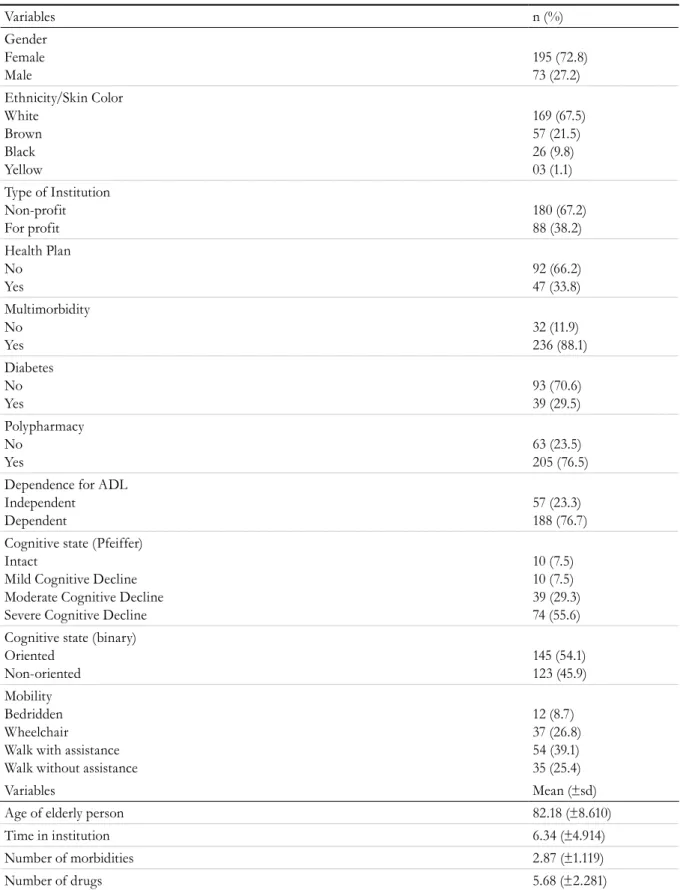
The mean age of the elderly persons was 82.18 years (±8.610), with a mean residence time in the LTCFs of 6.34 years (± 4.914). Most were female, of white ethnicity/skin color, did not have health insurance and were residents of non-profit LTCFs (Table 1).
Some degree of cognitive impairment occurred in 92.4% of the elderly, with a predominance of severe cognitive decline, third-party dependence for some ADLs in 76.7% of those examined, and some restriction in mobility in 74.6% of the elderly (table 1).
In relation to morbidities, an average of 2.87 (±1.119) diseases per elderly person was observed, of which 29.4% were diabetes, while 88.1% of the sample had multimorbidities. Regarding the continuous use of medication, the elderly consumed, on average, 5.62 (±2.281) drugs/day and 76.5% of the sample exhibited polypharmacy, as described in table 1.
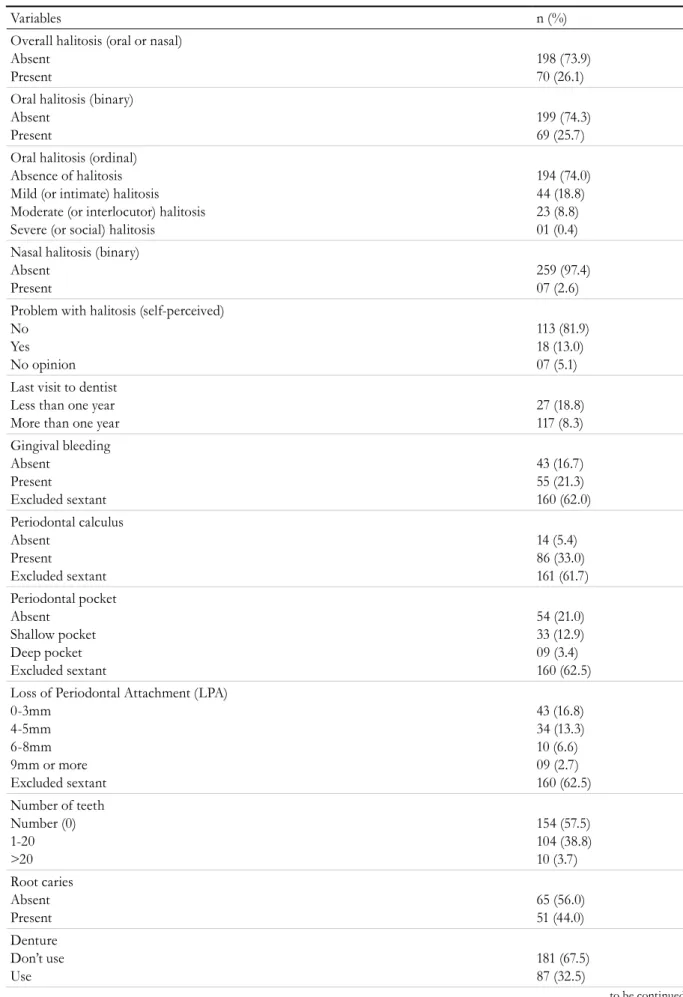
In terms of oral conditions, the mean DMF-T index was high and root caries affected almost half of the dentate elderly. Despite the high occurrence of edentulism, most of the elderly did not use any type of dentures to rehabilitate lost teeth (table 2).
The mean number of valid sextants for periodontal evaluation using the community periodontal index was low and the occurrence of excluded sextants was high, so that periodontal evaluation was performed in only a portion of the sample. In these cases, gingival bleeding and dental calculus were found, and there was a prevalence balanced between absent and present periodontal pockets and normal and missing periodontal attachment (Table 2).
There were few cases of signs and symptoms of xerostomia/hyposalivation and positive responses
to the question Do you have a problem with your saliva?
(table 2).
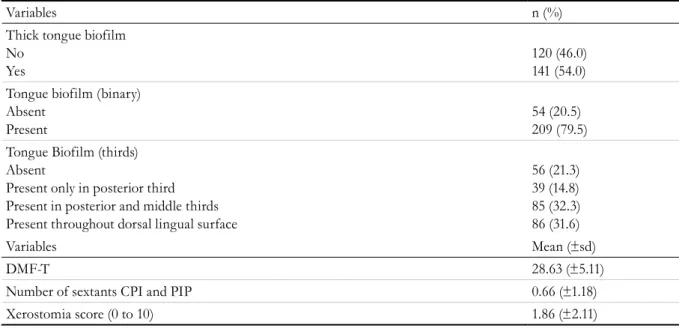
Regarding oral hygiene condition (table 2), tongue biofilm occurred in most of the elderly persons, covering more than half the surface of the tongue and being mostly thick, with taste buds totally covered by biofilm.
860
Table 1. Characterization of elderly persons in relation to sociodemographic, institution-related and general health variables. Natal, Rio Grande do Norte, 2017.
Variables n (%)
Gender Female Male
195 (72.8) 73 (27.2) Ethnicity/Skin Color
White Brown Black Yellow
169 (67.5) 57 (21.5) 26 (9.8) 03 (1.1) Type of Institution
Non-profit For profit
180 (67.2) 88 (38.2) Health Plan
No Yes
92 (66.2) 47 (33.8) Multimorbidity
No Yes
32 (11.9) 236 (88.1) Diabetes
No Yes
93 (70.6) 39 (29.5) Polypharmacy
No Yes
63 (23.5) 205 (76.5) Dependence for ADL
Independent Dependent
57 (23.3) 188 (76.7) Cognitive state (Pfeiffer)
Intact
Mild Cognitive Decline Moderate Cognitive Decline Severe Cognitive Decline
10 (7.5) 10 (7.5) 39 (29.3) 74 (55.6) Cognitive state (binary)
Oriented Non-oriented
145 (54.1) 123 (45.9) Mobility
Bedridden Wheelchair
Walk with assistance Walk without assistance
12 (8.7) 37 (26.8) 54 (39.1) 35 (25.4)
Variables Mean (±sd)
Age of elderly person 82.18 (±8.610)
Time in institution 6.34 (±4.914)
Number of morbidities 2.87 (±1.119)
Number of drugs 5.68 (±2.281)
others had a simultaneously oral and nasal odor, which indicates oral halitosis concomitant with a gastric, pulmonary or blood-borne etiology. Of the
861
to be continued
Table 2. Characterization of sample by oral health variables. Natal, Rio Grande do Norte, 2017.
Variables n (%)
Overall halitosis (oral or nasal) Absent
Present
198 (73.9) 70 (26.1) Oral halitosis (binary)
Absent Present
199 (74.3) 69 (25.7) Oral halitosis (ordinal)
Absence of halitosis Mild (or intimate) halitosis Moderate (or interlocutor) halitosis Severe (or social) halitosis
194 (74.0) 44 (18.8) 23 (8.8) 01 (0.4) Nasal halitosis (binary)
Absent Present
259 (97.4) 07 (2.6) Problem with halitosis (self-perceived)
No Yes No opinion
113 (81.9) 18 (13.0) 07 (5.1) Last visit to dentist
Less than one year More than one year
27 (18.8) 117 (8.3) Gingival bleeding
Absent Present
Excluded sextant
43 (16.7) 55 (21.3) 160 (62.0) Periodontal calculus
Absent Present
Excluded sextant
14 (5.4) 86 (33.0) 161 (61.7) Periodontal pocket
Absent Shallow pocket Deep pocket Excluded sextant
54 (21.0) 33 (12.9) 09 (3.4) 160 (62.5) Loss of Periodontal Attachment (LPA)
0-3mm 4-5mm 6-8mm 9mm or more Excluded sextant
43 (16.8) 34 (13.3) 10 (6.6) 09 (2.7) 160 (62.5) Number of teeth
Number (0) 1-20 >20
154 (57.5) 104 (38.8) 10 (3.7) Root caries
Absent Present
65 (56.0) 51 (44.0) Denture
Don’t use Use
862
Continuation of Table 2
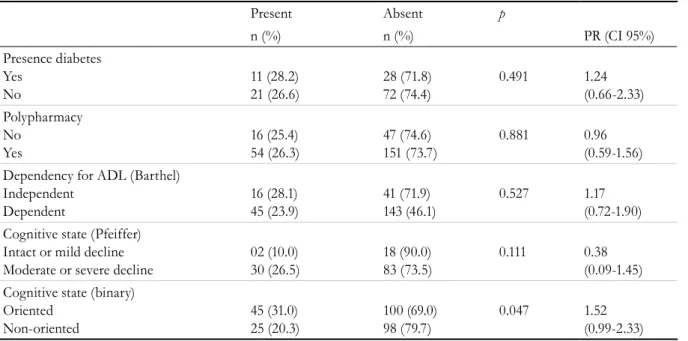
Table 3. Bivariate analysis of the independent sociodemographic and general health variables on the halitosis variable. Natal, Rio Grande do Norte, 2017.
Present Absent p
n (%) n (%) PR (CI 95%)
Age (years) From 60 to 79 80 or more
26 (27.7) 44 (25.3)
68 (72.3) 130 (74.7)
0.637 1.09 (0.72-1.65) Time of institutionalization (years)
Up to 5 Six or more
39 (25.0) 41 (27.0)
87 (75.5) 111 (73.0)
0.716 0.92 (0.61-1.39) Gender
Male Female
22 (30.1) 48 (24.6)
51 (69.9) 147 (75.4)
0.360 1.22 (0.79-1.87) Ethnicity/Skin Color
White Non-white
38 (21.2) 32 (37.2)
141 (78.8) 54 (62.8)
0.006 0.57 (0.38-0.84) Type of LTCF
Non-profit For profit
54 (30.0) 16 (18.2)
126 (70.0) 72 (81.8)
0.039 1.65 (1.01-2.71) Health plan
No Yes
23 (25.0) 09 (19.1)
69 (75.0) 38 (80.9)
0.438 1.30 (0.65-2.59) Multimorbidities
No Yes
08 (25.0) 62 (26.3)
24 (75.0) 174 (73.7)
0.878 0.95 (0.50- 1.79)
Variables n (%)
Thick tongue biofilm No
Yes
120 (46.0) 141 (54.0) Tongue biofilm (binary)
Absent Present
54 (20.5) 209 (79.5) Tongue Biofilm (thirds)
Absent
Present only in posterior third Present in posterior and middle thirds Present throughout dorsal lingual surface
56 (21.3) 39 (14.8) 85 (32.3) 86 (31.6)
Variables Mean (±sd)
DMF-T 28.63 (±5.11)
Number of sextants CPI and PIP 0.66 (±1.18)
Xerostomia score (0 to 10) 1.86 (±2.11)
The results of the bivariate analyzes of the occurrence of halitosis and the independent variables showed a significant association between halitosis and
ethnicity/skin color, type of LTCF, cognitive status, presence of root caries, use of dentures, edentulism and tongue biofilm accumulation (Tables 3 and 4).
863
Present Absent p
n (%) n (%) PR (CI 95%)
Presence diabetes Yes No 11 (28.2) 21 (26.6) 28 (71.8) 72 (74.4) 0.491 1.24 (0.66-2.33) Polypharmacy No Yes 16 (25.4) 54 (26.3) 47 (74.6) 151 (73.7) 0.881 0.96 (0.59-1.56) Dependency for ADL (Barthel)
Independent Dependent 16 (28.1) 45 (23.9) 41 (71.9) 143 (46.1) 0.527 1.17 (0.72-1.90) Cognitive state (Pfeiffer)
Intact or mild decline Moderate or severe decline
02 (10.0) 30 (26.5) 18 (90.0) 83 (73.5) 0.111 0.38 (0.09-1.45) Cognitive state (binary)
Oriented Non-oriented 45 (31.0) 25 (20.3) 100 (69.0) 98 (79.7) 0.047 1.52 (0.99-2.33)
Table 4. Bivariate analysis of independent oral health variables in relation to the Halitosis variable. Natal, Rio Grande do Norte, 2017.
Outcome: halitosis
Present n (%)
Absent p PR (CI 95%) PR (CI 95%) n (%) n (%)
Root caries Present Absent 19 (29.2) 25 (49.0) 26 (51.1) 46 (70.8) 0.029 0.59 (0.37-0.95) 0.59 (0.37-0.95) Use of dentures
Don’t use Use 54 (29.8) 16 (18.4) 127 (70.2) 71 (81.6) 0.046 1.62 (0.99-2.66) 1.62 (0.99-2.66) “Dry Mouth” complaint
No complaint At least one complaint
06 (24.0) 11 (28.9) 19 (76.0) 27 (71.1) 0.665 0.82 (0.35-1.95) 0.82 (0.35-1.95) “Dry mouth” complaint
03 or more positive responses None or 02 positive responses
16 (41.0) 26 (26.0) 23 (59.0) 74 (74.0) 0.083 1.57 (0.95-2.60) 1.57 (0.95-2.60) Gingival bleeding Absent Present 13 (30.2) 22 (40.0) 30 (69.8) 33 (60.0) 0.317 0.75 (0.43-1.32) 0.75 (0.43-1.32) Dental calculus Absent Present 04 (28.6) 33 (38.4) 10 (71.4) 53 (61.6) 0.481 0.75 (0.32-1.77) 0.75 (0.32-1.77) Periodontal pocket Absent Present 16 (29.6) 17 (40.5) 38 (70.4) 25 (59.5) 0.267 0.73 (0.83-1.60) 0.73 (0.83-1.60) Problems with halitosis (self-perceived)
No Yes 33 (29.2) 07 (38.9) 80 (70.8) 11 (31.1) 0.407 0.71 (0.39-1.43) 0.71 (0.39-1.43) Problems with saliva
No Yes 31 (30.4) 08 (26.7) 71 (69.6) 22 (73.3) 0.694 1.14 (0.58-2.21) 1.14 (0.58-2.21)
Continuation of Table 3
864
The prevalence of halitosis was 43% higher for individuals of non-white ethnicity/skin color than for white individuals; 65% higher in elderly people residing in non-profit LTCFs than in residents of for profit institutions; 52% higher in the elderly with an oriented cognitive condition, as opposed to non-oriented; 41% higher in the elderly with root caries, in comparison with those with no root caries; 62% higher in the elderly who did not use dentures, in relation to denture users; 57% lower in the edentulous elderly than in the dentate; and 73% lower in the elderly without visible biofilm than in those with biofilm on the entire tongue.
DISCUSSION
The present study corroborates the deficient oral
health conditions found by other publications7,8,10-12,
with dental caries causing dental loss and edentulism, resulting in a minor presence of periodontal issues due to the widespread occurrence of excluded sextants. There was also a high prevalence of root caries and low use of dentures (despite significant need) and inadequate access to dental care, based on the majority of the elderly in the study stating that their last visit to the dentist was more than one year ago.
The prevalence of halitosis observed in the
present study is in agreement with a meta-analysis30
that verified variations in studies with adolescents and adults of between 20 and 55% and calculated
Outcome: halitosis
Present n (%)
Absent p PR (CI 95%) PR (CI 95%) n (%) n (%)
Presence of teeth Edentulous Toothed
26 (16.9) 44 (38.6)
128 (83.1) 70 (61.4)
<0.001 0.43 (0.28-0.66)
0.43 (0.28-0.66) Tongue biofilm
Absent
Present in three thirds of the dorsum of the tongue
05 (8.9) 27 (32.5)
51 (91.1) 56 (67.1)
0.001 0.27 (0.11-0.67)
0.27 (0.11-0.67) Tongue biofilm
Absent
Present (in any region of tongue)
05 (9.3) 65 (31.1)
49 (90.7) 114 (68.9)
0.001 0.29 (0.12-0.70)
0.29 (0.12-0.70) Thick tongue biofilm
No Yes
24 (20.0) 43 (30.5)
96 (80.0) 98 (69.5)
0.053 0.65 (0.42-1.01)
0.65 (0.42-1.01)
Continuation of Table 4
a summary measurement of 31.8% (95% CI 24.6-39.0%). However, it must be considered that the population groups are completely different.
On the other hand, the prevalence of oral halitosis in a Swedish study with institutionalized elderly
persons21 was considerably higher than in the present
study (50% x 25.7%, respectively). This was probably due to differences in the oral conditions of Swedish elderly persons in comparison with Brazilians, with the former having a higher presence of teeth, periodontal disease and greater use of dentures. This
hypothesis is reinforced by a survey31 that compared
Brazilian and Spanish institutionalized elderly people, which found precarious oral conditions in both, but with a different profile due to the sociodemographic discrepancies between the countries, where the Spanish sample population had a lower prevalence of edentulism and greater periodontal disease than the Brazilian elderly persons.
The isolated use of the organoleptic test could be considered as a limitation of the presence study, as it is subjective and depends on human
standards. However, an article24 which summarizes
an International Consensus of Halitosis Authorities argues that the use of this test for the diagnosis of halitosis is indispensable, even if detection using instruments is also applied.
865
breath24. Another factor to consider is that
self-perception is subjective and has a multidimensional character, and reports by institutionalized elderly people of good and excellent oral conditions is common, despite the precarious situations identified
by clinical examination8. Finally, a Japanese study32
that evaluated institutionalized elderly persons regarding the occurrence of halitosis found that the disorder did not influence their quality of life (measured via SF-36). The confinement of the LTCF environment, with restricted interpersonal relations, and the finding of the present study that most cases of halitosis were of mild intensity, may diminish the psychosocial impact of halitosis and reduce the number of complaints about this condition.
In the present study, two variables (ethnicity/ skin color and type of LTCF) which demonstrated a significant association with halitosis relate to the living conditions of the elderly: there was a higher prevalence of halitosis in non-white elderly individuals living in non-profit LTCFs, while white people predominated in for profit LTCFs and non-white people predominated in non-profit LTCFs. The most unfavorable sociodemographic conditions were observed in elderly people living in non-profit
LTCFs33, which reflects the social inequality in their
lives. Based on this, it is plausible to consider that elderly people with less favorable living conditions have worse health and care situations, favoring the occurrence of halitosis.
From this perspective, it was observed during data collection that only one non-profit LTCF had a dental clinic and, despite possessing the physical structure, its multi-professional team did not include a dentist, meaning dental care was provided through a voluntary service. Moreover, even though they are located in areas covered by the Brazilian public health service, institutionalized elderly persons are not formally included in this system. In contrast, the elderly living in for profit LTCFs had a privileged socioeconomic status, and thus, even in the absence of dentists in the LTCF or access to public services, could visit private dental clinics or pay for home care
dental services. In addition, the private institutions
offered greater caregiver and health professional support, so that elderly persons in such facilities received better care.
such as Halimeter® or Oral Chroma®. This was attempted in the present study, but the use of such devices was not feasible due to a considerable part of the sample presenting cognitive, mobility and functional limitations, resulting in difficulty in following the steps necessary to performing these exams, such as moving to the environment where the Halimeter® was connected to the electricity, or keeping a straw inside the mouth for the time necessary for the measurement of the gases or, in the case of Oral Chroma®, keeping the lips sealed for the time necessary for the collection of air with the syringe device.
In addition, these devices are specific for
measuring only sulfur-derived substances24, and do
not detect organic or aromatic compounds, which play an important role in the etiology of halitosis,
especially in disorders of extraoral origin17. Thus,
if these substances were present and contributed to halitosis, the devices would show false negative results, unlike an organoleptic test carried out by a well-trained and calibrated operator which distinguishes a variety of odors and is also capable of determining the origin of the odor, when performed with nasal and oral air simultaneously.
Based on these considerations, the use of the organoleptic test in the institutionalized elderly persons group is important as it is a quick procedure that is inexpensive, simple to execute and of broad scope – as it depends little on the collaboration of those evaluated, and allows a diagnosis of cases of extraoral origin.
In this context, the present study found a higher occurrence of extraoral halitosis than some estimates
in literature16,17, which is understandable for people
with multimorbidities and polypharmacy and less frequent oral-origin halitosis than estimates of other
age groups16,17,30.
866
On the same subject, it was found that none of the LTCFs had a doctor as a member of the clinical staff, so that health assessments occurred on request. Periodic preventive care was therefore rare and ease of access to medical care occurred among the elderly with a health plan or those with favorable socioeconomic conditions, which represented, as a rule, elderly people living in for profit LTCFs. In non-profit institutions, access to medical care was restricted to public health services (which do not include the institutionalized elderly in their coverage), or efforts to meet the financial cost of a private consultation, or to the care provided by volunteers, universities and institutions, which is also occasional and insufficient.
In this context, it is possible that the quality of the information on the diagnosis of morbidities and the use of drugs represents a limitation of this study, since it was obtained through secondary data recorded in the institutional records and, therefore, subject to diagnostic and registration bias. It should be noted that the information on medication use was probably more reliable than that on morbidities, as the former derives from medical prescriptions attached to medical records, while there is not always a medical report contained in the records for the latter.
Another important point to be discussed in the present study is that the prevalence of halitosis was higher in dentate elderly patients with root caries and those who did not use dentures. Such variables are directly related to dental conditions: the sample of the present study was predominantly edentulous and the few dentate elderly persons had root caries and did not generally use dentures, since almost all the dentures used were complete. A study with 115
elderly people from LTCFs in Japan32 corroborates
the positive association between halitosis and the
presence of teeth, while a Swedish study21 found
associations between halitosis and fixed dentures and periodontal variables, directly related to the presence of teeth.
Regarding halitosis and hyposalivation, a significant association was found in the study by
Zellmer et al.21, in contrast to the present study, which
may be due to the difference in salivary evaluation methods: the Zellmer study used sialometry (the
gold standard to assess hyposalivation), while the
present study used a questionnaire27, which may be
considered a limitation.
The greater prevalence of halitosis in the elderly with oriented cognitive status than among the non-oriented is also indirectly related to the presence of teeth and the use of dentures and not only to cognition itself. In the sample of the present study, the oriented elderly retained more teeth and used dentures more frequently than non-oriented individuals (who were generally edentulous and without dentures). In this context, a Swedish
study21 found an association between halitosis and
dementia, although the category "dementia" can be considered vague, as elderly persons in early dementia may have preserved cognition which is affected by other conditions besides dementia.
Regarding halitosis and the presence of tongue biofilm, there was a significant association in the
present study, which is corroborated by Aizawa et al.32
and other studies16,17 for different age groups. Zellmer
et al.21 did not include analysis of tongue biofilm in
their study on halitosis with institutionalized elderly people, and recognized this as a significant limitation.
The high occurrence of tongue biofilm verified in this study is evidence of the likelihood of deficient oral hygiene which, among other consequences, can influence the quality of the breath of the evaluated elderly persons. Due to the high prevalence of edentulism in this group, it is suggested that tongue biofilm is adopted as a routine part of oral health evaluations in this population segment. As well as being an instrument that is simple to understand and apply (which gives it both sensitivity and specificity), it has a universal scope. In addition, the importance of tongue hygiene in the study group should be reinforced with a view to preventing halitosis and
other health problems34.
The foregoing confirms the relationship between halitosis in the institutionalized elderly and proximal factors, directly related to oral and general health, and distal factors, as halitosis is a reflection of the precarious environment in which these elderly people live and the social inequality they experience during
867 Public health policies should therefore contemplate
actions to promote healthy aging throughout life, but also include the institutionalized - those that have already aged with sequelae - in their coverage in an efficient manner, so that factors related to morbidity and mortality indicators (which include halitosis) are minimized and the elderly not only achieve longevity, but live with quality.
CONCLUSION
The occurrence of halitosis in the institutionalized elderly was similar to that in studies with other age
groups and demonstrated an association with both oral problems and sociodemographic, institutional and functional factors.
It is hoped that the results of the present study will encourage reflections that contribute to the understanding of the oral health of the institutionalized elderly. In the academic environment, it is hoped that it will support other epidemiological studies. As practical approaches should be backed by scientific evidence, it is also estimated that these results will help health services to adopt innovative interventions to improve the oral health of this segment of the population.
REFERENCES
1. Miranda GMD, Mendes ACG, Silva ALA. O envelhecimento populacional brasileiro: desafios e consequências sociais atuais e futuras. Rev Bras Geriatr Gerontol. 2016;19(3):507-19.
2. Destro JR, Boing AF, D’Orsi E. Fatores associados à realização de consultas médicas por idosos no Sul do Brasil: estudo de base populacional. Rev Bras Epidemiol. 2014;17(3):692-704.
3. Camargos MCS. Instituições de longa permanência para idosos: um estudo sobre a necessidade de vagas. Rev Bras Estud Popul. 2014;31(1):211-7.
4. Wang SY, Shamliyan TA, Talley KM, Ramakrishnan R, Kane RL. Not just specific diseases: systematic review of the association of geriatric syndromes with hospitalization or nursing home admission. Arch Gerontol Geriatr. 2013;57(1):6-26.
5. Souza EHA, Barbosa MBCB, Oliveira PAP, Espíndola J, Gonçalves KJ. Impacto da saúde bucal no cotidiano de idosos institucionalizados e não institucionalizados da cidade do Recife (PE, Brasil). Ciênc Saúde Coletiva. 2010;15(6):2955-61.
6. Eustaquio-Raga MV, Montiel-Company JM, Almerich-Silla JM. Factors associated with edentulousness in an elderly population in Valencia (Spain). Gac Sanit. 2013;27(2):123-7.
7. Piuvezam G, Lima KC. Factors associated with missing teeth in the Brazilian elderly institutionalized population. Gerodontology. 2013;30(2):141-9.
8. Melo LA, Sousa MM, Medeiros AK, Carreiro AD, Lima KC. Fatores associados à autopercepção negativa da saúde bucal em idosos institucionalizados. Ciênc Saúde Coletiva. 2016;21(11):3339-46.
9. Cornejo M, Pérez G, Lima KC, Casals-Peidro E, Borrell C. Oral Health-Related Quality of Life in institutionalized elderly in Barcelona (Spain). Med Oral Patol Oral Cir Bucal. 2013;18(2):285-92.
10. Sfeatcu R, Dumitrache A, Dumitrascu L, Lambescu D, Funieru C, Lupusoru M. Aspects of oral and general health among a community center for the underserved. J Med Life. 2011;4(2):168-71.
11. Shaheen SS, Kulkarni S, Doshi D, Reddy S, Reddy P. Oral health status and treatment need among institutionalized elderly in India. Indian J Dent Res. 2015;26(5):493-9.
12. Santucci D, Attard N. The Oral Health-Related quality of life in state institutionalized older adults in Malta. Int J Prosthodont. 2015;28(4):402-11.
13. Tubiana S, Blotière PO, Hoen B, Lesclous P, Millot S, Rudant J, et al. Dental procedures, antibiotic prophylaxis, and endocarditis among people with prosthetic heart valves: nationwide population based cohort and a case crossover study. BMJ. 2017;358:1-9.
868
Received: October 16, 2017 Reviewed: October 30, 2017 Accepted: November 07, 2017
15. Lu HX, Chen XL, Wong M, Zhu C, Ye W. Oral health impact of halitosis in Chinese adults. Int J Dent Hyg. 2017;15(4):85-92.
16. Quirynen M, Dadamio J, Van den Velde S, De Smit M, Dekeyser C, Van Tornout M. Characteristics of 2000 patients who visited a halitosis clinic. J Clin Periodontol. 2009;36(11):970-5.
17. Zurcher A, Filippi A. Findings, diagnoses and results of a halitosis clinic over a seven year period. Schweiz Monatsschr Zahnmed. 2012;122(3):205-16.
18. Abe S, Ishihara K, Okuda K. Prevalence of potential respiratory pathogens in the mouths of elderly patients and effects of professional oral care. Arch Gerontol Geriatr. 2001;32(1):45-55.
19. Sumi Y, Miura H, Nagaya M, Michiwaki Y, Uematsu H. Colonization on the tongue surface by respiratory pathogens in residents of a nursing home: a pilot study. Gerodontology. 2006;23(1):55-9.
20. Lim WS, Macfarlane JT. A prospective comparison of nursing home acquired pneumonia with community acquired pneumonia. Eur Respir J. 2001;18(2):362-8.
21. Zellmer M, Gahnberg L, Ramberg P. Prevalence of halitosis in elderly living in nursing homes. Int J Dent Hyg. 2016;14(4):295-300.
22. Von EE, Altman DG, Egger M, Pocock SJ, Gøtzsche PC, Vandenbroucke JP. Strengthening the Reporting of Observational Studies in Epidemiology (STROBE) statement: guidelines for reporting observational studies. BMJ. 2007;40(1):35-53.
23. Brasil. Ministério da Saúde, Secretaria de Atenção à Saúde, Departamento de Atenção Básica. Projeto SB 2010: Condições de saúde bucal da população brasileira no ano 2010. Manual do Coordenador Municipal. Brasília, DF: MS; 2009.
24. Seemann R, Conceição MD, Filippi A, Greenman J, Lenton P, Nachnani S, et al. Halitosis management by the general dental practitioner: results of an international consensus workshop. J Breath Res. 2014;8(1):1-24.
25. Quirynen M, Mongardini C, Van Steenberghe D. The effect of a 1-stage full-mouth disinfection on oral malodor and microbial colonization of the tongue in periodontitis patients: a pilot study. J Periodontol. 1998;69(3):374-82.
26. Miyazaki H, Sakao S, Katoh Y, Takehara T. Correlation between volatile sulphur compounds and certain oral health measurements in the general population. J Periodontol. 1995;66(8):679-84.
27. Nunes RS, Pinheiro NCG, Maia ML, Holanda VC, Lima KC. Validação fatorial de questionário para detecção de hipossalivação em idosos
institucionalizados. Rev Ciênc Plural. 2015;1(Supl 1):67.
28. Pfeiffer E. A short portable mental status questionnaire for the assessment of organic brain deficit in elderly patients. J Am Geriatr Soc. 1975;23(10):433-41.
29. Mahoney FI, Barthel DW. Functional evaluation: the Barthel Index. Md State Med J. 1965;14:56-61.
30. Silva MF, Leite FRM, Ferreira LB, Pola NM, Scannapieco FA, Demarco FF, et al. Estimated prevalence of halitosis: a systematic review and meta-regression analysis. Clin Oral Investig. Epub ahead of print 04 jul. 2017
31. Pessoa DMV, Pérez G, Marí-dell'olmo M, Cornejo-Ovalle M, Borrell C, Piuvezam G, et al. Estudo Comparativo do perfil de saúde bucal em idosos institucionalizados no Brasil e em Barcelona, Espanha. Rev Bras Geriatr Gerontol. 2016;19(5):723-32.
32. Aizawa F, Kishi M, Moriya T, Takahashi M, Inaba D, Yonemitsu M. The analysis of characteristics of elderly people with high VSC level. Oral Dis. 2005;11(Suppl 1):80-2.