Instituição: Universidade Federal de Minas Gerais (UFMG), Programa PET-Saúde, Belo Horizonte, MG, Brasil
1Graduando em Medicina pela Faculdade de Medicina da UFMG, Belo Horizonte, MG, Brasil
2Enfermeira pela Faculdade de Enfermagem da UFMG, Belo Horizonte, MG, Brasil
3Fonoaudióloga; Professora Adjunto do Departamento de Fonoaudiologia da Faculdade de Medicina da UFMG, Belo Horizonte, MG, Brasil ABSTRACT
Objective: To assess the extent to which the tools Child Health Handbook and Guide for Monitoring Child Develop-ment the context of Integrated ManageDevelop-ment of Childhood Illness (IMCI) agree for the evaluation of children’s develop-ment from two to 24 months of age.
Methods: A cross-sectional study was carried out in a Basic Health Unit in Belo Horizonte, from March 2009 to March 2010. After investigating the number of children under the care of the Basic Health Unit by the vaccination card, the register book of newborn tests, and data provided by the Community Health Workers, parents and tutors were invited to participate either verbally or by phone (conveni-ence sample). Among 623 children assisted in the area, 364 were enrolled. Their psychomotor development was evaluated by students of Nursing, Physical Therapy, Speech Therapy, Medical, Nutrition, and Occupational Therapy. To test the agreement between both tools, the Kappa coefficient was used.
Results: According to the Child Health Handbook, 115 chil-dren (31.6%) were found to have some development delay, while the Guide for Monitoring Child Development found 124 children (34.1%) with the same problem. The Kappa coefficient was 0.27.
Conclusions:The agreement between both toolswas poor.
Key-words: child development; Integrated Management of Childhood Illness; medical records; primary health care.
RESUMO
Objetivo:Verificar a concordância entre os instrumentos Caderneta de Saúde da Criança (CSC) e Manual para Vigilância do Desenvolvimento Infantil no contexto da Atenção Integra-da às Doenças Prevalentes na Infância (AIDPI) na avaliação do desenvolvimento infantil em crianças de dois a 24 meses.
Métodos:Estudo transversal realizado em uma Unidade Básica de Saúde (UBS) de Belo Horizonte de março de 2009 a março de 2010. Após levantamento do número de crian-ças adscritas às UBS por meio da análise do cartão-espelho de vacinação, caderno de registro do teste do pezinho e dos dados fornecidos por Agentes Comunitários de Saúde, os responsáveis receberam convite verbal ou por telefone (amostragem por conveniência). Participaram da pesquisa 364 das 623 crianças atendidas no local. O desenvolvimento neuropsicomotor foi avaliado por estudantes graduandos em Enfermagem, Fisioterapia, Fonoaudiologia, Medicina, Nu-trição e Terapia Ocupacional. Para análise da concordância dos instrumentos, utilizou-se o coeficiente Kappa.
Resultados: A Caderneta de Saúde da Criança classificou 115 crianças (31,6%) com algum atraso no desenvolvimento, enquanto o Manual para Vigilância do Desenvolvimento Infantil no Contexto da AIDPI considerou 124 crianças (34,1%) desta forma. O coeficiente Kappa foi de 0,27.
Conclusões:Verificou-se haver baixa concordância entre os instrumentos analisados.
Endereço para correspondência: Luddi Luiz de Oliveira
Praça Levi Coelho da Rocha, 9, apto 802 – Centro CEP 30190-020 – Belo Horizonte/MG
E-mail: [email protected]
Fonte financiadora: Ministério da Saúde – PET – Saúde, UFMG Conflito de interesse: nada a declarar
Recebido em: 19/12/2011 Aprovado em: 8/7/2012
Child development: agreement between the child health handbook
and the guide for monitoring child development
Desenvolvimento infantil: concordância entre a caderneta de saúde da criança e o manual para vigilância do desenvolvimento infantil
Desarrollo infantil: concordancia entre la libreta de salud del niño y el manual para vigilancia del desarrollo infantil
Luddi Luiz de Oliveira1, Valmara Maxilaine R. Costa2, Maira R. Requeijo2, Rita Santos Rebolledo2, Avani de Fátima Pimenta2,
Palavras-chave:desenvolvimento infantil; Atenção Inte-grada às Doenças Prevalentes na Infância; registros médicos; atenção primária à saúde.
RESUMEN
Objetivo: Verificar la concordancia entre los instrumen-tos Libreta de Salud del Niño (CSC, sigla en portugués) y Manual para Vigilancia del Desarrollo Infantil en el Contexto de la Atención Integrada a las Enfermedades Prevalentes en la Infancia (AIDPI, sigla en portugués) en la evaluación del desarrollo infantil en niños de dos a 24 meses de edad.
Métodos: Estudio transversal realizado en una Unidad Básica de Salud (UBS) de Belo Horizonte (Minas Gerais, Brasil), entre marzo de 2009 y marzo de 2010. Después de inventariar el número de niños adscritos a la UBS por medio de análisis de la tarjeta de vacunación, del cuaderno de registro del tamizaje neonatal y de datos suministrados por Agentes Comunitarios de Salud (ACS), los responsables recibieron invitación verbal o por teléfono (muestreo por conveniencia). Participaron de la investigación 364 niños de los 623 atendidos en el local. El desarrollo neuropsicomotor fue evaluado por 20 estudiantes graduados en Enfermería, Fisioterapia, Fonoaudiología, Medicina, Nutrición y Terapia Ocupacional. Para el análisis de la concordancia de los ins-trumentos, se utilizó el coeficiente Kappa.
Resultados: La Libreta de Salud del Niño clasificó a 115 niños (31,6%) como presentando algún retraso en el desarro-llo, mientras que el Manual para Vigilancia del Desarrollo Infantil en el Contexto de la AIDPI consideró a 124 niños (34,1%) de este modo. El coeficiente Kappa fue 0,27.
Conclusiones: Se verificó una baja concordancia entre los instrumentos analizados.
Palabras clave: desarrollo infantil; Atención Integrada a las Enfermedades Prevalentes en la Infancia (AIDPI); re-gistros médicos; atención primaria a la salud.
Introduction
Development is deined as a person’s increasing capacity to perform ever more complex functions(1). A good proportion of neuropsychomotor development (NPMD) is primarily achieved during the period form birth to around 2 years of age, and during this period children’s cognitive and motor capacities grow, making them more susceptible to harm(2). Although children are more vulnerable during this period, in view of the signiicant neuronal plasticity they have acquired
it is also during this period that children respond best to treatment and to environmental stimuli and, if interventions are made early, they exhibit better prognosis at this age(3-5).
The irst years of life of are therefore considered critical for acquisition of new abilities and so monitoring children’s development during this period is of fundamental impor-tance(6). Since, in the Brazilian National Health Service (SUS - Sistema Único de Saúde), Primary Care provides children’s point of entry to healthcare, it is very important that their development is screened at this level of the health system(7). In Brazil, the Child Health Record (CHR)(8) is the main instrument used to monitor children within Primary Care and is essential for health monitoring, since it is a single document that records the data and events that are most signiicant to each child’s health(9). However, the CHR does not deine follow-up protocols for health professionals to adopt when faced with evidence that the child requires specialist attention related to their development, such as, for example, to manage delayed NPMD.
The acronym IMCI stands for Integrated Management of Childhood Illness, which is a strategy based on simultane-ously considering and analysing the most prevalent child-hood diseases, rather than dealing with each in isolation. In 2005, this strategy was incorporated into routine practice for monitoring the development of boys and girls, with the creation of the Guide for Monitoring Child Development in the Context of IMCI(10), which analyzes children’s progres-sion through several stages of development and provides proposed follow-up protocols for patients who exhibit delays. The strategy was initially rolled out in Belém, PA, with considerable success, and it was responsible for the referral for specialist care of more than 1200 children identiied as having abnormal NPMD, but few published studies have investigated application of the guide in practice(11-13).
The objective of this study is to determine the extent to which the CHR and IMCI instruments agree in terms of as-sessment of suspected child development delays in children aged from two to 24 months. On the basis of the assumption that early intervention with children with developmental problems can lessen possible harm to them in the future, this analysis is needed because while the IMCI provides follow-up protocols for children with delays detected, the CHR does not.
Methods
conducted from March 2009 to March 2010 and investigated children aged two months to two years, and their families, drawn from the catchment area of a Primary Care Health Center (PCHC) in Venda Nova, Belo Horizonte, MG, Brazil.
This project is part of the Learning Through Working in Healthcare Program (LTW-Healthcare) and was conducted by tutors and monitors from the Universidade Federal de Minas Gerais (UFMG) and mentors from the Belo Horizonte Municipal Health Department based at this PCHC. The research team comprised a professor from the speech, lan-guage and hearing course at UFMG; six professionals from the municipal health department, four of whom are Nursing graduates, one a graduate of Medicine and one a Dentistry graduate; 12 undergraduate students on scholarships and 18 undergraduate volunteers from UFMG studying for degrees in Nursing, Physiotherapy, Speech, Language and Hearing Therapy, Medicine, Nutrition and Occupational Therapy. The study was approved by the Research Ethics Committee at UFMG under protocol ETIC 410/09.
The irst step in the study was to investigate the children registered at the PCHC. Children were identiied from three data sources: the center’s copies of vaccination records, the Guthrie test register and data collected by Community Healthcare Workers. Children’s parents or guardians were then invited to bring in their children for neuropsychomotor development (NPMD), either by telephone, during home visits by community healthcare workers or in person at the PCHC. The inclusion criteria for the development assess-ment were residency within the PCHC catchassess-ment area and signature of a free and informed consent form. Children who had already been diagnosed with neuromotor dysfunction were excluded from the sample.
The entire number of children living in the PCHC catch-ment area was 623 and 364 of them took part in the study. Children born preterm were assessed on the basis of corrected gestational age. Children were excluded from the analysis of agreement between the instruments if they had not been assessed with both (CHR and IMCI). On this basis a further 24 children were excluded, leaving a inal total of 340 chil-dren. Assessments took place at the PCHC by the students, who had been trained in advance, and were conducted in individual consulting rooms, in the presence of the child’ parent or guardian and under supervision by a mentor.
Both the CHR(8) and the Guide for Monitoring Child Development in the Context of IMCI(10) were adapted for the purposes of assessing NPMD. The CHR provides a series of age groups and their respective developmental milestones
and these were used as the norm for this study, with exclu-sion of those milestones that do not correspond to the age group under study. The assessment instrument used offered the following possibilities for classifying the children’s per-formance: all milestones for age group present, one or more milestones for age group absent, all milestones for previous age group present, one or more milestones for previous age group absent. The last two items were collapsed to create a single group (one or more milestones for previous age group present), as shown in Table 2, in order to avoid counting children more than once and to facilitate classiication.
The Guide for Monitoring Child Development in the Context of IMCI classiies children into one of two large age groups: from zero to less than 2 months and from 2 months to 2 years. It is the second group that cover the age range of interest here and the guide provides 32 easily observed development milestones that are presents in 90% (90th percentile) of children at that age. For the purposes of analysis, the data collection instrument for this study classiied children according to the CHR age groups and four of the milestones present were chosen for each age group, one from the gross motor domain, one from ine motor function, one from language ability and one from personal-social interaction. The classiication for the Guide for Monitoring Child Development in the Context of IMCI is illustrated in Chart 1.
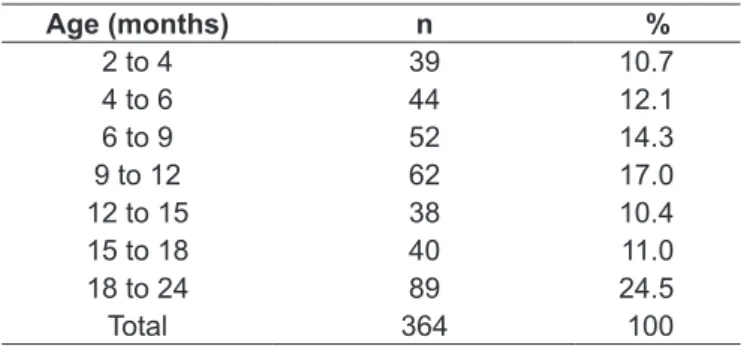
Table 1 - Distribution of sample by age group
Age (months) n %
2 to 4 39 10.7
4 to 6 44 12.1
6 to 9 52 14.3
9 to 12 62 17.0
12 to 15 38 10.4
15 to 18 40 11.0
18 to 24 89 24.5
Total 364 100
Table 2 - Distribution of children according to Child Health
Re-cord (CHR) assessment in absolute igures and percentages
n %
All milestones for age 229 62.9
One or more milestone for age missing 102 28.0 One or more milestones for previous
age group present
13 3.6
Not assessed * 20 5.5
Total 364 100.0
The adaptations made to the CHR and the Manual in order to arrive at the data collection instruments used for this study do not nullify their relationship to the originals, since the only effect was to select the age groups of inter-est to this study. Moreover, it is not the objective of this study to establish diagnoses using these instruments, but to compare the results obtained by using them, since they are already part of routine procedure in childcare in the primary care setting.
In order to effect a comparison of the instruments, the sample was divided into two groups: with or without mal NPMD indings. The group free from NPMD abnor-malities according to the CHR included only those children who had all milestones for their age present, whereas, the group with NPMD problems included children from the fol-lowing categories: one or more milestones for age group absent; all milestones for previous age group present; and one or more milestones for previous age group absent. For the IMCI results, children categorized as normal or normal with risk factors were classed as free from NPMD abnormalities, whereas those classed as having possible delays or probable delays were considered to have NPMD abnormalities.
Data were analyzed using EPI-INFO, version 3.4 (2007). Results for categorical variables are shown as frequency
distributions and results for continuous variables are de-scribed with measures of central tendency and dispersion. The chi-square test was used to verify associations between variables. The Kappa coeficient was used to determine the degree of agreement between CHR and IMCI. This is a measure of the agreement between nominal scales in order to provide an idea of the extent to which observations diverge from what would be expected as a result of chance, thereby providing an indication of the legitimacy of interpretations. The Landis and Koch classiication was adopted(14), as fol-lows: <0 no agreement; 0–0.19 slight agreement; 0.20–0.39 fair agreement; 0.40–0.59 moderate agreement; 0.60–0.79 substantial agreement and 0.80–1.00 almost perfect agree-ment. Associations were considered signiicant if α was less than 5% (p<0.05).
Results
A total of 364 children of both sexes were enrolled on the study, with a minimum age of 2 months 3 days and a maxi-mum of 24 months, mean of 12.75, median of 11.74 and standard deviation of 4.65 months. Table 1 lists the sample characteristics by age group. Table 2 illustrates the distribu-tion of children according to the CHR results and Table 3 Chart 1 - Classiication according to the Guide for Monitoring Child Development in the Context of IMCI
Findings Classiication Actions
● One or more milestones for previous age group absent.
● Head circumference <p10 or >p90. ● Three or more phenotypical indings.
Probable developmental delay
● Refer for neuropsychomotor assessment.
● One or more milestones for age group absent.
Possible developmental delay
● Advise mother to provide her child with stimuli. ● Schedule next consultation in 30 days. ● Inform mother of warning signs meriting unscheduled consultation before 30 days. ● All milestones for age are present, but
one or more risk factors also present.
Development normal, with risk factors
● Advise mother to provide her child with stimuli. ● Schedule next consultation in 30 days. ● Inform mother of warning signs meriting unscheduled consultation before 30 days. ● All milestones for age are present. Normal development ● Congratulate mother.
● Advise mother to continue providing her child with stimuli.
● Continue following routine health service monitoring procedure.
●Inform mother of warning signs meriting unscheduled consultation.
according to the IMCI results. Table 4 shows the results of the analysis of agreement between the CHR and the IMCI.
Discussion
The sample investigated in this study includes chil-dren aged 2 to 24 months, with a greater concentration in the age group from 18 to 24 months (Table 1). Notwithstanding, it is necessary to consider that NPMD primarily takes place during the irst two years of life and therefore all of the children assessed were going through a critical period for monitoring and intervention of their process of overall development, as has already been pointed out(2,6).
Observing the CHR results, it will be noted that children with all development milestones for their age predominated (Table 2). This could indicate satisfactory results for these children, but the CHR does not take NPMD risk factors into consideration(10), unlike the IMCI, which covers factors with a direct impact on development. It should be pointed out that the CHR is an important roadmap for managing chil-dren’s healthcare, since it provides a record for monitoring child development. Unfortunately, in the majority of cases it is incorrectly illed out or only the vaccination history is completed and the remaining information is neglected(15).
The IMCI classiication results show that the classes nor-mal and nornor-mal with risk factors predominated (Table 3). This is to be expected given that the study was conducted in a primary care setting and not at a tertiary clinic for children at risk of abnormal development. Although almost two thirds of the children had results compatible with nor-mality, according to the instrument used, the importance of formal assessments and protocols to monitor growth and development in primary care settings should not be underestimated(16,17). In Brazil, there are still few standard-ized instruments for diagnosis and follow-up of children(18), leading to the use of foreign scales. It could be considered
that it is not necessary for scales to be local, just that they should be instruments that have been standardized for the ends for which they are intended. Notwithstanding, devel-oping national assessment instruments may be of interest if they can better relect the country’s sociocultural reality. Although the instrument used here is indeed a Brazilian proposal for monitoring development, there are no published studies providing data on standardization, validation or use, which is its main drawback.
Still on the subject of the IMCI results, it will be observed that normal with risk factors was the most common classiica-tion. It should be pointed out that this instrument covers a wide range of risk factors, including some environmental factors that are not traditionally used to classify results for such instruments. These risk factors include sharing a home with someone who has emotional disorders, exhibits aggressive behavior or has prob-lems with alcohol or drugs. Children classiied as normal with risk factors have therefore reached their NPMD milestones, but it is important to consider whether their family environments might present barriers to normal development, since there are reports in the literature indicating a relationship between family environment and NPMD(19-24).
The Kappa coeficient of 0.27 indicates “fair” agreement between the instruments analyzed. One possible reason why agreement is not higher is that the CHR and the Guide for Monitoring NPMD in the Context of IMCI are indicators of child development disorders that are based on different criteria(8,10). This means that a given child assessed by one of these instruments may have different results if assessed by the other. Notwithstanding, the literature makes it clear that all development scales offer advantages and disadvantages and in some situations more than one instrument must be used to arrive at a precise diagnosis(25).
Table 3 - Distribution of children according to classiication by
the Guide for Monitoring Child Development in the Context of Integrated Management of Childhood Illness (IMCI)
n %
Probable delay 76 20.9
Possible delay 48 13.2
Normal with risk factors 137 37.6
Normal 80 22.0
Not assessed 23 6.3
TOTAL 364 100.0
Table 4 - Distribution of agreement between results of the Child
Health Record (CHR) and of the Guide for Monitoring Child De
-velopment according to Integrated Management of Childhood Illness (IMCI)
IMCI Child Health Record Total
AMA OMA+AMPA+OMPA
N+NR 53 70 123
PossD+ProbD 163 54 217
TOTAL 216 124 340
Chi-square test; p<0.0001; Kappa=0.27. N: normal; NR: normal with
risk factor; PossD: possible delay; ProbD: probable delay; AMA: all milestones for age; OMA: one or more milestones for age absent; AMPA: all milestones for previous age group present; OMPA: one or
Another possibility that could explain why agreement be-tween the instruments was not higher is that the CHR brings forward development milestones that should be expected/ assessed in older age groups. This means that it demands that all children reach milestones that are in a range to be expected of a small percentage of children. Those children that do not are then classiied as having delays, when in fact they are simply not within the percentile that is capable of achieving these milestones at that age. Since the CHR is a screening instrument, it is important that it have both high sensitivity and a large negative predictive value. On the other hand, it must be remembered that this tends to overload the health system, since each child identiied as having delayed development could potentially be referred for analysis by specialists, leading to increased public expenditure.
While this study suffers from limitations introduced by the convenience sample and the cross-sectional design, which impact on the possibilities for generalization, for establishing relations of causality and for adaptation of the data for other contexts, this is still an important exercise to analyze Brazilian instruments and one which has demonstrated the need for stud-ies of scales that cover the whole country and which should be extended with population studies in a range of scenarios. It is also worth highlighting the fact that this study was conducted within primary care, which should be an important setting for child health promotion, as recommended in the literature(26).
The physical size and sociodemographic diversity of Brazil means that the construction of social indicators that assess child development is complicated. This is compounded by
the fact that different instruments are used to assess child development, with some areas employing the CHR and others the Guide based on IMCI, introducing further bias into analysis and follow-up of child NPMD. In turn, this is a barrier to establishing standards, whether for monitoring or for the correct management of children with delays. It should be pointed out, however, that this speciic problem is in the process of being solved, since IMCI has been incorpo-rated into the CHR as part of a project to revise it conducted by the Ministry of Health in 2010. Nevertheless, if these changes are to be effective, certain problems must be dealt with. Initially, the professionals who work in Primary Care in Brazil must be better prepared for “child development”. There are published data demonstrating their lack of knowl-edge on this subject, whether in terms of understanding what development is or in terms of assessing it(15). Additionally, the information that should be recorded in the CHR must be entered correctly and kept rigorously up to date; children’s parents or guardians must be made aware of the importance of these records, which generally does not happen(24). When this does take place, the family takes ownership of the CHR and it in turn can fulill its role as an instrument for child health monitoring and promotion(27).
The results of this study indicate that there is only a fair level of agreement between the instruments analyzed in terms of assessing the development of children aged 2 to 24 months. Notwithstanding, conclusions cannot be drawn about which provides a higher or lower quality assessment, since they are based on distinct criteria.
1. Marcondes E, Machado DV, Setian N, Carrazza FR. Crescimento e desenvolvimento. In: Marcondes E, editor. Pediatria básica: pediatria clínica geral. 8 ed. São Paulo: Sarvier; 1991. p. 35.
2. King TM, Glascoe FP. Developmental surveillance of infants and young children in pediatric primary care. Curr Opin Pediatr 2003;15:624-9.
3. Grantham-McGregor S, Cheung YB, Cueto S, Glewwe P, Richter L, Strupp B
et al. Developmental potential in the irst 5 years for children in developing
countries. Lancet 2007;369:60-70.
4. Bear LM. Early identiication of infants at risk for developmental disabilities. Pediatr Clin North Am 2004;51:685-701.
5. Blauw-Hospers CH, Hadders-Algra M. A systematic review of the effects of early intervention on motor development. Dev Med Child Neurol 2005;47:421-32. 6. Mancini MC, Paixão ML, Gontijo AB, Ferreira AP. Peril do desenvolvimento
neuromotor do bebê de alto risco no primeiro ano de vida. Temas Desenv
1992;8:3-8.
7. Starield B. Atenção primária: equilíbrio entre necessidades de saúde, serviços e tecnologia. Brasília: UNESCO, Ministério da Saúde; 2002.
8. Brasil. Portal da Saúde [homepage on the Internet]. Caderneta de saúde da criança [cited 2010 Apr 2]. Available from: http://portal.saude.gov.br/portal/ saude/cidadao/visualizar_texto.cfm?idtxt=24225
9. Brasil. Ministério da Saúde. Secretaria de Atenção à Saúde. Departamento de Ações Programáticas Estratégicas [homepage on the Internet]. Manual para utilização da caderneta de saúde da criança [cited 2010 Mar 10]. Available from: http://bvsms.saude.gov.br/bvs/publicacoes/manual%200902.pdf 10. Figueiras AC, Souza IC, Rios VG, Benguigui Y [homepage on the Internet].
Manual para vigilância do desenvolvimento infantil no contexto da AIDPI [cited 2010 Apr 03]. Available from: http://www.bvsde.paho.org/bvsacd/cd61/
vigilancia.pdf
11. Felisberto E, de Carvalho EF, Maggi RS, Samico I. Implementation process evaluation of the Integrated management childhood illness strategy in the Family Health Program, Pernambuco state, Brazil. Cad Saude Publica 2002;18:1737-45. 12. Vidal SA, Silva EV, Oliveira MG, Siqueira AM, Felisberto E, Samico I et al.
Evaluation of the integrated management childhood illness (IMCI) strategy application by community health agents. Rev Bras Saude Mater Infant 2003;3:205-13.
13. Santos ME, Quintão NT, de Almeida RX. Evaluation of the mark of child
development according to strategy integrated management of childhood illness.
Esc Anna Nery 2010;14:591-8.
14. Landis JR, Koch GG. The measurement of observer agreement for categorical data. Biometrics 1977;33:159-74.
15. Alves CR, Lasmar LM, Goulart LM, Alvim CG, Maciel GV, Viana MR et al.
Quality of data on the child health record and related factors. Cad Saude Publica 2009;25:583-95.
16. Ribeiro AM, da Silva RR, Puccini RF. Knowledge and practices regarding
child development among primary healthcare professionals.Rev Paul Pediatr
2010;28:208-14.
17. Eickmann SH, Maciel AM, Lira PI, Lima MC. Factors associated with mental
and psychomotor development of infants in four public day care centers in the
municipality of Recife, Brazil. Rev Paul Pediatr 2009;27:282-8.
18. Vieira ME, Ribeiro FV, Formiga CK. Principais instrumentos de avaliação do desenvolvimento da criança de zero a dois anos de idade. Rev Mov 2009;2:23-31.
19. Maia JM, Williams LC. Risk and protective factors for child development. Temas Psicol 2005;13:91-103.
20. Figlie N, Fontes A, Moraes E, Payá R. Children of addicted parents with Bio-psychosocial risk factors: do they need a special care? Rev Psiq Clin 2004;31:53-62.
21. Maria-Mengel MR, Linhares MB. Risk factors for infant developmental
problems. Rev Latino-Am Enfermagem 2007;15:837:42.
22. Andrade AS, Santos DN, Bastos AC, Pedromônico MR, Almeida-Filho N, Barreto ML et al. Family environment and child’s cognitive development: an
epidemiological approach. Rev Saude Publica 2005;39:606-11.
23. Halpern R, Figueiras AC. Environmental inluences on child mental health. J Pediatr (Rio J) 2004;80:104-10.
24. Baltieri L, Santos DC, Gibim NC, Souza CT, Batistela AC, Tolocka E. Motor
performance of infants attending the nurseries of public day care centers.Rev
Paul Pediatr 2010;28:283-9.
25. Herrero D, Gonçalves H, Siqueira AA, Abreu LC. Scales of motor development in infants: tests of infant motor performance and the Alberta infant motor scale. Rev Bras Crescimento Desenvolvimento Hum2011;21:122-32.
26. Goulart BN, Lucchesi MC, Chiari BM. Basic health unit as a playful space to promote children’s health and education an experience report. Rev Bras Cineamtropom Desempenho Hum 2010;20:757-61.
27. Goulart LM, Alves CR, Viana MR, Moulin ZS, Carmo GA, Costa JG et al.