Blockchain for Humanitarian Aid
What is the impact of blockchain technology on the
humanitarian supply chain?
Tom Kustak
152117123
Dissertation submitted in partial fulfillment of the requirements for the degree of MSc in Management with Specialization in Strategy and Entrepreneurship at Católica-Lisbon School of Business &
Economics
Thesis written under the supervision of Tommaso Ramus September 2019
II
Declaration of Authorship
“I hereby declare that the thesis submitted is my own unaided work. All direct or indirect sources used are acknowledged as references. I am aware that the thesis in digital form can be examined for the use of unauthorized aid and in order to determine whether the thesis as a whole or parts incorporated in it may be deemed as plagiarism. For the comparison of my work with existing sources, I agree that it shall be entered in a database where it shall also remain after examination, to enable comparison with future theses submitted. Further rights of reproduction and usage, however, are not granted here. This paper was not previously presented to another examination board and has not been published.”
Hamburg, 12.09.2019
___________________ Tom Kustak
III
Abstract English
Title: Blockchain for Humanitarian Aid
Keywords: Blockchain, Humanitarian Logistics, Humanitarian Supply Chain, Transparency,
Accountability
Author: Tom Kustak
Blockchain technology has proven to be an effective tool to increase performance in for-profit supply chains. Yet, we lack deep understanding of its impact on the humanitarian supply chain. This thesis aims at addressing this gap through a qualitative research. Evidence from expert interviews and secondary reports suggests that blockchain technology positively impacts the information and resource flow in humanitarian supply chains by either replacing traditional intermediaries or enhancing transparency. It further reveals that the impact on supply chain actors is very individual. Donors can particularly benefit from the increased transparency as this empowers them to track their donations. Humanitarian organizations can improve their internal efficiencies and enhance their collaboration with external stakeholders. For beneficiaries, blockchain technology offers a new infrastructure to access humanitarian services which are more dignified and empowering. The empirical findings of this thesis enhance our general understanding of blockchain technology in the humanitarian sector. Furthermore, this research provides concrete strategies for humanitarian organizations to leverage the full potential of blockchain technology. Thus, it is of particular relevance for humanitarians aiming to address current challenges in the humanitarian supply chain.
IV
Abstract Portuguese
Título: Blockchain para ajuda humanitária
Palavras-chave: Blockchain, Logística Humanitária, Cadeia de Abastecimento Humanitária,
Transparência, Responsabilização
Autor: Tom Kustak
A tecnologia blockchain provou ser uma ferramenta eficaz para melhorar a performance das cadeias de abastecimento. No entanto, não existe um entendimento profundo do seu impacto na cadeia de abastecimento humanitária. Esta tese visa abordar essa lacuna através de uma pesquisa qualitativa. Entrevistas realizadas com especialistas e relatórios secundários sugerem que a tecnologia blockchain afecta positivamente o fluxo de informações e recursos nas cadeias de abastecimento humanitárias, substituindo os intermediários tradicionais ou aumentando a transparência. Além disso, revela que o impacto sobre os actores da cadeia de abastecimento é muito individual. Os doadores beneficiam do aumento da transparência, pois melhora a capacidade de monitorização das doações. As organizações humanitárias podem incrementar a eficiência interna e aprimorar a sua colaboração com as partes interessadas. Para os beneficiários, a blockchain oferece uma nova infra-estrutura para tornar os serviços humanitários mais dignos e com maior impacto. As descobertas empíricas desta tese fortalecem o entendimento geral do impacto da TBC no sector humanitário. Adicionalmente, esta pesquisa fornece estratégias concretas para as organizações humanitárias aproveitarem todo o potencial da tecnologia blockchain, sendo particularmente relevante para ultrapassar os desafios actuais na cadeia de abastecimento humanitária.
V
Acknowledgements
I want to take the opportunity to thank all the people who supported me along the journey of creating this thesis. Without your input and patience, it would not have been possible.
First and foremost, I would like to thank my supervisor Tommaso Ramus. He has supported my research with great knowledge and consistently allowed the thesis to be my own project all while steering me in the right direction when needed. I am very grateful that he was always available to communicate via video chat and guide me through this challenging process.
Secondly, I would like to thank all interviewees; their input and expertise were indispensable for this thesis. I am appreciative of the time and knowledge that you have decided to share.
Finally, I would like to thank my family and friends who have been exceptionally supportive and always believed in my abilities. In particular, my girlfriend Johanna was always there when the thesis became too stressful and pushed me when needed.
VI
Table of Content
Declaration of Authorship ... II Abstract English ... III Abstract Portuguese ... IV Acknowledgements ... V List of Figures ... VIII List of Tables ... VIII Abbreviations ... IX 1 Introduction ... 1 1.1 Background ... 1 1.2 Research Problem ... 2 1.3 Research Question ... 2 2 Literature Review ... 4 2.1 Humanitarian Aid ... 4
2.1.1 Principles and Humanitarian Space ... 4
2.1.2 The Role of Humanitarian Organizations ... 5
2.1.3 Disaster Management... 6
2.2 Humanitarian Logistics ... 7
2.2.1 Context and Definition ... 7
2.2.2 Characteristics and Comparison to for-profit Sector ... 8
2.2.3 Relation between Information and Resource Flow in Humanitarian Supply Chains ... 9
2.2.4 Challenge I: Stakeholder Network and the Importance of Trust ... 10
2.2.5 Challenge II: Transparency and Accountability... 11
2.2.6 Challenge III: Lacking Technology Infrastructure ... 13
2.3 Blockchain in the Humanitarian Sector ... 13
2.3.1 The Technology behind Blockchain ... 13
2.3.2 Status Quo ... 15
3 Empirical Study ... 17
VII
3.2 Data Collection ... 17
3.3 Data Analysis ... 19
4 Results ... 21
4.1 Impact on Resource and Information Flow ... 21
4.1.1 Financial Aid... 21
4.1.2 Physical Goods and Documentation ... 24
4.2 Impact on Actors ... 25
4.2.1 Donors ... 26
4.2.2 Humanitarian Organizations ... 27
4.2.3 Beneficiaries ... 30
4.3 Strategies to leverage Blockchain Technology ... 32
4.4 Transformative Potential ... 34
5 Contribution and Managerial Implications ... 36
6 Conclusion and Limitations ... 40 Reference List ... X Appendix ... XV
VIII
List of Figures
Figure 1 Humanitarian Space (Van Wassenhove, 2006) ... 5
Figure 2 Information and Resource Flow in HSC modified figure from (Beamon & Balcik, 2008) 9 Figure 3 Illustration of Blockchain Transaction (UNDP, 2018) ... 14
Figure 4 Framework Analysis ... 19
Figure 5 Traditional vs. Blockchain Cash Transfer (GSMA, 2017) ... 23
List of Tables
Table 1 Disaster Taxonomy (Van Wassenhove, 2006) ... 6Table 2 Stakeholders in Humanitarian Logistics ... 11
Table 3 Increasing Donor Demand ... 12
Table 4 Overview of Interviews ... 18
IX
Abbreviations
BCT Blockchain Technology
CBT Cash-Based Transfers
DLT Distributed Ledger Technology
HO Humanitarian Organization
HSC Humanitarian Supply Chain
IFRC International Federation of Red Cross and Red Crescent Societies
ID Identity Document
iNGO International Non-Governmental Organization
NGO Non-Governmental Organization
NPO Non-Profit Organization
R&D Research and Development
ROI Return on Investment
1
1 Introduction
1.1 Background
The international humanitarian aid ecosystem is currently experiencing an unprecedented change with new players, societal expectations, demographic shifts, globalization, and new technologies (Ford & Lobo, 2017). Emerging technologies such as Artificial Intelligence, Internet of Things or Blockchain have the potential to enable a lasting improvement in programs efficiency, resource allocation, and donor experience (Ford & Lobo, 2017).
In particular, blockchain technology (BCT) is receiving tremendous interest from political and economic leaders across the globe (Ko & Verity, 2016). It is considered as one of the frontier technologies to mark the direction for the Fourth Industrial Revolution which can disrupt business processes, supply chain networks, and firms’ value creation (Tapscott & Tapscott, 2017). At its heart, blockchain is a distributed database that is hosted across a network of various participants (Ko & Verity, 2016). Every transaction or modification of data that takes place in the system needs to be agreed on by other participants to ensure that it is valid. A consensus mechanism specifies the rules on how the network reaches the agreement for each transaction (Pisa & Juden, 2017). The way data is stored and exchanged on a blockchain makes it transparent, traceable, immutable, and eliminates the need for trust between parties (Pisa & Juden, 2017).
Ban Ki-Moon’s (Ex Secretary-General of the United Nations) closing speech during a panel on sustainable development, accountability, and transparency in 2012 exemplifies why the before-mentioned attributes of BCT appeal to the humanitarian aid community (GSMA, 2017). He highlighted the devastating impact of fraud on humanitarian aid by mentioning that “Corruption prevented 30% of all development assistance from reaching its final destination. This translates into bridges, hospitals, and schools that were never built, and people without the benefit of these services. This is a failure of accountability and transparency” (Ki-Moon, 2012). The absence of a sufficient way to track funds and goods as they move from donor to beneficiary via multiple NGOs and local implementing partners is one of the reasons for those deficits (GSMA, 2017). Hence, it is challenging to adequately measure the efficiency and effectiveness of aid, which is opposing to the increased demand for proof of impact by donors.
2 BCT can potentially provide the needed transparency for information and resource flows, while at the same time improving efficiency by saving time and costs (Ko & Verity, 2016).
1.2 Research Problem
In the for-profit sector, a large and growing body of literature has investigated the different lessons learned, processes, and models in designing and applying blockchain solutions (Coppi & Fast, 2019). Recently, the focus has shifted on the application of blockchain technologies within supply chains. Similarly, the research on BCT in the humanitarian sector is steadily maturing as well. Key areas that have been identified include facilitating faster and cheaper international payments, securing property rights, providing a digital identity, and making aid disbursement secure and transparent (Pisa & Juden, 2017). However, most studies and reports focus on the different blockchain applications themselves and are missing a connection to academic concepts. In particular, the relationship to academic literature around humanitarian supply chains (HSC) remains yet to be analyzed, even though humanitarian logistics can account for up to 80% of the costs of humanitarian operations (Van Wassenhove, 2006). HSCs are facing several challenges such as high uncertainty and a complex stakeholder network, where trust is not self-evident. Hence, it is crucial to examine the impact of BCT on the HSC and assess the role of the technology in solving challenges identified in academic literature.
1.3 Research Question
The before-mentioned research gap between the potentials of BCT and academic concepts around HSCs demonstrates the importance of this thesis’ research question:
RQ: What is the impact of blockchain technology on the humanitarian supply chain?
This thesis utilizes an empirical study, with evidence from primary and secondary qualitative data sources, to provide a framework to understand how blockchain will impact the different flows and stakeholders in a HSC. The evidence from this study suggests that the information and resource flow in HSC can be improved by either replacing traditional intermediaries or enhancing transparency. Concerning the actors, the results indicate that the impact of BCT varies for each of them. Donors can particularly benefit from the increased transparency as this empowers them to track the impact of their donations. HOs can improve their internal efficiencies and enhance their collaboration with external stakeholders. For beneficiaries, BCT
3 offers a new infrastructure to access humanitarian services which are more dignified and empowering.
The empirical findings of this thesis contribute to the existing literature on three different levels. Firstly, this study enhances our general understanding of BCT in the humanitarian sector. Secondly, it explains why BCT appeals to the humanitarian aid community and how it applies by linking it to current challenges. Thirdly, this research provides concrete strategies that help HOs to leverage the full potential of BCT.
4
2 Literature Review
This chapter aims to provide a theoretical background to the topics humanitarian actions, humanitarian logistics, and BCT. The focus has been to identify general concepts and outline challenges within humanitarian logistics that might benefit from BCT in the future. In summary, this creates a framework to analyze the data and derive meaningful findings.
2.1 Humanitarian Aid
2.1.1 Principles and Humanitarian Space
In literature, different interpretations exist of what is to be considered a humanitarian action (Van Wassenhove, 2006). In the aftermath of the battle of Solferino (1859), Henry Dunant developed the three widely accepted principles of humanity, neutrality, and impartiality that must be constituted in every humanitarian operation and decision-making (Van Wassenhove, 2006). Initially, those principles were developed to protect soldiers, but they later became the foundation for the Red Cross Movement (Bugnion, 2012).
I. Humanity refers to the goal to relieve human suffering wherever it is present by bringing scarce resources into societies that are affected by a disaster or experience social change, which is often linked with conflicts. The challenge is to identify and access groups in need as areas with the highest need tend to be the hardest to access (Van Wassenhove, 2006).
II. Neutrality describes the prerequisite to provide relief without affiliation to any party in the conflict. This can lead to the decision not to provide aid if there is a risk of being trapped by political agendas (Van Wassenhove, 2006).
III. Impartiality constitutes that relief should be provided proportional and non-subjective for the ones most in need without affiliation to certain parties or discrimination (Van Wassenhove, 2006).
Humanitarian Organizations (HOs) aim to create a space in which they can operate and execute their mandates. This space can be visualized as an equilateral triangle with the three principles as the corner points (see Figure 1).
5 Figure 1 Humanitarian Space (Van Wassenhove, 2006)
The humanitarian space visualizes where the different actors in the humanitarian ecosystem interact with each other, whereas in a physical sense it defines the area in which civilians, non-combatants, and aid-workers are protected and can operate freely. The size of the space is dynamic based on conditions on the field and defined by non-humanitarian actors (e.g., governments, belligerents, military) whose priorities are not always philanthropic or motivated by humanitarian principles (Van Wassenhove, 2006). Hence, for political conflicts, it is particularly challenging to ensure a humanitarian space if there is not an effective government in place.
2.1.2 The Role of Humanitarian Organizations
HOs are organizations promoting human welfare and driving humanitarian actions (e.g., disaster relief) following humanitarian principles (Van Wassenhove, 2006). In general, those organizations are inherently different from for-profit businesses. The normative goal is to achieve their stated mission in contrast to enhancing shareholder value (Moore, 2000). To fulfill this goal, they rely on donations from private or institutional donors who do not expect economic benefits in return. However, financial stability is vital as it determines their ability to achieve and implement their mission and guarantees survival in the long-term (Baruch & Ramalho, 2006; Moore, 2000). The primary performance measure is the effectiveness and efficiency in achieving their intended mission (Moore, 2000).
Those organizations either belong to the United Nations family (e.g., World Food Programme), international organizations (e.g., International Federation of Red Cross), or non-governmental organizations (e.g., OXFAM) (Thomas & Kopczak, 2005). HOs differ in their local presence, size, and mandate. All of them receive support from a global community of donors (institutional or private) to realize their mission. The donations can be either in the form of financial aid or in-kind support (e.g., food, vaccines) (Burkart, Besiou, & Wakolbinger, 2016). Subsequently, HOs channel the donations through many organizations
6 to local partners or local offices in affected areas. The partners are often closest to the affected population and of the same culture (Thomas & Kopczak, 2005). However, it is challenging for HOs to allocate funds according to need as donors can earmark donations which restrict their usage to specific purposes only (Burkart et al., 2016).
2.1.3 Disaster Management
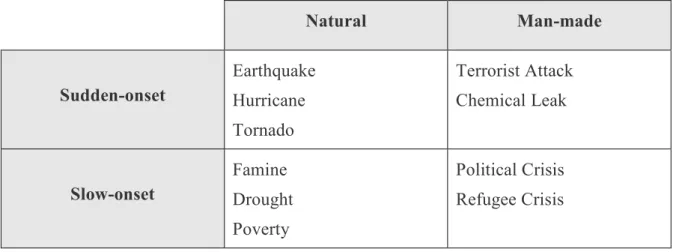
According to Van Wassenhove (2006), a disaster is a “disruption that physically affects a system as a whole and threatens its priorities and goals“ (p.476). On the first dimension, disasters are classified into man-made and natural and on the second dimension, into sudden-onset and slow-sudden-onset, which links to their speed and predictability (Van Wassenhove, 2006).
Natural Man-made Sudden-onset Earthquake Hurricane Tornado Terrorist Attack Chemical Leak Slow-onset Famine Drought Poverty Political Crisis Refugee Crisis
Table 1 Disaster Taxonomy (Van Wassenhove, 2006)
The type of disaster determines how it needs to be managed as for example, the required skills to run a refugee camp are inherently different to aid after a sudden-onset natural disaster. Disaster management itself is a process with different phases that occur at different times (Kovács & Spens, 2007; Miller, Engemann, & Yager, 2006; Van Wassenhove, 2006). Kovács & Spens (2007) distinguish between preparation, immediate response, and reconstruction. Preparedness aims to anticipate the needed resources, capabilities, and threats once a disaster strikes. This includes defining strategies, identifying partners and suppliers, and pre-position stocks at strategical hubs around the world (Beamon, 2001; Miller et al., 2006). The immediate response to a disaster comprises the endeavor of the humanitarian community to mobilize those resources and bring them to the affected region in a short manner of time (Miller et al., 2006). Subsequently, the recovery or reconstruction of an area is long-term oriented to stabilize the region and provide development aid (Miller et al., 2006).
7
2.2 Humanitarian Logistics 2.2.1 Context and Definition
The research field evolved as a consequence of the enormous importance during the disaster relief efforts following the Asian tsunami 2004 (Kovács & Spens, 2007). Before, it was often considered as a support function. However, recently it has gained traction amongst operations management scholars and with the launch of the dedicated “Journal of Humanitarian Logistics and Supply Chain Management” (Besiou, Hambye, Kunz, Van Wassenhove, & Kovács, 2017).
The increasing recognition is owed to the fact that logistics can account for up to 80% of the costs associated with relief operations and is, therefore, the most expensive part (Besiou et al., 2017; Van Wassenhove, 2006). Improvements to supply chain management impact the ability of HOs to react to disasters adequately and potentially decreases the suffering of affected people (Leiras, de Brito, Queiroz Peres, Rejane Bertazzo, & Tsugunobu Yoshida Yoshizaki, 2014). According to Thomas, Anisya and Mizushima (2005), humanitarian logistics is defined as:
The process of planning, implementing and controlling the efficient, cost effective flow and storage of goods and materials as well as related information from the point of origin to the point of consumption for the purpose of alleviating the suffering of vulnerable people. The function encompasses a range of activities, including preparedness, planning, procurement, transport, warehousing, tracking and tracing, customs and clearance. (Thomas, Anisya and Mizushima, 2005, p. 60)
The objective is to provide commodities such as food, medicine, shelter, water, and supplies to affected areas (Beamon & Balcik, 2008). Humanitarian logistics comprises different operations at different times and in response to various catastrophes. The activities have in common to help people and alleviate their suffering (Kovács & Spens, 2007). However, the support needed for the development of a region, famine aid, or refugee camps differs inherently from the assistance required after a natural disaster. Thus, humanitarian logistics can be clustered into two main streams, development aid and disaster relief (Kovács & Spens, 2007). Relief operations are characterized by their short duration, urgency, and uncertainty, which requires higher costs to provide a fast response. On the contrary, development programs are defined by longer durations, lower urgency, and less uncertainty, which requires a focus
8 on cost efficiencies to increase the number of reached beneficiaries (Kovács & Spens, 2007). Most of the HOs have a dual mission and provide a mix of both forms (Thomas & Kopczak, 2005).
2.2.2 Characteristics and Comparison to for-profit Sector
The for-profit world realized long ago that logistics is crucial for the performance and recognized it as a strategic function to enable effective planning and budgeting (Van Wassenhove, 2006). In contrast, humanitarian logistics is 15 years behind their counterpart in the for-profit sector (Van Wassenhove, 2006). The function is rarely involved in strategic planning which results in a vicious cycle that prevents it from moving away from the fire-fighting mentality (Van Wassenhove, 2006).
However, for-profit and humanitarian logistics cannot be treated equally as specific characteristics distinguish them. First and foremost, HOs have to deal with a different type of uncertainty (Van Wassenhove, 2006). Business logistics deals with a predetermined set of manufacturing sites, suppliers, and forecasted demand (Kovács & Spens, 2007). Accordingly, time, location, and extent of natural disasters often cannot be predicted, which leads to an unclear demand for goods and services (Besiou et al., 2017). Additionally, the affected area is often destabilized in its infrastructure leading to a lack of electricity and transport opportunities which requires HOs to operate in harsh conditions (Besiou et al., 2017; Van Wassenhove, 2006). Hence, it becomes nearly impossible for logisticians to plan future operations and establish plans.
Apart from that, different motives and performance measures distinguish both logistic functions. Business logistics aim to increase profit, whereas humanitarians want to alleviate the suffering of vulnerable people (Thomas & Kopczak, 2005). In the for-profit sector, performance is rewarded by the market (e.g., profit, stock price), which drives a culture of continuous improvement. Such incentives are not present in the humanitarian sector (Van Wassenhove, 2006). Moreover, market forces of supply and demand dictate the meaningful use of resources in the business world (Van Wassenhove, 2006). In contrast, humanitarians are challenged with scarce resources in advance of a disaster which limits their ability to pre-position stock in logistically essential locations around the world (Apte, 2009; Duran, Ergun, Keskinocak, & Swann, 2013; Kovács & Spens, 2009). Instead, resources such as monetary or in-kind donations start to inflow once the disaster has taken place, which often leads to a
fire-9 fighting mentality (Kovács & Spens, 2009; Van Wassenhove, 2006). However, effectiveness is even more critical for humanitarians as speed can be the distinguishing factor between life and death (Day, Melnyk, Larson, Davis, & Whybark, 2012).
2.2.3 Relation between Information and Resource Flow in Humanitarian Supply Chains
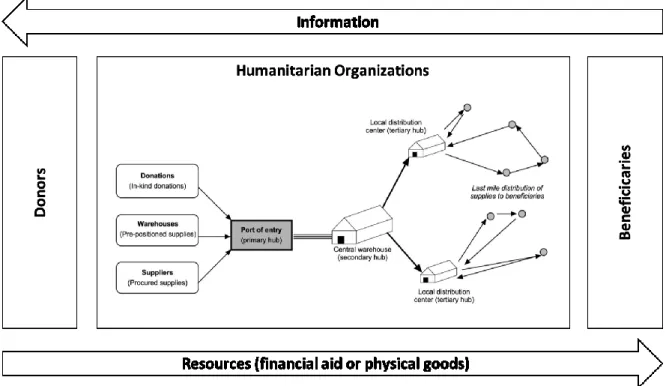
Humanitarian Logistics includes the flow of resources and information (Thomas, Anisya and Mizushima, 2005; L N Van Wassenhove, 2006). The resources can be either physical goods (e.g., food and shelter) or financial aid. Information flow comprises all types of information and data which are acquired, organized, and disseminated in the context of a humanitarian operation (Tatham & Spens, 2011). Figure 2 visualizes that both flows are interrelated as the information flow determines the material flow (Van Wassenhove, 2006).
Figure 2 Information and Resource Flow in HSC modified figure from (Beamon & Balcik, 2008)
HOs first need to assess the needs of the beneficiaries to be able to know which relief items are required. Therefore, they process the available information from a disaster plagued region, which is further evaluated to coordinate the resource flow (Thomas, 2003; Van Wassenhove, 2006). Subsequently, supplies consisting of pre-positioned stock, procured items, and in-kind donations are shipped from various locations worldwide to tertiary hubs that serve as local
10 distribution centers to beneficiaries (Thomas, 2003). Besides that, the humanitarian community increasingly explores the use of cash transfers for emergency and development aid, instead of physical goods (Kebede, 2006; Metcalfe-hough, Poole, Bailey, & Belanger, 2018a).
Researchers particularly highlight the relationship between information flow and performance. Day, Junglas, & Silva (2009) argue that the well-established connection between improved information flow and increased performance in for-profit supply chains can also be transferred to relief and development operations. Van Wassenhove (2006) states that information sharing and collaboration during inter-agency response also improves effectiveness. Thus, it is crucial to value any information and engage in a wide range of collaborative activities such as contracting, negotiating, attending conferences, and measuring performance (Akhtar, Marr, & Garnevska, 2012). Altay & Pal (2014) add that information quality is also crucial for effectiveness. Day et al. (2009) argue that the high degree of uncertainty in HSCs can be better managed by sharing information. However, despite this established correlation, the sharing of information is not straightforward in the humanitarian sector due to its complexity and various impediments (Tatham & Spens, 2011; Van Wassenhove, 2006).
2.2.4 Challenge I: Stakeholder Network and the Importance of Trust
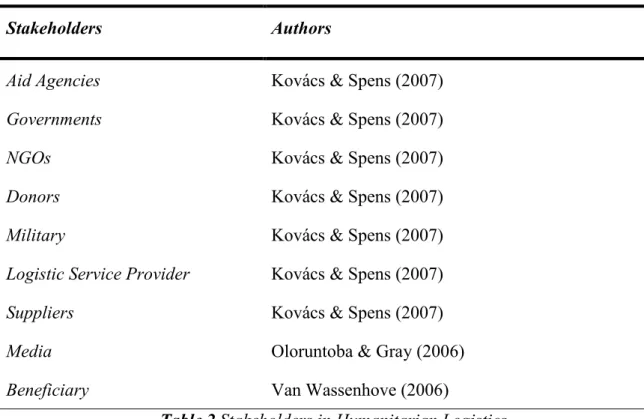
The number of stakeholders per disaster is varied and usually correlated to the impact that it has (Van Wassenhove & Besiou, 2013). In literature, the number of stakeholders fluctuates depending on whether the study focuses on actors that are actively involved in providing relief or includes stakeholders that have an interest in the outcomes (Kovács & Spens, 2009; Kovács & Tatham, 2009).
11
Stakeholders Authors
Aid Agencies Kovács & Spens (2007)
Governments Kovács & Spens (2007)
NGOs Kovács & Spens (2007)
Donors Kovács & Spens (2007)
Military Kovács & Spens (2007)
Logistic Service Provider Kovács & Spens (2007)
Suppliers Kovács & Spens (2007)
Media Oloruntoba & Gray (2006)
Beneficiary Van Wassenhove (2006)
Table 2 Stakeholders in Humanitarian Logistics
Under normal conditions, those stakeholders would have no incentive to work together, which evokes difficulties in information sharing and coordination activities (Day et al., 2012). However, when a disaster strikes the collective capacity of all actors determines the ability of the network to save lives (Tomasini & Van Wassenhove, 2009). Hence, “it requires a supply chain management approach to effectively coordinate performance, eliminate redundancies, and maximize efficiencies in terms of costs and speed” (Tomasini & Van Wassenhove, 2009, p. 549).
Managing trade-offs in such a versatile environment are complicated as the interests might conflict and trust is not always present at all levels. Research shows that inter-organizational trust is vital for an efficient supply chain management and determines the level of collaboration (Dirks & Ferrin, 2001; Ke & Wei, 2007). Thus, the focus should be to foster mutual respect and trust among supply chain partners to increase the overall performance (Dubey & Gunasekaran, 2016).
2.2.5 Challenge II: Transparency and Accountability
International HOs experience two central external pressures. First, the frequency and scale of catastrophes are growing, which stretches the limited resources (Beamon & Balcik, 2008;
12 Thomas & Kopczak, 2005). Hence, the whole community has to explore new tools and methods to become more efficient to satisfy the increasing needs.
Second, donors increasingly demand transparency and accountability for program impact and quality. Table 3 emphasizes the importance of this challenge, as several researchers support this statement.
Trend Authors
Donors are increasingly demanding transparency and accountability
Beamon & Balcik (2008)
Cabedo, Fuertes-Fuertes, Maset-LLaudes, & Tirado-Beltrán (2018)
Schmitz, Raggo, & Bruno-van Vijfeijken (2012)
Scholten, Scott, & Fynes (2010) Thomas & Kopczak (2005) Van Wassenhove (2006) Table 3 Increasing Donor Demand
For donors, it is not clear how their donations are used and how much is spent on overhead costs (Bekkers, 2003). This lack of transparency might jeopardize the whole humanitarian sector as media reports quickly put the entire community under suspicion (Bekkers, 2003). Accountability has many dimensions, which include enabling stakeholder participation, information disclosure, and addressing stakeholder concerns (Ebrahim, 2003). Transparency is linked to accountability but mainly focuses on the disclosure of information (Cabedo et al., 2018). Since the funding of HOs is exceptionally volatile (Verbruggen, Christiaens, & Milis, 2011), they are forced to disclose voluntary information to underpin their role of serving society. Moreover, the number of aid agencies is increasing at a steady rate. Thus, the ability to demonstrate impact is likely to become a differentiator in the competition for donor funding (Thomas & Kopczak, 2005). Donors are becoming less tolerant of the old fire-fighting attitude and require cost efficiencies. Hence, HOs are forced to establish rigorous performance measures to provide the necessary level of transparency and accountability (Beamon & Balcik, 2008; Van Wassenhove, 2006).
13
2.2.6 Challenge III: Lacking Technology Infrastructure
Information systems play an integral role in commercial supply chains and are fundamental to the evolution from a peripheral to a strategic role (Thomas & Kopczak, 2005). However, in HSCs most processes are still executed manually (Apte, 2009). Thomas & Kopczak (2005) found in a study that during the 2004 Tsunami relief operation, only 26% of the respondents had access to any tracking or tracing software. Research shows that visibility and transparency with the help of information technology positively impact supply chain performance (Cho, Ryoo, & Kim, 2017). The accumulation of data can provide decision-makers with insights that enable them to create efficiencies by saving time and costs, which both are critical to any humanitarian operation. Increased efficiency in a humanitarian context ultimately means that more budget can be allocated to core tasks and aid can be provided faster to save lives. Hence, Thomas & Kopczak (2005) consider ineffective leveraging of information technology as one systemic deficiency in humanitarian logistic. They argue:
The inability of IT staff at headquarters to understand the imperatives of the field, the primacy of financial managers in decisions about software used in organizations, and the need to keep networks secure are the main reasons that humanitarian logisticians cite as the cause of the slow evolution of IT. (Thomas & Kopczak, 2005, p. 6)
Besides, it is difficult to gather resources for IT development as donations tend to be allocated to directly help those impacted by a disaster. Hence, funding for necessary information technology and equipment is often lacking (Oloruntoba & Gray, 2006; Thomas, Anisya and Mizushima, 2005).
2.3 Blockchain in the Humanitarian Sector 2.3.1 The Technology behind Blockchain
Most people came across BCT due to the emergence of the cryptocurrency Bitcoin in the wake of the economic crisis. In 2008 a user called Satoshi Nakamoto published a paper named “Bitcoin: A Peer-to-Peer Electronic Cash System”. BCT is considered as the underpinning system that enables the inherent characteristics.
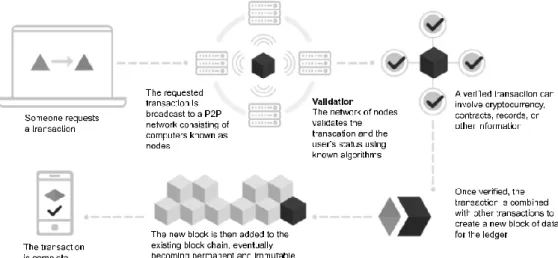
In general, blockchain is a shared database which is distributed across a network of multiple computers, known as nodes. It allows the user to publicly share information or digital assets in a transparent, fast, and tamper-proof way (Ko & Verity, 2016). On the blockchain, any
14 token of digital value can be saved, such as monetary payments, personal data, or intellectual property (Ko & Verity, 2016). To fully grasp the potential of blockchain, it is crucial to touch upon the inherent characteristics.
Figure 3 Illustration of Blockchain Transaction (UNDP, 2018)
First, blockchains represent a decentralized and distributed ledger that records every transaction in the network in an immutable way (Swan, 2015). Tapscott & Tapscott (2017) attribute the immutability of blockchain to the fact that:
Within minutes or even seconds, all the transactions conducted are verified, cleared, and stored in a block that is linked to the preceding block, thereby creating a chain. Each block must refer to the preceding block to be valid. This structure permanently timestamps and stores exchanges of value, preventing anyone from altering the ledger. (Tapscott & Tapscott, 2017, p. 5)
Blocks are duplicated across multiple nodes, which makes it difficult to alter pieces of information as there is no central database which could be hacked (Tapscott & Tapscott, 2017). For the network of nodes to work, consensus mechanisms are needed to agree which transactions are legitimate and subsequently added to the blockchain. That mechanism enables the network of users to reach an agreement of who owned or transferred value at any point in time (GSMA, 2017; Tapscott & Tapscott, 2017). Currently, different mechanisms (e.g., Proof of Work, Proof of Stake, Proof of Capacity) exist which differ in their safety, liveness, and fault tolerance. Those characteristics ultimately determine their applicability and efficacy (Viriyasitavat & Hoonsopon, 2018).
15 This infrastructure enables transactions point-to-point in a network where trust is not essential between the actors as the technology ensures it. Hence, the need for a trusted middleman is eliminated as money, information, or any digital value can be exchanged directly between parties. This decentralized approach challenges established intermediaries such as banks or credit card companies, as it makes their role redundant.
Blockchain applications can be designed as either private or public. Bitcoin is an example of a decentralized, public blockchain where everybody can acquire access, view, and submit transactions and participate in the consensus (GSMA, 2017). This form provides strict neutrality and openness, which maintains the technology’s original virtues. On the contrary, private or permissioned blockchains have controlled access rights (Ko & Verity, 2016). They are usually operated by individuals or companies who decide the participation rights of others. Typically, this form is used by centralized organizations that want to explore the opportunities to collaborate with partners and improve their processes (GSMA, 2017). However, given the access restrictions, it is often criticized concerning the initially intended openness of blockchain applications.
2.3.2 Status Quo
The research about the application of BCT in the humanitarian ecosystem is steadily increasing. However, currently only a few HOs are actively investing in exploring the technology (Hallwright, 2019). The most significant and large-scale use case has been developed by the World Food Programme (WFP) and aims to provide a more secure and transparent way to assist refugees in Jordan and Pakistan (Hallwright, 2019). Moreover, other prominent HOs such as the UN, Oxfam, or the IFRC are exploring multiple ways to leverage the benefits of BCT to increase the impact of their programs.
The majority of the research focuses on potentials that BCT can bring to the sector (Coppi & Fast, 2019). The identified opportunities center around three different broad areas (Mercy Corps, 2017). Firstly, the use of BCT could enable new ways to build trust and reduce costs. As stated in chapter 2.2.4, trust is precious in humanitarian operations and not straightforward due to the dynamic stakeholder network. BCT can break knowledge silos by providing a secure and trusted information-sharing platform that is available to all actors (Ko & Verity, 2016). The second opportunity emphazises the positive impact on donor financing to address the current humanitarian financing gap (Mercy Corps, 2017). There are calls for new forms of
16 donating and greater transparency to address the misuse of funds. BCT is hailed to allow humanitarian actors to better control the distribution of aid and lower the transaction costs associated with humanitarian financing (Ko & Verity, 2016). Furthermore, donors are given greater control on whether they want to donate in fiat- or crypto-currency to either HOs or directly to affected populations (peer-to-peer).
The third potential focuses on the ability of BCT to address social problems in a new fashion (Mercy Corps, 2017). For instance, by providing new infrastructure to access basic financial services for unbanked populations, financial inclusion could be drastically improved. Furthermore, BCT can provide accessible and verifiable identification in crises. A lack of identity documentation is one of the key problems in humanitarian operations (Ko & Verity, 2016). It is fundamental for beneficiaries to receive “basic humanitarian assistance and reach areas of safety” (Ko & Verity, 2016).
However, despite the before-mentioned opportunities, assessing the real potential of BCT is not straightforward. Coppi & Fast (2019) argue that there is a disconnect between the transformative potential and actual impact. This disconnect stems from the fact that most adopters do not build on current infrastructure to create a basic framework for understanding and research (Coppi & Fast, 2019). The majority of the applications focus on applying it to new use cases, which makes it challenging to develop recommendations for the humanitarian sector as a whole (Coppi & Fast, 2019).
17
3 Empirical Study
3.1 Methodology
The purpose of this study is to investigate an area that has yet to be discussed in academic literature. An inductive approach was employed since theoretical and empirical understanding is lacking to date. This allows me to combine data from different sources to derive meaning and understanding. Moreover, it adds flexibility as the direction of the dissertation can be altered based on the findings derived from the data.
The thesis uses a qualitative data collection with an exploratory purpose to identify recurrent themes and reach conclusions. According to Galletta (2013), qualitative research “honors an inductive style, a focus on individual meaning and the importance of rendering the complexity of a situation”. Due to the complexity of the HSC, this approach was best suited to answer the research question. Furthermore, qualitative studies require the researcher to reconsider and evaluate preliminary findings as more knowledge is gained (Silverman, 2016). Hence, it enables me to acquire a holistic understanding of the impact of BCT on the HSC.
3.2 Data Collection
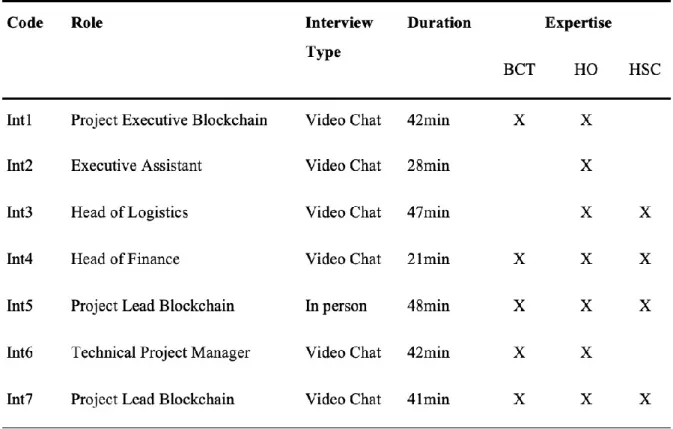
The thesis relies on a collection of qualitative primary and secondary data sources. The primary data consists of seven interviews with experts, which offers the possibility for “mutual discovery, understanding, reflection, and explanation” (Tracy, 2012). Heterogeneous sampling was used to select interviewees with diverse characteristics to reveal key themes (Saunders, Lewis, & Thornhill, 2007). To ensure a meaningful selection of interviewees a non-probability, purposive sampling strategy has been developed that covered three key areas of expertise: (1) blockchain technology, (2) humanitarian organizations and (3) humanitarian supply chain. I paid attention to cover all topics by at least three experts of whom some were knowledgeable in more than one field. Thus, the selection of interview partners was not random. I used my judgment to select interviewees who would enable me to answer the research question in the best way (Saunders et al., 2007).
The selected and available experts work for different types of humanitarian and charitable organizations (see Appendix A), which ensured that various aspects within each area were covered in the limited timeframe. I found the experts by conducting a combination of an extensive study of blockchain reports and LinkedIn research. I focused on finding interviewees
18 that are knowledgable in at least one of the defined key areas and have recent experience. Moreover, as the study aims to explore a global phenomenon, the participants also represent different countries and continents.
Silverman (2016) highlights the importance of establishing trust and consent as critical levers for research ethics. Therefore, all participants were notified before the conversation that everything would be recorded for later transcription and analysis. The majority gave their consent to publish their names and organizations openly. However, two participants did not want to be cited personally, which results in all answers being anonymized.
Table 4 Overview of Interviews
The interviews were conducted using a semi-structured format, which favors the inductive and exploratory nature of the study. The structured part ensured comparability, while the unstructured aspect allows for flexibility and depth (Tracy, 2012). This enables the researcher to acquire insights into specific questions but also venture into unplanned topics as the conversation progresses (Galletta, 2013). All interviews are structured into an opening, middle, and concluding segment, as recommended by Galletta (2013) (see Appendix B). Due to the diverse backgrounds of the participants, each protocol has been slightly individualized.
19 In particular, if the interviewee was involved in pilots in the past, concrete questions were asked related to lessons-learned and perceived benefits.
In addition, ten reports have been selected as secondary data sources. This allows the researcher to triangulate findings and emerging themes from the interviews. It further increases the confidence in the results and reduces potential researcher bias (Jick, 1979). Through extensive web research, I identified those reports as the most relevant concerning BCT in the humanitarian sector. They represent a diverse stakeholder group and are published by either HOs, policy groups, governments, or development institutes (see Appendix C). They focus on the results from early pilots or describe general implications and potentials of BCT in the humanitarian sector.
3.3 Data Analysis
The gathered qualitative data requires meticulous analysis to answer the research question. This thesis adopted a framework analysis approach which is suited to describe and interpret the particular setting (Ritchie, Spencer, Bryman, & Burgess, 1994). According to Srivastava & Thomson (2009), framework analysis is similar to grounded theory, but it is “better adapted to research that has a specific question, a limited time frame, a pre-designed sample (e.g., professional participants) and a priori issues (e.g., organizational and integration issues)” (p.72).
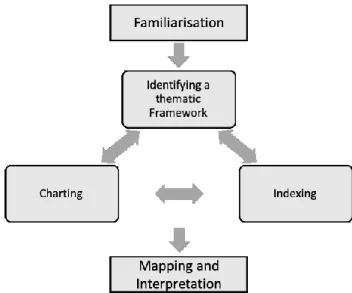
20 As shown in Figure 4, the framework analysis approach consists of four phases (Ritchie et al., 1994). First, the author has to familiarize with the data and gain an overview (Ritchie et al., 1994). Through this process, I became aware of key ideas and recurrent themes.
Subsequently, the researcher has to identify a thematic framework that is based on emerging themes and a priori issues (Srivastava & Thomson, 2009). I based the framework on the HSC model, as described in chapter 2.2.3 and key themes that emerged in the familiarization process (see Appendix D). Thus, this study focuses on four main categories: (1) Impact on Resource and Information Flow, (2) Impact on Actors, (3) Strategies to deal with BCT, and (4) Transformative Potential. This thematic framework formed the basis for indexing the data. The process of indexing the data consists of identifying portions of the data that corresponds to a particular category in the framework (Ritchie et al., 1994). I have applied this approach to all interviews and reports that I have collected using NVivo software (see Appendix E). The fourth stage, charting, describes the process of arranging the indexed data in charts of the categories (Ritchie et al., 1994). That means that the data is lifted from its original context and arranged in tables. This stage is done automatically by NVivo software, which allows me to consistently refer back to the source (see Appendix F).
Finally, mapping and interpretation include the analysis of key concepts that emerge. At this point, the researcher defines concepts, creates typologies, develops strategies, and provides explanations (Ritchie et al., 1994). I have done this step by summarizing each cell in NVivo and subsequently searching for similarities and differences between the interviewees and reports for each category and sub-category (see Appendix G). The emerging themes reflect key findings that will be defined and explained in chapter 4.
21
4 Results
This section will outline the findings that result from meticulous analysis of the interviews and reports, as explained in the previous chapter. The chapter will assess the impact of BCT from different perspectives and is structured into four parts which emerged in the course of the framework analysis.
4.1 Impact on Resource and Information Flow
The resource flow in HSCs (see chapter 2.2.3) from donors to beneficiaries can either include physical items such as food, shelter, clothes, or aid in the form of financial support. The analysis has shown that the application of BCT is different depending on the kind of asset it is applied to. Therefore, the following part will look at how blockchain can have an impact on the flow of financial aid and physical goods separately.
4.1.1 Financial Aid
In recent years HOs are putting a greater focus on cash-based programming. The WFP estimates that in the future, around 50% of their programming will be delivered in cash-based transfers (Mercy Corps, 2017). Int3 emphasizes this statement: “One of the big pushes that are also in the grand bargain is that one should move from goods and services to actually cash based interventions.” In the Grand Bargain, some of the largest donors and aid providers committed themselves to increase the percentage of cash-based transfers.
BCT can play an integral role in achieving this goal as the facilitation of cash-based assistance via blockchain is one of the most discussed use cases. All interviewees were aware of the potential for this particular usage of the technology. Int6 said that: “The biggest opportunity that I see enabled by blockchain is facilitating payments across borders in a cheap and efficient manner.”
The implementation of BCT in the HSC to facilitate cash transfers to affected populations can have multiple advantages. Traditionally, HOs had to work closely with a local financial service provider to transfer cash to beneficiaries, which creates a high barrier (GSMA, 2017). Int6 emphasized this: “I think right now you know we have countries like first world countries trying to help developing countries and there is a massive barrier on moving funds from you know the first world countries in the developing countries.”
22 For instance, it was common practice for the WFP in a refugee camp in Jordan to give the entire monthly budget at the beginning of each month to local banks, alongside with an overview of entitled beneficiaries (GSMA, 2017). Once a beneficiary had been informed, they were entitled to purchase goods at designated stores by presenting a valid proof of identity. The transaction has only been authorized by the bank if the remaining entitlements covered the costs of the purchase. At the end of each month, the local financial service provider summarized all transactions and sent a report to the WFP. However, this system implied several challenges: (1) advancing large sums of money can create a financial risk, (2) banking fees and administrative costs are high, (3) humanitarian organizations have to rely on the data provided by the financial service provider, (4) no way for stakeholder to follow the flow of the money. Ultimately, due to the lacking traceability, the traditional system is prone to fraud (GSMA, 2017).
Based on these shortcomings, the WFP has developed a blockchain pilot together with Building Blocks that removes WFPs reliance on intermediary banks and makes voucher-based cash transfers more efficient. On the Building Blocks platform, each beneficiary gets a profile with a unique ID and the associated entitlement. Once the recipient is informed, they can go to approved merchants to make a purchase and authenticate themselves by scanning their iris (GSMA, 2017). Every transaction is recorded using BCT, and the WFP can use this information to pay participating merchants directly using their corporate bank (GSMA, 2017). In Jordan, more than 100,000 refugees have redeemed their entitlement through this platform, which sums up to over 11m US Dollar.
23
Figure 5 Traditional vs. Blockchain Cash Transfer (GSMA, 2017)
Figure 5 summarizes that by cutting traditional actors (financial service provider) from the supply chain and introducing new innovative players, the WFP has been able to significantly reduce their third-party costs and generate up to 40,000 US Dollars monthly savings (GSMA, 2017).
Not all interviewees are on the same maturity level as the WFP and only five of them could report first-hand experience from their pilots. Two broad themes emerged in the analysis, although the mentioned impacts and advantages were often specific to individual experiences and projects. One of them is empowerment through cash-based transfers which relates to the fact that according to Int5: “there's a huge amount of data that says that it's the most efficient, most dignified, most empowering way to get to humanitarian assistance.” The beneficiary is actively empowered by giving them a choice to buy what they need most, which may vary from person to person. Moreover, in contrast to providing aid in the form of commodities (food, shelter), cash-based transfers (CBT) have a positive impact on local trade and production, which stimulates affected communities in the aftermath of a crisis.
The second broad advantage relates to increased efficiencies that can be accomplished by using CBTs. According to Int5: “it will reduce the operational costs, both from the transfer of money, but also for the disbursement of it.” The WFP use case has proven exceptionally
24 well that significant cost savings are possible with using blockchain-based systems and cutting traditional intermediaries.
Nevertheless, Int5 stresses that CBTs are not without certain risks: “Cash transfers don't work everywhere; they only work where there is a market economy.” The interviewee further argues that an assessment needs to be compiled beforehand to evaluate if it is suitable in a given region to work with CBT as it might harm market forces. As a result, prices could go up due to the increasing buying power of the beneficiaries.
4.1.2 Physical Goods and Documentation
Another, less explored, potential use case for blockchain in the humanitarian supply chain is providing a visible and shared ledger relating to goods ownership, condition, and location (Mercy Corps, 2017). As mentioned in the literature review, the HSC is very dynamic by nature with many involved stakeholders (Ko & Verity, 2016). This leads to poor visibility and traceability of the goods as they move along the supply chain. BCT offers a new way of introducing transparency and enhancing data quality. According to Ko & Verity (2016), “Increasing supply chain transparency can greatly improve humanitarian operations by providing data to inform more effective and accurate decisions, enabling evidence-based interventions and management, exposing issues for effective remedy and increasing accountability” (p.12). Blockchain-based systems allow to register the goods and follow all transactions along the supply chain with full traceability, identification of all involved parties, and collection of relevant data points. “Depending on the implementation, the record could be made available in near real-time, supporting stronger collaboration, increased auditability, and better data intelligence“ (Mercy Corps, 2017, p. 23). However, when comparing the potential use cases mentioned in the reports with the expert interviews, an evidence gap becomes apparent. Whereas the potentials for blockchains are derived from successful implementations in for-profit supply chains, clear evidence is yet lacking for the humanitarian counterpart. Only two of the eight interviewees could report first-hand experience from their pilots, and another interviewee was aware of the potentials that it might bring. Due to the novelty of the topic, it has been challenging to generalize emerging themes and patterns. Therefore, this thesis will mainly reflect remarks from two interviewees in this particular chapter.
25 The organization of Int7 has developed a pilot that aims to digitize all paper-based documents for emergency goods, which is according to him the “first of its kind within the humanitarian sector.” The application is “looking at viewing, authorizing, and sharing of documentation between internal and external stakeholders.” To transport goods to affected areas up to 25 different documents are handled between 15-18 stakeholders. That means that one document may have up to 60 interactions. Currently, this situation results in delays and high demurrage costs of up to 300,000 US Dollars monthly for the organization of Int7. Int7 highlights that: “For us to provide a blockchain platform where each party on the platform can see when other stakeholders view or share documentation will build the trust between each party in doing their job a lot better, because if you have better visibility on documentation, then you have better planning. And better planning will allow you to do your job more efficiently and more effectively.” In the bigger picture, such a platform allows to increase compliance with respective law and simultaneously reduces the time it takes to transport goods to affected areas which ultimately can save lives. According to internal documents provided by Int7, first estimations show that the reduction potential for delays is up to 50% by reducing missing or unavailable documentation and information. The potential for financial savings is up to 15% as improved transparency and planning capacity lead to a decrease in costs by avoiding additional fees (demurrage, shunting, etc.). Further non-quantifiable benefits include less needed interaction with the different stakeholder, which results in a reduction of administrative support and more streamlined processes.
Int5 added more generally that with a blockchain system the record of transactions in the supply chain is immutable: “You kind of can't fake it so you have that traceability, to know where goods and services and money even has gone. I think that will engender a lot more trust in the humanitarian system, but also ensure that it has that assistance has the impact that it was intended to have.” Both interviewees supported the argument that having these data can significantly improve the supply chain performance for physical goods.
4.2 Impact on Actors
The next step of the analysis will look in more detail on the different actors in the humanitarian supply chain. Management theory suggests that some stakeholders are more important than others. According to Mitchell, Wood, & Agle (1997) stakeholders are classified along three dimensions: (1) urgency, (2) power, and (3) legitimacy. Based on the fact that HOs are the
26 main driver in humanitarian actions, they are the focal organizations in my analysis. I have further selected donors and beneficiaries as the two most salient stakeholders taking the three dimensions into account. Both stakeholders have legitimate claims on the HOs. The dependence of HOs on donations gives donors a significant level of power which is essential to enforce those claims. Beneficiary claims have the highest degree of urgency and criticality due to life threatening-situations for disaster-affected populations.
4.2.1 Donors
Chapter 2.2.5 has outlined that in recent years, cases of corruption and misuse of funds have led to decreasing trust of donors in the work of HOs (Ko & Verity, 2016). This has resulted in emerging funding gaps in the humanitarian system (Metcalfe-hough, Poole, Bailey, & Belanger, 2018b). BCT is perceived as a lever to counter this trend by reinforcing trust in the system and enabling a more flexible, efficient, and effective donor financing (Ko & Verity, 2016).
Currently, NGOs rarely disclose information about the particular return on investment (ROI) of projects or the actual final use of provided funds. The dynamic supply chain hinders high level of transparency and creates challenges for establishing a culture of trust, which makes it more challenging to collect sufficient donations.
The majority of the interviewees supported the statement that BCT can be viewed as a way to react to increasing donor expectations and rebuild trust in the system. However, they did not agree on the timescale in which donors can expect this to happen. Int4 points out that “ultimately that's what the consumer wants, but what the consumer wants is pretty far away in reality.” In contrast to this rather pessimistic outlook, other interviewees who had worked with first blockchain pilots were much more confident in the timely fulfillment of donor expectations through the use of BCT.
The key trait that the technology will provide to the donor is transparency at a granular level. Int2 said: “You as somebody who wants to support a humanitarian organization you can scan the QR code and you can follow your money all the way through the whole thing. Ultimately to see that six weeks later there's a blanket that is given to this girl in this refugee camp”. Int5 adds to that: “So the donor can see everything happening whenever he chooses to. And that will obviously increase the transparency and build some confidence in the case of the technology.“
27 A second broad impact on donor emerged in the process of analyzing the interviews. BCT has the potential to change the role that donors are taking in the decision-making process, which leads to empowerment. Int1 said: “You could literally create like the eBay for charity where you say here's a token that would represent a donation that would fund X, Y or Z. If you make this donation it funds it.” By giving the donor a choice to fund particular projects while simultaneously enabling them to track the impact, they become an active part in the decision-making process. Int1 adds that over time, the donor will be able to build up a portfolio of their impacts “the same way that the investors have a portfolio of their securities.” This overview and transparency of the effects of the different projects will, according to Int3: “help the donors to be able to compare between various organizations.” Int3 adds that: “the donors will also over time get preferences for which organizations do we want to deal with.” That means that some HOs will flourish while others are lacking the capacity to cope with increasing donor requirements.
Nevertheless, the trend towards increasing donors power in the decision-making and increasing the granularity of the reporting does not come without criticism. Int1 remarks: “I don't want to see a world where people are reduced to like a number or token.” Int5 adds to that: “I think as a donor if you're also able to dictate where the money will go that might be too granular control given to the donors.” However, four interviewees were generally open to explore the increasing role of donors in the decision-making process.
4.2.2 Humanitarian Organizations
Humanitarian organizations are facing various challenges and are increasingly in competition for limited resources such as donor funding. One of the major problems is coping with the high degree of uncertainty in HSCs. As an example, Int3 said: “So with the refugee crisis we have between Myanmar and Bangladesh 60,000 people showed up on the other side of the border overnight. You can't plan you know for 60,000 people showing up on that day at that side." Additionally, the interviewee highlighted that it is challenging to allocate donations based on need as donations are often earmarked for a particular project. Int3 said that: “That means that if you have a need for additional funds, you can't just take and close another thing and throw them in there which you could do in an industrial supply chain.” Since the money is earmarked, the HO is accountable to the donor to prove that the money has been spent accordingly. According to Int3, this creates competition as: “Donors will fairly quickly find
28 out who, implement and who's not able to implement and who is able to implement and document and who is able to just implement.” This increasing competition for limited resources from a growing number of actors creates the need for the sector to look at improving efficiencies while enhancing the quality and impact of their programs (GSMA, 2017). Additionally, Int3 highlights that: “one thing that is that is sorely needed and much more needed in the humanitarian supply than in the industrial supply chain is visibility of which dollar went where. So to have that perfect tracking throughout the whole system.” Thus, for HOs, blockchain can be the differentiating factor that evokes the needed visibility and creates a competitive advantage.
The interviewees have cited several reasons for adopting or exploring blockchain solutions related to accountability, efficiencies, reduced transactions costs, or transparency. The analysis has revealed that the impact of blockchain on HOs can be clustered along internal and external dimensions.
Internal impacts in this context relate to changes that are induced by BCT within the HO
itself. HOs have an immense potential to improve their internal systems (Coppi & Fast, 2019). BCT is said to be an opportunity to enhance the quality of internal control systems while at the same time, consolidating resources towards core activities (Coppi & Fast, 2019).
HOs are putting many of their resources into auditing and monitoring their programs to be accountable towards their donors but also beneficiaries. BCT creates an automatic and immutable record of all transactions that are taking place. Hence, organizations can reduce the burden of reporting by automatizing processes such as archiving and auditing that before had to be done manually (Coppi & Fast, 2019; Mercy Corps, 2017). This radical approach to automation provides the HOs with a tool to drastically improve internal efficiencies by decreasing internal costs that occur due to monitoring, accounting, administration fees or financial accountability (Coppi & Fast, 2019). Moreover, transparency and visibility allow HOs to learn more about their processes and efficiencies. Through the reconciliation of different data sources in real-time insights become available, which helps humanitarians to detect redundancies and further improve their programming decisions based on evidence. Int6 stresses that: “as payments and decision making become streamlined through blockchain, machine learning, big data we can offset high costs of operating in developing countries with internal operating costs going down.”
29 However, Int1 also points out that: “I think they'll benefit, but in a way, they may not like in terms of automation having to change their business process.” Hence, the challenges of implementation are not only linked to the technology but to internal processes that are not yet adapted to cope with emerging technologies. In particular (Coppi & Fast, 2019) mention that “management, procurement, legal and financial policies are not fully supportive of innovative strategies”. Thus, interviewees were indicating that before BCT can fully demonstrate its potential to improve internal processes, a lot of mutual learning between functions has to take place first.
External impacts describe how BCT changes the way HOs act and interact with external
stakeholders. The interviewees mentioned three broad areas where blockchain will have an impact related to accountability, efficiencies, and collaboration. In the ecosystem, HOs are often in a leading role when it comes to driving and deploying innovative solutions. However, as described in chapter 2.2.5, they have to deal with a complex stakeholder network. The interviewees that have dealt with pilots themselves were reporting a different level of buy-in of the various stakeholders. Some interests groups, such as governments, were supportive, whereas others saw the increasing level of transparency as a threat to their business interests. Increasing visibility and transparency can unveil bribery and corruption, which is not unusual regarding the delivery of goods to developing countries.
However, irrespective of the external support from stakeholders for HOs blockchain provides a tool to ensure accountability. Int5 said: “Accountability is incredibly important, both ways, to donors, but the accountability to the people that we're giving money to as well.“ Int6 adds to that: “So I think blockchain is now providing that medium where we can share information and also build the trust in the people that are being affected and the people that are donating.” Due to the immutability of blockchain records, it will be easy to spot if resources are used for nefarious purposes and to detect corruption. According to Int5: “That will engender a lot more trust in the humanitarian system, but also ensure that it has that assistance has the impact that it was intended to have.”Thus, BCT can be perceived as a legitimate tool for HOs to react to current challenges related to accountability (see chapter 2.2.5).
The second dimension that relates to external impacts deals with improved efficiencies and
processes. First and foremost, the interviewees highlighted that the increased transparency