Electronic copy available at: http://ssrn.com/abstract=2070942
1
Leviathan in Business: Varieties of State Capitalism and their
Implications for Economic Performance
Aldo Musacchio
Harvard Business School and NBER Soldiers Field
Boston, Massachusetts 02163 [email protected]
Sergio G. Lazzarini
Insper Institute of Education and Research R. Quatá, 300
São Paulo, SP Brazil 04546-042 [email protected]
Abstract
In this paper we document the extent and reach of state capitalism around the world and explore its economic implications. We focus on governmental provision of capital to corporations – either equity or debt – as a defining feature of state capitalism. We present a stylized distinction between two broad, general varieties of state capitalism: one through majority control of companies (e.g. state-controlled SOEs) and a hybrid form that relies on minority investments in companies by development banks, pension funds, sovereign wealth funds, and the government itself. We label these two alternative modes Leviathan as a majority investor and Leviathan as a minority investor, respectively. Next we differentiate between these two modes by describing their key fundamental traits and the conditions that should make each mode more conducive to development and superior economic performance.
Keywords: State capitalism, state-owned enterprises, development banks, sovereign wealth funds
JEL codes: P51, L32, L33
Preliminary version for discussion
Electronic copy available at: http://ssrn.com/abstract=2070942
2 Introduction
After over two decades of extensive state reform and privatization, state
capitalism still looms large in developed and developing countries. State-owned
enterprises (SOEs), development banks, public pension funds, sovereign wealth funds,
among many other vehicles of governmental capital, have taken center stage in the
global economy. For example, in 2005 there was no single state-owned enterprise
among the top 10 firms of the Fortune Global 100 list, which ranks companies by
revenues. In 2010, there were four SOEs among the top 10: Japan Post Holdings,
Sinopec and China National Petroleum (two of China‘s national oil companies), and
State Grid (a Chinese utility).1
Many observers view these developments with apprehension. Bremmer (2010)
raises concerns about what he refers to as ―state capitalism‖ and describes it as
antithetical to the ideals of liberal capitalism. It is, he wrote, ―a system in which the state
functions as the leading economic actor and uses markets primarily for political gain―
(Bremmer, 2010, p. 5). A summit of founders and CEOs of some of the world‘s top
companies in the world, organized by Harvard Business School, identified state
capitalism and its support for ―national champions‖—private or state-owned firms
chosen to receive government assistance—among the ten most important threats to
market capitalism (Bower, Leonard, & Paine, 2011).
3 Governments, particularly in emerging markets, have justified the rise of such
forms of hybrid capitalism as a way to solve market failures. Private companies, in
contrast, see the rise of new SOEs, firms with minority government ownership, and
private companies backed by loans of development banks as threats because
governments may use these competitors to influence markets (e.g. dictating their
pricing strategies) or provide them with privileged access to resources unavailable to
private enterprises.
Whether we regard them as benign or pernicious, we know very little about
those new forms of government intervention: the various institutional mechanisms by
which states exercise control, why state capitalism reemerged and in which form, and
its effects on both firm performance and state governance. Moreover, we lack a
conceptual framework to understand state capitalism in a more nuanced and detailed
way. Although in the last decades there has been a flurry of research comparing state
versus private ownership (see, for a review, Megginson & Netter, 2001), the stylized
view of state ownership usually involves state majority control. More recent discussions
of the mechanisms of state capitalism, on the other hand, fail to provide a consolidated
theoretical framework for the varieties of state capitalism, the distinguishing traits of
those various forms, and their efficiency implications.
In this paper we document the extent and reach of state capitalism around the
world and explore the economic implications of these new forms of state capitalism. We
4 owning majority or minority equity positions in companies or through the provision of
subsidized credit and/or other privileges to private companies. We present systematic,
cross-country evidence showing that the form of state capitalism prevailing in the twenty-first
century is different from what we observed in the second half of the twentieth century.
Then, state involvement in enterprises took the form of command economies or mixed
economies in which governments owned a large number of enterprises and directly
controlled the allocation of strategic resources. More recently, perhaps paradoxically,
the privatization and liberalization wave of the 1980s and 1990s helped create a new
form of hybrid capitalism where the government influences the investment decisions of
private companies largely through minority capital.2
Thus, we present a stylized distinction between two broad, general forms of
state capitalism: through majority control (e.g. state-controlled SOEs) or in a more
hybrid fashion through minority investments by development banks, pension funds,
sovereign wealth funds and the government itself. To use Williamson‘s (1985)
expression, those forms represent two alternative organizational modes to carry out
2 We do not argue that governments having minority ownership in corporations is new, this has
existed since the corporate form was created. What we think is distinctive of Leviathan as a minority investor is that governments rely to a large extent on minority investments to influence companies and to extract returns from economic activity, something that represents a shift from the predominantly
5 business , in which the state is present. We label these two alternative modes Leviathan
as a majority investor and Leviathan as a minority investor respectively. 3
The paper then reviews several theoretical perspectives that have been proposed
to explain the emergence of each mode of state capitalism. Next we differentiate
between the majority and minority investor model by describing their key fundamental
traits and the conditions that should make each mode more conducive to development
and superior economic performance. We conclude by outlining several suggestions for
future research to improve our understanding of the functioning and economic
implications of the various forms of state capitalism.
The State of State Capitalism around the World
After almost three decades of privatization in developed and developing
countries, state capitalism still looms large. The outcomes of those privatizations were
not necessarily a general strip-down of the state‘s productive assets. In the end,
privatizations faced intense political opposition and in specific strategic sectors
governments themselves decided that it was better to keep certain companies under
state control. Bortolotti and Faccio‘s (2009) survey of SOEs in OECD countries reveals
that, despite strenuous efforts to privatize, governments were still controlling a large
share of the privatized firms. Except for the capital goods sector, transportation, and
utilities, the share of firms under government control did not go down between 1996
3 See, for instance, the discussion in The Economist, special issue on state capitalism (Wooldridge,
6 and 2000 in that set of rich countries. If at all, the privatization process seems to have
been more thorough in Mexico, New Zealand, Turkey, the UK, and the US.
Table 1. Number of State-wned Enterprises With Government Minority Positions in OECD Countries, 2005
Number of SOEs Minority positions % of minority-owned firms
Australia 12 0 0%
Austria 78 21 27%
Belgium 15 0 0%
Canada 100 15 15%
Czech Republic >1,000 >120 12%
Denmark 27 10 37%
Finland 55 19 35%
France 100 33 33%
Germany 37 20 54%
Greece 50 14 28%
Italy 25 4 16%
Japan 77 n.a n.a
Korea 30 4 13%
Netherlands 44 16 36%
New Zealand 34 3 9%
Norway 26 6 23%
Poland 1,189 691 58%
Slovak Rep. 115 55 48%
Spain 40 15 38%
Sweden 58 7 12%
Turkey 39 n.a n.a
United Kingdom 80 14 18%
Source: All figures are estimates by the authors using the OECD (2005). Polish data comes from Waclawik-Wejman (2005).
An OECD report (Table 1) showed the importance of SOEs in member countries,
particularly those in which Leviathan acted as a minority owner (OECD, 2005). In
France and Italy, the assets of SOEs represented over 25 percent of GDP, while in
Finland this ratio reached 80 percent. In Korea and Turkey this figure was also around
20 percent of GDP. Moreover, OECD governments have minority positions in about 25
7
Germany, over 50 percent of the federal government‘s equity holdings in companies
that are considered SOEs are in minority positions (and that does not include
companies with less than 25 percent of government ownership). In Denmark, Finland,
France, the Netherlands, Poland, the Slovak Republic, and Spain over 30 percent of the
companies that are identified as state-owned have the government with a minority
position only.4
Table 2 Patterns of State Ownership in Emerging Markets, c. 2010
SOE
output to GDP (non-financial)
Listed SOEs a
SOE as % of market
capitali-zationb
Number of SOEs with majority control
Num. of firms in which the federal
government has minority ownership
Federal State/local
Brazil 30% 14 34% 247 397
China 29.7% 942 70% 17,000 150,000 n.a.
Egypt n.a. 57d 59
India 13.1% 29 4014% 217 837 404
Indonesia 2%c 16 29.5% 142 21
Malaysia 15 36% 52 28
Mexico 3% 205
Poland 28% 498 691
Russia* 20% 12 40% 7964 250 1418
Singapore 12% 12 20% 20
South Africa 270
Thailand 26% 6 21% 60
Turkey 14% 74 700 67
Vietnam 33.7% 1805 1559 1740
Notes: a, b These estimates include companies under government control and those with minority
ownership.
C For Indonesia this figure represents the total net profits of SOEs relative to GDP.
d For Egypt, the number of SOEs is for 2005 but the number of minority-owned firms are for 2002.
Source: See Appendix. We include all firms with government ownership of over 10% for minority shareholdings and over 50% of the votes (i.e., control) to consider it a majority-controlled SOE.
4 OECD (OECD, 2005, p. 34). It is difficult to know how much control the government of these
8 In Table 2, we see that governments of emerging markets also hold minority
positions in a large set of firms. In most of the countries for which we found data, the
Leviathan as a minority investor mode is prevalent and covers about 20-30 percent of
the companies in which the government has equity (the rest being majority-owned
SOEs). This table also shows that among emerging markets, SOEs still contribute a large
portion of GDP and they represent a good portion of total stock market capitalization
(close to 30 percent on average).
Brazil, Russia, India, and China (BRIC), the largest emerging markets, display the
same pattern of ownership we find in other parts of the emerging and developed
world—that is, a mix of majority and minority ownership. In Figure 1 we show the
distribution of ownership using a database of the largest 150 publicly traded companies
(by market capitalization) in 2007. Leviathan acts most often as a minority shareholder
in Brazil and Russia, followed by India, where the government, or one of its holding
companies (e.g. The Life Insurance Corp. of India), holds minority positions in a variety
of firms. In China we see a greater bias towards large ownership stakes in publicly
traded companies, but we still find some minority shareholdings. These minority
stakes mostly occur through holding companies that are fully controlled by the
government and that then invest in a variety of firm. Furthermore, as we discuss
below, governments not only act as shareholders but also provide credit to firms
9 Figure 1 Distribution of the Number of Government Equity Holdings in Publicly traded Companies in BRIC Countries, 2007.
Source: Created by the authors from Capital IQ and company web pages using a sample of the largest 150 publicly traded companies in these markets.
How can we make sense of this varied configuration of state ownership? Next
we propose stylized modes of state capitalism and then discuss alternative theoretical
10 Modes of State Capitalism
Economists have usually juxtaposed state capitalism and either liberal market
economies or free markets in general. Ludwig von Mises, one of the most influential
Austrian economists, equated state capitalism with socialism or ―planned economy‖
(von Mises, 2009, first published in 1951). Murray N. Rothbard (1973, p. 419), a central
figure in the American libertarian movement, went even further by contrasting state
capitalism with free-market capitalism: ―The difference between free-market capitalism
and state capitalism is precisely the difference between, on the one hand, peaceful,
voluntary exchange, and on the other, violent expropriation.‖ Moreover, for Rothbard
(1973), the cozying up of big business with the government was also a manifestation of
state capitalism. Therefore, these two libertarian scholars equated state capitalism with
government intervention in markets; central planning; with governments favoring big
business; and even with the outright expropriation of private property.
Bremmer‘s (2010) provides the beginnings of a conceptual framework for
understanding various degrees of state involvement in the economy. He distinguishes
state capitalism from ―command economies‖ involving planning and state-led resource
allocation, and ―free-market economies‖ featuring minimal governmental intervention
(e.g. along the lines of securing property rights and establishing stable rules for private
investment). He defines state capitalism as a system in which
11 sectors. They use so-called sovereign wealth funds to invest their extra cash in ways that maximize the state‘s profits. In all three cases, the state is using markets to create wealth that can be directed as political officials see fit. And in all three cases the ultimate motive is not economic (maximizing growth) but political (maximizing the state‘s power and the leadership‘s chances of survival). (Bremmer, 2010; p. 4–5)
All those definitions, however, lack nuance. Bremmer, for instance, treats state
capitalism as a general mode of capitalism, juxtaposed to an idealized form of liberal
market economy in which the government does not intervene in the running of
corporations or the allocation of credit. Consistent with Bremmer, we conceptualize
state capitalism as a system where the government has a marked influence in the
business sector. We, however, advance the extant discussion by dichotomizing state
capitalism into two broader classes (Figure 2).5
Closer to the more familiar view of state capitalism as a process involving
outright state management, the state can act as a majority shareholder and manager of
SOEs—a mode we refer to as Leviathan as a majority investor. According to Ahroni (1986),
SOEs are firms in which the state has ownership and control. SOEs are also
conceptualized as enterprises; that is, they should effectively produce and sell goods and
services. These companies should be distinguished from government entities in charge
of providing public services (such as courts, the police, Social Security, or National
Health Services), which often do not have a corporate form and depend directly on
orders from government officials.
5 Our work thus contributes to the evolving literature on the varieties of capitalism (Hall &
12 Figure 2. Varieties of State Capitalism: Alternative Modes of Organization
In the Leviathan as a majority investor mode, the government usually exercises
control of SOEs indirectly, by appointing managers and boards of directors. In some
SOEs, however, ministers act directly as presidents. Moreover, SOEs can be fully
owned by the government or they can be publicly traded, as long as the government is
the majority shareholder. Governments also exercise their control as a majority investor
using large companies as conglomerates controlling a series of firms or through what is
known as state-owned holding companies (SOHCs).
The state can also influence the economy in an indirect way, acting as a minority
shareholder and lender to private firms. This is the mode we refer to as Leviathan as a Leviathan as a
majority investor
(e.g. state-run SOEs, state-owned holding companies
- SOHCs)
Leviathan as a minority investor
Partially privatized firms (PPFs). Minority stakes under
state-owned holding companies (SOHCs)
Loans and equity by state-owned and development banks.
Sovereign wealth funds (SWFs). Other state-controlled funds (e.g.
pension funds, life insurance).
Privately-owned firms
13 minority investor. This more nuanced form of state capitalism is a hybrid form, which
mixes features of full state control and private operation of enterprises. As we saw in
the previous section, however, minority state participation in corporations is an
increasingly worldwide phenomenon and is not uniform. We argue that there are
several channels through which states exercise minority control, such as holding shares
in partially privatized firms (PPFs); minority stakes under state-owned holding
companies; loans and equity by state-owned and development banks; sovereign wealth
funds (SWFs); and other state-controlled funds (e.g. pension funds, life insurance). We
discuss each in turn.
Leviathan as a majority investor
As is clear from Tables 1 and 2, both in developed and emerging markets
governments all around the world own and control a large number of state-owned
enterprises. In most cases SOEs are firms that ―survived‖ the wave of privatization,
generally in sectors deemed by governments as ―strategic.‖
The so-called National Oil Companies (NOCs) are a typical example. NOCs are
energy companies in which governments usually have either full ownership (e.g.,
Aramco in Saudi Arabia or Pemex in Mexico) or at least control (e.g., ENI in Italy;
Statoil in Norway; Sinopec in China, Petrobras in Brazil, or Gazprom in Russia). Those
firms in which governments have control but not full ownership are usually publicly
traded. Some current SOEs also resulted from previously privatized companies which
14 company Gazprom (re-nationalized through the purchase of control from private
parties) and the former private oil company Yukos (which after being charged for tax
evasion went into bankruptcy and sold its assets to state-owned companies in a series
of auctions). A more recent example is the re-nationalization of control in YPF in
Argentina.
As noted before, governments also use pyramidal structures of ownership or
state-owned holding companies (SOHCs) to manage their ownership in a large number
of firms. For instance, Gazprom is actually a pyramid with majority equity shares in
Gazprom Neft (73.02%), JSC "TGC-1" (51.79%), and JSC Latvijas Gaze (53.56%), among
others. In China, the State-owned Assets Supervision and Administration Commission
(SASAC) works as a holding company, overseeing over 100 additional stand-alone
companies and holding companies (Lin & Milhaupt, 2011). The government of Dubai
also organizes all of the companies it controls under the umbrella of two large SOHCs:
Dubai World and Investment Corporation of Dubai (ICD). Additionally, the ruler of
Dubai, Mohammed bin Rashid has under his command Dubai Holding, another SOHC.
These holding companies control a series of subsidiaries and two sovereign wealth
funds: Dubai World controls Istithmar World and Dubai Holding controls Dubai
International Capital.
Leviathan as a minority investor: more than what meets the eye
Because investors, analysts, companies and multilateral organizations all around
15 there are surprises or misunderstandings surrounding the role governments play when
they use minority investments in corporations or when they support private (and
public) companies through loans from development banks and other sources of
funding. We describe below the various channels through which governments can act
in the minority investor mode.
Partially privatized firms (PPFs). PPFs result from particular features of
privatization programs whereby governments decided to preserve a foothold in the
governance of privatized companies—oftentimes with the objective to invite private
management while at the same time keeping privatized firms as ―national champions‖
influenced by governmental policies (Bremmer, 2010). Governments can, in addition,
hold ―golden shares‖ in PPFs granting special power to veto certain decisions. PPFs are
also observed in cases where governments helped acquirers with state-backed equity, or
converted previous loans into minority shares to rescue failing privatized firms.
Minority stakes under state-owned holding companies (SOHCs). In other cases
governments also create ―pyramidal‖ SOHCs to handle minority stakes in various
sectors. That is, holding companies operate as portfolio managers for the government.
For instance, in emerging markets examples of this range from Khazanah Nasional
Berhad in Malaysia to SASAC in China. Malaysia is an extreme case in terms of
consolidating the management of state equity under the umbrella of one big holding
16 which it held minority positions in about 26 of them, in sectors ranging from finance
and transportation to utilities.6
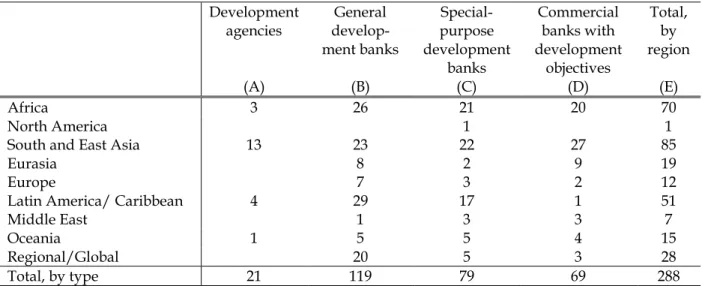
Loans and equity by state-owned banks and development banks. Because those banks
have been used extensively as sources of long-term capital to private firms (Armendáriz
de Aghion, 1999), it is natural that they will have a role in the governance of those firms.
Although the liberalization and privatization reforms of the 1990s reduced the scope of
development banks in some countries, in several cases banks were preserved and even
strengthened. Lazzarini, Musacchio, Bandeira-de-Mello and Marcon (2012) identified
286 development banks throughout the world as of 2011, chiefly concentrated in South
and East Asia (29.7%), Africa (24.5%), and Latin America and the Caribbean (17.8%)
(Table 3). With the global financial crisis of 2008, even in the United States there have
been calls to create a development bank supporting large infrastructure projects.
For instance, Brazil‘s development bank (BNDES) not only acts a lender, but also
as a minority shareholder through a specialized private investment arm, BNDESPAR.
The role of BNDES as a conduit of state influence, jointly with other local public
investors such as pension funds of SOEs, is clearly illustrated by Vale, the third largest
mining company in the world. When in 2009 President Luis Inacio Lula da Silva
publicly pressured Vale to invest in local steel mills and buy Brazilian ships, investors
were confused. Vale was supposed to be a private company and yet the Brazilian
government was acting as if it was a utility or a SOE under its control. In reality, Vale
17 was partly privatized in 1997 when a consortium headed by private owners, BNDES,
and pension funds bought Vale‘s controlling shares and created a controlling entity,
Valepar. Although BNDES and the pension funds individually had minority stakes, if
they voted in block they had more than 50% of the controlling shares. After much
public debate and after taking a lot of criticism and pressure from the Brazilian
government, Vale‘s private shareholders eventually acquiesced and, in April of 2011,
the board of directors dismissed its CEO, Roger Agnelli.
Table 3. Number of Development Banks around the World (2011)
Development agencies General develop-ment banks Special-purpose development banks Commercial banks with development objectives Total, by region
(A) (B) (C) (D) (E)
Africa 3 26 21 20 70
North America 1 1
South and East Asia 13 23 22 27 85
Eurasia 8 2 9 19
Europe 7 3 2 12
Latin America/ Caribbean 4 29 17 1 51
Middle East 1 3 3 7
Oceania 1 5 5 4 15
Regional/Global 20 5 3 28
Total, by type 21 119 79 69 288
Source: Lazzarini, Musacchio, Bandeira-de-Mello and Marcon (2012). Note on the classification scheme:
A. Development agencies: includes investment authorities, training centers, and organizations that provide technical assistance to specific sectors, but that do not specialize in giving out loans.
B. General development banks are those focused on providing loans for or investing in the equity of industrial and/or infrastructure projects. It includes also banks that provide guarantees so that industrial or infrastructure projects can get private funding. They can be regional, such as the Inter-American Development Bank, or domestic, such as the Korea Development Bank.
C. Special-purpose development banks are those financial institutions specialized on credits to agriculture, small and medium enterprises, or the construction industry. That is, we include banks that want to promote construction and housing developments for families who could not get mortgage loans from regular banks. This category can include agricultural banks like The Principal Bank for Development and Agricultural Credit, from Egypt or The Land Bank of the Philippines, or banks with broader objectives such as the National Housing Bank of India. D. There are many banks that we classify as commercial banks with some development objectives because these banks, public or private, operate as regular banks, but tend to have one part of their portfolio focused on specific sectors that the government is targeting. Examples of this are Azerigazbank in Azerbaijan, the Banco de Desarrollo Productivo in Bolivia, and the Bhutan National Bank Ltd, in Bhutan.
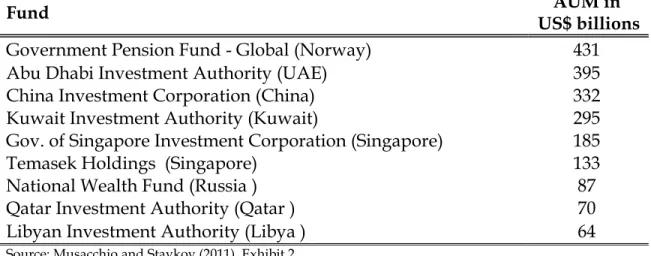
Sovereign wealth funds (SWFs). With the rapid dissemination of SWFs as an
18 risk, minority shareholding positions in publicly listed companies have increasingly
become targets for those funds. The majority of the investments of these funds,
however, are done outside the home country because the idea is to precisely keep a pool
of savings in foreign currency-denominated assets. In particular, many sovereign
wealth funds are designed to diversify the investment of national foreign exchange
reserves into assets other than US or European government bonds.
Table 4. Largest Sovereign Wealth Funds by Assets under Management (AUM)
Fund AUM in
US$ billions
Government Pension Fund - Global (Norway) 431
Abu Dhabi Investment Authority (UAE) 395
China Investment Corporation (China) 332
Kuwait Investment Authority (Kuwait) 295
Gov. of Singapore Investment Corporation (Singapore) 185
Temasek Holdings (Singapore) 133
National Wealth Fund (Russia ) 87
Qatar Investment Authority (Qatar ) 70
Libyan Investment Authority (Libya ) 64
Source: Musacchio and Staykov (2011), Exhibit 2.
Some of these SWFs also invest in companies in their home countries. China
Investment Corporation (CIC) buys shares (minority positions) in China‘s companies
and banks. Temasek, Singapore‘s SWF invests 32% of their portfolio locally, in
companies such as Singapore Technologies Telemedia, Singapore Communications,
Singapore Power, Singapore Airlines, and others.7 Mubadala, a sovereign wealth fund
from Abu Dhabi, invests heavily in large development projects at home in energy,
7 Data from http://www.temasekreview.com.sg/portfolio/major_companies.html, accessed on
19 telecommunications, health care and other sectors.8 The Abu Dhabi Invesment
Authority, one of the largest SWF‘s in the world, in contrast, does not invest in its home
country, the United Arab Emirates.
Other state-controlled funds (e.g. pension funds, life insurance). In India, the Life
Insurance Corporation (LIC) plays the role of large holding company for the
government. LIC is the largest active stock market investor in India, with around $50
billion invested as of September 2011. The government controls LIC and selects its
board and management teams. It often directs LIC to invest in the shares of SOEs,
especially when demand in the IPO of these firms is low. However, LIC and the
government have also been seen to disagree publicly on some occasions. Our
computations indicate that, through LIC, the government of India, as of 2012, invested
in about 25 companies, mostly in minority stakes, which represent about 4% of the total
stock market capitalization of the country. LIC is usually a passive investor. Yet,
when the government directs it to buy shares in partial privatizations, those
investments underperform the market in a significant way.9
In Brazil, pension funds of SOEs, whose management is influenced by
governments, have minority shareholding positions in several publicly traded firms
and often behave as active investors influencing the strategy of firms and even fostering
8Information from Mubadala‘s web page, http://mubadala.ae/portfolio/, accessed on May 17,
2012.
9 This is based on an analysis of the investments LIC made in the privatization (divestments) of
20 mergers of firms in which they have common stakes (Lazzarini, 2011) – as is illustrated
by the case of Vale, discussed earlier.
In sum, all these examples indicate that this more hybrid form of state capitalism
occurs in cases where governments provide capital to private enterprises while at the
same time relinquishing majority control. In all of the institutional forms described
above, influence by the government, if any, is more indirect. Governments can
participate in coalitions of owners (―control blocks‖) to influence the governance of
firms; or they can allocate loans or equity conditional on firms pursuing certain
desirable state objectives.10 We next present alternative explanations for the existence of
those various forms of state capitalism and then more directly contrast their particular
traits and conditions that should make each form more conducive to superior economic
performance.
Why Does State Capitalism Exist?
Several explanations have been advanced to account for the emergence of state
capitalism. While some arguments take a more benign stance—i.e., governmental
involvement in the economy helps solve market failures (the industrial policy view) or
pursue societal objectives that diverge from pure profit-maximizing goals (the social
view)—other arguments adopt a more negative view by emphasizing the distortions
10 This hybrid mode of state capitalism should also be distinguished from hybrid public-private
21 brought by political interference in the way governments manage state-owned
enterprises or direct loans and equity investments (the political view). Still other authors
interpret the propagation and resilience of state capitalism in a more neutral fashion, as
a result of complex historical processes and inherited institutional conditions (the path
dependence view). We next discuss each of these views in detail.
Industrial policy view
The industrial policy view sees the provision of state capital as an important tool
for solving market failures leading to suboptimal productive investment. Two major
sources of market failure are commonly identified. The first has to do with capital
markets. In poorly developed financial markets, investment is severely constrained
(Levine, 2005), especially when firms need to undertake large-scale projects with long
maturity. Governments can thus act as lenders or venture capitalists in conditions
where private sources of capital are scarce. Indeed, a large literature on development
banking proposes that state-owned banks can alleviate credit constraints in the private
sector and promote projects with positive net present value that might otherwise not be
undertaken (Bruck, 1998; Yeyati, Micco, & Panizza, 2004). Moreover, in economies with
significant capital constraints, governmental funding can alleviate capital scarcity and
promote entrepreneurial action to boost new or existing industries (Armendáriz de
Aghion, 1999; Cameron, 1961; Gerschenkron, 1962).
The second source of market failure involves coordination problems. Thus,
22 especially when a given regional context is subject to externalities across industries and
activities (Krugman, 1993; Marshall, 1920; Rodrik, 2007). Investing in a processing plant,
for instance, will be more attractive for private owners if raw materials and efficient
transportation infrastructure are available at low cost. Hirschman (1958) famously
proposed that backward and forward linkages in the production chain will have to be
created to spur local development. Following this logic, a ―big push‖ by the
government may be necessary to promote coordinated, complementary investments
(Murphy, Shleifer, and Vishny, 1989; Rosenstein-Rodan, 1943).
Such coordination problems will be magnified in a context of shallow capital
markets: were private capital abundant, governments could simply incentivize the
emergence of new sectors through differential tax regimes or temporary protection.
However, under conditions of capital scarcity, direct or indirect provision of state
capital may be beneficial to foster complementary investments. In his in-depth analysis
of Brazilian industrialization, Trebat (1983) concludes that SOEs were instrumental to
industry-level development in a context of scarce capital markets: ―Public enterprise has
been considered in Brazil as a shortcut to industrialization—an expediency forced upon
policymakers by the absence of a well-financed domestic private sector and by Brazil‘s
reluctance to allow transnational corporations into certain strategic sectors‖ (p. 116).
Yet this discussion fails to account for the many and varied institutional forms of
state capitalism. Governments may boost complementary investments by creating SOEs
23 to private firms and provide equity through development banks or state funds. Still in
other cases, private firms themselves may create alliances to spur joint investment and
access foreign capital and resources through global production chains (Coe, Dicken, &
Hess, 2008; Pack & Saggi, 2006). In other words, although the industrial policy view
helps explain the role of state capitalism in addressing market failure, it does not
explain why in some cases Leviathan is a majority investor, while in others Leviathan
acts more indirectly through non-controlling shares or targeted lending, i.e., as a
minority investor.
Social view
The social view asserts that state-influenced firms pursue a ―double bottom line.‖
That is, they will have ―noncommercial‖ objectives that go beyond profitability or even
contradict the simple principle of shareholder value maximization (Ahroni, 1986; Bai &
Xu, 2005; Shapiro & Willig, 1990; Toninelli, 2000). In the words of Shirley and Nellis
(1991, p. 17), ―noncommercial objectives include the use of public enterprises to
promote regional development, job creation, and income redistribution; they often
involve taking on or maintaining redundant workers, pricing goods and services below
market (sometimes even below costs), locating plants in uneconomic areas, or keeping
uneconomic facilities open.‖ Governments may also determine the cost of inputs, set
wage ceilings, subsidize interest rates, or give SOEs investment funds at preferential
24 will emerge as a way to pursue social objectives in corporate decision-making—such as
high employment or low prices—by reducing the pressure to maximize profits.
Similarly, this freedom from shareholder value maximization means that state
capital can pursue long-term goals that may be unpalatable to private investors seeking
quicker returns (Kaldor, 1980). Private investors may reduce their shareholdings or
even exit the firm in case of unsatisfactory short-term performance. Some projects,
however, may deliver effective results only in the long-term, and a more ―patient‖
source of capital may be necessary to withstand periods of market turbulence.
Governments can therefore act as ―a financial partner‖ committed to supporting
valuable projects with relatively long timelines (McDermott, 2003, p. 22). Musacchio
and Staykov (2011), for instance, argue that a key feature of SWFs is their long-term,
patient orientation. These funds, the authors argue, ―are also more immune to ‗animal
spirits‘ and could more easily withstand market panic…‖ In addition, ―without any
short-term pressure to return a significant portion of assets in cash to their
governments, SWFs could afford to stay in their investments during market troughs‖
(p. 7).
Therefore, in the social view, state capitalism will deliberately attenuate the
high-powered profit-based incentives of private capitalism. A reduced emphasis on profit
maximization in the public sector is aligned with Williamson‘s (1999) analysis of public
versus private governance. He introduces the concept of probity: the need for ―loyalty
25
intelligence, managing the money supply, and, possibly, the judiciary‖ (p. 321).
Williamson (1999) argues that low-powered incentives in the public sector guarantee
probity by avoiding excessive ―resource deployment from cost savings‖ (p. 325). In
similar vein, Hart, Shleifer, and Vishny (1997) stress that public organization will be
desirable when profit-maximization causes an excessive emphasis on cost reduction at
the expense of ―quality‖ (e.g. effective student learning in schools). Although
Williamson (1999) and Hart et al. (1997) do not focus on the state ownership of
corporations, their propositions are consistent with the social view. In this sense, state
capitalism may emerge as a way to ―tame‖ the profit-based, short-term motivations of
markets.
Like the industrial policy view, however, the social view does not explicitly
account for the variation in state capitalism discussed earlier. Arguably, governments
will more easily prompt managers to pursue social goals if they have majority control—
i.e. if they can veto decisions that conflict with their desired objective to avoid excessive
unemployment or high prices. However, it is also possible that, through minority
stakes, governments will be able to have some degree of influence. The long-term
orientation of SWFs, discussed before, is an example. Governments may also try to
convince other owners of PPFs to follow social objectives, and those owners may
acquiesce to governmental interference as a way to preserve their interests in PPFs or
receive future benefits (e.g. continued provision of state capital). We will further
26 Political view
While the industrial policy and social views see governmental influence and the
attenuation of high-powered market incentives as benign or even beneficial, the
political view underscores their resulting inefficiencies (Chong & Lopez-de-Silanes,
2005; La Porta & López-de-Silanes, 1999; Shleifer, 1998; Shleifer & Vishny, 1994). Thus,
Shleifer and Vishny (1998, p. 10) contend, ―the key problem of state firms is government
interference in their activities to direct them to pursue political rather than economic
goals.‖ Politicians and politically connected capitalists may extend their ―grabbing
hand‖ to divert public resources for their own benefit, with negative consequences for
corporate performance. Political interference in SOEs can result in excessive
employment or the selection of employees on the basis of political connections instead
of merit or background, and those employees will typically lack the high-powered
incentive contracts commonly found in private corporations (e.g. bonuses or stock
options). Thus, SOEs that suffer from too much political intervention may end up
making poor choices in product mix and location. They may fail to cut costs and
streamline their operations in periods of crisis, and they may pursue inefficient,
unprofitable investments to placate the pressure of governments.
This problem is aggravated by the so-called soft budget constraints of state
corporations (Kornai, 1979; Lin & Tan, 1999). With abundant and ―patient‖ capital from
the state, bureaucrats will be more likely to approve bad investments, and use public
27 investors towards profitability, SOEs can be more effectively used as sources of cheap
capital to meet the political objectives of governments and politicians. The political view
diverges from the social view in that it views the lack of high-powered incentives of
public governance as a critical downside. Furthermore, (Shleifer & Vishny, 1998) view
managers in state-owned enterprises as corrupt officers trying to use their posts to their
own personal advantage. The resulting inefficiencies will be more acute depending on
the extent to which political meddling distorts corporate decision-making and
corruption cannot be curtailed.
Although political interference is arguably more intense in SOEs with majority
state control, the political view also explains certain types of interference that may occur
when Leviathan is a minority investor, i.e., in the hybrid mode of state capitalism.
Namely, public-private connections may be conduits of cronyism: a mechanism through
which ―those close to the political authorities who make and enforce policies receive
favors that have large economic value‖ (Haber, 2002, p. xii). In the political view,
governments provide capital to firms not to channel funds to socially efficient uses, but
rather to maximize their personal objectives or engage in crony deals with rent-seeking,
politically-connected industrialists (e.g. Faccio, 2006; Kang, 2002; Krueger, 1990).
A recent literature has found empirical evidence consistent with the hypothesis
that financing can be influenced by political factors such as election cycles and
campaign donations (e.g. Claessens, Feijen, & Laeven, 2008; Dinç, 2005; Sapienza, 2004).
28 support—either through campaign donations to the government‘s political coalition, or
investment decisions that benefit politicians and their constituencies. And firms may
request subsidized credit or cheap (minority) equity even in cases where projects could
be normally funded and launched using private sources of capital. The potential for
cronyism also arises in the creation of ―national champions‖ (Falck, Gollier, &
Woessmann, 2011). That is, politicians and officials explicitly pick certain private firms
to receive funds, either debt or equity, as a way to propel them to consolidate their
sectors and grow. On the one hand, the creation of national champions is consistent
with the more benign industrial policy view asserting that state capital can solve market
failures thwarting industrial development. On the other hand, some argue that the
criteria governments use to select particular firms over others are not clear and have
sometimes been linked to political objectives or corruption (Ades & Di Tella, 1997).
National champions may therefore be another manifestation of governments‘ desire to
influence the private sector to pay political dividends (Bremmer, 2010).
Consistent with this political view and our earlier discussion on PPFs, several
authors submit that some governmental influence remains even after firms are
privatized. Bortolloti and Faccio (2009) find that, after 2000, governments of OECD
countries kept some degree of control in 62.4% of their privatized companies.
Examining privatization events in transition economies, Pistor and Turkewitz (1996)
observe that while private companies with state ownership ties benefit from ―state
29 leverage in influencing certain decisions, such as energy prices or the closure of
factories in regions with high employment‖ (p. 231). Bennedsen (2000) offers a
game-theoretic mode where one of the equilibria involves private capitalists acquiescing to
state directives (e.g. avoiding excessive layoffs) in return for subsidies. The
implications of post-privatization business-government ties are also examined by
Boyko, Shleifer and Vishny (1996) and Kauffman and Siegelbaum (1996).
Therefore, while political interference may explain the desire to create SOEs, it
also helps explain the emergence of hybrid (minority) state capitalism. Outright
political influence through governmental fiat power is substituted for a more indirect
and nuanced influence, often through crony ties. In the words of Shleifer and Vishny
(1994, p. 998), ―there is no magic line that separates firms from politicians once they are
privatized.‖11
Path dependence view
The path dependence view explains both the emergence of—and variation in—
state capitalism as a result of idiosyncratic, country-level institutional features and
historical processes. At a fundamental level, path-dependent processes occur because of
complex interactions among political and economic actors who will try to preserve their
interests in the face of imminent change (North, 1990). The defining event in the recent
11 Focusing on the Chinese case, Nee and Oppen (2007) describe what they call ―politicized
30 evolution of state capitalism has been the privatization programs of the last few decades
of the twentieth century. Most countries around the world followed a common path in
the ascent of state capitalism in earlier decades, but the process of privatization and
divestiture of government-owned corporations has been uneven. The result is
considerable variation in the way the state owns companies and intervenes to prop up
private companies (i.e., national champions). Many aspects of the path dependence
view are consistent with the political view, which emphasizes the mutual benefits that
government and business actors derive from their continued connections with one
another. However, while the latter underscores the inefficiencies of state capitalism,
path dependence theorists tend to take a more neutral perspective, highlighting how
state capitalism may simply be a manifestation of country-level persistence of certain
fundamental institutions and complex social interactions.12
Stark‘s (1994, 1996) examination of market transition in East European countries
is an example of uneven and incomplete privatization. Compiling data from newly
privatized firms in Hungary, Stark (1996) reveals that they remained partially owned by
state actors (Hungary‘s State Property Agency and the State Holding Corporation), and
that these actors also participated in numerous top Hungarian firms jointly with private
and foreign owners. He notes that ―ironically, the agencies responsible for privatization
12 For good surveys of the history and resilience of SOEs as central features of the capitalist
31 are acting as agents of étatization‖ (p. 1001). He refers to this process as a recombination
of public and private resources drawing on existing routines, practices, and social ties in
the economy. Given that these ―local‖ features tend to be country-specific, this view
suggests not only that ownership relations will be heterogeneous across countries, but
that the importance of the state will great vary according to inherited conditions (e.g.
Bebchuk & Roe, 1999). ―A new social order,‖ writes Stark (1994, p. 65), ―cannot be
created by dictation—at least not where citizen themselves want a voice in determining
the new institutions.‖
A related argument is that the feasibility of privatization will depend on local
ideology and attitudes towards public or private ownership (Durant & Legge Jr., 2002;
Hirschman, 1982); and that governments will try to take those considerations into
account when designing reform policies. Anticipating negative public reactions
associated with privatization programs, governments may involve domestic owners
and state agencies in the execution of those programs, while at the same time infusing
state capital in the newly privatized companies as a way to signal to the public that the
government remains present in the economy (Kuczynski, 1999). Negative public
reactions against privatization can be especially acute when SOEs are sold to large
capitalists and foreign owners. For instance, in line with Stark‘s (1996) findings, the
Brazilian Development Bank (BNDES) not only coordinated the whole privatization
program, but also kept minority stakes in several companies (Inoue, Lazzarini, &
32
mixed consortia involving foreign, private, and state actors in Brazil helped to ―dilute
political criticisms that often accompany the transfer of privatized assets to foreign
entities.‖
Bortolotti, Fantini and Siniscalco (2004) also emphasize heterogeneity in the
extent to which governments privatized SOEs, measured as total privatization revenues
to GDP for 1977-1999. They find that privatization varied across countries according to
three factors. First, they find that the fiscal situation of the government, when the
privatization programs started, determined the urgency to privatize SOEs. Second, the
level of financial market development (measured as market capitalization to GDP and
the stock market turnover ratio) also determined the feasibility of mass privatization
programs as it facilitated share issue privatizations. Third, these authors find that
authoritarian governments have a harder time privatizing.13 Thus, local political
regimes—which tend to be very resilient—also seem to determine the extent of
governmental ownership.
In sum, the path dependence view offers new insights on the prevalence of
Leviathan as a majority investor and, perhaps more importantly, on the emergence of
the hybrid mode of state capitalism with Leviathan as a minority investor. In the path
dependence view, hybrid state capitalism will naturally result from existing rules, ties,
and ideologies that existed prior to reform programs. With the transfer of assets to
13 It is not clear that this result holds for developing countries, where nondemocratic
33 private owners, the state may remain partially disseminated in the economy as a way to
preserve previous connections with the productive sector or to minimize public
opposition towards reforms. Viewed from a different angle, a lower incidence of state
capitalism may also be explained by a favorable ideological position by political parties
towards more liberal markets, as is the case of Mexico or Chile (see e.g. Bremmer, 2010,
p. 122).
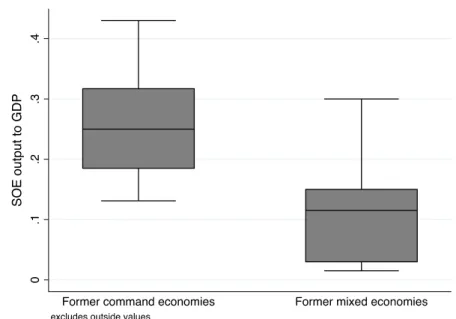
Figure 3 shows that state capitalism does have strong path dependence, even
after decades of privatization. In this figure we plot the percentage of SOE output to
GDP for a series of countries that were classified as mixed economies in 1980 (such as
Germany, France, and Brazil) and economies that were considered command economies
(such as China, the Czech Republic, and Russia). It is clear that in more recent years,
SOEs are still more important in former command economies.
34 Source: Data from Table 1 matched with data from the appendix of World Bank (1995). Former command economies
include China, the Czech Republic, Finland, India, Poland, Russia, Slovak Republic, and Vietnam. Former mixed economies include Belgium, Brazil, Denmark, France, Germany, Greece, Indonesia, Italy, Mexico, The Netherlands,
New Zealand, Singapore, Sweden, Thailand, and Turkey.
Furthermore, countries in which the state had a larger presence in the economy
in 1980 tend to have governments with more SOEs in general and more minority
investments in corporations in later years. Figures 4 and 5 depict these relationships in
simple scatter plots. In Figure 4 we show the correlation between SOE output in 1980
and the number of SOEs under majority control circa 2010 in a variety of countries.
Former command economies tend to preserve a heavier presence of the state in the
ownership of corporations today. We interpret these positive correlations as evidence
consistent with the path-dependence view.
Figure 4. SOE Output to GDP in 1980 vs. the Number of Federal SOEs per Million People (circa 2010)
35 There is also strong path-dependence when it comes to the number of companies
in which the government has minority ownership and the level of SOE output to GDP
in 1980. Figure 5 shows that this correlation is high and that former command
economies have a larger number of firms with state minority ownership. Consistent
with Stark (1994, 1996), former socialist countries in Easter Europe tend to have the
largest presence of Leviathan both as a majority and as a minority shareholder.
Figure 5. SOE Output to GDP in 1980 vs. the Number of Companies with the Government as a Minority Shareholder per Million People (circa 2010)
36 Varieties of State Capitalism: Features and Performance Implications
We now consolidate the previous theoretical discussion in a comparative
framework describing key attributes of each variety of state capitalism and its
implications for the performance of firms and social welfare. For the sake of
comparison, we also consider features of private ownership. As indicated in Table 5, we
identify four general traits that should greatly differ across modes: the extent to which
each mode creates agency problems (i.e. managers whose goals are misaligned with
firm-level objectives); the resulting state capacity to coordinate and enforce societal objectives in
the economy; the observed level of cronyism defined by the extent to which political
connections yield private companies favors from the government; and the rigidity of
allocations in the economy, indicated by the degree to which new, entrepreneurial firms
enter the system while old, inefficient firms exit. We next describe these traits in more
detail.
Table 5. The Modes of State Capitalism in Comparative Perspective
Leviathan as a majority investor
Leviathan as a minority investor
Private ownership Agency problems within
firms HIGH MODERATE
MODERATE to LOW State capacity to
coordinate the economy and attain social goals
HIGH MODERATE LOW
Potential for
(public-private) cronyism MODERATE HIGH LOW
Flexibility of allocations
37 Agency problems
The problem of delegating decisions to agents whose objectives may not be
aligned with those of principals has been long discussed by agency theorists (Jensen &
Meckling, 1976). The remedies for principal-agent misalignment normally involve
performance-contingent incentive contracts for managers, direct monitoring by
principals, or a combination of both. Those remedies are far more difficult to implement
in SOEs than in privately owned firms. Thus, incentive contracts usually work best
when there are objective, readily observable performance metrics such as profits or
share prices (Holmstrom & Milgrom, 1991; Shirley, 1989). However, as suggested by the
social view, governments often add social objectives in the management of SOEs, and
this may lead to confusing goals (Bai & Xu, 2005). Should managers maximize profits,
minimize salaries, or maximize employment? Furthermore, Williamson (1999) submits
that low-powered incentives to managers are a defining feature of state organization, a
feature that will guarantee probity (e.g. managers may not be too incentivized to
increase profits at the expense of more general social objectives).
Monitoring in public bureaucracies is also challenging (Alchian, 1965; De Alessi,
1980). Many activities in the public sector involve multiple principals dispersed across
various domains (Dixit, 2002; Moe, 1984). For instance, if the objective of an SOE is to
maximize social welfare, it is not clear who the relevant stakeholder is: Is it society as a
whole? Is it the citizens of the city where the company operates? Or, is it the workers of
38 monitors, such as shareholders actively participating in corporate boards. In fact,
governments may appoint politicians or politically-connected actors to ―monitor‖ SOEs,
thereby leading to the fundamental question of ―who monitors the monitors‖or ―who
guards the guardians‖ (Cabral & Lazzarini, 2010; Hurwicz, 2008). Unlike shareholders
of private firms, those appointed board members do not have their wealth at stake
when executing their monitoring duties. In addition, managers in SOEs do not have the
threat of a hostile takeover when they underperform relative to their peers, and do not
face risk of bankruptcy because they know the government will recapitalize or bail out
the company if it becomes insolvent (Shleifer, 1998; Vickers & Yarrow, 1988).
Agency considerations have been largely employed to explain the empirical
finding that SOEs with majority state control usually underperform private companies
(e.g. Boardman & Vining, 1989; Chong & Lopez-de-Silanes, 2005; Kikeri, Nellis, &
Shirley, 1992; La Porta & López-de-Silanes, 1999; Yiu, Bruton, & Lu, 2005); for a review,
see Megginson and Netter (2001). What then can be said about the hybrid mode where
Leviathan is a minority investor? Because in that hybrid mode the state does not directly
control the firms, we should generally expect that the aforementioned agency problems
will be less intense in private companies in which the government is only a minority
investor, compared to state-controlled SOEs. However, there may be residual interference
in PPFs or firms in which the government has minority stakes. Governments may
participate in coalitions with other shareholders so as to appoint politically-connected
39 potentially attenuating managerial incentives and making it more difficult to attract
high-skilled personnel. Thus, agency problems in the hybrid mode should be at
intermediate levels between the polar modes of full state control and private ownership.
Some studies of privatization and PPFs confirm that in some performance dimensions
they fare better than state-owned, but not necessarily better than private companies
(Boardman & Vining, 1989; Majumdar, 1998).
State capacity to coordinate the economy and attain social goals
The industrial policy and social views emphasize that state ownership can help
solve market failure and attain social objectives beyond pure profit maximization.
According to these views, the overall desire to coordinate economic development will
therefore mandate some form of ―entrepreneurial‖ governmental action. Arguably,
SOEs with full state control can be a vehicle to foster long-term, fixed investments and
establish myriad industrial ―linkages‖ by fiat. Indeed, many authors note that the late
industrialization of countries in Latin America and South Asia involved some form of
direct governmental action through SOEs (Di John 2009; Jones & Sakong, 1980; Rodrik,
2004; Trebat, 1983; Wade, 1990).
As for the hybrid mode of Leviathan as a minority investor, the government‘s
capacity to implement such coordination will depend on the residual interference in
firms where the state has minority stakes. When governments invest in or lend to
multiple private firms without any concerted action with majority shareholders, their
40 privately-owned, autonomous firms mostly focused on profit maximization. However,
as noted before, governments may form coalitions with other owners and therefore
influence decision making more indirectly. Because such coalitions are not always
possible, the mode where Leviathan is a minority shareholder should yield moderate
ability for governments to intervene, compared to the mode where governments have
full control of a large number of firms.
Level of (public-private) cronyism
Recall our previous discussion of cronyism as a mechanism through which
politically-connected private actors receive favors from the state. In the stylized mode
where Leviathan is a majority investor, the pervasiveness of state-controlled SOEs
implies that there will be fewer private actors who can directly benefit from state
initiatives. Although state bureaucrats and their cronies can establish mutual ties for
their own benefit, most allocations of financial resources will be influenced by and
within the state through state bureaus and state-controlled corporations. China is an
example, with several state-owned firms with managers closely tied to the government
and to the Communist Party (Lin & Milhaupt, 2011).
In contrast, in the Leviathan as a minority investor mode, the presence of several
private, controlling owners whose firms largely draw from state capital magnifies the
opportunities for cronyism. Consider, for instance, the case of subsidized loans by
development banks. In cases where banks provide massive amounts of capital to
41 benefit to invest in connections to attract cheap capital increases substantially. For
instance, Lazzarini, Musacchio, Bandeira-de-Mello and Marcon (2012) find that
allocations by Brazil‘s BNDES depend on whether firms donated to elected political
candidates, and that those allocations do not have a consistent effect on observed
firm-level investment decisions. In other words, subsidized state capital may be channeled to
politically-connected capitalists who could probably attract capital elsewhere.
Therefore, the more extensive and permeable public-private interface that
prevails when Leviathan is a minority investor suggests that the level of cronyism will
tend to be more prevalent in this hybrid mode of state capitalism. In the polar mode
where the state is a majority investor, most allocations actually flow within the state
apparatus. On the other hand, the more governments move from the business of fully
owning and managing firms, to the business of investing in minority positions and
lending to private firms, the more private actors will have incentives to share rents with
officials through legal (e.g., campaign donations) and illegal means (e.g., through
bribes) in order to influence the way in which government invests or lends capital.
Entrepreneurial flexibility and ease of entry and exit
Private ownership with minimal state interference is often associated with an
inherent ability to churn out new entrepreneurial firms while at the same time avoiding
the persistence of unproductive incumbents (Ahroni, 1986; Baumol, Litan, & Schramm,
2007; Bremmer, 2010). A key aspect of this mode, in its stylized form, is a low level of
42 (e.g. technological disruptions or the emergence of more competitive foreign players).
Such flexible adjustments are more difficult under state capitalism. Governments may
want to shield domestic firms and SOEs against foreign competition, or build national
champions with the use of subsidized credit and import tariffs. As suggested by the
path dependence view, such interventions likely have persistent effects. Furthermore,
given that direct state involvement is more pervasive in the majority Leviathan mode,
flexible adjustments will be easier when Leviathan is a minority investor—even though
the existence of political connections will create entry and exit barriers superior to the
pure private ownership mode. For instance, cronyism has been used as one of the
explanations for the bail out of large private groups in East Asia after the crisis of 1997
(Kang, 2002).
Factors that influence the emergence and operation of each mode of state
capitalism
Given the previous discussion on the advantages and drawbacks of the various
forms of state capitalism, a natural question is: which conditions will make a given
mode more suitable? By ―suitable,‖ we mean the degree to which each mode will allow
for long-term economic development and better firm-level performance, after taking
into account existing constraints posed by country-level institutions and historical
43 Figure 6. Varieties of State Capitalism: Conditions Affecting the Prevalence of Each
Mode.
Conditions which favor the mode of Leviathan as a majority investor
Pressure towards improved managerial profile of SOEs. The performance of the
majority Leviathan mode should largely increase when governments prioritize the
selection of professional, competent, and public-minded managers. A clear hypothesis
coming from studies of public organizations follows the Weberian idea that Leviathan as a majority
investor
Pressure towards improved managerial profile and corporate governance of SOEs.
Degree of within-sector competition.
Shallow capital markets.
Industrial sectors with ―double bottom line.‖
Leviathan as a minority investor (hybrid)
Pressure to improve corporate governance of private firms with state capital.
Moderately shallow capital markets.
Restrained cronyism.
Public opposition towards full-fledged privatization and/or desire to promote national champions.
State capitalism
Privately-owned firms Well-developed capital markets. Industrial sectors or activities with ―single bottom line.‖