Original Article
Artigo Original
Metacognitive reading strategies of children
with learning disabilities
Estratégias metacognitivas de leitura de
crianças com distúrbio de aprendizagem
Ana Paola Nicolielo-Carrilho1
Simone Rocha de Vasconcellos Hage1
Keywords
Child Language Metacognition Reading Learning Child
Descritores
Linguagem Infantil Metacognição Leitura Aprendizagem Criança
Correspondence address:
Simone Rocha de Vasconcellos Hage Alameda Dr. Otávio Pinheiro Brisola, 9-75, Vila Nova Cidade Universitária, Bauru (SP), Brazil, CEP: 17012-901. E-mail: [email protected]
Received: April 25, 2016
Accepted: November 15, 2016
Study carried out at Departamento de Fonoaudiologia, Faculdade de Odontologia de Bauru, Universidade de São Paulo – USP - Bauru (SP), Brazil.
1 Universidade de São Paulo – USP - Bauru (SP), Brazil.
Financial support: CNPq - Conselho Nacional de Desenvolvimento Cientíico e Tecnológico.
Conlict of interests: nothing to declare.
ABSTRACT
Purpose: to check the use of metacognitive reading strategies in children with learning disabilities and determine whether there is a relationship between their use and text comprehension. Methods: the study was conducted on 30 children, aged 8 to 12 years, of both genders, divided into experimental group (EG) - 15 children with learning disabilities; and control group (CG) - 15 children without disability. All children were submitted to the Reading Strategies Scale and Prolec text comprehension subtest. The sample was described in mean, median, minimum and maximum values. Comparative analysis was performed between the groups using the Mann-Whitney test. The degree of correlation between variables was veriied by Spearman Correlation Analysis. The signiicance level was set at 5%. Results: across the total scores of the scale, EG performance was lower in all descriptive measures, with a signiicant difference compared to CG. The EG achieved a performance close to children without dificulties only in global strategies. The correlation between the use of metacognitive strategies and reading comprehension was positive. Conclusion: children with learning disabilities showed deicits in the
use of metacognitive reading strategies when compared to children without learning disabilities. The better the performance in reading strategies, the better textual comprehension was and vice versa, suggesting that metacognitive reading skills contribute to reading comprehension.
RESUMO
Objetivo: veriicar o uso de estratégias metacognitivas de leitura de crianças com Distúrbio de Aprendizagem e
averiguar se há relação entre este uso e a compreensão de textos. Método: participaram 30 crianças, de 8 a 12 anos, de ambos os gêneros, divididas em grupo experimental (GE) - 15 crianças com Distúrbio de Aprendizagem; e grupo controle (GC) - 15 crianças sem diiculdades. Todas foram submetidas à Escala de Estratégias de Leitura e o subteste compreensão de textos do Prolec. A descrição da amostra foi feita em valores de média, mediana,
mínimo e máximo. Para análise comparativa entre os grupos, foi utilizado o Teste de Mann-Whitney. O grau de correlação entre as variáveis foi veriicado pela Análise de Correlação de Spearman. Foi adotado o nível de signiicância de 5%. Resultados: na pontuação total da escala, o desempenho do GE foi inferior em todas as medidas descritivas com diferença signiicante em relação ao GC. O GE apresentou desempenho próximo ao das crianças sem diiculdade somente nas estratégias globais. A correlação entre o uso de estratégias metacognitivas e a compreensão de textos foi positiva. Conclusão: as crianças com Distúrbio de Aprendizagem evidenciaram
INTRODUCTION
Some schoolchildren present important problems while learning how to read and write, posing a great challenge to educators and health professionals(1). The dificulties experienced
by them imply low performance in reading and/or writing activities, besides mathematical operations, even though they present normal intelligence, no visual or hearing impairment or emotional disorders, and appropriate academic opportunities(2). These characteristics are present in cases of Learning Disabilities
(LD)(3).
The characteristics of LD become more evident during school
learning, yet its manifestations may occur earlier. Schoolchildren with LD present failures in cognitive, linguistic, metalinguistic, hearing and/or visual processing, which in turn impair the abilities to analyze, synthesize, manipulate, store and evoke linguistic information, impairing the learning of alphabet-based writing systems(4).
Metalinguistic abilities, such as phonological, lexical and syntactic consciousness, have been shown as important aspects for the appropriation of written language, and limitations in
such abilities may explain dificulties in reading(5) and written
expression(6). Not only metalanguage, but also metacognition
have been related with good school performance, and impaired
metacognitive abilities have been related with dificulties in the
learning process.
The understanding of individuals about their own cognitive
processing is named by Cognitive Psychology as metacognition(7).
It refers to knowledge on noticing and reporting about internal and external factors that affect learning, and also what to do to achieve better performance based on this knowledge(8). It has great inluence on the learning process of writing(9). At school, metacognitive strategies are deined as mental actions with
which the student is involved during learning and that facilitate the recovery of acquired knowledge, enhancing the quality of this process(10,11). Thus, dificulties in the learning process may
be related with failures in the ability of planning, monitoring and control of some academic activities(12).
Studies have demonstrated that the practice of metacognitive activities may improve reading comprehension, enhancing the chances of text understanding among schoolchildren compared to those who do not use them(13-16). Within this context, the role
of metacognitive abilities should be emphasized in the diagnosis and intervention of schoolchildren with LD, who among other
characteristics present dificulties in text understanding. Therefore, this study evaluated the utilization of metacognitive
reading strategies in children with Learning Disabilities, besides assessing if there is a relationship between this use and the ability of text comprehension.
METHODS
This study was approved by the Institutional Review Board
of Faculdade de Odontologia de Bauru, Universidade de São Paulo (CAAE 17047013.2.0000.5417, protocol n. 321978).
All parents or caretakers of children signed an informed consent form agreeing with their participation.
The study was conducted on 30 children, aged 8 to 12 years,
of both genders, regularly enrolled in fundamental school, who were equally divided into two groups: experimental (EG), composed of 15 children previously diagnosed with Learning Disability; and control (CG), composed of 15 children without
learning dificulties.
As inclusion criteria, children in the EG should present previous diagnosis of Learning Disability (LD) performed by an
interdisciplinary team of a higher education institution. They were
submitted to neuropsychological and speech-language therapy
assessment (oral language, writing and listening). The criteria
adopted by the team for the diagnosis of LD were those described by the “National Joint Committee on Learning Disabilities”(3)
and DSM-IV(2). This diagnostic is achieved when the academic
skills of children are substantially below the expected, in the absence of intellectual, hearing or visual disability, emotional disorder nor inadequate educational instruction. Despite the average or even above average intelligence, these children
have signiicant dificulties to acquire basic academic skills as luent reading of words, correct spelling, written expression
and domain of mathematical operations.
The GC was achieved to compare the performance of skills
tested. Schoolchildren without learning disabilities were matched with those with LD according to gender, age, educational level
and type of school (public or private). The schoolchildren were
recruited in the clinic of Pediatric Dentistry of Faculdade de Odontologia da Universidade de São Paulo, where they undergo
dental evaluation and/or intervention. To be included in the
study, they should not have complaint and/or previous history of disturbances in the development of oral language and hearing, and should present reading performance compatible with their
school level. These criteria were checked by applying a brief
anamnesis with the parents or caretakers of children, as well as application of a reading text of the book Compreensão da Leitura 1 – Fichas para desenvolvimento da compreensão de leitura com crianças(17).
All children in EG and CG were submitted to evaluation of metacognitive reading strategies by reading the Escala de Estratégias de Leitura Ensino Fundamental I(18). This scale aims
to verify the type and frequency of metacognitive strategies used by children before, during and after reading child literary texts. It consists of 13 Likert-type statements with three scores (never:
0 point; sometimes: 1 point; always: 2 points). The statements are
divided into three categories, which indicate the factors related to the strategies. Factor 1 (questions 1, 7, 9, 11 and 13) includes reading support strategies, called Metacognitive Strategies for Reading Support, with maximum score of 10 points. Factor 2 (questions 4, 6, 8, 10 and 12) gathers items related to strategies used to solve understanding problems, called Metacognitive Strategies of Problem Solving. Factor 3 (questions 2, 3 and 5) groups
strategies used for general analysis of the text, and is identiied as Global Metacognitive Reading Strategies. The statements
reading: before (questions 1 to 3), during (questions 4 to 9) and
after (questions 10 to 13). The sum of the points is performed
by factor, by reading moment and considering all items. Chart 1 presents the questions of the Reading Strategies Scale, the factor and moment to which they belong.
Instructions about the test were provided to the children. After elucidating any doubts, the questions were read by the examiner, and the child should select one alternative (never,
sometimes or always). This study considered the raw score.
For the assessment of reading understanding, the text understanding subtest “Prova de Avaliação dos Processos de Leitura” (Prolec)(19) was used. This consists of four texts, being
two narrative and two expository, which should be read by the child and, for each of them, the child should read and answer
four questions, being two literal and two inferential. The total
score obtained in the subtest was considered.
The sample was described by the mean, median, minimum
and maximum values. Comparative analysis between groups
was performed by the Mann-Whitney, at a signiicance level of 5% (0.050). The degree of correlation between variables of interest was veriied by the Spearman correlation analysis.
RESULTS
The study sample presented mean age 9.8 years, with educational
level between third and sixth grades, with predominance (76%) of males.
Table 1 exhibits the descriptive measurements of performance of the experimental and control groups in the reading strategies scale, considering the total score, type and moment of utilization of the strategy.
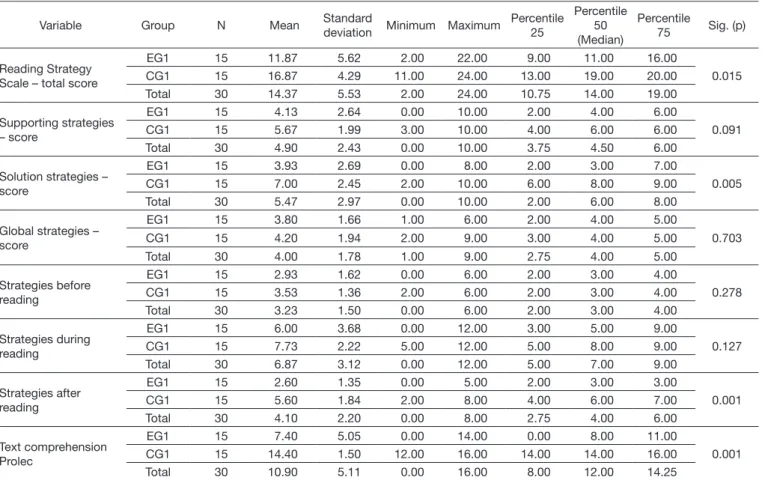
Table 2 indicates the values of comparison between groups
with and without learning disability, considering a signiicance
level of 0.05.
Data in Table 3 present the Spearman correlation analysis between performance in the utilization of metacognitive strategies and text understanding in the experimental group.
Chart 1. Questions of the Reading Strategy Scale and classification according to Factor and Moment
Questions Factor Moment
1) Imagine how the story is by reading the title 1 Before
2) Check the number of pages before reading 3 Before
3) Check the story sequence before reading 3 Before
4) Read again parts of the story that were not understood 2 During
5) Observe the book figures to enhance the comprehension 3 During
6) Read again part when distracted 2 During
7) Use text markers to highlight what is considered important 1 During
8) Read attentively and slowly to improve comprehension 2 During
9) Search for new words in the dictionary 1 During
10) Remember the main parts of the story after finishing reading 2 During
11) Re-read the text several times in case of difficulty to understand it 1 After
12) Remember the main parts of the story to check comprehension 2 After
13) Talk with colleagues about the stories to check comprehension 1 After
Table 1. Performance of EG and CG in the reading strategy scale considering the total score, type of strategy (support, solution and global) and moment of strategy (before, during and after)
Variable Group N Mean Standard
deviation Minimum Maximum
Percentile 25
Percentile 50 (Median)
Percentile 75
Reading Strategy Scale – total score
EG 15 11.87 5.62 2.00 22.00 9.00 11.00 16.00
CG 15 16.87 4.29 11.00 24.00 13.00 19.00 20.00
Supporting strategies – score
EG 15 4.13 2.64 0.00 10.00 2.00 4.00 6.00
CG 15 5.67 1.99 3.00 10.00 4.00 6.00 6.00
Solution strategies – score
EG 15 3.93 2.69 0.00 8.00 2.00 3.00 7.00
CG 15 7.00 2.45 2.00 10.00 6.00 8.00 9.00
Global strategies – score
EG 15 3.80 1.66 1.00 6.00 2.00 4.00 5.00
CG 15 4.20 1.94 2.00 9.00 3.00 4.00 5.00
Strategies before reading
EG 15 2.93 1.62 0.00 6.00 2.00 3.00 4.00
CG 15 3.53 1.36 2.00 6.00 2.00 3.00 4.00
Strategies during reading
EG 15 6.00 3.68 0.00 12.00 3.00 5.00 9.00
CG 15 7.73 2.22 5.00 12.00 5.00 8.00 9.00
Strategies after reading
EG 15 2.60 1.35 0.00 5.00 2.00 3.00 3.00
DISCUSSION
Many children will learn to read and write without any signiicant dificulties in this process; however, others will have problems to perform mathematical operations, spelling, read luently and
understand what they read, despite the proper instruction and absence of sensory or intellectual disabilities, constituting a case
of LD. The occurrence of reading understanding dificulties in
individuals with LD is widely reported in the literature, especially in Brazilian publications(20-23), and has been related with damage
in oral language, visual and speech-language recognition of the word, working memory, reader’s capacity to integrate explicit and implicit information, among others.
The reading understanding includes several interrelated
cognitive processes, such as recognition and extraction of meanings of printed words and, though necessary, they are not
suficient(22), since they also depend on metacognitive skills to
adopt strategies that may facilitate understanding of the read material(24). The present study aims to contribute in this sense.
Children with LD and without any dificulty in school
were questioned as to the utilization of metacognitive reading strategies by application of a questionnaire with 13 statements.
The mean performance of children with LD was lower compared to those without dificulty in all categories of the scale, namely
reading support strategies, problem solving for understanding and global text analysis (Table 1). In the total score of the scale, their performance was lower in all descriptive measurements (Table 1), with signiicant difference compared to the group
without dificulties (Table 2).
The EG presented similar performance as children without dificulties in more global strategies (Factor 1), such as looking
at the number of pages of the story and sequence, adopted before reading (questions 2 and 3), and on the observation
of igures while reading (question 5). The strategies used
during and after reading, such as reading carefully to check
Table 2. Comparison between Experimental and Control Groups in the utilization of metacognitive strategies and text comprehension test of the Prolec
Variable Group N Mean Standard
deviation Minimum Maximum
Percentile 25
Percentile 50 (Median)
Percentile
75 Sig. (p)
Reading Strategy Scale – total score
EG1 15 11.87 5.62 2.00 22.00 9.00 11.00 16.00
0.015
CG1 15 16.87 4.29 11.00 24.00 13.00 19.00 20.00
Total 30 14.37 5.53 2.00 24.00 10.75 14.00 19.00
Supporting strategies – score
EG1 15 4.13 2.64 0.00 10.00 2.00 4.00 6.00
0.091
CG1 15 5.67 1.99 3.00 10.00 4.00 6.00 6.00
Total 30 4.90 2.43 0.00 10.00 3.75 4.50 6.00
Solution strategies – score
EG1 15 3.93 2.69 0.00 8.00 2.00 3.00 7.00
0.005
CG1 15 7.00 2.45 2.00 10.00 6.00 8.00 9.00
Total 30 5.47 2.97 0.00 10.00 2.00 6.00 8.00
Global strategies – score
EG1 15 3.80 1.66 1.00 6.00 2.00 4.00 5.00
0.703
CG1 15 4.20 1.94 2.00 9.00 3.00 4.00 5.00
Total 30 4.00 1.78 1.00 9.00 2.75 4.00 5.00
Strategies before reading
EG1 15 2.93 1.62 0.00 6.00 2.00 3.00 4.00
0.278
CG1 15 3.53 1.36 2.00 6.00 2.00 3.00 4.00
Total 30 3.23 1.50 0.00 6.00 2.00 3.00 4.00
Strategies during reading
EG1 15 6.00 3.68 0.00 12.00 3.00 5.00 9.00
0.127
CG1 15 7.73 2.22 5.00 12.00 5.00 8.00 9.00
Total 30 6.87 3.12 0.00 12.00 5.00 7.00 9.00
Strategies after reading
EG1 15 2.60 1.35 0.00 5.00 2.00 3.00 3.00
0.001
CG1 15 5.60 1.84 2.00 8.00 4.00 6.00 7.00
Total 30 4.10 2.20 0.00 8.00 2.75 4.00 6.00
Text comprehension Prolec
EG1 15 7.40 5.05 0.00 14.00 0.00 8.00 11.00
0.001
CG1 15 14.40 1.50 12.00 16.00 14.00 14.00 16.00
Total 30 10.90 5.11 0.00 16.00 8.00 12.00 14.25
Table 3. Spearman correlation analysis for the EG between performance in the utilization of metacognitive strategies and reading comprehension
Variable Statistics Text comprehension
– Prolec
Reading Strategy Scale – Total score
Correl. Coeff. (r) 0.533
Sig. (p) 0.041
Supporting strategies Correl. Coeff. (r) 0.463
Sig. (p) 0.082
Solution strategies Correl. Coeff. (r) 0.636
Sig. (p) 0.011
Global strategies Correl. Coeff. (r) 0.149
Sig. (p) 0.597
Strategies before reading
Correl. Coeff. (r) 0.254
Sig. (p) 0.361
Strategies during reading
Correl. Coeff. (r) 0.463
Sig. (p) 0.082
Strategies after reading
Correl. Coeff. (r) 0.451
the understanding, rereading parts of the text that were not understood or when distracted, remembering the key parts of
the story after inishing and remembering the main parts of the
story to check the understanding were the strategies (problem solving for understanding, factor 2) less used by children with LD, with statistical difference compared to CG (Table 2).
People who are eficient in academic tasks have, among
other skills, well-developed metacognitive abilities, since they consciously use the study strategies and are able to evaluate their own implementation process(9). Metacognition inluences
fundamental areas of school learning, constituting a key element in the process of learning how to learn(25). Thus, individuals with
disorders in the learning process may present poorly developed metacognitive skills. In the studied sample, children in CG made more use of strategies, both by factor and moment, compared with children in EG, indicating that, throughout the learning process, they developed and made frequent use of metacognitive strategies that aided the reading understanding. At the onset there is stimulation in the classroom, yet some children present less ability to do this, despite the regular educational instruction.
The processing and acquisition of information in children with
LD occur differently than in children with typical development.
They apply great effort in processing the sequences of letters,
identifying unfamiliar words, accessing the of the structural knowledge of language, as well as in the order of words, which probably leaves little chance to develop metacognitive skills to facilitate the text understanding.
It is important to emphasize that not only children with LD
may have dificulty to identify the best way to evaluate their own learning; many schools have the same dificulty, leading
to a poor academic performance(26). Within this context, the
teaching of metacognitive strategies at school is useful, helping students to plan and monitor their own learning(27).
Comparison of the performance in comprehension of Prolec
texts between groups indicated signiicant difference (Table 2).
Ten out of 15 children with LD presented “dificulty” or “great dificulty” in the test, while all children in CG had adequate performance, which was expected, since the dificulty in text understanding was an exclusion criterion. The dificulty to
understand the meaning of what is read and making inferences are among the criteria for diagnosis of LD(2,3).
The correlation between the use of metacognitive strategies
and the Prolec text understanding subtest was positive (r values,
Table 3), indicating that these variables present parallel behavior, i.e. the better the performance in the reading strategies scale, the better was the performance in text understanding and vice
versa. The correlation between metacognitive reading strategies, as veriied by the reading strategies scale, was effective, i.e. statistically signiicant (p values smaller than 0.05, Table 3), suggesting that one variable may explain the other.
During reading, according to their needs, purposes and expectations, readers use different reading strategies, and their
selection directly inluences reading comprehension. Therefore,
it is not enough only to have availability of a wide range of reading strategies, but mainly it is important to take decisions on their applicability and effectiveness in each new reading(28). Thinking about these strategies leads the reader to the appropriate
choice and its utilization to facilitate the understanding process. By themselves, children without learning disabilities appear to develop individual strategies that facilitate understanding of the
read text, since those with dificulty require special support,
either because they were not developed or because they use
strategies that are not effective. Thus, it is possible to help the learner to exert greater control and relect on his or her own
learning process by teaching the learning strategies, recognizing the important role that these strategies play in the processes of self-regulation of students(29,30).
In the educational context, it is possible to develop the skills
needed for a more eficient reading, yet this requires teachers to be aware of the variables that inluence the ability to relect
about reading and how to extract these from schoolchildren(24).
In the clinical context, metacognitive strategies may be inserted when planning the speech-language therapy of children with LD with reading comprehension problems, such as those that emphasize the deliberate activities of control, monitoring and
relection about the linguistic objects involved in reading, as
well as on the proper act of reading and writing.
Considering this importance, metacognitive abilities should be further analyzed by both speech-language therapy and pedagogy in the classroom, and their utilization would certainly be relevant in the evolution of children with some type of learning disorder
or disability. Therefore, studies should be conducted to apply these strategies in children with learning deicits.
CONCLUSION
Children with Learning Disabilities presented deicits in
using metacognitive reading strategies compared to children
without learning disorders. The better the performance in the
reading strategies scale, the better was the performance in text comprehension and vice-versa, suggesting that metacognitive reading abilities collaborate with text comprehension.
REFERENCES
1. Jerônimo GM. O processamento da leitura e as especificidades dos hemisférios cerebrais. Signo. 2012;37(63):111-29.
2. American Psychiatric Association. Manual de diagnóstico e estatística de distúrbios mentais - DSM-IV. São Paulo: Manole; 1994.
3. LD OnLine [Internet]. Learning disabilities: an overview. 2016 [citado em 2016 Jul 05]. http://www.ldonline.org/article/Learning_Disabilities%3A_ An_Overview
4. Silver CH, Ruff RM, Iveson GL, Barth JT, Broshek DK, Bush SS, et al. Learning disabilities: the need for neuropsycological evaluation. Arch Clin Neuropsychol. 2008;23(2):217-9. PMID: 17977692. http://dx.doi. org/10.1016/j.acn.2007.09.006.
5. Campos AMG, Pinheiro LR, Guimarães SRK. A consciência fonológica, a consciência lexical e o padrão de leitura de alunos com dislexia do desenvolvimento. Rev Psicopedag. 2012;29(89):194-207.
6. Hage SRV, Azevedo NC, Nicolielo-Carrilho AP, Tabaquim MLM. Syntactic awareness and text production in students Brazilian Portuguese speakers with Learning Disabilities. Folia Phoniatr Logop. 2015;67(6):315-20. PMid:27170162. http://dx.doi.org/10.1159/000444919.
8. Paula FV, Leme MIS. A importância do desenvolvimento da metacognição para a superação de dificuldades da leitura. In: Maluf MR. Metalinguagem e aquisição da escrita contribuições da pesquisa para a prática da alfabetização. São Paulo: Casa do Psicólogo; 2003. p. 91-118.
9. Ribeiro C. Metacognição: um apoio ao processo de aprendizagem. Psicol Reflex Crit. 2003;16(1):109-16. http://dx.doi.org/10.1590/S0102-79722003000100011.
10. Weinstein CE, Acee TW, Jung J. Self regulation and learning strategies. New Dir Teach Learn. 2011;126(126):45-53. http://dx.doi.org/10.1002/ tl.443.
11. Perassinoto MGM, Boruchovitch E, Bzuneck JA. Estratégias de aprendizagem e motivação para aprender de alunos do ensino fundamental. Aval Psicol. 2013;12(3):351-9.
12. Cutting LE, Materek A, Cole CAS, Levine TM, Mahone EM. Effects of fluency, oral language and executive function on reading comprehension performance. Ann Dyslexia. 2009;59(1):34-54. PMid:19396550. http:// dx.doi.org/10.1007/s11881-009-0022-0.
13. Bruce ME, Robinson GL. Effectiveness of metacognitive reading program for poor readers. International Educ Res. 2000;10(1):1-20.
14. Mokhtari K, Reichard CA. Assessing student’s metacognitive awareness of reading strategies. J Educ Psychol. 2002;94(2):249-59. http://dx.doi. org/10.1037/0022-0663.94.2.249.
15. Lau K, Chan DW. Reading strategy use and motivation among Chinese good and poor readers in Hong Kong. J Res Read. 2003;26(2):177-90. http://dx.doi.org/10.1111/1467-9817.00195.
16. Pressley M, Gaskin IW. Metacognitively competent reading comprehension is constructively responsive reading: how can such reading developed is student? Metacognition Learn. 2006;1(1):99-113. http://dx.doi.org/10.1007/ s11409-006-7263-7.
17. Alliende F, Condemarin M, Chadwick M, Milicic N. Compreensão da leitura 1: fichas para o desenvolvimento da compreensão da leitura com crianças de 7 a 9 anos. Campinas: Editorial Psy II; 1994.
18. Carvalho MR. Estratégias metacognitivas de leitura utilizadas de 2ª a 4ª série do ensino fundamental [dissertação]. Itatiba (SP): Universidade São Francisco; 2006. 68 p.
19. Capellini SA, Oliveira AM, Cuetos F. PROLEC- Provas de avaliação dos processos de leitura. São Paulo: Casa do Psicólogo; 2010.
20. Silva C, Capellini SA. Eficácia do programa de remediação fonológica e leitura no distúrbio de aprendizagem. Pró-Fono R Atual Cient. 2010;22(2):131-8. http://dx.doi.org/10.1590/S0104-56872010000200011.
21. Silva C, Capellini SA. Desempenho de escolares com e sem transtorno de aprendizagem em leitura, escrita, consciência fonológica, velocidade de processamento e memória de trabalho fonológica. Rev Psicopedag. 2013;30(97):3-11.
22. Machado AC, Capellini SA. Caracterização do desempenho de crianças com distúrbio de aprendizagem em estratégias de compreensão leitora. Rev Psicopedag. 2011;28(86):126-32.
23. Oliveira AM, Cardoso MH, Capellini SA. Caracterização dos processos de leitura em escolares com dislexia e distúrbio de aprendizagem. Rev Soc Bras Fonoaudiol. 2012;17(2):201-7. http://dx.doi.org/10.1590/S1516-80342012000200017.
24. Jou GI, Sperb TM. Leitura compreensiva: o processo instrucional. Ling Ensino. 2008;11(1):145-77.
25. Valente MO, Salema MH, Morais MM, Cruz MN. A meta cognição. Rev Educ. 1989;1(3):47-51.
26. Bjork RA, Dunlosky J, Kornell N. Self-regulated learning: beliefs, techniques, and illusions annu. Rev Psychol. 2013;64(1):417-44. PMid:23020639. http://dx.doi.org/10.1146/annurev-psych-113011-143823.
27. Lins MRC, Araújo MR, Minervino CASM. Estratégias de aprendizagem empregadas por estudantes do ensino fundamental. Psicol Esc Educ. 2011;15(1):63-70. http://dx.doi.org/10.1590/S1413-85572011000100007. 28. Hodges LVSD, Nobre APMC. O uso de estratégias metacognitivas como suporte à compreensão textual. Rev Eletrônica Educ. 2012;6(2):476-90. 29. Brown AL. Transforming school into communities of thinking and learning
about maters. Am Psychol. 1997;52(4):399-473. PMid:9109348. http:// dx.doi.org/10.1037/0003-066X.52.4.399.
30. Boruchovitch E, Santos AA. Estudos psicométricos da escala de estratégias de aprendizagem para estudantes universitários (EEA-U). Pandéia. 2015;25(60):19-27.
Author contributions
APNC participated in writing the legislation, the data collection and analysis,