RBCCV 44205-1663 DOI: 10.5935/1678-9741.20150042
Evaluation of the inluence of pulmonary
hypertension in ultra-fast-track anesthesia
technique in adult patients undergoing
cardiac surgery
Avaliação da inluência da hipertensão pulmonar na técnica anestésica ultra-fast-track em pacientes
adultos submetidos à cirurgia cardíaca
Paulo Sérgio da Silva
1, MD, TEA-SBA; Márcio Portugal Trindade Cartacho
2, MD, TEA-SBA;
Casimiro Cardoso de Castro
3, MD; Marcello Fonseca Salgado Filho
4, MD, TEA-SBA, MSc; Antônio
Carlos Aguiar Brandão
5, MD, TSA-SBA; PhD
1Hospital Regional Alto Vale (HRAV), Rio do Sul, SC, Brazil.
2Hospital Regional Terezinha Gaio Basso and Hospital São Miguel, São Mi
-guel do Oeste, SC, Brazil.
3Hospital dos Cajueiros de Luanda, Luanda, Angola.
4Universidade Federal de Juiz de Fora (UFJF), Juiz de Fora, MG, Brazil. 5Universidade do Vale do Sapucaí (UNIVAS), Pouso Alegre, MG, Brazil.
This study was carried out at Josina Machel Hospital, Luanda, Angola.
No inancial support.
Correspondence address:
Paulo Sérgio da Silva
Hospital Regional Alto Vale (HRAV)
Rua Tuiutí, 218, Centro - Rio do Sul, SC, Brazil Zip code: 89160-922
E-mail: [email protected]
Article received on January 12th, 2014
Article accepted on June 21st, 2015
Abstract
Objective: To evaluate the inluence of pulmonary hyperten -sion in the ultra-fast-track anesthesia technique in adult cardiac surgery.
Methods: A retrospective study. They were included 40 pa -tients divided into two groups: GI (without pulmonary hyper -tension) and GII (with pulmonary hyper-tension). Based on data obtained by transthoracic echocardiography. We considered as the absence of pulmonary hypertension: a pulmonary artery systolic pressure (sPAP) <36 mmHg, with tricuspid regurgita -tion velocity <2.8 m/s and no addi-tional echocardiographic signs of PH, and PH as presence: a sPAP >40 mmHg associated with additional echocardiographic signs of PH. It was established as inluence of pulmonary hypertension: the impossibility of extu -bation in the operating room, the increase in the time interval
for extubation and reintubation the irst 24 hours postopera -tively. Univariate and multivariate analyzes were performed when necessary. Considered signiicant a P value <0.05.
Results: The GI was composed of 21 patients and GII for 19. All patients (100%) were extubated in the operating room in a medium time interval of 17.58±8.06 min with a median of 18 min in GII and 17 min in GI. PH did not increase the time interval for extubation (P=0.397). It required reintubation of 2 patients in GII (5% of the total), without statistically signiicant as compared to GI (P=0.488).
Conclusion: In this study, pulmonary hypertension did not inluence on ultra-fast-track anesthesia in adult cardiac surgery.
450
INTRODUCTIONThe anesthetic management of patients undergoing car -diac surgery had as standard anesthetic technique the use of high doses of opioids. With this technique patients were extubated after long hours postoperatively, which caused a longer stay in the intensive care unit (ICU), possible com -plications and increased morbidity and mortality, generating higher costs to the system health[1].
From the 90s, several studies have shown that the use of anesthetic technique that enabled early extubation after cardiac surgery, is a key factor for early discharge[1,2]. Krohn et al.[3],
described the irst rapid management which has been named fast-track. Anesthetic practice adapted to fast-track uses short-term drug or the long-short-term low dose, targeting an extubation within 6 to 8 hours (fast-track anesthesia)[1,2]. Other studies
have shown that early extubation is safe and is associated with lower costs[4,5]. This type of management is considered the cur
-rent standard in various referral centers for cardiac surgery[2].
Walji et al.[6] described a protocol that allowed ultra-early
hospital discharge, between the 1st and the 4th postoperative
(PO) day, which became known as ultra-fast-track management (UFT). This term was extended later to anesthesia as a reference to an anesthetic technique that allows ultra-early extubation in
Abbreviations, acronyms & symbols
Ao Aortic
CABG Coronary artery bypass graft
CPB Cardiopulmonary bypass
CVP Central venous pressure
DM Diabetes mellitus
ECG Electrocardiogram
IAC Interatrial communication
ICU Intensive Care Unit
LVEF Left ventricular ejection fraction PAVSD Partial atrioventricular septal defect
PFO Patent foramen ovale
PH Pulmonary hypertension
PO Postoperative
PVR Pulmonary vascular resistance
RV Right ventricle
SAH Systemic arterial hypertension sPAP Systolic pulmonary artery pressure TEA Thoracic epidural analgesia
UFT Ultra-fast-track
UFTA Ultra-fast-track anesthesia
the operating room (ultra-fast-track anesthesia – UFTA)[2].
Sev-eral studies have shown the safety of this new type of anesthetic management in adult and pediatric patients[7-11].
Pulmonary hypertension (PH) is common in patients with heart disease, being the echocardiography the most useful nonin -vasive test for evaluating patients with clinical features of PH[12].
The literature does not indicate whether PH, as a prior disease, affects the UFTA of adult patients undergoing car -diac surgery. Most available studies have been performed in children or limited to reports of a few cases in adults with conlicting results.
The aim of this study was to assess the inluence of the pre -vious PH in UFTA of adult patients undergoing cardiac surgery.
METHODS
This was a retrospective study in which the medical re -cords of patients undergoing cardiac surgery and UFTA were analyzed in the period from January to June 2011, at the Car -diovascular Surgery Service of the Josina Machel Hospital - Luanda/Angola.
Forty patients were included in the study. Patients were divided into two groups: Group 1 (GI) - without PH; Group 2 (GII) - with PH.
Resumo
Objetivo: Avaliar a inluência da hipertensão pulmonar na técnica anestésica ultra-fast-track em cirurgia cardíaca de adultos.
Métodos: Estudo retrospectivo. Foram incluídos 40 pacientes divididos em dois grupos: GI (sem hipertensão pulmonar) e GII (com hipertensão pulmonar). Com base em dados obtidos por
ecocardiograma transtorácico, considerou-se como ausência de hipertensão pulmonar: uma pressão sistólica da artéria pulmo -nar 36 mmHg, com velocidade de regurgitação tricúspide <2,8 m/s e ausência de sinais ecocardiográicos adicionais de hiper -tensão pulmonar; e como presença de hiper-tensão pulmonar: uma PSAP >40 mmHg associada a sinais ecocardiográicos adi -cionais de hipertensão pulmonar. Foi estabelecida como inluên -cia da HP: a impossibilidade de extubação na sala cirúrgica, o aumento no intervalo de tempo para extubação e a necessidade de reintubação nas primeiras 24h de pós-operatório. Foram re -alizadas análises univariada e multivariada quando necessário. Foi considerado como signiicativo um valor de P<0,05.
Resultados: O GI foi composto por 21 pacientes e o GII por 19. Todos os pacientes (100%) foram extubados na sala cirúr -gica em um intervalo de tempo médio de 17,58±8,06 min, com uma mediana de 18 min no GI e 17 min no GII. A hipertensão pulmonar não aumentou o intervalo de tempo para extubação (P=0,397). Foi necessária a reintubação de 2 pacientes do GII (5% do total), estatisticamente sem signiicância em relação ao GI (P=0,488). Não houve óbitos durante a internação dos pacientes.
Conclusão: Neste estudo a hipertensão pulmonar não teve inluência na técnica anestésica ultra-fast-track em cirurgia car -díaca de adultos.
Data for determining the presence or absence of PH were obtained by transthoracic echocardiography.
It was considered as the absence of PH: a systolic pulmonary artery pressure (sPAP) <36 mmHg, with tri -cuspid regurgitant velocity <2.8 m/s and no additional echocardiographic signs of PH[13,14]. The presence of PH
was considered when: sPAP >40 mmHg associated with additional echocardiographic signs of PH[13,14].
The following patients were excluded from the study: pa -tients with sPAP between 36 and 40 mmHg (pa-tients who would need further investigation to conirm PH)[14], patients
under the age of 18 years, who underwent surgery without CPB,with aortic disease or undergoing aortic surgery.
The anesthetic technique used was balanced: intravenous and inhalation. The monitoring was performed with pulse oximetry, cardioscopy (ECG), invasive blood pressure measurement, mea -surement of central venous pressure (CVP), capnography, measure -ment of nasopharyngeal temperature and measure of urine volume per urinary catheterization. Serial measurement of arterial blood gases, electrolytes dosage and erythrocyte were performed. The in -duction of anesthesia was performed with etomidate (0.3 mg/kg), lidocaine (1 mg/kg), fentanyl (2 - 5 µg/kg), remifentanil (0.3 µg/kg/ min) and rocuronium (1 mg/kg). Maintenance was performed with isolurane (1.2%) and remifentanil (0.1 - 0.3 µg/kg/min). Postoper -ative analgesia was performed with spinal morphine (300 μg) (in patients without contraindications) and dipyrone (30 mg/kg/dose) intravenously. In patients not receiving spinal anesthesia, intrave -nous doses of dipyrone (30 mg/kg/dose), ketorolac (1 mg/kg) and tramadol (1 mg/kg) were administered. Reversal of neuromuscular blockade was performed in all patients.
We considered as criteria for extubation patients who pre -sented at the end of surgery: 1) hemodynamically stable or un -der use of low dose vasoactive drug; 2) balanced at the electro -lyte and acid-base viewpoint (by arterial blood gases); 3) with adequate analgesia; 4) with enough level of consciousness to
the respiratory control; 5) without respiratory complications from the surgical procedure; 6) without major bleeding.
Three factors were assessed to determine if there was PH’s inluence on UFTA, leading to failure in technique: 1) the impossibility of extubation in the operating room; 2) the extended period of time to extubation; 3) the need for reintu -bation within 24 hours PO.
Statistical analysis was performed using R software version 3.0.3. To verify the homogeneity of the groups regarding the study variables, the Mann-Whitney test for quantitative variables and the chi-square test and Fisher exact for categorical variables were used. To assess whether there were factors that inluence the time interval for extubation we used Log-Linear regression analysis via Qua -si-Likelihood, with univariate and multivariate analyzes through the Backward and Forward procedures, and the inal regression being for the time extubation called Log-Linear Stepwise. To as -sess whether there were factors that inluence the reintubation the univariate analysis was performed, using for such, Mann-Whitney tests for quantitative variables and the Fisher exact test for categor -ical variables. At the end of all the analyzes the Statist-ical signii -cance was deined with “P” values less than 5% (P<0.05).
This study was approved by the Research Ethics Commit -tee of the Josina Machel Hospital where the written informed consent of the patients was delivered.
RESULTS
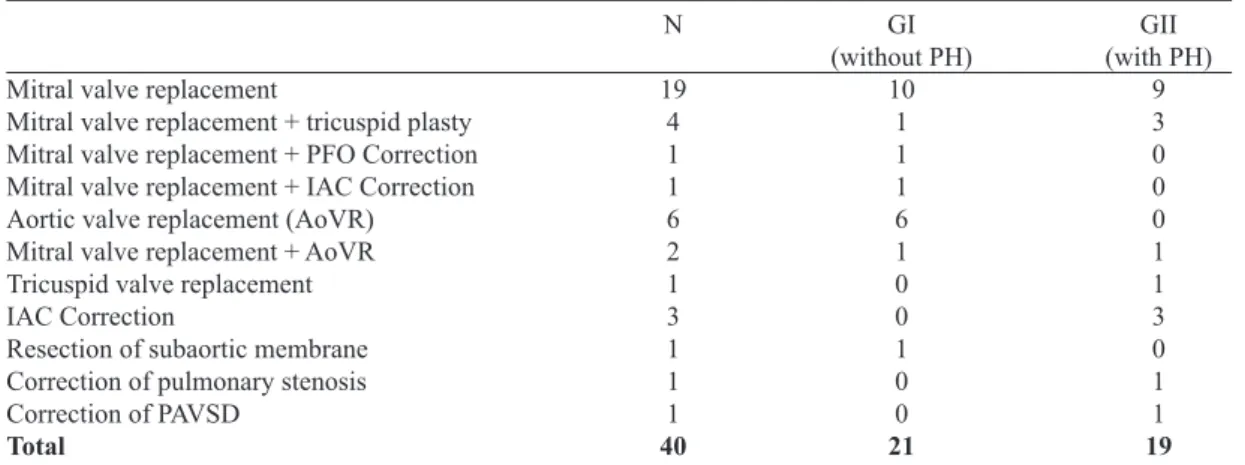
The 40 patients studied had undergone various types of sur -gery, the vast majority valve surgeries, predominantly surgeries involving the mitral valve. The number of patients distributed between the two groups was very close, and the GI was com -posed of 21 patients and GII com-posed of 19 patients. In GII most patients (63.16%) had moderate PH, and the average sPAP in this group was 64.15±17.78 mmHg (minimum sPAP of 44 mmHg and maximum of 121 mmHg) (Tables 1 and 2).
Mitral valve replacement
Mitral valve replacement + tricuspid plasty Mitral valve replacement + PFO Correction Mitral valve replacement + IAC Correction Aortic valve replacement (AoVR) Mitral valve replacement + AoVR Tricuspid valve replacement IAC Correction
Resection of subaortic membrane Correction of pulmonary stenosis Correction of PAVSD
Total
N
19 4 1 1 6 2 1 3 1 1 1 40
GI (without PH)
10 1 1 1 6 1 0 0 1 0 0 21
GII (with PH)
9 3 0 0 0 1 1 3 0 1 1 19
PH=pulmonary hypertension; PFO=patent foramen ovale; IAC=interatrial communication; PAVSD=partial atrioventricular septal defect
452
Variables Group
Gender
EuroSCORE
DM
SAH
COPD
Smoking
Spinal analgesia
Dobutamine
Sodium nitroprusside
Extubation in the operating room
Reintubation
Deaths during hospitalization
GI (without PH) GII (with PH)
Female Male
Low Medium High
No Yes
No Yes
No Yes
No Yes
No Yes
No Yes
No Yes
No Yes
No Yes
No Yes
PH=pulmonary hypertension; DM=diabetes mellitus; SAH=systemic arterial hypertension; COPD=chronic obstructive pulmonary disease
Table 3. Characteristics of patients and perioperative - Frequency for categorical variables. N
21 19
25 15
28 11 1
40 0
31 9
40 0
36 4
32 8
32 8
9 31
0 40
38 2
40 0
% 52.5% 47.5%
62.5% 37.5%
70.0% 27.5% 2.5%
100.0% 0.0%
77.5% 22.5%
100.0% 0.0%
90.0% 10.0%
80.0% 20.0%
80.0% 20.0%
22.5% 77.5%
0.0% 100%
95.0% 5.0%
100% 0.0% Slight PH
Moderate PH Severe PH
sPAP (mmHg)
36 - 50 51 - 70 >70
Medium 64.15
SD 17.78
sPAP=systolic pulmonary artery pressure; SD=standard deviation; Min.=minimum; Max.=maximum; PH=pulmonary hypertension
Table 2. sPAP in GII patients.
Min. 44
Max. 121 N
3 12
4
Variables Age (years) Weight (kg) Height (m) LVEF (%)
Surgery Time (min) CPB Time (min)
Aortic clamping time (min) ∆T extubation Medium 34.90 53.40 1.62 62.00 156.23 56.75 41.93 17.58
Q1=1st quartile; Q2=2nd quartile (median); Q3=3rd quartile; Kg=kilograms; m=meters; min=minutes; LVEF=left
ventricular ejection fraction in %; CPB=cardiopulmonary bypass; ∆T extubation=time interval for extubation (time
between turning off the halogenated gas and patient's extubation)
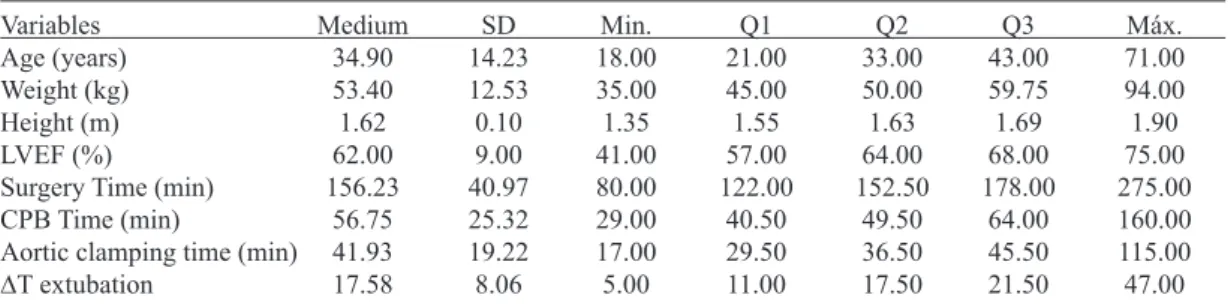
Table 4. Characteristics of patients and perioperative - Descriptive measures of quantitative variables.
SD 14.23 12.53 0.10 9.00 40.97 25.32 19.22 8.06 Min. 18.00 35.00 1.35 41.00 80.00 29.00 17.00 5.00 Q1 21.00 45.00 1.55 57.00 122.00 40.50 29.50 11.00 Q2 33.00 50.00 1.63 64.00 152.50 49.50 36.50 17.50 Q3 43.00 59.75 1.69 68.00 178.00 64.00 45.50 21.50 Máx. 71.00 94.00 1.90 75.00 275.00 160.00 115.00 47.00 Variables Gender Age (years) Weight (kg) Height (m) DM SAH COPD Smoking LVEF (%) EuroSCORE
For categorical variables were presented absolute and relative frequency and for quantitative variables was presented Q2 [Q1;Q3]. PH=pulmonary hypertension; DM=diabetes mellitus; SAH=systemic arterial hypertension; COPD=chronic obstructive pulmonary disease; LVEF=left ventricular ejection fraction
Table 5. Characteristics of patients - Homogeneity of groups.
Female Male Yes No Yes No Yes No Yes No Low Medium High 11 10 33.0 52.0 1.7 0 21 4 17 0 21 2 19 60 18 3 0 14 5 36.0 47.0 1.6 0 19 5 14 0 19 2 17 60 10 8 1 74% 26% [21.0; 47.0] [43.2 ; 52.5]
[1.5; 1.7] 0% 100% 26% 74% 0% 100% 11% 89% [60; 70] 53% 42% 5% P-value 0.165 0.654 0.036 0.026 0.712 1.000 0.849 0.051 52% 48% [22.0; 41.0] [46.5; 66.0] [1.6; 1.7] 0% 100% 19% 81% 0% 100% 10% 90% [50; 70] 86% 14% 0% GI
(without PH) (with PH)GII Groups
Most patients were female, representing 52% of GI pa -tients and 74% of GII. The EuroSCORE was of low risk in 86% of GI patients and 53% of GII. The average age of pa -tients was 34.9±14.23 years (median 33 years in GI and 36 years in GII), the average weight of 53.40±12.53 kg (medi -an 52 kg in GI -and 47 kg in GII) -and the average height of 1.62±0.10 meters (median of 1.7 meters in GI and 1.6 meters
454
Group = GII Height (m)
P value 0.397 0.034
exp(β) 0.90 0.99
CI - 95% [0.70; 1.15] [0.97; 1.00] Table 7. ∆T extubation - multivariate regression Log-Linear Stepwise.
Variables
Spinal analgesia
Surgery time (min) CPB time (min)
Aortic clamping time (min)
Use of dobutamine
Use of sodium nitroprusside
Extubation in the operating room
∆T extubation (min)
Reintubation
Deaths in hospital
For categorical variables were presented absolute and relative frequency and for quantitative variables was presented
Q2 [Q1; Q3]. PH=pulmonary hypertension; CPB=cardiopulmonary bypass; ∆T extubation=time interval for
extubation (time between turning off the halogenated gas and patient's extubation); min=minutes
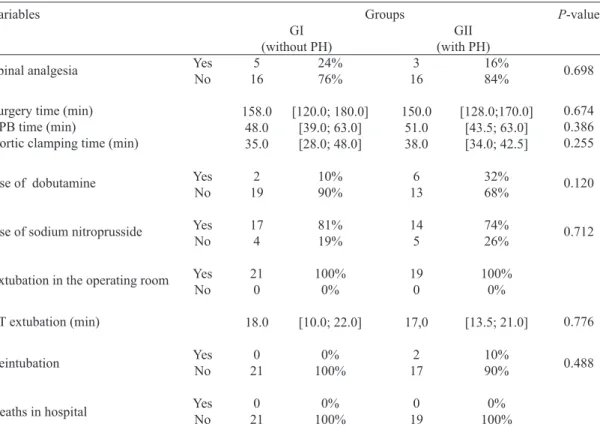
Table 6. Perioperative - Homogeneity of groups.
Yes No
Yes No
Yes No
Yes No
Yes No
Yes No
5 16
158.0 48.0 35.0
2 19
17 4
21 0
18.0
0 21
0 21
3 16
150.0 51.0 38.0
6 13
14 5
19 0
17,0
2 17
0 19
16% 84%
[128.0;170.0] [43.5; 63.0] [34.0; 42.5]
32% 68%
74% 26%
100% 0%
[13.5; 21.0]
10% 90%
0% 100%
P-value
0.698
0.674 0.386 0.255
0.120
0.712
0.776
0.488 24%
76%
[120.0; 180.0] [39.0; 63.0] [28.0; 48.0]
10% 90%
81% 19%
100% 0%
[10.0; 22.0]
0% 100%
0% 100% GI
(without PH) (with PH)GII Groups
158 minutes in GI and 150 minutes in GII), the cardiopulmo -nary bypass (CPB) 56.75±25.32 minutes (median 48 minutes in GI and 51 minutes in GII) and the aortic clamping 41.93±19.22 minutes (median 35 minutes in GI and 38 minutes in GII). Dobu -tamine has been used on 8 patients (20%) and sodium nitroprus -side in 31 patients (77.5%). All patients (100%) were extubated in the operating room and the average time interval for extubation was 17.58±8.06 minutes (median 18 minutes in GI and 17 min -utes in GII). It required reintubation of two patients (5%) in the irst 24 hours PO. There were no deaths during hospitalization of patients (Tables 3 to 6).
The groups were not homogeneous with respect to two variables, the weight and height, and the median for these variables were signiicantly higher in GI when compared to
GII, with a P value of 0.036 for weight and 0.026 for height
(Table 5).
Since they were not homogeneous groups, to assess the possible variables which inluence the time interval for ex -tubation, it was necessary to perform univariate and multi -variate analyzes. From the uni-variate analysis the only factor that could have inluenced the time interval for extubation was the height. When performing multivariate analysis, con -trolled by the factor group (GII), which is the aim of the study, it was observed that the height inluences the time interval for extubation in inverse ratio, so that the lower the height, the greater the time interval for extubation (P=0.034). Pulmonary
Variables Group Gender Age (years) Weight (kg) Height (m) SAH Smoking LVEF (%) EuroSCORE Spinal analgesia
Surgery time (min)
CPB time (min)
Aortic clamping time (min)
Dobutamine
Sodium nitroprusside
∆T extubation (min)
For categorical variables were presented absolute and relative frequency and for quantitative variables was presented Q2 [Q1; Q3]. SAH=siystemic arterial hypertension; LVEF=left ventricular ejection fraction; CPB=cardiopulmonary bypass
Table 8. Reintubation.
GI GII Female Male No Yes No Yes Low Medium High No Yes No Yes No Yes 0 2 1 1 29.5 50.5 1.7 2 0 2 0 50 1 1 0 2 0 207,5 77 55.5 1 1 1 1 19.5 0% 100% 50% 50% [22.0; 37.0] [35.0; 66.0] [1.5; 1.9] 100.00% 0.00% 100.00% 0.00% [50; 60] 50% 50% 0% 100% 0% [140.0; 275.0] [48.0; 106.0] [28.0; 83.0] 50.00% 50.00% 50.00% 50.00% [18.0; 21.0] P-value 0.488 1.000 0.803 0.733 0.514 1.000 1.000 0.162 0.515 1.000 0.368 0.321 0.756 0.364 0.404 0.576 No Yes 55% 45% 63% 37% [21.0; 44.0] [45.0; 59.5] [1.5; 1.7] 76.30% 23.70% 89.50% 10.50% [60; 70] 71% 26% 3% 79% 21% [120.0; 176.0] [40.0; 63.0] [30.0; 43.0] 81.60% 18.40% 21.10% 78.90% [10.0; 22.0] 21 17 24 14 33 50 1.6 29 9 34 4 60 27 10 1 30 8 152.5 49.5 36.5 31 7 8 30 16.5 In GII there were 2 patients who were reintubated in the irst 24 hours postoperatively; however, with no statistical difference when compared to GI (P=0.488). No variable in -luenced the reintubation. This inding was mainly due to the small sample size (Table 8).
DISCUSSION
This study assessed young adults, predominantly female, with few comorbidities, with low to moderate cardiovascular risk, mostly affected by heart valve disease with prevalence of mitral valve disease. Only two patients underwent coro
-nary artery bypass graft (CABG), but these were excluded for not using CPB. The results found in this study was similar to other cardiac surgery services in sub-Saharan Africa in terms of patient characteristics and operated pathologies, where rheumatic fever is highly prevalent, and is a major cause of valve disease with surgical need in young adults[15-17]. The
coronary diseases are uncommon in this population, proba -bly due to low life expectation.
Borraci et al.[18] analyzing the causes of failure in UFTA
456
cardiopulmonary bypass (CPB) are: heart failure, left ven -tricular dysfunction, emergency surgery, prolonged time of aortic clamping, dificulty to exit CPB and the need for pacemaker use; and in surgeries without CPB: lung disease, obesity, emergency surgery, the need for pacemaker use and hemodynamic instability. Dáyan et al.[19] cited as possiblecauses of failure of UFTA: female gender, obesity and a his -tory of cardiac failure. Royse et al.[20] reported severe pulmo
-nary hypertension as a cause of failure in one of its UFTA pa -cientes. Vida et al.[21], on the other hand, analyzing children,
concluded that PH does not contraindicate early extubation. Rady et al.[22], in a cohort study of 11,330 patients ad
-mitted to the ICU, analyzing the causes of extubation failure (requiring reintubation and mechanical ventilation), cited, among other causes, PH.
All study patients were extubated in the operating room. No single factor led to extubation failure. The sPAP in the GII ranged 44-121 mmHg, and even patients with severe HP were extubated, so that the PH had no inluence at the time of extubation.
Most studies with extubation in operating room in adults were performed in patients undergoing off-pump surgery. If we consider the majority of the available studies involving patients undergoing on-pump and off-pump surgery, extu -bation rate in the operating room varies from 42 to 100%. Some authors cite the time to extubation ranging between 10 and 20 minutes after skin closure, others mention only the patients who were extubated[3,7-9,18,19]. Only two studies in
the literature involving surgery with CPB in adults showed rate of 100% immediate extubation. The study by Hermmel -ing et al.[8] with 45 patients who were extubated within 15
minutes of the end of the surgery, in which balanced anes -thesia was used with a low dose of fentanyl and maintenance with sevolurane and the study of Oxelbark et al.[9] with 250
consecutive patients, all of which being extubated within 10 minutes from skin closure. In the latter study total intrave -nous anesthesia with propofol and remifentanil was used. In both cases thoracic epidural analgesia (TEA) was performed. Neither studies report PH as an aggravating factor. In another study by Hermmeling et al.[23] in patients operated without
CPB and TEA, undergoing UFTA, compared the effects of isolurane and sevolurane between two groups of patients. There was no difference in terms of myocardial protection, cardiac contractility and hemodynamic stability, but the time to extubation was signiicantly lower in the group using sevolurane (10±5 minutes) compared to the group using iso -lurane (18±4 minutes).
Extubation rate in our study was 100%, with an average time interval for extubation of 17.58±8.06 min, with a me -dian of 18 min in GI and 17 min in GII - no statistical dif -ference between the two groups. PH had no inluence on the time interval for extubation of patients. We believe that the fact that we used as halogenated isolurane may have been
the cause of a slightly longer time for extubation compared to studies by Hermmeling et al.[8] and Oxelbark et al.[9] In the
present study TEA was not performed, analgesia was per -formed with spinal morphine (in 8 patients) associated with venous analgesia or only venous analgesia, and this factor had no inluence on UFTA.
The height of the patients, even after multivariate anal -ysis, showed to have had inluence on the time interval for extubation, and the lower the height, the greater the time interval for extubation. We did not ind in literature studies mentioning short stature as the only factor in the increase of time for extubation.
In the irst 24 hours after surgery, 2 patients of GII re -quired reintubation, representing 5% of patients. The reintu -bation rate presented in the study is within the range reported in the literature in UFTA ranging 0 to 8%[7-9,18,19,23]. There was
no statistical difference between the two groups. PH and any other factor inluenced the reintubation.
When assessing the causes of reintubation of two pa -tients, one was reintubated by CO2 retention and another was
reintubated due to seizure followed by cardiorespiratory ar -rest (CPA). The irst patient was extubated again one hour later and the second after 24 hours of intubation. It was found in the history of the irst patient that he had important area of pulmonary ibrosis due to tuberculosis sequel, frequent pathology in developing countries in Africa. This may have been responsible for respiratory complication of this patient in the PO and likely because of his reintubation. The opening of the left chambers in cardiac surgery predisposes to gas em -bolism, which we believe have been the cause of the seizure of the latter patient, since it had no history of seizures before surgery. The major causes of reintubation in UFTA cited in the literature are: respiratory depression and bleeding[18,19].
The seizure has not been among them. We suggest giving special importance to the history of pulmonary disease in patients eligible for UFTA and the patients carriers of such disease should perhaps be referred under intubation to ICU, and consider the time of heart deaeration (removal of intrac -ardiac air) as a surgical time to be respected, in order to avoid postoperative complications leading to reintubation.
The sPAP of reintubated patients was 48 mmHg in the patient who presented CO2 retention and 47 mmHg in the
patient reintubated for seizure followed by CPA. We believe that the reintubation of these patients is not related to their PH, but with tuberculous lung of the irst patient and postop -erative complication of the second one.
Some authors claim that PH is an important risk factor for intraoperative morbidity and mortality[12]. In the present
study, although the patients have presented some degree of intraoperative morbidity, there were no deaths during surgery or in the postoperative period.
studies with a larger population in order to generate a more solid evidence on the subject.
CONCLUSION
PH had no inluence on UFTA in adult heart surgery, because it did not preclude the extubation in the operating room, it did not increase the time interval for extubation and it was not cause of reintubation of patients in the irst 24 hours postoperatively. In the population studied pulmonary hypertension had no effect on in-hospital mortality.
Authors’ roles & responsibilities
PSS Analysis and/or interpretation of data; inal approval of the manuscript; Conception and study design; Implementation of projects and/or experiments; manuscript writing or criti -cal review of its contents
MPTC Study design; collection, analysis and interpretation of data CCC Data collection
MFSF Analysis and interpretation of data; manuscript writing ACAB Manuscript writing
REFERENCES
1. Hawkes CA, Dhileepan S, Foxcroft D. Early extubation for adult cardiac surgical patients. Cochrane Database Syst Rev. 2003;(4):CD003587.
2. Singh KE, Baum VC. Pro: early extubation in the operating room following cardiac surgery in adults. Semin Cardiothorac Vasc Anesth. 2012;16(4):182-6.
3. Krohn BG, Kay JH, Mendez MA, Zubiate P, Kay GL. Rapid sustained recovery after cardiac operations. J Thorac Cardiovasc Surg. 1990;100(2):194-7.
4. Cheng DC, Karski J, Peniston C, Asokumar B, Raveendran G, Carroll J, et al. Morbidity outcome in early versus conventional tracheal extubation after coronary artery bypass grafting: a prospective randomized controlled trial. J Thorac Cardiovasc Surg. 1996;112(3):755-64.
5. Cheng DC. Pro: early extubation after cardiac surgery decreases intensive care unit stay and cost. J Cardiothorac Vasc Anesth. 1995;9(4):460-4.
6. Straka Z, Brucek P, Vanek T, Votava J, Widimsky P. Routine immediate extubation for off-pump coronary artery bypass grafting without thoracic epidural analgesia. Ann Thorac Surg. 2002;74(5):1544-7.
7. Walji S, Peterson RJ, Neis P, DuBroff R, Gray WA, Benge W. Ultra-fast track hospital discharge using conventional cardiac surgical techniques. Ann Thorac Surg. 1999;67(2):363-9.
8. Hemmerling TM, Lê N, Olivier JF, Choinière JL, Basile F, Prieto I. Immediate extubation after aortic valve surgery using high thoracic epidural analgesia or opioid based analgesia. J Cardiothorac Vasc Anesth. 2005;19(2):176-81.
9. Oxelbark S, Bengtsson L, Eggersen M, Kopp J, Pedersen J, Sanchez R. Fast track as a routine for open heart surgery. Eur J Cardiothorac Surg. 2001;19(4):460-3.
10. Abuchaim DC, Bervanger S, Medeiros SA, Abuchaim JS, Burger M, Faraco DL. Early extubation in the operating room in children after cardiac surgery. Rev Bras Cir Cardiovasc. 2010;25(1):103-8.
11. Gangopadhyay S, Acharjee A, Nayak SK, Dawn S, Piplai G, Gupta K. Immediate extubation versus standard postoperative ventilation: Our experience in on pump open heart surgery. Indian J Anaesth. 2010;54(6):525-30.
12. Gille J, Seyfarth HJ, Gerlach S, Malcharek M, Czeslick E, Sablotzki A. Perioperative anesthesiological management of patients with pulmonary hypertension. Anesthesiol Res Pract. 2012;2012:356982.
13. Galiè N, Hoeper MM, Humbert M, Torbicki A, Vachiery JL, Barbera JA, et al.; ESC Committee for Practice Guidelines (CPG). Guidelines for the diagnosis and treatment of pulmonary hypertension. Task Force for Diagnosis and Treatment of Pulmonary Hypertension of European Society of Cardiology (ESC) and the European Respiratory Society (ERS), endorsed by the International Society of Heart and Lung Transplantation (ISHLT). Eur Heart J. 2009;30(20):2493-537.
14. Rudski LG, Lai WW, Ailalo J, Hua L, Handschumacher MD, Chandrasekaran K, et al. Guidelines for the echocardiographic assessment of the right heart in adults: a report from the American Society of Echocardiography endorsed by the European Association of Echocardiography, a registered branch of the European Society of Cardiology, and the Canadian Society of Echocardiography. J Am Soc Echocardiogr. 2010;23(7):685-713.
15. Falase B, Sanusi M, Majekodunmi A, Animasahun B, Ajose I, Idowu A, et al. Open heart surgery in Nigeria; a work in progress. J Cardiothorac Surg. 2013;8:6.
16. Edwin F, Tettey M, Aniteye E, Tamatey M, Sereboe L, Entsua-Mensah K, et al. The development of cardiac surgery in West Africa--the case of Ghana. Pan Afr Med J. 2011;9:15.
458
18. Borracci RA, Dayan R, Rubio M, Axelrud G, Ochoa G, RodríguezLD. Factores asociados a falla de extubación inmediata en el quirófano después de cirugía cardíaca con y sin circulación extracorpórea. Arch Cardiol Mex. 2006;76(4):383-9.
19. Dayán R, Borracci RA, Rubio M, De Simón E. La extubación inmediata en el quirófano como conducta de primera elección después de cirugía cardíaca en adultos. Rev Arg Anest. 2005;63:82-90.
20. Royse CF, Royse AG, Soeding PF. Routine immediate extubation after cardiac operation: a review of our irst 100 patients. Ann Thorac Surg. 1999;68(4):1326-9.
21. Vida VL, Leon-Wyss J, Rojas M, Mack R, Barnoya J, Castañeda AR. Pulmonary artery hypertension: is it really a contraindicating factor for early extubation in children after cardiac surgery? Ann Thorac Surg. 2006;81(4):1460-5.
22. Rady MY, Ryan T. Perioperative predictors of extubation failure and the effect on clinical outcome after cardiac surgery. Crit Care Med. 1999;27(2):340-7.