Applicability of a pressure ulcers protocol in
intensive care unit
Aplicabilidade do protocolo de prevenção de úlcera de pressão em
unidade de terapia intensiva
INTRODUCTION
Pressure ulcer (PU) in defined as any change in the skin integrity, due to not-relieved soft tissues compression between bony promi-nences and a hard surfaces,(1) and is a common complication in se-verely ill patients, causing and high impacts to the quality of life recovery.
PU development risk factors are: immobility, malnutrition, ane-mia, edema, drug vasoconstriction, consciousness level changes, in-continences and vasculopathies. Pressure ulcer leads to additional problems such as pain, suffering and increased morbidity and mor-tality, prolongs the time of stay in the hospital and increases the hospitalization expenditures.(2)
The job of intensive care unit (ICU) nursing is focused on the se-Emanuelly Wedja do Nascimento
Lima e Silva1, Raquell Alves de Araújo1, Elizandra Cássia de Oliveira2, Viviane Tannuri Ferreira Lima Falcão3
1. Resident Nurse in Intensive Care of Hospital da Restauração da Secretaria Estadual de Saúde, Recife (PE), Brazil. 2. Nurse of the Intensive Care Unit of Hospital da Restauração da Secretaria Estadual de Saúde - Recife (PE), Brazil. 3. MSc, Vice-Director of Faculdade de Enfermagem Nossa Senhora das Graças – FENSG – UPE, Recife (PE), Brazil.
ABSTRACT
Objective: he avoidance of pres-sure ulcers development in critically ill patients is a major nursing challenge. Prevention is thus relevant for assur-ance of high quality care. his study aimed to evaluate the applicability of the Braden scale in intensive care unit patients.
Methods: his was a prospec-tive study based which evaluated all adult patients staying in the intensive care unit from July 14 to August 10, 2009. he data were collected using the Braden’s scale by three examiners who identiied the pressure ulcer develop-ment risk. he data were analyzed us-ing the SAS Statistical Software. For determination of the examiners’ rates degree of coincidence, the Kappa value was used (95%CI).
Results: Regarding the related risk factors: 36.4% had mild sensory
per-ception impairment; 50.9% had oc-casionally moist skin; 97.3% bedfast; 39.1% had very limited mobility; 45% probably had inappropriate nutrition; 61.8% had friction and shear problems. An agreement between the examiners was identiied for nutrition and physi-cal activity (38.1% to 100.0%); the Kappa population zero hypothesis was rejected; a paired examiners agreement (41.7% to 100.0%) was identiied for the items humidity and physical activ-ity, and the Kappa values ranged from 0.13 to 1.
Conclusions: hese intensive care patients were identiied to have in-creased risk of developing pressure ul-cers. his tool was considered appropri-ate to support the implementation of preventive measures.
Keywords: Validation studies; Pro-tocols; Pressure ulcers/prevention & con-trol; Pressure ulcer/nursing; Intensive care
Received from Hospital da Restauração da Secretaria Estadual de Saúde - Recife (PE), Brazil.
Submitted on February 25, 2010 Accepted on May 24, 2010
Author for correspondence:
Raquell Alves de Araújo
Rua João Lira, 143, apt. 141 - Boa Vista Zip Code: 50050-550, Recife (PE), Brazil.
verely ill patient care and evaluation from a human-istic quality of life driven perspective including the condition diagnosis, interventions and specific nurs-ing measures. Identification of patients in risk of de-veloping PU depends not only on the professional’s clinical ability, but also on measuring instruments, such as an evaluation scale which have appropriate predictive, sensitivity and specificity values.(1)
Aiming to provide additional support for con-stant professional care improvement and ability in-crease for PU risk evaluation and prevention, sev-eral authors have proposed measuring instruments or risk evaluation scales. The scales of Norton, Gos-nell, Waterlow and Braden are the most frequently used in the Americas and Europe; these have differ-ent scope, complexity and use easiness.(3)
In Brazil, the Braden’s scale was translated into Brazilian Portuguese and validated in 1999 ac-cording to the work by Paranhos and Santos, and is the best operationally defined, with a high pre-dictive value of PU development, allowing the evaluation of several PU-related factors, and its use requires the evaluator to thoroughly evaluate the patient’s condition.(1)
In this context, this study aimed to evaluate the Braden’s scale applicability, considering that the instrument implementation by nurses can make possible best evaluation of pressure ulcers risk, which in turn may determine changes in the care measures and lower de novo cases incidence (Ap-pendix 1).
METHODS
This was a transversal descriptive study devel-oped in a Public Hospital’s ICU located in Recife city (Brazilian Northeast) from July 14 to August 10, 2009. The data were collected using an ICU pressure ulcer prevention protocol (Appendix 2) based on the Braden’s scale (Appendix 3). To verify the instrument reproducibility, it was decided to use three experienced professional examiner nurs-es as judgnurs-es, evaluating the instrument’s content, presentation, clarity and understanding.
The completed forms were identified with the characters A, B or C, in order to differentiate among the evaluators. The assessment was made in a two-day pre-established routine, always by the same time (by the morning, at the bath time) when the examiners applied the protocol simultaneously
but individually, so the results could be as reliable as possible. The examiners had no access to each other evaluation. A 70% value was established for reliability determination, to allow its evaluation by an agreement analysis.
In the data analysis were calculated the absolute distributions, percents and the statistical measure-ments: mean, median, standard deviation, varia-tion coefficient (minimal and maximal values), the Kappa value for evaluation of the degree of agree-ment between the examiners (descriptive statistics techniques) and inferential statistics for the Kappa value confidence interval determination. By means of this, it was possible to check the hypothesis that the population Kappa would be or not equal to zero. This test is useful to check if two examiners’ evaluations are different. The Kappa score ranges between -1.0 and +1.0, and when it is equal to one this indicates a perfect agreement between the examiners and zero means random categorization or examiners’ independence; the closer to 1, more coincidental are the evaluations, and the closer to -1, less coincidental. When this index is equal to -1.00, no evaluation is coincident.(4)
For the Kappa scores interpretation the follow-ing scale was suggested: < 0.20: poor; 0.21 – 0.40: weak; 0.41 – 0.60: moderate; 0.61 – 0.80: good; 0.81 – 0.99: excellent; 1.00: perfect. The signifi-cance level for the statistical tests was 5%. The data were entered in an Excel sheet and the SAS 8.0 soft-ware was used for the statistical calculations.
The data collection was only started after re-ceiving the Institution’s Ethics Committee ap-proval, document number 071/08. Signature of an Informed Consent Form was also required, either by the patient or a family member, according to the Resolution 196/96 of the Brazilian National Health Council.
RESULTS
according to the Braden’s scale PU risk evaluation (Table 2).
Regarding sensory perception of appropriate re-sponse to pressure-related discomfort, most of the patients were completely limited (29.0%) or slight-ly limited (36.4%). Most of the studied patients had occasionally (50.9%) or rarely (26.4%) moist skin. Regarding the degree of physical activity, most of the patients were bedfast (97.3%), as expected for an ICU patients’ sample. Regarding mobility, most of the patients were very limited (39.1%) or completely immobile (34.6%). Probable inappro-priate nutrition was seen for 45% of the patients. Regarding friction and shear, most needed moder-ate or maximum assistance to move (61.8%).
Among the 21 responses for each of the Braden’s scale items, on each examiner’s first evaluation, it was possible to identify a coincidences frequency ranging from 8 (38.1%) to 21 (100.0%). The most frequent coincidences were found for the “physical activity” item, with at least 20 coincidences and the less frequent coincidence was seen for the ex-aminers 2 and 3 on the nutrition item. For the items where the Kappa could be calculated, the values ranged from 0.19 to 1.00. Except for an interval including the 0.00 value, for the remain-der intervals the hypothesis of a null population Kappa was rejected for the adopted significance level (Table 3).
The table 4 shows the agreement results for the pairs of examiners, including the subsequent eval-uations performed in 15 of the 21 patients, total-izing 36 evaluations. The coincidences frequency ranged from 15 (41.7%) to 36 (100.0%), being the higher frequency for physical activity, with at least 20 coincidences. The lower coincidence was
between examiners 2 and 3 for moisture. The Kap-pa values for the items that could be determined ranged from 0.13 to 1.00. Except for an interval including the 0.00 value, for the remainder inter-vals the hypothesis of null population Kappa value was rejected.
Table 2 – Braden’s scale items evaluation by the three exa-miners
Variable N %
Sensory perception
Completely limited 32 29.0
Very limited 30 27.3
Slightly limited 40 36.4
No impairment 8 7.3
Total 110 100.0
Moisture
Constantly moist -
Very moist 25 22.7
Occasionally moist 56 50.9
Rarely moist 29 26.4
Total 110 100.0
Activity
Bedfast 107 97.3
Chairfast 3 2.7
Walks occasionally -
Walks frequently -
-Total 110 100.0
Mobility
Completely immobile 38 34.6
Very limited 43 39.1
Slightly limited 27 24.5
No limitation 2 1.8
Total 110 100.0
Nutrition
Very poor 19 17.4
Probably inadequate 49 45.0
Adequate 41 37.6
Excellent -
-Total 109 100.0
Friction and shear
Problem 68 61.8
Potential problem 42 38.2
No apparent problem -
-Total 110 100.0
Risk categorization
High 63 57.3
Moderate 31 28.2
Low risk 16 14.5
No risk -
-Total 110 100.0
Source: UTI – HR (2008).
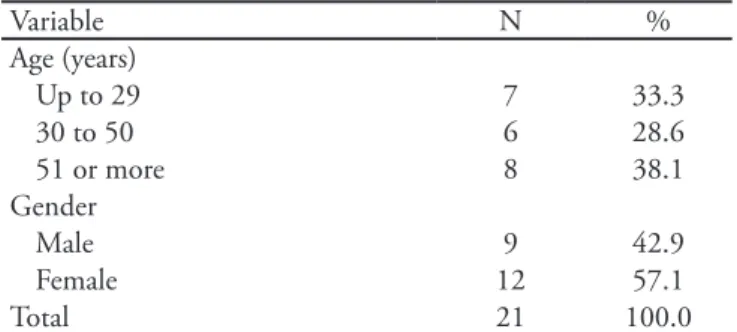
Table 1 – Distribution of the evaluation results of non-pressure ulcer intensive care unit patients’ by age and gender
Variable N %
Age (years)
Up to 29 7 33.3
30 to 50 6 28.6
51 or more 8 38.1
Gender
Male 9 42.9
Female 12 57.1
Total 21 100.0
Table 3 – Between examiners Braden scale agreement analysis for the irst evaluation
Variable Examiners N Coincidence Kappa 95% CI
N %
Sensory perception E1 vs E2 21 16 76.2 0.64 (0.37 to 0.91)
E1 vs E3 21 15 71.4 0.58 (0.31 to 0.86)
E2 vs E3 21 11 52.4 0.32 (0.04 to 0.60)
Moisture E1 vs E2 21 11 52.4 0.33 (0.07 to 0.58)
E1 vs E3 21 12 57.1 0.31 (-0.02 to 0.63)
E2 vs E3 21 10 47.6 0.23 (-0.04 to 0.49)
Physical activity E1 vs E2 21 21 100.0 1.00 (1.000 to 1.000)
E1 vs E3 21 20 95.2 ** **
E2 vs E3 21 20 95.2 ** **
Mobility E1 vs E2 21 15 71.4 0.56 (0.27 to 0.85)
E1 vs E3 21 14 66.7 0.52 (0.23 to 0.80)
E2 vs E3 21 11 52.4 0.32 (0.05 to 0.59)
Nutrition E1 vs E2 21 14 66.7 0.51 (0.21 to 0.82)
E1 vs E3 21 12 57.1 0.41 (0.13 to 0.70)
E2 vs E3 21 8 38.1 0.19 (-0.03 to 0.41)
Friction and shear E1 vs E2 21 19 90.5 0.80 (0.54 to 1.06)
E1 vs E3 21 17 81.0 0.60 (0.26 to 0.94)
E2 vs E3 21 15 71.4 0.42 (0.02 to 0.81)
Risk categorization E1 vs E2 21 15 71.4 0.47 (0.16 to 0.79)
E1 vs E3 21 15 71.4 0.54 (0.26 to 0.82)
E2 vs E3 21 14 66.7 0.43 (0.13 to 0.73)
** - could not be determined due to diferent number of categories between the examiners. CI – conidence interval.
Table 4 – Between examiners Braden scale agreement analysis for the subsequent evaluations
Variable Examiners N Coincidence Kappa 95% CI
N %
Sensory perception E1 vs E2 36 24 66.7 0.52 (0.30 to 0.74)
E1 vs E3 36 24 66.7 0.53 (0.32 to 0.75)
E2 vs E3 36 22 61.1 0.45 (0.25 to 0.66)
Moisture E1 vs E2 36 19 52.8 0.31 (0.10 to 0.53)
E1 vs E3 36 22 61.1 0.34 (0.10 to 0.58)
E2 vs E3 36 15 41.7 0.13 (-0.06 to 0.32)
Physical activity E1 vs E2 36 36 100.0 1.00 (1.00 to 1.00)
E1 vs E3 36 33 91.7 ** **
E2 vs E3 36 33 91.7 ** **
Mobility E1 vs E2 36 26 72.2 0.57 (0.35 to 0.79)
E1 vs E3 36 24 66.7 ** **
E2 vs E3 36 20 55.6 ** **
Nutrition E1 vs E2 35 21 58.3 0.37 (0.12 to 0.63)
E1 vs E3 35 23 63.9 0.44 (0.20 to 0.66)
E2 vs E3 36 16 44.4 0.23 (0.06 to 0.40)
Friction and shear E1 vs E2 36 31 86.1 0.70 (0.46 to 0.94)
E1 vs E3 36 29 80.6 0.60 (0.33 to 0.86)
E2 vs E3 36 28 77.8 0.53 (0.26 to 0.81)
Risk categorization E1 vs E2 36 25 69.4 0.46 (0.23 to 0.69)
E1 vs E3 36 28 77.8 0.64 (0.42 to 0.85)
E2 vs E3 36 25 69.4 0.46 (0.22 to 0.70)
DISCUSSION
The results show that the patients’ age distribu-tion was similar to the findings of Feijó,(5) who con-ducted a study in an University Hospital ICU in the Ceará state (Brazilian Northeast), with high preva-lence of patients above 60 years old. Studies have shown that the skin becomes drier with age due to reduced number of sweat and sebaceous glands, and also hemodynamic changes and muscle atrophy ren-dering bony structures more prominent.(6)
Regarding the larger prevalence in females, de-mographic data have show that women live longer than men, and thus have longer chronic diseases courses. Additionally, there are differences in the attitudes towards diseases and physical incapacities. Women are generally more attentive to symptoms, know more about diseases and use more intensively the healthcare services than men. The early medi-cal care is considered as one of the factors for best chronic diseases outcomes in women,(7) and this could explain the larger females proportion.
To evaluate the risk of developing PU in a given patient, the several predisposing factors should be taken into account. As highlighted by Fernandes,(8) “all aspects should be considered, since a pressure ulcer is not consequence of one single risk factor, but of the relationship between several risk factors and the patient”, stressing the relevance of a vali-dated risk-evaluation tool.
The lack of sensory perception leads these pa-tients to require special attention, as they are fre-quently unable to communicate their discomfort and thus become more vulnerable to pressure ulcer development. The nurse should be able to diag-nose this group of patients early, and to implement actions to reduce complications.
Skin moisture may be related to consciousness level changes and other peripheral nervous system complications. Among these, urinary and fecal in-continence and excessive perspiration are impor-tant, requiring serious healthcare team attention. Other factors also contributing to expose patients to moisture are secretions of drainage tubes, sores and food residues.(9) A direct connection was iden-tified for PU and moisture, as prolonged moisture exposure may lead to skin maceration and rupture. Thus, the nursing team should be aware of secre-tions in the patient’s bed, always making sure it is clean and dry.(10)
Regarding the degree of physical activity, the study shows that a large portion of the studied population was bedfast. This is concerning, as pa-tients lying in bed are more prone to PU, and need special attention from the care team regarding de-cubitus change, skin care, bony prominences pro-tection and special cushions use.(11)
The immobility is one of the most important risk factors for PU, due to the pressure on bony prominences areas, causing tissue destruction.(12) PU prevention is mainly dependent on the nursing team, caring 24 hours daily of the patient. Thus, appropriate decubitus change and bed positioning are indispensable.(13)
A deficient nutrition status is one of the main PU factors as leads to anemia and reduced tissue oxygen, contributing to reduce tissue tolerance to pressure. PU develop faster and is more treatment-resistant in poorly nourished patients. Malnutri-tion impairs the wounds healing, increases the subject’s susceptibility to infection, and contrib-utes to increased complications rate, longer hos-pitalizations and prolonged bed rest.(10) It is nec-essary that the nursing team realize their impor-tant role on malnourished patients identification, and also other known nutrition-associated aspects identification.(14)
Authors(9) indicate friction and shear as signifi-cant PU risk factors. Friction occurs when two sur-face forces glide against each other, with resulting abrasion and frequently blistering. Shear force is a consequence of inappropriate mobilization or po-sitioning, and causes deeper tissues damage. This is seen when a patient is kept with raised bed head above 30 degrees, allowing the patient to slide down in the bed, injuring specially the sacrum and coccyx regions.(9) The nursing team should early identify and prevent these conditions – and this makes continued education a daily practice ally.
Several studies have demonstrated that PU prevention is as important as risk identification. Thus, the creation of prevention scales and pro-tocols appropriate to each risk level is relevant, as well as promoting its full implementation.
The examiners agreement test is used to assess the tool reliability. This reliability may be evalu-ated by the instrument’s accuracy to measure its attribute. The smaller variation it produces on re-peated measures, more reliable is the tool. A given tool is reliable when its measure accurately reflects the investigated attributes.
The accurate risk evaluation description, ac-cording to the Braden scale 6 subscales, depends on the observer’s ability to recognize the patient’s PU risks. The different knowledge level between different professionals developing this activity may lead to variable interpretations.
The protocol is based on the PU risk evalua-tion, using the Braden’s scale, and its score define the measures to take (Appendix 4). Thus, a catego-rization system may look simple and easy for data acquisition, however inappropriate categorization may lead to unnecessary procedures.
In this study, the examiners had high levels of agreement, and showed similar categorizations; so, this protocol can be used to categorize the sores. The lowest coincidence frequency was seen be-tween the examiners 2 and 3 for the items nutri-tion and moisture, showing requirement of spe-cific training to qualify the nursing team for ap-propriate protocol implementation.
This simple measurement system was described by several authors as easy to perform, practical and affordable, although inaccurate. According to Santos,(15) some tools require for their application both training and time availability, in addition to the need of at least once a week continued evalua-tion. The PU categorization scales are deemed sub-ject to biases due to the interpretation subsub-jectivity, as well as the need of previous clinical knowledge, but this is also applicable for any evaluation tool.
The PU prevention protocol implementation has the meaning of a strategic decision to strengthen the care practices. This nurses leaded initiative may mean an institutional endeavor that includes several professional teams. Considering this PU prevention tool effectiveness and feasibility, the relevance of its insertion in the nursing prescription was demon-strated. However, the nurse’s technical competence and clinical ability to evaluate the scale’s items are indispensable for optimized care.
CONCLUSIONS
The PU risk evaluation with the Braden’s scale evidenced that most of these ICU studied patients had high or moderate risk of developing PU. The Braden’s scale-based items showed positive re-sponses in the examiners evaluation. The popula-tion Kappa null hypothesis was rejected, suggest-ing that the tool was well interpreted and under-stood by the examiners in regard of its content, presentation and clearness, allowing the protocol to be safely used for appropriate diagnosis of PU risk patients.
RESUMO
Objetivo: O não desenvolvimento da úlcera de pressão de
pacientes graves em terapia intensiva é um grande desaio para a enfermagem. Portanto, é relevante a prevenção para que se garanta um cuidado de boa qualidade. O objetivo da pesquisa foi avaliar a aplicabilidade da escala de Braden em pacientes de terapia intensiva.
Métodos: Estudo prospectivo baseado na avaliação de todos
os pacientes internados na unidade de terapia intensiva adulto, no período 14 de Julho a 10 de Agosto de 2009. A coleta de dados foi realizada através da aplicação da escala de Braden por três juízes, identiicando os riscos para o desenvolvimento da úl-cera de pressão. Para a análise dos dados foi utilizado o Software
estatístico SAS Na avaliação do grau de coincidência entre os juízes utilizou-se valor kappa (IC=95%).
Resultados: Quanto aos fatores de risco relacionados:
36,4% apresentavam leve limitação à percepção sensorial, 50,9% pele ocasionalmente úmida; 97,3% restritos ao leito; 39,1% muito limitados à mobilidade, 45% nutrição provavel-mente inadequada, 61,8% apresentaram problema quanto à fricção e cisalhamento. Quanto à concordância entre os juízes (38,1% a 100,0%) foram registradas em nutrição e atividade fí-sica; a hipótese do Kappa populacional nulo foi rejeitada; análise
entre pares de examinadores de coincidência (41,7% a 100,0%) foi registrada no item umidade e atividade física, os valores de
Kappa variaram de 0,13 a 1.
Conclusões: Observou-se elevado risco para ulcera de
pres-são em pacientes de terapia intensiva. Esse instrumento parece ser adequado para auxiliar na implementação de medidas de prevenção.
Descritores: Estudos de validação; Protocolos; Úlcera de
REFERENCES
1. Menegon DB, Bercini RR, Brambila MI, Scola ML, Jansen MM, Tanaka RY. Implantação do protocolo assistencial de prevenção e tratamento de úlcera de pressão do Hospital de Clínicas de Porto Alegre. Rev Hosp Clin Porto Alegre. 2007;27(2):61-4.
2. D’Arco C, Sassine SW, Costa MLM, Silva LMG. Úlcera de pressão em UTI. In: Knobel E. Condutas no paciente grave. 3a ed. São Paulo: Atheneu; 2006. vol. 2. p. 2491-501. 3. Jorge SA, Dantas SRPE. Abordagem multiproissional do
tratamento de feridas. São Paulo: Atheneu; 2003.
4. Cohen J. A coeicient of agreement for nominal scales. Educ Psychol Meas. 1960;20:37-46.
5. Feijó CAR, Leite Júnior FO, Martins ACS, Furtado Jú-nior AH, Cruz LCS, Meneses FA. Gravidade dos pa-cientes admitidos à unidade de terapia intensiva de um hospital universitário brasileiro. Rev Bras Ter Intensiva. 2006;18(1):18-21.
6. Universidade Estadual de Campinas. Hospital das Clíni-cas. Grupo de Estudos de Feridas. Tratamento de feridas. Campinas: UNICAMP; 1999.
7. Veras RP. Considerações acerca de um jovem país que en-velhece. Cad Saúde Pública. 1988;4(4):382-97.
8. Fernandes LM. Úlcera de pressão em pacientes críticos hospitalizados: uma revisão integrativa da literatura [dis-sertação].Ribeirão Preto: Escola de Enfermagem de Ribei-rão Preto da Universidade de São Paulo; 2000.
9. Braden B, Bergstrom N. A conceptual schema for the
study of the etiology of pressure sores. Rehabil Nurs. 1987;12(1):8-12.
10. Smeltzer SC, Bare BG. Brunner & Suddarth: tratado de enfermagem médico-cirúrgica. 10a ed. Rio de Janeiro: Guanabara Koogan; 2005. vol. 1.
11. Aguiar JM, Paiva SS. Escala de Braden: avaliação dos fato-res de risco para úlcera de pfato-ressão em pacientes internados em uma Unidade de Terapia Intensiva. Rev Hosp Univ UFMA. 2003;1(1/2):39-44.
12. Marin MJS, Pereira EACS, Paula MIR, Mesquita SRM, Laluna MC. Avaliando o risco para úlcera de pressão em uma população do município de Marília. Enferm Atual. 2002;2(7):28-33.
13. Silva EMP, Cruz ICF. Altered skin integrity as a nursing diagnosis ICU: literature review for an evidenced based nursing practice. J Spec Nurs Care. 2008;1(1).
14. Dreyer E, Brito S. Terapia nutricional. Cuidados de en-fermagem: procedimentos padronizados para pacientes adultos. Campinas: Grupo de Apoio Nutricional; Equipe Multiproissional de Terapia Nutricional do Hospital das Clínicas da UNICAMP; 2003.
15. Santos VLCG, Azevedo MAJ, Silva TS, Carvalho VMJ, Carvalho VF. Adaptação transcultural do Pressure Ulcer Scale for Healing (PUSH) para a língua portuguesa. Rev Latinoam Enferm. 2005;13(3):305-13.
Appendix 1 – Care lowchart
Admission
Minimal risk Moderate risk
Prevention plan elaboration
Evaluation (daily) • Daily inspection (visual and tactile) • Intrinsic, extrinsic and triggering risk factors identiication and correction.
High risk Braden scale
categorization
Developed ulcers
Treatment plan elaboration No ulcers
Appendix 2 - Pressure ulcers prevention protocol
Pernambuco State Health Secretary Fundação de Saúde Amaury de Medeiros – FUSAM
Hospital da Restauração Pressure ulcers prevention protocol
Patient: Age: Medical chart number:
Diagnosis: Gender: F ( ) M ( )
HR admission date: ICU admission date: Collection date: Discharge from ICU:
Admission ulcer: Yes ( ) No ( ) Braden Scale
Sensory Perception 1. Completely limited 2. Very limited 3. Slightly limited 4. No impairment
Moisture 1. Constantly moist 2. Very moist 3. Occasionally moist
4. Rarely moist Physical activity 1. Bedfast 2. Chairfast 3. Walks occasionally 4. Walks frequently
Mobility 1. Completely immo-bile
2. Very limited 3. Slightly limited 4. No limitation
Nutrition 1. Very ppor 2. Probably inade-quate
3. Adequate 4. Excellent
Friction and Shear 1. Problem 2. Potential problem 3. No apparent problem
Total:
Categorization High risk
<=12
Moderate risk (13 and 14)
Low risk (15 e 16 if <75 years) (15 e 18 if =>75 years)
No risk (>17)
Admission interventions ( ) Eggbox cushion
( ) Fenestrated cushion ( ) Transparent ilm on bony prominences
( ) Clean and dry skin (exudates free)
( ) Bed head kept below 30º ( ) Foam pillows to prevent direct bony surfaces contact (knees); ( ) Pillows under the legs to raise he heels
( ) Dry linens
( )___________________________ ______________________________ ( )___________________________ ______________________________ Note:__________________________ ______________________________ ______________________________
Appendix 3 –Braden scale
Braden scale
1 Point 2 Points 3 Points 4 Points
Sensory per-ception: Ability to respond me-aningfully to pressure-related discomfort
Completely limited:
un-responsive (does not moan, linch or grasp) to painful stimuli, due to diminished level of consciousness or se-dation OR limited ability to
feel pain over most of body.
Very limited: responds only
to painful stimuli. Cannot communicate discomfort except by moaning or res-tlessness OR has sensory impairment which limits the
ability to feel pain or dis-comfort over ½ of body.
Slightly limited: responds
to verbal commands but cannot always communicate discomfort or the need to be turned OR has some sensory impairment which limits abi-lity to feel pain or discomfort
in 1 or 2 extremities.
No limitation: responds to
verbal commands. Has no sensory deicit which would
limit ability to feel or voice pain or discomfort.
Moisture:
degree to which skin is exposed
to moisture
Constantly moist: skin
is kept moist almost constantly by perspiration,
urine, etc. Dampness is detected every time patient
is moved or turned.
Very moist: skin is often,
but not always moist. Linen must be changed at least
once a shift.
Occasionally moist: skin is
occasionally moist, requiring an extra linen change,
ap-proximately once a day.
Rarely moist: skin is
usu-ally dry, linen only requires changing at routine
inter-vals.
Physical acti-vity:
degree of physi-cal activity
Bedfast: conined to bed. Chairfast: ability to walk
severely limited or non-exis-tent. Cannot bear own wei-ght and/or must be assisted into chair or wheelchair.
Walks occasionally: walks
occasionally during day, but for very short distances, with or without assistance.
Spen-ds majority of each shift in bed or chair.
Walks frequently: walks
outside room at least twice a day and inside room at least once every two hours during
waking hours.
Mobility:
abi-lity to change and control body position
Completely immobile: does
not make even slight chan-ges in body or extremity position without assistance.
Very limited: makes
occasional slight changes in body or extremity position but unable to make frequent
or signiicant changes independently.
Slightly limited: makes
frequent though slight chan-ges in body or extremity
position independently.
No limitation: makes major
and frequent changes in position without assistance.
Nutrition:
usu-al food intake pattern
Very poor: never eats a
complete meal. Rarely eats more than1/3 of any food ofered. Eats 2 servings or less of protein (meat or dairy
products) per day. Takes luids poorly. Does not take a liquid dietary supplement OR is NPO and/or maintai-ned on clear liquids or IVs
for more than 5 days.
Probably inadequate: rarely
eats a complete meal and ge-nerally eats about ½ of any food ofered. Protein intake includes only 3 servings of meat or daily products per day. Occasionally will take a dietary supplement OR receives less than optimum
amount of liquid diet or tube feeding.
Adequate: eats over half of
most meals. Eats a total of 4 servings of protein (meat, dairy products) per day. Oc-casionally will refuse a meal,
but usually take a supple-ment when ofered OR is on
tube feeding or TPN regi-men which probably meets
most of nutritional needs.
Excellent: eats most of
every meal. Never refuses a meal. Usually eats a total of 4 or more servings of meat and dairy products. Occa-sionally eats between meals.
Does not require supple-mentation.
Friction & shear
Problem: requires moderate
to maximum assistance in moving. Complete lifting without sliding against she-ets is impossible. Frequently slides down in bed or chair,
requiring frequent repo-sitioning with maximum assistance. Spasticity, con-tractures or agitation leads to almost constant friction.
Potential problem: moves
feebly or requires minimum assistance. During a move skin probably slides to some
extent against sheets, chair or other devices. Maintains relatively good position in
chair or bed most of the time but occasionally slides
down.
No apparent problem:
moves in bed and chair independently and has
sui-cient muscle strength to lift up completely during move.
Maintains good position in bed or chair.
Total points
Appendix 4 – Prevention lowchart
Transparent ilm on bony prominences Fenestrated cushion
+ eggbox cushion
Hygiene Clean and dry skin
Hydration cream Wrinkleless clothing
Mobility Position change 2/2h
Nutrition Initial and weekly
evaluation Total or partial support
Risk evaluation (Braden scale)
Transparent ilm on bony prominences Fenestrated cushion
+ eggbox cushion
Hygiene Clean and dry skin
Hydration cream Wrinkleless clothing
Mobility Position change 2/2h
Nutrition Initial and weekly
evaluation Total or partial support
Transparent ilm on bony prominences Eggbox cushion
Hygiene
Hygiene Clean and dry skin
Hydration cream Wrinkleless clothing
Mobility Position change
Nutrition Initial and weekly
evaluation Total or partial support
Mobility Assistance/Supervision
Hygiene Assistance/Supervision High risk
<=12 Moderate risk(13 and 14)
Low risk (15 e 16 if <75 years) (15 e 18 if =>75 years)
No risk (<17)
Hygiene Assistance/Supervision
Nutrition Initial and weekly
evaluation