Stratifying risk: asymptomatic carotid disease
Estratificação do risco na doença carotídea assintomática
Rafael D. Malgor1, Emily A. Wood2, Otavio A. Iavarone3, Nicos Labropoulos4
Introduction
Stroke is responsible for signiicant healthcare costs and it is a social burden in Western societies1-3. Embolism
is the most common cause of stroke, with carotid artery atherosclerotic plaques responsible for one in three embolic strokes. Clinical presentation of cerebrovascular and reti-nal embolic events varies from no symptoms to transient ischemic attack (TIA), amaurosis fugax (AF), and stroke. he asymptomatic carotid artery disease (ACAD) is an im-portant cause of stroke accounting for about 8%.
he Asymptomatic Carotid Atherosclerosis Study (ACAS) and the Asymptomatic Carotid Surgery Trial (ACST) found an annual risk of cerebrovascular events from 1 to 2%4,5. Degree of stenosis was the only criterion used to
indicate an intervention in both trials. In addition, medical treatment in the ACAS trial was signiicantly diferent from the previously recognized standards recommending 325 mg of aspirin coupled with educational advise about risk factors, such as diabetes, hypertension, and tobacco use4.
A systematic review of 3,724 patients with ACAD sho-wed decreasing rates of stroke related to improvements in medical therapy6. A prospective cohort of 101 patients with
ACAD also found lower annual risk of ipsilateral events (AR=0.34%, 95%CI 0.01–1.87) when patients were trea-ted with anti-platelet agents, statins, and anti-hypertensive medications7.
he critical question that remains unanswered is: who will beneit from an intervention versus a medical treatment alone? Risk stratiication of patients with ACAD still relies
Abstract
Stroke generates signiicant healthcare expenses and it is also a social and economic burden. he carotid artery atherosclerotic plaque instability is responsible for a third of all embolic strokes. he degree of stenosis has been deliberately used to justify carotid artery interventions in thousands of patients worldwide. However, the annual risk of stroke in asymptomatic carotid artery disease is low. Plaque morphology and its kinetics have gained ground to explain cerebrovascular and retinal embolic events. his review provides the readers with an insightful and critical analysis of the risk stratiication of asymptomatic carotid artery disease in order to assist in selecting potential candidates for a carotid intervention.
Keywords: carotid artery diseases; risk; natural history.
Resumo
O acidente vascular encefálico gera custos signiicativos na área da saúde e representa um problema social e econômico. A instabilidade da placa carotídea aterosclerótica é responsável por um terço dos acidentes vasculares encefálicos embólicos. O grau de estenose tem sido usado para justiicar, deliberadamente, intervenções carotídeas em milhares de pacientes no mundo todo. No entanto, o risco anual de acidente vascular encefálico em doença carotídea assintomática é baixo. A morfologia da placa e sua mobilidade têm ganhado importância na elucidação dos eventos embólicos cerebrovasculares e retinais. Esta revisão proporciona aos leitores uma análise crítica e inteligente da estratiicação de risco da doença carotídea assintomática com o intuito de auxiliar na seleção de potenciais candidatos à intervenção carotídea.
Palavras-chave: doenças das artérias carótidas; risco; história natural.
Study carried out at the Stony Brook Medical Center – New York, USA.
1 Vascular Surgery Resident in the Division of Vascular Surgery at the Stony Brook Medical Center – New York, USA. 2 General Surgery Resident in the Division of General Surgery at the Stony Brook Medical Center – New York, USA. 3 Medical Student at Paulista School of Medicine – São Paulo (SP), Brazil.
4 Professor of Surgery in the Division of Vascular Surgery at the Stony Brook Medical Center – New York, USA.
Financial support: none.
upon degree of stenosis in the majority of vascular surgery practices. Also, the largest trials on carotid artery intervention only utilize the degree of stenosis to indicate a procedure4,5,8.
he concept of low reduction to the brain causing tis-sue ischemia is simplistic and it must not be extrapolated to every case of ACAD. A subset analysis of 3,007 patients, who had a reduced vessel diameter distal to the area of ste-nosis, demonstrated a protective component resulting in low risk of ipsilateral stroke9. he former is the evidence
that degree of stenosis alone should not always be consi-dered in asymptomatic patients when making a decision regarding who would beneit from an intervention.
The role of plaque morphology and its instability causing either embolization or in situ thrombosis has been discussed10,11. Clinical features including
cardio-vascular risk factors (i.e., hypertension, hyperlipidemia) and life-style habits (i.e., smoking), coupled with plaque morphology and degree of stenosis, are important fac-tors attributed to increased risk of disease progression and adverse outcomes, such as TIA and stroke.
Natural history of asymptomatic carotid artery disease
here are two diferent extremes of the same disease in symptomatic and asymptomatic patients with atherosclerotic carotid disease. Whilst the outcomes in the symptomatic group are poor if not treated in a timely fashion, the course of ACAD has a low event rate and therefore a much better prognosis. he natural history of ACAD has been extensively studied over the past three decades10,12-20.
ACAD patients are identiied from the presence of cer-vical bruits, during the investigation of nonspeciic signs and symptoms and prior to pre-operative evaluation for cardiac or other major surgery. he irst imaging study utilized to rule out any cerebral ischemic events is a computed tomography (CT) scan of the head and a duplex ultrasound (DU) of the carotid artery. Evaluation with DU relies on determining the degree of carotid stenosis. he plaque characteristics are not routine-ly taken into account and are not reported on a standardized fashion.
Patients with abnormally raised DU velocities or ratios are stratiied as having a mild, moderate, or severe stenosis. Accordingly, those patients are stratiied and therefore ofered a procedure or place on medical therapy if a non-high grade stenosis is found. Ater the publication of the ACAS in 1995, there was an increase in the accrual number of carotid endar-terectomy (CEA) in the USA21,22. he number of
asymptoma-tic patients treated, based on DU velocities, found in a natio-nal and statewide databases demonstrated that the majority
of CEAs are performed to treat patients with ACAD23,24. he
rationale of treating ACAD was the slightly lowest rate of ce-rebrovascular events in patients who underwent CEA in the ACST and ACAS, when compared to the Control Group re-ceiving medical treatment. However, the stroke-free incidence found in the ACAS and ACST indicate that more than 94% of the procedures were perhaps unnecessary25. Moreover, the
patients enrolled in the ACST that were managed with best medical treatment (BMT) had risk of any or ipsilateral stroke of about 12 and 5% at a ive-year period, which was reduced to 7 and 4% at the ten-year one.
Certain plaque morphology characteristics, such as ul-ceration and echolucent material, are known to have a more active cellular turnover making the plaque prone to rupture and to embolize26. Recent research on the plaque morphology
and its components graded using grayscale median (GSM), white areas, and the area of the plaque have assisted in gau-ging the “benign” versus unstable plaques from cerebral and retinal ischemic embolic events10,27. he largest prospective
study on patients with ACAD enrolled 1,121 consecutive pa-tients as part of the Asymptomatic Carotid Stenosis and Risk of Stroke (ACSRS) Study Group10. All patients had DU
asses-sment of the internal carotid artery (ICA) stenosis and plaque morphology, which were correlated to clinical characteristics and followed-up for a mean period of four years. he degree of stenosis of the ICA was found to be correlated with the ou-tcomes. An increasing risk of ipsilateral cerebrovascular events was demonstrated in patients with severe stenosis (>90 to 99% European Carotid Surgery Trial – ECST criteria28) compared
to those who had mild or moderate stenosis (≤89% ECST). However, estimated risk of developing any ipsilateral ischemic cerebral events in a ive-year period was estimated to be high in only 9% of the patients who had a stable carotid plaque des-pite ≥70% stenosis using the ECST criteria.
he implications of risk stratiication found by the ACSRS collaborators and other prospective studies20,29 provide
eviden-ce that the vast majority of patients are better of with conser-vative treatment. Also, patients at higher risk could be iden-tiied and ofered operative treatment. However, validation of predicted risk in that study was limited, since it was done for the same group of patients on whom the score was develo-ped. hese indings need to be validated in prospective studies using the best current medical therapy.
Risk stratification
Degree of stenosis
he degree of stenosis remains the mainstay criterion upon which vascular interventionists use to decide who should have a carotid artery intervention. he degree im-portance of the carotid stenosis and its correlation to ce-rebrovascular events have been demonstrated by several studies4,10,18,28. Treatment is oten indicated for ACAD when
a >60% stenosis is detected4,5,28.
he shortcoming of relying only upon the degree of stenosis alone is that not all plaques that generate a vessel stenosis are unstable enough to prompt distal emboliza-tion or trigger an episode of in situ thrombosis, with sub-sequent occlusion of the vessel. Spence et al., investigating 319 ACAD patients with >60% stenosis, demonstrated that <1% of them developed stroke if there were no high intensi-ty transient signals (microemboli) on transcranial Doppler (TCD)29. he ACSRS patients with moderate to severe
ste-nosis had more cerebral ischemic events than those with <50% stenosis. However, only 9% of patients with ≥70% ste-nosis were deemed to have high risk for cerebral or retinal events based on other risk factors, such as absence of con-tralateral TIA or stroke, no discrete white areas (DWAs), plaque area, and GSM. In addition, Kakkos et al., analyzing
data of 462 ACAD patients with 60 to 99% stenosis, showed that silent CT embolic infarcts have doubled the risk for de-veloping a stroke compared to those without infarction30.
herefore, the degree of stenosis alone may no longer relect or predict the group of patients who will have a stroke and may beneit from carotid artery intervention.
Plaque morphology
he study of plaque morphology includes the follo-wing: surface characteristics, echogenicity, distribution of plaque content, volume, and plaque kinetics. hese have been studied by several methods such as DU, magnetic resonance image (MRI), CT, and histology. Prospective studies supporting the role of plaque morphology are dis-played in Table 19,12,13,19,31-35.
Surface
he surface of the plaque is deined as the linen that co-vers the plaque contents. It is deined as smooth, irregular, and ulcerated. Arteriographic and histological analysis pro-vided by endarterectomy specimens have been utilized to detect surface abnormalities of the plaque26,36,37. Ulceration
has oten been characterized as a depression of >1 mm in width and depth36,37; however, its real deinition is loss of
endothelial lining. Noninvasive imaging evaluation is more adequately used in ACAD reserving catheter-based an-giogram for endovascular interventions and it is rarely for diagnostic purposes36,38-41.
he sensitivity and speciicity of the DU on detecting ulce-ration have improved over the years36,38,39. Both B-mode
ima-ging and low disturbance originated by ulceration can be used to identify surface abnormalities on DU42-44. he improvement
of ultrasound imaging and possibility of 3D format certain-ly will assist in increasing the likelihood of ulcer detection. A study of 84 carotid arteries using 3D ultrasound imaging
Published studies Year of publication n Follow-up, months (range) Institution
Johnson et al.12 1985 297 36 Single-center
Sterpetti et al.31 1988 214 34 (26–39) Single-center
Langsfeld et al.32 1989 289 22 (3–48) Single-center
Bock et al.13 1993 242 28 (n/a) Single-center
CHS33 1998 104 40 (0.3–49) Multi-center
Tromsø study**34 2001 223 36 Multi-center
Nadareishvili et al.19 2002 106 120 (60–216) Multi-center
Grønholdt et al.35 2002 246 53 (36–70) Multi-center
ACSRS9 2010 1121 48 (6–96) Multi-center
Table 1. Prospective studies supporting the role of plaque morphology on developing ipsilateral cerebrovascular events.
*297 carotid arteries in 297 patients were followed-up for three years; six died but it is not reported if other patients were lost; CHS – Cardiovascular Health Study; ACSRS – Asymptomatic Carotid Stenosis and Risk of Stroke (Study Group); **All patients were followed-up for 36 months.
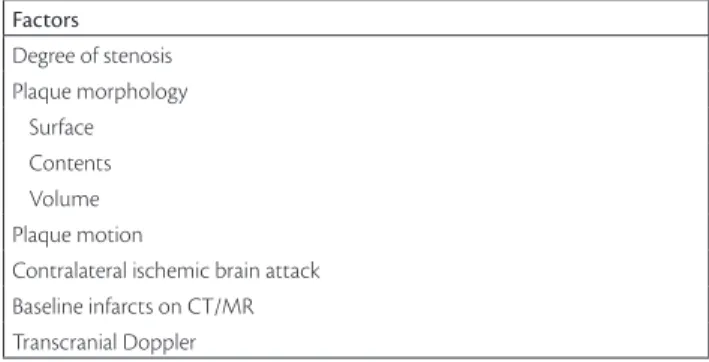
Factors
Degree of stenosis Plaque morphology
Surface Contents Volume Plaque motion
Contralateral ischemic brain attack Baseline infarcts on CT/MR Transcranial Doppler
Chart 1. Factors associated with ipsilateral events in patients bearing a carotid artery atherosclerotic plaque.
demonstrated higher detection rates of ulceration compared with 2D ultrasound42. A high-resolution MR imaging and a
multi-detector CT angiography have also shown very good results of ulceration detection40,45.
he plaque ulceration might be included in the risk stratiication due to its importance of generating embolic and thrombotic events. Frequently, surface abnormali-ties such as ulceration are found in symptomatic patients, but they can be found in up to 60% of the asymptomatic patients37,46,47. he risk of stroke in patients with carotid
stenosis and ulcerated plaque was doubled among patients with >70% stenosis compared to those without plaque ulce-ration47. In addition, asymptomatic carotid artery plaques
that are ulcerated or have surface thrombi were found to be associated with higher cerebral embolization rate up to 53% when stenotic plaques are present48,49.
Another important surface feature is the neovascu-larization and adventitial vasa vasorum of the plaque. Neovascularization of an atheroma was initially described in patients with coronary artery disease triggering myo-cardial ischemic events50,51. Investigation of the adventitial
hyperplastic network in patients with carotid disease has also been performed using MR, CT, or DU with contrast52-54. he
latter is of great interest in vascular practice due to wide availability, short learning curve and anatomic access due to relative supericial location of carotid artery. Vicenzini et al., studying 23 patients with ACAD, demonstrated that neovascularization is constantly present underneath ulce-rated areas rendering the plaque potentially more vulnera-ble55. In addition, the angiogenesis network was identiied
coming from the adventitia towards the inner layers of the plaque, but this pattern was not detected in hyperechoic plaques with acoustic shadow (calciied) nor in those with advance inlammatory changes, such as hypoechoic necrotic plaques55. Regression of the adventitial vasa
va-sorum in a patient upon initiation of treatment with sta-tins was reported suggesting a potential role for treatment monitoring56.
Plaque cap thickness has been correlated with plaque vulnerability. In a study of 22 patients, who underwent CEA, a greater number of plaques with cap thickness deined as <200 μm was found to be associated with cerebrovascular events (p=0.01)57. In another study, the histological analysis
of 105 plaques in asymptomatic and symptomatic patients demonstrated that the presence of an echogenic cap was four times more frequent in the symptomatic ones than in those with asymptomatic plaques (p<0.05)58. In addition,
the echolucent region juxtaluminal was more oten present in symptomatic plaques (67 vs. 33%; p<0.01)58.
Plaque content and distribution
he amount of lipid and its characteristic is variable and related to oxidative reactions led by inlammation, mis-balanced production, and scavenging of free radicals. he vulnerability of the plaque is directly linked to the amount of core necrosis and intra-plaque hemorrhagic events37,59.
Distinct nomenclature is already used to characterize the plaque morphology (i.e., echolucent vs. echogenic, sot vs dense, complicated vs. uncomplicated)12,60,61. Plaques have
been classiied in four or ive types based on their echoge-nicity62. he morphologic classiication and the
correspon-ding ultrasound images is shown on Figure 1. In addition to the macroscopic ultrasonic evaluation of echogenicity, the GSM deined that a score is obtained using computer sof-tware as a surrogate marker of plaque vulnerability63,64. In
fact, lipid-rich plaque core is seen in the DU as echolucent, and ibrotic components as echogenic.
Abu Rahma et al. demonstrated that plaque hetero-geneity is the most important predictor of intra-plaque hemorrhage and symptoms related to cerebrovascu-lar events60,61. The association of GSM and DWAs with
the homogeneity of the plaque was also described by Nicolaides et al. in a study of 1,121 asymptomatic pa-tients, which showed that plaques with DWAs and lower GSM (<15) are more prone to generate cerebral and re-tinal events.
he association of macrophages and plaque lipid con-tent and hemorrhage has been established65,66. In a study
of 106 patients who had DU and subsequently underwent endarterectomy with plaque histology analysis, a higher concentration of macrophages in the plaque was related to more echolucent plaques65. he use of aspirin was
associa-ted with decreased number of macrophages and therefore inlammatory changes65. Interestingly, echolucent plaques
are more commonly found in women than in men with carotid stenosis >50% and triglyceride-rich lipoproteins66.
Other blood lipid fraction misbalances, such as low levels of high-density lipoprotein (HDL), were also associated with echolucent plaques67.
In the Tromso study, 223 patients with carotid artery stenosis were compared to 215 age-gender matched control patients demonstrating that 28% who had stenotic plaques and predominantly or completely echolucent plaques had an ipsilateral cerebrovascular event34. By contrast, in the
same study, only 4% of patients with predominantly echo-genic or completely echoecho-genic plaques had ipsilateral cere-brovascular events34.
Volume
Volume analysis can be achieved using ultrasound, CT or MRI. Frequently, the method used in CT and MRI is the demarcation of the regions of interest in multiple pla-nes generating the area of the plaque that is added together creating a 3D image68-70. he ultrasonic assessment of the
plaque volume is achieved using a real-time cine-loop re-cording application, which utilizes the sequential 2D gray scale imaging42.
he gender diferences related to the plaque volume was evaluated in a study with 131 asymptomatic carotid plaques using a 3.0-Tesla, which showed that an increased volume of lipid-rich necrotic core (LRNC) is more prevalent in men70.
Underhill et al., analyzing predictors of surface disruption and subsequent cerebral ischemic event also using MR in a cohort of 180 asymptomatic patients with carotid stenosis between 50 to 79%, demonstrated that a larger percentage
of LRNC volume (16.1±14.9 vs. 3.1±7.1%, respectively; p<0.001) was associated with surface disruption59.
Corroborating to the fate of plaque disruption and its volume causing an ischemic cerebral event, a study of 100 acute symptomatic and asymptomatic plaques, based on MRI, found a larger plaque volume in asymptomatic plaques than in those that had a rupture. However, a larger core ma-terial was demonstrated in ruptured asymptomatic plaques than in the non-ruptured asymptomatic plaques perhaps signalizing to a pre-symptomatic state in patients with large volume plaques68. Conversely, Nandalur et al., analyzing the
correlation of plaque volume utilizing MDCTA among 102 carotid plaques (35 symptomatic – stenosis: 82.0±11.9%) and 67 asymptomatic patients (stenosis: 79.4±10.8%), de-monstrated that the absolute volume of the plaque does not correlate with ischemic cerebral events, but the amount of calciication found in the CT does69.
he use of 3D ultrasound measurement of plaque vo-lume and its changes related to medical treatment has been described71. In a placebo-controlled study, 17 patients taking
80 mg daily atorvastatin were compared to 21 patients in the placebo arm demonstrating plaque volume reduction in the Statin Group versus plaque progression in the Placebo Group71. hese initial indings signalize to a potential tool
for treatment monitoring and surveillance in asymptomatic patients.
he actual limitations of the plaque volume studies are the relative small number of studies with small number of patients, a variety of measuring methods, and poor long-term prospective follow-up to deine the cutofs to assist in selecting patients at risk of an ischemic cerebral event.
Plaque motion
Some experimental and clinical observations of plaque motion have been made72-76. he rationale of plaque
mo-tion relies on the constant displacement vectors applied to the plaque surface by the dragging forces generated by the blood stream during the cardiac cycle.
A proposition of changing in plaque motion following medical treatment was done by Lenzi and Vicenzini. In the evaluation of two asymptomatic patients, the carotid plaque and vessel wall move in the opposite direction of the blood low72. he motion pattern described was hypothesized to
be a potential cause of external plaque layer disruption cre-ating a thrombogenic surface with exposure of the plaque material and embolization of plaque fragments.
demonstrating maximal discrepant surface velocity higher in symptomatic patients than in those asymptomatic main-ly in the cardiac systole73. In addition, asymptomatic
pa-tients were found to have more homogenous orientation and magnitude of velocity vectors73. Heterogeneous plaque
motion pattern was also found inside the plaque with some regions fairly immobile and others highly mobile, in a study performed in 11 volunteers by Bang and colleagues76.
Clinical association of plaque motion was assessed in a study of 242 stroke and 336 TIA patients showing that the presence of longitudinal plaque motion tripled the risk of developing a TIA (p=0.2)74. Regardless some evidence and
delineation of the plaque kinetics underpinnings, it remains an evolving concept that need more clinical grounding as-sessments, but certainly will be added to the risk stratiica-tion of ACAD patients in the future.
Contralateral ischemic brain attack
he association of contralateral symptomatic carotid stenosis with an ipsilateral asymptomatic carotid steno-sis was demonstrated in the ACST5. In this trial, patients
with contralateral ischemic brain events secondary to ca-rotid plaque were found to have more ipsilateral strokes than those with ipsilateral carotid stenosis and no signi-icant or asymptomatic contralateral diseases (35 vs. 11, p=0.0004)5.
he results of the ACST are in agreement with those found in the ACSRS trial conducted by Nicolaides et al.10. In
the latter, 1,121 patients with asymptomatic carotid plaque who had a history of contralateral TIAs or stroke had an increased risk of ipsilateral cerebrovascular or retinal ische-mic event (hazard ratio – HR=2.35; 95%CI 1.60–3.43) and ipsilateral stroke (HR=3.03; 95%CI 1.77–5.20)10.
Baseline Infarcts On CT Scan/MRI
he embolic activity of carotid plaque can be indirectly stated in the absence of cardioembolism by inding a silent brain infarct in a CT or MRI. A reasonable number of pa-tients with high-grade asymptomatic carotid stenosis will develop a silent embolic infarct, which may perhaps be pre-dictive of a future TIA or stroke30.
In a large prospective multicenter study of 821 patients, 17% had a CT scan showing cortical, subcortical, and basal ganglia brain infarcts in patients with ≥60% asymptomatic carotid artery stenosis. In that study the cumulative stroke-free rate was 0.92 (1.0% annual stroke rate) in the absence of embolic infarcts and 0.71 (3.6% annual stroke rate) in
their presence (p<0.002; HR=3.0; 95%CI 1.46–6.29)30. he
relationship between silent brain infarcts and type of pla-que has also been proposed77,78. Sabetai et al., analyzing the
echo-texture of 273 asymptomatic carotid artery plaques, demonstrated that echolucent plaques with low GSM were associated with signiicantly more silent non-lacunar brain infarcts than those with high GSM77. Tegos and colleagues
investigating 419 carotid plaques found silent CT brain in-farcts in 10% of asymptomatic patients, being the subcorti-cal and cortisubcorti-cal infarcts encountered more in those bearing hypoechogenic plaques78.
he indings of silent brain infarcts in patients combi-ned to other factors herein discussed may assist in selecting high-risk asymptomatic patients for treatment. Evaluation with CT or MRI during follow-up of asymptomatic patients is warranted.
TCD
TCD has been described as an important tool in the assessment of patients with ACAD29,79-81. he evaluation of
cerebral vasoreactivity response and identiication of pla-que fragments traveling through the brain circulation can be done by the TCD. he embolic debris originated from a carotid artery plaque can be detected as embolic signals insonating the middle cerebral or ophthalmic artery29. he
cerebral vasoreactivity is tested asking the patients to inspi-re 6% carbon dioxide or by injecting acetazolamide to esti-mate the vasodilator efects in the cerebral blood low82,83.
he Asymptomatic Carotid Emboli Study (ACES), a prospective observational study that recruited 482 pa-tients to assess the embolic activity of carotid plaques, de-monstrated that about 16% of the patients had a positive TCD signal compatible with plaque fragments emboliza-tion80. In those who had emboli signals, the risk of
ipsilate-ral stroke and TIA was higher compared to those without emboli signals (HR=2.54, 95%CI 1.20–5.36; p=0.015) as well as the risk of ipsilateral stroke alone (HR=5.57, 95%CI 1.61–19.32; p=0.007)80. Notably, in a Scandinavian
prospective cohort study of 62 patients with ACAD the incidence of emboli signals in patients who had a TIA was 16%. Stroke rate in this cohort was higher in those with positive emboli signal than in the ones with no emboli sig-nals by TCD (30 vs. 2%; p<0.05).
1.01–1.36; p<0.0001). As previously stated the risk of stroke was nearly 1% in asymptomatic patients, which raised con-cerns about the higher than 1% risk of treating the plaque with either endarterectomy or stenting. Remarkably, in a sub-sequent prospective study of 468 patients, the same authors demonstrated the trends of embolic signals rate throughout a seven-year period showing decreasing rates of embolization due to likely stabilization of the plaque secondary to an ex-panding number of patients on best medical therapy79.
A subset analysis of the 106 patients participating in the ACES found that there was no association between impai-red cerebral vasoreactivity and recurrent ischemic events, but the study was unpowered by small number of patients; however, a meta-analysis performed by the authors showed association between impaired vasoreactivity and future is-chemic cerebral events83. In reality, the ACES collaborators
advocated that vasoreactivity measurement will require further data to be supported as a diagnostic tool in the risk stratiication algorithm in patients with ACAD.
Limitations
here is level I evidence based upon large trials to sup-port a carotid intervention in patients with ACAD. However, only 1% of patients with ACAD will have a stroke and only about 6% of interventions in asymptomatic patients may be justiiable. In addition, the annual risk of stroke is in decli-ne, as opposed to the stroke rate in 1995, when the vast ma-jority of patients were not on BMT. Perhaps, the standard of care on which that level I evidence is based has changed over the past 15 years.
Using low-dose angiotensin-converting enzyme inhibi-tion, aggressive blood pressure control in type II diabetes mellitus, multi-agent antihypertensive therapy, aggressive lifestyle modiication, aspirin and statins, and discontinu-ation of hormonal therapy in females are all available ap-proaches in medical therapy. However, drawbacks of some studies that advocate BMT alone as the preferred treatment include small sample size, inconsistent inclusion criterion when considering the current Doppler ultrasound velocity cutof for high-grade stenosis (i.e. PSV >150 cm/s instead of 230 cm/s), debatable endpoints, crossovers and short-term follow-up. hus, a study arm utilizing the current standards for BMT is still required in larger ACAD trials to gauge the real impact of BMT alone vs BMT plus carotid intervention.
Other limitations of several ACAD studies are the sim-plistic use of stenosis degree rather than employing TCD, silent brain infarct, or plaque morphology. More powered
randomized prospective trials evaluating the predictive value of TCD, baseline ipsilateral infarcts on CT scan and plaque morphology are still warranted in order to identify ‘high risk for stroke’ patients, who will beneit from an in-tervention plus BMT rather than BMT alone.
Conclusions
Asymptomatic carotid artery stenosis risk stratiication remains a complex and evolving subject in Vascular Surgery. Mass indication for carotid interventions will not reduce the burden of stroke in >90% of patients with ACAD and therefore are ultimately unnecessary. he degree of carotid plaque ste-nosis in asymptomatic patients as the only criterion to indicate an enormous number of interventions has been put in dispu-te. Carotid plaque characteristics, such as type of the plaque, plaque surface and volume, history of contralateral TIAs and stroke, evaluation of silent embolic strokes by CT or MRI and assessment of embolic particles by TCD must be combined at the inal patient assessment, whenever available, in order to ofer the best treatment tailored to each patient speciicities.
References
1. Qureshi AI, Suri MF, Nasar A, et al. Changes in cost and outcome among US patients with stroke hospitalized in 1990 to 1991 and those hospitalized in 2000 to 2001. Stroke. 2007;38(7):2180-4.
2. Reed SD, Blough DK, Meyer K, Jarvik JG. Inpatient costs, length of stay, and mortality for cerebrovascular events in community hos-pitals. Neurology. 2001;57(2):305-14.
3. Cabral NL, Goncalves AR, Longo AL, et al. Trends in stroke inciden-ce, mortality and case fatality rates in Joinville, Brazil: 1995-2006. J Neurol Neurosurg Psychiatry. 2009;80(7):749-54.
4. Endarterectomy for asymptomatic carotid artery stenosis. Executive Committee for the Asymptomatic Carotid Atherosclerosis Study. JAMA. 1995;273(18):1421-8.
5. Halliday A, Mansield A, Marro J, et al. Prevention of disabling and fatal strokes by successful carotid endarterectomy in patients wi-thout recent neurological symptoms: randomised controlled trial. Lancet. 2004;363(9420):1491-502.
6. Abbott AL. Medical (nonsurgical) intervention alone is now best for prevention of stroke associated with asymptomatic severe ca-rotid stenosis: results of a systematic review and analysis. Stroke. 2009;40(10):e573-83.
7. Marquardt L, Geraghty OC, Mehta Z, Rothwell PM. Low risk of ipsilateral stroke in patients with asymptomatic carotid stenosis on best medical treatment: a prospective, population-based study. Stroke. 2010;41(1):e11-7.
9. Rothwell PM, Warlow CP. Low risk of ischemic stroke in patients with reduced internal carotid artery lumen diameter distal to severe symptomatic carotid stenosis: cerebral protection due to low poststenotic low? On behalf of the European Carotid Surgery Trialists’ Collaborative Group. Stroke. 2000;31(3):622-30.
10. Nicolaides AN, Kakkos SK, Kyriacou E, et al. Asymptomatic in-ternal carotid artery stenosis and cerebrovascular risk stratifica-tion. J Vasc Surg. 2010;52(6):1486-96.
11. Kakkos SK, Nicolaides AN, Kyriacou E, et al. Computerized tex-ture analysis of carotid plaque ultrasonic images can identify unstable plaques associated with ipsilateral neurological symp-toms. Angiology. 2011;62(4):317-28.
12. Johnson JM, Kennelly MM, Decesare D, Morgan S, Sparrow A. Natural history of asymptomatic carotid plaque. Arch Surg. 1985;120(9):1010-2.
13. Bock RW, Gray-Weale AC, Mock PA, et al. The natural his-tory of asymptomatic carotid artery disease. J Vasc Surg. 1993;17(1):160-9.
14. Chambers BR, Norris JW. Outcome in patients with asympto-matic neck bruits. N Engl J Med. 1986;315(14):860-5.
15. Hennerici M, Hulsbomer HB, Hefter H, Lammerts D, Rautenberg W. Natural history of asymptomatic extracranial arterial disea-se. Results of a long-term prospective study. Brain. 1987;110 (Pt 3):777-91.
16. Norris JW, Zhu CZ, Bornstein NM, Chambers BR. Vascular risks of asymptomatic carotid stenosis. Stroke. 1991;22(12):1485-90.
17. Zhu CZ, Norris JW. A therapeutic window for carotid endarte-rectomy in patients with asymptomatic carotid stenosis. Can J Surg. 1991;34(5):437-40.
18. Mackey AE, Abrahamowicz M, Langlois Y, et al. Outcome of asymptomatic patients with carotid disease. Asymptomatic Cervical Bruit Study Group. Neurology. 1997;48(4):896-903.
19. Nadareishvili ZG, Rothwell PM, Beletsky V, Pagniello A, Norris JW. Long-term risk of stroke and other vascular events in pa-tients with asymptomatic carotid artery stenosis. Arch Neurol. 2002;59(7):1162-6.
20. Goessens BM, Visseren FL, Kappelle LJ, Algra A, van der Graaf Y. Asymptomatic carotid artery stenosis and the risk of new vascular events in patients with manifest arterial disease: the SMART study. Stroke. 2007;38(5):1470-5.
21. Huber TS, Wheeler KG, Cuddeback JK, Dame DA, Flynn TC, Seeger JM. Effect of the Asymptomatic Carotid Atherosclerosis Study on carotid endarterectomy in Florida. Stroke. 1998;29(6):1099-105.
22. Huber TS, Durance PW, Kazmers A, Jacobs LA. Effect of the Asymptomatic Carotid Atherosclerosis Study on carotid en-darterectomy in Veterans Affairs medical centers. Arch Surg. 1997;132(10):1134-9.
23. Woo K, Garg J, Hye RJ, Dilley RB. Contemporary results of ca-rotid endarterectomy for asymptomatic caca-rotid stenosis. Stroke. 2010;41(5):975-9.
24. Karp HR, Flanders WD, Shipp CC, Taylor B, Martin D. Carotid en-darterectomy among Medicare beneiciaries: a statewide evalua-tion of appropriateness and outcome. Stroke. 1998;29(1):46-52.
25. Naylor AR, Gaines PA, Rothwell PM. Who beneits most from intervention for asymptomatic carotid stenosis: patients or pro-fessionals? Eur J Vasc Endovasc Surg. 2009;37(6):625-32.
26. Moore WS, Boren C, Malone JM, et al. Natural history of nonste-notic, asymptomatic ulcerative lesions of the carotid artery. Arch Surg. 1978;113(11):1352-9.
27. Geroulakos G, Hobson RW, Nicolaides A. Ultrasonographic carotid plaque morphology in predicting stroke risk. Br J Surg. 1996;83(5):582-7.
28. MRC European Carotid Surgery Trial: interim results for sympto-matic patients with severe (70-99%) or with mild (0-29%) carotid stenosis. European Carotid Surgery Trialists’ Collaborative Group. Lancet. 1991;337(8752):1235-43.
29. Spence JD, Tamayo A, Lownie SP, Ng WP, Ferguson GG. Absence of microemboli on transcranial Doppler identiies low-risk patients with asymptomatic carotid stenosis. Stroke. 2005;36(11):2373-8.
30. Kakkos SK, Sabetai M, Tegos T, et al. Silent embolic infarcts on computed tomography brain scans and risk of ipsilateral hemis-pheric events in patients with asymptomatic internal carotid ar-tery stenosis. J Vasc Surg. 2009;49(4):902-9.
31. Sterpetti AV, Schultz RD, Feldhaus RJ. Asymptomatic carotid ar-tery stenosis on the side contralateral to endarterectomy. A com-parison between patients with and those without operation. J Vasc Surg. 1988;8(4):453-9.
32. Langsfeld M, Gray-Weale AC, Lusby RJ. he role of plaque morphology and diameter reduction in the development of new symptoms in asymptomatic carotid arteries. J Vasc Surg. 1989;9(4):548-57.
33. Polak JF, Shemanski L, O’Leary DH, et al. Hypoechoic plaque at US of the carotid artery: an independent risk factor for incident stroke in adults aged 65 years or older. Cardiovascular Health Study. Radiology. 1998;208(3):649-54.
34. Mathiesen EB, Bonaa KH, Joakimsen O. Echolucent plaques are as-sociated with high risk of ischemic cerebrovascular events in caro-tid stenosis: the tromso study. Circulation. 2001;103(17):2171-5.
35. Gronholdt ML, Nordestgaard BG, Schroeder TV, Vorstrup S, Sillesen H. Ultrasonic echolucent carotid plaques predict future strokes. Circulation. 2001;104(1):68-73.
36. O’Leary DH, Holen J, Ricotta JJ, Roe S, Schenk EA. Carotid bifurca-tion disease: predicbifurca-tion of ulcerabifurca-tion with B-mode US. Radiology. 1987;162(2):523-5.
37. Park AE, McCarthy WJ, Pearce WH, Matsumura JS, Yao JS. Carotid plaque morphology correlates with presenting symptomatology. J Vasc Surg. 1998;27(5):872-8.
38. O’Donnell TF Jr., Erdoes L, Mackey WC, et al. Correlation of B-mode ultrasound imaging and arteriography with pathologic indings at carotid endarterectomy. Arch Surg. 1985;120(4):443-9.
39. Comerota AJ, Katz ML, White JV, Grosh JD. he preoperative diag-nosis of the ulcerated carotid atheroma. J Vasc Surg. 1990;11(4):505-10.
41. Homburg PJ, Plas GJ, Rozie S, van der Lugt A, Dippel DW. Prevalence and calciication of intracranial arterial stenotic lesions as assessed with multidetector computed tomography angiography. Stroke. 2011;42(5):1244-50.
42. Heliopoulos J, Vadikolias K, Piperidou C, Mitsias P. Detection of carotid artery plaque ulceration using 3-dimensional ultrasound. J Neuroimaging. 2011;21(2):126-31.
43. Wong EY, Nikolov HN, horne ML, Poepping TL, Rankin RN, Holdsworth DW. Clinical Doppler ultrasound for the assessment of plaque ulceration in the stenosed carotid bifurcation by detec-tion of distal turbulence intensity: a matched model study. Eur Radiol. 2009;19(11):2739-49.
44. Sitzer M, Muller W, Rademacher J, et al. Color-low Doppler-assisted duplex imaging fails to detect ulceration in high-grade internal carotid artery stenosis. J Vasc Surg. 1996;23(3):461-5.
45. Homburg PJ, Rozie S, van Gils MJ, et al. Association between ca-rotid artery plaque ulceration and plaque composition evaluated with multidetector CT angiography. Stroke. 2011;42(2):367-72.
46. Fisher M, Paganini-Hill A, Martin A, et al. Carotid plaque patho-logy: thrombosis, ulceration, and stroke pathogenesis. Stroke. 2005;36(2):253-7.
47. Eliasziw M, Streiler JY, Fox AJ, Hachinski VC, Ferguson GG, Barnett HJ. Signiicance of plaque ulceration in symptomatic patients with high-grade carotid stenosis. North American Symptomatic Carotid Endarterectomy Trial. Stroke. 1994;25(2):304-8.
48. Bassiouny HS, Davis H, Massawa N, Gewertz BL, Glagov S, Zarins CK. Critical carotid stenoses: morphologic and chemical similari-ty between symptomatic and asymptomatic plaques. J Vasc Surg. 1989;9(2):202-12.
49. Sitzer M, Muller W, Siebler M, et al. Plaque ulceration and lumen thrombus are the main sources of cerebral microemboli in high-grade internal carotid artery stenosis. Stroke. 1995;26(7):1231-3.
50. Barger AC, Beeuwkes R 3rd. Rupture of coronary vasa vaso-rum as a trigger of acute myocardial infarction. Am J Cardiol. 1990;66(16):41G-3.
51. Kumamoto M, Nakashima Y, Sueishi K. Intimal neovascularization in human coronary atherosclerosis: its origin and pathophysiologi-cal signiicance. Hum Pathol. 1995;26(4):450-6.
52. Fuster V, Fayad ZA, Moreno PR, Poon M, Corti R, Badimon JJ. Atherothrombosis and high-risk plaque: Part II: approaches by no-ninvasive computed tomographic/magnetic resonance imaging. J Am Coll Cardiol. 2005;46(7):1209-18.
53. Fuster V. he evolving role of CT and MRI in atherothrombotic evaluation and management. Nat Clin Pract Cardiovasc Med. 2005;2(7):323.
54. Kerwin W, Hooker A, Spilker M, et al. Quantitative magnetic reso-nance imaging analysis of neovasculature volume in carotid athe-rosclerotic plaque. Circulation. 2003;107(6):851-6.
55. Vicenzini E, Giannoni MF, Puccinelli F, et al. Detection of carotid adventitial vasa vasorum and plaque vascularization with ultra-sound cadence contrast pulse sequencing technique and echo-contrast agent. Stroke. 2007;38(10):2841-3.
56. Feinstein SB. Contrast ultrasound imaging of the carotid artery vasa vasorum and atherosclerotic plaque neovascularization. J Am Coll Cardiol. 2006;48(2):236-43.
57. Faggioli GL, Pini R, Mauro R, et al. Identiication of carotid ‘vulne-rable plaque’ by contrast-enhanced ultrasonography: correlation with plaque histology, symptoms and cerebral computed tomo-graphy. Eur J Vasc Endovasc Surg. 2011;41(2):238-48.
58. Pedro LM, Pedro MM, Goncalves I, et al. Computer-assisted caro-tid plaque analysis: characteristics of plaques associated with cere-brovascular symptoms and cerebral infarction. Eur J Vasc Endovasc Surg. 2000;19(2):118-23.
59. Underhill HR, Yuan C, Yarnykh VL, et al. Predictors of surface dis-ruption with MR imaging in asymptomatic carotid artery stenosis. Am J Neuroradiol. 2010;31(3):487-93.
60. AbuRahma AF, Wulu JT Jr., Crotty B. Carotid plaque ultrasonic he-terogeneity and severity of stenosis. Stroke. 2002;33(7):1772-5.
61. AbuRahma AF, Kyer PD 3rd, Robinson PA, Hannay RS. he correla-tion of ultrasonic carotid plaque morphology and carotid plaque hemorrhage: clinical implications. Surgery. 1998;124(4):721-6.
62. Geroulakos G, Ramaswami G, Nicolaides A, et al. Characterization of symptomatic and asymptomatic carotid plaques using high-resolution real-time ultrasonography. Br J Surg. 1993;80(10):1274-7.
63. Griin M, Nicolaides A, Kyriacou E. Normalisation of ultrasonic images of atherosclerotic plaques and reproducibility of grey scale median using dedicated software. Int Angiol. 2007;26(4):372-7.
64. Sabetai MM, Tegos TJ, Nicolaides AN, Dhanjil S, Pare GJ, Stevens JM. Reproducibility of computer-quantiied carotid plaque echogenicity: can we overcome the subjectivity? Stroke. 2000;31(9):2189-96.
65. Gronholdt ML, Nordestgaard BG, Bentzon J, et al. Macrophages are associated with lipid-rich carotid artery plaques, echolucency on B-mode imaging, and elevated plasma lipid levels. J Vasc Surg. 2002;35(1):137-45.
66. Kofoed SC, Gronholdt ML, Bismuth J, Wilhjelm JE, Sillesen H, Nordestgaard BG. Echolucent, rupture-prone carotid plaques as-sociated with elevated triglyceride-rich lipoproteins, particularly in women. J Vasc Surg. 2002;36(4):783-92.
67. Mathiesen EB, Bonaa KH, Joakimsen O. Low levels of high-density lipoprotein cholesterol are associated with echolucent carotid ar-tery plaques: the tromso study. Stroke. 2001;32(9):1960-5.
68. Sadat U, Teng Z, Young VE, Graves MJ, Gillard JH. hree-dimensional volumetric analysis of atherosclerotic plaques: a magnetic resonan-ce imaging-based study of patients with moderate stenosis carotid artery disease. Int J Cardiovasc Imaging. 2010;26(8):897-904.
69. Nandalur KR, Hardie AD, Raghavan P, Schipper MJ, Baskurt E, Kramer CM. Composition of the stable carotid plaque: insights from a mul-tidetector computed tomography study of plaque volume. Stroke. 2007;38(3):935-40.
70. Ota H, Reeves MJ, Zhu DC, et al. Sex diferences in patients with asymptomatic carotid atherosclerotic plaque: in vivo 3.0-T magnetic resonance study. Stroke. 2010;41(8):1630-5.
71. Ainsworth CD, Blake CC, Tamayo A, Beletsky V, Fenster A, Spence JD. 3D ultrasound measurement of change in carotid plaque volume: a tool for rapid evaluation of new therapies. Stroke. 2005;36(9):1904-9.
73. Meairs S, Hennerici M. Four-dimensional ultrasonographic characte-rization of plaque surface motion in patients with symptomatic and asymptomatic carotid artery stenosis. Stroke. 1999;30(9):1807-13.
74. Iannuzzi A, Wilcosky T, Mercuri M, Rubba P, Bryan FA, Bond MG. Ultrasonographic correlates of carotid atherosclerosis in transient is-chemic attack and stroke. Stroke. 1995;26(4):614-9.
75. Chan KL. Two approaches to motion analysis of the ultrasound image se-quence of carotid atheromatous plaque. Ultrasonics. 1993;31(2):117-23.
76. Bang J, Dahl T, Bruinsma A, Kaspersen JH, Nagelhus Hernes TA, Myhre HO. A new method for analysis of motion of carotid plaques from RF ultrasound images. Ultrasound Med Biol. 2003;29(7):967-76.
77. Sabetai MM, Tegos TJ, Cliford C, et al. Carotid plaque echogenicity and types of silent CT-brain infarcts. Is there an association in patients with asymptomatic carotid stenosis? Int Angiol. 2001;20(1):51-7.
78. Tegos TJ, Sabetai MM, Nicolaides AN, Elatrozy TS, Dhanjil S, Stevens JM. Patterns of brain computed tomography infarction and carotid plaque echogenicity. J Vasc Surg. 2001;33(2): 334-9.
79. Spence JD, Coates V, Li H, et al. Efects of intensive medical therapy on microemboli and cardiovascular risk in asymptomatic carotid stenosis. Arch Neurol. 2010;67(2):180-6.
80. Markus HS, King A, Shipley M, et al. Asymptomatic embolisation for prediction of stroke in the Asymptomatic Carotid Emboli Study (ACES): a prospective observational study. Lancet Neurol. 2010;9(7):663-71.
81. Zhang C, Qu S, Li H, et al. Microembolic signals and carotid pla-que characteristics in patients with asymptomatic carotid stenosis. Scand Cardiovasc J. 2009;43(5):345-51.
82. Lucertini G, Ermirio D, Belardi P. Cerebral haemodynamic aspects of severe carotid stenosis: asymptomatic vs symptomatic. Eur J Vasc Endovasc Surg. 2002;24(1):59-62.
83. King A, Serena J, Bornstein NM, Markus HS. Does impaired cere-brovascular reactivity predict stroke risk in asymptomatic carotid stenosis?: a prospective substudy of the asymptomatic carotid em-boli study. Stroke. 2011;42(6):1550-5.
Correspondence
Rafael D. Malgor Division of Vascular Surgery at the Stony Brook Medical Center – HSC T19 Rm90 Stony Brook University Medical Center – Stony Brook, NY Zip code 11794-8191 E-mail: [email protected]
Author’s contributions