Goal-directed therapy for decompensated heart failure
and renal dysfunction. A pilot randomized clinical trial
Jaime Freitas BastosI, Mauricio FerriII, José Jayme Galvão de LimaIII, Liliane KopelIV, Silvia Gelás LageIV
DOI:10.5935/MedicalExpress.2016.02.07
I Department of Critical Care Medicine, University of Calgary, AB Canada
II Department of Community Health Sciences, Institute for Public Health, University of Calgary, AB Canada
III Unidade de Hipertensão – Instituto do Coração (InCor) - Hospital das Clínicas da Faculdade de Medicina da Universidade de São Paulo
IV Unidade de Terapia Intensiva Clínica – Instituto do Coração (InCor) - Hospital das Clínicas da Faculdade de Medicina da (InCor) - Hospital das Clínicas da
Faculdade de Medicina da Universidade de São Paulo
OBJECTIVES: Acute heart failure is associated with low cardiac output syndrome and renal dysfunction. However, it is not known whether a goal-directed protocol guided by tightly controlled hemodynamic variables, including pulmonary artery catheter, will safely improve clinical renal dysfunction markers in these patients when compared to a less invasive approach.
METHODS: Pilot, randomized clinical trial aimed at patients with known heart failure, low cardiac output syndrome and renal dysfunction with less than 48 hours from onset. We randomized two groups: (a) goal-directed therapy monitored with pulmonary artery catheter and (b) conventional therapy with central venous catheter. Hemodynamic parameters, venous oxygen saturation, serum lactate, luid repositions and vasoactive drugs were compared considering renal function improvement after 72 hours as the primary study endpoint. We included 15 goal-directed therapy and 16 conventional therapy patients. The study has assessed patients on baseline looking for signiicant improvement at 72 hours of the following parameters in the goal-directed therapy and conventional therapy groups: urine output, serum creatinine, venous oxygen saturation and serum lactate.
RESULTS: Baseline characteristics were similar in both groups. In the irst 24 hours there was a lower volume of luid reposition in the goal-directed therapy group, although 72 hours later such reposition was equivalent. The use of inotropic agents was similar between groups. There was an improvement to the renal function and the hemodynamic parameter in both study groups.
CONCLUSIONS: The option for the protocol with pulmonary artery catheter setting is justiied only if there is clinical evidence of serious pulmonary congestion associated to low peripheral perfusion.
KEYWORDS: Cardiogenic shock, Pulmonary artery catheter, Monitoring hemodynamic, Heart failure, acute kidney injury
Bastos JF, Ferri M, Lima JJG, Kopel L, Lage SG. Goal-directed therapy for decompensated heart failure and renal dysfunction. A pilot randomized clinical trial. MedicalExpress (São Paulo, online). 2016;3(2):M160207.
Received for Publication on January 11, 2016; First review on February 9, 2016; Accepted for publication on March 4, 2016; Online on March 16, 2016
E-mail: [email protected]
■
INTRODUCTIONHeart failure (HF) is a major public health problem and an important cause of hospitalization and death.1-3
Acute decompensation of heart failure is frequently associated with peripheral hypoperfusion, a landmark of low cardiac output syndrome (LCOS), leading to other organ dysfunctions.4
Renal dysfunction is highly prevalent among patients with LCOS and is considered an independent
marker of adverse outcomes in this population.5-7
Low urine output and elevated serum creatinine are important physiological features of LCOS caused by renal hypoperfusion and are the most used hallmarks of renal dysfunction.7,8
Early treatment with goal-directed therapy is effective in critically ill septic patients.9 This approach
Treatment protocol
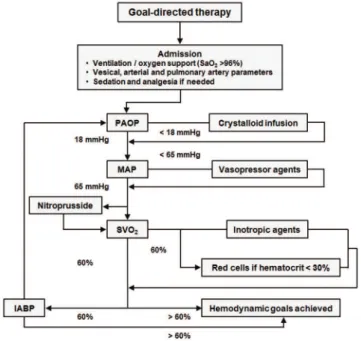
All potential patients were receiving respiratory support, hemodynamic monitoring, sedation and analgesia at the discretion of the attending physician at the time of recruitment and randomization. The conventional therapy (CVT) group was managed with standard monitoring technics, excluding a pulmonary artery catheter. Patients assigned to the goal-directed therapy GDT group underwent invasive hemodynamic monitoring using a pulmonary artery catheter and were managed according to the following goals: arterial oxygen saturation (SaO2) greater than 96 percent, pulmonary artery occlusion pressure (PAOP) equal to 18 mmHg, invasive mean arterial pressure (MAP) equal to 65 mmHg, hematocrit greater than 30 percent, and venous oxygen saturation (SvO2) greater than 60 percent. The flow chart of this protocol is presented in Figure 1.
afterload, contractility and oxygen carrying capacity to balance oxygen delivery and demand. However, to our knowledge, there are no studies using goal-directed therapy in advanced heart failure patients to improve morbi-mortality.4
The aim of this pilot study was to examine the safety and feasibility of an early, goal-directed therapy in patients with advanced heart failure, signs of LCOS, and renal dysfunction.
■
MATERIALS AND METHODSStudy design and patient population
This was a pilot randomized clinical trial in acutely decompensated heart failure patients with renal dysfunction admitted to the University of São Paulo Heart Institute Intensive Care Unit. The primary outcome measures were urine output and serum creatinine levels 72 hours after protocol initiation. The institutional Research Ethics Board approved the protocol and we obtained informed consent from the patient or a surrogate decision maker as appropriate. This manuscript follows the Consort recommendations for reporting randomized clinical trials. The inclusion criteria were: age greater than 18, at least one LCOS component in the previous 48 hours of admission, documented cardiomyopathy with left ventricular ejection fraction lower than 35 percent, and creatinine greater than
1.4 mg/dl. We defined LCOS as: mean arterial pressure
lower than 65 mmHg, urine output lower than 0.5 ml/ kg/h, and signs of decreased peripheral perfusion (cold
extremities, capillary refill time greater than 3 seconds and
low pulse pressure). The exclusion criteria were: pregnancy, previous organ transplant or immunosuppressive therapy, chronic obstructive lung disease, coagulopathy, sepsis, AIDS, history of cancer, and renal failure requiring hemodialysis.
Randomization and sample size calculation
We based the sample size calculation on the primary outcome measures of urine output and serum creatinine levels 72 hours after protocol initiation. The study hypothesis considered 10 percent difference in the above-mentioned measures between groups, a power of 80
percent and 5 percent significance level.
We utilized a simple block randomization scheme (n=6), with one-to-one allocation ratio within each block and a random computer-generated sequence. The patients were allocated into two groups designated as the goal-directed therapy, group and the conventional therapy group. Owing to logistic constraints, patients, healthcare providers, and outcome assessors were not blinded to the study group assignment. Allocation was not concealed, with the full allocation sequence list available in the study unit at the time of recruitment.
Figure 1 -Study protocol to the goal-directed therapy. Pulmonary artery occlusion pressure (PAOP); Mean arterial pressure (MAP); Arterial oxygen saturation (SaO2); Venous oxygen saturation (SVO2); IABP (intra-aortic balloon pump)
or the dobutamine dose achieved the maximum of 20 μg/ kg/min. If the SvO2 was not achieved after all the steps of the protocol were completed, we further attempted to optimize other aspects of care such as mechanical ventilation, analgesia, and sedation following current guidelines. If the SvO2 remained lower than 60 percent, we inserted an intra-aortic
counter-pulsation balloon pump (within the first 24 hours after
randomization) as the last step of the protocol. After 72 hours of protocol initiation, patients were treated according to the attending physician discretion at the bedside.
In both groups, we assessed hemodynamic parame-ters and the outcome measures at baseline, 6, 12, 24, 48 and 72 hours after protocol initiation. Secondary outcome measures were serum lactate concentration, APACHE II score and length of stay in Critical Care Unit. In each group,
the total amount of fluid infused, vasodilator dose and ino -tropic dose were also documented.
Serum creatinine levels were determined using Jaffe’s kinetic reaction (Dimension; Dade Behring, Deerfield,
IL, USA). Serum lactate concentrations were determined in the arterial blood using the electrode-selective method (EML 105; Radiometer, Copenhagen, Denmark).
Statistical analysis
Results were expressed as mean ± SD. The differences between the treatment groups were assessed by analysis of
variance (ANOVA) with repeated measures, Fisher’s exact test and the Mann-Whitney test, as indicated.
■
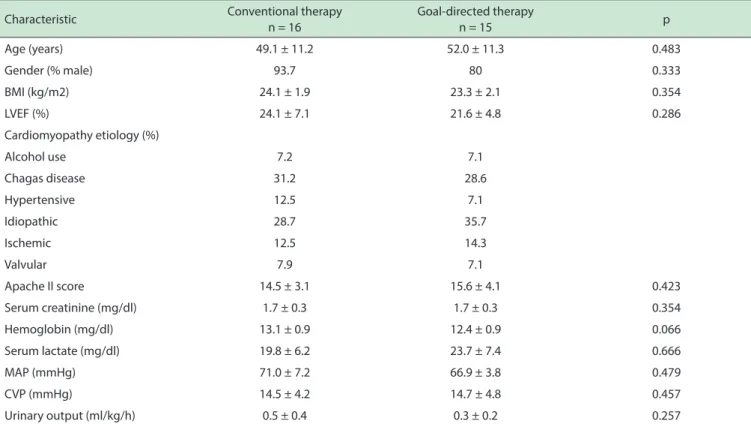
RESULTSWe included 31 patients in this study: 15 in the Goal-directed therapy (GDT) and 16 in the conventional therapy (CVT) group, respectively. The baseline characteristics were similar in both groups, as shown in Table 1.
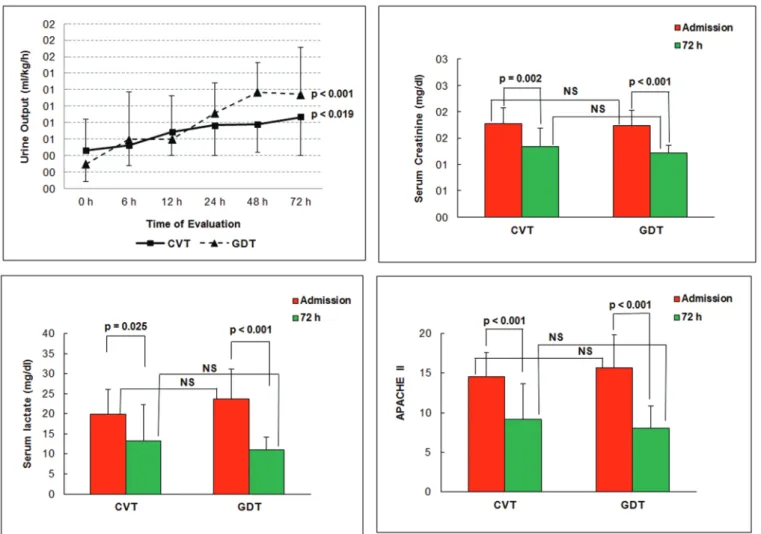
Figure 2 shows parameters that varied significantly
throughout the 72 hours observation study period: (a) urine
output increased significantly and similarly in both groups
(b) serum creatinine and serum lactate concentrations
as well as the APACHE II index decreased significantly
throughout the study period in both groups without a
statistically significant difference between groups.
The evolution of cardiovascular parameters is shown in Figure 3. There were no statistical differences between the groups in central venous and mean arterial pressure. At baseline venous O2 saturation in the GDT group (measured
in pulmonary artery blood) was significantly lower than the
corresponding value in the superior cava venous saturation in the CVT group; this trend was maintained throughout the
first 6 hours of treatment, but no difference was found at
any of the subsequent time point including at 72 hours. By
Table 1 – Baseline patient characteristics
Characteristic Conventional therapy
n = 16
Goal-directed therapy
n = 15 p
Age (years) 49.1 ± 11.2 52.0 ± 11.3 0.483
Gender (% male) 93.7 80 0.333
BMI (kg/m2) 24.1 ± 1.9 23.3 ± 2.1 0.354
LVEF (%) 24.1 ± 7.1 21.6 ± 4.8 0.286
Cardiomyopathy etiology (%)
Alcohol use 7.2 7.1
Chagas disease 31.2 28.6
Hypertensive 12.5 7.1
Idiopathic 28.7 35.7
Ischemic 12.5 14.3
Valvular 7.9 7.1
Apache II score 14.5 ± 3.1 15.6 ± 4.1 0.423
Serum creatinine (mg/dl) 1.7 ± 0.3 1.7 ± 0.3 0.354
Hemoglobin (mg/dl) 13.1 ± 0.9 12.4 ± 0.9 0.066
Serum lactate (mg/dl) 19.8 ± 6.2 23.7 ± 7.4 0.666
MAP (mmHg) 71.0 ± 7.2 66.9 ± 3.8 0.479
CVP (mmHg) 14.5 ± 4.2 14.7 ± 4.8 0.457
Urinary output (ml/kg/h) 0.5 ± 0.4 0.3 ± 0.2 0.257
Figure 2 - Basal parameters and signiicant changes in 72 hours in CVT and GDT groups. Top, left: urinary output; Top, right: serum creatinine; Bottom, left: serum lactate; Bottom, right: APACHE II
the end of the study, the level of venous O2 saturation had
significantly increased in both groups.
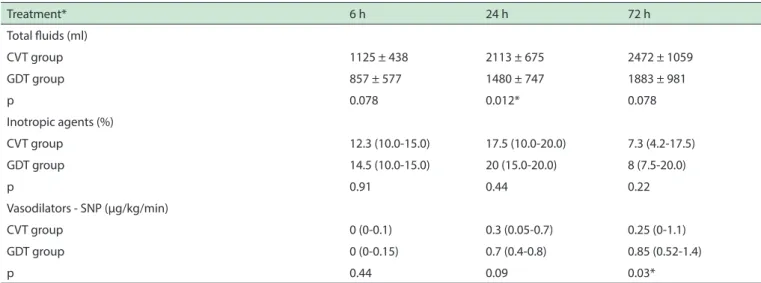
Table 2 documents the amounts of fluids and
inotropic and vasodilators drugs used during the study, with were similar between the two groups, but the
mean crystalloid volume infused during the first 24 hours was significantly smaller in the GDT vs. the CVT
group (1480 ± 747 vs. 2113 ± 675 ml). At 72 hours no difference between was observed. The cumulative dose
of sodium nitroprusside was significantly higher in the
GDT group. The cardiac index was measured in GDT
group and it was observed significant increase of the
parameter. One patient in the GDT group received a blood transfusion. No diuretics were necessary at any time. The length of the intensive care unit stay did not differ
significantly between the two groups (15.9 ± 9.7 days
for CVT vs. 19.9 ± 9.7 days for GDT, p=0.232). No deaths occurred in either group during the 72 hours period of observation. However, 4 patients in the GDT group and 5 patients in the CVT group died by post-randomization day 28.
■
DISCUSSIONThis study provides evidence that goal directed therapy aimed to optimize cardiac output in patients with low cardiac output syndrome and renal dysfunction was as effective as the conventional approach using treatment at the discretion of the attending physician. During the 72 hours study period, both treatment strategies resulted in the attainment of appropriate hemodynamic parameters. The site from which blood samples were collected for the measurement of venous saturation inevitably differed between the two groups, because of the protocol difference. This led to no apparent measurement different and lead to
the finding that both treatments induced increased SvO2
levels relative to baseline at all-time points, indicating an improvement in cardiovascular performance.10-12 This effect was confirmed by the cardiac index measurements in the
GDT patients, monitored through the pulmonary artery catheter.
Figure 3 - Behavior of CVP, MAP, SvO2 and CI over the 72 h study period. Top, left: Central venous pressure (CVP) in the conventional therapy (CVT) and goal-directed therapy (GDT)
groups at each time point evaluated (p = 0.457) and over the entire 72-hour period (p = 0.745). Top, right: Mean arterial pressure (MAP) in the CVT and GDT groups at each time point evaluated (p = 0.229) and over the entire 72-hour period (p = 0.479). Bottom, left: Venous oxygen saturation (SvO2: superior vena cava in the CVT group; pulmonary artery in the GDT group), showing a signiicant increase by the end of the 72-hour period in both groups (p = 0.0022). Bottom, right: Cardiac index (CI), showing a signiicant increase by the end of the 72-hour period in the GDT group. * Statistically signiicant
Table 2 - Treatments administered: luids, inotropic agents and vasodilators
Treatment* 6 h 24 h 72 h
Total luids (ml)
CVT group 1125 ± 438 2113 ± 675 2472 ± 1059
GDT group 857 ± 577 1480 ± 747 1883 ± 981
p 0.078 0.012* 0.078
Inotropic agents (%)
CVT group 12.3 (10.0-15.0) 17.5 (10.0-20.0) 7.3 (4.2-17.5)
GDT group 14.5 (10.0-15.0) 20 (15.0-20.0) 8 (7.5-20.0)
p 0.91 0.44 0.22
Vasodilators - SNP (μg/kg/min)
CVT group 0 (0-0.1) 0.3 (0.05-0.7) 0.25 (0-1.1)
GDT group 0 (0-0.15) 0.7 (0.4-0.8) 0.85 (0.52-1.4)
p 0.44 0.09 0.03*
significant decrease in serum creatinine and the increase
in urine output. In addition, the decreases in lactate con-centration and APACHE II score by 72 hours in the control
and intervention groups underscored the efficacy of the
two treatment strategies.
Critically ill patients who are hospitalized due decompensated heart failure and who have developed renal dysfunction have a worse prognosis than those who maintain normal renal function.13-16 The incidence
of renal impairment among patients hospitalized for decompensated heart failure ranges from 25% to 45%, depending on the cutoff point employed for serum creatinine levels.8,17 Decompensated heart failure patients
with acute kidney injury frequently require monitoring and treatment in the intensive care unit. The pathophysiology of renal dysfunction in heart failure patients with low cardiac output syndrome (LCOS) is complex; however, hemodynamic factors, such as hypotension and low cardiac output, might play important roles.
Patients in the conditions occurring in this study normally exhibit serious systolic ventricular dysfunction and are usually treated with vasodilators and diuretics. In acute decompensated heart failure, often precipitated by infection, they tend to manifest relative hypovolemia, reduced congestion and frequent renal injury.
Likewise, in patients such as these, central and mixed venous saturation or simply SvO2, represent the relationship between systemic oxygen delivery and consumption and are therefore indirect markers of cardiac output. In patients
with “low flow states” such as these with low cardiac output
syndrome, the increase in SvO2 follows any successful strategy to improve cardiac output, because the peripheral oxygen extraction rate decreases as a function of increasead
blood flow and improved end-organ perfusion. We suggest
that the improvement of the hemodynamic conditions observed in both groups might explain the improvement in the urine output and serum creatinine levels.
Although the use of an early goal-directed therapy has shown to be effective for acutely ill patients with acute cardiovascular dysfunction, the use of pulmonary artery catheter as a component of such strategy, is still under discussion for patients with advanced heart failure.18,19 In
this study, we tested the concept that an early goal-directed
therapy, based on pre-defined hemodynamic criteria with a
pulmonary artery catheter could improve renal function in heart failure patients with LCOS. However, both treatment strategies, namely goal directed and conventional, were associated with improvements in renal function and hemodynamic parameters.
Fluid replacement, inotropic and vasodilator agents
appeared to be sufficient to improve systemic flow and
therefore, urinary output. An interesting point is that the GDT
group received significantly less volume in the first 24 hours,
possibly because the protocol mandated the maintenance of
Pulmonary Arterial Occlusion Pressure at 18 mmHg, which could have been more volume restrictive. Only one patient received blood transfusion in the GDT group. Otherwise,
there were no significant differences between the groups in
terms of the infusion of inotropic agents.
The Evaluation Study of Congestive Heart Failure and Pulmonary Artery Catheterization Effectiveness (ESCAPE) trial – a landmark study of pulmonary artery catheter in
CHF patients - did not find any differences between two
groups receiving therapeutic strategies with and without a pulmonary artery catheter.20 In contrast with the ESCAPE
trial, this pilot study evaluated a higher-risk population
with LCOS and renal insufficiency. However, we did not find a difference between the groups with and without a
pulmonary artery catheter.
It is worth highlighting that the bedside clinical hemodynamic analysis is often effective to differentiate patients with lower congestion and lower peripheral perfusion. Under such circumstances, it is evident that the less invasive protocol, that is, without pulmonary artery catheter, is clinically and economically more advantageous than the invasive one.
■
CONCLUSIONAn early goal-directed management protocol using
pulmonary artery catheter was feasible in this very specific
patient population of severely decompensated heart failure patients with renal dysfunction. Although our study was a small pilot underpowered for important clinical outcome measures, we found similar improvements to the renal function and to the hemodynamic parameters in both groups.
The option for the invasive protocol with pulmonary
artery catheter setting is justified only if there is serious
pulmonary congestion associated with low peripheral perfusion. Whether it is worth or not to provide aggressive resuscitative care for this setting of high mortality acute kidney injury patients would be an important matter to be addressed by a larger study including patients with advanced heart failure and low cardiac output syndrome. Such study would provide better evidence regarding the role of an early goal management protocol including a pulmonary artery catheter.
■
CONFLICT OF INTERESTAuthors declare no conflict of interest regarding
this project
■
AUTHORS CONTRIBUTIONanalysis and interpretation of data; involved in drafting and revising manuscript critically for intellectual content;
final approval of the version to be published. Bastos JF:
substantial contributions to conception and design of the project, acquisition, analysis and interpretation of data; involved in drafting and revising manuscript critically for intellectual content. Lima JJG: drafting the manuscript and revising critically for intellectual content. Ferri M: drafting the manuscript and revising for important intellectual content. Kopel L: substantial contributions to conception and design of project and acquisition/analysis/interpretation of data; drafting the manuscript and revising it critically for intellectual content.
TERAPIA ALVO-DIRIGIDA PARA INSUFICIÊNCIA CARDÍACA DESCOMPENSADA E DISFUNÇÃO RENAL. UM ESTUDO-PILOTO CLÍNICO
RANDOMIZADO
OBJETIVOS: A Insuficiência cardíaca aguda está associada à síndrome de baixo débito cardíaco e disfunção
renal. No entanto, não se sabe se o protocolo meta-dirigido guiado por variáveis hemodinâmicas rigorosamente
controladas, incluindo cateter de artéria pulmonar, irá melhorar de forma segura os marcadores de disfunção renal clínica nestes pacientes, quando comparados a uma
abordagem menos invasiva.
MÉTODOS: Ensaio clínico piloto randomizado incluindo pacientes com insuficiência cardíaca conhecida, síndrome de baixo débito cardíaco e disfunção renal com menos de 48 horas de evolução. Foram randomizados dois
grupos: terapia alvo-dirigida monitorada com cateter de
artéria pulmonar e terapia convencional com cateter venoso central. Os parâmetros hemodinâmicos, a saturação venosa, o lactato sérico, o volume de reposição de fluidos e as doses
de drogas vasoativas foram comparados, considerando a
melhora da função renal após 72 horas como o desfecho
primário do estudo.
RESULTADOS: Foram incluídos 15 pacientes no
grupo de terapia alvo-dirigida e 16 pacientes em terapia
convencional. As características basais foram semelhantes
em ambos os grupos. O estudo avaliou os seguintes
parâmetros dos pacientes na linha de base e após 72 horas para os dois grupos: excreção urinária, creatinina sérica, saturação venosa de oxigênio e lactato. Nas primeiras 24 horas houve menor reposição de fluido no grupo de terapia dirigida mas, ao fim de 72 horas, a reposição tornou-se equivalente. O uso de agentes inotrópicos foi semelhante
entre os grupos.
CONCLUSÕES: Houve uma melhora da função renal e
dos parâmetros hemodinâmicos em ambos os grupos de estudo.
A opção para o protocolo com cateter de artéria pulmonar só se justifica se houver evidência clínica de congestão pulmonar grave associada à baixa perfusão periférica
PALAVRAS-CHAVE: choque cardiogênico, cateter de artéria pulmonar, monitorização hemodinâmica, insuficiência cardíaca, lesão renal aguda
■
REFERENCES1. Fonarow GC, Abraham WT, Albert NM, Stough WG, Gheorghiade
M, Greenberg BH, et al. Factors identified as precipitating hospital
admissions for heart failure and clinical outcomes: findings from
OPTIMIZE-HF. Arch Intern Med 2008;168:847-54. http://dx.doi. org/10.1001/archinte.168.8.847
2. Cleland JG, Swedberg K, Follath F, Komajda M, Cohen-Solal A, Aguilar JC, et al. The EuroHeart Failure survey programme - a survey on the quality of care among patients with heart failure in Europe. Part 1: patient characteristics and diagnosis. Eur Heart J 2003;24:442-63. http://dx.doi.org/10.1016/S0195-668X(02)00823-0
3. Cleland JG, Khand A, Clark A. The heart failure epidemic: exactly how big is it? Eur Heart J 2001;22:623-6. http://dx.doi.org/10.1053/ euhj.2000.2493
4. Nieminen MS, Böhm M, Cowie MR, Drexler H, Filippatos GS, Jondeau G, et al. Executive summary of the guidelines on the diagnosis and treatment of acute heart failure: the Task Force on Acute Heart Failure of the European Society of Cardiology. Eur Heart J 2005;26:384-416. http://dx.doi.org/10.1093/eurheartj/ehi044
5. Shah BN, Greaves K. The cardiorenal syndrome: a review. Int J Nephrol. 2010 Dec 28;2011:920195. http://dx.doi.org/10.4061/2011/920195. 6. Palomba H, de Castro I, Neto AL, Lage S, Yu L. Acute kidney injury prediction following elective cardiac surgery: AKICS Score. Kidney Int 2007;72:624-31. http://dx.doi.org/10.1038/sj.ki.5002419
7. Dries DL, Exner DV, Domanski MJ, Greenberg B, Stevenson LW. The
prognostic implications of renal insufficiency in asymptomatic and
symptomatic patients with left ventricular systolic dysfunction. J Am Coll Cardiol 2000;35:681-9. http://dx.doi.org/10.1016/S0735-1097(99)00608-7
8. Gottlieb SS, Abraham W, Butler J, Forman DE, Loh E, Massie BM, et al.
The prognostic importance of different definitions of worsening renal
failure in congestive heart failure. J Card Fail 2002;8:136-41. http:// dx.doi.org/10.1054/jcaf.2002.125289
9. Rivers E, Nguyen B, Havstad S, Ressler J, Muzzin A, Knoblich B, et al. Early Goal-Directed Therapy Collaborative Group: Early goal-directed therapy in the treatment of severe sepsis and septic shock. N Engl J Med 2001;345:1368-1377. http://dx.doi.org/10.1056/NEJMoa010307 10. Shoemaker WC. Shock states: pathopysiology, monitoring, outcome
prediction, and therapy. In: Schoemaker WC, Ayres S, Grenvik A,
Holbrook PR, Thompson WL (editors). Textbook of Critical Care. 2nd
edition. Philadelphia: Saunders; 1989. p. 977-93.
11. Scheinman MM, Brown MA, Rapaport E. Critical assessment of use of central venous oxygen saturation as a mirror of mixed venous oxygen in severely ill cardiac patients. Circulation 1969;40:165-72. 12. Marx G, Reinhart K. Venous oximetry. Curr Opin Crit Care
2006;12:263-8. http://dx.doi.org/10.1097/01.ccx.0000224872.09077.dc 13. Krumholz HM, Chen YT, Wang Y, Vaccarino V, Radford MJ, Horwitz RI.
Predictors of readmission among elderly survivors of admission with heart failure. Am Heart J. 2000;139:72-7. http://dx.doi.org/10.1016/ S0002-8703(00)90311-9
14. Shusterman N, Strom BL, Murray TG, West SL, Maislin G. Risk factors and outcome of hospital acquired acute renal failure. Clinical epidemiologic study. Am J Med. 1987; 83:65-71. http://dx.doi. org/10.1016/0002-9343(87)90498-0
17. Cowie MR, Komajda M, Murray-Thomas T, Underwood J, Ticho B; POSH Investigators. Prevalence and impact of worsening renal function in patients hospitalized with decompensated heart failure: results of the prospective outcomes study in heart failure (POSH). Eur Heart J 2006;27:1216-22. http://dx.doi.org/10.1093/eurheartj/ehi859 18. Robin E, Costecalde M, Lebuffe G, Vallet B. Clinical relevance of data
from the pulmonary artery catheter. Crit Care 2006;10(Suppl 3):S3. http://dx.doi.org/10.1186/cc4830
19. Vernon C, Philips CR. Pulmonary artery catheters in acute heart failure: end of an era? Crit Care 2009;13(6):1003. http://dx.doi.org/10.1186/ cc8113.