Disponible en castellano/Disponível em língua portuguesa SciELO Brasil www.scielo.br/rlae
1 Ph.D. in Nursing, Adjunct Professor, Rio de Janeiro Federal University Anna Nery School of Nursing, Brazil, e-mail: [email protected]; 2 Free Lecturer, Full Professor, Rio de Janeiro State University School of Nursing, Brazil, e-mail: [email protected]; 3 RN Doctoral Student in Nursing, Rio de Janeiro Federal University Anna Nery School of Nursing, Brasil, Assistant Professor, Rio de Janeiro State Federal University Alfredo Pinto School of Nursing, Brasil, e-mail: [email protected]; 4 Undergraduate Nursing Student, Rio de Janeiro Federal University Anna Nery School of Nursing, Brazil, e-mail: [email protected]
OPPOSITION TO THE AMERICAN LEADERSHIP BY BRAZILIAN NURSES (1934-1938)
Tânia Cristina Franco Santos1 Gertrudes Teixeira Lopes2 Fernando Porto3
Aline Silva da Fonte4
Santos TCF, Lopes GT, Porto F, Fonte AS. Opposition to the american leadership by Brazilian nurses (1934-1938). Rev Latino-am Enfermagem 2008 janeiro-fevereiro; 16(1):130-5.
A historical social descriptive study whose objective is to describe the circumstances where Bertha Pullen assumes as the din of Anna Nery Nursing School, to assess the strategies undertaken by Pullen to assure her position of power and prestige in the space of the school and Brazilian nursing; and to discuss about the resistance to the presence and authority of the American din, for the nurses and students, in the struggle for a national identity. Corpus analysis was made by putting photographs into context base don written documents and secondary sources. Results: The second management of Pullen was the reiteration of the American presence in the leadership of the School, despite the resistance of the nurses and students. Thus, we may assume that the second tenure of Pullen did not represent a real need that was felt by the school.
DESCRIPTORS: history of nursing; schools, nursing; emblems and insignia
RESISTENCIA AL LIDERAZGO NORTE-AMERICANO EN LA FORMACIÓN DE LA ENFERMERA
BRASILEÑA (1934-1938)
Estudio histórico-social que tuvo como objetivos: describir las circunstancias en las que Bertha Pullen asume la dirección de la Escuela de Enfermería Anna Nery; analizar las estrategias emprendidas por Pullen para asegurar su posición de poder y prestigio en la escuela y en la enfermería brasileña y discutir las oposiciones frente a su presencia y autoridad como directora americana por parte de las enfermeras y alumnas en la lucha por una identidad nacional. El análisis de los documentos fue a través de la contextualización de fotografías, con base en documentos y fuentes secundarios. El estudio demostró que la segunda gestión de Bertha Pullen reiteró la presencia americana dentro del liderazgo de la Escuela de Enfermería de Anna Nery, a pesar de la resistencia de las enfermeras y alumnas. De este modo, se concluye que su segunda gestión en la Escuela de Anna Nery no representó una necesidad real o sentida por la misma escuela.
DESCRIPTORES: historia de la enfermería; escuelas de enfermería; emblemas e insignias
RESISTÊNCIA À LIDERANÇA NORTE-AMERICANA NA FORMAÇÃO DA ENFERMEIRA
BRASILEIRA (1934-1938)
Estudo histórico-social teve como objetivos: descrever as circunstâncias em que Bertha Pullen assume a direção da Escola de Enfermagem Anna Nery; analisar as estratégias empreendidas por Pullen para assegurar sua posição de poder e prestígio no espaço da escola e da enfermagem brasileira e discutir as resistências à presença e autoridade da diretora americana, pelas enfermeiras diplomadas e alunas, na luta pela identidade nacional. A análise do corpus documental se fez a partir da contextualização das fotografias, com base nos documentos escritos e fontes secundárias. O estudo evidenciou que a segunda gestão de Bertha Pullen se configurou como a reiteração da presença americana na liderança da Escola de Enfermagem Anna Nery, apesar da resistência das enfermeiras e alunas. Desse modo, pode-se concluir que a segunda gestão de Bertha Pullen na Escola de Enfermagem Anna Nery não representou necessidade real ou sentida pela própria escola.
INITIAL CONSIDERATIONS
T
he introduction of Nightingale nursingmodel in Brazil, in the beginning of the 20’s occurred
under the aegis of public health, within a great
sanitary reform, led by scientist and sanitarian Carlos
Chagas, who was then the director of the National
Public Health Department. This reform made it
possible for the coming of a group of American
nurses, from a mission that was called at the time
Missão de Cooperação Técnica para o
Desenvolvimento da Enfermagem no Brasil (Mission
for Technical Cooperation for the Development of
Nursing in Brazil), to meet the needs of the
department, considered as necessary to make Carlos
Chagas’ reform effective. This mission stayed in
Brazil for one decade (1921-1931).
The introduction of a new Nursing model in
Brazil, under the influence of the Nursing Mission, was
concrete after the creation of the Nursing School and
a Nursing Service, both ran by American nurses.
With the creation of the Nursing School of
the National Department on Public Health, in 1922,
the American nurses brought to Brazil a nursing model
that added to the traditional features of the Nightingale
model, other features developed in their process to
adapt to the American culture since the period of the
civil war.
The classical model of modern nursing
introduced by the Americans determined the selection
of unmarried women with good social and education
background, and the emphasis on hierarchy and
discipline, learning through practice and subordination
to medicine mitigated by management autonomy.
As American characteristics, the teaching
model introduced here was based on Standard
Curriculum and on Goldmark Report that advocated
autonomy in relation to the hospital. In the case of
Brazil, Nursing autonomy at Hospital São Francisco
de Assis (main place of practice for students) was
assured by the simultaneous performance of the role
of principal of the Escola de Enfermeiras do
Departamento Nacional de Saúde Pública (Nursing
School of the National Department of Public Health)
and of chief at the Serviço de Enfermagem (Nursing
Service) in this hospital by one person.
The Escola de Enfermeiras do Departamento
Nacional de Saúde Pública, currently named Anna
Nery Nursing School began its activities on February
19th 1923, and the principal was the American nurse
Claire Louise Kieninger (1923-1925). From 1925
to1928 the school was ran by Loraine Geneviéve
Dennhardt.
It is worth mentioning that both tenures by
Bertha Pullen in the school Office were due to special
circumstances. Her first tenure, as the third principal
at Anna Nery Nursing School (1928-1931), was a
period of extension of the mission of the American
nurses in Brazil, due to a government decision, since
the initial agreement set its end in 1928.
When the mission finished in 1931, the board
at Anna Nery Nursing School puts Rachel Haddock
Lobo, a Brazilian nurse, in charge. However, her early
and unexpected death in 1933 puts once again powerful
interests at stake, regarding the choice of a new
principal for the school. Although the National
Department on Public Health already had 125 students
graduated at Anna Nery Nursing School, and 17 had
post graduation in the United States, the final decision
was that Bertha Pullen came back to Brazil to be in
charge of the school in a second tenure (1934-1938).
The present study aims at reinforcing the
American leadership in the education of Brazilian
nurses, through the second tenure of Bertha Pullen
(1934-1938) as the principal at Anna Nery Nursing
School. To deal with the issue presented, the following
objectives have been designed: describe the
circumstances in which Bertha Pullen takes on the
management of Anna Nery Nursing School; to assess
the strategies used by her to ensure her position of
power and prestige in the school and in Brazilian
Nursing, and to discuss the resistance to her presence
and authority by graduated nurses and students
struggling for a national identity.
METHODS
The present study, performed through the
social history perspective called “Emblemas e rituais
na formação da identidade da enfermeira brasileira”
(Symbols and rituals in the formation of the Brazilian
Nursing Identity), has been approved by the Ethical
Research Committee at Anna Nery Nursing School /
Hospital Escola São Francisco de Assis. Data were
assessed at the light of Pierre Bourdieu’s theory of
the social world, when he studies the setting of the
different social spaces, the hierarchies and the interior
struggles of these spaces, assessing dialectic
The space studied is that of Anna Nery Nursing
School, seen in this study as a social space where
agents (nurses, professors and students) achieve their
position in the division of work that enable them to
legitimately manipulate certain symbolic products such
as cultural assets(2).
Primary sources were located at the
Document Center of Anna Nery Nursing School in the
Federal University of Rio de Janeiro, they are
photographs and written documents, such as reports,
letters, minutes, conference texts, and speeches, both
related to the issue and according to the period of
time studied. Secondary sources were about the
History of Brazil and of Nursing, located in articles,
dissertations and theses.
After documents had been selected, external
and internal critics were performed to validate the
findings of the study, since the critics to sources helped
to determine historical evidences that supported the
assessment of findings(3).
Corpus analysis was conducted as of
contextualization of photographs, based on written
documents and secondary sources, allowing linking
what was expressed in photographs with the external
information. These aspects determine content
structure and provided subsidies to assess the object
in study(4).
RESULTS
The return of American leadership expressed by Bertha
Pullen managing Anna Nery Nursing School: strategies
to fix space
Bertha Pullen takes in the management of
Anna Nery Nursing School, on a second tenure on
April 2nd 1934, and chose as her assistant the Brazilian
nurse Maria de Castro Pamphiro, graduated by the
first class and with post graduation in the United States.
It is worth mentioning that after Rachel Haddock
Lobo’s death, Maria de Castro Pamphiro ran the School
as a deputy principal for seven months.
Bertha Pullen, on her first monthly report on
activities, in the end of April 1934, recorded that she
was taking over the management of Anna Nery Nursing
School again, after being away for precisely two years
and nine months. This statement indicates the
understanding of the principal that the management
of Rachel Haddock Lobo, interrupted by her death,
was only a short break in the American leadership in
the management of school and, at the same time,
she mentioned the services she had done in her first
management.
Bertha Pullen also made a brief diagnosis of
the school situation, saying that it was in poor
conditions, however, highlighting that the general
organization principles have remained the same. She
pointed out the need for reviewing the theoretical
contents and the practical experiences.
To keep her authority and control of
professors and students, the principal tried to establish
direct communication with students, adopting the
strategy of holding informal events where professors
would attend. Thus, in the second month of her tenure,
the “Social Hour” was established every Mondays at
the principal’s office.
This situation, although apparently made the
principal and the students closer, reinforced the social
distance, since social reality is characterized by
situations that reflect having a set of features given
to the socially valued and at the same time make
people realize their limits, when they internalize
external determinations, in the sense that they either
admit or accept what was given to them, according to
their habitus.
Regarding the professors, a mandatory
course was introduced “Teaching of Nursing and
Infirmary Management”. The first classes dealt with
“studying building of character: how to study and
rebuild it”. This determination shows the concern with
standardizing behavior of students and professors,
through strategies that aim at producing agents
[nurses] with a secondary habitus that is, of a
secondary ethos, as a result of internalizing the
structures of this field, since the education system,
as a reproductive instance “when it performs its
inculcation task, makes the culture that it has to
reproduce worth of being preserved”(5).
In other words, the strategy of the principal
of offering a mandatory course for professors, made
it possible to update the professional habitus, to adjust
it to the new demands, since the habitus while it was
modus operandi and primary condition for any
purpose, demands, from the groups and/or agent
classes, a minimal control and domain of a common
code, even if it is an unaware record(5), since the
habitus as it is incorporated and introduced by family
education, is constantly updated over the social path,
The rituals and symbols of the profession,
introduced since the inauguration of the course at Anna
Nery Nursing School, in 1923, by American nurses as
“symbols of the social reality”(5) had, above all, the
role of introducing and legitimating a new symbolic
order, since these rituals gave visibility to this new
profession that was eager for social recognition.
Additionally, the symbolic efficiency of rituals is in the
possibility of stating the identity of a profession.
Bertha Pullen, on her second tenure as
principal, continued with the “Capping ceremony”
which represented the effective integration of students
to the student body of the school, symbolizing Nursing
as a universal value and at the same time using a
strategy of making the group equal and different,
giving duties and advantages, in the symbolic level,
to those who wore it, and who belonged to that
group(4), because rituals are a set of formal,
expressive acts, with a symbolic dimension that uses
as a resource specific language and behavior systems,
as well as symbolic objects with meaning representing
a symbolic asset of the group(6).
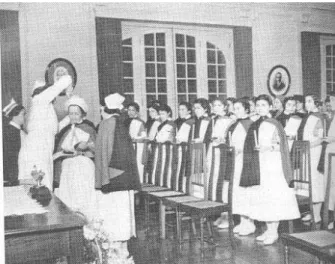
Figure 1 shows Bertha Pullen, helped by Zaíra
Cintra Vidal, puts the coif in the head of one of the
students, while the student lights her candle on the
flame of the previous student’s candle. Lighting candles
in the ritual gives it one more symbolic meaning since
“primary symbolism of candles is that of faith in ones
truth and beauty that goes beyond existence in itself,
determined by enduring commitment to a service”(4).
Receiving the coif in front of the bulb and
passing on the flames to all candles by all students
reinforces the commitment with the future profession.
Understanding the importance of these symbols can
be seen in this extract of a text produced by a student
at Anna Nery Nursing School called “A Lâmpada
simbolo de nossa Fé” (“The Bulb, a symbol of our
faith”), published at Revista Anaes de Enfermagem
(A Nursing Journal), currently the Brazilian Nursing
Journal, in September 1937, she states: “Let us show
to be worth of such advantages and benefits, that is,
let us perform our duty. Only this way may we see
the bulb that is our symbol shining on the universal
light”.
The rituals of receiving the degree at Anna
Nery Nursing School were always a time and space
important for all principals of the school who called
people from different sectors of society making the
group important for them and for the others.
Institutional rituals produced by the school had the
effect of making the group legitimate, because the
symbolic efficiency of rituals depend on the power of
the authorities introducing them and the provisions
of the receivers to know and acknowledge the
institutional conditions for a valid ritual(7).
Thus, the ritual of receiving the degree
reassured the commitment of students with their
profession, since the symbolic efficiency of rituals lie
in changing the representation that agents have on
the legitimate person, changing the nature of social
relations and at the same time, transforming the
representation that people have of themselves, as
well as behaviors that are considered essential to be
adopted in order to adjust to this representation(7).
Thus, rituals have the effect as the symbolic
record, because they do not show the passage from
one state to another, but they determine incorporation
of a professional habitus in accordance with the social
expectations connected with its category.
Realigning positions of power and prestige: resistance
to foreign leadership in Brazilian Nursing
The inauguration of Rachel Haddock Lobo’s
portrait, due to the first anniversary of her death, on
September 26th 1934, first year of Bertha Pullen’s
tenure as principal at Anna Nery Nursing School shows
some demonstrations of resistance to Bertha Pullen’s
leadership, according to the placement of people in
the geographic space, represented on Figure 2 which
Figure 1 - Capping ceremony
The place is the Main room of the students’
dorm, and the year is 1936. On the table there is a
bulb, icon of the world’s Nursing bringing back the
refers to the inauguration of the Portrait of Rachel
Haddock Lobo, in the Main Room of the Students’
Dorm.
Figure 2 - Ritual to Inaugurate Rachel Haddock Lobo’s
portrait
The portrait of Rachel Haddock Lobo: on the
left is the then Superintendent of the Service of Nurses
of the National Department on Public Health, Edith de
Magalhães Fraenkel, standing, with a public health
nurse uniform and by student Anita Guanais Dourado,
speaker of the students’ group; on the right nurse
and professor Zaíra Cintra Vidal. The two seated ladies,
wearing dark clothes and looking prostrated, next to
Zaíra Cintra Vidal are Rachel Haddock Lobo’s
relatives.
The two men on the photograph outside the
room have not been identified; but the written
documents led to infer that they are relatives from
Rachel Haddock Lobo, since the documents make a
reference to Sydney Haddock Lobo, Rachel’s brother,
and he even read a speech paying tribute to her. There
are also about 10 students in uniform in the picture.
Regarding identification of the other people
on the photo, next to Edith de Magalhães Fraenkel,
we can see nurse Maria de Castro Pamphiro, that
was then the principal assistant (this position
corresponds to deputy principal nowadays), on a
nurse hospital uniform.
The school principal, Bertha Pullen, also
wearing a hospital nurse uniform, is right behind the
profile of the only boy on the photo (Rachel Haddock
Lobo’s nephew). Her position on the photo, far from
Rachel’s portrait and from the Brazilian managers,
puts her on a prominent position just because of her
height.
This data becomes more expressive when put
together with the fact that she did not speak during
the event, therefore, she was not acknowledged by
nurses and students as an authorized spokesperson,
since the “spokesperson is that who is supposed to
talk on behalf of the community; it is at the same
time their privilege or duty, their role; that is, their
competence”(7).
Not withstanding, the positioning of the
principal can be explained at the light of what Bourdieu
called “strategy of condescension”, since Bertha Pullen,
when she positioned herself away from Rachel
Haddock Lobo’s portrait and did not speak, she makes
evident the case of symbolic transgressions, where
the “legitimate condescending people, have the
privilege of all privileges, and take advantage of
them”(7), therefore, transgressions that are prohibited
to other agents are authorized, expressing that she
is aware of her cultural capital and professional
identity.
However, the spatial distribution of Brazilian
nurses in the ceremony reflects the struggle for
imposing the view of the world “in glasses that enable
people to see the world according to certain divisions”(8)
which defines hierarchical positions of the field, in the
specific case, Anna Nery Nursing School, when
Brazilian nurses placed themselves next to Rachel’s
portrait (a special place in the ceremony), at the same
time it gave visibility to the leadership of the Brazilian
nurse in the direction of the school that was considered
the standard at the time, it also made clear the
resistance to the foreign leadership.
These strategies that reflect the fight for
legitimate monopoly of power of Brazilian nurses
through the use of collective capital of “prestigious”
nurses, determined by their “position in the objective
structure of the authority relations, that is, of authority
and force that they have achieved during their fight”(5).
FINAL CONSIDERATIONS
Both tenures from Bertha Pullen (1928-1931)
and (1934-1938), separated by the brief management
of the Brazilian nurse, Rachel Haddock Lobo, are the
reiteration of the American presence running Anna
Nery Nursing School, despite resistance of graduated
people and students.
The concern of the principal in keeping rituals
started due to the inauguration of Anna Nery Nursing
School is justified by the possibility of legitimating a
institutional rituals have the role of attributing and
distinguishing new qualities, giving to groups mean
to work on the social reality.
Despite the strategies of the principal to
control the group, the second management is a period
of resistance to the presence and authority because
what was at stake was the building of a new national
and native identity. Thus, we may conclude that the
second management of Bertha Pullen at Anna Nery
Nursing School was not a real representation or a
representation sensed by the school.
To conclude with, it is worth mentioning that
although the reiteration of the American presence has
corresponded to an enforcement of a world view
considered legitimate, on the other hand, helped
Brazilian nurses update their habitus through
professional relations with Bertha Pullen, through the
incorporation of social and cultural capital(9).
REFERENCES
1. Boudieu P. O Poder Simbólico. Rio de Janeiro (RJ): Bertrand do Brasil; 1989.
2. Pinto L. Pierre Bourdieu e a Teoria do Mundo Social. Rio de Janeiro (RJ): FGV; 2000.
3. Padilha MICS, Borenstein MS. O método de pesquisa histórica na enfermagem. Texto E Contexto Enfermagem 2005 outubro; 14(4):575-84.
4. Santos TCF, Barreira IE. O poder simbólico da enfermagem norte-americana no ensino da enfermagem na capital do Brasil (1928-1938). Rio de Janeiro (RJ): Ana Nery; 2002. 5. Bourdieu P. A economia das trocas simbólicas. São Paulo (SP): Editora Perspectiva; 2001.
6. Segalen M. Ritos e Rituais Contemporâneos. Rio de Janeiro (RJ): FGV; 2002.
7. Bourdieu P. A economia das trocas lingüísticas O que falar quer dizer. 2 ed. São Paulo (SP): Edusp; 1998.
8. Bourdieu P. Sobre a Televisão. Rio de Janeiro (RJ): Jorge Zahar Editor; 1997.
9. Bernardes MMR, Lopes GT, Santos TCF. O cotidiano das enfermeiras do Exército na Força Expedicionária Brasileira (FEB) no Teatro de Operações da 2ª Guerra Mundial, na Itália (1941-1945). Rev Latino-am Enfermagem 2005 maio-junho; 13(3):314-21.