A Case of Management Accounting Change: the Political and Social
Dynamics*
Cláudio de Araújo Wanderley
Assistant Professor, Accounting and Actuarial Department, Federal University of Pernambuco E-mail: [email protected]
John Cullen
Full Professor, The University of Shefield Management School E-mail: [email protected]
Received on 11.7.2011 - Accepted on 11.21.2011 - 2nd version accepted on 9.20.2012
ABSTRACT
The main objective of this study is to explain the political and social dynamics of the process of management accounting change in a privatized Brazilian electricity distribution company by articulating and studying the interconnections between the inter- and intra-orga-nizational environments (i.e., the political and economic level, orgaintra-orga-nizational-field level and intra-orgaintra-orga-nizational level). This study adopts an interpretive case study as its research method to analyze the changes in management accounting that occurred in the case company within a period of 8 years, from 2000 (the privatization year) to 2007. This paper argues that to understand these changes in management accounting, it is important to consider and discuss the social and political dynamics of inter- and intra-organizational environments, because the practices and criteria at the economic and political level, as well as the practices and criteria at the organizational-field level in conjunction with the intra-organizational rationale, shape a company’s management accounting system. To explain the changes in the case organization, this work draws upon the constructs proposed by Dillard, Rigsby et al. (2004) to articulate and understand the three levels of the social and political system. These constructs are based on Weber’s axes of tension (Weber, 1958, 1961; Weber & Roth, 1968) and Giddens’ structuration theory. The analysis of this case indicates that there were profound changes in the case company’s management systems after the process of privatization, particularly with regards to the budgetary system, the performance measurement system and the ways in which managers use management accounting information.
Keywords: Management accounting change. Brazilian electricity sector. Structuration Theory. Privatization. Organizational change.
1 INTRODUCTION
The main objective of this study is to explain the political and social dynamics of the process of management accoun-ting change in a privatized Brazilian electricity distribution company by articulating and studying the interconnections between the inter- and intra-organizational environments (i.e., the political and economic level, organizational-field level and intra-organizational level). To achieve this ob-jective, this work draws upon the constructs proposed by Dillard et al. (2004) to articulate and analyze the three levels of the social and political system. These constructs are ba-sed on Weber’s axes of tension (Weber, 1958, 1961; Weber & Roth, 1968) and Giddens’ structuration theory (Giddens, 1976, 1979, 1984), particularly the concepts of legitimation, signification and domination structures.
Privatization has a huge impact on privatized organi-zations because they have to alter both their organizatio-nal culture and their accounting systems in response to the new environment created following the process of privati-zation. Privatization is portrayed as a radical change becau-se it involves profound disruptions to the institutionalized values and beliefs that characterize the existing organiza-tional context and culture (Ogden & Clarke, 2005; Coad & Herbert, 2009; Tsamenyi, Onumah et al., 2010).
The research regarding the process of management ac-counting change following privatization can be classified into two main streams. First, there are studies in which the main aim is to demonstrate and explain that accounting can influence and support the process of privatization by hel-ping construct a new organizational culture (see Dent, 1991; Shaoul, 1997; Ogden & Anderson, 1999; Cole & Cooper, 2006; Craig & Amernic, 2006). One example of this trend is Ogden’s (1995) paper, which aims to investigate the ways in which accounting and accounting information contributed to the process of organizational change in the privatized UK water industry. Ogden (1995) focuses on the transformative capacities of accounting to redefine organizational objecti-ves, the meaning of organizational activities and perceptions of what are critical issues for the organization. The second stream seeks primarily to understand how accounting has been shaped by the process of privatization (see Hoque & Hopper, 1994, 1997; Hoque & Alam, 2004; Major & Hopper, 2004; Conrad, 2005; Uddin & Tsamenyi, 2005; Tsamenyi,
Cullen et al., 2006; Hopper & Major, 2007; Jacobs, 2009). Studies of management accounting change and privati-zation are characterized by a diversity of theories applied by researchers to understand this phenomenon. Some scho-lars have adopted a view that the processes of management accounting transition are sensitive to cultural, political and ethnic issues. One example of this type of research is the pa-per of Wickramasinghe and Hoppa-per (2005), which is based on a longitudinal case study in a textile Mill in a traditional Sinhalese village in Sri Lanka. This article draws on politi-cal and economic theories, as well as modes of production (MOP) theory and cultural anthropology, to illustrate that accounting is influenced by and influences the organizatio-nal and social context within which it operates.
Although we have identified relevant literature on pri-vatization and management accounting change, the im-pacts of privatization on the process of management ac-counting change and the importance of the political and social dynamics involved in this process are unclear. As a consequence, there is a dearth of relevant material for prac-titioners, policy makers, donor agencies and academics to draw upon. This study seeks to provide empirical evidence on the impacts of privatization on management accounting systems using Brazil’s electricity sector as a case study. This paper argues that to understand the process of manage-ment accounting change, it is important to discuss and un-derstand the social and political dynamics of the inter- and intra-organizational environments, because the practices and criteria at the economic and political level, as well as the practices and criteria at the organizational-field level in conjunction with the intra-organizational rationale, shape the company’s management accounting system.
The remainder of the paper is organized into four main sections. First, the case study provides an overview of the case study company and the case study operationalization. The second section addresses the case study company’s ma-nagement accounting changes. The next section is the core part of this paper and it aims to discuss the political and social dynamics of management accounting change in the case study company by using concepts from structuration theory, including signification, legitimation and domina-tion structures. Finally, the conclusion is provided.
2 CASE STUDY
The study adopts an interpretive case study as its resear-ch method because it can provide a riresear-ch description of the social, cultural and political contexts (Scapens, 2004, 2006; Baxter, Boedker et al., 2008; Scapens, 2008). The role of case studies in the interpretive approach, which is based upon a belief that management accounting practices are socially constructed, is to locate practice in its historical context, as well as its economic, social and organizational contexts and thus to better understand the social structures that shape current practices. In this regard, this study adopts explanatory case study research to analyze the process of
management accounting in a specific privatized electricity distribution company (Electra).
Electra (the case study company) is a Brazilian electri-city distribution company that was created in the 1960s when two electricity companies were merged to form a state-owned organization controlled by the company’s state government. It is important to highlight that in terms of the Brazilian electricity industry, a distribution company has two activities: a network function and a supply function.
Brazilian companies and one Spanish organization. This holding company had taken over two other Brazilian elec-tricity distribution companies before purchasing the case study company. At the time of privatization, the case study organization had more than 1.8 million consumers, pro-duction of approximately 7 Gwh and more than 3,000 em-ployees. However, the case company was suffering severe problems, such as commercial deficits and a high level of commercial loss.
This study analyzes the changes in management ac-counting that occurred in Electra within a period of 8 years, from 2000 (the privatization year) to 2007. Semi-structured and face-to-face interviews constitute the pri-mary method of data collection in this study. In sumpri-mary, over a period of 6 months, 50 interviews were carried out, totaling an amount of 64 hours. Twenty-five interviewees worked in the case study company during the privatization process. Among these 25 interviewees, 16 are still working in Electra, which represents 33% of the people interviewed in this study. Interviews were carried out among 8 different organizations: (a) Electra, (b) Electra’s parent company, (c)
the holding company of the group, (d) the regulator (ANE-EL), (e) Electra’s State regulator agency, (f) the association of accountants of the Brazilian electricity sector (ABRA-CONEE), (g) the Brazilian electricity distribution compa-nies association (ABRADEE) and (h) the Brazilian develo-pment bank (BNDES).
In addition to generating data from interviews, other sources of data were used to collect evidence. Several do-cuments were collected from Electra, its parent companies, the holding company, the regulator and the Brazilian elec-tricity distribution companies association (ABRADEE). Additionally, external documentation pertinent to these organizations, such as newspapers and magazine reports, were gathered. It is important to highlight that the resear-cher had access to corporate systems, such as the perfor-mance measurement system and the normative system. The researcher also explored Electra’s historical archive for documents related to the privatization process and many documents were analyzed, such as the privatization evalua-tion report commissioned by BNDES (the Brazilian Deve-loped Bank) and the auction invitation.
3 MANAGEMENT ACCOUNTING CHANGE
This section discusses and presents the management ac-counting changes that took place in Electra after its priva-tization. This discussion concentrates on three themes: (1) the budgetary system, (2) the performance measurement system and (3) the management accounting report system and the management accounting utilization.
After the process of privatization, budgetary control became an important part of the new management model, which was introduced into the company based on the ma-nagement by objectives (MBO) principals. A budget was used in Electra before the privatization, but it was extreme-ly flexible and the managers did not respect the budgetary limits. After privatization, Electra improved the budgetary system by tightening the level of control and promoting the views that the budget is an important system to the company and that all members of the organization have an obligation to meet budgetary targets. One aspect that was essential to improving the budgeting process was the implementation of an Enterprise Resource Planning (ERP) system. In the case of Electra, the Systems Applications and Products (SAP) was implemented in 2002 and the integra-tion of the company’s different computer systems facilitated access to the information to prepare and control the bud-get. The implementation of the SAP system was the perfect time to spread the budgetary culture among the managers and employees because new processes were created and all the employees were mobilized to introduce and accept new control systems, including the budgetary system.
From the interviews and document analyses, it is clear that the budgetary practices were institutionalized in Elec-tra. Electra’s managers of all departments participate in the preparation of budgets and all employees have to take the budget into consideration when executing their day-to-day
activities. Electra’s CEO commented on the importance of a budget:
Budget is the most important management tool that the company uses to manage and control the company’s acti-vities. All the decisions are made based on the budget. The preparation of the budget is the most important event in the company. There is culture in the group and in Electra that the budget has to be prepared very carefully, because the budget should reflect the company’s activities and the manager cannot change the budget after it had been ap-proved by the administrative council.
Electra implemented a new performance management system based on the management by objectives (MBO) principals. The MBO establishes that specific performance measures (objectives) are jointly determined by subordina-tes and their superiors, progress toward objectives is pe-riodically reviewed and results are evaluated and rewards are allocated on the basis of this progress. Therefore, the main difference between the previous PMS and the PMS developed after privatization is that the latter connects the company’s performance with the employees’ remuneration through a new bonus scheme that was introduced into the organization after the privatization process. As a conse-quence, part of the employees’ remuneration depends on the company’s performance.
peo-ple used the management accounting information.
The utilization of the performance measurement sys-tem (PMS) information and budgetary information is spre-ad across the whole organization and the employees have started to talk the “accounting language”, particularly the performance measures that have an impact on the remu-neration system, such as Earnings Before Interest, Taxes, Depreciation and Amortization (EBITDA) and operational expenditures. The head of the corporative consumers de-partment commented on this:
As managers, we had to add value to the company and the board of directors supported the utilization and dis-semination of the economic and financial concepts in the organization. Therefore, nowadays, talking about net pro-fit, EBITDA, income statement, budget, operational costs and capital investment is the day-to-day language in the organization. So, in terms of the economic and financial language, the managers use these terms to deal with the company’s problems.
The head of the accounting department also noted the following:
Electra is eminently an engineering company and this pre-sent organizational culture took a considerable amount of time to be achieved. The majority of the engineers wan-ted only build and expand the electricity system. They did not pay attention to the financial indicators, such as profit, EBITDA and revenue. Nowadays, these financial indicators have an impact on the employees’ remunera-tion. As a result, the engineers ask about the profit and the EBITDA. So, everybody is speaking the economic and financial language now.
The importance of Electra’s management accounting
area, the accounting department and the planning and control department, changed after the process of privati-zation. The attributions and the role of the management accountants were expanded and as a consequence, the ma-nagement accountants had to interact with the other de-partments of the company. The management accounting area started to be perceived by the other managers as an important source of information to the decision-making process. The change in the importance of management accounting had two main causes: (1) the company has a strong focus on financial performance and the members of Electra are rewarded in accordance with this financial performance, thus making information about the bud-get and performance measures key to the company’s em-ployees; and (2) the regulatory requirements, particularly the tariff review process, forced interaction between the operational departments and the management accounting departments. The tariff review process is critical to a distri-bution company because it determines the future revenue, which remunerates the shareholders capital invested in the company. The former head of the accounting department commented on this:
The new regulatory system, in particular, the tariff review process, stimulated the expansion of the planning and control area of the company, because this area started to control and calculate the company’s operational expendi-tures, the losses index, the level of default (...). Therefore, there was a considerable improvement in terms of econo-mic and financial controls. The accounting information started to be a very important source of information in the organization, especially during the period of the tariff review process.
4 POLITICAL AND SOCIAL DYNAMICS OF MANAGEMENT ACCOUNTING
CHANGE
This section aims to apply the same constructs (Weber’s ‘axes of tension’ and structuration theory) used by Dillard et al. (2004) to understand the political and social dyna-mics at the three levels of analysis (i.e., the economic and political, organizational-field, and intra-organizational le-vels). By doing so, this study explains the inter- and intra-organizational structures (rules and resources) that gover-ned Electra before and after privatization. As a result, this section articulates the institutional dynamics indicating how criteria and practice are linked over three levels of so-cial systems. As a consequence, this section also explains how social dynamics influenced management accounting practices in Electra after the process of privatization.
Dillard et al. (2004) advocate that the process of insti-tutionalization moves in a recursively cascading manner through three levels of socio-historical relationships, na-mely, the economic and political level (PE), organizatio-nal-field level (OF) and organizational level (intra-organi-zational level). The PE level establishes the most general and widely accepted norms and practices influenced by politically developed symbolic criteria, such as accounting
principles, laws and regulations (Hopper & Major, 2007; Wickramasinghe & Alawattage, 2007). Dillard et al. (2004) highlight that these norms and practices tend to be stron-gly influenced by powerful coalitions (power distribution) and represent the macro context for resource allocation. The second level consists of the organizational field (OF), which includes socio-economic configurations, such as in-dustry groups, professional bodies and consultants. Finally, the intra-organizational level represents the company and its internal systems and rules and routines (Burns & Sca-pens, 2000).
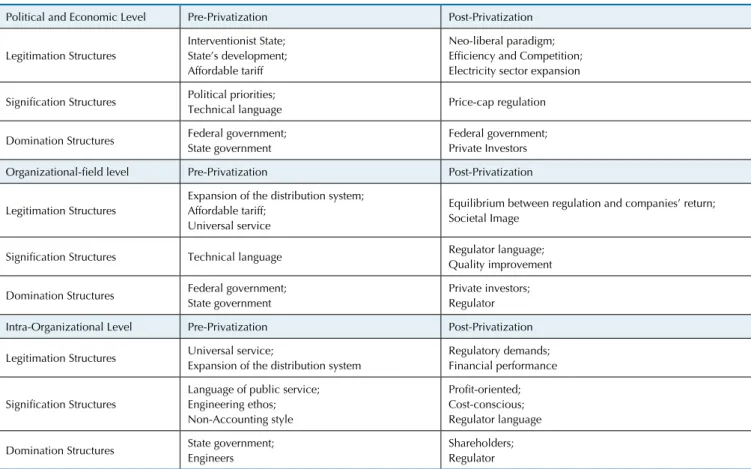
Table 1 Social Structures pre and Post Privatization
Political and Economic Level Pre-Privatization Post-Privatization
Legitimation Structures
Interventionist State; State’s development; Affordable tariff
Neo-liberal paradigm; Eficiency and Competition; Electricity sector expansion
Signiication Structures Political priorities;
Technical language Price-cap regulation
Domination Structures Federal government; State government
Federal government; Private Investors
Organizational-ield level Pre-Privatization Post-Privatization
Legitimation Structures
Expansion of the distribution system; Affordable tariff;
Universal service
Equilibrium between regulation and companies’ return; Societal Image
Signiication Structures Technical language Regulator language; Quality improvement
Domination Structures Federal government; State government
Private investors; Regulator
Intra-Organizational Level Pre-Privatization Post-Privatization
Legitimation Structures Universal service;
Expansion of the distribution system
Regulatory demands; Financial performance
Signiication Structures
Language of public service; Engineering ethos; Non-Accounting style
Proit-oriented; Cost-conscious; Regulator language
Domination Structures State government; Engineers
Shareholders; Regulator
different structural types—signification, legitimation and domination—which coincide with the three axes of ten-sion. Specifically, signification structures are analogous to the representational axis, legitimation structures represent the rationality axis and domination structures represent the power axis. Legitimation structures consist of normative rules and moral obligations of a social system. Signification structures are associated with symbolic representations that provide meaning and facilitate communication. Do-mination structures relate to power as it concerns the abi-lity to control and mobilize resources. Dillard et al. (2004, p. 522) conclude, “Weber’s ideas are used to articulate the historical, socio-economic and political environment wi-thin which the institutionalisation process occurs in wes-tern industrial societies and provides a theoretical link to structuration theory through the core dimensions of social systems”.
Dillard et al. (2004) note that the structuration theory framework postulates a dynamic inter-relationship betwe-en structure and agbetwe-ency, whereby changes in social struc-tures and systems take place as a result of human actions, which are both enabled and constrained by the structure. As a consequence, Dillard et al. (2004) incorporated
struc-turation theory into their framework to address changes at the societal level, organizational-field level and orga-nization level. Dillard et al. (2004, p. 520) conclude that the study of the dynamics of the process of organizational change should incorporate the analysis based on the three dimensions of the structuration theory—legitimation, sig-nification and domination—because “structuration theory provides a theoretical representation of the primary dyna-mics of institutional theory and that it not only describes the primary context dimension but also provides the dyna-mics for institutional change”.
This section provides an explanation of the primary dynamics of institutionalization of the management ac-counting change in Electra by using the structuration the-ory concepts of legitimation, signification and domination. This explanation shows the link between the three social levels of analysis (economic and political level, organiza-tional-field level and organization level). The analysis is carried out on these three social levels by comparing the structures (legitimation, signification and domination) in two different periods: pre-privatization and post-privatiza-tion. Table 1 provides a summary of the analysis based on the structuration theory.
4.1 Pre-Privatization.
This sub-section presents and discusses the social dyna-mics in terms of the three structures of analysis—legitima-tion, signification and domination—before the process of privatization on the three levels of analyses—the economic and political level, organizational-field level and intra-or-ganization level.
4.1.1 Economic and Political Level.
At the international level, which had an impact on the Bra-zilian electricity sector, during World War II, Keynes had played an important role in influencing government policy, emphasizing the importance of fiscal and monetary policy as tools of the Government for managing the economy. Na-tionalization was therefore to some extent a continuance of the idea of economic planning, which had been essential to the world’s war effort and which had led to the belief that the public allocation of resources was preferable to market allocation. As a consequence, the public began to expect more of government after the war and the belief grew that everyone had a right to basic services, some of which were considered so essential that they should not be provided on the basis of profit and an individual’s ability to pay.
The norms and values of the social-political and econo-mic context were codified in laws and regulation and pro-vided the legitimating grounds for action under the idea of the Interventionist State. This implies that the Federal Go-vernment and the Brazilian states goGo-vernments were res-ponsible for Brazil’s and the Brazilian states’ development, respectively. In terms of the Brazilian electricity sector, the government decided to adopt the policy of expanding the availability of electricity by expanding the generation capa-city, with the construction of large hydro plants and expan-ding the transmission and distribution grid. Another point that was important to the government was guaranteeing affordable electricity tariffs to consumers in the different regions of Brazil. To achieve this aim, the government im-plemented the tariff equalization system (the same electri-city tariff for all Brazilian states) in 1974, which leveled the electricity tariff over the country. The purpose of the equa-lization was to create incentives to industrial investment in less-developed states and regions. In addition, this measure aimed to control the electricity tariff as the low-cost utili-ties transferred their surplus to the equalization fund and this resource was transferred to high-cost companies.
The signification structures operating at the political and economic level before the privatization reflected the le-gitimation structures (explained above). As a consequence, the political aspect of the electricity sector was emphasized and measures to increase the number of connections and expand the electrical network were vital. As a consequence, the technical aspect of the system was another legitimation structure to ensure the expansion of the system. In this way, the technical language was more important than the finan-cial viability of the electricity system. This can be observed in the tariff equalization system adopted in Brazil during this period, which led the distribution companies to face financial difficulties in the 1980s, specifically putting pres-sure on the Brazilian Electricity sector to introduce chan-ges in the industry.
The domination structures refer to the institutions that control and allocate resources (Dillard et al., 2004). In the Brazilian electricity sector, the federal government centra-lized generation and transmission and the task of distribu-tion was decentralized into the hands of the states (a reflec-tion of the shared power in the Brazilian federal system). The central government’s aim was to create a federally
con-trolled enterprise (Eletrobras) that generated and transmit-ted power to state-owned regional distribution companies (Oliveira, 2007). The federal government eventually do-minated the power business through Eletrobras control of low-cost financing and the requirements of a coordinated, interconnected national grid (Oecd, 2008; Wanderley, Cul-len et al., 2011a, b). Therefore, the economic and political system was dominated by the federal and state govern-ments. The former was responsible for the macro policies and decisions regarding the electricity sector, whereas the latter was responsible for the control and allocation of the resources at the state level based on Electra’s state priorities in terms of social and economic development.
4.1.2 Organizational-ield level.
The organizational field is made up of the group of or-ganizations involved in the generation, transportation and commercialization of electricity as well as related trade as-sociations and industrial experts (Dillard et al., 2004). The signification, legitimation and domination elements of the political and economic level provide the context within which the organizational field is constituted. As a conse-quence, the legitimation structures at the organizational field reflect the aims of the economic and political level. Prior to Electra’s privatization, the legitimation structures comprised the following: (a) expansion of the distribution system to support the country and state’s development; (b) affordable tariffs; and (c) universal services, especially by increasing the number of connection in rural areas.
To support the structures of the political and economic level as well as the legitimation structures at the organiza-tional-field level, the signification structures were based on the technical language and as result, the focus was on the engineering aspect of the sector, with little attention paid to the financial issues. This was a consequence of the equa-lization system that subsidized the companies’ with poor financial and operational performances. Therefore, the re-presentation scheme was based exclusively on engineering and operating demands and notions of public service.
In terms of the domination structures, the organizatio-nal-field level was dominated by two entities, the federal government and the Brazilian states governments. The fe-deral government played a more important role in the or-ganizational-field level because Eletrobras (the federal hol-ding company of the electricity sector) was responsible for controlling and planning the expansion and development of the Brazilian electricity sector. Therefore, Eletrobras was a key institution in the organizational field for controlling and allocating resources. Before privatization, the industry associations, such as ABRADEE (The Brazilian Electricity Distribution Companies Association), did not play a sig-nificant role in terms of a dominant structure. In addition, private entities were not significant in this industry before privatization because they accounted for only approxima-tely 5% of the electricity sector (Oliveira, 2007).
4.1.3 Intra-Organizational Level.
era was based on the public service principles of the natio-nalized industries. As a consequence, the language of public services was the underpinning signification structure of the pre-privatization period. Therefore, the public service language constituted the dominant meaning system for ac-tion and interacac-tion in Electra. The significaac-tion structures are strongly linked to structures of legitimation (Conrad, 2005) and the language used to debate and discuss organi-zational purposes was shaped by actors’ understanding of the appropriate attributes of a public service organization. As a result, an engineering ethos was considered essential for the fulfillment of public service obligations (in the case of Electra, the expansion of the system to a universal ser-vice).
The public sector culture revolved around engineering and operating imperatives with a strong emphasis on main-taining the appropriate standards for service provisions to consumers and the expansion of the electricity system. As a consequence, another key signification structure was the language of engineering. Top management consisted of engineers and universal service and safety and security of supply were the key concerns in terms of investment, plan-ning and so on. As a result, management understood the organizational purpose primarily in terms of an enginee-ring discourse and believed excellent engineeenginee-ring was the key to success in terms of public service objectives.
Therefore, the pre-privatization era in Electra was cha-racterized by the engineers’ dominance and a corollary of this was a lack of attention to financial constraints, resul-ting in what can be characterized as a non-accounresul-ting style in Electra. As a consequence, the management accounting system before privatization was limited to a ceremonial function because the decision-making process was based on the engineering ethos.
In terms of legitimation structures, the principles of universal service, which implies the expansion of the distri-bution grid, provided the moral undercarriage and helped the interpretation of the macro social system in Electra. Acceptance of the state government’s moral obligation and objective to provide basic essential services by ensuring the minimal standard of quality and expanding the distribution system, as well as the rights of citizens to receive these ser-vices, legitimated the work and the management systems in Electra. Top management, drawing on the signification structures of public service, used the language of enginee-ring to legitimize their policies, particularly the need for a safe, secure supply to ensure universal service.
The interaction of structures of signification and legi-timation is clear in the inter-relationship of the language used to describe and debate organizational purpose and actors’ understanding of the organization’s aims and ob-jectives. Members of management were convinced that the engineering discourse was a legitimate one and that they were acting in the interests of the public as a whole. Howe-ver, the management accounting information was used as an interpretative scheme to legitimize the pursuit of their own agenda.
An examination of domination structures requires
considerations of the relations and ordering of dependen-ce and autonomy within the organization (Conrad, 2005). Resources, both allocative and authoritative, are the media through which power is exercised and structures of domi-nation are reproduced. The command of allocative autho-ritative resources was conducted by the state government, which nominated the top management team of Electra to ensure the achievement of the state government policies re-garding the electricity sector. As discussed before, the basic aim of the state government was the expansion of the offer of electricity, particularly in remote areas. This domination structure ensured that most decisions regarding the direc-tion that the company would take were essentially engine-ering rather than financial decisions, with the accounting function subservient to the engineering function. It was a command-and-control culture dominated by engineers.
It can be seen that there is a strong link between struc-tures of signification and domination because the language of engineering, being the language of dominant senior ma-nagement, ensured that their understanding of organiza-tional purpose prevailed. Being structured as a monopoly obviously facilitated such an approach because commercial constraints were largely absent and the company did not seek to improve its financial performance.
4.2 Post-Privatization.
Having discussed the social and political dynamics in terms of the three structures before privatization, this sub-section presents and discusses the legitimation, significa-tion, and domination structures after privatization on the three levels of analyses: the economic and political level, organizational-field level and intra-organization level.
4.2.1 Economic and Political Level.
The rationale of privatization came from the neo-liberal paradigm and was spread across the world by international agencies, namely, the World Bank and IMF (International Monetary Fund), which put pressure on countries, espe-cially developing countries, to privatize their utility compa-nies. In Latin America, Chile and Argentina were the first countries to privatize the electricity sector. In the 1980s, the combination of the debt and fiscal crisis and doubts about hyperinflation encouraged the Brazilian government to adopt a set of neo-liberal policies, one of which was pri-vatization. The neoliberal paradigm replaced a previous economic paradigm that had been in place in Brazil since the 1930s. The previous paradigm was based more on an inward orientation and the greater intervention of the state in economic matters (Gwynne & Kay, 2004).
tax and financial reforms) and reducing government inter-vention in the economy (Tsamenyi, Onumah et al., 2010). These ideas were summarized in the so-called Washington consensus, which had three main ideological thrusts in ter-ms of economic policy (Harvey, 2005):
1. The opening up of markets to the world economy through trade liberalization and easier foreign direct investment.
2. Reduction of direct government intervention in the economy through privatization, as well as increasing the technocratic role of economic ministries – through imposing fiscal discipline, balanced budget and tax re-form.
3. Increasing the significance of the market in the allo-cation of resources and making the private sector the main instrument of economic growth – through dere-gulation, secure property rights and financial liberaliza-tion.
As mentioned previously, inspired by the IMF and the World Bank’s guidelines, following the Washington con-sensus and the managerial reforms that began in the 1980s in some member countries of the Organization for Econo-mic Cooperation and Development (OECD), particularly Great Britain, the Brazilian government undertook an ad-ministrative reform in 1995, namely, a public management reform. Designed to replace the existing mix of bureaucra-tic public administrations and clientelist pracbureaucra-tices in Brazil, the new managerial public administration reform broadly followed the principles of the “new public management” model (Pereira & Spink, 1999). The Brazilian 1995 public management reform was originally defined in the Plano Diretor da Reforma do Aparelho do Estado of the same year. According to Pereira (2003, pp. 90-91), the major of elements of this reform were the following:
1. Decentralizing social services to subnational units; 2. Delimiting the area of action of the state more precise-ly by distinguishing three areas of state activity: first, the “exclusive” activities of the state (those involving the use of state power that will remain within the central executi-ve); second, the social and scientific activities that are not exclusive state responsibilities and that should be trans-ferred to the nonprofit sector; and third, the production of goods and services for the market;
3. Distinguishing core activities that have to be performed by politicians and senior officials from support activities that may be outsourced;
4. Separating policy formulation from policy execution; 5. Granting more autonomy and accountability to services performed by the state, which will take the form of either “executive agencies” (when their activity involves the use of state power) or that of “social organizations,” that is a special type of nonprofit service organization that recei-ves government funding but does not require state power, as is the case for hospitals, schools, research centers, and museums, among others; and
6. Assuring accountability through management by ob-jectives and managed competition as well as through se-veral mechanisms of direct democracy or social control,
combined with increased transparency in civil service, rather than through detailed definition of procedures, cress-checking and auditing – the classical forms of bu-reaucratic control – which are not eliminated but reduced by the reform.
In terms of the Brazilian electricity sector, crucial cha-racteristics of the Brazilian public management reform were the decisions to privatize state-owned enterprises that pro-duced goods and services for the market and to outsource support activities to the private sector. As a consequence, the main lines of the policy regarding the electricity sector can be summarized as follows: the privatization of state-owned companies, the end of government monopolies, the perception of the electricity sector as a mere producer of a simple commodity and the elimination of the sector’s stra-tegic character from discussion (Thomas, 2006).
As a consequence of the neo-liberal paradigm and based on a belief that management of public sector organizations was complacent and inefficient due to the lack of market pressures to improve performance, the other two legitima-tion structures at the political and economic level were effi-ciency and competition principles and the expansion of the electricity sector through private investments. In 1995, the Brazilian government launched a project for restructuring the power sector, known as RE-SEB. The original idea was to privatize all of the distribution, transmission and gene-ration, with the exception of nuclear plants and the Brazi-lian half of Itaipu (the world’s largest hydro-plant, which was built by Brazil and Paraguay at the frontier of both countries) and to introduce competition. To this end, it commissioned a study to a consortium led by Coopers and Lybrand, which delivered its report in July 1996 (Araujo, 2006). The main objective of this market-oriented reform in the electricity sector was to increase the investment rate by attracting private capital. This policy was in line with the recommendations of the International Monetary Fund (IMF) and the World Bank that aimed at changing the role of the State in the economy (Almeida & Pinto, 2005). Another objective of this reform was to diversify the ener-gy matrix by inducing investments in gas-based thermal generation (Almeida & Pinto, 2005). As a result, the basic aim of this reform was a desire to transform the electricity industry from a monopoly into a competitive market, so the electricity could be bought and sold like other com-modities and products. Therefore, the main goals for this change in the electricity sector were to inject competition into the generation and supply links of the sector’s produc-tion chain and to reduce public debt via privatizaproduc-tion of the state-owned utilities that dominated the pre-reform sector (Bajay, 2006).
in-frastructure firms from charging excessively high prices: price-cap regulation and rate-of-return regulation (Alexan-der & Irwin, 1996). The price-cap approach was selected by the Brazilian government because it is thought to give firms stronger incentives to be efficient. Under this approach, the regulated price is adjusted each year by the rate of inflation plus or minus some predetermined amount and without regard to changes in the firm’s profits. The primary means of regulation was to be by the setting of a price formula, of the form RPI – X, which limited price increases that the industry could impose, thereby forcing it to improve the efficiency of operations.
As mentioned before, domination structures refer to the institutions that control and allocate resources. The domination structures before privatization were the federal (Brazilian) government and the state governments. Howe-ver, after privatization, the domination structures consisted of the federal government and private agents. The federal government is mainly represented by the regulator ANEEL, which was created at the end of 1996 (Law 9,427). Another domination structure that emerged after privatization was the figure of the private investors because before privatiza-tion, the private sector only accounted for approximately 5% of the electricity sector (Karmacharya, 2008; Losekann, 2008). After privatization, private participation in the elec-tricity sector increased dramatically. Private companies re-presented approximately 70% of the electricity distribution sector after the privatization process. In addition, private investors were the main agents responsible for the expan-sion of the generation capacity in Brazil, particularly with regards to the institutionalization of the so-called Indepen-dent Power Producers (IPPs).
4.2.2 Organizational-ield level.
As stated previously, the organizational field is formed by the group of companies involved in the generation, transportation and commercialization of electricity, as well as related associations and industrial experts. The Brazilian electricity sector has a number of associations to represent the electricity companies as well as large groups that have different companies involved in generation, transmission, distribution and commercialization activities. In terms of the Brazilian electricity distribution industry, ABRADEE (The Brazilian Electricity Distribution Companies Asso-ciation) plays the major role as the link between the distri-bution company and the regulator (ANEEL).
Dillard et al. (2004, p. 530) noted that “the significa-tion, legitimation and domination elements of the political and economic level provide the context within which the organisational field is constituted”. Therefore, the societal conditions provide the context and infrastructure for the organizational field. As discussed above, privatization cre-ated a new distribution electricity sector formed by private companies (70% of the market) and state-owned compa-nies with strong regulatory systems based on the price-cap regulation. As a result of this change, the legitimation structures changed from the expansion of the distribution system/universal service before privatization to the
equili-brium between regulation and companies’ financial perfor-mances and the societal image after privatization.
On the organization field level, the basic legitimating criteria is the conciliation between price-cap regulation and the expected return of investment, especially because the regulation by incentives introduced in Brazil has some characteristics of the British model and other Latin Ame-rica countries. However, the regulatory system in Brazil is also unique to accommodate the country’s peculiarities, such as the country’s geographic dimensions and the elec-tric power matrix based on hydro plants. In addition, the regulatory system in Brazil was based on ad hoc decisions, which increased the regulatory risks in the sector. As a con-sequence, one of the main concerns on the organizational-field level was to mitigate this risk and ensure fair economic and financial performances of the distribution companies. Another legitimation structure is the societal image, which is important to legitimize privatization by showing that the private companies are more efficient and can provide bet-ter services than state-owned companies. These legitima-tion structures can be observed in the institulegitima-tional mission of ABRADEE, which is “to contribute to the distribution companies’ operational and economic-financial manage-ment systems and performance with focus on consumers’ satisfaction” (Abradee, 2009).
On the organizational-field level, the signification structures reflect the practices related to structural proper-ties arising from organizational actions as well as political and economic criteria translated into the industry context. Therefore, before privatization, the signification structure was based on technical language, as the main aim of the electricity industry was to provide universal services. After privatization, the regulator language constituted the main signification structure because the regulator required, es-pecially during the first years of the regulatory system, a great deal of information to support the new regulatory framework based on price-cap regulation. The electricity sector as a regulated industry found itself facing huge de-mands for information and sometimes facing ad hoc re-quirements for additional information, such as during the 2001 electricity crisis and the new regulatory framework model introduced in 2004. As a consequence, the regula-tor language constitutes the main representational scheme on the organizational-field level. Another signification structure is quality improvement. This structure is stron-gly connected to the societal image (legitimation structure) because the industry sought to improve quality indicators, such as DEC (Equivalent length of electricity interruption per consumer) and FEC (Equivalent frequency of electrici-ty interruption per consumer), to legitimize privatization by presenting the companies as more efficient and able to provide better services with high standards of quality.
com-panies and ABRADEE as the association that combines the main private organizations in the distribution sector. The regulator is also a domination structure because the entity is responsible for legislating about the issues re-lated to the operational and economic-financial perfor-mances of the distribution sector.
4.2.3 Intra-Organizational Level.
The state-owned distribution companies were privati-zed in an effort to introduce more financial discipline and to improve the quality of the system, with new domination structures such as accountability to the sector regulator (ANEEL) and shareholders replacing the state government dominance. Thus, new signification structures based pri-marily on financial measures and a profit-conscious style emerged, with related legitimation structures such as ma-nagement finding themselves encouraged to pursue finan-cial success, albeit within the constraint of price-cap regu-lation, given that the new organizational form was in fact a privatized monopoly.
In terms of the signification structures, the rationale of privatization sought to replace the perceived inefficiencies by changing the earlier ethos of public service to one focu-sed on financial discipline encouraged by the new owner-ship style and regulatory system. Therefore, accountability shifted to shareholders and the industry regulator, and new emphasis was placed on the language of financial success represented by financial measures, such as profit, reduction in the operational expenditures and rate of return on capi-tal. However, these financial indicators were constrained by price-cap regulation.
The engineering language, which was a signification structure before privatization, was gradually supplanted by regulatory demands and financial performance measures. As a consequence, there was a change in the importance of management accounting information, particularly re-garding those performance measures that were part of the variable remuneration scheme of Electra. Engineers were provided with their local financial and accounting infor-mation and the support of management accounting staff. As a result, engineers had to learn some of the manage-ment accounting terminologies and how to interpret this information to make decisions and control their activities. The regulator played an important role in Electra and the regulatory demands shaped the day-to-day activities of the organization. Therefore, the regulator language is now ano-ther signification structure in Electra.
Legitimation structures consist of the normative rules and moral obligation of a social system. According to Ma-cintosh (1994), legitimation structures constitute the shared set of values and ideals about what is important and should happen is social settings. In the case of Electra, before pri-vatization, the legitimation structures were to provide uni-versal services and expand the distribution system. After the privatization, the legitimating grounds were related to the regulatory demands, in particular, regarding the tariff review process and control over the quality of the service and to provide the expected return to the shareholders by
improving the company’s financial performance.
Electra operates in a regulated industry. As a conse-quence, the regulator and the Brazilian regulatory model have had a huge influence on Electra’s management va-lues, principles and systems. It also stated that the main stakeholders are the shareholders and the regulator for the Brazilian distribution companies because the regulator has the power over the companies in terms of setting the tariff and standard of quality and defending the rights of the con-sumers. Therefore, these legitimation structures reinforce the view that the success of Electra depends on the balance between the financial performance and the regulator’s re-quirements.
After privatization, control of the company moved from the state government to a private group. As a consequence, the domination structures changed because the domination structures represent the intra-organizational mechanisms for controlling and allocating resources. The shareholders became a domination structure in Electra. The power of the shareholders are now materialized through the holding company’s management style, principles and policies. One of the instruments used by the holding company to control Electra is the management accounting systems, especially the budgeting and performance measurement systems. In addition, the holding company decides the future of Electra in terms of capital investment and the implementation of new management systems.
With the creation of the new regulatory body ANEEL, regulation provided a new language of accountability that defined the rights and duties of the regulator and the regu-lated company and instituted a new domination order by giving the regulator the right to hold the industry accoun-table and the necessary allocative and authoritative resour-ces of domination. The first regulator’s duties to the public interest included a primary duty of ensuring universal ser-vice and that the distribution companies remained finan-cially solvent and a secondary duty in relation to consumer protection. In addition, the regulator’s duties included set-ting and reviewing the price cap and the industry’s com-pliance with it. Therefore, to some extent, the regulator has defined the economic environment by imposing the pri-ce-cap and imposing standards of service that a company has to meet, thereby reducing management’s autonomy in decision-making. The importance of the regulator in this type of industry is high, and this creates the perception that the regulator is the client of the regulated company becau-se the regulator becau-sets the revenues of the organization. The former superintendent of planning and control noted the following:
To conclude, the environment facing a regulated com-pany (in this case Electra) is more complex than that facing an ordinary organization in the private sector. Conflicts exist in the objectives of the regulator and shareholders, which in turn create conflicts for management in trying
to satisfy the requirements of both. Prior to privatization, the division was between public and private sector orga-nizations, where management of the former had political accountability and that of the latter had shareholder ac-countability.
5 SUMMARY AND CLOSING COMMENTS
In terms of the changes in management accounting practices in the case study company, the budget is the main management and control system in the organization and budgetary control and information have been prioritized since privatization. This comes in contrast with the pre-vious budgetary system, which was used in a ceremonial way and described by some employees as a piece of fiction because nobody used budgetary information to make deci-sions before privatization. As a result, budgetary practices were institutionalized in the organization. Another impor-tant management accounting system is the performance measurement system, which is based on 10 KPIs (key per-formance indicators). This system was institutionalized in the company and the organization actors have become very concerned with this system, which is the main motivatio-nal system used in the organization.
This paper aimed to explain the political and social dy-namics that influenced the process of management accoun-ting change in a Brazilian electricity distribution company. The changes in management accounting were initiated and sustained by concomitant changes in the legitimating grounds, signification structures and domination perspec-tives and cannot be adequately understood without consi-dering these three inter-related dimensions as well as the influences from the organizational field and societal levels. The legitimating grounds at the intra-organizational level moved away from engineering values based on the concept of providing universal services toward financial norms and values (i.e., improving the company’s financial performan-ce while taking into consideration the regulatory demands). The signification structures reflected the financial discour-se and were badiscour-sed on the concepts of profit improvement, cost reduction and the regulator language. After privatiza-tion, the domination structures at the intra-organizational level were represented by shareholders (the holding com-pany) and the regulator. These entities were the main dri-vers shaping the process of management accounting chan-ge in Electra after the privatization.
The signification, legitimation and domination struc-tures at the political and economic level, instantiated by agents acting in time and space, provided the social, politi-cal and economic context that reflected the primacy of the new environment in the Brazilian electricity sector based on the neo-liberal paradigm which postulates that the State should not be the provider of the so-called public services, but the State should be the regulator in order to introdu-ce competition and improve the quality of serviintrodu-ce which should be provided by the private sector. The criteria and practices at the political and economic level were reflected
in the legitimating grounds, representational schemes and the domination perspectives at the organizational-field le-vel providing the context for the criteria and practices. As a consequence, the legitimating grounds were based on the view that the sector should seek an equilibrium between regulation and distribution companies’ financial return.
The organizational field practices and criteria provide the context for action on the intra-organizational level. Therefore, the main objective of the case study company after privatization was to achieve a fair return on invest-ment (i.e., financial performance constrained by the Bra-zilian regulatory framework). As a consequence, Electra’s management accounting system was shaped by this new rationale created after privatization. Management accoun-ting systems and reports constituted essential instruments to support this business strategy and to communicate the targets and objectives of the company to the organizational actors.
In terms of utilizing the constructs of Dillard et al. (2004) in this paper, we believe that their framework fully supported our explanation of the relationship between the process of management accounting change in Electra and the social and political dynamics involved in this process. The framework of Dillard et al. (2004) can capture the dy-namics and complexities in the inter- and intra-organi-zational environment. As a result, this model can explain why new management accounting practices develop and are adopted by companies. However, this framework could be extended by improving their analysis of the influence of intra-organizational factors and how accounting technolo-gies are established, particularly at the intra-organizational level (Hopper & Major, 2007), which was not the focus of this study.
Abradee. Associação Brasileira de Distribuidores de Energia Elétrica. (2009). Retrieved from http://www.abradee.org.br.
Alexander, I., & Irwin, T. (1996, September). Price caps, rate-of-return regulation, and the cost of capital. Public Policy for the Private Sector -
he World Bank, 87.
Almeida, E. L. F. D., & Pinto, H. Q. (2005). Reform in Brazilian electricity industry: the search for a new model. International Journal of Global Energy Issues, 23 (2/3), 169-187.
Araujo, J. L. R. H. D. (2006). he case of Brazil: Reform by trial and error? In Sioshansi, F. P., & Pfafenberger, W. (Ed.). Electricity market reform:
an international perspective. (pp. 565-594). Amsterdam; London:
Elsevier.
Bajay, S. V. (2006). Integrating competition and planning: a mixed institutional model of the Brazilian electric power sector. Energy, 31
(6-7), 865-876.
Baxter, J,. Boedker, C. et al. (2008). he future(s) of interpretive accounting research. A polyphonic response from beyond the metropolis. Critical Perspectives on Accounting, 19 (6), 880-886.
Burns, J., & Scapens, R. W. (2000). Conceptualizing management accounting change: an institutional framework. Management Accounting Research, 11 (1), 3-25.
Coad, A. F., & Herbert, I. P. (2009). Back to the future: new potential for structuration theory in management accounting research?
Management Accounting Research, 20 (3), 177-192.
Cole, B., & Cooper, C. (2006). Deskilling in the 21st century: the case of rail privatisation. Critical Perspectives on Accounting, 17 (5), 601-625. Conrad, L. (2005). A structuration analysis of accounting systems and
systems of accountability in the privatised gas industry. Critical Perspectives on Accounting, 16 (1), 1-26.
Craig, R., & Amernic, J. (2006). he mobilization of accounting in preening for privatization. Accounting, Auditing & Accountability Journal, 19 (1), 82-95.
Dent, J. F. (1991). Accounting and organizational cultures: a ield study of the emergence of a new organizational reality. Accounting, Organizations and Society, 16 (8), 705-732.
Dillard, J. F., Rigsby, J. T. et al. (2004).he making and remaking of organization context: duality and the institutionalization process.
Accounting, Auditing & Accountability Journal, 17 (4), 506-542. Giddens, A. (1976). New rules of sociological method: a positive critique of
interpretative sociologies. London: Hutchinson.
Giddens, A. (1979). Central problems in social theory: action, structure and contradiction in social analysis. Basingstoke: Macmillan.
Giddens, A. (1984). he constitution of society: introduction of the theory of structuration. Berkeley: University of California Press.
Gwynne, R. N., & Kay, C. B. (2004). Latin America transformed:
globalization and modernity. London: Arnold.
Harvey, D. (2005). A brief history of neoliberalism. Oxford: Oxford University Press.
Hopper, T., & Major, M. (2007). Extending institutional analysis through theoretical triangulation: regulation and activity based costing in Portuguese Telecommunications. European Accounting Review, 16 (1), 59-97.
Hoque, Z., & Alam, M. (2004). Privatization, management accounting change, and cultural values in a developing country: a case study from Bangladesh. In Hopper, T., & Hoque, Z. (Ed.). Accounting and accountability in emerging and transition economies: research
in accounting in emerging economies. (Supplement 2, pp. 441-466).
Amsterdam: Elsevier.
Hoque, Z., & Hopper ,T. (1994). Rationality, accounting and politics: a case study of management control in a Bangladeshi jute mill. Management Accounting Research, 5 (1), 5-30.
Hoque, Z., & Hopper, T. (1997). Political and Industrial relations turbulence, competition and budgeting in the nationalised jute mill of Bangladesh. Accounting and Business Research, 27 (2), 125-147. Jacobs, K. (2009). Beyond commercial in conidence: accounting for
power privatisation in Victoria. Accounting, Auditing & Accountability Journal, 22 (8), 1258-1283.
Karmacharya, S. B. (2008). he evolution of Brazil's electricity market from textbook to regulated long term contracts. Network Industries Quarterly, 10 (2), 9-11.
Losekann, L. (2008). he second reform of the Brazilian electric sector.
International Journal of Global Energy Issues, 29 (1/2), 75-87. Macintosh, N. B. (1994). Management accounting and control systems: an
organizational and behavioral approach. Chichester: J. Wiley.
Major, M., & Hopper, T. (2004, July). Extending new institutional theory: regulation and activity-based costing in the Portuguese telecommunications industry. Paper presented at he Fourth Asia
Paciic Interdisciplinary Research in Accounting Conference. Singapore.
Oecd. (2008). Brazil: strengthening governance for growth. Paris: OECD Reviews of Regulatory Reform.
Ogden, S. (1995). Transforming frameworks of accountability: the case of water privatization. Accounting, Organizations and Society, 20 (2-3), 193-218.
Ogden, S., & Clarke, J. (2005). Customer disclosures, impression management and the construction of legitimacy: corporate reports in the UK privatised water industry. Accounting, Auditing & Accountability Journal, 18 (3), 313-345.
Ogden, S. G., & Anderson, F. (1999). he role of accounting in
organisational change: promoting performance improvements in the privatised UK water industry. Critical Perspectives on Accounting, 10
(1), 91-124.
Oliveira, A. D. (2007). Political economy of the Brazilian power industry reform. In Victor, D. G., & Heller, T. C. (Ed.). he political economy of power sector reform: the experiences of ive major developing countries. Cambridge, New York: Cambridge University Press.
Pereira, L. C. B. (2003). he 1995 public management reform in Brazil relections of a reformer. In Schneider, B. R., & Heredia, B. (Ed.).
Reinventing Leviathan: the politics of administrative reform in
developing countries. (pp. 89-109). Boulder, Colo.: Lynne Rienner;
London: Eurospan.
Pereira, L. C. B., & Spink, P. (1999). Reforming the state: managerial
public administration in Latin America. Boulder, CO: Lynne Rienner
Publishers.
Scapens, R. W. (2004). Doing Case Study Research. In Humphrey, C., & Lee, B. (Ed.). he real life guide to accounting research : a behind-the-scenes view of using qualitative research methods. (pp. 257-279). Amsterdam, Boston: Elsevier.
Scapens, R. W. (2006). Understanding management accounting practices: a personal journey. he British Accounting Review, 38 (1), 1-30. Scapens, R. W. (2008). Seeking the relevance of interpretive research:
a contribution to the polyphonic debate. Critical Perspectives on Accounting, 19 (6), 915-919.
Shaoul, J. (1997). he power of accounting: relecting on water privatization? Accounting, Auditing & Accountability Journal, 10 (3), 382-405.
homas, S. (2006). he grin of the Cheshire cat. Energy Policy, 34 (15), 1974-1983.
Tsamenyi, M., & Cullen, J. et al. (2006). Changes in accounting and inancial information system in a Spanish electricity company: a new institutional theory analysis. Management Accounting Research, 17 (4), 409-432.
Tsamenyi, M., Onumah, J. et al. (2010). Post-privatization performance and organizational changes: case studies from Ghana. Critical Perspectives on Accounting, 21 (5), 428-442.
Uddin, S., & Tsamenyi, M. (2005). Public sector reforms and the public interest: a case study of accounting control changes and performance monitoring in a Ghanaian state-owned enterprise. Accounting, Auditing & Accountability Journal, 18 (5), 648-674.
Wanderley, C. D. A., Cullen, J. et al. (2011a). Electricity sector reforms and the tarif review process in Brazil. In Ugur, M., & Sunderland, D. (Ed.). Does economic governance matter? governance institutions and
outcomes. London: Edward Elgar.
Wanderley, C. D. A., & Cullen, J. et al. (2011b). Privatisation and electricity sector reforms in Brazil: accounting perspective. Journal of Accounting in Emerging Economies, 1 (1), 53-75.
Weber, M. (1958). he protestant ethic and the spirit of capitalism. New York: Scribner.
Weber, M. (1961). General economic history. New York: Collier Books. Weber, M., & Roth, G. (1968). Economy and society : an outline of
interpretive sociology. New York: Bedminster.
Wickramasinghe, D., & Alawattage, C. (2007). Management accounting
change: approaches and perspectives. London: Routledge.
Wickramasinghe, D., & Hopper, T. (2005). A cultural political economy of management accounting controls: a case study of a textile Mill in a traditional Sinhalese village. Critical Perspectives on Accounting, 16