ISSN 0100-879X
BIOMEDICAL SCIENCES
AND
CLINICAL INVESTIGATION
www.bjournal.com.br
www.bjournal.com.br
Volume 42 (11) 993-1118 November 2009
Institutional Sponsors
The Brazilian Journal of Medical and Biological Research is partially financed by
Braz J Med Biol Res, November 2009, Volume 42(11)1035-1038
Effects of different general anesthetics on serum hemolysis and
hepatic and muscular glycogenolysis in rats
Effects of different general anesthetics
on serum hemolysis and hepatic and
muscular glycogenolysis in rats
E.F.A. Machado
1*, A.C.R. Normand
1*, L.A.S. Nunes
1,
R. Brenzikofer
2and D.V. Macedo
11Laboratório de Bioquímica do Exercício, Departamento de Bioquímica, Instituto de Biologia, 2Laboratório de Instrumentação em Biomecânica, Faculdade de Educação Física,
Universidade Estadual de Campinas, Campinas, SP, Brasil
Abstract
Anesthetics can affect the structure and biological function of tissues and systems differentially. The aim of the present study was to compare three injectable anesthetics generally used in experiments with animals in terms of the degree of hemolysis and glycogenolysis occurring after profound anesthesia. Twenty-four male Wistar rats (330-440 g) were divided into three groups (N = 8): chloral hydrate (CH), ketamine + xylazine (KX), Zoletil 50® (zolazepam and tiletamine) + xylazine (ZTX). After deep
anesthesia, total blood was collected. The liver and white (WG) and red gastrocnemius (RG) muscles were also immediately removed. The degree of serum hemolysis was quantified on the basis of hemoglobin concentration (g/L). Hepatic and muscular glycogen concentrations (mmol/kg wet tissue) were quantified by the phenol-sulfuric method. The CH and KX groups exhibited serum hemolysis (4.0 ± 2.2 and 1.9 ± 0.9 g/L, respectively; P < 0.05) compared to the ZTX group, which presented none. Only KX induced elevated glycogenolysis (mmol/kg wet tissue) in the liver (86.9 ± 63.2) and in WG (18.7 ± 9.0) and RG (15.2 ± 7.2; P < 0.05). The CH and ZTX groups exhibited no glycogenolysis in the liver (164.4 ± 41.1 and 176.8 ± 54.4, respectively), WG (28.8 ± 4.4, 32.0 ± 6.5, respectively) or RG (29.0 ± 4.9; 25.3 ± 8.6, respectively). Our data indicate that ZTX seems to be an appropriate general anesthetic for studies that seek to simultaneously quantify the concentration of glycogen and serum biochemical markers without interferences. ZTX is reasonably priced, found easily at veterinary markets, quickly induces deep anesthesia, and presents a low mortality rate.
Key words: General anesthetic; Rats; Glycogenolysis; Hemolysis; Zoletil; Ketamine
Introduction
Correspondence: D.V. Macedo, Labex, Departamento de Bioquímica, Instituto de Biologia, UNICAMP, Caixa Postal 6109, 13083-970 Campinas, SP, Brasil. E-mail: [email protected]
Research supported by CAPES, CNPq, and BIO-100. *These authors contributed equally to this study.
Received March 4, 2009. Accepted September 1, 2009. Available online October 5, 2009. Studies on animals often involve the use of various
an-esthetic types for sample collection, i.e., inhaled agents or agents injectable by the intraperitoneal, intramuscular or intravenous route. Since the anesthetics can affect the structure and function of organs and biological systems in different manners, some effects should be further elucidated. For example, hemolysis is a pre-analytical interfering factor in clinical chemistry (1). Serum concentrations of Hb above the threshold values can interfere with various biochemi-cal analyses. For human serum, the threshold values are:
lactate dehydrogenase (Hb >0.2 g/L), aspartate amin
-otransferase, potassium and acid phosphate (Hb >1.5 g/L), creatine kinase (Hb >2.5 g/L), alanine aminotransferase (Hb >3.4 g/L), bilirubin (Hb >0.8 g/L), alkaline phosphatase and
albumin (Hb >1.5 g/L), and gamma-glutamyltransferase (Hb >3.0 g/L) (2).Hepatic and muscular glycogen concentrations can also be depleted depending on the anesthetic used.
1036 E.F.A. Machado et al.
glycogen metabolism after their administration (4,5). Ketamine and tiletamine are two injectable dissociative general anesthetics. Ketamine has analgesic properties, but
also seems to affect the cardiovascular system (6). Tiletamine
is a more potent anesthetic than ketamine and is used in combination with zolazepam, which is similar to diazepam (7). These two dissociative anesthetics are usually employed in combination with xylazine, which has analgesic, sedative and muscle relaxant effects (7).
The aim of the present study was to compare three injectable anesthetics commonly used in experiments with animals and to examine the degree of serum hemolysis and glycogenolysis in order to determine which would be appropriate for use in studies that need to simultaneously quantify tissue glycogen concentrations and serum biochemi-cal markers without interferences.
Material and Methods
Animals
Twenty-four 80-day-old male Wistar rats weighing 330 to 440 g were housed at 22°C under an inverted 12:12-h
light-dark cycle (18:00-6:00 lights on), with free access to
laboratory rat chow and water. The experimental protocols were approved by the Ethics Committee for Animal Ex-perimentation of the Universidade Estadual de Campinas
(UNICAMP) (Protocol #1565-1).
The anesthetic concentrations used were tested in a pilot experiment to guarantee that the time to induction of deep
anesthesia did not exceed 15 min. On the day of the experi -ment, the animals were divided at random into three groups, which were subjected to different anesthetic protocols: chloral
hydrate (CH; Reagen Quimibrás Chemical Industry S.A., Bra
-zil), 600 mg/kg weight corresponding to 3 mL/kg weight, ip, N
= 8; ketamine hydrochloride (Dopalen, Vetbrands, Brazil), 100 mg/kg weight corresponding to 1.16 mL/kg weight + xylazine hydrochloride (KX; Anasedan, Vetbrands), 11 mg/kg weight corresponding to 0.48 mL/kg weight, ip, N = 8; Zoletil 50®, 50 mg/kg weight corresponding to 1 mL/kg weight + xylazine hydrochloride (ZTX), 11 mg/kg weight corresponding to 0.48 mL/kg weight, im, N = 8. The Zoletil 50® (Virbac of Brazil,
Brazil) anesthetic used contained a 1:1 ratio (125:125 mg) of tiletamine hydrochloride and zolazepam hydrochloride. The rats were weighed before the anesthesia for calculation of the anesthetic volume to be injected.
All animals were sacrificed at a similar time, from
9:00-11:00 h, to avoid confounding due to possible hormonal interference with glycogen metabolism (8).
Blood and tissues collection and analysis
The animals were anesthetized with their respective general anesthetics and kept in individual cages until deep anesthesia was achieved. The corneal, auricular, abdominal
clamp, tail clamp, and pedal clamp reflexes were monitored.
After complete anesthesia was achieved, closer to 5 min for KX and ZTX groups and 15 min for the CH group, the surgery was started with the opening of the thoracic cavity. Total blood was collected by heart puncture in the left ventricle, stored
in Vacuette tubes (Greiner Bio-One, Brazil) with gel and
immediately centrifuged at 1800 g at 4oC for 10 min prior to
serum collection. Immediately after blood removal, 35 to 50 mg of liver samples and different portions of the white (WG) and red (RG) gastrocnemius muscle were collected. The tissues were weighed, placed in microtubes, immediately frozen in liquid nitrogen and kept at -80°C for one week. According to previous studies from our laboratory (data not shown), this period of time does not interfere with glycogen concentrations.
The extent of serum hemolysis was determined on
the basis of Hb concentration (g/dL) using the Hb-cyanide
spectrophotometric method with the Drabkin reagent (9).
Hepatic and muscle glycogen was also quantified using
the spectrophotometric phenol-sulfuric methods proposed by Lo et al. (10).
Statistical analysis
Statistical significance was set at P < 0.05. One-way analysis of variance (ANOVA) followed by the Tukey post hoc test was performed using the statistical program Graphpad Instat 3 (GraphPad Software, Inc., USA).
Results
Measuring Hb concentration in each anesthetized group, the CH and KX anesthetics induced serum hemo-lysis, with CH having a higher hemolytic action (CH: 4.0
± 2.2; KX: 1.9 ± 0.9 g/L; P < 0.05). The serum from the
ZTX group did not present hemolysis.
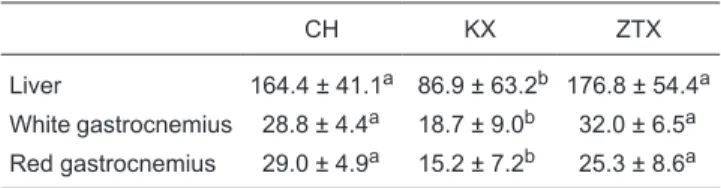
Table 1 presents the hepatic and muscular glycogen
Table 1. Glycogen concentration in hepatic and muscle tissues fol-lowing treatment with chloral hydrate, ketamine plus xylazine, or zo-letil plus xylazine.
CH KX ZTX
Liver 164.4 ± 41.1a 86.9 ± 63.2b 176.8 ± 54.4a White gastrocnemius 28.8 ± 4.4a 18.7 ± 9.0b 32.0 ± 6.5a Red gastrocnemius 29.0 ± 4.9a 15.2 ± 7.2b 25.3 ± 8.6a
Data are reported as means ± SD of tissue glycogen concentra-tion (mmol/kg wet tissue) for 8 animals in each group. CH = chloral hydrate (600 mg/kg weight corresponding to 3 mL/kg weight, ip); KX = ketamine hydrochloride (100 mg/kg weight corresponding to 1.16 mL/kg weight) + xylazine hydrochloride (11 mg/kg weight cor -responding to 0.48 mL/kg weight, ip); ZTX = Zoletil 50® (50 mg/kg
concentrations of both the white and red portion of the gastrocnemius muscle (mean ± SD) in each anesthetized
group. Only the KX anesthetic induced marked glycog
-enolysis in liver as well as in gastrocnemius muscle (P <
0.05). We found no effect of CH or ZTX on tissue glycogen concentrations.
Discussion
In the present study, different anesthetics applied to Wistar rats were compared regarding the degree of serum hemolysis and tissue glycogenolysis occurring after deep anesthesia. There are several studies in the literature com-paring the cardiovascular effects of different anesthetics (7,11). However, few of them analyze their effects on blood biochemical parameters, which could suffer from interfer-ence (4). The present study did not quantify any biochemi-cal parameters and therefore we cannot discuss possible interference. Even so, our data facilitate the choice of an anesthetic that does not cause hemolysis (such as ZTX) for studies measuring biochemical parameters.
The CH anesthetic did not induce glycogenolysis, in agreement with the study of Field et al. (3). However, it did elicit a greater hemolytic effect. The average Hb con-centration in the CH group samples was visible and above the threshold values of interference for some biochemical analyses (2). It is known that CH is metabolized quickly as trichloroethanol and trichloroacetic acid in the blood and liver. These metabolites are highly toxicto cells (12). Trichloroacetic acid is a strong acid protein precipitant that causes lipid peroxidation of the cell membranes (13). Lipid peroxidation may be the mechanism underlying the marked hemolysis occurring in the red blood cells of animals anesthetized with CH.
The KX anesthetic produced about half the hemolysis
of CH. On the other hand, KX produced a sizable muscu -lar and hepatic glycogenolytic reduction compared to CH. Ketamine seems to disturb the integrity of the red blood cell membrane by interacting directly with the glucose carrier (GLUT-1). This interaction inhibits glucose uptake, which could render the cells hypotonic, precipitating hemolysis (14). The glycogenolytic effect may be related to increasing catecholamine release due to activation of the sympathetic nervous system that seems to occur soon after the admin-istration of this drug (15). It is not possible to rule out a direct action of KX on some enzymes involved in glycogen metabolism (15).
Xylazine is an alpha-2 adrenergic agonist that can cause hyperglycemia in some animals, contributing to a glycog-enolytic action when combined with ketamine. Rodrigues
et al. (16) found much higher values of blood glucose in
rats anesthetized with KX when compared with rats anes-thetized with CH, suggesting hepatic glycogenolysis. In contrast, Musch et al. (17) did not observe alterations in glycogen concentration after KX administration. However, the method used to induce deep anesthesia involved a
lower dose of anesthetic (ketamine: 50 mg/kg weight and xylazine: 3 mg/kg weight), combined with gas maintenance
(70% nitric oxide and 30% oxygen). It is thus likely that the lower concentration of anesthetic resulted in less activation of the sympathetic nervous system.
ZTX is a combination of tiletamine-zolazepam-xylazine and proved to be the most appropriate of the anesthetics for
studies that require the simultaneous quantification of the
concentration of glycogen and serum biochemical markers without interferences. Although tiletamine alone activated the sympathetic nervous system and tended to induce
convulsive activity (18), it was efficient when administered
with zolazepam, which possesses anticonvulsive, anxiolytic, sedative-hypnotic, and muscle relaxant properties (7,18). When administered together, these anesthetics induced neither hemolysis nor glycogenolysis immediately after the deep anesthesia. This combination of compounds has been used as a tranquilizer to immobilize wild animals (7,19). Furthermore, many studies have already demonstrated its effectiveness in anesthetizing rats and other animals (7,18-20). In a comparative study of ketamine-xylazine, pen-tobarbital and tiletamine-zolazepam, the last caused fewer cardiovascular effects in rats when compared to the others (11). In another study, it was shown that ketamine-xylazine
resulted in faster breathing rates and higher arterial O2 partial pressure than tiletamine-zolazepam-xylazine (20).
In the present study, we used the commercial anesthetic Zoletil 50®, which is a combination of tiletamine-zolazepam
and xylazine, to cause deep anesthesia, analgesia, sedation,
and efficient muscle relaxation prior to surgery (7,19,20). This combination also decreased the final cost, because it
reduced the Zoletil 50® concentrations required.
ZTX seems to be an appropriate anesthetic to be used in research with laboratory animals. The cost of this method is reasonable, especially since it does not require an inhaler. Moreover, the compound is commonly found at veterinary markets, can be applied with ease, induces deep anesthesia quickly, and presents a low mortality rate.
References
1. Lippi G, Blanckaert N, Bonini P, Green S, Kitchen S, Palicka V, et al. Haemolysis: an overview of the leading cause of unsuitable specimens in clinical laboratories. Clin Chem Lab Med 2008; 46: 764-772.
1038 E.F.A. Machado et al.
33: 31-52.
3. Field KJ, White WJ, Lang CM. Anaesthetic effects of chloral hydrate, pentobarbitone and urethane in adult male rats. Lab Anim 1993; 27: 258-269.
4. Gonzalez GA, Silvan G, Illera JC. Effects of barbiturate administration on hepatic and renal biochemical parameters in New Zealand white rabbits. Contemp Top Lab Anim Sci 2005; 44: 43-45.
5. Penicaud L, Ferre P, Kande J, Leturque A, Issad T, Girard J. Effect of anesthesia on glucose production and utilization in rats. Am J Physiol 1987; 252: E365-E369.
6. Heavner JE. Pharmacology of analgesics. In: Kohn DF, Wixson SK, White WJ, Benson GJ (Editors), Anesthesia and analgesia in laboratory animals. New York: Academic Press; 1997. p 8-10.
7. Lin HC, Thurmon JC, Benson GJ, Tranquilli WJ. Telazol - a review of its pharmacology and use in veterinary medicine. J Vet Pharmacol Ther 1993; 16: 383-418.
8. Saubert CW, Armstrong RB. Hormonal influence on diurnal glycogen rhythms in rat skeletal muscles. J Exp Biol 1983; 102: 285-293.
9. Morris MW, Davey FR. Exame básico de sangue. In: Henry JB (Editor), Diagnósticos clínicos e tratamentos por métodos laboratoriais. 19th edn. São Paulo: Manole; 1999. 10. Lo S, Russell JC, Taylor AW. Determination of glycogen in
small tissue samples. J Appl Physiol 1970; 28: 234-236. 11. Saha DC, Saha AC, Malik G, Astiz ME, Rackow EC.
Com-parison of cardiovascular effects of tiletamine-zolazepam, pentobarbital, and ketamine-xylazine in male rats. J Am Assoc Lab Anim Sci 2007; 46: 74-80.
12. Lipscomb JC, Mahle DA, Brashear WT, Garrett CM. A spe-cies comparison of chloral hydrate metabolism in blood and liver. Biochem Biophys Res Commun 1996; 227: 340-350.
13. Celik I, Isik I. Determination of chemopreventive role of Foeniculum vulgare and Salvia officinalis infusion on trichlo-roacetic acid-induced increased serum marker enzymes, lipid peroxidation and antioxidative defense systems in rats. Nat Prod Res 2008; 22: 66-75.
14. Stephenson KN, Croxen RL, El-Barbary A, Fenstermacher JD, Haspel HC. Inhibition of glucose transport and direct in-teractions with type 1 facilitative glucose transporter (GLUT-1) by etomidate, ketamine, and propofol: a comparison with barbiturates. Biochem Pharmacol 2000; 60: 651-659. 15. Ivankovich AD, Miletich DJ, Reimann C, Albrecht RF, Zahed
B. Cardiovascular effects of centrally administered ketamine in goats. Anesth Analg 1974; 53: 924-933.
16. Rodrigues SF, de Oliveira MA, Martins JO, Sannomiya P, de Cassia TR, Nigro D, et al. Differential effects of chloral hydrate- and ketamine/xylazine-induced anesthesia by the s.c. route. Life Sci 2006; 79: 1630-1637.
17. Musch TI, Warfel BS, Moore RL, Larach DR. Anesthetic ef-fects on liver and muscle glycogen concentrations: rest and postexercise. J Appl Physiol 1989; 66: 2895-2900. 18. Kohn DF, Wixson SK, White WJ, Benson GJ. Anesthesia
and analgesia in laboratory animals. New York: Academic Press; 1997.
19. Sweitzer RA, Ghneim GS, Gardner IA, Van Vuren D, Gon-zales BJ, Boyce WM. Immobilization and physiological parameters associated with chemical restraint of wild pigs with Telazol and xylazine hydrochloride. J Wildl Dis 1997; 33: 198-205.