AVANT-GARDE AND
EXPERIMENTAL CINEMA:
Avant-garde and experimental cinema: From film to digital
Workshop for painting students
by
Pedro Daniel da Costa Ferreira
A dissertation presented to accomplish the degree of Master of Arts
Multimedia Arts and Culture Faculty of Engineer, University of Porto
In collaboration with
The Eugeniusz Geppert Academy of Art and Design, Wrocław June 2013
_______________________
ADVISOR: Wojtek Pukocz (ASP Wrocław) CO-ADVISOR: Daniel Ribas (EsACT – IPB)
2
Creative Commons
Attribution-NonCommercial-NoDerivs 3.0 Unported Pedro Ferreira, 2013
Abstract | 3
Abstract
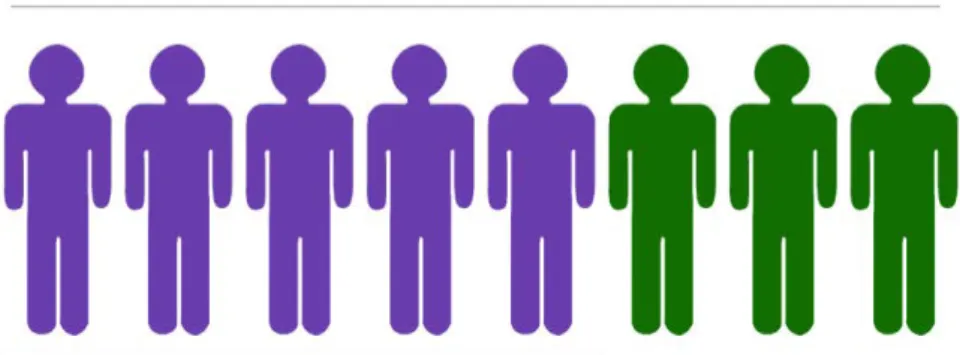
Keywords: Avant-garde cinema, experimental, painting, film, video, digital media Due to the strong relationship between painting and avant-garde cinema since the earliest movements, it is presented a historical reconsideration exploring the association between avant-garde and experimental cinema movements and painting. For a practical propose the workshop “from film to digital” was created with the intention of investigate if painting students should learn about cinema as an artistic practice during their studies. By analysing the history of avant-garde movements in film until the digital media age, by practicing film, animation and video, crossing mediums and relating them as digital media, 8 painting students participated in the short course. For 5 students it was their first experience with video. The workshop had the duration of one semester, 10 hours of theoretical lectures and 30 hours of practical work, at the Academy of Fine Arts in Wrocław (Poland) during the academic year 2012.
4 | Acknowledgements
Acknowledgements
I would like to thank to Wojtek Pukocz for accepting and making possible the implementation of the workshop during his class, with his students. To Leszek Sołtys for providing the necessary material during the classes. I want to thank Katharine Watt for her patience and dedication in reviewing my English language in my drafts. Special thanks to Gregory Zinman for sharing his study with me about handmade moving images, which proved to be the most important and influential document for my paper. And many thanks to Alexei Dmitriev, Bryan Konefsky and Jon Behrens for collaborating with their knowledge in the interviews. Finally, many thanks to all the students who participated in the workshop and made my investigation possible.
Table of contents | 5
Table of contents
Abstract 3 Acknowledgements 4 Table of contents 5 Table of figures 6 Introduction 7Dissertation motivation and project context 8 Problems and investigation methodology 9
Dissertation structure 10
Intro 1: Artistic perspective 11 Intro 2: Innovation and radical practice 15 Intro 3: Terms and tendencies 17 CHAPTER 1: A very different approach 19 1.1. Modernism: Cubism, Futurism, Dadaism and Surrealism 20
1.2. Abstract Film 22
1.3. Abstract Expressionism: Cinema action 25 1.4. Postmodernism: Underground and Structural Film 28 1.5. Electronic and video art 31 1.6. Digital media: Experimental cinema influences 35 1.7. Digital media as avant-garde: Structural digital video
and Handmade digital cinema 37 CHAPTER 2: Workshop for painting students: From film to digital 41 2.1. Materials and methodology 42
2.2. Syllabus 43
2.3. Workshop results 44
2.4. Discussion 49
2.5. Interview to professionals 50 2.6. The students’ videos 55 Conclusion: Perspectives for future 63
Appendix 65
Attachments 66
6 | Table of figures
Table of figures
Figure 1: Workshop participants ... 44
Figure 2: Essay importance ... 45
Figure 3: Favorite movement ... 45
Figure 4: Favorite techniques ... 46
Figure 5: Favourite multimedia tools ... 46
Figure 6: Painting relations ... 46
Figure 7: Previous experience with cinema ... 47
Figure 8: Previous experience with multimedia tools ... 47
Figure 9: Experience after the workshop ... 47
Figure 10: Avant-garde cinema as subject ... 48
Figure 11: Workshop appreciation ... 48
Figure 12: About future ... 48
Figure 13: Motion Colour still shot ... 55
Figure 14: Telegram still shot ... 56
Figure 15: 35 mm still shot ... 57
Figure 16: Road to Nowhere still shot ... 57
Figure 17: Chaos kontrolowany still shot ... 58
Figure 18: Symphony no. 4 still shot ... 59
Figure 19: Urbanscape still shot ... 60
Figure 20: Trench psychosis still shot ... 60
Figure 21: Panda still shot ... 61
Introduction | 7
Introduction
Due to the strong relationship between painting and avant-garde cinema since the earliest movements I questioned if painting students should learn about cinema as an artistic practice during their studies. Adding to painting the dimension of time and presenting it as an unconventional practice of cinema outside the mainstream and art cinema, do painting students have abilities to create avant-garde cinema? Are they interested in extending their works in motion paintings? Should avant-garde and experimental cinema be a class in fine arts studies? Through the use of multimedia tools can painting students present artistic potential through cinematic aspects? What is the relationship between painting and avant-garde and experimental cinema? What is the situation for avant-avant-garde and experimental cinema in the digital media age? This dissertation proposes to answer these questions by researching the avant-garde cinema movements and its approach to painting. Through reconsidering the modern and postmodern periods, I explore the avant-garde and experimental cinema approach to painting and its practice in the digital media age. As Sidney Peterson proposed that painting students experiment with film and explore the relationship between mediums with “Workshop 20”1 after the Second World War, I attempted to continue
with his propose, applying it to digital media, by applying the workshop “from film to digital” for painting students and exploring the results through the methods of observation, interviews and questionnaires, answering the proposal along with a qualitative analysis. The research began in the academic classroom with 8 painting students participating in the short course. The workshop had the duration of 10 hours of theoretical lectures and 30 hours of practical work. The students created digital videos and practiced film, animation and video, using different mediums and techniques combining them with the use of computer-interface. They also explored databases in an attempt of media !!!!!!!!!!!!!!!!!!!!!!!!!!!!!!!!!!!!!!!!!!!!!!!!!!!!!!!!
8 | Introduction — Dissertation motivation and project context
appropriation. Through software (Adobe Photoshop, Premiere, After Effects, Audition and Dragon/iStopmotion), videos were created and further distributed in the online community Vimeo2, some had public
presentations in festivals, and as video installation in the school gallery at the Academy of Fine Arts in Wrocław (Poland), during the academic year of 2012. The students had the opportunity to choose between the workshop and the regular class of Multimedia/Electronic Media included in their study of Painting. To answer “do students have interest in creating experimental cinema?”, they were encouraged to analyse and create experimental cinema rather than obligated to create in particular experimental videos. In addition to the workshop, the essay “Avant-garde and experimental cinema: From film to digital” was created with the aim to make the students aware of the artistic practice until right up to the present day (part of that essay resulted in the state of the art of this paper), and the workshop video documentation3 was made to give the
students opportunity to discuss their work and experience.
Dissertation motivation and project context
As a media artist and student I am inspired by avant-garde and experimental cinema, which made me question the approach of experimental cinema and painting. I explore the possibilities of cinematic language and the medium itself, as well as real time and live projection performance and crossing between mediums, manipulating and relating them together with the use of a laptop. I questioned why painting students do not learn about cinema as an artistic practice during their studies, which motivated me to research experimental cinema and its approach to painting for the class of “Photography and Cinema” lectured by Adriano Rangel, where I presented a small paper. This dissertation and workshop are the evolution and application of my previous paper, extended for my graduation thesis. Lately a few schools are opening courses about “Experimental film” or including !!!!!!!!!!!!!!!!!!!!!!!!!!!!!!!!!!!!!!!!!!!!!!!!!!!!!!!!
2 vimeo.com/channels/fromfilm2digitalworkshop
Introduction — Problems and investigation methodology | 9
the subject in their studies, for example, the Art Center College of Design, California. In 2011, the Nanyang Technological University School of Art, Design and Media opened the course “Survey of Experimental Film”. In 2012/13 the course of “Experimental Film and Performance Art” started at the San Francisco Art Institute, as well as the course “Artists Film and Video” at the London Metropolitan University. None of these courses are specifically for painting students. Meanwhile, schools are giving more importance to the avant-garde and experimental cinema practice in recent years. My research will introduce a fresh perspective into painting studies, by presenting to painting students the moving image, rhythm, motion and the dimension of time, as an alternative practice of cinema outside the mainstream and art cinema.
Problems and investigation methodology
Should painting students learn about cinema as an artistic practice during their studies? What is the relationship between avant-garde and experimental cinema with painting? What is the situation of avant-garde and experimental cinema in the digital media age? Do painting students have the ability to create avant-garde cinema? Have they interest in extending their works in motion paintings? Should avant-garde and experimental cinema be a class in fine arts studies? By the use of multimedia tools can painting students present artistic potential through cinematic aspects? Do students have interest in creating experimental cinema? The methodology applied to solve the investigation problem “Should painting students learn about cinema as an artistic practice during their studies?” is a reconsideration of the avant-garde and experimental cinema history and its approach to painting until the digital media age, and the practical workshop “from film to digital” is used to gather research. The methods of observation, interviews to professionals and questionnaires to the students are the basis for the qualitative analysis that answers the potential of the works, interest and evolution made by the painting students.
10 | Introduction — Dissertation structure
Dissertation structure
This dissertation is structured by “Introduction”, divided into three small introductions that contextualize: “Intro 1: Artistic perspective”, “Intro 2: Innovation and radical practice” and “Intro 3: Terms and tendencies” of experimental and avant-garde cinema during its history. Followed by “Chapter 1: A very different approach”, where I introduce the literature review and formulate a brief historical reconsideration and state of the art approaching avant-garde and experimental cinema to painting until contemporary practices. Starting with “Modernism: Cubism, Futurism, Dadaism and Surrealism”; the establishment and practice of “Abstract Film”; its development through “Abstract Expressionism: Cinema action”; the reaction to Modernism with “Postmodernism: Underground and Structural Film”; followed by “Electronic and video art”, i.e. how early electronic and video art intended to find a new way of painting; “Digital media: Experimental cinema influences” analyses the importance of experimental cinema in the appearance of digital media; and finally “Digital media as avant-garde: Structural digital video and Handmade digital cinema” where we understand the contemporary practices that are bringing radical approach to the avant-garde and experimental cinema by crossing mediums and exploiting digital media. In “Chapter 2: Workshop for painting students: From film to digital” we comprehend the “Materials and methodology” applied during the workshop, the short course “Syllabus” and “Workshop results”. Which proceeds to “Discussion”, exploring the investigation achievements through analysis of the students’ questionnaires and works; “Interview to professionals” analysing the investigation purpose and achievements, concluding the chapter with examination to “The students’ videos”. To finish the dissertation “Conclusion: Perspectives for future” and “Appendix”.
Intro 1 — Artistic perspective | 11
Intro 1: Artistic perspective
“From generation to generation, cinema is evolving. Today, dozens of filmmaking communities everywhere are inventing new techniques and bringing us new images. Some use new technologies, but the old ones are still surprising us. Artist-run film labs, co-ops, festivals and microcinemas are multiplying all over the world. Today, making a film is easier than ever before. There are so many, hundreds of films to see, and to make.” Pip Chodorov,4
The history of avant-garde cinema is inserted into two contexts: cinema and moving image culture and the modern and post-modern art movements. It is with the visual arts movement’s context that the history of the avant-garde and experimental cinema is associated, as we will shortly analyse further. Cinema, the new medium of the 20th century, was
developing narrative and editing techniques in the earlier 1900s and started to be practised from an artistic perspective along with the beginning of abstract painting movements. Taken into a new visual territory, it became a non-representative cinema far away from the narrative model. During its history there existed many terms and tendencies that distinguished avant-garde cinema, making it difficult to define. Differing from the Hollywood cinema that rejected the modern art methods and conformed cinema in a traditional form of narration, avant-garde cinema embraced the radical break with the past, creating a cinema without borders, without story, characters or dialogues. The birth of the Abstract Film movement happened during the 1910-20s establishing itself on the course of the modern art movements such as Cubism, Futurism, Dadaism, Surrealism and Constructivism. Abstract Film was based in Europe, later spreading into a bigger international arena. This first generation of artists defended film as an art form, to be treated as high art like the other traditional arts. They were mostly painters, sculptors, photographers or graphic artists supplementing their work with filmmaking, such as Man Ray, Marcel Duchamp, Hans Richter, Viking Eggeling, Walter Ruttmann and Fernand Léger. Resisting the narrative commercial cinema, artists encouraged film to be recognized as an art !!!!!!!!!!!!!!!!!!!!!!!!!!!!!!!!!!!!!!!!!!!!!!!!!!!!!!!!
12 | Intro 1 — Artistic perspective
medium. During the 1930s, Len Lye emerged as the most significant artist responsible for the development of handmade films exploring complex processes in print techniques and creating image layers. Lye shaped a unique identity within avant-garde and experimental cinema. The handmade film became a genre influencing the next generations. These first avant-garde filmmakers “passed a complex legacy of ideas to the next movements in film, video and digital art”5, narrative avant-garde,
discontinuity montage, handmade films, overlapping images, printing techniques, loop and repetition and optical illusions.
A new generation of filmmakers grew in the USA post-Second World War and with the emergence of Abstract Expressionism, followed the steps of the first generation. Maya Deren, Stan Brakhage and Kenneth Anger took film as an artistic medium itself during the 1940s. They made a fundamental pictorial achievement, concerned with the relationship between the form of the work and the subject-matter, creating signifiers and signifieds. Stan Brakhage removes the control of animated shapes in favour of expressive textures. In the late 1950s artists presented different interests, the art world was divided into three tendencies, “the post-painterly abstraction, conceptual art and pop art”6, artists opposed to the
institutionalization of modern art such as “Modernism” by provoking a counterculture from which emerged the Underground Film and Structural Film. Thereby reducing film to the minimum characteristics of cinema creating a new form excluding symbolism, narrative and eliminating personal expression. In the 1960s there was an expansion of artistic work made by mixing film, video and digital media. Video became an artistic practice separated from the experimental film. Through live manipulation with the use of synthesizers, the electronic tool is treated as a medium with its own characteristics. Followed in video art and live !!!!!!!!!!!!!!!!!!!!!!!!!!!!!!!!!!!!!!!!!!!!!!!!!!!!!!!!
5 Rees, “A History of Experimental Film and Video: from the canonical avant-garde to contemporary british pratice”, 50
6 Rees, “A History of Experimental Film and Video: from the canonical avant-garde to contemporary british pratice”, 71
Intro 1 — Artistic perspective | 13
performance, cinema starts to be practiced as Expanded Cinema.7 The
context of early Video Art was combining performance-event-based and anti-object footage, constructing “an attack on high modernism and museum culture”8. There was a special interest by sub-cultures, resulting
in video art, social documentary and installations, some requiring the viewer’s interaction, therefore making the viewer a collaborator and not a spectator.9 Artists were divided between experimental filmmakers and
video artists, resulting from different ideals and generations. They began to represent a post-modernist approach influenced by the Underground films of Andy Warhol. By rejecting modernism, “artists return to subject matter outside film’s own material and ontological concerns”.10 Video was
a new medium to produce new images. With the technological evolution, compact cassettes, lightweight camcorders and the flexible Sony editing systems of the 1980s allowing the Scratch video movement based in rapid montage.11 Since the 1990s, art galleries embraced video for the
first time and the digital media became the avant-garde — artists achieved new interpretations of image, combining existing material and generating images using computer interaction. Throughout its history, several techniques were invented and developed, single framing, painted or scratched film, extended dissolves, long-takes, flicker editing, cut-ups, fake synch, outdated film stock, found footage, out-of-focus, intermittent projection, media appropriation, and many others. These techniques were taken up and imitated in film FX, music videos, VFX and TV advertising. Experimental cinema pioneered the manipulative techniques that became normalized and can be found in our software presets, visual popular culture and digital media.
!!!!!!!!!!!!!!!!!!!!!!!!!!!!!!!!!!!!!!!!!!!!!!!!!!!!!!!!
7 See more: “Youngblood, “Expanded Cinema” (1970)” and “Walley, “The Material of Film and the Idea
of Cinema: Contrasting Practices in Sixties and Seventies Avant-Garde Film” (2003)”
8 Rees, “A History of Experimental Film and Video: from the canonical avant-garde to contemporary british pratice”, 90
9See more: “Rees, “A history of experimental film and video: from the canonical avant-garde to contemporary british pratice” (1999)
10 O'Pray, “Avant garde film: forms, themes and Film passions”, 108
11See more: “WRO, “From Absolute Cinema to Future Film” (2009)” and “Rees, “A History of Experimental and Video: from the canonical avant-garde to contemporary british pratice” (1999)”
14 | Intro 1 — Artistic perspective
Malcolm Le Grice (1982) classifies the avant-garde films into four categories:12 firstly, the perceptual film started by Duchamp. These films
try to examine or create experiences with mechanisms working on the perception and nervous system level; example of these films were made by Peter Kubelka, Paul Sharits, Brigit and Wilhelm Hein. Secondly – loop and image repetition – started by Leger in Ballet Mecanique (1924). Also a style used by Bruce Conner, John Wieland, Kurt Kren, Peter Gidal, and Malcolm Le Grice. Thirdly – manipulation experiments – experimenting with film print processes and re-shooting as seen in the work of Pat O’Neill, Klauss Schonherr, Hollis Frampton, Ken Jacobs and Michael Snow. These three categories give attention to the film’s own materiality. The fourth category – projection and projector – includes Expanded Cinema and the American abstract experiments by Jordan Belson and Vortex Concerts.
Among its history, the avant-garde was marked by historical moments of tension and radical activity, manifested by individuals and organizations creating films that break through borders, refusing conventions, challenging artists to explore the film practice outside the mainstream. The many terms and tendencies to describe avant-garde cinema shows that the artist is completely conscious of his own work. The use of digital media gives huge control over the final work bringing us new visions in a new territory. Contemporary artists carry on the avant-garde and experimental cinema practice through employing hybrid techniques, combining handmade film, video and digital technologies, live performing forms and installation, developing and innovating the methods to create avant-garde and experimental cinema. Avant-garde and experimental cinema are significant art forms of practice.
!!!!!!!!!!!!!!!!!!!!!!!!!!!!!!!!!!!!!!!!!!!!!!!!!!!!!!!!
Intro 2 — Innovation and radical practice| 15
Intro 2: Innovation and radical practice
“(...) The vanguard filmmakers do not have any term to define their work, their works are merely cinema.” Dominique Noguez,13
Cinema offers to the visual arts the illusion of movement. In 1907 Bergson describes the illusion that cinema creates, calling it “cinematographic illusion”,14 explaining the illusion of perception and the reproduction of
false movement offered by cinema. Avant-garde cinema concerns films and videos made by single-artists, small production groups that are mostly self-founded or small budget compared to art cinema or industrial cinema, which explores cinema to the extreme without limits. Avant-garde questions and challenges the codes and borders of cinema. It rejects and criticizes mainstream entertainment cinema.15 Dominique
Noguez (1976) in “Qu’est-ce que le cinema experimental? Sa situation en France”16 said that experimental cinema is hard to qualify; Marcel Maze
(1976) in “Un mouvement se constitue”17, defines it as a different
cinematography, cinema of art and essay, research, non-commercial, without any other intention than its own movement. For Claudine Eizykman and Guy Fihman (1976) in “Un mouvement se constitue”18, it is
non-narrative cinema, non-representative and non-industrial. Noguez19
notes the etymological meaning of “experimental” that originates from Latin, and descends from the verb experiri (to try, to essay), experimentalis, experimentaum, inducing the idea of investigation. It appears for the first time in 1503, related to medicine, meaning that the experience is based in the observation of facts. Experiencing at that time is to sense a !!!!!!!!!!!!!!!!!!!!!!!!!!!!!!!!!!!!!!!!!!!!!!!!!!!!!!!!
13 Noguez, “Qu’est-ce que le cinema experimental? Sa situation en France”, “Une Histoire du Cinéma”, 54
14 Rees, “A History of Experimental Film and Video: from the canonical avant-garde to contemporary british pratice”, 4-6
15 Rees, “A History of Experimental and Video: from the canonical avant-garde to contemporary british pratice”, (1999)” and ”O’Pray, “Avant‐garde film: forms, themes and Film passions”, (2003)”
16 Noguez, “Qu’est-ce que le cinema experimental? Sa situation en France”, “Une Histoire du Cinéma”, 45
17 Mazé, “Pour un cinema différent”, “Une Histoire du Cinema”, 64
18 Eizykmand, Fihman, “Un mouvement se constitue”, “Une Histoire du Cinema”, 59
19 Noguez, “Qu’est-ce que le cinema experimental? Sa situation en France”, “Une Histoire du Cinéma”, 51
16 | Intro 2 — Innovation and radical practice
phenomenon in the manifestation of the facts. In an aesthetic sense, to experiment does not necessarily mean to create what we do not know or to create without intention, for Kuleshov, “the kino-eye method is the scientific-experimental study process of the visible world”.20 In the
beginning of the 1900s, important artistic movements and theoretical documents pushed for experiments in cinema, which made “cinema jumps out from a system into a free cinema, exceptional and creative – experimental. Everything is possible”.21Avant-garde refers then to artists
or works that are innovative and experimental, relating art, culture and politics, crossing the borders of what is accepted in a cultural environment. This kind of cinema does not have specified rules for production, shooting, projection, duration and distribution. The experimental practice is a practice that explores the cinematic formal and structural aspects of cinema, and techniques to bring innovation. Avant-garde cinema is the movement and attitude that led to practicing and experimenting with cinema as an art medium. I intend to explore the avant-garde cinema as an idea that carries on in contemporary radical artistic practice bringing innovation and new approaches rather than just the “avant-garde” as a normalized style or accepted techniques by the visual culture. With the evolution of new technologies, digital media and the Internet, the avant-garde presents as software, described by Lev Manovich (2002). The digital media allows us to experiment in new ways, cheap and simple to use. By means of software media is interpreted and generated allowing new imagery interpretations, through databases media is appropriated and manipulated allowing new paths of exploitation. Therefore allowing hybrid combination between film, video and digital media.
!!!!!!!!!!!!!!!!!!!!!!!!!!!!!!!!!!!!!!!!!!!!!!!!!!!!!!!!
20 Kulechov, “Kinoglaza k Radioglazu”, 109-115
21 Noguez, “Qu’est-ce que le cinema experimental? Sa situation en France”, “Une Histoire du Cinéma”, 52
Intro 3 — Terms and tendencies| 17
Intro 3: Terms and tendencies
“People talk about experimental film, avant-garde film, etc... But there is no experimental film or avant-garde film... There’s just film, in which some people make shit, some make soup, others make films like beans, and then some make highly refined dishes, like we do.” Maurice Lemaître, 22
There are many terms to describe avant-garde cinema: experimental, absolute23, pure, non-narrative, underground, expanded, abstract. None
of them are generally accepted or satisfactory; the consequence is that the term “avant-garde” is rejected by many filmmakers. “‘Pure Cinema’ (which was purely cinematic), ‘Integral Cinema’ (Germaine Dulac’s phrase, using ‘Integral’ in the French sense of ‘Wholly and completely’) and finally the two socio-political terms ‘Avant-Garde’ and ‘Experimental’, the first of which unfortunately implies military scouts invading enemy territory and the second of which sadly implies the filmmaker groping for some unclear result.”24 Among many terms and tendencies, “avant-garde
cinema” and “experimental cinema” are the two terminologies that predominate in describing this kind of cinema, “it’s also common to relate avant-garde cinema with the European cinema of the beginning of the century and the term experimental to the American avant-garde cinema”.25 In the 1920s the tendencies for this kind of cinema were pure
cinema, integral cinema, absolute, visual music26, abstract or rhythmic. As
the 1950s approached, the artists understood that “experimental” meant that their films were not finished works, not completed, but tries and essays, and as a result emerged the terms “personal cinema”, “private cinema” and “home-film”. Earlier in the 1960s, the terms “individual cinema” and “independent cinema” replaced the words “experimental” and “avant-garde”. These new terms were rejected as they did not !!!!!!!!!!!!!!!!!!!!!!!!!!!!!!!!!!!!!!!!!!!!!!!!!!!!!!!!
22 Lemaître, “Free Radicals – A History of Experimental Film”, 2010 23See more: “WRO, “From Absolute Cinema to Future Film”, (2009)” 24Moritz, “The Absolute Cinema”, “From Absolute Cinema to Future Film”, 52
25 Mekas, “L’expérience americaine (du cinema d’avant-garde)”, “Une histoiredu cinema”, 54 26 Visual Music or colour music was explored during the 19thcentury and had impact in visual music experiences developed during the 20th century and in the emergency of abstract painting. The essence of Visual Music is the analogy between colours and music and also to transmit the sensation of sounds by colours.
18 | Intro 3 — Terms and tendencies
correspond with the reality and a new term arrived – “new cinema” or “young cinema”, however, the expressions continued to be ambiguous in attempting to describe this type of cinema. During the 1960s appeared a general term, “New American Cinema”, a name introduced by the group of filmmakers, such as Shirley Clarke, Emile de Antonio, Markopoulos Gregory, Robert Frank, Adolfas Mekas, Jonas Mekas, Peter Bogdanovich and Lionel Rogosin. Working in an independent mode, they created the “New American Cinema Group” with the intention to promote and distribute avant-garde films. “Nobody wanted to distribute our films. So we had to create our own distribution centre”.27 Underground, Structural,
non-commercial, innovative and politically complicated, in resistance and conflict to Hollywood. Structural digital video and Handmade digital cinema are the contemporary tendencies for avant-garde cinema, meanwhile the terms that still keep up are: avant-garde or experimental cinema (film, video or digital).
!!!!!!!!!!!!!!!!!!!!!!!!!!!!!!!!!!!!!!!!!!!!!!!!!!!!!!!!
Chapter 1 — A very different approach| 19
CHAPTER 1.
A very different approach
“Art can be anything, and that’s what produced the “avant-garde”. (...) I just improvised, as I do in... I give chance a chance, as I do in painting, as I do in film. That was the main credo of Dada: the discovery of chance as a possibility of expression.” Hans Ritcher, 28
The Lumière brothers demonstrated the “cinématographe” and their first films in Paris and London between 1895-96. In the late nineteenth century realist painting and drama dominated art form. “Films quickly passed through a primitive state where they were single-shot and very short, made by entertainers and showmen for fairgrounds and music-halls. Around 1903 to 1905, by capital investment and dramatic invention, films became longer, more elaborate and were shown in purpose-built cinemas”.29 Twenty years after the Lumière’s experiments, fiction film had
aims of large magnitude, narrative cinema smoothed the traces of change in shot, angle of vision and introduced “invisible editing” to construct continuity without trace, markedly in D. W. Griffith’s film Intolerance (1916). At the same time, cinema started to be experienced from an artistic perspective. Throughout Abstract Film, animated abstract forms influenced by painting and motivated by representing music in a pictorial form, allowed a new purpose of exploiting colour, light and shape, creating paintings in time. In this chapter we are going to answer “what is the relationship between painting and avant-garde and experimental cinema?”, by introducing a brief historical review and examining the principal avant-garde movements and artists in cinema. We will start by introducing the Modernism movements such as Abstract Film and how it evolved into Abstract Expressionism and Action cinema. Moving on to the Postmodernism attitude, Underground and Structural film movements. Followed by Electronic and Video art as a research of new ways of paintings. At last answering to the question “what is the !!!!!!!!!!!!!!!!!!!!!!!!!!!!!!!!!!!!!!!!!!!!!!!!!!!!!!!!
28 Ritcher, “Free Radicals – A History of Experimental Film”, 2010
29 Rees, “A History of Experimental Film and Video: from the canonical avant-garde to contemporary british pratice”, 75
20 | Chapter 1 — Modernism: Cubism, Futurism, Dadaism and Surrealism
situation for avant-garde and experimental cinema in the digital media age?”, by understanding the influences of experimental cinema in the appearance of the digital medium and its manifestation as avant-garde in the contemporary circumstances by presenting the Structural digital video and Handmande digital cinema practices that are bringing radical approach to the avant-garde and experimental cinema by crossing mediums and digital media exploitation.
1.1. Modernism: Cubism, Futurism, Dadaism and Surrealism
The rise of Cubism (1908-12) brought new theories of time, space and perception in art, breaking with the analogy between picture and perception, decomposing forms, presenting changing viewpoints and angles and showing brush marks to emphasis the flat surface of canvas. These theories “led artists to try to put painting in motion through the film medium”.30 The Futurists were influenced by the theories of Bergson,
representing movement and the velocity of subjects. The Italian Futurists turned directly to action, redefining the concept of art, creating a dynamic and radical action with their provocative manifestos. In the Painting Manifesto31 the Futurists call for the representation of movement
and dynamism in the canvas, and in the manifesto of Futurist Cinema32
they declare that cinema should become impressionistic, synthetic, dynamic and free. At the same time, editing techniques and narrative commercial cinema was growing and evolving. The avant-garde cinema in Europe was anti-Hollywood, in style, form and production, attempting to create a model for film outside the categories of entertainment and fiction, against the USA industry. Dadaism, inspired by Futurism, was a much more contesting movement. Invented in 1916, it appealed to the
!!!!!!!!!!!!!!!!!!!!!!!!!!!!!!!!!!!!!!!!!!!!!!!!!!!!!!!!
30 Rees, “A History of Experimental Film and Video: from the canonical avant-garde to contemporary british pratice”, 20
31 Marinetti, “Technical Manifesto of Futurist Painting”, 1911
Chapter 1 — Modernism: Cubism, Futurism, Dadaism and Surrealism | 21
nonsense and chance in art. The Dada films33 were opposed to visual
pleasure and anti-retina, requesting the viewer’s participation. Le Retour a la Raison (1923) by Man Ray, Ballet Mechanique (1924) by Fernand Léger and Dudley Murphey, and Anémic Cinéma (1926) by Marcel Duchamp, create an exploitation of optical illusion and visual reaction. Surrealism like Futurism was founded by a group of artists that “dominated the modern art between the two world wars, evoking Dadaist anti-aesthetic during the 1920s”34. They rejected imposing order and musical structure
in an attempt to provoke contradiction, discontinuity and dissonant montage. The surrealist films make complex connections between images — meaning and sense are questioned. The purpose of discontinuity is to shift against the continuity of narrative film, exactly when narrative codes were reaching perfection. The temporal discontinuity concept and photographic illusion are used to demonstrate the state of dreams, for example in Un Chien Andalou (1929) by Salvador Dali and Luis Buñuel, and L'Etoile de mer (1928) by Man Ray. Usually surrealist cinema is understood as “a search for the excessive and spectacular image, what the group were in fact trying to find was the wonderful in the banal, they rarely used special effects and high-grade illusions with what Surrealism is always associated with”.35 Surrealism
became the most popular movement in modern art still influencing the mainstream, advertising and cinema industry.36 The Futurists were the
first artists to make films by themselves. Between 1909-20 artists started to experiment with the new medium. Avant-garde film went in two directions. The narrative avant-garde or art cinema, cine-poem, is !!!!!!!!!!!!!!!!!!!!!!!!!!!!!!!!!!!!!!!!!!!!!!!!!!!!!!!!
33See more: “Rees, “A History of Experimental and Video: from the canonical avant-garde to
contemporary british pratice”, (1999)”
34Rees, “A History of Experimental Film and Video: from the canonical avant-garde to contemporary british pratice”, 41
35Rees, “A History of Experimental Film and Video: from the canonical avant-garde to contemporary british pratice”, 44
36Rees, “A History of Experimental Film and Video: from the canonical avant-garde to contemporary british pratice”, 44-49
22 | Chapter 1 — Abstract Film
represented in movements such as French Impressionism37, the Soviet
school38 and German Expressionism. During the 1920s, the French
Impressionist artists tried to move cinema to an artistic practice independent from literature and theatre by creating the genre — narrative avant-garde film. These artists had special interested into exploring the illusion of movement and the photogénie39 concept. The
other direction was a non-narrative approach in film form, the filmstrip treated like a painting canvas, the approach to painting, handmade films, Abstract Film, pure, absolute and visual, the direction that we will follow in this paper.
1.2. Abstract Film
“They are not merely representations of paintings, but rather are new kinds of painting that expand the parameters of field, providing us with new ways to think about, present, and experience painting. In so doing, they push us to redefine our conceptions of artistic practice, both in terms of painting and cinema.” Gregory Zinman, 40
Abstract Films provokes questions about what we are looking at, challenging our perception. “Abstraction always means something. By abstraction the artist creates a new world or reveals one that has been previously hidden: “choice + chance” is the equation at the heart of the proof of handmade cinema.”41 The abstract handmade film is a fusion of
its formal characteristics such as colour, shape, form, depth, movement, rhythm, filmstrip intervention and its physical and synesthetic abilities. Painting in time “is dynamic, alive, in the process of becoming a composition that can only be understood as the entirety of the film, not the end product or last image we see on screen.”42 It offers a new
dimension and an innovative way to represent, understand and perceive painting. Abstract filmmakers have always attempted to achieve a !!!!!!!!!!!!!!!!!!!!!!!!!!!!!!!!!!!!!!!!!!!!!!!!!!!!!!!!
37See more: “Rees, “A History of Experimental and Video: from the canonical avant-garde to
contemporary british pratice”, (1999)”
38 See more: “O’Pray, “Avant-garde film: forms, themes and passions”, (2003)”
39 Photogénie concept was introduced by Louis Delluc and expanded by Jean Epstein, it means the ability of the camera to transform what it portrays giving a augmented moral value
40Zinman, “Handmade: The Moving Image In The Artisanal Mode”, 94 41Zinman, “Handmade: The Moving Image In The Artisanal Mode”, 13, 85 42Zinman, “Handmade: The Moving Image In The Artisanal Mode”, 130
Chapter 1 — Abstract Film | 23
universal form of communication. The Futurist artists Arnaldo Ginna and Bruno Corra made the first experiments of hand painting raw film between 1910-12. In 1914, Léopold Survage wrote about his project Le Rythme Colore43 an abstract film relating visual shapes, rhythm and colour.
The first experiments from 1910-20s are confused: artists had limitations of equipment and technology, they learned by trial and error. Unfortunately the first films are lost or were never finished. These first experiments gained further interest in the 1920s from German artists. From 1919-25 the Abstract Film (or absolute film) was mainly German avant-garde. Through animation, artists such Oskar Fischinger, Walter Ruttmann, Hirschfeld-Mack, and the Dadaist artists Viking Eggeling and Hans Richter, achieved the movement of abstract forms. Adding the musical aspiration and rhythms of pure forms, they created a new kind of cinema, without narrative or documental aspects attempting to provoke feelings in the spectator. The Abstract Film does not necessarily produce an analogy between musical rhythm and the rhythm of shapes and colours (transforming abstract forms). Eggeling made their first attempts using a scroll-drawing technique by animating forms through long papers, “cinema was a natural extension of painting relating the granular structure of film and projection with the painting canvas”44. In Diagonal
Symphony (1921), Viking Eggeling abstracts forms from the landscape, reducing them to lines. Rhythmus 21 (1923) by Hans Richter plays with the screen space and surfaces using cut-out squares and rectangles to explore the visual dynamic of film, experiencing speed, accelerated editing, black & white and negative-positive, repetition of the same shot, continuous motion and quick insertions of geometric shapes. These two films represent an illusionism of film space in relation to forms and not a direct analogy with musical rhythm. Walter Ruttmann in Opus I (1921) experiments with the rhythm and harmony of curved forms contrasting edged triangles and rectangles. He uses the techniques of scroll paper !!!!!!!!!!!!!!!!!!!!!!!!!!!!!!!!!!!!!!!!!!!!!!!!!!!!!!!!
43 The project was interrupted and abandoned because of the beginning of the First World War— Le Rythme Coloré, Les soireés de Paris, 1914
24 | Chapter 1 — Abstract Film
and painting on glass. Ruttmann’s works attempt to reach a synthesis between painting and music. Throughout, the musical aspect is revealed in the film titles. By the 1930s, Len Lye started to work for the British General Post Office making advertisements, painting animations directly on to transparent film with the function of economic saving. Lye, influenced by Oskar Fischinger, was responsible for the development of handmade film, painting directly in the filmstrip and also explored the complex processes of print techniques such as Gasparcolor, creating image layers. He creates a unique identity, making the handmade film a genre that influenced the next generations. “Lye’s direct films reside between celluloid and canvas, and are works that both document the act of painting and yet can exist only as moving images”45. For the film A
Colour Box (1935) abstract patterns are painted directly on film relating the materiality of film and surface marks. In Trade Tattoo (1937) there is a mixture of hand painting techniques, photography editing and contrasting colour, which results in a composition of colour. Len Lye created a range of films, from complex hand painted works to the simple scratched white lines over black film. In Free Radicals (1958-1979), Lye scratches oscillations in every image to create a nervous movement frame-by-frame with synchronized sound. Around the same time as Lye, emerges the artist Norman McLaren, one of the pioneers of painting and scratching on film, as well as creating synthetic soundtracks46 along with
Oskar Fischinger and Barry Spinello, who utilized the process of drawing directly on the optical soundtrack.47 The Abstract Film works as an
extension of the visual arts, artists were important as filmmakers, painters or sculptors. Mostly these filmmakers were painters concerned with modern art movements and geometric abstraction that found in cinema a new way to expand painting.
!!!!!!!!!!!!!!!!!!!!!!!!!!!!!!!!!!!!!!!!!!!!!!!!!!!!!!!!
45Zinman, “Handmade: The Moving Image In The Artisanal Mode”, 101
46See more: “Zinman, “Handmade: The Moving Image In The Artisanal Mode”, (2012)” and “WRO, “From Absolute Cinema to Future Film”, (2009)”
Chapter 1 — Abstract Expressionism: Cinema action | 25 The innovations introduced by absolute cinema are referred to by the next generations of film and video artists working within the experimental genres of video art as well as the commercial video clips. The ideas of absolute cinema had also a strong influence on development of computer art in each case when the artists were in search for new forms of expression and creative combination of image and sound. Piotr Krajewski, 48
1.3. Abstract Expressionism: Cinema action49
“Brakhage, Deren, Sharits, Frampton and others implied that it was possible to be an artist-film-maker as such, rather than their using film to break down old barriers between art forms or to expand traditional notions of what constituted painting and sculpture.” A. L. Rees,50
During the earlier 1940s, a number of European artists moved to North America — Duchamp, Fernand Léger, Richter, Fischinger, Lye, McLaren, in attempt to escape from the rise of the Second World War. Other artists died – Eggeling (1925), Ruttmann (1941), Eisenstein (1948).51 “Abstract
expressionism was an American post–World War II art movement. It was the first specifically American movement to achieve worldwide influence and put New York City at the center of the western art world, a role formerly filled by Paris”.52 As with the previous movements in Europe, a
radical advance happened in art; Pollock redefined painting with his Action Painting, a radical practice of emphasizing the moment of create a painting. The “new waves of experimental film-makers began to explore film as an art form — growing directly from an engagement with the plastic material of film and light projection”.53 It was no longer an
extension of their artistic work; artists were dedicated exclusively to filmmaking. The American artists were divided into two groups. In one group, the filmmakers that recovered the avant-garde narrative film, !!!!!!!!!!!!!!!!!!!!!!!!!!!!!!!!!!!!!!!!!!!!!!!!!!!!!!!!
48 Krajewski, “The Waning of the Tape”, “From Absolute Cinema to Future Film”, 12
49Expression used by Rees (1999) and O’Pray (2003) to describe Brakhage’s films. As well Ken Jacbos (2010) calls to his works ‘Action Cinema’: see his statement for the exhibition ‘Action Cinema’, July-Oct. 2010,at Solar – Galeria de Arte Cinemática, Vila do Conde,Portugal:
http://www.curtas.pt/solar/index.php?menu=452&submenu=433&submenu2=435&lang=en (last visit June 2013)
50Rees, “A History of Experimental Film and Video: from the canonical avant-garde to contemporary british pratice”, 71
51O’Pray, “Avant-garde film: forms, themes and Film passions”, 48 52 Hess, “Astract Expressionism”, 2005
53Rees, “A History of Experimental Film and Video: from the canonical avant-garde to contemporary british pratice”, 59
26 | Chapter 1 — Abstract Expressionism: Cinema action
created the genre “psychodrama” or “trancefilm”54. They had strong
influences from Surrealism, but gave a different style from the European narrative avant-garde. Psychodrama films “deal with the self by using mythical themes and images, and the film-maker as narrative protagonist.”55 James Broughton, Kenneth Anger, Maya Deren, Willard
Maas and Marie Menken, Gregory Markopoulous and Sidney Peterson, shared the ideal of personal cinema moving filmmaking into an art form itself. The second group were artists influenced by the German Abstract filmmakers (Ritcher, Ruttmann, Fischinger). They recovered Kandinsky’s synaesthesia56 language and the Abstract Film from the 1920s, giving a
straight correspondence between image and music. The filmmakers Harry Smith, the Whitney Brothers and Jordan Belson, had a common interest in mysticism and Kandinsky. Searching for a visual language to represent inner visions in a pictorial form. With the Vortex Concerts, Belson combined a “new and ethnic music (using innovative stereo tape recording) with large-scale projections of abstract imagery on the dome of a planetarium”.57 In Early Abstractions (1946-57), Harry Smith hand
painted his films and described himself as a painter and not a filmmaker, considering that his visual language did not require obligatory musical supplement58 but, “often played his films as a sort of ‘light show’ with the
live jazz performances.”59 The Whitney Brother’s60 manifested a particular
interest by the synchronization of sound and image, resulting in a visual
!!!!!!!!!!!!!!!!!!!!!!!!!!!!!!!!!!!!!!!!!!!!!!!!!!!!!!!!
54See more: “O’Pray, “Avant garde film: forms, themes and Film passions”, (2003)” and “Rees, “A
History of Experimental Film and Video: from the canonical avant-garde to contemporary british pratice”,
(1999)”
55O’Pray, “Avant-garde film: forms, themes and Film passions”, 49
56 The Kandinsky’s theory concerns the existence of a straight analogy between colours and musical sounds. Synaesthesia is to produce a sense impression by stimulation of other sense. — Concerning the Spiritual in Art, Wassily Kandinsky, 1911
57Moritz,!“The Absolute Cinema”, “From Absolute Cinema to Future Film, 56
58 Branco, “Cinema Abstracto: Da vanguarda europeia às primeiras manipulações digitais da imagem”, 41-42
59Moritz, “The Absolute Cinema”, “From Absolute Cinema to Future Film: The Absolute Cinema”, 56 60See more: “Youngblood, “Expanded Cinema”, (1970)”
Chapter 1 — Abstract Expressionism: Cinema action | 27
music experience.61 John Whitney was pioneering the computer film,
experimenting with analogue and digital computers to generate images.62 His experiments opened a new field of innovative possibilities,
technology and light-play, exploring the Dada dogma of chance.
Cinema action emerges from the creative process associated with Abstract Expressionism, the engagement with the process and act of making using spontaneous expression, self-reflexivity, accidents and mistakes, the action of the body itself and sensitivity to film’s materiality — cinema as an expressive device. Stan Brakhage explored and innovated the avant-garde film into a personal cinema, differing from the work of Lye or Ruttmann, which had everything under control. “For Brakhage, the painting model is important, for he is attempting to establish a similar relationship between the artist, the camera and the filmic image.”63 His attitude created a break with the conventional rigour
and film objectivity. Brakhage “broke most radically with narrative to inaugurate abstract montage, was strongly influenced by Pound and Stein on compression and repetition in language”.64 Brakhage was an
impressive artist, his works range “from 9 seconds in Eyemyth (1972), to 5 hours in The Art of Vision (1965)”,65 portraits of family and friends,
autobiography, film-poems and landscape films. He focuses on the act of shooting and editing through the use of metric rhythms, camera-style and subject-matter demanding great attention from the viewers to create meaning. “His virtuosic painted films are quite different both in spirit and execution from those works, but similarly offer up some of the most
!!!!!!!!!!!!!!!!!!!!!!!!!!!!!!!!!!!!!!!!!!!!!!!!!!!!!!!!
61Branco, “Cinema Abstracto: Da vanguarda europeia às primeiras manipulações digitais da imagem”, 44
62Branco, “Cinema Abstracto: Da vanguarda europeia às primeiras manipulações digitais da imagem”, 45
63O’Pray, “Avant garde film: forms, themes and Film passions”, 63
64Rees, “A History of Experimental Film and Video: from the canonical avant-garde to contemporary british pratice”, 58
65Rees, “A History of Experimental Film and Video: from the canonical avant-garde to contemporary british pratice”, 67
28 | Chapter 1 — Postmodernism: Underground and Strutural Film
challenging handmade films in all of cinema”.66 He has a personal style
that is unique. By the use of overlapped printing, painting and scratches on film to represent and create visions, by inserting different kinds of ink and different densities in the application of colour, he was creating a new essence. “Brakhage repeatedly stated that his painted films were attempts to represent two kinds of seeing. The first is hypnagogic vision, or optical feedback that occurs from within the structure of the eye itself. Rather than responding to the stimuli of light on optic nerves, this closed-eye vision is similar to what results when the retina is excited due to pressure put on the eyeball (from, say, rubbing one’s eyes)”.67 The film
texture is no more limited to forms and objects, it challenges the viewers to question what they are seeing. At this time the avant-garde film is “very close to the process of viewing modern painting”.68 Later it was
expanded into “gestural, mixed-media live art, pioneered by Jacobs, Smith and Warhol”.69 The Abstract Film influences are distinguished in
such artists as José Antonio Sistiaga, Jennifer Reeves, Luther Price, Sara Petty hand draws, Larry Cuba’s computer graphics, among others.70
1.4. Postmodernism: 71 Underground and Structural Film
“No suspense! Only the now, as with paintings, with beginnings and endings far from one's thoughts. From the start there was the allure of the loop.” Ken Jacobs,72
In the late 1950s, artists opposed to the institutionalisation of modern art such as “Modernism” by provoking a counterculture. Film turned marginal, anarchist and underground, “Aggressive and physical, they !!!!!!!!!!!!!!!!!!!!!!!!!!!!!!!!!!!!!!!!!!!!!!!!!!!!!!!!
66Zinman, “Handmade: The Moving Image In The Artisanal Mode”, 158 67Zinman, “Handmade: The Moving Image In The Artisanal Mode”, 156
68Rees, “A History of Experimental Film and Video: from the canonical avant-garde to contemporary british pratice”, 67
69Rees, “A History of Experimental Film and Video: from the canonical avant-garde to contemporary british pratice”, 66
70See more: “WRO, “From Absolute Cinema to Future Film”, (2009)” and “Zinman, “Handmade: The
Moving Image In The Artisanal Mode”, (2012)”
71 Modernism: approximately from the 1860s to the 1960s; or from Manet to Warhol: Manovich, “Software as avant-garde”, 8
Chapter 1 — Postmodernism: Underground and Structural Film | 29
reduce the screen to found footage,73 raw colour and bursts of black and
white frames. They kept art outside the museum and its rules, they looked back to earlier times (especially to Dada)”.74 In Europe the experiments
happened between light-play, basic sound and montage, other artists used film in live performance. In America the period is marked by the Andy Warhol’s films and the film Scorpio Rising (1964) by Kenneth Anger. He uses found TV and film footage with stylized portraits to satirize the subject-matter with a contemporary rock music soundtrack, preceded by Bruce Conner’s film Cosmic Ray (1961). These ideas flowed into the mainstream and “led to the birth of the music video”.75 Stan Brakhage,
Maya Deren, Jonas Mekas, Jack Smith, Andy Warhol, Bruce Conner or Ken Jacobs, shared the aspiration of being outside the mainstream. The Underground Film led to the Structural film movement. The New American Cinema was the avant-garde movement centred in New York City by the 1960s. P. Adams Sitney uses the term “Structural film” to differ these films from “Formal cinema”. A structural film is composed of static shots, flicker effect, loop, re-shooting, creating a relationship between the film elements in a minimal approach — as seen in the work of Kurt Kren and Peter Kubelka. Distinguish from the formal films, films that explore the materiality of cinema — the style used by Stan Brakage and Andy Warhol.76 Malcolm Le Grice uses the expression “new formal cinema” to
distinguish between the approach seen in Europe and the USA. “In the USA there was a reaction against Underground cinema, particularly against Warhol’s work, his intentions were not expressly formal but !!!!!!!!!!!!!!!!!!!!!!!!!!!!!!!!!!!!!!!!!!!!!!!!!!!!!!!!
73“‘Found footage’ was perceived in diverse ways; it was derived from the Dadaist techniques of photographic or painting collage; afterwards it was associated with Duchamp’s idea of adopting ‘ready made objects’ by art; nowadays we discover in it the archetype of the basic computer practices of sampling, remix, looping, digital deformation and transformation of images as well as the post-modern method of quotations and borrowings.”: Krajewski, “From Absolute Cinema to Future Film”, 66 74Rees, “A History of Experimental Film and Video: from the canonical avant-garde to contemporary british pratice”, 56-63
75Rees, “A History of Experimental Film and Video: from the canonical avant-garde to contemporary british pratice”, 62
76 Branco, “Cinema Abstracto: Da vanguarda europeia às primeiras manipulações digitais da imagem”, 49
30 | Chapter 1 — Postmodernism: Underground and Strutural Film
induced a provocative and neo-dada reaction.”77 In America, Michael
Snow, Hollis Frampton, Kurt Kren and Ernie Gehr, shared an interest in the experience of time by the spectator and the represented time. The manipulation of time and space was equally a property of film form, so that editing could undermine the surface realism of cinematography to create a new language that was film’s alone.78 This representation
presented a rupture in the complex temporality of films by Buñuel, Dali, Cocteau, Deren and Brakhage, which was concerned with perception, associated with the psychological circumstances of the spectator and not with the experience of time. In Europe, Peter Kubelka, Peter Gidal and Malcolm Le Grice approach was to continue the experiments of the 1920s. Peter Kubelka took to the extreme in montage construction and rhythm. In Arnulf Reiner (1960) he erases any kind of image, making alternations between black and white frames, creating an abstraction in cinematography independent of painting abstraction. He works through time abstraction without any transformed painting forms79 with the
intention to illustrate abstract rhythms. “Structural film proposed that the shaping of film’s material – light, time and process – could create a new form of aesthetic pleasure, free of symbolism or narrative eliminating personal expression and eliciting the active participation of the viewer in the film.”80
“Cinema is not about movement. That’s the first thing. Cinema is not movement, but the projection of still images in a speeded rhythm. Giving the illusion of movement, certainly, but that’s a special cause and cinema was invented originally to that special cause. Cinema is the quick projection of light impulses (…) having the possibility to attribute to the light a dimension in time.” Peter Kubelka, 81
!!!!!!!!!!!!!!!!!!!!!!!!!!!!!!!!!!!!!!!!!!!!!!!!!!!!!!!!
77 Le Grice, “Abstract Film and Beyond”, 88
78Rees, “A History of Experimental Film and Video: from the canonical avant-garde to contemporary british pratice”, 59
79 Branco, “Cinema Abstracto: Da vanguarda europeia às primeiras manipulações digitais da imagem”, 53
80 Rees, “A History of Experimental Film and Video: from the canonical avant-garde to contemporary british pratice”, 74
81 Cited in:Branco, “Cinema Abstracto: Da vanguarda europeia às primeiras manipulações digitais da imagem”, 53; Quoted in: “An Interview with Peter Kubelka by Jonas Mekas”, Film Culture, 44 (Spring 1967), 45
Chapter 1 — Electronic and video art | 31
By rejecting modernism, “artists return to subject matter outside film’s own material and ontological concerns”.82 A few avant-garde filmmakers
were already working on publicity and advertising for commercial industries in the 1920s and since the youthful boom of consumerism during the 1960-70s the visual culture did not create new radical forms. Even the 1990s widespread of computer and mid-2000s Web 2.0 did not bring new innovative forms of expression. Postmodernism style no longer represents new approaches in art, artists do not invent new forms, instead they re-use past media and artistic styles resulting in a mix and combination of avant-garde styles and popular culture.
1.5. Electronic and video art
“Beginning in the 1950s, film artists such as Hy Hirsh, Mary Ellen Bute, Norman McLaren, and John Whitney had begun to experiment with new, non-filmic image-producing devices, so as to introduce new visual elements into their films.” Gregory Zinman, 83
Since the first computer experiments by John Whitney and his mythical abstract animations of the 1940-50s, artists have explored the electronic arts in such diverse fields as visual arts, music, dance, architecture and performance. The space between technology and art allowed artists to explore a new field of image construction and manipulation: “Just as abstract filmmaking had arisen from the art world and not the cinema world, so too was video art more directly influenced by arts other than film.”84 The context of early video art was combining performance and
event, anti-object footage, constructing “an attack on high modernism and museum culture”.85 In the early 1960s video art was “a continuum of
handmade moving-image practices that seek to paint in time as well as finding ways of developing personal image-making instruments”86. Scott
!!!!!!!!!!!!!!!!!!!!!!!!!!!!!!!!!!!!!!!!!!!!!!!!!!!!!!!!
82 O’Pray, “Avant garde film: forms, themes and Film passions”, 108 83Zinman, “Handmade: The Moving Image In The Artisanal Mode”, 458 84Zinman, “Handmade: The Moving Image In The Artisanal Mode”, 523
85 Rees, “A History of Experimental Film and Video: from the canonical avant-garde to contemporary british pratice”, 90
32 | Chapter 1 — Electronic and video art
Bartlett, Nam June Paik, Stephen Beck, Ture Sjo lander, Jud Yalkut made works with the intention not to be exhibited in the conventional cinema projection, but rather on installed screens in galleries and museums, the space allowed to make single-channel or multi-screen installations, allowing the viewers to participate in the artwork. “These artists’ experiments with cathode-ray oscilloscopes, designed to observe varying signal voltage, paved the way for artists’ interventions into the television screen: first via signal distortion, then via the construction of increasingly sophisticated artisanal devices that granted control over existing broadcast signals—and eventually created and synthesized new signals.”87 Artists saw video as a new form of painting88 and as an
expansion of painting, allowing the achievement of painterly aspects (colour, texture, shape, motion, overlaying) by creating moving images with their own attributes. “The analogue computers of John Whitney and the video synthesizers of Nam June Paik and Steve Beck look back to abstract painting to make meaning while simultaneously pointing to the moving image’s continuing history of technological change and forecasting the increasingly democratic tendencies of moving-image production.”89
The video art innovations and developments happened along with the evolution of Moog audio synthesizer and electronic music. “Electronic music created a new type of space: it broke away from traditional instrumental performance, and consequently, also to a large extent from traditional concert halls.”90 Video artists liberated moving images “from
recorded media and taking them to a deeper intermedia realm of improvisatory performance informed by both music and painting”91. This
allowed collaboration between artists, real-time image processing, !!!!!!!!!!!!!!!!!!!!!!!!!!!!!!!!!!!!!!!!!!!!!!!!!!!!!!!!
87Zinman, “Handmade: The Moving Image In The Artisanal Mode”, 458
88To learn more about you should check: “Handmade: The Moving Image In The Artisanal Mode, Gregory Zinman, 2012”
89Zinman, “Handmade: The Moving Image In The Artisanal Mode”, 452 90Krajewski, “From Absolute Cinema to Future Film”, 13
Chapter 1 — Electronic and video art | 33
manipulating and mixing of television signals and video tape92, “using
voltage control allows the user to manipulate in real time the parameters of the video signal—hue, chroma, luminance, horizontal and vertical sync—with signals generated by oscillators”93. From the 1960s to 1990s
there was an expansion of video as a medium in the wider culture. In the 1970s artists were divided between experimental filmmakers and video artists, resulting from different ideals and generations. There was special interest from sub-cultures, resulting in video art, social documentary and installations, some requiring the viewer’s interaction, therefore making the viewer a collaborator and not a spectator. The real-time aspect of video provides a medium based in electronic signals differing from the photosensitive image such as film.94 These formal characteristics and
conceptual aspirations made video a distinctive art practice separated from the avant-garde film.
“Cinema for me is one big tree with different branches that change. The novel, for example, is a main branch and then different writers come in, so there are changes within that one branch. Similarly, in film there are different branches that come in – video art and video filming – but they are still the art of the moving image. Technologically, filming with video cameras or producing work through computers is like painting using oil or watercolours. These are different varieties but still they’re part of what is called painting, part of what are called moving images.” Jonas Mekas, 95
Video gives direct access to image production and manipulation, and it is also cheaper than film. Brought new possibilities for performing and to cross between film, video and digital, creating hybrid editing. In the mid-1980s, the British sub-culture of Scratch video96 emphasised the fast-cut
editing and improvisation on the aesthetics of experimental film, !!!!!!!!!!!!!!!!!!!!!!!!!!!!!!!!!!!!!!!!!!!!!!!!!!!!!!!!
92See more: “WRO, “From Absolute Cinema to Future Film” (2009)”
93Cited in: Zinman, “Handmade: The Moving Image In The Artisanal Mode”, 506; Quoted in: Zack Lischer-Katz, “Available Machines: Remembering the Experimental Television Center, 1969-2011” Moving Image Source, July 13, 2011:
http://www.movingimagesource.us/articles/available-machines-20110713 (last visit June 2013) 94 Rees, “A History of Experimental Film and Video: from the canonical avant-garde to contemporary british pratice”, 112
95 Mekas,“Reflections on avant-garde cinema”, BFI, Georgia Korossi, 2013
96See more: “Rees, “A History of Experimental Film and Video: from the canonical avant-garde to