Universidade de Lisboa
Faculdade de Medicina Dentária
Effect of Chlorhexidine Loading on the Microhardness
of Acrylic Reline Resins after Thermal Ageing
Daniel Rodrigues Pedro
Dissertação
Mestrado Integrado em Medicina Dentária
2018
Universidade de Lisboa
Faculdade de Medicina Dentária
Effect of Chlorhexidine Loading on the Microhardness
of Acrylic Reline Resins after Thermal Ageing
Daniel Rodrigues Pedro
Dissertação orientada pela Professora Doutora Cristina Bettencourt Neves
co-orientada pelo Professor Doutor Jaime de Almeida Portugal
Mestrado Integrado em Medicina Dentária
2018
Table of Contents
Agradecimentos ... ii Resumo ... iii Abstract ... vii 1. Introduction ... 1 2. Objectives ... 43. Materials and Methods ... 5
4. Results ... 11
5. Discussion ... 15
6. Conclusions ... 19
7. References ... 20
Appendices ... 28
Appendix 1 – List of Tables ... 28
Appendix 2 - List of figures ... 29
Appendix 3 - List of Abbreviations ... 30
ii
Agradecimentos
A concretização deste trabalho só foi possível com a cooperação e orientação de diversas pessoas a quem quero dirigir os meus sinceros agradecimentos.
À minha orientadora, a Professora Doutora Maria Cristina Bettencourt Neves, Professora Auxiliar da Unidade Curricular de Prostodontia Removível da Faculdade de Medicina Dentária da Universidade de Lisboa, quero expressar o maior agradecimento pela possibilidade de dar continuidade ao seu projeto de investigação, pelo voto de confiança, orientação científica, disponibilidade e exigência ao longo da elaboração deste trabalho.
Ao meu co-orientador, o Professor Doutor Jaime Portugal, Professor Associado com Agregação, Regente da Unidade Curricular de Biomateriais Dentários da Faculdade de Medicina Dentária da Universidade de Lisboa, cuja disponibilidade e rigoroso conhecimento científico foram imprescindíveis para a realização deste trabalho.
Às Professoras Doutoras Sofia Oliveira e Filipa Chasqueira, pela orientação, motivação e disponibilidade perante a realização do trabalho laboratorial.
À Dra. Joana Costa, pelos ensinamentos transmitidos, pelas dicas, sugestões e correções que enriquecem este trabalho.
Aos meus amigos de faculdade, pela motivação e cumplicidade diárias.
À Inês, por ser um exemplo de perseverança e dedicação em todos os momentos.
Por fim, aos meus pais, pelos valores transmitidos ao longo de todo o percurso, pelo apoio incondicional e pela motivação constante.
iii
Resumo
A progressiva reabsorção do osso alveolar após perda dentária tem como consequência a desadaptação de próteses dentárias removíveis. Nestas situações, de forma a recuperar a retenção, a estabilidade e a distribuição equitativa de forças pelos tecidos de suporte, as próteses devem ser alvo de um rebasamento. Este procedimento é realizado com resinas acrílicas autopolimerizáveis em meio clínico (rebasamento direto) ou em meio laboratorial (rebasamento indireto). Apesar das vantagens, estes materiais apresentam também desvantagens, como o odor desagradável, alterações de coloração, porosidade e fácil degradação, contribuindo para uma irritação química da mucosa oral e, consequentemente, para o aumento da suscetibilidade à colonização microbiana. A estomatite protética ou candidíase atrófica crónica é uma patologia frequentemente presente em indivíduos portadores de próteses removíveis. Não obstante a sua natureza multifatorial, apresenta a infeção por espécies de Candida, principalmente Candida
albicans, como o seu principal fator etiológico. O trauma, a presença de biofilme, o uso
ininterrupto de prótese, a xerostomia e as alterações do pH salivar, são outros fatores coadjuvantes e precipitantes. Os polímeros das resinas acrílicas das bases das próteses apresentam-se, à semelhança de células hospedeiras do indivíduo, como local de colonização da Candida albicans, constituindo esta, um fator primordial e necessário no desenvolvimento do processo patológico. Posto isto, constata-se que o desenrolar do processo infecioso é influenciado pelos materiais das bases das próteses, já que estes constituem um meio adequado à adesão de biofilmes.
O tratamento farmacológico desta condição da cavidade oral apresenta-se, por vezes, ineficaz, dadas as condicionantes existentes como a dificuldade de aplicação da dose correta do fármaco no local da lesão, bem como a dificuldade da sua manutenção na cavidade oral durante o tempo necessário para que o seu potencial terapêutico máximo seja atingido e o seu efeito prevaleça.
Na tentativa de contornar as problemáticas acima explicitadas, têm vindo a desenvolver-se outros mecanismos de aplicação dos agentes terapêuticos mencionados. De entre estes mecanismos destaca-se a incorporação de agentes antimicrobianos em dispositivos médicos, como prótese dentárias. A esta forma de apresentação tem vindo a ser associado um potencial efeito na prevenção da aderência de microrganismos, daqui resultando uma interferência importante no mecanismo fulcral da infeção. Além desta vantagem, os
iv mesmos dispositivos, ao permitirem a libertação do agente terapêutico no local da infeção, possibilitam a diminuição dos riscos de utilização de doses subterapêuticas ou de doses que conduzam a uma toxicidade sistémica, para além de potencialmente inibirem a manutenção do biofilme.
A clorexidina (CHX) apresenta-se como um agente antimicrobiano de largo espectro, com ação bactericida e bacteriostática, sendo prescrita desde há vários anos em larga escala na prática da medicina dentária. A incorporação da mesma em resinas acrílicas tem obtido resultados eficazes na diminuição da capacidade da Candida albicans aderir às células epiteliais da cavidade oral, sendo que é libertada com uma taxa de eluição inicial de valor elevado, havendo um processo de libertação controlada subsequente, estendendo-se até aos 28 dias de duração dos estudos existentes.
Contudo sabe-se que esta quantidade de CHX tem influência negativa sobre a microdureza das resinas acrílicas nas quais é incorporada, diminuindo o seu valor. No entanto, a literatura carece ainda de estudos que avaliem as alterações físicas e de superfície provocadas nas resinas acrílicas aquando da sua incorporação com clorexidina e submetida a processos de envelhecimento e biodegradação. Esta biodegradação, presente em todas as resinas de rebasamento, pode ter origem em alterações térmicas ocorridas durante a alimentação ou respiração. Muitas vezes extremas, estas alterações térmicas modificam não só a estrutura da resina, mas também as características da sua superfície. Desta forma, apenas com a introdução de fatores que simulem as características inerentes ao ambiente da cavidade oral é possível obter conclusões comparáveis com a realidade clínica e do paciente.
Assim, o objetivo deste estudo foi avaliar os valores de microdureza das resinas de rebasamento incorporadas com CHX, em várias concentrações e após envelhecimento térmico.
Para o devido efeito foram estudadas três resinas acrílicas de rebasamento, sendo duas delas diretas, Kooliner e Ufi Gel Hard, e uma indireta, Probase Cold.
Prepararam-se oito espécimes (64x10x3,3 mm), por grupo de cada uma das resinas, recorrendo a moldes retangulares de aço inoxidável, tendo-se constituído um grupo de controlo, sem incorporação de CHX (0%). Foram constituídos grupos com 1%, 2,5% 5% e 7,5% de CHX incorporada na resina Kooliner, 1%, 2,5% e 5% 7,5% e 10% de CHX incorporada na resina Ufi Gel Hard e 1%, 2,5% e 5% de CHX incorporada na resina Probase Cold. A concentração de CHX foi calculada relativamente à massa do pó de cada material. Todos os espécimes foram submetidos a envelhecimento térmico com recurso
v a uma termocicladora com imersão alternada em banhos de 5±2ºC e 55±2ºC, até perfazer um total de 1000 ciclos.
Os resultados da microdureza obtiveram-se recorrendo ao teste de microdureza de Knoop, tendo cada teste a duração de 30 segundos com uma força aplicada de 98 mN. Foram realizadas 12 medições por espécime e, dos valores obtidos, foi calculada a média dos valores de microdureza de cada espécime.
Foi realizada a análise descritiva dos valores de microdureza, tendo sido determinados os valores de média, mediana, desvio padrão, máximo e mínimo e o intervalo interquartil.
Não apresentando os dados uma distribuição normal para as variáveis em estudo (verificação feita através de testes Shapiro-Wilk), os resultados foram submetidos a testes não-paramétricos de acordo com o método de Kruskal-Wallis, seguindo-se comparações múltiplas utilizando testes Mann-Whitney, com correcções de Bonferroni, para determinar se existiam diferenças específicas significativas entre grupos de concentrações de CHX. O valor de significância de 5% foi a referência em todos os testes estatísticos realizados. Os dados foram analisados com recurso ao software SPSS Statistics (SPSS Inc., Chicago, IL, USA).
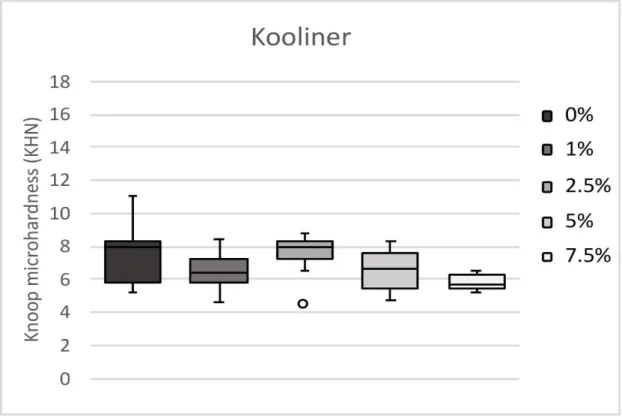
Relativamente ao efeito da incorporação de diferentes concentrações de CHX na microdureza, para os espécimes de Kooliner não se obtiveram diferenças estatisticamente significativas entre grupos. No que diz respeito aos espécimes de Ufi Gel Hard, obtiveram-se valores diferentes entre grupos. O grupo de 2,5% de CHX teve valores mais elevados em comparação com o de 0% e 7,5% de CHX. Já para o material Probase Cold, não existiram diferenças estatisticamente significativas entre nenhum dos grupos.
O presente estudo permite perceber que as várias concentrações de CHX incorporadas, não prejudicam as propriedades mecânicas destes materiais, podendo a incorporação do referido fármaco constituir um eventual fator de melhoria dessas mesmas propriedades, quando em determinadas concentrações.
No presente afiguram-se necessários estudos que permitam determinar o grau de conversão das resinas acrílicas e quantificar a quantidade de monómero residual. São necessários também, estudos microbiológicos e de citotoxicidade com CHX. É também de extrema importância ter em conta que o processo de biodegradação das resinas de rebasamento não ocorre apenas devido a envelhecimento térmico na cavidade oral, pelo que a realização de estudos que incluam outras potenciais fontes de biodegradação são igualmente fundamentais, bem como a execução de estudos de microscopia eletrónica de varredura e de transmissão, com o intuito de aferir as alterações que ocorrem na rede
vi polimérica das resinas, aquando da inclusão de fármacos nas mesmas. Tudo isto se coloca na perspetiva de que, cruzando-se os resultados dos estudos mencionados com os conhecimentos já adquiridos, poder-se-iam conduzir investigações clínicas, isto tendo em vista que próteses removíveis com propriedades antimicrobianas constituiriam seguramente uma grande melhoria na saúde oral dos pacientes portadores das mesmas.
vii
Abstract
Objectives: The purpose of this study was to evaluate the effect of chlorhexidine
(CHX) loading on the microhardness of three acrylic reline resins, Kooliner, Ufi Gel Hard and Probase Cold after a thermal ageing process.
Methods: For Kooliner reline resin, five CHX concentrations were studied, 1%,
2.5%, 5% and 7.5%. For Ufi Gel Hard, 1%, 2.5%, 5%, 7.5% and 10% CHX groups were introduced while Probase Cold only had 1%, 2.5%, 5% CHX concentrations. Control groups (0% CHX) were included in all materials. During the ageing procedure, 8 specimens per group of CHX concentration, with 64x10x3.3mm, were aged using a thermocycling machine, completing 1000 cycles of thermal fluctuations between 5°C and 55°C. Finally, all specimens were tested for Knoop hardness (30 sec, 98 mN) as 12 measurements were made in each specimen. Data was submitted to nonparametric tests according to the Kruskal-Wallis method followed by multiple comparisons using Mann-Whitney tests with Bonferroni corrections, being considered the 5% level of significance (α=0.05).
Results: Loading Kooliner and Probase Cold resins with CHX showed no effect
on microhardness (p>0.05), after submitted to thermal ageing process. The microhardness of Ufi Gel Hard resin was influenced (p<0.05) by the concentration of CHX. Ufi Gel Hard 2,5% CHX group presented higher microhardness (p<0.05) when comparing to control, after submitted to thermal ageing.
Conclusions: There is no decrease in microhardness of acrylic reline resins loaded
with different concentrations of CHX after thermal ageing.
1
1. Introduction
The increase of an elderly population leads to a greater risk of tooth loss (Harwood, 2008). Consequently, there is a subjacent need to replace the missing teeth. One valid treatment option is the use of partial or total removable dentures which will provide a way to replace function, facial and dental esthetic and general well-being (Gunjan Dhir et al., 2007). Moreover, these removable appliances are simple to manufacture, versatile, allow modifications along time, have good mechanical properties (Gunjan Dhir et al., 2007) and their maintenance require little effort for the patient and clinician, although needing periodic examinations (Tawse-Smith et al., 2001).
Tooth loss results in a progressive alveolar bone resorption (Leles et al., 2001). This process is continuous and progressive and will cause the maladaptation in local areas of the removable denture base and the continuous lack of stability and retention (Kranjcic
et al., 2013; Lyu, 2016). In turn, this increase in lack of stability of the removable dental
prostheses causes more bone resorption (Tallgren, 2003). Therefore, it is very important to make a periodic exam to detect any changes in the adaptation of the denture to the underlying mucosa (Reis et al., 2006).
In the mentioned situations, removable prostheses may be relined, improving their retention, stability and the masticatory load distribution that is transmitted to the underlying tissues (da Silva, et al., 2014). The relining procedure can be carried out with autopolymerizing acrylic resins at the chairside in the dental clinic or as a laboratory procedure (Neppelenbroek et al., 2006). However, these materials have some disadvantages, such as unpleasant odor, color alteration, and specially they are porous materials which facilitates oral degradation, contributing to chemical irritation of the oral mucosa and a higher susceptibility to microbial colonization (Gunjan Dhir et al., 2007; Bettencourt, et al., 2010; Alcântara et al., 2012,).
This tendency for adherence of pathogenic microorganisms can be stronger due to acrylic resins’ intrinsic porous nature and their surface deterioration, also derived from hygiene procedures and food and mastication manifestations (Brozek et al., 2007,2008, 2011) and resulting on increased roughness and creation of irregularities. For these reasons it is know that denture bases may act as reservoirs of microorganisms, which in
2 turn may contribute to oral diseases (Wilson J., 1998; Lamfon et al, 2005; Fernandes et
al., 2007; Casemiro et al., 2008).
Denture induced stomatitis or chronic atrophic candidiasis is the most common infection affecting mostly the palatal mucosa, being highly prevalent in denture wearers and elderly people whose oral hygiene habits or immune system may be deficient (Moskona et al., 1992; Reichart, 2000). This pathological entity is characterized by inflammation of oral tissues and despite its multifactorial nature, is characterized by the presence of a yeast biofilm, associated to the base of the prosthesis, being mainly constituted by Candida species, mainly Candida albicans (Monsenego, 2000; Nikawa et
al., 2003; Vanden et al., 2008; Boscato et al., 2009). Unfortunately, the pharmacological
treatment of this condition in the oral cavity may be ineffective due to the difficulty in applying the correct dose of the drug in the target lesion, as well as completing the necessary time to achieve the maximum potential of the drug before it is removed.
Given these problems, there is a novel strategy in which dental materials, namely reline resins, can be carriers of antimicrobial agents (Batoni G. et al., 2001; Etienne O. et
al., 2005; Hiraishi et al., 2008; Redding et al., 2009; Cao et al., 2010; Acosta-Torres et al., 2012; Cochis et al., 2012; Marra et al., 2012; Shinonaga et al., 2012). Furthermore,
with the use of these carriers, the effect of preventing the initial adhesion of microorganisms to the base of the denture is added, resulting in an important interference in the mechanism of infection. In addition, the same devices, allowing the release of the antimicrobial agent in the site of infection, lead to inhibition of biofilm formation and a diminishing of risks related to the use of subtherapeutic doses, occurrence of systemic toxicity
Chlorhexidine (CHX) has been studied regarding its use on resins (Wyre and Downes, 2000; Patel et al., 2001; Salim et al., 2012ab; Salim et al., 2013a; Alaa Al-Haddad et al., 2014; Martinna et al., 2014). It is an antimicrobial agent, active against a large number of microorganisms, Candida being one of the most affected. It has been showed that once drugs like fluconazole and CHX are incorporated into polymethylmethacrylate, they retain their therapeutic dose for up to 28 days (Vanden et
al., 2008; Boscato et al., 2009; Pusareti et al., 2009; Cao et al., 2010). CHX have shown
3 Amin et al., 2009; Pusateri et al., 2009; Redding et al., 2009; Ryalat et al., 2011; Salim
et al., 2012b; Salim et al., 2013a,b).
When incorporated in acrylic resins, 10% (w/w) CHX concentration showed to be the most effective against Candida albicans (Amin et al., 2009; Ryalat et al., 2011; Salim
et al., 2012a; Salim et al., 2013b). However, according to the preliminary results of Costa
(2017), incorporating 5% (w/w) CHX concentration in the materials showed inhibition of the proliferation of Candida albicans for Ufi Gel Hard and Probase Cold acrylic reline resins, while with Kooliner acrylic reline resin, incorporating 2.5% seems to be enough to prevent the development of the fungus. There are still some uncertainties regarding the release of antimicrobial substances from the resins which may be toxic for the oral mucosa and may lose their effectiveness over time. Moreover, there are questions about the effects of these materials loading techniques on the mechanical properties of acrylic resins over time (Addy and Handley, 1981; Thaw et al., 1981) and with intraoral environment changes.
Variations in temperature and pH, are known to induce surface stresses on biomaterials (Neves, 2012). It is fundamental to undertake testing methods that can mimic the oral environment for measuring the longevity of the material in function.
4
2. Objectives
The objective of this study was to evaluate the effect of loading three acrylic reline resins with different concentrations of chlorhexidine (CHX) on the microhardness, after a thermal ageing process, according to the following hypotheses:
H01: The microhardness of Kooliner reline resin is not affected by loading with different concentrations of CHX.
H11: The microhardness of Kooliner reline resin is affected by loading with different concentrations of CHX.
H02: The microhardness of Ufi Gel Hard reline resin is not affected by loading with different concentrations of CHX.
H12: The microhardness of Ufi Gel Hard reline resin is affected by loading with different concentrations of CHX.
H03: The microhardness of Probase Cold reline resin is not affected by loading with of different concentrations of CHX.
H13: The microhardness of Probase Cold reline resin is affected by loading with different concentrations of CHX.
5
3. Materials and Methods
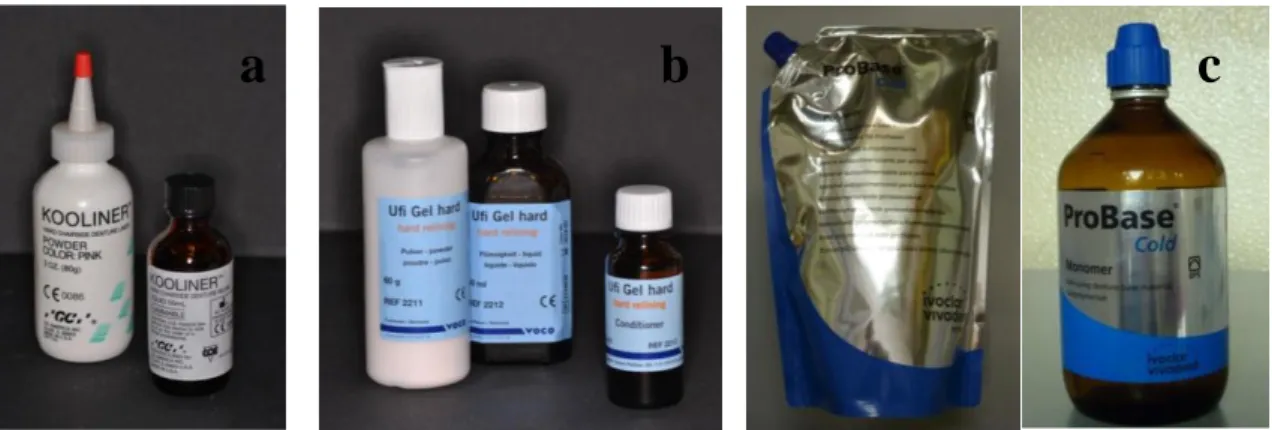
In the present study, three auto-polymerizing acrylic resins (Table 3.1), which are presented in a liquid-powder formulation, were chosen (Figure 3.1). Two of these resins are direct reline resins: Kooliner (GC America Inc, Alsip, Illinois, USA), and Ufi Gel Hard (Voco GmbH, Cuxhaven, Germany), both composed of pre-polymerized poly(ethyl methacrylate) powder particles The other resin is an indirect reline resin, Probase Cold (Ivoclar Vivadent AG, Liechenstein) which is a poly(methyl methacrylate) based material.
Table 3.1- Materials under evaluation in the study
Product Manufacturer Batch number P/L ratio (g/mL) Composition Curing cycle Kooliner GC America Inc., Alsip, Illinois, USA 1406232(P) 1404241(L) 1.4/l P: PEMA L: IBMA 10 minutes 37ºC Ufi Gel Hard Voco GmbH, Cuxhaven, Germany 1438417(P) 1443063(L) 1.77/l P: PEMA L: HDMA 7 minutes 37ºC Probase Cold Ivoclar Vivadent AG, Liechtenstein S41038(P) U03356(L) 1.5/l P: PMMA L: MMA 15 minutes 40ºC 2-4 bar
P- Powder, L- Liquid, PEMA- poly(ethyl methacrylate), IBMA- isobutyl methacrylate, 1,6-HDMA- hexanediol dimethacrylate, PMMA- poly(methyl methacrylate), MMA- methyl methacrylate
Figure 3.1 – Materials under evaluation in the study; a) Kooliner; b) Ufi Gel Hard; c) Probase Cold.
6
Preparation of the specimens
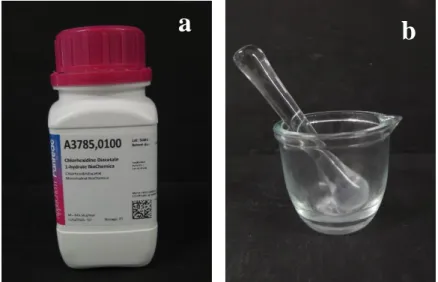
The acrylic resins were manipulated according to the manufacturer’s instructions (Table 3.1). The liquid was measured using a pipette and the powder was weighed using a precision scale (Mettler Toledo). On the experimental specimens, chlorhexidine diacetate monohydrate (Panreac Applichem, Darmstad, Germany) was incorporated and mixed using a mortar and pestle for homogenization (Figure 3.2).
Figure 3.2 – Chlorhexidine diacetate monohydrate; a) Package; b) Pestle and mortar used for homogenization.
Groups of specimens were tested depending on the concentration of CHX (w/w) loaded in each resin. Eight specimens were prepared in each group (n=8). Forty eight specimens of Ufi Gel Hard, forty specimens of Kooliner and thirty two specimens of Probase Cold were prepared, as described in Table 3.2. For each material, the group with 0% of CHX served as control.
7
Table 3.2 - Schematization of distribution of the specimens (n=8)
Product Concentration of loaded CHX
Ufi Gel Hard (U)
CHX 0% CHX 1% CHX 2.5% CHX 5% CHX 7.5% CHX 10% Kooliner (K) CHX 0% CHX 1% CHX 2.5% CHX 5% CHX 7.5% Probase Cold (PC) CHX 0% CHX 1% CHX 2.5% CHX 5%
As ISO 20795-1:2013 recommends, rectangular shaped stainless-steel molds were used to prepare specimens of each material (final dimensions were 64x10x3.3 mm).
On each preparation, the stainless-steel mold was placed on a glass plate covered by a polyester sheet. The materials’ doughs were prepared following the manufactures instructions (Table 3.1) and placed into the mold. Another polyester sheet and glass were positioned on top of the mold and the set was maintained under compression (Figure 3.3).
8
Figure 3.3 - Preparation of the specimens; a) Material is placed in the stainless-steel mold; b) Mixture and mold between polyester sheets and glass plates
In order to simulate the intraoral polymerization of direct reline resins, the materials dough was maintained at 37±2ºC, during the recommended polymerization time (Table 3.1).
Polymerization of the indirect reline resin was carried out in a pressure device (Ivomat Ivoclar Vivadent, Liechenstein) (Figure 3.4) at recommended temperature, time and pressure (Table 3.1).
Figure 3.4 – Ivomat pressure device.
After polymerization the specimens were removed from the molds and all edges of each sample were polished with a 600-grit silicon carbide paper (Carbimate Paper Discs, Buehler Ltd, Lake Bluff, IL), by a polisher with constant refrigeration (Figure 3.5).
9
Figure 3.5- Preparation of the specimens. After polymerization and removal of the specimen from the molds; a) Irregularities were removed; b) Example of polymerized Probase Cold specimen
Subsequently, each specimen was submitted to a thermal ageing procedure (1000 cycles of thermal fluctuations between 5°C and 55°C; 20 seconds in each bath, 5 seconds of dwell time) using a specific thermocycling machine (Refri 200-E, Aralab, Cascais, Portugal) (Figure 3.6). Once this step was complete the specimens were ready for testing (Minami, 2004; Gale, 1999).
Figure 3.6 – Thermocycling equipment.
Microhardness Tests
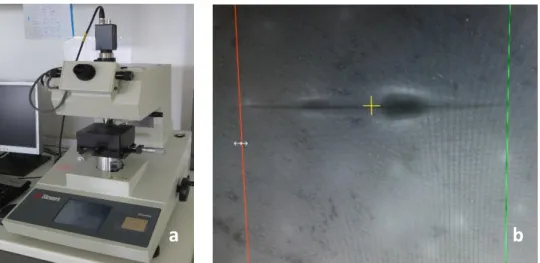
The microhardness of all the specimens was obtained using a microhardness indention machine (Duramin, Struers DK 2750, Balleruo, Denmark), with a Knoop diamond indenter, with an elongated pyramid’s shape (Figure 3.7). The microhardness test parameters were 98.12 mN load during 30 seconds (Pinto et al., 2010).
Using the Duramin software, after each indentation, the length of the pyramidal indentations was immediately measured by the operator with a 40x objective, on a maximum period of ten seconds.
10 The conversion of these measurements into Knoop hardness numbers (KHN) were made automatically by the equipment. Twelve equidistant measurements were made in each specimen.
Figure 3.7 - a) microhardness machine (Duramin, Struers DK 2750, Balleruo, Denmark); b) Microscopic image of a Knoop indention on an Ufi Gel Hard specimen
Statistical analysis
Descriptive statistics of microhardness was carried out. First, it was calculated the mean of the 12 measurements for each specimen. Then, mean, median, standard deviation, interquartile range, maximum and minimum values were determined per group.
Since data did not follow a normal distribution for the studied variables (verified by Shapiro-Wilk normality tests), the results were submitted to nonparametric tests according to the Kruskal-Wallis method, followed by multiple comparisons using Mann-Whitney tests with Bonferroni corrections to determine whether there were specific significant differences between groups.
In all statistical tests, it was considered the level of significance of 5% (=0.05). Data were statistically analyzed using SPSS Statistics 20 (SPSS Inc., Chicago, IL, USA).
a
11
4. Results
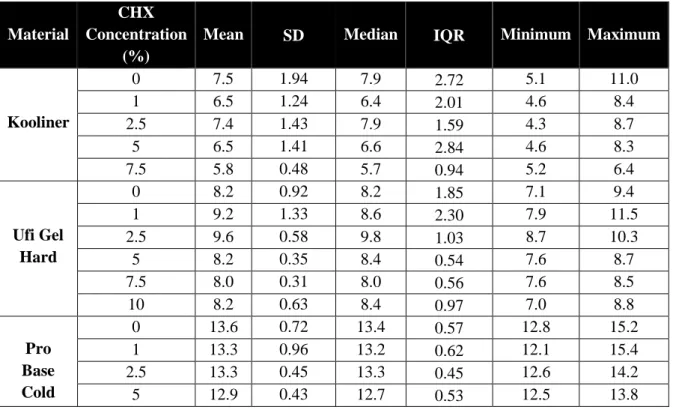
For each material, the descriptive analysis of the data was carried out, including mean, standard deviation, median, interquartile range, maximum and minimum values for microhardness (Table 4.1).
Material
CHX Concentration
(%)
Mean SD Median IQR Minimum Maximum
Kooliner 0 7.5 1.94 7.9 2.72 5.1 11.0 1 6.5 1.24 6.4 2.01 4.6 8.4 2.5 7.4 1.43 7.9 1.59 4.3 8.7 5 6.5 1.41 6.6 2.84 4.6 8.3 7.5 5.8 0.48 5.7 0.94 5.2 6.4 Ufi Gel Hard 0 8.2 0.92 8.2 1.85 7.1 9.4 1 9.2 1.33 8.6 2.30 7.9 11.5 2.5 9.6 0.58 9.8 1.03 8.7 10.3 5 8.2 0.35 8.4 0.54 7.6 8.7 7.5 8.0 0.31 8.0 0.56 7.6 8.5 10 8.2 0.63 8.4 0.97 7.0 8.8 Pro Base Cold 0 13.6 0.72 13.4 0.57 12.8 15.2 1 13.3 0.96 13.2 0.62 12.1 15.4 2.5 13.3 0.45 13.3 0.45 12.6 14.2 5 12.9 0.43 12.7 0.53 12.5 13.8
Table 4.1- Mean, standard deviation (SD), median, interquartile range, minimum and maximum values for microhardness (KHN) n=8.
Material
CHX
Concentration (%)
Mean Median Standart
Deviation Minimum Maximum IQR
Kooliner 0 7.5 7.9 1.94 5.1 11.0 2.72 1 6.5 6.4 1.24 4.6 8.4 2.01 2.5 7.4 7.9 1.43 4.3 8.7 1.59 5 6.5 6.6 1.41 4.6 8.3 2.84 7.5 5.8 5.7 0.48 5.2 6.4 0.94 Ufi Gel Hard 0 8.2 8.2 0.92 7.1 9.4 1.85 1 9.2 8.6 1.33 7.9 11.5 2.30 2.5 9.6 9.8 0.58 8.7 10.3 1.03 5 8.2 8.4 0.35 7.6 8.7 0.54 7.5 8.0 8.0 0.31 7.6 8.5 0.56 10 8.2 8.4 0.63 7.0 8.8 0.97 Pro Base Cold 0 13.6 13.4 0.72 12.8 15.2 0.57 1 13.3 13.2 0.96 12.1 15.4 0.62 2.5 13.3 13.3 0.45 12.6 14.2 0.45 5 12.9 12.7 0.43 12.5 13.8 0.53
Table 4.1- Mean, median, standard deviation, minimum, maximum and interquartile values for microhardness (KHN) n=8.
12 For Kooliner specimens (Figure 4.1), loading with the studied CHX concentrations did not showed differences on KHN values (p=0.114).
Figure 4.1- Boxplot with the influence of the CHX concentration on the KHN of the Kooliner. No differences were found between groups (p=0.114).
13 Statistically significant (p=0.002) differences on microhardness of CHX concentration groups was found for the Ufi Gel Hard specimens (Figure 4.2). The 2.5% CHX group showed higher KHN values than the control (p=0.042) and 7.5% CHX (p=0.002) groups.
Figure 4.2- Boxplot with the influence of the CHX concentration on the KHN of the Ufi Gel Hard. Groups with the same letter were not statistically different (p>0.05).
14 Concerning Probase Cold, there were no statistically significant differences between the CHX concentration groups (p=0.051).
Figure 4.3- Boxplot with the influence of the CHX concentration on the KHN of the Probase Cold. No differences were found between groups (p=0.051).
15
5. Discussion
A sustained-release delivery system for treatment of denture stomatitis using CHX loaded in resins has been suggested to have potential for the prevention or treatment of microbial adherence, due to its broad-spectrum antimicrobial activity, including C.
albicans. (Amin et al. 2009; Ryalat et al., 2011; Salim et al. 2012a,2013a,b; et al., 2013b).
However, loading CHX into reline resins is associated with short-term effects, presents difficulties related to the maintenance needs of these materials and can affect their mechanical properties (Douglas et al., 1973; Quinn, 1985; Schneid, 1992; Chow et al., 1999).
On the present study, CHX was the pharmacological molecule loaded in acrylic resins and its effects on the surface properties were studied. Other authors studied the incorporation of compounds like fluconazole, silver-zinc zeolite, fluoralkyl methacrylate, methacryloyloxyundecylpyridinium bromide or TiO2 and SiO2 nanoparticles) (Casemiro
et al., 2008; Cunha et al., 2009; Regis et al., 2011; Sodagar et al., 2013). A large number
of studies evidenced that CHX, when incorporated on acrylic resins, has a more efficient candidacidal effect in comparison to other antifungal drugs. This evidence has been shown both on releasing studies and microbiologic tests (Amin et al., 2009; Pusateri et
al., 2009; Ryalat et al., 2011; Salim et al., 2013a,b).
In the present study, microhardness of three materials was evaluated to check the effect of chlorhexidine on the mechanical properties after thermal ageing of the specimens.
Thermal ageing is fundamental in order to simulate intraoral temperature changes which occur frequently and are often extreme. These changes may be induced by routine eating, drinking and breathing (Kournetas, 2005). These temperature changes produce a hostile environment for the materials as they have a different coefficient of thermal expansion compared to natural tooth. Thermal fluctuations encountered in vivo can induce surface stresses due to the high thermal gradients near the surface. Mechanical stress induced by different thermal changes can directly induce crack propagation through bonded interfaces influencing the bond strength between denture base and reline materials (Kournetas, 2005; Neppelenbroek et al. 2006).
16 The thermal ageing is simulated in research through thermocycling. Specimens are immersed in almost extreme temperatures baths: 5±2ºC and 55±2ºC with a dwell time of 5 seconds (Minami et al. 2004). According to Gale (Gale, 1999), the highest tolerable temperature varies between 50ºC and 55ºC and the lowest tolerable temperature of the palatal surfaces of incisors and molars is of approximately 4.5ºC. Therefore, the chosen temperatures for the thermocycling procedure were 5ºC and 55ºC for each bath.
It has been shown that once CHX is incorporated into polymethylmethacrylate, it retains its therapeutic dose for up to 28 days (Amin et al., 2009; Salim et al., 2012b). Hence, the number of cycles for thermic ageing should correspond to this period. We know that 1000 cycles of thermocycling correspond to approximately 30 days since each cycle corresponds to a principal meal of the day (Gale, 1999; Minami, 2004). Consequently, this study specimens were aged for 1000 cycles corresponding to 30 days in the oral cavity.
Regarding the hardness test and the use of Knoop indentator for the measurements we can affirm the Knoop hardness number is derived from the length of an indentation made by a rhomboidal cutting tool under a given load. The geometry of the tool is significant in that the measurement results from a stable cut made by the long axis of the tool, whereas the indentation made by the shorter axis would allow greater relaxation and stress distribution in the material. Because the load can be varied, and relaxation is allowed, this test can be applied to relatively soft materials like acrylic resin (Diaz-Arnold, 1999; Anusavice, 1996). Nevertheless, as there was a short time interval between indentation and measurement, it was assumed that the viscoelastic recovery was minimal.
In respect of the CHX concentrations used in this study, the selection of groups was made taking in account all the results obtained in previous studies by Sousa (2014), Barreiros (2015) and Martins (2015). The concentrations of 10%, 7.5%, 5%, 2.5% and 1% of CHX were studied by these authors and their conclusions allows us to exclude all the CHX concentration groups which already showed to negatively influence the mechanical and physical properties of each material. Sousa (2014) referred that loading 10% CHX could negatively influence microhardness of Kooliner and Probase Cold, but not Ufi Gel Hard, leading to the choice of including in the present study the 10% CHX group only in Ufi Gel Hard. Martins (2015)
17 found that a 7.5% concentration would decrease mechanical properties of Probase Cold, so it was settled in the present study to include groups of Probase Cold only until 5% CHX concentration.
Concerning the effect of CHX incorporation on microhardness of Kooliner there were no statistically significant differences between groups. Therefore, we are able to accept the first null hypothesis which states that the microhardness of Kooliner reline resin is not affected by the different concentrations of CHX loaded.
Loading of CHX, in different concentrations, on Ufi Gel Hard, regarding microhardness values, conduced to statistical differences, between groups. Interestingly, 2.5% CHX group showed a higher microhardness value when comparing to 0% CHX and also to 7.5% CHX groups. Ufi Gel Hard is composed of pre-polymerized poly (ethyl ethacrylate) (PEMA) powder particles, which are mixed with other methacrylate monomers. The conversion monomer-polymer is never complete in this material. Auto-polymerized materials are known for their lower degree of conversion and consequently higher residual monomer content (3% to 5%), compared to heat-activated resins (Cooper
et al., 2004). The results found between experimental groups 0% CHX, 2,5% CHX and
7,5% CHX are similar to the results obtained by Martins (2015) where 5% CHX group had higher microhardness value when comparing to the control group. This may be due to the chemical conformation of polyethyl methacrylate whose chemical union may be promoted by CHX. However, with the increase of CHX concentration the material might become porous leading to the decrease of the material’s microhardness. Hence, we are
able to reject the second null hypothesis that microhardness of Ufi Gel Hard reline resin is not affected by the different concentrations of CHX loaded. Although being affected by different concentrations of CHX, Ufi Gel Hard was not affected in a negative way. In fact, none of the groups tested showed a decrease of microhardness values when comparing to the control group, but rather an increase in the values of this property, which is again in agreement with the results obtained by Martins (2015).
Finally, when loading Probase Cold reline resin with CHX, no statistically significant differences between any of the groups of CHX concentrations. Consequently, we are able to accept the third null hypothesis which states that the microhardness of Probase Cold reline resin is not affected by the different concentrations of CHX loaded.
18 Although having conducted a thermal ageing of the specimens, more experimental studies are needed to conclude about the biodegradation of acrylic reline resins exposed to the oral cavity. The biodegradation of a biomaterial can produce leachable products, which in turn may induce a series of biological responses on cells and tissues. This process may occur not only due to thermal changes but also due to exposure to saliva, chewing, breathing, chemical and dietary changes (Santerre et al., 2001, Bettencourt et
al., 2010; Neves 2012). A major clinically significant consequence of acrylic based resins
biodegradation is the release of potential toxic unbound/uncured monomers or/and additives from the polymer network. The released compounds may have a toxic effect on the oral cavity. With respect to materials stability, biodegradation may induce significant changes in materials physical and mechanical properties that may ultimately lead to failure of the material.
Therefore, more experimental studies are needed to conclude about the mechanical properties of the material after the biodegradation process has occurred and how the release of CHX in the long term is affected by the harsh environment of the oral cavity.
19
6. Conclusions
Within the limitations of the current experiments, this study showed that:
• The first null hypothesis is valid since there is no difference in microhardness values between groups of Kooliner, after submitted to thermal ageing;
• The second null hypothesis is not accepted because there is evidence of alteration on microhardness values for different Ufi Gel Hard groups, after submitted to thermal ageing.
• The third null hypothesis is valid since there is no difference in microhardness values between groups of Probase Cold, after submitted to thermal ageing;
Concerning Ufi Gel Hard, 2.5% CHX group presented higher values of microhardness when comparing to control, after submitted to thermal ageing. Nevertheless, loading with any concentration of CHX do not negatively affects the microhardness values of the acrylic resins after a thermal ageing equivalent to one month of oralenvironment.
20
7. References
Acosta-Torres LS, Mendieta I, Nunez-Anita RE, Cajero-Juarez M, Castano VM. Cytocompatible antifungal acrylic resin containing silver nanoparticles for dentures. Int J Nanomedicine 2012;7:4777-86.
Addy M, Handley R. The effects of the incorporation of chlorhexidine acetate on some physical properties of polymerized and plasticized acrylics. J Oral Rehabil. 1981;8:155-63.
Alaa Al-Haddad, Reza VR, Julian DS. Fracture toughness of heat cured denture base acrylic resin modified with Chlorhexidine and Fluconazole as bioactive compounds. J Dent2014; 42: 180-4.
Alcantara CS, Macedo AF, Gurgel BC, Jorge JH, Neppelenbroek KH, Urban VM. Peel bond strength of resilient liner modified by the addition of antimicrobial agents to denture base acrylic resin. J Appl Oral Sci 2012;20:607-12.
Amin WM, Al-Ali MH, Salim NA, Al-Tarawneh SK. A new form of intraoral delivery of antifungal drugs for the treatment of denture-induced oral candidosis. Eur J Dent. 2009;3:257-66.
Anusavice KJ, editor. Phillip’s science of dental materials. 10th ed. Philadelphia: WB Saunders; 1996: p.69-71.
Arima T, Murata H, Hamada T. Properties of highly cross-linked autopolymerizing reline acrylic resins. J Prosthet Dent. 1995;73:55-9.
Arima T, Murata H, Hamada T. Analysis of composition and structure of hard autopolymerizing reline resins. J Oral Rehabil. 1996;23:346-52.
21 Barreiros M. Effect of Chlorhexidine Incorporation on the Surface Properties of Acrylic Reline Resins. Dissertação de Mestrado Integrado em Medicina Dentária. Lisboa: Faculdade de Medicina Dentária da Universidade de Lisboa; 2015.
Batoni G, Pardini M, Giannotti A, Ota F, Giuca MR, et al.; Effect of removable orthodontic appliances on oral colonization by mutans streptococci in children. Eur J Oral Sci 2001; 109: 388–92..
Boscato N, Radavelli A, Faccio D, Loguercio AD. Biofilmformation of Candida albicans on the surface of a softdenture-lining material. Gerodontology 2009;26:210–3.
Brozek R, Koczorowski R, Czarnecka B. The influence of disinfectants on elasticity of acrylic-based soft lining materials. Pol J Environ Stud 2007;16:31–8.
Brozek R, Rogalewicz R, Koczorowski R, Voelkel A. The influence of denture cleansers on the release of organic compounds from soft lining materials. J Environ Monit 2008;10:770–4.
Brozek R, Koczorowski R, Rogalewicz R, Voelkel A, CzarneckaB, Nicholson JW. Effect of denture cleansers on chemical andmechanical behavior of selected soft lining materials. DentMater 2011;27:281–90.
Bettencourt AF, Neves CB, de Almeida MS, Pinheiro LM, Oliveira SA, Lopes LP, et al. Biodegradation of acrylic based resins: A review. Dent Mater 2010; 26:e171-80.
Cao Z, Sun X, Yeh CK, Sun Y. Rechargeable infection-responsive antifungal denture materials. J Dent Res 2010;89:1517–21.
Casemiro LA, Gomes Martins CH, Pires-de-Souza Fde C, Panzeri H. Antimicrobial and mechanical properties of acrylic resins with incorporated silver-zinc zeolite - part I. Gerodontology 2008;25:187-94.
22 Chow CK, Matear DW, Lawrence HP. Efficacy of antifungal agents in tissue conditioners in treating candidiasis. Gerodontology 1999;16:110–8.
Costa J, Alexandre F, Bettencourt A, Ribeiro I, Portugal J, Neves CB. Incorporação de Clorexidina em Resinas de Rebasamento-estudos microbiológicos. Rev Port Estomat Med Dent Cir Maxilofacial 2017; 58 (Supl. 1): e51, resumo 133
Cochis A, Fracchia L, Martinotti MG, Rimondini L. Biosurfactants prevent in vitro Candida albicans biofilm formation on resins and silicon materials for prosthetic devices. Oral Surg Oral Med Oral Pathol Oral Radiol 2012;113:755-61.
Cunha TR, Regis RR, Bonatti MR, de Souza RF. Influence of incorporation of fluoroalkyl methacrylates on roughness and flexural strength of a denture base acrylic resin. J Appl Oral Sci 2009;17:103-7.
da Silva WJ, Leal CM, Viu FC, Gonçalves LM, Barbosa CM, Del Bel Cury AA. Influence of surface free energy of denture base and liner materials on Candida albicans biofilms. J Investig Clin Dent. 2015;6:141–6.
Diaz-Arnold AM, Dunne J T, Jones AH. Microhardness of provisional fixed prosthodontic materials. J Prosthet Dent 1999;, 82, 525–8.
Douglas WH, Walker DM. Nystatin in denture liners – an alternative treatment of denture stomatitis. Br Dent J 1973;135:55–9.
Etienne O, Gasnier C, Taddei C, et al. Antifungal coating by biofunctionalized polyelectrolyte multilayered films. Biomaterials 2005;26:6704–12.
Fermandes RA, Lovato-Silva CH, Paranhos Hde F, Ito IY. Efficacy of three denture brushes on biofilm removal from complete dentures. J Appl Oral Sci. 2007;15:39-43.
Gale MS, Darvell BW. Thermal cycling procedures for laboratory testing of dental restorations. J Dent 1999;27:89-99.
23 Gujan D, Berzins DW, Dhuru VB, Periathamby AR, Dentino A. Physical properties of denture base resins potentially resistant to Candida adhesion. J Prosthodont. 2007;16: 465-72.
Harwood CL. The evidence base for current practices in prosthodontics. Eur J Prosthodont Restor Dent 2008; 16:24-34.
Hiraishi N, Yiu CK, King NM, Tay FR, Pashley DH. Chlorhexidine release and water sorption characteristics of chlorhexidine-incorporated hydrophobic/hydrophilic resins. Dent Mater 2008;24:1391-9.
Kournetas N. Impact of artificial ageing process on the wear resistance of dental materials. MA Thesis, Tübingen; 2005.
Kranjcic J, Kostelic Stunic M, Celebic A, Komar D, Mehulic K, Vojvodic D. Denture relining as an indicator of residual ridge resorption. Med Glas (Zenica) 2013; 10:126-32.
Lamfon H, Porter SR, McCullough M, Pratten J. Susceptibilityof Candida albicans biofilms grown in a constant depth filmfermentor to chlorhexidine, fluconazole and miconazole: alongitudinal study. J Antimicrob Chemother 2004; 53:383–5.
Leles CR, Machado AL, Vergani CE, Giampaolo ET, Pavarina AC. Bonding strength between a hard chairside reline resin and a denture base material as influenced by surface treatment. J Oral Rehabil 2001; 28:1153-7.
Lyu, X.; Zhao, C.; Yan, Z.M.; Hua, H. Efficacy of nystatin for the treatment of oral candidiasis: A systematic review and meta-analysis. Drug Des. Devel. Ther.2016, 10, 1161–71.
Marra J, Paleari AG, Rodriguez LS, Leite AR, Pero AC, Compagnoni MA. Effect of an acrylic resin combined with an antimicrobial polymer on biofilm formation. J Appl Oral Sci 2012; 20:643-8.
24 Martinna MB, Maristela BP, José AC, Rosangela MS, Eduardo JL, Daniel MT. J of Dent Mater 2014; 40: 793-8.
Martins S. Effect of Chlorhexidine Incorporation on the Mechanical Properties of Acrylic Reline Resins. Dissertação de Mestrado Integrado em Medicina Dentária. Lisboa: Faculdade de Medicina Dentária da Universidade de Lisboa; 2015.
Minami H, Suzuki S, Minesaki Y, Kurashige H, Tanaka T. In vitro evaluation of the influence of repairing condition of denture base resin on the bonding
of autopolymerizing resins. J Prosthet Dent 2004; 91:164-70.
Monsenego P. Presence of microorganisms on the fitting denture complete surface: study “in vivo”. J Oral Rehabil 2000; 27:708–13.
Moskona D, Kaplan I. Oral lesions in elderly denture wearers. Clin Prev Dent 1992;14:11–4.
Neppelenbroek KH, Pavarina AC, Gomes MN, Machado AL, Vergani CE. Bond strength of hard chairside reline resins to a rapid polymerizing denture base resin before and after thermal cycling. J Appl Oral Sci 2006; 14:436-42.
Neves CB Insights on the Biodegradation of Acrylic Reline Resins.Tese de Doutoramento em Medicina Dentária especialidade de Reabilitação Oral. Faculdade de Medicina Dentária da Universidade de Lisboa. 2012.
Nikawa H, Jin C, Makihira S, Egusa H, Hamada T, Kumagai H.Biofilm formation of
Candida albicans on the surfaces ofdeteriorated soft denture lining materials caused by
denturecleansers in vitro. J Oral Rehabil 2003;30:243–50.
Patel MP, Cruchley AT, Coleman DC, Swai H, Braden M, Williams DM, et al. A polymeric system for the intra-oral delivery of an anti-fungal agent. Biomaterials 2001;22:2319– 24.
25 Pinto Lde R, Acosta EJ, Tavora FF, da Silva PM, Porto VC. Effect of repeated cycles of chemical disinfection on the roughness and hardness of hard reline acrylic resins. Gerodontology 2010;27:147-53.
Pusateri CR, Monaco EA, Edgerton M. Sensitivity of Candida albicans biofilm cells grown on denture acrylic to antifungal proteins and chlorhexidine. Arch Oral Biol 2009;54:588–94.
Quinn DM. The effectiveness, in vitro, of miconazole and ketoconazole combined with tissue conditioners in inhibiting the growth of Candida albicans. J Oral Rehab 1985;12:177–82.
Redding S, Bhatt B, Rawls HR, Siegel G, Scott K, Lopez-Ribot J. Inhibition of Candida albicans biofilm formation on denture material. Oral Surg Oral Med Oral Pathol Oral Radiol Endod 2009;107:669-72.
Regis RR, Zanini AP, Della Vecchia MP, Silva-Lovato CH, Oliveira Paranhos HF, de Souza RF. Physical properties of an acrylic resin after incorporation of an antimicrobial monomer. J Prosthodont 2011;20:372-9.
Reichart PA. Oral mucosal lesions in a representative cross-sectional study of aging Germans.Community Dent Oral Epidemiol 2000; 28:390–8.
Reis JM, Vergani CE, Pavarina AC, Giampaolo ET, Machado AL. Effect of relining, water storage and cyclic loading on the flexural strength of a denture base acrylic resin. J Dent 2006; 34:420-6.
Ryalat S, Darwish R, Amin W. New form of administering chlorhexidine for treatment of denture-induced stomatitis. Ther Clin Risk Mana. 2011;7:219-25.
Salim N, Moore C, Silikas N, Satterthwaite J, Rautemaa R. Chlorhexidine is a highly effective topical broad-spectrum agent against Candida spp. Int Antimic Agents 2012a;41:65–9.
26 Salim N, Moore C, Silikas N, Satterthwaite JD, Rautemaa R. Fungicidal amounts of antifungals are released from impregnated denture lining material for up to 28 days. J Dent 2012b;40:506–12.
Salim N, Moore C, Silikas N, Satterthwaite J, Rautemaa R. Candidacidal effect of fluconazole and chlorhexidine released from acrylic polymer. AntimicroChemotherapy 2013a;68:587–92.
Salim N, Silikas N, Satterthwaite JD, Moore C, Ramage G, Rautemaa R. Chlorhexidine-impregnated PEM/THFM polymer exhibits superior activity to fluconazole-Chlorhexidine-impregnated polymer against Candida albicans biofilm formation. Int J Antimicrob Agents 2013b;41:193-6.
Santerre JP, Shajii L, Leung BW. Relation of dental composite formulations to their degradation and the release of hydrolyzed polymeric-resin-derived
products. Crit Rev Oral Biol Med 2001; 12:136-51.
Schneid TR. An in vitro analysis of a sustained release system for the treatment of denture stomatitis. Spec Care Dentist 1992;12:245–50.
Shinonaga Y, Arita K. Antibacterial effect of acrylic dental devices after
surface modification by fluorine and silver dual-ion implantation. Acta Biomater 2012; 8: 1388–93.
Sodagar A, Bahador A, Khalil S, Shahroudi AS, Kassaee MZ. The effect of TiO2 and SiO2 nanoparticles on flexural strength of poly (methyl methacrylate) acrylic resins. J Prosthodont Res 2013;57:15-9.
Sousa C. Effect of chlorhexidine incorporation on the properties of acrylic reline resins. Tese de Mestrado em Medicina Dentária. Lisboa: Faculdade de Medicina Dentária da Universidade de Lisboa; 2014.
Tallgren, A. The continuing reduction of the residual alveolar ridges in complete denture wearers: A mixed-longitudinal study covering 25 years. J Prosthet Dent 1972;27:120-32.
27 Tawse-Smith A, Rivillas CC, Orozco PS, Diaz JE, Pack AR. Clinical effects of removable acrylic appliance design on gingival tissues: a short-term study. J Int Acad Periodontol 2001;3:22–7.
Thaw M, Addy M, Handley R. The effects of drug and water incorporation upon some physical properties of cold cured acrylic. Biomed Mater Res 1981;15:29–36.
Vanden Abbeele A, de Meel H, Ahariz M, Perraudin JP, BeyerI, Courtois P. Denture contamination by yeasts in the elderly. Gerodontology 2008;25:222–8.
Wilson J. The aetiology, diagnosis and management of denture stomatitis. Br Dent J. 1998;185:380-4.
Wyre RM, Downes S. An in vitro investigation of the PEMA/ THFMA polymer system as a biomaterial for cartilage repair. Biomaterials 2000;21:335–43.
28
Appendices
Appendix 1 – List of Tables
Table 3.1 - Materials under evaluation in the study
Table 3.2 - Schematization of distribution of the specimens
Table 4.1- Mean, standard deviation (SD), median, interquartile range, minimum and
29
Appendix 2 - List of figures
Figure 3.1 – Materials under evaluation in the study; a) Kooliner; b) Ufigel Hard; c)
Probase Cold.
Figure 3.2 – Chlorhexidine diacetate monohydrate; a) Package; b) Pestle and mortar used
for homogenization.
Figure 3.3 - Preparation of the specimens; a) Material is placed in the stainless-steel
mold; b) Mixture and mold between polyester sheets and glass plates
Figure 3.4 – Ivomat pressure device
Figure 3.5- Preparation of the specimens. After polymerization and removal of the
specimen from the molds; a) Irregularities were removed; b) Example of polymerized Probase Cold specimen
Figure 3.6 – Thermocycling equipment.
Figure 3.7 - a) microhardness machine (Duramin, Struers DK 2750, Balleruo, Denmark);
b) Microscopic image of a Knoop indention on an Ufi Gel Hard specimen
Figure 4.1- Boxplot with the influence of the CHX concentration on the KHN of the
Kooliner. No differences were found between groups (p=0.114).
Figure 4.2- Boxplot with the influence of the CHX concentration on the KHN of the Ufi
Gel Hard. Groups with the same letter were not statistically different (p>0.05).
Figure 4.3- Boxplot with the influence of the CHX concentration on the KHN of the
30
Appendix 3 - List of Abbreviations
1,6 HDMA 1,6-hexanedioldimetacrylate
CHX Chlorhexidine diacetate monohydrate
HDMA Hexanediol dimethacrylate
IBMA
IQR
Isobutylmethacrylate
Interquartile Range
ISO International Organization for
Standardization
K Kooliner
KHN Knoop Hardness Number
MMA mN Methylmethacrylate millinewton MPa Megapascal PC Probase Cold PEMA Polyethilmethacrylate PMMA SD Polymethylmethacrylate Standart Deviation
31
Appendix 4 – Experimental Data
Knoop Hardness (Kooliner)
Indentation KHN Indentation KHN Indentation KHN Indentation KHN KA1.1 18.6 KA4.6 22.5 KA7.11 12.4 KB3.4 5.4
KA1.2 30.6 KA4.7 9.3 KA7.12 15.2 KB3.5 3.2
KA1.3 4 KA4.8 4.6 KA8.1 4.3 KB3.6 5.2
KA1.4 8 KA4.9 4 KA8.2 4.6 KB3.7 3.5
KA1.5 4.6 KA4.10 8.4 KA8.3 5.9 KB3.8 3.6
KA1.6 4.7 KA4.11 3.9 KA8.4 3.5 KB3.9 3.1
KA1.7 17.1 KA4.12 4 KA8.5 4.3 KB3.10 3.2
KA1.8 4.5 KA5.1 3 KA8.6 10.2 KB3.11 4.6
KA1.9 6.5 KA5.2 3.9 KA8.7 6.9 KB3.12 4.5
KA1.10 12 KA5.3 4.1 KA8.8 5.1 KB4.1 6.6
KA1.11 15.8 KA5.4 15.4 KA8.9 5.5 KBh4.2 5.7
KA1.12 6.1 KA5.5 5 KA8.10 6.3 KB4.3 6.8
KA2.1 13.6 KA5.6 3.3 KA8.11 8 KB4.4 5.8
KA2.2 22.8 KA5.7 3.5 KA8.12 5 KB4.5 6
KA2.3 4 KA5.8 6.2 KB1.1 3.7 KB4.6 6.1 KA2.4 6.1 KA5.9 3.6 KB1.2 4.5 KB4.7 5.5 KA2.5 3.4 KA5.10 5.1 KB1.3 4.6 KB4.8 6.1 KA2.6 6.1 KA5.11 5.2 KB1.4 5.7 KB4.9 6.3 KA2.7 4.1 KA5.12 9.1 KB1.5 3.4 KB4.10 5.2 KA2.8 5.8 KA6.1 5.2 KB1.6 17.4 KB4.11 5.4 KA2.9 7.9 KA6.2 4.4 KB1.7 4.6 KB4.12 7.4 KA2.10 11.5 KA6.3 5.5 KB1.8 5.4 KB5.1 5.7 KA2.11 6.8 KA6.4 6.3 KB1.9 17.3 KB5.2 4.9 KA2.12 7.2 KA6.5 8 KB1.10 5.5 KB5.3 7.4 KA3.1 28.3 KA6.6 5 KB1.11 23.3 KB5.4 6.1 KA3.2 12.6 KA6.7 5.1 KB1.12 6.1 KB5.5 7.6 KA3.3 6.4 KA6.8 4.3 KB2.1 9.5 KB5.6 6.5 KA3.4 3.1 KA6.9 4.6 KB2.2 12 KB5.7 8.3 KA3.5 4.1 KA6.10 5.9 KB2.3 5.2 KB5.8 6.9 KA3.6 4.6 KA6.11 3.5 KB2.4 10.7 KB5.9 6.7 KA3.7 3.8 KA6.12 4.3 KB2.5 4.4 KB5.10 7.4 KA.3.8 3.4 KA7.1 10.2 KB2.6 6.5 KB5.11 7.7 KA3.9 3.9 KA7.2 10.2 KB2.7 9 KB5.12 5.7 KA3.10 4 KA7.3 6 KB2.8 17.9 KB6.1 6.3 KA3.11 12.5 KA7.4 6.9 KB2.9 3.4 KB6.2 6.7 KA3.12 13.4 KA7.5 6.9 KB2.10 4.2 KB6.3 7.2 KA4.1 7.7 KA7.6 5.1 KB2.11 5.5 KB6.4 6.6 KA4.2 11.3 KA7.7 6.8 KB2.12 5 KB6.5 7 KA4.3 4 KA7.8 5.6 KB3.1 11.8 KB6.6 7 KA4.4 6 KA7.9 7 KB3.2 3.3 KB6.7 6.7 KA4.5 5.5 KA7.10 8.6 KB3.3 4.2 KB6.8 7.2
32 KB6.9 11.9 KC2.6 8.8 KC6.3 8.5 KD1.12 4.9 KB6.10 7.1 KC2.7 5.9 KC6.4 8 KD2.1 5.2 KB6.11 5.7 KC2.8 8.5 KC6.5 7 KD2.2 5.6 KB6.12 5 KC2.9 11.2 KC6.6 7 KD2.3 6.2 KB7.1 8.2 KC2.10 8.4 KC6.7 13.2 KD2.4 7.9 KB7.2 3.9 KC2.11 11.3 KC6.8 7 KD2.5 6.2 KB7.3 5.9 KC2.12 8.5 KC6.9 7.1 KD2.6 5.7 KB7.4 4.4 KC3.1 9.4 KC6.10 7.7 KD2.7 6.8 KB7.5 5.8 KC3.2 12.3 KC6.11 10.9 KD2.8 6.6 KB7.6 4.5 KC3.3 3.4 KC6.12 9.7 KD2.9 4.5 KB7.7 4.5 KC3.4 9.4 KC7.1 11.7 KD2.10 7.3 KB7.8 6.8 KC3.5 10.9 KC7.2 4 KD2.11 5.2 KB7.9 6.9 KC3.6 13.1 KC7.3 4.4 KD2.12 6.1 KB7.10 4.8 KC3.7 6.4 KC7.4 5.3 KD3.1 5.1 KB7.11 5.9 KC3.8 12.9 KC7.5 6.1 KD3.2 4.2 KB7.12 4.1 KC3.9 3.3 KC7.6 5.8 KD3.3 5.4 KB8.1 6.8 KC3.10 5.9 KC7.7 3.8 KD3.4 5 KB8.2 5.4 KC3.11 3.9 KC7.8 9.1 KD3.5 5.3 KB8.3 5.5 KC3.12 6.4 KC7.9 3.4 KD3.6 4.1 KB8.4 3.1 KC4.1 4.3 KC7.10 6.1 KD3.7 5.6 KB8.5 7.7 KC4.2 5.8 KC7.11 22 KD3.8 6.1 KB8.6 4.5 KC4.3 6 KC7.12 18.6 KD3.9 5.8 KB8.7 6.6 KC4.4 4.9 KC8.1 7.2 KD3.10 3.6 KB8.8 4.3 KC4.5 5.2 KC8.2 8.3 KD3.11 6.2 KB8.9 11.6 KC4.6 4.7 KC8.3 6.9 KD3.12 10 KB8.10 4.9 KC4.7 7.6 KC8.4 7.8 KD4.1 7.6 KB8.11 6.2 KC4.8 5 KC8.5 6.1 KD4.2 7.1 KB8.12 4 KC4.9 6.4 KC8.6 9.1 KD4.3 6.7 KC1.1 5.5 KC4.10 6.3 KC8.7 5.2 KD4.4 6 KC1.2 7.4 KC4.11 19.5 KC8.8 9.4 KD4.5 8 KC1.3 3.8 KC4.12 25 KC8.9 7.6 KD4.6 12.4 KC1.4 4 KC5.1 13.5 KC8.10 8.8 KD4.7 8.5 KC1.5 3.4 KC5.2 15.4 KC8.11 7.4 KD4.8 9.9 KC1.6 3.9 KC5.3 3.8 KC8.12 5.3 KD4.9 11.5 KC1.7 4.9 KC5.4 7.2 KD1.1 4.1 KD4.10 6.7 KC1.8 4.1 KC5.5 4.5 KD1.2 3.9 KD4.11 7.7 KC1.9 4.4 KC5.6 3.5 KD1.3 5.7 KD4.12 7.7 KC1.10 3.7 KC5.7 4 KD1.4 3.7 KD5.1 6.2 KC1.11 3.7 KC5.8 3.4 KD1.5 6.7 KD5.2 9.6 KC1.12 3.3 KC5.9 4.5 KD1.6 3.9 KD5.3 6.8 KC2.1 4.5 KC5.10 4 KD1.7 5.8 KD5.4 6.2 KC2.2 5.2 KC5.11 3.2 KD1.8 4.6 KD5.5 8.8 KC2.3 6.2 KC5.12 11.9 KD1.9 4.9 KD5.6 7.1 KC2.4 4.9 KC6.1 6.6 KD1.10 7.3 KD5.7 6.7 KC2.5 10 KC6.2 12.3 KD1.11 5.2 KD5.8 8.2
33
KD5.9 7.6 KE1.6 5.7 KE5.3 5.8 KE8.12 3.7 KD5.10 8.4 KE1.7 6.4 KE5.4 4.3 KD5.11 6.2 KE1.8 6.1 KE5.5 4.9 KD5.12 6.7 KE1.9 5.4 KE5.6 5.2 KD6.1 4.7 KE1.10 4.9 KE5.7 6 KD6.2 3.3 KE1.11 4.9 KE5.8 4.9 KD6.3 7.0 KE1.12 4.6 KE5.9 5 KD6.4 4.3 KE2.1 6.3 KE5.10 6.7 KD6.5 7.8 KE2.2 7.6 KE5.11 5.3 KD6.6 3.9 KE2.3 6.5 KE5.12 5.3 KD6.7 6.5 KE2.4 5.5 KE6.1 5.1 KD6.8 3.5 KE2.5 6.4 KE6.2 6.5 KD6.9 3.8 KE2.6 7.1 KE6.3 6.5 KD6.10 4.2 KE2.7 7.0 KE6.4 3.5 KD6.11 3.1 KE2.8 7.7 KE6.5 5.9 KD6.12 4.1 KE2.9 6.3 KE6.6 6 KD7.1 5.8 KE2.10 4.6 KE6.7 6.7 KD7.2 4.7 KE2.11 6.6 KE6.8 5.4 KD7.3 8.2 KE2.12 6.0 KE6.9 8 KD7.4 6.1 KE3.1 7.4 KE6.10 4.2 KD7.5 11.2 KE3.2 3.5 KE6.11 4.4 KD7.6 9.0 KE3.3 4.3 KE6.12 6.1 KD7.7 8.2 KE3.4 5.3 KE7.1 6.8 KD7.8 8.4 KE3.5 3.9 KE7.2 4.4 KD7.9 7.9 KE3.6 4.9 KE7.3 5.4 KD7.10 5.2 KE3.7 6.1 KE7.4 7.7 KD7.11 7.3 KE3.8 5.6 KE7.5 4.8 KD7.12 4.8 KE3.9 5.2 KE7.6 5.3 KD8.1 9.1 KE3.10 6.8 KE7.7 5.9 KD8.2 6.7 KE3.11 7.2 KE7.8 5.8 KD8.3 11.4 KE3.12 3.9 KE7.9 7.4 UA8.4 5.7 KE4.1 4.7 KE7.10 7.8 KD8.5 6.8 KE4.2 5.7 KE7.11 6.2 KD8.6 7 KE4.3 4.8 KE7.12 7.7 KD8.7 8.7 KE4.4 6.7 KE8.1 8 KD8.8 7.8 KE4.5 5.3 KE8.2 5.8 KD8.9 3.9 KE4.6 5.0 KE8.3 3.1 KD8.10 6.4 KE4.7 4.8 KE8.4 13 KD8.11 16.7 KE4.8 7.6 KE8.5 4.2 KD8.12 8.7 KE4.9 6.0 KE8.6 8.4 KE1.1 5.6 KE4.10 7.2 KE8.7 9.3 KE1.2 4.8 KE4.11 5.1 KE8.8 3.2 KE1.3 6.4 KE4.12 6.4 KE8.9 6.6 KE1.4 5.5 KE5.1 4.0 KE8.10 7.4 KE1.5 5.9 KE5.2 5.0 KE8.11 3.5
34
Knoop Hardness (Ufi Gel Hard)
Indentation KHN Indentation KHN Indentation KHN Indentation KHN UA1.1 6.0 UA4.6 7.6 UA7.11 9.7 UB3.4 9.8
UA1.2 9 UA4.7 6.2 UA7.12 9.8 UB3.5 9.6
UA1.3 9.6 UA4.8 7.9 UA8.1 9.1 UB3.6 10
UA1.4 8 UA4.9 7.5 UA8.2 8.8 UB3.7 8.7
UA1.5 9.2 UA4.10 6.7 UA8.3 7.4 UB3.8 8.8
UA1.6 9.2 UA4.11 7.1 UA8.4 9 UB3.9 8.9
UA1.7 8.3 UA4.12 7.9 UA8.5 9.5 UB3.10 8.8 UA1.8 8.7 UA5.1 8.3 UA8.6 9.1 UB3.11 9 UA1.9 6.6 UA5.2 6.2 UA8.7 9.1 UB3.12 7.5 UA1.10 7.9 UA5.3 8.1 UA8.8 8.9 UB4.1 14.1 UA1.11 7.7 UA5.4 6.8 UA8.9 8.7 UB4.2 9.2 UA1.12 7.5 UA5.5 8.3 UA8.10 9.4 UB4.3 8.5 UA2.1 7.6 UA5.6 6.9 UA8.11 9.1 UB4.4 9.1 UA2.2 8.9 UA5.7 6.4 UA8.12 9.8 UB4.5 9.5 UA2.3 8.9 UA5.8 7.3 UB1.1 7.5 UB4.6 11.2 UA2.4 8.3 UA5.9 5.8 UB1.2 7.5 UB4.7 10.3 UA2.5 8.3 UA5.10 7 UB1.3 18.4 UB4.8 9 UA2.6 7.8 UA5.11 8 UB1.4 21.8 UB4.9 10.1 UA2.7 7.5 UA5.12 6.4 UB1.5 15.2 UB4.10 10.8
UA2.8 9.1 UA6.1 7.7 UB1.6 9 UB4.11 9.2
UA2.9 7.9 UA6.2 8.4 UB1.7 7.9 UB4.12 9.6 UA2.10 7.9 UA6.3 12.2 UB1.8 6.7 UB5.1 8.8
UA2.11 6.8 UA6.4 9 UB1.9 8.3 UB5.2 8.3
UA2.12 10.2 UA6.5 12.2 UB1.10 8.5 UB5.3 9.5 UA3.1 7.8 UA6.6 9.9 UB1.11 6.6 UB5.4 8.4
UA3.2 7 UA6.7 12.4 UB1.12 10 UB5.5 8.3
UA3.3 7 UA6.8 10.6 UB2.1 10.1 UB5.6 8.8 UA3.4 7.4 UA6.9 6.3 UB2.2 12.8 UB5.7 8.8 UA3.5 7.4 UA6.10 6.1 UB2.3 11.3 UB5.8 8.5 UA3.6 7.4 UA6.11 9 UB2.4 12.5 UB5.9 7.4 UA3.7 8 UA6.12 7.2 UB2.5 11.5 UB5.10 8.4 UA3.8 7.1 UA7.1 7.7 UB2.6 12.2 UB5.11 7.5 UA3.9 7.2 UA7.2 10.4 UB2.7 11.1 UB5.12 8.1
UA3.10 7.4 UA7.3 9 UB2.8 10 UB6.1 8.3
UA3.11 7.4 UA7.4 7.4 UB2.9 12.1 UB6.2 7.5 UA3.12 6.8 UA7.5 12.5 UB2.10 13.8 UB6.3 8
UA4.1 8 UA7.6 7.3 UB2.11 10 UB6.4 8.6
UA4.2 7.7 UA7.7 6.7 UB2.12 10.8 UB6.5 8.4 UA4.3 7.3 UA7.8 13.2 UB3.1 7.4 UB6.6 9.2 UA4.4 6.9 UA7.9 9.4 UB3.2 8.8 UB6.7 6.6 UA4.5 7.5 UA7.10 10.5 UB3.3 9.5 UB6.8 6.5