2015
8TH
INTERNATIONAL CONFERENCE
OF
EDUCATION,
RESEARCH
AND
INNOVATION
SEVILLE (SPAIN)
16-18 NOVEMBER 2015
CONFERENCE
PROCEEDINGS
CONFERENCE
PROCEEDINGS
Published by
IATED Academy
www.iated.org
ICERI2015 Proceedings
8th International Conference of Education, Research and Innovation
November 16th-18th, 2015 — Seville, Spain
Edited by
L. Gómez Chova, A. López Martínez, I. Candel Torres
IATED Academy
ISBN: 978-84-608-2657-6
ISSN: 2340-1095
Depósito Legal: V-2722-2015
Book cover designed by
J.L. Bernat
All rights reserved. Copyright © 2015, IATED
The papers published in these proceedings reflect the views only of the authors. The publisher cannot be held responsible for the validity or use of the information therein contained.
PEER INTERACTION IN MIXED AGED GROUPS: A STUDY IN THE
COMPUTER AREA OF AN EARLY CHILDHOOD EDUCATION
CENTER IN PORTUGAL
M. P. Figueiredo
1, A. Figueiredo
2, B. Rego
1 1School of Education and CI&DETS, Polytechnic Institute of Viseu (PORTUGAL)
2
Centro Social de Bodiosa (PORTUGAL)
Abstract
The study was developed as a teacher-research project during initial teacher education – Masters Degree of Early Childhood and Primary Education, in Portugal. It analysed the interactions between children of 3 to 6 years old, during the use of the computer as a free choice activity, confronting situations between peers of the same age and situations between peers of different ages. The focus of the analysis was the collaborative interactions. This was a qualitative study.
Children could choose the computer, amongst other interest areas, and work for around an hour in pairs. In the computer, children used mainly educational games. During four weeks, the interactions between the pairs were audio recorded. Field notes and informal interviews to the children were also used to collect data. Eleven children were involved in the study with ages ranging from 3 to 6 years old. Baseline data on children’s basic computer proficiency was collected using the Individualized Computer Proficiency Checklist (ICPC) by Hyun. The recorded interactions were analysed using the types of talk offered by Scrimshaw and Perkins and Wegerif and Scrimshaw: cumulative talk, exploratory talk, disputational talk, and tutorial talk. This framework was already used in a study in an early childhood education context in Portugal by Amante.
The results reveal differences in computer use and characterize the observed interactions. Seven different pairs of children's interactions were analysed. More than a third of the interactions were cumulative talk, followed by exploratory talk, tutorial talk and disputational talk. Comparing same and mixed age pairs, we observed that cumulative talk is the more present interaction, but in same age pairs this is followed by exploratory talk whereas in the mixed age pairs it is tutorial talk that has the second largest percentage. The pairs formed by the children were very asymmetrical in terms of age and computer proficiency. This lead to the more tutorial interactions, where one children showed the other or directed him/her on how to play.
The results show that collaboration is present during the use of a computer area in early childhood education. The free choice of the children means the adults can only suggest pairing suited to specific interactions between the children. Another way to support children in more exploratory talk interactions could be by discussing the way the older children can help the younger ones beyond directing or correcting their work.
Keywords: Early childhood education, peer interaction, mixed groups, types of talk, computer area.
1
CONTEXT OF THE STUDY
1.1 Early Childhood Education and initial teacher education in Portugal
In Portugal, Early Childhood Education (ECE) for children from 3 to 6 years old is part of the educational system – it’s considered the first stage of basic education [1]. Although not mandatory, children from 3 years old have access to the educational component of the “jardim de infância” programme. In 2013, 88,5% of Portuguese children were enrolled in an Early Childhood Education center [2]. The Ministry of Education introduced Curriculum Guidelines in 1997 to improve the pedagogical practices and make the pedagogy more visible [1]. The guidelines recognize the importance of quality Early Childhood settings for children’s early development and learning, allowing for local expression in different parts of the country [3].
There are around 4000 public, state “jardins de infância” (Early Childhood Education centers) and 2300 ran by private, cooperative and charitable institutions [4]. The state centers are administratively part of the groups that aggregate schools. Most groups include Early Childhood Education centers (3 to 6 years old) up to Secondary Education schools (16 to 18 years old).
Proceedings of ICERI2015 Conference
Early Childhood teachers are required to have a Higher Education degree – five years Masters degree since 2007. A Masters degree, according to Portuguese legislation, promotes knowledge and skills that allow the development of original contributions, namely in a research context.
Aiming at that and based on research about teacher-research in teacher education [5] [6] [7], the Masters Degree in Early Childhood and Primary Education from the School of Education of Viseu includes a research project to be carried out during the final practicum. Hence, during the last two semesters, students develop research on aspects of their supervised professional practice. The studies are supervised by Professors from the School of Education. After the practicum and the study are finished, students write a final report including both. The Viva is the final step to become a professional teacher. In this paper, a study developed during the Masters degree is presented. Its articulation with the practicum can be found in the final report [8].
1.2 The Early Childhood Education center
The setting where the study was developed is the same where the teacher-researcher worked during the practicum for a semester (September-February). It was an ECE center close to a primary school. The center was opened for one group of children (20 children) with one teacher and three assistants. The teacher had started working with the MEM (Movimento da Escola Moderna = Movement of the Modern School) [9] for some months. The classroom was organized in interest areas and there was one computer in the room (old equipment, with constant problems). The daily routine of the classroom included an hour to an hour and half of free choice activities in the afternoon. The interest areas were: a) constructions, b) arts, c) “house”, d) mathematics, and e) reading and writing, which included a computer. Children chose were they would play on that day registering their choices on a board. The computer was used in the free choice activities by the children, autonomously. Intervention from the adults was scarce and usually dependent on children asking for it.
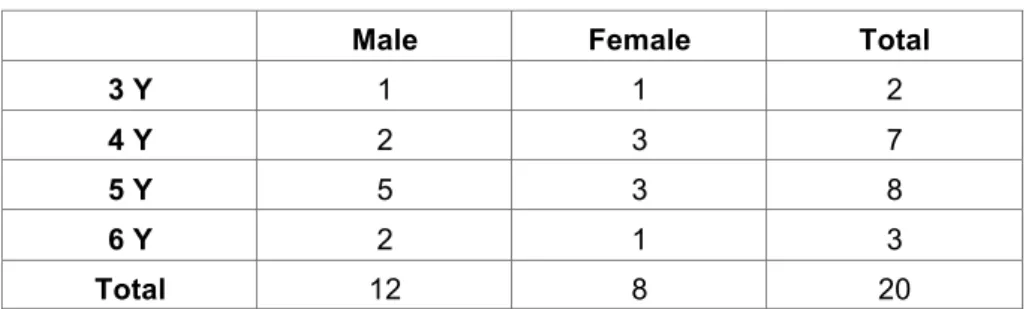
The group of children included eight girls and 12 boys between 3 and 6 years old. Many of the children came from a Romani community. Some children had experienced parental imprisonment, drug related violence in their homes, unemployment of both parents and low socio-economic status. Four of the 20 children were identified as having Special Educational Needs and one of them was being accompanied by the Children and Youth at Risk Protection Commission. The MEM educational practices include a moment in the day when conflicts and problems between the group are discussed by all children and adults. This “diary” moment of the daily routine allowed for many of the interaction issues between the children to be used for socio-emotional development. By the end of the practicum, children themselves were capable of stating the problem that happened during the day and discuss possible solutions. Adults would contribute to the solutions to deepen the contributions to socio-emotional development.
2
EARLY CHILDHOOD EDUCATION AND PEER INTERACTIONS
Studies grounded in a Vygotskian framework have supported the view that cognitive development depends on active, social interaction, including reasoning and explanation, with a more competent partner who has a different subjective understanding of the task [10]. The Curriculum Guidelines for Early Childhood Education in Portugal [1] acknowledge this by suggesting mixed ages groups and stating that interactions between children with different development levels and diverse knowledge and culture promotes learning and development. The group is crucial for learning since it is the immediate context for social interaction and relationships between children and with adults. To engage children in meaningful interactions, it's important that the teacher organizes for small group activities where children need to confront their perspectives and collaborate in solving problems presented by a shared task or goal [1]. This means that the educational environment is seen as the basis of the curricular development by the teacher. The educational environment includes, for the Portuguese curriculum guidelines: the space of the classroom, the group and the interactions, the time, relationships with the family and the community, and the school beyond the classroom. Through activities, tasks and projects, but also by deciding the daily routine, the classroom arrangement, and the groupings, the teacher can promote collaboration between children. The role adults play in showing meanings by interacting with children is also important.
According to Rubtsov [11], Vygostky considered the shared activity as an important sociocultural tool of development, as a fundamental way of learning. Working in pairs or small groups supports children in their literacies development but also in learning collaboration skills. As children develop, they gradually internalize processes they use in social contexts and begin to use them independently.
Maset [12] states that “Detrás de una estructura de aprendizaje cooperativo, en cambio, existe la convicción de que los alumnos no sólo aprenden porque el professor les enseña, sino que también aprendem gracias a la interacción que se establece entre ellos, enseñándose unos a otros, puesto que la cooperación entre iguales que aprenden juntos, en una relación más simétrica, es tan importante como la intervención más asométrica entre éstos y el profesor que les enseña”.
The vygotskyan emphasis on the social origins of mental functioning [13] have been accompanied by a growing interest in the process of learning in social activity which emphasise the social and contextual nature of learning [14] [15]. Early Childhood Education and ICT have both been studied as social settings in which such learning can take place.
Thompson [16] highlights the wealth of experimental studies on computer-based interactions which appeared during the 1980s and 1990s and that used different theoretical backgrounds and methodological approaches. Of particular relevance for the sociocultural conceptual framework is the approach to talk and social interaction as a social mode of thinking [17] [18] [19] [20]. Talk is analysed in terms of its use by students to think together. Authors have defined types of talk in terms of fundamental orientations that are possible among students. Significant types of talk when students work together are offered by Scrimshaw and Perkins [21] and Wegerif and Scrimshaw [20]. In Portugal, Amante [22] has used this framework to study interactions in an Early Childhood Education setting.
Cumulative talk is where students construct, uncritically, a common knowledge by accumulation. Speakers define themselves through identification with other group member. Cumulative talk maintains group cohesion, but does not produce critically grounded knowledge;
Exploratory talk is where students engage critically but constructively with others’ ideas. Suggestions are made for joint understanding, challenges are justified, and alternative hypotheses offered. This type of talk is characterised as the embodiment of critical thinking;
Disputational talk is characterised by disagreement and individualised decision-making. Speakers define themselves through their differences with each other. There are few attempts to pool resources or to offer constructive criticisms;
Tutorial talk is where one student takes on the role of the tutor and directs or corrects the work of the other. Unlike the earlier modes of thinking, the relationship between students is not seen as an equal one, because one of them is mutually accepted as an expert relative to the other [21].
3
METHODOLOGY
The study was developed during the practicum as a teacher-research project. The researcher worked with the children throughout several months. The observations and interviews were carried out as part of the daily life of the classroom. Children were informed about the study and asked to contribute. The following research question guided the procedures: what differences can be found in terms of interactions between same age and mixed age groups of children using the computer area? The study was qualitative. It analysed the interactions between the children during the normal use of the computer as a free choice activity, confronting situations between peers of the same age and situations between peers of different ages. The focus of the analysis was the collaborative interactions. The observations and interviews were carried out during the last four weeks of the
practicum.
In the daily routine, children could choose the computer, amongst other interest areas, and work for around an hour, in pairs. In the computer, children used mainly educational games. Baseline data on children’s basic computer proficiency was collected using the Individualized Computer Proficiency Checklist (ICPC) by Hyun [23]. During four weeks, the interactions between the pairs were audio recorded. The recorded interactions were analysed using the types of talk [20] [21]: cumulative talk, exploratory talk, disputational talk, and tutorial talk. Field notes and informal interviews to the children were also used to collect data.
Parts of the data collection involved the whole group of children (=20).
Table 1: Distribution of children by age and sex – whole group.
Male Female Total
3 Y 1 1 2
4 Y 2 3 7
5 Y 5 3 8
6 Y 2 1 3
Total 12 8 20
Only 11 children participated in the observations in the computer area. Seven different pairs of children's interactions were analysed. The children chose the computer for free play autonomously. Hence, the participants in the study were not chosen. The pairings were also not decided or manipulated by the researcher. One child (male, 4 years old) is part of three different pairs, and another child (male, 5 years old) is part of two pairs.
Table 2: Constitution of pairs (sex and age) observed during computer use.
Pair 1 Pair 2 Pair 3 Pair 4 Pair 5 Pair 6 Pair 7
3 Y M
4 Y M M M M M M M
5 Y M F M
6 Y M M F
Children chose what they played with in the computer. Preference was given to a educational CD-ROM with several educational games. Eight observations/days were included in the study.
Data analysis included the transcript of the audio recordings for content analysis using the types of talk as categories.
4
RESULTS
4.1 Children, computers and proficiency
A short individual interview with each child informed about their preferences regarding interest areas. Sixteen children were interviewed about their two favourite places to play: nine chose the house as their favourite, six votes on constructions and four on the reading and writing, only one vote on arts and zero on mathematics. Observations during the practicum registered a low interest from younger children (3 and 4 years old) on the computer. Also, boys more than girls chose the computer to play. Regarding ICT in the home context, individual interviews with each child showed that 5/16 didn't have neither a computer nor tablets or game consoles. On the other hand, 4/16 children reported having a computer at home, 4/16 talked about their tables or game consoles and 3/16 remembered having both at home.
From eleven children included in the observation part of the study, two didn't have computer or other ICT in their home. The others reported playing with the ICT, except one “not allowed to touch the computer”. Five of them further report playing on their own. Hyun's Individualized Computer Proficiency Checklist (ICPC) [23] was adapted to evaluate children's proficiency with the computer at the ECE center. Children were fluent in interacting with the specific software (educational games) and in using the mouse as an input device. They were able to read and use symbols in the screen for guidance, choose and click on buttons and close programs and start new ones. Outside the specific interface of the educational CD-ROM, children's proficiency was not as high. Children weren't allowed to turn the computer on and off so that skill was not developed. Younger children still needed help to change the CD. The use of the scrollbar, the keyboard, and the closing and/or resizing of windows was not observed. In this case, the rules of the ECE center regarding the computer and the restricted use of the computer – mainly with educational games – didn't support the development of some of the
skills included in the checklist. But the shown proficiency was enough to allow the exploration of the chosen CD-ROM during the sessions.
4.2 Interactions between same and mixed age groups
Seven different pairs of children's interactions were analysed. A short description of each pair based on the observations and field notes follows.
Par 1 was two 6 years old boys. No conflicts were observed and they worked well together. Both children showed respect for each other and they helped the other when necessary.
Pair 2 was also two boys but 4 years old. Some misunderstandings happened during their interactions as one child tried to impose himself often. He wanted to be the one who knew the answers and didn't react well when he had some difficulties. The other child remained calm and helped when possible. Pair 3 was two boys but with mixed ages: 4 and 5 years old. Their interactions were very positive, helping each other by pointing to the screen or speaking but respecting the other. In one of the sessions, they decided on a game they both knew how to play so they could see who won more times. Pair 4 was two boys, both 4 years old. No conflicts were observed and both children showed interest in playing.
Pair 5 was a 4 years old boy and a 5 years old girl. This was the least successful pair: after many disagreements, the girl gave up playing in the computer. Both wanted to play all the time not being able to take turns.
Pair 6 was a 5 years old boy and a 6 years old girl. This pair established rules before playing: agreed on what each would play and that losing meant it was the other's turn to play. In one session, one of the children chose a puzzle, where you can't loose. But he understood he was paying for a long time and willingly stopped playing so she could.
Pair 7 was two boys, 3 and 4 years old. The younger child seldom chose the computer but the two worked well together and the older one helped the younger one.
Using the four types of talk, the pairs' interactions were analysed. More than a third of the interactions were cumulative talk (35.7%), followed by exploratory talk (28.6%), tutorial talk (21.4%) and disputational talk (14.3%). This is coherent with the results from Amante [22]. Only two pairs showed a single type of talk: this was pair 7 the most asymmetrical one, and pair 5 that was dissolved during the session. Five groups showed interactions of support, helping the other to play the games without asserting superiority.
Table 3: Distribution of types of talk between same and mixed age groups (percentages).
Cumulative Tutorial Exploratory Disputational Total
Same age 35.7 12.5 35.7 12.5 100
Mixed age 33.4 33.4 16.6 16.6 100
Total 35.7 21.4 28.6 14.3 100
Comparing same and mixed age pairs, we observe that cumulative talk is the more present interaction (over one third), but in same age pairs this is followed by exploratory talk (35.7%) whereas in the mixed age pairs it is tutorial talk that has the second largest percentage (33.4%). The pairs formed by the children were very asymmetrical in terms of age and computer proficiency. This lead to the more tutorial interactions, where one children showed the other or directed him/her on how to play. Disputational talk occurred in pairs that were registered as not being able to work well together.
5
CONCLUSIONS
Research about media and technologies in Early Childhood Education has stressed the importance of considering the ways in which children learn from other kinds of experiences and activities that they encounter in their early years, supporting the case for playful, positive experiences, with social meaning [22] [24] [25] [26] [27] [28]. Free choice activities are an important context for computer and ICT use so that children approach them as open ended activities. The results show that collaboration is present during the use of a computer area in Early Childhood Education.
The free choice of the children means the adults can only suggest pairing suited to specific interactions between the children. Children themselves choose the pairs and develop the rules and forms of interaction between them. The dimensions of Early Childhood Education Pedagogy include the learning environment or “backstage” (physical space and resources, time, groupings, social interactions and relationships), together with the tasks or activities presented and directed by the teacher (instruction), and the interactions between adult and child focusing the child’s activity, during play, for example [1] [5] [29]. Accordingly, the setting up of a computer area is not just a question of physical space and resources. Ways of managing interactions must be built into that interest area, including interactions with adults. It is widely acknowledged that children’s experiences when playing and learning with technologies can contribute to their learning, particularly when they are supported by adults who monitor and support activities, provide encouragement and praise for achievements, and assist children in managing their emotions [24].
Another way to support children in more exploratory talk interactions could be by discussing the way the older children can help the younger ones beyond directing or correcting their work. In a study with an open ended software (MyPaint), the learning environment was important in creating the conditions for children’s explorations and learning: collaboration was promoted by creating a secure environment where everyone knew their turn would come and where interactions about sharing and helping were promoted [30]. In the educational games children played there was a right answer so help meant directing to the right answer. In a collaborative task, everyone should have something to learn but also to teach. This supports the more competent children (or ‘expert’ partners) to adjust the level of support or guidance required (scaffolding) to fit the ‘novice’s’ zone of proximal development, facilitating the inter-subjectivity interactions [13]. Also important for collaboration is the sense of community that emerges within the overlapping experiences. Talking about what is done, being able to share something of value for others is important and not connected to the specific tasks. The “diary” moment in the daily routine could be a way to promote collaboration and to establish mutuality. This dimension of collaboration, a sharp sense of jointly owning a common and distinctive set of experiences, is an important one that teachers should promote in large and small group activities.
REFERENCES
[1] Ministério da Educação. (1997). Orientações curriculares para a educação pré-escolar. Lisboa: Ministério da Educação.
[2] FFMS (2014). Taxa real de escolarização em Portugal. Retrieved from http://www.pordata.pt/ [3] OECD Directorate for Education. (2006). Starting strong II: early childhood and care. Paris:
OECD.
[4] FFMS (2014). Estabelecimentos nos ensinos pré-escolar, básico e secundário privado: total e por nível de ensino – Portugal. Retrieved from http://www.pordata.pt/
[5] Figueiredo, M. P. (2013). Práticas de produção de conhecimento: a investigação na formação
inicial de educadores de infância (PhD Thesis in Education – Didactics and Curriculum
Development). Universidade de Aveiro, Aveiro.
[6] Cochran-Smith, M. (2002). What a Difference a Definition Makes: Highly Qualified Teachers, Scientific Research, and Teacher Education. Journal of Teacher Education, 53(3), 187–189. [7] Zeichner, K. M. (2012). Two visions of teaching and teacher education for the twenty first
century. North Dartmouth: Social Policy, Education and Curriculum Research Unit. Centre for
Policy Analyses/UMass Dartmouth. Retrieved from http://www.umassd.edu/seppce/centers/cfpa/
[8] Figueiredo, A. C. (2014). A relevância das interações na interseção do trabalho investigativo e
da prática de ensino supervisionada na educação pré-escolar e no 1.ª ciclo do ensino básico
(Final Report of the Masters Degree in Early Childhood and Primary Education). Escola Superior de Educação de Viseu, Instituto Politécnico de Viseu, Viseu.
[9] Folque, M. A. (2012). O aprender a aprender no pré-escolar. O modelo pedagógico do
movimento da escola moderna. Lisboa: Fundação Calouste Gulbenkian.
[10] Fawcett, L. M., & Garton, A. F. (2005). The effect of peer collaboration on children’s problem-solving ability. British Journal of Educational Psychology, 75(2), 157–169.
[11] Rubtsov, V. (2009). A prática da aprendizagem partilhada. Infância na Europa, Número
especial “Redescobrir Vigotsky,” 13–14.
[12] Maset, P. P. (2005). El cómo, el porqué y el para qué del aprendizaje cooperativo. Cuadernos
de Pedagogía, 345, 50–54.
[13] Vygostky, L. S. (1978). Mind in society: the development of higher psychological processes. Cambridge, Massachusetts: Harvard University Press.
[14] Brown, J. S., Collins, A., & Duguid, P. (1989). Situated cognition and the culture of learning.
Educational Researcher, 18(1), 32–42.
[15] Lave, J., & Wenger, E. (1991). Situated learning - legitimate peripheral participation. Cambridge: Cambridge University Press.
[16] Thompson, J. (2004, December). Cooperative learning in computer supported classes. Paper presented at the AARE Conference, Melbourne.
[17] Dawes, L., Fisher, E., & Mercer, N. (1992). The quality of talk at the computer. Language and
Learning, October, 22–25.
[18] Resnick, L. B. (1991). Shared Cognition: Thinking As Social Practice. In L. B. Resnick, L. M. Levine, & S. D. Teasley (Eds.), Perspectives on Socially Shared Cognition (pp. 1–20). Washington, D.C: American Psychological Association.
[19] Wegerif, R., & Mercer, N. (1997). A Dialogical Framework for Researching Peer Talk. In R. Wegerif & P. Scrimshaw (Eds.), Computers and Talk in the Primary Classroom (pp. 49–64). Clevedon: Multilingual Matters.
[20] Wegerif, R., & Scrimshaw, P. (1997). Introduction: Computers, Talk and Learning. In R. Wegerif & P. Scrimshaw (Eds.), Computers and Talk in the Primary Classroom (pp. 1–12). Clevedon: Multilingual Matters.
[21] Scrimshaw, P., & Perkings, G. (1997). Tinker Town: Working Together. In R. Wegerif & P. Scrimshaw (Eds.), Computers and Talk in the Primary Classroom (pp. 113–132). Clevedon: Multilingual Matters.
[22] Amante, L. (2004). Interação social e utilização do computador no pré-escolar. Revista
Portuguesa de Pedagogia, 38(1, 2, 3), 425–450.
[23] Hyun, E. (2005). A study of 5- to 6-years-old children ́s peer dynamics and dialectical learning in a computer-based technology-rich classroom environment. Computers & Education, 44, 69–91. [24] Plowman, L., & McPake, J. (2013). Seven myths about young children and technology.
Childhood Education, 89(1), 27–33.
[25] Amante, L. (2007). As TIC na Escola e no Jardim de Infância: motivos e factores para a sua integração. Sísifo - Revista de Ciências de Educação, 3, 51–64.
[26] Figueiredo, M. P., Gonçalves, N. A. F., Ferreira, A. P., Henriques, A., & Semedo, M. (2007). Para além do tacto, um projecto de ComTacto: experiência de utilização de videoconferências em educação pré-escolar. In P. Pequito & A. Pinheiro (Eds.), (pp. 249–256). Vila Nova de Gaia: Gailivro.
[27] Folque, M. (2011). Educação Infantil, tecnologias e cultura. Pátio Educação Infantil, 9(28), 8-11. [28] Howard, J., Miles, G. E., & Rees-Davies, L. (2012). Computer use within a play-based early
years curriculum. International Journal of Early Years Education, 20(2), 175–189.
[29] Siraj-Blatchford, I. (2010). A focus on pedagogy. Case studies of effective practice. In K. Sylva, E. Melhuish, P. Sammons, I. Siraj-Blatchford, & B. Taggart (Eds.), Early childhood matters.
Evidence from the Effective Pre-school and Primary education Project (pp. 149–165). Oxon:
Routledge.
[30] Figueiredo, M. P., Gonçalves, N. A. F., Lopes, M. H., & Barreiros, M. de F. (2014). “How do I blur the pencil?” Children’s learning about drawing and collaboration using MyPaint. Sensos-E,
1(1). Retrieved from http://sensos-e.ese.ipp.pt/?p=5495