MIMD
2020
Alternative Systems of Tobacco
Consumption - Oral Manifestations/
Cessation Effectiveness
ANA RITA QUEIRÓS MOREIRA
MESTRADO INTEGRADO
MEDICINA DENTÁRIA
II
Alternative Systems of Tobacco
Consumption - Oral Manifestations /
Cessation Effectiveness
Monografia de Revisão Bibliográfica
MESTRADO INTEGRADO EM MEDICINA DENTÁRIA
FACULDADE DE MEDICINA DENTÁRIA DA UNIVERSIDADE DO
PORTO
AUTOR: Ana Rita Queirós Moreira
Aluna do 5º ano do Mestrado Integrado em Medicina Dentária da FMDUP
ORIENTADOR: Doutora Marta dos Santos Resende
Professora Convidada da FMDUP
COORIENTADOR: Doutora Otília Adelina Pereira Lopes
Professora Auxiliar Convidada da FMDUP
III
“The only way to do great work is to love what you do. If
you haven’t found it yet, keep looking. Don’t settle.”
IV
Com a realização desta Monografia foi possível verificar o apoio, incentivo
e ajuda de várias pessoas, sem as quais a realização dos objetivos propostos
da mesma jamais seria possível.
Primeiramente, gostaria de deixar o meu agradecimento à Professora Marta
dos Santos Resende, pela sua orientação, apoio, disponibilidade, pelas suas
sugestões e opiniões, e acima de tudo pela total colaboração demonstrada
na realização desta monografia.
À Professora Otília Adelina Pereira Lopes, pela sua coorientação
verdadeiramente importante para a conclusão desta monografia.
Às minhas amigas Ana Isabel Moreira, Sónia Ferreira, Madalena Almeida
e Silva, Mónica Costa e também a outros amigos pela disponibilidade ao
longo desta fase e pelo companheirismo nos momentos adversos que foram
ocorrendo.
V
Ao Renato Oliveira, deixo um agradecimento especial pela forma
excecional como prestou apoio ao longo de todas as jornadas e no
encerramento de mais uma etapa na minha vida. Reconheço também, a
disposição e companheirismo demonstrados, assim como a capacidade
impressionante de me motivar e acima de tudo de me despoletar um lado
mais positivo nas situações mais difíceis que surgem ao longo de todas as
etapas.
Por último, e porque são o meu pilar, a minha força e o meu modelo de
coragem e perseverança, quero agradecer aos meus pais todo o apoio e
incentivo incondicional que demonstraram não só nesta etapa da minha
vida, mas em todas as que passei e as que irei enfrentar.
Assim, e devido a situação que vivemos atualmente, deparei-me que para
conseguir alcançar todos os objetivos e etapas a que me proponho, no final
o que torna toda a caminhada especial são as relações criadas com as
pessoas que se cruzam ao longo da mesma. Com isto, apercebi-me que
todos os familiares, colegas, funcionários e professores que se cruzaram
comigo ao longo destes anos, acabaram por demonstrar uma grande
influência no meu percurso.
A todas estas pessoas aqui referidas deixo o meu agradecimento, serei
eternamente grata.
VI
RESUMO
Introdução:
O tabaco constitui um grave problema de saúde pública sendo considerado uma das principais causas de morte e reconhecido como um fator de risco para várias patologias. A sua forma mais habitual de consumo é o cigarro. No entanto, nos últimos anos começou a existir um aumento no consumo de sistemas alternativos ao tabaco convencional como os sistemas eletrônicos de entrega de nicotina (ENDS) e os produtos de tabaco aquecido (HTPs).Objetivos:
São objetivos principais desta monografia:1. Identificar as manifestações orais destas formas alternativas de consumo de tabaco;
2. Averiguar a eficácia das mesmas no processo de cessação tabágica.
Materiais e Métodos:
Efetuou-se uma pesquisa nas principais bases de dados e foram selecionados todos os tipos de estudos e os artigos que pela leitura do título, abstract e texto integral que abordassem a temática estudada.Resultados:
Os sistemas alternativos para o consumo de tabaco foram comparados, em vários estudos com os cigarros convencionais, em relação às manifestações que estes induzem na cavidade oral e aos efeitos que produzem na cessação do tabaco. Assim, os resultados foram agrupados por categorias e foco e são apresentados na forma de tabelas, Tabela I e Tabela II, abrangendo as seguintes categorias: Tabela I- Sistemas alternativos de consumo de tabaco e manifestações orais; Tabela II- Sistemas alternativos de consumo de tabaco e eficácia da cessação.Conclusão:
Concluiu-se, que nos vários sistemas alternativos ao consumo de tabaco existem várias manifestações orais associadas e que estes apresentam diferentes aspetos positivos e negativos em relação à eficácia da cessação do tabágica.PALAVRAS-CHAVE
Cigarros eletrônicos, e-cigarros, e-líquidos, sistemas de distribuição eletrônica de nicotina, tabaco aquecido, sistema vaping, caneta vape, JUUL, saúde oral, cavidade oral, patologia dentária, periodontologia, Medicina Dentária, Medicina oral, patologia oral, eficácia da cessação.
VII
ABSTRACT
Background:
Tobacco is a serious public health problem and is considered one of the main causes of death and recognized as a risk factor for several pathologies. Their most common form of consumption is cigarettes. However, in recent years there has been an increase in the consumption of alternative systems to conventional tobacco such as electronic nicotine delivery systems (ENDS) and heated tobacco products (HTPs).Aim:
The main objectives of this monograph are:1. Identify the oral manifestations of these alternative forms of tobacco consumption.
2. To verify their effectiveness in the smoking cessation process.
Methods:
A search was carried out in the main databases and all types of studies and articles were selected which by reading the title, abstract, and full text that addressed the subject studied.Results:
Alternative systems for tobacco consumption have been compared, in several studies with conventional cigarettes, concerning the manifestations in the oral cavity and the effects they produce on smoking cessation. Therefore, the results were grouped by categories and focus, and are presented in the form of tables, table I and table II, covering the following categories: Table I- Alternative tobacco consumption systems and oral manifestations; Table II- Alternative tobacco consumption systems and cessation effectiveness.Conclusion:
It was concluded that in the various alternative systems to tobacco consumption, there are several associated oral manifestations and that they present different negative and positive aspects about the effectiveness of smoking cessation.KEYWORDS
Electronic cigarettes, e-cigarettes, e-liquids, electronic nicotine delivery systems, heated tobacco, vaping system, vape pen, JUUL, oral health, oral cavity, dental disease, periodontology, dentistry, oral medicine, oral pathology, cessation effectiveness.
VIII
ABBREVIATIONS
CA Clinical Attachment
CBD Cannabidiol
CS Cigarette Smoke
ENDS Electronic nicotine delivery systems
HPHC Harmful and Potentially Harmful Constituents
HTPs Heated Tobacco Products
mTHS Menthol Tobacco Heating System
mCC Menthol Conventional Cigarettes
PI Plaque Index
PD Probing Depth
IX
LIST OF TABLES
TABLE I- ALTERNATIVE SYSTEMS OF TOBACCO CONSUMPTION AND ORAL
MANIFESTATIONS. _________________________________________________ 12
TABLE II- ALTERNATIVE SYSTEMS OF TOBACCO CONSUMPTION AND CESSATION
X
LIST OF FIGURES
FIGURE 1- 1ST GENERATION (ELECTRONIC CIGARETTES, “E-CIGARETTES” AND
“CIGALIKES”).SOURCE:E-CIGARETTE, OR VAPING,PRODUCTS VISUAL DICTIONARY
(WITHOUT AUTHOR'S AUTHORIZATION). _________________________________ 2
FIGURE 2- 2ND GENERATION (“VAPING”, “WATERPIPE” AND “SHISHA”). SOURCE:
E-CIGARETTE, OR VAPING, PRODUCTS VISUAL DICTIONARY (WITHOUT AUTHOR'S
AUTHORIZATION). __________________________________________________ 3
FIGURE 3-3RD GENERATION (“MODS” OR MODIFIABLE DEVICES).SOURCE:E-CIGARETTE,
OR VAPING,PRODUCTS VISUAL DICTIONARY (WITHOUT AUTHOR'S AUTHORIZATION).
________________________________________________________________ 4
FIGURE 4- 4TH GENERATION (“POD-MODS”, “JUUL”). SOURCE: E-CIGARETTE, OR
VAPING,PRODUCTS VISUAL DICTIONARY (WITHOUT AUTHOR'S AUTHORIZATION). 4
FIGURE 5- VAPORIZERS. SOURCE: E-CIGARETTE, OR VAPING, PRODUCTS VISUAL
DICTIONARY (WITHOUT AUTHOR'S AUTHORIZATION). _______________________ 5
FIGURE 6- HEATED TOBACCO PRODUCTS (HTPS). SOURCE: SERVICES USDOHAH.
XI
INDEX
RESUMO ___________________________________________________________ VI PALAVRAS-CHAVE _________________________________________________ VI ABSTRACT _________________________________________________________ VII KEYWORDS ________________________________________________________ VII LIST OF TABLES ____________________________________________________ IX LIST OF FIGURES ____________________________________________________ X INTRODUCTION _____________________________________________________ 1 MATERIALS AND METHODS __________________________________________ 7 RESULTS ____________________________________________________________ 8 1. ORAL MANIFESTATIONS ___________________________________________ 9Electronic cigarette _________________________________________________ 9 Waterpipe and Vaping System ________________________________________ 9 Mods and Pod-Mods (JUUL System) _________________________________ 10 Heated Tobacco Products ___________________________________________ 10 2. CESSATION EFFECTIVENESS _______________________________________ 11
DISCUSSION ________________________________________________________ 14 CONCLUSION AND FUTURE PERSPECTIVES ___________________________ 16 BIBLIOGRAPHIC REFERENCES _______________________________________ 17 SUPPLEMENTAL DATA ______________________________________________ 21
1
INTRODUCTION
Tobacco constitutes a serious public health problem and is recognized as a risk factor for several pathologies such as lung cancer, cardiovascular diseases, stroke, and chronic lung diseases. It is also recognized as a risk factor for several oral pathologies such as periodontal / peri-implant diseases and dental caries and is considered a major cause of death. (1-4)
In Portugal, the prevalence of tobacco in 2019 does not show any relevant changes, once the percentage is around 20%, which is similar to other developed countries. However, it was found that the consumption of tobacco in 2015, in the age group from 25 to 34 years old, the prevalence of consumers rose to values, which in males are around 50% and in females 25%. (5)
There are several forms of tobacco consumption, but the most common is a cigarette, which in its composition has more than 4000 harmful substances to health. (6) In 2003, new tobacco consumption alternatives began to emerge to reduce the risk to health and reduce other unpleasant effects, such as the smell associated with cigarette consumption, but they were only officially marketed in 2007. (7)
There are several types of alternative systems to conventional tobacco, Electronic nicotine delivery systems (ENDS) (8), which can be: 1st generation, (electronic cigarettes, “e-cigarettes” and “cigalikes”); 2nd generation (“Vaping”, “Waterpipe” and “Shisha”); 3rd generation (“Mods” or modifiable devices); and 4th generation (“Pod-Mods”, “JUUL” and vaporizers). (9) All of these systems use an “electronic liquid”, known as “e-liquid” that can contain nicotine, in addition to other varied compositions and other ingredients. (10) However, recently, a new type of system has emerged which is called heated tobacco cigarettes or Heated Tobacco Products (HTPs).
Therefore, the first generation of ENDS, electronic cigarettes, were designed to imitate the appearance of combustible cigarettes and are thus called “cigalikes". They are devices that can be rechargeable or not, and can be discarded when the charge or the “e-liquid” ends, as shown in Figure 1. These devices are available in various concentrations of nicotine and with different aromas. (11)
2
Figure 1- 1st Generation (electronic cigarettes, “e-cigarettes” and “cigalikes”). Source:
E-Cigarette, or Vaping, Products Visual Dictionary (Without author's authorization).
Subsequently, electronic cigarettes quickly evolved towards more powerful devices, 2nd generation devices that produce more aerosols, the “Vaping”, “Waterpipe”, “e-hookah” and “Shisha” devices. (12) These electronic cigarette devices are larger and generally do not resemble a cigarette. This is made up with a medium battery (rechargeable), that are also called "tank-style" electronic cigarettes and may look like pens, small screwdrivers or the tip of a pipe of water, as we can see in Figure 2. This type of product was designed to be used several times, and the “e-liquid” comes in refillable cartridges which the substances can include nicotine, cannabis (THC- Tetrahydrocannabinol, CBD- Cannabidiol), flavourings, solvents or other substances and the cartridge is connected to a pen that contains the battery. (10, 11)
3
Figure 2- 2nd Generation (“Vaping”, “Waterpipe” and “Shisha”). Source: E-Cigarette,
or Vaping, Products Visual Dictionary (Without author's authorization).
With technological advances, electronic cigarettes have evolved according to the needs of consumers, leading to the appearance of 3rd generation devices. These devices are larger and allow more personal and personalized modifications by blending various solutions of e-liquids and, therefore, are called "personalized vapours". These come with a variety of different cartridge and atomizer options and are known as “Mods”, due to their ability to be modifiable, as shown in Figure 3. Subsequently, they also evolved into 4th generation devices and a new system was created in this way, the “Pod-Mods”. Which is a common electronic cigarette product “Pod”, pre-rechargeable or rechargeable with a known modifiable system (“Mod”), commercially for “JUUL” and “Suorin”, as we can see in Figure 4. This “JUUL” system is an electronic cigarette that looks like a USB drive and today is increasingly being used by young people and young adults. (13, 14) They generally use nicotine salts instead of the free base nicotine used in most other products and which makes it possible to inhale particularly higher levels of nicotine more easily and with less throat irritation than freebase nicotine. (10, 11)
4
Figure 3- 3rd Generation (“Mods” or modifiable devices). Source: E-Cigarette, or
Vaping, Products Visual Dictionary (Without author's authorization).
Figure 4- 4th generation (“Pod-Mods”, “JUUL”). Source: E-Cigarette, or Vaping,
5 There are also Vaporizers, which are inhalation devices used to release active substances from organic or inorganic materials in the form of an aerosol through the application of non-combustible heat and can be used to aerosolize: dry herbs; wax; oils; and also to heat marijuana to a point where its active ingredients (for example, THC) are released in aerosols and inhaled, as noted in Figure 5. (10)
Figure 5- Vaporizers. Source: E-Cigarette, or Vaping, Products Visual Dictionary
(Without author's authorization).
Currently, there are Heated Tobacco Products (HTPs) that are electronic devices with a small cigarette containing tobacco, which produces aerosols with nicotine and other chemicals that are inhaled. This type of tobacco mimics the behaviour of conventional smoking and some use cigarettes specially designed to contain tobacco for heating. However, this system contains nicotine, which causes addiction to its users and contains additives, which are not tobacco, and which are often flavoured, as we can see in Figure 6. In Portugal, this product is marketed under the brand “iQOS”. (15) This product, like other alternative systems, aims to reduce the health risk compared to combustible tobacco products, conventional cigarettes, as this heated tobacco system showed greater cytotoxicity than electronic cigarettes, but less cytotoxicity than combustible cigarettes. (16)
6
Figure 6- Heated Tobacco Products (HTPs).
Source: Services USDoHaH. Heated Tobacco Products. (Without author's authorization).
All these systems tend to be more advantageous compared to the fuel cigarette, as there is less exposure to toxic chemical substances, some of the systems have a lower combustion temperature, that’s why they do not leave teeth with altered colour, there is no intense smell, it is less pollutant and better tolerated by passive smokers. However, they contain substances that when inhaled can also cause changes in the oral cavity, due to their compositions or the interactions they cause. Thus, it is important to identify these substances and understand what their effects are and what they originate to alert their consumers since these devices are used as substitutes for conventional cigarettes. Nowadays, the electronic cigarette has become the most used device. This trend is reflected in adolescents and young adults, many of whom have limited or no history of using conventional cigarettes. (17)
Another arguments mentioned for the initiative to consume these systems is that they can function as an important step in the process of smoking cessation of conventional tobacco, which can subsequently lead to the total cessation of any form of tobacco consumption. Therefore, it is important to discover what scientific evidence supports the effectiveness of alternative smoking systems in the smoking cessation process.
The main objectives of this monograph are to identify the oral manifestations of these alternative forms of tobacco consumption and to ascertain the effectiveness of the same in the smoking cessation process.
7
MATERIALS AND METHODS
In this monograph, a bibliographic search was carried out in the PubMed, Scopus, and Web of Science databases with the following Boolean Equation: (electronic cigarettes OR e-cigarettes OR e-liquids OR electronic nicotine delivery systems OR heated tobacco OR vaping system OR vape pen OR JUUL) and (oral health OR oral cavity OR dental health OR dental disease OR periodontology OR dentistry OR oral medicine OR oral pathology OR cessation effectiveness).
All types of studies and articles that by reading the title, abstract and full-text address the studied theme were included, and only articles without access to full text or with a language other than English, Portuguese or Spanish were excluded.
Using the reference list of selected articles, an additional manual search was made in an attempt to find other useful and eligible documents.
8
RESULTS
In the elaboration of the results, after searching the aforementioned databases, a total of 277 articles were found and after excluding the 181 repeated articles in the databases, 58 articles were included, since they address the studied theme, present free full text, and articles of systematic and bibliographic review. We excluded 131 articles, due the fact that they have a different language other than English, Portuguese and Spanish, and for not presenting free full text and also after reading the title do not address the topic under study.
Of these 58 included articles, only 26 were used for the elaboration of the results after reading them in full and because the remaining 32 excluded articles had no additional information, or the information was repeated and we decided to choose the most recent reference. These articles are dated from 2011 to 2020. Therefore, the results were grouped by categories and focus, and are presented in the form of tables, table I and table II, covering the following categories: Table I- Alternative Systems of Tobacco consumption and oral manifestations; Table II- Alternative Systems of Tobacco consumption and cessation effectiveness.
The alternative systems for tobacco consumption have been compared, in several studies with applicable cigarettes, regarding their manifestations in the oral cavity and the effects it produces on smoking cessation.
9
1. Oral Manifestations
.
Electronic cigarette
In the electronic cigarette, it was found that oral symptoms were reduced, had significantly fewer adverse complaints and more positive symptoms compared to users of conventional cigarettes. However, this system had greater oral symptoms than non-smokers. (18)
Several oral manifestations have been presented to users of electronic cigarettes or related to direct exposure to e-liquids.
This e-liquid in these devices can cause various pathologies, as well as nicotinic stomatitis, and can also interact with the hard tissues of the tooth and negatively affect them, thus presenting a potential risk to oral health. (19, 20) Other articles reveal that vapour of the electronic cigarette comes into contact with the oral cavity, including microorganisms, and can cause changes in the epithelium or the other constituents, which can be associated with increased carcinogenesis, cytotoxicity, changes in the periodontal ligament, susceptibility to Oral Candidiasis, among other manifestations shown in Table I. (2, 21, 22)
Waterpipe and Vaping System
The oral cavity is one of the first places exposed to the constituents of this 2nd generation device. Similar to the negative biological effects of conventional cigarettes on the oral mucosa, this device is also associated with several conditions within the oral cavity and the oral mucosa of users of this device is more susceptible to malignant changes that vary in different areas of the oral cavity. (4, 23)
Users of the Vaping System are associated with worse periodontal health compared to non-smokers, they also have a significant increase in gum inflammation. Therefore, it was found that this device negatively influences periodontal gingival health and implant success. (24)
Another study showed that there is a greater loss of Plaque Index (PI), Probing Depth (PD), and Clinical Attachment (CA) concerning non-smokers, and to lost teeth, it was found that users of these devices have a higher number than users of conventional cigarettes. (25)
10 Thus, it was found that this device can cause several negative manifestations in the oral cavity, as described in Table I, being one of the main risk factors for the development of oral cancer, one of the 10 main cancers in the world. (26)
Mods and Pod-Mods (JUUL System)
These 3rd and 4th generation devices have higher viscosity in their liquids, and the aerosols released are more likely to adhere to dental surfaces and soft tissues, facilitating bacterial adhesion, oral infections, dental caries, changes in the oral mucosa, among other pathologies described in Table I. (27)
Heated Tobacco Products
Few studies relate these HTPs devices, which can also be called “heat-not-burn” products, with the manifestations in the oral cavity.
These products reduce the majority of harmful and potentially harmful constituents by more than 90%, and a study has shown that compared to Cigarette Smoke (CS) these devices affect the tooth tissues in a minor way as described in Table I. (28)
Another study related these devices to conventional cigarettes and possible oral changes and demonstrated that the changes existing in HTP users were not significant about CS. Most importantly, it demonstrated that acute exposure to aerosols from these products did not cause high toxicity or adaptive responses in oral tissues when compared to exposure to CS. (29)
This recent product focuses on heating tobacco, not the combustion of tobacco, so it should reduce the health risks associated with combustion. (30)
11
2. Cessation Effectiveness
The main feature of ENDS aim to address the behavioural and sensory aspects of smoking. These devices mimic many of the crucial conditional stimuli related to conventional cigarette smoking. (5) Another study also points out that electronic cigarettes are more effective for smoking cessation than nicotine replacement therapy when both products were accompanied by behavioural support and their continued use can improve withdrawal symptoms. (31)
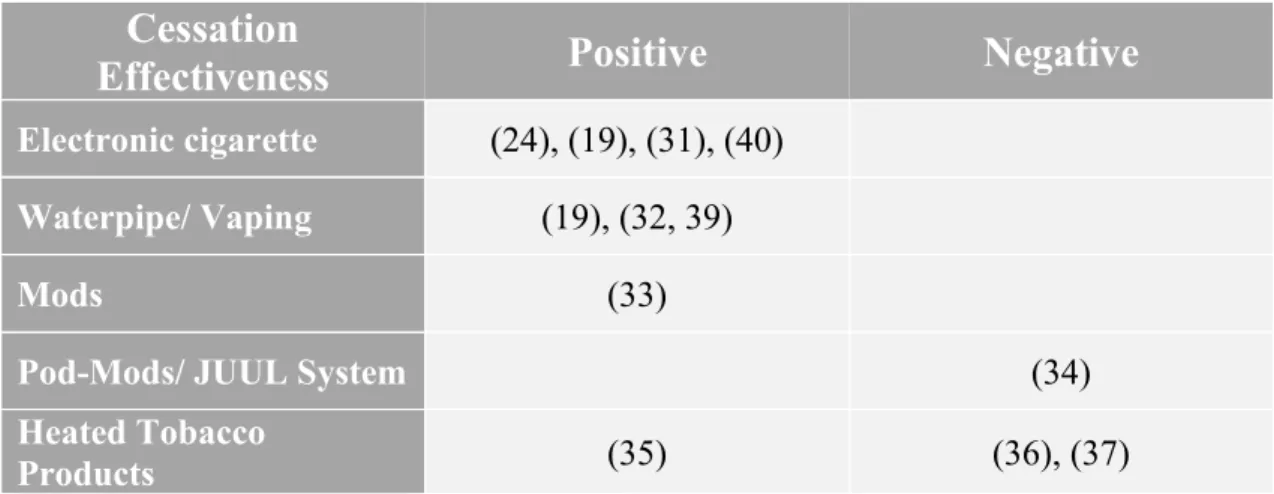
Studies claim that electronic cigarettes and vaping systems are very successful as safe alternatives to cigarette smoke and as a beneficial strategy for effective tobacco cessation, as described in Table II. (24, 32)
The 3rd and 4th generation systems, as pointed out by the studies, as opposites concerning the effectiveness of smoking cessation. The 3rd generation systems are positive because, despite promoting healthier changes in the lives of smokers, they are also capable of showing success rates in combating tobacco smoke. (33)
Nevertheless, the 4th generation JUUL systems are presented with more signs of nicotine dependence in young people, thus negatively influencing smoking cessation. Many of these young people were previously non-smokers of conventional tobacco, however, they started using these devices. (34)
Regarding the Tobacco Heating System, it was designed to reduce the formation of Harmful and Potentially Harmful Constituents (HPHCs) by heating and not burning tobacco.
Some studies support the assumption that the development of Menthol Tobacco Heating System (mTHS) as an acceptable inhaled nicotine supply system for consumers would be an important advance in the search for harm reduction, converting Menthol Conventional Cigarettes (mCC) smokers into mTHS. (35)
However, other studies point out that HTP is a device that can negatively influence the reduction in the rate of smoking, especially among younger people. These devices are marketed as capable of reducing the harm and diseases related to tobacco, putting pressure on people to opt for these devices. These systems negatively influence smoking cessation, making them dependent on the nicotine they offer and have difficulties in quitting smoking, compared to people who have never used these systems. (36, 37) Thus, as we can see in Table II, this system is presented as positive and negative in the effectiveness of smoking cessation, however, more studies will be needed.
12
Oral Manifestations
Electronic
cigarette
Waterpipe/
Vaping
Mods/
JUUL
System
Heated
Tobacco
Products
Dry mouth (18), (38) (4), (24) (27) Burning sensation (18) Irritation (18) Bad taste (18) Bad breath (18) Pain/ Discomfort (18) Black tongue (18) Nicotine stomatitis (18), (19) Hairy tongue (18), (18) Mouth/ tongue inflammation (18), (18) Periodontitis (18), (22), (39) (24), (25) (20) Bone loss (18), (22), (39) Gingival disease/ bleeding (18), (22), (39) (24), (25) (20) Broken teeth (18), (38) Toothache (18) Changes in tooth colouration (18) (24) (28) Caries (18), (21), (20) (20) Tooth abscess (18) Tooth sensitivity (18) Tooth Loss (18) Oral Candidiasis (2), (18), (18) (4), (23)Oral epithelial dysplasia (26)
Cytotoxicity in oral
epithelial cells (4) (26)
Increased blood flow in
the buccal mucosa (4)
Angular cheilitis (18)
Xerostomia (18) (24)
Malignant and
premalignant lesions in the oral cavity
(4), (26)
Oral cavity cancer (4)
Ulceration (20)
13
Cessation
Effectiveness
Positive
Negative
Electronic cigarette (24), (19), (31), (40)
Waterpipe/ Vaping (19), (32, 39)
Mods (33)
Pod-Mods/ JUUL System (34)
Heated Tobacco
Products (35) (36), (37)
14
DISCUSSION
In carrying out this monograph and in the search for results, many difficulties were encountered not only due to the scarcity of investigations but also due to the political and socioeconomic barriers involved, as these alternative systems to tobacco consumption are manufactured and marketed by several brands. The studies about the effects of these systems are mostly sponsored by the brands, causing difficulties in the quantity and quality of the studies elaborated in these systems and mainly in their realization without conflicts of interest.
However, tobacco remains one of the main preventable causes of illness and premature death, contributing to more than one in ten deaths registered annually in Portugal and registering a slight decrease in tobacco consumption in the adult population, thus increasing the prevalence ex-smokers. (5)
Tobacco is a public health priority and public health professionals have an important role in preventing smoking and providing cessation interventions, both with individual therapeutic actions and from the perspective of the population. (41)
Several therapies can be prescribed to promote smoking cessation, among them, and scientifically proven to be effective cessation strategies, are nicotine replacement systems, Bupropion (Zyban®), Varenicline (Champix®), among others that, with their therapeutic option, imply smoking cessation. (42)
Despite the alternative systems to tobacco consumption, all systems, as we refer earlier, can cause manifestations in the oral cavity, although they appear to be less significant than conventional cigarettes. Most are used to help quit smoking, often at the consumer's initiative, attracted by the advertising of these brands. This is an example of concern about the marketing effect (which indicates that these systems reduce risk reduction, even if they are not scientifically proven) in increasing the consumption of some of these systems by young people who are not smokers.
These systems have negative and positive aspects of smoking cessation. While e-cigarettes and 2nd and 3rd generation devices were shown to be positive (4th generation and HTP appear to have positive and negative effects), 4th generation devices were used to perform the smoking cessation process. HTPs are inconclusive, which do not affect the interruption of tabulation, as there are studies that offer benefits and others that are not used alternatively in the cigarettes used.
15 The Dentist must offer specific assistance and monitoring to patients who wish to quit smoking; the dentist should inform his patients that the long-term oral and systemic effects of ENDS when there is a chance to use these systems as a means of quitting smoking. (19)
To promote successful smoking cessation, people who wish to quit smoking should move away from practices and routines that can induce them to smoke. However, the use of alternative systems, such as electronic cigarettes, vaping systems, or even HTP, can promote behaviours that mimic smoking and, in a way, the success of eliminating routines and behaviours, such as the ritual of the hands. Thus, with the use of these devices, the adoption of a healthy lifestyle can be compromised. (43)
Due to the lack of studies that prove the use of these systems as an alternative means for smoking cessation, it should be noted that nicotine replacement, Bupropion (Zyban®) or Varenicline (Champix®) associated with professional and motivational support are the safety treatment choice for smoking cessation. (31, 41, 42)
16
CONCLUSION AND FUTURE PERSPECTIVES
It was concluded that there are several oral manifestations in all alternative systems to tobacco consumption, although some of these oral manifestations when compared with the use of conventional cigarettes, are less significant in these systems.
These systems can also be used as alternative means for smoking cessation, and most of these devices, electronic cigarettes, 2nd or 3rd generation devices and in some studies of HTPs are pointed out as positive in the effectiveness of the smoking process, while 4th generation devices and in some studies of HTPs are identified as negative.
However, the literature on this topic is scarce and more studies need to be carried out to allow finding more answers and relation to oral manifestations and effects of these devices on the effectiveness of smoking cessation.
17
BIBLIOGRAPHIC REFERENCES
1. Oliveira GMM, Mendes M, Dutra OP, Achutti A, Fernandes M, Correia VA, et al. 2019 Recommendations for reducing tobacco consumption in the Portuguese-speaking countries. Rev Port Cardiol. 2019;38(4):233-44.
2. Alanazi H, Semlali A, Chmielewski W, Rouabhia M. E-Cigarettes Increase Candida albicans Growth and Modulate its Interaction with Gingival Epithelial Cells. Int J Environ Res Public Health. 2019;16(2).
3. Liu X, Lu W, Liao S, Deng Z, Zhang Z, Liu Y, et al. Efficiency and adverse events of electronic cigarettes: A systematic review and meta-analysis (PRISMA-compliant article). Medicine (Baltimore). 2018;97(19):e0324.
4. Ramoa CP, Eissenberg T, Sahingur SE. Increasing popularity of waterpipe tobacco smoking and electronic cigarette use: Implications for oral healthcare. J Periodontal Res. 2017;52(5):813-23.
5. Programa Nacional para a Prevenção e Controlo do Tabagismo EN. Programa Nacional para a Prevenção e Controlo do Tabagismo. 2019.
6. Slaughter E, Gersberg RM, Watanabe K, Rudolph J, Stransky C, Novotny TE. Toxicity of cigarette butts, and their chemical components, to marine and freshwater fish. Tob Control. 2011;20 Suppl 1:i25-9.
7. Orellana-Barrios MA, Payne D, Mulkey Z, Nugent K. Electronic Cigarettes-A Narrative Review for Clinicians. Am J Med. 2015;128(7):674-81.
8. National Academies of Sciences E, and Medicine; Health and Medicine Division; Board on Population Health and Public Health Practice; Committee on the Review of the Health Effects of Electronic Nicotine Delivery Systems; Kathleen Stratton, Leslie Y. Kwan, and David L. Eaton, Editors. Public Health Consequences of E-Cigarettes: Conclusions by Level Of Evidence 2018.
9. E-Cigarette, or Vaping, Products Visual Dictionary.
10. Prevention CfDCa. E-Cigarette, Or Vaping, Products Visual Dictionary.
11. Bhatnagar A, Whitsel LP, Ribisl KM, Bullen C, Chaloupka F, Piano MR, et al. Electronic cigarettes: a policy statement from the American Heart Association. Circulation. 2014;130(16):1418-36.
18 12. Floyd EL, Queimado L, Wang J, Regens JL, Johnson DL. Electronic cigarette power affects count concentration and particle size distribution of vaping aerosol. PLoS One. 2018;13(12):e0210147.
13. Huang J, Duan Z, Kwok J, Binns S, Vera LE, Kim Y, et al. Vaping versus JUULing: how the extraordinary growth and marketing of JUUL transformed the US retail e-cigarette market. Tob Control. 2019;28(2):146-51.
14. Chu KH, Colditz JB, Primack BA, Shensa A, Allem JP, Miller E, et al. JUUL: Spreading Online and Offline. J Adolesc Health. 2018;63(5):582-6.
15. Saúde SCPeOd. Posição das Sociedades Científicas Portuguesas em Relação a Produtos de Tabaco Aquecido.
16. Leigh NJ, Tran PL, O'Connor RJ, Goniewicz ML. Cytotoxic effects of heated tobacco products (HTP) on human bronchial epithelial cells. Tob Control. 2018;27(Suppl 1):s26-s9.
17. Barrington-Trimis JL, Gibson LA, Halpern-Felsher B, Harrell MB, Kong G, Krishnan-Sarin S, et al. Type of E-Cigarette Device Used Among Adolescents and Young Adults: Findings From a Pooled Analysis of Eight Studies of 2166 Vapers. Nicotine Tob Res. 2018;20(2):271-4.
18. Yang I, Sandeep S, Rodriguez J. The oral health impact of electronic cigarette use: a systematic review. Crit Rev Toxicol. 2020:1-31.
19. Sultan AS, Jessri M, Farah CS. Electronic nicotine delivery systems: Oral health implications and oral cancer risk. J Oral Pathol Med. 2018.
20. Kim SA, Smith S, Beauchamp C, Song Y, Chiang M, Giuseppetti A, et al. Cariogenic potential of sweet flavors in electronic-cigarette liquids. PLoS One. 2018;13(9):e0203717.
21. Tommasi S, Caliri AW, Caceres A, Moreno DE, Li M, Chen Y, et al. Deregulation of Biologically Significant Genes and Associated Molecular Pathways in the Oral Epithelium of Electronic Cigarette Users. Int J Mol Sci. 2019;20(3).
22. Isaac K. Sundar FJ, Georgios E. Romanos, Irfan Rahman. E-cigarettes and flavorings induce inflammatory prosenescence responses in oral epithelial cells and periodontal fibroblasts. Oncotarget. 2016;7.
23. Safoura Seifi DDS, Farideh Feizi, Ph.D., Mohammad Mehdizadeh, D.D.S., Soraya Khafri, Ph.D., Behrang Ahmadi, M.D. Evaluation of Cytological Alterations of Oral Mucosa in Smokers and Waterpipe Users. Cell Journal. 2014;15.
19 24. Irusa KF, Vence B, Donovan T. Potential oral health effects of e-cigarettes and vaping: A review and case reports. J Esthet Restor Dent. 2020.
25. Javed F, Al-Kheraif AA, Rahman I, Millan-Luongo LT, Feng C, Yunker M, et al. Comparison of Clinical and Radiographic Periodontal Status Between Habitual Water-Pipe Smokers and Cigarette Smokers. J Periodontol. 2016;87(2):142-7.
26. Al-Amad SH, Awad MA, Nimri O. Oral cancer in young Jordanians: potential association with frequency of narghile smoking. Oral Surg Oral Med Oral Pathol Oral Radiol. 2014;118(5):560-5.
27. Rouabhia M. Impact of Electronic Cigarettes on Oral Health: a Review. J Can Dent Assoc. 2020.
28. Zanetti F, Zhao X, Pan J, Peitsch MC, Hoeng J, Ren Y. Effects of cigarette smoke and tobacco heating aerosol on color stability of dental enamel, dentin, and composite resin restorations. Quintessence Int. 2019;50(2):156-66.
29. Zanetti F, Sewer A, Mathis C, Iskandar AR, Kostadinova R, Schlage WK, et al. Systems Toxicology Assessment of the Biological Impact of a Candidate Modified Risk Tobacco Product on Human Organotypic Oral Epithelial Cultures. Chem Res Toxicol. 2016;29(8):1252-69.
30. Zanetti F, Sewer A, Scotti E, Titz B, Schlage WK, Leroy P, et al. Assessment of the impact of aerosol from a potential modified risk tobacco product compared with cigarette smoke on human organotypic oral epithelial cultures under different exposure regimens. Food Chem Toxicol. 2018;115:148-69.
31. Hajek P, Phillips-Waller A, Przulj D, Pesola F, Myers Smith K, Bisal N, et al. A Randomized Trial of E-Cigarettes versus Nicotine-Replacement Therapy. N Engl J Med. 2019;380(7):629-37.
32. Reuther WJ, Hale B, Matharu J, Blythe JN, Brennan PA. Do you mind if I vape? Immediate effects of electronic cigarettes on perfusion in buccal mucosal tissue--a pilot study. Br J Oral Maxillofac Surg. 2016;54(3):338-41.
33. Polosa R, Caponnetto P, Cibella F, Le-Houezec J. Quit and smoking reduction rates in vape shop consumers: a prospective 12-month survey. Int J Environ Res Public Health. 2015;12(4):3428-38.
34. Boykan R, Goniewicz ML, Messina CR. Evidence of Nicotine Dependence in Adolescents Who Use Juul and Similar Pod Devices. Int J Environ Res Public Health. 2019;16(12).
20 35. Ludicke F, Picavet P, Baker G, Haziza C, Poux V, Lama N, et al. Effects of Switching to the Menthol Tobacco Heating System 2.2, Smoking Abstinence, or Continued Cigarette Smoking on Clinically Relevant Risk Markers: A Randomized, Controlled, Open-Label, Multicenter Study in Sequential Confinement and Ambulatory Settings (Part 2). Nicotine Tob Res. 2018;20(2):173-82.
36. Igarashi A, Aida J, Kusama T, Tabuchi T, Tsuboya T, Sugiyama K, et al. Heated Tobacco Products Have Reached Younger or More Affluent People in Japan. J Epidemiol. 2020.
37. McKelvey K, Popova L, Kim M, Lempert LK, Chaffee BW, Vijayaraghavan M, et al. IQOS labelling will mislead consumers. Tob Control. 2018;27(Suppl 1):s48-s54. 38. Cho JH. The association between electronic-cigarette use and self-reported oral symptoms including cracked or broken teeth and tongue and/or inside-cheek pain among adolescents: A cross-sectional study. PLoS One. 2017;12(7):e0180506.
39. Jeong W, Choi DW, Kim YK, Lee HJ, Lee SA, Park EC, et al. Associations of electronic and conventional cigarette use with periodontal disease in South Korean adults. J Periodontol. 2020;91(1):55-64.
40. Kar M, Emre IE, Bayar Muluk N, Cingi C. Effect of Electronic Cigarettes on the Inner Mucosa of the Craniofacial Region. J Craniofac Surg. 2019;30(3):e235-e8.
41. Ferrara P, Shantikumar S, Cabral Verissimo V, Ruiz-Montero R, Masuet-Aumatell C, Ramon-Torrell JM, et al. Knowledge about E-Cigarettes and Tobacco Harm Reduction among Public Health Residents in Europe. Int J Environ Res Public Health. 2019;16(12).
42. Saúde DGd. Algoritmo do Tratamento Farmacológico do Tabagismo.
43. Van Heel M, Van Gucht D, Vanbrabant K, Baeyens F. The Importance of Conditioned Stimuli in Cigarette and E-Cigarette Craving Reduction by E-Cigarettes. Int J Environ Res Public Health. 2017;14(2).
21