Parenteral colistin for the treatment of severe
infections: a single center experience
INTRODUCTION
he use of colistin to treat infections caused by resistant microorganisms is not new; clinical improvements with colistin therapy in patients with Pseudomonas aeruginosa infections resistant to penicillin, kanamycin and chloramphenicol were described in 1961.(1) Multidrug resistance has become increasingly common,
however, and the problem continues to worsen, especially in intensive care units (ICU). P. aeruginosa, Acinetobacter baumannii and carbapenem-resistant
Enterobacteriaceae pose challenges for healthcare providers around the world, including in the Hospital Universitário da Universidade de Londrina, where 17
Marcos Toshyiuki Tanita1, Claudia Maria Dantas de Maio Carrilho2, Joseani Pascual Garcia3, Josiane Festti2, Lucienne Tibery Queiroz Cardoso2, Cintia Magalhães Carvalho Grion2
1. Postgraduate Program, Universidade Estadual de Londrina - UEL - Londrina (PR), Brazil. 2. Clinical Medical Department, Universidade Estadual de Londrina - UEL - Londrina (PR), Brazil. 3. Infection Control Committee, Hospital Universitário, Universidade Estadual de Londrina - UEL - Londrina (PR), Brazil.
Objective: To describe a single center experience involving the administration of colistin to treat nosocomial infections caused by multidrug-resistant Gram-negative bacteria and identify factors associated with acute kidney injury and mortality.
Methods: This retrospective longitudinal study evaluates critically ill patients with infections caused by multidrug-resistant Gram-negative bacteria. All adult patients who required treatment with intravenous colistin (colistimethate sodium) from January to December 2008 were considered eligible for the study. Data include demographics, diagnosis, duration of treatment, presence of acute kidney injury and 30-day mortality.
Results: Colistin was used to treat an infection in 109 (13.8%) of the 789 patients admitted to the intensive care unit. he 30-day mortality observed in these patients was 71.6%. Twenty-nine patients (26.6%) presented kidney injury prior to colistin treatment, and six of these patients were able to recover kidney
Conflicts of Interest: None.
Submitted on November 11, 2013 Accepted on December 13, 2013
Corresponding Author:
Cintia Magalhães Carvalho Grion Divisão de Terapia Intensiva, Hospital Universitário da Universidade Estadual de Londrina Rua Robert Koch, 60 - Vila Operária
Zip code: 86038-350 - Londrina (PR), Brazil. E-mail: [email protected]
Colistina parenteral no tratamento de infecções graves:
experiência em centro único
ABSTRACT
Keywords: Colistin/therapeutic use; Intensive care; Cross infection/ drug therapy; Acinetobacter baumannii;
Pseudomonas aeruginosa; Acute kidney
injury; Death
function even during colistin treatment. Twenty-one patients (19.2%) developed acute kidney injury while taking colistin, and 11 of these patients required dialysis. he variable independently associated with the presence of acute kidney injury was the Sequential Organ Failure Assessment at the beginning of colistin treatment (OR 1.46; 95%CI 1.20-1.79; p<0.001). he factors age (OR 1.03; 95%CI 1.00-1.05; p=0.02) and vasopressor use (OR 12.48; 95%CI 4.49-34.70; p<0.001) were associated with death in the logistic-regression model.
Conclusions: Organ dysfunction at the beginning of colistin treatment was associated with acute kidney injury. In a small group of patients, we were able to observe an improvement of kidney function during colistin treatment. Age and vasopressor use were associated with death.
cases of ventilator-associated pneumonia (VAP) caused by OXA-23 carbapenemase-producing A. baumannii were reported.(2) Many other outbreaks have been described;(3-5)
however, controlling these outbreaks is diicult and not always successful, and these microorganisms have become endemic in many hospitals.(6-8) Many factors
are associated with nosocomial infections caused by multidrug-resistant bacteria, including previous use of broad-spectrum antimicrobials, overuse of antibiotics in patients with inlammatory conditions, long-term use of empiric antibiotics, presence of invasive devices, length of stay, admission to ICU, age, septic shock, presence of comorbidities and severity of illness.(9-11)
he SENTRY study reported the susceptibility to polymyxin B in several Gram-negative bacilli between 2001 and 2004. he sensitivity to imipenem was approximately 80% in all samples of Acinetobacter spp. and P. aeruginosa, with polymyxin B exceeding 97%; however, high levels of resistance to other drugs were detected in these samples.(12) A new SENTRY
microbiological investigation evaluated samples from 2006 to 2009 and revealed a temporal trend toward a reduction in the imipenem sensitivity in Acinetobacter spp. and Klebsiella spp. in all geographic regions. With the exception of Acinetobacter spp. and Klebsiella spp. from the Asia-Paciic and Latin America regions,(13) most
isolates remained sensitive to polymyxins.
Mortality rates may be as high as 40%(14,15) and
are related to, for example, a polymyxin B dose lower than 200mg per day, the presence of severe sepsis or septic shock, mechanical ventilation, renal failure, age and comorbidities.(16,17) Nephrotoxicity secondary to
polymyxins has been reported since the earliest studies on the subject.(18) Certain studies have reported that up to
32% of patients using colistin develop acute kidney injury (AKI). Predisposing factors may include age, prior renal dysfunction, the use of other nephrotoxic drugs, a high dose of colistin and an elevated Acute Physiology and Chronic Health Evaluation II (APACHE II) score.(15,19)
More recently, a lower incidence of renal failure associated with colistin therapy has been reported, and the therapy was well tolerated in critically ill patients with normal renal function.(20-23)
he purposes of this study are to describe a single center experience of the use of colistin to treat nosocomial infections caused by multidrug-resistant Gram-negative bacteria and to identify the factors associated with acute kidney injury and mortality.
METHODS
Study design and patients
his is a retrospective analysis of data prospectively collected from an ICU database. his longitudinal study aims to evaluate critically ill patients with nosocomial infection caused by multidrug-resistant Gram-negative bacteria who were treated with parenteral colistin at a general university hospital ICU. he adult ICU of the Hospital Universitário da Universidade Estadual de Londrina admits clinical and surgical patients, holds 17 beds and has an occupancy rate above 90% throughout the year.
his study has been approved by the local ethics committee (approval number: 284/05) and has been performed in accordance with the ethical standards laid down in the 1964 Declaration of Helsinki and its later amendments. he local ethics committee waived the need to obtain informed consent.
Patients were identiied by the Nosocomial Infection Control Committee electronic database. All adult patients requiring treatment with intravenous colistin (colistimethate sodium) from January to December 2008 were considered eligible for the study. We performed a consecutive sampling that included all eligible patients during the study period. For patients admitted to the ICU more than once during the same period, the irst admission in which colistin was administered was considered in the analysis. he exclusion criteria were age under 18 years, colistin use for less than 48 hours, use of colistin prior to ICU admission, use of polymyxin B and death occurring in less than 48 hours.
Data collection
For each patient, clinical data were extracted from the ICU database. he database included several variables, including age, gender, diagnosis and date of admission to the hospital and the ICU, irst day of use and duration of treatment with colistin, date of and vital condition on discharge from the ICU and the hospital. We also analyzed data on the source of infection, dates of positive cultures and results of antimicrobial susceptibility testing. he database included APACHE II scores from the irst 24 hours in the ICU(24) and the presence or
use of vancomycin, amphotericin B, aminoglycoside, diuretics, and vasopressors) were recorded. To evaluate organ dysfunction, the Sequential Organ Failure Assessment (SOFA) score(25) was calculated throughout
the ICU stay.
Variables and definitions
he primary outcome was deined as the 30-day mortality from all causes. he Centers for Disease Control (CDC) criteria(26) were adopted to diagnose hospital
infection. he ACCP/SCCM (American College of Chest Physicians/Society of Critical Care Medicine) Consensus criteria(27) were adopted to diagnose sepsis. For
each of the six organ systems evaluated using the SOFA score (neurological, cardiovascular, respiratory, renal, hematological and liver), organ failure was deined as a score greater than 2.(25)
he studied drug was colistimethate sodium (Promixin®
, Opem Pharmaceuticals, 80mg = 1,000,000 IU). Patients who exhibited creatinine clearance (Crcl) greater than 80ml/minute received 5mg/kg/day of colistin; those who exhibited Crcl between 30 and 80ml/minute received 2.5mg/kg/day; and those who exhibited less than 30ml/minute received 1 to 1.5mg/kg/day. Creatinine clearance was estimated using the Cockcroft-Gault formula.(28) he dose was calculated based on the weight
of the patient, and treatment duration was determined following recommendations of the local Nosocomial Infection Control Committee. An additional dose of 80 to 160mg was administered following hemodialysis. he treatment protocol followed local Nosocomial Infection Control Committee guidelines in all patients included in the present study. he possible combination therapies recommended by these guidelines included colistin associated with carbapenem and/or glycopeptides or linezolid. For microbiologically documented infections, antimicrobial susceptibility was tested using an automated method (MicroScan®
- Dade Behring).
Use of a diuretic was deined as ≥40mg per day furosemide for at least 24 hours during colistin treatment. Use of vancomycin, amphotericin B or aminoglycoside was considered if the drug was employed over 48 hours during colistin treatment. he vasopressors considered in the analysis included dopamine, noradrenaline and adrenaline.
Acute kidney injury was identiied according to the KDIGO deinitions(29) as an increase in creatinine by
0.3mg/dL within 48 hours or as an increase in creatinine to ≥1.5 times baseline, which is known or presumed to have occurred within the prior seven days. For statistical analysis, patients were divided into those with and those without AKI during colistin use. Patients who received renal-replacement therapy prior to starting treatment with colistin were grouped into a third category (presence of kidney injury prior to colistin), which had no effect on the analysis of factors associated with AKI.
Statistical analysis
RESULTS
Patients, sources of infection and microorganisms
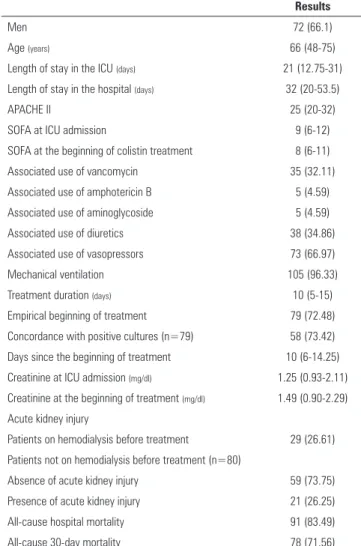
During the study period, colistin was used to treat an infection in 109 (13.8%) of the 789 patients admitted to the ICU. Baseline patient characteristics are summarized in table 1. hese patients had a median age of 66 (48-75) years and were mostly male (66.1%). he median APACHE II score was 25 (20-32) upon ICU admission. he median SOFA score at ICU admission was 9 (6-12), and there was no signiicant diference compared to the SOFA score at the beginning of colistin treatment (8 [6-11]; p=0.142). he 30-day mortality observed in these patients was 71.6%. In 79 (72.5%) patients, colistin was started empirically before obtaining results from cultures, according to Nosocomial Infection Control Committee guidelines. Colistin treatment was begun an average of 10 (6-14.2) days after admission to the ICU. he median serum creatinine was 1.25 (0.93-2.11) mg/dL upon admission to the ICU and 1.49 (0.90-2.29) mg/dL at the start of treatment. Twenty-nine (26.6%) patients were receiving renal-replacement therapy prior to starting colistin treatment. Twenty-one (19.2%) patients developed AKI, 11 of whom required dialysis after starting colistin and 9 of whom needed diuretic therapy. Invasive mechanical ventilation was administered to 105 (96.3%) patients, with a mean duration of 12.4±8.8 days. Vasopressors were used in 73 (66.9%) patients for a mean of 3.2±4.6 days.
VAP was the most frequent infection site (76/109, 69.7%), followed by bloodstream infection (BSI; 15/109, 13.7%), surgical-site infection (8/109, 7.3%), urinary-tract infection (7/109, 6.4%), peritonitis (2/109, 1.9%), and skin and soft-tissue infections (1/109, 0.9%). Infections were microbiologically conirmed in 102 patients, and 7 VAP cases had negative cultures. Among patients with positive cultures, A. baumannii was isolated in 52 cases (50.9%) and was the causative microorganism in 48 patients with VAP and in 3 patients with BSI. P. aeruginosa was isolated in 23 (22.5%) patients and was the etiologic agent in 10 patients with VAP and in 4 patients with BSI. Eight cases (7.8%) were positive for the both microorganisms (A. baumannii and P. aeruginosa), 7 from tracheal secretions and 1 from a blood culture. Other microorganisms isolated less frequently included
Candida sp. (3.9%), Escherichia coli (2.9%), Enterococcus faecium (1.9%), Stenotrophomonas maltophilia (1.9%),
Table 1 - General characteristics of 109 patients treated with colistin
Results
Men 72 (66.1)
Age (years) 66 (48-75)
Length of stay in the ICU (days) 21 (12.75-31)
Length of stay in the hospital (days) 32 (20-53.5)
APACHE II 25 (20-32)
SOFA at ICU admission 9 (6-12)
SOFA at the beginning of colistin treatment 8 (6-11)
Associated use of vancomycin 35 (32.11)
Associated use of amphotericin B 5 (4.59)
Associated use of aminoglycoside 5 (4.59)
Associated use of diuretics 38 (34.86)
Associated use of vasopressors 73 (66.97)
Mechanical ventilation 105 (96.33)
Treatment duration (days) 10 (5-15)
Empirical beginning of treatment 79 (72.48)
Concordance with positive cultures (n=79) 58 (73.42) Days since the beginning of treatment 10 (6-14.25)
Creatinine at ICU admission (mg/dl) 1.25 (0.93-2.11)
Creatinine at the beginning of treatment (mg/dl) 1.49 (0.90-2.29) Acute kidney injury
Patients on hemodialysis before treatment 29 (26.61) Patients not on hemodialysis before treatment (n=80)
Absence of acute kidney injury 59 (73.75)
Presence of acute kidney injury 21 (26.25)
All-cause hospital mortality 91 (83.49)
All-cause 30-day mortality 78 (71.56)
ICU - intensive care unit; APACHE II - Acute Physiology and Chronic Health Evaluation II; SOFA - Sequential Organ Failure Assessment. Results expressed as number (%) or median (25%-75%).
Enterobacter cloacae (1.9%), Staphylococcus aureus
(0.9%), Delftia acidovorans (0.9%), Staphylococcus haemolyticus (0.9%), Klebsiella pnuemoniae (0.9%), Burkholderia cepaia (0.9%), and Providencia stuarti
(0.9%). All A. baumannii and P. aeruginosa isolates were resistant to carbapenem, aminoglycosides, quinolones, ampicillin-sulbactam and piperacillin-tazobactam.
Factors associated with acute kidney injury
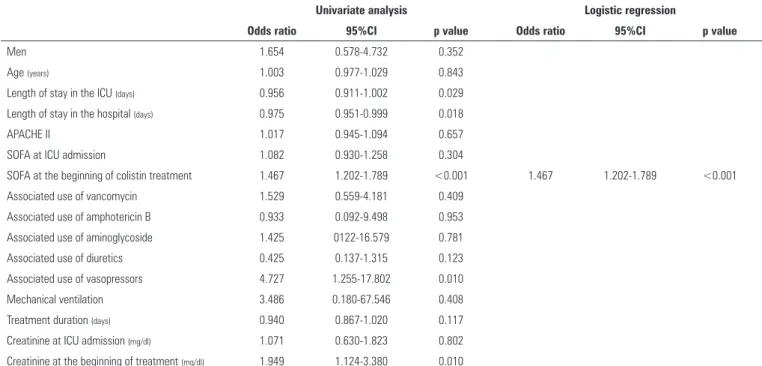
Twenty-one out of 80 patients (26.2%) examined fulilled acute kidney injury criteria while on colistin during the study period. here was no diference between the groups (with or without AKI) for any of the variables evaluated, with the exception of the SOFA score at the beginning of treatment (OR 1.46; 95%CI 1.2-1.79; p<0.001), vasopressor drug use (OR 4.72; 95%CI 1.25-17.8; p=0.010) and serum creatinine at the beginning of treatment (OR 1.94; 95%CI 1.12-3.38; p=0.010). In the logistic-regression model, the variable independently associated with the presence of AKI was the SOFA score at the beginning of colistin treatment (OR 1.46; 95%CI 1.20-1.79; p<0.001; Table 2).
Factors associated with death
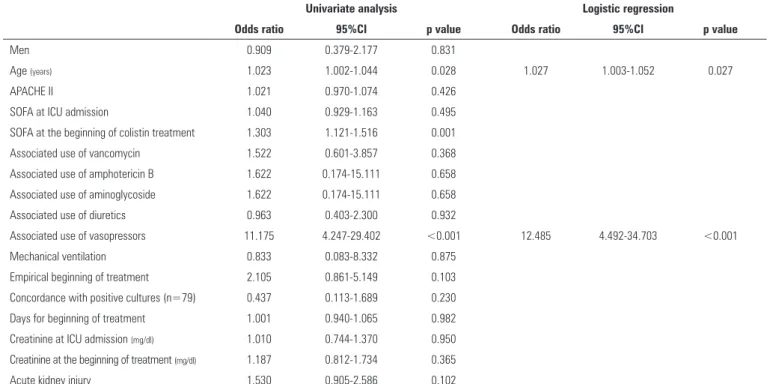
he univariate analysis revealed that age (OR 1.02; 95%CI 1.00-1.04; p=0.028), SOFA score on the irst day of colistin treatment (OR 1.30; 95%CI 1.12-1.51; p=0.001) and the use of vasopressors (OR 11.17; 95%CI 4.24-29.40; p<0.001) were associated with death. In the logistic-regression model, age (OR 1.03; 95%CI 1.00-1.05; p=0.027) and the use of vasopressors (OR 12.48; 95%CI 4.49-34.70; p<0.001) were independently associated with death (Table 3).
ROC curves were used to analyze the APACHE II and SOFA data at ICU admission and the SOFA score on the irst day of colistin treatment. he areas under the curve
were 0.545 (95%CI 0.447-0.641; p=0.449) for APACHE II, 0.530 (95%CI 0.432-0.626; p=0.618) for SOFA at ICU admission and 0.724 (95%CI 0.631-0.806; p<0.001) for SOFA on the irst day of colistin treatment. he cut-of point for APACHE II was 30 (34.6% sensitivity and 83.8% speciicity); the cut-of for the SOFA score was 8 (56.4% sensitivity and 54.8% speciicity) at ICU admission and 9 (47.4% sensitivity and 90.3% speciicity) on the irst day of colistin treatment.
here was no diference in survival probability for the groups of patients divided according to the presence of AKI (HR=1.019; 95%CI 0.646-1.608; p=0.933); however, the use of vasopressors was a determining factor of the 30-day survival probability (HR=4.093; 95% CI 2.286-7.326; p<0.001) (Figure 1).
DISCUSSION
Treatment with colistin was common among the study sample, as 13.8% of ICU patients acquired nosocomial infections caused by multidrug-resistant organisms during the study period. hese infections were microbiologically documented, and carbapenem-resistant A. baumannii
and P. aeruginosa were present in most patients. AKI was frequent in these patients, and in several cases, this condition could not be associated with colistin because it occurred even before colistin was initiated. he SOFA score on the irst day of colistin treatment was associated
Table 2 - Univariate and multivariate analysis of factors associated with acute kidney injury in 80 patients treated with colistin
Univariate analysis Logistic regression
Odds ratio 95%CI p value Odds ratio 95%CI p value
Men 1.654 0.578-4.732 0.352
Age (years) 1.003 0.977-1.029 0.843
Length of stay in the ICU (days) 0.956 0.911-1.002 0.029
Length of stay in the hospital (days) 0.975 0.951-0.999 0.018
APACHE II 1.017 0.945-1.094 0.657
SOFA at ICU admission 1.082 0.930-1.258 0.304
SOFA at the beginning of colistin treatment 1.467 1.202-1.789 <0.001 1.467 1.202-1.789 <0.001
Associated use of vancomycin 1.529 0.559-4.181 0.409
Associated use of amphotericin B 0.933 0.092-9.498 0.953
Associated use of aminoglycoside 1.425 0122-16.579 0.781
Associated use of diuretics 0.425 0.137-1.315 0.123
Associated use of vasopressors 4.727 1.255-17.802 0.010
Mechanical ventilation 3.486 0.180-67.546 0.408
Treatment duration (days) 0.940 0.867-1.020 0.117
Creatinine at ICU admission (mg/dl) 1.071 0.630-1.823 0.802
Creatinine at the beginning of treatment (mg/dl) 1.949 1.124-3.380 0.010
Table 3 - Univariate and multivariate analysis of factors associated with 30-day mortality in 109 patients treated with colistin
Univariate analysis Logistic regression
Odds ratio 95%CI p value Odds ratio 95%CI p value
Men 0.909 0.379-2.177 0.831
Age (years) 1.023 1.002-1.044 0.028 1.027 1.003-1.052 0.027
APACHE II 1.021 0.970-1.074 0.426
SOFA at ICU admission 1.040 0.929-1.163 0.495
SOFA at the beginning of colistin treatment 1.303 1.121-1.516 0.001
Associated use of vancomycin 1.522 0.601-3.857 0.368
Associated use of amphotericin B 1.622 0.174-15.111 0.658
Associated use of aminoglycoside 1.622 0.174-15.111 0.658
Associated use of diuretics 0.963 0.403-2.300 0.932
Associated use of vasopressors 11.175 4.247-29.402 <0.001 12.485 4.492-34.703 <0.001
Mechanical ventilation 0.833 0.083-8.332 0.875
Empirical beginning of treatment 2.105 0.861-5.149 0.103
Concordance with positive cultures (n=79) 0.437 0.113-1.689 0.230
Days for beginning of treatment 1.001 0.940-1.065 0.982
Creatinine at ICU admission (mg/dl) 1.010 0.744-1.370 0.950
Creatinine at the beginning of treatment (mg/dl) 1.187 0.812-1.734 0.365
Acute kidney injury 1.530 0.905-2.586 0.102
95%CI - 95% confidence interval; ICU - Intensive Care Unit; APACHE II - Acute Physiology and Chronic Health Evaluation II; SOFA - Sequential Organ Failure Assessment.
Figure 1 - Cox proportional hazards regression model evaluating the survival probability of patients treated with colistin, according to the use of vasopressors. Time = days; Hazard ratio = 4.093 (95% confidence interval 2.286-7.326); p<0.001.
with a worsening of renal function. AKI was not associated with higher mortality. Age and the need for vasopressors were factors associated with death.
An increase in the incidence of infections caused by
A. baumannii and P. aeruginosa has been reported in critically ill patients. Malignant disease, hemodialysis, and ICU stay are known risk factors for infection caused by imipenem-resistant A. baumannii.(9) Prior use of
β-lactam antibiotics and luoroquinolones, neurological disease, urinary-tract infection, kidney disease and admission to the ICU are associated with infections caused by metallo-beta-lactamase-producing strains of
P. aeruginosa.(10)
he nephrotoxicity of polymyxins has been described since the earliest studies on these compounds and was reported to be associated with higher doses of the drug.(18)
Other factors may also be involved; in 1970, Koch-Weser et al. analyzed 317 therapy courses and found that 20.2% were associated with renal toxicity.(19) In addition to the
colistin dose, the following factors were also associated with AKI: previous renal dysfunction, simultaneous use of cephalothin, duration of treatment and age. here was no adjustment for the severity of illness; however, although AKI was more frequent among patients using vasopressors, that association was not statistically signiicant.(19)
Levin et al. reported that 32% of patients presented creatinine levels above 1.5 mg/dL, with an average colistin dose of 152.8mg.(15) Recently, another study involving
In our patients, we observed an increase in creatinine levels even before the use of colistin, and AKI was associated with a higher SOFA score at the beginning of treatment. herefore, we were unable to attribute the presence of AKI exclusively to the use of colistin but rather as one of the diagnostic factors for multiple organ failure due to the severity of illness, along with other factors, such as concomitantly administered potential nephrotoxic agents. However, we also observed a group of patients who recovered renal function during colistin use, most likely due to control of the infection, recovery from shock and clinical improvement. Recent data from published reports suggest that colistin is a safe therapeutic intervention to treat infections caused by multidrug-resistant Gram-negative bacteria.(21-23)
he mortality rate observed in our study was high, and data on the length of ICU stay indicates an early progression to death. None of the scores evaluated using ROC curves performed well, with areas under the curve falling below 0.8. Age and the need for vasopressors were risk factors associated with death. Considering the current recommendation for using higher doses to treat these severe infections, we speculate that our results revealing elevated mortality rates could be due to the lower daily dose delivered to our patients.
In one of the irst reports of the reintroduction of colistin into clinical practice, Levin et al. reported the use of 2.5 to 5mg/kg to treat infections caused by A. baumannii
and P. aeruginosa in 59 patients; they described a 42% mortality rate.(15) he mortality in these patients may be
related to several risk factors,(17) including low doses of
polymyxin B.(16)
here are a few limitations in our study that must be considered. he retrospective design of the study, despite analyzing data from a prospectively collected database, presents an inherent weakness. he sample of 109 patients
may have resulted in insuicient power to identify other factors associated with the evaluated outcomes. Our study lacks data on the sensitivity to colistin, and this factor may have contributed to inefective treatments and subsequently to the high mortality rate observed. he recommended dose for treating these infections at the time of data collection may be considered low. Our study also lacks data on other potentially nephrotoxic interventions; therefore, we were unable to attribute AKI exclusively to colistin use. A recent population study of colistin pharmacokinetics suggests using higher doses than those administered to our patients.(31) he KDIGO deinitions
for AKI did not include data on the urine volume, as our database does not include this information. herefore, AKI may have been under diagnosed in our sample. Nevertheless, relevant clinical information emerged from the study. In this group of critically ill patients, AKI was not associated with increased mortality. Despite the view of AKI as a major adverse efect of colistin, kidney function improvements were observed in patients with a good clinical response to colistin treatment.
CONCLUSION
In conclusion, our study describes the experience of a single center with the use of colistin to treat nosocomial infections. We observed a high frequency of patients with infections caused by multidrug-resistant Gram-negative bacteria, and these patients presented high mortality rates; however, we encourage administering colistin to these patients, as it is one of the last therapeutic options remaining to treat these infections. AKI was associated with a higher SOFA score at the beginning of colistin use. In a small group of patients, we were able to observe improvements in the kidney function during colistin treatment. Age and vasopressor use were associated with a higher mortality rate.
Objetivo: Descrever a experiência de um único centro com o uso de colistina para tratar infecções hospitalares causadas por bactérias Gram-negativas resistentes a múltiplos fármacos e identiicar fatores associados com lesão renal aguda e mortalidade.
Métodos: Estudo longitudinal retrospectivo que avaliou pacientes gravemente enfermos, com infecções causadas por bactérias Gram-negativas resistentes a múltiplos fármacos. Foram considerados elegíveis para este estudo, durante o período compreendido entre janeiro e dezembro de 2008,
RESUMO todos os pacientes adultos com necessidade de tratamento com
colistina endovenosa (colistimetato de sódio). As informações coletadas incluem dados demográicos, diagnóstico, duração do tratamento, presença de lesão renal aguda e mortalidade em 30 dias.
durante o tratamento com colistina. Vinte e um pacientes (19,2%) desenvolveram lesão renal aguda durante o tratamento com colistina, sendo que 11 destes pacientes necessitaram ser submetidos à diálise. A variável independentemente associada com a presença de lesão renal aguda foi a pontuação segundo o sistema Sequential Organ Failure Assessment no início do tratamento com colistina (OR=1,46; IC95%=1,20-1,79; p<0,001). Idade (OR=1,03; IC95%=1,00-1,05; p=0,02) e uso de vasopressores (OR=12,48; IC95%=4,49-34,70; p<0,001) foram fatores associados a óbito, segundo um modelo de regressão logística.
Conclusões: Disfunção de órgão quando do início do tratamento com colistina associou-se com lesão renal aguda. Em um pequeno grupo de pacientes, pudemos observar uma melhora da função renal durante o tratamento com colistina. Idade e uso de vasopressores associaram-se a óbito.
Descritores: Colistina/uso terapêutico; Cuidados intensivos; Infecção hospitalar/quimioterapia; Acinetobacter baumannii;
Pseudomonas aeruginosa; Lesão renal aguda; Morte
REFERENCES
1. Yow EM, Tan E, Shane L, Schonfeld S, Abu-Nassar H. Colistin (coly-mycin) in resistant bacterial infections. A clinical appraisal. Arch Intern Med. 1961;108:664-70.
2. Carneiro M, Barbosa PI, Vespero EC, Tanita MT, Carrilho CM, Perugini M, et al. Carbapenem-resistant OXA-23-producing Acinetobacter baumannii isolates causing ventilator-associated pneumonia. Am J Infect Control. 2010;38(8):667-9.
3. Dalla-Costa LM, Coelho JM, Souza HA, Castro ME, Stier CJ, Bragagnolo KL, et al. Outbreak of carbapenem-resistant Acinetobacter baumannii producing the OXA-23 enzyme in Curitiba, Brazil. J Clin Microbiol. 2003;41(7):3403-6.
4. Tognim MC, Gales AC, Penteado AP, Silbert S, Sader HS. Dissemination of IMP-1 metallo- beta -lactamase-producing Acinetobacter species in a Brazilian teaching hospital. Infect Control Hosp Epidemiol. 2006;27(7):742-7.
5. Wybo I, Blommaert L, De Beer T, Soetens O, De Regt J, Lacor P, et al. Outbreak of multidrug-resistant Acinetobacter baumannii in a Belgian university hospital after transfer of patients from Greece. J Hosp Infect. 2007;67(4):374-80.
6. dos Santos Saalfeld SM, Fukita Viana G, Dias Siqueira VL, Cardoso CL, Botelho Garcia L, Bronharo Tognim MC. Endemic carbapenem-resistant Acinetobacter baumannii in a Brazilian intensive care unit. J Hosp Infect. 2009;72(4):365-8.
7. Suarez C, Peña C, Arch O, Dominguez MA, Tubau F, Juan C, et al. A large sustained endemic outbreak of multiresistant Pseudomonas aeruginosa: a new epidemiological scenario for nosocomial acquisition. BMC Infect Dis. 2011;11:272.
8. Weisenberg SA, Schuetz AN, Alexander EA, Eiss B, Behta M, Saiman L, et al. Endemic Acinetobacter baumannii in a New York hospital. PLoS One. 2011;6(12):e28566.
9. Dizbay M, Tunccan OG, Sezer BE, Hizel K. Nosocomial imipenem-resistant Acinetobacter baumannii infections: epidemiology and risk factors. Scand J Infect Dis. 2010;42(10):741-6.
10. Zavascki AP, Barth AL, Gaspareto PB, Gonçalves AL, Moro AL, Fernandes JF, et al. Risk factors for nosocomial infections due to Pseudomonas aeruginosa producing metallo-beta-lactamase in two tertiary-care teaching hospitals. J Antimicrob Chemother. 2006;58(4):882-5.
11. Zavascki AP, Barth AL, Gonçalves AL, Moro AL, Fernandes JF, Martins AF, et al. The influence of metallo-beta-lactamase production on mortality in nosocomial Pseudomonas aeruginosa infections. J Antimicrob Chemother. 2006;58(2):387-92.
12. Gales AC, Jones RN, Sader HS. Global assessment of the antimicrobial activity of polymyxin B against 54 731 clinical isolates of Gram-negative bacilli: report from the SENTRY antimicrobial surveillance programme (2001-2004). Clin Microbiol Infect. 2006;12(4):315-21.
13. Gales AC, Jones RN, Sader HS. Contemporary activity of colistin and polymyxin B against a worldwide collection of Gram-negative pathogens: results from the SENTRY Antimicrobial Surveillance Program (2006-09). J Antimicrob Chemother. 2011;66(9):2070-4.
14. Schimith Bier KE, Luiz SO, Scheffer MC, Gales AC, Paganini MC, Nascimento AJ, et al. Temporal evolution of carbapenem-resistant Acinetobacter baumannii in Curitiba, southern Brazil. Am J Infect Control. 2010;38(4):308-14.
15. Levin AS, Barone AA, Penço J, Santos MV, Marinho IS, Arruda EA, et al. Intravenous colistin as therapy for nosocomial infections caused by multidrug-resistant Pseudomonas aeruginosa and Acinetobacter baumannii. Clin Infect Dis. 1999;28(5):1008-11.
16. Elias LS, Konzen D, Krebs JM, Zavascki AP. The impact of polymyxin B dosage on in-hospital mortality of patients treated with this antibiotic. J Antimicrob Chemother. 2010;65(10):2231-7.
17. Paul M, Bishara J, Levcovich A, Chowers M, Goldberg E, Singer P, et al. Effectiveness and safety of colistin: prospective comparative cohort study. J Antimicrob Chemother. 2010;65(5):1019-27.
18. Pulaski EJ, Baker HJ, Rosenberg ML, Connell JF. Laboratory and clinical studies of polymyxin B and E. J Clin Invest. 1949; 28(5 Pt 1):1028-31. 19. Koch-Weser J, Sidel VW, Federman EB, Kanarek P, Finer DC, Eaton
AE. Adverse effects of sodium colistimethate. Manifestations and specific reaction rates during 317 courses of therapy. Ann Intern Med. 1970;72(6):857-68.
20. Reina R, Estenssoro E, Sáenz G, Canales HS, Gonzalvo R, Vidal G, et al. Safety and efficacy of colistin in Acinetobacter and Pseudomonas infections: a prospective cohort study. Intensive Care Med. 2005;31(8):1058-65. 21. Falagas ME, Rizos M, Bliziotis IA, Rellos K, Kasiakou SK, Michalopoulos
A. Toxicity after prolonged (more than four weeks) administration of intravenous colistin. BMC Infect Dis. 2005;5:1.
22. Michalopoulos AS, Tsiodras S, Rellos K, Mentzelopoulos S, Falagas ME. Colistin treatment in patients with ICU-acquired infections caused by multiresistant Gram-negative bacteria: the renaissance of an old antibiotic. Clin Microbiol Infect. 2005;11(2):115-21.
23. Markou N, Apostolakos H, Koumoudiou C, Athanasiou M, Koutsoukou A, Alamanos I, et al. Intravenous colistin in the treatment of sepsis from multiresistant Gram-negative bacilli in critically ill patients. Crit Care. 2003;7(5):R78-83.
24. Knaus WA, Draper EA, Wagner DP, Zimmerman JE. APACHE II: a severity of disease classification system. Crit Care Med. 1985;13(10):818-29. 25. Vincent JL, Moreno R, Takala J, Willatts S, De Mendonça A, Bruining
H, et al. The SOFA (Sepsis-related Organ Failure Assessment) score to describe organ dysfunction/failure. On behalf of the Working Group on Sepsis-Related Problems of the European Society of Intensive Care Medicine. Intensive Care Med. 1996;22(7):707-10.
27. American College of Chest Physicians/Society of Critical Care Medicine Consensus Conference: definitions for sepsis and organ failure and guidelines for the use of innovative therapies in sepsis. Crit Care Med. 1992;20(6):864-74. Review.
28. Botev R, Mallié JP, Couchoud C, Schück O, Fauvel JP, Wetzels JF, et al. Estimating glomerular filtration rate?: Cockcroft-Gault and Modification of Diet in Renal Disease formulas compared to renal inulin clearance. Clin J Am Soc Nephrol. 2009;4(5):899-906.
29. Kidney Disease: Improving Global Outcomes (KDIGO) Acute Kidney Injury Work Group. KDIGO Clinical Practice Guideline for Acute Kidney Injury. Kidney Int. 2012;2(Suppl 1):1-138.
30. Cheng CY, Sheng WH, Wang JT, Chen YC, Chang SC. Safety and efficacy of intravenous colistin (colistin methanesulphonate) for severe multidrug-resistant Gram-negative bacterial infections. Int J Antimicrob Agents. 2010;35(3):297-300.