Psychology & Neuroscience, 2010, 3, 2, 259 - 260 DOI: 10.3922/j.psns.2010.2.016
PSYCHOLOGY
NEUROSCIENCE
Obituary
Peter J. Morgane (1927-2010)
Nutrition and Neuroscience: a tribute to Peter J. Morgane
Sebastião Sousa Almeida
Universidade de São Paulo, Ribeirão Preto, SP, Brazil
Sebastião de Sousa Almeida, Departamento de Psicologia,
Faculdade de Filosoia, Ciências e Letras de Ribeirão Preto, Universidade de São Paulo, Brazil. Correspondence regarding
this article should be directed to: Sebastião de Sousa Almeida,
Laboratório de Nutrição e Comportamento do Departamento de Psicologia da Faculdade de Filosoia, Ciências e Letras de
Ribeirão Preto. Av. Bandeirantes, 3900 - Monte Alegre - Ribeirão
Preto - SP - CEP 14040-901. E-mail: [email protected]
Peter J. Morgane died in Kennebunkport, Maine, USA, at the age of 83 on September 27, 2010, after a short illness. His death is an immeasurable loss for the
ield of nutritional neuroscience. Dr. Morgane devoted
his entire life to the study the neurobiology of the brain, with a special emphasis on the effects of early malnutrition on brain and behavior.
Dr. Morgane was born on May 14, 1927, in
Kennebunkport and received his Bachelor’s degree in zoology from Tulane University. His academic pursuits continued at Northwestern University, where he earned both Master’s and Doctoral degrees in physiology. After his doctorate, he worked at the University of Oregon, the Brain Research Institute in México, Harvard Medical School, the Worcester Foundation for
Experimental Biology (a program that was moved to Boston University Medical School in 1987), and inally the University of New England in 1985, where he was honored as Professor Emeritus in June, 2010.
Dr. Morgane met his wife Cécile while living and working in Miami, Florida, and they married in 1964. They spent 25 years living in Shrewsbury, Massachusetts, before permanently moving to Maine in 1994.
Dr. Morgane published the irst of his 240 scientiic papers in the mid-1950s and continued his research for more than 50 years, inluencing many generations of
scientists in the United States and other countries. His studies focused primarily on the limbic system of the brain, with research projects on anatomy, physiology, the neural regulation of energy balance, and sleep. Dr. Morgane published extensively in peer-reviewed journals, such as Cortex, Experimental Neurology, Brain
Research, Neuroscience and Biobehavioral Reviews, and Experimental Brain Research. He also published, as co-author with Jaak Panksepp, the four-volume work Handbook of the Hypothalamus, in addition to 18 other chapters in various nervous system textbooks.
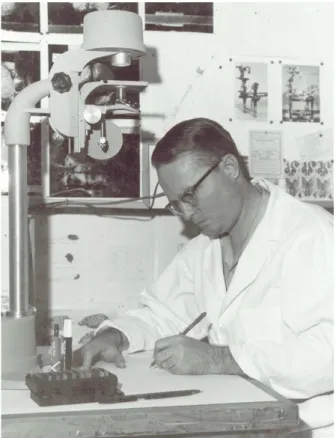
Figure 1. Peter J. Morgane in his laboratory back in the mid-1950s.
Special mention should be made regarding the contribution Dr. Morgane made to the studies of the effects of malnutrition on the brain and behavior. A review published in 1978 in Neuroscience and Biobehavioral Reviews entitled, “The effects of protein malnutrition on the developing central nervous system of
the rat,” opened the door to a signiicant area of research
early in life affect the morphology and physiology of the central nervous system and consequently impair
behavioral expression. This area of research inluenced
a great number of investigators worldwide, including in Brazil. At the University of São Paulo, Ribeirão Preto,
Dr. Luiz Marcellino de Oliveira created the Laboratory
of Nutrition and Behavior in 1978 and recruited a large group of researchers who investigate the effects of early
protein malnutrition and behavior. Even after the death of Dr. Oliveira in May 2008, the Laboratory of Nutrition
and Behavior remains on the path laid out by its creator, inspired by the work of Dr. Morgane.
Dr. Morgane’s dedication to science and teaching motivated him to continue his focus on research. At the
University of New England, he periodically lectured to irst- and second-year medical students on topics
such as neuropharmacology and Alzheimer’s and Parkinson’s diseases.
Dr. Morgane and his wife Cécile also demonstrated selless generosity and philanthropy. They are the largest individual donors to the University of New England in
its history. In 2007, 3 years before his death, he decided to expand the research opportunities at the university and made a $1 million donation in the memory of his
beloved wife to establish the Cécile Morgane Research Laboratories at the Pickus Center for Biomedical
Research. In 2008, Dr. Morgane made another donation to the university, the funds from which were used to
construct Peter and Cécile Morgane Hall. The building
Figure 2. Peter Morgane launching the construction of the Peter and Cécile Morgane Hall at the University of New England.
includes two biology laboratories, two chemistry laboratories, two physics laboratories, one biochemistry laboratory, one genetics laboratory, an aquarium, one aquaculture sciences laboratory, and several other small research laboratories.
Dr. Morgane’s legacy of research will continue to inspire researchers all over the world in their efforts to understand how the brain is affected by early protein malnutrition and how these brain insults can subsequently impair behavioral expression.
Selected Publications of Peter J. Morgane
Bronzino, J.D., Blaise, J.H., Mokler, D.J., Galler, J.R., & Morgane, P.J. (1999). Modulation of paired-pulse responses in the dentate gyrus: effects of prenatal protein malnutrition. Brain Research,
849(1-2), 45-57.
Mokler, D.J., Galler, J.R., & Morgane, P.J. (2003). Modulation of 5-HT
release from the hippocampus of 30-day-old rats exposed in utero to protein malnutrition. Developmental Brain Research, 142, 203-208. Mokler, D.J., Torres, O.I., Galler, J.R., & Morgane, P.J. (2007).
Stress-induced changes in extracellular dopamine and serotonin in the medial prefrontal cortex and dorsal hippocampus of prenatally malnourished rats. Brain Research, 1148, 226-233.
Morgane P.J., Miller, M., Kemper, T., Stern, W., Forbes, W., Hall, R., Resnick, O. (1979). The effects of protein malnutrition on the developing central nervous system in the rat. Neuroscience and Biobehavioral Reviews, 2, 137-230.
Morgane, P.J., Mokler, D.J., & Galler, J.R. (2002). Effects of prenatal
protein malnutrition on the hippocampal formation. Neuroscience and Biobehavioral Reviews, 26, 471-483.
Morgane, P.J., Mokler, D.J., & Galler, J.R. (2003). Malnutrition: central nervous system effects. In G. Adelman and B.H. Smith
(Eds.), Encyclopedia of Neuroscience. Third Edition. CD-ROM. New York: Elsevier.