Edited by: Eric Ghigo, Centre National de la Recherche Scientifique (CNRS), France
Reviewed by: Xin Li, Tufts University School of Medicine, United States Oleg Y. Mediannikov, Institute of Research for Development, France
*Correspondence: Ana Domingos [email protected]
Received:12 June 2017 Accepted:19 September 2017 Published:29 September 2017
Citation: Antunes S, Rosa C, Couto J, Ferrolho J and Domingos A (2017) Deciphering Babesia-Vector Interactions. Front. Cell. Infect. Microbiol. 7:429. doi: 10.3389/fcimb.2017.00429
Deciphering
Babesia
-Vector
Interactions
Sandra Antunes
1, Catarina Rosa
2, Joana Couto
1, Joana Ferrolho
1and Ana Domingos
1*
1Global Health and Tropical Medicine, Instituto de Higiene e Medicina Tropical, Universidade Nova de Lisboa, Lisbon, Portugal,2Instituto de Higiene e Medicina Tropical, Universidade Nova de Lisboa, Lisbon, Portugal
Understanding host-pathogen-tick interactions remains a vitally important issue that
might be better understood by basic research focused on each of the dyad interplays.
Pathogens gain access to either the vector or host during tick feeding when ticks are
confronted with strong hemostatic, inflammatory and immune responses. A prominent
example of this is the
Babesia
spp.—tick—vertebrate host relationship.
Babesia
spp.
are intraerythrocytic apicomplexan organisms spread worldwide, with a complex life
cycle. The presence of transovarial transmission in almost all the
Babesia
species is the
main difference between their life cycle and that of other piroplasmida. With more than
100 species described so far,
Babesia
are the second most commonly found blood
parasite of mammals after trypanosomes. The prevalence of
Babesia
spp. infection
is increasing worldwide and is currently classified as an emerging zoonosis.
Babesia
microti
and
Babesia divergens
are the most frequent etiological agents associated with
human babesiosis in North America and Europe, respectively. Although the
Babesia
-tick
system has been extensively researched, the currently available prophylactic and control
methods are not efficient, and chemotherapeutic treatment is limited. Studying the
molecular changes induced by the presence of
Babesia
in the vector will not only
elucidate the strategies used by the protozoa to overcome mechanical and immune
barriers, but will also contribute toward the discovery of important tick molecules that
have a role in vector capacity. This review provides an overview of the identified molecules
involved in
Babesia
-tick interactions, with an emphasis on the fundamentally important
ones for pathogen acquisition and transmission.
Keywords: tick-pathogen interaction, Babesiaspp., vector, babesiosis, tick-borne diseases
INTRODUCTION
Parasites from the genus
Babesia
are responsible for causing an emerging zoonotic disease called
babesiosis. Transmission occurs mainly through the bite of a
Babesia
-infected tick and, less
commonly, by blood transfusion (
Leiby, 2006; Ord and Lobo, 2015
).
(
Shayan et al., 2007; Ranjbar-Bahadori et al., 2012; Ferrolho
et al., 2016
). Dogs are susceptible of infection by
B. canis vogeli
and
B. gibsoni
, primarily transmitted by
R. sanguineus
(
Solano-Gallego et al., 2016; Chao et al., 2017
). Human babesiosis,
caused largely by
Babesia microti
and
Babesia divergens
, is not
acknowledged as a tropical neglected disease, but there is a
growing concern globally regarding this emerging zoonosis (
Ord
and Lobo, 2015
).
Despite the fact that
Babesia
infections tend to impair
tick development, an adaptive tolerance to
Babesia
has been
described in
R. microplus
suggesting a balance between tick
defense mechanisms and tick-pathogen mutual interaction(s)
(
Cen-Aguilar et al., 1998; Chauvin et al., 2009; Florin-Christensen
and Schnittger, 2009; Lack et al., 2012; Gou et al., 2013; de la
Fuente et al., 2016
).
The development of improved tick and tick-borne disease
control measures are essential to overcome the lack of data
regarding which tick molecules are important and how they may
be suitable as study targets. Based on this, herein we will discuss
the functional roles of several molecules involved during the
infection of tick tissues by
Babesia
spp.
TICK MIDGUT MOLECULES WITH A ROLE
IN
BABESIA
ACQUISITION
Once ingested
Babesia
-infected red-blood cells reach the tick
midgut many parasites will be destroyed or degenerate, but a
small number will evolve to gametocytes, essential for zygote
fusion and penetration of the midgut peritrophic membrane
(
Sonenshine and Hynes, 2008; Chauvin et al., 2009; Maeda
et al., 2017
). Recently, it was proposed that during the
Babesia
spp. sexual phase, some specific proteins with known
functional roles in recognition and adhesion are expressed,
including glycosylphosphatidylinositol (GPI) anchored proteins
that interact with specific targets in the epithelial cells (
Bastos
et al., 2013; Alzan et al., 2016
).
In the
R. microplus
midgut, proteomic analysis has identified
a mitochondrial voltage-dependent anion-selective channel
(
BmVDAC
) polypeptide, also known as mitochondria porin
that binds to
B. bigemina
sexual stage proteins (
Mosqueda
et al., 2004; Rodríguez-Hernández et al., 2012
). VDAC was first
described as located in the external mitochondrial membrane
that regulates the flux of small molecules into the mitochondrial
space membrane having a role in cell metabolism and apoptosis
(
Young et al., 2007
). In mosquitoes, VDAC plays a role
during
Plasmodium
sp. invasion of the midgut; likewise, the
dissemination of
B. burgdorferi
through the tick midgut might
be associated with the ability of VDAC to bind a tissue-type
plasminogen activator (
Coleman et al., 1997; Ghosh et al., 2011
).
Under
Babesia
invasion this protein was found over-represented
in the
R. microplus
midgut (
Rodríguez-Hernández et al., 2012
).
The tick receptor of the outer surface protein A (
TROSPA
)
was firstly identified in the
I. scapularis
midgut epithelium as
a receptor for
B. burgdorferi
, suggesting it has the potential to
control bacterial infections in ticks (
Pal et al., 2004; Konnai
et al., 2012; Urbanowicz et al., 2016
). In
R. annulatus,
an
orthologue of
trospa
gene was over-expressed during
B. bigemina
infection and gene knockdown significantly reduced
B. bigemina
infection levels by 70 and 83% in
R. microplus
and
R. annulatus,
respectively (
Antunes et al., 2012
). In addition,
B. bigemina
-infected cattle vaccinated with TROSPA revealed close to an 80%
decrease in pathogen transmission to ticks (
Merino et al., 2013
).
In
R. annulatus
, this receptor was found not only in the midgut,
but also in the salivary glands (SGs) and ovaries (
Antunes et al.,
2014
).
During protozoal invasion, the tick innate immune response
leads to the rapid, synthesis of
defensins
and tick antimicrobial
peptides (
AMPs
). These constitute an important humoral
defense mechanism, which is also active against intracellular
bacteria and fungi (
Antunes et al., 2012; Hajdusek et al., 2013;
Tonk et al., 2015
). The midgut defensin-like protein,
longicin
,
was first identified in the tick
Haemaphysalis longicornis
and has
a role in
Theileria equi
proliferation (
Tsuji et al., 2007
). Merozoite
in vitro
cultures were inhibited in the presence of recombinant
longicin while the inoculation of this protein led to a reduction of
B. microti
parasitaemia in infected mice. Also,
longicin
silencing
led to an increase in
B. gibsoni
parasitaemia in several tick tissues,
including midgut, ovaries and eggs. Accumulated data on the
function of this protein indicate that longicin has a babesiacidal
effect.
Microplusin
was the first fully characterized member of
a family of cysteine-rich AMPs in
R. microplus
(
Fogaça et al.,
2004
); in
R. annulatus,
was found over represented in response
to
B. bigemina
infection (
Antunes et al., 2012
).
Other molecules present in the midgut that also protect
the tick from pathogen invasion are the
MD-2-related
lipid-recognition
(ML)-domain containing proteins related with lipid
recognition (
Rudenko et al., 2005
), proteases and protease
inhibitors (
Sonenshine and Hynes, 2008; Kopacek et al., 2010;
Antunes et al., 2012; Hajdusek et al., 2013
).
Longipain,
a
H. longicornis
midgut cysteine protease, has shown similar effects
to longicin. Recombinant longipain was also able to inhibit the
proliferation of
T. equi
merozoites, and gene silencing resulted in
an increase of protozoa in the midgut lumen, ovaries and hatched
larvae (
Tsuji et al., 2008
). Also in
H. longicornis
, a
leucine-rich
repeat domain-containing protein (LRR)
has been identified
as over represented in all tick tissues, with the exception of the
ovary, where it is constitutively expressed.
In vitro
, a specific
recombinant LRR has demonstrated a growth inhibitory effect
on
B. gibsoni
with similar or better results than traditional
anti-babesial drugs (
Maeda et al., 2015
).
Tick
Kunitz-type protease inhibitors
may restrict pathogen
infection, presumably via the inhibition of microbial proteinases
(
Sasaki and Tanaka, 2008; Antunes et al., 2012
). This group of
genes was upregulated in response to infection (
Antunes et al.,
2012; Heekin et al., 2013
), but its influence in
Babesia
acquisition
was only related to ovary infection (
Rachinsky et al., 2007; Bastos
et al., 2009
).
infection (
Bastos et al., 2010; Rodríguez-Mallon et al., 2013
).
RNA interference (RNAi) studies carried out in
R. microplus
females showed that
Bm86
silencing significantly reduced the
number of ticks; by contrast, silencing did not affect the efficiency
of transovarial transmission of
B. bovis
(
Bastos et al., 2010
).
In a different study using Gavac
R, a vaccine based on the
Bm86 antigen, naïve nymphs that co-fed on immunized dogs
presented lower levels of
B. canis,
(
Rodríguez-Mallon et al., 2013
).
It is conceivable that the lysis of midgut cells inhibited the
entry of zygotes and/or their posterior differentiation into motile
ookinetes, compromising
B. canis
acquisition by the nymphs.
Subolesin,
firstly identified in
I. scapularis
ticks as an
orthologue of akirin in insects and vertebrates (
Almazán et al.,
2003; Galindo et al., 2009
), is a highly conserved protein in
eukaryotes, including many tick species (
Moreno-Cid et al., 2013;
Antunes et al., 2014
), suggesting its potential as a candidate
antigen for an anti-tick and tick-borne pathogen (TTBP) vaccine.
Subolesin family proteins are transcriptional factors, regulating
protein expression in cellular pathways involved in the response
to pathogen infection (
de la Fuente et al., 2013; Sultana et al.,
2015
).
Subolesin
silencing mediated by RNAi led to a lower
B. bigemina
infection in
R. microplus
(
Merino et al., 2011
) but,
in contrast, in
R. annulatus
, silencing did not lead to a significant
decrease in
B. bigemina
levels (
Antunes et al., 2012
). Vaccination
using subolesin and a chimera containing subolesin protective
epitopes (Q38) revealed an effect on
B. bigemina
transmission
to feeding ticks (
Merino et al., 2013
).
Subolesin
expression and
subolesin-mediated innate immunity varies according to the
pathogen and tissue (
Zivkovic et al., 2010
), which explains the
variation in the results. However, it seems that targeting subolesin
by vaccination or its gene by RNAi would result in lower
Babesia
infection levels.
The tick midgut is one of the few major organs that
defines vector competence since it is the first obstacle that
several pathogens, including
Babesia
, have to cross. Still, our
understanding of the interplay between an infective pathogen and
the tick midgut continues to be poor and requires further studies
to better define this important interaction.
TICK HAEMOLYMPH AND OVARY
MOLECULES ACTING IN
BABESIA
DISSEMINATION
After the successful invasion of the midgut epithelium,
Babesia
zygotes go through meiosis and differentiate into motile
ookinetes that go across the haemocoel, with the help of
haemolymph; in the haemocoel, the parasite undergoes asexual
reproduction, resulting in several sporokinetes spread for all tick
organs throughout all tick life stages (transstadial transmission)
(
Schnittger et al., 2012
).
When a tick experiences microbial invasion, for example
from a protozoa like
Babesia
spp., the hemocytes increase
their circulating number to destroy and control the invader,
phagocytizing small particles and microbes (
Inoue et al.,
2001; Villar et al., 2015
). Besides phagocytosis, other processes
including nodulation and encapsulation, and molecules like
AMPs, lysozymes, proteases, protease inhibitors, and lectins, that
exist in the haemolymph act directly on the pathogen (
Esteves
et al., 2008; Kotsyfakis et al., 2015
).
B. bigemina
exhibits motility
when reaching the haemolymph and adheres to
R. microplus
haemocyte membranes (
de Rezende et al., 2015
), however there
is no information about how
Babesia
spp. invasion is controlled
at the haemolymph level.
In female ticks, effective infection of ovaries and the eggs
allow transovarial transmission of almost all
Babesia
species,
a distinctive characteristic of this genus (
Homer et al., 2000;
Chauvin et al., 2009
) that can be interpreted as an adaptation
to efficiently persist in the ecosystem (
Chauvin et al., 2009
).
The first ovarian proteomic profile of
R. microplus
infected with
B. bovis
identified a small number of differentially represented
proteins. Among these proteins were calreticulin, glutamine
synthetase and a family of Kunitz-type serine protease inhibitors;
whereas between the less represented proteins were a tick
lysozyme and a group of small proteins that may belong to a
family of AMPs (
Rachinsky et al., 2007
). Ovarian genes involved
in the stress response, detoxification and immune responses
were found potentially regulated by
B. bovis
infection (
Heekin
et al., 2013
); many of these genes translate into proteases
and protease inhibitors that participate in the ovarian immune
response. A putative
immunophilin
(
Imnp
) and a putative
Kunitz-type serine protease inhibitor
(
Spi
) genes were found to
be up regulated when tick ovaries were infected (
Rachinsky
et al., 2007
) and the
Imnp
knockdown revealed a significant
increase of larval infection, suggesting that this molecule
might control the protozoan invasion of tick ovaries, and
subsequent larval progeny.
Immunophilin
proteins, also known
as cyclophilins, are associated with multiple cellular processes,
like protein folding, trafficking and defense mechanisms (
Wang
and Heitman, 2005
), however their role(s) during
Babesia
infection is still unknown.
The
H. longicornis
vitellogenin receptor
(VgR) has been
associated with the transovarial transmission of
B. gibsoni
.
VgR
silencing results in the absence of
B. gibsoni
infection
and development of abnormal eggs (
Boldbaatar et al.,
2008
) confirming its influence on oogenesis acting on heme
detoxification and egg maturation (
Boldbaatar et al., 2010; Perner
et al., 2016
). These results may suggest that
Babesia
molecules
have ligand-binding activity for tick VgR, consequently invading
the developing oocyte (
Boldbaatar et al., 2008
).
Ovarian proteins can affect tick biology by decreasing
oogenesis and embryogenesis, which reduce tick reproduction
rates and TBP transmission by blocking transovarial
transmission, making these molecules promising targets for
vaccine development.
TICK SALIVARY GLAND MOLECULES
THAT INTERVENE IN
BABESIA
TRANSMISSION
parasites must overcome to complete their life cycle in the vector,
facing similar obstacles to those of the midgut (
Chauvin et al.,
2009
).
Different SGs transcriptomes, commonly referred to as
sialomes, from soft and hard ticks have been published
(
Francischetti et al., 2008, 2011; Anatriello et al., 2010; Karim
et al., 2011; Ribeiro et al., 2011; Garcia et al., 2014; Yu et al.,
2015; de Castro et al., 2016
), showing genes encoding AMPs, such
as defensins, microplusin/hebraein, Kunitz domain-containing
proteins, lipocalins, proteases and other molecules related to tick
defense mechanisms. Despite their importance for transmission,
reports describing the influence of SG molecules on
Babesia
infection are absent.
The sialome of the soft tick
Ornithodoros parkeri
contains a
putative
serum amyloid A
protein, whose orthologue was also
found in the
I. scapularis
genome. In vertebrates, this protein
is involved in the acute phase of an inflammatory response
(
Francischetti et al., 2008; Antunes et al., 2012
). Vertebrate serum
amyloid A protein was found increased in cattle with more
resistance to tick infections, suggesting its involvement in the
stress response induced by tick infestations (
Ferreira et al., 2004
).
The expression of a putative
serum amyloid A
gene was increased
in response to
B. bigemina
infection in
R. annulatus
and gene
knockdown resulted in a reduction of 66 and 86% of the infection
levels, in
R. microplus
and
R. annulatus
, respectively (
Antunes
et al., 2012
).
Calreticulin,
has been identified in tick ovaries, midgut
and SGs (
Antunes et al., 2012, 2015
). The role of this
molecule in ticks is still not clear but some studies support
its presence in the SGs and saliva is presumably related to
a mechanism to avoid vertebrate host defense responses
(
Jaworski et al., 1995; Ferreira et al., 2004; Antunes et al.,
2015
) and may lack the anti-thrombotic and
complement-inhibiting characteristics that suppress host defense actions
(
Kim et al., 2015
). The gene encoding this protein was
found to be over expressed in
R. annulatus
infected with
B. bigemina. Calreticulin
knockdown had a significant
effect on pathogen infection in
R. microplus,
but not in
R. annulatus
ticks, affecting the body weight in both tick
species (
Antunes et al., 2012
). According to this and to
other reports, it is thought that calreticulin acts during
blood feeding (
Ferreira et al., 2002; Antunes et al., 2012
)
and may alter calcium metabolism during
Babesia
infection.
Babesia
sp. may need calcium ions to invade tick cells as
shown for
T. equi
(previously classified as
B. equi
). A pilot
immunization trial in cattle using recombinant calreticulin
failed to reduce tick infestation, probably due to the low
immunogenicity of the protein (
Ferreira et al., 2002
). More
recently, serum with anti-calreticulin antibodies also failed
to promote a significant decrease in
B. bigemina
infection in
R. microplus
(
Antunes et al., 2015
). In this study, calreticulin
immunolocalization assays have shown that this molecule
can be found in the tick midgut, ovaries and SGs, suggesting
that it might have a role in
Babesia
infection in all these
tissues.
Other molecules, such as TROSPA, already discussed, have
been also identified in tick SGs, where it may function as a
receptor for
Babesia
parasites. Tick SG proteins are of extreme
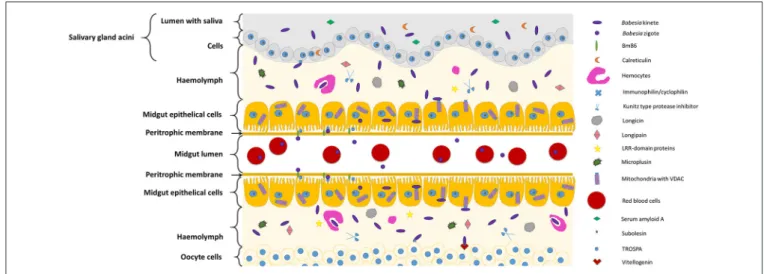
FIGURE 1 |Diagram representing tick molecules implicated inBabesiaspp. acquisition and transmission by the vector. When ticks feed onBabesia-infected animals, parasites within red blood cellsreach and penetrate the tick midgut peritrophic membrane to invade the epithelial cells (in the figure center). Once these cells are infected, transcriptional factors, such as subolesin, can regulate protein expression in several cellular pathways, facilitatingBabesiainfection. In the microvilli of the midgut cells, parasite zygotes will probably interact with a tick glycoprotein (Bm86) and a tick receptor of the outer surface protein A (TROSPA). Inside the epithelial cells, mitochondria porins (VDAC) can bind toBabesiakinete proteins promoting plasminogen activation in the cell surface, allowing their passage to the haemolymph. Once here, the haemocytes can phagocyte circulating parasites and the tick antimicrobial molecules such as, longicin, micropulsin, longipain, LRR-domain and Kunitz-type protease inhibitors are activated potentially reducing the infection in the vector. If the infectious parasites surpass these barriers of defense, they will be capable to spread across the tissues and invade ovaries (represented in the bottom of the figure) and SGs (represented in the top of the figure). In the ovary, the interaction ofBabesiamolecules with tick vitellogenin and TROSPA receptors may contribute for the occurrence of transovarial transmission; while in the SGs,
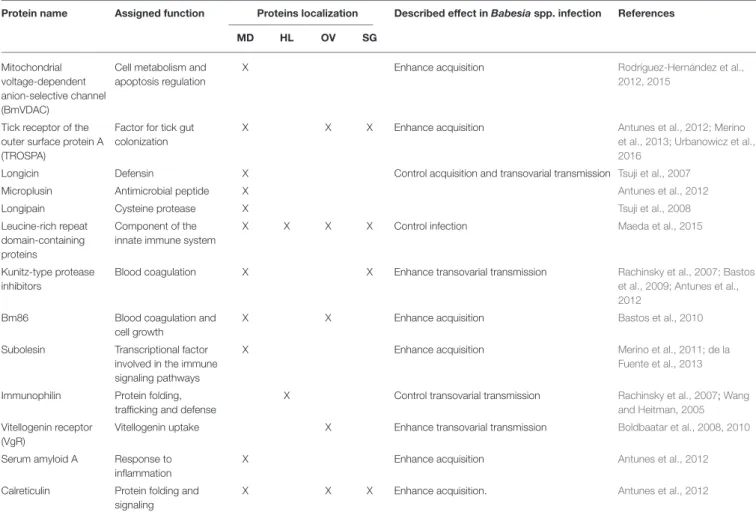
TABLE 1 |Tick molecules interfering withBabesiaspp. infection.
Protein name Assigned function Proteins localization Described effect inBabesiaspp. infection References
MD HL OV SG
Mitochondrial voltage-dependent anion-selective channel (BmVDAC)
Cell metabolism and apoptosis regulation
X Enhance acquisition Rodríguez-Hernández et al., 2012, 2015
Tick receptor of the outer surface protein A (TROSPA)
Factor for tick gut colonization
X X X Enhance acquisition Antunes et al., 2012; Merino et al., 2013; Urbanowicz et al., 2016
Longicin Defensin X Control acquisition and transovarial transmission Tsuji et al., 2007
Microplusin Antimicrobial peptide X Antunes et al., 2012
Longipain Cysteine protease X Tsuji et al., 2008
Leucine-rich repeat domain-containing proteins
Component of the innate immune system
X X X X Control infection Maeda et al., 2015
Kunitz-type protease inhibitors
Blood coagulation X X Enhance transovarial transmission Rachinsky et al., 2007; Bastos et al., 2009; Antunes et al., 2012
Bm86 Blood coagulation and cell growth
X X Enhance acquisition Bastos et al., 2010
Subolesin Transcriptional factor involved in the immune signaling pathways
X Enhance acquisition Merino et al., 2011; de la Fuente et al., 2013
Immunophilin Protein folding, trafficking and defense
X Control transovarial transmission Rachinsky et al., 2007;Wang and Heitman, 2005
Vitellogenin receptor (VgR)
Vitellogenin uptake X Enhance transovarial transmission Boldbaatar et al., 2008, 2010
Serum amyloid A Response to inflammation
X Enhance acquisition Antunes et al., 2012
Calreticulin Protein folding and signaling
X X X Enhance acquisition. Antunes et al., 2012
MD, Midgut; HL, Haemolymph; OV, Ovaries; SG, Salivary Glands.
importance during
Babesia
-vector-host interactions and it seems
likely that more molecules will emerge as key players in these
vector-parasite networks in the near future.
Figure 1
,
Table 1
summarizes the so far identified tick
molecules networking with
Babesia
spp. showing their
localization and suggested interaction.
CONCLUSIONS
The major critical point for the development of vaccines is
the identification of new targets. In this review, our objective
was to gather relevant information about the tick molecules
involved with
Babesia
parasite infections. During the last decade,
several studies using “omics” and systems biology approaches
have greatly improved our knowledge of the interactions taking
place at the tick-pathogen interface. The
Babesia
-tick interactome
is still neglected with scattered information, and only a few
tick proteins have been shown to influence the acquisition,
dissemination and transmission of the parasite. From this short
list, subolesin, having a role in the tick innate immune response,
stands out as a potential candidate antigen for a universal
anti-vector vaccine. During
Babesia
infection, this molecule produced
positive results, making it a candidate antigen for a
transmission-blocking vaccine. Other proteins involved in
Babesia
acquisition,
including the TROSPA receptor, are also promising candidates
for a multi-antigenic vaccine. Some of these datasets were
obtained through use of transcriptomic, proteomic, and systems
biology approaches. These and future technologies will be
fundamental to the improvement and development of new
control strategies and more effective vaccines.
AUTHOR CONTRIBUTIONS
SA, JF, CR, and AD conducted the literature research and wrote
the paper. SA and CR prepared the table and JC prepared the
figure. All authors critically read and revised the manuscript.
ACKNOWLEDGMENTS
REFERENCES
Almazán, C., Kocan, K. M., Bergman, D. K., Garcia-Garcia, J. C., Blouin, E. F., and de la Fuente, J. (2003). Identification of protective antigens for the control ofIxodes scapularisinfestations using cDNA expression library immunization. Vaccine21, 1492–1501. doi: 10.1016/S0264-410X(02)00683-7
Alzan, H. F., Lau, A. O., Knowles, D. P., Herndon, D. R., Ueti, M. W., Scoles, G. A., et al. (2016). Expression of 6-Cys gene superfamily definesBabesia bovissexual
stage development withinRhipicephalus microplus.PLoS ONE11:e0163791.
doi: 10.1371/journal.pone.0163791
Anatriello, E., Ribeiro, J. M. C., de Miranda-Santos, I. K. F., Brandao, L. G., Anderson, J. M., Valenzuela, J. G., et al. (2010). An insight into the
sialotranscriptome of the brown dog tick, Rhipicephalus sanguineus.BMC
Genomics11:450. doi: 10.1186/1471-2164-11-450
Antunes, S., Galindo, R. C., Almazan, C., Rudenko, N., Golovchenko, M.,
Grubhoffer, L., et al. (2012). Functional genomics studies of Rhipicephalus
(Boophilus) annulatus ticks in response to infection with the cattle
protozoan parasite, Babesia bigemina. Int. J. Parasitol. 42, 187–195.
doi: 10.1016/j.ijpara.2011.12.003
Antunes, S., Merino, O., Lerias, J., Domingues, N., Mosqueda, J., de la Fuente, J., et al. (2015). Artificial feeding of Rhipicephalus microplusfemale ticks
with anti calreticulin serum do not influence tick and Babesia bigemina
acquisition. Ticks Tick Borne Dis. 6, 47–55. doi: 10.1016/j.ttbdis.2014.0
9.003
Antunes, S., Merino, O., Mosqueda, J., Moreno-Cid, J. A., Bell-Sakyi, L., Fragkoudis, R., et al. (2014). Tick capillary feeding for the study of proteins involved in tick-pathogen interactions as potential antigens for the
control of tick infestation and pathogen infection. Parasit. Vectors 7:42.
doi: 10.1186/1756-3305-7-42
Bastos, R. G., Suarez, C. E., Laughery, J. M., Johnson, W. C., Ueti, M. W., and Knowles, D. P. (2013). Differential expression of three members
of the multidomain adhesion CCp family in Babesia bigemina, Babesia
bovisandTheileria equi.PLoS ONE8:e67765. doi: 10.1371/journal.pone.00 67765
Bastos, R. G., Ueti, M. W., Guerrero, F. D., Knowles, D. P., and Scoles, G. A. (2009).
Silencing of a putative immunophilin gene in the cattle tick Rhipicephalus
(Boophilus) microplus increases the infection rate ofBabesia bovisin larval progeny.Parasit. Vectors2:57. doi: 10.1186/1756-3305-2-57
Bastos, R. G., Ueti, M. W., Knowles, D. P., and Scoles, G. A. (2010). The Rhipicephalus(Boophilus) microplus Bm86 gene plays a critical role in the fitness of ticks fed on cattle during acuteBabesia bovisinfection.Parasit. Vectors 3:111. doi: 10.1186/1756-3305-3-111
Bock, R., Jackson, L., De Vos, A., and Jorgensen, W. (2004). Babesiosis of cattle. Parasitology129, S247–S269. doi: 10.1017/S0031182004005190
Boldbaatar, D., Battsetseg, B., Matsuo, T., Hatta, T., Umemiya-Shirafuji, R., Xuan, X., et al. (2008). Tick vitellogenin receptor reveals critical role in oocyte
development and transovarial transmission ofBabesiaparasite.Biochem. Cell
Biol.86, 331–344. doi: 10.1139/O08-071
Boldbaatar, D., Umemiya-Shirafuji, R., Liao, M., Tanaka, T., Xuan, X. N., and Fujisaki, K. (2010). Multiple vitellogenins from theHaemaphysalis longicornis
tick are crucial for ovarian development.J. Insect Physiol.56, 1587–1598.
doi: 10.1016/j.jinsphys.2010.05.019
Cen-Aguilar, J. F., Rodriguez-Vivas, R. I., Dominguez-Alpizar, J. L., and
Wagner, G. G. (1998). Studies on the effect of infection byBabesiasp. on
oviposition ofBoophilus microplusengorged females naturally infected in the
Mexican tropics. Vet. Parasitol.78, 253–257. doi: 10.1016/S0304-4017(98)00
148-4
Chao, L. L., Liao, H. T., Ho, T. Y., and Shih, C. M. (2017). First detection and molecular identification ofBabesia gibsonifromRhipicephalus sanguineusticks. Acta Trop.166, 356–362. doi: 10.1016/j.actatropica.2016.09.022
Chauvin, A., Moreau, E., Bonnet, S., Plantard, O., and Malandrin, L. (2009). Babesia and its hosts: adaptation to long-lasting interactions as a way
to achieve efficient transmission. Vet. Res. 40:37. doi: 10.1051/vetres/20
09020
Coleman, J. L., Gebbia, J. A., Piesman, J., Degen, J. L., Bugge, T. H., and Benach, J. L. (1997). Plasminogen is required for efficient dissemination ofB. burgdorferi
in ticks and for enhancement of spirochetemia in mice. Cell89, 1111–1119.
doi: 10.1016/S0092-8674(00)80298-6
de Castro, M. H., de Klerk, D., Pienaar, R., Latif, A. A., Rees, D. J. G., and
Mans, B. J. (2016).De novoassembly and annotation of the salivary gland
transcriptome ofRhipicephalus appendiculatusmale and female ticks during
blood feeding.Ticks Tick Borne Dis.7, 536–548. doi: 10.1016/j.ttbdis.2016.0 1.014
de la Fuente, J., Moreno-Cid, J. A., Galindo, R. C., Almazan, C., Kocan, K. M., Merino, O., et al. (2013). Subolesin/Akirin vaccines for the control of arthropod
vectors and vectorborne pathogens.Transbound. Emerg. Dis.60, 172–178.
doi: 10.1111/tbed.12146
de la Fuente, J., Villar, M., Cabezas-Cruz, A., Estrada-Pena, A., Ayllon, N., and Alberdi, P. (2016). Tick-host-pathogen interactions: conflict and cooperation. PLoS Pathog.12:e1005488. doi: 10.1371/journal.ppat.1005488
de Rezende, J., Rangel, C. P., McIntosh, D., Silveira, J. A., Cunha, N. C., Ramos, C. A., et al. (2015).In vitrocultivation and cryopreservation ofBabesia bigemina
sporokinetes in hemocytes ofRhipicephalus microplus.Vet. Parasitol. 212,
400–403. doi: 10.1016/j.vetpar.2015.07.008
Esteves, E., Lara, F. A., Lorenzini, D. M., Costa, G. H., Fukuzawa, A. H., Pressinotti, L. N., et al. (2008). Cellular and molecular characterization of
an embryonic cell line (BME26) from the tick Rhipicephalus (Boophilus)
microplus.Insect Biochem. Mol. Biol.38, 568–580. doi: 10.1016/j.ibmb.2008.0 1.006
Ferreira, C. A. S., Vaz, I. D., da Silva, S. S., Haag, K. L., Valenzuela, J. G., and Masuda, A. (2002). Cloning and partial characterization of a Boophilus microplus(Acari:Ixodidae) calreticulin.Exp. Parasitol.101, 25–34. doi: 10.1016/S0014-4894(02)00032-2
Ferreira, V., Molina, M. C., Valck, C., Rojas, A., Aguilar, L., Ramirez, G., et al. (2004). Role of calreticulin from parasites in its interaction with vertebrate
hosts.Mol. Immunol.40, 1279–1291. doi: 10.1016/j.molimm.2003.11.018
Ferrolho, J., Antunes, S., Santos, A. S., Velez, R., Padre, L., Cabezas-Cruz, A., et al. (2016). Detection and phylogenetic characterization ofTheileriaspp. and Anaplasma marginaleinRhipicephalus bursain Portugal. Ticks Tick Borne Dis. 7, 443–438. doi: 10.1016/j.ttbdis.2016.01.004
Florin-Christensen, M., and Schnittger, L. (2009). Piroplasmids and ticks: a long-lasting intimate relationship.Front. Biosci.14:3435. doi: 10.2741/3435 Fogaça, A. C., Lorenzini, D. M., Kaku, L. M., Esteves, E., Bulet, P.,
and Daffre, S. (2004). Cysteine-rich antimicrobial peptides of the cattle tick Boophilus microplus: isolation, structural characterization and tissue expression profile.Dev. Comp. Immunol.28, 191–200. doi: 10.1016/j.dci.2003.0 8.001
Francischetti, I. M. B., Anderson, J. M., Manoukis, N., Pham, V. M., and Ribeiro, J. M. C. (2011). An insight into the sialotranscriptome and proteome of the coarse
bontlegged tick,Hyalomma marginatum rufipes.J. Proteomics74, 2892–2908.
doi: 10.1016/j.jprot.2011.07.015
Francischetti, I. M., Mans, B. J., Meng, Z., Gudderra, N., Veenstra, T. D., Pham, V. M., et al. (2008). An insight into the sialome of the soft tick,Ornithodorus parkeri. Insect Biochem. Mol. Biol. 38, 1–21. doi: 10.1016/j.ibmb.2007.0 9.009
Galindo, R. C., Doncel-Perez, E., Zivkovic, Z., Naranjo, V., Gortazar, C., Mangold, A. J., et al. (2009). Tick subolesin is an ortholog of the akirins
described in insects and vertebrates. Dev. Comp. Immunol. 33, 612–617.
doi: 10.1016/j.dci.2008.11.002
Garcia, G. R., Gardinassi, L. G., Ribeiro, J. M., Anatriello, E., Ferreira, B. R.,
Moreira, H. N., et al. (2014). The sialotranscriptome ofAmblyomma triste,
Amblyomma parvumandAmblyomma cajennenseticks, uncovered by 454-based RNA-seq.Parasit. Vectors7:430. doi: 10.1186/1756-3305-7-430 Ghosh, A. K., Coppens, I., Gårdsvoll, H., Ploug, M., and Jacobs-Lorena, M.
(2011). Plasmodium ookinetes coopt mammalian plasminogen to invade
the mosquito midgut. Proc. Natl. Acad. Sci. U.S.A. 108, 17153–17158.
doi: 10.1073/pnas.1103657108
Gou, H., Guan, G., Liu, A., Ma, M., Chen, Z., Liu, Z., et al. (2013). Coevolutionary analyses of the relationships between piroplasmids and their hard tick hosts. Ecol. Evol.3, 2985–2993. doi: 10.1002/ece3.685
Gough, J. M., and Kemp, D. H. (1993). Localization of a low abundance membrane
protein (Bm86) on the gut cells of the cattle tickBoophilus microplus by
immunogold labeling.J. Parasitol.79, 900–907. doi: 10.2307/3283728 Hajdusek, O., Sima, R., Ayllon, N., Jalovecka, M., Perner, J., de la Fuente, J., et al.
Heekin, A. M., Guerrero, F. D., Bendele, K. G., Saldivar, L., Scoles, G. A., Dowd, S. E., et al. (2013). Gut transcriptome of replete adult female cattle
ticks, Rhipicephalus (Boophilus) microplus, feeding upon a Babesia bovis
-infected bovine host.Parasitol. Res.112, 3075–3090. doi: 10.1007/s00436-013-3 482-4
Homer, M. J., Aguilar-Delfin, I., Telford, S. R., Krause, P. J., and
Persing, D. H. (2000). Babesiosis. Clin. Microbiol. Rev. 13, 451–469.
doi: 10.1128/CMR.13.3.451-469.2000
Inoue, N., Hanada, K., Tsuji, N., Igarashi, I., Nagasawa, H., Mikami, T., et al. (2001).
Characterization of phagocytic hemocytes inOrnithodoros moubata(Acari:
Ixodidae).J. Med. Entomol.38, 514–519. doi: 10.1603/0022-2585-38.4.514 Jaworski, D. C., Simmen, F. A., Lamoreaux, W., Coons, L. B., Muller,
M. T., and Needham, G. R. (1995). A secreted calreticulin protein in
ixodid tick (Amblyomma americanum) saliva.J. Insect Physiol.41, 369–375.
doi: 10.1016/0022-1910(94)00107-R
Karim, S., Singh, P., and Ribeiro, J. M. C. (2011). A Deep insight into the
Sialotranscriptome of the gulf coast tick,Amblyomma maculatum.PLoS ONE
6:e28525. doi: 10.1371/journal.pone.0028525
Kim, T. K., Guaratini Ibelli, A. M., and Mulenga, A. (2015). Amblyomma
americanum tick calreticulin binds C1q but does not inhibit activation
of the classical complement cascade. Ticks Tick Borne Dis. 6, 91–101.
doi: 10.1016/j.ttbdis.2014.10.002
Konnai, S., Yamada, S., Imamura, S., Nishikado, H., Githaka, N., Ito, T., et al. (2012). Identification of TROSPA homologue inIxodespersulcatus Schulze, the specific vector for human Lyme borreliosis in Japan.Ticks Tick Borne Dis.3, 75–77. doi: 10.1016/j.ttbdis.2012.02.001
Kopacek, P., Hajdusek, O., Buresova, V., and Daffre, S. (2010). Tick innate
immunity.Invertebr. Immun.708, 137–162. doi: 10.1007/978-1-4419-8059-5_8
Kotsyfakis, M., Kopácek, P., Franta, Z., Pedra, J. H., and Ribeiro, J. M.
(2015). Deep sequencing analysis of the Ixodes ricinus haemocytome.
PLoS Negl. Trop. Dis. 9:e0003754. doi: 10.1371/journal.pntd.00 03754
Lack, J. B., Reichard, M. V., and Van Den Bussche, R. A. (2012). Phylogeny and
evolution of thePiroplasmidaas inferred from 18S rRNA sequences.Int. J.
Parasitol.42, 353–363. doi: 10.1016/j.ijpara.2012.02.005
Leiby, D. A. (2006). Babesiosis and blood transfusion: flying under the radar.Vox Sang.90, 157–165. doi: 10.1111/j.1423-0410.2006.00740.x
Maeda, H., Hatta, T., Alim, M. A., Tsubokawa, D., Mikami, F., Kusakisako, K., et al. (2017). Initial development ofBabesia ovatain the tick midgut.Vet. Parasitol. 233, 39–42. doi: 10.1016/j.vetpar.2016.11.020
Maeda, H., Kurisu, K., Miyata, T., Kusakisako, K., Galay, R. L., Rio, T. M., et al. (2015). Identification of theBabesia-responsive leucine-rich repeat domain-containing protein from the hard tickHaemaphysalis longicornis.Parasitol. Res. 114, 1793–1802. doi: 10.1007/s00436-015-4365-7
Merino, O., Almazan, C., Canales, M., Villar, M., Moreno-Cid, J. A., Galindo, R. C., et al. (2011). Targeting the tick protective antigen subolesin reduces
vector infestations and pathogen infection by Anaplasma marginale and
Babesia bigemina. Vaccine 29, 8575–8579. doi: 10.1016/j.vaccine.2011.0 9.023
Merino, O., Antunes, S., Mosqueda, J., Moreno-Cid, J. A., Perez de la Lastra, J. M., Rosario-Cruz, R., et al. (2013). Vaccination with proteins involved in tick-pathogen interactions reduces vector infestations and pathogen infection. Vaccine31, 5889–5896. doi: 10.1016/j.vaccine.2013.09.037
Moreno-Cid, J. A., Perez de la Lastra, J. M., Villar, M., Jimenez, M., Pinal, R., Estrada-Pena, A., et al. (2013). Control of multiple arthropod
vector infestations with subolesin/akirin vaccines. Vaccine 31, 1187–1196.
doi: 10.1016/j.vaccine.2012.12.073
Mosqueda, J., Falcon, A., Antonio Alvarez, J., Alberto Ramos, J.,
Oropeza-Hernandez, L. F., and Figueroa, J. V. (2004).Babesia bigeminasexual stages
are induced in vitroand are specifically recognized by antibodies in the
midgut of infectedBoophilus microplusticks.Int. J. Parasitol.34, 1229–1236. doi: 10.1016/j.ijpara.2004.07.003
Ord, R. L., and Lobo, C. A. (2015). Human babesiosis: pathogens, prevalence,
diagnosis and treatment. Curr. Clin. Microbiol. Rep. 2, 173–181.
doi: 10.1007/s40588-015-0025-z
Pal, U., Li, X., Wang, T., Montgomery, R. R., Ramamoorthi, N., deSilva, A. M., et al. (2004). TROSPA, anIxodes scapularisreceptor forBorrelia burgdorferi. Cell119, 457–468. doi: 10.1016/j.cell.2004.10.027
Perner, J., Sobotka, R., Sima, R., Konvickova, J., Sojka, D., Oliveira, P. L., et al. (2016). Acquisition of exogenous haem is essential for tick reproduction.Elife 5:e12318. doi: 10.7554/eLife.12318
Rachinsky, A., Guerrero, F. D., and Scoles, G. A. (2007). Differential
protein expression in ovaries of uninfected and Babesia-infected
southern cattle ticks, Rhipicephalus (Boophilus) microplus. Insect
Biochem. Mol. Biol. 37, 1291–1308. doi: 10.1016/j.ibmb.2007.0 8.001
Ranjbar-Bahadori, S., Eckert, B., Omidian, Z., Shirazi, N. S., and Shayan, P. (2012). Babesia ovisas the main causative agent of sheep babesiosis in Iran.Parasitol.
Res.110, 1531–1536. doi: 10.1007/s00436-011-2658-z
Ribeiro, J. M., Anderson, J. M., Manoukis, N. C., Meng, Z., and Francischetti, I. M. (2011). A further insight into the sialome of the tropical bont tick, Amblyomma variegatum.BMC Genomics12:136. doi: 10.1186/1471-2164-1 2-136
Rodríguez-Hernández, E., Mosqueda, J., Alvarez-Sánchez, M. E., Neri, A. F., Mendoza-Hernández, G., and Camacho-Nuez, M. (2012). The identification of a VDAC-like protein involved in the interaction ofBabesia bigeminasexual stages withRhipicephalus microplusmidgut cells.Vet. Parasitol.187, 538–541. doi: 10.1016/j.vetpar.2012.01.028
Rodríguez-Hernández, E., Mosqueda, J., León-Ávila, G., Castañeda-Ortiz, E. J., Álvarez-Sánchez, M. E., Camacho, A. D., et al. (2015). BmVDAC upregulation
in the midgut ofRhipicephalus microplus, during infection with Babesia
bigemina.Vet. Parasitol.212, 368–374. doi: 10.1016/j.vetpar.2015.06.016
Rodríguez-Mallon, A. (2016). Developing Anti-tick Vaccines.Methods Mol. Biol.
1404, 243–259. doi: 10.1007/978-1-4939-3389-1_17
Rodríguez-Mallon, A., Bechara, G., Zacarias, R., Benavides-Ortiz, E.,
Soto-Rivas, J., Gómez-Ramírez, A., et al. (2013). Inhibition of Ehrlichia canis
andBabesia canistransmission among ticks fed together on dogs vaccinated
with Bm86 antigen. Open J. Anim. Sci. 3:24. doi: 10.4236/ojas.2013.3
3A004
Rudenko, N., Golovchenko, M., Edwards, M. J., and Grubhoffer, L. (2005).
Differential expression of Ixodes ricinus tick genes induced by blood
feeding or Borrelia burgdorferi infection. J. Med. Entomol. 42, 36–41.
doi: 10.1093/jmedent/42.1.36
Sasaki, S. D., and Tanaka, A. S. (2008). rBmTI-6, a Kunitz-BPTI domain
protease inhibitor from the tick Boophilus microplus, its cloning,
expression and biochemical characterization. Vet. Parasitol. 155, 133–141.
doi: 10.1016/j.vetpar.2008.03.031
Schnittger, L., Rodriguez, A. E., Florin-Christensen, M., and Morrison, D.
A. (2012).Babesia: a world emerging. Infect. Genet. Evol.12, 1788–1809.
doi: 10.1016/j.meegid.2012.07.004
Shayan, P., Hooshmand, E., Rahbari, S., and Nabian, S. (2007). Determination ofRhipicephalusspp. as vectors forBabesia ovisin Iran. Parasitol. Res.101, 1029–1033. doi: 10.1007/s00436-007-0581-0
Solano-Gallego, L., Sainz, Á., Roura, X., Estrada-Peña, A., and Miró, G. (2016). A review of canine babesiosis: the European perspective.Parasit. Vectors9, 336. doi: 10.1186/s13071-016-1596-0
Sonenshine, D. E., and Hynes, W. L. (2008). Molecular characterization and related aspects of the innate immune response in ticks.Front. Biosci.13:3209. doi: 10.2741/3209
Sonenshine, D. E., and Michael Roe, R. (2014).Biology of Ticks,2ndEdn. New York, NY: Oxford University Press.
Sultana, H., Patel, U., Sonenshine, D. E., and Neelakanta, G. (2015). Identification and comparative analysis of subolesin/akirin ortholog from Ornithodoros turicataticks.Parasit. Vectors8:132. doi: 10.1186/s13071-015-0 749-x
Tonk, M., Cabezas-Cruz, A., Valdés, J. J., Rego, R. O., Grubhoffer, L.,
Estrada-Peña, A., et al. (2015). Ixodes ricinus defensins attack
distantly-related pathogens.Dev. Comp. Immunol.53, 358–365. doi: 10.1016/j.dci.2015.
08.001
Tsuji, N., Battsetseg, B., Boldbaatar, D., Miyoshi, T., Xuan, X., Oliver, J. H. Jr., et al. (2007). Babesial vector tick defensin againstBabesiasp. parasites. Infect. Immun.75, 3633–3640. doi: 10.1128/IAI.00256-07
Tsuji, N., Miyoshi, T., Battsetseg, B., Matsuo, T., Xuan, X., and Fujisaki, K.
(2008). A cysteine protease is critical for Babesia spp. transmission in
Urbanowicz, A., Lewandowski, D., Szpotkowski, K., and Figlerowicz,
M. (2016). Tick receptor for outer surface protein A from
Ixodes ricinus-the first intrinsically disordered protein involved
in vector-microbe recognition. Sci. Rep. 6:25205. doi: 10.1038/
srep25205
Villar, M., Ayllon, N., Alberdi, P., Moreno, A., Moreno, M., Tobes, R., et al. (2015). Integrated metabolomics, transcriptomics and proteomics identifies
metabolic pathways affected by Anaplasma phagocytophilum Infection in
tick cells. Mol. Cell. Proteomics 14, 3154–3172. doi: 10.1074/mcp.M115.0
51938
Wang, P., and Heitman, J. (2005). The cyclophilins. Genome Biol. 6:226.
doi: 10.1186/gb-2005-6-7-226
Young, M. J., Bay, D. C., Hausner, G., and Court, D. A. (2007). The
evolutionary history of mitochondrial porins. BMC Evol. Biol. 7:31.
doi: 10.1186/1471-2148-7-31
Yu, X., Gong, H., Zhou, Y., Zhang, H., Cao, J., and Zhou, J. (2015). Differential
sialotranscriptomes of unfed and fedRhipicephalus haemaphysaloides, with
particular regard to differentially expressed genes of cysteine proteases.Parasit. Vectors8:597. doi: 10.1186/s13071-015-1213-7
Zivkovic, Z., Torina, A., Mitra, R., Alongi, A., Scimeca, S., Kocan, K. M., et al.
(2010). Subolesin expression in response to pathogen infection in ticks.BMC
Immunol.11:7. doi: 10.1186/1471-2172-11-7
Conflict of Interest Statement: The authors declare that the research was conducted in the absence of any commercial or financial relationships that could be construed as a potential conflict of interest.