1 Sponsorship: Coordenação de Aperfeiçoamento de Pessoal de Nível Superior (CAPES).
2 Msc. in Nursing. Escola de Enfermagem de Ribeirão Preto, Universidade de São Paulo, PAHO/WHO Collaborating Centre for Nursing Research Development, Brazil.
3 PhD. Full Professor. Escola de Enfermagem de Ribeirão Preto, Universidade de São Paulo, PAHO/WHO Collaborating Centre for Nursing Research Development, Brazil.
4 PhD. Senior Professor, Nursing School, Universidade de São Paulo, Brazil.
Presenteeism and musculoskeletal symptoms among nursing
professionals
1Heloisa Ehmke Cardoso dos Santos
2Maria Helena Palucci Marziale
3Vanda Elisa Andres Felli
4Objective: to identify the prevalence of musculoskeletal symptoms in two stages (before
and after six months of the first stage) and its association with presenteeism among nursing
professionals. Method: longitudinal study with quantitative data conducted in a Brazilian
teaching hospital with 211 nursing professionals. The instruments used for data collection were:
Cultural and Psychosocial Influences on Disability - CUPID Questionnaire, used to identify the
musculoskeletal symptoms and the Stanford Presenteeism Scale, used to verify presenteeism.
The instruments were validated for Brazilian Portuguese. The study was approved by the Human
Research Ethics Committee. Descriptive statistics, Mann Whitney test and regression analysis
were used to analyze the data. Results: 158 (74.9%) professionals experienced presenteeism
and 151 (71.6%) reported low back pain as musculoskeletal symptom. Professionals with low
back pain had lower scores on the presenteeism scale and shoulder pain was related to loss of
concentration during work. Conclusion: presenteeism lead to a reduction in work performance
and was manifested in the presence of musculoskeletal symptoms. In addition, shoulder pain
caused loss of concentration at work.
Descriptors: Cumulative Trauma Disorders; Efficiency; Presenteeism; Occupational Health;
Nursing; Work.
How to cite this article
Santos HEC, Marziale MHP, Felli VEA. Presenteeism and musculoskeletal symptoms among nursing professionals. Rev. Latino-Am. Enfermagem. 2018;26:e3006. [Access ___ __ ____]; Available in: ___________________ . DOI: http://dx.doi.org/10.1590/1518-8345.2185.3006. monthdayyear
URL
2018;26:e3006
DOI: 10.1590/1518-8345.2185.3006
Introduction
Musculoskeletal disorders are important public
health problems in several countries. These disorders
can cause functional limitations in adults(1) and may
interfere with work and daily life activities, arouse
feelings such as impotence, uselessness, abandonment
and failure, and generate costs, decrease in or lack of
productivity and job losses(2-3).
Studies have shown a prevalence of musculoskeletal symptoms higher than 70.0% among nursing professionals(4-5). In Brazil, this prevalence is above
80.0%(6-7). Among the musculoskeletal symptoms,
pain is the most prevalent in nursing professionals,
according to studies(5,7).
Nursing professionals are exposed to occupational
hazards that may compromise physical and mental
health(8), interfere with the quality of life of the worker
and the quality of care provided to the patient(9) and
cause illness, absenteeism, presenteeism and generate
costs for the institutions(10).
Absenteeism is defined as the employee’s absence from work, consisting of the period the
worker is absent due to some intervening motive. It
is related to the frequency or duration of the work
time lost when the worker does not attend and it
corresponds to the absences when he was expected
to be present(11).
Presenteeism is the condition in which professionals
attend the workplace and perform their activities in a non-productive way and without providing a good performance due to diseases and/or problems related to
work(12). It may be related to physical and psychological
factors(13).
This phenomenon has been a cause of concern
among the working population. Among the nursing
staff, it is considered a poorly diagnosed contemporary
problem, which can lead to serious consequences
and risks for professionals, for the institution and for
healthcare users(14).
Presenteeism affects the quality of work,
since it leads to errors and omissions in tasks. It
is also considered one of the risk factors for future
absenteeism due to illness(10) and it causes restriction
in labor productivity, not only in relation to quantity,
but also in issues related to the quality of the work
produced(15-16). It can be caused by health problems
such as stress, influenza, cold, allergy, asthma and musculoskeletal pain, which often interfere with
work productivity(16). Professionals in this condition
are physically at work, but their attention is
scattered, which can cause accidents and eventual
adverse events to the patients that are under their
responsibility.
Considering that musculoskeletal problems
are common among nursing professionals, that
presenteeism in nursing work has already been
evidenced in other studies(10,17-18) and that preventive
measures are necessary to minimize these problems, we are motivated to find answers to the following question: do musculoskeletal symptoms in nursing
professionals cause presenteeism? Therefore, this
study was developed with the objective of identifying
the prevalence of musculoskeletal symptoms in two stages (before and after six months of the first stage)
and its association with presenteeism among nursing
professionals.
Method
Longitudinal study with quantitative data
conducted with nursing assistants, nursing technicians
and nurses in a teaching hospital in Ribeirão Preto/ SP - Brazil. The study sample was based on the presence of musculoskeletal pain, considering the
region of the body that presented the highest value.
To calculate the sample, a pilot study was carried out with 30 nursing professionals, ten from each category (nursing assistant, nursing technician and nurse) and
information on the prevalence of musculoskeletal
pain and participant loss (professionals who refused
to participate on the second stage of the study) were obtained. The method used was stratified sampling and the professional categories were used as stratification variables.
The participants included in the study were
nursing professionals who had been working at the
hospital for at least one year and who were between 20 and 59 years old, excluding those who were on vacation and who turned 60 in April 2015. The inclusion criterion is based on other studies carried out
by the main author of the Cultural and Psychosocial
Influences on Disability - CUPID Questionnaire, in which there is a greater amount of professionals in
labor activity.
Data collection was performed in two stages. The first stage occurred between May and June 2015 using the CUPID Questionnaire(19-20),
validated for the Brazilian Portuguese(19). with the
objective of identifying demographic, occupational
characteristics and musculoskeletal symptoms in
professionals. The interval between the first and second stage was of six months, due to the reduced
time for implementation of the study. The Stanford
Presenteeism Scale – SPS 6(10) validated for Brazilian
Portuguese was used to evaluate general presenteeism
at work through the factors “completing work”
and “avoiding distraction”. The issues associated
with completing work refer to the amount of work
that is accomplished when the worker is under the influence of the causes of presenteeism, manifested through physical symptoms. The issues regarding
avoiding distraction correspond to the capacity of
concentration that the professionals present when
symptoms of presenteeism are manifested. This
instrument indicates how health circumstances and
problems affect the productivity of each worker,
and considers that each individual has different
ways of reacting to and overcoming the symptoms
caused by illness, resulting in different degrees of
physical and/or mental impairment for the individual
performance at work(10,21). SPS – 6 was applied only
to professionals who presented pain in one or more
regions of the body, since this scale evaluated how
much the presence of this pain interfered in the work.
The second stage was conducted in November and December 2015. In this stage, the follow-up questionnaire part of the CUPID Questionnaire(19) was applied in the sample of nursing professionals who participated in the first stage and accepted to participate in the second, with the objective of collecting
information similar to the baseline questionnaire within
a period of approximately six months after completion of the first one. At this stage, information regarding demographic, occupational data and presence of pain,
in each of the six anatomical regions (lower back, neck,
shoulder, elbow, wrist/hand and knee) during the last
month were assessed (19).
The CUPID Questionnaire data was analyzed through percentage values and the data from SPS 6
was analyzed based on the recommendations of the
main author of the instrument: the total score of the SPS-6 is composed of the sum of the score of the scale items, which can range from 6 to 30, so a low score (6 to 18) indicate reduced performance and high scores (close to or equal to 30) indicate a greater ability of the worker to concentrate and perform his work despite the
health problem(10,21).
The data collected were stored in a database in the program Microsoft Office Excel version 2010, and later entered in the statistical analysis program
Statistical Package for Social Science (SPSS) version
22 and in the program R version 3.1.2. Descriptive
statistics, the Mann Whitney test and multiple
linear regression truncated in the interval of six to 30 according to the score of SPS - 6(22) were used for data analysis and are presented in tables. In all analyzes the level of significance (alpha) adopted was 5% (0.05).
This study followed all the ethical
recommendations for research with human beings and
good practices in research(23). There was no conflict of
interest and the research project was approved under CAAE protocol: 37430614.0.0000.5393 from the
Research Ethics Committee of Ribeirão Preto College
of Nursing, University of São Paulo, Brazil. The
questionnaires were given to the nursing professionals
who consented to participate in the study and signed
the informed consent form. All questionnaires were self-completed out of working hours and lasting approximately 30 minutes, as recommended by the main author.
Results
A total of 348 nursing professionals were
invited to compose the sample. From these, 211 professionals (60.6%) accepted to participate in the first stage of the study, of which 134 (63.5%) signed, in written, their intention and consent to
participate in the second stage of the study. However,
when the second stage data collection was performed, 90 nursing professionals (67.2% of the 134 sample) actually answered the data collection instrument.
Regarding the losses in the first
stage, 62 (17.8%) refused to participate, 31 (8.9%)
did not work in the institution at the time of data collection, 23 (6.6%) were on leave and 21 (6.0%) were on vacation.
Of the 211 (60.6%) professionals who participated in the first stage, 175 (82.9%) were women, 36 (17.1%) were men and the mean age was 42.3 years. Regarding the occupational variables, 106 (50.2%)
were nursing assistants, 53 (25.1%) were nursing
technicians and 52 (24.7%) were nurses. Regarding the demographic data of the 90 professionals
who participated in the second stage, 74 (82.2%) were female, 16 (17.8%) were male, 45 (50.0%) were nursing assistants, 21 (23.3%) were nursing
technicians, 24 (26.7) were nurses and the mean age
was 42.51 years.
Table 1 presents the prevalence of pain in the
anatomical regions (lower back, neck, shoulder, elbow,
Table 1 – Distribution of nursing professionals working in the teaching hospital according to the presence of musculoskeletal pain in the last twelve months (first stage). Ribeirão Preto-SP, Brazil, 2015
Variables Twelve months
Lower back n(%) Neck n(%) Shoulder n(%) Elbow n(%) Wrist and/or hand n(%) Knee n(%)
Yes 151(71.6) 112(53.1) 92(43.6) 29(13.7) 67(31.8) 79(37.4)
No 60(28.4) 99(46.9) 119(56.4) 182(86.3) 144(68.2) 132(62.6)
Total 211(100.0) 211(100.0) 211(100.0) 211(100.0) 211(100.0) 211(100.0)
Table 2 – Distribution of nursing professionals working in the teaching hospital according to the presence of musculoskeletal pain in the last month (first stage). Ribeirão Preto-SP, Brazil, 2015
Variables Last month
Lower back n(%) Neck n(%) Shoulder n(%) Elbow n(%) Wrist and/or hand n(%) Knee n(%)
Yes 118(78.1) 92(82.1) 76(82.6) 26(89.7) 52(77.6) 67(84.8)
No 33(21.9) 20(17.9) 16(17.4) 03(10.3) 15(22.4) 12(15.2)
Total 151(100.0) 112(100.0) 92(100.0) 29(100.0) 67(100.0) 79(100.0)
Table 3 – Distribution of nursing professionals working in the teaching hospital according to the presence of musculoskeletal pain in the last month/after six months (second stage). Ribeirão Preto-SP, Brazil, 2015
Variables Last month/after six months
Lower back n (%) Neck n (%) Shoulder n (%) Elbow n (%) Wrist and/or hand n (%) Knee n (%)
Yes 42(46.7) 34(37.8) 30(33.3) 13(14.4) 28(31.1) 27(30.0)
No 48(53.3) 56(62.2) 60(66.7) 77(85.6) 62(68.9) 63(70.0)
Total 90(100.0) 90(100.0) 90(100.0) 90(100.0) 90(100.0) 90(100.0)
Considering the data in Table 1, low back pain was
the most common symptom among participants in the first
stage of the study, manifested in 151 (71.6%) nursing
professionals in the last twelve months. Neck pain was
the second most mentioned pain by nursing professionals.
Table 2 shows the frequency of pain in the
anatomical regions in the last month among nursing
professionals in the first stage of the study.
According to table 2, 118 (78.1%) participants
manifested low back pain.
Table 3 present data on the prevalence of pain
among nursing professionals who participated in the
second stage.
According to Table 3, low back pain (42-46.7%) and neck pain (34-37.8%) were the most reported by the 90 professionals who participated in the second
stage of the study.
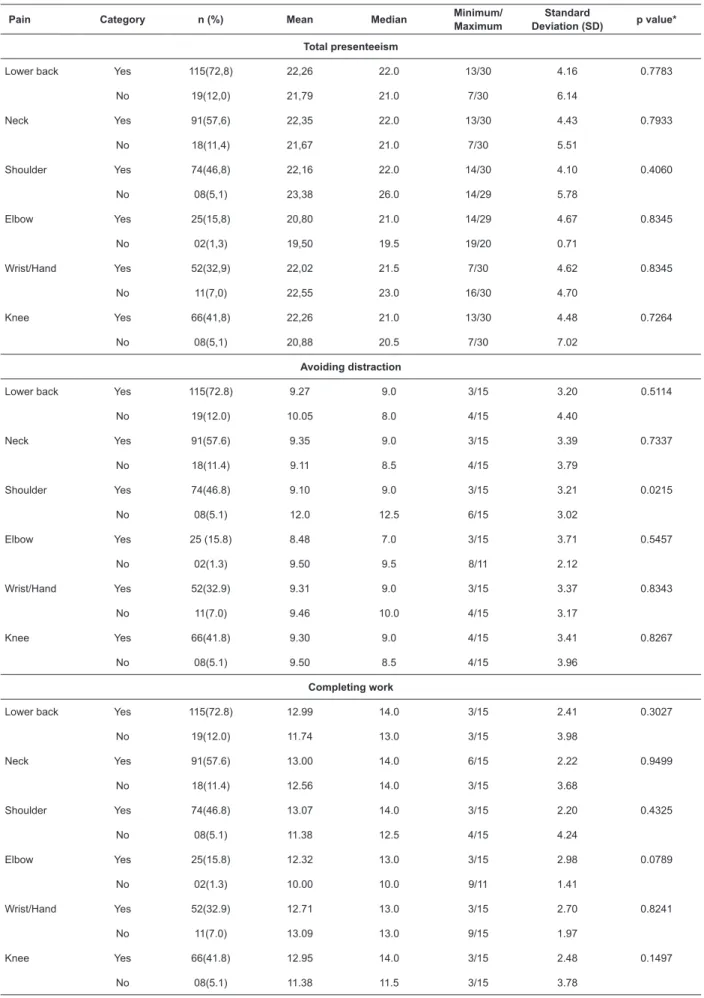
Table 4 presents the score values of the
presenteeism and the presence of pain in the last month
referring to the first stage of the study.
Among the 211 nursing professionals in the
sample, 163 (77.3%) presented pain in one or more
anatomical regions in the last month and 48 (22.7%)
did not report this symptom in this period. Of the 163
participants with pain, five (2.4%) had pain, but did
not answer the presenteeism scale, so 158 (74.9%)
professionals answered the scale correctly.
According to Table 4, the results indicate that
among the 158 nursing professionals, 115 (72.8%)
reported pain in the lower back, 91 (57.6%) neck pain,
74 (46.8%) pain in the shoulder, 25 (15.8%) pain in the
elbow, 52 (32.9%) pain in the wrist and/or hand and 66
Table 4 – Distribution of the values obtained according to the scores of presenteeism and presence of pain in the last month (baseline questionnaire) among nursing professionals working in the teaching hospital. Ribeirão Preto-SP, Brazil, 2015
Pain Category n (%) Mean Median Minimum/
Maximum
Standard
Deviation (SD) p value*
Total presenteeism
Lower back Yes 115(72,8) 22,26 22.0 13/30 4.16 0.7783
No 19(12,0) 21,79 21.0 7/30 6.14
Neck Yes 91(57,6) 22,35 22.0 13/30 4.43 0.7933
No 18(11,4) 21,67 21.0 7/30 5.51
Shoulder Yes 74(46,8) 22,16 22.0 14/30 4.10 0.4060
No 08(5,1) 23,38 26.0 14/29 5.78
Elbow Yes 25(15,8) 20,80 21.0 14/29 4.67 0.8345
No 02(1,3) 19,50 19.5 19/20 0.71
Wrist/Hand Yes 52(32,9) 22,02 21.5 7/30 4.62 0.8345
No 11(7,0) 22,55 23.0 16/30 4.70
Knee Yes 66(41,8) 22,26 21.0 13/30 4.48 0.7264
No 08(5,1) 20,88 20.5 7/30 7.02
Avoiding distraction
Lower back Yes 115(72.8) 9.27 9.0 3/15 3.20 0.5114
No 19(12.0) 10.05 8.0 4/15 4.40
Neck Yes 91(57.6) 9.35 9.0 3/15 3.39 0.7337
No 18(11.4) 9.11 8.5 4/15 3.79
Shoulder Yes 74(46.8) 9.10 9.0 3/15 3.21 0.0215
No 08(5.1) 12.0 12.5 6/15 3.02
Elbow Yes 25 (15.8) 8.48 7.0 3/15 3.71 0.5457
No 02(1.3) 9.50 9.5 8/11 2.12
Wrist/Hand Yes 52(32.9) 9.31 9.0 3/15 3.37 0.8343
No 11(7.0) 9.46 10.0 4/15 3.17
Knee Yes 66(41.8) 9.30 9.0 4/15 3.41 0.8267
No 08(5.1) 9.50 8.5 4/15 3.96
Completing work
Lower back Yes 115(72.8) 12.99 14.0 3/15 2.41 0.3027
No 19(12.0) 11.74 13.0 3/15 3.98
Neck Yes 91(57.6) 13.00 14.0 6/15 2.22 0.9499
No 18(11.4) 12.56 14.0 3/15 3.68
Shoulder Yes 74(46.8) 13.07 14.0 3/15 2.20 0.4325
No 08(5.1) 11.38 12.5 4/15 4.24
Elbow Yes 25(15.8) 12.32 13.0 3/15 2.98 0.0789
No 02(1.3) 10.00 10.0 9/11 1.41
Wrist/Hand Yes 52(32.9) 12.71 13.0 3/15 2.70 0.8241
No 11(7.0) 13.09 13.0 9/15 1.97
Knee Yes 66(41.8) 12.95 14.0 3/15 2.48 0.1497
No 08(5.1) 11.38 11.5 3/15 3.78
The mean values of the total presenteeism score related to pain ranged from 20.80 to 22.35 points; the highest score referred to neck pain and the lowest score
to elbow pain. The median ranged from 21 to 22, the
highest score referred to low back, neck and shoulder
pain, and the lowest score to knee and elbow pain. The SD score were between 4.10 and 4.67, and the highest value represented the elbow and the lowest the shoulder.
Regarding the score on avoiding distraction, the
mean score varied from 8.48 to 9.35, respectively
referring to pain in the elbow and in the neck. The
median scores ranged from 7 to 9, the lowest score
referring to pain in the elbow and the higher to pain
in the lower back, neck, shoulder, wrist and/or hand
and knee. Regarding the SD scores, the minimum was 3.20 referring to low back pain, while the maximum was 3.71, referring to elbow pain.
The scores of the factor completing work ranged from 12.32 to 13.07, respectively representing elbow and shoulder pain. The median ranged from 13 to
14; the score 13 was related to pain in the elbow and wrist, and the score 14 represented lower back, neck, shoulder and knee pain. SD scores ranged from 2.20 to 2.98 and respectively represented shoulder and elbow pain.
The data (pain and presenteeism scores) was compared through the non-parametric Mann-Whitney test. There was difference in the mean of the factor
avoiding distraction among the nursing professionals who presented shoulder pain; the mean was 9.10, median 9, minimum 3, maximum 15 and SD of 3.21.
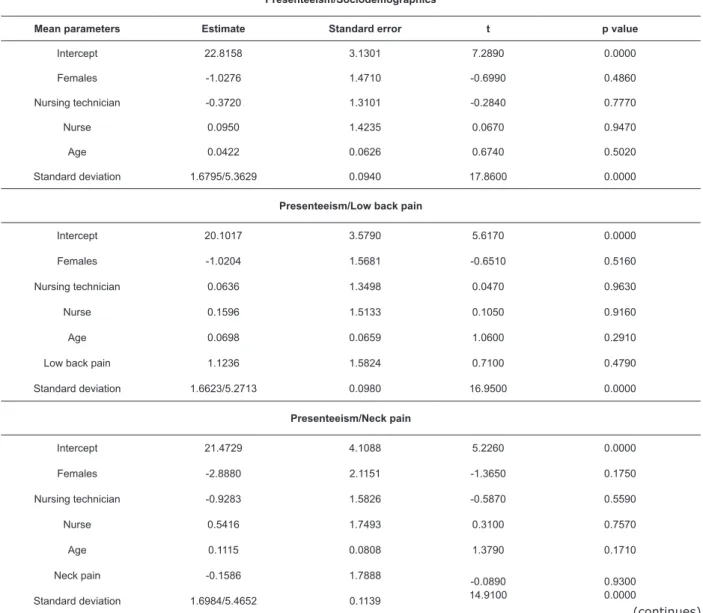
Data from the regression analysis of total presenteeism score, pain in the last month, professional
category and age are presented in Table 5.
Table 5 – Regression analysis of total presenteeism score, pain in the last month (baseline questionnaire), professional category and age among nursing professionals working in the teaching hospital. Ribeirão Preto-SP, Brazil, 2015.
Presenteeism/Sociodemographics
Mean parameters Estimate Standard error t p value
Intercept 22.8158 3.1301 7.2890 0.0000
Females -1.0276 1.4710 -0.6990 0.4860
Nursing technician -0.3720 1.3101 -0.2840 0.7770
Nurse 0.0950 1.4235 0.0670 0.9470
Age 0.0422 0.0626 0.6740 0.5020
Standard deviation 1.6795/5.3629 0.0940 17.8600 0.0000
Presenteeism/Low back pain
Intercept 20.1017 3.5790 5.6170 0.0000
Females -1.0204 1.5681 -0.6510 0.5160
Nursing technician 0.0636 1.3498 0.0470 0.9630
Nurse 0.1596 1.5133 0.1050 0.9160
Age 0.0698 0.0659 1.0600 0.2910
Low back pain 1.1236 1.5824 0.7100 0.4790
Standard deviation 1.6623/5.2713 0.0980 16.9500 0.0000
Presenteeism/Neck pain
Intercept 21.4729 4.1088 5.2260 0.0000
Females -2.8880 2.1151 -1.3650 0.1750
Nursing technician -0.9283 1.5826 -0.5870 0.5590
Nurse 0.5416 1.7493 0.3100 0.7570
Age 0.1115 0.0808 1.3790 0.1710
Neck pain -0.1586 1.7888
-0.0890 14.9100
0.9300 0.0000 Standard deviation 1.6984/5.4652 0.1139
Presenteeism/Shoulder pain
Intercept 22,2096 4,3185 5,1430 0,0000
Females -1,5424 1,7077 -0,9030 0,3690
Nursing technician 0,8176 1,5011 0,5450 0,5880
Nurse 1,6143 2,0714 0,7790 0,4380
Age 0,0704 0,0787 0,8950 0,3740
Shoulder pain -1,5830 2,2201 -0,7130 0,4780
Standard deviation 1,5738/4,8249 0,1166 13,5000 0,0000
Presenteeism/Elbow pain
Intercept 20.8536 6.3959 3.2600 0.0039
Females 2.1827 2.6855 0.8130 0.4259
Nursing technician -0.7063 2.1934 -0.3220 0.7508
Nurse 14.2367 7.6046 1.8720 0.0759
Age -0.0753 0.1222 -0.6160 0.5450
Elbow pain 1.0330 3.1840 0.3240 0.7490
Standard deviation 1.4113/4.1013 0.1617 8.7300 0.0000
Presenteeism/Wrist and/or hand pain
Intercept 22.4353 5.4332 4.1290 0.0001
Females -1.6264 2.5081 -0.6480 0.5194
Nursing technician 2.8956 2.3927 1.2100 0.2314
Nurse 1.0873 2.3010 0.4730 0.6384
Age 0.0205 0.0991 0.2060 0.8372
Wrist and/or hand pain 0.6074 2.4274 0.2500 0.8034
Standard deviation 1.6880/5.4087 0.1470 11.4800 0.0000
Presenteeism/Knee pain
Intercept 21.9099 5.0205 4.3640 0.0000
Females -3.1231 2.3598 -1.3230 0.1900
Nursing technician -1.7219 2.0192 -0.8530 0.3970
Nurse 0.1664 2.4716 0.0670 0.9470
Age 0.0828 0.0968 0.8560 0.3950
Knee pain 1.0125 2.5916 0.3910 0.6970
Standard deviation 1.7386/5.6894 0.1419 12.2500 0.0000
Table 5 – Continuation
The regression analysis shown in Table 5 observed 157 participants, since one did not fill age in the questionnaire. The expected mean score of presenteeism among male
professionals, nursing assistants and at zero year of age was
22.8158 points. Considering the same professional category and age, women had a score 1.0276 points lower than men. Nursing technicians had a score 0.3720 points lower than nursing assistants and nurses had a score 0.0950 points higher than nursing technicians. For the variable age, for each year of age, an average increase of 0.0422 is expected.
Presenteeism and low back pain were observed
in 133 participants and the expected mean score
among men, nursing assistants at zero year old was 20.1017 points. Women scored 1.0204 points less that the men, nurse technicians scored 0.0636 more
than assistants, nurses scored 0.1596 points more than technicians and nursing assistants and for each year of age there was a 0.0698 increase in the presenteeism score. For participants who reported low back pain
a 1.1236 increase in the mean is expected.
Presenteeism and neck pain were observed in 108 nursing professionals. For these professionals, the expected mean value for male participants, nursing
In the regression analysis of presenteeism and
shoulder pain, 81 participants were observed. For men,
nursing assistants and at zero year of age, the mean value was 22.2096. Female nursing professionals scored 1.5424 less, technicians and nurses scored 0.8176 and 1.6143 more respectively, and for each year of age, there was an increase of 0.0704. Among nursing professionals with shoulder pain, there was a 1.5830 decrease in the score.
Regarding presenteeism and elbow pain, 27 people were observed and an average score of 20.8536 was found for men, nursing assistants and at zero year of
age. Women obtained 2.1827 more, nursing technicians scored 0.7063 less and nurses 14.2367 more, and for each year of age the professionals scored 0.0753 points less. For professionals who reported pain in the elbow, a 1.0330 increase in the mean of presenteeism was found.
Regarding the variables presenteeism and pain in
the wrist and/or hand, 62 professionals were observed.
The mean expected value of presenteeism for male
professionals, nursing assistants and at zero year of age
was 22.4353 points. For women, a decrease of 1.6264
points was observed. Nursing technicians and nurses presented an increase of 2.8956 and 1.0873 points
respectively. For each year of age the professionals had an increase of 0.0205 points. Nursing professionals who reported pain in the wrist and/or hand in the last month obtained 0.6074 more in the mean of presenteeism.
Regarding the 74 nursing professionals observed
on presenteeism and knee pain, the mean score for
male professionals, nursing assistants and at zero year old was 21.9099. Considering the same professional
category and age, women presented 3.1231 less than
men. Nursing technicians scored 1.7219 less and nurses 0.164 higher on mean score. For each year of age, there was an increase of 0.0828. For nursing professionals who reported knee pain, a score 1.0125 higher was verified. For all variables analyzed, no significant differences were observed in relation to pain.
Discussion
The demographic characteristics of the sample studied reflect the profile of nursing professionals in Brazil, a profession with a 84.6% prevalence of
women(24-25). The mean age of the participants was
42.3 years old in the first stage and 42.51 years old in the second, which is in accordance with other studies
conducted with nursing professionals who reported
musculoskeletal symptoms(25).
The professional category with the largest number of participants in the first part of the study was nursing assistants, followed by nursing technicians and nurses.
In the second stage, the priority trend was nursing
assistants, nurses and nursing technicians. In addition,
the presence of musculoskeletal symptoms was higher
among the nursing assistants. Studies show a higher
prevalence of symptoms among nursing assistants(26),
since these professionals perform several procedures,
such as lifting weight, moving and cleaning patients,
changing and organizing beds and others tasks that can
lead to musculoskeletal symptoms(1,5).
Among the most prevalent musculoskeletal
symptoms, low back pain was the most frequently
reported by nursing professionals, followed by neck pain. These results are confirmed in other studies(2,5).
Of the nursing professionals who experienced
presenteeism, the majority were female professionals.
This was also observed in a study conducted in Slovenia(27).
Regarding the professional category, the presenteeism
score was lower among nursing technicians.
Studies conducted to identify presenteeism among
nursing professionals found a high prevalence of female
professionals(17-18,20,27), corroborating the results of this
study. Regarding the professional category, a study
conducted in Brazil to identify presenteeism among
nursing professionals found that the majority were
nursing assistants and technicians(10); thus, the results
of this study are similar to the data in the literature.
Regarding the total presenteeism score observed through the SPS-6, musculoskeletal symptoms related to
presenteeism affected mostly the female professionals and
the nursing technicians. According to this scale scores, the
musculoskeletal problems lead to presenteeism among nursing professionals and influenced the performance of the work activities in relation to avoiding distraction and
completing work, all related to the reduction of performance in the work activities. There was a statistically significant
difference regarding shoulder pain and avoiding distraction. The results of the sub-dimensions of the scale showed that the men and the nursing technicians presented lower
concentration at work due to musculoskeletal symptoms. In addition, these symptoms influenced the amount of
work done, reducing performance.
A study conducted in a hospital in Portugal evaluated
the impact on costs caused by loss of productivity
and presenteeism among nursing professionals with
musculoskeletal symptoms. The study found that these professionals had higher mean scores in the
sub-dimension avoiding distraction compared to completing
work. In addition, the nursing assistants had higher levels of presenteeism in both sub-dimensions(18).
The present study also measured the association
between presenteeism scores and presence of pain
professionals and found that low back pain was the
most frequently reported by these professionals. Data
from the literature corroborate the results of this
research, indicating that low back pain is associated
with presenteeism among nursing professionals(27-29).
In addition, a high prevalence of low back pain and presenteeism was identified in other studies (18,27,29).
The present study found elbow pain as the lowest
score on the scale of presenteeism in relation to the total score and the sub-dimensions avoiding distraction and completing work. A difference in the factor avoiding
distraction was found for nursing professionals who presented shoulder pain, with a mean score of 9.10. Thus, it can be confirmed that nursing professionals with shoulder pain had a lower level of concentration at work.
The pain interfered negatively in the work activities of the
nursing professionals, reducing their performance at work.
Through the regression analysis, it was possible to
identify that nursing professionals with low back pain had a lower score on the presenteeism scale (20.1017), which indicates that the worker had low capacity to concentrate
and perform the work when in presence of this pain. Similar
data were found in an international study conducted in
Slovenia with nursing professionals, in which the score of presenteeism related to low back pain was around 20(27).
Female participants presented negative scores in
all analysis, except for elbow pain. Besides that, knee
pain scored the highest negative score among women. Therefore, it was verified that presenteeism scores were
lower for women than for men.
The nurses presented positive scores related to
sociodemographic variables and pain. However, nursing
technicians had negative scores on the presenteeism
scale for pain in the neck, elbow, knee and
sociodemographic characteristics. Therefore, nursing
technicians were the professionals who obtained the
most negative scores on presenteism.
Age was one of the factors that influenced the presenteeism scores. The score of this variable was
negative only for elbow pain and caused positive and
negative association. Negative scores occurred for neck and shoulder pain, but the pain influenced the final presenteeism scores among nursing professionals.
The present study identified that musculoskeletal pain can cause presenteeism. The limitations of the study were the worker-specific composition of the sample was,
limited to one hospital and the interval from one stage to
another, which was of six months, a time different from
other studies carried out with the CUPID questionnaire
in which the interval was twelve months. In addition, the use of self-completed instruments may lead to bias and possible interference of uncontrolled factors.
Conclusion
Among the musculoskeletal symptoms prevalent
among nursing professionals, low back pain was the
most frequently reported. Presenteeism occurred
to a high number of nursing professionals, causing a
reduction in work performance and manifesting itself
in the presence of musculoskeletal symptoms. In
addition, shoulder pain is related to loss of concentration
during work. Future studies on this subject and on its
repercussion for nursing professionals are suggested to broaden scientific knowledge and promote planning of
preventive actions.
References
1. Abdalla DR, Freitas FS, Matheus JPC, Walsh IAP,
Bertoncello D. Postural biomechanical risks for
nursing workers. Fisioter Mov. 2014; 27(3):421:7. doi: 10.1590/0103-5150.027.003.AO13.
2. Matsudaira K, Palmer KT, Reading I, Hirai
M, Yoshimura N, Coggon D. Prevalence and correlates
of regional pain and associated disability in Japanese
workers. Occup Environ Med. 2011;68(3):191-6. doi: 10.1136/oem.2009.053645.
3. Palmer KT, Harris EC, Linaker C, Barker
M, Lawrence W, Cooper C, et al. Effectiveness
of community-and workplace-based
interventions to manage musculoskeletal-related
sickness absence and job loss: a systematic
review. Rheumatology. 2012;51(2):230-42.
doi: 10.1093/rheumatology/ker086.
4. Attar SM. Frequency and risk factors of
musculoskeletal pain in nurses at a tertiary centre in
Jeddah, Saudi Arabia: a cross sectional study. BMC Res
Notes. 2014; 25;7:61. doi: 10.1186/1756-0500-7-61.
5. Tinubu BMS, Mbada CE, Oyeyemi AL, Fabnmi AA.
Work-Related Musculoskeletal Disorders among nurses in Ibadan, South-west Nigeria: a cross-sectional survey. BMC Musculoskeletal Disorders. 2010;11:12.
doi:10.1186/1471-2474-11-12.
6. Ribeiro NF, Fernandes RCP, Solla DJF, Santos JAC, Sena
JAS. Prevalence of musculoskeletal disorders in nursing
professionals. Rev Bras Epidemiol. 2012;15(2):429-38. doi: 10.1590/S1415-790X2012000200020.
7. Souza AC, Alexandre NMC. Musculoskeletal
Symptoms, Work Ability, and Disability Among Nursing
http://journals.sagepub.com/doi/pdf/10.1177/21650
7991206000805.
8. Santos SVM, Macedo FRM, Silva LA, Resch ZMR,
Nogueira DA, Terra FS. Work accidents and
self-esteem of nursing professional in hospital settings.
Rev. Latino-Am. Enfermagem. 2017; 25:e2872.
doi:10.1590/1518-8345.1632.2872.
9. Beleza CMF, Gouveia MTO, Robazzi MLCC, Torres
CRD, Azevedo GAV. Occupational risks and health
problems perceived by professional nursing in
hospital unit. Cienc Enferm. 2013;19(3): 63-71.
doi: 10.4067/S0717-95532013000300008.
10. Paschoalin HC, Griep RH, Lisboa MTL, Mello
DCB. Transcultural adaptation and validation of
the Stanford Presenteeism Scale for the evaluation
of presenteeism for Brazilian Portuguese. Rev.
Latino-Am. Enfermagem. 2013;21(1):388-95.
doi:10.1590/S0104-11692013000100014.
11. Sancinetti TR, Gaidzinski RR, Felli VEA,
Fugulin FMT, Baptista PCP, Ciampone MHT,
et al . Absenteeism - disease in the nursing
staff: relationship with the occupation tax.
Rev Esc Enferm USP. 2009;43(spe2):1277-83.
doi: 10.1590/S0080-62342009000600023.
12. Hemp P. Presenteeism: at work –but out of it. Harv
Bus Rev. [Internet]. 2004 Oct [cited Feb 5, 2017];
82(10):49-58, 155. Available from:
https://hbr.org/2004/10/presenteeism-at-work-but-out-of-it.
13. Letvak SA, Ruhm CJ, Gupta SN. Nurses’ presenteeism
and its effects on self-reported quality of care and
costs. Am J Nurs. 2012;112(2):30-8; quiz 48, 39.
doi: 10.1097/01.NAJ.0000411176.
14. Paschoalin HC, Griep RH, Lisboa MTL. The
scientific production on presence in nursing and its
impacts on caring. Rev APS. [Internet]. 2012 Jul/Sep
[cited Feb 5, 2017];15(3): 306-11. Available from:
h t t p s : / / a p s . u f j f. e m n u v e n s . c o m . b r / a p s / a r t i c l e /
viewFile/1660/660.
15. Shamansky SL. Presenteeism...Or when being there
is not being there. Public Health Nurs. 2002;19(2):79-80.
doi: 10.1046/j.1525-1446.2002.19201.x
16. Ferreira AI, Martinez LF, Sousa LM, Cunha JV.
Validation into portuguese language of presenteeism
scales WLQ-8 and SPS-6. Aval Psicol. [Internet]. 2010
Aug [cited Feb 5, 2017]; 9(2):253-266. Available from:
http://pepsic.bvsalud.org/scielo.php?script=sci_artte
xt&pid=S1677-04712010000200010.
17. Martinez LF, Ferreira AI. Sick at work:
Presenteeism among Nurses in a Portuguese Public
Hospital. Stress Health. 2012;28(4):297-304. doi:
10.1002/smi.1432.
18. Queiroz-Lima ME, Serranheira F. Absenteeism
and presenteeism costs from occupational
accidents with WRMSDs in a Portuguese
hospital. DYNA, 2016;83(196): 27-30.
doi: 10.15446/dyna.v83n196.56605.
19. Ferrari AL, Baptista PCP, Felli VEA, Coggon D. Translation,
Adaptation and Validation of the “Cultural and Psychosocial
Influences on Disability (CUPID) Questionnaire” for Use in
Brazil. Rev. Latino-Am. Enfermagem. 2010;
18(6):1092-1098. doi: 10.1590/S0104-11692010000600008.
20. Coggon D. Occupational medicine at a turning
point. Occup Environ Med. 2005; 2(62):281-3.
doi: 10.1136/oem.2004.017335.
21. Koopman C; Pelletier KR, Murray JF, Sharda CE,
Berger ML, Turpin RS, et al. Stanford Presenteeism
Scale: health status and employee productivity.
J Occup Environ Med. [Internet]. 2002 Jan [cited
Feb 5, 2017]; 44(1):14-20. Available from: http://
meta.wkhealth.com/pt/pt-core/template-journal/
lwwgateway/media/landingpage.htm?issn=10762752
&volume=44&issue=1&spage=1
22. Rigby RA, Stasinopoulos DM. Generalized additive
models for location, scale and shape. Appl Stat.
[Internet]. 2005 [cited Nov 26, 2017]; 54(3):507-54.
Available from: http://www.gamlss.org/wp-content/
uploads/2013/01/gamlss-rss.pdf
23. Conselho Nacional de Saúde (BR). Resolução
Nº 466, de 12 de dezembro de 2012. Diretrizes e
normas regulamentadoras de pesquisas envolvendo
seres humanos. Brasília; 2012 [Acesso 5 fev 2017].
Disponível em: http://bvsms.saude.gov.br/bvs/
saudelegis/cns/2013/res0466_12_12_2012.html.
24. Conselho Federal de Enfermagem (BR).
Pesquisa inédita traça perfil da enfermagem.
Diagnóstico da profissão aponta concentração
regional, tendência à masculinização, situações
de desgaste profissional e subsalário, maio
de 2015 [Acesso 5 fev 2017]. Disponível em:
Received: Apr 30th 2017
Accepted: Jan 08th 2018
Copyright © 2018 Revista Latino-Americana de Enfermagem This is an Open Access article distributed under the terms of the Creative Commons (CC BY).
This license lets others distribute, remix, tweak, and build upon your work, even commercially, as long as they credit you for the original creation. This is the most accommodating of licenses offered. Recommended for maximum dissemination and use of licensed materials.
Corresponding Author:
Heloisa Ehmke Cardoso dos Santos
Universidade de São Paulo , Escola de Enfermagem de Ribeirão Preto
Avenida Bandeirantes, 3900
Monte Alegre
CEP: 14040-902, Ribeirão Preto, SP, Brasil E-mail: [email protected]
25. Carugno M, Pesatori AC, Ferrario MM, Ferrari AL,
Silva FJ, Martins AC, et al. Physical and psychosocial risk
factors for musculoskeletal disorders in Brazilian and
Italian nurses. Cad Saúde Publica. 2012;28(9):1632-42. doi: 10.1590/S0102-311X2012000900003.
26. Magnago TSBS, Lisboa MTL, Griep RH, Kirchhof
ALC, Guido LA. Psychosocial aspects of work and
musculoskeletal disorders in nursing workers. Rev.
Latino-Am. Enfermagem. 2010;18(3):429-435.
doi: 10.1590/S0104-11692010000300019.
27. Skela-Savic B, Pesjak K, Hvalic-Touzery S. Low
back pain among nurses in Slovenian hospitals:
cross-sectional study. Int Nurs Rev. 2017; 26:1-8. doi: 10.1111/inr.12376.
28. d’Errico A, Viotti S, Baratti A, Mottura B,
Barocelli AP, Tagna M, et al. Low back pain
and associated presenteeism among hospital
nursing staff. Occup Health. [Internet].
2013 Jun 24 [cited Feb 7, 2017];55(4):276-83.
Available from: https://www.jstage.jst.go.jp/article/
joh/55/4/55_12-0261-OA/_article.
29. Kim J, Suh EE, Ju S, Choo H, Bae H, Choi H.
Sickness Experiences of Korean Registered Nurses
at Work: A Qualitative Study on Presenteeism. Asian Nurs Res. (Korean Soc Nurs Sci). 2016;10(1):32-8.