ABSTRACT The objective of this systematic literature review was to identify the main diseases that affect physicians worldwide, through an electronic survey in the Virtual Health Library (BVS) database based on the Preferred Reporting Items for Systematic Reviews and Meta-Analyses (Prisma) methodology. We analyzed 57 of the 374 scientific papers published on this subject between 2005 and 2015 in English, Portuguese, and Spanish. The findings showed that mental affections prevailed, highlighting the occupational exhaustion (burnout syndro-me). Among the physical ailments, musculoskeletal affections prevailed.
KEYWORDS Occupational diseases. Burnout, professional. Occupational health.
RESUMO O objetivo desta revisão sistemática da literatura foi de identificar as principais doenças que acometem os médicos em todo o mundo, mediante uma pesquisa eletrônica na base de dados Biblioteca Virtual em Saúde (BVS) baseada na metodologia Preferred Reporting Items for Systematic Reviews and Meta-Analyses (Prisma). Foram analisados 57 dos 374 artigos cientí-ficos encontrados sobre o tema em inglês, português e espanhol, publicados entre 2005 e 2015. Os resultados encontrados apontaram que os acometimentos mentais prevaleceram, destacando-se o esgotamento profissional (síndrome de burnout). Entre as doenças físicas, predominaram os acometimentos musculoesqueléticos.
PALAVRAS-CHAVE Doenças profissionais. Esgotamento profissional. Saúde do trabalhador.
Physical and mental health of medical
professionals: a systematic review
A saúde física e mental do profissional médico: uma revisão
sistemática
Mariana evangelista Gracino1, ana laura lima Zitta2, otávio Celeste Mangili3,ely Mitie
Massuda4
1 Centro Universitário
Cesumar (Unicesumar) – Maringá (PR), Brazil.
mariana.gracino@hotmail. com
2 Centro Universitário
Cesumar (Unicesumar) – Maringá (PR), Brazil.
3 Centro Universitário
Cesumar (Unicesumar) – Maringá (PR), Brazil.
4 Centro Universitário
Cesumar (Unicesumar), Programa de Pós-Graduação em Promoção da Saúde (PPGPS) e Instituto Cesumar de Ciência, Tecnologia e Inovação (Iceti) – Maringá (PR), Brazil.
Introduction
Changes in the current medical job market, with new diagnoses and therapeutic technologies, the influence of the pharmaceutical industry, and the commodification of medical services have had consequences on the medical profession, such as the loss of autonomy, remuneration reduction, changes in the lifestyle, damages to physician’s health and changes on ethical behavior. In connection to this, the media has been contributing to the distortion of the social image of health professionals, sensationally disclosing medical errors and overestimating technological resources with impact on the practice of the profession .
Furthermore, those professionals suffer from the influence of working conditions, such as the lack of infrastructure, lack of resources to meet the demand for care, long working hours, low remuneration, instability and insecurity (ASAIAG ET AL., 2010).
Those bad conditions at the working place have motivated medical professionals to seek alternatives, thus causing a high turnover of physicians in some regions of the country
(PIERANTONI ET AL., 2015). Moreover, medical
specialization becomes inevitable, leading to a higher concentration at specialized centers with high complexity level and available resources for adequate medical practice
(CARVALHO; SANTOS; CAMPOS, 2013).
It is also important to highlight the repercussions on the financial management of the private and public health systems due to absenteeism resulting from diseases, demotivation, work accidents and even unwillingness to work (JUNKES; PESSOA, 2010). Very little work is done with those
professionals concerning the possibilities to handle those various professional situations. Because no preparation is provided in the academic environment, physicians are confronted with situations that surpass the professional limits and affect the personal level, thus causing illness.
This article presents the results of a systematic review aiming at identifying the main disorders affecting the physical and mental health of medical professionals.
Material and methods
This systematic literature review was carried out by means of a synthesis of evidence, critically interpreting the available relevant researches regarding medical professionals’ health.
We have used the Preferred Reporting Items for Systematic Reviews and Meta-Analyses (Prisma) method, consisting of a review of the Quality of Reporting of Meta-analyses (Quorom), which aims at improving the quality of systematic review and meta-analysis studies. Although this method has been designed for clinical randomized studies, it has been used by adapting it to the scope of all types of studies concerning the chosen theme.
At first, the study identified all types of studies in the format of scientific articles dated from 2005 to 2015, found in the electronic database Virtual Health Library (VHL), which includes the following databases: Lilacs, SciELO, Medline, PubMed, Cochrane. The articles analyzed were those written in English, Portuguese and Spanish. The descriptors used in the search carried out from August 26 to September 2, 2015, were: ‘burnout, professional’, ‘occupational health’ and ‘occupational diseases’, with ‘physicians’ as the main subject.
be analyzed in this systematic review. Regarding the descriptor ‘occupational health’, 92 articles were found and 12 were selected after the analysis of title and abstract. Once those 12 articles were fully read, two of them were excluded.
As to the descriptor ‘occupational diseases’, 88 articles were identified at the VHL database, of which 26 articles were selected due to their titles and abstracts. Gratuitous access to two of those articles was denied, thus 24 articles were fully read,
of which three were excluded, resulting in the selection of 21 articles.
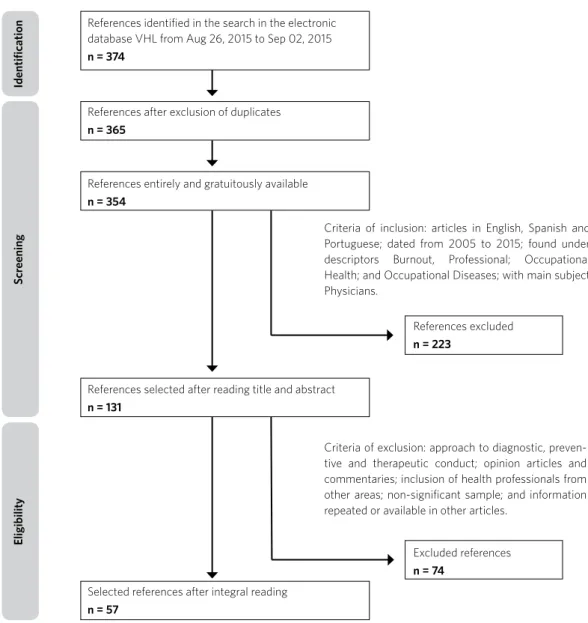
The criteria of exclusion were: the approach to diagnostic, prevention, and therapeutic conduct; opinion articles and commentaries; inclusion of health professionals from other areas; non-significant sample; information repeated or available in other articles; and the impossibility to have gratuitous access. Therefore, this study comprises 57 articles, as shown in figure 1.
Figure 1. Schematic representation of the methodology according to Prisma
references identiied in the search in the electronic database vHl from aug 26, 2015 to sep 02, 2015 n = 374
references after exclusion of duplicates n = 365
references entirely and gratuitously available n = 354
references selected after reading title and abstract n = 131
references excluded n = 223
selected references after integral reading n = 57
excluded references n = 74
Criteria of exclusion: approach to diagnostic, preven-tive and therapeutic conduct; opinion articles and commentaries; inclusion of health professionals from other areas; non-signiicant sample; and information repeated or available in other articles.
Criteria of inclusion: articles in english, spanish and portuguese; dated from 2005 to 2015; found under descriptors Burnout, professional; occupational Health; and occupational diseases; with main subject physicians.
Identification
Scr
eening
Eligibilit
Results and discussion
The 57 articles included in this systematic literature review were analyzed in the aspects year, journal, country and language of publication, study method, and categorized in two thematic groups according to the respective results and discussions: mental and physical health, as respectively represented in tables 1 and 2, which contain a short definition of each study.
The articles are published in various journals, among which the following ones were repeated: ‘Academic Medicine’, ‘BMC Public Health’, ‘Radiologia Médica’, ‘Occupational Medicine’ e ‘International Archives of Occupational and Environmental Health’.
Mental health
According to the data presented on table 1,
the category ‘mental health’ was addressed in 45 of 57 articles analyzed, representing 78.94% of the results.
The largest amount of publications on physicians’ mental health occurred in 2011 (20%), followed by 2013 with a relative participation of 17.77%, and 2014 with 15.55%. Regarding the country of publication, the United States and the United Kingdom prevailed, with 31.11% and 24.44% of the articles, respectively. In third place, Brazil appears with a contribution of 11.11% of the articles. The language of publication of 80% of the articles was English, Portuguese was responsible for 11.11%, and Spanish for 8.88%. Regarding the study method, cross-sectional studies prevailed (80%) and review studies (bibliographic and systematic) represented 6.66%.
Study (authors)
Year Journal Country Language Method Short definition
aldrees et al. 2013 annals of saudi
Medicine
india english Cross-sectional
study
prevalence of burnout syndrome in physi-cians of various specializations at a hospital in saudi arabia.
arigoni et al. 2009 supportive Care in
Cancer
Germany english Cross-sectional
study
prevalence of burnout and psychiatric dise-ases among swiss oncologists, pediatricians and generalist physicians.
assunção et al. 2013 occupational
Medicine
united Kingdom
english Cross-sectional
study
detects that in Brazil common mental disorders afect more female than male physicians.
Balch et al. 2011 annals of surgical
oncology
united states
english Cross-sectional
study
Comparative of the incidence of burnout, depression, suicidal ideation, professional satisfaction and quality of life between oncologist surgeons and 14 other surgical specializations.
Bellieni et al. 2012 Journal of
Maternal--Fetal and neonatal Medicine
united Kingdom
english Cross-sectional
study
level of professional burnout of neona-tologists and its association with suicidal ideation, time in the profession, children, and religion.
Beltrán; Moreno 2007 revista Medica del
uruguay
uruguay spanish Cross-sectional
study
Most frequent diseases: musculoskeletal, respiratory, gastrointestinal, and psycholo-gical.
Table 1. (cont.)
Brown; Goske; Johnson
2009 Journal of the
american College of radiology
Holland english Bibliographic review interference of conditions such as
depres-sion, burnout and stress on the disruptive behavior of physicians, jeopardizing the professional practice.
Chen et al. 2013 international Journal
of Medical sciences
australia english Cross-sectional
study
incidence of burnout and its correlation with the dissatisfaction and bad professional practice and alcohol abuse in taiwan phy-sicians.
dewa et al. 2014 BMC Health services
research
united Kingdom
english systematic review incidence of burnout syndrome in ive
studies and its impact on physicians’ pro-ductivity.
dyrbye et al. 2013 Mayo Clinic
proceedings
united Kingdom
english Cross-sectional
study
incidence of burnout syndrome throughout the career in the various medical specializa-tions in the united states.
dyrbye et al. 2014 academic Medicine united
states
english Cross-sectional
study
Comparison between the prevalence of oc-cupational exhaustion, depression, suicidal ideation, and fatigue in the diferent stages of the medical career with the general popu-lation in the us.
escribà-agüir; artazcoz; pérez--Hoyos
2008 Gaceta sanitária spain spanish Cross-sectional
study
interference of psychosocial risk factors and sources of satisfaction at work on the burnout syndrome in physicians of several specializations and stages of the career in spain.
Fogaça; Carva-lho; nogueira--Martins
2010 revista da escola de
enfermagem da usp
Brazil portuguese descriptive study detection of low quality of life of intensivist
pediatricians and neonatologist physicians.
Galán-rodas
et al.
2011 revista peruana de
Medicina experimen-tal y salud pública
peru spanish Baseline study relates depression to lack of logistic and
human resources for medical practice.
Gander et al. 2010 academic Medicine united
states
english Cross-sectional
study
physicians in new Zealand described social isolation due to long working hours.
Garcia et al. 2014 pediatric Critical Care
Medicine
united states
english Cohort study relates the great responsibility over patients’
life to the higher incidence of burnout among Brazilian pediatric intensivists.
Gurman; Klein; Weksler
2012 Journal of Clinical
Monitoring and Computing
Holland english Bibliographic review High incidence of burnout among
anesthe-siologists due to the great responsibility regarding a patient’s safety during surgery.
Harms et al. 2005 annals of surgery united
states
english Cross-sectional
study
Highlights the rate of alcohol dependence among interviewed surgeons.
lee et al. 2013 Human resources for Health
united Kingdom
english Meta-analysis Main factors associated to occupational
burnout in several regions and specializa-tions.
leiter; Frank; Matheson
2009 Canadian Family
physician
Canada english Cross-sectional
study
Table 1. (cont.)
lim; pinto 2009 Journal of Medical
imaging and radiation oncology
united Kingdom
english Cross-sectional
study
rates of occupational burnout and stress among radiologist physicians practicing in public and private hospitals in new Zealand.
liu et al. 2012 BMC public Health united
Kingdom
english Cross-sectional
study
Characterizes the exposure to strong physi-cal and emotional demands as generator of internal and external stressors.
lovseth et al. 2013 stress and Health united
states
english Cross-sectional
study
Medical confidentiality as a barrier to seeking emotional support among hos-pital physicians in sweden, norway, ice-land, and italy, influencing in occupational burnout.
Magnavita; Fileni
2013 radiologia Medica italy english Cross-sectional
study
prevalence of depression and anxiety symptoms among radiologist physicians participating in the national Congress of the italian society of Medical radiology.
Magnavita et al. 2008 radiologia Médica italy english pilot study occupational stress and its psychosocial
efects on italian radiologists and radiothe-rapists.
Mcabee et al. 2015 Journal of
neurosurgery
united states
english Cross-sectional
study
rate of burnout syndrome in north ame-rican neurosurgeons and its impact on bad medical practices and satisfaction with the career.
Misiołek et al. 2014 anaesthesiology
intensive therapy
poland english Cross-sectional
study
risk for occupational burnout among phy-sicians practicing in intensive care and pain clinic care departments.
Mendonça; Coe-lho; Júca
2012 psicologia em
pes-quisa
Brazil portuguese Cross-sectional
study
Correlation between stress at work with occupational burnout and fatigue among medical teachers at a Brazilian faculty.
nishimura et al. 2014 Circulation:
Cardiovascular Quality and outcomes
united states
english Cross-sectional
study
incidence and risk factors for burnout syn-drome among Japanese neurologists and neurosurgeons.
oliveira Júnior
et al.
2013 anesthesia and
analgesia
united states
english Cross-sectional
study
rate of depression and occupational bur-nout among medical residents in anesthe-siology, correlated with suicidal ideation, drug abuse and medical errors rates.
opoku; apen-teng
2014 international Health united
Kingdom
english Cross-sectional
study
Factors associated with burnout syndrome and professional satisfaction among physi-cians in Ghana.
picard et al. 2015 psychology, Health
and Medicine
united Kingdom
english Cross-sectional
study
relation between empathy and occupational burnout among residents.
pistelli et al. 2011 archivos argentinos
de pediatria
argentina spanish Cross-sectional
study
incidence of the professional waste syn-drome among residents in pediatrics and pediatricians at a children’s hospital in argentina.
popa et al. 2010 Journal of Medicine
and life
romania english Cross-sectional
study
source: the authors.
roth et al. 2011 pediatric Blood and
Cancer
united states
english Cross-sectional
study
prevalence of occupational burnout among oncology pediatricians in 13 countries.
rubin 2014 JaMa - Journal of the
american Medical association
united states
english theoretical
relec-tion
relection on suicide rates among medical population.
serralheiro et al. 2011 arquivos Brasileiros
de Ciências da saúde
Brazil portuguese Cross-sectional
study
prevalence of burnout syndrome among Brazilian anesthesiologists and its relation with physical activity.
shanafelt et al. 2011 JaMa surgery united
states
english Cross-sectional
study
rate of suicidal ideation among north ame-rican surgeons and its link with depression, occupational burnout, medical errors, and antidepressant use.
nascimento
sobrinho et al.
2006 revista da associação
Médica Brasileira
Brazil portuguese Cross-sectional
study
identiies mental tiredness as the most pre-valent symptom among Brazilian physicians interviewed.
staford; Judd 2010 Gynecologic
oncology
united states
english Cross-sectional
study
prevalence of psychiatric diseases and occupational burnout among oncologist gynecologists in australia and its inluence on professional satisfaction.
taft; Keefer; Keswani
2011 Journal of Clinical
Gastroenterology
united states
english Cross-sectional
study
Coping strategies among north american gastroenterologists in stressing situations and its relation to burnout.
tomioka et al. 2011 occupational
Medicine
united Kingdom
english Cross-sectional
study
demonstrates a positive relation between working hours and the prevalence of de-pression.
torres et al. 2011 revista Brasileira de
epidemiologia
Brazil portuguese Cross-sectional
study
self-evaluation of quality of life, professional satisfaction, and physical and mental health by physicians in Brazil.
Wada et al. 2010 BMC public Health united
Kingdom
english Cross-sectional
study
relates depressive condition to the number of of duty days among Japanese physicians.
Wang et al. 2010 international archives
of occupational and environmental Health
Germany english Cross-sectional
study
associates the sufering inherent to the medical profession with the higher rate of depressive symptoms among Chinese physicians than among the general Chinese population.
Table 1. (cont.)
The mental condition most mentioned in the analyzed articles was the occupational burnout, defined as a pathological syndrome resulting from extended period of occupational stress. The three main
time. In this sense, emotional exhaustion develops first, depersonalization then arises in an attempt to deal with exhaustion, and ultimately the capacity to resist work demands decreases, resulting in a reduction of personal satisfaction sentiments (BROWN; GOSKE; JOHNSON, 2009).
In Brazil, the burnout syndrome is considered as a work-related disease and it is present in the list of mental disorders and work-related behavior, according to Portaria/MS nr 1.339/1999 (Ministry of Health Ordinance nr 1.339/1999). According to the Ministry of Health (BRASIL, 2001), the
worker loses the significance of work in his/her life and usually loses interest in occupational activities and all efforts seem useless.
When analyzing the incidence of burnout syndrome along the medical career, Dyrbye et al. (2013) found that physicians in their
mid-career presented higher points in the emotional exhaustion dimension, whereas those in their early career presented higher points in the depersonalization dimension. A later study by Dyrbye et al. (2014) with
medical students and interns found that they presented even higher points regarding depersonalization, emotional exhaustion and fatigue. In the aspect quality of life, physicians in their early career showed higher points than students and interns, but 51.4% presented occupational burnout, 40% reported at least one depression symptom, and 50. 3% presented high fatigue.
Satisfaction with choosing the medical career increased over the years – as observed in both studies referred above – and it is worthy of notice that physicians with more than 10 years in the profession needed to adapt to changes taking place in the professional practice, which is a challenging aspect. This increase in satisfaction over the years may be attributed to the ability to deal with the issue or to the selection of physicians who are more capable, due to the dropout of those who are more dissatisfied,
considering that the burnout syndrome has been present among retired physicians or those who are not practicing, most likely having this issue been a contributing factor for such decisions.
In the study by Dyrbye et al. (2013) the
analysis of the variation in the satisfaction with the career between the specializations showed that it was smaller among physicians in the early career in the primary care and surgeons, and among physicians in the mid-career in intern medicine and pediatrics. Considering the area of practice, individuals in the academic practice had a lower burnout index and higher satisfaction with the career. The initial period of the medical career (internship and residency) is the most hostile, exposing the professional to high stress levels (BROWN; GOSKE; JOHNSON, 2009; CHEN ET AL., 2013; ESCRIBÀ-AGÜIR; ARTAZCOZ; PÉREZ-HOYOS, 2008; ROTH ET AL., 2011). In these studies, estimates
are higher than those found by Dyrbye et al. (2013), ranging from one third to half of
medical interns suffering from depression, and over three quarters of residents presenting occupational burnout. (2013). The
house-office syndrome in medical residents has been described and is characterized by episodic cognitive impairment, sleep disorders, chronic rage, generalized cynicism and family conflicts.
Among the risk factors for physicians’ psychological illness most addressed, the studies emphasize high workload demand, both physical and emotional, family conflicts due to the profession, financial difficulties, and discontentment with the health system
(BROWN; GOSKE; JOHNSON, 2009; CHEN ET AL., 2013; LEITER; FRANK; MATHESON, 2009; OPOKU; APENTENG, 2014; STAFFORD; JUDD, 2009). There are other chronically
physicians.
In a study undertaken by Picard et al.
(2015) with 24 residents, they revealed that
empathy is a practice with direct impact on the emotional condition, because the empathic listening to several patients becomes tiring due to the high workload and may be responsible for fatigue onset. However, medical confidentiality was a barrier to seeking emotional support to alleviate stress, according to a study by Lovseth et al. (2013) with 2,095 hospital
physicians in Sweden, Norway, Iceland, and Italy. Hence, depersonalization occurs and causes further damage to the functioning of empathy.
According to Wang et al. (2010), among
the Chinese physicians interviewed, 63.5% presented depression symptoms, a frequency two times higher than in the general Asian population. The great exposure to suffering and death, the strong physical and emotional demands, and the mission of saving lives are, according to Liu et al. (2012), internal and
external stressors responsible for the onset of depression symptoms.
Nascimento Sobrinho et al. (2006) identified
that the prevailing complaint among 7,897 physicians was mental tiredness, afflicting 54.1% of the respondents. The prevalence of less psychic disorder among those professionals was 26%, afflicting more women; this female predominance for depression disorders has been proposed by other authors (ASSUNÇÃO ET AL., 2013; BROWN; GOSKE; JOHNSON, 2009; MAGNAVITA; FILENI, 2013).
In their study, Wada et al. (2010) have found
a direct relation between the depressive condition and the fact that the physicians had no day off or were either on duty or on call for several days. The relation between the number of working hours and the prevalence of depression appeared as positive also in the study of Tomioka et al. (2011).
The lack of logistic and human resources for medical practice and the lack of recognition in the region of practice were
the justifications given by Galán-Rodas et al. (2011) in their study, which found that 26%
of the female physicians in the rural service in Peru and 14.5% of the male physicians suffered from depression.
Social manifestations of mental disorders were highlighted by Gander et al. (2010) in the
study in which most participants described social isolation due to long working hours, too much tiredness to take part in other social activities, as well as to relate to other individuals. Roth et al. (2011) also described
that physicians do not allow themselves time for leisure practices as a consequence of the workload.
According to Magnavita and Fileni
(2014), the percentage of physicians affected
by depressive symptoms is high in both hemispheres of the planet and that the younger physicians are under greater risks. This was confirmed in the study by Dyrbye et al. (2014), in which depression and suicidal
ideation symptoms were more prevailing during the university period than in the residency period or in the beginning of the career. Oliveira Júnior et al. (2013) evaluated
1,508 residents in anesthesiology in the United States and found a depression rate of 22%. A similar rate, from 13% to 20%, was found by Brown, Goske and Johnson (2009) in
their bibliographic review.
Mental disorders may develop into alarming suicide numbers. In the study by Oliveira Júnior et al. (2013), the suicidal
ideation rate among physicians was twice as high as the rate found in the general population. Whereas Shanafelt et al. (2011)
found that this percentage can be up to three times higher among North American surgeons over 44 years of age compared to the general population. In this study, one in every 16 (6.4%) among 7,825 physicians who were evaluated reported suicidal ideation in the last 12 months. According to Rubin
(2014), every year, from 300 to 400 physicians
higher than in the general female population. Brown, Goske and Johnson (2009) have also
observed that among physicians this risk is higher among women.
Shanafelt et al. (2011) observed that
self-depreciation by surgeons of their health adversely affects their students, because the suicidal ideation rate among medical students and residents was higher than among professional surgeons. It was also reported that among 5.8% of the physicians who used antidepressant in the last 12 months, 8.9% used self-prescription, and 7.4% received the prescription from a colleague without clinical analysis. Suicidal ideation was directly and strongly related to depressive symptoms, burnout syndrome and medical errors, and in an inverse way to the quality of life. The relation between suicidal ideation and burnout is reversible, considering that the suicidal risk decreases with the recovery from the syndrome. Oliveira Júnior et al. (2013) also established
a positive relation between occupational burnout, depression, and self-report of medical errors, also associated to the non-adherence to best medical practices, resulting in quality decrease of patient care.
Other consequences of stress and occupational burnout include absenteeism, job turnover, deterioration of doctor-patient relationship and with other health professionals, more requests for additional exams, early retirement and use of disability insurance (BROWN; GOSKE; JOHNSON, 2009).
The systematic review of Dewa et al. (2014)
included five researches with differences in the incidence of burnout syndrome, with values of 6%, 13% and 31%. The emotional exhaustion rates varied from 13.3% to 4.5% and the depersonalization rates varied between 4.5% and 35.3%. The studies related the syndrome with losses in productivity, sick leave, lower intention to carry on practicing medicine in the long run, intention to change jobs, and self-perception of insufficient work abilities.
Escribà-Agüir, Artazcoz and Pérez-Hoyos
(2008) analyzed the burnout syndrome in
a sample with 1,021 physicians of several specializations in Spain. The highest rates of emotional tiredness were observed in the specializations oncology (22.4%) and traumatology (20.5%), among residents, women and physicians with over 20 years of professional activity. The personal satisfaction rate was lower in radiologists (54.8%) and women, while depersonalization was higher among traumatologists, physicians with less than 10 years of practice, and men. The conclusion was that psychosocial risk factors intrinsic to medical practice (contact with suffering and death, privation of family life and work overload) have influence on two dimensions of the burnout syndrome, which are the emotional tiredness and depersonalization; and that extrinsic factors (low intellectual stimulus at work, little professional reward, low level of satisfaction in the relationship with patients and relatives, and no dedication to teaching activities) predominantly affect the third dimension of the syndrome, which is the personal satisfaction. There was an emphasis on the fact that the quality of the doctor-patient relationship influences all the dimensions and that there is increasingly less time dedicated to this relationship, which may increase even more the incidence of this syndrome.
Chen et al. (2013) have estimated the
incidence of burnout on 809 physicians in Taiwan in the three dimensions of this syndrome and the highest rates were found in: 13.1% of the physicians in emotional exhaustion; 9.3% of them in depersonalization; and 49.9% in the dimension professional satisfaction. Furthermore, 62.3% were unsatisfied about the doctor-patient relationship, and 29.5% about his/her medical specialization.
Taft, Keefer and Keswani (2011) questioned
that dealing with the situation in a planned and positive way by seeking social support is related to lower psychological stress, depersonalization, incidence of endoscopic complications, and higher sentiment of professional self-efficacy. On this aspect, Lee et al. (2013) observed that physicians
with more years of practice demonstrated better management of risk factors. The study by Mendonça, Coelho and Jucá (2012)
also emphasized that the physicians’ control over their activities and the social support reduce the damages caused by excessive work demand.
Arigoni et al. (2009) carried out a
comparative study with 371 Swiss oncologists, pediatricians, and generalist physicians and observed that 32% of the respondents presented signs of psychiatric diseases and burnout syndrome, especially among the generalist physicians. The characteristics of work that predisposed to greater psychological affections were a workload higher than 50 hours per week, less than six hours per month dedication to continuing education, and working at public institutions.
Opoku and Apenteng (2014), in a study with
200 African physicians, found that they were satisfied regarding the relationship with the health team and moderately satisfied about their career, especially those practicing in rural areas and those working over 40 hours per week. The incidence of burnout in general was low, but slightly higher among women and residents.
Pistelli et al. (2011) assessed the professional
waste syndrome in 39 residents in pediatrics and 69 pediatricians at a children’s hospital in Argentina. The values observed in the emotional tiredness and depersonalization aspects were high and above those found in other studies with pediatricians in Buenos Aires and Spain. High depersonalization is combined with the fact that physicians do not get involved with the child patient as a way of defense against the care stress,
a fact that has been confirmed by Garcia et al. (2014) and Fogaça, Carvalho and
Nogueira-Martins (2010). However, the rate of personal
fulfillment was intermediate, indicating that at the same time professionals are exposed to working conditions that contribute to occupational burnout, they are satisfied about their vocation. In addition, depersonalization rates decrease over the years of practice while personal fulfillment rates increase as a consequence of professional self-esteem consolidation.
Roth et al. (2011) analyzed the prevalence
of occupational burnout in 410 oncology pediatricians in 13 countries. They found that 38% present a high level of burnout and 72% a moderate level. Over one third of the respondents reported symptoms of the syndrome, of which 94% were confirmed with intermediate level and 73% with high level. The highest rates of the syndrome were observed in women, and they were also found by Leiter, Frank and Matheson (2009).
Bellieni et al. (2012), in a research with 110
neonatologists, found that the majority were in a critical level of burnout, correlated to having less than five years of professional practice, having children – which intensifies empathy with the suffering of other children –, personal belief that it is not worth living with physical limitations – influencing in the lower resuscitation rate of newborn infants –, the presence of suicidal ideation, and being an atheist or an agnostic.
Serralheiro et al. (2011) evaluated 59
anesthesiology physicians associated to a Brazilian faculty of medicine and found that all physicians in the sample presented some level of burnout, though preponderantly low, with only 3.4% demonstrating a high level. The practice of physical activities was pointed as a factor that promotes quality of life, reducing the level of the depersonalization aspect of the syndrome. By contrast, Misiołek et al. (2014), in a research
presented moderate and high risk of burnout syndrome, considering that they worked in intensive care and pain care clinic departments – which are recognized as being of risk for the development of the syndrome. A study by Oliveira Júnior et al. (2013), found
that the incidence of burnout in residents in anesthesiology in the United States was 41%, an intermediate rate between the values found in the two previously mentioned studies, and higher among women. The main associated factors were the pressures in the work environment that cause occupational stress, such as a weekly workload higher than 70 hours and being on duty more than one in every five days. For Gurman, Klein and Weksler (2012) this high incidence among
anesthesiologists is due, in addition, to being responsible for the safety of a patient during a surgery.
In the study by Torres et al. (2011) with
1,224 physicians graduated from a Brazilian faculty of medicine, 66.1% reported high professional fulfillment: 68% had a positive evaluation on their quality of life, 79% evaluated in the same way their physical health, and 85% their mental health. These factors were positively associated to one another and to the frequent participation in congresses and scientific events, dedication to leisure time, high income, not smoking and practicing physical activities. However, 56.3% referred to medium, high or very high level of stress to deal with death, 54.7% to deal with critically ill patients, 27.7% in the communication with the patient and relatives, and 31.1% to deal with civil lawsuit.
Popa et al. (2010), in a sample with 263
emergency physicians, found greater vulnerability to occupational stress and increasing burnout and depression rates over the years of practice in the area, associated to the decrease in the quality of life, professional fulfillment, and quality of medical care. Among the coping strategies, those highlighted were active coping, withdrawal behavior, and substance abuse.
Among 2,564 neurologist and neurosurgeon physicians working in centers for the treatment of encephalic vascular accidents in Japan, Nishimura et al. (2014)
detected that 41.1% presented occupational burnout and 21.8% among them were severe cases. The risk factors found were excessive working hours per week, sleep deprivation, little experience, overload of responsibility in those emergency situations, insufficient health team, and low quality of mental health. In the national research carried out by McAbee et al. (2015) with 783
North American neurosurgeons the rate of burnout syndrome was even higher (56.7%) and it was a factor intrinsically related to bad medical practice. However, the rate of career fulfillment was 81.2%, demonstrating that the burnout may occur episodically during the career and despite this fulfillment may remain. The major negative factors associated to the rates obtained were personal-professional unbalance, worries about future remuneration, not carrying out academic activities, and longer time in the profession.
Stafford and Judd (2009) interviewed 29
been associated to burnout. This was also verified by Balch et al. (2011) in a comparative
study between 407 oncologist surgeons and 14 other surgical specializations. Moreover, it showed that the former presented lower incidence of depression and higher satisfaction with the career. However, the oncologist surgeons informed greater conflicts between work and personal life and greater desire to dedicate more time to the family. Family conflicts due to work were reported by 75% of the physicians in the study by Aldrees et al. (2013).
According to the same authors, larger use of alcoholic drink was observed, with 72.4% making weekly use and 30% with abusive use (over two doses per day). Chen et al.
(2013) confirmed this practice of seeking relief
from the heavy workload, especially among male physicians in Taiwan. Oliveira Júnior et al. (2013) also observed that the risk of
burnout among residents in anesthesiology was higher among those who reported alcohol consumption and tobacco use. Galán-Rodas et al. (2011) verified that 22% of
women presented problematic use against 26% of men. Yet Harms et al. (2005) found
7.3% of alcohol dependence.
Aldrees et al. (2013) concluded that the
prevalence of burnout among 348 physicians of various specializations at a tertiary hospital in Saudi Arabia was high (70%), affecting the younger residents or those in the beginning of the career, women, and singles. The rate of emotional exhaustion was 54%, depersonalization 35%, and personal satisfaction 33%. The higher percentages were observed among gynecologist obstetricians, family doctors, anesthesiologists, intensivists, and pediatricians, whereas the lower percentages were among cardiologists.
Radiologists and radiotherapists are more susceptible to an unpleasant, negative, and non-adaptive reaction to stress (MAGNAVITA ET AL., 2008). In a research with 136 radiologists
in New Zealand, Lim and Pinto (2009)
observed that in comparison with physicians practicing in the private service, physicians in the public service presented higher rate of stress and burnout associated to professional dissatisfaction. Conflicts with time demands constituted the main source of stress at work, affecting 59% of radiologists in the public service, besides the complaint by 38% concerning low remuneration and higher proportion of hospital patients with complex and severe diseases. When the level of stress reaches an important clinical threshold it is known as stress-related disorder. This term encompasses various clinical conditions, such as neurasthenia, adjustment disorder, anxiety, and depression. Psychiatric diseases affected 21% of the physicians in the public service and 15% in the private service. Whereas Magnavita and Fileni (2013) found even higher
rates, 43.7% with possible cases of anxiety and 43.9% with cases of depression.
Physical health
As demonstrated in table 2, physicians’ physical health was analyzed in 12 articles, representing 21.05% of the 57 articles analyzed. All the studies on physical health, as on mental health, were published in English, and the countries with more publications were the United States (41.66%) and the United Kingdom (25%). The year with the highest number of publications on physical health themes, as on mental health, was 2011, with 41.66%. The majority (83.3%) comprised cross-sectional studies. Within this type of methodology, the main issues addressed in the studies on physical health were musculoskeletal disorders (AUERBACH
ET AL., 2011; MEHRDAD; DENNERLEIN; MORDHESIZADEH, 2012; RUITENBURG; FRINGS-DRESEN; SLUITER, 2013; MOHSENI-BANDPEI ET AL., 2011; LIANG ET AL., 2013) and
Study (authors)
Year Journal Country Language Method Short definition
auerbach et al. 2011 spine united
states
english Cross-sectional
study
prevalence of musculoskeletal disorders in spine surgeons due to bad ergonomics.
Brennan et al. 2011 British Journal of oral
and Maxillofacial surgery
united states
english Hypothetical study elevation of serum testosterone in head and
neck surgeons directly proportional to the complexity of the procedure.
Beloyartseva
et al.
2012 archives of
osteoporosis
united Kingdom
english Cross-sectional
study
proves that 79% of the indians subjects in the study presented vitamin d deiciency due to long working hours in environments with no access to sunlight.
Krupinski; Berbaum
2009 academic radiology united
states
english Cross-sectional
study
Work with digital displays causing oculomotor nerve fatigue.
liang et al. 2013 plos one united
states
english Cross-sectional
study
Frequent musculoskeletal disorders in surgeons due to the emergence of less invasive surgical techniques but ergonomically unfavorable.
Magnavita; Fileni
2014 radiologia Médica italy english Cross-sectional
study
increase on Hdl and triglyceride levels and abdominal obesity in radiologists due to occupational stress.
Mehrdad; den-nerlein; Morshe-dizadeh
2012 archives of iranian
Medicine
iran english Cross-sectional
study
relation between working conditions and ergonomic risks with the main musculoskeletal disorders in clinicians.
Mohseni-Ban-dpei et al.
2011 Journal of
Manipulative and physiological therapeutics
united states
english Cross-sectional
study
inluence of low satisfaction with work on the increase of risk from low back pain.
Mrena et al. 2011 scandinavian Journal
of Work, environment & Health
scandinavia english Cross-sectional
study
prevalence of opacity in the crystalline and cataract among Finnish physicians.
peters et al. 2011 BMC infectious
diseases
united Kingdom
english systematic review Higher level of infection by H. pylori in
gastroenterologists.
rauchenzauner
et al.
2009 european Heart
Journal
united Kingdom
english Cross-sectional
study
inluence of working hours and conditions on cardiovascular health of austrian physicians.
ruitenburg; Frings-dresen; sluiter
2013 international archives
of occupational and environmental Health
Germany english Cross-sectional
study
relates ine movements and relatively static posture of surgeons to physical work-related complaints.
Table 2. Characteristics of the studies included in the thematic category physical health
Rauchenzauner et al. (2009) found that
frequent stressing situations, sleep deficit, and deregulation of the circadian rhythm are causes of the incidence of cardiovascular diseases in this group of professionals. Before the manifestation of symptoms of cardiovascular diseases, after night shifts physicians presented an increase in the cardiac frequency, as well as the elevation of blood pressure, dysrhythmia, altered catecholamine secretion, and an increase of serum cholesterol, uric acid, and potassium. The 24h electrocardiogram registered higher levels of ventricular premature beats on physicians during the shift. The 24h monitoring of the blood pressure indicated an elevation of the diastolic pressure, its elevation during that night, and an elevation during the short periods of sleep during the shift.
According to Magnavita and Fileni (2014),
the literature is clear about the relationship between work stress and the risk of cardiovascular diseases. Radiologists, on whom the article focuses, suffer from intense environmental pressure that generates an extended period of occupational stress and a decrease of job satisfaction. Among the respondents, 41.9% reported abnormal HDL levels and 11.3% had high triglyceride levels. Abdominal obesity affected 24% of the respondents and among those who presented three or more pathologic abnormalities, 7.1% received a metabolic syndrome diagnosis.
A study carried out in Finland by Mrena et al. (2011) researched the prevalence of opacity
in the crystalline and cataract on physicians exposed to ionizing radiation. The large majority of the physicians under study were radiologists and only 11% made regular use of safety glasses in the work routine. Some degree of opacity in the crystalline was found in 42% of the physicians who were examined. Besides the opacity in the crystalline, radiologists are more inclined to present oculomotor nerve fatigue, which may reduce the accuracy of the diagnosis,
according to Krupinski and Berbaum
(2009). The authors observed that the work
overload caused eye strain, clinically known as asthenopia. Working during long periods of time with digital displays may also cause myopia.
Musculoskeletal disorders are more likely to affect surgeons than clinical physicians, but yet it is the most frequent complaint among primary care physicians in Guadalajara, Mexico, affecting 20% of the professionals (BELTRÁN; MORENO, 2007).
According to Auerbach et al. (2011),
spine surgeons work during long hours on surgeries of complex ergonomics. Cervical pain presented a prevalence of 59% among the respondents, a much higher rate than the prevalence in the general population, which is approximately 20%. Herniated lumbar disc and dorsal pain with radiculopathy were reported by 31% of the surgeons, of which 41% needed to be absent from work and 23% went through surgical treatment. Another kind of pain and discomfort described by the authors were leg edema and varicose veins (20%). In comparison with clinical physicians at the hospital studied by Ruitenburg, Frings-Dresen and Sluiter (2013),
surgeons made fine repetitive movements 26 times longer and stood up 130% longer. Moreover, 73% of the surgeons felt troubled about working in uncomfortable and exhaustive postures.
Besides the relation between working conditions and ergonomics giving rise to physical symptoms on surgeons, Mohseni-Bandpei et al. (2011) found a relation
between the low satisfaction with work and the increasing risk of lower back pain. Corroborating the fact, Aldrees et al. (2013)
observed that 65% of the physicians on their sample in Saudi Arabia suffered from back pain and the prevalence of burnout among them was also higher.
According to Mehrdad, Dennerlein and Morshedizadeh (2012), the main complaint
pain, followed by lower back pain and cervical pain. The most common ergonomic risks reported were spending long periods standing, sitting, and neck in flexion.
Liang et al. (2013) found that the increase
on the incidence of numbness, pain and stiffness in the neck, shoulders, back, and legs of urologist surgeons was related to the emergence of surgical techniques that are less invasive but ergonomically less favorable.
Among other affections on physicians’ health, the literature shows a higher level of infection by H. pylori in gastroenterologists
(PETERS ET AL., 2011) and an elevation of serum
testosterone in head and neck surgeons directly proportional to the complexity level of the procedure (BRENNAN ET AL., 2011).
Yet Harms et al. (2005) discuss the fact that
despite being in close contact with the health care of others, surgeon physicians fall short of taking care of their own health. In their study, not all surgeons over 50 years of age complied with the basic preventive standards. Only 73% had a cardiac baseline evaluation, 81% of the men had received a prostate evaluation, and 73% reported having made a colonoscopy. An organic deficiency reported is that of Vitamin D in Indian health professionals (BELOYARTSEVA
ET AL., 2012).
Conclusion
According to the results of this systematic review, it was possible to present a profile of Brazilian and international research on mental and physical health of medical professionals identifying their main pathological disorders.
Articles in English prevailed, followed by those written in Portuguese and Spanish, respectively. The countries that presented more publications were the United States, United Kingdom, and Brazil, in this order. The highest frequency of publications occurred in 2011, 2013, and 2014.
Cross-sectional researches were the most frequent in the analyzed period.
The number of articles on physicians’ mental health was considerably higher than those on physical health. Regarding mental diseases, the most studied one was the occupational burnout syndrome, followed by substance abuse and mood disorders (anxiety and depression). The physical disorders most commonly reported in the articles were musculoskeletal and ophthalmologic diseases.
The decrease in the physicians’ quality of life was observed as a result of working long hours in environments that are, for the most part, lacking the ideal conditions for medical practice, sleep deprivation, and high emotional demands. On the other hand, protective factors were observed, such as dedication to academic teaching and research activities, technical improvement, and dedication to leisure and physical activities. It was also possible to observe that the early stages of the medical career, especially internship and residency, are the most exhaustive and demanding for the physicians’ mental and physical health.
The decrease in the physicians’ quality of life and consequently in the professional practice may have a severe impact in society, especially due to the possible medical errors, which are mostly irreparable. This panorama highlights the importance of prophylactic interventionist measures against the physicians’ falling ill from work-related diseases.
Collaborators
References
ALDREES, T. M. et al. Physician well-being: prevalence
of burnout and associated risk factors in a tertiary
hospital, Riyadh, Saudi Arabia. Ann Saudi Med, Riade,
n. 33, v. 5, p. 451-456, 2013.
ARIGONI, F. et al. Prevalence of burnout among
Swiss cancer clinicians, paediatricians and general
practitioners: who are most at risk? Support Care
Cancer, Berlim, n. 17, p. 75-81, 2009.
ASAIAG, P. E. et al. Avaliação da qualidade de vida,
sonolência diurna e burnout em Médicos Residentes.
Rev Bras Educ Med, Rio de Janeiro, v. 34, n. 3, p.
422-429, 2010.
ASSUNÇÃO, Á. et al. Working conditions and common
mental disorders in physicians in Brazil. Occupational
Medicine, Oxford, v. 63, n. 3, p. 234-237, 2013.
AUERBACH, J. D. et al. Musculoskeletal disorders
among spine surgeons. Spine (Phila Pa 1976),
Hagerstown, v. 36, n. 26, p. 1715-1721, 2011.
BALCH, C. M. et al. Burnout and career satisfaction
among surgical oncologists compared with other
surgical specialties. Ann Surg Oncol, Nova York, v. 18, n.
1, p. 16-25, 2011.
BELLIENI, C. V. et al. Assessing burnout among
neonatologists. J Matern Fetal Neonatal Med, Boca
Raton, v. 25, n. 10, p. 2130-2134, 2012.
BELOYARTSEVA, M. et al. Widespread vitamin D
deficiency among Indian health care professionals.
Arch Osteoporos, Londres, n. 7, p. 187-192, 2012.
BELTRÁN, C. A.; MORENO, M. P. Factores psicosociales asociados a patologías laborales en médicos de nivel primario de atención en Guadalajara,
México. Rev Med Urug (Montev), Montevidéu, v. 23, n.
4, p. 251-259, 2007.
BRASIL. Ministério da Saúde; Organização
Pan-Americana da Saúde. Doenças relacionadas ao trabalho:
manual de procedimentos para os serviços de saúde.
individually they read the full texts of the selected articles and subsequently discussed them. Afterwards, they wrote the scientific article, comprising introduction, methodo-logy, results, discussion, and conclusion.
The authors Ely Mitie Massuda and Otávio Celeste Mangili guided the thematic
Brasília, DF: Ministério da Saúde, 2001.
BRENNAN, P. A. et al. Serum testosterone levels in
surgeons during major head and neck cancer surgery:
a suppositional study. Br J Oral Maxillofac Surg,
Edimburgo, v. 49, n. 3, p. 190-193, 2011.
BROWN, S. D.; GOSKE, M. J.; JOHNSON, C. M. Beyond substance abuse: stress, burnout, and depression as causes of physician impairment and disruptive
behavior. J Am Coll Radiol, Nova York, v. 6, n. 7, p.
479-485, 2009.
CARVALHO, M.; SANTOS, N. R.; CAMPOS, G. V. S. A construção do SUS e o planejamento da força de trabalho em saúde no Brasil: breve trajetória histórica.
Saúde debate, Rio de Janeiro, v. 37, n. 98, p. 372-387,
2013.
CHEN, K. et al. Burnout, job satisfaction, and medical
malpractice among physicians. Int J Med Sci, Austrália,
v. 10, n. 11, p. 1471-1478, 2013.
DEWA, C. S. et al. How does burnout affect physician
productivity? A systematic literature review. BMC
Health Serv Res, Londres, v. 14, n. 325, p. 1-10, 2014.
DYRBYE, L. N. et al. Burnout among U.S. medical
students, residents, and early career physicians relative
to the general U.S. population. Acad Med, Filadélfia, v.
89, n. 3, p. 443-451, 2014.
DYRBYE, L. N. et al. Physician satisfaction and burnout
at different career stages. Mayo Clin Proc, Rochester, v.
88, n. 12, p. 1358-1367, 2013.
ESCRIBÀ-AGÜIR, V.; ARTAZCOZ, L.; PÉREZ-HOYOS, S. Efecto del ambiente psicosocial y de la satisfacción laboral en el síndrome de burnout en médicos
especialistas. Gac Sanit, Barcelona, v. 22, n. 4, p.
300-308, 2008.
FOGAÇA, M. C.; CARVALHO, W. B.; NOGUEIRA-MARTINS, L. A. Estudo preliminar sobre a qualidade de vida de médicos e enfermeiros intensivistas
pediátricos e neonatais. Rev Esc Enferm USP, São Paulo,
v. 44, n. 3, p. 708-712, 2010.
GALÁN-RODAS, E. et al. Salud mental en médicos que
realizan el servicio rural, urbano-marginal en salud
en el Perú: un estudio de línea base. Rev Peru Med Exp
Salud Publica, Lima, v. 28, n. 2, p. 277-281, 2011.
GANDER, P. et al. A gender-based analysis of work
patterns, fatigue, and work/life balance among
physicians in postgraduate training. Acad Med,
Filadélfia, v. 85, n. 9, p. 1525-1536, 2010.
GARCIA, T. T. et al. Prevalence of burnout in pediatric
intensivists: an observational comparison with general
pediatricians. Pediatr Crit Care Med, Baltimore, v. 15, n.
8, p. 347-353, 2014.
GURMAN, G. M.; KLEIN, M.; WEKSLER, N.
Professional stress in anesthesiology: a review. J Clin
Monit Comput, Dordrecht, v. 26, n. 4, p. 329-335, 2012.
HARMS, B. A. et al. A 25-year single institution analysis
of health, practice, and fate of general surgeons. Ann
Surg, Filadélfia, v. 242, n. 4, p. 520-529, 2005.
JUNKES, M.; PESSOA, V. F. Gasto financeiro
ocasionado pelos atestados médicos de profissionais da saúde em hospitais públicos no Estado de Rondônia,
Brasil. Rev. Latino-Am. Enfermagem, São Paulo, v. 18, n.
3, p. 406-412, 2010.
KRUPINSKI, E. A.; BERBAUM, K. S. Measurement of
visual strain in radiologists. Acad Radiol, Reston, v. 16,
n. 8, p. 947-950, 2009.
LEE, R. T. et al. Correlates of physician burnout across
regions and specialties: a meta-analysis. Hum Resour
Health, Londres, v. 11, n. 48, p. 1-16, 2013.
LEITER, M. P.; FRANK, E.; MATHESON, T. J.
Demands, values, and burnout. Can Fam Physician,
Maryland, v. 55, n. 12, p. 1224-1225, 2009.
LIANG, B. et al. Ergonomic status of laparoscopic
urologic surgery: survey results from 241 urologic
surgeons in China. PLoS One, São Francisco, v. 8, n. 7,
2013.
burnout in New Zealand radiologists: Comparison of
public hospital and private practice in New Zealand. J
Med Imaging Radiat Oncol, Carlton, v. 53, n. 2, p.
194-199, 2009.
LIU, L. et al. The mediating role of psychological
capital on the association between occupational stress and depressive symptoms among Chinese physicians:
a cross-sectional study. BMC Public Health, Londres, v.
12, n. 219, 2012.
LOVSETH, L. T. et al. Associations between
confidentiality requirements, support seeking and burnout among university hospital hhysicians in Norway, Sweden, Iceland and Italy (the HOUPE study).
Stress Health, Chichester, v. 29, n. 5, p. 432-437, 2013.
MAGNAVITA, N.; FILENI, A. Association of work-related stress with depression and anxiety in
radiologists. Radiol Med, Torino, v. 119, n. 5, p. 359-366,
2013.
_______. Work stress and metabolic syndrome in
radiologists: first evidence. Radiol Med, Torino, v. 119, n.
2, p. 142-148, 2014.
MAGNAVITA, N. et al. Work stress in radiologists: a
pilot study. Radiol Med, Torino, v. 113, n. 3, p. 329-346,
2008.
MCABEE, J. H. et al. Factors associated with career
satisfaction and burnout among US neurosurgeons:
results of a nationwide survey. J Neurosurg Spine,
Charlottesville, v. 123, n. 1, p. 1-13. 2015.
MEHRDAD, R.; DENNERLEIN, J. T.;
MORSHEDIZADEH, M. Musculoskeletal disorders
and ergonomic hazards among iranian physicians. Arch
Iran Med, Teerã, v. 15, n. 6, p. 1715-1721, 2012.
MENDONÇA, V. L. G.; COELHO, J. A. P. M.; JÚCA, M. J. Síndrome de burnout em médicos docentes de uma
instituição pública. Psicologia em Pesquisa – UFJF, Juiz
de Fora, v. 6, n. 2, p. 90-100, 2012.
MISIOŁEK, A. et al. The prevalence of burnout
syndrome in Polish anaesthesiologists. Anaesthesiol
Intensive Ther, Varsóvia, v. 46, n. 3, p. 155-161, 2014.
MOHSENI-BANDPEI, M. A. et al. Prevalence and
risk factors associated with low back pain in iranian
surgeons. J Manipulative Physiol Ther, Lombard, v. 34,
n. 6, p. 362-370, 2011.
MRENA, S. et al. Lens opacities among physicians
occupationally exposed to ionizing radiation – a
pilot study in Finland. Scand J Work Environ Health,
Helsínquia, v. 37, n. 3, p. 237-243, 2011.
NASCIMENTO SOBRINHO, C. L. et al. Condições de
trabalho e saúde dos médicos em Salvador, Brasil. Rev
Assoc Med Bras, São Paulo, v. 52, n. 2, p. 97-102, 2006.
NISHIMURA, K. et al. Cross-sectional survey of
workload and burnout among japanese physicians working in stroke care – the nationwide survey of acute stroke care capacity for proper designation of comprehensive stroke center in Japan (J-Aspect) study.
Circ Cardiovasc Qual Outcomes, Hagerstown, v. 7, n. 3,
p. 414-422, 2014.
NOGUEIRA-MARTINS, L. A. Saúde mental dos
profissionais de saúde. Rev Bras Med Trab, São Paulo, v.
1, n. 1, p. 56-68, 2003.
OLIVEIRA JÚNIOR, G. S. The prevalence of burnout and depression and their association with adherence to safety and practice standards: a survey of United States
anesthesiology trainees. Anesth Analg, Cleveland, v. 117,
n. 1, p. 182-193, 2013.
OPOKU, S. T.; APENTENG, B. A. Career satisfaction
and burnout among Ghanaian physicians. Int Health,
Oxford, v. 6, n. 1, p. 54-61, 2014.
PETERS, C. et al. The occupational risk of Helicobacter
pylori infection among gastroenterologists and their
assistants. BMC Infectious Diseases, Londres, v. 11, n.
154, 2011.
PICARD, J. et al. Burnout, empathy and their
relationships: a qualitative study with residents in
General Medicine. Psychol Health Med, Abingdon, v. 21,
PIERANTONI, C. R. et al. Rotatividade da força de
trabalho médica no Brasil. Saúde debate, Rio de Janeiro,
v. 39, n. 106, p. 637-647, 2015.
PISTELLI, Y. et al. Síndrome de desgaste profesional
en médicos pediatras – análisis bivariado y
multivariado. Arch Argent Pediatr, Buenos Aires, v. 109,
n. 2, p. 129-134, 2011.
POPA, F. et al. Occupational burnout levels in
emergency medicine – a stage 2 nationwide study and
analysis. J Med Life, Bucareste, v. 3, n. 4, p. 449-453,
2010.
RAUCHENZAUNER, M. et al. Arrhythmias and
increased neuro-endocrine stress response during physicians’ night shifts: a randomized cross-over trial.
Eur Heart J, Londres, v. 30, p. 2606-2613, 2009.
ROTH, M. et al. Career burnout among pediatric
oncologists. Pediatr Blood Cancer, Hoboken, v. 57, p.
1168-1173, 2011.
RUBIN, R. Recent suicides highlight need to address
depression in medical students and residents. JAMA,
Chicago, v. 312, n. 17, p. 1725-1727, 2014
RUITENBURG, M. M.; FRINGS-DRESEN, M. H. W.; SLUITER, J. K. Physical job demands and related
health complaints among surgeons. Int Arch Occup
Environ Health, Berlim, v. 86, p. 271-279, 2013.
SERRALHEIRO, F. C. et al. Prevalência da síndrome de
burnout em anestesiologistas de instituição de ensino
superior em medicina. Arquivos Brasileiros de Ciências
da Saúde, Santo André, v. 36, n. 3, p. 140-143, 2011.
SHANAFELT, T. D. et al. Suicidal ideation among
american surgeons. Arch Surg, Chicago, v. 146, n. 1, p.
54-62, 2011.
STAFFORD, L.; JUDD, F. Mental health and occupational wellbeing of Australian gynaecologic
oncologists. Gynecol Oncol, Nova York, v. 116, n. 2010, p.
526-532, 2010.
TAFT, T. H.; KEEFER, L.; KESWANI, R. N. Friends, alcohol, and a higher power – an analysis of adaptive and maladaptive coping strategies among
gastroenterologists. J Clin Gastroenterol, Nova York, v.
45, n. 8, p. 76-81, 2011.
TOMIOKA, K. et al. Working hours, occupational
stress and depression among physicians. Occupational
Medicine, Oxford, v. 61, n.3, p. 163-170, 2011.
TORRES, A. R. et al. Qualidade de vida e saúde física e
mental de médicos: uma autoavaliação por egressos da
faculdade de medicina de Botucatu – Unesp. Rev Bras
Epidemiol, São Paulo, v. 14, n. 2, p. 264-275, 2011.
WADA, K. et al. National survey of the association of
depressive symptoms with the number of off duty and on- call, and sleep hours among physicians working in
Japanese hospitals: a cross sectional study. BMC Public
Health, Oxford, v. 10, n. 127, 2010.
WANG, J. et al. Prevalence and associated factors of
depressive symptoms among Chinese doctors: a
cross-sectional survey. Int Arch Occup Environ Health, Belim,
v. 83, n. 3, p. 905-911, 2010.
received for publication in: March, 2016 Final version: June, 2016
Conlict of interests: non-existent