ABSTRACT
Obstructive sleep apnea (OSA) is a common clinical condition, with a variable and underestimated prevalence. OSA is the main condition associated with secondary systemic arterial hypertension, as well as with atrial ibrillation, stroke, and coronary artery disease, greatly increasing cardiovascular morbidity and mortality. Treatment with continuous positive airway pressure is not tolerated by all OSA patients and is often not suitable in cases of mild OSA. Hence, alternative methods to treat OSA and its cardiovascular consequences are needed. In OSA patients, regular physical exercise has beneicial effects other than weight loss, although the mechanisms of those effects remain unclear. In this population, physiological adaptations due to physical exercise include increases in upper airway dilator muscle tone and in slow-wave sleep time; and decreases in luid accumulation in the neck, systemic inlammatory response, and body weight. The major beneits of exercise programs for OSA patients include reducing the severity of the condition and daytime sleepiness, as well as increasing sleep eficiency and maximum oxygen consumption. There are few studies that evaluated the role of physical exercise alone for OSA treatment, and their protocols are quite diverse. However, aerobic exercise, alone or combined with resistance training, is a common point among the studies. In this review, the major studies and mechanisms involved in OSA treatment by means of physical exercise are presented. In addition to systemic clinical beneits provided by physical exercise, OSA patients involved in a regular, predominantly aerobic, exercise program have shown a reduction in disease severity and in daytime sleepiness, as well as an increase in sleep eficiency and in peak oxygen consumption, regardless of weight loss. Keywords: Exercise therapy; Sleep apnea, obstructive; Cardiovascular diseases.
The role of physical exercise in obstructive
sleep apnea
Flávio Maciel Dias de Andrade1,2, Rodrigo Pinto Pedrosa1,2
Correspondence to:
Rodrigo Pinto Pedrosa. Laboratório do Sono e Coração, Pronto-Socorro Cardiológico de Pernambuco (PROCAPE), Rua dos Palmares, SN, Recife, PE, Brasil. Tel./Fax: 55 81 3181-7179. E-mail: [email protected]
Financial support: This study received inancial support from the Brazilian Conselho Nacional de Desenvolvimento Cientíico e Tecnológico (CNPq, National Council for
Scientiic and Technological Development). INTRODUCTION
Obstructive sleep apnea (OSA) is a very common but underdiagnosed clinical condition and is associated with the development or worsening of a number of clinical conditions.(1-7) In a study conducted by Tuik et al. in the
city of São Paulo, Brazil, in 2010,(5) the prevalence of
OSA in a general population in the 20- to 80-year age
bracket was found to be 32.8%, being 40.6% in males and 26.2% in females.
Epidemiological data suggest that regular physical
exercise has beneicial effects other than weight loss in
OSA patients; however, the mechanisms of those effects remain unclear.
OSA DEFINITION, CLASSIFICATION, AND RISK FACTORS
OSA is characterized by upper airway obstruction during sleep, resulting in recurrent hypoxia, hypercapnia, and arousals.(8-11) It is diagnosed by polysomnography, which
is a test that allows the calculation of the apnea-hypopnea index (AHI), i.e., the ratio of the total number of apneas and hypopneas to total sleep time.(2,8,9) The severity of
OSA is determined by the AHI: 5.0-14.9 events/h, mild
OSA; 15-30 events/h, moderate OSA; and > 30 events/h,
severe OSA.(2,8)
The etiology of OSA is multifactorial, including ana-tomical changes, neuromuscular factors, and genetic
predisposition. The major risk factors for OSA are shown
in Chart 1.(8-12)
CLINICAL MANIFESTATIONS OF OSA
Recurrent apnea, hypoxia, and hypercapnia, as well as sleep fragmentation (microarousals), together with increased negative intrathoracic pressure—which results
from increased inspiratory muscle work in order to
reopen the collapsed airways—result in impaired central nervous system, cardiovascular system, and metabolic function. (8,9,11-13) Excessive daytime sleepiness, nocturia, morning headache, decreased libido, attention deicit,
impaired concentration, neurocognitive impairment, irritability, and depression are common in patients with
OSA and greatly reduce their work eficiency and quality
of life.(10,11)
OSA is associated with a variety of cardiovascular disorders, including systemic arterial hypertension (SAH),
myocardial ischemia, cardiac arrhythmia, stroke, and 1. Laboratório do Sono e Coração,
Pronto-Socorro Cardiológico de Pernambuco – PROCAPE – Universidade de Pernambuco, Recife (PE) Brasil. 2. Hospital Metropolitano Sul Dom Helder
Câmara, Instituto de Medicina Integral Professor Fernando Figueira – IMIP Hospitalar – Recife (PE) Brasil.
Submitted: 23 May 2016. Accepted: 31 October 2016.
increased arterial stiffness.(14) In patients with OSA,
the most common cardiovascular comorbidity is SAH,
and the relationship between SAH and OSA was irst described 30 years ago. The prevalence and severity of
SAH increase linearly with the increase in OSA severity. OSA treatment can reduce blood pressure.(8,9,11-13,15)
Recently, OSA has been associated with a systemic
inlammatory response, resulting in atherosclerosis, insulin resistance, type 2 diabetes, and lipid proile
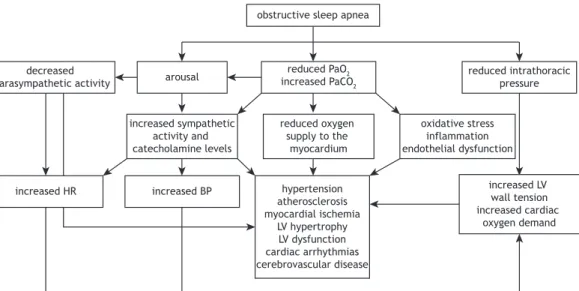
changes, thus greatly increasing morbidity and mortality in patients with untreated OSA. Figure 1 shows the pathophysiology of the effects of OSA on the cardiovascular system.(10)
THERAPEUTIC STRATEGIES FOR OSA
Continuous positive airway pressure (CPAP) is typically the treatment of choice for OSA. It maintains a positive pharyngeal transmural pressure and increases end-ex-piratory lung volume, contributing to the maintenance of an open airway.(2,10) The aforementioned beneits
were irst reported by Sullivan et al. in 1981.(16)
According to the American Academy of Sleep
Medicine, CPAP should be the irst-line treatment for moderate to severe OSA (AHI > 15 events/h).
The clinical decision to prescribe CPAP is based on the possibility of symptom relief and cardiovascular protection. Although CPAP is effective, it might not be tolerated by some patients. Adherence to CPAP therapy is highest in patients who snore heavily and have excessive daytime sleepiness.(2,17-24)
Sleep hygiene and changes in lifestyle habits, including weight loss, discontinuation or replacement of drugs that directly interfere with upper airway muscle function (benzodiazepines, barbiturates, and narcotics), reducing alcohol consumption (especially during the
evening), smoking cessation, regular physical activity,
and changing body position during sleep (avoiding the supine position) should always be encouraged in the treatment of OSA.(2,17-24)
The use of oral appliances is recommended in order to prevent the oropharynx and base of the tongue from collapsing during sleep. Mandibular repositioning or mandibular advancement splints are currently the most commonly used devices. They are indicated for the treatment of mild OSA and primary snoring. They can also be used in individuals who do not tolerate or would rather not use CPAP. Their use is contraindicated in patients with a predominance of central apneas, in those with active periodontal disease, and in those with temporomandibular joint dysfunction.(2,17-24)
Although surgical procedures were widely used in the treatment of OSA in the recent past, they are no longer used, because of symptom recurrence after a few months. In addition to being used in cases of
signiicant facial changes and in young individuals with signiicant tonsillar hypertrophy, surgery has been
used in order to improve nasal breathing for the use
of a CPAP mask.(2,17-24)
EXERCISE-RELATED PHYSIOLOGICAL ADAPTATIONS IN OSA PATIENTS
Recent studies have focused on exercise programs for patients with OSA because they constitute a low-cost, easy-to-use treatment modality and have been shown to
be effective in mitigating several harmful consequences
of OSA, including cardiovascular disorders, glucose intolerance, and fatigue.(25-27)
The mechanisms whereby physical exercise attenuates
OSA have yet to be well deined. It was long believed that the beneicial effects of physical exercise on
patients with OSA were related to a reduction in body weight; however, experimental and clinical studies have
shown that the beneits of exercise are independent
of weight loss.(20,27-29) Several hypotheses have been
proposed to explain the beneicial effects of physical
exercise on patients with OSA.
Increased upper airway dilator muscle tone Maintenance of airway patency requires the coordi -nated activity of upper airway and thoracic respiratory muscles.(30,31) Inspiratory muscle contraction results
in a subatmospheric pressure gradient that allows the air to enter the respiratory system and predisposes to pharyngeal collapse. This trend toward pharyngeal collapse is compensated by the activation and contraction of several upper airway dilator muscles, such as the sternohyoid and omohyoid muscles, and pharyngeal lumen regulators, such as the genioglossus and digastric muscles.(32)
The effects of exercise on the characteristics and activity of the aforementioned muscles remain unclear. During physical activity, the respiratory muscles,
particularly the diaphragm, work at an increased rate.
This leads to metabolic and structural adaptations that improve fatigue resistance. On the basis of
the knowledge that exercise increases respiratory
muscle recruitment, it seems plausible that endurance exercise might result in increased upper airway muscle activation to increase upper airway diameter, reduce airway resistance, and oppose pharyngeal collapse during sleep.(32)
Chart 1. Risk factors for obstructive sleep apnea.(8-12)
Snoring Retrognathia or micrognathia
Male gender Nasal obstruction
Age > 50 years Hyperplasia of the tonsils and adenoids
Menopause Macroglossia
Obesity Collapse of the soft palate
Haxhiu et al.(33) and Hussain et al.(34) used similar
methods for electrically stimulating the gastrocnemius muscle nerve of anesthetized dogs and noted an
acute and signiicant increase in the tone and peak
electromyographic activity of the genioglossus muscle, suggesting that greater activation of the lower limb muscles, such as occurs during physical activity, can result in greater activation of the upper airway dilator muscles, thus counterbalancing the increase in transpulmonary pressure gradient resulting from increased respiratory muscle activity.
Subsequently, Vincent et al.(32) evaluated 32 rats,
which were divided into three groups: one group of sedentary rats (n = 10); one group of rats undergoing endurance exercise (n = 10); and one group of rats undergoing acute exercise (n = 12). The authors
found that a 12-week treadmill exercise protocol (4 days/week, 90 min/day, at approximately 75% of
maximal oxygen consumption) increased oxidative
capacity, antioxidant activity, and type I muscle iber
content, as well as decreasing lipid peroxidation and
type IIb muscle iber content of the digastric and
sternohyoid muscles. No such changes were noted in the genioglossus and omohyoid muscles.
In light of the current literature, the true role of physical exercise in improving upper airway dilator muscle performance in humans remains unclear. In this sense, this physiological effect of exercise on patients
with OSA has yet to be conirmed.
Reduced luid accumulation in the neck
Sedentary lifestyle and decreased ambulation are
associated with luid retention in the legs, given the central role of leg muscles in venous luid dynamics.
During sleep, the recumbent position contributes to
luid displacement to and accumulation in the neck,
which increases laryngeal compression. This mechanism can increase the severity of OSA, given that most
OSA patients have excessive daytime sleepiness and a sedentary lifestyle.(35-39)
Redoli et al.(40) evaluated the relationship between overnight rostral luid shift from the legs and OSA severity in 23 nonobese males. Associations were found between reduced leg luid volume and increased neck circumference (r = −0.792; p = 0.001), between increased overnight rostral luid shift from the legs and
increased AHI (r2 = 0.643; p = 0.001), and between
increased time spent sitting daily and increased rostral
luid shift (r2 = 0.346; p = 0.003). This last inding emphasizes the role of sedentary behavior in luid accumulation in the neck during sleep.
The role that luid accumulation in the neck plays in
the development and worsening of OSA is more evident in patients with hypervolemia, especially those with
chronic kidney disease, heart failure, and resistant
hypertension, which are clinical conditions that are independently associated with reduced cardiorespiratory
eficiency and muscular endurance,(37) resulting in a
vicious cycle of sorts in the genesis of OSA (Figure 2).
White et al.(41) evaluated the effect of compression stockings on OSA severity in 22 individuals with leg
edema, who were compared with a control group (n
= 23). The AHI decreased signiicantly in the group of patients who wore compression stockings, in association with reduced nocturnal luid shift from the legs and a signiicant increase in morning upper-airway cross-sectional area, neck luid volume having remained
unchanged overnight.
The real role of regular physical exercise in improving
leg luid dynamics and, consequently, OSA has yet to be clariied. Mendelson et al.(42) evaluated the
effect of physical exercise on OSA and central sleep
apnea in 34 individuals with coronary artery disease undergoing 4 weeks of aerobic exercise training, those 34 individuals being compared with a group of
controls. All participants underwent polysomnography obstructive sleep apnea
decreased
parasympathetic activity arousal
reduced PaO2
increased PaCO2
reduced intrathoracic pressure
increased sympathetic activity and catecholamine levels
reduced oxygen supply to the
myocardium
oxidative stress inflammation endothelial dysfunction
increased HR increased BP hypertension
atherosclerosis myocardial ischemia
LV hypertrophy LV dysfunction cardiac arrhythmias cerebrovascular disease
increased LV wall tension increased cardiac
oxygen demand
at baseline and follow-up, the following being measured
before and after sleep: leg luid volume; neck luid volume; thoracic luid volume; and upper-airway cross-sectional area. The AHI decreased signiicantly in the exercise group, in association with a signiicant reduction in the overnight change in leg luid volume and a signiicant increase in the overnight change in
upper-airway cross-sectional area.
In another study, physical activity was found to have improved OSA severity in patients with heart failure;
however, patients with luid overload, as is the case of heart failure patients, are more likely to beneit
from exercise than are those without hypervolemia.(39)
Increased slow-wave sleep
Normal sleep is divided into rapid eye movement (REM) sleep and non-rapid eye movement (NREM) sleep. Physiologically, REM sleep accounts for
approx-imately 25% of total sleep time, being characterized
by rapid, low-amplitude brain activity; episodes of REM; ventilatory instability; and hypotonic muscles, including those responsible for upper airway patency. Currently, NREM sleep is divided into stages 1, 2, and
3, stage 3 being designated slow-wave sleep and being
characterized by a deeper sleep and an increased arousal threshold.(43)
Ratnavadivel et al.(44) evaluated 253 individuals and found that it took those with OSA longer to achieve
slow-wave sleep, OSA patients also having decreased slow-wave sleep, increased daytime sleepiness, and an increased AHI. McSharry et al.(45) found increased
genioglossus single motor unit activity during slow-wave
sleep and proposed that this increased activity makes
the airway more stable and resistant to collapse.
The irst reports of the effects of exercise on sleep
patterns date from 1970. Heinzelmann and Bagley(46)
reported that individuals who participated in an 18-month exercise program during which they exercised
for 1 h three times a week had a more relaxing and
restorative sleep.
Exercise increases body temperature and can therefore facilitate the onset of sleep by activating heat-dissipating processes and hypothalamus-controlled sleep-inducing mechanisms. The theories of body energy conservation and organ function restoration indicate that there is a relationship between increased energy expenditure
and increased stage 3 NREM sleep.(47)
Previous studies have shown sleep pattern changes in individuals undergoing exercise programs, including increased slow-wave sleep, decreased REM sleep, and increased latency to REM sleep.(48,49)
Ueno et al.(26) evaluated patients with functional
class I-III heart failure and OSA, central sleep apnea,
or no sleep apnea. The patients underwent a 4-month exercise program consisting of three 60-min sessions per week divided into muscle stretching and cycle ergometry, the intensity of which was set at 10%
below the respiratory compensation point obtained by cardiopulmonary exercise testing. The authors found
an increase in stage 3 NREM sleep.(26)
Recently, Kredlow et al.(50) performed a meta-analysis of
the effects of acute and regular exercise on sleep quality
and found that exercise can improve subjective perception and objective parameters of sleep (including total sleep
time, sleep eficiency, and duration of slow-wave sleep).
Reduced body weight
Physical exercise can reduce OSA severity by reducing body weight and abdominal fat. Previous
data have shown that a 10% reduction in the body mass index (BMI) is associated with a 30% reduction
in the AHI.(21,51) Dobrosielski et al.(52) found a reduced
AHI associated with a reduced BMI in OSA patients undergoing an aerobic exercise program and following a calorie-restricted diet.
Barnes et al.(53) evaluated 21 OSA patients undergoing
a program combining a very-low-energy diet and
aerobic and resistance exercise and found a signiicant
reduction in the BMI and Epworth Sleepiness Scale score in those with mild to moderate OSA, but no
signiicant changes in the AHI. These results suggest
that there is a need for randomized controlled studies aimed at determining the relationship among physical exercise, body weight reduction, and OSA severity.
Reduced systemic inlammatory response
Adipose tissue, particularly abdominal fat, is rich
in inlammatory cytokines. OSA can modulate the expression and release of inlammatory mediators
from visceral fat and other tissues. Independently of obesity, OSA patients have been found to have
elevated levels of C-reactive protein, TNF, and IL-6,
which are associated with sleepiness, fatigue, and various metabolic and cardiovascular complications.(54)
Adiponectin is a protein that is secreted exclusively
by white adipose tissue and has anti-inlammatory and
antiatherosclerotic effects; in patients with OSA, serum adiponectin concentrations are reduced, increasing
their risk of cardiovascular disease.(54)
chronic kidney disease heart failure resistant hypertension
reduced endurance
physical inactivity
excessive daytime sleepiness
peripheral fluid accumulation
worsening of obstructive sleep apnea
overnight rostral fluid shift and fluid accumulation in the neck
Chart 2. Characteristics of the exercise programs.
Authors Participants Characteristics of the exercise program Results
Norman et al.(56)
9 patients with mild to moderate OSA
supervised exercise at months 1-4 and only one supervised session at months 5 and 6
duration: 24 weeks • aerobic exercise
− 3 days a week; 30-45 min/session
− treadmill/cycle ergometer at 60-85% of HRR • resistance exercise: participants were instructed on
how to perform resistance exercises that they could incorporate into their routine
reduced AHI and BMI; improved aerobic capacity and quality of
life
Barnes et al.(53)
21 patients with mild to
severe AHI
supervised exercise at weeks 1-8; from week 9 onward, only one supervised session
12. resistance exercise
− duration: 16 weeks
− 3 days/week at 80% of maximal resistance
− 7 different muscle groups; dumbbells; 8-12 repetitions
13. aerobic exercise
− beginning at week 5 of the resistance exercise program
− duration: 24 weeks
− 5 days/week; 40 min/session
− walking, cycling, and jogging at 80% of VO2peak
reduced body weight and daytime sleepiness; improved cardiometabolic
outcomes (MAP, cholesterol levels, triglyceride levels, C-reactive protein levels, insulin levels, GGT levels, and VO2peak) and quality
of life
Kline et al.(57)
43 patients with moderate
OSA
supervised exercise duration: 12 weeks 14. aerobic exercise
− 150 min/week; 4 days/week
− treadmill/elliptical trainer/cycle ergometer at 60% of HRR
15. resistance exercise
− 2 days/week after aerobic training
− 8 different muscle groups; dumbbells; 10-12 repetitions
reduced AHI and oxygen desaturation index; no
changes in the BMI
Sengul et al.(28)
20 patients with mild to moderate OSA
supervised exercise duration: 12 weeks 16. aerobic exercise
− 3 days/week; 60-90 min/session
− treadmill/cycle ergometer at 60-70% of VO2peak
17. breathing exercises
− 3 days/week; 15-30 min/session
Reduced AHI; improved exercise capacity, sleep quality, and quality of life; no changes in the
BMI
Servantes et al.(58)
50 patients with heart failure and
OSA
The irst 3 sessions were supervised; the remaining sessions
were performed at home.
duration: 12 weeks; patients divided into two groups group I
18. aerobic exercise
− 3 days/week (weeks 1-8)
− 4 days/week (weeks 9-12)
− 30-45 min/session at AT group II
19. aerobic exercise
− 3 days/week (weeks 1-8)
− 4 days/week (weeks 9-12)
− 30-45 min/session at AT 20. resistance exercise
− 3 days/week (weeks 1-8)
− 4 days/week (weeks 9-12)
− 1 series; 7 different muscle groups; 12-16 repetitions
increased exercise capacity, muscle strength, and muscle resistance; reduced AHI
Ackel-D’elia et al.(60)
32 patients with moderate
to severe OSA and ESS score
> 9
supervised exercise duration: 2 months • aerobic exercise
− 3 days/week; 40 min/session
− treadmill at 85% of AT
reduced sleepiness, tension, and fatigue; increased physical functioning and vitality
Schütz et al.(61)
25 patients with moderate
to severe OSA
supervised exercise
aerobic and resistance exercise duration: 2 months
3 days/week; 60 min/session
The exercise protocol was not described.
reduced daytime sleepiness, LDL levels, and triglyceride levels
OSA: obstructive sleep apnea; HRR: heart rate reserve; AHI: apnea-hypopnea index; BMI: body mass index;
Studies have shown that regular exercise has an
anti-inlammatory effect, especially in obese patients;
however, the impact of this treatment modality on
the inlammatory response of individuals with OSA
remains unclear.(54) In a recent study, Cavagnolli et al.(55)
evaluated the effects of a 2-month aerobic exercise program on 20 nonobese adult males, 10 of whom had OSA; the authors found that C-reactive protein levels were similar between the control group and the
OSA group, as well as inding a less than signiicant
reduction in C-reactive protein levels and the AHI after the exercise program.
CLINICAL BENEFITS OF EXERCISE IN THE TREATMENT OF OSA
In a recent meta-analysis of ive studies, Iftikhar et
al.(7) found signiicant reductions in the AHI and daytime
sleepiness, as well as increases in sleep eficiency and peak oxygen consumption (VO2peak), in adult patients with OSA.(28,56-58) The authors(7) found that OSA patients
undergoing regular exercise had a 32% reduction in the AHI (a reduction of 6.27 events/h) and a 28% reduction in daytime sleepiness, as well as a 5.8% increase in sleep eficiency and a 17.65% increase in VO2peak, having found no signiicant reduction in the BMI
(VO2peak = −1.37; 95% CI: −2.81 to 0.07; p = 0.06, I2 = 76.92%). Another important point is that even if exercise has no signiicant impact on OSA severity, indirect beneits of exercise include decreased blood pressure, improved metabolic proile, and reduced overall cardiovascular risk. More recently, Aiello et
al.(59) performed a meta-analysis of nine studies and
conirmed the indings of Iftikhar et al.,(7) having found
a reduction in the AHI and in daytime sleepiness after exercise as the sole treatment for OSA.
There is a lack of studies evaluating the role of
exercise as the sole treatment for OSA. In addition, there are differences across studies regarding exercise protocols; however, aerobic exercise (either in isolation or in combination with resistance exercise) has been used in all studies. The main characteristics of the exercise programs used in seven randomized controlled studies are shown in Chart 2.(28,53,56-58,60,61)
FINAL CONSIDERATIONS
A condition that affects several organ systems, OSA
signiicantly increases morbidity and mortality. The
most common therapeutic strategies (i.e., CPAP, oral appliances, and corrective upper airway surgery) are sometimes not tolerated by patients. In this context, physical exercise is a therapeutic alternative for patients with OSA, because it is simple and inexpensive, as
well as having systemic beneits.
Exercise-related physiological adaptations in OSA patients include increased upper airway dilator muscle
tone, reduced luid accumulation in the neck, increased slow-wave sleep (stage 3 NREM sleep), reduced body weight, and reduced systemic inlammatory response. In addition to conferring systemic clinical beneits,
regular, predominantly aerobic, exercise results in reduced OSA severity (a reduced AHI), reduced daytime
sleepiness, increased sleep eficiency, and increased VO2peak, independently of weight loss. Although these
indings are encouraging, further studies are needed
in order to clarify the true role of physical exercise in the treatment of OSA and its complications.
REFERENCES
1. Spicuzza L, Caruso D, Di Maria G. Obstructive sleep apnoea syndrome
and its management. Ther Adv Chronic Dis. 2015;6(5):273-85. http:// dx.doi.org/10.1177/2040622315590318
2. Naughton MT. Sleep disorders in patients with congestive heart failure. Curr Opin Pulm Med. 2003;9(6):453-8. http://dx.doi. org/10.1097/00063198-200311000-00001
3. Lorenzi-Filho G, Genta PR, Pedrosa RP, Drager LF, Martinez D.
Cardiovascular consequences of obstructive sleep apnea syndrome [Article in Portuguese]. J Bras Pneumol. 2010;36 Suppl 2:38-42. 4. Punjabi NM. The epidemiology of adult obstructive sleep apnea.
Proc Am Thorac Soc. 2008;5(2):136-43. http://dx.doi.org/10.1513/
pats.200709-155MG
5. Tuik S, Santos-Silva R, Taddei JA, Bittencourt LR. Obstructive sleep apnea syndrome in the Sao Paulo Epidemiologic Sleep Study. Sleep Med. 2010;11(5):441-6. http://dx.doi.org/10.1016/j. sleep.2009.10.005
6. Pedrosa RP, Drager LF, Gonzaga CC, Sousa MG, de Paula LK, Amaro
AC, et al. Obstructive sleep apnea: The most common secondary cause of hypertension associated with resistant hypertension. Hypertension. 2011;58(5):811-7. http://dx.doi.org/10.1161/ HYPERTENSIONAHA.111.179788
7. Iftikhar IH, Kline CE, Youngstedt SD. Effects of exercise training
on sleep apnea: a meta-analysis. Lung. 2014;192(1):175-84. http:// dx.doi.org/10.1007/s00408-013-9511-3
8. Pham LV, Schwartz AR. The pathogenesis of obstructive sleep apnea. J Thorac Dis. 2015;7(8):1358-72.
9. Jordan AS, McSharry DG, Malhotra A. Adult obstructive sleep
apnoea. Lancet. 2014;383(9918):736-47. http://dx.doi.org/10.1016/ S0140-6736(13)60734-5
10. Bradley TD, Floras JS. Obstructive sleep apnoea and its cardiovascular consequences. Lancet. 2009;373(9657):82-93. http:// dx.doi.org/10.1016/S0140-6736(08)61622-0
11. Somers VK, White DP, Amin R, Abraham WT, Costa F, Culebras A,
et al. Sleep apnea and cardiovascular disease: an American Heart
Association/American College of Cardiology Foundation Scientiic
Statement from the American Heart Association Council for High Blood Pressure Research Professional Education Committee,
Council on Clinical Cardiology, Stroke Council, and Council on
Cardiovascular Nursing. J Am Coll Cardiol. 2008;52(8):686-717. http:// dx.doi.org/10.1016/j.jacc.2008.05.002
12. Stansbury RC, Strollo PJ. Clinical manifestations of sleep apnea. J Thorac Dis. 2015;7(9):E298-310.
13. Lévy P, Ryan S, Oldenburg O, Parati G. Sleep apnoea and the heart. Eur Respir Rev. 2013;22(129):333-52. http://dx.doi. org/10.1183/09059180.00004513
14. Pedrosa RP, Barros IM, Drager LF, Bittencourt MS, Medeiros AK,
Carvalho LL, et al. OSA is common and independently associated with hypertension and increased arterial stiffness in consecutive perimenopausal women. Chest. 2014;146(1):66-72. http://dx.doi. org/10.1378/chest.14-0097
15. Pedrosa RP, Drager LF, de Paula LK, Amaro AC, Bortolotto LA, Lorenzi-Filho G. Effects of OSA treatment on BP in patients with resistant hypertension: a randomized trial. Chest.
2013;144(5):1487-94. http://dx.doi.org/10.1378/chest.13-0085
16. Sullivan CE, Issa FG, Berthon-Jones M, Eves L. Reversal of
17. Morgenthaler TI, Kapen S, Lee-Chiong T, Alessi C, Boehlecke
B, Brown T, et al. Practice parameters for the medical therapy of obstructive sleep apnea. Sleep. 2006;29(8):1031-5.
18. Sundaram S, Bridgman SA, Lim J, Lasserson TJ. Surgery for obstructive sleep apnoea. Cochrane Database Syst Rev. 2005;(4):CD001004.
19. Smith PL, Gold AR, Meyers DA, Haponik EF, Bleecker ER. Weight loss in mildly to moderately obese patients with obstructive sleep apnea. Ann Intern Med. 1985;103(6 (Pt 1)):850-5. http://dx.doi. org/10.7326/0003-4819-103-6-850
20. Schwartz AR, Gold AR, Schubert N, Stryzak A, Wise RA, Permutt
S, et al. Effect of weight loss on upper airway collapsibility in obstructive sleep apnea. Am Rev Respir Dis. 1991;144(3 Pt 1):494-8. http://dx.doi.org/10.1164/ajrccm/144.3_Pt_1.494
21. Peppard PE, Young T, Palta M, Dempsey J, Skatrud J. Longitudinal
study of moderate weight change and sleep-disordered breathing. JAMA. 2000;284(23):3015-21. http://dx.doi.org/10.1001/ jama.284.23.3015
22. Kushida CA, Morgenthaler TI, Littner MR, Alessi CA, Bailey D,
Coleman J Jr, et al. Practice parameters for the treatment of snoring and Obstructive Sleep Apnea with oral appliances: an update for 2005. Sleep. 2006;29(2):240-3.
23. Kushida CA, Littner MR, Hirshkowitz M, Morgenthaler TI, Alessi CA,
Bailey D, et al. Practice parameters for the use of continuous and bilevel positive airway pressure devices to treat adult patients with sleep-related breathing disorders. Sleep. 2006;29(3):375-80. 24. Bennett LS. Adult obstructive sleep apnoea syndrome. J R Coll
Physicians Lond. 1999;33(5):439-44.
25. Yamamoto U, Mohri M, Shimada K, Origuchi H, Miyata K, Ito K, et al. Six-month aerobic exercise training ameliorates central sleep apnea in patients with chronic heart failure. J Card Fail. 2007;13(10):825-9. http://dx.doi.org/10.1016/j.cardfail.2007.08.001
26. Ueno LM, Drager LF, Rodrigues AC, Rondon MU, Braga AM, Mathias
W Jr, et al. Effects of exercise training in patients with chronic heart
failure and sleep apnea. Sleep. 2009;32(5):637-47.
27. Quan SF, O’Connor GT, Quan JS, Redline S, Resnick HE, Shahar E, et al. Association of physical activity with sleep-disordered breathing. Sleep Breath. 2007;11(3):149-57. http://dx.doi.org/10.1007/s11325-006-0095-5
28. Sengul YS, Ozalevli S, Oztura I, Itil O, Baklan B. The effect of exercise on obstructive sleep apnea: a randomized and controlled trial. Sleep
Breath. 2011;15(1):49-56. http://dx.doi.org/10.1007/s11325-009-0311-1
29. Awad KM, Malhotra A, Barnet JH, Quan SF, Peppard PE. Exercise is
associated with a reduced incidence of sleep-disordered breathing. Am J Med. 2012;125(5):485-90. http://dx.doi.org/10.1016/j. amjmed.2011.11.025
30. Giebelhaus V, Strohl KP, Lormes W, Lehmann M, Netzer N. Physical
Exercise as an Adjunct Therapy in Sleep Apnea-An Open Trial. Sleep Breath. 2000;4(4):173-176.
31. Fregosi RF, Ludlow CL. Activation of upper airway muscles during breathing and swallowing. J Appl Physiol (1985). 2014;116(3):291-301. http://dx.doi.org/10.1152/japplphysiol.00670.2013
32. Vincent HK, Shanely RA, Stewart DJ, Demirel HA, Hamilton KL, Ray
AD, et al. Adaptation of upper airway muscles to chronic endurance exercise. Am J Respir Crit Care Med. 2002;166(3):287-93. http:// dx.doi.org/10.1164/rccm.2104120
33. Haxhiu MA, van Lunteren E, Mitra J, Cherniack NS, Strohl KP. Comparison of the responses of the diaphragm and upper airway muscles to central stimulation of the sciatic nerve. Respir Physiol. 1984;58(1):65-76. http://dx.doi.org/10.1016/0034-5687(84)90045-8 34. Hussain SN, Ward ME, Gatensby AG, Roussos C, Deschamps A.
Respiratory muscle activation by limb muscle afferent stimulation in
anesthetized dogs. Respir Physiol. 1991;84(2):185-98. http://dx.doi.
org/10.1016/0034-5687(91)90116-Z
35. Shiota S, Ryan CM, Chiu KL, Ruttanaumpawan P, Haight J, Arzt M, et al. Alterations in upper airway cross-sectional area in response to lower body positive pressure in healthy subjects. Thorax. 2007;62(10):868-72. http://dx.doi.org/10.1136/thx.2006.071183 36. Redoli S, Arnulf I, Pottier M, Lajou J, Koskas I, Bradley TD, et al.
Attenuation of obstructive sleep apnea by compression stockings in subjects with venous insuficiency. Am J Respir Crit Care Med.
2011;184(9):1062-6. http://dx.doi.org/10.1164/rccm.201102-0350OC 37. Redoli S, Arnulf I, Pottier M, Bradley TD, Similowski T. Effects of
venous compression of the legs on overnight rostral luid shift and
obstructive sleep apnea. Respir Physiol Neurobiol.
2011;175(3):390-3. http://dx.doi.org/10.1016/j.resp.2011.01.001
38. White LH, Bradley TD. Role of nocturnal rostral luid shift in the pathogenesis of obstructive and central sleep apnoea. J Physiol. 2013;591(5):1179-93. http://dx.doi.org/10.1113/ jphysiol.2012.245159
39. Mirrakhimov AE. Physical exercise related improvement in obstructive sleep apnea. Look for the rostral luid shift. Med
Hypotheses. 2013;80(2):125-8. http://dx.doi.org/10.1016/j. mehy.2012.11.007
40. Redoli S, Yumino D, Ruttanaumpawan P, Yau B, Su MC, Lam J, et al. Relationship between overnight rostral luid shift and Obstructive
Sleep Apnea in nonobese men. Am J Respir Crit Care Med. 2009;179(3):241-6. http://dx.doi.org/10.1164/rccm.200807-1076OC 41. White LH, Lyons OD, Yadollahi A, Ryan CM, Bradley TD. Effect of
below-the-knee compression stockings on severity of obstructive
sleep apnea. Sleep Med. 2015;16(2):258-64. http://dx.doi. org/10.1016/j.sleep.2014.12.005
42. Mendelson M, Lyons OD, Yadollahi A, Inami T, Oh P, Bradley TD. Effects of exercise training on sleep apnoea in patients with coronary artery disease: a randomised trial. Eur Respir J. 2016;48(1):142-50. http://dx.doi.org/10.1183/13993003.01897-2015
43. Beltrami FG, Nguyen X, Pichereau C, Maury E, Fleury B, Fagondes S.
Sleep in the intensive care unit. J Bras Pneumol. 2015;41(6):539-46. http://dx.doi.org/10.1590/S1806-37562015000000056
44. Ratnavadivel R, Chau N, Stadler D, Yeo A, McEvoy RD, Catcheside
PG. Marked reduction in obstructive sleep apnea severity in slow
wave sleep. J Clin Sleep Med. 2009;5(6):519-24.
45. McSharry DG, Saboisky JP, Deyoung P, Matteis P, Jordan AS, Trinder J, et al. A mechanism for upper airway stability during slow wave sleep. Sleep. 2013;36(4):555-63. http://dx.doi.org/10.5665/ sleep.2544
46. Heinzelmann F, Bagley RW. Response to physical activity programs and their effects on health behavior. Public Health Rep. 1970;85(10):905-11. http://dx.doi.org/10.2307/4594000
47. Martins PJ, Mello MT, Tuik S. Exercício e Sono. Rev Bras Med
Esporte. 2001;7(1):28-36.
48. Youngstedt SD, O’Connor PJ, Crabbe JB, Dishman RK. The inluence of acute exercise on sleep following high caffeine intake.
Physiol Behav. 2000;68(4):563-70. http://dx.doi.org/10.1016/S0031-9384(99)00213-9
49. Youngstedt SD, O’Connor PJ, Dishman RK. The effects of acute exercise on sleep: a quantitative synthesis. Sleep. 1997;20(3):203-14.
50. Kredlow MA, Capozzoli MC, Hearon BA, Calkins AW, Otto MW.
The effects of physical activity on sleep: a meta-analytic review. J Behav Med. 2015;38(3):427-49. http://dx.doi.org/10.1007/s10865-015-9617-6
51. Newman AB, Foster G, Givelber R, Nieto FJ, Redline S, Young
T. Progression and regression of sleep-disordered breathing with changes in weight: the Sleep Heart Health Study. Arch Intern Med. 2005;165(20):2408-13. http://dx.doi.org/10.1001/ archinte.165.20.2408
52. Dobrosielski DA, Patil S, Schwartz AR, Bandeen-Roche K, Stewart KJ. Effects of exercise and weight loss in older adults with
obstructive sleep apnea. Med Sci Sports Exerc. 2015;47(1):20-6. http://dx.doi.org/10.1249/MSS.0000000000000387
53. Barnes M, Goldsworthy UR, Cary BA, Hill CJ. A diet and exercise program to improve clinical outcomes in patients with obstructive sleep apnea – a feasibility study. J Clin Sleep Med. 2009;5(5):409-15. 54. Alves Eda S, Ackel-D’Elia C, Luz GP, Cunha TC, Carneiro G, Tuik S,
et al. Does physical exercise reduce excessive daytime sleepiness
by improving inlammatory proiles in obstructive sleep apnea
patients? Sleep Breath. 2013;17(2):505-10. http://dx.doi.org/10.1007/ s11325-012-0729-8
55. Cavagnolli DA, Esteves AM, Ackel-D’Elia C, Maeda MY, de Faria AP, Tuik S, et al. Aerobic exercise does not change C-reactive protein
levels in non-obese patients with obstructive sleep apnoea. Eur J Sport Sci. 2014;14 Suppl 1:S142-7.
56. Norman JF, Von Essen SG, Fuchs RH, McElligott M. Exercise
training effect on obstructive sleep apnea syndrome. Sleep Res Online. 2000;3(3):121-9.
57. Kline CE, Crowley EP, Ewing GB, Burch JB, Blair SN, Durstine JL, et al. The effect of exercise training on obstructive sleep apnea and
sleep quality: a randomized controlled trial. Sleep.
2011;34(12):1631-40. http://dx.doi.org/10.5665/sleep.1422
PF, de Salles FC, et al. Effects of home-based exercise training for patients with chronic heart failure and sleep apnoea: a
randomized comparison of two different programmes. Clin Rehabil.
2012;26(1):45-57. http://dx.doi.org/10.1177/0269215511403941 59. Aiello KD, Caughey WG, Nelluri B, Sharma A, Mookadam F,
Mookadam M. Effect of exercise training on sleep apnea: A
systematic review and meta-analysis. Respir Med. 2016;116:85-92. http://dx.doi.org/10.1016/j.rmed.2016.05.015
60. Ackel-D’Elia C, da Silva AC, Silva RS, Truksinas E, Sousa BS, Tuik
S, et al., Effects of exercise training associated with continuous positive airway pressure treatment in patients with obstructive sleep apnea syndrome. Sleep Breath. 2012;16(3):723-35. http://dx.doi. org/10.1007/s11325-011-0567-0
61. Schütz TC, Cunha TC, Moura-Guimaraes T, Luz GP, Ackel-D’Elia C,