Give us the power!
How a firm’s empowerment
philosophy affects consumers’
purchase intention, future loyalty
intention, word-of-mouth intention
and hedonic experience
Denise Röcker
152117264
Dissertation written under the supervision of João Pedro Niza Braga
Dissertation submitted in partial fulfilment of requirements for the MSc in
Management with Specialization in Strategic Marketing, at the Universidade
ABSTRACT
Title: Give us the power! How a firm’s empowerment philosophy affects consumers’ purchase
intention, future loyalty intention, word-of-mouth intention and hedonic experience
Author: Denise Röcker
Companies increasingly involve their consumers into the development of new ideas and products. While some companies actively communicate their user-driven firm philosophy others do not. This study identifies how a firm’s empowerment philosophy can change consumer-firm relationships and thereby affect consumers’ judgments and behavioral intentions in order to draw conclusions regarding a firm’s marketing strategy. A between-subjects experimental study exposed respondents either to an employee-driven firm (1), a user-driven firm where the respondents were empowered themselves (2), a user-user-driven firm (3) or a user-driven firm with in-group participants (4). Findings indicate that a user-driven firm philosophy positively affects consumers’ purchase intention, word-of-mouth intention, future loyalty intention and hedonic experience for low complexity hedonic products. The effects occur for both empowered and non-participating observing consumers. Overall, firm philosophy affects all these variables through firm identification but also through feelings of psychological ownership. Moreover, similarity mediates the effects of firm philosophy on both firm identification and psychological ownership. Hence, perceived similarity to the product creators is the key to create firm identification and feelings of psychological ownership.
Keywords: consumer empowerment, user-driven philosophy, social identity, similarity, firm
SUMÁRIO
Título: Give us the power! How a firm’s empowerment philosophy affects consumers’
purchase intention, future loyalty intention, word-of-mouth intention and hedonic experience
Autor: Denise Röcker
Cada vez mais, empresas recorrem aos seus clientes para criar novas ideias e produtos. Enquanto que algumas empresas comunicam ativamente as suas filosofias empresariais orientadas para o consumidor, outras não o fazem. Este estudo identifica a maneira como a filosofia empresarial baseada num maior poder de decisão do consumidor pode alterar as relações consumidor-empresa e desta forma influenciar as perceções e intenções comportamentais dos consumidores de modo a tomarem posições acerca da estratégia de marketing de uma empresa. O estudo experimental expôs os participantes a um dos seguintes tipos de empresa: (1).empresa cujo produto final é proposto exclusivamente pelos seus colaboradores; (2).empresa cujo produto é proposto somente pelos participantes; (3).empresa que tem em consideração não só os participantes, mas também outros consumidores; (4) empresa que apenas considera grupos de referência (in-group). Os resultados obtidos demonstram que uma filosofia orientada para o consumidor afeta a intenção de compra dos consumidores, o passa-a-palavra, a intenção de lealdade futura e a experiência de consumo de produtos hedónicos com pouca complexidade. Os efeitos ocorrem não só nos participantes com poder de decisão, mas também em consumidores não-participantes. Geralmente a filosofia da empresa influencia as referidas variáveis não só através da identificação com a empresa, mas também através de sentimentos de posse psicológica. Adicionalmente, esta influência tem como intermediário o sentimento de similaridade. Dito isto, a perceção de similaridade com os responsáveis pelo desenvolvimento dos produtos é essencial para a criação de identificação com a empresa e para o surgimento de sentimentos de posse psicológica.
Palavras-chave: Poder de decisão; Orientação para o cliente; Identificação social;
Similaridade; Identificação com a empresa; Sentimento de posse psicológica; desenvolvimento de novos produtos
ACKNOWLEDGEMENTS
Firstly, I would like to thank my supervisor Professor João Pedro Niza Braga, for guiding me throughout the entire process. Thank you for sharing your knowledge, encouraging me to take different perspectives, providing feedback and advice whenever I had an issue or question. Also, I would like to thank everyone who participated in my study. Thank you for investing time and effort to support me with my data collection. You were essential for this study! Finally, I would like to highlight some special words to my family. Thank you for always supporting me, standing behind me and my decisions and enabling me to get this education. It would not have been possible without you!
TABLE OF CONTENTS
ABSTRACT ... II SUMÁRIO ... III ACKNOWLEDGEMENTS ... IV TABLE OF CONTENTS ...V TABLE OF FIGURES ... VI TABLE OF TABLES ...VII GLOSSARY ... VIII 1 INTRODUCTION ... 1 1.1PROBLEM STATEMENT ... 2 1.2RELEVANCE ... 2 1.3RESEARCH METHOD ... 3 1.4DISSERTATION OUTLINE... 32 LITERATURE REVIEW AND CONCEPTUAL FRAMEWORK ... 4
2.1CONSUMER INVOLVEMENT:A USER- VS. EMPLOYEE-DRIVEN FIRM PHILOSOPHY ... 4
2.2SOCIAL IDENTITY THEORY AND FIRM IDENTIFICATION... 6
2.3HEDONIC CONSUMPTION AND ANTICIPATED GUILT ... 9
2.4THE INFLUENCE OF EFFORT AND SOCIAL IDENTITY ON HEDONIC EXPERIENCES ... 10
3 METHODOLOGY ... 14 3.1DESIGN ... 14 3.2MATERIALS ... 15 3.3PROCEDURE ... 18 3.4PARTICIPANTS ... 19 4 RESULTS ... 20 4.1DATA PREPARATION ... 20 4.2MANIPULATION CHECK ... 20
4.3RESULTS FROM THE HYPOTHESES TESTING ... 21
5 CONCLUSIONS AND LIMITATIONS ... 28
5.1MAIN FINDINGS AND DISCUSSION ... 28
5.1.1 The effects of a firm’s empowerment philosophy ... 28
5.1.2 Mediating role of similarity, firm identification and psychological ownership ... 29
5.2MANAGERIAL AND ACADEMIC IMPLICATIONS... 31
5.3LIMITATIONS AND FURTHER RESEARCH ... 33
REFERENCE LIST ... I APPENDICES ...VII
APPENDIX I:SURVEY GUIDE... VII
APPENDIX II:SAMPLE CHARACTERISTICS ... XV APPENDIX III:SPSSOUTPUT ...XVI
TABLE OF FIGURES
Figure 1: Simple mediation model with firm identification as the mediator of firm philosophy on the
dependent variables ... 24
Figure 2: Simple mediation model with similarity as the mediator of firm philosophy on firm
identification ... 25
Figure 3: Serial path mediation model with similarity and firm identification as the mediators ... 25 Figure 4: Simple mediation model with psychological ownership as the mediator of firm philosophy
on the dependent variables ... 26
Figure 5: Simple mediation model with similarity as the mediator of firm philosophy on
psychological ownership ... 26
Figure 6: Serial path mediation model with similarity and psychological ownership as the mediators
TABLE OF TABLES
GLOSSARY
H Hypothesis
NPD New products development R&D Research & Development WOM Word-of-mouth
1 INTRODUCTION
Traditionally, research and development of new products were done within the companies. However, during the 21st century, R&D practices have changed significantly, requiring not only a redefinition of the tasks of the innovation department but also of corporate strategies as a whole. The concept of open Innovation focuses on opening up R&D processes in order to have access to different knowledge sources as well as new resources from inside and outside the company (Chesbrough, 2003). The Internet has facilitated consumer integration into the new products development process by allowing companies to create strong communities to incorporate thousands of consumers from around the world (Ogawa & Piller, 2006). The importance of consumers as value creators, rather than solely value extractors, has been studied extensively (Prahalad & Ramaswamy, 2004; von Hippel, 2005).
User-driven design approaches, where companies use their consumers rather than their own in-house employees and designers to actively develop, create and/or select new ideas and products, have turned out to be an effective strategy in different industries (von Hippel, 2005). Companies like LEGO, McDonald’s, PepsiCo, Threadless, and Nivea became aware of this approach and included users into their NPD process and thereby achieved outstanding results. Nivea, for example, developed the first black and white deodorant and Frito-Lays launches a Facebook contest every year, called ‘Do us a Flavor’, asking customers to create new potato chip flavors. Frito-Lays soon realized that the campaign leads to more insights and ideas but also increases customer engagement and brand awareness.
Indeed, this strategy can also be used as a marketing tool. Previous studies suggest that empowered consumers, who actively participate in the value creation process, show higher WTP and purchase intentions (Fuchs, Prandelli, & Schreier, 2010). However, there is a larger group consisting of observing consumers, who do not actively participate in the value creation process. Hence, customer empowerment might also affect how companies are perceived. Various research exploited the impact of user involvement on observing consumers (Dahl, Fuchs, & Schreier, 2015; Fuchs, Prandelli, Schreier, & Dahl, 2013; Fuchs & Schreier, 2011; Schreier, Fuchs, & Dahl, 2012). Yet, some firms communicate their user-driven firm philosophy while others do not. Indeed, research from Fuchs et al. (2013) identified that labeling a product as user- vs. company-designed harms luxury fashion brands. Hence, communicating a user-driven firm philosophy might not always be an effective marketing tool. On the other hand, a firm’s empowerment philosophy may affect consumers’ hedonic experience. Indeed, research indicates that consumers show higher WTP and liking for products
they had assembled themselves because effort leads to love (Norton, Mochon, & Ariely, 2012). Besides, previous research suggests that social identity can influence people’s perceptual evaluations and experiences, including the judgement of food pleasantness (Hackel, Coppin, Wohl, & Van Bavel, 2018; Xiao, Coppin, & Van Bavel, 2016).
Though, involving consumers into a firm’s NPD process is not simple and requires investments. Therefore, it is important to understand the reactions of consumers and analyze the effectiveness of communicating a user-driven firm philosophy. Drawing on recent research from Dahl et al. (2015) and social identity theory, this research aims to develop how a firm’s empowerment philosophy can change consumer-firm relationships and thereby affect consumers’ purchase intention, loyalty, intention to engage in positive word-of-mouth, and hedonic experiences.
1.1 Problem Statement
The scope of this research is to understand if a firm’s empowerment philosophy can be used as an effective marketing tool. Essentially, the problem statement could be summarized as:
Can a firm’s consumer empowerment philosophy change consumer-firm relationships and thereby affect consumers’ purchase intention, intention to engage positively in
word-of-mouth, future loyalty intentions, and hedonic experience?
To substantiate this problem statement, the following research questions will be examined: RQ1: Does communicating a user-driven firm philosophy impact consumers’ purchase intention, intention to engage in positive word-of-mouth, future loyalty intention and hedonic experience (pleasure and enjoyment)?
RQ2: Are these effects mediated by psychological ownership and/or higher levels of identification with the firm that holds a user-driven (vs. employee-driven) firm philosophy? RQ3: How does perceived similarity to the product creators affect these effects?
1.2 Relevance
By answering these questions, this study makes several contributions to the existing literature. Namely, it clarifies if a firm’s consumer empowerment strategy could influence consumers’ judgments and behavioral intentions – not only for those consumers who are actively empowered but also for those who did not actively participate in the firm’s NPD process. It is worth mentioning that there is a meaningful difference between this study and previous research since this research examines the reasons behind the user-driven effect and shows that both firm identification and psychological ownership seem to depend on the perceived similarity. Thus,
this research contributes to the existing research within this area and helps managers to understand and to evaluate the usage of a firm’s user-driven philosophy as a marketing tool.
1.3 Research method
In order to answer the research questions, between-subjects experimental research was conducted to understand the influence of different consumer empowerment firm philosophies on consumers. Therefore, perceived empowerment was manipulated through firm philosophy. The focus of this study lies on everyday hedonic indulgences. Thus, chocolate bars were chosen as the studied product. Participants were presented with either user-driven or employee-driven firm philosophies to develop new products and were randomly assigned to one of four conditions.
1.4 Dissertation outline
The next chapter presents a literature review and describes the development of the hypotheses which guide this study. The literature review summarizes previous studies and empirical evidence. First, companies are differentiated according to their firm philosophy. Therefore, the concept of user involvement into a firm’s NPD process and its effects on consumers’ perceptions and behavior are explored. As part of this research, users are distinguished into active participating users and nonparticipating observing users. Further, the concept of psychological ownership is studied. Following, social identity theory and the connection to firm identification as well as the influence of reference groups is examined. Finally, recent research from Dahl et al. (2015) is discussed, since the authors showed that consumers identify more with firms that are described as user-driven because of social identity theory. Subsequently, the concept of hedonic consumption and the link to anticipated guilt is studied as well as methods to mitigate consumption guilt. Finally, the IKEA effect is examined, showing that labor leads to love. Further, social identification and hedonic experiences are connected by investigating various studies providing evidence that social identity can shape evaluations.
The third chapter presents the experimental study and its design. Further, the measures applied as well as the sample are characterized. The fourth chapter contains the analysis of the collected data and demonstrates the results. Based on these results, the fifth chapter draws conclusions, managerial implications and points out the limitations of this research as well as indications for further research.
2 LITERATURE REVIEW AND CONCEPTUAL FRAMEWORK
The following chapter presents a review of the already existing literature regarding the study purpose and research questions. Hence, a theoretical framework will be outlined in order to develop hypotheses. Previous studies, as well as empirical evidence from various academic journals, are studied and summarized.
2.1 Consumer Involvement: A user- vs. employee-driven firm philosophy
Over the past decade, consumers started playing a new role in a firm’s value creation process. Consumer integration into the NPD process is facilitated by the internet, which allows companies to create communities and easily integrate consumers from around the world (Ogawa & Piller, 2006). User-driven design approaches, where companies use their user communities rather than their own in-house employees and designers to develop and/or select ideas for new products, have turned out to be an effective strategy in different industries (von Hippel, 2005). Certainly, two types of users can be distinguished when talking about user innovation initiatives: active participating users and nonparticipating observing consumers. Various researchers studied the effects of user integration into a company’s NPD process on consumers. Researchers showed that user-driven firms can be able to develop superior new products that are better tailored to consumer needs. This can give them a competitive edge in the marketplace (Lilien; Morrisson; Searls; Sonnack & von Hippel, 2002; von Hippel, 2005). Further, Poetz and Schreier (2012) showed that users can create ideas that are better in terms of novelty and customer benefit than those internally created by companies.
Besides, research points out that empowered consumers, who participate in the new product selection process, have the feeling of having an impact on the company’s product offerings. Thereby the firm generates feelings of psychological ownership towards the final products, resulting in higher purchase intention and WTP for empowered consumers, compared to those of non-empowered consumers (Fuchs et al., 2010). Additionally, the authors showed that empowering consumers has further positive consequences, such as higher intentions to engage in positive word-of-mouth, higher levels of expected fun using the product, higher willingness to defend the product in public as well as future loyalty intentions. Summarizing, the authors showed that consumers show stronger demand (measured in different ways including purchase intention and WTP) for products if they were empowered to select the products than those consumers that are not empowered and explain this effect through feelings of psychological ownership (Fuchs et al., 2010).
In general, psychological ownership refers to the fact that people consider an object as their own, even though they might not legally own it (Pierce, Kostova, & Dirks, 2003). For example, employees in a company can develop feelings of ownership toward the company (Pierce et al., 2003). Besides, Fuchs et al. (2010) showed that feelings of psychological ownership, as well as the connection to an object, are strengthened if people have control and take responsibility for it. By giving some control over a product portfolio to customers, they feel like the decision is theirs (Agarwal & Ramaswami, 1993; Hunton, 1996). Thus, if companies empower their customers, they can increase their psychological ownership. In this way, people build a close connection to objects they psychologically own and associate them to their self-identity and self-concept (Pierce et al., 2003). Various researches demonstrated that (feelings of) ownership are linked to closeness, liking and a stronger appreciation for the product (e.g. Kirmani, Sood, & Bridges, 1999; Peck & Shu, 2009). Nevertheless, there is a broader market presented by observing consumers, who do not participate in companies’ innovation processes. Research showed that merely touching an object results in higher feelings of psychological ownership (Peck & Shu, 2009). Further, Folse, Moulard and Raggio (2012) demonstrated that participants, who did not actively engage in the creation process, assumed higher levels of psychological ownership after being presented with psychological ownership message appeals like “because of you” (Folse et al., 2012, p.298). Hence, it is predicted that even if consumers did not actively participate in the creation process, they will experience higher levels of psychological ownership by knowing about the user-driven firm philosophy.
Further, involving consumers into the innovation process also affects the way companies are perceived (Fuchs & Schreier, 2011). According to Fuchs and Schreier (2011), customer empowerment has a positive effect on brand image, since those firms engaging in customer empowerment, are perceived to be more customer-oriented. Consequentially, consumers form a more positive attitude about the firm and are more likely to produce positive word-of-mouth for empowering compared to non-empowering companies. Besides, they are more likely to choose the products of empowering companies (Fuchs & Schreier, 2011).
Further, Schreier, Fuchs and Dahl (2012) studied consumers’ perceptions of firms selling products designed by users. Through four studies they found out that the design mode affects consumers’ perceptions of a firm’s innovation ability. Actually, even though users are perceived to have less expertise than professional designers, communicating the user-design approach enhances consumers’ perceptions of a firm’s innovation ability. This ‘innovation effect of user design’ leads to higher purchase intentions, higher WTP and higher willingness to recommend the firm to others. Schreier et al. (2012) identified four variables that explain the
innovation effect of user design: Firstly, the number of consumers, since more people lead to more ideas. Further, more diverse people involved lead to more diverse ideas, actual users lead to more applicable ideas and less constraints on people lead to more freedom in ideas. Besides, the authors identified two boundary condition variables: consumers’ familiarity with user innovation as well as product complexity. Hence, user-driven design philosophies proved to have positive effects on consumers’ perception for low complexity products but lose their power for high complexity products (Schreier et al., 2012).
Certainly, a recent study identified that labeling a product as user- vs. company-designed harms luxury fashion brands. Labeling a luxury brand product as user-designed reduces the demand, the perceived quality and fails to signal high status. The study reveals that for products with high-status relevance, consumers prefer company-designed products over user-designed ones, whereas this effect is attenuated for products with low-status relevance (Fuchs et al., 2013). Consequently, consumers do not always prefer user-designed products over company-designed products.
Thus far, the research focusing on observing consumers discusses mainly two arguments why consumers might prefer products of user-driven firms over employee-driven firms: User-driven firms are associated with higher innovation abilities (Schreier et al., 2012) and are seen as more customer-oriented (Fuchs & Schreier, 2011). On the other side, Dahl, Fuchs and Schreier (2015) recently explored how a firm’s market philosophy influences consumers’ identification with a firm and how this identification changes consumer preferences. Thereby, they extended the previous research and framework by exploring the relationship between the consumer and the firm. Namely, they showed that nonparticipating, observing consumers favor buying from user- rather than designer-driven firms due to their greater identification with the company taking on this user-driven philosophy. The researchers explain this effect through social identification. Hence, the following chapter will examine the social identity theory in more detail.
2.2 Social identity theory and firm identification
Turner (1999, p.11) defines social identity as the “shared social categorical self” which refers to the “social categorization of self and others, self-categories that define the individual in terms of his or her shared similarities with members of certain social categories in contrast with other social categories”. Summarized, social identity is defined as perceiving oneself as part of a social group and seeing things from the group’s perspective. Thus, in addition to personal identity, social identity is an essential aspect of one’s self-concept. The social identity of individuals results from the social units to which they belong. These can be, among others,
demographic groups, professions and educational institutions (Tajfel & Turner, 1986). Thus, the theory reveals that identities are formed not only on the basis of one’s own achievements and values but also on the basis of those people with whom one identifies. This further means that accomplishments by people one identifies with might affect the own identity (Cialdini et al., 1976). Through the process of social categorization, people differentiate between in-group (us) and out-group (them) and thereby not only categorize themselves but also others (Tajfel & Turner, 1986). The in-group is perceived to be different from the out-group, and members of the same group are perceived to be more similar.
According to psychological ownership research and social identity theory, it is expected that people show feelings of psychological ownership by either actively being empowered, but also by knowing that similar others developed and/or created new product ideas. Thus, the following is hypothesized:
H1: If the firm is described as user-driven (versus employee-driven), consumers show
higher levels of psychological ownership.
Furthermore, researchers studied the connection between social identity theory and organizational identification. As indicated by social identity theory, there is no need for people to interact or even feel strong interpersonal ties in order to feel like members of a group (Brewer, 1991). According to Bhattacharya and Sen (2003), who extended the concept of identification to consumer-company relationships, consumers perceive a company identity to be more attractive to them if it is more similar to themselves. Overall, the authors propose that consumers identify with those companies, which helps them satisfy at least one important self-definitional need. Further, they showed that consumers are more likely to identify with an attractive company identity if they are part of the company-specific social network (Bhattacharya & Sen, 2003). In addition, they point out the consequences resulting from a strong customer-company identification. In general, identification leads to psychological attachment and causes people to take care of the firm. Thus, company loyalty is a key consequence of consumers’ identification with a firm. Further, consumers who identify with the company are likely to defend the company and its actions and to initiate positive word-of-mouth about the company and its products (Bhattacharya & Sen, 2003).
Similarly, Escalas and Bettman (2005) focused on reference groups and showed that brands with in-group compliant images improve self-brand connections for all consumers. On the contrary, consumers avoid and create negative self-brand connections for brands associated with out-groups. Though, this negative effect is stronger on independent versus interdependent
consumers, due to stronger differential goals for consumers with independent self-concepts. In summary, this research demonstrates that consumers are likely to form self-brand connections with brands used by in-groups.
This study builds on the results of recent research by Dahl et al. (2015), who connected social identity theory, firm identification and different firm philosophies. Dahl et al. (2015, p. 1981) base their definition of firm identification on Escalas and Bettman (2005) and define firm identification as “the extent to which the company becomes connected to consumers’ mental representation of self”. The authors demonstrated that because consumers also belong to the social category of users, observing consumers unlock their user identity when dealing with a user-driven firm. Thus, if consumers see users like themselves shaping the product offerings of a firm,observing consumers feel indirectly empowered themselves. This leads to a preference for the product of the user-driven firm due to a stronger identification with the underlying firm. Further, the researchers point out the importance of observing consumers’ perceived feeling of belonging to the firm’s participating user community, which is determined by the similarity to other group members (Tajfel, 1972). Thus, the authors conclude that the perceived similarity between observing consumers and participating users moderates the effect. In the case of low similarity, consumers do not activate their user identities and thus not feel like a part of the community. As a result, they experience lower levels of perceived empowerment and firm identification. Further, they showed that the effect is attenuated if the user-driven firm is not fully open to participation from all users (Dahl et al., 2015). To sum up, the research by Dahl et al. (2015) showed that participants identify more strongly with a firm that is described as being user-driven versus designer-driven, feel psychologically more empowered and thus prefer products of the user-driven firm. Indeed, this research shows that consumers identify more with a user-driven firm because of the perceived affinity with the users who took part in the NPD process, even if they did not participate themselves (Dahl et al., 2015).
On the basis of the findings of Bhattacharya and Sen (2003), it is expected that a firm’s NPD philosophy affects consumers’ intention to engage in positive word-of-mouth because of higher levels of firm identification. Further, it is expected that a firm’s user-driven philosophy affects consumers’ future loyalty intentions. Previous research supports this assumption by showing that stronger connections with the firm influence the extent to which customers remain behaviorally close to the firm and thus buy their products more often (Park, MacInnis, Priester, Eisingerich, & Iacobucci, 2010). Further, Homburg, Wieseke and Hoyer (2009) describe a strong relationship between customer-company identification and customer loyalty. Hence, the following is hypothesized:
H2: If the firm is described as user-driven (versus employee-driven), consumers show higher purchase intentions, higher intentions to engage in positive word-of-mouth, and higher future loyalty intentions.
2.3 Hedonic consumption and anticipated guilt
According to Hirschman and Holbrook, 1982, p. 92), hedonic consumption “designates those facets of consumer behavior that relate to the multisensory, fantasy and emotive aspects of one’s experience with products.” Multisensory is described as the experience of multiple sensory modalities such as taste, scent, visual images, tactile impressions and sounds. The authors further define fantasy as multisensory imagery ranging from historic recollection to complete fantasy. The last facet of hedonic consumption lies within the emotional arousal and includes feelings like joy, jealousy, fear, rage, and rapture (Hirschman & Holbrook, 1982). Further, Alba and Williams (2013) emphasize pleasure as a vital component of hedonic consumption.
In general, the product-based approach distinguishes between hedonic and utilitarian products. Dhar and Wertenbroch (2000, p. 60) describe hedonic goods to “provide more experiential consumption, fun, pleasure, and excitement, whereas utilitarian goods are primarily instrumental and functional.” While utilitarian purchases are typically driven by basic needs and often include practical or essential products, hedonic purchases are usually driven by a desire for fun and sensual pleasure and usually include luxurious or frivolous products (Hirschman & Holbrook, 1982).
Existing literature demonstrates consumers’ greater need to justify hedonic rather than utilitarian purchases due to consumers’ feeling of guilt associated with hedonic consumption (Dhar & Wertenbroch, 2012; Khan & Dhar, 2006; Kivetz & Simonson, 2002a). In fact, one key difference between hedonic and utilitarian products is that the consumption of hedonic products evokes feelings of guilt whereas this is unlikely for utilitarian products (Kivetz & Simonson, 2002a). Kugler and Jones (1992, p. 218) define consumption guilt as “the dysphoric feeling associated with the recognition that one has violated a personally relevant moral or social standard” in the consumption of a product. Further research from Kivetz and Zheng (2006) points out the importance of consumer’s characteristics as a driver of consumption guilt by showing that consumers who generally perceive lower levels of guilt are more likely to engage in hedonic consumption. On the contrary, guilt-sensitive consumers (who experience greater hedonic consumption guilt) are more likely to resist hedonic consumption (Ramanathan & Williams, 2007) and are likely to pay less for hedonic products (Urminsky & Kivetz, 2003).
However, previous studies showed that hedonic options may be chosen if they can be justified. Strahilevitz and Myers (1998) proved the increasing attractiveness of a hedonic purchase when it is paired with a charitable incentive. Further studies confirmed this by showing that hedonic purchases are more attractive when consumers can make the purchase with effort and not money, or the hedonic option is earned through good achievement, or an earlier act of altruism (Khan & Dhar, 2006; Kivetz & Zheng, 2006; Okada, 2005). To mitigate consumption guilt, previous research explored further various methods: Haws and Poynor (2008) encouraged guilt-sensitive consumers to focus on enjoyment goals, Kivetz and Simonson (2002b) explored mentally distancing consumers from hedonic consumption as well as to justify hedonic consumption through effort (Kivetz & Simonson, 2002a). Khan and Dhar (2006) determined to enact prior virtuous acts as a method to mitigate consumption guilt and Zemack-Rugar, Rabino, Cavanaugh and Fitzsimons (2016) showed the effect of helping through pairing charitable donations with hedonic product purchases in order to reduce consumption guilt.
Since it is easier for people to select justified options, it may be simpler for people to purchase hedonic goods if the circumstances facilitate justification (Hsee, 1995). Therefore, the framework of hedonic consumption guilt will be used, proposing that effort and social identification provide a guilt-reducing justification for empowered and observing consumers to acquire hedonic items. Hence, the following is hypothesized:
H3: If the firm is described as user-driven (versus employee-driven), consumers show lower levels of consumption guilt.
2.4 The influence of effort and social identity on hedonic experiences
Previous research from Festinger (1957) has indicated that people appreciate things more the more effort they have put in. Similarly, another experiment on effort justification from Aronson and Mills (1959) studied the effect of undergoing different levels of effort on liking. Before joining a discussion group, participants were forced to undergo different levels of effort. Thereafter, they joined the same discussion group and the researchers studied how much they liked the group. The experiment revealed that participants who undergo higher effort increase their liking. Thus, Norton, Mochon and Ariely (2012) further examined the process of effort leading to love and named this effect the ‘IKEA effect’. The researchers showed, that consumers show higher WTP and liking for products they had assembled themselves. Further, they showed that the IKEA effect occurs for utilitarian as well as hedonic products and point out the importance of successful completion. Finally, they showed that labor expands valuation
of finished items not only for consumers with an interest in ‘do-it-yourself’ projects but also for those who are not interested. Thus, Norton et al. (2012) explained the increase in liking due to the effort (Aronson & Mills, 1959) and the feeling of successful completion (Dittmar, 1992; Furby, 1991).
In addition, social identification plays an important role in consumer behavior. Previous research has shown that consumers frequently take part in identity-congruent behaviors and assess products more positively when the product is connected with a part of social identity that is constantly seen as important or is situationally primed (Forehand & Deshpandé, 2001; Kleine, Kleine, & Kernan, 1993). Further, Raghunathan and Corfman (2006) examined the effect of social influence on the enjoyment of shared experiences. Building on the need to belong and the need for accuracy, the authors demonstrated that the congruence of opinions on common stimuli increases enjoyment and pointed out the moderating effect of perceived self-other similarity.
In fact, recent research has suggested that social identity can serve as a framework that influences people’s perceptual evaluations and experiences, including food evaluation(Xiao et al., 2016). Previous research demonstrated a connection between social identity and food consumption by showing that group norms shape food consumption. Cruwys et al. (2012) showed that people increase or reduce their food consumption based on in-group behavior. Additionally, various studies have shown that top-down assumptions about foods and drinks – for example trusting a wine is more expensive (versus less expensive) – have an impact on self-reported pleasantness while consuming, and activate brain regions related to pleasantness (e.g. Grabenhorst, Rolls, & Bilderbeck, 2008; Plassmann, O’Doherty, Shiv, & Rangel, 2008). Further, researchers proved the influence of social identification on evaluations by showing that people evaluate others differently based on their group membership (Tajfel, Billig, Bundy, & Flament, 1971; Turner, Hogg, Oakes, Reicher, & Wetherell, 1987; Turner, Oakes, Haslam, & McGarty, 1994).
Based on these findings, recent research from Hackel, Coppin, Wohl and van Bavel (2018) extended the influence of social identity on hedonic experience. During their studies, the authors demonstrated that social identity can influence the judgement of food pleasantness. Thereby they have shown that the impact of social identity on cognition goes beyond social evaluation to hedonic experience. According to social identity theory, individuals who identify with a social group try to sustain a favorable evaluation of the in-group (Tajfel & Turner, 1986). As a result, the authors showed, that participants rated social identity-relevant foods more positively. Besides they showed that social identity can also cause people to rate food, that is
related to an out-group, more negatively. Thus, an individual’s identification with a group determines the evaluation. Further, the researchers found that “experienced food pleasantness mediated a relationship between identity and willingness-to-pay” (Hackel et al., 2018, p. 277). On the basis of these findings and the outcomes of Dahl et al. (2015), it is expected that informing consumers about a user-driven firm philosophy affects their WTP and shapes their hedonic experience. If consumers feel similar to the user community, they will activate their user-identity and experience a social collectivity toward the user community. Thus, the following is hypothesized:
H4: If the firm is described as user-driven (versus employee-driven), consumers show higher levels of expected pleasure and higher levels of enjoyment.
Further, based on the findings of Bhattacharya and Sen (2003) who showed that consumers are more likely to identify with an attractive company identity if they are part of the company-specific social network, and the findings of Escalas and Bettman (2005) who showed that brands with in-group compliant images improve self-brand connections for consumers, it is expected that informing consumers about a user-driven firm philosophy enhances identification with the firm. Further, according to Dahl et al. (2015), it is expected that even observing consumers feel vicariously empowered themselves by knowing about the empowerment of like-minded others. Thus, it is expected that a user-driven firm philosophy increases firm identification because of consumers’ perceived similarity to the user community. Hence, the following is hypothesized:
H5: If the firm is described as user-driven (versus employee-driven), consumers show a
higher identification with the firm.
Additionally, previous research showed that stronger connections with the firm influence the extent to which customers remain behaviorally close to the firm and thus buy their products more often (Park, MacInnis, Priester, Eisingerich, & Iacobucci, 2010). Therefore, the following is hypothesized:
H6: The effects on purchase intention, word-of-mouth intention, future loyalty intention, expected pleasure, and enjoyment are mediated by higher levels of consumer identification with the firm if it is described as user-driven (versus employee-driven).
Finally, Fuchs et al. (2010) proposed the mediating role of psychological ownership for empowered consumers and demonstrated that empowered consumers experience more psychological ownership than non-empowered consumers and therefore show stronger demand for the products. However, previous research demonstrated that merely touching an object and being presented with message appeals like “because of you” can result in higher feelings of psychological ownership (Folse et al., 2012; Peck & Shu, 2009). Because actions such as talking, displaying and enjoying the products are seen as especially important for those products for which people feel strong psychological ownership (Pierce et al., 2003), it is hypothesized that psychological ownership is another mediator for the path of a firm’s empowerment philosophy on purchase intention, word-of-mouth intention, future loyalty intention, and hedonic experience:
H7: The effects on purchase intention, word-of-mouth intention, future loyalty intention, expected pleasure, and enjoyment are mediated by higher feelings of psychological ownership if the firm is described as user-driven (versus employee-driven).
3 METHODOLOGY
The following chapter explains the research approach and design used to explore the previously described research questions and to reach conclusions about the hypotheses. Further, all measures are characterized as well as the sample is presented.
3.1 Design
Since this research focuses on drawing causal conclusions about the effects of a firm’s consumer empowerment philosophy, quantitative experimental research was chosen as the research methodology. Statistical experimental research allows examining the impact of different treatment levels of the independent variables on the dependent variables. Based on the research aim, an online survey was designed in Qualtrics and was available in English. The complete survey guide can be found in Appendix I.
This experimental research was designed as a between-subjects design with four different conditions. Based on the research aim, the level of (perceived) empowerment through firm philosophy was manipulated. Participants either entered the (1) zero-empowerment condition (employee-driven), (2) the full empowerment condition (user-driven & empowered), (3) the observing consumer with no information condition or (4) the observing consumer with in-group information condition.
A between-subjects design was primarily chosen because of the complexity of the experiment. The overall objective of a between-subjects experiment is to identify whether there are differences between two or more treatment conditions. Between-subjects designs are an appropriate and frequently used method of revealing consumers’ perceptions and behavior regarding products and firms with different firm philosophies (e.g. Fuchs et al., 2010; Fuchs & Schreier, 2011; Schreier et al., 2012). Moreover, this design ensures that the participant’s score is not influenced by factors like practice or experience gained in other treatments. Thus, carry-over and sensitization effects are avoided (Charness, Gneezy, & Kuhn, 2012). Further, this design minimizes participants’ boredom from participating in a series of treatments.
In order to balance differences between groups, participants were randomly assigned to one of the conditions. To reduce the number of errors and incongruences across conditions, all conditions only differed on the manipulated variables. To ensure the validity of the questions, a pre-test with a small sample of twelve participants was conducted. Since this research focuses on hedonic consumption experiences, chocolate bars were chosen as the underlying product for this research. Zemack-Rugar et al. (2016) verified the hedonic value of candy bars. According
to Schreier et al. (2012), user-driven design philosophies proved to have positive effects on consumers’ perception for low complexity products but lose their power for high complexity products. Since the authors described breakfast cereals as a low complexity product, chocolate bars were chosen as a similar low complexity hedonic product for this study.
3.2 Materials
This experiment had four different conditions and participants were randomly assigned to one of the conditions. To increase the realism of the experiment, all participants were told they will take part in a market research study for a company within the food industry. The firm was described as a specialist to control for differences of assumed expertise within the sample. Further, to eliminate the effects of any existing firm knowledge and to overcome differences between groups, the firm was labeled as Firm A in all conditions. In order to eliminate the disadvantage of a between-subjects design of not having an anchor for the participants, they were informed about the different available NPD processes (firm-internal product developers vs. user community).
Finally, participants were exposed to the chocolate flavor development process, which was manipulated and differed between conditions. In the first condition, participants were informed that the chocolate flavors are exclusively created by firm-internal product developers (zero empowerment: employee-driven). In the three other conditions, they were informed that the chocolate flavor ideas are exclusively created by the user community. In the second condition, participants were asked to imagine they themselves created the chocolate flavor ideas and one of their flavors was selected by the user community and is now produced and sold (full empowerment: user-driven & me). Because Fuchs et al. (2010) found out that the empowerment-product demand effect diminishes if the outcome does not reflect the consumers’ preference, they were informed about the positive outcome, which was expected to increase their feeling of being empowered. The third condition (user-driven) focuses on observing consumers and provides no information about the user community who developed the chocolate flavor ideas of the firm. Finally, the fourth condition (user-driven & fans of favorite sports team) was slightly changed. Based on Dahl et al. (2015, p. 1984) who found that “observing consumers’ preference for products of user-driven firms is moderated by their similarity with participating user-designers”, a higher level of social identification was created by asking participants to indicate their favorite sport team as well as the importance for them. Previously, to guarantee a more realistic scenario, it was explained that they would soon be presented with
a firm that works closely with different sports teams and therefore has good connections to sports teams as well as their fans. Finally, participants were informed that the chocolate bar flavor ideas were created by consumers who are fans of their favorite sports team (in-group). Sports teams were chosen because they are an important source of identification and are used within various research (Wann, Melnick, Russell and Pease, 2001).Further, according to Dahl et al. (2015), a lack of openness hinders user identification with the firm. To avoid this effect, participants were informed that everyone can participate in the process, however, 95% turned out to be fans of their favorite sports team.
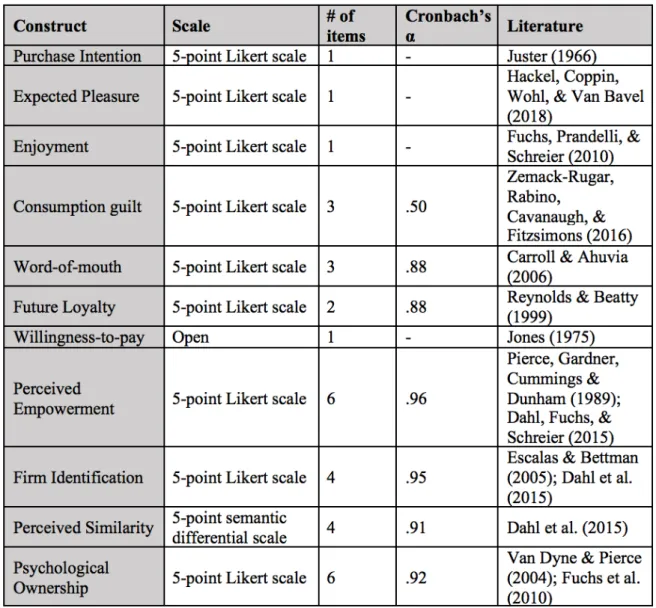
To assess the effects of different empowerment firm philosophies on purchase intention, word-of-mouth intention, future loyalty intention, and hedonic experience, measures were identified. The operationalization of the constructs is based on measures that were commonly used in the past. To increase the predictive validity most variables were measured using multi-item scales. However, based on previous studies and due to the experiment’s complexity, some constructs were measured with single items only. To guarantee a true metric scale, the scales were only labeled for the two extremes.
In order to check for the effectiveness of the randomization procedure, a control variable was established. The control variable is adapted from Fuchs et al. (2010) and measured in terms of general product evaluation (taken from Edell & Keller, 1989). Product evaluation is measured using two five-point semantic differential scales (“Please evaluate chocolate bars in general”) with the anchors “bad/good” and “dislike/like” (α = .81).
Purchase intention was measured on a five-point Likert scale adapted from Juster (1966), asking participants how likely they are to buy chocolate from this company. To assess expected pleasure, a five-point scale from Hackel et al. (2018) was used. The authors defined pleasantness as expected tastiness of the food. Participants were asked to rate the expected tastiness of this firm’s chocolate. Another five-point Likert scale was adapted from Fuchs et al. (2010) and was used to measure enjoyment. Participants were asked to indicate their agreement with the statement that “compared to similar chocolate bars from other firms, it would be more fun to eat a chocolate bar from this firm”. In order to assess consumption guilt, a scale was adapted from Zemack-Rugar et al. (2016) who created a consumption guilt score using the average of participants’ reported guilt, shame, and pride (α = .50). For the guilt score, the authors used pride reversed. The intention to engage in positive word-of-mouth was measured on a five-point Likert scale (1=“strongly disagree” and 5=“strongly agree”) using three items adapted from Carroll and Ahuvia (2006): “I would recommend this firm to my friends”, “I would talk this firm up to others” and “I would try to spread the word about this firm” (α = .88).
Further, consumers’ future loyalty intentions were measured using a five-point Likert scale based on Reynolds and Beatty (1999). The measure includes the two items: “My loyalty to the described firm would be high” and “In the future, I would prefer to buy products from this firm” (α = .88). Finally, participants’ hypothetical WTP for a chocolate bar of the described company was measured using a slider scale. This measure was adapted from Jones (1975). Besides, participants were informed about the average price of 1€ for a chocolate bar. By providing this reference price, more meaningful data was expected, as participants already have a reference price in mind which they would otherwise indicate.
To check for the manipulation of the independent variable, participants’ perceived empowerment was captured through six items adapted from Dahl et al. (2015) who based the scale on Pierce, Gardner, Cummings and Dunham (1989) (α = .96). Participants’ level of agreement with statements like “This firm makes me feel that I can make a difference” and “When I think about this firm, I personally feel important, valuable and worthy” was indicated on a five-point Likert scale. Further, firm identification was measured by four items from Dahl et al. (2015) (adapted from Escalas and Bettman, 2005). The measure includes items like “I can identify with this firm” and “I feel a personal connection to this firm” (α = .95). Additionally, respondents’ perceived similarity with the creators was measured using a five-point bipolar rating scale from Dahl et al. (2015). First, participants were instructed to think about the creators of the chocolate flavors of the described firm. Subsequently, they completed the four scales with items like “I feel (not) similar” and “There are many (no) similarities between me and the creators of the products” (α = .91). Thereafter, psychological ownership was measured using six items from Fuchs et al. (2010), who adapted the items from Van Dyne and Pierce (2004). Since participants did not really try the product, hypothetical statements like “This product would incorporate a part of myself” and “I would feel that this product belongs to me” were used during this research. The last item that says: “It is difficult for me to think of this product as mine” is used reversed (α = .92).
Table 1: Measurement Model
3.3 Procedure
After a small introduction, including relevant information regarding the terms of the research study, participants indicated their general product evaluation, which was used as a control variable to check for randomization. After this, participants were randomly assigned to one of the four conditions and were exposed to the firm’s philosophy description: zero empowerment – employee-driven (1), full empowerment – driven & me (2), driven (3) or user-driven & fans of favorite sports team (4).
After being exposed to the condition, participants were asked to answer a scenario check by indicating who was mainly responsible for the design process. This question was used to check for their attention and to decide whether to include their answers in the data analysis.
Thereafter, the research study proceeded to the dependent measures. First, participants were asked about their purchase intention. After that, they judged their expected pleasure and enjoyment. Further, they answered the consumption guilt measure. They were also asked about their intention to engage in positive word-of-mouth, their future loyalty intentions, and their WTP. Thereafter, they indicated their perceived empowerment as a manipulation check. Subsequently, participants were asked to indicate their firm identification, the perceived similarity with the creators and the feelings of psychological ownership. Finally, demographics, including gender, age, nationality, and current occupation, were collected. The survey ended with a debriefing statement, including a message of acknowledgment. The entire procedure took approximately five minutes.
3.4 Participants
An online survey was selected because of the several advantages in terms of reach, time and cost-efficiency. Further, online surveys allow participants to decide anonymously and voluntarily whether, when, where and how they will respond to the questionnaire, which has a positive impact on the level of honesty of the responses. The online survey was distributed and shared over social media. All participants participated voluntarily in the study. The experimental study was available online for 20 days.
In total, 230 participants participated in the research study. However, 41 questionnaires had to be deleted since they were either not finished or the scenario check indicated a wrong understanding. Therefore, a total of 189 valid responses were analyzed. Out of the sample, 51 participants were exposed to condition one (zero empowerment: employee-driven), 44 to condition two (full empowerment: user-driven & me), 50 to condition three (user-driven) and 44 to condition four (user-driven & fans of favorite sports team).
The sample consists of 36% men and 63,5% women. Regarding the age, participants range from 18 to 58 years. 80,4% of the sample is aged between 18 and 27 years. More than half of the sample (68,8%) are students, whereas 31,2% of the sample is employed. Regarding the nationality, there was an uneven distribution, being the largest group of participants from Germany (78,8%). Further indicated nationalities are Portuguese (6,9%), Spanish (2,6%), French (1,6%) and Other (10,1%). A detailed sample description can be found in Appendix II.
4 RESULTS
This chapter aims to present the main results. First, the data analysis is described, and it is shown which statistical methods were used to examine the hypotheses. Based on this analysis, results from the hypothesis testing are demonstrated.
4.1 Data Preparation
Since most variables were measured using multi-item scales, new variables were computed using the means. Further, the scales’ reliability was tested using Cronbach’s alpha. In order to test the hypotheses, an ANOVA was run for the dependent variables to check for differences between the groups. To explain indirect effects between the dependent and independent variables, a mediation analysis was conducted using the Hayes’ macro PROCESS in SPSS (Hayes, 2013). A mediator helps to explain the relationship between the independent and dependent variables, whereas a moderator influences the strength of the relationship between the two variables (Taylor, MacKinnon, & Tein, 2008). For all analyses within this study, a significance level of 5% was taken into consideration.
In order to check for the effectiveness of the randomization procedure, the control variable was analyzed. The ANOVA revealed that there are no statistically significant differences in the general product evaluation between the four groups (F(3,189) = 2.063, p = .107). This means that differences in the dependent variables are due to manipulation rather than to different sample characteristics.
4.2 Manipulation Check
To check for the manipulation, the level of perceived empowerment was analyzed between the four groups. Participants in Group 1 (employee-driven) reported significantly lower levels of perceived empowerment (Memployee-driven = 1.89) than participants in Group 2 (Muser-driven empowered
= 3.88), Group 3 (Muser-driven = 3.92), and Group 4 (Muser-driven & fans = 3.95) (F(3,189) = 78.735,
p = .000). The Post hoc tests revealed that there are only statistically significant differences
between Group 1 (employee-driven) and all the other Groups (user-driven) (Appendix III). However, participants in the full empowerment condition (2) did not indicate the highest levels of perceived empowerment. It may be concluded that the full empowerment manipulation did not work correctly, since only nine out of 44 participants of Group 2 (full empowerment) indicated in the scenario check that they were responsible for the new product development of Firm A themselves.
Regarding the user-driven including fans condition (4), participants indicated the importance of the given sports team. A one-sample t-test revealed that the indicated team importance within the sample was statistically significant above the mid-point of three (M = 3.36) (t(43) = 2.328,
p = .025). It is therefore not expected that the results were affected by low team importance. 4.3 Results from the Hypotheses testing
Following, the quantitative data is analyzed by testing the Hypotheses.
Psychological ownership (H1): In order to test, if the firm’s empowerment philosophy has an
effect on the level of consumers’ feeling of psychological ownership, an ANOVA was conducted. The ANOVA with psychological ownership as the dependent variable and the firm philosophy as the independent variable shows that if the firm is described as user-driven, respondents demonstrate significantly higher levels of psychological ownership for the product (Muser-driven empowered = 3.74, Muser-driven = 3.18, Muser-driven & fans = 3.34) than if the firm is described
as employee-driven (Memployee-driven = 2.06) (F(3,189) = 34.628, p = .000). An independent
samples t-test reveals a difference in the means between employee-driven and user-driven (empowered) (t(93) = 9.711, p = .000), between employeedriven and userdriven (t(99) = -6.557, p = .000) and between employee-driven and user-driven including fans (t(93) = -7.051,
p = .000).
Hence, Hypothesis 1 is accepted. Consumers show significantly higher feelings of psychological ownership for the product when the firm is described as user-driven versus employee-driven.
Purchase Intention, Word-of-mouth and future loyalty intentions (H2): Further, it was
tested if the firm’s empowerment philosophy has an effect on purchase intention, intention to engage in positive word-of-mouth and future loyalty intentions. The ANOVA with purchase intention as the dependent variable shows that if the firm is described as user-driven, respondents demonstrate significantly higher purchase intentions (Muser-driven empowered = 4.30,
Muser-driven = 3.98, Muser-driven & fans = 4.09) than if the firm is described as employee-driven
(Memployee-driven = 3.41) (F(3,189) = 12.106, p = .000)1. Further, an ANOVA shows that if the
firm is described as user-driven, respondents demonstrate significantly higher word-of-mouth intentions (Muser-driven empowered = 3.95, Muser-driven = 3.80, Muser-driven & fans = 3.83) than if the firm
1 Nevertheless, it is important to note that the assumption of homogeneity of variances is violated. Therefore, the results must be considered with caution.
is described as employee-driven (Memployee-driven = 2.80) (F(3,189) = 24.394, p = .000)1. Finally,
the ANOVA with future loyalty intention as the dependent variable shows that if the firm is described as user-driven, respondents demonstrate significantly higher future loyalty intentions (Muser-driven empowered = 3.90, Muser-driven = 3.54, Muser-driven & fans = 3.84) than if the firm is described
as employee-driven (Memployee-driven = 2.49) (F(3,189) = 30.093, p = .000). The independent
samples t-tests can be found in Appendix III.
Hence, Hypothesis 2 is confirmed. Consumers show significantly higher purchase intentions, higher word-of-mouth intentions, and higher future loyalty intentions if the firm is described as user-driven versus employee-driven.
Consumption guilt (H3): In order to test, if the firm’s empowerment philosophy has an effect
on the level of consumers’ consumption guilt, an ANOVA was conducted. Due to the low reliability of the consumption guilt scale, only a single item was considered for further analysis (“Buying chocolate from this company would make me feel guilty”). The ANOVA shows that if the firm is described as user-driven, participants demonstrate significantly lower levels of consumption guilt (Muser-driven empowered = 1.57, Muser-driven = 1.72, Muser-driven & fans = 1.64) than if
the firm is described as employee-driven (Memployee-driven = 2.24) (F(3,189) = 5.338, p = .002)1.
An independent samples t-test reveals a difference in the means between employee-driven and driven (empowered) (t(86.395) = 3.193, p = .002), between employee-driven and user-driven (t(77.821) = 2.626, p = .010) and between employee-user-driven and user-user-driven including fans (t(89.642) = 2.778, p = .007). Although not statistically significant, empowered consumers show lower levels of consumption guilt compared to observing consumers of user-driven firms. Hence, Hypothesis 3 is confirmed. Consumers show significantly lower levels of consumption guilt if the firm is described as user-driven versus employee-driven.
Expected pleasure and enjoyment (H4): Further, it was tested if the firm’s empowerment
philosophy has an effect on consumers’ expected pleasure and enjoyment. The ANOVA with expected pleasure, which was measured in tastiness, as the dependent variable shows that if the firm is described as user-driven, respondents expect significantly higher pleasure (Muser-driven empowered = 4.20, Muser-driven = 4.02, Muser-driven & fans = 4.07) than if the firm is described as
employee-driven (Memployee-driven = 3.40) (F(3,189) = 9.775, p = .000)1. An independent samples
t-test reveals a difference in the means between employee-driven and user-driven (empowered)
1 Nevertheless, it is important to note that the assumption of homogeneity of variances is violated. Therefore, the results must be considered with caution.
(t(93) = -4.573, p = .000), between employee-driven and user-driven (t(92.864) = -4.318, p = .000) and between employee-driven and user-driven including fans (t(93) = -3.872, p = .000). Further, the ANOVA with enjoyment as the dependent variable shows that if the firm is described as user-driven, participants expect significantly more fun from eating the chocolate bar (Muser-driven empowered = 4.32, Muser-driven = 3.94, Muser-driven & fans = 4.05) than if the firm is
described as employee-driven (Memployee-driven = 2.76) (F(3,189) = 31.101, p = .000)1. An
independent samples t-test reveals a difference in the means between employee-driven and user-driven (empowered) (t(90.281) = -8.196, p = .000), between employee-user-driven and user-user-driven (t(92.221) = -6.282, p = .000) and between employee-driven and user-driven including fans (t(89.270) = -6.840, p = .000).
As a result, Hypothesis 4 is confirmed. Consumers show significantly higher expected pleasure and enjoyment if the firm is described as user-driven versus employee-driven.
WTP: Besides, an ANOVA with WTP as the dependent variable shows that there are
significant differences in the means (F(3,189) = 6.171, p = .001). If the firm is described as user-driven, participants show significantly higher WTP (Muser-driven empowered = 1.80, Muser-driven
= 1.62, Muser-driven & fans = 1.75) than if the firm is described as employee-driven (Memployee-driven
= 1.29). The independent samples t-test can be found in Appendix III.
Firm Identification (H5): An ANOVA with firm identification as the dependent variable
shows that if the firm is described as user-driven, participants identify significantly more with the firm (Muser-driven empowered = 3.66, Muser-driven = 3.31, Muser-driven & fans = 3.73) than if the firm is
described as employee-driven (Memployee-driven = 2.12) (F(3) = 30.581, p = .000). An independent
samples t-test reveals a difference in the means between employee-driven and user-driven (empowered) (t(93) = 7.658, p = .000), between employeedriven and userdriven (t(99) = -6.409, p = .000) and between employee-driven and user-driven including fans (t(93) = -8.447,
p = .000). Besides, there is a difference in the means between user-driven and user-driven
including fans (t(92) = -2.262, p = .026) but not between driven (empowered) and user-driven including fans (t(86) = -.335, p = .738).
Hence, Hypothesis 5 is confirmed. Consumers significantly identify more with the firm if the firm is described as user-driven versus employee-driven.
1 Nevertheless, it is important to note that the assumption of homogeneity of variances is violated. Therefore, the results must be considered with caution.
Similarity: Further, to check for the perceived similarity to the creators, an ANOVA was
performed. Participants in Group 1 (employee-driven) reported significantly lower levels of perceived similarity (Memployee-driven = 2.36) than participants in Group 2 (Muser-driven empowered =
3.72), Group 3 (Muser-driven = 3.37), and Group 4 (Muser-driven & fans = 3.74) (F(3,189) = 30.882, p
= .000). The Post hoc test reveals that there are only statistically significant differences between Group 1 (employee-driven) and all the other Groups (user-driven) (Appendix III). Although not statistically significant, participants in the user-driven including fans condition (4) perceived the highest similarity to the creators.
Mediating role of firm identification (H6): Further, Dahl et al. (2015) revealed the mediating
role of firm identification on product preference. Therefore, the mediating role of firm identification on purchase intention, word-of-mouth intention, future loyalty intention, expected pleasure, and enjoyment was investigated. Mediations were run using the PROCESS analysis tool developed by Hayes (2013).
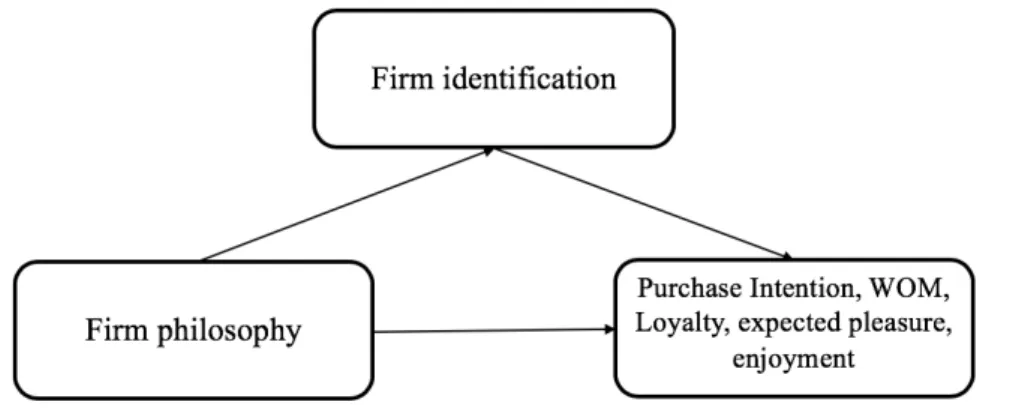
Figure 1: Simple mediation model with firm identification as the mediator of firm philosophy on the dependent variables
A bootstrapping analysis (5000 resamples), with firm identification as the mediator variable, reveals that the simple mediation model is significant for purchase intention. Thus, firm identification mediates the path of a firm’s empowerment philosophy on purchase intention, 95% bias-corrected CI = [0.07, 0.18]. Additionally, a simple mediation model reveals that firm identification mediates the path of firm philosophy on word-of-mouth intention, 95% bias-corrected CI = [0.17, 0.33]. Moreover, firm identification serves as a mediator from a firm’s empowerment philosophy to future loyalty intentions, 95% bias-corrected CI = [0.19, 0.36]. Besides, a simple mediation model reveals that firm identification mediates the path of firm philosophy on expected pleasure, 95% bias-corrected CI = [0.10, 0.23], as well as on enjoyment, 95% bias-corrected CI = [0.11, 0.27] (Figure 1).
Figure 2: Simple mediation model with similarity as the mediator of firm philosophy on firm identification
Another bootstrapping analysis (5000 resamples), with perceived similarity as the mediator variable, reveals that the simple mediation model is significant for firm identification. Thus, perceived similarity mediates the path of a firm’s empowerment philosophy on firm identification, 95% bias-corrected CI = [0.21, 0.39] (Figure 2).
Consequently, Hypothesis 6 is confirmed. Firm identification mediates the path of a firm’s empowerment philosophy on consumers’ purchase intention, word-of-mouth intention, future loyalty intention, expected pleasure, and enjoyment. Hence, firm philosophy affects all these dependent variables via firm identification. Moreover, the effect of firm philosophy on firm identification is mediated by similarity.
Figure 3: Serial path mediation model with similarity and firm identification as the mediators
Therefore, a serial path mediation model that accommodates both similarity and firm identification was explored. Although firm identification mediates the effect of firm philosophy on purchase intention, the serial path mediation model becomes non-significant when similarity is added as the first mediator, 95% bias-corrected CI = [-0.04, 0.06]. Though, similarity as a single mediator is still significant, 95% bias-corrected CI = [0.08, 0.27]. However, the same serial path from similarity to firm identification mediates the effects of firm philosophy on