UNIVERSITY OF ÉVORA
SOCIAL SCIENCE SCHOOL
DEPARTMENT OF PSYCHOLOGY
Patient-generated outcome measures and
development the therapeutic alliance
Cláudia Sofia Velez Brinquete
Supervisor: Ph.D Célia Sales, University of Évora
Co-supervisor: Ph.D Adam O. Horvath, Simon Fraser University
Master in Psychology
Specialization area: Health and Clinical Psychology
Évora, 2015
UNIVERSITY OF ÉVORA
Social Science School
Master in Psychology
Specialization in Health and Clinical Psychology
Patient-generated outcome measures and development the therapeutic
alliance
Cláudia Sofia Velez Brinquete
Supervisor:
Ph.D Célia Sales
Co-supervisor:
Ph.D Adam Horvath
i
Acknowledgements
I want to thank all those who contributed directly or indirectly to the completion of this Master Thesis:
My supervisor Ph. D. Célia Sales, for their constant support and knowledge that made possible the realization of this study and contributed to my professional and personal enrichment. My co-supervisor Ph. D. Adam Horvath for accepting me in your co-orientation and the scientific knowledge directed to this investigation.
Then, and not least, the all research team that collaborated in this study and made it possible to collect data in the Hospital Espírito Santo in Évora and all patients of the Department of Psychiatry and Mental Health that participated in this study . Similarly, it is important to refer the availability of therapists involved that have dedicated their time to this project and were tireless in establishing strategies to implement this research on the dynamics and functioning of the DPMH.
For my colleagues Rita Carlota and Inês Neves for understanding and self-help spirit in this process.
I also thank the instrumental support and facilitating access to scientific articles provided by Ph. D. Paula Alves, researcher at ISCTE-IUL and Ph. D. Paulo Machado, researcher at University of Minho.
iii
Patient-generated outcome measures and development the therapeutic alliance
Abstract
This study aims to explore to what extend the therapist assessment is similar to patient-reported assessment and how this relates to therapeutic alliance. Thus, we sought to determine the proximity of the evaluation of the patient and therapist about your clinical condition in individualized measure (PSYCHLOPS) and for a nomothetic measure (CORE-OM). A total of 57 patients filled the PSYCHLOPS and CORE-OM before the session and therapists after the session. The WAI-SR was filled by the patient after the session. The results indicate that 70.3% of patients in PSYCHOLOPS indicated items matching with the therapist. In CORE-OM, we verified that the dimension "Problems" and "Risk" had a significant correlation between patient and therapist. However, this proximity between therapist-patient was not related significantly with the therapeutic alliance.
Key-words: patient-generated outcome measures, nomothetic measures, therapeutic alliance.
v
Medidas de resultado geradas pelo paciente e desenvolvimento da aliança terapêutica
Resumo
Este estudo tem como objetivo explorar até que ponto a avaliação do terapeuta é similar à avaliação relatada pelo paciente e como tal se relaciona com a aliança terapêutica. Assim, buscou-se determinar a proximidade da avaliação do paciente e terapeuta sobre a sua condição clínica na medida individualizada (PSYCHLOPS) e para uma medida nomotética (OM). Um total de 57 pacientes preencheu o PSYCHLOPS e CORE-OM antes da sessão e terapeutas após a sessão. A WAI-SR foi preenchida pelo paciente após a sessão. Os resultados indicam que 70,3% dos pacientes no PSYCHOLOPS indicaram itens correspondentes com o terapeuta. No CORE-OM, verificou-se que a dimensão "Problemas" e "Risco" tinham uma correlação significativa entre o paciente e o terapeuta. No entanto, essa proximidade entre terapeuta-paciente não foi relacionado de forma significativa com a aliança terapêutica.
Palavras-chave: medidas de resultado geradas pelo paciente, medidas nomotéticas, aliança terapêutica.
vii
Contents
1.Introduction………...……….1
2. THEORETICAL BACKGROUND ... 3
2.1. Outcome Assessment in Psychotherapy ... 3
2.1.1. Nomothetic and Idiographic Assessment Tools ... 3
2.2.Therapeutic Alliance ... 6
2.2.1. Brief Historical Context ... 6
2.2.2. Determinants of Therapeutic Alliance ... 8
2.2.3. Evolution of the Therapeutic Alliance ... 9
2.2.4. Early Therapeutic Alliance and Outcome………...10
2.3. Research Proposal: The relationship between patient assessment and early therapeutic alliance………. . 12
3. METHODS ... 15
3.1. Study Design ... 15
3.2. Participants ... 17
3.3. Instruments……….20
3.3.1. Psychological Outcome Profiles (PSYCHLOPS) ... 20
3.3.2. Clinical Outcome Routine Evaluation- Outcome Measure (CORE-OM) ... 21
3.3.3. Working Alliance Inventory Short Revised (WAI-SR) ... 22
3.3.4. Social Demographic-Form………23
3.4. Procedure ... 24
3.4.1. Data collection ... 24
3.4.2. Data Analysis ... 25
4. RESULTS ... 29
4.1. Does the therapist identify the same problems as the patient in PSYCHLOPS? ... 29
4.2. When there is PSYCHLOPS proximity between patient and therapits the therapeutic alliance is greater? ... 32
viii
4.3. When there is CORE-OM proximity score between patient and therapits the therapeutic alliance is greater? ... 32 4.4. Does patients change their priorities and assessment over the course of the session? ... 35 5. DISCUSSION ... 37 6. REFERENCES ... 41
ix
List of Abbreviations
CORE-OM CORE-10 PGOM PSYCHLOPS T-P WAI-SRClinical Outcome in Routine Evaluation – Outcome Measure Clinical Outcome in Routine Evaluation - 10
Patient-Generated Outcome Measure Psychological Outcome Profiles Therapist-Patient
xi
List of Figures
xiii
List of Tables
Table 1. Sociodemographic characteristics of the sample………...……..18 Table 2. Different/Coincidence contents in PSYCHLOPS………..29 Table 3. Subthemes of coincident contents in PSYCHLOSPS………30 Table 4. Pearson’s coefficient correlation of patient and therapist PSYCHLOPS scorings……….. 31 Table 5. Relation between therapist-patient proximity of PSYCHLOPS items and the therapeutic alliance………...32 Table 6. Pearson’s coefficient correlated CORE-OM scorings by patient and therapist………..33 Table 7. Pearson’s coefficient correlated CORE-OM scorings and therapeutic alliance………34
1
1. Introduction
Therapeutic alliance is one of the strongest predictors of psychotherapy outcome (Horvath, Del Re, Flückiger & Symonds, 2011). A critical aspect in outcome assessment of psychotherapy is the kind of tools used in the pre-treatment phase. Therapists are often against the use of batteries of psychological scales, arguing that they overload patients, do not have therapeutic relevance, and may hinder the establishment of the therapeutic alliance (Garland et al., 2003; Slade et al., 2006).
In mental health the traditional approach in outcome assessment follows mainly a nomothetic approach. Recently studies suggest a new approach – the individualized approach using patient-generated measures (e.g. Ashworth et al., 2004; Fitzpatrick et al., 1998). There is evidence that patient-generated outcome measures (PGOM) are more sensitive to change (Ashworth, Evans, & Clement, 2008) and therapists prefer this kind of measures over the standardized ones (Sales et al., 2007).
Our study aims to explore to what extend the therapist assessment is similar to patient-reported assessment and how this relates to therapeutic alliance. Specifically, we wish to compare the patient-therapist proximity of assessment when nomothetic and PGOM are used: to what extend do therapists identify the same problems indicated by patients and rate it with the same intensity? Is this patient-therapist proximity equivalent for nomothetic and individualized measures? Can this patient-therapist assessment proximity be related to the establishment of an early therapeutic alliance?
3
2. THEORICAL BACKGROUND
2.1. Outcome Assessment in Psychotherapy
The outcome in psychotherapy is a complex concept because there are many definitions of what change is (Ogles, 2013). The definition and measurements of outcome in psychotherapy can vary from change on symptoms or problems to psychological conflicts that arise in relationships problems or personality restructuring (McLeod, 2013; Ogles, 2013). For instance, Luborsky (1984) states that change in psychotherapy includes increased understanding of the symptoms, psychological conflicts and greater mastery on handling relationship problems. Kanfer and Goldstein (1991) define the goals or outcomes of treatment as change of problem behavior, insight and emotional understanding of own problems, change in emotional comfort, change in self-perception, self-confidence, and sense of adequacy and change in lifestyle. Moreover, there are various perspectives and issues to be considered for desirable outcome as patient, family, therapist and society (Bergin, 1980). However, in all areas, the concept from outcome assessment relies on measuring the change of a patient in treatment and the effectiveness of the therapeutic process (McLeod, 2013).
2.1.1. Nomothetic and Idiographic Assessment Tools
The outcome measures have been developed to help researchers and therapists identify when therapy has been successful (Hatfield & Ogles, 2004; Garland et al., 2003; Slade et al., 2006). However, there are difficulties to define what outcome assessment is, how to measure the change in psychotherapy and what instruments to use for outcome assessment.
Moreover, the involvement of the patient in the process of assessment of their change is variable. According Fiztpatrick and colleagues (1998) the assessment methods in health can be classified in a continuum of patient involvement. We find two positions, one side, health professionals or researchers contribute to an assessment not involving the patient in outcome assessment it is only valued the judgment by the clinician, and other side the assessments are largely determined by the patient with minimal influence from therapist or researchers. In this case, the assessment is based on patients' opinions allowing the construction of individualized tools which measure the change according the problems shown by patients (Fitzpatrick et al., 1998). Thus a
4
debate persist: whether to identify and measure individualized outcomes that are unique for each patient (idiographic approach) or to use standardized measures (nomothetic approach). Both measures have their advantages and disadvantages.
The standardized measures were first developed from the clinician's perspective an then from other perspectives as the patient or significant other evaluation (Fiztzpatrick et al.,1998). Currently, standardized measures are the more used source of information to assess change occurring in psychotherapy (Elliott, 2010). The nomothetic approach makes use of questionnaires with a standard list of items that claim to assess general dimensions (Ashworth et al., 2007). The bigger advantage of nomothetic measures is that they are applicable to all patients because the items that compose them were derived from symptoms reported by clinical population (Evans et al., 1998). In other words, this measures using the same questions for everyone allowing better predict the behavior and are more precise and objective (Ashworth et al., 2007). However, this approach is less sensitive to the patient change during therapy because it may not include items that are related to the problems and personal concerns of patients. Thus, there may be problems that are not evaluated by these measures (Clark, Hook, & Stein, 1997). Since the clinical condition of each patient is unique and diverse, it may be appropriate to use a more individualized approach to measure therapy outcome (Ashworth et al., 2007; Sales & Alves, 2012; Sales, Gonçalves, Fragoeiro, Noronha, & Elliott, 2007).
Ashworth and colleagues (2004) defined “patient-generated outcome measures” as “questionnaires where the items to be measured are defined by the patient” (Ashworth et al., 2004, p. 28). The individualized measures take into account the specificity of each patient, their specific needs and the main problems that the patient wants to deal with in therapy (Sales & Alves, 2012). In PGOM the patient can choose topics, areas or problems according to your needs and not predetermined by a list standard questionnaire items (Ruta & Garrat, 1994). Thus, the use of patient-generated measures becomes a good clinical practice because it involves the patient asking him to express in their own words about the issues and problems that would like to work in therapy, thus providing information on what they consider relevant to change (Sales & Alves, 2012). There are two types of instruments individualized outcome: 1) the target complaint questionnaires, with open response items for patient identify the problems or concerns according to the discomfort they cause to the patient and 2) the goal attainment questionnaires that target the objectives that patients want to achieve in therapy (Sales & Alves, 2012). These instruments are flexible and provide idiosyncratic variables that facilitate the clarification of the patient's goals in therapy. If the defined goals reflect their individual needs the involvement of the patient in therapy is greater (Turner-Stokes,
5
2011). Patients can define the contents of these instruments because these instruments usually has an open structure that allows patients to express themselves through their own words giving relevant information about your problem and the treatment itself (Sales et al., 2007). This is its main advantage because the nomothetic measure have a standard of issues not allowing the patient expose their own concerns (Sales & Alves, 2012). In addition, the interview process necessary for application the PGOMs allows the establishment of a relationship between interviewer-patient who somehow may contribute to the patient's motivation for therapeutic process (Ashworth et al., 2007; Fitzpatrick et al., 1998; Turner-Stokes, 2011). The major problem for PGOMs is that the personal thematic content makes the meaning of scores and population norms uncertain and consumes much time in the application (Ashworth et al., 2007; Fitzpatrick et al., 1998). Despite this, a recent review shows that use of PGOM has been increasingly implemented in different contexts (Sales et al., 2014) your importance can be several studies in this area (e.g. Answorth et al.,2004; Answorth et al.,2007 Evans et al.,2000).
6
2.2. Therapeutic Alliance
The therapeutic alliance has been the subject of a growing interest in research about psychotherapy, particularly its association with therapeutic results and understanding of the process, your formation and development (Ribeiro, 2009). According to Horvath and Symonds (1991) there is a general consensus around two central ideas of therapeutic alliance: it describes the collaboration present in the relationship between therapist and patient and the ability of negotiation between them on the therapeutic process. Bordin (1994) suggested the alliance in the early stages of treatment consist mainly on a positive emotional bond between therapist and patient, their capacity to agree on the goals of the treatment, and their establishment of a mutual consensus on the task that form the substance of the therapy.
2.2.1. Brief Historical Context
As mentioned, the alliance (working alliance, therapeutic alliance, helping alliance) has been defined as many different ways over the course of the history of the concept. The concept of therapeutic alliance has origin in psychoanalytic theory, particularly in the Freud's idea of positive transference. Freud refers to this concept as the connection between patient and psychoanalyst emphasizing its importance to the effectiveness of the analytical process (Freud, 1937). However, there was a certain theoretical ambiguity in relation to the conscious or unconscious nature of this connection, which prompted the discussion around the definition of therapeutic alliance (Horvath & Bedi, 2002). On psychoanalytic theory, the concept of alliance has also been associated the Zetzel (1956) which argues that this concept is associated the positive transference and the establishment of an alliance of reliable and stable that begins as a patient identification process to the analyst, highlighting the importance of early experiences. This author argues that the alliance results from identification and linking the patient to therapist, addressing the need of constructing a therapeutic space through empathy and respect for the therapist (Zetzel, 1956).
During the 70's researchers and professionals directed their efforts for broadening the concept of therapeutic alliance beyond psychodynamic theory and involve other relational aspects. L. Luborsky (1976) and E. Bordin (1979) broadened the psychodynamic notions of the alliance to encompass the present element of working collaboration in all forms of helping relationships. These authors instead of provide a concise definition of therapeutic alliance or as relates to the therapeutic process were
7
focused on elements that could identify the presence of a good alliance and your impact. They argued that the alliance between therapist and patient is not unique to psychoanalysis or psychodynamic therapy, it is an important bidirectional process that is transversal in all forms of helping relationships (Krause, Altimir, & Horvath, 2011). Thus, the therapeutic alliance may take various configurations, depending on the therapeutic principles of each theoretical approach and the importance of certain tasks or objectives for the therapeutic process (Horvath & Bedi, 2002).
The alliance concept proposed by Luborsky (1994) considers that the therapeutic alliance is a dynamic entity that changes according with two phases of therapy. The phase I (alliance type I), which occurs in the early stages of therapy, and is characterized by the patient's belief that the therapist can help provide a significant relationship, support and assistance. In this type of alliance the patient feels the therapist's support, which the therapy will help, there is a bond with the therapist and the therapeutic process is valid. The phase II, alliance type II, occurs in the advanced stages of therapy, and defines the involvement of the patient in the therapeutic process, his commitment to the structural concepts of therapy and its intentional investment. At this stage the patient understands the relationship as a working together, sharing ideas about the problems, believes in his abilities to use the tools provided in therapy for greater understanding of the problems (Luborsky, 1994).
Horvath and Luborsky (1993) defined the definition of therapeutic alliance proposed by Bordin (1979) as the “pan-theoretical concept.” because is applicable to any
therapeutic approach. The conceptualization by Bordin (1979) consists a “working
alliance” characterized by a secure emotional bond between therapist and patient, and agreement around the goals and tasks of therapy. The Bordin's concept of therapeutic alliance (1979) describes the intentional involvement between patient and therapist in a joint effort to attenuate the patient's problems. This author argues that the therapeutic alliance is a bidirectional relationship because it involves collaboration, the agreement and the negotiations between therapist and patient, takes place in "here and now" and is generic for all help processes (Horvath, 2000). Thus, the therapeutic alliance is a collaborative relationship between the patient and the therapist promoted by three processes: agreements on the therapeutic goals; consensus on the tasks than make up therapy; and a bond between the patient and the therapist (Bordin 1979).
The objectives are expected outcomes by the patient and therapist. The tasks are activities in therapy for the facilitation of change (Bordin, 1979). The affective bond between patient and therapist has implicit aspects such as confidence, acceptance, commitment and shared understanding (Bordin, 1979; Horvath & Bedi, 2002).
8
The intersection of these ideas by researchers was a strong motive to investigate the alliance. In order to get on with this research, practical ways to measure the alliance were needed; the Working Alliance Inventory - WAI - (Tracey & Kokotovic, 1989) was one of the instruments developed to meet this need. Bordin's concept , was the basis for constructing assessment measures of therapeutic alliance, as the WAI, because it brings together the essential elements of the therapeutic process that are common to different psychotherapeutic approaches (Orlinsky, Ronnestad, & Willutzki, 2004).
2.2.2. Determinants of the Therapeutic Alliance
Strupp (2001) showed that the outcome of a psychotherapeutic process is often influenced by various factors, as the personal characteristics of the therapist and the positive feelings that arise in the patient.
Patients and therapists emphasized the importance of affective bond as an important element of a good therapeutic alliance. They identified three main aspects that patients must experience from their therapists in order to have a good therapeutic relationship: acceptance, trust, and feeling understood. For the development of an alliance the therapist’s ability to foster a relationship of trust was regarded by patients as aspect important (Krause et al., 2011).The therapists' personal characteristics, such as acceptance and support transmitted to the patient are responsible for 30% of the good results achieved through therapy (Lambert, 1992). Empathic therapists (Horvath & Bedi, 2002), warm and genuine, flexible (Kivlighan, 1993), with higher perceived social support and better quality of interpersonal relationships (Dunkle & Friedlander, 1996) are characteristics of the therapists associated with a higher quality of therapeutic alliance. By another hand, there are characteristics of therapists who seem to be associated with lesser quality alliances, hard therapists, critical and less involved in therapy, insecure and tense (Sexton, 1996). As well as therapists who adopt behaviors such as imposition of values, inappropriate and irrelevant interventions, sharing personal emotional conflict and expression of negative feelings towards the patient (Coady, 1994). It is therefore crucial that the therapist be conscious of as your personal characteristics can influence the quality of therapeutic alliance established with the patient.
9
The research has identified several important patient factors that contributed to the formation of therapeutic alliance. Patients with a low self-image establishes poorer alliances (Saunders, 2001) and the availability of coping strategies and a good social support leads to patients establish best therapeutic alliance (Meier et al., 2005). Horvath and Bedi (2002) related studies have shown that the symptomatology of the patient is related to the quality of the therapeutic alliance. Mostly personality disorders, particularly borderline, and delinquency and substance abuse are associated with poorer alliances. Goldman and Anderson (2007) found that a secure bond and the quality of relationships were related positively with early alliance and negatively with the abandonment of therapy. However, there are studies that find no significant relationship between the severity of the patient's clinical condition and the quality of therapeutic alliance (Gibbons et al., 2003).
2.2.3. Evolution of the Therapeutic Alliance
There is one debate on the role of the therapeutic alliance during the psychotherapeutic process. We would expect, over the course of the therapy, the development of therapeutic alliance to be characterized by a linear growth, in other words, the alliance ratings obtained in the early phases to be weaker ratings of outcome than the end of the therapy (Ardito & Rabellino, 2011). However, there are studies with contradictory results.
Patients described the therapeutic alliance as a process that evolves over the course of the therapy. In initial phases of treatment is much important the ability to communicate emotions by the therapist and the reciprocal emotions of the patient (Krause, Altimir, & Horvath, 2011).
In recent years, researchers have analyzed fluctuations in the alliance, in the quest to define patterns of therapeutic alliance development. According De Rotten and colleagues (2004) a positive therapeutic alliance develops according to two processes: high levels of alliance remain stable throughout the therapy; or through a linear growth of the therapeutic alliance during therapy. Patients whose alliance improves over the therapeutic process benefit more from therapy than patients that establish a stable alliance from the start, even if it is high (Rotten et al, 2004). Stevens and colleagues (2007) found patterns of evolution of the therapeutic alliance similar to a stable-linear (linear and regular increase in the quality of the alliance during therapy) and other later-linear (values are lower in the first session and then recover about the 7th-9th session
10
and then stabilize). Horvath and Bedi (2002) analyzed the impact of therapeutic alliance in outcome according to different phases of the therapeutic process and found evidence of another type of pattern, following the shape of the letter "U". The impact of alliance in the effectiveness of therapy had different values according to the time which it was evaluated: in an initial phase, the intermediate phase or the terminal phase. In the initial phase, the impact was high, probably due to the positive expectations of the patient regarding the consequent results of therapy. In the intermediate stage, the therapeutic alliance may weaken because of the therapeutic work around the problems that lead patients to therapy; the final phase, the therapeutic alliance increased as a result of therapeutic gains that have been achieved in therapy (Horvath & Bedi, 2002).
In general, the results of studies have led to consider the existence of two important phases in the alliance. The first phase coincides with the initial development of the alliance during the first five session. In the first phase, adequate levels of collaboration and confidence are fostered, patient and therapist agree upon their goals, and the patient develops a certain degree of confidence in therapy process. In the second phase the therapist begins to challenge the patient’s thoughts, affects, and behavior patterns, with the intent of changing them (Ardito & Rabellino, 2011).
2.2.4. Early Therapeutic Alliance and Outcome
The research in the area of the relationship between the therapist and the patient suggests that the therapeutic alliance established in the early stages of therapy is a strong predictor of therapeutic results (e.g. Wampold, 2001; Horvath, 2000; Horvath & Luborsky, 1993). Thus, the development of a quality alliance is crucial for the success of psychotherapy, regardless of the type of treatment. Horvath and Symonds (1991) conducted a meta-analysis that examined the quality of the therapeutic alliance and its association to therapy outcome. These authors reviewing 24 studies and determined that there was a moderate but reliable association between good alliance and positive outcome in therapy. Moreover, they concluded that the alliance ratings by patient were the strongest predictors of good therapy outcome, followed by the ratings by therapists and then the ratings by observers.
Patient’ efforts to communicate their problems early in therapy with the therapists’ support in this task may often be the base for early alliance development (MacFarlane, Anderson, & McClintock, 2015).
The early establishment of a therapeutic alliance is believed to be important for two reasons: the alliance is a particularly good predictor of outcome when established
11
and measured early in treatment (Castonguay et al., 2006; Horvath 2001), and poor early alliance has been empirically connected with patient’ premature termination of therapy (Constantino, 2002). Research has indicated the importance of early alliance with depressed patients because with better alliances have a more rapid decline in symptoms (Zuroff & Blatt, 2006; Klein et al., 2003). Sexton and colleagues (2005) studied the process of therapy and its influence on the development of the early therapeutic alliance: 1) examined the psychotherapy process during the first session, 2) ratings of the therapeutic alliance, and 3) the relation between the patient and therapist. They concluded that the initial session appears to be influential in developing a positive alliance.
12
2.3. Research Proposal: The relationship between patient assessment and
early therapeutic alliance
The initial assessment that takes place in the first therapy session is an opportunity for the establishment of the alliance. It is a time for the patient to experience the empathic and collaborative aspects of therapy while working with the therapist to develop treatment goals and therapeutic tasks. The effects of the alliance developed in initial session persist in the course of therapy (Hilsenroth & Cromer, 2007). Our study aims to explore how the initial assessment relates to the establishment of early therapeutic alliance. Assessment using PGOM involves a process of inviting the patient to talk about his or her problems, which is similar to the therapeutic discourse in the early stages of therapy where the patient exposes his or her problems for the therapist. Thus, it is expected that there may be coincidence of the problems indicated by the patient in a PGOM before starting treatment and the problems identified by the therapist during the first session. This assumption introduces our first question: Are patient-generated items in a PGOM similar to the clinical information gathered by the therapist in the first session? Will the therapist be able to identify, at the end of the first session, the same problems that patients indicated in their pre-treatment assessment? How does this therapist-patient similarity in PGOMs compare with nomothetic measures?
Our second question goes a step further and relates assessment and therapeutic alliance: To what extent the proximity of the assessment reported by the therapist and by the patient relates to the establishment of early therapeutic alliance? It is plausible that a high proximity between the patient and therapist visions is associated with higher levels of therapeutic alliance in the early stages of therapy. At the beginning of therapy, therapists and patients outline the conditions of their work together. The initial phase of therapy, namely, the first session, is a crucial time in treatment. Therapists must be effective at establishing a positive alliance because their actions have a strong impact in development of therapeutic alliance (Martin, 2000). The agreement about the nature of the problem for which the patient is seeking help, goals for treatment, and the way they will work together to achieve these goals are the essence of goal consensus. Patients need to recognize the importance they play in achieving goal consensus and the importance of their collaboration with the therapist (Orlinsky, Ronnestad, & Willutzki, 2004). If after a first session, the therapist is able to identify the major problems that bring the patient to therapy, this means that communication between therapist and patient was effective, which can benefit the development of the therapeutic alliance. Moreover, if there is therapist-patient agreement on the problems and priorities of the patient it is probable that they agree on the therapeutic goals. And it is more probable that therapist
13
proposes therapeutic tasks that meet the patient’s needs. Two components of the therapeutic alliance is the agreement between the therapist and the patient on therapy goals and tasks (Bordin, 1979).
In sum, this study aims to contrast PGOMs and nomothetic measures regarding two general exploratory questions:
1) How close are the pre-treatment patient-reported assessment and the therapist-reported assessment after the first session?
2) Can the proximity between therapist-patient assessments be related to the quality of therapeutic alliance established in the early stages of therapy?
Our objectives and hypothesis are as follows.
Objective 1: To evaluate the proximity between patient-reported assessment gathered
by outcome tools and the therapist assessment of the patient in early stages of treatment.
H1: There is a high proximity between therapist-patient in PSYCHOLPS items. H2: There is a high proximity between Therapist-Patient in CORE-OM items.
Objective 2: To explore to what extent the proximity of therapist-patient assessments is
related to the therapeutic alliance, in the early stages of therapy.
H3: There is a positive relationship between T-P in PSYCHLOPS proximity and
the therapeutic alliance.
H4: There is a positive relationship between T-P proximity in CORE-OM and the
15
3. METHOD
3.1. Study Design
Data were collected in two stages, before and after the first therapy session. Before the session, the patient completed the PSYCHLOPS (pre-treatment version), the CORE-OM and the socio-demographic form. Firstly was presented the PGOM (PSYCHLOPS) and after the nomothetic instrument (CORE-OM).
After the session the therapist was asked to complete the PSYCHLOPS (pre-treatment version) and the CORE-OM. The following instruction is given: “Imagine you are the patient, how would you fill in these two questionnaires?”. On post-session, the patient was administered the WAI-SR (always presented first), the PSYCHLOPS during-therapy version and the CORE-10. These post-session PSYCHLOPS and CORE-10 (presented in a randomized order) (see figure 1). The interviewer has previously written the patient’s self-reported problems in the PSYCHLOPS. Therapists remind patients to fill in these questionnaires at the end of the session.
16
Figure 1. Study Design
1st Session
Patient: Pre-session
PSYCHLOPS (pre-treatment version) CORE-OM
Socio-demographic form
Patient: Post-session
WAI-SR
PSYCHLOPS (during-therapy version) CORE-10
Therapist: Post-session
PSYCHLOPS (pre-treatment version) CORE-OM
17
3.2. Participants
The sample was derived the project of the IPHA group network (Sales et al., 2014), “Personalized outcome measurement in Hospital-based psychological
treatments”. A total of 57 adult patients (<18 years) were recruited among the patients
admitted at the Service of Psychiatry and Mental Health, Hospital Espírito Santo of Évora, from October 2013 through May 2014. Inclusion criteria were: age equal or over 18 years, both genders, starting psychotherapeutic treatment with the two psychotherapists involved in research.
From the initial sample, 16 patients were eliminated because data collection was incomplete, resulting in a total of 41 participants: 31 females (75.6%) and 10 males (24.4%), aged between 18 and 85 years (M= 42.54, SD= 15.45). Most patients were
married or life partners 58.5% (n=24). The predominant educational level was 7th to 9th
years (n=12, 29.3%). Regarding employability, 16 patients (39.0%) were employed full-time and 10 patients (24.4%) were retired. Approximately 53.7% (n=22) of the patients had previously received psychological or psychiatric support (last 5 years) and 70.7% (n=29) said they were taking medication to help their well-being (see table1).
A team of 8 research assistants participated in the data collection process: two psychologists’ professional interns, Hospital Espírito Santo of Évora and six master’s degree students in Clinical and Health Psychology, University of Évora. Two senior psychotherapists participated in the study, both male, with 38 and 36 years of professional experience and following an integrative cognitive behavioral/systemic approach.
18
Table 1. Sociodemographic characteristics of the sample.
M SD N % Age 18-42 years 43-65 years 66-85 years 42.54 15.4 5 2 23 14 4 56.1 34.1 9.8 Gender Female Male 31 10 75.6 24.4 Education Level Illiterate Up to 4th year of education 5th to 6th year of education 7th to 9th year of education 10th to 12th year of education University attendance BSc/Msc/PhD 1 4 9 12 9 2 1 2.4 17.1 22.0 29.3 22.0 4.9 2.4 Marital Status Single Married Life patterns Divorced Widowed 12 19 5 3 2 29.3 46.3 12.2 7.3 4.9 Household members 0 1 2 3 4 5 2 6 12 12 7 2 4.9 14.6 29.3 29.3 17.1 4.9
19 N % Number of children 0 1 2 3 14 9 14 4 34.1 22.0 34.1 9.8 Employability Student Student worker
Student worker seeking employment Employed full-time Employed part-time Unemployed Retired 2 1 1 16 2 9 10 4.9 2.4 2.4 39.0 4.9 22.0 24.4
Psychological/Psychiatric Support (last 5 years)
Yes No 22 19 53.7 46.3 Medication Yes No 29 12 70.7 29.3 Diagnosis Neurological problems Depression Anxiety Unknown 1 12 1 27 2.4 29.2 2.4 65.9
20
3.3. Instruments
3.3.1. Psychological Outcome Profiles (PSYCHLOPS)
PSYCHOLPS was created for capturing various aspects of recovery that did not appear in conventional instruments, in context of primary care (Ashworth et al., 2004). PSYCHLOPS (Ashworth, et al., 2004) is a self-reported, one-page, patient-generated outcome measure. It consists of four items measuring three domains: problems (which correspond to two items), function (one item) and well-being (one item also). The three freetext responses covering two domains, Problem and Function, and questions ask: Question 1: “Choose the problems that troubles you most. Please write it in the box below”; Question 2: “Choose another problem that troubles you” and Question 3: “Choose one thing that is hard to do because of your problem (or problems)”. (Ashworth et al., 2004; Ashworth et al., 2012).
For both problems the patients are asked to rate on an ordinal six-point scale, ranging from score of zero to five, how much they affected over the last week. For the function domain, patients need to mention one thing that is hard to do because of the problem and give a written description of it in a free-text box. Patients are then asked to rate how hard has been to do the thing over the last week. Finally, in the well-being domain patients are not asked to give a written description, but rather are simply asked to rate on a six-point scale how they felt about themselves during the last week. These scales are measures of psychological difficulties and range from 0 to 5, with a maximum score of 20.
In 2004 was development the PSYCHLOPS pre-therapy and post-therapy. After several validation studies (Ashworth et al., 2004; Ashworth, et al., 2008; Evans, Ashworth & Peters, 2010), a new during-therapy version was introduced (Ashworth et al., 2012). The version used in this study is the pre-therapy version and during-therapy. Before the post-therapy version is administered, the therapist needs to copy the handwritten free-text responses to that version of the instrument. Thus the patients see what they wrote at pre-therapy and are asked to rate again using same six-point rating scale as before. The well-being question is also repeated. The difference between the total pre-therapy score and post-therapy score represents the outcome as measured by PSYCHLOPS. The post-therapy version has an additional “validation” question were patients are asked to rate on a six-point scale how they are feeling in that moment compared to when they started therapy, from “much better” to “much worse” (Ashworth et al., 2012). Its
21
psychometrics properties were evaluated in three studies have reported an internal reliability of 0.79 therapy and 0.87 post-therapy (Ashworth et al, 2005); 0.75 pre-therapy and 0.83 post-pre-therapy (Ashworth et al., 2008); 0.81 pre-pre-therapy, 0.85 during therapy and 0.88 post-therapy (Czachowski et al.,2011). The reliability of PSYCHLOPS was verified by a test-retest study with correlation coefficient of 0.70 (Evans et al., 2010). PSYCHLOPS has been translated into Portuguese by the IPHA group in Évora (International network for Personalizing Health Assessment) (Sales et al., 2014). For this study used the pre-treatment and during-therapy version.
3.3.2. Clinical Outcome Routine Evaluation- Outcome Measure
(CORE-OM)
The CORE-OM (Evans et al, 2000) is a self-report instrument that measures the psychological well-being of the adults, with a sufficient degree of literacy for understanding the content of the items and, if possible, auto full fill (Barkham et al., 2001). The CORE-OM is composed of 34 items, which can be grouped into several dimensions: a) Well-being (four items); b) Social functioning (twelve items); c) Problems/symptoms (twelve items) and Risk (six items). Each item is rated on a scale ranging from not at all to most or all the time, whose extreme values range from 0 to 4 points, referring the patient to experience the last week. CORE-OM is not used as a diagnostic tool but a measure of assessment of psychological change in psychotherapy (Evans et al., 2000).
The internal consistency of scores of various domains varies across samples but always present acceptable values. Discrimination between clinical samples and nonclinical presents strong as well as sensitivity to change (Evans et al., 2000). A preliminary study about the psychometric proprieties of the Portuguese version of CORE-OM indicates a good internal reliability (α>0.8) demonstrating that the Portuguese version of the CORE-OM is a valid and adequate instrument to evaluate psychological changes and research and clinical contexts (Sales et al., 2012).
The Clinical Outcomes Routine Evaluation 10 (CORE-10) is a reduced version of CORE-OM, with only 10 items. This instrument emerges from need for a general evaluation measure of psychological distress, easy and quick, to assist in screening cases in primary care in mental health settings. This instrument has acceptable psychometric properties, and its internal reliability of 0.90 (Barkham et al., 2013).
22
3.3.3. Working Alliance Inventory Short Revised (WAI-SR)
The WAI-S (Tracey & Kokotovic, 1989) is a 12-item self-report measure of the quality of the therapeutic alliance, 10 positively worded and 2 negatively worded. This instrument provides a general measure of the therapeutic alliance and three secondary subscales. The items are divided into three subscales of 4 item, classifiable in a likert scale of 7 points, each based on Bordin’s working alliance theory: goal (agreement about goals of therapy), task (agreement about the tasks of therapy) and bond (the bond between the patient and therapist).
Hatcher and Gillapsy (2006) study the factorial structure of WA-SI and created a new version of WAI-SR – designated Working Alliance Inventory Short Revised (WAI-SR). The psychometric properties of WAI-SR have two sample an internal consistency of .91 and .95 and the Cronbach alpha subscales ranged between .85 and .90. The correlation between the WAI-SR and the original WAI was .94 and .95 as the level of the subscales was .94 e.91 (bonds), .91 and .86 (goals), .83 and .87 (tasks). These values are suitable for the WAI-SR can replace the original instrument (Hatcher & Gillapsy, 2006).
In this study we used the English Translation of the WAI-SR, Therapeutic Alliance Inventory - short version (IAT-RR) (Machado & Horvath, 1999). As already mentioned each dimension is represented by four items: Bonds - items 3, 5, 7 and 9; Goals - items 4, 6, 8 and 11 and Tasks - items 1, 2, 10 and 12. Each item is rated using a 5-point Likert scale: 1- Rarely; 2- Occasionally; 3- Often; 4- Frequently; 5- Always. For items 3, 5, 6, 7, 9 and 12 the direction is opposite, so the responses of these items should be listed inversely. The IAT-RR applied to a Portuguese sample to analyze its factor structure provided data on the sensitivity of the items and internal consistency that provide certainty as to the psychometric quality and validates its use in empirical studies (Machado & Horvath, 1999).
23
3.3.4. Socio-demographic Form
A socio-demographic questionnaire intended to collect information on gender, age, education, province of residence, marital status, number of household members, number of children, and current employment status. The questionnaire also aims to ascertain whether the subject had previously psychological or psychiatric support (in the last 5 years), if the subject is currently having psychological or psychiatric support, taking medications to help the subjects’ well-being and, if know, the diagnosis.
24
3.4. Procedure
3.4.1. Data collection
Patients were notified by letter for to arrive to the hospital 1 hour prior to session with the psychologist, for a pre-treatment evaluation session. Approximately two or three days prior to session, patients were contacted via telephone to confirm the date / hour of their session.
Upon arrival to the hospital, the research assistant met with patients in a consultation room and informed them that they would meet two persons: herself, who would evaluate their clinical situation, and the therapist with whom they would have the therapeutic session. After the evaluation, the assistant informed the patient about the research study and invited him or her to participate. When patients accepted to participate in the study, he or she were asked to fill in the consent form. When patients refused, the post-session protocol was not administered and pre-treatment assessment data was not included in the study. After completing this first step, patients proceeded to their clinical consultation with their therapist. After completing this first step, patients proceed to their clinical consultation with their therapist, as usual. At the end of the session, patients were asked to fill in another set of measures (described in the study design), to put them in an envelope and to leave it at the reception desk. Similarly, therapists were asked to fill in a set of measures (PSYCHLOPS and CORE-OM) after the patient has left the consultation room, which are collected by the research assistant.
Before the start of data collection were held several training sessions for the research assistants familiarize themselves with the instruments and respective application forms. The applications of the instruments were trained and discussed practical aspects of implementation this research on the dynamics of Department of Psychiatry and Mental Health.
25
3.4.2. Data Analysis
Quantitative data analysis used IBM SPSS Statistics (Statistical Package for Social Sciences), version 21. All procedures and inferential statistical analysis used the 95% confidence interval. Before performing the statistical procedures, descriptive analyzes were performed to check for possible errors of data entry and violations of statistical assumptions, namely normal distributions. Data on the sample characterization, the socio-demographic and clinical variables were obtained through descriptive statistics. When the Pearson’s correlation coefficient was calculated, the linear relationship assumptions were verified by visual observation scatter-plots. For the comparison of means test, t-Student, the normality of distributions and homogeneity of variance was evaluated by the Shapiro-Wilk test and Levene test.
Prior to data analysis, the sample was screened for missing data and 16 patients were excluded from the analysis due to the following conditions: more than two missings in a dimension of the CORE-OM or WAI-SR, the therapists did not filled the total protocol (in two cases) and patients did not completed the PSYCHOLPS or WAI-SR.
The data analysis procedure followed three major steps.
(1) ANALYSIS of PSYCHLOPS
As the PSYCHLOPS has items written by the patient (freetext items) we performed a qualitative analysis for this instrument. In addition we have performed quantitative analysis of the items scorings.
Qualitative Analyses - Freetext coding. PSYCHOLOPS has three freetext responses:
(P1) Choose the problem that troubles you most; (P2) Choose another problem that troubles you; and (Function) Choose one thing that is hard to do because of your problem. We started by coding these freetext items using the thematic classification system proposed by Robinson and colleagues (2006), and later used in the study by Ashworth et al. (2007). This system codes proposes 61 sub-themes and to our
knowledge it is the only existing coding system of freetext responses of PGOMs. Items
were blind coded by three independent judges, and discrepancies were discussed until agreement was reached. If a response did not clearly fit into an existing sub-theme, then a new sub-theme was created. In total were used 64 subthemes: 61 subthemes already
26
existing (Ashworth, et al., 2007) and 3 new additional subthemes that emerged in this sample (62. Attempted Suicide, 63. Self-harm and 64. Academic-related problems).
T-P content coincidence. In order to assess therapist-patient proximity concerning the
problems indicated on PSYCHOLPS, each patient-therapist dyad were classified for its coincidence on the sub-them code, in one of two possibilities: 1) Coincident content dyad, when at least one freetext item was indicated by both the patient and the therapist, i.e., at least one coincident sub-them, independently of the order of appearance in the PSYCHLOPS form (either as P1, P2 or function problem); 2) Non-coincident dyad, when patient and therapist indicated different freetext problems.
Relation between T-P content coincidence and therapeutic alliance. For testing the
relationship between the T-P PSYCHLOPS content coincidence and therapeutic alliance we compared group 1 (non-coincident content) and group 2 (coincident contents) on their mean therapeutic alliance (for each dimension and total score). For the comparison of means used the parametric test, t-Student.
Quantitative Analysis of PSYCHLOPS Scoring
T-P PSYCHLOPS scoring proximity. The therapist-patient scoring proximity was given
by the Pearson's linear correlation coefficient of the scorings of each patient were correlated with the scorings of his or her therapist. This comparison was performed for the entire sample, and also only with the coincident dyads.
(2) Analysis of CORE-OM
T-P CORE-OM scoring proximity and therapeutic alliance. CORE-OM proximity was
calculated by the correlation of therapist and patient scorings (by dimension and for the total score).
In order to relate T-P proximity to the therapeutic alliance, we first created a distance index, given by the difference of scorings of each dyad (by dimension and for the total score). In a second step, the distance index was correlated with the WAI-SR.
27
(3) Change Assessment: PSYCHLOS and CORE-OM
Stability of the patient answers. During the therapeutic session the patient's discourse
and their priorities could change. Therefore, T-P assessment proximity could be influenced by these changing priorities during the session. In order to control for this, we asked patient to fill in PSYCHLOPS during-therapy version and the CORE-10, after the session. We then calculated the percentage of cases in which the patients indicated a new problem in PSYCHLOPS after the session. Moreover, we correlated the patient pre and post session total CORE results.
29
4. RESULTS
4.1. Does the therapist identify the same problems as the patient in
PSYCHLOPS?
It is found that in 70.7% (n = 29) of the cases, after the session, the therapist identified the same problems that the patient had indicated in the pre-treatment PSYCHLOPS assessment.
Table 2. Different/Coincidence contents in PSYCHLOPS
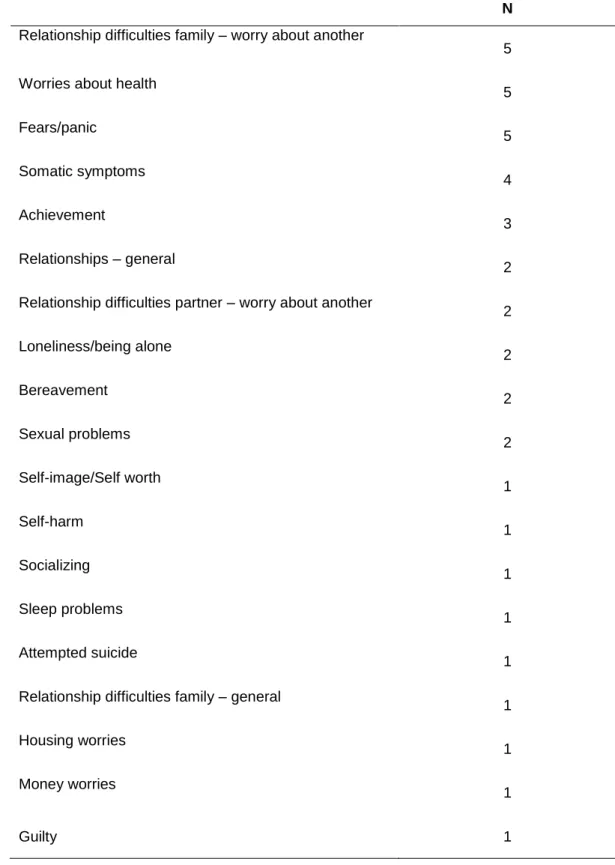
In 29 cases with coincident contents the most frequent problems were: relationship difficulties family – worry about another; worries about health; fears/panic and somatic symptoms (see table 3).
Freetext Responses of PSYCHLOPS
N %
Different contents dyads 12 29.3
30
Table 3. Subthemes of coincident contents in PSYCHLOPS
Coincident Contents Dyads N
Relationship difficulties family – worry about another
5 Worries about health
5 Fears/panic 5 Somatic symptoms 4 Achievement 3 Relationships – general 2 Relationship difficulties partner – worry about another
2 Loneliness/being alone 2 Bereavement 2 Sexual problems 2 Self-image/Self worth 1 Self-harm 1 Socializing 1 Sleep problems 1 Attempted suicide 1 Relationship difficulties family – general
1 Housing worries 1 Money worries 1 Guilty 1
31
The scorings of PSYCHLOPS are similar between the patient and the
therapist?
Concerning the PSYCHLOPS scoring proximity, there was no statistically significant correlation between the scorings of the patient and therapist, neither for the entire sample, nor for those dyads that indicated the same problems (coincident content dyads). As shown in table 4 this result occurs both for freetext responses and for the standardized PSYCHLOPS item.
Table 4. Pearson’s coefficient correlation of patient and therapist PSYCHLOPS scorings. THERAPIST
Total Sample Coincident contents dyads Total Score Freetext Score Well-being Score Total Score Freetext Score Well-being Score PATIENT Total Sample Total Score .286 Freetext Score .151 Well-being Score .285 Coincident contents dyads Total Score .266 Freetext Score .193 Well-being Score .210
32
4.2. When there is PSYCHLOPS proximity between patient and
therapist the therapeutic alliance is greater?
There is no significant relationship between the therapist-patient proximity of PSYCHLOPS in the problems and therapeutic alliance (see table 5).
Table 5. Relation between therapist-patient proximity of PSYCHLOPS items and therapeutic alliance.
4.3. When there is CORE-OM proximity scores between patient and
therapist the therapeutic alliance is greater?
In order to determine the CORE-OM scoring proximity between therapist and patient, either by dimension or total score we calculated the Pearson's linear correlation coefficient. By observing the table 6 we can see that only the dimensions Problems and Risk present a significant correlation (r = .058, p = .000; r = .41, p=.007; r = .37, p = .016; r = .38, p = .015). As can observed in table 7 there was not significant correlation between the proximity of assessment on CORE-OM and the therapeutic alliance.
Different contents dyads Coincident contents dyads N M DP N M DP t p df Bond 12 3.986 .851 29 4.319 .608 -1.414 .165 39 Task 12 3.736 .849 29 3.715 .865 0.070 .945 39 Goal 12 4.062 .723 29 4.062 .825 -.212 .833 39 WAI Total 12 3.928 .652 29 4.062 .619 -.617 .541 39
33
Table 6. Pearson's coefficient correlated CORE-OM scorings by patient and therapist.
*p<.05; **p<.01
THERAPIST
Well-Being Problems Functioning Risk CORE-OM Total PATIENT Well-Being .210 .088 .280 .244 Problems .151 .578* .136 .374* Functioning -.158 -.041 .219 -.012 Risk -.059 .412* .039 .377* CORE-Total .674**
34
Table 7. Pearson's coefficient correlated CORE-OM scorings and the therapeutic alliance.
WAI-SR
Bond Task Goal Total
DISTANCE INDICE
Well-Being -.201 -.043 -.030 -.082
Problems -.008 -.175 -.087 -.109
Functioning .085 .048 .071 .083
35
4.5. Does patients change their priorities and assessment over the
course of the session?
In relation to PSYCHLOPS, only 4 patients (12.3%) indicated a new problem at the end of the session with their therapist. Concerning CORE, a significant correlation was found (r = .85, p.000) between pre and post session total score.
37
5. DISCUSSION
This study aimed to explore the outcome assessment by therapists-patient in nomothetic and individualized measures with one of the factors that predict the psychotherapeutic results - the therapeutic alliance. This research was an exploratory study that aimed our understanding about outcome assessment in routine clinical settings and its relation with the establishment of early therapeutic alliance. Firstly we investigated the patient and therapist proximity of assessment in nomothetic measure and patient-generated outcome measures and then as the proximity of the information collected by both measures is related to the establishment of an early therapeutic alliance.
The initial assessment is usually considered crucial in determining whether patients are suitable for psychotherapy and which type of therapy will best meet their needs. The therapist will want to know what brings the patient to therapy, his current circumstances, his past history, and his developmental experiences and this process of clinical assessment will be influenced by patient and therapist.
Results show that therapists did "not succeed" entirely in capturing the patient view, as self-reported in a outcome measure, immediately prior the session. The therapist and patient scorings were not similar, both for PSYCHLOPS and the CORE-OM, except for "Problems” and “Risk" CORE-OM dimensions. However in PSYCHLOPS the problems indicated by patient were same the identified by the therapist, in about 70% of cases. That is, when patients and therapists may express by their words about the problems of patients evaluation was coincident, when evaluating the intensity of the problems only some dimensions was coincident. The experience of therapists may have been an important factor to therapists identify the same problems indicated by patients in PSYCHLOPS and rate it with the same intensity, in CORE.OM. Summers and Barber (2003) have suggested that experienced therapists may be more competent in recognizing appropriate treatment goals and tasks than less experienced therapists. One recent study explored the psychotherapies carried out by experienced therapists for investigate whether therapists who are more responsive to their patients’ problems and needs have better outcomes than therapists who are less responsive. This authors verified that the degree of responsiveness of therapist interventions is significantly correlated with outcomes (Silberschatz, 2015).
These results show that PSYCHLOPS may be useful to increase the responsiveness of therapists and save time in the evaluation because the patient fills before joining the session. Therefore, this PGOM can be a sensitive measure that seems
38
to capture the problems/specific clinical conditions of patients. Hence, PSYCHLOPS is a useful clinical tool, for example, to support diagnose processes.
Results shown that the proximity between therapist-patient was not related significantly with the therapeutic alliance.
According Mallinckrodt and colleagues (1991) suggest that the relative values of to the objectives and tasks of the therapy increase in the ratio of therapist’s experience. Already values relating to the bonds do not differ in levels of training therapists. Therapists with intermediate level of training are perceived by patient as more effective than the beginners. When the therapist recognizing appropriate treatment goals and tasks and there are agreement between patient and therapist, the therapeutic alliance should be higher. On the other hand, only agreement between patient-therapist, it is not synonymous with a therapeutic alliance of quality because its development involves many other factors such as the characteristics of the patient and therapist and the patient's symptoms. Patients described the therapeutic alliance as a process that develops and changes the process of therapy (Krause, Altimir & Horvath, 2011). There are two reasons that can justify our results: 1) the therapeutic alliance is only evaluated at the first session not being possible to make meaningful inferences about the the therapeutic alliance and 2) there was no significant proximity of scorings for to relate with the alliance and the proximity and its possible relationship with the alliance will be constructing along of therapy and we have results in only first session.
Henry and Strupp (1994) found that the involvement of patients in therapy increases over the first three sessions, this sessions are crucial to constructing a strong alliance. Initially our study was planned to collect data at the third therapy session, in order to explore the predictive role of first session in therapist-patient assessment on the therapeutic alliance. However, due to data collection constrains was not possible.
This study is intended to contribute to the improvement of evaluation results in psychotherapy.
The psychotherapy outcome management systems in mental health developed and implemented in clinical service settings have a common feature that is the monitoring of patient outcome through the course of therapy and the use of these data to improve individual patient outcomes (Lambert, Hansen, & Finch, 2001; Miller, Duncan, Sorrell, & Brown, 2005). The quality of mental health services is assessed according to the therapeutic results achieved. Thus, the outcome assessment becomes an important tool for both the effectiveness of the therapeutic process as for the improvement of services in mental health. This research concludes that therapists and patients do have a different quantitative evaluation but in individualized approach the proximity evaluation between therapist-patient is in most cases identical. In our view, this study contributes to highlight
39
the importance of PGOM in the evaluation of results. Assessment of mental health should not just focus exclusively on a nomothetic approach but combine both measures throughout the therapeutic process for a more complete outcome assessment and effectiveness of psychotherapy (Evans, et al., 1998).
Limitation and future research
The limitation to this study is the small size of clinical sample and the reduced number of therapists, which limits the interpretability of results and does not allow generalize results.
The crucial contribution of this research suggest the suppleness of idiographic measures, this measures can capture the diversity of concerns for each patient, thus it is important have the patient as part active of therapeutic process.
This study intends to be a small contribution to research in the area and to future research. For example, It would be relevant in a future study evaluate the therapeutic alliance at various times of therapy with same outcome measures.
41
6. REFERENCES
Ardito, R. B., & Rabellino, D. (2011). Therapeutic alliance and outcome of psychotherapy: historical excursus, measurements, and prospects for research.
Frontiers in Psychology, 270. doi:10.3389
Ashworth, M., Evans, C., & Clement, S. (2008). Measuring psychological outcomes after cognitive behavior therapy in primary care: A comparison between a new patient-generated measure "PSYCHLOPS" (Psychological Outcome Profiles) and "HADS" (Hospital Anxiety and Depression Scale). Journal of Mental Health, 18, 1-9.
Ashworth, M., Robinson, S., Evans, C., Shepherd, M., Conolly, A., & Rowlands, G. (2007). What does an idiographic measure (PSYCHLOPS) tell us about the spectrum of psychological issues and scores on a nomothetic measure (CORE-OM)? Primary care and community psychiatry, 12, 7-16.
Ashworth, M., Robinson, S., Godfrey, E., Sheperd, M., Evans, C., Seed, P., Parmentier, H., & Tylee, A. (2005). Measuring mental health outcomes in primary care: the psychometric properties of a new patient-generated outcome measure, "PSYCHLOPS" (Psychological Outcome Profiles). Primary Care Mental Health,
3, 261-270.
Ashworth, M., Shepherd, M., Christey, J., Matthews, V., Wright, K., Parmentier, H., Robinson, S., & Godfrey, E. (2004). A client-generated psychometric instrument: The development of 'PSYCHLOPS'. Counselling and Psychotherapy Research,
4, 27-31.
Ashworth, M., Kordowicz, M., Schofield, P. (2012). The PSYCHLOPS (Psychological Outcome Profiles). Integrating Science and Practice, 2, 36-39.
Barkham, M., Bewick, B.M., Mullin, T., Gilbody, S., Connell, J., Cahill, J., Mellor-Clark, J., Unsworth, G., Richards, D., & Evans, C. (2013). The CORE-10: A short measure of psychological distress for routine use in the psychological therapies.
Counselling & Psychotherapy Research, 13, 3-13.
Barkham, M., Margison, F., Leach, C., Lucock, M., Mellor-Clark, J., Evans, C., & Benson, L., Connell, J., Audin, K., & McGrath, G. (2001). Service profiling and outcomes benchmarking using the CORE-OM: toward practice-based evidence in the psychological therapies. Journal of Consulting and Clinical Psychological, 69, 184-196.