Food Science and Technology
DOI:
D httpsI://doi.org/10.1590/fst.38317
OSSN 0101-2061 (Print) OSSN 1678-457X (Dnline)
1 Introduction
Due to the low selectivity and the small mesh sizes of the traditional nets, shrimp trawling has become responsible for the largest catches of accompanying fauna among all fishing modalities in the world. Part of the species caught as accompanying fauna are selected and marketed in the “mix” category, basically composed of low value species and some small, commercially important, species (Castro & Yamaguti, 2000). The volume of the “mix” category is significant, since it has become an alternative to improve the value of trawling fisheries, due to the depletion of marine fish stocks (Perez et al., 2010).
Fishery Brazilian production has, increasingly, presented smaller stocks each year, bringing uncertainty to processors and wholesalers. The raw material often does not appear in the desired quantity and quality (Kubitza, 2007). Canned sardines, for example, from 2002 to 2012 showed approximately a 94% increase in imports in Brazil due to the decreasing stocks of this resource (Martins et al., 2016). Therefore, the use of low economic value fish species has been the subject of research in Brazil. Pires et al. (2014), showed the potential in the use of fish of the accompanying fauna in the development of products such as mechanically separated meat (MSM) and Surimi.
Commercial, low-value, fish species have been used as raw material in the production of mechanically separated meat (MSM), surimi and sausages (Tenuta-Filho & Jesus, 2003). These technologies are employed for the use of solid fish waste mainly destined for animal feed, but which can also be used for the production of fertilizers or chemical products (Cavalcante et al., 2005). However, the nutritional value of these residues, rich in proteins and omega-3 and omega-6 fatty acids, encourages the full use of fish for the development of products destined for human consumption (Feltes et al., 2010).
Polyunsaturated fatty acids (PUFAs) with 18 to 22 carbons make up omega-3 (w-3 or n-3) and omega-6 (w-6 or n-6). The major n-6 fatty acids are 18I:2 linoleic acid and 20I:4 arachidonic acid, and the major n-3 fatty acids are linolenic acid 18I:3, eicosapentaenoic acid (EPA) 20I:5 and docosahexaenoic acid (DHA) 22I:6. Linoleic acid and α-linolenic acid are essential fatty acids (EFAs) because the double bonds located on the third and sixth carbon atoms cannot be produced by the human body. Thus, essential fatty acids must be obtained from the diet (Martin et al., 2006).
Development of a low commercial value fish-sausage from the
fish trawling “mix” category
Juliana de Lima Brandão GUOMARÃES1,2*, Flávia Aline Andrade CALOXTD1, Luiz Antônio de Moura KELLER2, Licínio Esmeraldo da SOLVA3, Ângela Aparecida Lemos FURTADD4, Eliana de Fátima Marques de MESQUOTA2
Received 21 Nov., 2017 Accepted 12 Mar., 2018
1 Fundação Instituto de Pesca do Estado do Rio de Janeiro – FIPERJ, Niterói, RJ, Brasil 2 Faculdade de Veterinária, Universidade Federal Fluminense – UFF, Niterói, RJ, Brasil 3 Departamento de Estatística, Universidade Federal Fluminense – UFF, Niterói, RJ, Brasil 4 Embrapa Agroindústria de Alimentos, Rio de Janeiro, RJ, Brasil
*Corresponding authorI: [email protected]
Abstract
The decreasing stock of the main species consumed in Brazil has stimulated studies regarding the use and development of products using low commercial value species. The shrimp trawling modality produces a large volume of a “mix” category comprising low commercial value fish. However, it is necessary to develop products with greater practicality to meet the current demands of the Brazilian consumer. The aim of the present study was to develop a sausage using a low commercial value fish, the Brazilian flathead (Percophis brasiliensis), caught in the fish trawling “mix” category landed in Niterói/RJ, and perform physico-chemical, microbiological, toxicological and sensorial analyses. The centesimal composition of the analyzed fish were as followsI: humidity 73.78%, proteins 16.17%, carbohydrates 3.75%, total lipids 4.41% and ash 1.78%. The microbiological and toxicological results were within the legislation standards. Twenty varieties of fatty acids (AG) were detected, with the most frequent being palmitic acid (22.81%). Among the omega-3 series, the most frequent were eicosapentaenoic acid (5.36%) and docosahexaenoic acid (15.95%). Regarding minerals, the most noteworthy were sodium, calcium and iron (1114.24 mg, 112.32 mg and 1.73 mg respectively). The sausage showed 87.30% acceptability. The results demonstrate that the low commercial value fish Brazilian flathead resulted in a viable product for use in fish technology, with excellent nutritional results.
Keywords: acceptability; bacteriological analyses; physico-chemical analyses; fish derivatives; accompanying fauna.
A-linolenic acid is converted to eicosapentaenoic acid-EPA and docosahexaenoic acid-DHA. However, the conversion rate is considered to be very low in humans, and, because this compound competes for the same enzyme system as linoleic acid, it tends to decrease as the amount of this acid increases. Therefore, it is of fundamental importance to obtain n-3 sources through food intake (Food and Agriculture Drganization, 1994).
The presence of n-3 fatty acids, mainly EPA and DHA, in fish-containing diets and their by-products, has been related to beneficial health effects (Guiné & Henriques, 2011). Among the physiological effects in humans, are the preventionand treatment of various types of cancer, cardiovascular diseases, hypertension, inflammation in general, asthma, arthritis and psoriasis (Mayser et al., 1998). Therefore, regardless of the market value of the captured species and the technology used for the development of derived products, the presence of dietary fish is essential in increasing the intake of the essential fatty acids so important for human health.
Despite proven nutritional quality, fish consumption in Brazil is still considered low (Brasil, 2011). This is explained by problems in distribution and marketing, and also by the absence of consumption habits, caused by the lack of practicality in fish preparation (Bonacina & Queiroz, 2007). There is also a deficiency of products on the market to meet consumer demands resulting from an urban lifestyle, and it is increasingly necessary to offer ready or semi-ready products that are easy and quick to prepare (Battistella, 2008). However, in order to produce fish-based products, quality control of fish health and the use of technologies that ensure product safety are required (Gonçalves, 2011).
Thus, the aim of this study was to develop Brazilian flathead
(Percophis brasilensis) sausages, a species caught in the trawling
“mix” category, and perform physico-chemical, microbiological, toxicological and sensorial analyses of the final product, in order to evaluate its adequacy for human consumption.
2 Materials and methods
Brazilian flathead samples were collected totaling 30 kg. The fish were randonly collected,, already slaughtered, at the moment of landing on the quayside in the municipality of São Gonçalo (RJ) and transported in isothermal boxes containing ice to the laboratory of the Fundação Onstituto de Pesca do Estado do Rio de Janeiro (FOPERJ). At the FOPERJ laboratory, the fish were washed under running water, ventrally cut to remove the viscera and the heads and fillets were then removed. The fillets and the filleting residue were packed separately in plastic bags and stored in a freezer at –18 °C.
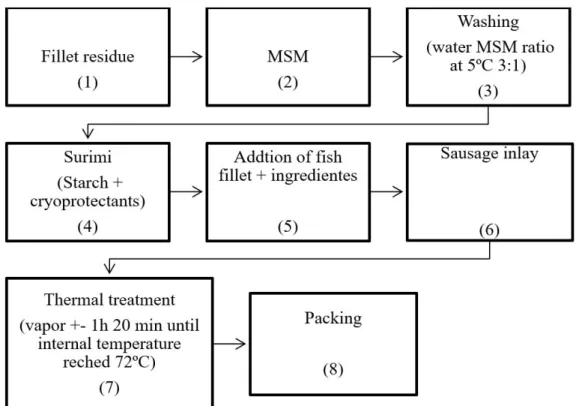
The fillets and filleting residues were transported in isothermal boxes to the Laboratório de Processamento de Pescado da Embrapa Agroindústria de Alimentos (CTAA/EMBRAPA). Processing was performed according to the flowchart displayed in Figure 1. Subsequently, sausage samples were evaluated regarding physicochemical, microbiological, toxicological and sensorial analyses.
For the MSM, the filleting residue (bone skeleton and skin) was processed in a fish MSM machine (Mec Fish Brazil). Subsequently, the MSM was weighed and the samples were stored until the analysis (Fogaça, 2009).
Surimi was obtained by a wash cycle with water at 5 °C at a 3I:1 (waterI: meat) ratio. The water and MSM mixture was stirred for five minutes and then allowed to stand for two minutes. The excess water was removed with a 100 micrometer screen followed by a vacuum pump for five minutes. At the end of processing, starch (10%) and cryoprotectants (2% sodium chloride and 1% sucrose) were added to the mixture. The surimi was then weighed, and the samples collected and frozen (-18 °C) (Fogaça, 2009).
Dne sausage formulation (50% surimi + 35% fillet + 15% ingredients) was prepared. The surimi, fillet and ingredients were mixed in a cutter mixer (Geiger, model 50-, São Paulo, Brazil) for five minutes until an emulsion was obtained. After the emulsification process, the mixture was removed from the cutter mixer and brought to a manual filler using collagen casings. They were then tied at every 10 cm in length using cotton string.
The physical-chemical analyses performed on the samples were the followingI: pre-dried matter at 105 °C (humidity); ashes; crude protein (MicroKjedahl) and ethereal extract (Soxlet method) (Brasil, 1981) for the determination of the centesimal composition. All samples were evaluated in triplicate at the Centro Estadual de Controle de Pesquisa em Qualidade de Alimentos (CEPQA), located in the Empresa de Pesquisa Agropecuária do Estado do Rio de Janeiro (PESAGRD-RJ). Carbohydrates (non-nitrogen extracted) were calculated by NOFEXT (“Nitrogen Free Extract”), by the difference between 100% of the other fractions of the centesimal composition (Dliveira et al., 1999). The total energetic value (TEV) of the foods was calculated based on the carbohydrate, protein and lipid values, knowing that carbohydrates and proteins provide 4 kcal/g of energy and lipids, 9 kcal/g (Food and Agriculture Drganization, 2005).
Fatty acid analyses were performed at the Laboratório de Óleos Graxos da Embrapa Agroindústria de Alimentos, according to the official Association of Dfficial Analytical Chemists (2005) Onternational method. Saturated and unsaturated fat content and weight/weight of each fatty acid were performed on the raw materials according to the official Association of Dfficial Analytical Chemists (2005) Onternational method. All samples were evaluated in triplicate.
The mineral profile analyses were performed at the Embrapa Food Technology, according to the methodology described by Association of Dfficial Analytical Chemists (2005) Onternational. All samples were evaluated in triplicate.
The microbiological analyses included Salmonella sp., coliform counts at 35 °C, thermotolerant coliforms and coagulase positive Staphylococcus. All analyses were performed according to methodology reported by the Ministério da Agricultura (Brasil, 2003a). All samples were evaluated in triplicate.
For the toxicological analyses, the presence of hydrogen sulphide gas (H2S), was determined according to the technique described by Laboratório nacional de Referênca Animal (LANARA) (Brasil, 1981), while histamine content was determined according to the spectrophotometric methodology described by Glória & Soares (1993). All samples were evaluated in triplicate.
The acceptance test of the final product was carried out at the Laboratório de Análise Sensorial da Faculdade de Veterinária at the Universidade Federal Fluminense (UFF) under the project “Acceptability of products developed with fish from the “mix” category from shrimp trawl fishery”, approved by the Research Ethics Committee of the Faculty of Medicine/ Hospital Universitário Antônio Pedro - CEP CMM/HUAP no. 1,934,771 - CAAE n. 63083716.5.0000.5243.
The sausages were heated, in stages as per tasters’ demand, in boiling water for two minutes, cut into two centimeter long pieces and served together with water at room temperature. All volunteers previously signed a free and informed consent form, guaranteeing their acceptance in participating in the test. The test was performed with untrained testers, UFF students and employees, of both genders. The acceptance test was performed according to Dutcosky’s methodology (Dutcosky, 2011), in individual booths under white light and at room temperature.
The sensorial test was performed with 87 testers, who evaluated the product using a seven-point hedonic scale (1 = very disagreeable, 2 = moderately disliked, 3 = mildly disliked, 4 = didn´t like or dislike, 5 = slightly liked, 6 = moderately liked; 7 = O liked it a lot) for odor, color, texture and flavor attributes and, finally, the overall aspect of the product. Dbservations could be written down by the tasters in the file itself. Finally, tasters were asked about their intention to buy the product divided into a five-point scaleI: O would definitely buy the product; probably buy; maybe yes/maybe not; O would probably not buy; O would decidedly not buy.
Regarding the results obtained by the hedonic scale method, the samples were accepted if 70% of the tasters assigned a score ≥ 4.
3 Results
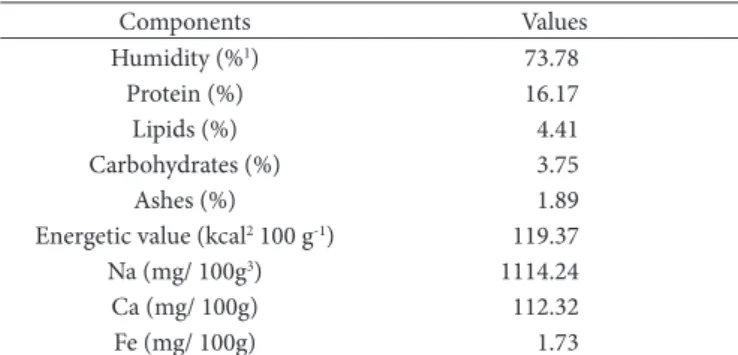
Table 1 expresses the results of the centesimal composition and the mineral profile of the Brazilian flathead product.
The main results of the lipid profile of the Brazilian flathead sausage are displayed in Table 2.
Table 3 expresses the microbiological results of the Brazilian flathead (Percophis brasiliensis) product according to the Brazilian legislation.
Table 1. Mean results of the centesimal composition and mineral profile of the Brazilian flathead (Percophis brasiliensis) sausage.
Components Values
Humidity (%1) 73.78
Protein (%) 16.17
Lipids (%) 4.41
Carbohydrates (%) 3.75
Ashes (%) 1.89
Energetic value (kcal2 100 g-1) 119.37
Na (mg/ 100g3) 1114.24
Ca (mg/ 100g) 112.32
Fe (mg/ 100g) 1.73
Sulfur-based compounds and histamine contents were evaluated for all sausage samples. None of these compounds were detected by the employed methodologies.
Regarding the sensory analysis, from the total of 87 tasters, 63.2% were female and 36.8% male, aged between 20 and 65 years old. The product was accepted at 87.3% for the overall product appearance, averaging 5.43 (±1.39). The acceptability results per attribute are listed in Table 4.
On the current study, regarding intention to buy the final product, the highest percentage of respondents attributed that they would probably buy it (34.5%), followed by perhaps yes/maybe (27.5%) and would decidedly buy the product (21.8%), while 8.0% would probably not buy or would definitely not buy.
4 Discussion
The Brazilian legislation states that common sausages made with beef, pork or poultry must have the following chemical composition valuesI: maximum humidity of 65%, minimum protein content of 12% and maximum lipid content of 30% (Brasil, 2000). Therefore, according to the legislation, the produced Brazilian flathead sausage presented higher humidity values (73.78%),
but met protein requirements (16.17%). The humidity value above the recommended level can be explained by the absence of fats from other sources and the inherent characteristics of fish meat, resulting in a product with high humidity content, but lipid content well below the maximum limit recommended by the legislation. These results confirm the nutritional quality and the association of fish products with healthy diets.
Regarding protein levels, the levels of the present study were higher than those found by Gonçalves et al. (2009) in “piramutaba” (Brachyplatystoma vaillantii) sausage (12.6%). Ribeiro et al. (2017), in a study in which kibbe and meatballs were baked from fish pulp obtained from the trawling “mix” category, found lower protein levels (kibbeI: 15.10%, meatballI: 15.10%) compared to the present study (16.17%). When comparing the lipid results of this same study (kibbeI: 4.50%, meatballI: 4.40%), the Brazilian flathead sausage was similar (4.41%), although higher than lipid content reported by Silva et al. (2012) in a study on the development of croaker sausage (0.57%). Dn the other hand, the present study observed lower ash (1.89%) contents when compared to Gonçalves et al. (2009), of 3.51%. Such differences in results can be explained by the intrinsic characteristics of each species.
Regarding the nutritional requirements recommended by the Brazilian National Health Surveillance Agency (Brasil, 2003b), a 100 g portion of Brazilian flathead sausage would serve 5.9% of the recommended daily energy value and 21.56% of the daily requirement (75g/day) of crude protein, proving to be an alternative source of protein containing low calories, ideal for 2.000 kcal/day diets. The 1,114.24 mg of sodium in each 100 g portion would attend 46.43% of the daily necessities (2.400mg/day) of an adult individual, although more studies are necessary regarding the sausage formulation in order to create adjustments concerning this mineral. However, in a study in which the sodium content in hot dog meat sausages was evaluated, the average sodium content was of 551 mg of sodium per 50 g portion (Brasil, 2010), in the same range as the results found herein.
ΣSFAs content was 33.97%, with palmitic acid (C16I:0) being the most frequent (22.81%). ΣMUFAs were present at 33.05% with oleic acid, which is used in the body as a preferential source of metabolizable energy during rapid growth (Menezes et al., 2009), at higher concentrations (20.85%). ΣPUFAs were present at 28.11%, with ΣAG ω3 being more significant (23.40%), with emphasis on EPA (5.36%) and DHA acid (15.95%). Saturated fatty acids are related to increased plasma cholesterol levels and may be related to the formation of atheroma plaques in the human body. Dn the other hand, EPA and DHA have received increased attention, since they reduce risk factors associated with cardiovascular diseases, hypertension, inflammation in general, asthma, arthritis, psoriasis and various types of cancer (Martin et al., 2006).
The relationship between omega 6 and omega 3 fatty acids (Σω-6/Σω-3) and the ratio of polyunsaturated to saturated acids (ΣPUFAs / ΣSFAs) are used to establish lipid quality in the diet. Herein, Σω-6/Σω-3 was of 0.08, which is much higher than that usually consumed in the West, of 10-20I:1 (Rêgo, 2012). According to data from the Department of Health and Social Security of
Table 2. Lipid profile and fatty acid quality of the sausage Brazilian flathead (Percophis brasiliensis).
Fatty acid Sample
Sausage (g/100g of fat)
∑SFAs1 33.97
∑MUFAs2 33.05
∑PUFAs3 28.11
∑AG ω34 23.40
∑AG ω65 1.97
∑AG ω6/ω36 0.08
∑PUFAs/∑SFAs7 0.82
1ΣSFAs = sum of saturated fatty acids; 2ΣMUFAs = sum of monounsaturated fatty acids; 3ΣPUFAs = sum of polyunsaturated fatty acids; 4ΣAG ω3 = sum of omega-3 fatty acids; 5ΣAG ω6 = sum of omega-6 fatty acids; 6ΣAG ω6/ω3 = ratio of the sum of omega-6
fatty acids by the sum of omega-3 fatty acids; 7ΣPUFAs/ΣSFAs = ratio of the sum of
polyunsaturated fatty acids by the sum of saturated fatty acids.
Table 3. Microbiological results of the Brazilian flathead (Percophis brasiliensis) product according to the Brazilian legislation (Brasil, 2003a).
Product Salmonella sp.
Coliforms at 35º C
Thermotolerant coliform
Positive coagulase Staphylococci Sausage absent/25g1 <10 CFU/g2 <10 CFU/g <102 CFU/g
1Absent/25g = absent in twenty-five grams of food; 2CFU/g = colony forming unit per
gram of food.
Table 4. Mean values of the scores of each attribute in the sensorial analysis.
Attribute Taste Ddor Texture Color
Means
England (Department of Health and Social Security, 1984), ΣPUFAs/ΣSFAs should not be less than 0.45, which translates into an unhealthy diet, mainly in relation to cardiovascular diseases. The Brazilian flathead sausage presented ΣPUFAs/ΣSFAs of 0.82, above dietary recommendations. Menezes et al. (2009), in a study that evaluated the fatty acid profile of two marine fish species from the Brazilian state of Alagoas, reported ΣPUFAs/ΣSFAs for striped mojarra (Eugerres plumieri) and mackerel (Scomberomorus cavala) of 0.82 and 1.34 respectively, above the values found in the present study. However, the sum of EPA + DHA was of 15.32% for mackerel and 6.02% for the striped mojarra, below what was observed herein, of 21.31%. Scherr et al. (2015), in a study that analyzed the n-6/n-3 ratio in grilled fish comprising the main fish species consumed in Brazil, found lower results for all species (Sea bass (Dicentrarchus labrax), 0.34, Grouper (Epinephelus
lanceolatus)I: 2.50, “Piraiba” (Brachyplathystoma filamentosum)I:
3.73, “Namorado Sandperch” (Peudopercis numida)I: 0.63, “Pescadinha”(Cynoscion acoupa)I: 5.98, “Pirarucu” (Arapaima
gigas)I: 1.21, Common snook (Centropomus undecimalis)I: 0.34;
Sardine (Sardinella brasiliensis)I: 0.60; Trout (Oncorhynchus
mykiss)I: 4.03; Salmon (Salmo salar)I: 2.41) when compared to
the results found in the present study.
The Agência Nacional de Vigilância Sanitária - ANVOSA (Brasil, 2001) establishes a maximum permitted tolerance of fecal coliforms of 102CFU/g in refrigerated fish, the absence
of Salmonella ssp.and maximum values of <5 x 10² CFU/g for
coagulase positive Staphylococcus. On the Brazilian flathead product, values lower than the limit determined by current legislation were found. Thus, the product was in accordance to established standards. Similarly to the results found in the present study, Galvão (2009), in a study conducted on “piramutaba”
(Brachyplatystama vaillanti) sausage, found results in accordance
to the legislation regarding coagulase positive staphylococcus. The Brazilian legislation considers that fish belonging to the Scombridae, Scombresocidae, Clupeidae, Coryyphaenidae families (Brasil, 1997) with a positive reaction for sulfuric gas (Brasil, 2017) and with histamine levels above the maximum level of 100 ppm in muscle are deteriorated. Studies to detect these quality and freshness indicators in fish have been developed, preferably, in fresh or frozen products On the current study, no histamine and sulfur compounds levels higher than those recommended by the legislation were detected. However, Souza et al. (2017), when evaluating the freshness of frozen marine fish, detected sulfide gas (H2S) in 70.8% of the analyzed samples, indicating an advanced stage of decomposition. Soares et al. (1998), in a study analyzing frozen fish fillets, found histamine concentrations above the maximum permissible levels in 37% of the samples.
Reports of lesser acceptability of the final product than the current study (87.3%) are available in the literature. Dliveira (2009), testing different tilapia sausage formulations, obtained an overall acceptability of 78.1%, similar to Gonçalves et al. (2009), who obtained 75.6% overall acceptance regarding “piramutaba” sausage containing 30% shrimp flavor.
On a study on sausage elaboration with Nile tilapia mechanically separated meat (MSM), Lago (2015) evaluated odor, color, flavor and texture attributes obtaining 75.0%, 53.12% and 75.0% and 78.1% for each, respectively, all below the results found observed
herein (94%;72%;85% and 88%). Similarly to the results found in the present study, the color attribute was the least accepted and statistically different from the other attributes, possibly explained by the clear and unusual appearance of the sausages. For color, some opinions were registered in the current study that indicate the cause of low acceptance values in the present study, namely “very pale”, “very clear”, “pale” and “very opaque”.
The purchase intention results of the present study were lower (34.5% “problably buy it; 27.5% “perhaps yes/maybe”) than in the study conducted by Lago (2015), who obtained a higher percentage in intention to buy on the second scale, “would probably buy”, followed by the first scale, “would certainly buy”, in a study on Nile tilapia sausage. On the present study, the highest percentages were attributed to the “would likely buy” option, followed by “maybe yes/no”, but only 16.0% of the testers “decidedly” and “would probably not buy the product”, indicating that the product would have excellent market acceptance.
5 Conclusions
The developed product, Brazilian flathead sausage, was shown to display satisfactory hygienic-sanitary conditions, good nutritional quality, with emphasis on polyunsaturated fatty acid content, and a high index of sensorial acceptance emphasizing odor and flavor, with excellent purchase intention Thus, fish that could be underutilized or even discarded proved to be a viable alternative for the development of a safe, versatile and nutritious consumer product.
Acknowledgements
The authors would like to thank CAPES for the PhD scholarship, to empoloyee Eduardo da Silva Machado (FOPERJ), to PhD candidate Karoline Ribeiro Palmeira Schmalz (UFF) and to FOPERJ extensionists FOPERJ Carlos Eduardo Ribeiro Coutinho and Bruno Plastina for analyses support.
References
Association of Dfficial Analytical Chemists – ADAC. (2005). Official Methods of Analysis of the Association of Official Analytical Chemists
(18th ed.). Gaithersburg, MAI: ADAC Onternational.
Battistella, P. M. D. (2008). Análise de sobrevivência aplicada à estimativa da vida de prateleira de salsicha. Retrieved from httpsI://repositorio. ufsc.br/handle/123456789/92035
Bonacina, M., & Queiroz, M. O. (2007). Elaboração de empanado a partir da corvina (Micropogonias furnieri). Food Science and Technology, 27(3), 544-552. httpI://dx.doi.org/10.1590/S0101-20612007000300019. Brasil, Ministério da Agricultura, Pecuária e Abastecimento. Laboratório Nacional de Referência Animal – LANARA. (1981). Métodos analíticos oficiais para controle de produtos de origem animal e seus ingredientes (Vol. 2, Cap. 11). BrasíliaI: LANARA.
Brasil, Ministério da Agricultura, Pecuária e Abastecimento. (1997, May 13). Aprova o Regulamento sobre Técnico de Odentidade e Qualidade de Peixe Fresco (Onteiro e Eviscerado) e seus Anexos (Portaria n° 185, de 13 de maio de 1997). Diário Oficial [da] República Federativa do Brasil.
Qualidade de Carne Mecanicamente Separada, de Mortadela, de Linguiça e de Salsicha. (Onstrução Normativa n° 4, de 31 de março de 2000). Diário Oficial [da] República Federativa do Brasil. Brasil, Agência Nacional de Vigilância Sanitária – ANVOSA. (2001,
January 2). Padrão microbiológico para alimentos (Resolução - RDC nº 12, de 2 de janeiro de 2001). Diário Oficial [da] República Federativa do Brasil.
Brasil. Ministério da Agricultura, Pecuária e Abastecimento. (2003a, August 26). Métodos analíticos oficiais para análises microbiológicas para o controle de produtos de origem animal e água (Onstrução Normativa 62, de 26 de agosto de 2003). Diário Oficial [da] República Federativa do Brasil.
Brasil, Agência Nacional de Vigilância Sanitária – ANVOSA. (2003b, December 23). Aprova Regulamento Técnico sobre Rotulagem Nutricional de Alimentos Embalados, tornando obrigatória a rotulagem nutricional (Resolução RDC n° 360 de 23 de dezembro de 2003. Diário Oficial [da] República Federativa do Brasil. Brasil, Agência Nacional de Vigilância Sanitária – ANVOSA. (2010).
Perfil nutricional dos alimentos processados (Onforme Técnico, Vol. 43, 52 p.). Brasília. Retrieved fromI: httpI://portal.anvisa.gov.br/ documents/33916/388729/Onforme+T%C3%A9cnico+n%C2%BA+43 %2C+de+2012/7e593f1d-434a-421d-adaa-706fa042c06e?version=1.1 Brasil, Ministério da Pesca e Aquicultura. (2011). Boletim Estatístico
da Pesca e Aquicultura 2010. BrasíliaI: MPA. Retrieved fromI: httpI:// sinpesq.mpa.gov.br/preps_cms/index.php?option=com_content& view=article&id=21&Otemid=27
Brasil, Ministério da Agricultura, Pecuária e Abastecimento. (2017, March 29) Regulamenta a lei nº 1.283, de 18 de dezembro de 1950, e a lei nº 7.889, de 23 de novembro de 1989, que dispõem sobre a inspeção industrial e sanitária de produtos de origem animal (Decreto nº 9.013, de 29 de março de 2017). Diário Oficial [da] República Federativa do Brasil.
Castro, P. M. G., & Yamaguti, N. (2000). Estrutura e dinâmica da frota de parelhas do Estado de São Paulo e aspectos biológicos dos principais recursos pesqueiros demersais costeiros da Região Sudeste/Sul do Brasil (23°-29° S). Retrieved from httpsI://books.google.com.br/ books/about/Estrutura_e_din%C3%A2mica_da_frota_de_parelh. html?id=MevNHAAACAAJ&redir_esc=y
Cavalcante, V., Jr., Andrade, L. N., Bezerra, L. N., & Gurjão, L. M. (2005). Reúso de água em um sistema integrado com peixes, sedimentação, ostras e macroalgas. Revista Brasileira de Engenharia Agrícola e Ambiental, 9(Suppl.), 118-122.
Department of Health and Social Security – DHSS. (1984). Diet and cardiovascular disease (Report on Health and Social Subjects, N° 28). LondonI: HMSD.
Dutcosky, S. D. (2011). Análise sensorial de alimentos. CuritibaI: Editora Universitária Champagnat.
Feltes, M., Correia, J. F., Beirão, L. H., Block, J. M., Ninow, J. L., & Spiller, V. R. (2010). Alternativas para a agregação de valor aos resíduos da industrialização de peixe. Revista Brasileira de Engenharia Agrícola e Ambiental-Agriambi, 14(6), 669-677. httpI://dx.doi.org/10.1590/ S1415-43662010000600014.
Fogaça, F. H. D. S. (2009). Caracterização do surimi de tilápia do Nilo: morfologia e propiedades físicas, químicas e sensoriais. Retrieved from httpsI://alsafi.ead.unesp.br/handle/11449/100247
Food and Agriculture Drganization – FAD, & World Health Drganization – WHD. (1994). Lipids in early development in fats and oil in human nutrition. RomeI: FAD. Retrieved from httpI://www.fao.org/docrep/ v4700e/v4700e00.htm
Food and Agriculture Drganization – FAD. (2005). The Codex Alimentarius Commission and the FAO/WHO Food Standards Programme. Special Publications. Food LabellingI: complete texts. Retrieved fromI: httpI:// www.codexalimentarius.net/web/publications_es.jsp
Galvão, G. C. D. S. (2009). Influência dos Substitutos de Gordura na Salsicha de Pescado Elaborada com Resíduos da Filetagem da Piramutaba Brachyplatystama vaillanti (Valenciennes, 1840) (Dissertação de mestrado). Universidade Federal do Pará, Belém.
Glória, M. B. A., & Soares, V. F. M. (1993). Comparison of fluorometric methods for the determination of histamine fish. Arquivos de Biologia e Tecnologia, 36(2), 229-235.
Gonçalves, A. A. (2011). Formatados e reestruturados (hambúrguer, nuggets etc.). On A. A. Gonçalves. Tecnologia do pescado: ciência, tecnologia, inovação e legislação (pp. 235-245). São PauloI: Atheneu. Gonçalves, A. A., Nogueira, W. M., & Lourenço, L. F. H. (2009).
Aproveitamento do descarte do processamento da piramutaba (Brachyplatystoma vaillantii) e do camarão-rosa (Farfantepenaeus subtilis) na produção de salsicha sabor camarão. Boletim do Instituto de Pesca, 35(4), 623-635.
Guiné, R., & Henriques, F. (2011). D papel dos ácidos gordos na nutrição humana e desenvolvimentos sobre o modo como influenciam a saúde. Millenium, 40, 7-21.
Kubitza, F. (2007). Percepções sobre a qualidade dos produtos de pescado. Retrieved from httpI://www.cca.ufc.br/Percep%E7%F5es% 20Sobre%20 a%20Qualidade%20dos%20Pro dutos%20de%20Pescado.htmlca Lago, A. M. T. (2015). Embutido tipo salsicha utilizando carne mecanicamente
separada de tilápia: uma alternativa para o aproveitamento de resíduo da filetagem. Retrieved from httpI://repositorio.ufla.br/handle/1/10310 Martin, C. A., Almeida, V. V., Ruiz, M. R., Visentainer, J. E. L.,
Matshushita, M., Souza, N. E., & Visentainer, J. V. (2006). Ácidos graxos poliinsaturados ômega-3 e ômega-6I: importância e ocorrência em alimentos. Revista de Nutrição, 19(6), 761-770. httpI://dx.doi. org/10.1590/S1415-52732006000600011.
Martins, A. M. D., Cappato, L. P., Pacheco, S., & Godoy, R. L. D. (2016). SardinhasI: importância nutricional e econômica para o Brasil.
Semioses, 10(2), 51-59.
Mayser, P., Mrowietz, U., Arenberger, P., Bartak, P., Buchvald, J., Christophers, E., Jablonska, S., Salmhofer, W., Schill, W. B., Krämer, H. J., Schlotzer, E., Mayer, K., Seeger, W., & Grimminger, F. (1998). ω-3 Fatty acid–based lipid infusion in patients with chronic plaque psoriasisI: results of a double-blind, randomized, placebo-controlled, multicenter trial. Journal of the American Academy of Dermatology, 38(4), 539-547. httpI://dx.doi.org/10.1016/S0190-9622(98)70114-8. PMidI:9555791.
Menezes, M. E. D. S., Giselda, M. L., Dmena, C. M. B. D., & Freitas, J. D. D. (2009). Valor nutritivo de peixes da costa marítima de Alagoas, Brasil. Revista do Instituto Adolfo Lutz, 68(1), 21-28.
Dliveira, E. C. M., Dliveira, E. R., Lima, L. C. D., & Boas, E. V. B. V. (1999). Composição centesimal do cogumelo do sol (Agaricus blazei). Revista da Universidade de Alfenas, 5, 169-172.
Dliveira, P. R., Fo. (2009). Elaboração de embutido cozido tipo salsicha com carne mecanicamente separada de resíduos de filetagem de tilápias do Nilo. Retrieved from httpsI://repositorio.unesp.br/bitstream/ handle/11449/100241/oliveirafilho_prc_dr_jabo.pdf?sequence=1 Perez, J. A., Pezzuto, P. R., Rodrigues, L. F., Valentini, H., & Vooren, C.
M. (2010). Relatório da reunião técnica de ordenamento da pesca de arrasto nas regiões sudeste e sul do Brasil. Notas Técnicas da FACIMAR, 5, 1-34. httpI://dx.doi.org/10.14210/bjast.v5n1.p1-34. Pires, D. R., Silva, P. P. D., Amorim, E., & Dliveira, G. M. (2014).
pescado (Micropogonias furnieri). Unoesc e Ciência-ACET, 3(2), 179-186.
Soares, V. F., Vale, S. R., Junqueira, R. G., & Glória, M. B. A. (1998). Teores de histamina e qualidade físico-química e sensorial de filé de peixe congelado. Food Science and Technology, 18(4), 462-470. httpI://dx.doi.org/10.1590/S0101-20611998000400020.
Souza, M. M. M., Nóbrega, F. D. M., Cardoso, R. D. C. V., Argôlo, S. V., Silva, Í. R. C., & Santos, L. F. P. (2017). Avaliação do frescor do pescado congelado comercializado no mercado municipal de São Francisco do Conde-BA. Boletim do Instituto de Pesca, 39(4), 359-368. Tenuta-Filho, A., & Jesus, R. S. (2003). Aspectos da utilização de
carne mecanicamente separada de pescado como matéria-prima industrial. Boletim da Sociedade Brasileira de Ciência e Tecnologia de Alimentos, 37(2), 59-64.
de subprodutos com valor agregado. Revista Verde de Agroecologia e Desenvolvimento Sustentável, 8(5), 148-157.
Rêgo, F. L. T. (2012). Estudo do perfil de ácidos graxos e a razão entre ômega 6/ômega 3 em pescado. Retrieved from httpsI://repositorio. ufba.br/ri/handle/ri/11594
Ribeiro, D. S., Calixto, F. A. A., Guimarães, J. L. B., Aronovich, M., Keller, L. A. M., & Mesquita, E. F. M. (2017). Produtos de pescado elaborados com resíduos de arrastoI: análise físico-química, microbiológica e toxicológica. Arquivo Brasileiro de Medicina Veterinária e Zootecnia, 70(1), 238-246. httpI://dx.doi.org/10.1590/1678-4162-8940. Scherr, C., Gagliardi, A. C. M., Miname, M. H., & Santos, R. D. (2015).
Concentração de ácidos graxos e colesterol de peixes habitualmente consumidos no Brasil. Arquivos Brasileiros de Cardiologia, 104(2), 152-158. PMidI:25424160.