Determinants of using pacifier
and bottle feeding
Determinantes do uso de chupeta e
mamadeira
I Programa de Pós-Graduação em Nutrição em Saúde Pública. Departamento de Nutrição. Faculdade de Saúde Pública. Universidade de São Paulo. São Paulo, SP, Brasil
II Instituto de Saúde. Secretaria Estadual da Saúde de São Paulo. São Paulo, SP, Brasil Correspondence:
Gabriela dos Santos Buccini Departamento de Nutrição Av. Dr. Arnaldo, 715 Cerqueira César 02146-904 São Paulo, SP, Brasil E-mail: [email protected] Received: 9/6/2013 Approved: 4/8/2014
Article available from: www.scielo.br/rsp
ABSTRACT
OBJECTIVE: To analyze the factors associated with the use of paciiers and/
or bottle feeding in infants aged under one year.
METHODS:
This is a cross-sectional study with 34,366 children and using
data from the database of the 2
ndNationwide Survey of Breastfeeding
Prevalence performed in the Brazilian capitals and Federal District in 2008.
Cluster sampling was used. The questionnaire included questions about the
use of artiicial nipples in the last 24 hours. The analysis considered three
outcomes: exclusive use of paciier, exclusive use of bottle feeding, and use of
artiicial nipples (paciier and bottle feeding). Prevalence ratios were obtained
using Poisson regression with robust variance following a hierarchical model.
RESULTS:
The following factors were associated with exclusive use of
the paciier: mother working outside the home, primiparity, child was not
breastfed within the irst hour, and child had consumed tea on the irst day
at home. The following factors were associated with exclusive use of bottle
feeding: mother working outside the home, primiparity, low birth weight,
child not breastfed within the irst hour, and child had consumed milk formula
and tea on the irst day at home. The following factors were associated with
use of artiicial nipples (paciier and bottle feeding): mother working outside
the home, primiparity, cesarean delivery, the male gender, low birth weight,
born in a hospital not accredited as “baby friendly”, required health baby
monitoring in the Primary Health Care Unit (PR = 0.91), and child had
consumed milk formula, water, or tea on the irst day at home.
CONCLUSIONS: This study identiied proiles of exclusive users of
paciiers, bottle feeding, and both. The provided information can guide
preventive practices for child health.
DESCRIPTORS: Bottle Feeding. Paciiers, utilization. Maternal and
Child Health. Cross-Sectional Studies.
Gabriela dos Santos Buccini
IMaria Helena D’Aquino
Benício
IIt is estimated that two-thirds of newborns will receive
bottle feeding and paciiers during the irst year of
life.
24However, the use of these tools can affect
breastfeeding
14and induce alteration in the children’s
health.
9,19,23In the history of mankind, the use of artii
-cial nipples has assumed different roles and
sociocul-tural representations.
12,16,23Among the pacifier users, those who use it more
frequently include irstborn children,
19,24males,
18,23,24children with low birth weight,
23children aged under 6
months,
19children not breastfed in the maternity ward,
23and children breastfed at prearranged times.
22In addition,
mothers who were younger,
1,6,23were primiparous,
6,23had
a low socioeconomic status,
9had a smoking history,
9,24and were less educated
1,9,18were more likely to resort to
the use of paciiers. Qualitative studies have indicated
that the use of paciiers is correlated with cultural issues,
maternal uncertainty about her ability to breastfeed, and
crying and behavior of baby.
3,16,23,24Previous studies have
indicated that infant-related factors that favor the use of
RESUMO
OBJETIVO: Analisar os fatores associados ao uso de chupeta e/ou mamadeira
em lactentes menores de um ano.
MÉTODOS:
Estudo transversal realizado com dados de 34.366 crianças obtidos
da II Pesquisa Nacional de Prevalência de Aleitamento Materno, realizada em
2008, nas capitais brasileiras e Distrito Federal. Foi utilizada amostragem por
conglomerados e o questionário incluiu perguntas sobre o uso de bicos artiiciais
nas últimas 24h. Três desfechos foram considerados para a análise: uso exclusivo
de chupeta, uso exclusivo de mamadeira e uso de bicos artiiciais (chupeta e
mamadeira). As razões de prevalência foram obtidas por regressão de Poisson
com variância robusta seguindo modelo hierárquico.
RESULTADOS:
Associaram-se ao uso exclusivo de chupeta: mãe trabalhar
fora, primiparidade, não ter sido amamentado na primeira hora e uso do chá no
primeiro dia em casa. Para uso exclusivo da mamadeira, foram identiicados:
mãe trabalhar fora, primiparidade, baixo peso ao nascer, não amamentado na
primeira hora de vida, uso de fórmula e chá no primeiro dia em casa. O uso de
bicos artiiciais (chupeta e mamadeira) foi associado com trabalho materno fora
do lar, primiparidade, parto cesárea, bebês do sexo masculino, baixo peso ao
nascer, nascimento em um hospital não credenciado como “Amigo da Criança”,
realizar o acompanhamento de saúde da criança em unidade básica de saúde
(RP = 0,91), uso de fórmula, água e chá no primeiro dia em casa.
CONCLUSÕES: Este estudo encontrou peris de usuários exclusivos de
chupetas, mamadeiras e de ambos. Essas informações podem orientar as práticas
preventivas para a saúde da criança.
DESCRITORES: Mamadeiras. Chupetas, utilização. Saúde
Materno-Infantil. Estudos Transversais.
INTRODUCTION
bottle feeding include decreased weight gain, excessive
crying,
12the use of paciiers,
6and the consumption of
processed milk, tea, and water.
6Maternal-related factors
that favor the use of bottle feeding include teenage
mothers,
6maternal uncertainty about her ability to
breastfeed and dificulty in breastfeeding,
6,12,23nervous-ness and impatience,
12convenience,
12working outside
the home,
12,13and coexistence with the maternal
grand-mother.
6In addition, parents and health professionals
indicate that the use of bottle feeding facilitates feeding
and brings conidence during infant feeding.
However, these results cannot be generalized because
the aforementioned studies were conducted in distinct
periods, with distinct methodologies and population
groups. Till date, no study has investigated the
deter-minants of the use of artiicial nipples using a repre
-sentative sample of children in Brazil. Therefore, the
present study aimed to identify the factors associated
METHODS
This cross-sectional study analyzed data from
the Second National Survey on the Prevalence of
Breastfeeding (II NSPB), conducted in Brazil in 2008.
aThe II NSPB is a national survey on the status of
breast-feeding and complementary breast-feeding involving children
aged ≤ 12 months who participated in the second phase
of the national campaign of multivaccination.
21The survey was conducted with cluster samples, lots
were cast in two stages, and the probabilities were
proportional to the cluster size. In the irst stage, lots were
cast on the vaccination sites, and in the second stage,
lots were cast on the children vaccinated at each site.
The sample size considered the prevalence of exclusive
breastfeeding in 1999, in the 26 state capitals and in the
Federal District (FD), with an added rate of 2.0%-10.0%
to account for the increase in prevalence. To compensate
for the potential loss of precision, the design effect was
added to the sample by multiplying the initial estimate by
1.5 and incorporating a nonresponse rate, which ranged
between 5.0% and 10.0%. The sample size required to
estimate the prevalence of breastfeeding in children
aged < 6 months was multiplied by two. Therefore, the
minimum sample size varied between each capital but
was reached in all capitals, ensuring sample
representa-tiveness. In total, 34,366 children aged under one year,
who participated in the second phase of the
multivacci-nation campaign conducted in all Brazilian capitals and
FD in 2008, were analyzed. Detailed data of each sample
population by capital have been reported previously.
21,22For proper implementation of the process of casting lots
on the children participating in the vaccination program,
the interviewers were provided instructions with regard
to the importance of randomness in data collection and
systematic random sampling.
21The data collection instrument was also applied to the
child’s parents or guardians. The questionnaire included
closed questions related to the children and mother proile,
infant feeding, health care services used by families, and
use of paciiers and bottle feeding in the last 24 hours.
Three outcomes were deined: the exclusive use of paci
-iers (i.e., nonusers of bottle feeding), exclusive use
of bottle feeding (i.e., nonusers of paciiers), and use
of artiicial nipples (users of both paciiers and bottle
feeding). Each of the three outcomes were classiied on
the basis of the afirmative responses to the outcome
in relation to the lack of use of artiicial nipples during
the study period, similar to the methodology used
in studies on disease-associated factors (sick
versus
healthy patients). The three children subsamples with
a positive outcome were compared with the subsample
comprising the nonusers of artiicial nipples. We chose
this analysis strategy to attenuate potential confounders.
Data entry was performed by team members in each state
capital using a web application specially developed for the
typing of this information.
21The II NSPB database was
exported to Stata software version 9.2 for data analysis.
Sample complexity in all the study phases was considered.
After descriptive analysis, age-adjusted Poisson
regres-sion analysis with robust variance
4was used to
esti-mate the prevalence ratio (PR) and conidence intervals
(95%CI). A linear trend test was used for the variables
having a theoretical assumption of a dose-response
relation. To estimate the individual inluence of the
outcome-associated variables, we used a multiple
hier-archical model. For this purpose, the variables were
grouped into blocks and ordered according to the inlu
-ence that they would have on each outcome. The
theo-retical model that guided the analysis and the variables
are presented in Figure. Notably, the variables related to
infant feeding during the irst day after hospital discharge
were only collected for children aged under four months
(subsample) to any avoid possible memory bias.
Considering that this study has three different outcomes,
the steps for data analysis were separately reproduced
for each outcome. Initially, PR was calculated for each
variable and outcome (step 1). Variables with p < 0.20
were entered into multiple internal analysis of each
block (step 2). Following this, variables with p < 0.20
in internal analysis of each block were used as control
variables in step 3 as follows.
The variables of the more distal block (1), “Socioeconomic
proile and maternal lifestyle”, were the irst variables to
be included in the model and served as adjustment factors
for the hierarchically inferior variables. Similarly, the
vari-ables of the intermediate blocks (2 and 3), “Characteristics
related to birth conditions and the health care services
used”, which met the inclusion criteria of the
multivar-iate model after adjusting for the distal block, became
the control variables of the subsequent block. An analo
-gous procedure was adopted for analyzing the proximal
blocks (4A and 4B), “Characteristics of infant feeding
within the irst hour after birth and on the irst day after
hospital discharge”. The selected variables were
main-tained in the model despite having lost statistical signii
-cance after including the inferior blocks. After adjusting
for the factors of the same block and superior blocks, the
correlation between variables and outcomes was
consid-ered signiicant by adopting a signiicance level of 5%.
The research protocol was approved by the Research
Ethics Committee of the
Faculdade de Saúde Pública
of the
Universidade de São Paulo
(Protocol 2,192,
from 3/18/2011).
RESULTS
The study included 34,366 children aged ≤ 12 months.
We observed a predominance of children aged under
six months (54.5%) and of the male gender. Low
birth weight was observed in 9.0% of the children.
Most mothers were aged between 20 and 35 years
(72.2%), had < 12 years of education (85.6%), and did
not work outside the home (66.2%). Approximately
50.0% of the mothers were primiparous, and approxi
-mately 50.0% deliveries were cesarean. One-third of
the deliveries occurred in a Baby-Friendly Hospital
initiative (BFH), and 58.7% of the children had
routine follow-up in public health care units (basic
health care units or family health strategy (FHS)
units). Approximately 70.0% of the children were
breastfed within the irst hour after birth. With regard
to the outcomes, information on the use of paciiers
and/or bottle feeding was available for 33,776 chil
-dren (98.3%). Of these, 2,901 (9.1%) exclusively
used paciiers, 8,757 (24.8%) exclusively used bottle
feeding, and 10,451 (33.5%) used artiicial nipples.
Approximately one-third (n = 11,667, 32.6%) of the
children used no artiicial nipples.
In the subsample of children aged under four months
(n = 12,704), 95.9% were breastfed on the irst day after
hospital discharge. In contrast, processed milk, tea, and
water were consumed on the irst day after birth by
12.0%, 8.4%, and 5.0% of the children, respectively.
To determine the similarity between the subsample of
children aged under four months and the rest of the
population, these two groups were compared in
rela-tion to maternal educarela-tion (considered in this study as
a proxy for the socioeconomic status), infant gender,
birth weight, and type of delivery. No signiicant differ
-ences were found among these groups.
The sample strata used for analysis of the exclusive
use of paciiers comprised exclusive users of paci
-iers (n = 2,901) and nonusers of artiicial nipples
(n = 11,667). The frequency of use of paciiers grad
-ually decreased as infant age increased, indicating a
strong inverse correlation (p < 0.001) (data not shown).
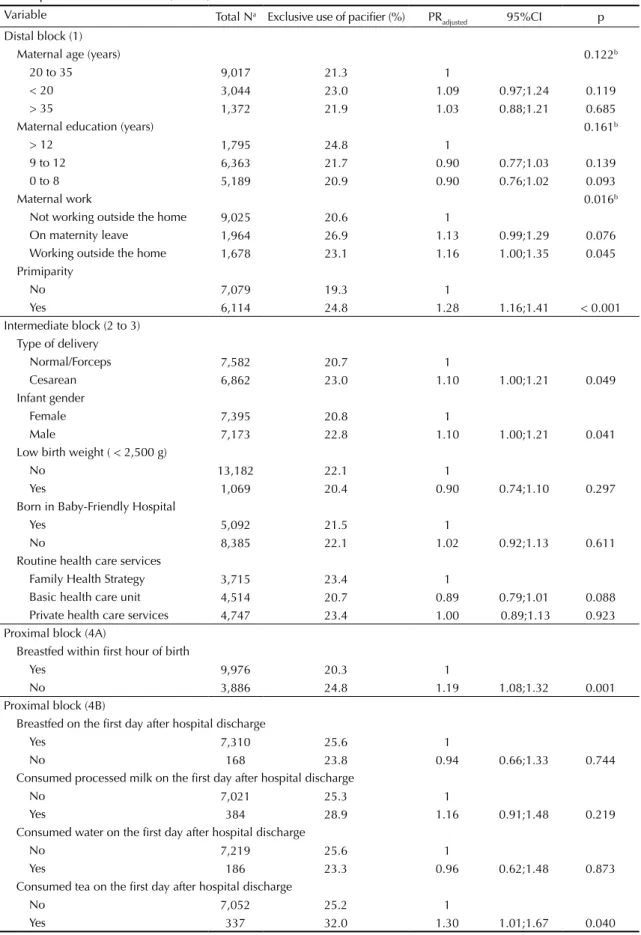
Table 1 shows the prevalence of children who used
exclusively paciiers among those born from primipa
-rous women, those born by cesarean delivery, and male
infants. The use of paciiers gradually increased among
children born from mothers who worked outside the
home. It was observed that the consumption of tea on
the irst day after hospital discharge and the inability to
breastfeed within the irst hour after birth were associ
-ated with the increased use of paciiers.
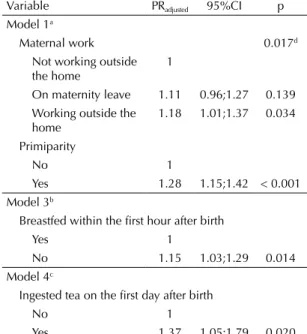
Table 2 shows that the factors associated with the
exclu-sive use of paciiers in multivariate analysis were primi
-parity, mother working outside the home, inability to
breastfeed within the irst hour after birth, and consump
-tion of tea on the irst day after hospital discharge.
Distal Block (1)Socioeconomic profile and maternal lifestyle Maternal age, education and work, and primiparity
Intermediate Block (3)
Characteristics related to health care services Born in Baby-Friendly Hospital, and the most
frequently used health care service Intermediate Block (2)
Characteristics related to birth conditions Gender, birth weight, and type of delivery
Children age
Proximal Block (4A)
Characteristics related to child feeding at birth Breastfed within the first hour
Outcome 3 Use of artificial nipples (pacifiers and bottle feeding)
Outcome 2 Exclusive use of bottle feeding
Outcome 1 Exclusive use of pacifiers Proximal Block (4B)
Characteristics related to child feeding on the first day after birth (for children aged under four months)
Breastfeeding on the first day, intake of processed milk, tea, or water on the first day
Figure. Hierarchical theoretical model to determine the factors associated with use of artificial nipples. State capitals and
Table 1. Poisson analysis of the exclusive use of pacifiers in children aged under one year and age-adjusted prevalence ratio. State capitals and Federal District, Brazil, 2008.
Variable Total Na Exclusive use of pacifier (%) PR
adjusted 95%CI p
Distal block (1)
Maternal age (years) 0.122b
20 to 35 9,017 21.3 1
< 20 3,044 23.0 1.09 0.97;1.24 0.119 > 35 1,372 21.9 1.03 0.88;1.21 0.685
Maternal education (years) 0.161b
> 12 1,795 24.8 1
9 to 12 6,363 21.7 0.90 0.77;1.03 0.139 0 to 8 5,189 20.9 0.90 0.76;1.02 0.093
Maternal work 0.016b
Not working outside the home 9,025 20.6 1
On maternity leave 1,964 26.9 1.13 0.99;1.29 0.076 Working outside the home 1,678 23.1 1.16 1.00;1.35 0.045 Primiparity
No 7,079 19.3 1
Yes 6,114 24.8 1.28 1.16;1.41 < 0.001 Intermediate block (2 to 3)
Type of delivery
Normal/Forceps 7,582 20.7 1
Cesarean 6,862 23.0 1.10 1.00;1.21 0.049 Infant gender
Female 7,395 20.8 1
Male 7,173 22.8 1.10 1.00;1.21 0.041 Low birth weight ( < 2,500 g)
No 13,182 22.1 1
Yes 1,069 20.4 0.90 0.74;1.10 0.297 Born in Baby-Friendly Hospital
Yes 5,092 21.5 1
No 8,385 22.1 1.02 0.92;1.13 0.611
Routine health care services
Family Health Strategy 3,715 23.4 1
Basic health care unit 4,514 20.7 0.89 0.79;1.01 0.088 Private health care services 4,747 23.4 1.00 0.89;1.13 0.923 Proximal block (4A)
Breastfed within first hour of birth
Yes 9,976 20.3 1
No 3,886 24.8 1.19 1.08;1.32 0.001
Proximal block (4B)
Breastfed on the first day after hospital discharge
Yes 7,310 25.6 1
No 168 23.8 0.94 0.66;1.33 0.744
Consumed processed milk on the first day after hospital discharge
No 7,021 25.3 1
Yes 384 28.9 1.16 0.91;1.48 0.219
Consumed water on the first day after hospital discharge
No 7,219 25.6 1
Yes 186 23.3 0.96 0.62;1.48 0.873
Consumed tea on the first day after hospital discharge
No 7,052 25.2 1
Yes 337 32.0 1.30 1.01;1.67 0.040
The sample strata used for analysis of the exclusive use
of bottle feeding comprised exclusive users of bottle
feeding (n = 8,757) and nonusers of artiicial nipples
(n = 11,667).
It was observed that as the children age progressed, the
exclusive use of bottle feeding increased. Trend analysis
indicated the existence of a dose-response relationship
(p < 0.001) (data not shown).
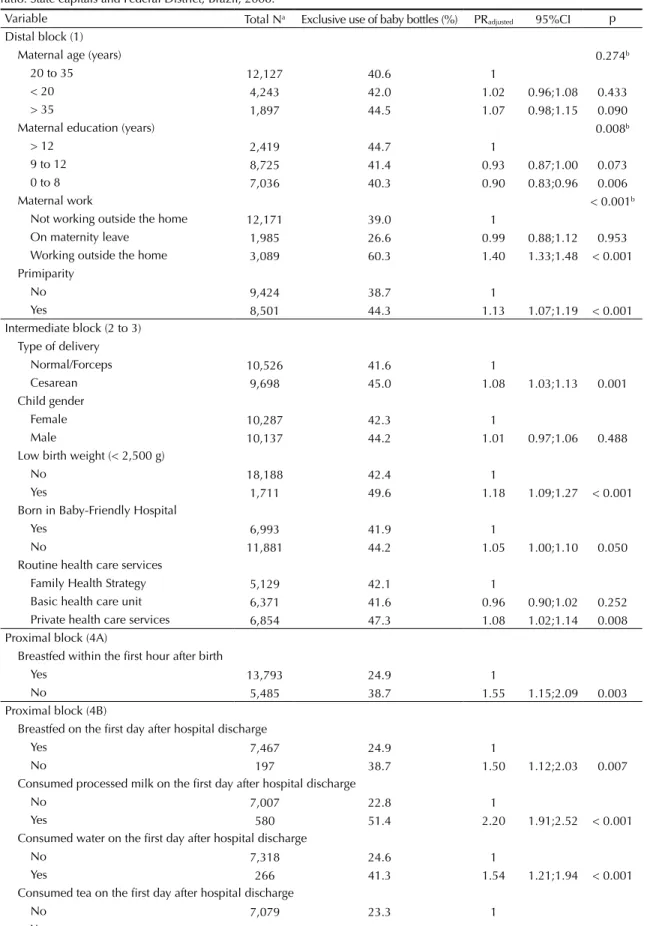
Table 3 shows that the frequency of use of bottle feeding
gradually increased among working mothers; however,
no signiicant difference was observed between mothers
on maternity leave and those who did not work outside
the home. Low birth weight and inability to breastfeed
within the irst hour after birth were associated with
the increased use of bottle feeding. As expected, the
consumption of commercial milk, tea, or water on the
irst day after hospital discharge stimulated the exclu
-sive use of bottle feeding.
Table 4 indicates that the factors associated with the
exclusive use of bottle feeding in multivariate analysis
were primiparity, mother working outside the home,
low birth weight, inability to breastfeed within the irst
hour after birth, and the consumption of processed milk
or tea on the irst day after hospital discharge.
The sample strata used for analysis of the use of artii
-cial nipples comprised users of artii-cial nipples (paci
-iers and bottle feeding) (n = 10,451) and nonusers of
artiicial nipples (n = 11,667).
Advancing child age was associated with the increased
use of artiicial nipples. Trend analysis indicated a
signiicant correlation (p < 0.001), suggesting the exis
-tence of a dose-response relationship (data not shown).
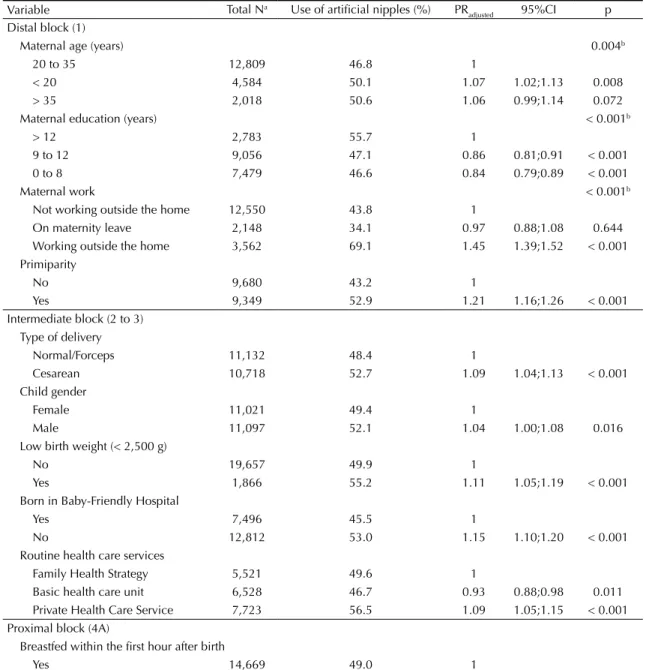
Table 5 shows that younger women offered artiicial
nipples to their children more frequently than older
women. Moreover, primiparous women offered artiicial
nipples to their children more frequently than
nonpri-miparous women. Cesarean delivery, low birth weight,
and the male gender were factors associated with the
increased use of artiicial nipples. As expected, mothers
who worked outside the home resorted to artiicial nipples
more frequently than those who did not work outside the
home. However, births in BFH and breastfeeding within
the irst hour after birth favored the decreased use of arti
-icial nipples. Children routinely attending basic health
care units tended to use artiicial nipples less frequently,
whereas those attending private health care facilities
tended to use artiicial nipples more frequently.
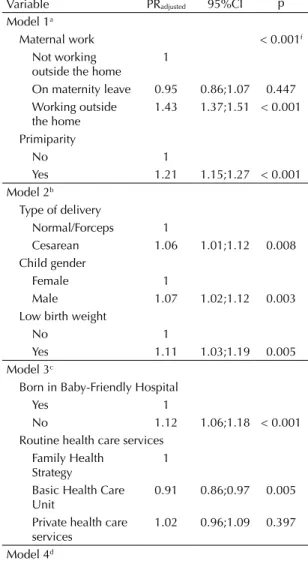
Table 6 presents the factors associated with the use
of artiicial nipples after adjusting for other variables:
mother working outside the home, primiparity, cesarean
delivery, the male gender, low birth weight,
deliv-eries in hospitals not accredited by the BFH system,
type of health care service (private/health insurance),
inability to breastfeed within the irst hour after birth,
and consumption of processed milk, tea, or water on
the irst day after hospital discharge. Performing routine
follow-up in primary health care units was a protective
factor against the use of artiicial nipples.
DISCUSSION
This study is the irst to investigate the determinants
of the use of artificial nipples in a representative
sample of children living in state capitals in Brazil.
Importantly, the study classiied the use of nipples
into three outcomes (use of paciiers, bottle feeding,
or both), which allowed us to understand the use of
these equipment, which can negatively interfere with
breastfeeding and child health.
Maternal-related factors, including mother working
outside the home and primiparity, were signiicantly
correlated with the three outcomes, whereas
infant-related factors, including low birth weight, cesarean
delivery, and the male gender, were signiicantly corre
-lated with only two outcomes (exclusive use of bottle
feeding and use of artiicial nipples). Child feeding
on the irst day after hospital discharge (through the
consumption of baby formula, tea, or water) inluenced
Table 2. Multiple hierarchical model to identify the factors
associated with the exclusive use of pacifiers in children aged under one year. State capitals and Federal District, Brazil, 2008.
Variable PRadjusted 95%CI p
Model 1a
Maternal work 0.017d
Not working outside the home
1
On maternity leave 1.11 0.96;1.27 0.139 Working outside the
home
1.18 1.01;1.37 0.034
Primiparity
No 1
Yes 1.28 1.15;1.42 < 0.001 Model 3b
Breastfed within the first hour after birth
Yes 1
No 1.15 1.03;1.29 0.014 Model 4c
Ingested tea on the first day after birth
No 1
Yes 1.37 1.05;1.79 0.020
a Model 1: work, primiparity, and infant age.
Model 2: Model 1 + infant gender and type of delivery.
b Model 3: Model 2 + breastfeeding within the first hour. c Model 4: Model 3 + consumption of tea on the first day
after hospital discharge.
Table 3. Poisson analysis of the exclusive use of bottle feeding in children aged under one year and age-adjusted prevalence ratio. State capitals and Federal District, Brazil, 2008.
Variable Total Na Exclusive use of baby bottles (%) PR
adjusted 95%CI p
Distal block (1)
Maternal age (years) 0.274b
20 to 35 12,127 40.6 1
< 20 4,243 42.0 1.02 0.96;1.08 0.433 > 35 1,897 44.5 1.07 0.98;1.15 0.090
Maternal education (years) 0.008b
> 12 2,419 44.7 1
9 to 12 8,725 41.4 0.93 0.87;1.00 0.073 0 to 8 7,036 40.3 0.90 0.83;0.96 0.006
Maternal work < 0.001b
Not working outside the home 12,171 39.0 1
On maternity leave 1,985 26.6 0.99 0.88;1.12 0.953 Working outside the home 3,089 60.3 1.40 1.33;1.48 < 0.001 Primiparity
No 9,424 38.7 1
Yes 8,501 44.3 1.13 1.07;1.19 < 0.001 Intermediate block (2 to 3)
Type of delivery
Normal/Forceps 10,526 41.6 1
Cesarean 9,698 45.0 1.08 1.03;1.13 0.001 Child gender
Female 10,287 42.3 1
Male 10,137 44.2 1.01 0.97;1.06 0.488 Low birth weight (< 2,500 g)
No 18,188 42.4 1
Yes 1,711 49.6 1.18 1.09;1.27 < 0.001 Born in Baby-Friendly Hospital
Yes 6,993 41.9 1
No 11,881 44.2 1.05 1.00;1.10 0.050
Routine health care services
Family Health Strategy 5,129 42.1 1
Basic health care unit 6,371 41.6 0.96 0.90;1.02 0.252 Private health care services 6,854 47.3 1.08 1.02;1.14 0.008 Proximal block (4A)
Breastfed within the first hour after birth
Yes 13,793 24.9 1
No 5,485 38.7 1.55 1.15;2.09 0.003
Proximal block (4B)
Breastfed on the first day after hospital discharge
Yes 7,467 24.9 1
No 197 38.7 1.50 1.12;2.03 0.007
Consumed processed milk on the first day after hospital discharge
No 7,007 22.8 1
Yes 580 51.4 2.20 1.91;2.52 < 0.001 Consumed water on the first day after hospital discharge
No 7,318 24.6 1
Yes 266 41.3 1.54 1.21;1.94 < 0.001 Consumed tea on the first day after hospital discharge
No 7,079 23.3 1
Yes 493 52.2 2.15 1.86;2.49 < 0.001
the three outcomes but not the same components of
each outcome, which suggests the existence of different
motivations for the adoption of each feeding
equip-ment. Birth in BFH and child follow-up in basic health
care units were factors signiicantly correlated with the
decreased use of artiicial nipples.
Child age was signiicantly correlated with all the three
outcomes. Previous studies indicated that child age
may inluence the use of artiicial nipples.
1,9,18,19,23,24Victora et al
23and Aarts et al
1observed that the use of
paciiers begins in early childhood and is a dynamic
process until the age of three and four months. However,
with advancing age, the use of this feeding equipment
decreases.
1,9,23Other authors indicated that bottle use is
associated with water and tea intake and with the intake
of processed milk, which increases the use of bottle
feeding as child age progresses.
6,23Considering the
poten-tial inluence of this variable on the outcomes studied,
infant age was considered an adjustment variable.
The male gender was signiicantly correlated with the use
of artiicial nipples but not with the isolated use of the
two equipment. Previous studies on the use of paciiers
identiied a correlation between its increased use and the
male gender.
9,18,23,24Another study reported a higher
prob-ability of interruption of breastfeeding in male infants.
20In this respect, the authors suggest that mothers believe
that male infants have higher nutritional requirements
than female infants and they are therefore provided food
supplements irst.
11Scott et al
15indicated that the cultural
construction of gender can inluence this decision and
can lead to the increased use of bottle feeding by male
infants. However, till date, no study has indicated child
gender as a determinant of the use of bottle feeding. The
higher tendency of male infants to use artiicial nipples
than female infants warrants an explanation and should
be further explored in qualitative studies.
15,18Low birth weight was associated with the exclusive use of
bottle feeding and artiicial nipples. Weight gain is asso
-ciated with child survival and is a condition that raises
concerns among family members and health
profes-sionals.
3This condition stimulates the early indication of
food supplements, which are usually provided in bottle
feeding,
6,23thereby increasing its use among children with
low birth weight. The associated use of bottle feeding
and paciiers has not been reported in previous studies.
However, it is plausible to assume that these equipment
will be used more frequently, considering the stressful
conditions that the mother and infant are exposed to in
hospital settings and during family adaptation.
3The consumption of processed milk, tea, and water
within the irst day after hospital discharge was signif
-icantly correlated with the three outcomes. Previous
studies have indicated that these liquids are usually
provided by bottle feeding.
6,23França et al
6found that
21.3% and 46.9% infants used bottle feeding seven
days and 30 days after birth, respectively, and tea and
processed milk were the main ingredients offered at
both instances. Bottle feeding is used as a vehicle for
luid delivery, whereas paciiers are used to calm the
infants,
16,18and the latter function is also attributed to
tea.
6The symbolic and sociocultural role of calming
the infant
16,18,23corroborates the results of the present
study. Although previous studies have indicated that the
use of paciiers increases the likelihood of using bottle
feeding,
6a causal relationship could not be established.
Primiparity was signiicantly correlated with the three
outcomes, and it has been reported as a risk factor for
early weaning and consequently for the use of artii
-cial nipples.
18,19,24Silva
17reported that since child birth,
mothers go through a learning process to understand
their child’s language. Previous studies have found that
parents are poorly oriented on how to manage child
Table 4. Multiple hierarchical model to identify the factors
associated with the exclusive use of bottles in children aged under one year. State capitals and Federal District, Brazil, 2008.
Variable PRadjusted 95%CI p
Model 1a
Maternal work < 0.001e
Not working outside the home
1
On maternity leave 0.97 0.86;1.10 0.708 Working outside the
home
1.39 1.32;1.47 < 0.001
Primiparity
No 1
Yes 1.06;1.17 < 0.001 Model 2b
Low birth weight
No 1
Yes 1.21 1.11;1.31 < 0.001 Model 3c
Breastfed within the first hour after birth
Yes 1
No 1.08 1.02;1.15 0.004 Model 4d
Consumed processed milk on the first day after hospital discharge
No 1
Yes 1.82 1.52;2.19 < 0.001 Consumed tea on the first day after hospital discharge
No 1
Yes 1.96 1.63;2.36 < 0.001
a Model 1: maternal work, primiparity, infant age. b Model 2: Model 1 + low birth weight.
c Model 3: Model 2 + breastfeeding within the first hour. d Model 4: Model 3 + intake of processed milk or tea on
the first day.
Table 5. Poisson analysis of the use of artificial nipples in children aged under one year and age-adjusted prevalence ratio. State capitals and Federal District, Brazil, 2008.
Variable Total Na Use of artificial nipples (%) PR
adjusted 95%CI p
Distal block (1)
Maternal age (years) 0.004b
20 to 35 12,809 46.8 1
< 20 4,584 50.1 1.07 1.02;1.13 0.008 > 35 2,018 50.6 1.06 0.99;1.14 0.072 Maternal education (years) < 0.001b
> 12 2,783 55.7 1
9 to 12 9,056 47.1 0.86 0.81;0.91 < 0.001 0 to 8 7,479 46.6 0.84 0.79;0.89 < 0.001
Maternal work < 0.001b
Not working outside the home 12,550 43.8 1
On maternity leave 2,148 34.1 0.97 0.88;1.08 0.644 Working outside the home 3,562 69.1 1.45 1.39;1.52 < 0.001 Primiparity
No 9,680 43.2 1
Yes 9,349 52.9 1.21 1.16;1.26 < 0.001 Intermediate block (2 to 3)
Type of delivery
Normal/Forceps 11,132 48.4 1
Cesarean 10,718 52.7 1.09 1.04;1.13 < 0.001 Child gender
Female 11,021 49.4 1
Male 11,097 52.1 1.04 1.00;1.08 0.016 Low birth weight (< 2,500 g)
No 19,657 49.9 1
Yes 1,866 55.2 1.11 1.05;1.19 < 0.001 Born in Baby-Friendly Hospital
Yes 7,496 45.5 1
No 12,812 53.0 1.15 1.10;1.20 < 0.001 Routine health care services
Family Health Strategy 5,521 49.6 1
Basic health care unit 6,528 46.7 0.93 0.88;0.98 0.011 Private Health Care Service 7,723 56.5 1.09 1.05;1.15 < 0.001 Proximal block (4A)
Breastfed within the first hour after birth
Yes 14,669 49.0 1
No 6,129 52.5 1.09 1.05;1.14 < 0.001 Proximal block (4B)
Breastfed on the first day after hospital discharge
Yes 8,082 33.5 1
No 399 72.4 2.11 1.91;2.33 < 0.001 Consumed processed milk on the first day after hospital discharge
No 7,493 30.6 1
Yes 910 70.5 2.25 2.08;2.44 < 0.001 Consumed water on the first day after hospital discharge
No 7,952 33.6 1
Yes 438 66.2 1.87 1.67;2.08 < 0.001 Consumed tea on the first day after hospital discharge
No 7,746 33.1 1
Yes 639 64.0 1.87 1.70;2.06 < 0.001
crying and behavior,
3,8and when oriented, they feel
more conident in comforting the child without resorting
to artiicial nipples.
8Therefore, one can assume that
less experienced mothers become more anxious when
managing infant crying and behavior
16,19and therefore
resort to artiicial nipples more frequently.
The factor mother working outside the home was signif
-icantly correlated with the three outcomes studied.
Maternal work was expressed in categories of increased
frequency of the use of nipples. Therefore, maternity leave
was considered an intermediate condition with respect
to the others.
10,12,13Rea & Cukier
12observed that mother
working outside the home has become a primary reason for
bottle feeding and weaning. Previous studies have shown
that reconciling the roles of a worker and mother is increas
-ingly common and that employee beneits alone are not
suficient for mothers to continue breastfeeding and not
resort to artiicial nipples.
12,13In Brazil, women working
in the formal sector are entitled to 120 days of maternity
leave. However, their return to work is illed with anxiety
and uncertainty related to children feeding and comfort
in times of maternal absence.
12Therefore, maternal work
outside the home and the return to work after maternity
leave are situations of great vulnerability that favor the
interruption of exclusive breastfeeding and the consequent
introduction of paciiers and bottle feeding.
10A significant correlation was observed between
cesarean delivery and the use of artiicial nipples.
Victora et al
23found that women who had cesarean
delivery breastfed for a shorter period and resorted
to paciiers more frequently. Other authors found that
women having cesarean deliveries showed a signiicant
delay in the initiation of breastfeeding, which could lead
to decreased frequency of breastfeeding and increased
use of artiicial nipples.
2Breastfeeding in the irst hour after birth was a protec
-tive factor and was strongly correlated with the three
outcomes. In this sense, no previous studies that
corre-lated the use of artiicial nipples with breastfeeding
in the irst hour were found. However, some studies
have correlated breastfeeding in the irst hour with the
increased prevalence of breastfeeding and the
establish-ment of stronger bonds between the mother and child,
2which are important factors involved in the decision to
use artiicial nipples.
BFH follow the “Ten Steps to Successful
Breast-feeding”.
5,18,22Step 9 establishes the nonuse of paciiers and
bottle feeding in hospitals for breastfed children.
5In this
study, child birth in hospitals without BFH accreditation
was associated with the increased use of artiicial nipples.
Corroborating these indings, Coutinho et al
5observed that
the use of paciiers and bottle feeding decreased after an
BFH training program in two maternity wards. Moreover,
Venancio et al
22found a correlation between birth in BFH
and the decreased use of paciiers. Therefore, these studies
Table 6. Multiple hierarchical model to identify the factors
associated with the use of artificial nipples in children aged under one year. State capitals and Federal District, Brazil, 2008.
Variable PRadjusted 95%CI p
Model 1a
Maternal work < 0.001f
Not working outside the home
1
On maternity leave 0.95 0.86;1.07 0.447 Working outside
the home
1.43 1.37;1.51 < 0.001
Primiparity
No 1
Yes 1.21 1.15;1.27 < 0.001 Model 2b
Type of delivery
Normal/Forceps 1
Cesarean 1.06 1.01;1.12 0.008 Child gender
Female 1
Male 1.07 1.02;1.12 0.003 Low birth weight
No 1
Yes 1.11 1.03;1.19 0.005 Model 3c
Born in Baby-Friendly Hospital
Yes 1
No 1.12 1.06;1.18 < 0.001 Routine health care services
Family Health Strategy
1
Basic Health Care Unit
0.91 0.86;0.97 0.005
Private health care services
1.02 0.96;1.09 0.397
Model 4d
Breastfed within the first hour after birth
Yes 1
No 1.06 1.00;1.11 0.030 Model 5e
Consumed processed milk on the first day after hospital discharge
No 1
Yes 2.06 1.83;2.31 < 0.001 Consumed water on the first day after hospital discharge
No 1
Yes 1.18 1.01;1.37 < 0.001 Consumed tea on the first day after hospital discharge
No 1
Yes 1.38 1.21;1.59 < 0.001
a Model 1: maternal age, education and work, primiparity,
and infant age.
b Model 2: Model 1 + child gender, low birth weight, and
type of delivery.
c Model 3: Model 2 + BFH and health care services. d Model 4: Model 3 + breastfeeding within the first hour. e Model 5: Model 4 + intake of processed milk, tea, or
water on the first day.
highlight the need for effective support and guidance
inter-ventions during child follow-up in health care units and in
the community.
5,22Child follow-up is performed through primary health
care services in public health care facilities, which
comprise basic health care units and FHS units. In
basic health care units, follow-up is performed by a
pediatrician, whereas in FHS units, it is performed by
a multidisciplinary team. Follow-up in public health
care facilities, particularly in basic health care units,
was considered a protective factor against the use of
artiicial nipples. The noninluence of FHS in the results
can be attributed to its low application in the Brazilian
capitals (53.1% of the Brazilian territory in 2011).
bWith regard to the surveys conducted during the vacci
-nation campaigns, Venancio et al
22reported that they
are widely used in Brazil and can collect data in a short
period, at a low cost. The adopted sample design and
the high sample coverage (> 80.0%) in the second stage
of the vaccination campaign in 2008 ensured sample
b Ministério da Saúde. Secretária de Atenção a Saúde. Departamento de Atenção Básica. Números da Saúde da Família. Brasília (DF); 2012 [cited 2014 Jun 12]. Available from: http://dab.saude.gov.br/abnumeros.php
representativeness. Furthermore, maternal educational
levels were similar to those reported in the Live Births
Information System in the same year.
21One limitation of the present study is the noninclusion
of subjects living in rural areas, and this aspect deserves
attention in relation to the generalization of results. The
other limitation is that the cross-sectional design of the
study did not allow an assessment of the temporality
of facts. However, the present study helped to identify
situations that may serve as “markers” of the analyzed
outcomes and to generate hypotheses for the
develop-ment of longitudinal studies.
7This is the irst study to identify the factors associated
with the exclusive use of bottle feeding and paciiers
and the use of artiicial nipples (bottle feeding and paci
-iers) in children aged under one year, in a representa
-tive sample of children. These results can be
general-ized to populations living in middle-income urban areas
in countries such as Brazil and contribute to the
plan-ning of preventive actions in maternal and child health.
1. Aarts C, Hörnell A, Kylberg E, Hofvander Y, Gebre-Medhin M. Breastfeeding patterns in relation to thumb sucking and pacifier use. Pediatrics. 1999;104(4):e50. DOI:10.1542/peds.104.4.e50
2. Araújo MFM, Schmitz BAS. Doze anos de evolução da iniciativa Hospital Amigo da Criança no Brasil. Rev Panam Salud Publica. 2007;22(2):91-9. DOI:10.1590/S1020-49892007000700003 3. Buccini GS, Sanches MTC, Nogueira-Martins
MCF, Bonamigo AW. Acompanhamento de recém-nascidos de baixo peso pela atenção básica na perspectiva das equipes de Saúde da Família. Rev Bras Saude Matern Infant. 2011;11(3):239-47. DOI:10.1590/S1519-38292011000300004
4. Coutinho LMS, Scazufca M, Menezes PR. Métodos para estimar razão de prevalência em estudos de corte transversal. Rev Saude Publica. 2008;42(6):992-8. DOI:10.1590/S0034-89102008000600003
5. Coutinho SB, Lima MC, Ashworth A, Lira PIC. Impacto de treinamento baseado na Iniciativa Hospital Amigo da Criança sobre práticas relacionadas à amamentação no interior do Nordeste. J Pediatr (Rio J).
2005;81(6):471-7. DOI:10.2223/JPED.1422
6. França MCT, Giugliani ERJ, Oliveira LD, Weigert EML, Espirito Santo LC, Köhler CV, et al. Uso de mamadeira no primeiro mês de vida: determinantes e influência na técnica de amamentação.
Rev Saude Publica. 2008;42(4):607-14. DOI:10.1590/S0034-89102008005000028
7. Habicht JP, Victora CG, Vaughan JP. Evaluation designs for adequacy, plausibility and probability of public health programme performance and impact. Int J Epidemiol. 1999;28(1):10-8. DOI:10.1093/ije/28.1.10
8. Kramer MS, Barr RG, Dagenais S, Yang H, Jones P, Ciofani L, et al. Pacifier use, early weaning, and cry/fuss behavior: a randomized controlled. JAMA. 2001;286(3):322-6. DOI:10.1001/jama.286.3.322
9. North K, Fleming P, Golding J, and the ALSPAC study team. Pacifier use and morbidity in the first six months of life. Pediatrics. 1999;103(3):e34. DOI:10.1542/peds.103.3.e34
10. Osis MJD, Duarte GA, Pádua KS, Hardy E, Sandoval LM, Bento SF. Aleitamento materno exclusivo entre trabalhadoras com creche no local de trabalho. Rev Saude Publica. 2004;38(2):172-9. DOI:10.1590/S0034-89102004000200004
11. Pérez-Escamilla R, Lutter C, Segall AM, Rivera A, Treviño-Siller S, Sanghvi T. Exclusive breast-feeding duration is associated with attitudinal, socieconomic and biocultural determinants in three Latin American countries. J Nutr. 1995;125(12):2972-84.
12. Rea MF, Cukier R. Razões de desmame e de introdução da mamadeira: uma abordagem alternativa para seu estudo. Rev Saude Publica. 1988;22(3):184-91. DOI:10.1590/S0034-89101988000300004
13. Rea MF, Venancio SI, Batista LE, Santos RG, Greiner T. Possibilidades e limitações da amamentação entre mulheres trabalhadoras formais. Rev Saude Publica. 1997;31(2):149-56. DOI:10.1590/S0034-89101997000200008
15. Scott JA, Aitkin I, Binns CW, Aroni RA. Factors associated with the duration of breastfeeding amongst women in Perth, Australia. Acta Paediatr. 1999;88(4):416-21. DOI:10.1111/j.1651-2227.1999.tb01133.x
16. Sertório SCM, Silva IA. As faces simbólica e utilitária da chupeta na visão das mães. Rev Saude Publica. 2005;39(2):156-62. DOI:10.1590/S0034-89102005000200003
17. Silva IA. Reflexões sobre a prática do aleitamento materno. Rev Esc Enferm USP. 1998;30(1):58-72.
18. Soares MEM, Giugliani ERJ, Braun ML, Salgado ACN, Oliveira AP, Aguiar PR. Uso de chupeta e sua relação com o desmame precoce em população de crianças nascidas em Hospital Amigo da Criança. J Pediatr (Rio J). 2003;79(4):309-16. DOI:10.1590/S0021-75572003000400008
19. Tomasi E, Victora CG, Olinto MTA. Padrões e
determinantes do uso de chupeta em crianças. J Pediatr (Rio J). 1994;70(3):167-71. DOI:10.2223/JPED.766 20. Venancio SI, Escuder MML, Kitoko P, Rea MF,
Monteiro CA. Freqüência e determinantes do aleitamento materno em municípios do Estado de
São Paulo. Rev Saude Publica. 2002;36(3):313-8 DOI:10.1590/S0034-89102002000300009
21. Venancio SI, Escuder MML, Saldiva SRDM, Giugliani ERJ. A prática do aleitamento materno nas capitais brasileiras e Distrito Federal: situação atual e avanços. J Pediatr (Rio J). 2010;86(4):317-24. DOI:10.1590/S0021-75572010000400012
22. Venancio SI, Saldiva SRDM, Escuder MML, Giugliani ERJ. The Baby-Friendly Hospital Initiative shows positive effects on breastfeeding indicators in Brazil. J Epidemiol Community Health. 2012;66(10):914-8. DOI:10.1136/jech-2011-200332.
23. Victora CG, Behague DP, Barros FC, Olinto MTA, Weiderpass E. Pacifier use and short breastfeeding duration: cause, consequence, or coincidence? Pediatrics. 1997;99(3):445-53. DOI:10.1542/peds.99.3.445
24. Vogel AM, Hutchison BL, Mitchell EA. The impact of pacifier use on breastfeeding: a prospective cohort study. J Paediatr Child Health. 2001;37(1):58-63. DOI:10.1046/j.1440-1754.2001.00581.x
Article based on the master’s dissertation of Buccini GS, titled: “Determinantes do uso de chupeta e mamadeira em crianças menores de um ano nas Capitais Brasileiras e Distrito Federal”, presented to the Programa de Pós-Graduação em Nutrição em Saúde Pública of the Faculdade de Saúde Pública of the Universidade de São Paulo, in 2012.