Association between sociodemographic characteristics and
depressive symptoms in hospitalized elderly
Associação entre características sociodemográficas e sintomas depressivos em idosos
hospitalizados
Isabela Maria Tavares do Nascimento1, Paulo Filipe Mello², Alcimar Marcelo do Couto1, Gilberto de Lima
Guimarães1, Isabel Yovana Quispe Mendoza1
Objective: to describe the sociodemographic characteristics associated with depressive symptoms in hospitalized elderly. Methods: cross-sectional study carried out in a public teaching hospital. The sample was composed of 96 individuals aged ≥60 years, hospitalized in a clinical and surgical unit. The data collection was performed through a semi-structured interview with the instrument Geriatric Depression Scale. The variables were described through frequencies, percentages, means and standard deviations. The Fisher’s exact test was used to assess the association with depressive symptoms. Results: a total of 45.8% of the elderly presented mild to moderate depressive symptoms and 1.0% had severe symptoms. There was a predominance of women, between 60 and 79 years old, living with a partner, with low level of education (one to seven years of schooling), Catholics, retirees or pensioners, and with a family income of up to three minimum wages. Conclusion: the
labor situation presented a statistically significant association with depressive symptoms in the hospitalized elderly.
Descriptors: Depression; Aged; Hospitals, General.
Objetivo: descrever as características sociodemográficas associadas a sintomas depressivos em idosos hospitalizados. Métodos: estudo transversal realizado em hospital público de ensino. Amostra de 96 indivíduos com idade ≥60 anos, internados em unidade clínica e cirúrgica. A coleta de dados foi realizada por meio de entrevista semiestruturada com o instrumento Geriatric Depression Scale. As variáveis foram descritas por
frequências, porcentagem, média e desvio padrão. Para avaliar a associação com os sintomas depressivos foi utilizado o teste Exato de Fisher. Resultados: 45,8% dos idosos apresentaram sintomas depressivos leves a moderados e 1,0% sintomas graves. Houve predominância de mulheres, idade entre 60 e 79 anos, com companheiro, baixa escolaridade (um a sete anos de estudo), religião católica, aposentados ou pensionistas e renda familiar de até três salários mínimos. Conclusão: a situação trabalhista apresentou associação estatisticamente significante com sintomas depressivos em idosos hospitalizados.
Descritores: Depressão; Idoso; Hospitais Gerais.
1Universidade Federal de Minas Gerais. Belo Horizonte, MG, Brazil.
²Universidade Federal dos Vales do Jequitinhonha e Mucuri, Diamantina, MG, Brazil.
Corresponding author: Isabela Maria Tavares do Nascimento
Introduction
The prevalence of depressive symptoms in the general population varies from 5 to 11.0%, being hi
-gher among women. This prevalence increases to 30.0% in the elderly. In this group, depression is one of the most frequent chronic diseases that increases the possibility of developing functional incapacity, increased financial expenses, poor quality of life, and the use of health services, and can lead to the most severe outcome of the disease, i.e. suicide(1-4).
Previous studies aimed at identifying the as
-sociation between sociodemographic characteristics and depressive symptoms have shown that women are more susceptible to depression due to social isola
-tion and depriva-tion of family rela-tionships. Moreover, low schooling and illiteracy have been recognized as factors consistently associated with depressive symp
-toms. Living with the spouse or having a partner can be considered a psychosocial protective factor. Regar
-ding health conditions, the prevalence of depression has been reported as non-related to coronary heart disease, heart failure and stroke in the elderly(2-5). As
for religion, a study carried out with elderly people in the Family Health Strategy identified that high scores in the religiosity index were not related to depressive symptoms(5)
.
The presence of comorbidities and polyphar
-macy, common among the elderly, makes the diagno
-sis and appropriate treatment of depression become a complex process. Moreover, depression is often over
-looked in hospitalized elderly because health profes
-sionals associate depressive symptoms with normal manifestations of senescence. However, the presence of this disorder may lead to loss of autonomy and, con
-sequently, worsening of the clinical picture(6).
In this way, the nursing evaluation should over
-come the limits of conventional approaches with a merely curative goal, but should rather be able to re
-cognize the subject in his entirety and identify early signs and symptoms of depression. Such an attitude will aid the preparation of an adequate plan of care,
reducing clinical complications in the short and long
term(7).
Despite the high prevalence of depression, the disease is often undiagnosed and undetected. The presence of diseases associated with the difficulty of
diagnosis is a condition that leads to increased
morbi-dity and mortality in the elderly. Therefore, the scre
-ening of depressive symptoms and knowledge of the associated factors are fundamental for the planning of nursing care, which can make it possible to provide comprehensive and multidimensional assistance to the elderly in the hospital context.
In view of the above, the purpose of this study was to describe the sociodemographic characteristics associated with depressive symptoms in hospitalized elderly.
Methods
This is a cross-sectional study carried out with elderly patients admitted to a public teaching hospi
-tal in the city of Belo Horizonte, Minas Gerais, Brazil, between May and July 2016. The institution provides care for clinical/surgical urgencies and trauma.
Patients with the following characteristics were included: age ≥60 years; hospitalized in the medical and surgical clinics; with score ≥13 in the cognitive evaluation through the Mini Mental State Examination in the case of illiterates, ≥18 in the case of low and medium schooling, and ≥26 in the case of high schoo
-ling(8). Patients with the following characteristics were
excluded: cognitive deficit according to the evaluation of the Mini Mental State Examination (86); patients with a previous diagnosis of dementia (25); absent from the bed (33); with difficulty of communication, either due to aphasia (44) or delirium (9). The sample resulted in 96 elderly subjects, who were allocated for convenience.
The data collection was divided into two sta
-ges: (1) active search in the institution’s clinical/sur
-logy sector was used, and collection of data in a form with (a) sociodemographic variables (such as: age, sex, schooling, income, social network and religion) and (b) main medical diagnosis and comorbidities; (2) semi-structured interview with application of the instrument Geriatric Depression Scale.
The Geriatric Depression Scale is a short ver
-sion of the original scale, adjusted for the geriatric po
-pulation in the Portuguese language, and widely used today in Brazil and the world to identify depressive symptoms in the elderly. The scale has 15 affirmati
-ve and negati-ve questions, which can be scored from zero to 15 points. In this study, the cut-off of ≥6 points was considered as an indicative of the presence of de
-pressive symptoms, based on previous studies that adopted the same strategy(9).
The data were processed and analyzed in the Stata software, version 13.0. The descriptive analysis characterized the population studied by frequencies, percentages, means and standard deviations. The Fisher’s exact test was used to assess the association with depressive symptoms. The level of significance adopted was p=0.05.
The study complied with the formal require
-ments set by national and international regulatory standards for research involving human beings.
Results
The characterization of the participants sho
-wed that 53.2% of the elderly did not present depres
-sive symptoms and 45.8% presented them. Among those with depressive symptoms, 45.8% had symp
-toms classified as mild to moderate and only 1.0% as severe (Table 1).
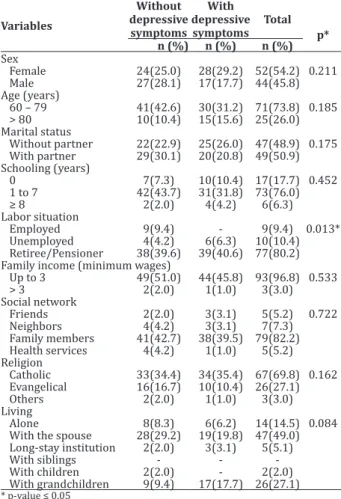
Table 2 describes the sociodemographic cha
-racteristics of the hospitalized elderly. There was a predominance of females (54.2%); aged 60-79 years (74.0%); with a partner (51.1%); with schooling be
-tween 1 and 7 years (75.5%); retirees and pensioners (80.2%); with family income between 1 and 3 mini
-mum wages (92.7%); having the family members as
social network (82.3%); practitioners of the Catholic faith (69.8%); and living with the spouse (49.0%).
With regard to the possible influent factors in the depression of the hospitalized elderly, the Fisher’s Exact test showed an association between depressive symptoms and the labor situation (p=0.01), as shown in Table 2.
Table 1 -Distribution of the responses of the inter
-viewed elderly according to the Geriatric Depression Scale and descriptive statistics
Geriatric Depression Scale 15 n (%) Mean (SD)
No depressive symptoms 0-5 51 (53.2) 5.4 (3.1)
With depressive symptoms ≥6-11 44 (45.8)
Severe depression ≥11-15 1 (1.0)
Total 96 (100.0)
Table 2 - Frequency of sociodemographic variables of the hospitalized elderly, according to the Geriatric Depression Scale
Variables
Without depressive symptoms
With depressive symptoms
Total p*
n (%) n (%) n (%)
Sex
Female 24(25.0) 28(29.2) 52(54.2) 0.211
Male 27(28.1) 17(17.7) 44(45.8)
Age (years)
60 – 79 41(42.6) 30(31.2) 71(73.8) 0.185
> 80 10(10.4) 15(15.6) 25(26.0)
Marital status
Without partner 22(22.9) 25(26.0) 47(48.9) 0.175
With partner 29(30.1) 20(20.8) 49(50.9)
Schooling (years)
0 7(7.3) 10(10.4) 17(17.7) 0.452
1 to 7 42(43.7) 31(31.8) 73(76.0)
≥ 8 2(2.0) 4(4.2) 6(6.3) Labor situation
Employed 9(9.4) - 9(9.4) 0.013*
Unemployed 4(4.2) 6(6.3) 10(10.4)
Retiree/Pensioner 38(39.6) 39(40.6) 77(80.2) Family income (minimum wages)
Up to 3 49(51.0) 44(45.8) 93(96.8) 0.533
> 3 2(2.0) 1(1.0) 3(3.0)
Social network
Friends 2(2.0) 3(3.1) 5(5.2) 0.722
Neighbors 4(4.2) 3(3.1) 7(7.3)
Family members 41(42.7) 38(39.5) 79(82.2)
Health services 4(4.2) 1(1.0) 5(5.2)
Religion
Catholic 33(34.4) 34(35.4) 67(69.8) 0.162
Evangelical 16(16.7) 10(10.4) 26(27.1)
Others 2(2.0) 1(1.0) 3(3.0)
Living
Alone 8(8.3) 6(6.2) 14(14.5) 0.084
With the spouse 28(29.2) 19(19.8) 47(49.0)
Long-stay institution 2(2.0) 3(3.1) 5(5.1)
With siblings - -
-With children 2(2.0) - 2(2.0)
With grandchildren 9(9.4) 17(17.7) 26(27.1)
Discussion
The study presented limitations regarding the convenience sample, which is not representative of the hospitalized elderly population, reducing the pos
-sibility of finding more conclusive results. Because the study had a cross-sectional design, it was not possible to know the cause-and-effect relationship. Moreover, other variables such as hospitalization time, comorbi
-dities and self-perception of health were not investi
-gated.
In order to associate depressive symptoms with sociodemographic characteristics, it was necessary to know the prevalence of these symptoms in the sub
-jects who participated in the study. Thus, the presence of mild to moderate depressive symptoms was similar to that found in the national literature, which shows a prevalence of 46.0 to 56.1% of the elderly hospitalized in general hospitals and of 36.5% in elderly patients hospitalized in emergency services(10-12).
Depression in hospitalized elderly may be as
-sociated with the fact of being away from home and subjected to the routine of the institution, which can generate feelings of fear and distress. In addition, the situation of sickness, that is, the weakening of health status, can be considered as a factor that predisposes to depression(10-12).
The study found no significant association be
-tween depressive symptoms and sex. This finding is corroborated by the results of a research carried out with elderly patients admitted to emergency services. The non-significant difference between sexes may be related to the fact that, being ill and also hospitalized is considered a hardship for all people, regardless of sex(10).
Elderly patients aged between 60 and 79 pre
-sented higher percentages of depressive symptoms when compared to those aged more than 80 years. These results were similar to a study carried out with hospitalized patients with type 2 diabetes. For the
authors, life stressors are possibly expected and ac
-cepted and, therefore, more tolerated by older people. This may explain why depression was found to be less frequent in this age group during the interviews(13).
Elderly with partners are more likely to have depression, although this difference was not statisti
-cally significant in the present study. The hospital en
-vironment can collaborate to the appearance of feelin
-gs of sadness and hopelessness due to the situation in which they are, i.e. the situation of being ill(12,14).
Schooling was not associated with depressive symptoms, but thesesymptoms were more frequent in the elderly with low schooling. Higher level of edu
-cation is found in the literature as a factor of resilience or protection, because it increases the coping resour
-ces of the elderly in the face of stressful situations and depression, and is directly related to family inco -me(12,14).
Although this study did not identify an asso
-ciation between family income and depressive symp
-toms, it is considered that the proportion of elderly people earning less than three minimum wages who presented depressive symptoms was high. The litera
-ture highlights that social inequalities influence the life conditions and health status. Thus, people belon
-ging to the lower socioeconomic classes are subject to conditions such as unemployment, underemploy
-ment, unstable employment and low income, which predisposes them to a higher risk of developing de
-pressive symptoms. These conditions may hamper the access to health care, leisure and social support(11,15).
Less than half of the elderly with depressive symptoms had the family as their main social ne
-twork. Depression and anxiety reflect on emotional changes and tend to negatively affect the perception of the available social support and family functioning. On the other hand, the perception about family functio
-eds, and the extent to which family relationships cor
-respond to their expectations(16).
In this study, we found a statistically significant association between the labor situation of the elder
-ly and depressive symptoms. Research indicates that lack of a work routine, low income and loss of social status can generate serious damages of a psychic na
-ture. The authors conclude that work occupies a di
-mension in the existence of the human being, since it is from work that subjects are able to build up their identity and produce meaning to their existence as social beings. Depression in retired elderly may be a result of lack of new perspectives, in the face of rup
-tures, conclusions or losses. Thus, retirement repre
-sents a determining factor for the psychic fragilization of the elderly(17-19).
Most of the interviewed elderly reported to belong to the Catholic religion, and of these, 35.0% presented depressive symptoms. This fact may be re
-lated to the greater number of individuals belonging to Catholicism in Brazil. According to the latest census, there are 123 million Catholics in Brazil, representing 64.6% of the population. Illness, physical symptoms, invasive procedures, dependence, change of routine and of social roles, distance from family members, the severity of the health problem, fear of the unknown and fantasies about death are situations often expe
-rienced by the elderly during hospitalization. Religion
is a resource that helpsto cope with these events, be
-cause it promotes optimism and hope about the
im-provement of the health status(20) .
Less than one-third of the elderly living with their spouses had depressive symptoms. Similar re
-sults were found in a study carried out with elderly people enrolled in the Family Health Strategy in whi
-ch a negative relation between depression and wi
-dowhood was identified. The results of both studies are divergent from those found in the literature, since having a partner has been considered a psychosocial protective factor, promoting mutual support and co
-ping with adverse situations(2-5) .
The high prevalence of depression in the elder
-ly requires special attention because of the impact of this disease on the health of the individuals. Therefo
-re, depressive symptoms in this age group in the hos
-pital context should be routinely investigated. Nurses who deal with older people should be attentive and prepared not only to recognize depressive symptoms but to extend their assessment to other dimensions such as psychic, social and spiritual. Interdisciplina
-ry interventions result in greater solving power, from the detection of depressive symptoms, diagnosis of depression, and counter-reference to Primary Health Care so as to favor effective hospital discharge of the elderly(3,17).
Knowing the association between the labor si
-tuation of the elderly and depressive symptoms is a finding that can support the planning of actions aimed at family life, affective life, leisure, participation in the community, and stimulation of paid or voluntary work activities. These activities can constitute important elements in the reaffirmation of the personal, profes
-sional and social identity of the elderly.
Conclusion
The labor situation presented a statistically significant association with depressive symptoms in hospitalized elderly.
Collaborations
Nascimento IMT and Mello PF contributed to the drafting and design of the study, analysis and inter
-pretation of data and writing of the article. Couto AM contributed to the writing of the article. Guimarães GL contributed to the writing of the article, relevant criti
References
1. Silva MT, Galvão TF, Martins SS, Pereira MG. Prevalence of depression morbidity among Brazilian adults: a systematic review and meta-analysis. Rev Bras Psiquiatr. 2014; 36(3):262-70. doi: http://dx.doi.org/10.1590/1516-4446-2013-1294
2. Silva AR, Sgnaolin V, Nogueira EL, Loureiro F, Engroff P, Gomes I. Non-communicable chronic diseases and sociodemographic associated with symptoms of depression in elderly. J Bras Psiquiatr. 2017; 66(1):45-51. doi: http://dx.doi. org/10.1590/0047-2085000000149
3. Castro-de-Araujo LF, Barcelos-Ferreira R, Martins CB, Bottino CM. Depressive morbidity among elderly individuals who are hospitalized, reside at long-term care facilities, and are under outpatient care in Brazil: a meta-analysis. Rev Bras Psiquiatr. 2013; 35(2):201-7. doi: http:// dx.doi.org/10.1590/1516-4446-2012-0905 4. Nogueira EL, Rubin LL, Giacobbo SS, Gomes
I, Cataldo Neto A. Screening for depressive symptoms in older adults in the Family Health Strategy, Porto Alegre, Brazil. Rev Saúde Pública. 2014; 48(3):368-77. doi: http://dx.doi. org/10.1590/S0034-8910.2014048004660 5. Figueiredo MLF. Depressive symptoms in elderly
women: knowing them to care for [Editorial]. Rev Rene. 2017; 18(2):147. doi: http://dx.doi. org/10.15253/2175-6783.2017000200001 6. Chaves ECL, Paulino CF, Souza VHS, Mesquita
AC, Carvalho FS, Nogueira DA. Quality of life, depressive symptoms and religiosity in elderly adults: a cross-sectional study. Texto Contexto Enferm. 2014; 23(3):648-55. doi: http://dx.doi. org/10.1590/0104-07072014001000013
7. Ferrari AJ, Somerville AJ, Baxter AJ, Norman R, Patten SB, Vos T, et al. Global variation in the prevalence and incidence of major depressive disorder: a systematic review of the epidemiological literature. Psychol Med. 2013; 43:471-81. doi: http://dx.doi.org/10.1017/ S0033291712001511
8. Bertolucci PHF, Brucki SMD, Campacci SR, Juliano Y. O Mini-exame do estado mental em uma população geral: Impacto da escolaridade. Arq Neuropsiquiatr [Internet]. 1994 [citado 2017 ago 12]; 52(1):1-7. Disponível em: http://www.scielo. br/pdf/anp/v52n1/01.pdf
9. Almeida OP, Almeida AS. Confiabilidade da versão brasileira da Escala de Depressão em Geriatria (GDS) versão reduzida. Arq Neuropsiquiatr [Internet]. 1999 [citado 2017 jul 15]; 57(2B):421-6. Disponível em: http://www.scielo.br/pdf/anp/ v57n2B/1446.pdf
10. Cohen R, Paskulin LMG, Prieb RGG. Prevalência de sintomas depressivos entre idosos em um serviço de emergência. Rev Bras Geriatr Gerontol. 2015; 18(2):307-17. doi: http://dx.doi. org/10.1590/1809-9823.2015.14052
11. Borges LJ, Benedetti TRB, Xavier AJ, D’Orsi E. Associated factors of depressive symptoms in the elderly: Epi Floripa Study. Rev Saúde Pública. 2013; 47(4):701-10. doi: http://dx.doi. org/10.1590/S0034-8910.2013047003844 12. Nunes WA, Dias FA, Nascimento JS, Gomes
NC, Tavares DMS. Cognition, functionality and depression indicative among elderly. Rev Rene. 2016; 17(1):103-11. doi: http://dx.doi. org/10.15253/2175-6783.2016000100014 13. Dennis M, Kadri A, Coffey J. Depression in older
people in the general hospital: systematic review of screening instruments. Age Ageing. 2012; 41(2):148-54. doi: http://dx.doi.org/10.1093/ ageing/afr169
14. Nobrega IRAP, Leal MCC, Marques APO, Vieira JCM. Fatores associados à depressão em idosos institucionalizados: revisão integrativa. Saúde Debate. 2015; 39(105):536-50. doi: http://dx.doi. org/10.1590/0103-110420151050002020 15. Ferreira VMP, Silva LN, Furuya RK, Schimidt
16. Lopes-de-Andrés A, Jiménez-Trujillo MI, Hermández-Barrera V, Miguel-Yanes JM, Méndez-Bailón M, Perez-Farinos N, et al. Trends in the Prevalence of Depression in Hospitalized Patients with Type 2 Diabetes in Spain: Analysis of Hospital Discharge Data from 2001 to 2011. PLoS One. 2015; 10(2):1-15. doi: http://dx.doi. org/10.1371/journal.pone.0117346
17. Rabelo DF, Neri AL. Avaliação das Relações Familiares por Idosos com Diferentes Condições Sociodemograficas e de Saúde. Psico-USF. 2016; 23(3):90-101. doi: http://dx.doi. org/10.1590/1413-82712016210318
18. Lee H, Lee JA, Brar JS, Rush EB, Jolley CJ. Physical activity and depressive symptoms in older adults. Geriatr Nurs. 2014; 35(1):37-41. doi: http:// dx.doi.org/10.1016/j.gerinurse.2013.09.005
19. Both TL, Kujawa DR, Wobeto MI, Savaris V. Consideração sobre o idoso aposentado: uma intervenção da terapia cognitivo-comportamental como instrumento de preparação à aposentadoria. Rev Bras Ciênc Envelhecimento Hum. 2012; 9(1):90-101. doi: http://dx.doi.org/10.5335/ rbceh.2012.037