Systematic Literature Review
Psychosocial Impact of Pediatric Cancer on Parents: A Literature Review
1 Marina Kohlsdorf2Áderson Luiz Costa Junior
Universidade de Brasília, Brasília-DF, Brazil
Abstract: A diagnosis of childhood cancer represents challenges for patients, family members, and health workers. The parents of a child or adolescent have to play an expanded role because they need to reconcile parental tasks and treatment
demands. This study presents an integrative literature review concerning dificulties experienced by pediatric caregivers during onco-hematological treatment. The CAPES periodicals portal and the Scientiic Library Online (SciELO) were searched for
papers published between 1999 and 2009. Relevant themes are highlighted in Brazilian and international studies published
in the ield, such as psychological disorders experienced by caregivers, the professional and inancial impact associated with treatment, changes in educative practices and family dynamics, and the inluence of cultural practices on the experience of treatment. Suggestions for further research are presented to support eficient psychosocial interventions and minimize the
psychosocial costs experienced by pediatric caregivers over the course of onco-hematological treatments.
Keywords: Childhood Cancer, Caregivers, Children, Psycho-oncology.
Impacto Psicossocial do Câncer Pediátrico para Pais: Revisão da Literatura
Resumo: O diagnóstico de câncer infantil representa desaios para pacientes, familiares e proissionais de saúde. Os pais de
uma criança ou adolescente em tratamento têm seu papel estendido, pois precisam administrar práticas parentais e exigências
do tratamento. Este artigo objetiva realizar revisão integrativa da literatura relacionada a diiculdades vivenciadas pelos cuidadores pediátricos durante tratamento onco-hematológico. Foi realizada revisão da literatura publicada entre 1999 e 2009, a partir da busca em bases de dados Portal de Periódicos CAPES e Scientiic Library Online (SciELO). Com base na literatura nacional e internacional recentemente publicada na área destacam-se temas importantes, como perturbações psicológicas vivenciadas pelos cuidadores, impacto proissional e inanceiro associado ao tratamento, mudanças em práticas educativas, alterações na dinâmica familiar e inluência de práticas culturais na vivência do tratamento. São apresentadas sugestões para pesquisas que possam subsidiar intervenções psicossociais eicientes para diminuir custos psicossociais vivenciados por cuidadores pediátricos ao longo do tratamento onco-hematológico.
Palavras-chave: Câncer em Crianças, Cuidadores, Crianças, Psico-oncologia.
Impacto Psicosocial del Cáncer en la Infancia para Padres: Revisión de la Literatura
Resumen: El diagnóstico del cáncer en la infancia es desafío para enfermos, familia y profesionales Hoekstra de salud. Los padres del niño o adolescente en tratamiento tienen su papel extendido y necesitan asociar prácticas de paternidad a
exigencias del tratamiento. Constituí objetivo de este artículo realizar revisión integrativa de literatura, con atención para diicultades vivenciadas por cuidadores pediátricos en tratamiento onco-hematológico. Fue realizada busca en la literatura publicada entre 1999 y 2009, Portal de Periódicos CAPES y Scientiic Library Online (SciELO). La reciente literatura nacional y internacional ofrece temas importantes, como perturbaciones psicológicas experimentadas por los cuidadores, impacto profesional y inanciero en razón del tratamiento, cambios en prácticas educativas y dinámica familiar y la inluencia de prácticas culturales en la vivencia del tratamiento. Se presentan sugestiones para investigaciones, con ines de subsidiar intervenciones psicosociales eicaces para minorar los cuestos psicosociales experimentados por los cuidadores pediátricos a lo largo del tratamiento onco-hematológico.
Palabras clave: Cáncer Infantil, Cuidadores, Niños, Psiconcología.
1 This paper was extracted from the irst author’s Master’s thesis under the guidance of the second author. It was defended in the Graduate Program in Processes of Human Development and Health at the Universidade de Brasília. Support provided by the Coordination for the Improvement of Higher Education Personnel (CAPES).
2 Correspondence address:
Universidade de Brasília. Instituto de Psicologia. Programa de Pós-graduação em Processos de Desenvolvimento Humano e Saúde. Campus Darcy Ribeiro. CEP 70.000-000. Brasília-DF, Brazil. E-mail: [email protected]
Even with advancements achieved to prolong life, childhood cancer is still associated with death, incurability,
loss, and suffering (Malta, Schall, & Modena, 2008; Rodrigues,
Rosa, Moura, & Baptista, 2000; Shiota, Santos, & Miyazaki, 2004). The family is required to adapt to a new situation that
involves long hospitalizations, aggressive therapy, many losses, and changes in family relationships and routines that may hinder the child and the family in performing tasks
inherent to the developmental process (Hoekstra-Weebers, Jaspers, Kamps, & Klip, 2001; McGrath, 2002; McGrath, Paton, & Huff, 2005; Nascimento, Rocha, Hayes, & Lima, 2005; Young, Dixon-Woods, Findlay & Heney, 2002).
uncertainty of how the treatment will progress, doubts, periodical hospitalization, physical pain, separation from family members and familiar places, losses that harm
socialization and interfere in personal relationships (Gomes et al., 2004; McGrath et al., 2005; Shiota et al., 2004; G. M. Silva, Teles, & Valle, 2005). For the patient’s siblings,
changes in family relationships may interfere with school performance, cause suffering due to separation during hospitalization, lead to psychosocial maladjustment, somatic symptoms, feelings of rejection, isolation, jealousy,
preoccupation, anxiety, sorrow and uncertainty. On the
other hand, siblings may be involved in care, helping with household chores and providing emotional support to family
members (Costa & Lima, 2002; McGrath et al., 2005). Dificulties for the patient’s parents include fear of
relapse, anxiety, the need to assimilate information received, care provided to healthy children, attempts to adapt to the new health condition, provide care in the event of side effects, and care provided for intercurrences, among other
situations, which harm the family’s quality of life (Beck & Lopes, 2007a, 2007b; Björk, Wiebe, & Hallström, 2005; Clarke, Fletcher, & Schneider, 2005; Eiser & Eiser, 2007; Klassen et al., 2007; McGrath, 2001).
Considering the dreadful context to which the patient’s
parents are exposed, it is important to identify the psychosocial impact imposed on caregivers in order to understand their
experiences and devise eficient psychosocial interventions.
This paper presents an integrative review of studies published between 1996 and 2009 concerning the psychosocial aspects involved in the treatment of childhood cancer, emphasizing
psychosocial dificulties experienced by parents.
Method
Studies published from 1996 to 2009 addressing psychosocial processes associated with treatment were searched online in the following databases: CAPES Periodicals Portal and Scientiic Library Online (SciELO). The key words used included childhood cancer, pediatric cancer, pediatric onco-hematology, neoplasia, childhood
and their equivalent in Portuguese.
Criteria to select studies included: (1) being published between 1996 and 2009, (2) being written either in Portuguese or English, (3) addressing psychosocial aspects (treatment’s
psychological impact, psychological disturbances, coping strategies, changes in marital and/or family dynamics,
changes in inancial/professional/personal spheres), (4) speciically focusing on parents or caregivers (studies
exclusively addressing the lives of patients, siblings, or
health workers were not selected).
Studies were organized according to year of publication,
country of author afiliation, and main topic. Content was
analyzed in an integrative manner in order to identify the
main psychosocial elements and dificulties experienced, as
well as factors associated with adaptation to treatment.
Results and Discussion
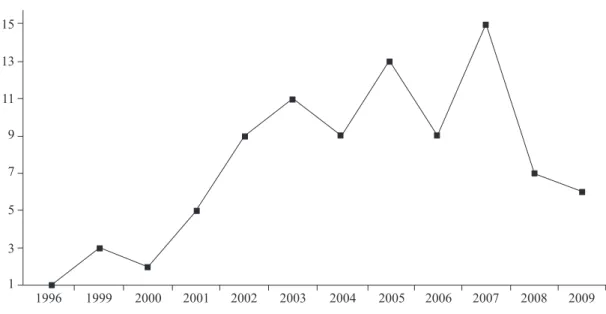
We note the increased number of papers published
beginning in 2002, especially of studies addressing
psychosocial variables associated with treatment. Figure 1
presents the distribution of 90 papers selected by year of publication.
Figure 1. Distribution of papers selected according to year of publication.
1996 1999 2000 2001 2002 2003 2004 2005 2006 2007 2008 2009
15
13
11
9
7
5
3
Figure 2. Distribution of papers selected according to author country
of afiliation.
Others (16%)
Australia (5%)
Brazil (16%)
Canada (8%)
China (6%)
USA (29%) Netherlands (4%)
Portugal (3%) United Kingdom (3%)
Figure 2 indicates the country of author afiliation (the
country of the main author was considered in the case of
multi-author studies)
Figure 2 indicates the prevalence of studies with an afiliation in the United States. The category ‘others’ totals
studies originating in Sweden, Japan, Turkey, Italy and
Israel. Figure 3 shows the prevalence of topics related to dificulties and demands, including treatment demands,
mobilization of inancial resources and the need for social
support. The process of psychosocial adjustment and
psychological disturbances (distress, depression, anxiety, post traumatic stress) were extensively studied, as were
changes in family dynamics. Cultural and gender differences were also highlighted themes, while few studies focused on marital dynamics, changes in educational practices, or the quality of life of caregivers during treatment.
Figure 3. Distribution of papers selected according to the main topic.
Changes in educational patterns (2%)
Marital relationship (3%)
Psychosocial adjustment (18%)
Ethnical differences
(8%)
Gender differences (8%) Difficulties, demands
and costs (23%) Psychological
distress (14%)
Impact in family dynamics
(12%)
The Psychosocial Impact of Childhood Cancer on Parents
In addition to accompanying the painful process of a child undergoing treatment, parents also have to deal with increased parental responsibilities and administer the treatment requirements. Parents have their role extended in the context of pediatric care: they need to provide the emotional responses of the patient and siblings, moderate their own emotions, establish satisfactory communication within the medical-hospital context, adapt to family routines, deal with potential relapses, deal with expectations, care
for the child’s wellbeing, and pay attention to medication,
handle intercurrences and side effects, establish protective care, and accompany the child on medical consultations,
hospitalizations and for invasive exams (Clarke & Fletcher, 2003; Holmbeck, Bruno & Jandasek, 2006; Kars, Duijnstee, Pool, Delden, & Grypdonck, 2008; Keegan-Wells et al., 2002; McGrath et al., 2005; Shiota et al., 2004; S. Silva, Pires, Gonçalves, & Moura, 2002).
The responsibilities falling on parents may increase the probability of responses such as anxiety, depression, guilt,
sleep disorders, somatic symptoms, risk behavior (smoking and alcoholism), changes in diet, perception of physical and emotional overload, events that put one’s health at risk, harm to professional and social life, and worsening of one’s
quality of life, consequences that remain after the diagnosis
(Gedaly-Duff, Lee, Nail, Nicholson, & Johnson, 2006; James et al., 2002; Kazak et al., 2004; Moreira & Ângelo, 2008; S. Silva et al., 2002; Young et al., 2002). On the other
hand, it is possible for parents to satisfactorily adapt to the new condition, with somatic symptoms and psychological disturbances not very different from those experienced by
parents of children not exposed to treatment contexts (Clarke & Fletcher, 2004; Greening & Stoppelbein, 2007).
In general, the treatment of childhood cancer negatively impacts the social and professional routines of parents, often requiring them to leave their jobs and give priority to treatment
(Björk et al., 2005; Earle, Clarke, Eiser, & Sheppard, 2006; Kerr, Harrison, Medves, & Tranmer, 2004; Ljungman et al., 2003; McGrath, 2001; Steffen & Castoldi, 2006; Young et al., 2002). Attention totally focused on a child may lead to marital conlict, impair communication and/or the self-care of parents (Costa & Lima, 2002; James et al., 2002; Steffen & Castoldi, 2006).
Suffering arising from the treatment and care demands often represent secondary gains to patients as the parental
care system changes due to the parents’ dificulties dealing
with feelings of powerlessness to protect their child from painful and invasive procedures. As a consequence, limits are changed, responsibilities are reduced, and parents become
more permissive (Santos & Gonçalves, 2008; Herman, Santos, & Miyazaki, 2007; Palmer et al., 2000; Woodgate, 2004; Young et al., 2002).
The parents’ quality of life during the event of childhood cancer is directly related to the patient’s quality of life during treatment (Vance, Morse, Jenney, & Eiser, 2001; Wegner & Pedro, 2009). As the experience cancer inluences the emotional response of parents in relation to their child’s needs, the ability of the child or adolescent to deal with adverse situations is related to the parents’ ability
to manage situations of crises. This relationship reinforces the importance of understanding the psychosocial impact of
childhood cancer on parents (Hoekstra-Weebers et al., 2001; Robinson, Gerhardt, Vannatta, & Noll, 2007; Santacroce, 2002; Streisand, Kazak, & Tercyak, 2003).
It is worth noting that fathers and mothers face distinct demands and tend to deal differently with challenges. Mothers usually assume the role of primary caregiver and become emotionally involved while the fathers act as providers and tend to distance themselves emotionally from the situation
(F. A. C. Silva, Andrade, Barbosa, Hoffmann, & Macedo, 2009; Svavarsdottir, 2005a). The challenges for the mothers
are mainly related to decision-making, administration of medication, promotion of comfort and support, planning of
family activities, handling the children’s behavioral problems,
paying attention to intercurrences, and supervising routine
responsibilities (McGrath, 2001; Svavarsdottir, 2005a; Yeh, 2002). Fathers face conlict between working and
staying in the hospital, in addition to the demand to provide
emotional support to the wife and children (McGrath, 2001; Svavarsdottir, 2005a). Cultural gender roles may inluence
the manifestation of feelings, fears, and expectations between
parents (Brody & Simmons, 2007).
Psychosocial Distress
Recent literature shows that the study of the psychosocial impact of treatment of childhood cancer on
parents includes: (1) negative impact of treatment (inancial costs, changes in routine, changes in marital relationships) concomitantly with behavioral disorders (depression, anxiety, posttraumatic stress symptoms, distress); (2) that factors that moderate the impact inluence the vulnerability
of caregivers, depending on the availability of resources
(social support, gender, information supply). In general,
aspects such as educational level, socioeconomic status, and socio-demographic variables are not associated with better
or worse psychological conditions of parents (Greening & Stoppelbein, 2007; Hoekstra-Weebers et al., 2001; Klassen et al., 2007; Steele, Dreyer, & Phipps, 2004).
The parents may respond to the diagnosis with behavior indicative of depression, such as persistent sadness, pessimism, hopelessness, guilt, helplessness, decreased
energy, dificulty concentrating or making decisions, fatigue,
insomnia or sleepiness, which may last for several months, especially with initial levels of moderate or severe depression
2008; Ward-Smith, Kirk, Hetherington, & Hubble, 2005).
Studies addressing anxiety indicate that manifestations frequently occur at the time when a diagnosis is disclosed and usually decline to normal levels, though remain higher
than levels experienced by parents of healthy children (Bayat et al., 2008; Gerhardt et al., 2007; Lähteenmäki, Sjöblom, Korhonen, & Salmi, 2004; Piersol, Johnson, Wetsel, Holtzer, & Walker, 2008; Sawyer, Antoniou, Toogood, Rice, & Baghurst, 2000; Vrijmoet-Wiersma et al., 2008).
Mothers tend to report higher levels of anxiety than fathers, whether at the time the diagnosis is disclosed or in other stages of the disease, though these manifestations can be a result of how gender roles are constructed or the
way parental caregivers split responsibilities; the primary caregiver role is usually attributed to mothers (Beck & Lopes, 2007a; Dahlquist, Czyzewski, & Jones, 1996; Santos & Gonçalves, 2008; Vrijmoet-Wiersma et al., 2008). Parents
reporting high levels of anxiety at the diagnosis usually
continue to experience signiicant manifestations even after the treatment ends (Vrijmoet-Wiersma et al.). High levels
of anxiety may be correlated with post traumatic stress,
dificulties making decisions, loss of memory, dificulty concentrating, insomnia and treatment avoidance (Best, Streisand, Catania, & Kazak, 2001; Santacroce, 2002).
About half of parents report moderate to intense levels of posttraumatic stress, including intrusive thoughts,
treatment avoidance, physiological responses, lashbacks and psychological agitation (Kazak, Boeving, Alderfer, Hwang, & Reilly, 2005; Santacroce, 2002; Vrijmoet-Wiersma et al., 2008). On the other hand, the work of Jurbergs, Long, Ticona e Phipps (2009) does not report signiicant differences in
posttraumatic stress symptoms between parents of children undergoing treatment and symptoms in parents of healthy children.
Dolgin et al. (2007) found different patterns of the manifestation of symptoms six months after treatment: (1)
high levels of symptoms at the time of the diagnosis, which
declined over time, (2) moderate symptomatology over a period of six months, and (3) low levels that remain from the
time of the diagnosis. The level of symptoms may indicate
posttraumatic stress disorder in 35% of parents, according to Axia, Tremolada, Pillon, Zanesco and Carli (2006). Stoppelbein and Greening (2007), in turn, reported that only 7% of the sample presented levels that indicated such
a disorder.
Various studies investigate patterns of distress, as well as the emotional and physical impact of the pediatric disease, characterized by depression, lack of control, anxiety, insomnia, post traumatic stress symptoms, feeling of being overloaded, sadness, confusion, tension, loss of control,
harmed self-esteem (Boman, Lindahl, & Björk, 2003; Steele et al., 2004; Steele, Long, Reddy, Luhr, & Phipps, 2003; Stehl et al., 2009). The literature indicates that, in general, high
levels of distress are reported at the time of the diagnosis but
decline over the irst six months of treatment. Nonetheless,
even if the perception concerning symptoms diminishes, the sources of distress remain, indicating psychosocial
interventions are needed (Steele et al., 2003, 2004; Stehl et al., 2009).
Parents present high levels of symptoms immediately after the diagnosis when compared to control groups. Such
symptoms decline over the irst 18 months (Boman et al., 2003; Pai et al., 2007; Sawyer et al., 2000; Wijnberg-Williams, Kamps, Klip, & Hoekstra-Weebers, 2006). Variations in the
duration and persistence of psychological disturbances have been reported in the literature and such levels are higher
among mothers (Sahler et al., 2005; Svavarsdottir, 2005b). In general, the treatment includes inancial costs
that result from the distance between home and hospital, leading to expenditures on transportation, accommodations,
meals and phone calls. Losing one’s job or changes in one’s professional routine is a common occurrence (Cohn, Goodenough, Foreman, & Suneson, 2003; Dockerty, Skegg, & Williams, 2003; James et al., 2002; Lähteenmäki et al., 2004; McGrath et al., 2005; Rocha-García et al., 2002).
Based on changes in parental roles required by treatment, parents may experience changes in their marital relationships, as well. Studies addressing satisfaction in marital relationships over the course of treatment have reported different results. Some couples do not report
changes in their marital relationships (Dahlquist et al., 1996)
while others report more positive attitudes toward the spouse, that their relationships were strengthened, they became more
cohesive, and trust improved (Beltrão, Vasconcelos, Pontes, & Albuquerque, 2007; Kylmä & Juvakka, 2007; Lavee & Mey-Dan, 2003; Sloper, 2006). Reports that the parents’
relationship weakened and marital satisfaction decreased
were also observed (Lavee & Mey-Dan, 2003; Pai et al., 2007).
Access to information concerning the disease, the child’s physical condition, procedures, beneits and side effects are
stressed by the parents to be crucial over the course of the
treatment (Ferreira, 2005; Kerr, Harrison, Medves, & Tranmer, 2004; Kerr, Harrison, Medves, Tranmer, & Fitch, 2007; Mendonça, 2007). The availability of social support from
family members, friends, co-workers, and neighborhoods is
also extremely important (Bayat et al., 2008; James et al., 2002; Kerr, Harrison, Medves, & Tranmer, 2004; McGrath, 2001; McGrath et al., 2005; Wijnberg-Williams et al., 2006).
Higher levels of social support are generally available at the time the diagnosis is disclosed and decline over the treatment period, while mothers tend to receive more support than
fathers (Hoekstra-Weebers et al., 2001; Holm, Patterson, & Gurney, 2003; Iobst et al., 2009; Wijnberg-Williams et al., 2006).
Understanding cultural aspects that condition the experience of pediatric cancer is a challenge because such differences can be seen as elements that moderate the impact of
treatment. Munet-Vilaró (2004) stresses that the experiences
historical, political, and socio-economic circumstances while
one’s conception of the health-disease continuum is also
culturally molded. The authors stress differences concerning the attribution of causality to the disease and responses to treatment based on more or less fatalistic perceptions and the attribution of locus to external control.
Research with distinct population groups compares experiences during treatment. There is not, however, agreement among authors about which elements are shared
by parents and to what extent cultural history inluences the
experience of cancer during childhood. Patistea, Makrodimitri
and Pantelli (2000), consider the diagnosis and treatment of
leukemia to have a psychological and emotional impact that goes beyond ethnicity, culture and race, giving origin to very
similar experiences for Western culture groups.
Comparative studies involving Western and Eastern
cultures have shown both similarities and differences. The Eastern situation is characterized by a strong family
hierarchy; gender-based social roles do not provide that men express feelings and symptoms (Lou, 2006; Yeh, 2002). Such a fact may contribute to less frequent reports
of psychological disturbances, less frequently sought social support, or the less frequent use of adaptation factors. Additionally, Eastern conceptions concerning the health-disease continuum are characterized by a philosophy of life based on interdependency, derived from Taoist and Buddhist traditions, in which everything occurs due to a predetermined
purpose. Wellbeing involves systemic balance and illness may be associated with energetic imbalance; health care
generally involves complementary practices such as acupuncture, treatment with herbs, and religious practices
(Leavitt et al., 1999; Wong & Chan, 2006). Radiotherapy and chemotherapy may be seen as factors that disrupt one’s energy balance (Liang, 2002). This context may represent
potential risks for treatment adherence and also promote
the attribution of speciic meanings to the disease that may
determine the impact on caregivers.
The studies also indicate that Eastern families have fewer social support resources available and tend to become
isolated (Leavitt et al., 1999; Martinson et al., 1999).
Explanations of the disease are characterized by guilt and spiritualistic explanations, which include the belief that the disease is a kind of payment for some bad deed in past
life or divine punishment (Leavitt et al., 1999; Martinson et al., 1999). Western Caucasian families emphasize the experience’s emotional content, more intensively express the
impact on family, and more frequently seek social support
(Martinson et al.). The causes of the diseases are generally
attributed to environmental factors and inadequate parental
care during prenatal care and the irst years of life. Dealing
with the disease involves seeking professional help, support among friends and neighbors, focusing on the present instead of focusing on future prospects, and emphasizing the care
provided to the child (Leavitt et al.).
Many authors highlight the predominance of similarities
in experiences with pediatric cancer among Western and
Eastern families. Changes in the domestic routine, and also in the family and professional spheres, along with somatic
symptoms are responses common to both groups (Leavitt et al., 1999; Lou, 2006; Wong & Chan, 2006; Yeh, 2002).
The initial months of treatment demand more from parents
regardless of culture; these have to adapt to the treatment requirements (Han, 2003; Leavitt et al., 1999; Ow, 2003).
Some elements such as social support and seeking out
information are commonly valued (Han, 2003; Ow, 2003; Wong & Chan, 2006). The care system also usually changes
regardless of the cultural context, including overprotective behavior, changes in the imposition of limits, and in family
relationships (Chao, Chen, Wang, Wu, & Yeh, 2003; Martinson et al., 1999).
Even though social and cultural factors play an important role in the perception of the disease and the impact of the treatment on the family, studies report that various
responses are similar and refer to common demands (Leavitt et al., 1999; Martinson et al., 1999; Wills, 1999). Possibly, challenges are similar, but distinct cultural roots inluence the way parents deal with such challenges (Yamazaki, Sokejima, Mizoue, Eboshida, & Fukuhara, 2005). Currently,
it is also important to consider to what extent, given the globalization of information and its continuous exchange,
Western and Eastern cultures effectively remain distinct. Other factors should be considered, such as access on the
health system, satisfaction with the service, government
support, and the child’s age and family dynamics, which
indicate the need for further studies to compare culturally
distinct groups (Leavitt et al.).
Final Considerations
Considering that the experience with childhood cancer is related to several moderating environmental factors, we highlight the need for systematic and multicenter studies to
support speciic psychosocial interventions for each phase
of treatment. Additionally, we emphasize the importance of longitudinal studies to understand the developmental
dimension involved in pediatric cancer; it is a chronic
condition that changes over time in individuals who are also developing.
Up to the end of the irst year after diagnosis, the
family routine tends to return to normal as the family
resumes activities and reorganizes domestic life (Boman et al., 2003; Earle et al., 2006; Kazak et al., 2005). It may be dificult to resume activities that have changed, especially if
psychological disturbances such as anxiety, depression, and
posttraumatic stress were experienced (Clarke & Fletcher,
2004. Such a fact highlights the importance of the participation of multidisciplinary teams in health care delivery, as well as the importance of emphasizing preventive actions able to
Another aspect involves results that are marginally contradictory in relation to anxiety, depression and post traumatic stress. Some of the reasons such results are inconsistent include different and inaccurate operational
deinitions concerning the studied psychological processes, heterogeneous samples, methodological factors (reduced
sample, inappropriate instruments to measure the proposed constructs, undifferentiated analysis of the responses
of mothers and fathers), dificulties accessing speciic
problems and diverse evaluation methods. A great number
of the studies in the ield analyze the processes experienced by family members using an explicative model of the ield
of psychopathology, which requires careful observation to avoid unnecessarily attributing pathological parameters to the mobilization of family resources and natural responses to
stress (Beltrão et al., 2007; Clarke & Fletcher, 2004). We note the need to deepen understanding of factors
that are potentially protective regarding the development of psychological disorders. Considering that many families
eficiently deal with stressors, studies focusing not only
on challenges that are disruptive to the family cycle but mainly on favorable factors used to satisfactorily adapt to the new condition, are needed. Sociocultural differences and also therapeutic differences may account for advantages in adapting to a stressor context.
Much has been studied regarding family adaptation to treatment and psychopathological symptoms with control groups and normative samples, but little has been investigated concerning how fathers and mothers personally experience
cancer treatment of a child. When the role of parents is identiied as a central concern in pediatric treatment, it
becomes essential to understand the implications of this function in the social construction of childhood.
The condition of being a caregiver of a pediatric patient is a process relationship related to the development experienced by the child, parents and family. Therefore, understanding the event of pediatric cancer should encompass changes of how one perceives and deals with challenges. Explanations based on the individual may restrict viewing the sources
of dificulties as being inherent to the parents themselves,
neglecting social, culture and micro-political forces that have a crucial impact on how one cares for cancer, thus
ignoring the experiences of care as a process. Factors that
need to be addressed in detail in studies involve access to the healthcare system, satisfaction with the health service, promoting healthful aspects, and the repertoire of self-care behavior. Such elements are essential to understanding
how circumstantial differences may inluence the impact of psychological disturbances or protect against them (Boman et al., 2003; Holmbeck et al., 2006; Vrijmoet-Wiersma et al., 2008).
Finally, we note the limitations of this study. Even
though it offers an integrative proposition of the main psychosocial factors indicated in recent literature, the search
for studies certainly did not include all the studies available, considering the large quantity of information available on
the World Wide Web. Additionally, each category of analysis
constitutes, in itself, a large body of information that should be further developed and deepened in subsequent research.
References
Axia, G., Tremolada, M., Pillon, M., Zanesco, L., & Carli, M. (2006). Post-traumatic stress symptoms during treatment in mothers of children with leukemia. Journal of Clinical
Oncology, 24(14), 2216.
Bayat, M., Erdem, E., & Gül Kuzucu, E. (2008). Depression, anxiety, hopelessness, and social support levels of the parents of children with cancer. Journal of Pediatric
Oncology Nursing, 25(5), 247-253.
Beck, A. R. M., & Lopes, M. H. B. M. (2007a). Cuidadores
de crianças com câncer: Aspectos da vida afetados pela
atividade de cuidador. Revista Brasileira de Enfermagem, 60(6), 670-675.
Beck, A. R. M., & Lopes, M. H. B. M. (2007b). Tensão
devido ao papel de cuidador entre cuidadores de crianças
com câncer. Revista Brasileira de Enfermagem, 60(5),
513-518.
Beltrão, M. R. L. R., Vasconcelos, M. G. L., Pontes, C. M., & Albuquerque, M. C. (2007). Câncer infantil: Percepções
maternas e estratégias de enfrentamento frente ao
diagnóstico. Jornal de Pediatria, 83(6), 562-566.
Best, M., Streisand, R., Catania, L., & Kazak, A. E. (2001). Parental distress during pediatric leukemia and
posttraumatic stress symptoms (PTSS) after treatment
ends. Journal of Pediatric Psychology, 26(5), 299-307.
Björk, M., Wiebe, T., & Hallström, I. (2005). Striving to
survive: Families’ lived experiences when a child is
diagnosed with cancer. Journal of Pediatric Oncology
Nursing, 22(5), 265-275.
Boman, K., Lindahl, A., & Björk, O. (2003). Disease-related distress in parents of children with cancer at various stages after the time of diagnosis. Acta Oncologica,
42(2), 137-146.
Brody, A. C., & Simmons, L. A. (2007). Family resiliency during childhood cancer: The father’s perspective.
Journal of Pediatric Oncology Nursing, 24(3), 152-165.
Chao, C. C., Chen, S. H., Wang, C. Y., Wu, Y. C., & Yeh, C. H. (2003). Psychosocial adjustment among pediatric cancer patients and their parents. Psychiatry and Clinical
Neurosciences, 57(1), 75-81.
Clarke, J. N., & Fletcher, P. (2003). Communication issues
faced by parents who have a child diagnosed with cancer.
Journal of Pediatric Oncology Nursing, 20(4), 175-191.
Clarke, J. N., & Fletcher, P. C. (2004). Parents as advocates:
Stories of surplus suffering when a child is diagnosed and treated for cancer. Social Work on Health Care, 39(2),
Clarke, J. N., Fletcher, P. C., & Schneider, M. A. (2005). Mothers’ home health care work when their children
have cancer. Journal of Pediatric Oncology Nursing,
22(6), 365-373.
Cohn, R. J., Goodenough, B., Foreman, T., & Suneson, J. (2003). Hidden inancial costs in treatment for childhood
cancer: An Australian study of lifestyle implications for families absorbing out-of-pocket expenses. Journal of
Pediatric Hematology and Oncology, 25(11), 854-863.
Costa, J. C., & Lima, R. A. G. (2002). Crianças/adolescentes em quimioterapia ambulatorial: Implicações para a enfermagem. Revista Latino-americana de Enfermagem, 10(3), 321-333.
Dahlquist, L. M., Czyzewski, D. I., & Jones, C. L. (1996).
Parents of children with cancer: A longitudinal study of emotional distress, coping style, and marital adjustment two and twenty months after diagnosis. Journal of Pediatric Psychology, 21(4), 541-554.
Dockerty, J. D., Skegg, D. C. G., & Williams, S. M. (2003).
Economic effects of childhood cancer on families.
Journal of Paediatric Child Health, 39(4), 254-258.
Dolgin, M. J., Phipps, S., Fairclough, D. L., Sahler, O. J., Askins, M., Noll, R. B., Butler, R. W., Varni, J. W., & Katz, E. R. (2007). Trajectories of adjustment in mothers
of children with newly diagnosed cancer: A natural history investigation. Journal of Pediatric Psychology, 32(7), 771-782.
Earle, E. A., Clarke, S. A., Eiser, C., & Sheppard, L. (2006). Building a new normality: Mothers’ experiences of caring
for a child with acute lymphoblastic leukaemia. Child: Care, Health and Development, 33(2), 155-160.
Eiser, C., & Eiser, J. R. (2007). Mother’s ratings of quality
of life in childhood cancer: Initial optimism predicts improvement over time. Psychology & Health, 22(5),
535-543.
Ferreira, R. S. (2005). Efeitos da apresentação sistematizada de um manual educativo para pais de crianças com leucemia. Dissertação de Mestrado não publicada,
Universidade de Brasília, Brasília, DF.
Gedaly-Duff, V., Lee, K. A., Nail, L. M., Nicholson, H. S., & Johnson, K. P. (2006). Pain, sleep disturbance, and fatigue
in children with leukemia and their parents: A pilot study.
Oncology Nursing Forum, 33(3), 641-646.
Gerhardt, C. A., Gutzwiller, J., Huiet, K. A., Fischer, S., Noll, R. B., & Vannatta, K. (2007). Parental adjustment to
childhood cancer: A replication study. Families, Systems
& Health, 25(3), 263-275.
Gomes, R., Pires, A., Moura, M. J., Silva, L., Silva, S., & Gonçalves, M. (2004). Comportamento parental na
situação de risco do cancro infantil. Análise Psicológica, 22(3), 519-531.
Greening, L., & Stoppelbein, L. (2007). Brief report: Pediatric
cancer, parental coping style, and risk for depressive, posttraumatic stress, and anxiety symptoms. Journal of Pediatric Psychology, 32(10), 1272-1277.
Han, H. R. (2003). Korean mother´s psychosocial adjustment to their children´s cancer. Journal of Advanced Nursing, 44(5), 499-506.
Herman, A. R. S., & Miyazaki, M. C. O. S. (2007).
Intervenção psicoeducacional em cuidador de criança
com câncer: Relato de caso. Arquivos de Ciências da
Saúde, 14(4), 238-244.
Hoekstra-Weebers, J. E. H. M., Jaspers, J. P. C., Kamps, W. A., & Klip, E. C. (2001). Psychological adaptation and social support of parents of pediatric cancer patients: A prospective longitudinal study. Journal of Pediatric Psychology, 26(4), 225-235.
Holm, K. E., Patterson, J. M., & Gurney, J. G. (2003).
Parental involvement and family-centered care in the diagnostic and treatment phases of childhood cancer: Results from a qualitative study. Journal of Pediatric
Oncology Nursing, 20(6), 301-313.
Holmbeck, G. N., Franks Bruno, E., & Jandasek, B. (2006).
Longitudinal research in pediatric psychology: An introduction to the special issue. Journal of Pediatric Psychology, 31(10), 995-1001.
Iobst, E. A., Alderfer, M. A., Sahler, O. J. Z., Askins, M. A., Fairclough, D. L., Katz, E. R., Butler, R. W., Dolgin, M. J., & Noll, R. B. (2009). Brief report: Problem solving and maternal distress at the time of a child’s diagnosis
of cancer in two-parent versus lone-parent households.
Journal of Pediatric Psychology, 34(8), 817-821.
James, K., Keegan-Wells, D., Hinds, P. S., Kelly, K. P., Bond, D., Hall, B., Mahan, R., Moore, I. M., Roll, L., & Speckhart, B. (2002). The care of my child with cancer: Parent’s perceptions of caregiving demands. Journal of
Pediatric Oncology Nursing, 19(6), 218-228.
Jurbergs, N., Long, A., Ticona, L., & Phipps, S. (2009).
Symptoms of posttraumatic stress in parents of children with cancer: Are they elevated relative to parents of healthy children? Journal of Pediatric Psychology, 34(1),
4-13.
Kars, M. C., Duijnstee, M. S. H., Pool, A., Delden, J. J. M.,
& Grypdonck, M. H. F. (2008). Being there: Parenting
the child with acute lymphoblastic leukaemia. Journal of
Clinical Nursing, 17(12),1553-1562.
Kazak, A. E., Boeving, C. A., Alderfer, M. A., Hwang, W.-T., & Reilly, A. (2005). Posttraumatic stress symptoms during
treatment in parents of children with cancer. Journal of
Clinical Oncology, 23(30), 7405-7410.
Keegan-Wells, D., James, K., Stewart, J. L., Moore, I. M.,
Kelly, K. P., Moore, B., Bond, D., Diamond, J., Hall, B.,
Mahan, R., Roll, L., & Speckhart, B. (2002). The care
of my child with cancer: A new instrument to measure caregiving demand in parents of children with cancer.
Journal of Pediatric Nursing, 17(3), 201-210.
Kerr, L. M. J., Harrison, M. B., Medves, J., & Tranmer, J. (2004). Supportive care needs of parents of children with
cancer: Transition from diagnosis to treatment. Oncology
Nursing Forum, 31(6), E116-E126.
Kerr, L. M. J., Harrison, M. B., Medves, J., Tranmer, J. E.,
& Fitch, M. I. (2007). Understanding the supportive care
needs of parents of children with cancer: An approach to local needs assessment. Journal of Pediatric Oncology
Nursing, 24(5), 279-293.
Klassen, A., Raina, P., Reineking, S., Dix, D., Pritchard,
S., & O´Donnell, M. (2007). Developing a literature
base to understand the caregiving experience of parents of children with cancer: A systematic review of factors related to parental health and well-being. Support Care
Cancer, 15(7), 807-818.
Kylmä, J., & Juvakka, T. (2007). Hope in parents of adolescents with cancer – Factors endangering and
engendering parental hope. European Journal of
Oncology Nursing, 11(3), 262-271.
Lähteenmäki, P. M., Sjöblom, J., Korhonen, T., & Salmi, T. T. (2004). The life situation of parents over the irst year after their child’s cancer diagnosis. Acta Paediatrica, 93(12), 1654-1660.
Lavee, Y., & Mey-Dan, M. (2003). Patterns of change in marital relationships among parents of children with cancer. Health and Social Work, 28(4), 255-263.
Leavitt, M., Martinson, I. M., Liu, C. Y., Armstrong, V., Hornberger, L. Q., Zhang, J., & Han, X. P. (1999).
Common themes and ethnic differences in family
caregiving the irst year after diagnosis of childhood
cancer: Part II. Journal of Pediatric Nursing, 14(2), 110-122.
Liang, H. F. (2002). Understanding culture care practices of
caregivers of children with cancer in Taiwan. Journal of
Pediatric Oncology Nursing, 19(6), 205-217.
Ljungman, G., McGrath, P. J., Cooper, E., Widger, K., Ceccolini, J., Fernandez, C. V., Frager, G., & Wilkins, K. (2003). Psychosocial needs of families with a child
with cancer. Journal of Pediatric Hematology/Oncology,
25(3), 223-231.
Lou, V. W. Q. (2006). Factors related to the psychological
well-being of parents of children with Leukemia in China. Journal of Psychosocial Oncology, 24(3), 75-88.
Malta, J. D. S., Schall, V. T., & Modena, C. M. (2008). Câncer pediátrico: O olhar da família/cuidadores. Pediatria
Moderna, 44(3), 114-118.
Martinson, I. M., Leavitt, M., Liu, C. Y., Armstrong, V., Hornberger, L., Zhang, J. Q., & Han, X. P. (1999).
Comparison of Chinese and Caucasian families caregiving to children with cancer at home: Part I.
Journal of Pediatric Nursing, 14(2), 99-109.
McGrath, P. (2001). Findings on the impact of the treatment
for childhood acute lymphoblastic leukaemia on family relationships. Child and Family Social Work, 6(3),
229-237.
McGrath, P. (2002). Beginning treatment for childhood acute lymphoblastic leukemia: Insights from the parents’
perspective. Oncology Nursing Forum, 29(6), 988-996.
McGrath, P., Paton, M. A., & Huff, N. (2005). Beginning
treatment for pediatric acute myeloid leukemia: The family connection. Issues in Comprehensive Pediatric
Nursing, 28(2), 97-114.
Mendonça, M. B. (2007). Análise do processo de comunicação entre médico, paciente e acompanhante em onco-hematologia pediátrica. Dissertação de Mestrado
não publicada, Universidade de Brasília, Brasília, DF. Moreira, P. L., & Ângelo, M. (2008). Tornar-se mãe de
criança com câncer: Construindo a parentalidade. Revista Latino-americana de Enfermagem, 16(3), 355-361.
Munet-Vilaró, F. (2004). Delivery of culturally competent
care to children with cancer and their families – The Latino experience. Journal of Pediatric Oncology
Nursing, 21(3), 155-159.
Nascimento, L. C., Rocha, S. M. M., Hayes, V. H., & Lima, R. A. G. (2005). Crianças com câncer e suas famílias.
Revista da Escola de Enfermagem da USP, 39(4),
469-474.
Ow, R. (2003). Burden of care and childhood cancer:
Experiences of parents in an Asian context. Health & Social Work, 28(3), 232-240.
Pai, A. L. H., Greenley, R. N., Lewandowski, A., Drotar, D.,
Youngstrom, E., & Peterson, C. C. (2007). A meta-analytic review of the inluence of pediatric cancer on parent and
family functioning. Journal of Family Psychology, 21(3),
407-415.
Palmer, L. M., Erickson, S., Shaffer, T., Koopman, C.,
Amylon, M. & Steiner, H. (2000). Themes arising in
group therapy for adolescents with cancer and their parents. International Journal of Rehabilitation and
Health, 5(1), 43-54.
Patistea, E., Makrodimitri, P., & Pantelli, V. (2000). Greek parents’ reactions, dificulties and resources in childhood
leukaemia at the time of diagnosis. European Journal of Cancer Care, 9(2), 86-96.
Piersol, L. W., Johnson, A., Wetsel, A., Holtzer, K., & Walker, C. (2008). Decreasing psychological distress during the
diagnosis and treatment of pediatric leukemia. Journal of
Robinson, K. E., Gerhardt, C. A., Vannatta, K., & Noll, R. B. (2007). Parent and family factors associated with
child adjustment to pediatric cancer. Journal of Pediatric Psychology, 32(4), 400-410.
Rocha-García, A., Alvarez Del Río, A., Hérnandez-Peña, P., Martínez-García, M. C., Marín-Palomares, T., & Lazcano-Ponce, E. (2002). The emotional response of families to children with leukemia at the lower socio-economic level in central Mexico: A preliminary report.
Psycho-oncology, 12(1), 78-90.
Rodrigues, M. A., Rosa, J., Moura, M. J., & Baptista, A. (2000). Ajustamento emocional, estratégias de coping
e percepção da doença em pais de crianças com doença
do foro oncológico. Psicologia, Saúde & Doenças, 1(1),
61-68.
Sahler, O. J. Z., Fairclough, D. L., Phipps, S., Mulhern, R. K., Dolgin, M. J., Noll, R. B., Katz, E. R., Varni, J. W., Copeland, D. R., & Butler, R. W. (2005). Using problem-solving skills training to reduce negative affectivity in mothers of children with newly diagnosed cancer: Report of a multisite randomized trial. Journal of Consulting and
Clinical Psychology, 73(2), 272-283.
Santacroce, S. (2002). Uncertainty, anxiety, and symptoms
of posttraumatic stress in parents of children recently diagnosed with cancer. Journal of Pediatric Oncology
Nursing, 19(3), 104-111.
Santos, L. M. P., & Gonçalves, L. L. C. (2008). Crianças
com câncer: Desvelando o signiicado do adoecimento atribuído por suas mães. Revista Enfermagem UERJ, 16(2), 224-229.
Sawyer, M., Antoniou, G., Toogood, I., Rice, M., & Baghurst, P. (2000). Childhood cancer: A 4-year prospective study
of the psychological adjustment of children and parents.
Journal of Pediatric Hematology/Oncology, 22(3),
214-220.
Shiota, C. M., Santos, A. R. R., & Miyazaki, M. C. O. S. (2004). Problemas de comportamento em crianças com
câncer: O papel dos pais. In M. Z. S. Brandão, F. C. S. Conte, F. S. Brandão, Y. K. Ingberman, C. B. Moura, V. M. Silva, & S. M. Oliane (Orgs.), Sobre comportamento e cognição: Estendendo a psicologia comportamental e cognitiva aos contextos da saúde, das organizações, das
relações pais e ilhos e das escolas (Vol. 14, pp. 261-266). Santo André, SP: ESETEC.
Silva, F. A. C., Andrade, P. R., Barbosa, T. R., Hoffmann, M. V., & Macedo, C. R. (2009). Representação do processo de adoecimento de crianças e adolescentes oncológicos
junto aos familiares. Escola Anna Nery Revista de
Enfermagem, 13(2), 334-341.
Silva, G. M., Teles, S. S., & Valle, E. R. M. (2005). Estudo
sobre as publicações brasileiras relacionadas a aspectos
psicossociais do câncer infantil – período de 1998 a 2004.
Revista Brasileira de Cancerologia, 51(3), 253-261.
Silva, S., Pires, A., Gonçalves, M., & Moura, M. J. (2002).
Cancro infantil e comportamento parental. Psicologia, Saúde & Doenças, 3(1), 43-60.
Sloper, P. (2006). Needs and responses of parents following
the diagnosis of childhood cancer. Child: Care, Health and Development, 22(3), 187-202.
Steele, R. G., Dreyer, M. L., & Phipps, S. (2004). Patterns of
maternal distress among children with cancer and their association with child emotional and somatic distress.
Journal of Pediatric Psychology, 29(7), 507-517.
Steele, R. G., Long, A., Reddy, K. A., Luhr, M., & Phipps, S. (2003). Changes in maternal distress and child-rearing
strategies across treatment for pediatric cancer. Journal of Pediatric Psychology, 28(7), 447-452.
Steffen, B. C., & Castoldi, L. (2006). Sobrevivendo à tempestade: A inluência do tratamento oncológico de um ilho na dinâmica conjugal. Psicologia, Ciência e
Proissão, 26(3), 406-425.
Stehl, M. L., Kazak, A. E., Alderfer, M. A., Rodriguez, A.,
Hwang, W. T., Pai, A. L. H., Boeving, A., & Reilly, A. (2009). Conducting a randomized clinical trial of a psychological intervention for parents/caregivers of children with cancer shortly after diagnosis. Journal of
Pediatric Psychology, 34(8), 803-816.
Stoppelbein, L., & Greening, L. (2007). Brief report: The risk
of posttraumatic stress disorder in mothers of children diagnosed with pediatric cancer and type I diabetes.
Journal of Pediatric Psychology, 32(2), 223-229.
Streisand, R., Kazak, A. E., & Tercyak, K. P. (2003). Pediatric-speciic parenting stress and family functioning
in parents of children treated for cancer. Children’s Health Care, 32(4), 245-256.
Svavarsdottir, E. K. (2005a). Gender and emotions: Icelandic
parents experiencing childhood cancer. International
Journal of Nursing Studies, 42(5), 531-538.
Svavarsdottir, E. K. (2005b). Caring for a child with cancer:
A longitudinal perspective. Journal of Advanced Nursing,
50(2), 153-161.
Vance, Y. H., Morse, R. C., Jenney, M. E., & Eiser, C. (2001).
Issues in measuring quality of life in childhood cancer: Measures, proxies, and parental mental health. Journal of Child Psychology and Psychiatry and Allied Disciplines,
42(5), 661-667.
Vrijmoet-Wiersma, C. M. J., Van Klink, J. M. M., Kolk, A. M., Koopman, H. M., Ball, L. M., & Egeler, R. M. (2008).
Assessment of parental psychological stress in pediatric cancer: A review. Journal of Pediatric Psychology, 33(7),
694-706.
Ward-Smith, P., Kirk, S., Hetherington, M., & Hubble, C. L. (2005). Having a child diagnosed with cancer: An assessment of values from the mother’s viewpoint.
Wegner, W., & Pedro, E. N. R. (2009). Concepções de saúde sob a ótica de mulheres cuidadoras-leigas, acompanhantes
de crianças hospitalizadas. Revista Latino-americana de
Enfermagem, 17(1), 88-93.
Wijnberg-Williams, B. J., Kamps, W. A., Klip, E. C., & Hoekstra-Weebers, J. E. H. M. (2006). Psychological distress and the impact of social support on fathers and mothers of pediatric cancer patients: Long-term prospective results. Journal of Pediatric Psychology, 31(8), 785-792.
Wills, B. S. H. (1999). The experiences of Honk Kong
Chinese parents of children with acute lymphocytic leukemia. Journal of Pediatric Nursing, 14(4), 231-238.
Wong, M. Y. F., & Chan, S. W. C. (2006). The qualitative
experience of Chinese parents with children diagnosed of cancer. Journal of Clinical Nursing, 15(6), 710-717.
Woodgate, R.L. (2004). Cancer symptom transition periods
of children and families. Journal of Advanced Nursing,
46(4), 358-368.
Yamazaki, S., Sokejima, S., Mizoue, T., Eboshida, A., & Fukuhara, S. (2005). Health-related quality of life of
mothers of children with leukemia in Japan. Quality of
Life Research, 14(4), 1079-1085.
Yeh, C. H. (2002). Gender differences in parental distress
in children with cancer. Journal of Advanced Nursing,
38(6), 598-606.
Young, B., Dixon-Woods, M., Findlay, M., & Heney, D. (2002). Parenting in a crisis: Conceptualizing mothers of
children with cancer. Social Science & Medicine, 55(10),
1835-1847.
Marina Kohlsdorf is doctoral student, Graduate Program in Human Development and Health Processes, Psychology
Institute at Universidade de Brasília, Brasília (DF), Brazil.
Áderson Luiz Costa Junior is Professor, Psychology Institute
at Universidade de Brasília, Brasília (DF), Brazil.