www.jped.com.br
ORIGINAL ARTICLE
Effects of human milk fortifier with iron on the bacteriostatic
properties of breast milk
夽
Leticia Fuganti Campos
a,∗, João Carlos Domingues Repka
b, Mário Cícero Falcão
caMSc. Departamento de Pediatria, Faculdade de Medicina da, Universidade de São Paulo (FMUSP), São Paulo, SP, Brazil bPhD. Hospital Angelina Caron, Campina Grande do Sul, PR, Brazil
cPhD. Departamento de Pediatria, FMUSP, Sa˜o Paulo, SP, Brazil
Received 13 October 2012; accepted 30 December 2012 Available online 19 June 2013
KEYWORDS Human milk;
Human milk fortifier; Lactoferrin
Abstract
Objective: To compare bacterial growth in pure colostrumversuscolostrum with human milk fortifier (HMF) containing iron.
Methods: The growth ofEscherichia coli, Staphylococcus aureus, andPseudomonas aeruginosa in 78 samples of pure colostrum or colostrum with added iron-containing HMF was compared. For qualitative analysis, filter paper discs were immersed in samples from each group and
incubated for 48 hours with 101colony forming units (CFUs)/mL of each strain. For quantitative
assessment, 1 mL of each strain containing 107CFUs/mL was homogenized with 1 mL of either
colostrum or colostrum with human milk fortifier, seeded into a Petri dish, and incubated at
37◦C. Twenty-four hours later, the number of CFUs was counted.
Results: The qualitative analysis showed no difference in bacterial growth. In the
quantita-tive evaluation,E. coligrowth in the control group was 29.4±9.7×10⁶CFU/mL, while in the
HMF group it was 31.2±10.8×10⁶CFU/mL. The difference between the average growth was
1.9±4.9×10⁶CFU/mL (p = 0.001). There were no differences inS. aureusandP. aeruginosa
growth.
Conclusion: Addition of iron at this concentration reduces breast milk bacteriostatic action
againstE. coli.
© 2013 Sociedade Brasileira de Pediatria. Published by Elsevier Editora Ltda. All rights reserved.
PALAVRAS-CHAVE Leite materno; Aditivo do leite materno; Lactoferrina
Efeitos do aditivo do leite materno com ferro sobre as propriedades bacteriostáticas do leite materno
Resumo
Objetivo: Comparar o crescimento bacteriano em colostro puro e colostro com aditivo do leite materno contendo ferro.
夽 Please cite this article as: Campos LF, Repka JCD, Falcao MC. Effects of human milk fortifier with iron on the bacteriostatic properties of breast milk. J Pediatr (Rio J). 2013;89:394---9.
∗Corresponding author.
E-mail:le [email protected] (L.F. Campos).
Métodos: Foram comparadas 78 amostras de colostro puro ou colostro com adic¸ão de aditivo
do leite materno contendo ferro para avaliar o crescimento deEscherichia coli,
Staphylococ-cus aureusePseudomonas aeruginosa. Para a análise qualitativa, discos de papel-filtro foram
imersos em amostras de cada grupo e incubados por 48 horas com 101 Unidades Formadoras
de Colônias/mL de cada cepa. Para a avaliac¸ão quantitativa, 1 mL de cada cepa contendo 107
Unidades Formadoras de Colônias/mL foi homogeneizado com 1 mL, tanto de colostro puro quanto de colostro com aditivo do leite materno, espalhado em placa de Petri e incubado a
37◦C. O número de Unidades Formadoras de Colônias foi contado 24 horas depois.
Resultados: A análise qualitativa não mostrou nenhuma diferenc¸a no crescimento
bacteri-ano. Na avaliac¸ão quantitativa, o crescimento de Escherichia coli (EC) no grupo C foi de
29,4±9,7×10⁶CFU/mL, enquanto no grupo FM85 foi de 31,2
±10,8×10⁶CFU/mL. A diferenc¸a
entre o crescimento médio foi de 1,9±4,9×10⁶CFU/mL (p = 0,001). Não houve diferenc¸as no
crescimento deStaphylococcus aureusePseudomonas aeruginosa.
Conclusão: A adic¸ão de ferro a essa concentrac¸ão reduz a ac¸ão bacteriostática do leite materno
contraEscherichia coli.
© 2013 Sociedade Brasileira de Pediatria. Publicado por Elsevier Editora Ltda. Todos os direitos reservados.
Introduction
It is well known that breast milk is the optimal food to be offered to the newborn due to its unique growth and immunologic factors.1,2It has been shown that premature
newborns also have better outcomes when fed with breast milk.2---4However, due to the high-energy needs of
prema-ture newborns, breast milk alone is often insufficient to meet their nutritional requirements, especially in prema-ture infants who weigh less than 1,500 g.4---6 In such small
infants, energy, protein, calcium, phosphorus, iron, and sodium intakes should be increased, and the advantages of breast milk maintained by adding human milk fortifier (HMF) to breast milk.4,6---10The only HMF available at the moment of
this study in Brazil had been modified to contain an increased amount of iron (0.28 mg of Fe per 1 gram of product).
Among all immunologic benefits of breast milk, the bacte-riostatic capacity of lactoferrin is remarkable.11Lactoferrin
is an iron-binding protein that has been shown to have activ-ity against bacteria, viruses, and fungi;11,12to stimulate the
immune system and the mucosa immune function;11 and to
have antioxidant and anti-carcinogenic effects.11---13 Bovine
lactoferrin supplementation has been shown to prevent sep-sis in very-low-birth-weight neonates, and has been shown to reduce respiratory tract illness and increase hematocrits in healthy bottle-fed infants.14,15In human breast milk,
lacto-ferrin acts at the newborns’ mucosa and protects them from infection by binding to iron and depriving it from patho-logic bacteria that need iron to proliferate.7---11 In order to
maintain this bacteriostatic capacity, lactoferrin needs to be in an environment with a low iron concentration. If exoge-nous iron is added to breast milk, the benefits of lactoferrin might be impaired, which in turn might increase the risk of infection in newborns.7---10
The aim of this study was to compare pathogenic bac-terial growth in colostrumversuscolostrum supplemented with iron-enriched HMF.
Materials and methods
Colostrum samples were collected from lactating mothers who delivered at term during the period of 2010 and 2011. 10 mL of breast milk was collected from each mother. The inclusion criteria were lactating white healthy mothers who delivered in term. The exclusion criteria were mothers who had cesarean deliveries, receiving antibiotic treatment, on suspicion of infection, or with history of smoking.
The mothers were approached by the researcher after delivery, always accompanied by obstetrics and gynecology resident physicians.
The participants were asked about their pre-pregnancy body weight and age. They were instructed on how to col-lect the breast milk in an aseptic fashion. Sample colcol-lection was performed manually or with a manual suction pump, according to the mother’s preference. Mothers who chose to use the manual suction pump received an ethylene oxide-sterilized pump containing a flask, a polypropylene tube, and a latex plunger, and were verbally oriented on how to use the pump (according to manufacturer’s instructions).
The samples were collected in sterilized tubes and were closed with sterilized rubber stoppers. Mothers who chose to use a pump collected their samples in a coupled tube, closed with a polypropylene stopper. In the laboratory, each sam-ple was transferred to another sterile tube. Each of these tubes was identified with a label containing the mother’s name and the sample number, as well as the day and hour of collection.
Proof of sterility was applied to all samples accord-ing to the method by Almeida and Novak.16 The samples
were seeded in thioglycolate broth and soy tripcasein broth. 0.4 mL of breast milk were added to 10 mL of each of the broths using an automated, sterilized pipette. Samples were then incubated at 36.4◦C for 48 hours. The analyses were made after 24 and 48 hours.
Qualitative evaluation of bactericidal capacity was evaluated according to the methodology proposed by the American Society for Microbiology17 and by Chan.8
Escherichia coli, Staphylococcus aureus, andPseudomonas aeruginosawere obtained from clinical isolate strains under cultivation 18 to 24 hours in brain hearth infusion (BHI) agar. Each strain of bacteria culture was prepared at 37◦C BHI broth in agar plate. For each of the samples, a colony was resuspended in saline and diluted until the desired concen-tration (101 colony-forming units --- CFU/mL) compared to
the standard pipe scale of MacFarland. Two Petri dishes con-taining BHI agar were prepared for each strain of bacteria, and individually seeded with 101 CFU/mL of each strain,
identified with the strain and the sample number.
Sterilized discs of filter paper were then immersed in samples of either pure breast milk, denoted as the con-trol (C) group, or breast milk plus HMF, denoted as the HMF group. The discs were placed in the Petri dishes and incu-bated for 48 hours. The inhibition halos were then measured. Four discs were placed in each Petri dish. A standard model, maintaining the same distances between discs, determined the locations of the discs.
For the quantitative assessment of breast milk samples, the samples were evaluated according to the methodol-ogy proposed by Hernandez et al.18 The same samples of
pure colostrum and fortified colostrum, as well as the same strains of bacteria from the qualitative assessment, were used. However, the concentration of bacteria was now at 107CFU/mL. 1 mL of the suspension of bacteria with either
1 mL of pure breast milk or 1 mL of breast milk plus HMF were homogenized in a magnetic stirrer. 1 mL of this mix-ture was seeded into Petri dishes with BHI agar. The dishes were then incubated at 37◦C for 24 hours. The number of CFUs was counted after the incubation period.
The sample size was determined by SIGMA, accepting a margin of error of 5% and variation of bacterial growth of 10%. This calculation suggested that a minimum of 40 samples were necessary.
Statistical analysis
The results obtained in the study were expressed as means and standard deviations. To compare the bacterial growth between colostrum and colostrum with HMF, the Student’s
t-test for paired samples was used. To assess the correlation between the two types of milk, Pearson’s correlation coeffi-cient was calculated. This same statistical analysis was used to assess the correlation between the number of bacteria and the mother’s age, as well as the pre-pregnancy weight. A p-value <0.05 was considered statistically significant. Data were analyzed with the computer software (StatSoft Inc ---USA).
The research protocol was approved by the Research Ethics Committee of the Hospital Angelina Caron and by the
Bacterial count / ml (x10
6)
Mean Mean±SE Mean±SD
C EC FM85 EC
18 20 22 24 26 28 30 32 34 36 38 40 42 44
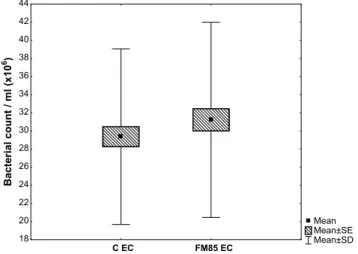
Figure 1 Bacterial growth ofEscherichia coliin control group and human milk fortifier group (HMF).
CEC, bacterial growth ofE. coliin control group (pure breast
milk); FM85 EC, bacterial growth ofE. coliin HMF group (breast
milk + FM85); SE, standard error; SD, standard deviation.
Research Ethics Committee of the Hospital das Clínicas ---Medical School of the Universidade de São Paulo. All pro-cedures followed the ethical standards of the responsible committee on human experimentation of both institutions. The procedures were also in accordance with the Helsinki Declaration of 1975. All participants received detailed explanation of the protocol and signed an informed consent detailing their participation.
Results
Seventy-eight samples of breast milk were collected. Only three mothers refused to donate milk sample, two because of pain and one for personal reasons. The average age of the participants was 25.2±6.6 years and the mean pre-pregnancy body weight was 60.6±10.1 kg.
The proof of sterility confirmed that all samples were sterile. There was no bacterial growth inhibition in any sam-ple by the qualitative analysis, as there was no evidence of inhibition halos around the discs of the C group or the HMF group.
The quantitative evaluation showed that the meanE. coli
growth in the C group was 29.4±9.7×10⁶CFU/mL, while
in the HMF it was 31.2±10.8×10⁶CFU/mL. The
differ-ence between the average growth in C and HMF group was 1.9±4.9×10⁶CFU/mL (p = 0.001) (Fig. 1).
The mean growth of S. aureus in the C group was 43±11.6×10⁶CFU/mL, and in HMF group it was
43.2±12.6×10⁶CFU/mL. The mean difference between
the two groups was 0.3±4.5×10⁶CFU/mL (p = 0.614).
The mean growth of P. aeruginosa in the C group was 51.1±12.0×10⁶CFU/mL, and in the HMF group it was
51.5±12.0×10⁶CFU/mL. The mean difference between
the two groups was 0.4±3.0×10⁶CFU/mL (p = 0.285).
For each bacterial strain, the correlation coefficient between the number of bacteria in both the C group and the HMF group was estimated. The correlation coefficient between C group’sE. coliand HMF group’sE. coliwas 0.89 (p < 0.001); between C group’sS. aureusand HMF group’sS. aureuswas 0.94 (p < 0.001), and between C group’sP. aeru-ginosaand HMF group’sP. aeruginosawas 0.97 (p < 0.001).
Discussion
All samples were collected within two days of delivery. There were no bacterial or fungal growth in the samples as deter-mined by the proof of sterility, with no contamination in both collection and storage, which validates the applied methodology.
The variables age and pre-pregnancy body weight showed no correlation with bacterial growth. Prepregnancy weight was the only nutritional parameter evaluated in this study. Collado et al.19 have associated the immunomodulatory
function of human milk with overweight and excessive weight gain during pregnancy. In their study, overweight mothers presented lower levels of TGF-2 and CD14 when compared with normal-weight mothers. Maternal weight and weight gain during pregnancy were also shown to affect infants’ fecal microbial composition, with higher levels of
Staphyloccocussp. and lower levels ofBifidobacteriumsp. in infants of normal-weight mothers with normal weight gain during pregnancy.19,20 Previous studies have found no
rela-tionship between maternal hemoglobin and iron levels and iron and lactoferrin content in their breast milk.21,22
Con-versely, other studies have shown that maternal nutritional status affects human milk composition.23,24
The variable age also did not show correlation with bacterial growth, and this was probably because an adult population (25.2±6.6 years) was studied. It is known that human milk from teenager mothers has nutritional deficien-cies due to their fast growth during this period.25,26
It was decided to collect colostrum, similarly to other studies, because of its higher concentration of lactoferrin,22
and also because it would be possible to standardize lacto-ferrin concentration in samples. The collection was also easier because samples were collected immediately after birth, while mothers were still at the hospital.
The qualitative analysis used in this study did not allow for the confirmation of a bacteriostatic effect of milk; since there was no formation of a bacterial growth inhibition zone, it was not possible to measure the halos, in contrast to the results found by Chan et al.7,8They found inhibition of
bacte-rial growth by pure breast milk and by breast milk with HMF without the addition of iron (0.2 mg/100 mL of breast milk), but found no inhibition in bacterial growth when the breast milk was supplemented with HMF that contained additional iron (1.5 mg of iron in 100 mL of breast milk).
Santiago et al.10 compared the growth of Gram-positive
and Gram-negative bacteria in breast milk samples sup-plemented with the same HMF used by Chan et al.7,8 The
authors performed total counts of bacteria in frozen sam-ples at time 0, 24 hours, and 72 hours with and without the addition of HMF. They found no difference in bacterial growth reduction in both groups, and also concluded that the antibacterial properties of human milk, with or without
HMF, can last for 72 hours. These results also validate the applied methodology of refrigeration. Similarly, Yuen et al.27
analyzed 25 colostrum and 11 mature samples of milk after being stored at 4◦C and - 20◦C, and concluded that all nutri-tional and immunological factors were adequately preserved after three days of refrigeration.
Ovali et al.9compared the bacteriostatic capacity of pure
breast milk, breast milk with HMF without addition of iron, and breast milk with ferrous sulfate (0.38 mg in 30 mL of breast milk), using the same methodology proposed by Chan, and with the same bacterial strains used in the present study. In contrast to the results of the present study, the authors concluded that the addition of ferrous sulfate at 0.38 mg in 30 mL of breast milk inhibited the bacteriostatic capacity against all strains.
All abovementioned studies analyzed milk samples of mothers who delivered prematurely, while the present study included mothers who delivered in term, since the number of premature births in this hospital is very small. It is impor-tant to note that this might be a reason for the differing results.
Previous reports on lactoferrin levels in preterm milk have shown either significantly higher values than term milk28 or no difference between them.29 Ronayne de
Fer-rer et al.30 found no difference between preterm and
term lactoferrin values, in spite of the trend observed in colostrum samples, where term milk tended to show higher levels than preterm milk. The same study,30similarly
to others,22 showed that lactoferrin concentration values
decrease, mainly in term milk. It is also important to observe that studies have demonstrated that lactoferrin levels vary in different populations.31
In the present study, term colostrum was used instead of preterm colostrum, and this might be a limitation, although lactoferrin levels between preterm and term colostrum appear not to be clearly defined. When the present results are extrapolated to clinical practice, it is important to highlight that, although HMF is currently used for preterm infants, in Brazil a large number of preterm infants receive HMF added to human milk from the Human Milk Bank, and in that case they usually receive term milk.
None of the previous studies evaluated bacterial growth with the addition of the HMF used in this study, which is the only fortifier available in Brazil (0.28 mg of iron in 1 g of fortifier). It is also important to consider that in the studies by Chan et al., different bacteria strains were analyzed:
E. coli,Staphylococcus,Enterobacter sakazakii, and group BStreptococcus. In the present study, E. coligrowth was higher in the samples with HMF, similarly to the studies by Chan et al.7,8
The bacterial strains selected for this study are the most frequent reported by the Commission of Hospital Infection Control of the hospital where the study was performed.
The correlation coefficients between C group samples and HMF group samples were significant for all strains of bacteria, which demonstrates that the bacterial growth was similar in all samples when the two groups were compared, indicating that bacterial growth followed the same pattern in both groups, regardless of the addition of HMF.
iron, restricting this essential nutrient for pathogenic bacte-ria proliferation. However, it is important to highlight that studies have also shown that the bactericidal activity is not dependent on the degree of iron saturation of lactofer-rin. Since lactoferrin has been shown to affect the immune system and the mucosa immune function, the addition of iron may affect these actions. However, since the present study was in vitro, it was not possible to analyze those functions.7,11---13,32,33
Care should be taken when extrapolating the present results to clinical practice.In vitro, it appears that the HMF currently available in Brazil may increase the risk forE. coli
proliferation. However,in vivostudies are needed to test the clinical significance of these results.
Contradictory results found in similar studies are proba-bly due to different milk samples, which may vary depending on ethnic characteristics, infant age at the delivery time, milk maturity, time of sample collection, added iron amount, and strain of bacteria analyzed. Additional studies are needed to identify the degree to which iron can interfere with the bacteriostatic capacity for each bacterial strain, since the bacteriostatic function of breast milk appears to depend upon all these factors.
Conclusion
This study demonstrated that iron supplementation with 0.28 mg of iron per 1 g of HMF reduced the bacteriostatic action of breast milk againstE. coli in vitro; however, this effect was not observed for P. aeruginosa and S. aureus
strains. Furtherin vivostudies are needed to determine how to extrapolate these data to clinical practice.
Conflicts of interest
The authors declare no conflicts of interest.
Acknowledgements
The authors want to acknowledge all mothers who partici-pated in this research that generously donated their breast milk, and Frederick Schwenk, MD, for his critical reading of the manuscript.
References
1. American Academy of Pediatrics. Section on breastfeed-ing. Breastfeeding and the use of human milk. Pediatrics. 2012;129:e827---41.
2. Higgins RD, Devaskar S, Hay Jr WW, Ehrenkranz RA, Greer FR, Kennedy K, et al. Executive summary of the workshop ‘‘Nutritional Challenges in the High Risk Infant’’. J Pediatr. 2012;160:511---6.
3. Schanler RJ. Outcomes of human milk-fed premature infants. Semin Perinatol. 2011;35:29---33.
4. Morales Y, Schanler RJ. Human milk and clinical outcomes in VLBW infants: how compelling is the evidence of benefit? Semin Perinatol. 2007;31:83---8.
5. Cohen RS, McCallie KR. Feeding premature infants: why, when, and what to add to human milk. JPEN J Parenter Enteral Nutr. 2012;36:20S---4S.
6. Martins EC, Krebs VL. Effects of the use of fortified raw mater-nal milk on very low birth weight infants. J Pediatr (Rio J). 2009;85:157---62.
7. Chan GM, Lee ML, Rechtman DJ. Effects of a human milk-derived human milk fortifier on the antibacterial actions of human milk. Breastfeed Med. 2007;2:205---8.
8. Chan GM. Effects of powdered human milk fortifiers on the antibacterial actions of human milk. J Pernatol. 2003;23:620---3. 9. Ovali F, Ciftc¸i I, Cetinkaya Z, Bükülmez A. Effects of human milk fortifier on the antimicrobial properties of human milk. J Perinatol. 2006;26:761---3.
10. Santiago MS, Codipilly CN, Potak DC, Schanler RJ. Effect of human milk fortifiers on bacterial growth in human milk. J Peri-natol. 2005;25:647---9.
11. Lönnerdal B. Nutritional and physiologic significance of human milk proteins. Am J Clin Nutr. 2003;77:1537S---43S.
12. Lönnerdal B. Nutritional roles of lactoferrin. Curr Opin Clin Nutr Metab Care. 2009;12:293---7.
13. Burrow H, Kanwar RK, Kanwar JR. Antioxidant enzyme activities of iron-saturated bovine lactoferrin (Fe-bLf) in human gut epithelial cells under oxidative stress. Med Chem. 2011;7:224---30.
14. Manzoni P, Rinaldi M, Cattani S, Pugni L, Romeo MG, Messner H, et al. Bovine lactoferrin supplementation for prevention of late-onset sepsis in very low-birth-weight neonates: a randomized trial. JAMA. 2009;302:1421---8.
15. King Jr JC, Cummings GE, Guo N, Trivedi L, Readmond BX, Keane V, et al. A double-blind, placebo-controlled, pilot study of bovine lactoferrin supplementation in bottle-fed infants. J Pediatr Gastroenterol Nutr. 2007;44: 245---51.
16. Almeida JA, Novak FR. O leite humano: qualidade e controle. In: Santos Jr, editor. org. Fisiologia e patologia da lactac¸ão. Natal: Sociedade Brasileira de Mastologia; 1995. p. 31---42.
17. Isenberg HD. Essential procedures for clinical microbiology. Washington: American Society for Microbiology; 1998. 18. Hernandez J, Lemons P, Lemons J, Todd J. Effect of storage
processes on the bacterial growth-inhibiting activity of human breast milk. Pediatrics. 1979;63:597---601.
19. Collado MC, Isolauri E, Laitinen K, Salminen S. Effect of mother’s weight on infant’s microbiota acquisition, composi-tion, and activity during early infancy: a prospective follow-up study initiated in early pregnancy. Am J Clin Nutr. 2010;92: 1023---30.
20. Collado MC, Laitinen K, Salminen S, Isolauri E. Maternal weight and excessive weight gain during pregnancy modify the immunomodulatory potential of breast milk. Pediatr Res. 2012;72:77---85.
21. Shashiraj, Faridi MM, Singh O, Rusia U. Mother’s iron status, breastmilk iron and lactoferrin --- are they related? Eur J Clin Nutr. 2006;60:903---8.
22. Raj S, Faridi M, Rusia U, Singh O. A prospective study of iron status in exclusively breastfed term infants up to 6 months of age. Int Breastfeed J. 2008;3:3.
23. Mello-Neto J, Rondó PH, Morgano MA, Oshiiwa M, Santos ML, Oliveira JM. Iron concentrations in breast milk and selected maternal factors of human milk bank donors. J Hum Lact. 2010;26:175---9.
24. Chapman DJ, Nommsen-Rivers L. Impact of maternal nutritional status on human milk quality and infant outcomes: an update on key nutrients. Adv Nutr. 2012;3:351---2.
25. Rogol AD, Clark PA, Roemmich JN. Growth and pubertal devel-opment in children and adolescents: effects of diet and physical activity. Am J Clin Nutr. 2000;72:521S---8S.
27. Yuen JW, Loke AY, Gohel MD. Nutritional and immunologi-cal characteristics of fresh and refrigerated stored human milk in Hong Kong: a pilot study. Clin Chim Acta. 2012;413: 1549---54.
28. Goldman AS, Garza C, Nichols B, Johnson CA, Smith EO, Gold-blum RM. Effects of prematurity on the immunologic system in human milk. J Pediatr. 1982;101:901---5.
29. Britton JR. Milk protein quality in mothers delivering prema-turely: implications for infants in the intensive care unit nursery setting. J Pediatr Gastroenterol Nutr. 1986;5:116---21.
30. Ronayne de Ferrer PA, Baroni A, Sambucetti ME, López NE, Ceri-ani Cernadas JM. Lactoferrin levels in term and preterm milk. J Am Coll Nutr. 2000;19:370---3.
31. Lien E, Jackson J, Kuhlman C, Pramuk K, Lönnerdal B, Janszen D. Variations in concentrations of lactoferrin in human milk: a nine-country survey. Adv Exp Med Biol. 2004;554:423---6. 32. Brock JH. Lactoferrin --- 50 years on. Biochem Cell Biol.
2012;90:245---51.