DOI: 10.9789/2175-5361.rpcfo.v12. 9463 | Santos GFATF, Alves DR, Oliveira AMM, et al. | Palliative Care in Oncology:...
Palliative Care in Oncology: Nurses’ Experience in Caring for
Children in The Final Stages of Life
Cuidados Paliativos em Oncologia: Vivência de Enfermeiros ao Cuidar de
Crianças em Fase Final da Vida
Atención Paliativa en Oncología: Experiencia de Enfermeros al Cuidar de Niños
en la Etapa Final de la Vida
Genáine De Fátima Alves Teixeira Fernandes Dos Santos1; Débora Rodrigues Alves2; Amanda Maritsa De
Magalhães Oliveira3*; KalinaCoeli Costa De Oliveira Dias4; Brunna Hellen Saraiva Costa5; Patrícia Serpa de
Souza Batista6
How to quote this article:
Santos GFATF, Alves DR, Oliveira AMM, et al. Palliative Care in Oncology: Nurses’ Experience in Caring for Children in The Final Stages of Life. Rev Fun Care Online.2020. Jan./Dec.; 12:689-695. DOI: http://dx.doi. org/10.9789/2175-5361.rpcfo.v12.9463
ABSTRACT
Objective: The study’s main purpose has been to investigate nurses’ experience in caring for children with cancer under palliative care. Method: It is an exploratory study with a qualitative approach, conducted with twelve nurses through a semi-structured interview and submitted to content analysis. Results: Three thematic categories emerged: Nurses’ perception of assistance to children with cancer in Palliative Care and support for family members, highlighting assistance focused on well-being and comfort; Care practices used by nurses for children with cancer in Palliative Care, with an approach focused on pain relief and other symptoms; Communication of bad news and appreciation of spirituality in child care in Palliative Care, in the context of terminality. Conclusion: The interviewees demonstrated that they experience assistance focused on the quality of life of the children with cancer in palliative care and their family. Greater investment in academic education is suggested concerning the theme.
Descriptors: Palliative care, Oncology nursing, Nursing care, Palliative care in the terminality of life, Children.
1 Nursing Graduate, Specialist’s Degree in Palliative Care, General Nursing Coordination of Hospital Napoleão Laureano. Hospital
Napoleão Laureano, Brazil.
2 Nursing Graduate, MSc in Nursing, Nursing Postgraduate student at Universidade Federal da Paraíba (UFPB), Researcher and member
of the Center for Studies and Research in Bioethics and Palliative Care of the UFPB. Universidade Federal da Paraíba (UFPB), Brazil.
3 Nursing Graduate, PhD in Nursing, Nursing at Hospital da Restauração Paulo Guerra, Researcher and member of the Center for Studies
and Research in Bioethics and Palliative Care at UFPB. Universidade Federal da Paraíba (UFPB), Brazil.
4 Nursing Graduate, PhD Student in Nursing, Professor at the Technical Health School from the UFPB, Researcher and member of the
Center for Studies and Research in Bioethics and Palliative Care at UFPB. Universidade Federal da Paraíba (UFPB), Brazil.
5 Nursing Graduate, Member of the Center for Studies and Research in Bioethics and Palliative Care at UFPB. Universidade Federal da
Paraíba (UFPB), Brazil.
6 Nursing Graduate, PhD in Education, Professor of the Postgraduate Program in Nursing at the UFPB, Researcher and member of the
RESUMO
Objetivo: Investigar a vivência de enfermeiros ao cuidar de crianças com câncer sob cuidados paliativos. Método: Estudo exploratório com abordagem qualitativa, realizado com doze enfermeiros através de entrevista semiestruturada e submetido à análise de conteúdo. Resultados: Emergiram três categorias temáticas: Percepção de enfermeiros acerca da assistência a crianças com câncer em Cuidados Paliativos e apoio aos familiares, destacando a assistência voltada ao bem-estar e ao conforto; práticas de cuidado utilizadas por enfermeiros à criança com câncer em Cuidados Paliativos, com abordagem voltada para o alívio da dor e de outros sintomas; comunicação de más notícias e valorização da espiritualidade na assistência à criança em Cuidados Paliativos, no contexto da terminalidade. Conclusão: Os entrevistados demonstraram vivenciar assistência voltada à qualidade de vida da criança com câncer em cuidados paliativos e de seus familiares. Sugere-se maior investimento na formação acadêmica em relação à temática. Descritores: Cuidados paliativos, Enfermagem oncológica, Assistência de enfermagem, Cuidados Paliativos na Terminalidade da Vida, Crianças. RESUMEN
Objetivo: El propósito del trabajo es investigar la experiencia de los enfermeros en el cuidado de niños con cáncer bajo cuidados paliativos. Método: Este es un estudio exploratorio con enfoque cualitativo, realizado con doce enfermeros mediante entrevista semiestructurada y sometido a análisis de contenido. Resultados: Surgieron tres categorías temáticas: Percepción de enfermeros sobre la asistencia a los niños con cáncer en Cuidados Paliativos y el apoyo a los miembros de la familia, destacando la asistencia centrada en el bienestar y lacomodidad; Prácticas de cuidado utilizadas por enfermeros para niños con cáncer en Cuidados Paliativos, con un enfoque centrado en el alivio del dolor y otros síntomas; Comunicación de malas noticias y apreciación de la espiritualidad en el cuidado infantil en Cuidados Paliativos, en el contexto de la terminalidad. Conclusión: Los entrevistados demostraron experimentar asistencia centrada en la calidad de vida de los niños con cáncer en cuidados paliativos y sus familiares. Se sugiere una mayor inversión en formación académica en relación con el tema. Descriptores: Cuidados paliativos, Enfermería oncológica, Cuidado de enfermería, Cuidados paliativos en laterminación de la vida, Niños.
INTRODUCTION
Child and adolescent cancer comprises a set of diseases constituted by the uncontrolled multiplication of abnormal cells, of an embryonic nature, and by undifferentiated cells in individuals aged 1 to 19 years old. The most common types are leukemias, lymphomas, neuroblastoma, Wilms’ tumor, retinoblastoma, sarcomas, osteosarcomas, and germ tumors.1
Technological advances in therapy aimed at pediatric oncology in Brazil provide an increase in the prospect of a cure in up to 80% of cases, although childhood cancer is the leading cause of death in children under 19 years old. Such incidence is related to the late detection of signs and symptoms of childhood cancer, favoring late diagnosis in specialized centers.2
Cancer is a threatening disease, so from the diagnosis, it is recommended to use palliative care to conventional treatment. In more severe and advanced cases, in which conventional therapy is no longer effective, palliative care
is mostly the best option.3
Palliative care gives rise to qualified actions, carried out by a multi-professional team, which aims to provide biopsychosocial and spiritual assistance to patients, also offering support to the family, even during the period of mourning.4
In this context, the importance of the nurse as a member of the multidisciplinary team in palliative care is emphasized, developing a holistic view, with biopsychosocial and spiritual assistance.5 Since care is at
the heart of nursing, nurses must provide mechanisms to help the child and their family member to adapt to the life changes caused by cancer.6
Thus, palliative care is part of the praxis of the professionals of the multidisciplinary team. Regarding the nurse, they must perform assistance with human competence and skills.7,8
Because of the relevance that involves the assistance of nurses to children in palliative care in the terminal and the scarcity of work involving the theme, this study had as a leading thread the following guiding question: What is the experience of nurses when caring for children with cancer under palliative care in the final stages of life?
To answer this question, this research aimed to investigate the nurses’ experience in caring for children with cancer under palliative care in the final stages of life.
METHODS
This is an exploratory study with a qualitative approach. Qualitative research seeks to understand phenomena incorporated into specific contexts, establishing a confluence between concepts, representations, beliefs, perceptions and opinions as a product of human interpretations, about how they live, feel, and think about a certain subject.9
This study was approved by the Research Ethics Committee of the Health Sciences Center, Universidade Federal da Paraíba, under No. 3.294,346 approved on April 30th, 2019, following the guidelines for research involving human beings, according to Resolution 466/2012 of the National Health Council.10
The study population consisted of clinical nurses working in a philanthropic and reference hospital in the State of Paraíba, which treats cancer patients.
For sample selection, the following criteria were used: work during the data collection period; have, at least, one year of experience in the institution selected for the study; be interested in participating in the research, as well as availability to do so. The sample was given by accessibility, consisting of 12 nurses who agreed to participate in the study through the consent of the free and informed consent term.
Data collection took place from May to June 2019, using the semi-structured interview technique and using
a questionnaire consisting of two parts as an instrument. The first, with characterization data of the participants, and the second, with open questions that said the experience of the participants regarding palliative care for children with cancer, aiming at reaching the proposed objective.
The interviews were previously scheduled and carried out individually, at the moment when the free and informed consent term was presented, as well as the participants’ consent to be recorded for better reliability of the empirical data. To guarantee anonymity, participants were identified with the standard acronym “NUR”, followed by the questionnaire number. At the end of the interviews, the sociodemographic data were analyzed by simple frequency, to raise the nurses’ professional profile. The speeches were transcribed in full and analyzed qualitatively.
In the analysis of the speeches, categorical content analysis was used, composed of a set of communication analysis techniques whose purpose is to obtain systematic and objective procedures for describing the content and indicators of the messages, which provide information on the categories of production of these messages. This technique includes the phases of pre-analysis, coding, inference, and interpretation of data.11
From the textual analysis, three categories emerged: Nurses’ perception of assistance to children with cancer in Palliative Care and support for family members; Care practices used by nurses for children with cancer in Palliative Care; Communication of bad news and appreciation of spirituality in child care in Palliative Care.
RESULTS AND DISCUSSION
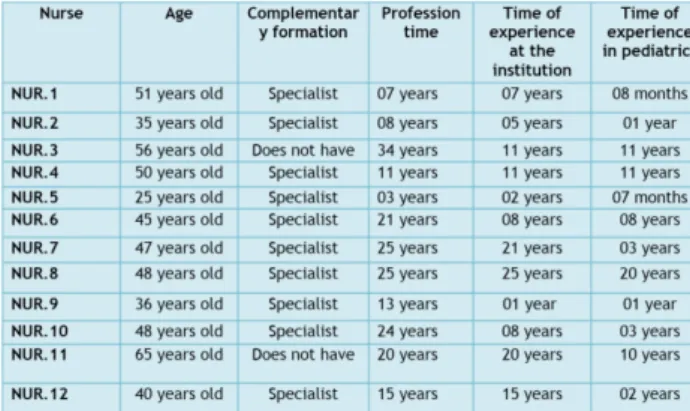
Table 1 shows the characterization of the 12 study participants and displays the categories constructed.
Table 1-Professional profile of nurses participating in the study, João Pessoa City, Paraíba State, 2019. Source: Data extracted from the study, 2019.
Category I - Nurses’ perception of assistance to children with cancer in Palliative Care and support for family members
In this category, the participants mentioned aspects experienced during the assistance to children with cancer in Palliative Care, highlighting humanized assistance, comfort, listening, well-being, extended to family members, as shown in the statements provided below:
[...] I use my eyes and touch, and I am always willing to give the best care, humanized, guaranteeing the child’s comfort and well-being, demonstrating security, and informing that they will always be around. (NUR.2) [...] It is important to offer support to the patient and their family, to accompany the grief of family members to comfort the loss. (NUR.3)
I work with great love and do everything to promote the safety and well-being of the child/family. [...] it is necessary to listen and fulfill the needs of the child and their family, let them vent and question. (NUR.5) During the nursing visit, I hear the child a lot, complaints, compliments and requests. I watch when she does not want to talk and try to relieve suffering and prevent complications. (NUR.7)
[...] To humanize care. Care must be integrated, giving full support to the patient. (NUR.9)
Another aspect evidenced in the speeches concerns the experience with the suffering of children in palliative care when facing finitude and their families. As can be seen in the statements below:
I have difficulty dealing with death, I have had many family members who died from this disease, making everything more difficult, especially with children, I feel powerless. (NUR.5)
The daily practice of nursing puts us in a position of constant emotional overcoming, and when we are faced with caring for children, this struggle becomes even greater. (NUR.6)
It is not easy to speak, as they are not good memories, it is a lot of suffering for children and family, even so, the professionalism above all, even with the sentimental destroyed, and when we are a mother, we feel more, and it is impossible not to experience that situation together. (NUR.8)
It was an experience for my profession, however, emotionally draining, as I felt the pain of loss together with the family. (NUR.10)
Category II - Care practices used by nurses for children with cancer in Palliative Care
The speeches in this category mention how to promote pain relief and physical symptoms, the use of pharmacological and non-pharmacological measures and interdisciplinary work. In this perspective, the following reports are highlighted:
Provide a less painful experience, with actions that offer comfort and control of symptoms of the disease [...]. (NUR.1)
Control pain and other physical symptoms; increase the quality of life, positively influencing the course of the disease [...]. (NUR.3)
Relieve pain through prescribed medications, authorize a visit that requests, seeking to meet the child’s needs at that time. (NUR.5)
To heal the discomfort, whether caused by pain, wound dressing changes, painful venous access, insomnia, position. I don’t see it as a waste of time but as a realization of nursing care. (NUR.6)
The valorization of the multi-professional team also stood out in the practice of child care in Palliative Care, as suggested in the excerpts of the following speeches:
[...] Care must be integrated, carried out by a multidisciplinary team, giving full support to the patient. (NUR.9)
[...] This way, together with the multidisciplinary team, we show confidence in our assistance, so that the child feels better, feels welcomed. (NUR.8)
I always try to work together with psychology, respecting the child’s space and desire to avoid further work [...]. (NUR.7)
Category III - Communication of bad news and appreciation of spirituality in child care in palliative care
In this category, the process of communicating bad news between professionals and family members stands out, in addition to the presence of spirituality in the context of terminality. Participants emphasize that it is important to:
Approach clearly and objectively, obeying ethics in communication, respecting the emotional and expectations created by family members with skill and honesty, trying to reduce distress, depending on the child’s condition. (NUR.1)
Make good communication, not only verbally, but also with touch [...]. (NUR.2)
[...] Involve the family in decision-making, using clear and simple language [...]. (NUR.3)
[...] Leave the patient close, talk a lot with the patient and listen to them, trying to clarify their questions [...]. (NUR.4)
Simple communication, patience, care, and being a Christian make me understand and put myself in the position of the other, helping in my way to meet the needs of the other. (NUR.6)
Spirituality in terminality is also widely used and respected by nurses:
[...] It is important to maintain extensive communication with the family, respecting emotional and spiritual aspects. (NUR.1)
I believe that emotional balance and spirituality fit perfectly in the communication of bad news [...], passing peace, meekness, tranquility to the patient and family. (NUR.6)
I always try to talk about spirituality, I try to know which religion to seek help and show through religion that we all have time here and that God will help, no matter how difficult that moment, comfort will come. (NUR.7)
The nurses interviewed also highlighted difficulties when faced with the need to communicate bad news:
This part of the bad news communication strategy is not very easy. The mother beside the child at all times is very difficult. I feel powerless to communicate the real fact. I prioritize the doctor to make this communication, I think they must provide this news. And then I do the welcoming, giving all possible assistance. [...]. (NUR.8)
I don’t have a lot of words for this news, I can’t give that news, I call the attending physician, psychology, social work. (NUR.10)
In category I, referring to nurses’ perception of assistance to children with cancer in Palliative Care and support for family members, the speeches were permeated by the promotion of comfort for the child and the family and by the provision of humanized assistance centered on the relief of suffering, favoring comprehensive care in the face of a complex pathology such as cancer.
Nursing care for children with cancer is a complex activity, as it involves uncertainties regarding the cure, the frustration of life expectancy created around a child and the weakness in the face of death, generating feelings of helplessness by the family, by the interdisciplinary team and by society.12 Given the above, nursing stands out as one
of the most active professions when it comes to palliative care, since they directly assist the patient, giving support to family members and caregivers.13
The assistance offered by nursing professionals must be carried out in an individualized and humanized way, which includes the family in the entire care process and guarantees the right to information about the treatment and the disease, preparing the child to receive the necessary procedures and adopting measures for the relief of pain and discomfort.14 Therefore, in the context of the hospital
environment, care must be provided in an integral and humanized way, focused on the child and the family.
It is worth mentioning that some participants in this study demonstrated to value subjectivity in the act of caring. In this sense, it is necessary to adopt strategies to alleviate suffering. As an example, the therapeutic touch,
active and qualified listening, and the accurate look are essential when caring, providing comfort, and well-being measures in this phase of so much suffering for the child in palliative care in the hospital.15
The patient, as being essential to the care of the nursing team, is perceived as a biopsychosocial and spiritual subject. Thus, they need to be assisted in all their needs, individually, efficiently and effectively, with the establishment of an affective and trusting bond, therefore, the team not only focuses on scientific knowledge, but also provides love and compassion.16
Another aspect evidenced in the speeches concerns the emotional suffering experienced in the context of care. Palliative care in oncopediatrics is permeated by uncertainties, fear and anguish in the face of the proximity of death, shared by family members and health professionals. A study on palliative care in pediatric oncology shows that professionals create an important bond with children and their families, building affective bonds that, at the same time that favor care, can constitute generators of suffering.8
It is worth mentioning that care for people with cancer demands a care conduct and emotional balance.17 The
study emphasizes the importance of hospital institutions providing psychological support, as well as the need to implement continuing education, with scope in the training for the multidisciplinary team, since facing finitude in childhood is socially perceived as a complex and difficult to accept the process, requiring technical-scientific skills, in addition to human skills, and emotional balance. In this way, it will provide nurses with a better aptitude to assist patients in finitude, avoiding excessive suffering and/or illness.18
In the second category, the nurses interviewed showed how they provided relief from pain and other symptoms in the child in palliative care at the end of life, as the focus of their care practice. To achieve the objective, they organized assistance in two dimensions, namely: pharmacological and non-pharmacological measures.
Pain in children with cancer characterizes 78% of symptoms when the diagnosis is made, 25 to 58% during treatment, and up to 90% in the terminal phase of the disease.19 Pain is considered the fifth vital sign, significantly
affecting the quality of the patient’s life and requires adequate prevention and treatment, primarily for those in palliative care.20
One of the particularities of cancer pain in children is the frequency with which it is possible to “predict” its onset, knowing the clinical picture, the investigation to be carried out, the probable type of tumor and the established cancer therapy.21
Pharmacological treatment is used to significantly reduce pain. Adequate pain management should be a priority in planning. And the child must know that their pain is being taken seriously and that their family and nurses are attentive, doing everything possible to relieve it.
Assessing and measuring pain is not an easy task, however, the procedures must be performed and recorded in the child’s medical record, so that the conducts for their relief can be implemented.22
Inserting the parents (or another family member/ companion) in the assessment and intervention process for pain relief becomes important. This is because it is assumed that they know their children and that they are sensitive to changes in their behavior.22
Non-pharmacological methods do not replace treatment with analgesic medication, taking into account that pain is much more than a sensation and that it receives social, psychological and emotional influences, the association of these methods in the treatment would have great relevance in pain control, obtaining a faster relief of the symptom.23
It is understood that the involvement of the team with the patient and the family provides the relief of symptoms in a better way, since it comforts the patient, contributes to the care, treating the pain more appropriately.
In addition to pain care, nurses reported the need for common care practices such as wound dressing changes, changing positions, always to bring comfort and quality of life to the child. In this line of thought, a Brazilian study emphasizes the importance of carrying out assistance practices for patients in palliative care, such as changing the position, hygiene, monitoring vital signs, communication, family support, comfort massage, wound dressings, among others.24 These care are mentioned by the nurses in that
study as ways to promote well-being to the patient, helping them to live with the best possible quality of life.
Scholars say that palliative care for children in finitude must be carried out integrally, by an interdisciplinary team, which can accommodate this patient and their family in order to meet their physical, psychological, social, and spiritual needs throughout this journey of terminality of life. The interdisciplinary team, therefore, is responsible for the care provided to the patient and the family, providing the establishment of an emotional and trusting bond in the technical-scientific competence throughout the process.25,8
Regarding the third category, the interviewees referred to the process of communicating bad news between professionals and family members and about the valorization of spirituality in the context of terminality. In this context, the communication of bad news is one of the activities performed by health professionals, being the most complex of the treatment process due to the close relationship with finitude. Thus, nurses must check their behavior when transmitting information, as their conduct will influence the thinking and the way the patient will receive and process this information.26
Among nurses, some mentioned the difficult task of communicating bad news. Thus, communication becomes difficult due to the confrontation of feelings of the child and the family, as well as the professional themselves. The transmitter must send the message with serenity
and compassion, observing the reaction of the listeners. Another relevant aspect is that most professionals do not know how to deal with finitude and, consequently, with the communication of bad news.27
It is noteworthy that some study participants mentioned that the communication of bad news is carried out by doctors, social workers, and psychologists, which reveals the importance of a multi-professional team in this difficult time for the child and their family. Thus, the decisions relevant to patient care must be interdisciplinary. And they include a willingness for informative and sensitive communication regarding death-related prognosis.28
As for the valorization of spirituality, it was present in the speeches of research participants, being mentioned as important in assisting children and family members and in communicating bad news. As the nurse is one of the professionals who spend more time with the patient, they need to be prepared to develop a holistic look, in order to provide affective support in the spiritual field.29
Thus, it is essential that the theme of palliative care be part of university education in health, to meet the diverse learning needs of professionals who face care at the end of life.
CONCLUSIONS
This study revealed that the nurses’ experience in caring for children with cancer under palliative care in the final stage of life provides humanized nursing care in an integrated manner with the multidisciplinary team.
Thus, it is observed that the care practices developed by nurses include the appreciation of listening, the relief of physical pain and emotional pain, as well as the dialogue with the child and their family members and the respect for spirituality in terminality, and grief promoting a dignified death. The difficulties in communicating bad news were also emphasized.
It is hoped that this study will assist health professionals in planning actions that improve the quality of life of these patients and family members. Given this, the present study suggests greater investment in academic education focused on the area of Palliative Care, as well as recommending the offer of qualification courses, with scope to meet the diverse needs arising from care in finitude.
As a limitation of the study, it is pointed out that, as it is a qualitative study, with a small sample size, a generalization of results is not feasible.
REFERENCES
1. Instituto Nacional de Câncer(Brasil). Câncer infanto-juvenil [Internet]; Rio de Janeiro: INCA; 2017. [cited 2019 July 09] 130p. Available from: https: www.inca.gov.br/tipos-de-cancer/cancer-infantojuvenil.
2. Instituto Nacional de Câncer (Brasil). Incidência, mortalidade e morbidade hospitalar por câncer em crianças, adolescentes e adultos jovens no Brasil: informações dos registros de câncer e do
sistema de mortalidade [Internet]; Rio de Janeiro: INCA; 2018. [cited 2019 July 19] Available from: https:// https://rbc.inca.gov.br/ revista/index.php/revista/article/view/56.
3. Cervantes BJM, Jones E. The interdisciplinary oncology team and the role of palliative care consultation. In: Wolfe J, Jones B, Kreicbergs U, Jankovic M. Palliative care in pediatric oncology. Pediatric Oncology [Internet]. 2017 [cited 2019 July 19]; p.35–53. 4. World Health Organization - WHO. Palliative Care Fact Sheet
[Internet]; 2018. [cited 2019 July 05]. Available from: https://www. who.int/news-room/fact-sheets/detail/palliative-care.
5. Wolf ZR, Byrne D, Hanson-Zalot M. Undergraduate nursing students’ caring behaviors: a cross-sectional study. Int J Hum Caring [Internet]. 2018 [cited 2019 June 10]; 22(4): 199–208. 6. Freitas LPP, Machado KMKD, Ricardo EV. Percepção do
enfermeiro sobre a humanização na assistência de enfermagem ao paciente oncológico em cuidados paliativos. Biológicas & Saúde [Internet]. 2015 [cited 2019 July 30]; 5(18):92-93.
7. Brito F, Coutinho M, Andrade C, Costa S, Costa I, Santos K. Palliative care and communication: study with health professionals of the home care service. Revista de Pesquisa: Cuidado é
Fundamental Online [Internet]; 2017 [cited 2019 May 30]; 9(1): 215-221.
8. Silva AF, Issi HB, Motta MGC, Botene DZA. Cuidados paliativos em oncologia pediátrica: percepções, saberes e práticas na perspectiva da equipe multiprofissional. Rev Gaúcha Enferm [Internet]; 2015 [cited 2019 Aug 02]; 36(2): 56-62.
9. Taquette SR, Minayo MC. Análise de estudos qualitativos conduzidos por médicos publicados em periódicos científicos brasileiros entre 2004 e 2013. Physis Revista de Saúde Coletiva [Internet]; 2016 [cited 2019 June 22]; 26(2): 417-434. 10. Ministério da Saúde (Brasil). Comissão Nacional de Ética e
Pesquisa. Resolução nº 466, de 12 de dezembro de 2012. Diretrizes e Normas Regulamentadoras de Pesquisas Envolvendo Seres Humanos. Diário Oficial da União, 2012.
11. Bardin, L. Análise de conteúdo. 4ª. ed. Lisboa: Edições 70, 2011. 12. Guimarães TM, Silva LF, Santo FHE, Moraes JRMM. Palliative care
in pediatric oncology in nursing students’ perception. Esc Anna Nery [Internet]. 2016 [cited 2019 Aug 02]; 20 (2): 261-7.
13. Hermes HR, Lamarca ICA. Cuidados paliativos: uma abordagem a partir das categorias profissionais de saúde. Ciênc Saúde Coletiva [Internet]. 2013 [cited 2019 july 10]; 18(9): 2577-2588.
14. Vieira APMS, Castro DL, Coutinho MS. Assistência de enfermagem na oncologia pediátrica. RevEletrôn Atualiza Saúde [Internet]. 2016 [cited 2019 Aug 01];3(3): 67-75.
15. França JRFS, Silva EC, Machado KOA, Oliveira TC, Silva MFOC, Freire MEM. Experience of children with cancer under palliative care in a support house. REME: RevistaMineira de Enfermagem [Internet]. 2017 [cited 2019 Aug 02]; 21, 2017.
16. Monteiro PV, Almeida ANS, Pereira MLD, Freitas MC, Guedes MVC, Silva LF. Quando cuidar do corpo não é suficiente: a dimensão emocional do cuidado de Enfermagem. REME – Rev Min Enferm [Internet]. 2016 [cited 2019 July 11]; 20:e 957.
17. Luz KR, Vargas MAO, Barlem ELD, Schmitt PH, Ramos FRS, Meirelles BHS. Estratégias de enfrentamento por enfermeiros da oncologia na alta complexidade. Rev. Bras. Enferm [Internet]. 2016 [cited 2019 Aug 03]; 69(1): 67-71.
18. Menin GE, Pettenon MK. Terminalidade da vida infantil: percepções e sentimentos de enfermeiros. RevBioét [Internet]. 2015 [cited 2019 Aug 03]; 23(3): 608-614.
19. Chotolli MR, Luize PB. Métodos não farmacológicos no controle da dor oncológica pediátrica: visão da equipe de enfermagem. Rev Dor [Internet]. 2015 [cited 2019 July 14];16(2):109-113.
20. Mendes TR, Boaventura RP, Castro MC, Mendonça MAO. Ocorrência da dor nos pacientes oncológicos em cuidado paliativo. Acta Paul Enferm [Internet]. 2014 [cited 2019 Aug 04]; 27(4): 356-361.
21. Coelho JC, Santos J, Silva MAS, Meira KC, Valle AC.
Conhecimento de enfermeiros residentes sobre o manejo da dor no câncer: a influência de uma intervenção educativa. Arquivos Médicos dos Hospitais e da Faculdade de Ciências Médicas da Santa Casa de São Paulo [Internet]. 2016 [cited 2019 July 24]; 61(2): 55-63.
22. Santos JP, Maranhão DG.Cuidado de Enfermagem e manejo da dor em crianças hospitalizadas: pesquisa bibliográfica.
RevSocBrasEnfermPed [Internet]. 2016 [cited 2019 June 15]; 16(1): 44-50.
23. Blasi DG, Candido LK de, Tacla MTGM, Ferrari RAP. Avaliação e manejo da dor na criança: percepção da equipe de enfermagem. SeminaCiencBiolSaude [Internet]. 2015 [cited 2019 Aug 05]; 36(1Supl): 301.
24. Aquino ATT, Góes IMC, Malcher M. A percepção da equipe de enfermagem sobre cuidados paliativos e o manejo da dor na unidade de terapia intensiva do Hospital Municipal de Santarém. EnferBrasil [Internet]. 2016 [cited 2019 July 15]; 15(6): 295-300. 25. Sanches MVP, Nascimento LC, Lima RAG. Crianças e adolescentes
com câncer em cuidados paliativos: experiência de familiares. RevBrasEnferm [Internet]. 2014 [cited 2019 June 16]; 67(1): 28-35. 26. Fontes CMB, Menezes DV, Borgato MH, Luiz MR. Comunicação de
más notícias: revisão integrativa de literatura na enfermagem. Rev Bras Enferm [Internet]. 2017 [cited 2019 June 16]; 70 (5): 1089-1095. 27. Camargo NC, Lima MG, Brietzke E, Mucci S, Góis AFT. Ensino
de comunicação de más notícias: revisão sistemática. Rev Bioét [Internet]. 2019 [cited 2019 May 26]; 27 (2): 326-340.
28. Frossard AGS, Silva ECS. Experiência da residência multiprofissional em serviço social e cuidados paliativos
oncológicos R. Katál. Florianópolis [Internet]. 2016 [cited 2019 Aug 06]; 19(2):281-288.
29. Sampaio AD, Siqueira HCH. Influência da espiritualidade no tratamento do usuário oncológico: olhar da enfermagem. Ensaios e Ciência: C Biológicas, Agrárias e da Saúde [Internet]. 2016 [cited 2019 July 17]; 20(3): 151-158. Received on: 02/04/2019 Required Reviews: 11/27/2019 Approved on: 02/07/2020 Publicado em: 06/05/2020 *Corresponding Author:
Amanda Maritsa de Magalhães Oliveira Rua Arquimedes de Oliveira, 204 Santo Amaro, Recife, Pernambuco, Brasil E-mail address: [email protected] Telephone number: +55 (81) 9 9624-2112 Zip Code: 50.050-510 The authors claim to have no conflict of interest.