ii
September, 2014
Andreia Garreiro
Graduate in BiochemistryArundo donax
water use efficiency and
photosynthetic response to drought
Thesis submitted for the Degree of Master in Energy and Bioenergy
Supervisor: Doctor Andrea Monti, Associate Professor, UNIBO
Co-Supervisor: Doctor Ana Luísa Almaça da Cruz Fernando Assistant Professor, FCT/UNL
Jury:
President: Doctor Benilde Simões Mendes, FCT/UNL
ii
Arundo donax
water use efficiency and photosynthetic response to drought
Copyright © Andreia Garreiro, FCT/UNL, UNL
The Faculty of Sciences and Technology and the New University of Lisbon have the right, perpetual and without geographic boundaries, to file and publish this dissertation through printed copies in paper or in digital format, or by any other known means or yet to be invented, and to disclose it through scientific repositories and to allow its copy and distribution with educational purposes or for investigation, non-commercial, pro-vided credit is given to the author and editor.
The author
Andreia Garreiro
Eficiência no uso de água e resposta fotossintética à seca no
Arundo donax
Direitos de cópia © Andreia Garreiro, FCT/UNL, UNL
A Faculdade de Ciências e Tecnologia e a Universidade Nova de Lisboa têm o direito, perpétuo e sem limites geográficos, de arquivar e publicar esta dissertação através de exemplares impressos reproduzidos em papel ou de forma digital, ou por qualquer outro meio conhecido ou que venha a ser inventado, e de a divulgar através de repositórios científicos e de admitir a sua cópia e distribuição com objectivos educacionais ou de investigação, não comerciais, desde que seja dado crédito ao autor e editor.
A autora
iii
iv
ACKNOWLEDGEMENTS
First I would like to thank Professor Ana Luísa Almaça da Cruz Fernando the suggestion and motivation to participate in the Erasmus exchange program in Bologna, which was undoubtedly one of the greatest adventures of my life in both variants, personal and academic.
Second, I would like to thank Walter Zegada-Lizarazu, which is one of the coordinators of this thesis, but cannot appear on the cover due to specific rules of the Master in En-ergy and BioenEn-ergy, for his patience, calm and willingness in help me in every step of the process.
Third, I would like to thank Professor Andrea Monti and his team, for the fantastic, warm and friendly reception and integration in their daily work. In this point, I would like to make a special acknowledgement to Riccardo Sartonni, without him would be impossible to make the practical part of the thesis.
Fourth, I would like to thank Claudio Ratti, for the precious and unique help in the ELISA tests.
Fifth, I would like to thank the coordinator of the Master in Energy and Bioenergy, Pro-fessor Benilde Mendes for all the effort and dedication to the students.
iv
To whom it may concern
Dr. Walter Zegada-Lizarazusupervised the work of Andreia Garreiro in the University of Bologna along with Prof. Andrea Monti of the same institution. According to the rules of Faculdade de Ciências e Tecnologia da Universidade Nova de Lisboa (FCT-UNL), only two supervisors can be shown in the front page of the document, and one of them must be a Professor from FCT-UNL, linking the Faculty with the student. Because of this rule, the name of Dr. Walter Zegada-Lizarazu cannot appear in the front page, but I can hereby confirm that Dr. Walter Zegada-Lizarazu did had an important role as co-supervisor of Andreia Garreiro while she attended the University of Bologna under an ERASMUS agreement between FCT-UNL and University of Bologna.
Caparica, 24th September 2014
Ana Luisa Almaça da Cruz Fernando (Assistant Professor, FCT-UNL)
vi
RESUMO
Arundo donax L., comumente conhecido como Cana-do-reino, tem sido identificado
como uma excelente matéria-prima para a obtenção de biomassa, devido aos seus altos rendimentos e baixo requisito de nutrientes. Têm sido apontadas como desvantagens principais para o uso desta matéria-prima na obtenção de bionergia a elevada necessidade de recursos hídricos de maneira a sustentar um rápido crescimento e o seu caractér invasor. No entanto, existem poucos estudos para quantificar as suas necessidades hídricas. O objectivo deste estudo passa pela melhor compreensão da capacidade de obtenção de água pela raízes mais profundas e da eficiência do uso de água pelo Arundo donax. Ainda foi possível avaliar os efeitos de seca na eficiência fotossintética do Arundo donax. Foi imposto um período de seca às camadas superiores da raíz ao longo do tempo e comparado com plantas normalmente irrigadas (irrigação total da raíz). Foi possível avaliar a evolução da experiência através do recurso a doze
rhizotrons cilíndricos separados em dois compartimentos independentes por uma
vii
ABSTRACT
Arundo donax L., commonly known as giant reed or Giant reed, has been identified as
an excellent biomass feedstock, because of its high yields delivered from low nutrient inputs. Two criticisms of cultivating Arundo donax are that it has a history of biological invasion, and also that it may require great quantities of water to sustain its rapid growth. Yet, there is little research reported quantifying the water-use requirements. The objective of this study was to better understand the deep water uptake ability and water use efficiency (WUE) of Arundo donax. Moreover, it was possible to evaluate the effects of drought on the photosynthetic efficiency of Arundo donax. Durable transient drought stress period were imposed a long time to top soil layers and compared with well watered plants. Twelve cylindrical transparent rhizotrons, separated in two parts by a Vaseline layer allowed to follow the evolution of this experiment. Soil moisture was adjusted to well-watered and drought conditions in the upper (topsoil) layer, while the lower (deep) layer was always wet. WUE was significantly increased in plants of Arundo
donax by drought and the photosynthetic efficiency was not affect by drought. Relative
viii
TABLE OF CONTENTS
1. INTRODUCTION ... 1
1.1WATERUSEEFFICENCY………..……….2
1.2DROUGHTTOLERANCEINCROPPLANTS……….2
1.2.1 Water Uptake and Movement through Plants 3
1.2.2 Water Dynamics of the Plant Cell 4 1.2.3 Water Stress on Plants: Effects of water stress 6 1.2.4 Water uptake by roots: effects of water deficit 17 1.3 ARUNDO DONAX……….…22
1.3.1 Cultivation and Production in Arundo donax 23
1.3.2 Interest as a Bioenergy Crop 24 1.3.3 Arundo donax as a candidate plant for energy production 25 1.3.4 Arundo donax Water Use Efficiency 26
1.4 PURPOSE OF THE STUDY……….…..28
2. METHODOLOGICAL APPROACH ...29
2.1 EXPERIMENTAL SETUP AND GROWTH MEASUREMENTS ……….29
2.2 LEAF RELATIVE WATER CONTENT…………..….31
2.3 LEAF GAS EXCHANGE AND FLUORESCENCE……….31
2.4 SOIL WATER CONTENT, ROOT WATER UP TAKE EFFICIENCY………..………33
viii
2.6 STATISTICAL ANALYSIS………..………35
3.3PRESENTATION OF RESULTS ... ..36
3.1 GROWTH AND MORPHOLOGY ………36
3.2 WATER USE EFFICIENCY AND WATER CONSUMPTION …………37
3.3 LEAF LEVEL GAS EXCHANGE……… 38
3.4 ROOT WATER UPTAKE EFFICIENCY ………..44
3.5 QUANTIFICATION OF ABSCISIC ACID ………...45
4. DISCUSSON ...47
5. CONCLUSION AND FUTURE WORK ...50
6. REFERENCES ...51
x
TABLE OF FIGURES
Figure 1 Cellular and soil-water potential control water uptake into the cell……….….….5
Figure 2 Resistance to water-deficit stress………..…….………….……..….……7
Figure 3 Whole-plant responses to drought stress………..…..…….8
Figure 4 Changes in xylem sap composition under drought. ……….…….………..13
Figure 5 Photosynthesis under drought stress. ……….14
Figure 6 Simplified model of steady water flow across a plant………..…..18
Figure 7 Transport pathways in roots……….…….………19
Figure 8 Life cycle, propagation and culture of Arundo donax………..…..23
Figure 9 Details of Arundo donax Cultivation………..……...…….31
Figure 10 Representative scheme of the experimental setup……….………..32
Figure 11 Details of leaf gas exchange measurements……….………..33
Figure 12 Schematic representation of root sampling……….……35
Figure 13 Details of ABA quantification………..36
Figure 14 Effect of drought stress on stem length of Arundo donax………....…..37
Figure 15 Effect of drought stress on stem diameter of Arundo donax……….………38
Figure 16 Average total water used by Arundo donax layers……….…………..…….……..39
Figure 17 Effect of drought stress on stomatal conductance (gs) of Arundo donax….…...40
Figure 18 Effect of drought stress on photosynthesis (Pn) of Arundo donax………..……..…40
Figure 19 Effect of drought stress on instantaneous WUE and intrinsic WUE………...……..41
Figure 20 Effect of drought stress on Performance Index of Arundo donax....……..………..42
Figure 21 Effect of drought stress on transpiration rate of Arundo donax……….…….…43
Figure 22 Effect of drought stress on chlorophyll fluorescence of Arundo donax……….….44
Figure 23 Effect of drought stress on relative water content of Arundo donax…………...…44
Figure 24 Root length density and root water uptake efficiency of Arundo donax……..….45
1.
INTRODUCTION
In recent years, many national and international initiatives have started in order to identify new sources of renewable energy. This growing interest in renewable energy is driven by two main reasons. Firstly, fossil fuels such as oil, coal, and natural gas are limited resources on your planet and if the level of our consumption does not change, the estimated times of depletion of these energy sources will be approximately 50 years for oil, 70 years for natural gas and 170 years for coal (International Energy Outlook, 2006). Secondly, the combustion of fossil fuels emits large amounts of gas into the atmosphere, increasing the natural greenhouse effect. Carbon dioxide (CO2)and methane (CH4)are the main components of greenhouse gases (GHGs). Since 1870,
an-nual CO2 emission from fuel combustion dramatically increased from near zero to 29 Gt in 2007
(International Energy Agency, 2009). In this context, the use of biomass for fuel is proposed as one of the options to reduce greenhouse gas (GHG) emissions. The European Commission en-courages the use of biomass: the last directive from the EC states that the Member State of the EU should gradually increase the consumption of biomass and by 2020, 20% of EU energy con-sumption should be from renewable resources (Directive 2009/28/EC). In particular, in the Euro-pean agricultural sector, the spread of non-food crops for energy production could provide a good opportunity for the integration of income. In Europe, the cropping of high yield biomass plants (energy crops) on less rich land and fallows can provide farmers with a subsidized oppor-tunity to diversify their production, increase their profit margins and hedge their financial risks without compromising the food supply margins (McKendry et al., 2002). These plants can poten-tially be grown in large fields and reduce carbon emissions from fossil fuels. Perennial, rhizoma-tous grasses display several positive attributes as energy crops because of their high productivi-ty, low demand for nutrient inputs due to the recycling of nutrients by their rhizomes, and their tolerance to biotic and abiotic stress (Renz et al., 2009). Among these grasses, giant reed (
Arun-do Arun-donax L.) is of special interest as an energy crops because it ranked first in some comparative
studies for yield (Lewandowski et al., 2003). Giant reed is a strong candidate to be used as a re-newable biofuel source because of its fast growth rate, ability to grow in different soil types and adaptability to different climatic conditions (Angelini et al., 2005).
1.1 WATER USE EFFICIENCY
With the change of global environment, the impact of drought stress on crop yield becomes more significant. Thus, for sustainable agricultural development, irrigation practices must be es-tablished on the basis to use the available water resource more efficiently. During the last two decades, a great deal of work has been done to try to improve plant water use efficiency (WUE) (Chaves et al., 2002). WUE can be observed at several levels. At a single leaf level, viz. WUEleaf
can be defined as the ratio between the rate of light-saturated photosynthesis (Amax) and the rate of stomatal conductance (gs) for water vapour. Theoretically, WUEleaf may be improved by
partial closure of stomata so that intercellular CO2 concentration (Ci) is just sufficient for
satura-tion of Amax while the rate of water loss had been significantly lowered (Farooq et al., 2009). At whole plant level, viz. WUEplant is determined as the ratio between dry mass (DM) accumulation
and plant water use, i.e. transpiration (E).
It is well known that plants can sense the water availability around the roots and respond by sending chemical signals to the shoot to elicit several adaptive responses, including decrease in leaf expansion growth and stomatal closure, and this can occur without any change in shoot wa-ter relations could be detected (Hartung et al., 2003). Accumulated evidence suggests that drought-induced increase in [ABA]xylem acts as a major signaling molecule involved in the
re-sponse of plants to drought stress (Zhang et al., 1991). A common functional mode of the ABA signaling in drought-stressed plants has been proposed: as the soil dries, ABA is produced in the root tips and is transported into the xylem via the transpiration stream reaching the leaf where it reduces stomatal conductance. As consequences of these, the aperture of stomata can be regu-lated so that a partial closure of stomata at a certain level of soil water deficit may lead to an in-crease in WUE (Liu et al., 2003).
1.2 DROUGHT TOLERANCE IN CROP PLANTS
One of the most important constraints for agriculture is water limitation. More recently, global warming may be worsening this situation in most agricultural regions. Thus, it is quite relevant to understand the mechanisms that enable plants to cope with water deficit. Indeed, plants show a wide range of adaptations, at different levels, to drought stress.
Drought stress has a tremendous effect on agriculture, thus negatively influencing human activi-ties (NOAA, 2003). During crop domestication, it is assumed that plants were selected on the ba-sis of different traits, water limitation tolerance being unlikely one of them. Historical evidence links drought with the decay of Mayan civilization from 550 to 570 A.C. (Haug et al., 2003). More recently, drought episodes have resulted in extensive fires in North and Central America as well
as in other regions of the world; a drought in northern China in 1878 dried up crops in an exten-sive region.
Since it is predicted that the world precipitation pattern will change, either heavy rain or drought are similarly expected in long term. Therefore, drought will continue being a problem to be solved for crop production, since water limitation causes stress in plants and limits the produc-tion of important cultivaproduc-tions worldwide (Hoerling et al., 2003). The need for new alternatives for a sustainable agriculture, such as drought-tolerant plants, will provide a practical solution to alleviate the problem of water limitation. Most of the alternatives are based either on accelerat-ing the selection of natural varieties or/and insertaccelerat-ing genes from other plant varieties or species with the capacity to provide drought tolerance. To achieve this goal, the biological base for drought tolerance needs to be understood (Lambers et al., 2000).
Factors controlling stress conditions, like drought, alter the normal equilibrium, and lead to a se-ries of morphological, physiological, biochemical and molecular changes in plants, which ad-versely affect their growth and productivity. The average yields from the major crop plants may reduce by more than 50% owing to stresses (Rodriguez et al., 2004) However, plants also have developed innate adaptations to stress conditions with an array of biochemical and physiological interventions that involves the function of many stress-associated genes.
Water, comprising 80-90% of the biomass of non-woody plants, is the central molecule in all physiological processes of plants by being the major medium for transporting metabolites and nutrients. Drought is a situation that lowers plant water potential and turgor to the extent that plants face difficulties in executing normal physiological functions. However, a few groups of an-imals and a wide variety of plants are known for their tolerance to desiccation during the adult stages of their life cycle (Chaves et al., 2004).
1.2.1 Water Uptake and Movement through Plants
Water is constantly moving from the soil, into plant roots, and through the xylem tissues of the stem
to leaves where it is ultimately lost to the atmosphere during transpiration. This cycle is referred to as the soil–plant–atmosphere continuum (SPAC). When water moves through the SPAC, it travels through different mediums (including cell wall, cell membrane and air spaces) at different distances,
which utilize different modes of transport. There are three principal modes of water transport: diffu-sion, mass flow and osmosis. In diffudiffu-sion, water molecules move spontaneously from regions of high
concentration to regions of lower concentration, i.e. along a concentration gradient. This movement is rapid over a short distance and thus drives short-distance transport, for example between cells and during the loss of water to the atmosphere from leaf stomata. In mass flow, groups of water
mole-cules move under an external force, such as a build-up of pressure that forms a gradient. Mass flow
of water is the predominant mode by which long-distance transport of water in stems is
accom-plished. It also accounts for much of the water flow though the soil and through the cell walls of plants. The third mode, called osmosis, is movement of water molecules through a semipermeable membrane, an example of which is the cytoplasmic membrane. Osmosis occurs spontaneously in
both short- and long-distance transport as a response to driving forces of concentration (as in
diffu-sion) and pressure gradient (as in mass flow) (Farooq et al., 2009).
These driving forces of water movement of both osmotic (concentration) and mass flow (pressure) origin are collectively known as water potential. Water potential is measured in units of pressure or
suction, i.e. force per unit area required to move a specific amount of water. The most common unit used for studying soil water potentials in the field is kilopascals (kPa). The movement of water in the SPAC is thus dependent on differences in water potential between surrounding soil and plant or
at-mosphere. Often, the water potential gradient is directed from the roots towards the shoot, as tran-spiring leaves exposed to the atmosphere have the lowest water potential. However, under
situa-tions when the soil is too dry this water potential gradient could be reversed, resulting in loss of wa-ter from plant roots to the soil. Also any environmental factors that influence the transpiration of the leaf stomata, e.g. wind or increase in temperature may further decrease the leaf water potential
fur-ther, speeding up water loss (Yordanov et al., 2003).
1.2.2 Water Dynamics of the Plant Cell
The water within the cell is defined in terms of its free energy content or ability to do work. The free energy per unit volume of water is the water potential (Ψw). Water is taken into the plant if
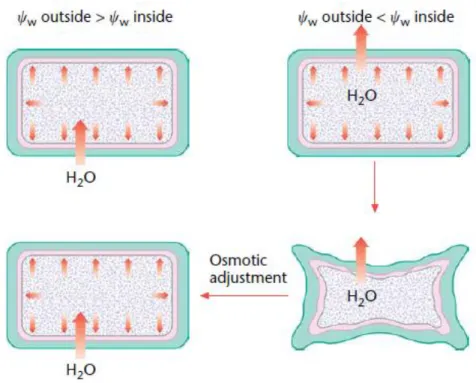
the water potential is less than that of the environment surrounding the cell (Figure 1), since wa-ter moves down a chemical gradient (Parry et al., 2002). If the water potential in the soil solution is higher than that of the cells, water can be transported into the cells of the root. The water po-tential of the cell is dependent upon two important parameters: the osmotic popo-tential (Ψs) and
the turgor pressure (Ψp). The content of solutes in the water of the cell (Ψs) and the pressure of
the cellular contents against the cell wall (Ψp) decrease the water potential. An additional
com-ponent, the matric potential (Ψm), or the binding of water to surfaces, also reduces the cell
wa-ter potential. Equation (1) is used to describe cell wawa-ter potential.
(1)
Changes in cellular water relations trigger further events that are manifested in plant responses at the molecular, metabolic, cellular, physiological and developmental levels.
In a process called osmotic adjustment, metabolism may be altered to maintain cellular water content through an increase in the concentration of solutes. In these cells, the osmotic potential is lowered and thus the water potential of the cell is lowered, permitting water uptake to be maintained (Figure 1). Turgor will fully or partially recover depending upon the external water potential. The cells will avoid a loss of water, yet they must be able to withstand low cellular wa-ter potential. The solutes that accumulate, called osmolytes, include sugars, proline and quawa-ter- quater-nary ammonium compounds such as glycine betaine (Parry et al., 2002). They are generally thought to be neutral to metabolic processes, and therefore do not disrupt plant function. The ability to adjust osmotically is dependent upon the genotype and is a more successful defence in resistant genotypes. Interestingly, osmolytes may have additional functions in stress resistance including the ability to stabilize proteins and ameliorate oxidative stress that may arise when
Figure 1 – Cellular and soil-water potential control water uptake into the cell. Osmotic adjustment, a
lowering of cellular osmotic potential, can permit water uptake and restore cellular turgor (Parry et al.,
2002).
plants are subjected to water deficit. Plants engineered to produce more glycine betaine have improved photosynthetic capacity when grown under water-deficit conditions (Passioura et al.,
1988). Engineering to increase accumulation of the osmolyte mannitol has not resulted in a level of accumulation that is sufficient to alter osmotic adjustment, but plant performance in re-sponse to stress is improved nonetheless. These overexpression studies may indicate that the alternative roles, rather than the first studied role in osmotic adjustment, may be the more im-portant role for osmolytes.
1.2.3 Water Stress on Plants
Plants experience water stress either when the water supply to their roots becomes limiting or when the transpiration rate becomes intense. Water stress is primarily caused by the water defi-cit, i.e. drought or high soil salinity. In case of high soil salinity and also in other conditions like flooding and low soil temperature, water exists in soil solution but plants cannot uptake it – a
situation commonly known as ‘physiological drought’. Drought occurs in many parts of the world
every year, frequently experienced in the field grown plants under arid and semi-arid climates. Regions with adequate but non-uniform precipitation also experience water limiting environ-ments. Since the dawn of agriculture, mild to severe drought has been one of the major produc-tion limiting factors. Consequently, the ability of plants to withstand such stress is of immense economic importance. The general effects of drought on plant growth are fairly well known (Bray el al., 1993). However, the primary effect of water deficit at the biochemical and molecular levels are not considerably understood yet and such understanding is crucial. All plants have tol-erance to water stress, but the extent varies from species to species. Knowledge of the biochem-ical and molecular responses to drought is essential for a holistic perception of plant resistance mechanisms to water limited conditions in higher plants.
Effects of water stress
The effects of drought range from morphological to molecular levels and are evident at all phe-nological stages of plant growth at whatever stage the water deficit takes place. An account of various drought stress effects and their extent is elaborated below.
Successful strategies under drought stress
Classically, plant resistance to drought has been divided into escape, avoidance and tolerance strategies (Figure 2). Nevertheless, these strategies are not mutually exclusive and, in practice, plants may combine a range of response types. Plants that escape drought exhibit a high degree of developmental plasticity, being able to complete their life cycle before physiological water deficit occurs. Escape strategies rely on the successful reproduction before the onset of severe stress (Galmés et al., 2007). This is important in arid regions, where native annuals may combine short life cycles with high rates of growth and gas exchange, using maximum available resources
while moisture in the soil lasts. This is associated with the plant’s ability to store reserves in
some organs (stems and roots) which increased in droughted plants. Plants can also endure drought conditions by avoiding tissue dehydration, while maintaining tissue water potencial as high as possible, or by tolerating low tissue water potencial (Chaves et al., 2002).
Figure 2 – Resistance to water-deficit stress can arise from mechanisms involving avoidance or
toler-ance of the water deficit (Bernacchia et al., 2004)
Dehydration avoidance is common to both annuals and perennials and is associated with a varie-ty of adaptive traits. These involve:
(i) minimizing water loss and (ii) maximizing water uptake.
Water loss is minimized by closing stomata; by reducing light absorbance through rolled leaves, a dense trichome layer increasing reflectance, or steep leaf angles; or by decreasing canopy leaf area through reduced growth and shedding of older leaves. Water uptake is maximized by ad-justing the allocation pattern, namely increasing investment in the roots (Bernacchia et al., 2004) Significant gains in crop productivity due to plant breeding for semi-arid regions resulted from enhancements in rooting depth. In addition, shedding of older leaves that contribute to water saving can be viewed as a recycling program within the plant, allowing the reallocation of nutri-ents stored in older leaves to the stem or younger leaves (Hirt et al., 2003). During drought-induced senescence, some proteases are drought-induced that are drought-specific and do not occur un-der natural aging, as is the case of some forms of cysteine proteases. Further knowledge of the regulation of these processes may allow development of plant breeding or genetic engineering strategies for the control of leaf senescence under drought. Leaf senescence, leading to short supply of sugars, is an important factor under drought stress. Therefore, delayed-senescence phenotypes may be desirable in crops where yield is source-limited and stem reserve storage and use is insufficient to support growth.
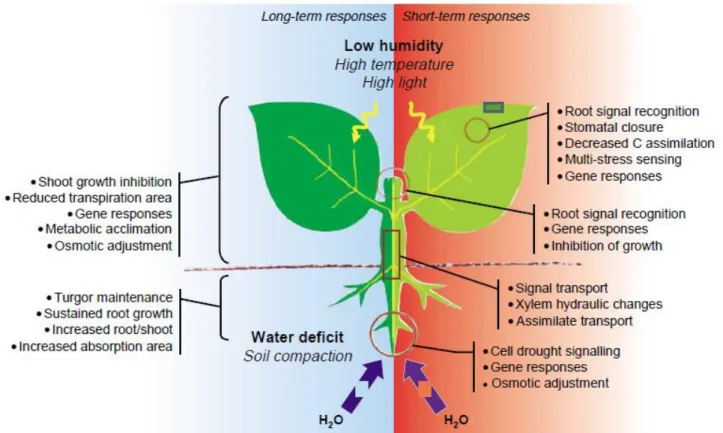
Figure 3 – Whole-plant responses to drought stress. Left, long-term or acclimation responses; right,
short-term responses (Shao et al., 2008).
Plant hormones and sugars are also involved in the regulation of shoot senescence. Elevated soluble sugars are known to repress the expression of photosynthesis-associated genes, in a process where hexokinases are involved in sugar sensing. One important effect of the overex-pression of kexokinase is accelerated senescence (Lawlor et al., 2002). Although water deficits lead to shedding of older leaves, the effects on younger leaves seem to be opposite. In fact, leaves that survive drought often show higher rates of photosynthesis and of a Rubisco content per unit of leaf area than leaves of similar age in well-hydrated plants, in what can be described
as “suspension” of leaf aging. In contrast, leaves growing under drought usually reach maturity
and become a carbon source at a smaller size than leaves grown in well-watered plants (Rao et
al., 2006).
Most of the drought-avoidance responses enable plant adjustment to low resources (water and minerals). In fact, in addition to a restriction in available water, soil drying induces a decrease in nutrients, in particular nitrogen (but also calcium), with strong interactive effects on plant growth and function. Plant adjustments to the low resources in arid environments include al-tered leaf structure, increased proportions of assimilates allocated to root, slow growth rates and slow organ turnover rates. Whereas short-lived organs can be discarded in response to stress, long-lived organs must optimize their resource gain (Shao et al., 2008).This is the case of a change in leaf demography reported in the some desert perennial species, whose leaf lifespan doubled under drought. This response results in lower turnover rates of leaves and therefore higher nutrient-use efficiency. This also means that plants can partially compensate for lower rates of carbon gain by investing less in new leaf construction (Wang et al., 2003).
However, long-lived leaves have to survive periods of hostile environment. This requires various protective mechanisms ranging from anatomical and morphological characteristics, to resist ex-treme climatic events, to the biochemical mechanisms targeted at dissipating excess radiant en-ergy. A decrease in SLA may also occur in response to drought in herbaceous leaves as a result of an increased investment in structural tissues allowing increased resistance to unfavorable envi-ronmental conditions. Finally, tolerance to low tissue water potencial may involve osmotic ad-justment, more rigid cell walls, or smaller cells (Shao et al., 2008). Many of the evergreen shrubs and trees in arid and semi-arid regions combine the high solute concentration in living cells and low photosynthetic capacity and stomatal conductance. Small leaves are well adapted to high light and high temperature that prevail in most arid regions, because their size permits greater sensible heat dissipation and an efficacious control of water loss by stomatal closure (Figure 3).
Chemical signaling under drought stress
Stomatal closure, together with leaf growth inhibition, is among the earliest responses to drought, protecting the plants from extensive water loss, which might result in cell dehydration, runaway xylem cavitation and death. This is a common response to water deficits that develop quickly or slowly, and may result from shoot or root dehydration. The opening and closing of stomata result from changes in turgor of guard cells relative to epidermal cells. Metabolic energy (e.g. from mesophyll photosynthesis) and changes in membrane permeability are involved as well (Liu et al., 2005). The detailed mechanisms of stomatal response to drought are not easy to rationalize because at any given moment stomata may be responding to a complex set of factors ranging from light intensity to CO2 concentration in addition to leaf water status. Studies in the
late 1980s showed that stomata did close in response to drying soil even when shoot water sta-tus was maintained at high turgor, either by experimental manipulation or by growing the plants with part of the root system in drying soil (split-root experiments) (Zhang et al., 1991). Further evidence indicated that stomatal closure is likely to be mediated by chemical signals travelling from the dehydrating roots to the shoots. Chemical signals can be differentiated from hydraulic signals but both are important because they reduce stomatal conductance and leaf growth un-der conditions of water deficit. Chemical signals most probably dominate during early stages of stress before hydraulic signals are produced, and become less important under severe drought when leaf water potential declines and leaves wilt. It is likely that the hydraulic signals that may trigger the production of the hormone abscisic acid (ABA) in leaves dominate as plants become more water stressed (Holbrook et al., 2002).
The production of ABA in roots and its transport to the leaves provides the plant with a mecha-nism for transmitting a chemical signal to report on the water status of the soil. This system could have evolved specifically for this purpose or the chemical signal could merely be a conse-quence of the increased production of ABA required to maintain root growth under water defi-cit. A dominant role for ABA in root to shoot signaling under drought and in the control of sto-matal conductance was demonstrated in early reports (Thompson et al., 2007). Several groups have also used a bioassay approach to show that ABA that is fed to leaves decreases transpira-tion (Munns et al., 1992). It is also well known that ABA has a direct effect on guard cell closure. However, the ABA that acts on guard cells may not originate entirely in the roots. Recent reports suggest that the ABA that acts on guard cells could be produced in the leaves of some species, such as tomato and sunflower. In tobacco (Nicotiana plumbaginifolia), grafting experiments showed that ABA came from the roots under conditions of drought (Borel et al., 2001). ABA is synthesized in both roots and leaves, but not much is known about the precise location of this synthesis in roots, which may influence how plants perceive and monitor soil water content. ABA
content in roots is well correlated with both soil moisture and the relative water content of roots in many plant species (Thompson et al., 2007). Some reports suggest that ABA is synthesized in root tips, but synthesis has been assessed mainly by measuring ABA content rather than synthet-ic activity, so conclusions related to the site of synthesis need to be re-examined more carefully. One study using detached roots of pea (Pisum sativum) and Asiatic dayflower (Commelina
com-munis) found that ABA synthesis occurred somewhere between the root tip and a point 3 cm
distal to the tip (Zhang et al., 1987). Recent studies have tried to locate enzymes that are in-volved in ABA biosynthesis, including aldehyde oxidase, which catalyzes the final steps in ABA biosynthesis; however, these studies have focused on ABA production under differing nitrogen nutrition rather than drought stress (Barabés et al., 2000). More work will be required to clarify exactly where the ABA is produced in roots under drought stress. Although the role of ABA in controlling stomatal conductance is strongly supported by many experiments and experimental approaches, there may be other substances in the sap that act in concert with ABA to control drought-induced stomatal closure. For example, recent findings have suggested an interaction between jasmonic acid and ABA in plants under drought stress (Mahouachi et al., 2007). In addi-tion, the dominant role of ABA as a root to shoot signal has been challenged by experiments showing that the ABA concentrations of xylem sap from drought-stressed plants were much lower than the concentrations of exogenous ABA required to close stomata in detached leaves (Hartung et al., 1998). It may be that the use of exogenous hormones in bioassays may exclude important components of xylem sap that act synergistically with ABA in planta, thus accounting for the higher levels of exogenous ABA that are required to reduce transpiration. Grafting exper-iments have also been used to determine the source of ABA in drought-induced stomatal sure. Some of these experiments suggest that leaf-sourced ABA is important for stomatal clo-sure, but the influence of ABA precursors that might be transported from roots to leaves was not measured, and therefore the role of roots in chemical signaling was not completely resolved (Thompson et al., 2007). Other studies show that production of ABA in the rootstock has a strong influence on and is negatively correlated with stomatal conductance (Soar et al., 2006). Overall, ABA is a dominate signal in controlling growth and transpiration, but other factors could also be important. The importance and role of root-sourced ABA is still controversial, but some of the conflicting findings may be due to differences in the intensity of stress imposed and the time-course of the development of water deficit. Changes in the pH of xylem sap commonly ob-served under drought stress can be an important component of root to shoot signaling and may act synergistically with ABA. In many plant species (e.g. Phaseolus coccineus and C. communis), xylem sap pH becomes more alkaline when plants are water stressed and this leads to enhanced stomatal closure and even reduced growth (Ashraf et al., 2007).
The potential effects of pH have been outlined previously and include:
i) changes in ABA metabolism resulting in increased leaf ABA concentration;
ii) ii) direct effects on leaf water status that could alter guard cell turgor or sensitivity to leaf ABA concentrations;
iii) iii) direct effects on ion fluxes through the guard cell plasma membrane; and
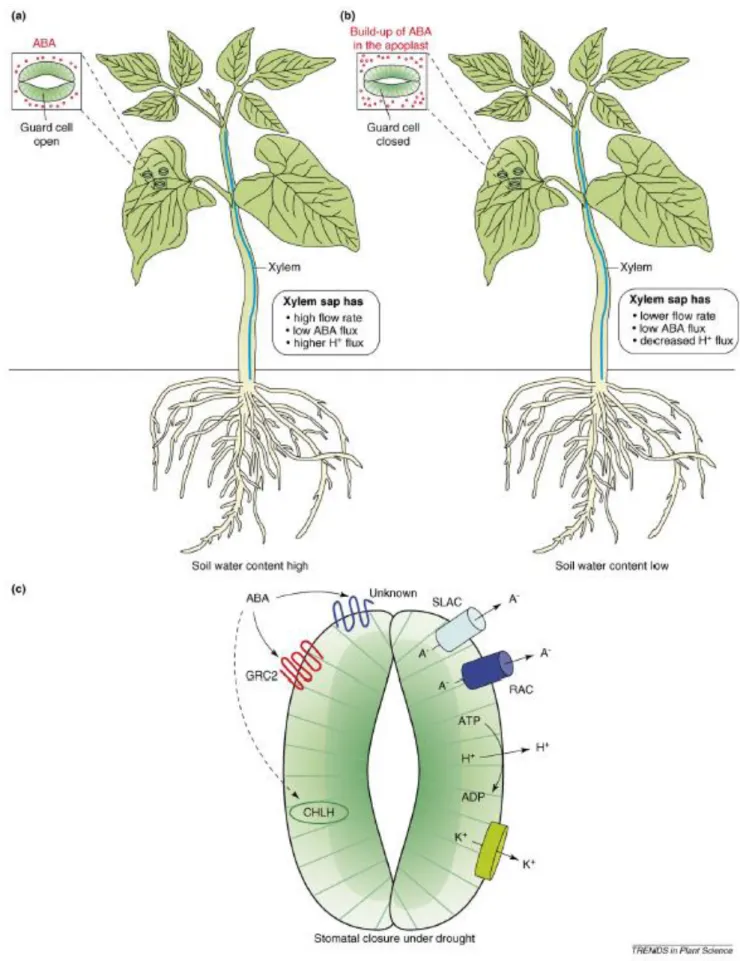
iv) iv) altered distribution of ABA in the leaf, specifically an increase the concentration of ABA in the apoplast outside of the guard cells (Figure 4).
It is this change in apoplast pH that probably has the greatest role in signaling. As ABA is a weak acid it may become protonated or deprotonated in the pH range found in the apoplast of leaves. This was clearly shown in the early 1980s in experiments on mesophyll protoplasts that docu-mented high rates of ABA uptake at acidic pH and almost no uptake at the more alkaline pH of 7.5 (Kaiser et al., 1981). In certain plant species, the pH of the leaf apoplast increases as the soil dries because of the delivery of xylem sap that is of a more alkaline pH. The ABA that arrives from roots via the xylem will remain deprotonated under the more alkaline conditions and will not be taken up passively by mesophyll cells. The result is that less ABA is transported into the mesophyll cells and a build-up of ABA in the apoplast leads to enhanced stomatal closure. Under well-watered conditions, when the apoplast is more acidic, ABA would passively enter the sym-plast, and apoplastic concentrations would not increase as rapidly as they do under water stress. Therefore, the effect of pH is indirect in that it leads to the accumulation of ABA in the apoplast and enhances the effect of ABA on guard cells (Liu et al., 2003).
The response of xylem sap pH to drought stress does not appear to be consistent in all species or even in different experiments using the same species. One study showed that the sap pH of sun-flower and C. communis did not change significantly as soil dried, whereas the xylem sap pH of tomato did increase as soil dried. In maize (Zea mays) grown using ammonium as the nitrogen source, there was no change in sap pH during early or even during later stages of drought. Other experiments using maize have been conducted in the field and have found that the sap pH of drought-stressed plants growing on a loam soil was more alkaline as the period of drought lengthened. Such inconsistencies may be explained by the fact that solute concentrations within the xylem sap vary with flow rate in intact plants (Bahrum et al., 2002).
Figure 4 – Changes in xylem sap composition under drought. Drought causes the alkalinization of xylem sap pH
in certain plant species. (a) Well-watered plant with apoplastic pH 6.0. (b) Plant under drought conditions with
apoplastic pH 7.0 (Liu et al., 2003).
Photosynthesis
Photosynthesis is particularly sensitive to the effects of water deficiency. Plants’ resistance to water deficiency yields metabolic changes along with functional and structural rearrangements of photosynthesizing apparatus. Photosynthesis of higher plants decreases with the reduction in the relative water content (RWC) and leaf water potential. Lower photosynthesis rate is a usual effect of water stress in plants and has been attributed primarily to stomatal limitation and sec-ondarily to metabolic impairment (Figure 5). However, metabolic impairment is the more com-plex phenomenon than the stomatal limitation though the relative importance of stomatal or metabolic inhibitions is unclear. Some studies blamed stomatal closure for the inhibition of C4 photosynthesis under water stress while others concluded that non-stomatal factors play the major role (Nayyar et al., 2006).
The photosynthesis rate of leaves in both C3 and C4 plants decrease under the drought condi-tions. Evidence indicates that C4 photosynthesis is more sensitive to water stress and C4 plants, such as corn (Zea mays L.) are more susceptible to water deficiency than C3 plants, such as wheat. It explains the predominance of C4 plants in hot, arid regions - areas prone to frequent drought. C3 and C4 plants are alike in the basic process of photosynthesis like Calvin cycle and electron transport chain components, yet significant differences exist between them, which make their responses to water stress differ at a number of levels (Wilkinson et al., 2004).
Figure 5 – Photosynthesis under drought stress. Possible mechanisms in which photosynthesis is reduced
un-der stress (Prokic et al.,2006).
There are some co-factors, which decrease plants' photosynthesis under water stress. Of them, qualitative and quantitative changes in the pool of photosynthesizing pigments, low CO2 uptake
due to stomatal closure and resistance, poor assimilation rates in photosynthetic leaves are prominent. Assimilation rates in photosynthetic leaves decreases due to reduced photosynthetic metabolites and enzymes activity, low carboxylation efficiency and inhibition of chloroplast activ-ity at low water potential (Lawlor et al., 2009). Among other co-factors of water stress, the dam-age of the photosynthetic apparatus through the production of ROS such as superoxide and hy-droxyl radicals, worth special mention. Decrease in chlorophyll content of leaves under water stress is well known. Water stress inhibits chlorophyll synthesis at four consecutive stages:
(I) the formation of 5-aminolevuliniuc acid (ALA);
(II) ALA condensation into porphobilinogen and primary tetrapyrrol, which is transformed into protochlorophyllide;
(III) light-dependent conversion of protochlorophyllide into chlorophyllide; and
(IV) synthesis of chlorophylls a and b along with their inclusion into developing pigment– protein complexes of the photosynthetic apparatus. In the majority of cases, carotenoids are less sensitive to water stress than chlorophyll, which has been demonstrated for sev-eral species of agricultural plants.
However, unlike chlorophyll, increase in xanthophyll pigments such as zeaxanthin and an-theraxanthin in plants under water stress have been reported. Xanthophyll pigments have a pro-tective role on plants under stress, and some of these pigments are involved in the xanthophyll cycle which has inhibitory role on ROS production. Rubisco, the key enzyme for carbon metabo-lism in leaves, acts as a carboxylase in the Calvin cycle and as an oxygenase in the photorespira-tion which, however, frequently is viewed as an adverse process. Rubisco is the most critical player influencing the physiology of plants under water-stressed conditions. Under the condi-tions of water stress, a rapid decrease in the amount of Rubisco takes place in most plants which in turn leads to lower activity of the enzyme (Maroco et al., 2002). This effect is evident in all plants studied though the extent is species-dependent. Water deficiency reduces the supply of carbon dioxide from the environment due to the closure of stomata. Consequently, photorespi-ration increases which ensure partial substrate replenishment and maintain the carboxylating function of Rubisco. The end result is the utilization of excess reducing equivalents in chloroplast that causes a reduction in the oxygen-free radicals’ production leading to the oxidative damage in chloroplasts. The reduction in chloroplast volume can also be linked to the desiccation within the chloroplast that leads to the conformational changes in Rubisco (Miyashita et al., 2005). Moreover, drought stress conditions acidify the chloroplast stroma causing inhibition to the
bisco activity. In addition, decline in Rubisco activity is also caused by the lack of the substrate for carboxylation, reduction in the amount and/or activity of the coupling factor - ATPase, loss of RBP recognition sites in Rubisco, structural alterations of chloroplasts and Rubisco, and release of Rubisco from damaged plastids. In addition to Rubisco, water stress can reduce activity of other photosynthetic enzymes to different extents such as NADP-dependent glyceraldehyde phosphate dehydrogenase, phosphoenolpyruvate carboxylase, NAD-dependent malate dehy-drogenase, phosphoribulos kinase, fructose-1,6-bisphosphatase and sucrose phosphate syn-thase. In addition to its negative effects on dark reactions of photosynthesis, water stress also disrupts the cyclic and non-cyclic types of electron transport during the light reaction of photo-synthesis. The disruption is clearer in the oxygen-releasing complex and electron transfer from protochlorophyllide to P700 (Pego et al., 2000). Lower electron transport rate negatively affects photophosphorylation process and decrease ATP synthesis as well as NADP+ reduction. ATPase inhibition under water deficiency is also responsible for the reduction in ATP levels in chloro-plasts. All these factors cumulatively affect the intensity of photo-assimilation and the stability of the photosynthetic apparatus under the conditions of water stress. Both of the PSs in chloro-plasts are affected by water deficiency, however, PS I of some plants are more severely damaged compared to PS II, though there is an opposite conclusion as well.
Incomplete or slow recovery of photosynthesis was related to oxidative stress and/or sustained photoprotection of the PSII system (Chaves et al., 2002). Therefore, the analysis of PSII and elec-tron transport chain may be expected to provide complementary and reliable information on drought-related mechanisms. The photochemical changes induced by drought/re-watering cy-cles can be analyzed through monitoring the chlorophyll a (Chl a) fluorescence since it was es-tablished that Chl a transients could be taken as an indicator of the water potential in the leaves and the photosynthetic status of the plants (Holbock et al., 2002). Several studies provided evi-dence that the different phases of the Chl a fluorescence rise (OJIP) are correlated with different reduction processes of the electron transport chain; the O–J phase, for example, is thought to indicate the reduction of the acceptor side of the PSII, while the J–I phase reflects the reduc-tion/oxidation of the plastoquinone pool (PQ), and the I–P represents the re-reduction of plasto-cyanin and P700+ in the photosystem I (Soar et al., 2006).
Oxidative damage
Exposure of plants to certain environmental stresses quiteoften leads to the generation of reac-tive oxygen species, including superoxide anion radicals (O2-), hydroxyl radicals (OH), hydrogen
peroxide (H2O2), alkoxy radicals (RO) and singlet oxygen (O1/2).Reactive oxygen species may
re-act with proteins, lipids and deoxyribonucleic acid, causing oxidative damage and impairing the normal functions of cells. Many cell compartments produce reactive oxygen species; of these, chloroplasts are a potentially important source because excited pigments in thylakoid mem-branes may interact with O2 toform strong oxidants such as O−2 or O1/2(Blokhina et al., 2003).
Further downstream reactions produce other reactiveoxygen species such as H2O2 and OH−. The
interactionof O2 with reduced components of the electron transportchain in mitochondria can
lead to reactive oxygen species formation, and peroxisomes produce H2O2 when glycolate is
oxi-dized into glyoxylic acid during photorespiration.
1.2.4 Water uptake by roots: effects of water deficit
Fewer efforts have been made to investigate the input side of the water balance, i.e. the acquisi-tion of water from soil. It has been known for a long time that the hydraulic conductance of roots is variable. It depends on factors such as water shortage and salinity of the soil and on the demands for water from transpiring shoot. Other important factors are nutrient deficiency, an-oxia, temperature, and heavy metals. The lack in current knowledge of how these factors influ-ence water supply is largely due to technical problems in measuring, unsufficient detail, the hy-draulic architecture of roots. Basic hyhy-draulic properties of roots are not yet adequately under-stood, simple because roots in the soil are much less accessible than shoots.
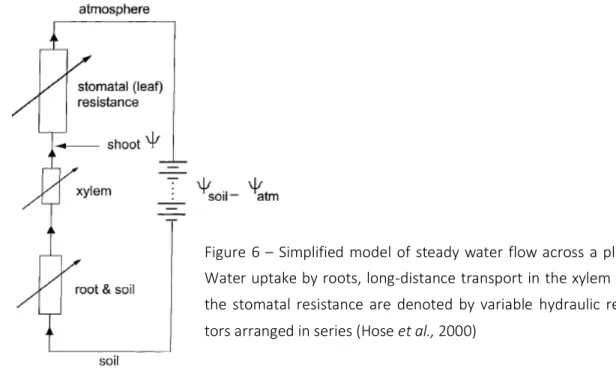
In a schematic way, it is shown in Figure 6, how the variable root hydraulic resistance would con-tribute to the water potencial (water status) of the shoot. Usually, the vapour pathways in mes-ophyll air spaces, stomatal pores, and the boundary layer outside the leaves represent the high-est hydraulic resistance in the soil-plant-air continnum (SPAC), and most of the water potencial difference between soil and atmosphere will drop here. At a given water potencial difference (Ψsoil–Ψatm) and water flow across the SPAC, the water potencial of the shoot may be
dominat-ed by the drop in water potencial across the root hydraulic resistance which is usually the high-est within the liquid part of the SPAC. In other words, to improve the water status of the shoot, the plant could either increase stomatal or decrease root hydraulic resistance; the latter does happen (besides the regulation of transpiration) (Hose et al., 2000). The hydraulic resistance of
the xylem is relatively small. It way, however, become important under conditions of stress, when high tensions in the xylem cause cavitation and interrupt water flow in vessels between root and shoot.
Instead of actively taking up water, roots just allow it to pass through them in response to water potencial gradients usually set up by transpiration. The complex anatomical structure of roots results in a complex pattern of water flow. Transport across various tissues (epidermis, cortex, stele) has to be considered during the radial passage across the root cylinder as well as a longi-tudinal flow component (axial transport in xylem vessels). During stress, the anatomy of root tis-sue will change, largely, because of stress (such as water deficit) induces the development of apoplastic barriers for water and ion flow. Their formation represents a fundamental adaptive strategy of plants to survive in and adverse environment. In addition, the hydraulic conductivity of root cell membranes may be reduced due to a closure of water channels or aquaporins in root cell membranes (Harvengt et al., 2000). So, besides transport across the apoplast, there is some water flow across cell membranes. Water deficits reduce root growth and cause a pronounced suberization of the apoplast and, perhaps, also affect the cellular passage (water channels). This influences the water balance by reducing the capacity of roots to take up water (Henzler et al.,
2004).
Figure 6 – Simplified model of steady water flow across a plant.
Water uptake by roots, long-distance transport in the xylem and
the stomatal resistance are denoted by variable hydraulic
resis-tors arranged in series (Hose et al., 2000)
Root water uptake capacity is the consequence of intrinsic root hydraulic properties of a given plant. Water can flow from soil to xylem vessels following three different pathways: apoplastic, symplastic, and transcellular ones (Figure 7). The apoplastic path includes the water circulating along cell walls and intercellular spaces. The symplastic path comprises the water circulating along cell walls and cells through plasmodesmata. Finally, the transcellular path consists of the water flowing across the cell membranes (plasmalemma and tonoplast). Symplastic and trascel-lular paths cannot be distinguish experimentally, so the sum of both pathways is called cell-to-cell pathway (Holbrook et al., 2003).
At the same time, there is an exchange of water among the three pathways depending on the environmental conditions. Thus, under non-stressful conditions water circulates mainly through the apoplastic path due to hydrostatic forces. Conversely, when transpiration is restricted at night or under stressful conditions water flows predominantly through the cell-to-cell path be-cause of the osmotic forces (Henzler et al., 2004). Under some circumstances, it has been found that water flows only via cell-to-cell path. Some roots develop exo- and endodermis, which re-strict the water flow through the apoplastic path, and therefore water has to cross cell mem-branes to reach the xylem vessels and consequently it has to flow through aquaporins. Aqua-porins are membrane intrinsic proteins that allow the passage of water and other small mole-cules through them always following an osmotic gradient.
Figure 7 – Transport pathways in roots (Holbrook et al., 2003).
An important characteristic of a drought resistant species is an extensive and widely spreading branching root system. Independent of the modified rooting patterns and water uptake capacity and efficiency, it is reported that grain sorghum roots are still active and extract water even when soil water potential goes below −1.5 MPa while in maize embolism occurs at around −1.6 MPa (Cochard et al., 2002). In general, under drought conditions grain sorghum develops a deeper and more evenly distributed root system than maize. However, found that rooting char-acteristics of various improved sorghum lines differed significantly, then their functioning, such as water uptake and root water uptake efficiency, may also vary widely. Compared with a drought susceptible cultivar, for example, a drought tolerant sorghum cultivar showed higher water uptake efficiency, fewer late metaxylem vessel per nodal root, smaller leaf area, and well developed sclerenchyma (Schreiber et al., 2001).
Drought Effects on Root Morphology and Anatomy
The most common effect of drought stress is an increment of the root:shoot ratio. Such a change in the proportion of root biomass with respect to shoot biomass can be caused by a re-ducing in shoot growth without any change in root growth, by a direct investment in root growth, or because root growth is less restricted than shoot growth membranes (Harvengt et al., 2000). The increase of root: shoot ratio under drought conditions has been as a mechanism to explore more soil volume in order to absorb water from deeper soil layer, which is not available for less developed roots. However, no clear relationship between root:shoot ratio and drought tolerance has been always observed. This lack of correlation can be explained because there are differences in water uptake capacity in the root system. It was observed that under drought conditions cowpea roots increased the capacity of absorbing water only of the deeper younger roots. Similar results were found, in other study, in maize plants. At the same time, a better cor-relation between root:shoot ratio and drought tolerance has been observed when the shoot part was expressed in terms of area instead of weight. In addition, root length or root length density under drought conditions have been correlated with water stress tolerance (Schreiber et al.,
2001). A drought tolerant variety of maize had longer nodal roots than a sensitive variety under drought conditions. Furthermore, was observed a correlation between root density in deeper soil layers and yield in different peanut genotypes with contrasting tolerance to pre-flowering drought stress. However, although it could be a relationship between root growth under drought conditions and drought tolerance, it is clear that this parameter alone cannot explain the higher capacity of water absorption of such roots. Thus, when comparing maize versus rice, it was found that maize plants were able to absorb more water from deeper soil layers under severe drought conditions than rice, and this was not only explained by a better root development of maize plants, but also by a higher water uptake capacity per unit of root surface. So, there must be intrinsic properties of root tissues that make a particular root more efficient in terms of water absorption under drought conditions than others (Stasovky et al., 2002).
Roots may develop apoplastic barriers to water and solutes from just 10 mm from their root apexes to their basal zones. These barriers may consist of suberin layers deposited in the inner parts of the cell walls of endo and/or exodermis, lignin depositions in sclerenchyma and stellar cells, and casparian bands between exo and/or exodermis cells. It is well known that these barri-ers increase under drought conditions and can diminish root water uptake capacity estimated as root hydraulic conductivity (L) (Stasovky et al., 2002).
1.3ARUNDODONAX
Arundo donax (giant reed cane) is an invasive perennial weed grass plant belonging to the
Po-aceae family of the Arundinae tribe, widely found in subtropical and warm temperate regions all
over the world. The success of its diffusion is due to its spontaneous propagation by rhizome fragmentation and sprouting from the cane nodes, but also mostly, to its cultivation. In fact, the canes are used for many purposes such as roof thatching, fishing rods, reeds in woodwind in-struments, etc. It is one of the largest herbaceous grasses and even though A. donax is a C3 plant, it shows high photosynthetic rates and unsaturated photosynthetic potential in compari-son with C4 plants. The origin area of giant reed is still a matter of debate because biogeographic and evolutionary origin of this species has been obscured thought ancient and widespread culti-vation (Angelini et al., 2005). There is no agreement on the localization of the area where it orig-inated. Botanical and historical evidence support the hypothesis that the origin (semi-domesticated or at least incipient) started from a pool of wild plants native in the Mediterranean region. However, giant reed has been cultivated in Asia, Southern Europe, North Africa and the Middle East for thousands of years. It was used to satisfy local necessities, such as training stakes, baskets and mats, walking sticks and fishing canes. In Italy, this species has been used industrially since 1930, when a company registered a trade mark to obtain cellulose past for the production of rayon viscose and paper (Ceotto et al., 2010), although it is also considered an in-vasive and dangerous weed plant in several countries. Despite these problem, in recent years A.
donax aroused the interest of the scientific community because of its high potencial in EROEI
value (energy returned on energy invested) compared to other energy crops. This fact is due to its great biomass productivity and that this species is also cropped in low input conditions (Ange-lini et al., 2009). If we consider that the length of cropping life of A. donax lasts about 12 to 15 years, without irrigation (with the expection of the first year), with low fertilization (this question needs further research due to the scarcity of experimental data), without phytosanitary and weeding treatments (Angelini et al., 2005), it’s easy to understand the reason why the interest of the crop has significantly aroused (Figure 8).
According to its fast growth rate and ease of vegetative propagation, giant reed is considered as invasive species in the warm-temperate regions with winter floods that widely disperse this plant (Pilu et al., 2012). However, contrary to its invasive characteristics, as in the USA, giant reed has received social consensus by Mediterranean farmers, who have learned to live and deal with this species a long time ago due to its multiple usage. Indeed, giant reed is naturalized in the Medi-terranan basin, it grows spontaneously and abundantly all over Mediterranean and warm-temperate areas of the world (In addition, thanks to a highly developed canopy and a deep root
system, it covers the whole ground in the years following the establishment preventing the risk of soil erosion (Cosentino et al., 2005).
1.3.1 Cultivation and Production in Arundo donax
It was reported an average aboveground biomass in Arundo of 39.6 Mg dry matter ha-1 in a 7-year study conducted in the Low Po Valley (Northern Italy) and reported an average yield of 37.7 Mg dry matter ha-1 in a 12-year study carried out in the coastal Tuscany (Central Italy) (Angelini
et al., 2008). Giant reed growth rates from established rhizomes in California, averaged 6 cm per
day in the first 40 growning days and 2,5cm per day in the first 150 growning days. Giant reed can grow more than 5 cm per day under optimal conditions.
Figure 8 - Life cycle, propagation and culture of A. donax. (A) Mature plants in summer (left) and
in the winter (right). (B) Propagation by shoots sprouting from canes (left) and from rhizome
(right). (C) Single cane, reaching the height of 8 m (D) Culture of A. donax by cane cuttings
propa-gation (using mulch) (Mariani et al., 2010).
Dormant giant reed is able to survive temperatures as low as 0°C, but it can suffer severe dam-age by frost at the seedling stdam-age or during spring re-growth. Sufficient moisture is needed after planting in the first year in order to assure a good stand that may last an average of 10 years (Mariani et al., 2010). Weed growth can be reduced by lack of moisture during its first year but drought does not cause usually damage to stands which are two- to three years old. Giant reed can overcome dry growing conditions and still produce yields of up to 20 tons ha-1 dry biomass, although with moderate irrigation it may produce larger yields (Christou et al., 2000).
1.3.2 Interest as a Bioenergy Crop
From the energy point of view, A. donax can be used to produce energy by direct combustion or to produce second generation biofuels, such as bioethanol, generated by alcoholic fermentation of lignocellulosic biomass pretreated to facilitate sugar release (Christou et al., 2000). Of course, the pretreatment processes used to increase carbohydrate degradability (e.g. steam explosion, acid and heat treatment) consume energy. For this reason, a goal of the genetic improvement of
A. donax and other grasses should also consist in the modification of cell wall composition in
or-der to facilitate the use of the lignocellulose products in the biomass. The presence of phenolic compounds in the cell wall limits the carbohydrate degradability and consequently the energy value. The lignins, which are tightly associated to cell wall carbohydrates, thus prevent physical access of enzymes to cellulose and hemicelluloses and strongly limit their enzymatic hydrolysis. Cross linkages between lignins and arabinoxylans, and between arabinoxylan chains, through ferulate and diferulate bridges, also greatly impede cell wall degradability (Scordia et al., 2012). Although A. donax is one of the tallest herbaceous plants, its lignin content is similar to that of other grass species, with an average value equal to 21%, while it equal to 19% in switchgrass, 20% in sugarcane, and 23% in miscanthus. The latter values are however still higher than in maize, with lignin content close to 11%. Lignins of A. donax are composed of guaiacyl (G), sy-ringyl (S), and p-hydroxyphenyl (H) units with an S/G ratio of 1.13 - 1.32 which is a little lower value than in maize. In fact, it was showed that little differences were noticed, for example, be-tween sorghum straw and A. donax capabilities to produce ethanol after acid pretreatment and enzyme hydrolysis using Zymomonas mobilis. In another work, A. donax, elephantgrass (Pennise-tum purpureum), miscanthus and sugarcane were compared for their capacity to produce bio-ethanol using cellulose solvent-based lignocellulose fractionation (CSLF) pretreatment and en-zymatic (cellulase) hydrolysis (Ge et al., 2011). The results obtained showed no significant differ-ences among these energy crops, consequently indication that one of the most important pa-rameters to be considered to optimize the EROEI value is the biomass production per hectare. Of
course, another promising way to use these energy crops is through the direct anaerobic diges-tion of chopped biomass to produce biogas without any pretreatment. However, for both bio-ethanol and biogas production, a higher susceptibility of the biomass to pretreatments will allow the use of more environmentally friendly processes, lowering pollution and energy costs.
1.3.3 Arundo donax as a candidate plant for energy production
Taken together, these data suggest that A. donax could be considered a good candidate to sup-plement/replace maize, sorghum, and other energy crops (Table 1) used in particular to feed an-aerobic digesters to produce green energy in Northern Italy (Schievano et al., 2012). A. donax
could thus be considered as the best candidate for cultivation in those Mediterranean areas characterized by 1800°C GDD (growth degree day) and useful rainfall equal at least of 300mm during the season. Another promising perennial energy crop that could be utilized is Miscanthus
(Miscanthus x giganteus) a sterile, triploid interspecific hybrid, also needing vegetative
propaga-tion by rhizome fragmentapropaga-tion or in vitro cultures.
However, a comparison of A. donax and Miscanthus in a long-term field experiment (12 years) in Central Italy (Pisa) showed a higher biomass production in the case of A. donax with an average biomass production of 37.7 tons of dry matter per hectare and 28.7 t ha-1 for Miscanthus. These results have been obtained without irrigation and by fertilizing every year with 100 kg P2O5 ha-1,
100 kg K2O ha-1 and 100 kg N ha-1 (Angelini et al., 2009). In another work conducted in Southern
Italy by a lower level of biomass production (22 t ha-1) was reported for A. donax, probably due to the scarcity of rainfall (Cosentino et al., 2005). Hence, in Northern Italy where there is often a high water table and a good summer rainfall, A. donax could be cultivated without irrigation (apart from the first year) and with a minimum or no chemical fertilization. Here we can consider the possibility to use instead as fertilizer the manure/digested matter that are considered as wastes of the agriculture in this region rich in cattle rearing and digesters.
Table 1 - Comparison among maize, sorghum and A. donax as energy crops (Angelini et al., 2009)