RESUMEN
Objeivo: Veriicar si el uso del aceite esencial de ylang ylang por medio de la aplicación cutánea o la inhalación altera la percepción de la ansiedad y autoesima, así como de los parámetros isiológicos de presión arterial y temperatura corporal.
Método: Estudio piloto en el cual parici
-paron 34 profesionales de enfermería dis
-tribuidos en tres grupos: el primero recibió aceite esencial por vía tópica, el segundo por vía inhalatoria y el tercero (placebo) esencia de ylang ylang por vía tópica. La evaluación se realizó aplicando el Inventa
-rio de Ansiedad (IDATE) y la Escala de Au
-toesima de Dela Coleta antes y después de 30, 60 y 90 días y 15 días después del período de uso. Resultados: En la evalu
-ación intra grupo, antes y después de la intervención, hubo diferencias signiicai
-vas para los tres grupos en la variable au
-toesima (valores p: G1=0,014; G2=0,016; G3=0,038). No hubo diferencias en los análisis entre grupos para la ansiedad o para los parámetros isiológicos. Conclusi -ón: Hubo solamente cambios signiicaivos en la percepción de la autoesima intra grupo para los tres grupos.
DESCRIPTORES Aromaterapia Cananga Ansiedad Autoimagen
Terapias complementarias Enfermería
RESUMO
Objeivo: Veriicar se o uso do óleo essen
-cial de ylang ylang por meio de aplicação cutânea ou inalatória altera a percepção da ansiedade e da autoesima e os parâ
-metros isiológicos como pressão arterial e temperatura. Método: Estudo piloto no qual pariciparam 34 proissionais da equipe de enfermagem randomizados em três grupos: um recebeu o óleo essencial de ylang ylang via cutânea, o segundo o recebeu via inalatória e o terceiro (place
-bo) recebeu essência de ylang ylang via cutânea. A avaliação foi feita por meio do Inventário de Ansiedade (IDATE) e da esca
-la de autoesima de De-la Coleta que foram aplicadas antes, ao inal de 30, 60 e 90 dias e 15 dias (follow up) após o término do uso. Resultados: Na avaliação intragrupo, antes e após a intervenção, houve diferen
-ça signiicante para os três grupos na vari
-ável autoesima (valores de p: G1=0,014; G2=0,016; G3=0,038). Não houve diferen
-ças nas análises entre grupos para a ansie
-dade ou para os parâmetros isiológicos.
Conclusão: Houve alterações signiicaivas apenas na percepção da ansiedade intra
-grupo para os três -grupos.
DESCRITORES Aromaterapia Cananga Ansiedade Autoimagem
Terapias complementares; Enfermagem
ABSTRACT
Objecive: To verify if the use of ylang ylang essenial oil by cutaneous applica
-ion or inhala-ion alters the anxiety and self-esteem percepion and physiological parameters as blood pressure and tem
-perature. Method: A pilot study with 34 professionals from a nursing group ran
-domized in three groups: one received the ylang ylang essenial oil by cutaneous applicaion, the second received through inhalaion and the third (placebo) recei
-ved the ylang ylang essence through cuta
-neous applicaion. The assessment was done by an Anxiety Inventory (IDATE) and the Dela Coleta self-esteem scale, applied on baseline, ater 30, 60 and 90 days and ater 15 days post-intervenion (follow up).
Results: In the pre and post-intervenion
intergroup analysis, there was a signiicant diference in self-esteem for the three groups (p values: G1=0.014; G2=0.016; G3=0.038). There were no diferences in the analysis between groups for anxiety or for physiological parameters. Conclusion:
It was found signiicant alteraions only to the intergroup percepion of self-esteem for the three groups.
DESCRIPTORS Aromatherapy Cananga Anxiety Self concept
Complementary therapies Nursing
Aromatherapy with ylang ylang for
anxiety and self-esteem: a pilot study
O
riginal
a
rticle
Juliana Rizzo Gnatta1, Patricia Petrone Piason2, Cristiane de Lion Botero Couto Lopes3, Noemi
Marisa Brunet Rogenski4, Maria Júlia Paes da Silva5
AROMATERAPIA COM YLANG YLANG PARA ANSIEDADE E AUTOESTIMA: ESTUDO PILOTO
AROMATERAPIA CON YLANG-YLANG PARA LA ANSIEDAD Y AUTOESTIMA: UN ESTUDIO PILOTO
INTRODUCTION
Aromatherapy is a therapeuic technique based in the use of essenial oils (EO). Aroma means pleasant odor and therapy means treatment that aims cure of a physical, emoional or mental indisposiion. This pracice uses vola
-ile concentrates extracted from plants – essenial oils – and its objecive is to modify a behavior or humor. The EO is a condensate obtained from vegetable disillated ma
-terials, as roots, stems, leaves, lowers, fruits, seeds and resins(1). They are composed by high complexity chemical
molecules that can be applied directly to the skin or to be inhaled. When the contact is cutaneous, the EO crosses the skin barrier due to its small and low weight molecules, they are absorbed and falls into the blood stream which transports it to the issues and organs(2). When the OE
is inhaled, its molecules are absorbed by the nostrils and it contacts the olfactory nerves that are directly connect
-ed to the Central Nervous System and take the simulus to the Limbic System that is responsible for the feelings, memory, impulses and emoions(2).
The aromatherapy can be used with massage and it is absorbed by the skin or olfactory system. Studies found that the olfactory simulus produces changes in parameters as blood pressure and in skin temperature(3), it reduces anxiety
by massage and aromatherapy in breast cancer paients(4),
reduces anxiety in nurses of emergency team during the win
-ter and summer with massage and aromatherapy(5) and has
posiive efects in anxiety and self-esteem in elderly woman through massage, aromatherapy and music(6).
A research was conducted recently in a teaching hos
-pital about the use of aromatherapy with ylang ylang and rose EO to enhance self-esteem in workers from the Cen
-tral of Material and Sterilizaion and Hygiene Service(7).
The results pointed that more studies are needed with an iniial sample with low self-esteem and that invesigates the best way to deliver the EO (cutaneous or inhalaion), as well as its frequency of use. Proposals like this, which cares for nursing professionals, has represented a new path to quality assistance. The excellence in the Nursing care also depends on the professional’s psycho emoion
-al condiion, therefore the focus of caring for the team member helps to build a healthier work environment and to perform a more structured, planned and solid care(8).
Thus, a tool, which can be implemented to the Nursing care, is the aromatherapy, considered one of the Natural Therapies/Tradiional and Complementary/Not Convenion
-al in accordance with the Municip-al Law of São Paulo 13.717, implemented in 2004(9). The World Health Organizaion(10)
has simulated the use of Complementary Therapies (CT) and the development of scieniic studies to obtain beter knowledge of eicacy, safety and quality of those pracices. In the case of Nursing, the use of CT can be promoted by its professionals once the speciic law from the regulatory sec
-tor of their profession to pracice it(11) protects them.
The ylang ylang (Cananga odorata) EO was chosen for this research due to its aroma’s therapeuic properies as described in the literature. It is found that the ylang ylang oil is anidepressant and it is indicated for anxiety, frus
-traions, nervous tension, fear and depression(1-2,12), and it
was used for a self-esteem study with a Nursing team(7).
Low self-esteem and anxiety can be related to many or few of those emoional condiions. This OE is chemically derived from the mevalonic acid, which comes from the Acetyl coenzyme A. Hydrocarbons and hydroxyl groups consitute it, which gives it a pleasant odor and generates a revitalizing sensaion(12).
Anxiety is an emoional state that encloses psychologi
-cal and physiologi-cal components and it has feelings as fear, insecurity, apprehension and alert state alteraion. Anxiety becomes pathologic when it is not proporional to the situaion which started it, or when there is no speciic object directed(13).
Self-esteem incorporates two components: sense of personal competence and sense of personal value. If those two are unbalanced, there is negaive self-esteem, which manifests inadequacy, insecurity, doubts, guilt and fear. When balanced, the posiive self-esteem generates conidence towards life, competence and merit feelings. Self-esteem does not show as negaive or posiive, but when in low levels, every human being is capable of devel
-oping and enhancing it(14).
The present study used aromatherapy with ylang ylang EO as care tool for the nursing group, quesioning if this pracice produces posiive efects for anxiety and low self-esteem enhancement for nursing professionals. The study objecives were to verify if the ylang ylang EO alters anxiety and self-esteem percepion, to compare if the ap
-plicaion of ylang ylang EO by cutaneous or inhaling paths alters the physiological parameters measured through mean blood pressure and temperature.
METHOD
An experimental controlled ield pilot study with quanitaive approach, conducted at the University Hos
-pital from Universidade de São Paulo (HU-USP). The study atended the Resoluion 196/1996, from the Naional Health Council, involving human beings in the research and it was iniiated ater the Hospital Research and Eth
-ics Commitee approval, under n° 1153/11 SISNEP CAAE 0038.0.198.000-11. Besides that, for ethical maters, it was assured to the paricipants from the control group the opportunity to use the gel or freshener with the ylang
ylang EO ater the intervenion, for the same period as the
study lasted, as a free choice.
Sample inclusion criteria: to be a nursing employee at the HU-USP and not during experience period; to ac
Informed Consent Term (TCLE); to accept the gel or fresh
-ener use with the EO or ylang ylang essence; to answer the Anxiety Inventory(15) (IDATE), the Dela Coleta self-esteem
scale(16) and the informaion about socio demographic data;
to present moderate, high or really high anxiety at IDATE(15),
medium or low self-esteem at the Dela Coleta scale(16); to
accept not wearing perfume during the study period; to ac
-cept olfacively the ylang ylang aroma. Sample exclusion criteria: to take vacaions or any kind of ime out that would afect the oil or essence use during this period, to not ad
-here to the protocol during baseline tesing or, hypotension self-reported.
Ater the research approval, there was a two-week adverisement by intranet, posters inside elevators, in the unit kitchens and in the HU-USP employees’ community center. Those who accepted to paricipate ater learning about the study objecive and method, signed the TCLE and ater, each volunteer answered the IDATE(15) and the
Dela Coleta self-esteem scale(16). As explicated, the sub
-jects with high or really high scores in the IDATE(15) and me
-dium or low self-esteem by the Dela Coleta scale(16) were
selected. It was opted to blind the Dela Coleta scale(16) by
hiding the word self-esteem in the instrument, as there is a possibility that people have a hard ime to assume hav
-ing a low self-esteem.
Two tests were conducted ater the potenial sub
-jects were selected and before the randomizaion. The irst one was to verify the EO olfactory acceptance by the possible subject. For that, the ylang ylang EO was ofered in a botle. The person would inhale it and tell if that odor was pleasant. The second test had the inten
-ion to maximize the follow-up and the protocol adher
-ence. During one-week period, all paricipants that were candidates to paricipate in the study used a gel (carbo
-gel) with only the ylang ylang essence (placebo) with a 2% concentraion. The paricipants were instructed to use the gel three imes a day as follows: when living their homes to go to work at the Insituion where the research was conducted, when leaving their shits and before sleeping. The choice of moments for its applica
-ion was due to the lack of literature consensus for dose, frequency and ways to apply the oil essences. The indi
-cated points were the two wrists and the sternum area. The gel was applied and massaged in place with circular movements for 30 seconds, unil its absorpion in each region. Ater this period, only those who adhered to the gel-placebo as indicated were randomized. In the data collecion, it was not informed to them that they were using the placebo product.
The subjects that passed in the two entrance tests were part of the study sample and each one of them were sort
-ed to paricipate in one of the three groups: Group 1: re
-ceived the gel with 2% ylang ylang EO (G1); Group 2: pla
-cebo received gel with 2% ylang ylang essence (G2); Group 3: received a personal freshener with pure ylang EO (G3). It was determined that the placebo group
would use the enriched gel with ylang ylang essence for two reasons. First, in accordance with the literature, the EO is composed by a number of chemical substances proper from the plant, which give it the aroma therapeu
-ic property and, for this reason, could not be subsituted by a syntheic substance. While the syntheic products, known as essences, acts in only one way (relaive to the acive chemical compound), the EO acts in a broader way in the body(17). The second reason for oping for only one
type of intervenion, the essence enriched gel and not the freshener with essence, was because it was considered harder to a subject to adhere to an intervenion protocol that demands more ime and it is done by himself/herself.
The Group 1 and Group 2 subjects respecively re
-ceived, one botle of aromaic gel (carbogel) enriched with 2% concentraion of ylang ylang EO or essence, in accordance to its group. Because it was found studies in the literature that indicated massage with 20 minutes of mean ime with EO, three imes per week(3,6), it was deter
-mined that the gel contact with the skin would also be of 30 minutes/week, Thus, it was oriented that each parici
-pant should use the product as described in the start test, during the 90 days.
The Group 3 subjects were responsible for puing one drop of ylang ylang EO on the coton inside the personal freshener before their work shits, and it should be used during the whole shit, during a 90 days period. The gel and fresheners were under subjects’ responsibility and the researchers gave them.
The data was collected in ive moments by the IDATE(15)
and the Dela Coleta scale(16), both internaionally rec
-ognized and validated in Brazil and used in studies that assessed the aroma therapy efect for anxiety(18-19) and
self-esteem(7), respecively. The inventory and scale were
applied before the start of intervenion, ater one month using the gel enriched with ylang ylang EO or the personal freshener, ater sixty days and ater ninety days of use. The data from the ith moment were obtained at a 15 day ater intervenion follow-up. Blood pressure and tempera
-ture were veriied in the ive moments.
The data was typed into a Microsot Excel spreadsheet and processed in the SPSS (Staisical Package for the So
-cial Sciences) version 18.0 and analyzed quanitaively. Be
RESULTS
One hundred and twenty-one nursing professional volunteered to ill the instruments(15-16) to check if they
met the indicated points for inclusion. From those, 46 volunteers met the recommended points and did the two iniial tests. Ater one week using the carbogel plus ylang ylang essence, 45 paricipants started the study and they were randomized in three groups, including 15 in G1, 15 in G2 and 15 in G3. Before inishing the irst month of intervenion, there were 11 dropouts because the paricipants did not adhere to the aroma use during the study as proposed by the protocol. Therefore, stayed in the groups: G1 – 10; G2 – 11; G3 – 13 volunteers. Thir
-ty four subjects inished the study.
The average age for the groups were 43.8 years (medi
-an = 45; st-andard deviaion = 8.46). Thirty-three paricip-ants
were female and only one male paricipant in the G1. Three paricipants from G1 and two from G2 and G3 were using ani-depressant medicaion. Two subjects from G1 and two from G3 were using ani-hypertensive medicaion.
As menioned, the two instruments anxiety and self-esteem data collecion, the IDATE and the Dela Coleta, were applied in ive moments: 1) before start using ylang
ylang EO or essence (accordingly to the group where the
subject were), 2) ater 30 days using the aroma, 3) ater 60 days, 4) ater 90 days and 5) at a 15 day follow-up ater using the aroma.
A paired T-test was made for an intergroup analysis comparing the subjects before and ater the intervenion, therefore, using the moments 1 and 4. The results are described in Table 1. There were signiicant diferences observed only for the self-esteem variable for the three groups, measured by the Dela Coleta instrument.
Table 1 – Distribution of means and p values after the paired T-test for intragroup analysis, before and after intervention, for the self-esteem variables (Dela Coleta), Anxiety (Idate State), temperature and blood pressure – São Paulo, 2014
Analysis N
Dela Coleta Idate State Temperature MBP*
Mean p Mean p Mean p Mean p
G1 before x G1 after
10 6.10
8.30 0.014
51.80
45.00 0.096
36.00
36.07 0.835
91.73
89.86 0.861
G2 before x G2 after
11 8.18
11.18 0.016
46.27
41.54 0.091
36.06
36.06 1.000
91.33
92.09 0.892
G3 before x G3 after
13 7.17
9.46 0.038
45.61
42.76 0.276
36.03
36.10 0.598
97.53
95.43 0.578
*MBP = mean blood pressure
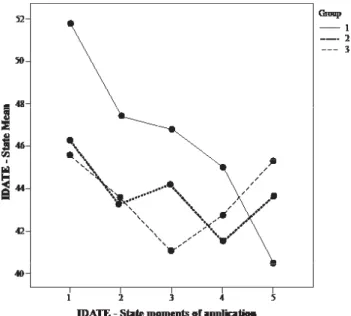
Figure 1 – Distribution of mean score for subject’s anxiety
according to groups at the ive moments of the IDATE-state
To assure the reliability of the collected data for the IDATE instrument(15), it was applied the Cronbach Alpha
(α). At the irst data collecion moment for the trace and iniial state, it was found 0.808 for the IDADE-trace and 0.931 for the IDATE-iniial state.
An ANOVA was performed for the between groups analysis for obtained scores in each moment, as described previously. The sphericity assumpion was met (Mauchys test, p = 0.331) and there was no diference between the three groups for the variable anxiety (p = 0.109). The Fig
-ure 1 demonstrates the scores mean distribuion in the ive moments of assessment for anxiety, by the IDATE-state instrument. It is observed that the gel plus ylang ylang EO group (G1) shows a tendency to reduce the anxiety scores, kept even ater the end of the aroma use (follow-up), while the G2 and G3 showed a tendency to increase the IDATE-state score.
An ANOVA was applied only at the irst moment for the Dela Coleta instrument(16), normality was veri
fore the treatment for self-esteem in the three groups (p = 0.226). The ANOVA applied for the obtained scores at the ive moments previously described did not meet the sphericity assumpion (Mauchlys test p = 0.000), therefore, for the hypothesis test it was used the Green
-house-Geisser correcion, that indicated no diference between groups along the treatment (p = 0.437). Fig
-ure 2 demonstrates the distribuion of groups mean scores in ive assessment moments for self-esteem through the Dela Coleta instrument(16). It was observed
a self-esteem score reducion in the three groups at the beginning of the intervenion and ater started to increase and this tendency was sustained for the G1 and G3 groups. It is important to note that the G1 curve keeps increasing, while the G3 has a tendency to stabi
-lize. The G2 curve indicates a possible decay behavior. Figure 2 demonstrates the G2 (placebo) with a difer
-ent behavior from the other two groups at the second moment of assessment, for this reason, it was applied a second ANOVA which indicated no diference between the three groups (p = 0.141). It was noted no diference for the three groups at the end of treatment (p = 0.705).
a Greenhouse-Geisser correcion was applied for the hy
-pothesis test indicaing no diference between groups along treatment (p = 0.875). Figure 4 shows the axillary temperature mean distribuion in the ive groups for all assessment moments.
Figure 2 – Mean distribution of self-esteem scores in accordance
with groups at the ive moments of Dela Coleta instrument
application – São Paulo, 2014.
Figure 3 – Mean distribution of MBP in accordance with groups
at the ive moments of assessment – São Paulo, 2014.
Figura 4 – Mean distribution of axillary temperature in accordance
with groups at the ive moments of assessment – São Paulo, 2014.
For the variable mean blood pressure (MBP) assessed at ive moments with the described instruments as men
-ioned before, an ANOVA was applied and the sphericity assumpion was not met (Mauchlys test p = 0.000), and a Greenhouse-Geisser correcion was applied for hypoth
-esis test indicaing no diference between groups along the treatment (p = 0.398). Figure 3 demonstrates the MBP means distribuion in the groups along treatment.
Lastly, for the axillary temperature measured at the ive moments, an ANOVA was applied and the sphericity assumpion was not met (Mauchlys test p = 0.030), and
DISCUSSION
Nowadays, nursing professionals are unsaisied with their work and it shows how much it afects their aciv
-ity results. In this profession, it is needed more than the technical knowledge; there is the ability to recognize oth
ing those condiions, it becomes a necessity to care about Nursing because the physical and emoional state of those professionals interfere in reaching opimal performance or frustraion(8). Aromatherapy as other CTs tries to enhance
ones physical, mental and emoional well-being(7). The
ylang ylang EO was chosen for this study due to its indi
-caion for anxiety, frustraion, nervous tension, fears and depression(1-2,12), and assistance to reduce blood pressure(3).
From the 45 paricipants who began the protocol, only 34 concluded the research. The sample loss rate was around 24% although it was sill inferior to the 1/3 of the expected loses for studies that uses the subjects´ adherence to the treatment as intervenion(20). This is
the reality not only faced by the CT but also by allopaic treatments, once the intervenion proposal depends on the subject, similar to a prescribed treatment. There
-fore, the no adherence to the treatment was an exist
-ing possibility as a result in this research because there was no therapist to do the procedure, which contributed to eliminate the possibility of a therapeuic bond inter
-fering in the results, which is an adopted technique in studies similar to aromatherapy for anxiety(18). Thus, the
minimizaion of bias through the entrance tests was a strategy, excluding the subjects that did not adhere to intervenion at the irst week of placebo use or that did not accepted the ylang ylang odor. It was observed only one dropout in this period and all other dropouts (11) were during the irst month of intervenion. This situa
-ion was a study limita-ion suggesing a longer period for entrance tests in future trials avoiding loses in the sample, or a next clinical trial with a shorter period of ime using, for example, an experimental model that induces anxiety, to avoid self-intervenion and the de
-pendence of the study to be carried out by paricipants. Besides that, submiing subjects to an anxiety will allow measurements in a well delimited state before and ater intervenion, in similarity to other studies that invesi
-gated aromatherapy for anxiety(19, 21), and one of them
also applied the Anxiety Inventory as instrument(19).
For the IDATE instrument internal consistency evalu
-aion by the staisical indicator Cronbach Alpha (α) the values were 0.808 for the IDATE- trace, 0.931 for the IDATE- iniial state, airming that the instrument was considered valid and reliable with α >0.700 values.
Those indings corroborate with the instruments assess
-ment of a similar study(18).
The pre and post intragroup analysis demonstrated sig
-niicant diference only to self-esteem in three groups, and applied the intergroup analysis; the diferences were not sig
-niicant as the three intervenions enhanced self-esteem in similar levels. The study contributes to raise the importance of a negaive control inclusion for aromatherapy. It is pro
-posed the inhalaion or to use products that uses disillated water instead of EO in its composiion. That would facilitate the intergroup comparison, in cases where the EO or essence use has signiicant results, as the present study results.
Although the alteraions in scores were not signiicant between groups, did the subjects noice diference in its state of anxiety and self-esteem? This quesion could be answered if a validated instrument that assesses emo
-ional alteraions by sensaions and self-perceived behav
-ioral changes, aiming to capture the subjects´ percepions during the intervenion. Does the EO cutaneous contact produces beter aromatherapeuic efects for anxiety and self-esteem than inhalaion only? In this case, only studies comparing two groups of intervenion as this could help in this observaion. As there is no standards about the essenial oils adequate dosages for aromatherapy in the literature, maybe higher concentraions of EO responds faster in comparison with an emoional nuance.
As described in the literature that the ylang-ylang EO can cause a hypotension efect or temperature alteraion(3),
blood pressure and temperature was veriied to detect pos
-sible alteraions for the data collecion instruments fulill
-ment. Regarding the MBP assessment along the study, it was observed that the freshener group (G3) presented an iniial MBP superior to the recommended (above 95 mmHg(22))
and ater three months of intervenion there was a reduc
-ion tendency that was kept during the follow up, and the G1 and G2 did not present the same behavior. Maybe the high
-er levels of EO concentraion or the pure use in the fresh
-ener presents a faster answer in comparison to physiologi
-cal parameters, for example, when used a 20% ylang ylang concentraion during a massage, resuling in lower blood pressure ater 20 minutes of intervenion(3). Regarding the
temperature, there was not any signiicant changes observed with OE or essence, in similarity with other study(3).
This pilot study contributes to help professionals to elaborate a more robust study design to verify if an aro
-matherapy done with ylangylang oil or other EO alters the percepion of anxiety and self-esteem. This study will be developed in a second phase and will use the present sam
-ple for an adequate sam-ple size calculaion. It will include a potenial anxiogenic situaion that will allow verifying the EO aromatherapeuic efect before and ater intervenion. Besides the IDATE(15) and the Dela Coleta Scale(16) used in the
present and previous studies(7,18-19), the associaion of an
-other validated scale as the Visual Analog Humor Scale(23),
will allow assessment of possible emoional alteraions by sensaions and self-perceived behavioral changes(19).
Besides the previously cited limitaions, a bias in the study was also considered: the EO dosage deiniion, the ad
-equate way to apply the oil and the exposiion frequency to
it(7,18). Although it is not possible to airm the beter way to
use aromatherapy, more studies are needed and its method
-ological designs should include at least two ways to apply EO with the aim to compare its eicacy. It is raised that the ylang ylang dosage, applicaion and frequency could be insui
-cient, contribuing to its lack of success. Thus, it is relevant that all variables in aromatherapy studies to be explicit, be
CONCLUSION
It was veriied that the ylang ylang essenial oil sig
-niicantly altered the self-esteem percepion only for the three groups and the physiological parameters measured by mean blood pressure and temperature did not sufered signiicant changes.
This pilot study contributes to new aromatherapy inves
-igaions with the ylang ylang oil and other essenial oils in the anxiety and self-esteem percepion that can use as
REFERENCES
1. Rose J. O livro da aromaterapia: aplicações e inalações. Rio de Janeiro: Campus; 1995.
2. Tisserand R. A arte da aromaterapia. 13ª ed. São Paulo: Roca; 1993.
3. Hongratanaworakit T, Buchbauer G. Relaxing efect o ylang ylang oil on humans ater transdermal absorpion. Phytother Res. 2006;20(9):758-63.
4. Imanishi J, Kuriyama H, Shigemori I, Watanabe S, Aihara Y, Kita M, et al. Anxiolyic efect of aromatherapy massage in paients with breast cancer. Evid Based Complement Alternat Med. 2009;6(1):123-8.
5. Cooke M, Holzhauser K, Jones M, Davis C, Finukane J. The ef
-fect of aromatherapy massage with music on the stress and anxiety levels of emergency nurses: comparison between summer and winter. J Clin Nurs. 2007;16(9):1695-703. 6. Rho KH, Han SH, Kim KS, Lee MS. Efects of aromatherapy
massage on anxiety and self-esteem in Korean elderly wom
-en: a pilot study. Intern J Neurosc. 2006;116(12):1447-55. 7. Gnata JR, Zotelli MFM, Carmo DRB, Lopes CLBC, Rogenski
NM, Silva MJP. The use of aromatherapy to improve self-es
-teem. Rev Esc Enferm USP [Internet]. 2011 [cited 2013 Oct 26];45(5):1113-20. Available from: htp://www.scielo.br/pdf/ reeusp/v45n5/en_v45n5a12.pdf
8. Vitória Regis LFL, Porto IS. A equipe de enfermagem e
Maslow: (in)saisfações no trabalho. Rev Bras Enferm [In
-ternet]. 2006 [citado 2013 out. 26];59(4):565-8. Disponível em: htp://www.scielo.br/pdf/reben/v59n4/a18v59n4.pdf 9. São Paulo (Cidade). Lei 13.717, de 08 de Janeiro de 2004.
Dispõe sobre a implantação das Terapias Naturais na Secre
-taria Municipal de Saúde [Internet]. São Paulo; 2004 [citado 2011 set. 12]. Disponível em: htp://www3.prefeitura.sp.gov. br/cadlem/secretarias/negocios_juridicos/cadlem/integra. asp?alt=09012004L%20137170000
10. World Health Organizaion. Tradiional medicine: deini
-ions [Internet]. Geneva; 2004 [cited 2013 Oct 26]. Available from: htp://www.who.int/medicines/areas/tradiional/ deiniions/en//
11. Conselho Federal de Enfermagem (COFEN). Resolução
COFEN-197/97. Estabelece e reconhece as terapias alterna
-ivas como especialidade e/ou qualiicação do proissional de enfermagem [Internet]. Brasília; 1997. [citado 2013 out. 26]. Disponível em: htp://novo.portalcofen.gov.br/ resoluo-cofen-1971997_4253.html
12. Lavabre M. Aromaterapia: a cura pelos óleos essenciais. Rio de Janeiro: Nova Era; 2001.
13. Andrade LHS, Gorenstein C. Aspectos gerais das escalas de avaliação de ansiedade. Rev Psiq Clín. 1998;25(6);285-90.
14. Braden N. Autoesima: como aprender a gostar de si mes
-mo. São Paulo: Saraiva; 1996.
15. Spielberger CD, Gorusch RL, Lushene RE. Manual for the
state-trait anxiety inventory. Palo Alto: Consuling Psycholo
-gist; 1970.
16. Dela Coleta JA, Dela Coleta MF. Escalas para medida de
aividade e outras variáveis psicossociais. Ribeirão Pre
-to: EERP; 1996.
17. Corazza S. Aromacologia: uma ciência de muitos cheiros. São Paulo: SENAC; 2002.
18. Gnata JR, Dornellas EV, Silva MJP. The use of aromatherapy in alleviaing anxiety. Acta Paul Enferm [Internet]. 2011 Oct [cited 2013 Oct 26]; 24(2):257-63. Available from: htp:// www.scielo.br/pdf/ape/v24n2/en_16.pdf
19. Goes TC, Antunes FD, Alves PB, Teixeira-Silva F. Efect of sweet orange aroma on experimental anxiety in humans. J Altern Complement Med. 2012;18(8):798-804.
resource the data obtained in this trial, aiming to elabo
-rate a more robust trial, associaing an anxiety inducted experimental model to reduce the intervenion ime and to standardize a anxiogenic situaion, for example. Besides that, minimizing possible sample loses and contribuing to increase the results accuracy, besides modifying the essen
-ial oil dosage, to include a negaive control for the aroma and an instrument to assess behavioral states. However, it is important to note that aromatherapy presents many unknown variables that include not only the treatment ap
20. Valle EA, Viegas EC, Castro CAC, Toledo Júnior AC. A adesão ao tratamento. Rev Bras Clín Ter. 2000;26(3):83-6.
21. Faturi CB, Leite JR, Alves PB, Canton AC, Teixeira-Silva F. Anx
-iolyic-like efect of sweet orange aroma in Wistar rats. Prog Neuropsychopharmacol Biol Psychiatry. 2010;34(4):605-9.
22. Sociedade Brasileira de Cardiologia; Sociedade Brasileira de Hipertensão; Sociedade Brasileira de Nefrologia. V Diretrizes Brasileiras de Hipertensão Arterial [Internet]. 2006 [citado 2013 out. 26]. Disponível em: htp://bvsms.saude.gov.br/
bvs/publicacoes/v_diretrizes_brasileira_hipertensao_arte
-rial_2006.pdf