ulcerans
from the Environment
Franc¸oise Portaels1*, Wayne M. Meyers2, Anthony Ablordey1,3, Anto´nio G. Castro4, Karim Chemlal1, Pim de Rijk1, Pierre Elsen1, Krista Fissette1, Alexandra G. Fraga4, Richard Lee5, Engy Mahrous5, Pamela L. C. Small5, Pieter Stragier1, Egı´dio Torrado4, Anita Van Aerde1, Manuel T. Silva6, Jorge Pedrosa4
1Institute of Tropical Medicine, Antwerpen, Belgium,2Armed Forces Institute of Pathology, Washington, D.C., United States of America,3Noguchi Memorial Institute for Medical Research, College of Health Sciences, University of Ghana, Legon, Accra, Ghana,4Life and Health Sciences Research Institute (ICVS), School of Health Sciences, University of Minho, Braga, Portugal,5Department of Microbiology, University of Tennessee, Knoxville, Tennessee, United States of America,6Institute for Molecular and Cell Biology, University of Porto, Porto, Portugal
Abstract
Background:Mycobacterium ulceransdisease, or Buruli ulcer (BU), is an indolent, necrotizing infection of skin, subcutaneous tissue and, occasionally, bones. It is the third most common human mycobacteriosis worldwide, after tuberculosis and leprosy. There is evidence that M. ulcerans is an environmental pathogen transmitted to humans from aquatic niches; however, well-characterized pure cultures ofM. ulceransfrom the environment have never been reported. Here we present details of the isolation and characterization of anM. ulceransstrain (00-1441) obtained from an aquatic Hemiptera (common name Water Strider,Gerrissp.) from Benin.
Methodology/Principal Findings:One culture from a homogenate of aGerrissp. in BACTEC became positive for IS2404, an insertion sequence with more than 200 copies inM. ulcerans. A pure culture ofM. ulcerans 00-1441 was obtained on Lo¨wenstein-Jensen medium after inoculation of BACTEC culture in mouse footpads followed by two other mouse footpad passages. The phenotypic characteristics of 00-1441 were identical to those of AfricanM. ulcerans, including production of mycolactone A/B. The nucleotide sequence of the 59end of 16S rRNA gene of 00-1441 was 100% identical toM. ulcerans andM. marinum, and the sequence of the 39end was identical to that of the African type except for a single nucleotide substitution at position 1317. This mutation in M. ulcerans was recently discovered in BU patients living in the same geographic area. Various genotyping methods confirmed that strain 00-1441 has a profile identical to that of the predominant African type. Strain 00-1441 produced severe progressive infection and disease in mouse footpads with involvement of bone.
Conclusion:Strain 00-1441 represents the first genetically and phenotypically identified strain ofM. ulceransisolated in pure culture from the environment. This isolation supports the concept that the agent of BU is a human pathogen with an environmental niche.
Citation:Portaels F, Meyers WM, Ablordey A, Castro AG, Chemlal K, et al. (2008) First Cultivation and Characterization ofMycobacterium ulceransfrom the Environment. PLoS Negl Trop Dis 2(3): e178. doi:10.1371/journal.pntd.0000178
Editor:Mathieu Picardeau, Institut Pasteur, France
ReceivedJuly 23, 2007;AcceptedJanuary 4, 2008;PublishedMarch 26, 2008
This is an open-access article distributed under the terms of the Creative Commons Public Domain declaration which stipulates that, once placed in the public domain, this work may be freely reproduced, distributed, transmitted, modified, built upon, or otherwise used by anyone for any lawful purpose.
Funding:This work was partly supported by the Directorate-General for Development Cooperation (DGDC) Brussels (Belgium), the Fund for Scientific Research, Flanders (Belgium) (FWO grant nuG.0301.01), by the Damien Foundation, Brussels (Belgium), by the European Commission, project nr. INCO-CT-2005-051476-BURULICO ‘‘Buruli ulcer: multidisciplinary research for improvement of control in Africa’’, and by the National Institute of Allergy and Infectious Diseases, National Institutes of Health. This work was also supported by a grant from the Health Services of Fundac¸a˜o Calouste Gulbenkian and by FCT fellowships Praxis SFRH/BD/ 9757/2003 and SFRH/BD/15911/2005 to E. Torrado and A. G. Fraga, respectively. The funders had no role in study design, data collection and analysis, decision to publish, or preparation of the manuscript.
Competing Interests:The authors have declared that no competing interests exist.
* E-mail: [email protected]
Introduction
Buruli ulcer (BU), the third most common mycobacteriosis in humans after tuberculosis and leprosy is an indolent, necrotizing disease of skin, subcutaneous tissue and, occasionally, bones [1]. BU has emerged in recent times as an increasingly important cause of morbidity around the world, and has been reported in 30 countries, mostly in tropical areas [2]. This disease is caused by Mycobacterium ulcerans which is peculiar among pathogenic mycobacteria because it produces a potent necrotizing exotoxin, mycolactone, which is a major virulence factor [3].
exposed to aquatic environments in BU endemic areas have higher titers of antibodies to salivary proteins of Naucoridae and Belostomatidae than BU patients in the same areas [10] shows that these water bugs bite humans in natural settings. However, Naucoridae and Belostomatidae are carnivorous insects that normally feed on other aquatic insects, snails, and small fish and only bite humans incidentally [11]. Thus, the significance of biting byM. ulcerans-colonized aquatic insects in the transmission of BU to humans is unknown, and other forms of transmission, including skin trauma, have been considered [12].
Since the discovery of IS2404[13], an insertion sequence with more than 200 copies in M. ulcerans[14], multiple studies have detected IS2404in environmental aquatic samples, indicating that M. ulceransis probably present in such samples, and supporting the concept that the etiologic agent of BU is an environmental pathogen. IS2404was found in samples of water and detritus from swamps in Australia [15,16,17], and in aquatic plants [18], insects (Belostomatidae, Naucoridae, Hydrophilidae), crustaceans and mollusks (Bulinussp. and Planorbissp.), and fish (includingTilapia sp.) in western tropical Africa [8,9,18,19,20]. More recently IS2404was detected in mosquitos in Australia [21]. However, the recent discovery of IS2404in aquatic mycobacteria other thanM. ulceransrequires re-evaluation of the use of IS2404 PCR for the detection of M. ulcerans DNA in the environment [22,23] and emphasizes the importance of the isolation of M. ulcerans from environmental sources.
Numerous extensive studies have failed to isolateM. ulceransin pure culture from the environment, even in highly endemic areas of BU, e.g. in Uganda [24], the Democratic Republic of Congo [4,5,25] and West Africa [19].
Two cultures from salivary glands of wild aquatic insects (Naucoridae) collected in BU endemic areas of Coˆte d’Ivoire were positive for IS2404 and were considered to be related to M. ulcerans; however, no phenotypic characteristics of these isolates were reported other than their virulence for mice [9]. In 2004, Marsollieret al.obtained IS2404PCR positive cultures from two
samples of aquatic plants collected in a BU endemic area of Coˆte d’Ivoire [18]. One IS2404 positive BACTEC culture inoculated into mice revealed infection compatible with M. ulcerans. The culture was, however, contaminated byMycobacterium szulgai and M. ulcerans could not be obtained in pure culture even after passages through mice.
As briefly reported previously [26], a pure culture ofM. ulcerans (isolate 00-1441) was obtained from an aquatic insect from Benin. In that report no description was given of the methods employed for the isolation ofM. ulcerans00-1441 and of the phenotypic and genetic characteristics of the isolate. Here we present the detailed results of the isolation and characterization of strain 00-1441, establishing that this mycobacterium is an African type of M. ulceranswith high virulence for mice. Strain 00-1441 represents the first well characterizedM. ulcerans strain isolated in pure culture from an environmental source.
Materials and Methods
Environmental specimens
Collection and in vitro culture. Four aquatic specimens collected in a BU endemic area of Benin and one in Togo that were part of a larger study on the frequency of mycobacteria in the environment (Portaels et al., manuscript in preparation) were cultured in vitro and inoculated into mouse footpads. The specimens were transported from the field to the laboratory in sterile tubes at 4uC and kept frozen until they were identified by an entomologist.
Types of specimens collected and their origins are indicated in Table 1.
The specimens were thoroughly diced with sterile disposable scalpels in a sterile mortar. They were further homogenized with a sterile pestle and suspended in 2 ml phosphate buffered saline (PBS) (Oxoid, Hampshire, England; pH = 7.360.2). The mortars and pestles were used only for environmental specimens. Decontamination was performed by treatment of the suspensions for 15 minutes with an equal volume of aqueous 2.0% sodium hydroxide (NaOH) containing sodium citrate (1.45% final concentration) and N-acetyl-l-cysteine (0.5% final concentration). The suspensions were centrifuged for 20 minutes at 3,800 g and fractions of the resulting sediments were used for Ziehl-Neelsen staining (ZN), culture and PCR.
Primary cultures were performed at 32uC by inoculating the sediment on Lo¨wenstein-Jensen (LJ) solid medium and in BACTEC 12B broth (Becton Dickinson Microbiology Systems, Sparks, MD, USA) supplemented with PANTA and 1.25% egg yolk [27]. Growth index (GI) was measured weekly for 3 months with a BACTEC 460 TB instrument (Becton Dickinson, Sparks, MD, USA). When the GI reached 999, ZN was performed, and BACTEC cultures were tested by IS2404PCR [28]. Inoculated LJ tubes were incubated for 12 months and observed every 2 weeks. PCR on decontaminated specimens and BACTEC cultures. DNA was extracted from decontaminated specimens and BACTEC positive cultures as previously described with minor modifications [29]. Briefly, 250ml suspensions were treated with equal volumes of lysis buffer L6 (5 M GuSCN, 5 0 mM Tris, pH 6.4, 22 mM EDTA, 2% Triton X-100) followed by 50ml of proteinase K (20 mg/ml). This mixture was incubated overnight at 60uC with gentle shaking. To capture DNA, 40ml of diatomaceous earth stock solution (10 g diatomaceous earth obtained from Sigma Aldrich Chemie GmbH, Steinheim, Germany) in 50 ml of H2O containing 500ml of 37% (wt/vol) HCl was added to the suspension and placed in a shaker incubator at 37uC for 2 hours to avoid sedimentation of the diatomaceous earth.
Author Summary
The pellets were washed with 900ml of L2 buffer (5 M GuSCN, 50 mM Tris, pH 6.4) [29] followed by 900ml of 70% ethanol and 900ml of acetone. The pellet was then dried at 55uC and resuspended in 90ml TE (10 mM Tris, 1 mM EDTA, pH 8). Tubes were centrifuged and 50ml of the DNA extract transferred to a new tube.
PCR reaction: A nested PCR was performed targeting the insertion sequence element IS2404with four primers: PGP1 (59
-AGGGCAGCGCGGTGATACGG-39), PGP2 (59
-CAGTGGAT-TGGTGCCGATCGT-39), PGP3 (59
-GGCGCAGATCAACTT-CGCGGT-39) and PGP4 (59
-CTGCGTGGTGCTTTACG-CGC-39) (GenBank accession nuU38540), [13]. The following procedures were employed:
For the first PCR run, 5ml of the DNA extract was added to 45ml PCR reaction mixture containing 20 pmol of each primer (PgP1 and PgP2), 1U of Taq DNA polymerase (Roche Molecular Systems, Brussels, Belgium), 200mM concentrations of each deoxyribonucleotide triphosphate, 1.5 M MgCl2, 0.1% X-100, and 10 mM Tris–HCl (pH 8.4) and overlaid with mineral oil. Cycling was as follows: denaturation at 94uC for 5 min; amplification for 40 cycles at 94uC for 45 sec, 64uC for 45 sec and 72uC for 45 sec and a final extension at 72uC for 10 min.
For the second PCR run, 0.25ml of the first-run product was amplified in a 25ml reaction mixture with primers PgP3 and PgP4. Cycling conditions were similar to the first run except that amplification was reduced to 25 cycles. Amplified DNA (7ml) was then submitted to electrophoresis in 2% agarose gel and detected by ethidium bromide staining and UV transillumination.
Mouse footpad inoculation. The three IS2404PCR positive BACTEC cultures (Table 1) were inoculated (0.03 ml) into the left hind footpad of three 8 week old female mice (strain NMRI).
Mice were sacrificed after 6, 9 or 12 months (Table 2). Entire feet were placed into 10% formalin for histopathological analysis, or were used for microbiological analysis as described previously [30]. For specimens 97–1455 and 98–443, mouse footpad suspensions (harvested after 9 months) were also passaged (P1) into 3 other mice. A second passage (P2) was done from P1 after 12 months. No passage was performed for specimen 98–447 because only one mouse survived for 9 months and the entire foot of this mouse was used for histopathologic analysis.
Histopathologic analyses. Histopathologic analyses of mice feet were made at the indicated times after inoculation of positive BACTEC vials and, in some cases, after passage of inoculated footpads to other mice. The entire feet were intact at this stage. Specimens were decalcified with a solution containing 4% concentrated hydrochloric acid and 4% concentrated formic acid in distilled water or with a commercial solution (Thermo,
Shandon TBD-1 Rapid Decalcifier, Chesire, UK) for a period of 45 min. Multiple longitudinal sections 1.5–2 mm thick were cut, processed routinely and sectioned at 4mm. Sections were stained by hematoxylin-eosin, ZN, Grocott’s methenamine-silver and Brown-Hopps Gram methods [31].
Identification of the mycobacteria. Mycobacteria cultivated directly from the aquatic specimens and the M. ulcerans isolate 00-1441 cultivated from a mouse footpad (see Table 2) were identified as described previously [32].
Analysis of isolate 00-1441
16S rRNA gene sequencing and phylogenetic analysis. The isolate 00-1441 was also identified by partial analysis of the 39end region as described previously [33] as well as the 59end region of the 16S rRNA gene by Eurogentec (Lie`ge, Belgium) with an automated nucleic acid sequencer (Applied Biosystems, Foster City, CA, USA).
Mycolactone extraction and analysis. Acid soluble lipid containing mycolactones were extracted fromM. ulcerans strains 1615 and 00-1441 with chloroform-methanol 2:1 followed by back extraction with ice-cold acetone as previously described [34]. Lipids were resolved by silica thin-layer chromatography using a chloroform-methanol-water (90:10:1) solvent system and visual-ized by charring with anisaldehyde in 10% sulfuric acid.
Mass spectrometric (MS) analysis of the mycolactone extracts was performed as previously described [34]. Ten milligrams of the dried acetone soluble lipid (ASL) extract were re-suspended in 1 milliliter of methanol and subsequently filtered prior to MS analysis. Using a Cole Palmer 74900 series syringe pump, the methanolic extract was perfused into an ion trap ESI Bruker-Esquire mass spectrometer at dry temperature of 300uC, gas flow of 5 liters/min and nebulizer pressure of 15 lb/in2.
Mouse footpad inoculation. The present study was conducted under the guidelines and approval of the Research Ethics Committee of the Life and Health Sciences Research Institute (Braga, Portugal).
Isolate 00-1441 was grown on LJ medium at 32uC for approximately 2 months, recovered from LJ slants, diluted in PBS to a final mass concentration of 1 mg/ml, and vortexed vigorously using 2-mm glass beads. In all the experiments, the number of acid-fast bacilli (AFB) in each inoculum was determined by the method of Shepard and McRae [35], using ZN staining (Merck, Darmstadt, Germany). The suspensions revealed more than 90% viable bacilli as assessed with the LIVE/DEAD BacLight Kit (Molecular Probes, Leiden, The Netherlands).
Eight-week-old female BALB/c or NMRI mice were obtained from Charles River Laboratories (Barcelona, Spain) and were
Table 1.Ziehl-Neelsen staining, culture and PCR results for 5 aquatic specimens collected in Buruli ulcer endemic regions of Benin and Togo
Nuspecimen Family (genus) District (Country) ZN IS2404PCR Culture on LJ Growth in BACTEC
GI reached 999 after (weeks) ZN
IS2404 PCR
98–449 Lymnaeidae(Lymnaeasp.) Afagnan (Togo) - - M. nonchronogenicum 2 +
-98–457 Pleidae(Pleasp.) Zagnanado (Benin) - - M. fortuitum 2 +
-98–447 Naucoridae(Naucorissp.) Ouinhi (Benin) - - M. gordonae 2 + +
97–1455 Belostomatidae(Appasussp.) Ouinhi (Benin) - - Contaminated 2 + +
98–443 Gerridae(Gerrissp.) Zagnanado (Benin) - - M. gordonae 2 + +
GI, growth index.
housed in specific pathogen-free conditions with food and waterad libitum. Both strains of mice were infected in the left hind footpad with 0.03 ml of a suspension containing 5.4 log10 AFB of M. ulcerans00-1441.
As an index of lesion development, footpad swelling was measured over time with a caliper. Bacterial proliferation was evaluated in footpad homogenates of infected mice at selected time points, as previously described [30,36]. Histological analysis of the feet was carried out as described above.
Infection of murine bone marrow-derived macro-phages. Bone marrow-derived macrophages (BMDM) from BALB/c mice were used as mouse primary macrophages and were prepared as previously described [36]. Briefly, both femurs were removed under aseptic conditions. Bones were flushed with cold Hank’s Balanced Salt Solution (HBSS, Gibco, Paisley, UK). The resulting cell suspension was centrifuged and resuspended in
Dulbecco’s Modified Eagle’s Medium (DMEM, Gibco)
supplemented with 10 mM HEPES (Sigma, St. Louis, MO), 1 mM sodium pyruvate (Gibco), 10 mM glutamine (Gibco), 10% of heat-inactivated fetal bovine serum (Sigma) and 10% L929 cell-conditioned medium (Complete DMEM [cDMEM]). To remove fibroblasts or differentiated macrophages, the cells were cultured at 37uC in a 5% CO2atmosphere for a period of four hours in cell culture dishes (Nunc, Naperville, IL) with cDMEM. The non-adherent cells were collected with warm HBSS, centrifuged and
distributed in 24-well plates at a density of 56105cells/well and incubated at 37uC in a 5% CO2 atmosphere. L929 cell-conditioned medium was added 4 days after seeding and medium was renewed on the seventh day. After 10 days in culture, cells were completely differentiated into macrophages. Twelve hours before infection, macrophages were incubated at 32uC in a 5% CO2atmosphere and maintained at 32uC until the end of the experimental infection.
For macrophage infectivity assays bacterial suspensions were prepared as described above and further diluted in cDMEM to obtain the selected multiplicity of infection (MOI) of 1:1 (bacteria/ macrophage ratio). Cells were incubated for 4 hours at 32uC in a 5% CO2 atmosphere and then washed with warm HBSS to remove non-internalized bacteria and re-incubated in cDMEM for eight days.
Genotyping methods. Genotyping methods developed to analyze the diversity amongM. ulcerans and M. marinum strains from different geographical areas were applied to isolate 00-1441. IS2404 restriction fragment length polymorphism (RFLP) and PCR restriction profile analysis (PRPA) were performed as described previously [37,38].
Mycobacterial Interspersed Repetitive Units (MIRU) Variable Number Tandem Repeat (VNTR) analysis was also used to investigate the MIRU-VNTR profile of 00-1441 as previously described [39,40].
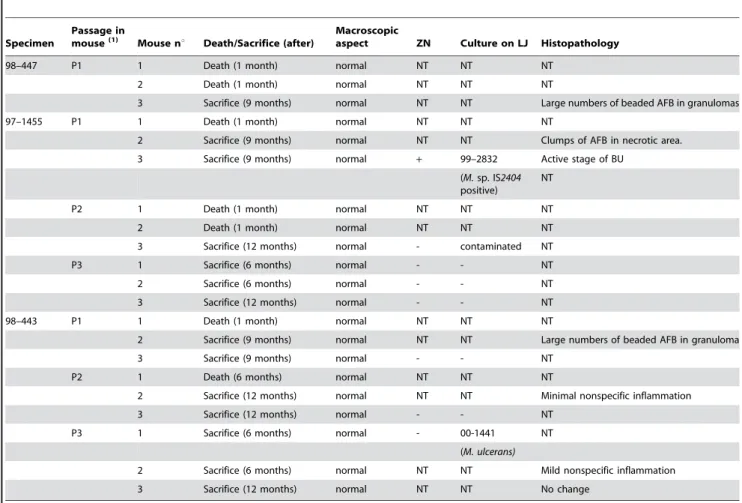
Table 2.Results of inoculation of mouse footpads with BACTEC cultures of 2 environmental specimens
Specimen
Passage in
mouse(1) Mouse nu Death/Sacrifice (after)
Macroscopic
aspect ZN Culture on LJ Histopathology
98–447 P1 1 Death (1 month) normal NT NT NT
2 Death (1 month) normal NT NT NT
3 Sacrifice (9 months) normal NT NT Large numbers of beaded AFB in granulomas
97–1455 P1 1 Death (1 month) normal NT NT NT
2 Sacrifice (9 months) normal NT NT Clumps of AFB in necrotic area.
3 Sacrifice (9 months) normal + 99–2832 Active stage of BU
(M.sp. IS2404 positive)
NT
P2 1 Death (1 month) normal NT NT NT
2 Death (1 month) normal NT NT NT
3 Sacrifice (12 months) normal - contaminated NT
P3 1 Sacrifice (6 months) normal - - NT
2 Sacrifice (6 months) normal - - NT
3 Sacrifice (12 months) normal - - NT
98–443 P1 1 Death (1 month) normal NT NT NT
2 Sacrifice (9 months) normal NT NT Large numbers of beaded AFB in granuloma
3 Sacrifice (9 months) normal - - NT
P2 1 Death (6 months) normal NT NT NT
2 Sacrifice (12 months) normal NT NT Minimal nonspecific inflammation
3 Sacrifice (12 months) normal - - NT
P3 1 Sacrifice (6 months) normal - 00-1441 NT
(M. ulcerans)
2 Sacrifice (6 months) normal NT NT Mild nonspecific inflammation
3 Sacrifice (12 months) normal NT NT No change
(1)
P1 = first passage from BACTEC to mouse footpads.
Results
Environmental specimens
Results of ZN staining, culture and PCR studies for the 5 aquatic specimens are shown in Table 1. Table 2 shows the results of the mouse footpad inoculation with the BACTEC suspensions (98–447, 97–1455 and 98–443) that were positive by IS2404PCR after inoculation with the aquatic specimens.
Specimen 98–447: Histopathologic analysis of one mouse sacrificed after 9 months revealed a few well formed granulomas with minimal necrosis around blood vessels, nerves and in muscle. There were large numbers of beaded AFB in the granulomas.
Specimen 97–1455:Of the three mice inoculated with this BACTEC culture (P1 in Table 2), two were sacrificed 9 months after inoculation. The histopathologic analysis of the footpad of one mouse showed marked necrosis with a mild granulomatous response, inflammation of periosteum and many large clumps of AFB in necrotic areas. The footpad homogenate of the third mouse was positive for AFB and the culture on LJ was positive for mycobacteria (isolate 99–2832) but was lost due to contamination by nonacid-fast bacteria; however, PCR performed on the contaminated culture was positive for IS2404. This mouse footpad was inoculated in vitro and passaged twice into two groups of three mouse footpads. The second (P2 in Table 2) and third passages (P3 in Table 2) were negative for AFB by ZN staining and by culture. Specimen 98–443:This homogenate of aGerrissp. aquatic insect ultimately produced theM. ulceransisolate 00-1441 after culture in BACTEC (positive for IS2404) inoculated in mouse footpads (P1) and followed by two other mouse footpad passages (P2 and P3).
Following the first mouse inoculation (P1), one animal died after 1 month and the other two were sacrificed 9 months after inoculation. Histopathologic evaluation of the footpad of one of these mice showed granulomatous changes with minimal necrosis around blood vessels and nerves. There were large numbers of scattered, short, beaded AFB in the granuloma. ZN stain and culture were negative for the footpad of the third mouse inoculated in vitro. The suspension obtained from the third mouse was used to reinoculate 3 other mice (P2). One P2 mouse died after 6 months and the other two were sacrificed 12 months later. The histopathologic study of one footpad showed minimal nonspecific inflammation. The other mouse footpad was negative for AFB and by culture and was used for a third passage (P3) into 3 mice. Two of the P3 mice were sacrificed after 6 months. One footpad used for histopathologic study showed nonspecific inflammation. The other footpad was ZN-negative but gave a positive culture on LJ (5 colonies) after 2 months incubation at 32uC. The isolate (00-1441) was further analyzed and identified asM. ulcerans(see below).
The remaining P3 mouse, sacrificed after one year, did not reveal any histopathologic changes.
Characterization of isolate 00-1441
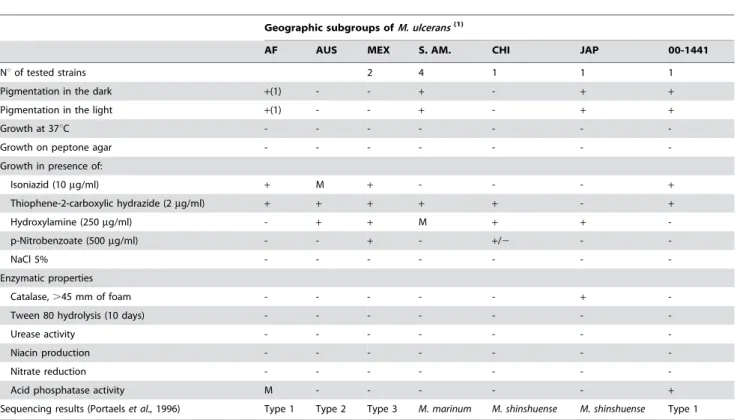
Phenotypic characterization. The phenotypic characteris-tics of M. ulcerans isolate 00-1441 and those of some M. ulcerans geographic subgroups are given in Table 3. Isolate 00-1441 has the same phenotypic characteristics asM. ulceransstrains belonging to the African subgroup [33], i.e., it was scotochromogenic, did not grow on LJ containing 250mg/ml hydroxylamine and was acid phosphatase positive.
Table 3.Phenotypic characteristics of isolate 00-1441 andM. ulceransgeographic subgroups
Geographic subgroups ofM. ulcerans(1)
AF AUS MEX S. AM. CHI JAP 00-1441
Nuof tested strains 2 4 1 1 1
Pigmentation in the dark +(1) - - + - + +
Pigmentation in the light +(1) - - + - + +
Growth at 37uC - - -
-Growth on peptone agar - - -
-Growth in presence of:
Isoniazid (10mg/ml) + M + - - - +
Thiophene-2-carboxylic hydrazide (2mg/ml) + + + + + - +
Hydroxylamine (250mg/ml) - + + M + +
-p-Nitrobenzoate (500mg/ml) - - + - +/2 -
-NaCl 5% - - -
-Enzymatic properties
Catalase,.45 mm of foam - - - +
-Tween 80 hydrolysis (10 days) - - -
-Urease activity - - -
-Niacin production - - -
-Nitrate reduction - - -
-Acid phosphatase activity M - - - +
Sequencing results (Portaelset al.,1996) Type 1 Type 2 Type 3 M. marinum M. shinshuense M. shinshuense Type 1
AF = African, AUS = Australian, S.AM = South American, CHI = Chinese, JAP = Japanese subgroup (M. shinshuense); (1) light yellow pigment;+:.85% of strains positive; -: ,15% of strains positive; M: 50 to 85% of strains positive; F: 15 to 49% of strains positive.
16S rRNA gene sequencing and phylogenetic analysis. The 59end of 16S rDNA sequence was 100% identical to that of M. ulcerans[41].
Sequencing results of the 39end of 16s rDNA for 00-1441 and the differentM. ulceranstypes are given in Table 3.
Isolate 00-1441 was characterized by a G at position 1248 shared by M. ulcerans type 1, type 2, type 3, and Mycobacterium shinshuense, a C at position 1289 typical ofM. ulceranstype 1 and type 2 and CTTT at positions 1450–1452 unique to M. ulcerans type 1 [33]. However, a point mutation was found at position 1317, with a T instead of a C typical for allM. ulceranstypes and Mycobacterium marinum.
Mycolactone analysis. Thin-layer chromatography of ASLs showed that isolate 00-1441 produces mycolactone A/B as a major lipid species (data not shown). Mass spectroscopy provided definitive evidence for mycolactone production as evidenced by sodium adducts at 765.9, representing the intact mycolactone molecule, and the hydrolysis product showing the core ion at 447.3 (Fig. 1). Enrichment for the intact ion using ion trap for positive ions between m/z 755–775 revealed a major peak consistent with intact mycolactone A/B (Fig. 2). Fragmentation
pattern of this species following MS-MS demonstrated the presence of the characteristic mycolactone fragmentation pattern with core mycolactone at 429.4 and fatty acid side-chain at 359.3 (Fig. 3).
Infection of murine bone marrow macrophages
As previously described for virulent M. ulcerans strains [36], isolate 00-1441 showed cytotoxic activity against BMDM infected at an MOI 1:1 as deduced at day 4 post-inoculation from the occurrence of mycolactone-associated cytopathic signs [42] namely, cell rounding, shrinkage and detachment of the macrophages (Fig. 4).
Mouse footpad inoculation. Footpads of three NMRI mice showed swelling beginning 7 days after inoculation of 00-1441. Isolate 00-1441 was also virulent for BALB/c mice. The proliferation of bacilli, assessed by AFB counts, and the level of pathologic changes, evaluated by footpad swelling and emergence of ulceration, were monitored throughout the experimental period of infection of BALB/c mice footpads. As shown in Fig. 2, swelling became apparent during the second week of infection; ulceration was observed after the fourth week post-inoculation. AFB counts
Figure 1. Mass spectroscopic analysis of ASL ofM. ulcerans00-1441 showing the hydrolysis product of mycolactone A/B at m/z
in footpad homogenates increased significantly from 5.15 log10to 7.50 log10between days 0 and 27 post-inoculation (Fig. 5).
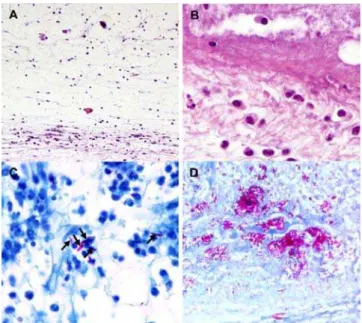
Observation of serial footpad sections of BALB/c mice showed an acute neutrophilic inflammatory response in the subcutaneous tissue early after infection with 00-1441 (data not shown). In the course of the second week of infection, evidence of dermal edema was found (Fig. 6A) along with a mixed inflammatory infiltrate containing mononuclear cells and neutrophils (Fig. 6A and B), surrounding the necrotic center of the lesion (Fig. 6B). By weeks 3 to 4, the necrotic focus expanded progressively, invading healthy tissue and numerous AFB were observed in areas co-localizing with leukocytes, predominantly of the mononuclear type (Fig. 6C). In more advanced stages of infection, and concurring with ulceration, the subcutaneous tissue of BALB/c and NMRI mice revealed extensive necrotic acellular areas with clumps of free bacilli (Fig. 6D).
An important histopathological finding regarding footpad infection by strain 00-1441 in NMRI and BALB/c mice was the presence of AFB in the bones (Fig. 7A) and bone marrow (Fig. 7B) of the feet. Extensive destruction of the bone was observed with
erosion of the cortex and replacement of marrow by inflammatory cells (Fig. 7C and D).
These results indicate that M. ulceransstrain 00-1441 is highly virulent for mice.
Genotyping results. The IS2404RFLP banding pattern of 00-1441 was identical to that of AfricanM. ulceransisolates [37]. Using PRPA, 00-1441 also yielded a profile similar to that of AfricanM. ulceransisolates [38].
Comparison of MIRU-VNTR profile based on 6 loci showed that 00-1441 has a typical Atlantic African genotype [40].
Discussion
The prevailing concept that BU is associated with wetlands, especially slow-flowing or stagnant water, implies thatM. ulceransis an environmental pathogen transmitted to humans from particular aquatic niches. Historically, the presence ofM. ulceransin aquatic samples, including water, mud, aquatic plants, aquatic insects, aquatic mollusks, crustacea and small fish, has been inferred from the detection by PCR of the insertion sequence IS2404, highly
Figure 2. Mass spectroscopic analysis of the ASL ofM. ulcerans00-1441 showing the mycolactone A/B sodium adduct at m/z 765.6.
represented in the genome of M. ulcerans [14]. All previous attempts to isolate fully characterized M. ulcerans from environ-mental samples, however, have failed, and recent evidence [22] indicates that IS2404positivity alone is inadequate to establish the presence ofM. ulceransin environmental samples.
M. ulcerans00-1441, isolated from a Hemiptera (Water Strider, Gerris sp.) collected from a swamp in a BU endemic region (Zagnanado, Benin), represents the first fully characterized culture of the agent of BU from an environmental source. Isolate 00-1441 was identified asM. ulceransby the following criteria:
1. Phenotypic characteristics are identical to those of M. ulcerans strains from Africa [26];
2. Nucleotide sequence of the 59 end of 16S rRNA gene has 100% identity withM. ulceransandM. marinum;
3. Nucleotide sequence of the 39 end of 16S rRNA gene is identical to that ofM. ulcerans(African type) [33] except for a single nucleotide substitution at position 1317;
4. Identical profile with the predominant African type for the genotypic IS2404-RFLP, PRPA assays [37,38], and MIRU-VNTR [40];
5. Identical mycolactone A/B to that produced by M. ulcerans strains from Africa [34];
6. Progressive infection and disease produced in mouse footpads with lesions showing histopathological features similar to those described inM. ulcerans-infected mice [36] and humans [43].
Additionally, 00-1441 had been previously found to have a mycolate profile pattern similar to that ofM. ulcerans, with three types of mycolates, a-, methoxy-, and ketomycolates [26]. Moreover, 00-1441 and the predominant African type share identical profiles for IS2404-Mtb2 PCR [44], and microsatellite VNTR analysis [45].
Figure 3. MS/MS fragmentation pattern of the mycolactone A/B ion at m/z765.6.The two main characteristic fragments are those of the
macrolide ring m/z = 429.4 (*) and the side chain at m/z = 359.3 (**). doi:10.1371/journal.pntd.0000178.g003
Figure 4. Cytotoxic activity of M. ulcerans00-1441 to BMDM.
Based on nucleotide substitutions at the 39end 16S rRNA gene [33], isolate 00-1441 is an M. ulcerans type 1 strain (an African type). The mutation found at position 1317 (a T instead of a C) has not been found previously. Indeed the 39 end of the 16S rRNA gene of allM. ulceransstrains analyzed in 1996 [33] and of all other mycobacterial species has a C at position 1317 [Blast search on the nucleotide collection (nr/nt) database (NCBI) using the nucleotide sequence of the 39end 16S rRNA gene (nt 1244-1461) of M. ulceranstype 1]. In a recent study on 75M. ulceransisolates from 17 different countries including 10 African countries (Angola, Benin, Cameroon, Congo-Brazzaville, Coˆte d’Ivoire, Democratic Repub-lic of Congo, Ghana, Nigeria, Togo and Uganda), a few isolates from patients originating from the Zou and Oue´me´ valleys in Benin presented a T instead of a C at position 1317 (Portaelset al., in preparation). Interestingly, strain 00-1441 was isolated from the region (Zou Department) where some of these patients lived.
The aquatic specimens analyzed in the present study likely contained very few mycobacteria since direct smear examination after decontamination was negative for all specimens and primary cultures positive for mycobacteria other thanM. ulcerans(Table 1) produced only 1 to 3 colonies. Moreover, despite the very high sensitivity of the IS2404 PCR [14], detection of IS2404 in the decontaminated specimens was negative indicating that less than 10 mycobacterial cells were present in each suspension [28]. Culture in BACTEC allowed multiplication of the rare mycobac-teria present in the inocula since three of the five BACTEC positive cultures were positive by IS2404PCR.
Our previous attempts to detectM. ulceransin more than 1000 environmental specimens by culture have revealed numerous environmental mycobacteria belonging to species frequently cultivated from the environment [5]. However, other than the results of Marsollieret al.[9,18] and the present study, all attempts to culture M. ulcerans from the environment have failed. As discussed elsewhere [19], there are several possible explanations for the difficulty in culturing M. ulcerans from environmental
specimens, namely: (i) These specimens are heavily contaminated with other microorganisms, [5,13,18,24]. This is primarily because the generation time ofM. ulceransis longer than that of most other slow-growing mycobacteria that are abundant in the environment [18,19]. In the present study, successive passages in mice of BACTEC cultures may have eliminated mouse avirulent environ-mental mycobacteria [30] co-existing in the specimen, allowing multiplication of M. ulcerans. (ii) All decontamination methods currently available for the isolation ofM. ulcerans from contam-inated environmental specimens have a detrimental impact on the viability of this pathogen [27]. (iii) SinceM. ulceransis sensitive to elevated temperatures [46–47], temperature during transportation of environmental specimens to the laboratory is critical, particu-larly in tropical areas where ambient temperatures often exceed 32uC. (iv) As is the case in the present work, environmental specimens used in attempts to isolateM. ulceransmay contain very few bacilli. (v) Additionally, in the environmentM. ulceransmay be living in a viable but nonculturable (VBNC) state. This state may represent a survival adaptation to overcome adverse conditions, but the organism retains secluded cultural viability and virulence capability [48,49]. Most pathogenic bacteria of humans are known to enter the VBNC state, including those in aquatic environments [48,50,51]. The recuperation of culturability in bacteriological media by mycobacteria in the VBNC state may require a suitable resuscitation medium [52] and BACTEC may serve to resuscitate the VBNCM. ulcerans.Additional experiments are required to test for a VBNC state in environmentalM. ulcerans.
The strain analyzed in the present study was isolated from a Hemiptera (Gerrissp.).Gerrissp. belongs to the worldwide family of the Gerridae. They are elongate insects with very long mid and hind legs (Fig. 8). The latter allow them to move rapidly on water surfaces to catch their preys. They live on the surface of quiet
Figure 5. Footpad swelling and bacterial proliferation during
infection with isolate 00-1441. BALB/c mice were infected
subcutaneously in the footpad with 5.2 log10AFB ofM. ulcerans 00-1441. The degree of pathologic changes was assessed by measurement of footpad swelling (&) (n = 8). The proliferation of bacilli in the footpad was determined by counting AFB (open bars) of footpad homogenates (n = 5). Significant differences were performed using Student’s t test (**, p#0.01).
doi:10.1371/journal.pntd.0000178.g005
Figure 6. Histologic sections of mouse footpads infected with M. ulcerans00-1441.BALB/c (A–C) and NMRI (D) mice were infected subcutaneously with 5.4 log10M. ulcerans00-1441. At different time
points the footpads were harvested and processed for histologic analysis. Dermal edema could be found by the second week of infection (A), along with a necrotic center surrounded by both chronic and acute inflammatory infiltrates (B) (hematoxylin-eosin stained sections). After 4 weeks of infection, bacilli were observed co-localized with cells (C) and in large clumps in the necrotic center of the lesion (D) (Ziehl-Neelsen stained sections).
waters and are unable to walk on the ground, but can fly from one pond or river to another [53].
Several publications have suggested that Hemiptera (Naucor-idae, Belostomatidae) may play a role in the transmission of BU to humans [1,8,9]. The successful cultivation of M. ulcerans from another family of aquatic Hemiptera (Gerridae) extends the range of hypothetical hemipteran transmitters. Like other aquatic Hemiptera, Gerridae are aggressive predators of other aquatic organisms such as insects and small fish. However, there are no reports of Gerridae biting humans (Dethier M, personal communication) and these insects may be only passive, incidental and transient reservoirs ofM. ulceranswithout an obvious role in the transmission of BU to humans or other mammals.
MS analysis of ASLs confirmed that isolate 00-1441 produced mycolactone A/B. The virulence ofM. ulceransis largely due to the presence of the toxic macrolide, mycolactone [3]. It is now recognized that there is a family of mycolactones produced byM. ulceransand other related mycobacterial species. Each mycolactone has a distinct structure and mass. However, all isolates ofM. ulcerans from Africa produce mycolactone A/B [34]. The demonstration of mycolactone A/B in Gerridae isolate 00-1441 presented here provides additional evidence that this strain is similar to virulent strains isolated from patients throughout West Africa.
Like other mycolactone A/B producingM. ulceransstrains [36], strain 00-1441 proliferates extensively in mouse footpads and produces intense footpad swelling. Moreover, in previous mouse footpad inoculation studies on 11 isolates of M. ulcerans from patients in Benin, 5 of which were from bones of patients withM. ulceransosteomyelitis [54], no changes were noted in the bones of
the mice feet (Portaels F and Meyers WM, unpublished observations). However, feet of NMRI and BALB/c mice inoculated with 00-1441 showed striking destruction of bone. These data regarding mouse infection suggest that strain 00-1441 is highly virulent for mice. Additional experiments in mice and ex vivo are required to compare the virulence of strains sharing the same ‘‘T’’ for ‘‘C’’ 16S rRNA gene polymorphism at position 1317 and identically treated i.e., after several passages in mice. Such experiments are underway and will be presented in another publication.
In the present study, the main steps followed to cultivate M. ulceransin pure culture from an aquatic insect are summarized in Fig. 9. Other methods may also be applied such as cultures from
Figure 7. Ziehl-Neelsen staining of bone tissue of mice infected withM. ulcerans00-1441 (A, B and inset of D, arrows).NMRI mice were infected subcutaneously in the footpad with 5.4 log10M. ulcerans 00-1441. At 6 weeks post-infection, bacilli were found both in the bone tissue and in the bone marrow (A, B and inset in D, arrows). Hemotoxylin-eosin staining of C and D reveals extensive destruction of bone. Outlines of dead cortical bone spicules are seen in C and D (arrowheads). Marrow is necrotic and replaced by chronic inflammation. doi:10.1371/journal.pntd.0000178.g007
Figure 8. An example of Afrotropical Gerridae: Limnogonus
hypoleucus(Gerstaecker).Photo: Je´rome Constant, Department of Entomology, Royal Belgian Institute of Natural Sciences, Brussels, Belgium.
doi:10.1371/journal.pntd.0000178.g008
Figure 9. Main steps followed to cultivateM. ulceransin pure
culture from an aquatic insect (Gerrissp.).
salivary glands of wild Naucoridae [9] or aquatic plants [18], or other culture procedures such as the Mycobacteria growth Indicator Tube (MGIT) system [55], or other decontamination methods [27]. The growth ofM. ulceransin liquid media can also be confirmed by applying VNTR analysis to the IS2404positive liquid cultures to differentiate M. ulcerans and other IS2404 positive mycobacteria [23]. This was not done because the technique had not yet been developed when the present study was undertaken.
In conclusion, for the first time a genetically and phenotypically identified M. ulceranshas been isolated in pure culture from an environmental source, reinforcing the concept that the agent of BU is a human pathogen with environmental aquatic niches.
Acknowledgments
We thank Prof. M. Dethier for valuable information on the Gerridae. We also thank Brian Ranger, Goreti Pinto, and Luis Martins for laboratory assistance, Esther K. Meyers, Karin Janssens, and Gae¨lle Antoine for preparation of the manuscript, and George E. Meyers for preparation of the photographs.
Author Contributions
Conceived and designed the experiments: FP MS JP. Performed the experiments: FP WM AA AC KC PdR PE KF AF RL EM PS ET AVA. Analyzed the data: FP WM AA AC KC PE AF RL EM PLCS PS ET MS JP. Contributed reagents/materials/analysis tools: RL EM PLCS. Wrote the paper: FP WM MS JP.
References
1. Portaels F, Meyers WM (2006) Buruli ulcer. In: Faber WR, Hay RJ, Naafs B, eds. Imported skin diseases. Maarssen, The Netherlands: Elsevier Gezondheids-zorg. pp 117–129.
2. Janssens PG, Pattyn SR, Meyers WM, Portaels F (2005) Buruli Ulcer: An historical overview with updating to 2005. Bull Seances Acad R Sci Outre Mer 51: 165–199.
3. George KM, Chatterjee D, Gunawardana G, Welty DM, Hayman J, Lee R, Small PLC (1999) Mycolactone: a polyketide toxin fromMycobacterium ulcerans required for virulence. Science 283: 854–857.
4. Portaels F (1989) Epide´miologie des ulce`res a`Mycobacterium ulcerans. Ann Soc Belg Med Trop 69: 91–103.
5. Portaels F (1995) Epidemiology of mycobacterial diseases. Clinics Dermatol 13: 207–222.
6. Debacker M, Portaels F, Aguiar J, Steunou C, Zinsou C, et al. (2006) Risk factors for Buruli ulcer, Benin. Emerg Infect Dis 12: 1325–1331.
7. Duker AA, Portaels F, Hale M (2006) Pathways of Mycobacterium ulcerans infection: A review. Environ Int 32: 567–573.
8. Portaels F, Elsen P, Guimaraes-Peres A, Fonteyne PA, Meyers WM (1999) Insects in the transmission ofMycobacterium ulcerans infection (Buruli ulcer). Lancet 353: 986.
9. Marsollier L, Robert R, Aubry J, Saint-Andre´ JP, Kouakou H, et al. (2002) Aquatic insects as a vector forMycobacterium ulcerans. Appl Environ Microbiol 68: 4623–4628.
10. Marsollier L, Brodin P, Jackson M, Kordula´kova J, Tafelmeyer P, et al. (2007) Impact ofMycobacterium ulceransbiofilm on transmissibility to ecological niches and Buruli ulcer pathogenesis. PloS Pathog 3: e62. doi:10.1371/journal.ppat. 0030062.
11. Merritt RW, Benbow ME, Small PLC (2005) Unraveling an emerging disease associated with disturbed aquatic environments: the case of Buruli ulcer. Front Ecol Environ 3: 323–331.
12. Silva MT, Portaels F, Pedrosa J (2007) Aquatic insects andMycobacterium ulcerans: An association relevant to Buruli ulcer control? PloS Med 4: e63. doi:10.1371/ journal.pmed.0040063.
13. Ross BC, Marino L, Oppedisano F, Edwards R, Robins-Browne RM, et al. (1997) Development of a PCR assay for rapid diagnosis ofMycobacterium ulcerans infection. J Clin Microbiol 35: 1696–1700.
14. Stinear TP, Seemann T, Pidot S, Frigui W, Reysset G, et al. (2007) Reductive evolution and niche adaptation inferred from the genome ofMycobacterium ulcerans, the causative agent of Buruli ulcer. Genome Res 17: 192–200. 15. Ross BC, Johnson PDR, Oppedisano F, Marino L, Sievers A, et al. (1997)
Detection ofMycobacterium ulceransin environmental samples during an outbreak of ulcerative disease. Appl Environ Microbiol 63: 4135–4138.
16. Roberts B, Hirst R (1997) Immunomagnetic separation and PCR for detection ofMycobacterium ulcerans. J Clin Microbiol 35: 2709–2711.
17. Stinear T, Davies JK, Jenkin GA, Hayman JA, Oppedisano F, et al. (2000) Identification of Mycobacterium ulcerans in the environment from regions in Southeast Australia in which it is endemic with sequence capture-PCR. Appl Environ Microbiol 66: 3206–3213.
18. Marsollier L, Stinear T, Aubry J, Saint-Andre´ JP, Robert R, et al. (2004) Aquatic plants stimulate the growth of and biofilm formation byMycobacterium ulceransin axenic culture and harbor these bacteria in the environment. Appl Environ Microbiol 70: 1097–1103.
19. Portaels F, Chemlal K, Elsen P, Johnson PDR, Hayman JA, et al. (2001) Mycobacterium ulceransin wild animals. Rev Sci Tech 20: 252–264.
20. Kotlowski R, Martin A, Ablordey A, Chemlal K, Fonteyne PA, et al. (2004) One-tube cell lysis and DNA extraction procedure for PCR-based detection of Mycobacterium ulceransin aquatic insects, mollusks and fish. J Med Microbiol 53: 927–933.
21. Fyfe J, Lavender C, Johnson P, Globan M, Sievers A, et al. (2007) Development and application of two multiplex real-time PCR assays for the detection of Mycobacterium ulceransin clinical and environmental samples. Appl Environ Microbiol 73: 4733–4740.
22. Yip MJ, Porter JL, Fyfe JA, Lavender CJ, Portaels F, et al. (2007) Evolution of Mycobacterium ulcerans and other mycolactone-producing mycobacteria from a commonMycobacterium marinumprogenitor. J Bacteriol 189: 2021–2029. 23. Stragier P, Ablordey A, Durnez L, Portaels F (2007) VNTR analysis
differentiatesMycobacterium ulceransand IS2404positive mycobacteria. Syst & Appl Microbiol 30: 525–530.
24. Barker DJP, Clancey JK, Rao SK (1972) Mycobacteria on vegetation in Uganda. East Afr Med J 49: 667–671.
25. Portaels F (1973) Contribution a` l’e´tude des mycobacte´ries de l’environnement au Bas-Zaı¨re. Ann Soc Belg Med Trop 53: 373–387.
26. Chemlal K, Huys G, Laval F, Vincent V, Savage C, et al. (2002) Characterization of an unusual Mycobacterium: a possible missing link between Mycobacterium marinumandMycobacterium ulcerans. J Clin Microbiol 40: 2370–2380. 27. Palomino JC, Portaels F (1998) Effects of decontamination methods and culture conditions on viability ofMycobacterium ulceransin the BACTEC System. J Clin Microbiol 36: 402–408.
28. Guimaraes-Peres A, Portaels F, De Rijk P, Fissette K, Pattyn SR, et al. (1999) Comparison of two PCRs for detection ofMycobacterium ulcerans. J Clin Microbiol 37: 206–208.
29. Boom R, Sol C, Salimans J, Jansen M, Wertheim-van Dillen PM, et al. (1990) Rapid and simple method for purification of nucleic acids. J Clin Microbiol 28: 495–503.
30. Pattyn SR (1965) Comportement de diverses espe`ces de mycobacte´ries apre`s injection dans la patte de la souris. Ann Inst Pasteur 109: 309–313. 31. World Health Organization (2001) Buruli Ulcer. Diagnosis of Mycobacterium
ulceransdisease. A manual for health care providers. Portaels F, Johnson P, Meyers WM, eds. WHO/CDS/GBUI/2001.4. Geneva: The Organization. 92 p.
32. Vincent Le´vy-Fre´bault V, Portaels F (1992) Proposed minimal standards for the genusMycobacteriumand for description of new slowly growingMycobacterium species. Int J Syst Bacteriol 42: 315–323.
33. Portaels F, Fonteyne PA, de Beenhouwer H, de Rijk P, Gue´de´non A, et al. (1996) Variability in 39end of the 16S rRNA sequence ofMycobacterium ulceransis related to geographic origin of isolates. J Clin Microbiol 34: 962–965. 34. Mve-Obiang A, Lee RE, Portaels F, Small PLC (2003) Heterogeneity of
Mycolactone toxins produced by Mycobacterium ulcerans: Implications on virulence. Infect Immun 71: 774–783.
35. Shepard CC, McRae DH (1968) A method for counting acid-fast bacteria. Int J Leprosy 36: 78–82.
36. Oliveira MS, Fraga AG, Torrado E, Castro AG, Pereira JP, et al. (2005) Infection byMycobacterium ulceransinduces persistent inflammatory responses in mice. Infect Immun 73: 6299–6310.
37. Chemlal K, De Ridder K, Fonteyne PA, Meyers WM, Swings J, et al. (2001) The use of IS2404restriction fragment length polymorphisms suggests the diversity ofMycobacterium ulceransfrom different geographical areas. Amer J Trop Med Hyg 64: 270–273.
38. Chemlal K, Huys G, Fonteyne PA, Vincent V, Lopez AG, et al. (2001) Evaluation of PCR-restriction profile analysis, IS2404 restriction fragment length polymorphism and amplified fragment length polymorphism fingerprint-ing for identification and typfingerprint-ing ofMycobacterium ulceransandM. marinum. J Clin Microbiol 39: 3272–3278.
39. Stragier P, Ablordey A, Meyers WM, Portaels F (2005) GenotypingMycobacterium ulceransandMycobacterium marinumusing mycobacterial interspersed repetitive units. J Bacteriol 187: 1639–1647.
40. Stragier P, Ablordey A, Bayonne LM, Lugor YL, Sindani IS, et al. (2006) First report on heterogeneity amongMycobacterium ulcerans from different African countries. Emerg Infect Dis 12: 844–847.
41. Hofer M, Hirschel B, Kirschner P, Beghetti M, Kaelin A, et al. (1993) Brief report: disseminated osteomyelitis fromMycobacterium ulceransafter a snakebite. N Engl J Med 328: 1007–1009.
43. Torrado E, Fraga AG, Castro AG, Stragier P, Meyers WM, et al. (2007) Evidence for an intramacrophage growth phase ofMycobacterium ulcerans. Infect Immun 75: 977–987.
44. Ablordey A, Kotlowski R, Swings J, Portaels F (2005) PCR amplification with primers based on IS2404and GC-Rich repeated sequence reveals polymor-phism inMycobacterium ulcerans. J Clin Microbiol 43: 448–451.
45. Ablordey A, Fonteyne PA, Stragier P, Vandamme P, Portaels F (2007) Identification of a new VNTR locus inMycobacterium ulceransfor potential strain discrimination among African isolates. Clin Microbiol Inf 13: 734–736. 46. Meyers WM, Shelly WM, Connor DH (1974) Heat treatment ofMycobacterium
ulceransinfections without surgical excision. Am J Trop Med Hyg 23: 924–929. 47. Eddyani M, Portaels F (2007) Survival ofMycobacterium ulceransat 37uC. Clin
Microbiol Inf 13: 1033–1035.
48. Oliver JD (2005) The viable but nonculturable state in bacteria. J Microbiol 43: 93–100.
49. Keep NH, Ward JM, Cohen-Gonsaud M, Henderson B (2006) Wake up! Peptidoglycan lysis and bacterial non-growth states. Trends Microbiol 14: 271–276.
50. Caro A, Got P, Lesne J, Binard S, Baleux B (1999) Viability and virulence of experimentally stressed nonculturable Salmonella typhimurium. Appl Environ Microbiol 65: 3229–3232.
51. Roszak DB, Colwell RR (1987) Survival strategies of bacteria in the natural environment. Microbiol Rev 51: 365–379.
52. Shleeva M, Mukamolova GV, Young M, Williams HD, Kaprelyants AS (2004) Formation of ‘non-culturable’ cells ofMycobacterium smegmatisin stationary phase in response to growth under suboptimal conditions and their Rpf-mediated resuscitation. Microbiology 150: 1687–97.
53. Imms AD (1947) Insect Natural History. London: Collins. 311 p.
54. Portaels F, Zinsou C, Aguiar J, Debacker M, de Biurrun E, et al. (2003) Les atteintes osseuses dans l’ulce`re de Buruli: A propos de 73 cas. Bull Seances Acad R Sci Outre Mer 49: 161–190.