JOB QUALITY OF YOUNG GRADUATES IN SOUTHERN
EUROPEAN COUNTRIES
Maria do Rosário Carvalho Marques Dias
Dissertation submitted as partial requirement for the conferral of Master in Human Resources Management and Organizational Consultancy
Supervisor:
Prof. Fátima Suleman, Professora Auxiliar, Escola de Ciências Sociais e Humanas, Departamento de Economia Política
Co-supervisor:
Prof. Abdul Kadir Suleman, Professor Auxiliar, Escola de Tecnologias e Arquitetura, Departamento de Matemática
Spine
-JOB QUA LI TY OF Y O UN G G R AD UA TES IN S OU NT HE R N E UROPE AN C OU NT R IE S M ar ia d o Rosár io Car v alh o M ar q u es Diasi Abstract
International policies related to employment and the education system have spread concern about job quality. This dissertation uses the European Union Labour Force Survey to explore the job quality of young bachelor and master graduates in Southern European Countries, namely Portugal, Greece and Italy. After analysing the characteristics of job quality, those were matched with the available information in the database. A fuzzy cluster analysis allowed to understand the different typologies prevailing in each country. The results achieved show that the young graduates (20 to 24 years old) prevail in the typology with the lowest income, involuntary contracts with flexible duration, part-time job and some atypical work, entering the labour market through these conditions and they are searching for another job. The young adult graduates (25 to 29 years old) prevail in a typology with moderate income, contract from seven months to unlimited duration, full-time and working regular hours. However, some graduates are assigned to stable jobs with long-term contract, full-time job working long hours, higher income and disturbances in work-life balance. Considering the distribution of the graduates by job quality, around a third of the sample is aligned with a single typology where slightly more than half has a combination of two. This shows that having a higher education is no longer sufficient to guarantee a high-quality job for all graduates. Policy-makers should take initiatives to encourage employers to foster job quality and allow young people to have a better transition to and trajectory in the labour market.
Keywords: Job quality, Young graduates, Southern European countries, Labour market segmentation
JEL Classification System:
I2 Education and Research Institutions I26 Returns to Education J4 Particular Labour Markets
ii Resumo
As políticas internacionais relacionadas com o emprego e sistema educativo espalharam a preocupação com a qualidade do emprego. Esta dissertação utiliza o
European Union Labour Force Survey para explorar a qualidade do emprego dos jovens
licenciados e mestres nos países do Sul da Europa, nomeadamente, Portugal, Grécia e Itália. Após analisar as características da qualidade do emprego, estas foram adaptadas à informação disponível na base de dados. Uma análise de cluster permitiu perceber as diferentes tipologias que prevalecem em cada país. Os resultados obtidos mostram que os jovens (20-24 anos) prevalecem na tipologia com o rendimento mais baixo, contrato involuntário de duração flexível, part-time e trabalho atípico, entrando no mercado de trabalho através destas condições, estando à procura de outro emprego. Jovens adultos (25-29 anos) graduados prevalecem numa tipologia com rendimento moderado, contrato de sete meses a duração ilimitada, full-time e horas de trabalho típicas. Contudo, alguns graduados têm um emprego estável com contrato indeterminado, full-time a trabalhar longas horas, rendimento mais alto e perturbações no equilíbrio entre trabalho e vida pessoal. Considerando a distribuição dos graduados por qualidade de emprego, cerca de um terço da amostra identifica-se com uma tipologia enquanto que pouco mais de metade tem uma combinação entre duas. Isto mostra que ter uma educação superior já não é suficiente para garantir um emprego de alta qualidade para todos os graduados. Responsáveis políticos devem ter iniciativas para incentivar os empregadores a promover a qualidade do emprego e permitir que os jovens tenham uma melhor transição e trajeto dentro do mercado de trabalho.
Palavras-chave: Qualidade do emprego, Jovens graduados, Países do Sul da Europa, segmentação do mercado de trabalho
iii Acknowledgements
This dissertation was possible due to the dedication and friendship of people who contributed directly or indirectly to their realisation.
Professor Fátima Suleman, a thank you is not enough to express my gratitude for receiving me so promptly and guiding me in this dissertation. The Professor was always available, within a short distance of a phone call, discussing the topics trigging critical thinking, believing in me, clarifying my doubts and always with a friendly word of encouragement and motivation.
Professor Abdul Suleman, I am so thankful for accepting the challenge of also guiding me in this dissertation, for all shared knowledge that was so important for the results of this study, for the constant feedback and advice.
Professor Conceição Figueiredo, I truly appreciate the pertinent tips and inputs on the analysis of the database.
Professor Elsa Dinis, thank you for taking the trouble to discuss themes, for sharing your views with me and for helping me find my new path.
ISCTE has been my second home for the past five years and I would like to express my appreciation for the Professors who challenged me along the way and for the colleagues who crossed my journey, this community made me grow. To my friends, for calling me and pushing me to have company to work on this dissertation, for deep conversations about common problems, goals and motivations, for celebrating small conquers, I am truly glad we shared this experience.
I am eternally grateful to my family for always supporting me unconditionally regardless of my decisions; to my parents and siblings, for respecting the time I needed to devote to this project, for your constant affection and unfailing support, and for even when you did not know or understand what I was saying you were always ready to help me, thank you, I know how lucky I am.
iv Table of contents: Abstract ... i Resumo ... ii Acknowledgements ... iii Index of Tables ... v List of Abbreviations ... v Introduction ... 1 I – Literature Review ... 4
1.1 Definition of Job Quality ... 4
1.2Measuring Job Quality ... 8
1.3 International Research ... 14
1.4 Job quality in the skilled labour market: the young graduates ... 16
II – Data and Methodology ... 20
2.1 Data ... 20
2.2 Methodology ... 21
2.2.1 Dimensions: variables for the construction of the typologies ... 22
2.2.1.1 Limitations of the European Union Labour Force Survey ... 28
2.2.2 Fuzzy Clustering ... 29
2.2.3 Table of Descriptive ... 30
III – Results ... 38
3.1 Fuzzy cluster analysis ... 38
3.1.1 Typologies with Portuguese data ... 39
3.1.2 Typologies with Italian data ... 41
3.1.3 Typologies with Greek data ... 43
3.1.4 Comparing the typologies of the three countries ... 45
3.2 Distribution of the sample by country typologies ... 48
3.2.1 Distribution of young graduates in Portugal ... 49
3.2.2 Distribution of young graduates in Italy ... 49
3.2.3 Distribution of young graduates in Greece ... 50
3.2.4 Distribution of young graduates in the Southern European countries ... 50
IV – Discussion ... 52
V – Conclusions ... 56
Bibliography ... 58
v Index of Tables
Table 1 – Number of individuals in the full database of EU-LFS and in the sample for the present study
Table 2 - Descriptive analysis: Job quality variables
Table 3 – Descriptive analysis: Characteristics associated with the job
Table 4 – Fuzzy cluster analysis of the Portuguese sample data (the Table indicates the prevailing characteristics)
Table 5 – Fuzzy cluster analysis of the Italian sample data (the Table indicates the prevailing characteristics)
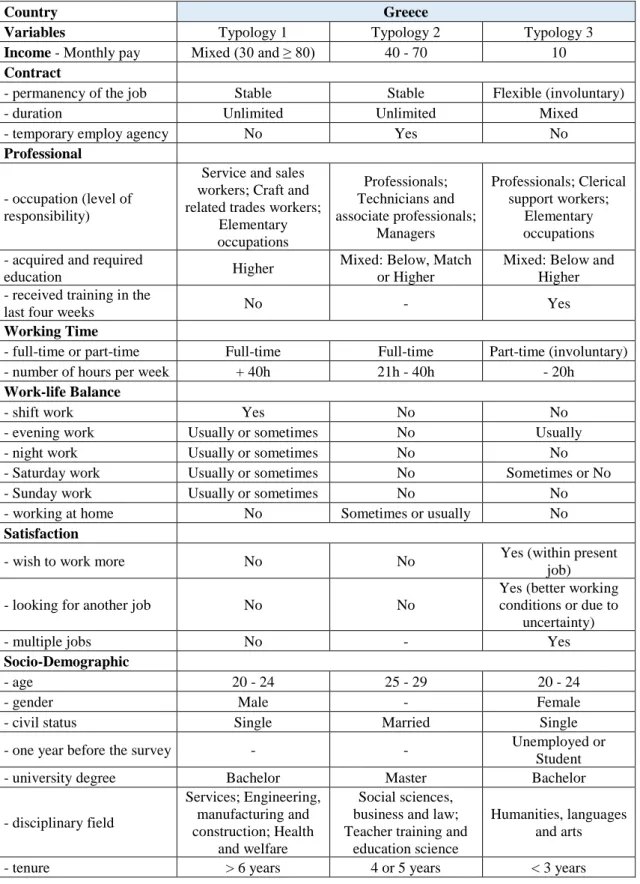
Table 6 – Fuzzy cluster analysis of the Greek sample data (the Table indicates the prevailing characteristics)
Table 7 – Distribution of the Portuguese sample by typologies (full membership set to 0.85)
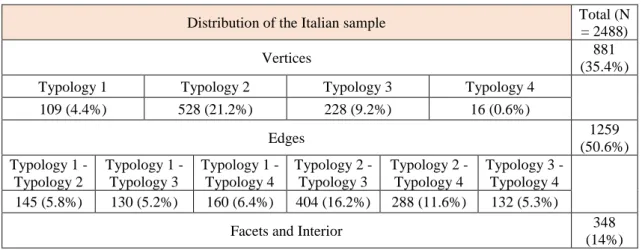
Table 8 – Distribution of the Italian sample by typologies (full membership set to 0.85) Table 9 – Distribution of the Greek sample by typologies (full membership set to 0.85)
List of Abbreviations EU European Union
1 Introduction
Findlay, Kalleberg and Warhurst (2013:442) consider that the new importance and recurrence of the theme, job quality, between social scientists and policy-makers is due to the possible influence ‘on the individual, the firm and national well-being’. The International Labour Organization introduced the Decent Work Agenda, that focused on improving the chances of humans (both men and woman) to have a decent work, characterised by ‘conditions of freedom, equity, security and human dignity’ (ILO, 1999:3). This report highlights the need for the creation of jobs with acceptable quality, celebrating the marriage that should exist between the quantity of employment and their quality, and realizing that different societies may have a different notion of what quality is (e.g. forms and conditions of work, feelings of value or satisfaction). The European Council in Lisbon (2000) established a new strategic goal to reinforce the employment, the economic reform, to improve the social welfare and modernise the education system (European Council, 2000). In this meeting, the European Union (EU) set a ‘new strategic
goal for the next decade: to become the most competitive and dynamic knowledge-based economy in the world, capable of sustainable economic growth with more and better jobs and greater social cohesion.’. Regarding ‘more and better jobs’, it was given more
attention to the growth than the quality of jobs; more jobs are not automatically translated into more quality. In fact, some of the new jobs had a flexible contract, meaning that they were involuntary temporary positions or part-time jobs, agency work and low-wage jobs, being the young individuals one of the vulnerable groups where this was common (European Parliament, 2010). Due to a greater knowledge on the topic, these initiatives are a starting point to demonstrate the importance of job quality, triggering the study of this phenomenon. Our study contributes to this literature through an analysis of the job quality of skilled workers.
Job quality is connected to employment-related conditions that have an impact on the well-being of the employees (Holman, 2013; Okay-Somerville and Scholarios, 2013) affecting the well-being of individuals in their personal life and might be different according to their life stage (Knox, Warhurst, and Pocock, 2011). It can lead to higher productivity and can be useful in predicting turnover (Clark, 2005) since poor job quality can lead to the desire to quit the organisation and change job (Boccuzzo and Gianecchini, 2015). Job quality interferes with individuals, families, communities, and countries and the policy-makers already realized that this topic is important in improving individual
2 well-being and acquiring a national competitive advantage. Therefore it is essential to have a greater understanding of the concept of job quality and establish more consensus (in three key areas: dimensions of job quality, factors that influence it and its outcomes or impacts) to have international, national and regional policies to foster the quality of jobs, and to have a more accurate cross-disciplinary and cross-national research (Findlay, Kalleberg and Warhurst, 2013).
This dissertation aims to characterise the job quality among young graduates in three Southern European countries. The research questions guiding our study are: Which type of jobs prevails in a skilled labour market? What explains the prevalence of certain categories of graduates in high (low) quality jobs?
It uses the information provided by the European Union Labour Force Survey (EU-LFS) to cluster the chosen job characteristics and the characteristics associated with the job by country. In doing so, it will be possible to see the reality of each country and understand the nuances of the combination of the characteristics that prevail, giving us insights of the type of characteristics that stay together in different typologies. The goals of the study are:
i) Identify typologies of jobs according to different dimensions of job quality reported in the literature;
ii) Examine which categories of graduates are assigned to good (bad) jobs; iii) Explore differences and similarities across the selected Southern European
countries.
This study not only contributes to the literature of the graduates but also for the international study of job quality. It provides an innovative way to show results where one can see the intersection of the job characteristics, giving more insights on the impact of them, as well as the distribution of the population by the existing typologies.
The rest of the report is organised as follows. The first chapter is focused on the literature review of job quality, such as the definition of job quality, the situations that the authors faced while measuring it and what has been done so far, providing information about the context of this topic, internationally and focusing on the young graduates. Chapter two describes the data and methodology of this study, detailing the dimensions used and the limitations of the database. While chapter three presents the empirical
3 evidence, the fourth chapter outlines the discussion of the results. Finally, chapter five, draws the limitations, suggestions for future research and conclusions of this study.
4 I – Literature Review
1.1 Definition of Job Quality
Although there have been recurrent debates about job quality, with social, economic and political views, it is difficult to define and measure it and is far from a consensual subject. Since job quality is studied in different social sciences (Cooke, Donaghey and Zeytinoglu, 2013; Findlay, Kalleberg and Warhurst, 2013), the approach that social scientists have towards this topic is different (Kalleberg and Vaisey, 2005), leading to diverse key objectives, and therefore a variety of measures. Due to the lack of academic agreement regarding the concept of job quality and the way to measure it leads policy-makers to the initiatives presented above to flourish a broader understanding of job quality (Cooke, Donaghey and Zeytinoglu, 2013). All this has implications for the scientific community, but also for the contribution that policy interventions have in the future of job quality (Findlay, Kalleberg and Warhurst, 2013).
Osterman (2013) argues that job quality is the result of employers’ decisions regarding employment conditions they provide. To understand the origin of those decisions, the author provides us with food for thought with two different ways of thinking, the theory of compensating differentials and a more institutional perspective. The first theory was originally proposed by Adam Smith in 1937, stating that both advantages and disadvantages of different employments nearby should tend to an equilibrium, suggesting that, with everything constant, some jobs will require higher wages to compensate undesirable characteristics of the job and that employees are willing to accept lower wages for more pleasant job characteristics (Smith, 1978). While some empirical literature supports the theory, there are still studies with inconclusive outcomes. The disagreeable job characteristic that has more research found is the risk of death. If we consider this theory, the employers need to provide a package of conditions that takes into consideration the benefits and disadvantages of the work combining it with wages to attract employees. The attraction of the choices results from the trade-offs of the workforce and, therefore, the change in the job quality over time is a consequence of the workforce equilibrium and it is not related to firms’ choices. The institutional perspective not only gives weight to economic pressures but also includes sociological and political considerations. The establishment of Internal Labour Markets provides institutional rules for employment practices (Doeringer and Piore, 1971; Kerr, 1954) such as wages,
5 promotions, and training. Firms can define their strategy by combining different weights of the economic, political or governmental forces and their institutional factors (e.g. internal firm policy). With this institutional approach, there is a mix of forces (economic, social and political) that influence the job quality over the years.
These institutional economists suggested another relevant theory, the dual labour market theory, that indicates a division in the labour market that tends to cluster: a primary sector with ‘good jobs’ (employment stability, high wages, career opportunities, high skills – protected employees) and a secondary sector with ‘bad jobs’ (employees outside the internal labour market, high labour turnover, low wages, few career opportunities, low skills with no training – disadvantages groups like the younger workers) (Doeringer and Piore, 1971). Facing this possibility, the ‘bad jobs’ will translate into individuals that are not satisfied, will harm their well-being, will induce inequality and for an organisation, it will lead to more costs of recruitment and productivity swings, while the ‘good jobs’ will enhance the employment participation and consequently lower the unemployment rates (Findlay et al, 2017).
Some argue that labour market regulation creates duality and creates insiders and outsiders (e.g. Boeri, 2010; Centeno and Novo, 2012). This segmentation fosters two-tier systems where some employees are overprotected relative to others. This was a result of a high employment protection for employees with open-ended contracts through rules of initiation and termination of the employment relationship, that led to the use of fixed-term contracts to increase the labour flexibility (Centeno and Novo, 2012). All sorts of temporary work appeared and the regulations of the open-ended contracts did not change creating a bigger gap of protection between the employees and evidencing the segmentation (Boeri, 2010). The employment protection gap that exists in the countries influences the type of contracts that organisations use and the conversion rate of temporary contracts to permanent contracts (Centeno and Novo, 2012). This situation strongly influences young individuals, since it is common to enter the labour market and organisations for the first time through a fixed-term contract to verify the match between the employee and the employer, meaning that at the end of the contract, this may be renewed, transformed into an open-ended contract, or a termination of the relationship (Boeri, 2010; Centeno and Novo, 2012).
Although with changes over time in the employment and welfare regime, Portugal, Italy, Greece and Spain, still have common characteristics of the social model,
6 especially the ‘pronounced labour market segmentation and familialism’ (family is responsible for welfare provision) (Karamessini, 2008:44). These countries have had a strict employment protection legislation that benefits the male breadwinner, neglecting other groups of the labour force, such as the young individuals, females and migrants that face a high rate of unemployment and are more easily involved in irregular or informal labour market. To have greater labour flexibility, it was spread the use of the fixed-term contracts that strengthened the labour market segmentation between older workers that were already protected versus the younger workers. This has led to the need to reduce the protection of employees with a permanent contract, restrict and regulate the temporary employment. Moreover, it was established a system of unemployment compensation. With the increase of women’s participation into the labour market, families began to have dual-earner couples changing the perception of female and male career and affecting the care regime of these countries that were based on female family members (mostly mums and grandmothers). However, the family is still the centre of welfare provision: support of education, the transition from study to work, support for youth unemployment and long-term care of the elderly. The percentage of individuals from 20 to 29 years old with tertiary education in Southern European countries have been increasing, 14.7% in Portugal, 12.2% in Italy, 18.3% in Greece and 32.8% in Spain against 21.5% in the EU-25 in 2006 versus 27.6% in Portugal, 18.1% in Italy, 27.2% in Greece and 34.3 in Spain against 28.6% in EU-28 in 20171. The rise of the education level in younger generations causes them to spend more years studying, being more expensive to have children, delaying the departure of young individuals from the parents’ house and their independence and leaving the family formation for later, jeopardizing the role of the family in this social model.
There are multiple perspectives and approaches to the same subject, and job quality is no exception: the psychologists focus on the intrinsic job characteristics (Okay-Somerville and Scholarios, 2013) emphasising those are the source of job satisfaction instead of the extrinsic job characteristics (Cooke, Donaghey and Zeytinoglu, 2013), analysing psychological origins of job satisfaction (Kalleberg and Vaisey, 2005) and promoting knowledge related to the choices and attitudes of individuals that impact their satisfaction with the job (Findlay, Kalleberg and Warhurst, 2013); sociologists notice the organisational systems of governance and the control and autonomy of workers activities
7 (Findlay, Kalleberg and Warhurst, 2013; Kalleberg and Vaisey, 2005) having more concern with status, skills, and discretion at work (Okay-Somerville and Scholarios, 2013), job autonomy, effort and skill levels (Cooke, Donaghey and Zeytinoglu, 2013); economists focus on labour market theories to explain differences in the economic aspects of jobs (e.g. earnings and fringe benefits); and political scientists grant information on differences between countries, exploring institutional regimes (Findlay, Kalleberg and Warhurst, 2013). These contributions of social sciences only give a partial understanding of the topic, therefore, to fully comprehend it, one should use a multi-dimensional approach and take into consideration the economic and non-economic sources of differences in job quality (Kalleberg and Vaisey, 2005).
For Cooke, Donaghey and Zeytinoglu (2013) the job quality does not go beyond the job experience of an individual in an organisation. Okay-Somerville and Scholarios (2013) while studying the job quality in emerging graduate occupations, considered job quality as the trigger of employment-related attitudes and well-being. Holman (2013) defined job quality as the positive outcomes that job and employment characteristics have on employees’ well-being, such as psychological and physical well-being and job satisfaction. There are several authors who associate job quality with well-being, because as Kalleberg and Vaisey (2005:431) emphasise, there is literature in different social sciences (sociology, psychology, and economics) showing that the quality of work of an individual has an impact on their ‘social, psychological and economic well-being’. This impact goes further of the individual sphere, affecting the well-being of individuals in their personal life (e.g, children or relationships) or situations and activities outside the workplace (Knox, Warhurst, and Pocock, 2011). Looking at the organisational perspective, job satisfaction can help predict turnover, can lead to higher productivity at work and may reduce the absenteeism in organisations (Clark, 2005). Boccuzzo and Gianecchini (2015) argue that a job quality composite indicator can predict organisational behaviours of the employees. This perspective opens the eyes to the importance of job quality for the organisations and what they can do to improve it. Understanding what constitutes a ‘good job’ that creates a positive impact on the individuals, is a step towards being able to boost that kind of jobs, having a broader impact (Knox, Warhurst, and Pocock, 2011). These authors also call attention for what constitutes a ‘good’ job for a teenager might be very different from a stage in life where the same individual has
8 children to take care of, meaning that if there are several jobs with ‘good characteristics’ adapted to the life cycle of the individuals, those will have a life cycle of good jobs.
As one can note, the study of job quality is complex because it is a multidisciplinary phenomenon. This is not the only struggle in defining job quality, as the changes in the society over the years have brought more concerns and situations to analyse, developing the notion of what is a ‘good job’, creating different opinions and bringing more complexity to the topic.
1.2 Measuring Job Quality
Although there are numerous jobs and ways to characterised them, leading to struggles when generalizing job quality, even to potential incoherence, with all the changes through this era, there is a need to understand and describe what is happening (Osterman, 2013). More attention from the political and social perspective in the last years, triggered some studies of job quality at the macro level, measuring it as a development indicator of a country or to compare countries (Boccuzzo and Gianecchini, 2015). In fact, considering a more economic literature, there are two approaches for measuring job quality: a macro-level approach where the indicators are based on the relevant macroeconomic measures that characterise the job quality, creating the possibility to compare countries; and a micro-level approach, that focus more on the characteristics of the job itself and the satisfaction with the job (Simões, Crespo and Pinto, 2015). Focusing on the last, there are two main strategies to conceptualise and measure job quality: one can combine several dimensions of work and have an overall measure, or one can measure it based on the general assessment workers have of their job - the most used is the degree of job satisfaction (Kalleberg and Vaisey, 2005). To be able to measure job quality, it is necessary to contemplate the characteristics that should be used to measure it and how to evaluate it, considering several options, like the use of only one or several variables and that the measures used may be subjective, objective or a mix of both (Boccuzzo and Gianecchini, 2015). Objective and subjective factors have different impacts, for example, objective factors such as wages can help fight inequality being subject to existing politics on the topic, and subjective factors like job security have a greater impact on the employees’ attitudes and well-being (Okay-Somerville and Scholarios, 2013). Throughout the years, there were authors that used a single indicator
9 as measure or multiple indicators (where there are still some disagreement regarding their weights), focusing on different main points, for example, ‘economists typically focus on
pay, sociologists focus on skill and autonomy and psychologists focus on job satisfaction’
which may have slight differences within disciplines (Findlay, Kalleberg and Warhurst, 2013:443). Okay-Somerville and Scholarios (2013) support the path of studying job quality with an interdisciplinary approach, with objective and subjective factors that describe job quality, contemplating employees’ well-being and the influence that policy-makers can have. Díaz-Chao, Ficapal-Cusí and Torrent-Sellens (2016) also conclude the demand for using a multidimensional approach to job quality, since this analysis should not be limited to the workplace of individuals. As this study approaches job quality as a multidimensional phenomenon, it is necessary to define the relevant characteristics of job quality into one or a system of indicators considering the overall job quality as a combination of those aspects (Muñoz de Bustillo et al, 2009).
Regardless of the method chosen to select the most important dimensions to define job quality, those decisions are based on previous research on the subject, which should contemplate different perspectives to fully englobe the multidisciplinary nature of job quality (Muñoz de Bustillo et al, 2009), therefore, this dissertation will evidence some papers that were relevant to the choice of the variables.
After the Lisbon and Nice European Councils, there was a commitment to establishing indicators to monitor poverty and social exclusion and indicators to measure the progress of job quality (Muñoz de Bustillo et al, 2009; Simões, Crespo and Pinto, 2015). One important step towards this was the decision from the Members States, to entrust the Commission and Council to create a set of indicators and show them in the next European Council, which was in Laeken, Belgium, in December 2001 (Muñoz de Bustillo et al, 2009). The Commission proposed a set of indicators of job quality focus on a) the characteristics of the job itself and b) work and wider labour market context; using the main European data sources (like the EU-LFS) to measure the indicators (European Commission, 2001). The Laeken indicators cover a broad spectrum of topics that have been criticized: some variables do not have a direct link with job quality and are associated with other topics, there is redundant information, it is used specific subgroups in the overall results instead of measuring the results of each subgroup of population and then compare it, it was neglected some details like not considering if the part-time is voluntary or not, and it was omitted the wages that is one of the most important measures
10 considered by other authors (Muñoz de Bustillo et al, 2009; Simões, Crespo and Pinto, 2015). Due to the need to improve the indicators and for all the European institutions to use the same measures, more work needed to be done.
As a response to the insufficient indicators on job quality at the European level and aiming to achieve ‘more and better jobs’, the European Trade Union Institute developed the European Job Quality Index in 2008. Muñoz de Bustillo et al. (2009) highlights that this index is conducted from a workers’ perspective, therefore the variables are measured at an individual level with some exceptions. This index intends to make comparisons across European countries over time, being calculated every year for each member of the EU, by men, women, total of the country and an average for all countries together, allowing a comparison between gender and manifesting the importance of gender in job quality; although the comparison over time is more difficult because some variables cannot be updated yearly due to the information being drawn from five different data sources with different periodicities (Leschke, Watt and Finn, 2008). Further in the same document, one realizes that multiple data sources increase the complexity of having the same relevant information over the years since surveys are always evolving, having or not the same variables in the study. Due to the multifaceted phenomenon, the index englobes six sub-indices composed with objective and subjective measures: wages, non-standard forms of employment, work-life balance and working time, working conditions and job security, access to training and career advancement, and collective interest representation and participation (Leschke and Watt, 2008). The authors also mentioned that one weakness of the analysis was the lack of relevant comparative data in some fields, alerting for the fact, that sometimes measures and assessments are limited to the lack of data to include or develop a better understanding of the topic.
The European Working Conditions Survey, a five-yearly report, provides relevant information about the conditions of work in Europe. It is frequently used by authors to analyse the evolution and differences of job quality in the European countries because it englobes variables related to work and employment that are connected to job quality, although the survey does not allow an analysis within countries by gender, sectors, occupations or other variables because of the small sample (Muñoz de Bustillo et al, 2009). For example, Simões, Crespo and Pinto (2015) used this survey to analyse the determinants of job quality in Europe. The authors applied cluster analysis into the eleven dimensions chosen to characterise job quality and formed three homogeneous country
11 groups based on similarities. In this study, the Southern European countries were divided, with Portugal and Greece joining the Central and Eastern Europe in the first group and Italy and Spain in the second group with most of the continental European countries, Ireland and the United Kingdom. The second group presents an intermediate level of job quality, while the first group has the lowest level, which is also the most heterogeneous group. Regarding the potential determinants of job quality, there is a gap between the male and female job quality level; job quality increases with age (the effect is more prevalent in the group 2 than in group 1); jobs in the service sector have on average better levels than other sectors; and in the groups where the Southern European countries are, the influence of the education is higher indicating that more years of education can lead to higher quality jobs.
Clark (2005) analysed the changes in job quality in some countries over the 1990s, with the perspective that the overall job satisfaction is the sum of job outcomes and the weights of those are the job values (a value that workers give to different job outcomes). The author identified six outcomes that should be measured: pay; hours of work; future prospects – promotion and job security; how hard or difficult the job is; job content – interest, prestige and independence; and interpersonal relationships. Among the top workers’ preferences are job security and some job characteristics like having an interesting job, the work itself or being able to work independently. During this period, the craving to reduce the hours worked has raised in all countries in study.
Kalleberg and Vaisey (2005) while studying the impact of specific aspects that lead workers of the International Association of Machinists in North America to evaluate a job as a ‘good’ one, used as components some aspects they considered of central discussion among job quality research such as: pay satisfaction, fringe benefits satisfaction (both economic benefits), degree of autonomy, intrinsic rewards from the job (both non-economic benefits), perceived security and promotion satisfaction (opportunities for advancement).
Gallie (2007:6) analysed the core dimensions of job quality to compare the job quality among European countries and assess patterns over time, and suggests: ‘skill level,
the degree of task discretion or autonomy, the opportunities for skill development, job security and the extent to which jobs are compatible with work-life balance’. To note that
this author also suggests that pay should be englobed in the context of changing skill profiles and work pressure in work-family balance. The author compares countries with
12 different institutional systems, exploring some diverse theoretical perspectives and argues that the employment regime theory is the most relevant to explain the influences of cross-national variation in job quality.
Findlay, Kalleberg and Warhurst (2013) highlight that, despite the articles they reviewed did not share a single definition of job quality, there was a significant consensus on the core dimensions of job quality, such as: pay and benefits, degree of job security, challenging demands aligned with workers’ capabilities, development of new skills, flexibility in working hours and schedules, degree to which workers engaged in decision-making and if it is allowed task discretion and control.
Okay-Somerville and Scholarios (2013) while studying the job quality in emerging graduate occupations, used a multidimensional conceptualisation of job quality that englobed pay, job security, skills underutilization and job content. The authors pinpoint five areas that they assume might be different between emerging graduate occupations and traditional graduate occupations: if skills connected with graduate jobs (different from non-graduates) are used in emerging occupations, perceived match between graduates’ skills and the skills required to perform the job, the job content (e.g. the control and opportunity for skill development), the job security and pay.
Holman (2013) selected measures that met his definition of job quality and that cover the five main work and employment-related factors (dimensions) of a job, more specifically, work organisation, wages and payment system, security and flexibility, skills and development and engagement and representation. Holman had an objective approach to job quality, assuming that these features of the job are the main origin of employee experiences like employee well-being.
Boccuzzo and Gianecchini (2015) split the characteristics that are representative of the job quality into three dimensions. The economic dimension englobes the flow of economic exchange of the job like wages, benefits and the contractual arrangement, more precisely the contractual stability. The professional dimension is related to the human resources management practices of the company that have an impact on the professional development and future of employees’ career, considering career advancement opportunities, training and development - focusing on the mismatch between what graduates learn and what is required to do in the job, that could be translated into educational and skills mismatching - the level of responsibility and teamwork. The
work-13 life balance dimension is concerned with the balance between the working life and personal life, paying attention to the commuting time and working hours.
Using a multidimensional approach to job quality and disaggregated microdata to analyse their determinants and capture the effects of the economic crisis in Spain, Díaz-Chao, Ficapal-Cusí and Torrent-Sellens (2016) constructed a composite index with five dimensions: 1 - intrinsic job quality (satisfaction with the job, with motivation, with personal development, and if the education of the work empowers him/her to do their job), 2 - work organisation and workplace relationships (satisfaction with autonomy, superior’s assessment, participation in decision-making, teamwork, degree of stress, monotony or routine in tasks, with perceived opportunities for promotion, perception of relationships among workers and between workers and directors), 3 - working conditions, work intensity, and health and safety at work (workspace, lighting conditions, commuting time, weekly working hours, satisfaction with leave entitlements, working day, health and safety at work and perception of risks in the workplace), 4 - extrinsic rewards (satisfaction with wage, social benefits, flexible working hours and job stability, experience in the firm and firm training), finally, 5 - work-life balance (satisfaction with personal life, time devoted to children, partner’s involvement in household chores and time available for personal life outside work). The authors mention that it is also normal to see studies including the extrinsic rewards into the overall satisfaction dimension.
Since it is difficult to list all important characteristics of a job and give them weights, or even understand if a set of characteristics is positive to some individuals, there are authors that rely on a single summary measure like job satisfaction because it is the perception of how individuals feel about their job considering all the variables and circumstances that they feel it is important (Osterman, 2013). The individuals when considering the overall job satisfaction might only think on the short-time goals and benefits and not the long-term interests, may be pressured by the type of society or individuals may conform to what they feel they can achieve (Gallie, 2007). While it might be useful to study the job satisfaction to predict behaviours such as quits, when it comes to comparing trends in job satisfaction (between individuals or countries) one does not know if the changes are due to the objective job quality, importance of characteristics or their weight (Osterman, 2013). Muñoz de Bustillo et al. (2009) highlight the inconsistency of using this indicator from an international perspective, comparative research and indicate that are other variables that influence the job satisfaction. There are
14 authors, some listed above, used the global job satisfaction as a measure and others used the satisfaction as a measure of a specific characteristic of the overall job quality, using a subjective view.
Considering all dimensions of the jobs, by having some that are ‘good’ does not necessarily mean that all dimensions are of high quality (Osterman, 2013). Kalleberg and Vaisey (2005) indicate that when analysing the relationship between specific and overall job quality, the job characteristics should be seen as one package containing rewards and costs. The goal with this information is not to create a composite index or a system of indicators like the authors mentioned above did, rather, it is the beginning of a research that will help choose the relevant characteristics of job quality based on the available data. This dissertation will select those variables, creating typologies with prevailing characteristics within the young graduates’ segment for each Southern European country.
1.3 International Research
The list of job characteristics and their importance in describing job quality has changed over the years as a result of the changes in the economic history and cultural values (Gallie, 2007). When researchers want to investigate job quality across more than one country, they need to take into consideration additional issues that may influence the results such as cultural, structural and economic differences (Muñoz de Bustillo et al, 2009). For instance, Cooke, Donaghey and Zeytinoglu (2013) compared rural workers from two islands that have faced similar circumstances, culturally and economically. The cultural differences reflect the individuals’ perceptions of well-being and aspirations in job quality (Muñoz de Bustillo et al, 2009) as well as country-based values that influence individual opinion and determine some socially acceptable behaviours (Gallie, 2007). The main concern facing structural differences is the multiple social systems that exist among countries; the institutional and economic context influence the employment of the country, which in turn is connected with the social systems characteristics and that relationship may produce different outcomes depending on the country (Muñoz de Bustillo et al, 2009). For example, Lloyd and Payne (2011) while exploring the differences between vocational teachers in England, Wales and Norway, indicated that partially those differences came from the different institutional and political contexts such as different national-based systems of employment and policy-making regimes.
15 It is important that researchers understand the global context of the countries under study, to be able to analyse the results more accurately taking into consideration major differences between countries in the interpretation of results (Muñoz de Bustillo et al, 2009). Based on the institutional theory, the institutional regime associated with a country will influence job quality, in the sense that the national differences in institutional regimes are one of the reasons for the observed variation of job quality between countries (Holman, 2013). There are diverse paths to determine institutional regimes and some topics to have in mind that may influence job quality are industrial relations, financial systems, wage bargaining system, education and training system, welfare system, work organisation practices and labour market policies (European Commission, 2008; Holman, 2013). When analysing information coming from countries that belong to the same institutional regime, these topics are expected to be similar. However, does it mean they influence the job quality in the same way? By restricting the study to countries that faced the same economic difficulties, will the results be more similar?
National institutional characteristics have a strong impact on national and firm policy, which in turn influences the configuration of the quantity and quality of jobs (Findlay et al. 2017). The country not only influences the culture of the organisation and employees’ behaviours but might also restrict by law some practices that influence the human resources management, such as the type of contracts, employment protection, the existence of the minimum wage, power and rights of the collective bargaining. The human resources management strategy needs to consider the best options regarding, for example, employment contract, working time, economic benefits, job design, training and development, advancement opportunities, policies for work-life balance; that must be aligned with the culture of the organisation. These decisions can have an impact on job quality, as Boccuzzo and Gianecchini (2015) points out with the creation of a dimension of job quality that translates the decisions of the human resources management practices related to the accumulation of human capital and employees’ working conditions. This is a step to acknowledge the importance of the relation between human resources and job quality. Connell, Burgess, and Hannif (2008) state that due to the large study of job quality at the aggregate level there are not many studies linking the human resources practices and their impact on the job quality, however, there is a rising concern to the achievement of organisational goals while caring for employees’ well-being, alerting for the importance of evaluating and monitoring the relationship between human resources
16 practices and job quality not only for the organisation but also for the economy. The authors also mention the organisations can bet on programs to foster quality and become a top choice to work for.
1.4 Job quality in the skilled labour market: the young graduates
Wanting to know if the perceived job quality would be different between younger and older workers, Kalleberg and Vaisey (2005) calculated and presented the results for the younger workers, comprising the age between 18 and 30 years, and the older workers, with 31 or more years. Cooke, Donaghey and Zeytinoglu (2013) also specified the target age of their research because the authors assumed the attitudes towards the job, the notion of work and the socio-economical context would be different between younger and older rural workers. In a knowledge-based economy it would be expected that individuals with higher education would have more benefits or at least more opportunities to be successful in life, what may lead to the deduction that young graduates fit in a segment of ‘good’ jobs, not being common the individual study of this segment (Boccuzzo and Gianecchini, 2015), however, more opportunities do not automatically translate into higher job quality (Lombardo and Passarelli, 2011). The latest global economic recession has changed young graduates’ expectations of the activities and benefits of their first job (Deal, Altman, and Rogelberg, 2010), in fact, it is not only the expectations that are changing but also the type of offer graduates had a few years ago and nowadays (Okay-Somerville and Scholarios, 2013).
Based on the study by Kalleberg and Vaisey (2005) there are differences between what younger and older workers consider to be fundamental for a job to be ‘good’. Regarding younger workers it appears the combination of the following job characteristics is enough to produce ‘good’ jobs: autonomy (autonomy over work tasks), benefits (e.g. health insurance or pension benefits) and intrinsic rewards (job interesting, challenging, use of skills and abilities, different activities and learn new things); and, younger workers are also satisfied with the combination of autonomy, benefits, and satisfaction with payment. Older workers have more pathways to consider a job ‘good’, although, three of the four, has the combination of autonomy and benefits. This may suggest that over time, workers found different ways to feel professionally fulfilled, being more flexible with what makes a ‘good’ job. From all different combinations by younger
17 and older workers, there are components that appear more times, suggesting some are more important than others, specifically, the autonomy, benefits and intrinsic rewards. As shown, a job to be considered ‘good’ or at least above the average, needs to combine satisfaction from economic and non-economic benefits.
Lombardo and Passarelli (2011) noted the disciplinary field is a key aspect of graduates’ job quality. This study in southern Italy explores the job quality of graduates in the labour market three years after completing the masters’ university degree. Their study points out that some areas like Engineering have more stable jobs than Humanities, which is also explained by the set of characteristics of the disciplinary field and the country, where, self-employed engineers are considered to have a stable job and at the beginning of a career in humanities it is normal to have temporary jobs. Also based on the disciplinary field there are relevant differences regarding the match between the education graduates have and feel it is necessary to perform the job and their wage level. Similarly, Boccuzzo and Gianecchini (2015) also recognized the benefits of some fields in distinct areas of job quality. These authors developed a composite indicator specifically to measure the young graduates’ job quality. All decisions were made considering the particular characteristics of this segment. After three years of graduation, the difference in the job quality by gender is quite visible, being the men that presented better overall results (higher results in the professional and economic dimension, while females having higher results on work-life balance). Another difference can be seen in the job quality of the bachelor versus master students, where the last ones have higher results. It is also shown that although bigger companies provide higher job quality results regarding wages, training, and promotion, smaller companies have better results on the work-life balance dimension. Differences can also be found in the sector of activity, wherein manufacturing industry presents better quality jobs than in the agriculture or services industries, which is problematic since most of the sample is working on the service sector. Based on their results, Boccuzzo and Gianecchini (2015) suggest that young graduates are captivated by jobs where they can apply what they have learned in university as well as expand their knowledge and skills, progress in the career ladder and have good economic conditions. In fact, the professional development and economic conditions are more important in defining young graduates’ job quality than the work-life balance, probably because the sample had not many individuals with children, and maybe the graduates are willing to neglect this dimension at the beginning of their career to reach other goals.
18 As mentioned before, there have been some changes in what was a ’typical’ graduate job. Based on Okay-Somerville and Scholarios’ (2013) research, graduates in emerging occupations report relying less on graduate skills like numeracy, influence, planning and client communication than traditional occupations, also, they report less use of skills acquired in the education, less opportunity to use skills, job control and pay, having a lower global level of job quality that influences negatively the job satisfaction and the organisational commitment. The authors also showed the most determinant characteristics of job quality for graduates are job control and opportunity for skill use, suggesting that these individuals give more importance to intrinsic job features than economic rewards. One cannot also forget, that graduates may expect higher economic rewards due to their education and therefore, they might give more importance to other features because rewards are something that should be more stable and recurrent in all their current and future jobs.
This was not the only thing that changed. Díaz-Chao, Ficapal-Cusí, and Torrent-Sellens (2017) while analysing the job quality before and after the crisis in Spain, noticed the rise in the average age of the workers in all enterprise-sizes, suggesting a behaviour of exclusion of younger workers in times like this. Further, the results indicated that the crisis had more impact on employees with lower education. There was a decrease in the jobs that only required primary education, oscillations in vocational and secondary education in small and medium enterprises and a rise in the employment that requires an education degree, especially in larger enterprises.
Given this scenario, it is interesting to think about the preparation graduates should have to enter the labour market and whether this affects their job quality. González-Romá, Gamboa, and Peiró (2018) examined if some indicators of employability were related to university graduates’ job quality. The authors included 5 indicators into job quality: pay, hierarchical level of current job, vertical match (education required for the job and education the graduate has), horizontal match (relation between degree subject of the education and their job) and job satisfaction. The results achieved in their investigation indicate that some employability indicators are positively related to indicators of job quality: career identity (graduates knowing what they want to be and striving to achieve it) was positively related to all indicators previously mentioned, social capital was related to fours indicators (except pay) and human capital - that was divided in the specific degree of the graduate, formal postgraduate course and working experience
19 – showed different results, with degree subject and work experience being positively related to all job quality indicators and postgraduate formal education with only two, hierarchical level and horizontal match. This research reveals some areas that should receive more attention to the inclusion of graduates in the labour market as well as an improvement in their job quality. Programs to help individuals discover their subject degree and the employment opportunities in each area, universities providing alumni meetings with current graduates or other professional activities, mandatory internships during the university, are some ideas that can lead to the improvement of job quality by graduates. Another thing that pops up in these results is the impact of having a postgraduate course (e.g. master) only on two of the five job quality indicators, in this case, it influences the hierarchical level one individual may reach and the chance to find a job fitting their educational degree.
Based on the examined literature, this study tests empirically the labour market segmentation hypothesis in that good (bad) employment conditions cluster together (Hypothesis 1). Furthermore, in the line of the same theoretical framework, we consider that some categories of graduates prevail in a certain type of jobs (Hypothesis 2).
20 II – Data and Methodology
2.1 Data
The empirical analysis will use secondary-data provided by the European Union Labour Force Survey (EU-LFS) referring to the year of 2015. This survey is conducted on the household sample of all the Member States in the study providing information on labour participation and on related persons outside the labour force. In fact, each countries’ national statistical institute is responsible for all procedures of the survey, taking into consideration the requirements of regulation and specific guidelines to produce comparable and harmonized data (use of the same concepts and definitions, common classifications, registers the same set of characteristics and follows the International Labour Organization guidelines) that is processed by Eurostat (for more details see, for example, Eurostat (2003) and Eurostat (2016a)). The EU-LFS has a considerable sample size allowing for extensive analysis by secondary variables within each country (Muñoz de Bustillo et al, 2009).
Other authors already used this database to analyse and describe a specific labour market: with a psychological perspective using vocational interests to classify occupations of workers (Ghetta et al, 2018), to describe the employment profiles in the cultural and creative industries (O’Brien et al, 2016) or to explore the involuntary part-time workers (Cam, 2012). It has also been used to analyse information from more than one labour market, for example, to see the migration flow from Poland to the United Kingdom and to estimate migration flows (Wiśniowski, 2017). When studying the role of job quality, authors can design their own model and gather the information themselves or use a microdata from general surveys, Leschke and Watt (2008) used the EU-LFS to extract information regarding some indicators for their analysis. The choice of using EU-LFS data was mainly for three reasons: covers all the EU countries, provides yearly based information and is comparable within the countries due to harmonised results over time (Leschke, Watt and Finn, 2008).
This study will focus on the Southern European countries. Holman (2013) called for the attention of how jobs are expressed within an institutional regime. In his paper, the Southern European regime englobed the following countries: Cyprus, Spain, Greece, Italy, Malta and Portugal. Leschke and Watt (2008) when proceeding with country clustering, were having doubts regarding the classification of Italy (either Southern or
21 Continental), Malta and Cyprus (either New Member States from 2004 or Southern), thus, they assumed those two categorizations to compare averages and standard deviations. The typology where Italy was in the Southern European countries and Malta and Cyprus were in the New Members States had more coherence. This analysis will restrict the attention to countries that are members of the EU for several years and the ones that suffer the most with the last economic crisis: Portugal, Spain, Italy and Greece (Zamora-Kapoor and Coller, 2014). Since each country provides the information for the Labour Force Survey database, it is necessary to analyse four databases. There is a need for codification to have comparable data for further analysis, consequently, this study proceeded with the codification of the variables in the Portuguese Labour Force Survey understanding how they behaved, and only then, the same codification was done for the other databases. Since job quality is a multidisciplinary phenomenon, this study will analyse several variables that characterise it. The Spanish Labour Force Survey did not contain enough data on the income, which is considered crucial for this analysis, therefore, Spain was excluded from this analysis and will continue with three countries: Portugal, Italy and Greece.
2.2 Methodology
As mentioned before, this study focuses on a younger segment of the labour force. To gather the sample it was selected the participants that in the database were: (a) women and men with the professional status employed, (b) that mention the highest level of education successfully completed was bachelor or master or equivalent level (measured in the ISCED 2011 classification equals ISCED 6 and ISCED 7) and (c) age between 20 and 29 to englobe the maximum individuals in the youngest age group (since we have an anonymised database, the variable age is delivered in a 5 year age band, and although it is expected to only finish their bachelor at age 21, the data cannot be cut within an age range). Some data has been omitted (for example the ISCO1D which is the Armed Forces). The following table shows the number of individuals present in the analysis in each country:
22
Table 1 – Number of individuals in the full database of EU-LFS and in the sample for the present study
Portugal Italy Greece
Full database 166 495 650 569 271 770
Sample Young
Graduates (N) 1925 2488 2168
2.2.1 Dimensions: variables for the construction of the typologies
As mentioned above, the job quality topic has different perspectives and approaches, leading to a multidimensional concept and phenomenon. Ghai (2003) highlights that it is very rare for one single indicator to measure the full objective and that various indicators might produce a more precise measure of the specific goal. This analysis will follow the authors that used several dimensions of work to characterise job quality. Based on a theory-driven strategy (Boccuzzo and Gianecchini, 2015) the variables chosen were drawn from the literature. All the variables in this study came from the EU-LFS, which provides data about demographic background, labour status, employment characteristics, atypical work, hours worked, second job, education and training, the situation one year before the survey and the deciles of the monthly income (Eurostat, 2013 and 2016, b)). Since this survey has objective questions, the variables will also be objective. The database does not allow the perception of more subjective topics; however, some variables may allow us to understand more subjective notes, therefore, this study will use some variables to understand and to extract subjective information of why an individual gives a certain answer and assumes an individual perception. This study will resort to proxies in the cases when the database does not have all the necessary variables but by analysing others it is possible to deduct or make some assumptions. It is important to mention that the dimensions can affect each other, especially when there are no direct questions or when the proxies are used. This perspective can be evidenced in the fuzzy clustering, with the conjugation of the characteristics into different typologies. The variables are divided into internal and external, where internal variables contribute to the configuration of the typologies and the external variables help characterise the typologies and are used in the second stage of the data analysis.
23 Income
It was pointed out as a limitation of the Laeken indicators the absence of wages in the dimensions of job quality (Muñoz de Bustillo et al, 2009). Leschke, Watt and Finn (2008) argue that the most important field when it comes to job quality is the wage, mostly due to the influence of the current income to buy goods, to be able to actively participate in the society and that social security benefits are connected to former wages. Therefore, from the workers point of view, the important thing for their welfare is the purchasing power that the income allows. Although of great importance, there are limited applications to using only absolute standards (e.g. in pay) in comparative research (Findlay, Kalleberg and Warhurst, 2013). Holman (2013) in the dimension wage and payment system, the wage level was standardized within the country into 10 bands. The EU-LFS presents the monthly take-home pay from the main job through deciles (variable incdecil), where the first decile refers to the individuals with lowest wages and the last decile to the highest wages (Eurostat, 2013). Due to the monthly payment being in deciles, this information should be comparable between countries because we will not compare an actual number influenced by the economy of the country but a relative value between a minimum and a maximum.
Contract
Some of the authors mentioned in the literature, measured job security by asking something to the workers, for example, to measure perception of job security, Kalleberg and Vaisey (2005) asked whether the individual had job security on a scale from 1 to 4, and Okay-Somerville and Scholarios (2013) asked with a yes or no question if the individual considers it might lose his job in twelve months. Since this study does not have access to this type of information, this analysis will consider the stability of the working arrangement (permanent job) and the duration of the contract. Holman (2013) englobed in the sub-dimension security: permanent contract, fixed length contract, apprenticeship contract and agency contract; which all measures are considered in the contract dimension. Based on Eurostat (2013): one variable will measure the permanency of the job, considering if an individual has a permanent job or a contract of unlimited duration or if the individual has a temporary job or contract of limited duration and the reason to be in this situation (covering period of training, could not find a permanent job, did not
24 want to find a permanent job and if the contract is for a probationary period); another variable will measure the duration, in months, of the contract of limited duration; and the final variable will measure if individuals have a contract with a temporary employment agency.
Professional
As mentioned in the literature, Boccuzzo and Gianecchini (2015) grouped the job quality characteristics into three dimensions, being one of them the professional. Focusing on this approach, one of the variables that these authors included was the level of responsibility given to employees. Considering that our data source does not have a direct measure of this variable, this analysis will incorporate a variable from the EU-LFS that describes the occupation of the employees according to the ISCO-08 definitions (Eurostat, 2013). Over the years, some responsibilities and main tasks of certain jobs have changed (Osterman, 2013), either by the advance in the technology, the bigger supply of jobs, or by other factors, and that may imply a change in the perception of the job quality in certain jobs. By comparing only one year of the database, we are assuming that the main tasks and responsibilities of the jobs are equal for the three Southern European countries in the study (e.g. the same characteristics present in a manager job in Portugal are the same of a manager in Greece). Another focus is on the mismatch between acquired education and the education required for the job. Okay-Somerville and Scholarios (2013) also explore the skill utilization and the opportunity for skill use. Assuming the level of education of the individuals as a measure of skill level ignores the distinction between what is the skill capacity of the individual and the skills that are necessary to perform the job itself, which may be different (Gallie, 2007). Another concern expressed in this book is whether the skills are broadly different due to institutional influences or there has been a convergence of the skills across the countries. The development of skills at the workplace depends on the initial education of the individuals given by each country (Leschke, Watt and Finn, 2008). Taking this into consideration, this analysis will use a variable that evaluates if the education received by an individual matches the mode of the profession, meaning if an individual has the most common education required to perform the job. Without any initial filter, it was found the mode of the educational level for every occupation, based on the research of Kiker, Santos, and de Oliveira (1997). It is important to capture the skills over time in assessing differences between countries, therefore, one
25 should not focus only on the initial pre-entry training system but also, for example, on the post-entry learning that the organisations provide to increase the process of skill formation (Gallie, 2007). This dissertation will also analyse if the individuals have received training (seminars, conferences, courses or private lessons) in the last four weeks prior to the survey (Eurostat, 2013). This information was also used by Leschke, Watt and Finn (2008) who took it from the EU-LFS. It might be a limitation to only consider four weeks prior to the survey, however, in the absence of direct measures, it is fundamental to discover a proxy (Gallie, 2007), using the best data available.
Working Time
In 2016 individuals in Europe worked on average 37.1 hours per week, however when considering only individuals in full-time employment the average raised to 41.4 hours per week, with men working around 42.3 hours and women 40 hours, while in part-time, the average working hours is higher for women than for men, 20.6 vis-à-vis 19.2 hours (Eurostat, 2017). Further, it was reported that the average working hours was at least 40 hours in half of all regions in Portugal and in all Greece, being this country the one with the highest averages (more than 46 hours). This amount of time is a central piece of individuals’ week and lives; therefore, it is plausible to say that what happens during this time is extremely relevant for the well-being of the individuals (Muñoz de Bustillo et al, 2009). As mentioned before, Clark (2005) found that during the decade of the 90’s in the countries in his study, it increased the desire to reduce the number of working hours by the employees. As seen earlier, it is expected to see differences in the working hours spent per week due to the working arrangement so there will be a distinction between the full-time and part-time workers. It is also incorporated in this variable the reasons to be in part-time, namely, the individual is undergoing school education or training, a person could not find a full-time job or other reasons (Eurostat, 2013). To note that with this database we cannot assure if the part-time is voluntary, however, we can assume that the individuals that could not find a full-time job, they first tried to find one and since they could not find it they involuntarily accepted a part-time job. Based on the reference hours from above, there will be another variable that registers the number of hours usually worked in the main job per week, which will be divided in working less than 20 hours, between 20 and 40 hours and more than 40 hours. Authors can measure the working time per week (Boccuzzo and Gianecchini, 2015) or focus only on a specific time, for example,