Emotional topics as reasons for language switching
in bilinguals: interaction between emotion and
culture, and the semantic categorisation of topics
Dissertation submitted as partial requirement for the conferral of Master
in Psychology of Intercultural Relations
Supervisor: Dr. Elizabeth Claire Collins, Professor
ISCTE - Instituto Universitário de Lisboa
October 2018
Abstract
The aim of this research is to investigate whether culture and emotions affect language choice in bilinguals. It also seeks to research what culture-specific topics tend to arouse emotions in bilinguals and whether the inducing of bilinguals into communicating about a strongly emotional topic leads them to favour L1 or L2, even when the topic is relevant to the culture of their L2.This study uses an online questionnaire for data collection, which was quantitatively and qualitatively analysed. Ninety
responses were examined to gain understanding of what topics participants perceive to be emotional and to investigate reasons for why participants switch languages. This study found that although discussion topics can make participants emotional to the extent that they switch languages, results however also demonstrate that individual differences and other factors play an important role in language-switching. Reporting to the hypothesis of this study, as to whether bilinguals will favour speaking the language of the culture a discussion topic relates to when experiencing strong emotions, a significant main effect of culture on language choice was found. This study finds that topics that relate to participants' social lives and culture are perceived as highly emotional. Participants vary in terms of topics they consider emotional and important. No definitive topics exist that would make participants necessarily emotional to the same degree. A majority of participants uses the L2 in the workplace or at university. This points to the role of workplace and perhaps university as being important places for language practice and acculturation. Results also show that memory encoding, embodiment, context, social purposes and cultural scripts affect language choice. Findings specifically point to the family home and the sharing of one's life with a partner and family as contexts, which allow for the continued practice and the emotional encoding of life events in an L2, that can ultimately lead to L2 dominance.
Keywords: bilinguals, bilingualism, language dominance, L2 dominance, language-switching, emotions and language-switching, culture and language-switching, emotional language, language encoding
TABLE OF CONTENTS
Page
ABSTRACT... ii
LIST OF TABLES... iv
CHAPTER ONE: INTRODUCTION ... 1
1.1. 1.2. 1.3. 1.4. Culture... Culture and language... Culture, language and emotions... Culture, language, emotions and behaviour... 1 1 2 3 CHAPTER TWO: METHOD ... 6
2.1. 2.2. 2.3. 2.4. Design... 2.1.1. Conditions... 2.1.2. Themes... 2.1.3. Acculturation scale... 2.1.4. Additional questions... Participants... Materials... Procedure... 6 6 6 7 7 8 9 9 CHAPTER THREE: RESULTS... 10
3.1. 3.2. Quantitative results... Qualitative results ... 3.2.1. Analysis of themes ... 10 17 17 CHAPTER FOUR: DISCUSSION... 29
4.1. Conclusion... 36
References ... 38
LIST OF TABLES
Page
Table 1: Language in which participants can best express their feelings for a specific topic...11
Table 2: Extent to which participants can express their feelings in L1...12
Table 3: Extent to which participants can express their feelings in L2...12
Table 4: Categorisation and counts of all topics perceived as emotional by participants...13
Table 5: Categorisation and counts of T1s perceived as highly emotional...14
Table 6: Breakdown and counts of reasons for language-switching due to emotions...15
Table 7: Frequency of language-switching...16
Table 8: Frequency of speaking L1 and L2...16
CHAPTER 1: INTRODUCTION
1.1 Culture
The number of international migrants worldwide was 258 million in 2017 of whom 78 million live in Europe (UN DESA, 2017). Migration figures suggest that bilingualism and biculturalism is on the increase. The long-term move to another culture typically prompts psychological change within migrants and their children who are exposed to two cultures and may over time identify with both, their heritage culture and their host culture (Berry, 2005). Acculturation is the long-term process of cultural and psychological change and adaptation, which migrants typically go through and which results in their learning of the language of the host society and the internalising of its norms and values (Berry, 2005). Acculturation can take place over generations of migrant offspring. Migrants live two separate lives after they've moved to another country to settle: one in which their heritage culture is maintained inside the home and one one in which the learning of a country's language and culture takes place in the public sphere of the host society (Arendt-Toth, 2003, Boski, 2008). Language is seen by social psychologists as a social and cultural construct since it is normally learnt within a particular cultural context and used to share information, values and knowledge amongst members of the same culture. It can thus be said that language carries culture (Chiu and Cheng, 2016). Complex behaviour in bilinguals arises from the fact that bilinguals juggle two or more languages and need to display distinctive but culturally appropriate behaviour that meets the norms and values of their respective cultures. This behaviour is expressed in the appropriate display of emotions, proficient language use, and cultural knowledge that allows migrants to act in culturally acceptable ways. Cultures may differ or even conflict in terms of expected norms and values. For example, the display of emotions in public may culturally be expected, condoned or discouraged. The current research investigates the role of emotions and culture on language-switching.
1.2 Culture and language
A short broad outline of the different perspectives illustrates their different approaches to the study of language-switching in bilinguals and then puts the current study into the existing research context. Language choice and language-switching in bilinguals has already been researched from a variety of perspectives. Many social psychologists examine language preference on the basis of ethnic group membership. Individuals said to belong to a group are in-group members. The in-group is positioned against an out-group that acts as a frame of reference for in-group membership. To illustrate, Berry's conception of acculturation uses the group concept to argue that migrants position themselves as members of a heritage culture group, the in-group, who exist amongst members of a host culture group, the out-group. Berry argues that acculturation entails that migrants internalise host
allows migrants to identify with either or both groups (Berry, 2005). One example for a social
psychological perspective that uses this framework is Social Identity Theory (SIT) (Tajfel and Turner, 1979). SIT situates individuals in groups within a framework of different social groups that individuals can be members of. Individuals might be attracted to a group's salience or associate with a particular group because the group represents a source for pride, self-esteem and it gives its members a sense of belonging. Within this context, the home of migrants is the space is where the practicing of their heritage culture can be experienced as meaningful and where family members can provide each other with mutual support that foster feelings of belonging and group acceptance. The host society is typically perceived as an out-group after the move to another country has occurred because a host country's language, norms and values still need to be learned. Other perspectives emphasise different aspects in the communication process between bilinguals when they switch languages. Sociolinguists identified social purposes for why language switching takes place such as switching to emphasise group identity or to encourage an interlocutor's conversational involvement (Grosjean, 2014). Linguists found that the structure of a language such as words, sentences and phrases cue a particular
language in bilinguals (Chan, 2004). Linguists however also point to the culturally constructed nature of the emotions in bilingual migrants. Since migrants are exposed to two cultures, they build up and use their cultural knowledge to behave in culturally appropriate ways (Wierzbicka, 1999; Pavlenko, 2002). Social psychologists extended this view by suggesting that bilinguals not only internalise different cultural frameworks and behave according to distinctive sets of behavioural norms and values but that acculturation causes a bilingual to evaluate and appraise the same event in his / her life differently depending on which cultural framework is activated by a language or other factors. Benet-Martínez found that bilinguals evaluate, describe, view and judge the same situation differently in their different languages, a phenomenon called frame-switching (Benet-Martínez, et al, 2008; 2014). This has given rise to the notion that migrants and their offspring as well as people who were brought up or live in a multilingual environments develop different personae. These issues are social psychological in nature and are relevant to this study because they emphasise that language, culture and emotions are intertwined and affect bilinguals when they change languages (Marian & Kaushanskaya, 2004; Schrauf, 2002).
1.3 Culture, language and emotions
Given the above discussion, the topic of this research paper is next positioned within the context of recent research on the impact of culture and emotions on language choice. Bilinguals' display of emotions is different in their two cultures. Bi- and multilinguals report experiencing different emotions when switching languages (Dewaele, 2016, 2017). Studies found that bilinguals display a bias towards talking about emotional topics in their L1 (Marcos, 1976; Rozensky and Gomez, 1983). As reported by Pavlenko (2005), the notion that L1 is a bilinguals' emotional language has been explored by bilingual authors (Steiner, 1975, Rodriguez, 1982), therapists (Amati-Mehler et al., 1993; Santiago-Rivera A. and Altarriba, J., 2002), and cognitive psychologists (Schrauf, 2000). Bilingual
authors such as Steiner (1975) and Rodriguez (1982) explored through introspection and personal reflection the emotional impact of their L1 on embodied experiences. Psychotherapists reflected on the usefulness of using L1 and L2 within therapeutic settings. They considered the usefulness of either only using L1 or L2 or both as a means to either encourage or limit emotionality in patient talk. This is to help their patients to either talk about or distance themselves from traumatic experiences (Amati-Mehler et al. (1993). Schrauff investigated the effect of affect in L1 and L2 on autobiographic memory (Schrauf, 2000). All these examples link language, culture and embodiment. They acknowledge that emotionality is actualised and experienced through the process of talking. This process is inherently complex as it involves access to word dictionaries, autobiographic memory and entails evaluation and appraisal of the appropriateness of the content of talk and the affect that this might have on
interlocutors. Language is a tool through which emotions are retrieved, relieved, experienced, expressed, released and passed on to others via its ability to affect interlocutors. Whereas L1 is seen as an emotional language, L2 is seen as less emotional. The latter view however has recently been challenged by researchers. Research by applied linguists Anita Pavlenko and Jean-Marc Dewaele qualifies the notion that L1 is always an emotional language. They found that late bilinguals who are strong in their L2, strongly respond to emotions in their L2 (Dewaele, 2004). Stable factors that research identified that can lead to L2 becoming an emotional language are age of acquisition and frequency of language use (Dewaele, 2004). These findings set an important background to the present study. They suggest that in order to understand the interaction between culture and emotions on language choice, researchers need to understand individuals' language learning trajectory by also considering length of cultural exposure, patterns, frequency and context of language use as well as an individual's world view. The learning of an L2 within a host culture might be a factor that influences the emotional nature of L2. These research findings thus set the stage for exploring the conditions under which culture and emotions might affect language choice in bilinguals.
1.4 Culture, language, emotions and behaviour
Discussion topics are elements of cognition that can cue cultural constructs such as values, beliefs, and norms. In everyday life, bilingual interlocutors talk about a variety of discussion topics that may touch on a speaker's cultural identity and thus may be experienced as emotional to varying degrees. Discussion topics can be about values, beliefs, and norms that are relevant to one culture or another rand that are socially shared and internalised during socialisation, which makes them deeply rooted in one's self-concept, such as norms for correct behaviour or one's understanding of one's social group. Discussion topics can be relevant to the host or heritage culture and individuals might differ in terms of the extent to which an issue touches them more when relevant to one of their cultures than it does when relating to the other culture. It is worth making a distinction here between
bilingualism and biculturalism. Bilinguals have learnt another language to some degree of fluency. This doesn't necessarily mean that the norms and rules of another culture are learnt since anyone can
learn English for example without ever having visited an English-speaking country. L2 learning might take place in the classroom or a host society. Migrants can also learn a host country's language to varying degrees. Emotions are learnt involving emotional memory and it is for this reason that words are perceived as embodied so that when words are processed cognitively and affectively, they can trigger events in autobiographic memory (Pavlenko, 2005). Depending on the context of L2 learning, migrants' language learning and acculturation might entail the development of an emotional
connection to an L2 and a host culture but this is depend on individual differences and circumstances. In contrast, biculturalism means that two cultures operate within the same person and that the person can function successfully in two cultures (McCarty, S., 2010). For example, children raised by migrants in a host country can learn two or more native languages and cultures and are thus said to be
bicultural (McCarty, S., 2010). Migration from one country to another where the same language is spoken might not require the learning of another language but still requires acculturation.
Discussion topics have the potential to carry and arouse strong emotions if judged important to a speaker in a variety of situations. Situational cues can activate permanently accessible constructs (Bargh, Lombardi, & Higgins, 1988; Fazio, 2001). One can thus ask whether and what role culture-related discussion topics might have in language-switching. Language is the medium used to reflect on self-relevant issues that impact on one's identity and matters of personal importance (Charles Marcrum II, 2007) and can trigger emotional states (Chentsova-Dutton Y-E., 2010, Panayiotou A., 2004). In a hypothetical situation where two bilinguals speak the same languages and are equally well proficient in their use, a question arises as to whether a discussion topic that relates to one of their cultures and arouses strong emotions can cause an interlocutor to switch to the very language of the culture a topic relates to. As described by Ozanska-Ponikwia (2016), the significance of the theme of the discussion topic in language-switching amongst migrants was first raised by Fishman (1965) who states that particular topics are better handled in one language rather than another and that bilingual interlocutors may have specific ideas about what topics are best discussed in a particular language. Discussion topics by their nature can involve emotional words. Research found that different types of emotion and emotion-laden word types such as childhood reprimands (Aycicegi and Harris (2004), Pavlenko, 2008) and swearwords (Dewaele, 2004) are differently encoded in memory and have distinctive emotional affects on a speaker (Pavlenko, 2004, Pavlenko, 2005). Studies have shown that language socialisation leads to distinct memory representations and perceptions of emotions.
Languages learnt at an early age are learnt with emotional memory so that speakers have got embodied sensations thus 'feel' the words when speaking them in those languages (Pavlenko, 2005, Pavlenko, 2008). L1 words are therefore better contextualised by past events in memory so
consequently elicit distinct body sensations when spoken in an L1, which might not necessarily happen when speaking an L2. Altarriba (2004, 2010, 2011, 2016) investigated differences in the processing of concrete, abstract, emotion and emotion-laden words. These represent different word types that involve different mental processes for their encoding, storage and retrieval. Altarriba's research aimed to reveal how the emotional word lexicon is organised in the brain. To this end, she
investigated the effect of cued words in lexical decision tasks. The research is relevant for this study because it explicitly links topics and emotions and it allows for the classification of topics by word type and valence. Discussion topics have a potential for tapping into deeply held beliefs, values and norms. The complexity of the effect of discussion topics on bilingual speakers thus needs to be understood within the wider context of conversational interaction, which typically prompts speakers to position themselves, evaluate arguments, persuade, argue and relate to and create bonds with others. Studies also show that links between emotion words and autobiographic memory are bidirectional, which means that a spoken word can trigger memories and vice versa (Pavlenko, 2005). This means that conversations might emotionally charged because a topic triggers personal memories that are
connected to emotions or that memories bring up emotionally charged topics in a speaker. The theme of discussion topic in language-switching has recently been picked up by some researchers. Panicacci and Dewaele (2018) asked whether different types of speakers and discussion topics cause a sense of feelings different in bilingual speakers. They found that conversation topic had a major effect on feelings of difference. Personal, emotional and neutral topics discussed with intimate interlocutors elicited less feelings of difference than when discussed with strangers or colleagues. They concluded that migrants' acculturation strategy, specifically the deliberate forging of contacts with L2 speakers within a host culture significantly contributed to emotional attachment to L2. Ozanska-Ponikwia (2016) who investigated the code-switching practices of Polish migrants in English-speaking countries found that participants mostly tended to switch from L2 to L1 in emotionally charged situations and when discussing personal topics with friends and colleagues. The above research suggest that culture and emotions interact. They put central the role of discussion topic and emotions in bilinguals
code-switching behaviour. Within the context of the above research, this study researches whether emotions and culture are significant factors that impact on the choice of language used when bilinguals discuss topics that are important to them. This study investigates whether fluent bilinguals speakers display a language preference when discussing emotional topics that relate to their two cultures. It manipulates participants' culture and emotions in order to investigate their effect on language choice.
It aims to answer 3 research questions:
Research question 1: Do culture and emotion affect language choice in bilinguals? Research question 2: What culture-specific topics tend to arouse affect in bilinguals?
Research question 3: Does inducing bilinguals to communicate about a strongly emotional topic lead them to favour L1 or L2?
The research hypothesis is: When experiencing strong affect caused by a discussion topic that relates to one of the cultures of a bilingual, bilinguals will favour speaking the language of the culture a discussion topic relates to.
CHAPTER 2: METHOD
2.1. Design
2.1.1. Conditions
A 2 x 2 factoral design was used with language and emotion as the two independent variables (IVs). Language had the two conditions of heritage culture language (HCL) and host culture language (HCL). The two cultures associated with the two languages each participant indicated they speak fluently are Culture 1 (C1) and Culture 2 (C2). Emotion refers to the emotionality of a discussion topics. Emotion had the two conditions most emotional (high) and least emotional (low). The IVs were fully crossed, leading to four conditions: high emotional topic + culture 1, high emotional topic + culture 2, low emotional topic + culture 1, and low emotional topic + culture 2.
In order to arrive at the cultures, participants were asked to name two languages participants are most comfortable with. The first language (L1) entered was associated with C1. The second language (L2) entered was associated with L2. In order to arrive at the high and low emotion topics, participants were asked to generate at least three topics that made them emotional about one of the two cultures/countries they gave as their two primary languages/cultures. Emotion was manipulated by the random selection of the first or last emotion topic from the list of topics participants had provided as the prompt for the dependent measures in the study.
Language choice when discussing the topic was one of the dependent variables (DV). This was assessed by asking participants to indicate in which language they felt they could best express their feelings about the selected topic (high or low emotion). This required a selection from a radio button list with three options L1, L2 or both languages. Other dependent measures included questions in which participants indicated for each language (L1 and L2), the degree to which they felt they could express feelings about the selected topic, on a 0 to 7 scale, where 0 represented least emotional and 7 most emotional.
2.1.2. Themes
Themes were developed for quantitative and qualitative analysis using a bottom-up approach on the basis of participant responses to questions 69, 71, 84 and 78. The themes were organised in two taxonomies on reasons for language switching that related to culture and emotions (appendix A) and on topic types (appendix B). Themes were also built for the categorisation of word types (abstract, concrete, emotion, emotion-laden) and valence (positive negative). This allows for describing the affective qualities of emotional topics that participants entered. It was based on the the work of
Altarriba who published classifications of word types and valence (Altarriba, J., Bauer, L. M., Olheiser, E.L. et al., 2009; Altarriba, J., Basnight-Brown, D.M., 2010; Altarriba, J., Basnight-Brown, D.M., 2016), which were used as examples on which the classification for this study was modelled. Ten percent of themes were tested for their interrater reliability, which involved two linguists who were otherwise not involved in this study..
2.1.3. Acculturation scale
The Psychological Acculturation Scale (PAS) (Tropp, L. R., Erkut, S., Garcia Coll, C. et al, 1999) was used to assess participants' cultural orientations. It contains 10 open-ended questions that aim to elicit migrants' bicultural orientation. The PAS (appendix C) was developed to measure
acculturation in adolescent and adult migrants in the US who have got a Latino/Hispanic cultural background. The questions were modified for the purpose of this study to suit international adult participants. The original PAS measures acculturation on a 9-point Likert scale that ranges from 1 to 9 where 1 represents an 'only Anglo-American cultural orientation' and 9 represents an 'only
Latino/Hispanic cultural orientation'. The midpoint represents a bi-cultural orientation. Participants' acculturation orientation is calculated using regression analysis. The PAS questions were modified for this study, removing the response scale and giving open-ended versions instead. The results were not analysed in this study.
2.1.4. Additional questions
Additional questions aimed to elicit from participants socio-demographic variables, the frequency of language-switching (appendix D), participants level of interest in their host and heritage culture and the extent to which participants enjoy speaking their two languages. Frequency of language use was measured on a 5-point scale with values: Never, Sometimes, About half the time, Most of the time, and Always. Frequency of language-switching was measured on a 5-point scale with values: Never, Sometimes, About half the time, Most of the time, and Always. Participants' levels of interest in their host and heritage cultures were measured on two 5-point scales with values: A great deal, A lot, A moderate amount, A little, and None at all. Participants enjoyment of speaking their two languages was measured on two 5-point scales with values: Enjoy a great deal, Enjoy a lot, Enjoy a moderate amount, Enjoy slightly, Do not enjoy. Participants provided information the languages they speak in different contexts, and read, think and watch TV in, which involved ticking options in a table. Participants stated the nationalities of close friends of theirs. This question was taken from the Short Acculturation Scale for Hispanic Youth - SASH-Y (Barona & Miller, 1994).
2.2. Participants
This study was mainly developed and carried out in Lisbon. An initial aim thus was to target Portuguese in Portugal as well as abroad and also bilinguals internationally using a Portuguese language questionnaire (appendix E) and an English language questionnaire (appendix F). A total of 208 responses were received for both, the Portuguese (36 responses) and the English language (172 responses) questionnaires. A majority of participants didn't complete the full set of questions. Results for question 83 were based on 137 responses to the Portuguese and English language
questionnaires. Results for questions 64 and 76 were based on 106 responses to the Portuguese and English language questionnaires. 90 participants (67 females, 23 males) completed all questions and results for all other questions are based on their data. An initial mailing of invitations to participate first went to university psychology and linguistics departments in Portugal as well as to university
psychology and linguistics departments in countries that are traditional destinations for Portuguese migrants. Due to a low response rate, a second mailing was sent to organisations and NGOs that provide services to migrants generally in selected cities of countries that are traditional destinations for migrants. A third mailing targeted large NGOs that rely on multilingual staff. A total of 190 organisations were contacted. Participants in this study were born in 38 different countries (appendix G) and
currently live in 17 different countries (appendix H). The most commonly spoken L1s participants gave as their first option were English (18.9%), German (14.4%), Portuguese (13.3%) and French (11.1%) (appendix I). Participants associated with their L1s mainly Switzerland 10 (11.1%), Portugal 8 (8.9%), USA 8 (8.9%), Germany 6 (6.7%), Greece 6 (6.7%), UK 5 (5.6%), Belgium 4 (4.4%), Brazil 4 (4.4%) (appendix J). The range of years that participants spent either abroad or in a country in which two or more languages are spoken ranged from 0 years for 20 participants (22.2%) to a maximum of 57 years with a median of 6.5, mean 14.0 (rounded) and standard deviation of 15.7 (rounded) (appendix K). The most commonly spoken L2s participants gave as their second option were English (60%), French (14.4%), German (7.8%), Portuguese (4.4%) and Spanish (3.3%) (appendix L). Participants associated with their L2 mainly UK 25 (27.8%), USA 17 (18.9%), Switzerland 8 (8.9%), France 6 (6.7%) and the Republic of Ireland 4 (4.4%). Of 90 participants, 18 have got a mother who migrated, 31 have got a father who migrated, 24 have got a grandmother who migrated and 32 had a
grandfather who migrated. In total, 40 participants had a parent or grandparent who migrated. Ninety percent of participants have a university degree, 9 percent a college degree (appendix M) and 1 percent has a secondary school degree. One-hundred and seventy-two participants started the English language survey of which 78 were included in the survey. 16 participants were excluded from the English language survey because they weren't bilingual. Seventy-four participants dropped out and 4 participants were excluded due to insufficient data. Thirty-six participants started the Portuguese language survey of which 12 were included in the survey. Four participants were excluded from the Portuguese language survey because they weren't bilingual, 17 participants dropped out and 3 participants were excluded due to insufficient data. Only participants aged 18 and over who are fluent in two languages were asked to take part in this study.
2.3. Materials
The survey was developed in Qualtrics (Qualtrics, Inc, 2017). Qualtrics was used to host the online questionnaire and to collect participant data. SPSS was used to calculate statistical results. QDA Miner Light was used to create categories and themes for content analysis and for text analysis. Open Office word processor was used for general data storage and the writing of documents. Open Office spreadsheet software was used for creating statistics.
2.4. Procedure
The survey was run in Qualtrics, a web-based online survey platform. It required that participants click on a link in the invitation email to access to the survey. An preliminary informed consent statement provided information about the purpose of the survey. Participants were told about their right to withdraw from the research at any time. Participants were informed that they would be asked about their language use when discussing emotional topics. This statement ended with a question about whether they agreed to participate. All participants who agreed were then asked if they are bilingual. Those who said they were not were thanked and informed that they were not eligible for the survey. Those that stated that they were bilingual were then asked to name two languages (L1 and L2) they speak fluently and two countries their languages relate to. The prompt requested that one of the languages is participants' native language (L1) and the second language an additional language that is spoken fluently (L2). The entered countries were subsequently used to prompt participants for feedback on their cultures. Participants then listed a minimum of 3 and maximum of 5 topics that make them emotional and are related to one of their two cultures (randomly assigned, which was the manipulation of culture). For the purpose of this study, culture was loosely defined as the 'culture of one of the two countries whose language the participant speaks, its people, government, and the country as a whole'. A total of 3 open-ended questions used the language and topics values to prompt participants for information on their cultures, which were quantitatively and qualitatively analysed. Participants were first asked to select from 3 presented options (L1, L2, both) the language in which they think they can best express their feelings for a topic. Participants were subsequently asked to make rating decisions on two Likert scales. The scales required responses that ranged from a minimum of 0 to a maximum of 7 points for how much participants thought they could express their feelings about one of their chosen topics for each of their two languages. The topic participants were prompted with was either the most emotional or the least emotional topic from their list of topics. The software chose and prompted participants with a topic at random. The same topic was then used in subsequent questions. For inter-observer reliability testing, two linguists coded 10% of participants' comments for reasons for language-switching when feeling emotional. Participants' comments were chosen at random. Each linguist was supplied with a listing of themes and a listing of participants' comments. Both linguists participated in a short training session, which was conducted online and
understanding of the meaning of themes to achieve an acceptable level of inter-observer reliability. The researcher collected the linguists' responses and calculated the kappa statistic to establish interrater reliability.
CHAPTER 3: RESULTS
At the end of the data collection process, the data from the Portuguese and English versions of the survey was uploaded and merged in a spreadsheet for analysis. Data for L1 and L2 was organised so that L1 referred to a participant's first language and L2 to a participant's second language. A statistical analysis was undertaken of data on the language in which participants could best express their feelings for a topic (Question 83) using chi-square. A statistical analysis was done of the degree to which participants thought they could express their feelings about a topic in their two languages (Questions 64 and 76) using ANOVA. The Psychological Acculturation Scale was included but not calculated. Questions about participants' socio-demographic situation, language-switching were analysed. Questions about participants' interest in their host and heritage culture and the extent to which participants enjoy speaking their two languages were included but not analysed. An analysis of participants' comments was undertaken to extract themes. Participants' comments entered in free text fields relating to questions 69, 78, 71 and 84 were analysed by building qualitative themes for reasons for language-switching, which were used for quantitative analysis. Question 78 specifically asked for reasons for language-switching. The other 3 questions are about bilinguals use of their languages, somewhat semantically overlap with question 78 so they were included in the analysis of reasons for language-switching where comments allowed for appropriate themes. All comments by each participant were indexed where appropriate. In the final analysis, a theme was only ever counted once per participant to allow for a statistical comparison across the whole data set. An end note provided a debrief that explained the aim of the survey. The Portuguese questionnaire featured the option to participate in an anonymous lottery draw for a prize of 50 Euros in SONAE vouchers at the end of the survey.
3.1. Quantitative results
Preferences for language(s) in which to best express feelings for a topic.
This section provides quantitative results for participants' preferences for languages in which to express emotional topics, which were counted for this analysis.
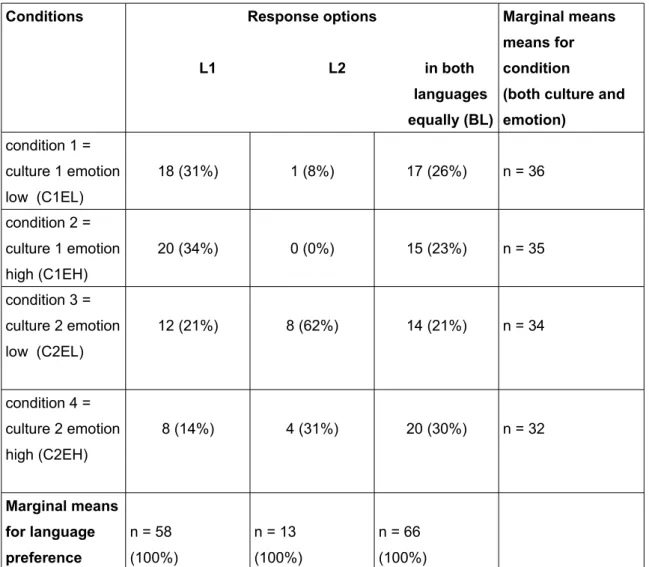
Table 1: Differences in counts of choice of language in which participants think they can best express their feelings for a specific topic (Question 83), with results for all conditions with percentages for language preferences in brackets:
Conditions Response options L1 L2 in both languages equally (BL) Marginal means means for condition
(both culture and emotion) condition 1 = culture 1 emotion low (C1EL) 18 (31%) 1 (8%) 17 (26%) n = 36 condition 2 = culture 1 emotion high (C1EH) 20 (34%) 0 (0%) 15 (23%) n = 35 condition 3 = culture 2 emotion low (C2EL) 12 (21%) 8 (62%) 14 (21%) n = 34 condition 4 = culture 2 emotion high (C2EH) 8 (14%) 4 (31%) 20 (30%) n = 32 Marginal means for language preference n = 58 (100%) n = 13 (100%) n = 66 (100%)
Note: Total N=132. Differences in counts for a 2 x 2 set of conditions for IV emotion and IV language. Percentages for counts of choice of language are rounded to the nearest integer.
Table 1 shows differences in preference for choice of language in which to best express feelings for a topic for all conditions. Participants could only make a single choice out of three options: L1, L2 or BL.
A 2-test for all 4 conditions shows that there was a significant main effect of language on language choice, 2 = 14.792, df = 2, p = .001 and that there was a no significant main effect of emotion on language choice, 2 = 2.170, df = 2, p = .338. The null hypothesis was partially rejected on the basis of these results and the research hypothesis partially accepted, which stated that culture and emotions affect language choice to the extent that participants will switch to the language of the culture a conversation topic relates to.
Table 2: Means and standard deviations for the extent to which participants can express their feelings in L1 Languages Emotion high low Marginal means means for language L1 6.54 (0.721) 6.55 (0.624) N = 55 L2 5.96 (1.341) 6.21 (1.285) N = 50 Marginal means for language emotion N = 50 N = 55
Note: Differences in mean for 2 x 2 set of conditions for IV emotion and IV language. Standard deviations in brackets.
Table 2 shows differences in means for a or 2 x 2 set of conditions for IV emotion and IV language for the extent to which participants think they can best express their feelings in their L1. ANOVA results show that there was no significant main effect of emotion (F<1) and no significant interaction between language and emotion (F(1) = 0.355, p = 0.553 on L1. There was a significant main effect of language (F>1) on L1. Results partially confirm research question 1: Do culture and emotion affect language choice in bilinguals because of a significant main effect of language on L1. Table 3: Means and standard deviations for the extent to which participants can express their feelings in L2 Languages Emotion high low Marginal means means for language L1 5.13 (1.227) 5.42 (1.478) N = 55 L2 5.85 (1.255) 5.50 (1.445) N = 50 Marginal means for language emotion N = 50 N = 55
Note: Differences in mean for 2 x 2 set of conditions for IV emotion and IV language. Standard deviations in brackets.
Table 3 shows differences in means for a or 2 x 2 set of conditions for IV emotion and IV language for the extent to which participants think they can best express their feelings in their L2. ANOVA results show that there was no significant main effect of emotion (F<1) and no significant interaction between language and emotion (F(1) = 1.434, p = 0.234 on L2. There was a significant main effect of language (F>1) on L2. Results partially confirm Research question 1: Do culture and emotion affect language choice in bilinguals because of the significant main effect of language on L2. Word types and valence for T1s
Each participant provided a minimum of 3 to a maximum of 5 topics in the order of most to least emotional topic (appendix N). Emotional topics cover a wide range of issues such as the economy, tradition, music, nature, racism and discrimination (topic classification in appendix B, categories and category frequencies in appendix O). Participants' first topics (T1s) break down into the following word types: abstract (20%), concrete (18%), emotion (7%) and emotion-laden (56%). This study only counts word types once. This follows Altarriba who states that emotion or emotion-laden words shouldn't also be counted as other types of words due to their different representations in memory (Altarriba, 2010). 40 of the T1s were positive emotion-laden topics, 10 of the T1s were negative emotion-laden topics. Four of the T1s were positive emotion topics, two of the T1s was a negative emotion topic (word type and valence for all topics in appendix P). I classified and calculated topics that participants perceived as more or less emotional and that touch on aspects of their culture. Categorisation of all topics suggested by participants
We calculated Cohen's kappa to check interrater agreement. Results showed a strong consistency of .86.
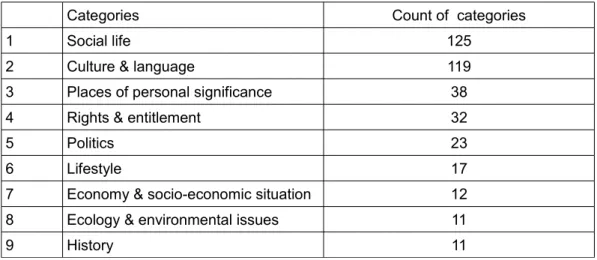
Table 4: Categorisation and counts of all topics perceived as emotional by participants
Categories Count of categories
1 Social life 125
2 Culture & language 119
3 Places of personal significance 38
4 Rights & entitlement 32
5 Politics 23
6 Lifestyle 17
7 Economy & socio-economic situation 12
8 Ecology & environmental issues 11
Note: Only categories with counts above 10 are given here. Categories can be applied several times within the same participant comment where they refer to distinct instances of a topic.
The highest counts for categories show that key topics that participants thought of as emotional across all levels of emotional topics are Social Life and Culture and Language (full list in appendix Q). Categorisation of T1s
Table 5: Categorisation and counts of T1s perceived by participants as highly emotional and that touch on aspects of their culture:
Codes Count of categories
1 Social life 39
2 Culture & language 32
3 Rights & entitlement 11
4 Places of personal significance
9
5 Politics 8
6 Emotions 2
7 Economy & socio-economic situation
2
8 History 2
9 Lifestyle 2
Note: Categories can be applied several times within the same participant comment where they refer to distinct instances of a topic.
The highest counts for categories show that T1s that participants thought of as emotional topics related to Social Life and Culture and Language. This mirrored results for the categorisation and counts of all topics.
Categorisation of reasons for language switching
Each participant provided descriptions of a situation of when they switched languages and reasons for why they switched languages. Reasons cover a variety of factors that are to varying degrees related to culture and emotions, such as living in a multicultural environment, language dominance and embodied experiences when speaking different languages (full list of reasons in
appendix A). Eleven percent of participants in this study specifically attribute reasons for language-switching to intense feelings that make them switch to either their L1 or L2.
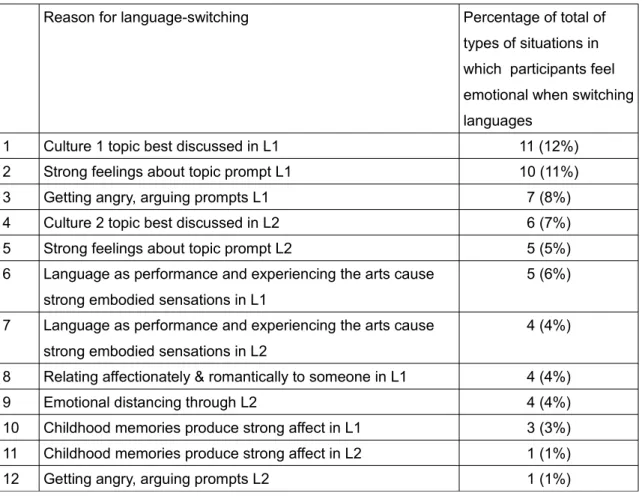
Table 6: Breakdown and counts of reasons for language-switching due to emotions
Reason for language-switching Percentage of total of types of situations in which participants feel emotional when switching languages
1 Culture 1 topic best discussed in L1 11 (12%)
2 Strong feelings about topic prompt L1 10 (11%)
3 Getting angry, arguing prompts L1 7 (8%)
4 Culture 2 topic best discussed in L2 6 (7%)
5 Strong feelings about topic prompt L2 5 (5%)
6 Language as performance and experiencing the arts cause strong embodied sensations in L1
5 (6%) 7 Language as performance and experiencing the arts cause
strong embodied sensations in L2
4 (4%) 8 Relating affectionately & romantically to someone in L1 4 (4%)
9 Emotional distancing through L2 4 (4%)
10 Childhood memories produce strong affect in L1 3 (3%) 11 Childhood memories produce strong affect in L2 1 (1%)
12 Getting angry, arguing prompts L2 1 (1%)
Note: The above table is based on comments made by participants (n=90).
Results show that apart from the two top categories that prompt participants to use their L1, all other categories relate to factors such as childhood memories, interpersonal relationships,
interjections and anger. The two top categories relate to L1. The counts for their L2 equivalents were about half of the counts for the L1 categories (rows 4 and 5).
Language use
Participants provided information about frequencies of language-switching, the speaking of their languages and context of language use.
Table 7: Frequency of language-switching:
Never Sometimes About half the time Most of the time Always
4 (4.4%) 43 (47.8%) 22 (24.4%) 16 (17.8%) 5 (5.6%)
Whereas about half of all participants sometimes switch languages, about a quarter of all participants switches languages most of the time or always.
Table 8: Frequency of speaking L1 and L2:
Never Sometimes About half the time Most of the time Always L1 0 (0%) 15 (15.8%) 20 (21.1%) 28 (29.5%) 27 (28.4%) L2 0 (0%) 22 (23.2%) 32 (33.7%) 29 (30.2%) 7 (7.4%)
Note: L1 here represents the first language entered into the questionnaire, L2 represents the second language entered into the questionnaire.
The majority of participants doesn't always speak one or the other language, which suggests that most participants engage in language-switching. This was confirmed by results in table 7.
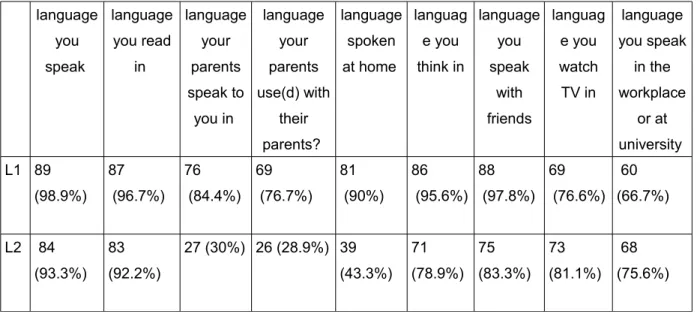
Participants provided information about how they use the languages they speak fluently: Table 9: How languages are being used:
language you speak language you read in language your parents speak to you in language your parents use(d) with their parents? language spoken at home languag e you think in language you speak with friends languag e you watch TV in language you speak in the workplace or at university L1 89 (98.9%) 87 (96.7%) 76 (84.4%) 69 (76.7%) 81 (90%) 86 (95.6%) 88 (97.8%) 69 (76.6%) 60 (66.7%) L2 84 (93.3%) 83 (92.2%) 27 (30%) 26 (28.9%) 39 (43.3%) 71 (78.9%) 75 (83.3%) 73 (81.1%) 68 (75.6%)
Note: L1 here represents the first language entered into the questionnaire, L2 represents the second language entered into the questionnaire
The majority of participants learnt an L2 outside of their homes and doesn't speak their L2 at home. A majority uses the L2 in the workplace or at university and also think in the L2.
3.2. Qualitative results
Participants' reasons for language switching cover a variety of factors that are to varying degrees related to culture and emotions, such as living in a multicultural environment, language dominance and embodied experiences when speaking different languages. Participants attribute a range of reasons for language-switching to intense feelings relating to culture and emotions. A review of participant comments was done in the light of the research questions:
Research question 1: Do culture and emotion affect language choice in bilinguals? Research question 2: What culture-specific topics tend to arouse affect in bilinguals?
Research question 3: Does inducing bilinguals to communicate about a strongly emotional topic lead them to favour L1 or L2?
The research hypothesis is: When experiencing strong affect caused by a discussion topic that relates to one of the cultures of a bilingual, bilinguals will favour speaking the language of the culture a discussion topic relates to.
3.2.1. Analysis of themes:
I) Language choice cued by culture or autobiographic memory.
I a) Topic relating to a culture of a country best discussed in its language.
Sixteen percent of participants state that they choose to speak in a language that relates to the culture being discussed.
“If the topic is strongly linked to the country it is more natural for me to speak in the language of the country.”
“When the topic is culturally American or tied to an anglophone country or topic we speak in English” “It depends on the context and who the discussion is about. If it is something related to an event that happened in English then ill use it.“
Making a choice may to varying degrees be conscious, unconscious and / or automatic. The examples suggests that language indexes culture and that language-switching may be automatic and cued by the language of the culture a topic relates to. This behaviour is specific to bilinguals since they, in contrast to monolinguals, have to choose a language. Bilinguals are also likely to have been significantly exposed to both of their cultures so that they have memories that were encoded within the context of the culture a discussion topic is relates to. Cuing suggests that language choice is
connected to the language in which events were encoded in autobiographic memory (NEEDS
CITATION). Given that L1 or L2 or both can be experienced as emotional languages, the act of talking about a topic in the language in which events were encoded in memory might be deemed as culturally related and might provide for a meaningful, embodied experience because it gives interlocutors more of a sensation of relevance, appropriateness and immediacy. This behaviour might be more seen in individuals with long-term exposure to their two cultures and who have a high level of proficiency in both of their languages so that language choice conveys that some topics are experienced as a meaningful relationship with one's culture(s). A specific example is childhood memories.
A participant uses the L1 in order to recall childhood memories and to express feelings experienced at the time. For example, one comment was:
“It happens when I recall something from the movies or cartoons, and want to express the same exact feeling from childhood”
Talking about topics relating to childhood memories are likely to be discussed with family and friends. “Talking with my equally bilingual sons we change language very frequently. When talking about a Chilean topic or Chilean friends in (Swiss) German, we suddenly change to Spanish, even in mid sentence, then sometimes change back, when a more "Swiss" topic crops up, very often without noticing the transition from one language to another.” […] “There are Family related topics I can speak more openly and strongly about in Spanish [...].”
[participant L1 German, L2 Spanish]
Emotional topics that are related to events from one's past might have the potential for arousing strong emotions, particularly when shared with interlocutors who have a close relationship with the speaker, such as family members. Although the above mechanism might be unconscious, participants' comments suggest that some are consciously aware that deliberately choosing the appropriate, culturally relevant language as a retrieval tool for its affective potential.
II a) L1 is emotional language.
In line with existing research, 31% of participants state that their L1 is their most emotional language.
“It really depends on the topic. I feel I am a bit more emotional in Arabic.” [participant L1 Arabic, L2 English]
When L2 is deliberately spoken, strong feelings expressed in interjections, make participants switch to L1 even if unintended, which demonstrates L1 dominance.
“I try to speak Basque with my children, as I want them to be bilingual, but when I get angry I speak Spanish.“
[participant L1 Spanish, L2]
Individuals vary in terms of language dominance. L1 dominance might even be experienced by some following long-term exposure to a host culture and despite their frequent use of L2.
II b) L2 or L1 and L2 both are emotional languages.
Some 4% of participants state that their L2 is their emotional language and 11% of participants state that both of their languages are perceived as equally emotional languages.
“When i FEEL STRONGLY ABOUT SOMETHING, I can speak about it equally in both languages.” “At first I thought Spanish, but then I realized I have actually done it as well in English when I talk about the topic with my friends and get equally emotional.“
[participant is referring to the emotional topic of relatives in the US]
“When I am mad at my girlfriend I switch to English even though we spoke Portuguese before.” [participant L1 German, L2 English, L3 Portuguese]
“I tend to switch languages when I am angry at someone and I want to make myself understandable. It is not easy to explain my point of view quietly in Portuguese.”
The above statements suggests that participants are aware that their L2 is their more
emotional language. Research suggests that L2 becomes a dominant language in bilinguals following long-term exposure to a host country's culture and frequent L2 practice. The final statement also suggests that the emotional charge of a discussion topic is consciously controlled by moving from the emotional L2 to a less emotional L1. It implies that cultural scripts make arguing more likely when an emotional discussion topic is talked about in Portuguese and that arguing in French is less emotional for this particular participant.
II c) Language as performance produces strong affective experience in L1.
Nine percent of participants state that the arts and language produce strong effect when speaking either their L1 or L2. Comments by participants who perceive their L1 to be more emotional than their L2 imply that it is the speaking of the L1 that provides them with embodied sensations. “My humour, for example, is much finer in Croatian.”
“Sometimes when we speak with friends in Kurdish we code switch to Persian because we know some expressions, proverbs or parts of a movie scenario that can better convey our feelings and intentions.”
“I might be able to describe them [participant feelings relating to songs] better in English, but the Portuguese text/language is more expressive in itself.”
The delivery of quips and proverbs is mediated through culturally scripted forms for expressing humour or religious texts that guide delivery and contain rules for how the text is to be performed by a speaker. In contrast, the listening to music or spoken text like in poetry also affect the listener.
“Emotions conveyed in Portuguese language, in songs, difficult to fully translate into English.” “a musica faz mais sentido e me toca mais em portugues”
[Translation: music makes more sense and it touches me more in Portuguese]
Participants state that songs and poetry in their L1 provide for an emotional experience. Participants point to the difficulty of translating L1 texts to another language because emotions refer to meaning that is culture-specific thus perceived to be difficult to be understood by out-group members such as foreigners. They also appear to make more sense in L1 due to shared in-group experience and shared cultural knowledge.
II d) Language as performance produces strong affective experience in L2.
Some participants perceive their L2 to be more emotional than their L1.
“When speaking to other bilinguals or someone who can speak both. It could be any topic. Intense feelings like anger (Greek), happiness (English) or sadness are sometimes expressed easier in one as the words are stronger for each feeling in the respective language.”
[participant L1 Greek, L2 English]
The above comment suggests a great degree of metalinguistic knowledge as well as personal experience of the different qualities of the embodied sensations that the expression of feelings can produce in different languages. It also suggests awareness of feelings being culturally constructed. “The quality of my feelings would not be the same as some of the key aspects of the Carnaval de Cadiz cannot be translated in to English and an English speaking person would not understand the feelings.”
[participant L1 English, L2 Spanish]
Participants state that emotion words may have different qualities that are culture-specific. Emotion words such as anger, happiness or sadness that have a translated equivalent in other languages however may encapsulate different notions of what they mean and how they ought to be displayed in different cultures. The bottom statement contradicts the suggestion in II c above, that in-group experience and understanding is extremely difficult if not impossible to be experienced by out-group members. It however implies deep cultural knowledge that enables bilinguals to understand cultural references and meaning. This is likely to be developed only through long term exposure to the culture of a host country.
III) Use of a language for talking about personal topics and to convey intimacy
III a) L1 use within the family.
Twenty percent of participants state that they use their L1 primarily in the family.
“I only change the language in a conversation when I speak with close bilingual family members. The topics were mostly when I was talking about emotional topics like family, love, friends,...”
“My Portuguese speaking very day-to-day oriented so it depends on the topic. Family and emotions : Portuguese”
[participant L1 Portuguese, L2 French]
“...when the subject is very 'inside family', 'inside relationship' then I switch. It happend to me for the first time very conciously when I gave birth to my child. My vocabulary as adult, as working person, did not fit to a baby; so I used the language of my mother.”
The above examples show that language choice is contextual and that the context frames the topics and the emotions that are being considered for discussion. Participants typically state that they use their L1 in the family to discuss topics that are intimate, sensitive, and personal. This reflects the closeness of relationships of family members and the affective nature of discussions within the privacy of one's home. A particular example of the affective nature of spoken language within the family lies in the use of L1 for baby-talk and endearments with babies and children. The above example suggests that it is impossible for the participant to find alternative expressions in L2. This is not because there's no language equivalent or lack of knowledge but because the L2 doesn't provide the speaker with the affective quality the speaker intends to convey. The phrase “language of my mother” also suggests that the participant, as a strategy, retrieves L1 language from her own childhood from autobiographic memory in order to obtain the appropriate emotional language, that fits the context. Baby talk exists in all languages but the L1 is experienced as more truthful by some participants. One could argue that language needs to be experienced as truthful in terms of its affective quality to be then be appraised as appropriate for conveying feelings, such as in affectionate talk between a mother and her baby.
III b) L2 use within the family.
Thirteen percent of participants also use their L2 within the family.
“I usually switch to English when I am talking about work with my parents. The reason may be due to the fact that my work experience is entirely in English and, as such, English flows out naturally when talking about working environments and professional life.”
“German: very natural, as it is my main used language and I'm good at it.
English: less natural, as I mainly read and listen to English, but very rarely speak it.
Italian (language of my father) and French (learned […] at school): even less natural, I don't remember the vocabulary (French) or never learned them properly (Italian).”
The above comments suggest that participants prefer talking in L2 about topics they habitually discuss with others, e.g. issues that come up at work. The continued practice talking about particular topics reactivates specific language in memory much quicker in their L2 than their L1, which leads to
retrieval efficiency. The second statement also suggests that, depending on a migrant's language learning trajectory, L1 might not get fully learnt but the L2 does so that long-term use makes the L2 dominate and it is thus experienced as 'natural'.
“I often language switch. It is easier for me to allow different languages within conversation in order to best express myself. Different languages have different ways of saying things, and one language sometimes does my feeling more justice than the other language. I often use phrases of the other language in conversation, depending on the context. Places i don't do it: in the supermarket, on the street, when talking with strangers places i do it: talking with friends, family, boyfriend, at work, ...” “I often switch back an forth with people who understand both, e.g. family members. In these situations I can choose the best expression I have at hand, no matter which language it is in.” “It happens frequently within our family. Often the arrival of another person triggers a switch in languages. Or a word in the other language comes spontaneously and the conversation continues in that language. I cannot cite any particular topic.”
“Na conversa em familia: com os filhos falo dialeto suíço-alemão, com o marido português.” [participant L1 German, L2 Portuguese]
The above comments suggest that term borrowing (individual terms or phrases from another language), code-switching (larger units spoken in another language) and language-switching take place within bilingual families. Nine percent of participants raised the issue of efficient communication through languages switching and lexical borrowing. Phrases such as "I often language switch [to …] best express myself", "choose the best expression" suggest that using vocabulary from different languages is tantamount to a pooling of lexical resources to achieve communicative efficiency and effectiveness. Limiting code- and language-switching to specific places means that these are communicative forms that are place dependent, contextual and only practised with fellow bilinguals who share one's languages. In contrast to participants with L1 dominance and higher L1 proficiency, bilinguals seem to regard language and culture not as an exclusive but as a shared resource. In bilinguals, language-switching is a skill that provides in-group members with the opportunity to exchange knowledge and efficiently communicate with each other. In monolinguals, language and cultural knowledge defines the in-group. Also, the final comment suggests that the L2 is, just like the L1, a valid option for talking about personal topics with close family members.
Language-switching can be contextual, circumstantial behaviour cued by spontaneous choice of interlocutors
“It happens frequently within our family. Often the arrival of another person triggers a switch in languages. Or a word in the other language comes spontaneously and the conversation continues in that language. I cannot cite any particular topic.”
The above example shows that language-switching can be prompted by the arrival of a person or by spontaneous utterances in another language, which might not be related to emotional topics. The comment suggests that it is a frequent practice and that the conversation flows and continues with ease in another language, perhaps without speakers even noticing the change. The spontaneity, frequency and habituality of this practice suggests that its common behaviour, which one would expect in multicultural areas such as Switzerland, parts of Canada or Singapore.
III c) L1 use with friends.
Twenty-one percent of participants state that they have a preference for L1 when talking to friends.
“My feelings do change when I speak with someone from my home country (family, close friends), but it's not because of the language, but because of the connection we share. Maybe it's not about what I say but about what I don't need to say, because it is self-evident.”
“em portugues pois o meu nucleo de amigos é português, embora por vezes utilize o estrangeiro para comunicar”
[Translation: "In Portuguese because my nucleus of friends is Portuguese, although sometimes I use the foreign language to communicate"]
The comments suggest that L1 use with friends is based on the relationship and history people have with others that determine language use. Also, if the circle of friends mainly consists of fellow nationals, there is a question around the degree to which one's social life impacts on L2 proficiency and also to what extent one's social life encourages L2 learning.
III d) L2 use with friends.
Sixteen percent of participants state that they use L2 with friends. “I have both close friends and family with whom I speak English or French.”
“I rarely code switch with people when in my home country (who are native Bulgarian speakers) as the likelihood of them understanding words, expressions and British cultural references is not very high. I compulsively codeswitch with my Bulgarian friends in the UK though as i find it easier to get my point across, I cut down on hesitations and long pauses when I'll otherwise be searching for an adequate word in Bulgarian.”
“Difficult, because I have both close friends and family with whom I speak English or French.” “As this topic is especially important to me and I did discussed it [topic of honesty] with my friends (from around the world during my studies) in English, it is easy to do it in both Russian and English.”
The comments suggest that L2 is, apart from L1, also a preferred choice in which to discuss intimate and emotional topics. There is no suggestion of a preferred language for discussing emotional topics, which suggests that both languages are equally preferred. Some participants code-switch and language-switch to achieve communicative efficiency, like in the III b) example above. For some, code-switching with fellow bilingual is an opportunity to speed up talking. There is an implicit idea that L1 word search in memory can be slow thus associated with cost, which is avoided by L2 code-switching. This might be more of an issue with bilinguals with varying level of language proficiency.
IV) Communicative intentions and outcomes
IV a) Code-switching to give interlocutor affective experience.
A participant states that she uses her L1 and her partner's L1.
“I'm from China and my boyfriend is Korean. We both can speak a little language of other's. So when I know he can understand my Chinese or Korean, especially when I want to express my feeling, I prefer Chinese/Korean. Since he can feel my emotion better in our first languages”
The aim of combining one's own and the partner's L1 for emotional talk, rather than use a shared L2, is to emotionally affect the partner. It implies an understanding of the meaning of emotional language and its potential for emotional affect of the L1. One can further assume that the same speaker who is using and switching in the same talk between the two languages does it to a) fill lexical gaps and to b) evaluate and choose the most appropriate L1 words for maximum emotional impact when and where it's needed.
Two participants state that they use their L1 when encountering fellow nationals abroad.
“When discussing with people coming from Burkina Faso or west African people speaking Doula, no matter the topic”
participant switches languages when] “I talk to Greek-Americans .That connects us more , reminds me of my other side which I'm proud of.” [participant L1 is Greek, L2 English]
Although the reason for language switching to L1 might not be topic-driven to some, for others, encounters with fellow nationals, can activate powerful autobiographic memories that, particularly following long-term migration, trigger views of the self that have long been forgotten.
IV c) Language choice as a function of self-presentation.
Three participants choose their different languages for self-presentation.
“I would choose consciously whether to express my feelings related to relationships in Italian or in English, according to what I want to convey (rational, detached and analytical part of me- English, more emotional, involved, childish part of me- Italian).”
“In Italian I would talk about relationships in a more affectionate way, in English in a more descriptive way,”
The above comments suggest that language-switching entails a process of evaluation of purpose for communicative ends before a language selection is being made. Language choice here is deliberate, the outcome of evaluations to achieve a particular outcome. The evaluation considers aspects of the self a speaker wants to convey through the most useful language at hand. This entails reflections about its emotive impact. Qualities such as emotional impact or rationality are not only qualities thought of as inherent to the language but they are considered for displaying also
characteristics of the self. A number of participants state that they see English as a rational language. IV d) Feelings of closeness prompt L1 use.
Feelings of close friendship can prompt L1 use.
“Sim, por vezes falao diretamente em português com uma pessoa francesa de que gosto muito, ha claramente uma relação entre o sentimento e a familiaridade de falar português”
[Translation: Yes, sometimes spoke directly in Portuguese with a French person that I like very much, there is clearly a relationship between the feeling and the familiarity of speaking Portuguese]
[participant L1 Portuguese, L2 French]
Here, a participant links choice of language to positive feelings of friendship with feelings of comfort and familiarity that are typically experienced by some L1 speakers who think of their L1 as their dominant emotional language.
V) Cultural scripts limit or encourage the experience of affect
V a) Using L2 for emotional distancing.
Four participants (4%) use their L2 for emotional distancing.
Any time that I want to sound more assertive, without getting too involved or feeling aggressive. [participant L1 Italian, L2 English]
But using German gave me a bit of protection. I was letting someone else into very personal experiences that I had hardly ever talked about. Using German allowed me some distance to the topic.
[participant L1 English, L2 German]
I express my emotions better in English if they are overwhelming [participant L1 Italian, L2 English]
The above comments are in line with existing research on using L2 for emotional distancing for its therapeutic effect (Amati-Mehler et al., 1993). There is an element of emotional control as self-control when one's L2 is deliberately used to project oneself as self-asserted to interlocutors. The comments not only imply knowledge but also deliberate employment of this L2 effect as a
communicative strategy. Implicitly, L2 use controls speech production. As covered in theme IV c) Language choice as a function of self-presentation, participants share an implicit belief that the use of L2 lets them control their emotions.
V b) Cultural scripts encourage the expression of emotions.