525
ABSTRACT:Objectives: To investigate how institutional factors, represented by the social proile of childbirth care, can relate to cesarean section rates. Methods: A cross-sectional study based on data from Sistema de Informações sobre Nascidos Vivos (SINASC) for the state of Santa Catarina collected information for each of the six municipalities with the largest number of births from the six macroregional areas. For those municipalities, all of the establishments that had obstetric facilities were considered. A total of 61.278 births took place over 61 selected maternity services. Cesarean prevalence ratios (PR), both crude and adjusted for confounders, were estimated for each one of the individual variables using robust Cox regression. Results: Cesarean births were almost as twice as high in private maternity facilities (89%) when compared to the public ones (45.1%). Giving birth in private hospitals increased by at least 50% the prevalence of caesarean section among primiparae (PR = 1.64), Caucasian (PR = 1.57), women with greater attendance to prenatal care (PR = 1.54), and women having daylight birth (PR = 1.5), when compared with those delivering inside the public sector. Conclusion:
Diferences in cesarean rates in favor of the private system, among women with better social conditions, amongst which it would be expected a lower obstetric risk, have pointed toward diferences in obstetric/medical culture permeability and lexibility on medical judgment concerning clinical criteria for cesarean sections.
Keywords: Cesarean section. Risk factors. Social inequity. Maternal health. Prospective payment system. Information services.
Association between institutional factors,
birth care proile, and cesarean section
rates in Santa Catarina
Associação entre fatores institucionais, peril da assistência
ao parto e as taxas de cesariana em Santa Catarina
Paulo Fontoura FreitasI,II, Tainiely Muller Barbosa FernandesII ORIGINAL ARTICLE / ARTIGO ORIGINAL
IUniversidade Federal de Santa Catarina – Florianópolis (SC), Brazil.
IIUniversidade do Sul de Santa Catarina, Unidade Pedra Branca – Florianópolis (SC), Brazil.
Corresponding author: Paulo Fontoura Freitas. Universidade Federal de Santa Catarina. Divisão de Tocoginecologia do Hospital Universitário. Rua Beco da Lua, 232, Lagoa da Conceição, CEP: 88062-490, Florianópolis, SC, Brasil. E-mail: [email protected]
INTRODUCTION
Although cesarean section has recognized value when the health of mothers and newborns are at risk, its increasing use has been associated with increased maternal and perinatal morbidity and mortality, especially in the absence of medical indications1,2.
In recent decades, there has been a progressive increase in the number of caesarean sections in Brazil3 and in almost all countries4. A cesarean rate of 58.9% in 2011 for the state of Santa Catarina5 are more than three times above the accepted by the World Health Organization (WHO), who warns that lower perinatal mortality rates are consistent with a cesarean rate below 15%6.
Diferent studies have indicated social inequalities concerning cesarean section in Brazil with higher prevalence among women who are assisted in the private sector, among those with higher educational levels, with white skin color7,8, and in regions with better access to health services7-11. High cesarean section rates and the social inequality indicate the paradox that women with low socioeconomic status and, consequently, increased risk of complications in childbirth, have less access to cesarean section than those exposed to lower risks and with higher income2
.
In a study conducted in São Paulo, approximately 43.0% of pregnant women of mid-dle class who were cared for in a private clinic said they preferred the cesarean section because they were strongly inluenced by the occurrence of a previous cesarean section. In contrast, women with previous vaginal delivery history showed much lower chance of choosing a cesarean section12.
RESUMO:Objetivo: Investigar como fatores institucionais, representados pelo peril social da maternidade na assistência ao parto, se associam às taxas de cesariana. Métodos: Estudo com delineamento transversal com base em dados do Sistema de Informações sobre Nascidos Vivos (SINASC) para Santa Catarina. Foram selecionados, para cada uma das macrorregionais, os seis municípios com o maior número de partos. Para esses municípios, foram considerados todos os estabelecimentos que possuíam leitos obstétricos. Um total de 61.278 partos teve lugar nas 61 maternidades selecionadas. Razões de prevalência de cesariana (RP), brutas e ajustadas para confundimento, foram estimadas para cada uma das variáveis individuais por meio de Regressão de Cox Robusta. Resultados:
Nascimentos por cesariana foram quase o dobro nas maternidades privadas (89%), quando comparados aos do Sistema Único de Saúde (SUS) (45,1%). Ter parto nas maternidades privadas aumentou em pelo menos 50% a ocorrência de cesariana entre as primíparas (RP = 1,64), caucasianas (RP = 1,57), mulheres com maior frequência ao pré-natal (RP = 1,54) e tendo parto diurno (RP = 1,51), quando comparadas àquelas tendo parto pelo SUS.
Conclusão: Diferenças nas taxas de cesariana em favor do sistema privado, entre mulheres de melhores condições sociais, em meio às quais seria esperado menor risco obstétrico, apontaram para diferenças de permeabilidade da cultura médica/obstétrica e lexibilização na interpretação médica das indicações clínicas do parto operatório.
527
The physician’s role as a key element in establishing an interventionist obstetric culture has been investigated in several studies13-15. The results of these studies show that both in public and in private sectors, more than half of the women who underwent cesarean section expressed preference for vaginal delivery13.
Results of a recent study with patients assisted in the public sector — Sistema Único
de Saúde (SUS) — that showed higher cesarean rates among women with higher
educa-tional levels, suggested the convenience for the medical agendas14. Similarly, it has been suggested that a frequently used strategy in the public sector, among pregnant women with higher purchasing power, is “to negotiate” the cesarean section as part of a prenatal appointment in the private sector13. In this context, the prenatal care, which also handles fears and fantasies, has been postulated as essential to stimulate the change of attitude toward labor15.
It has been shown that the method of compensation, by itself, is not a determining factor for the high prevalence of cesarean section in our midst, and that other variables have signiicant inluence15. In this context, several studies suggested that the increased efect of the private sector in the decisions regarding the type of delivery, represented by the lexibility concerning the obstetric method in the indications of cesarean sections for reasons not strictly medical, may be behind this phenomenon4,7,15.
This study aimed at investigating factors associated with cesarean section occurrence when comparing public and private hospitals, with the assumption that any diferences when comparing the diferent sectors, according to sociodemographic and reproductive factors, may be indicative of no strictly medical decisions.
METHODS
This is a cross-sectional study based on secondary data, in which information regard-ing pregnancies and childbirths events for live births in the state of Santa Catarina in 2012 were obtained from the database Sistema de Informações sobre Nascidos Vivos (SINASC), which is provided by the Ministry of Health16. Out-of-hospital births were excluded because they do not represent a risk of caesarean section, and multiple births were also not included because they constitute indication for cesarean section. The six municipal-ities with the highest number of births were selected in each of the nine macroregions of the State. For each of these cities, all establishments that had obstetric beds/mater-nity were considered.
hospitals classiied as mixed public/private were those that combined diferent propor-tions of public and private beds.
Individual variables obtained from SINASC/SC were maternal age, maternal educa-tional level, marital status, ethnicity/color of skin, duration of pregnancy, number of prenatal visits, time of birth, parity, history of stillbirth in previous births, previous cesar-ean section, and type of delivery. Prevalence ratios (PR) of cesarcesar-ean section, both crude and adjusted for confounders, were estimated for each of the individual variables using robust Cox regression18.
Multivariate models were examined as a whole and according to the institutional pro-ile (public/private). As criteria for the input of the variables in the multivariate model, we considered all variables with p-value equal or lower than 0.20 in the bivariate analysis.
HIERARCHICAL MODEL OF MULTIVARIATE ANALYSIS
The association of independent variables with the outcome was analyzed according to a hierarchical model for data entry, as suggested by diferent authors, as an alternative to the stepwise method (step by step)19-21.
Classic strategies applied to the analysis of association of multiple factors with the outcome, for example, the stepwiseregression, consider all factors with the same level of importance, making no distinction between confounders and mediating factors19. Diferently, in the hierarchical regression model, the underlying principle is that the selection of expo-sure variables is not purely based on statistical associations, but also in a conceptual model that describes the logical or theoretical relationships between the determinant factors20. In this model, the variables in the upper levels are treated as “confounding” of those at the lower levels, whereas those situated close to the outcome are analyzed as potential mediators of the efects of those located in the distal levels21.
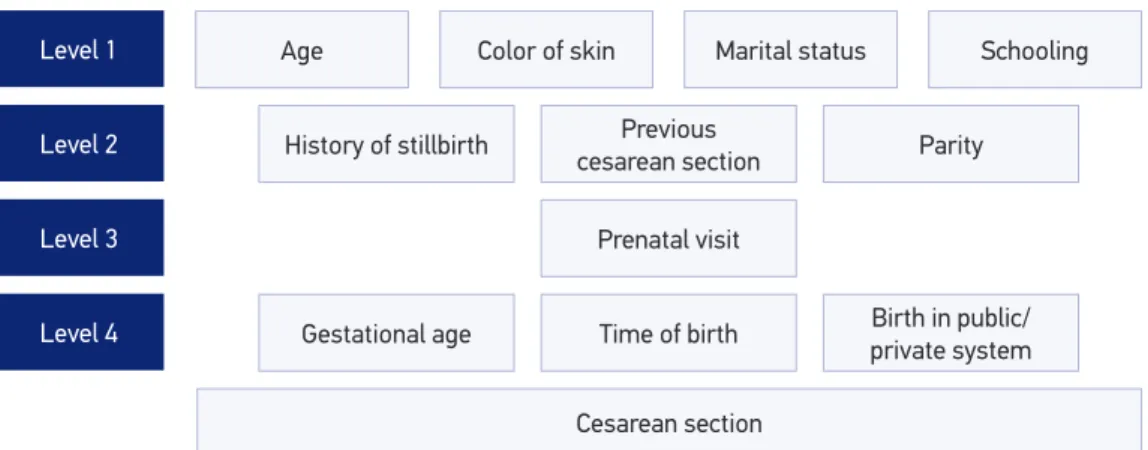
Figure 1. Hierarchical model of multivariate analyzes of factors associated with cesarean occurrence.
History of stillbirth
Gestational age Level 1
Level 2
Level 3
Level 4
Cesarean section Age Color of skin
Previous cesarean section
Time of birth Prenatal visit
Parity
529
In our study, the hierarchical model represented in Figure 1 indicates the order in which the variables were inputted. Variables related to women’s characteristics (age, ethnicity/skin color, marital status, and educational level) were included irst. Next, the hypothesis that the variables of reproductive history (parity, history of stillbirth, and previous cesarean section) could mediate the association between sociodemographic variables and cesarean section rates was tested by adding these factors in the regression model. Next, the variable “prenatal visit” was added under the assumption that part of the originally allocated efect of sociode-mographic and reproductive variables could occur by the frequency of prenatal care. Finally, the “institutional” and “delivery” variables (gestational age, time of birth, and institutional proile) were included as possible mediators of the efect of the factors estimated in previ-ous levels, which were more distal to the outcome. At each level, the variables that showed association with type of delivery (p < 0.05) remained in the model in the lower hierarchical levels. The same procedure was adopted for all hierarchical levels. Statistical signiicance of the associations was calculated by the likelihood ratio test, with predeined 5% signiicance level. Analyzes were performed with SPSS software 18.0 (SPSS Inc., Chicago, USA).
This study was approved by the Ethics Committee of the Universidade do Sul de Santa
Catarina under protocol number 19518613.6.0000.5369.
RESULTS
According to SINASC data, 88,926 live births were recorded in 2012 for the Santa Catarina State. In the same year, the cesarean rate for the state was 60.7%. A total of 61,278 live births in singleton pregnancies occurred in 61 hospitals selected for this study. The overall rate of cesarean section in this population was 60.8%, ranging from 89% in private hospitals to 45.1% in public and 57.4% in mixed public/private.
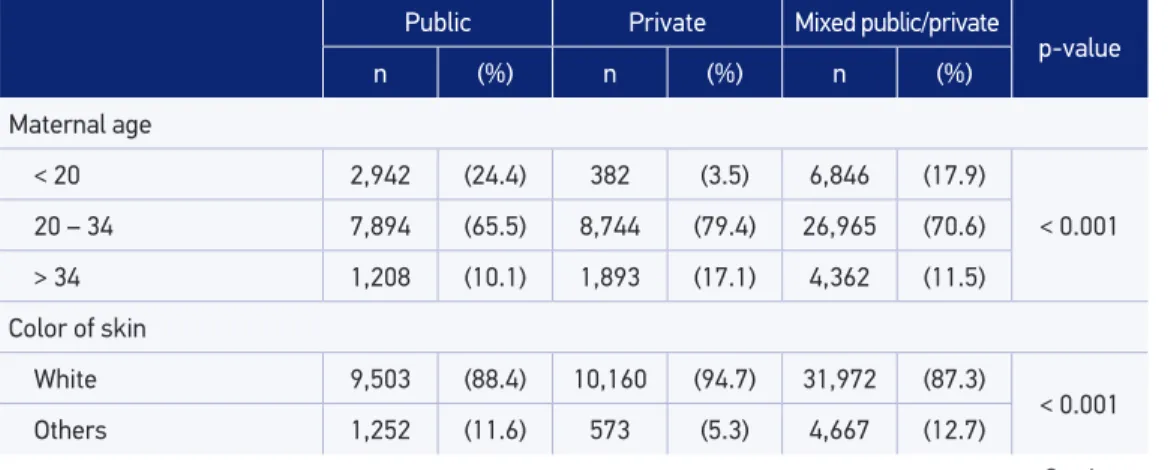
Table 1. Distribution of mothers according to the sociodemographic variables, obstetric history, and type of institution. Sistema de Informações sobre Nascidos Vivos for the Santa Catarina State, 2012.
Public Private Mixed public/private
p-value
n (%) n (%) n (%)
Maternal age
< 20 2,942 (24.4) 382 (3.5) 6,846 (17.9)
< 0.001
20 – 34 7,894 (65.5) 8,744 (79.4) 26,965 (70.6)
> 34 1,208 (10.1) 1,893 (17.1) 4,362 (11.5)
Color of skin
White 9,503 (88.4) 10,160 (94.7) 31,972 (87.3)
< 0.001
Others 1,252 (11.6) 573 (5.3) 4,667 (12.7)
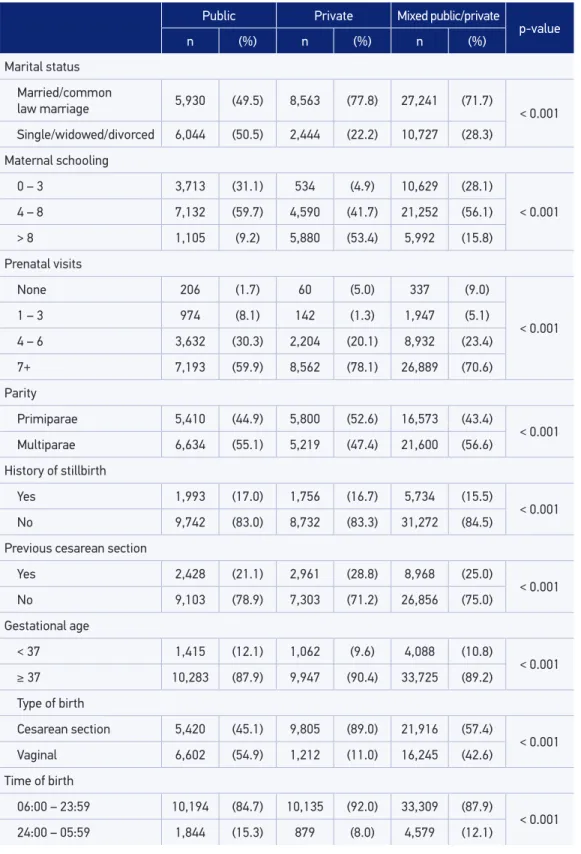
Table 1. Continuation.
Public Private Mixed public/private
p-value
n (%) n (%) n (%)
Marital status
Married/common
law marriage 5,930 (49.5) 8,563 (77.8) 27,241 (71.7) < 0.001 Single/widowed/divorced 6,044 (50.5) 2,444 (22.2) 10,727 (28.3)
Maternal schooling
0 – 3 3,713 (31.1) 534 (4.9) 10,629 (28.1)
< 0.001
4 – 8 7,132 (59.7) 4,590 (41.7) 21,252 (56.1)
> 8 1,105 (9.2) 5,880 (53.4) 5,992 (15.8)
Prenatal visits
None 206 (1.7) 60 (5.0) 337 (9.0)
< 0.001
1 – 3 974 (8.1) 142 (1.3) 1,947 (5.1)
4 – 6 3,632 (30.3) 2,204 (20.1) 8,932 (23.4)
7+ 7,193 (59.9) 8,562 (78.1) 26,889 (70.6)
Parity
Primiparae 5,410 (44.9) 5,800 (52.6) 16,573 (43.4)
< 0.001
Multiparae 6,634 (55.1) 5,219 (47.4) 21,600 (56.6)
History of stillbirth
Yes 1,993 (17.0) 1,756 (16.7) 5,734 (15.5)
< 0.001
No 9,742 (83.0) 8,732 (83.3) 31,272 (84.5)
Previous cesarean section
Yes 2,428 (21.1) 2,961 (28.8) 8,968 (25.0)
< 0.001
No 9,103 (78.9) 7,303 (71.2) 26,856 (75.0)
Gestational age
< 37 1,415 (12.1) 1,062 (9.6) 4,088 (10.8)
< 0.001
≥ 37 10,283 (87.9) 9,947 (90.4) 33,725 (89.2)
Type of birth
Cesarean section 5,420 (45.1) 9,805 (89.0) 21,916 (57.4)
< 0.001
Vaginal 6,602 (54.9) 1,212 (11.0) 16,245 (42.6)
Time of birth
06:00 – 23:59 10,194 (84.7) 10,135 (92.0) 33,309 (87.9)
< 0.001
531
Table 1 shows the distribution of mothers according to sociodemographic and repro-ductive variables and type of institution. Users of private hospitals, compared to women who gave birth in public hospitals and mixed public/private hospitals, were older and were included in the groups with higher educational levels. Births among teenagers were about seven times more likely to occur in the public hospitals and ive times more common in mixed public/private maternities compared to private hospitals. Private hospitals had higher proportion of white-skinned women, who were married or were in a consensual union, as well as higher prevalence in optimal levels of frequency to prenatal care (seven or more visits). On the other hand, preterm pregnancies were more prevalent in public and mixed public/private hospitals, as well as the history of stillbirth in past pregnancies. The number of deliveries in the night/early morning shift (midnight to 6 a.m.) in pub-lic hospitals (15.3%) was almost twice that observed in women who delivered at private hospitals (8%) in the same shift. The history of previous cesarean section was more com-mon acom-mong women in the private system, and the number of births by cesarean section in private hospitals (89%) was almost the double of that recorded in the public system (45.1%) and in the public/private mix system (57.4%).
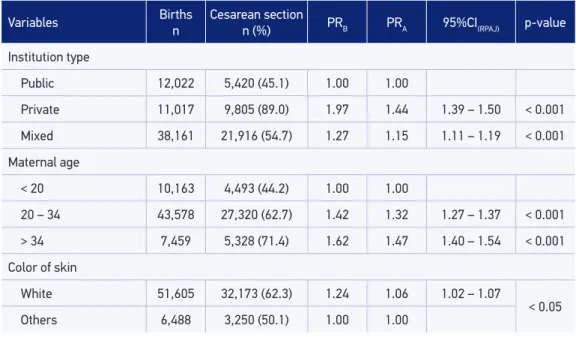
Table 2 shows the associations of the independent variables with cesarean prevalence in the population of the study.
Women with previous cesarean section, aged over 35 years, with the highest level of schooling, white-skinned, who gave birth during the day shift and who were assisted in
Table 2. Prevalence ratios and conidence intervals for the association of sociodemographic, reproductive, and institutional variables with cesarean section rates. Sistema de Informações sobre Nascidos Vivos for the Santa Catarina State, 2012.
Variables Births
n
Cesarean section
n (%) PRB PRA 95%CI(RPAJ) p-value
Institution type
Public 12,022 5,420 (45.1) 1.00 1.00
Private 11,017 9,805 (89.0) 1.97 1.44 1.39 – 1.50 < 0.001
Mixed 38,161 21,916 (54.7) 1.27 1.15 1.11 – 1.19 < 0.001
Maternal age
< 20 10,163 4,493 (44.2) 1.00 1.00
20 – 34 43,578 27,320 (62.7) 1.42 1.32 1.27 – 1.37 < 0.001
> 34 7,459 5,328 (71.4) 1.62 1.47 1.40 – 1.54 < 0.001 Color of skin
White 51,605 32,173 (62.3) 1.24 1.06 1.02 – 1.07
< 0.05
Others 6,488 3,250 (50.1) 1.00 1.00
Variables Births n
Cesarean section
n (%) PRB PRA 95%CI(RPAJ) p-value
Marital status
Married/common
law marriage 41,712 26,626 (63.8) 1.82 1.02 0.99 – 1.04 0.21
Others 19,203 10,372 (54.0) 1.00 1.00
Maternal schooling
None
1 – 3 14,868 6,858 (46.1) 1.00 1.00
4 – 8 32,953 19,299 (58.6) 1.27 1.08 1.05 – 1.11 < 0.001
> 8 12,970 10,789 (83.2) 1.80 1.18 1.14 – 1.23 < 0.001 Prenatal visits
None 602 213 (35.2) 1.00 1.00
1 – 3 3,060 1,234 (40.3) 1.14 1.25 1.05 – 1.47 < 0.050
4 – 6 14,761 7,902 (53.5) 1.51 1.38 1.18 – 1.61 < 0.001
7+ 42,619 27,713 (65.0) 1.83 1.49 1.27 – 1.74 < 0.001
Parity
Primiparae 27,772 17,970 (64.7) 1.00 1.00
< 0.001
Multiparae 33,428 19,171 (57.4) 1.13 2.16 2.09 – 2.24
History of stillbirth
Yes 9,477 6,015 (63.5) 1.00 1.00
< 0.01
No 49,720 29,779 (59.9) 1.06 1.06 1.04 – 1.08
Previous cesarean section
Yes 14,353 12,534 (87.3) 1.00 1.00
< 0.001
No 43,236 22,313 (51.6) 1.69 2.58 2.58 – 2.78
Gestational age
< 37 6,559 3,891 (59.3) 1.00 1.00
0.107
≥ 37 53,926 32,939 (61.1) 1.03 0.97 0.94 – 1.01
Time of birth
06:00 – 23:59 53,609 34,689 (64.7) 1.13 1.17 1.68 – 1.84
< 0.001 24:00 – 05:59 7,295 2,239 (30.7) 1.00 1.00
PRC: crude prevalence ratio; PRA: adjusted prevalence ratio: to all variables according to the hierarchical model.
533
private hospitals, presented the highest cesarean rates. The efect of these variables in the occurrence of cesarean section remained after controlling for confounders.
Among the multiparous women with previous cesarean section, the odds of occurrence of a new cesarean section, compared to multiparous women with only previous vaginal birth, remained more than the double (PR = 2.58; p < 0.01) after adjustment in the mul-tivariate model; the same occurred to primiparae compared to multiparae (PR = 2.16; p < 0.01). Among women who gave birth in the private hospitals, the rates were almost twice as high (89 vs. 45.1%) than among those assisted in the public hospitals, preserving the independent efect after adjusting for all variables of the model (PR = 1.44; p < 0.01).
Significant independent associations with cesarean section also occurred among women aged 35 years or more (PR = 1.47; p < 0.01), among those with seven or more visits during the prenatal care (RP = 1.49; p < 0.01), and among deliveries during the day shift compared to those at night (PR = 1.17; p < 0.01). Schooling over 8 years showed a signiicant efect mediated by the other social variables, such as “delivery in private hos-pitals,” “reproductive variables,” and “previous cesarean section”, with a considerable decrease in the efect after adjustment (PR = 1.8 to PR = 1.18), maintaining the statisti-cal signiicance (p < 0.01).
Although preterm gestational age and marital status “married/common law marriage” have presented higher gross risk, they lost strength and statistical signiicance after adjust-ment. Results of the factors associated with cesarean section rates described earlier were used in the selection of risk groups for cesarean section. These results are shown in Table 3.
PRC: crude prevalence ratio; PRA: adjusted prevalence ratio: to all variables according to the hierarchical model.
Table 3. Prevalence, prevalence ratio (PR), and conidence intervals for cesarean section rates according to the risk groups for cesarean and delivery social category. Sistema de Informações sobre Nascidos Vivos for Santa Catarina State, 2012.
Risk categories
Cesarean
PRB PRA 95%CI p-value
Public Private
n (%) n (%)
Age ≥ 35 years 654 (54.3) 1,711 (90.4) 1.67 1.31 1.17 – 1.46 < 0.001 White skin color 4,337 (45.7) 9,047 (89.1) 1.95 1.57 1.50 – 1.64 0.050 Schooling ≥ 8 years 696 (63.1) 5,348 (91.0) 1.44 1.32 1.22 – 1.44 < 0.001
Prenatal visits ≥ 7 3,477 (48.4) 7,672 (89.6) 1.85 1.54 1.46 – 1.61 <0.001 Parity (primiparae) 2,565 (47.5) 5,250 (90.5) 1.91 1.64 1.55 – 1.74 < 0.001 Previous cesarean section 1,902 (78.4) 2,892 (97.7) 1.25 1.17 1.09 – 1.26 < 0.001 Time of birth
Since mixed public/private hospitals had signiicant variation in the measurement used for classiication of the hospitals (ratio of beds: private/public), an expected diference in the distribution of independent variables do not ensure comparability with the other categories of institutions in the study. For this reason, the mixed public/private hospitals were not included in Table 3.
Statistically signiicant diferences were found among all risk groups, with a higher risk of cesarean section among women assisted in the private sector, when compared to those of the same groups who gave birth in public hospitals; these efects maintained sig-niicance after adjustment for confounders. When birth occurred in private maternities, primaparae, white-skinned women, with a higher quantity of prenatal visits, delivery during the day shift, and history of stillbirth in previous pregnancy had a higher than 50% probability of caesarean section (PR > 1.5) when compared to those assisted in public hospitals. Among women aged 35 years and over and with 8 years of schooling or more, who gave birth in private hospitals, the excess risk of caesarean section was higher than 30% (PR > 1.3). Among those who had previous cesarean section and delivery in the pri-vate system, the probability of a new cesarean section was 17% higher than among their peers assisted in public institutions.
DISCUSSION
The study results showed higher cesarean section rates among women who gave birth in private hospitals compared to pregnant women assisted in public hospitals. When com-paring the two types of institutions, the most signiicant diferences in favor of births in private hospitals were found between primiparae, white-skinned women, with a higher quantity of prenatal visits, and with births occurring between 6 a.m. and midnight.
Recent document concerning the work of “Consolidation of SINASC data, 2011”22 emphasizes data completeness and reliability for the South Region of Brazil, highlight-ing the inclusion of new variables such as “previous births,” which allow adjustment to previous cesarean section, which is an important confounding factor. Other vari-ables considered risk factors for cesarean section as “parity” and “birth time,” can now also be included in the analyzes. In this study, the inclusion of variables not previously used and the representativeness of the Santa Catarina State by means of a wide selection of maternity hospitals in the different macroregions guarantee the originality of the study.
535
45.1%), and an intermediate value between the mixed public/private hospitals are also in accordance with other studies conducted in Brazil2,7,9,11.
Findings from a profile with worst socioeconomic and demographic indicators among users of public hospitals, including lower levels of education and disadvan-taged ethnic groups, have been described in other studies in Brazil11,23. Similarly, higher cesarean rates among more privileged socioeconomic groups, that is, exactly among women admitted more frequently in private hospitals, corroborate findings from other authors2,7-11,23. According to some of these authors, socioeconomic, edu-cational, and ethnicity inequalities in the prevalence of cesarean section, with the highest rates among groups where better maternal health conditions, lower obstet-ric risk, and greater exposure to medical technology are expected, suggest abuse of the procedure in the birth assistance7,10,23.
Social inequalities in cesarean section rates refer to the hypothesis of “inverse equity” as postulated by Hart24. According to this author, access to health care services would be available irst to individuals who need them least. Risks associated with higher educational levels and older age groups proved to be partially mediated by increased frequency of prenatal care. A study with similar results suggested, as an explanation for these results, the frequent use of strategies within the public sector by women with better socioeco-nomic status, who, by means of the prenatal visits through the private system, increase the chance of obtaining a cesarean section not only by economic diferentiation (additional payment), but mainly by “greater negotiation power with the obstetrician”13.
Higher rates depending on the time of birth indicate factors associated with the orga-nization of obstetric practice and the convenience for the physician, as already reported by other authors10,11.
The high cesarean section rates among primiparae in this study are a particular concern for anticipating the cumulative efect of a previous cesarean section in these women10,23,25. The prevalence of almost three times of new cesarean section among multiparous with previous cesarean section, which is in the medical community almost absolute indica-tion, reveal deep-seated factors in the obstetric practice, in which the maxim formulated by Cragin in 191626, “once a Cesarean, always a Cesarean,” still appears to be the rule. With regard to the medical indications for cesarean section, except for previous cesarean section and age over 35 years, which are considered in the medical community as “rel-ative indications,” the remaining factors investigated in our study can be labeled as “no strictly medical indications.”
According to the mothers interviewed in the National Demographic and Health Survey (PNDS) in 2006, 46% of all cesarean sections had been scheduled in advance27. In our study, the results showed that cesarean sections are performed more often in daytime hours, and the probability of occurring in that period is signiicantly higher among women assisted in the private system. Other studies suggest that the convenience for obstetricians and the highest proportion of elective cesarean sections among women assisted in the private system would explain these results8,25. In the context of our study, results of higher inci-dence of cesarean sections in the private system in daytime hours could indicate excess of elective cesarean sections among women assisted in the private system.
Torres et al.28 called for a more vigilant role of the Federal Council of Medicine (CFM) in Brazil, as in other countries, by means of recommendations aimed at reducing the high prevalence of prematurity associated with elective cesareans sections as it raises issues related to ethics28.
An association of the increased frequency of prenatal visits with higher cesarean sec-tion rates could at irst be attributed to the higher incidence of complicasec-tions in pregnancy, leading to a greater number of prenatal visits and to a higher probability of cesarean sec-tion. However, it is known that complications during pregnancy are much more common among women assisted in the public system than among those assisted in the private sys-tem, with the use of less frequent prenatal care by the irst group2.
Diferent studies conclude that high cesarean section rates in Brazil relect sociocul-tural factors and obstetric practice28 as well as institutional, inancial, and legal aspects29 that constitute the so-called “culture of cesarean section in Brazil.”30 In this study, the high cesarean section rates and the proile of social inequalities related to them indicate a cul-ture of excessive use of medical technology in childbirth as responsible for a great part of the cesarean sections. Higher rates of cesarean sections are associated with increased risk of maternal and perinatal morbidity and mortality31,32, in addition to raising unnecessary expenses and diverting human, material, and inancial resources that could be allocated to other areas of the health system33.
Methodological limitations in our study are related to the nature of the data obtained from the information systems with the disadvantage of potential to reporting bias when using secondary data and also to the absence of information in that system concerning obstetric indications such as antepartum and intrapartum complications, type of presen-tation and iterative caesarean section. Moreover, hospital proile classiication, which was based on the ratio between public and private deliveries obtained from CNES, does not allow characterizing the institutions included in the study as low or high risk.
537
CONCLUSION
This study results reinforce the apparent paradox that women with better socioeco-nomic conditions and potential lower risk of complications in childbirth have greater chance to undergo cesarean section, compared to those with lower purchasing power and greater obstetric risk.
Consequences of indiscriminate use of cesarean section in our midst become relevant when considering the results of other authors, which show that women undergoing caesar-ean section in the public system accumulate risk factors for complications after childbirth and these efects are potentiated by the worst living conditions and lower social support after hospital discharge2.
The comprehension of the sociocultural nature of high cesarean section rates is increasing, but there is no consensus on the best solutions to the problem. In Brazil, sev-eral nongovernmental entities have invested in birth humanization actions, including continued support during childbirth by health professionals or by lay people, stimulus to the presence of a companion, and active participation of the mother and partner during childbirth33. However, the results of these measures have not yet been widely disseminated.
The multifactorial causes determining the cesarean section rates in Brazil, including important regional and cultural diferences, suggest interventions focused on medical staf, on the relationship of the pregnant woman with prenatal care assistance, and orga-nization of services in the maternity wards. Studies that address the clinical conditions of the mother and the attitudes of the obstetric team, the pregnant woman, and the family in relation to the type of delivery may clarify how socioeconomic inequalities operate in determining the cesarean section.
1. Häger RM, Daltveit AK, Hofoss D, Nilsen ST, Kolaas T, Øian P, et al. Complications of cesarean deliveries: rates and risk factors. Am J Obstet Gynecol 2004; 190(2): 428-34.
2. Freitas PF, Savi EP. Desigualdades sociais nas complicações da cesariana: uma análise hierarquizada. Social inequalities in post-cesarean complication rates: a hierarchical analysis. Cad Saúde Pública 2011; 27(10): 2009-20.
3. Brasil. Ministério da Saúde. Secretaria de Vigilância em Saúde. Departamento de Análise de Situação de Saúde. Saúde Brasil 2011: uma análise da situação de saúde e a vigilância da saúde da mulher. Brasília: Editora do Ministério da Saúde; 2012. Disponível em: http://bvsms.saude.gov.br/bvs/publicacoes/saude_ brasil_2011.pdf. (Citado em 01 de novembro de 2013).
4. Patah LE, Malik AM. Modelos de assistência ao parto e taxa de cesárea em diferentes países. Rev Saúde Pública 2011; 45(1): 185-94.
5. Brasil. Ministério da Saúde. Cadernos de Informação de Saúde em Santa Catarina. DATASUS. Disponível em: http://tabnet.datasus.gov.br/tabdata/cadernos/ sc.htm. (Acessado em 25 de novembro de 2014).
6. World Health Organization (WHO). Appropriate technology for birth. Lancet 1985; 2: 436-7.
7. Souza Junior JC, Kunkel N, Gomes MA, Freitas PF. Equidade inversa e desigualdades no acesso à tecnologia no parto em Santa Catarina, Brasil, 2000 a 2004. Rev Bras Saude Matern Infant 2007; 7(4): 397-403.
8. Béhague DP, Victora CG, Barros FC. Consumer demand for caesarean sections in Brazil: informed decision making, patient choice, or social inequality? A population based birth cohort study linking ethnographic and epidemiological methods. BMJ 2002; 324(7343): 942-5.
9. Potter JE, Berquó E, Perpétuo IH, Leal OF, Hopkins K, Souza MR, et al. Unwanted caesarean sections among public and private patients in Brazil: prospective study. BMJ 2001; 323(7322): 1155-8.
10. Freitas PF, Drachler Mde L, Leite JC, Grassi PR. Social inequalities in cesarean section rates in primiparae, Southern Brazil. Rev Saúde Pública 2005; 39(5): 761-7.
11. Freitas PF, Drachler Mde L, Leite JC, Marshall T. Inequalities in cesarean delivery rates by ethnicity and hospital accessibility in Brazil. Int J Gynaecol Obstet 2009; 107(3): 198-201.
12. Cury AF, Menezes PR. Fatores associados à preferência por cesareana. Rev Saúde Pública 2006; 40(2): 226-32.
13. Hopkins K. Are Brazilian women really choosing to delivery by cesarean? Soc Sci Med 2000; 51(5): 725-40.
14. Barros AJ, Santos IS, Matijasevich A, Domingues MR, Silveira M, Barros FC, et al. Patters of deliveries in a Brazilian birth cohort: almost universal cesarean sections for the better-of. Rev Saúde Pública 2011; 45(4): 635-43.
15. Gentile Fd, Noronha Filho G, Cunha, Ad. The relationship between payment for childbirth care and prevalence of cesarean sections in maternity hospitals in Rio de Janeiro: a review of Carlos Gentile de Mello’s hypothesis. Cad Saúde Pública 1997; 13(2): 221-6.
16. Ministério da Saúde. Portal da Saúde. Disponível em: http://www2.datasus.gov.br/DATASUS/index. php?area=0901&item=1&acao=28. (Acessado em 6 de abril de 2013).
17. Brasil. Ministério da Saúde. Cadastro Nacional de Estabelecimentos de Saúde (CNES). Disponível em: http://cnes.datasus.gov.br /Lista_Es_Nome.asp. (Acessado em 22 de novembro de 2014).
18. Barros AJ, Hirakata VN. Alternatives for logistic regression in cross-sectional studies: an empirical comparison of models that directly estimate the prevalence ratio. BMC Med Res Methodol 2003; 3: 21.
19. Victora CG, Huttly SR, Fuchs SC, Olinto MT. The role of conceptual frameworks in epidemiological analysis: a hierarchical approach. Int J Epidemiol 1997; 26(1): 224-7.
20. Fuchs SC, Victora CG, Fachel J. Modelo hierarquizado: uma proposta de modelagem aplicada à investigação de fatores de risco para diarréia grave. Rev Saúde Pública 1996; 30(2): 168-78.
21. Lewis M. Stepwise versus Hierarchical Regression: Pros and Cons. Paper presented at the annual meeting of the Southwest Educational Research Association; 2007 Feb 7; San Antonio, TX. Disponível em: http:// iles.eric.ed.gov/fulltext/ED534385.pdf. (Acessado em 22 de novembro de 2014).
22. Brasil. Ministério da Saúde. Consolidação do Sistema de Informações sobre Nascidos Vivos – 2011: Coordenação
Geral de Informações e Análise Epidemiológica. Disponível em: http://tabnet.datasus.gov.br/cgi/ sinasc/Consolida_Sinasc_2011.pdf. (Acessado em 16 de setembro de 2014).
23. Barros FC, Victora CG, Barros AJ, Santos IS, Albernaz E, Matijasevich A, et al. The challenge of reducing neonatal mortality in middle-income countries: indings from three Brazilian birth cohorts in 1982, 1993, and 2004. Lancet 2005; 365(9462): 847-54.
24. Hart JT. The inverse care law. Lancet 1971; 1(7696): 405-12.
25. Barros FC, Vaughan JP, Victora CG. Why so many caesarean sections? The need for a further policy change in Brazil. Health Policy Plan 1986; 1(1): 19-29.
26. Cragin EB. Conservatism in obstetrics. NY Med J 1916; 104: 1-3.
27. Lago TDG, Lima LP. Assistência à gestação, ao parto e ao puerpério: diferenciais regionais e desigualdades socioeconômicas. In: Brasil. Ministério da Saúde. Centro Brasileiro de Análise e Planejamento. Pesquisa Nacional de Demograia e Saúde da Criança e da Mulher – PNDS 2006: dimensões do processo reprodutivo e da saúde da criança. Brasília: Ministério da Saúde/CEBRAP; 2009. p. 151-70.
28. Torres JA, Domingues RM, Sandall J, Hartz Z, Gama SG, Theme Filha MM, et al. Cesariana e resultados neonatais em hospitais privados no Brasil: estudo comparativo de dois diferentes modelos de atenção perinatal. Cad Saúde Pública 2014; 30 Supl 1: S220-31.
29. Victora CG, Aquino EM, do Carmo Leal M, Monteiro CA, Barros FC, Szwarcwald CL. Maternal and child health in Brazil: progress and challenges. Lancet 2011; 377(9780): 1863-76.
30. Pinotti JA, Faundes A. As distorções da cesariana. Rev Paul Med 1988; 4-6: 79-84.
31. Hansen AK, Wisborg K, Uldbjerg N, Henriksen TB. Risk of respiratory morbidity in term infants delivered by elective caesarean section: cohort study. BMJ 2008; 336(7635): 85-7.
32. Machado Junior LC, Sevrin CE, Oliveira Ed, Carvalho HB, Zamboni JW, Araújo JC, et al. Associação entre via de parto e complicações maternas em hospital público da Grande São Paulo, Brasil. Cad Saúde Pública 2009; 25(1): 124-32.
33. Tornquist CS. Paradoxos da humanização em uma maternidade no Brasil. Cad Saúde Pública 2003; 19 Supl 2: S419-27.
Received on: 03/02/2015