Social Disclosure and Cost of Equity in Public Companies in Brazil*
Rodrigo de Souza Gonçalves
Ph.D., Department of Accounting and Actuarial Sciences, University of Brasilia E-mail: [email protected]
Otávio Ribeiro de Medeiros
Full Professor, Department of Accounting and Actuarial Sciences, University of Brasilia E-mail: [email protected]
Jorge Katsumi Niyama
Full Professor, Department of Accounting and Actuarial Sciences, University of Brasilia E-mail: [email protected]
Elionor Farah Jreige Weffort
Ph.D., Department of Accounting Sciences, Álvares Penteado Commerce School Foundation E-mail: [email protected]
Received on 3.5.2012 - Accepted on - 3.9.2012 - 3rd version accepted on .6.25.2013
ABSTRACT
This study aims to analyze the relationship between the level of social disclosure and the cost of equity in public companies in Brazil. The hypothesis is that external social programs promoted or supported by a company increase the organization's reputation, compensate for externalities and bring economic benefits through the negative relationship with the cost of equity. To test this hypothesis, social respon-sibility reports of 83 companies listed on the São Paulo Stock, Mercantile and Futures Exchanges (Bolsa de Valores, Mercadorias e Futuros de São Paulo - BM&FBovespa) from the period 2005-2009 were collected and analyzed. A composite index of 13 indicators was used to evaluate the social disclosure level of the companies analyzed. The cost of equity was risk-adjusted using the capital asset-pricing model (CAPM) and regression tested using panel data with cross-sectional fixed effects. The results show a negative relationship between the cost of equity and level of social disclosure, indicating that the Brazilian stock market has a semi-strong form of market efficiency.
Keywords: Social disclosure. Cost of equity. External social programs. Brazilian companies. Market efficiency.
1 INTRODUCTION
The search for greater acceptance and recognition by society and investors leads enterprises to perform a number of actions to become more transparent and to promote economic and sustainable development. The negative impacts of corporate actions are miti-gated by a combination of alternative solutions in the corporation’s operational processes and programs that seek to offset the negative impacts generated in the local community. These solutions are known as social programs.
Social programs are an alternative for companies in search of greater acceptance by providing compen-sation for the generation of externalities and by pro-moting an image associated with actions that may be considered socially responsible (Baron, 2001; Orlitzky & Benjamin, 2001; Heal, 2004; Mcwilliams, Siegel, & Wright, 2006; Udayasankar, 2008). It may be inferred, therefore, that such actions should at least in part help companies to fulfill their contract with society, also known as the social contract (Ramanathan, 1976), and thus to achieve greater acceptability not only in the lo-cal community but also in terms of the potential con-sumers of the companies.
However, it is important to note that the realization of social programs is beyond the scope of the objecti-ve function for which companies were created (Ster-nberg, 1999), which, in turn, can generate uncertain-ty regarding how resources allocated by investors are being managed (Hillman & Keim, 2001; Brigham, Ga-penski, & Ehrhard, 2001). Peliano et al. (2002, 2006) confirm this scenario in indicating that most Brazilian companies do not have any systems that assess the im-pact of their social actions, nor do they show any desire to identify the relationship of these actions with their strategic objectives or provide an individual budget for these actions. Machado Filho and Zylbersztajn (2003) found for a sample of Brazilian companies that such companies now perform these actions to reduce repu-tational risk1, although they lack a systematic method
for evaluating the performance of the social activities developed or the value generated by such activities. These results thus corroborate the results of Peliano et al. (2002, 2006) in identifying that the choice of action has no relationship with the strategic objectives of the company, and there are no structures, either formal or informal, that give adequate support to the implemen-tation of social responsibility or monitoring.
Note that companies, although gradually increasing the amount of resources invested into social programs and becoming increasingly preoccupied with performing such actions, still need to put better planning and moni-toring in place for the actions they purport to perform or finance. This niche is where monitoring and control
mechanisms should serve as instruments for reducing uncertainty, in particular, the process of accountability that, from the perspective of foreign investors, can be accomplished through accounting reports.
Social disclosure serves as a communication channel between the company and community, disclosing the so-cial responsibility initiatives undertaken, both internal and external. For Williams (1980), Riahi-Belkaoui and Korpik (1988), Epstein and Freedman (1994) and Gray, Javad, Power and Sinclair (2001), social disclosure is defi-ned as an instrument of dialogue and relationship between the company and society, including factors of an internal, ethical and discretionary nature, which are voluntary ac-tions. According to Orlitzky and Benjamin (2001), Jensen (2001) and Saiia, Carroll and Buchholtz (2003), corporate social responsibility actions and consequently their dis-closure in social reports are important items to consider in business strategy because they serve as tools for impro-ving organizational image.
According to research by KPMG, there is a growing number of companies concerned with the disclosure of their social actions through company reporting. Of all the companies surveyed in 2005, a total of 50% in-cluded accountability practices for their social actions. This figure reached 80% in 2008 (KPMG International, 2008).
In Brazil, actions are reported using social accoun-ting, based on the Brazilian Institute of Social and Eco-nomic Analyses (Instituto Brasileiro de Análises So-ciais e Econômicas - IBASE) initiatives introduced in the second half of the 1990s. Social accounting is a me-chanism used by companies to make their intentions and commitments public, seeking transparency in their actions in the exercise of corporate social responsibility by presenting qualitative and quantitative information (Zarpelon, 2006).
According to IBASE, "the idea of social accounting is to qualitatively and quantitatively demonstrate the role played by enterprises at a social level, both internally and in their role in the community" (IBASE, 2012). The corporate sustainability report, corporate social accoun-ting, social report and social-environmental report are other names used by organizations, experts and scho-lars for the means of disclosure of information about the organization’s situation in relation to social and environ-mental issues (Oliveira, 2008).
According to Pires and Silveira (2008), the disclosure of information of a social nature entails a reallocation of accounting as organizations seek to meet the needs of society. Organizations are aware that in addition to being profitable and acting in a socially and environ-mentally responsible manner, there is a need to pass these values to stakeholders; therefore, companies seek
to provide economic and financial information as well as information associated with their social and environ-mental actions. This information can be added to tra-ditional accounting reports (balance sheet, statement of income, explanatory notes and management report, etc.) and/or disclosed in specific reports (statement of added value, social accounting, environmental report, etc.). Moreover, as Borba and Nazario (2003) note, traditional financial statements could and should include traditio-nal information of a social and environmental nature because this information may impact the organization’s assets and financial and economic situation.
Considering this scenario, it appears that the disclo-sure of social actions has played or may play a strategic role in organizations because such actions depict not only the company’s vision of social responsibility but also, and most importantly, how the programs that the company has developed or financed contribute to the development of society. Accordingly, for companies to survive in the long term, they should incorporate practices that take into account the interests of society or stakeholders (e.g., Jensen, 2001; Saiia, Carroll, & Buchholtz, 2003; Smith, Adhikari, & Tondkar, 2005).
From the perspective of accountability, social dis-closure benefits a company because investors have more information about the company activities, which provides greater reliability for the market, creating a virtuous cycle (e.g., Anderson & Frankle, 1980; Gray, Javad, Power, & Sinclair, 2001; Poddi & Vergalli, 2009). However, this assumption has not been sufficiently investigated, nor does it mesh comfortably with aca-demic research. Richardson and Welker (2001) found that the market receives information regarding social responsibility in a positive way once the company gua-rantees the performance and profitability expected in the period.
Riahi-Belkaoui and Karpik (1988) and Riahi-Belka-oui (2004) argue that as companies increase the volu-me and quality of information, including that of a so-cial nature, uncertainties regarding the use of business resources tend to decrease, causing greater investor confidence, who by allocating resources are willing to charge a lower premium for capital risk when investing in companies considered to be more transparent. Sil-va and Quelhas (2006), Poddi and Vergalli (2009) and Dhaliwal, Li, Tsang and Yang (2011) found that the cost of equity is lower for companies that participate in fun-ds considered socially responsible or those evidencing
their social practices. This situation is likely to occur in stock markets that are considered efficient because in-vestors include all publicly available information in the value of the asset, as is the case of markets classified as having semi-strong efficiency (Fama, 1970). However, in the case of the Brazilian stock market, one cannot say that this market is classified as having semi-strong effi-ciency or that social programs and accountability regar-ding such programs are seen as instruments for reducing externalities.
Given that social actions have received increased attention from organizations, in aspects related to re-source allocation and in seeking improvements in their disclosure practices, the general goal of this study is to analyze the relationship between the level of social disclosure and the cost of equity in public companies in Brazil.
The study is justified not only by the importance of social disclosure itself but also by the lack of research seeking to understand the effects of social disclosure, particularly those relating external social programs to the cost of equity in Brazilian companies. In seeking to identify evidence of a negative relationship between so-cial disclosure and cost of equity in Brazilian companies, this work may also help to evaluate the perception of the stock market regarding managers' behavior in their dis-cretionary actions.
Studies are still scarce on this theme (e.g., Richard-son & Welker, 2001; Orlitzky & Benjamin, 2001; Poddi & Vergalli, 2009; Dhaliwal, Li, Tsang, & Yang, 2011; Rever-te, 2012; Ng & Rezaee, 2012), particularly in emerging markets (e.g., Rover & Murcia, 2010; Gana & Dakhlaoui, 2011). This research therefore moves beyond previous studies in that it specifically examines the effect of the disclosure of external social programs on the cost of equity. This approach is relevant because such progra-ms do not have a direct relationship with the company's operating activities, which could be construed as a mi-suse of economic and financial resources (e.g., Carr & Outhwaite, 2009).
In addition, if a negative relationship between the level of social disclosure of external social programs and the cost of equity is found, this result would indicate that such actions can help to counteract the negative effects of an organization’s operational activity (externalities) by im-proving the company's reputation (Zylbersztajn Machado Filho, 2003).
2 THEORETICAL BASIS
The social costs inherent in business activities can be borne by the organization itself (private costs) or "transfer-red" to society (externalities). Due to legal requirements, some of these costs fall to the company. However, there are other potential costs, such as external social programs, that the company has the discretion to pay or not. If the
com-pany chooses to pay for external social programs, conflicts between the company and society are expected to be avoi-ded or at least minimized, which provides benefits such as reduced risk, improved relations with regulators, increased productivity and lower cost of capital (e.g., Heal, 2004).
to bring relevant information about their social pro-grams to market. According to Richardson and Welker (2001), there are two reasons why companies adopting social disclosure should benefit from a lower cost of equity: first, greater social disclosure makes it possi-ble to reduce transaction costs with investors, resulting in greater market liquidity and greater demand for the company's shares (Diamond and Verrecchia, 1991), and second, greater social disclosure can reduce the estima-tion or uncertainty risk regarding the distribuestima-tion of company stock returns (Clarkson, Guedes, & Thomp-son, 1996). Greater transparency via social disclosu-re thedisclosu-refodisclosu-re disclosu-reduces information asymmetry between company and investors, which increases the demand for company shares by improving perceived risk and reducing share volatility.
However, different perceptions of performing or promoting social programs and the controversial re-sults of studies to date have led to a great variety of opinions on how companies should behave. According to Jensen et al. (1972, p. 339), the “social program is a plan of action, an experiment introduced into society for the purpose of producing a change in the status of the society or some of its members”. From this perspec-tive, social programs are seen as instruments that seek to offset the externalities caused by operating activities (Heal, 2004), which, in turn, allows society to evaluate the company from a perspective that is not related the company’s operating activities. This process means that the company can gain greater acceptance from those who are negatively impacted by its activities (Orlitzky & Benjamin, 2001).
However, for Coase (1960), the fact that companies cause externalities as a result of operations they conduct that are within legal parameters is, by itself, reason enou-gh for the companies not to have to bear additional costs of their activities because to do so would be harmful to business activity. These additional costs, which are tran-saction costs, are not needed and ultimately reduce the company's competitiveness (Coase, 1937). For Wink Jr., Sheng, and Eid Jr. (2011), market imperfections (that is, transaction costs) have been the subject of intense de-bate in the economics field since the second half of the 1920s. While for Arrow (1969), transaction costs are the costs of the operating system of the economy, for Fu-rubotn and Richter (1997), transaction costs are those resulting from the creation, operation, maintenance and modification of institutions.
Given this ambiguity, many studies on the exercise of accounting have been developed to seek answers regarding the role of accounting as an instrument of communication between companies and external users (Jensen et al., 1972; Estes, 1972). For Ramanathan (1976), the role of corpora-te social accounting, conduccorpora-ted through social disclosure reports, is to go beyond providing information about so-cial responsibility actions taken by the company or serving as a tool in the relationship between business and society and should also contain useful information characterized
by aspects such as company a) goals, b) policies, programs and performance and c) contributions to social objectives. It is therefore expected that social reports possessing such characteristics may contribute to the decision-making of the external user and also provide proper accountability of resource allocation.
Within this background, the question of the impact of such actions taken by companies pervades accoun-ting research, and research has therefore been conduc-ted (e.g., Anderson & Frankle, 1980; Cochran & Wood, 1984; Riahi-Belkaoui & Karpik, 1988; Waddock & Gra-ves, 1997) considering actions taken by businesses on society in terms of the action’s impact and their cost/ benefit, combining financial and social variables. Few studies have sought to understand these effects based on the cost of funding, especially in regard to emer-ging markets, such as Brazil. One of the first studies on the subject was conducted by Richardson and Welker (2001), who found a positive relationship between the cost of capital and increased social disclosure. Orlit-zky and Benjamin (2001) found evidence that social disclosure has a negative relationship with the cost of equity as estimated by the capital asset-pricing model (CAPM). Dhaliwal et al. (2011), in a time-series analy-sis of 15 years with a sample of 213 U.S. companies, also presented evidence that the level of social disclosure, when tested in conjunction with other variables, has a negative relationship with the cost of capital of those companies. However, this pattern has only occurred in companies with a high level of social disclosure. In a sample of Spanish firms, Reverte (2012) found that in organizations that had greater social disclosure, there was a negative relationship with the cost of equity, par-ticularly in companies categorized as being in sectors sensitive to the environment.
are considered developed (e.g., Dhaliwal et al., 2011; Reverte, 2012).
In general, the studies mentioned depart from the effi-cient market hypothesis (EMH) according to which, un-der ideal conditions, the market value of an asset (share) reflects all available information (Fama, 1970). In this sce-nario, Scott (2009) believes that market efficiency should encourage businesses to provide full disclosure, with companies readily securing and pursuing both quantity and quality of information to be shown.
With regard to the development of social disclosure, the hypothesis underlying this action is that social pro-grams are instruments that compensate for a company's
externalities, promoting an improvement in corporate image and hence having a negative relationship with the cost of funding (Richardson, Welker, & Hutchin-son, 1999; Heal, 2004; McWilliams, Siegel, & Wright, 2006).
Based on this perspective, this paper analyzes the beha-vior of the level of social disclosure and the cost of equity in the Brazilian market, and the hypothesis to be tested in the study can be defined as follows:
H1 - There is a negative relationship between social disclosure and the cost of equity for public companies in Brazil.
3 METHODOLOGY
The initial sample comprising the object of study is formed by companies listed on the BM&FBovespa. Con-sidering the underlying purpose of the research, which is to evaluate social disclosure concerning discretionary ac-tions that impact the community, companies owning or sponsoring social programs in the period 2005-2009 were identified.
Stock-market liquidity data in the period December 2005 to December 2009, provided by the Economática® sys-tem, was used as a filter for company selection. This filter was used because the aim of the present study is to evaluate social disclosure in relation to the cost of equity, consisting primarily of market variables, and the behavior of stocks with low market liquidity could distort the results because the prices of these assets would not reflect normal pricing, causing bias in the estimate of the cost of equity. The crite-rion adopted to select companies was therefore a liquidity indicator exceeding 0.001. In addition, the occurrence of mergers was ascertained by reading annual reports, and
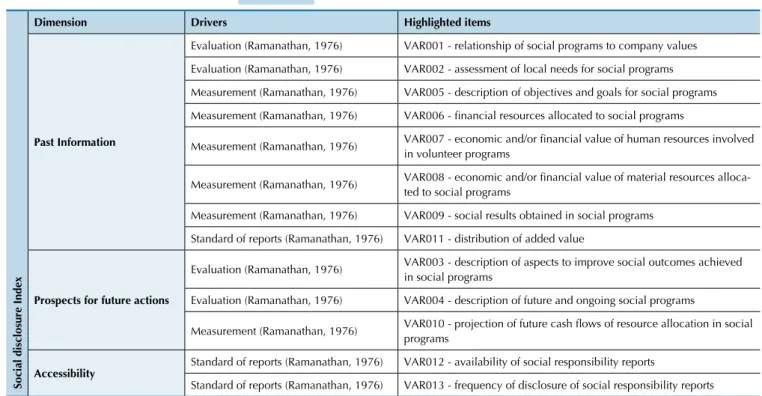
Table 1 Indicators of social disclosure index
Social disclosure Index
Dimension Drivers Highlighted items
Past Information
Evaluation (Ramanathan, 1976) VAR001 - relationship of social programs to company values
Evaluation (Ramanathan, 1976) VAR002 - assessment of local needs for social programs
Measurement (Ramanathan, 1976) VAR005 - description of objectives and goals for social programs
Measurement (Ramanathan, 1976) VAR006 - inancial resources allocated to social programs
Measurement (Ramanathan, 1976) VAR007 - economic and/or inancial value of human resources involved in volunteer programs
Measurement (Ramanathan, 1976) VAR008 - economic and/or inancial value of material resources alloca-ted to social programs
Measurement (Ramanathan, 1976) VAR009 - social results obtained in social programs
Standard of reports (Ramanathan, 1976) VAR011 - distribution of added value
Prospects for future actions
Evaluation (Ramanathan, 1976) VAR003 - description of aspects to improve social outcomes achieved in social programs
Evaluation (Ramanathan, 1976) VAR004 - description of future and ongoing social programs
Measurement (Ramanathan, 1976) VAR010 - projection of future cash lows of resource allocation in social programs
Accessibility Standard of reports (Ramanathan, 1976) VAR012 - availability of social responsibility reports
Standard of reports (Ramanathan, 1976) VAR013 - frequency of disclosure of social responsibility reports
these companies were eliminated from the study because of the substantial changes resulting from their patrimonial structures.
Due to the restrictions adopted, the sample used to per-form the empirical study comprised 83 companies, partici-pating in 18 of the 20 sectors classified in the Economática® system.
Company social responsibility reports sampled in the period from 2005 to 2009 formed the basis for the evaluation of social disclosure performed using con-tent analysis (Bardin, 1977), classifying the informa-tion according to level from "restricted" (lowest level of information) to "low", "medium" or "high" (highest level of information). These levels can be characterized as follows:
a) Restricted: social disclosure is classified in this category if the company does not disclose the information evalu-ated by the proposed item;
b) Low: social disclosure is classified in this category if the company discloses the information evaluated by the proposed item but does not do so according to the social program or activity area, i.e., the information is disclosed generally, using expressions such as "social programs" or "social action";
c) Medium: social disclosure is classified in this category if the company discloses the information evaluated by the proposed item, specifying it by area or by some social programs;
d) High: social disclosure is classified in this category if the company discloses the information evaluated by the proposed item analytically, i.e., there is information on each social program; the characteristic of this infor-mation is greater accuracy and range, e.g., specifying "project x ...".
To test the proposed hypothesis (H1), an econometric model was specified in panel form as per Equation (1):
Yit= α + γXit + δ'Zit+ uit 1
where Yit is the cost of equity variable; α is the re-gression constant; γ is the coefficient associated with Xit, which is the social disclosure variable, based on the social disclosure index, which represents the level of social disclosure in annual reports of the evaluated companies (dimensions: information from the past, prospects for future actions and accessibility); uit is the random error of the regression, where uit ~ N (0, σ2); δ
is a 6 x 1 column vector of coefficients of the control variables; and Zit is a 6 x 1 column vector of control va-riables, with the following components:
1) company size measured by (a) the natural logarithm of the total assets and (b) the natural logarithm of the operating revenue;
2) the ratio between book and market value, the pur-pose of which is to measure accounting conserva-tism; this indicator was obtained from the
Econo-mática® system;
3) list (L), a binary variable that evaluates whether the company (1) participates in funds characterized as so-cially responsible or (0) does not participate;
4) internationalization (I), a binary variable that evaluates whether (1) the company has issued shares outside its country of origin (NYSE, Nasdaq or Latibex) or (0) if shares issued are restricted to the national market in the case of BM&FBovespa;
5) effect of the change in corporate law (E), in which the mandatory adoption of International Financial Reporting Standards (IFRS) for Brazilian companies should promote changes in company results compa-red to the period prior to the IFRS enactment. For this factor, a binary variable was used that classified the period before 2008 as (0) and the period from 2008 onward as (1);
6) leverage (A), represented by the ratio of the total finan-cial debt to the equity at the end of each year.
As is common practice, control variables were in-cluded in the model to provide greater robustness to the results because although these variables are not the object of this study, the dependent variable (the cost of capital) may be influenced by them. The control va-riables used were based on previous studies, such as those of Richardson and Welker (2001), Alencar and Lopes (2005), Costi and Soares (2008), Fama and Fren-ch (1992), BecFren-chetti, Ciciretti and Hasan (2009) and Rover and Murcia (2010).
3.1 Calculating Cost of Equity
The cost of equity is the return that an investor requires to allocate resources to the assets (shares) of a particular company, represented by a rate of return necessarily higher than an investment considered risk free (Rƒ), and risk-adjusted to the company, measured by the beta coefficient (β). The calculation of this term is risk-adjusted using CAPM as originally proposed by Sharpe (1964) and Lintner (1965).
According to Silveira, Barros, and Fama (2002), with respect to the risk-free rate needed to calculate the cost of equity by CAPM, in Brazil, there are two rates that satisfy the theoretical definition of this rate: the Interbank Deposit Certificate (Certificado de De-pósito Interbancário - CDI) and the Savings Account return (Caderneta de Poupança). The CDI was chosen for this study. Bovespa was used as a reference portfolio to calculate market return.
4 REGRESSION ANALYSIS OF PANEL DATA: LEVEL OF SOCIAL DISCLOSURE AND
COST OF EQUITY
This section presents the results of the regression analysis in panel to confirm or refute the research hy-pothesis. A correlation matrix between the studied va-riables was created to identify possible high
Table 2 Cross-correlation matrix between the studied variables
VARIABLES2 SDISC CAPM FUNDS INTER CORLAW SIZ
1 SIZ2 BM LEV
SDISC 1.00
CAPM 0.02 1.00
FUNDS 0.49 0.012 1.00
INTER 0.44 0.04 0.26 1.00
CORLAW 0.06 -0.29 0.029 -0.01 1.00
SIZ1 0.64 0.01 0.47 0.55 0.07 1.00
SIZ2 0.62 0.02 0.39 0.62 0.07 0.91 1.00
BM 0.07 0.09 0.09 -0.05 -0.08 -0.03 0.03 1.00
LEV 0.11 -0.04 0.15 -0.01 0.06 0.27 0.17 0.59 1.00
Table 3 Hausman test for panel data with
cross-sectional random effects
Test result χ2 Statistic Degrees of Freedom p-value
Cross-sectional
random effects 16.050473 7 0.0247
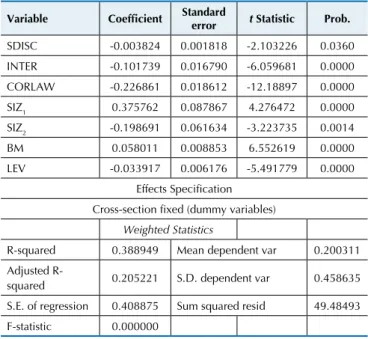
Table 4 Results of the regression estimation in a panel
with cross-sectional ixed effects*
Variable Coeficient Standard
error t Statistic Prob.
SDISC -0.003824 0.001818 -2.103226 0.0360
INTER -0.101739 0.016790 -6.059681 0.0000
CORLAW -0.226861 0.018612 -12.18897 0.0000
SIZ1 0.375762 0.087867 4.276472 0.0000
SIZ2 -0.198691 0.061634 -3.223735 0.0014
BM 0.058011 0.008853 6.552619 0.0000
LEV -0.033917 0.006176 -5.491779 0.0000
Effects Speciication Cross-section ixed (dummy variables)
Weighted Statistics
R-squared 0.388949 Mean dependent var 0.200311 Adjusted
R-squared 0.205221 S.D. dependent var 0.458635
S.E. of regression 0.408875 Sum squared resid 49.48493 F-statistic 0.000000
* For space reasons, sectional ixed-effects values associated with each sample company are not shown.
** Corrected using the White heteroskedasticity matrix As expected, the variables representing firm size—
assets and revenues—are positively correlated to each other above 0.8 (0.9063), which indicates a situation of collinearity.
A regression with panel data can be calculated using random effects or fixed effects. Initially, the model was calculated using random effects, and the Hausman test was used to identify whether this method is the most appropriate for calculating the model. The results of the test are presented in Table 3.
The result of the Hausman test suggests rejection of the null hypothesis for estimation of the model in a pa-nel with random effects, indicating that the estimation should be performed with fixed effects. According to Baltagi (2008), model estimation in a panel with fixed effects can be performed in three ways: a) the angular coefficients are constant, but the intercept varies among individuals; b) the angular coefficients are constant, but the intercept varies between individuals and time; or c) all coefficients vary among individuals. The form in which the angular coefficient remained constant but the intercept varied among the studied companies pro-vided the best fit to the model. According to the author cited above, this approach respects the “heterogenei-ty” of each company; that is, in the model estimation, the effect of the level of social disclosure on the cost of equity is different for each company, meaning that a model exists for each company.
The standard error of the coefficients was calculated using White’s covariance matrix because the model sho-wed evidence of heteroskedasticity according to the Bar-tlett test (p-value < 0.0000), Levene test (p-value < 0.0003) and Brown-Forsythe test (p-value < 0.0819), only to 10%. The estimation of the regression model with panel data was therefore performed with cross-sectional fi-xed effects with constant angular coefficients,
varia-tion of the intercept among the companies and a robust standard error calculated by White’s covariance matrix, consistent with heteroskedasticity. The results of this estimation are shown in Table 4.
Initially, the model coefficients are jointly signifi-cant, considering the results of the F test (p < 0.01). Of note in the model is the fact that the variables represen-ting size—SIZ1 and SIZ2—are significant together and with inverted signs (SIZ1 has a positive sign, and SIZ2 has a negative sign). As already mentioned, these varia-bles are strongly positively correlated with one another (p > 0.9), which could indicate problems of collinearity. However, the fact that the coefficients are highly corre-lated is "sufficient, but not necessary, for the existence of multicollinearity" (Gujarati, 2006, p. 290), and the analysis of the variables included in the model throu-gh a "hithrou-gh partial correlation may be ineffective due to different multicollinearity patterns" (Gujarati, 2006, p. 290). Because collinearity between these variables is
2 SIZ
possible, it is necessary to ascertain whether problems arising from collinearity are found in this regression, which are mainly the following: a) the t ratio of one or more coefficients tends to be statistically insignificant, and b) the general measure of fit, R² is high, i.e., above 0.8 (Kennedy, 2008).
Analyzing the t ratio of all the coefficients together, including SIZ1 and SIZ2, the model has a better fit, gi-ven that all the variables have a probability p-value < 0.05. In addition, the SIZ1 and SIZ2 variables were esti-mated separately. In the estimation of the SIZ1 variable, the result is positive and significant at 5%, and the so-cial disclosure variable has a negative sign that is sig-nificant at 10%. In the estimation of the SIZ2 variable, the result is positive and not significant at 5%, and the social disclosure variable has a negative sign that is sig-nificant at the 10% level. As noted, the sign of the social disclosure variable did not change when SIZ1 and SIZ2 were calculated separately.
With the joint estimation of SIZ1 and SIZ2, the model has a better fit because the coefficients become more representative. This result is opposite to that suggested to result from multicollinearity. As for R², the result (0.389) is below the level suggested for the existence of multicollinearity, which is 0.8 (Kennedy, 2008). The re-sults therefore suggest that there is no multicollinearity between the variables SIZ1 and SIZ2.
The sign of SIZ1 is positive, contrary to the initial expectation. This result implies that firms with more assets require greater effort to achieve the expected re-turn on investment, which may mean that more assets could be an indicator of risk in a market evaluation. Conversely, SIZ2, which is represented by the total ope-rating revenues, tends to represent a measure of effi-cient use of resources because the combination of hi-gher revenues with lower assets leads to a hihi-gher return for the investor.
Table 5 Box and Pierce autocorrelation of residuals test
AC PAC Est. Q Prob.
1 -0.364 -0.364 1.1574 0.282
2 0.033 -0.115 1.1699 0.557
3 -0.299 -0.383 2.7381 0.434
4 0.130 -0.184 3.3315 0.504
Regarding the normality of residuals, the Jarque-Bera test was performed for each equation, obtaining a p-value > 0.05 for all the companies, which resulted in the non-rejection of the null hypothesis of normality of the residuals.
Box and Pierce's Q test was performed to check for the existence of autocorrelation, as shown below.
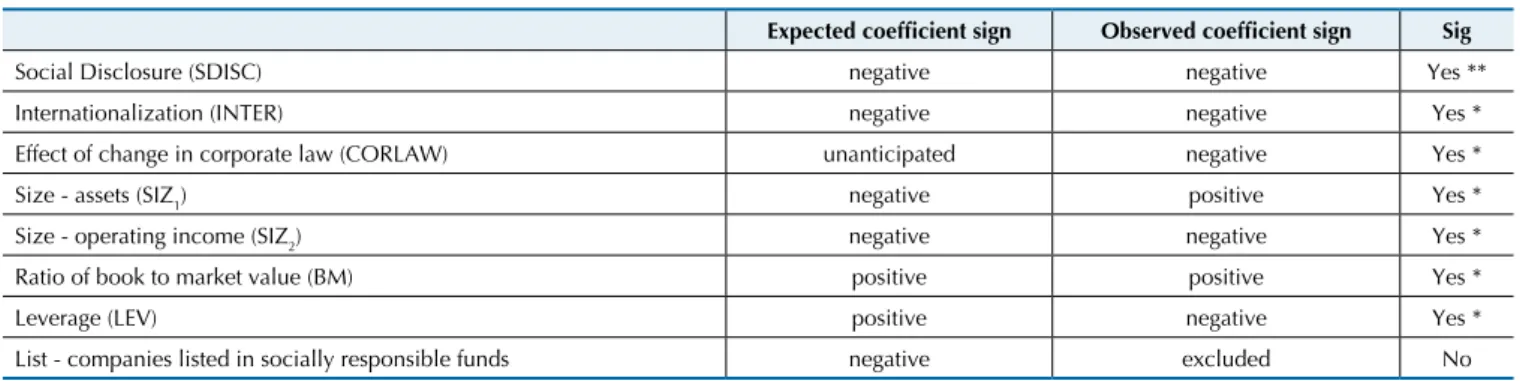
Table 6 Summary of the signs of the variable coeficients (expected versus observed)
Expected coeficient sign Observed coeficient sign Sig
Social Disclosure (SDISC) negative negative Yes **
Internationalization (INTER) negative negative Yes *
Effect of change in corporate law (CORLAW) unanticipated negative Yes *
Size - assets (SIZ1) negative positive Yes *
Size - operating income (SIZ2) negative negative Yes *
Ratio of book to market value (BM) positive positive Yes *
Leverage (LEV) positive negative Yes *
List - companies listed in socially responsible funds negative excluded No
* Signiicant at 1% ** Signiicant at 5%
Based on the data presented, the Q-test results do not indicate rejection of the null hypothesis of non-existence of autocorrelation of the residuals (all the p-values are greater than 0.05).
Finally, to identify whether the series are stationa-ry, the unit root tests of Levin, Lin and Chut (p-value < 0.00), Im, Pesaran and Shin (p-value < 0.00), ADF-Fisher (p-value < 0.00) and PP-ADF-Fisher (p-value < 0.00) were performed on the series involved in the regres-sion, leading to a rejection of the null hypothesis, in-dicating the absence of unit roots, i.e., the series are stationary.
Based on the tests performed and the results, the calculated model shows robustness and supports the central hypothesis of the study, indicating that there is a relationship between the level of social disclosure and the cost of equity for public companies in Brazil and that this relationship is negative.
The following is a summary of the expected results in relation to the findings.
4.1 Discussion of the Results.
Before commenting in more detail on the results presented in Table 6, it should be emphasized that the model presented was calculated with the social disclo-sure index considered contemporaneous to the cost of capital. Other specifications were estimated, for
exam-ple, where the social disclosure variable lagged by one period relative to the cost of capital, under the uncor-roborated hypothesis that social information would impact the dependent variable after its disclosure.
varia-ble is negative. One possivaria-ble explanation for this result may be the fact that firms with higher debt have greater coverage by analysts, which, in turn, requires greater transparency of management actions and accountabi-lity. This result does not corroborate previous studies, such as those of Richardson and Welker (2001) and Ro-ver and Murcia (2010).
Another result that stands out is the fact that the size variable, when based on the natural logarithm of total assets, has a positive sign, indicating that firms with larger assets are required to make greater risk-adjusted returns, whereas when size is measured by the level of operating revenues, the variable has a negative sign; i.e., the stocks of companies with higher revenues are consistent with a lower demand for risk-adjusted return. This result is consistent with those presented by Dhaliwal et al. (2011) and Rover and Murcia (2010), who observed that the size variable, measured by the total assets, had a positive relationship with the cost of capital.
The dummy variable, which represents the effects of corporate law, had a highly significant coefficient when inserted in the model, showing that the changes introduced by Laws nos. 11,638/2007 and 11,941/2009 impacted the organizations' economic results as well as market perceptions of cost of equity pricing. This re-sult indicates that it is necessary to include the dummy variable in econometric models that use time series to mitigate any distortions.
Regarding the internationalization variable, appli-cable to companies seeking to raise funds via interna-tional stock exchanges, the result achieved is consistent with previous studies (Stulz, 1999; Bruni, 2002; Alen-car, 2005; Rover & Murcia, 2010), indicating that such businesses, in seeking such markets, would be percei-ved as organizations with better management practices, including those concerning disclosure, which, in turn, decreases the risk perceived by the financial markets.
The list variable, which represents companies listed in socially responsible funds, was not significant and therefore was excluded from the final model, and the model calculated without this variable presented a bet-ter fit. In a way, this result was not expected, given that one of the determining factors for companies impro-ving their level of social disclosure would be the fact that they are listed in socially responsible funds. This result contradicts those of Silva and Quelhas (2006) for the Brazilian market because it does not recognize that companies listed in socially responsible funds would have a positive image, enabling them to raise funds at a lower cost than those that are not listed.
Regarding the social disclosure variable, it should be noted initially that there is a tendency to improve the quality of such information: during the observed period (2005-2009), the number of companies classi-fied as high-level disclosure rose from 17 (20.99%) to 22 (26.51%), whereas the number of companies clas-sified as low-level disclosure fell from 25 (30.86%) to
21 (25.30%.) This trend demonstrates the interest and commitment of companies toward greater transparency in their management actions, with respect to the plan-ning, execution and control of social programs, thus confirming the research conducted by KPMG Interna-tional (2008).
In addition, as mentioned by Ramanathan (1976), companies are apparently using social reporting as a way to improve the quality of their reporting, bringing useful information to those reports, such as a) objec-tives of social programs, b) policies to support social programs and c) performance of and contributions made by social programs. These actions ultimately lead to conflicts of interest being counterbalanced (Rama-nathan, 1976) and cause a reduction in the cost of fun-ding, as noted by Richardson, Welker, and Hutchinson (1999), Riahi-Belkaoui (2004), Gray et al. (2001) and Heal (2004).
It is hoped that such actions create a virtuous circle because a company, in taking advantage of social pro-grams as a means of offsetting externalities in society (Hammond & Miles, 2004; McWilliams et al., 2006), could reduce its reputational risk (Jensen, 2001; Ma-chado Filho & Zylbersztayn 2003; Saiia et al., 2003).
This behavior becomes more relevant when one con-siders the increase in the inflow of foreign funds into the country during the last decade (Lima Jr. & Jayme Jr., 2008) and the average number of daily transactions in-volving the stock market seen on BM&FBovespa, whi-ch increased from just over 550 million dollars in 2005 to 2.43 billion dollars in 2009 (BM&FBovespa, 2011).
This environment of greater stock-market development and the important role of social information places greater responsibility on those generating social responsibility re-ports, including accounting professionals.
Regarding the present results, it should be noted that apparently information relating to social programs was captured by the market even before it was released: the relevant coefficients were contemporaneously sig-nificant, i.e., at the base date of the social responsibility report and not at the date of disclosure. This pattern indicates that there was efficient coverage by the ma-rket of management decisions about social programs not only at the time the information was disclosed but also throughout the year, rewarding the long-term behavior of companies that had a greater level of social disclosure insofar as they were able to acquire resour-ces at lower rates.
This situation corroborates the findings of McWillia-ms, Siegel and Wright (2006), who commented on the need for mechanisms that direct the manager to have a standard of resource allocation, which provides a way for the market to predict the actions that will be under-taken in anticipation of the disclosure.
hypo-Alencar, R. C. (2005, Janeiro/Junho). Custo de capital próprio e nível de disclosure nas empresas brasileiras. Brazilian Business Review, 2 (1), 1-12. Alencar, R. C., & Lopes, A. B. (2005). Custo do capital próprio e nível
de disclosure nas empresas brasileiras. Anais do Congresso USP de Controladoria e Contabilidade, São Paulo, SP, Brasil, 5. Recuperado em 5 abril, 2010, de http://www.congressoeac.locaweb.com.br/ artigos52005/162.pdf.
Anderson, J. C., & Frankle, A. W. (1980, July). Voluntary social reporting: an iso-beta portfolio analysis. he Accounting Review, 55 (3), 467-479. Arrow, K. J. (1969). he organization of economic activity: issues pertinent
to the choice of market versus non-market allocation. he analysis and evaluation of public expenditures: the PBB-System. U.S. Joint Economic Committee (91st session, v. 1). Washington, D.C.:
Government Printing Oice.
Baltagi, B. H. (2008). Econometric analysis of panel data (4th ed.).
Chichester: Wiley.
Bardin, L. (1977). Análise de conteúdo. Lisboa: Edições 70.
Baron, D. P. (2001). Private politics, corporate social responsibility,
and integrated strategy. Journal of Economics and Management Strategy, 10 (1), 7-45.
Becchetti, L., Ciciretti, R., & Hasan, I. (2009). Corporate social responsibility and shareholder’s value: an empirical analysis. Bank of Finland Research Discussion Papers, 1.
Belo, N. M., & Brasil, H. G. (2006). Assimetria informacional e eiciência semiforte do mercado. RAE, Edição Especial, 46, 48-57.
BM&FBovespa. (2011). Volumes médios diários negociados por mercado. Recuperado em 10 março, 2011, de http://www.bmbovespa.com.br. Borba, J. A., & Nazário, L. (2003). Contabilidade ambiental: a preocupação
empresarial com o meio ambiente através da evidenciação da terminologia comumente empregada nas demonstrações contábeis publicadas no Brasil. Anais do Encontro Nacional dos Programas de Pós-graduação em Administração, São Paulo, SP, Brasil, 27. Brigham, E. F., Gapenski, L. C., & Ehrhard, M. C. (2001). Administração
inanceira: teoria e prática. [Trad. A. L. G. Alcântara & J. N. A. Salazar]. São Paulo: Atlas.
Bruni, A. L. (2002). Globalização inanceira, eiciência informacional e
References
thesis (Fama, 1970), corroborating previous studies of this market (Belo & Brasil, 2006; Lima & Terra, 2004; Sarlo Neto, 2004).
This finding is important regarding the care that or-ganizations must take in their accountability, especially regarding social responsibility because the absence of such information or a low level of its disclosure may lead to higher costs of funding.
Regarding the information analyzed, the companies in general want their participation in or support of so-cial programs to remain transparent in terms of their goals and achievements, seeking over time to create behavior that allows the financial markets to anticipate the dissemination of information and to price it.
Thus, although resources are allocated to activities that are beyond the scope of the operational activity of
the company, this behavior apparently does not dimi-nish the company’s competitiveness, as noted by Coase (1960) and Friedman (1970). These actions are consi-dered to form a policy of long-term strategy (Jensen, 2001; Saiia, Carroll, & Bulchholtz, 2003), which in turn can lead analysts to identify such companies as invest-ment opportunities (Ioannou & Serafim, 2009).
Finally, it appears that companies seeking impro-vements in the quality of their social disclosure meet not only the natural obligation to account for resources invested by third parties (Covello, 1996) but also the obligation to fulfill their economic contract (Carroll, 1979), by generating profits, and their social contract (Ramanathan, 1976) through achievement or promo-tion of social programs.
5 CONCLUSIONS
This study aimed to analyze the relationship between the level of social disclosure and cost of equity in public companies in Brazil using an index of 13 indicators, based on the studies of Ramanathan (1976), Haydel (1989) and Hammond and Miles (2004), whose goal was to assess the nature of social information within the realm of discretio-nary actions undertaken by enterprises through social pro-grams in the community.
The research hypothesis - that there is a negative relationship between the level of social disclosure and the cost of equity in public companies in Brazil - was corroborated in that the social disclosure variable had a significant coefficient, and its direction was opposite to that of the cost of equity.
The results show that social information is taken up by the market and influences stock prices, corrobora-ting the semi-strong version of market efficiency, whi-ch refers to the incorporation of stock pricing and con-sequently to the return on available information (past and present) in efficient form.
In addition to pricing available information (past and present), the market is anticipatory in pricing the cost of
capital; the variables were contemporaneously significant, i.e., on the base date of the social report, indicating that companies seeking to offset their externalities via social programs must do so in a way that sustains their actions in the long term, given that analysts follow the decisions made over time.
This trend has important implications regarding the importance of social information and the need to de-velop social reporting as an accountability tool because in Brazil there are no valid tools for guiding either the developers or the external users regarding the quality of such information.
This study's main contribution to the literature is the em-pirical demonstration that the market takes social disclosure into account when pricing the shares of companies. This de-monstration was based on an indicator that only evaluated social disclosure relating to external social programs.
custo de capital: uma análise das emissões de ADRs brasileiros no período 1992-2001. Tese de doutorado, Faculdade de Economia, Administração e Contabilidade, São Paulo, SP, Brasil.
Carr, I., & Outhwaite, O. (2009). Investigating the impact of anti-corruption strategies on international business: an interim report. Recuperado em 18 setembro, 2009, de http://ssrn.com/ abstract=1410642.
Carroll, A. B. (1979). A three-dimensional conceptual model corporate performance. Academy of Management Review, Biarclif Manor, 4 (4), 497-505.
Clarkson, P., Guedes, J., & hompson, R. (1996, March). On the diversiication, observability, and measurement of estimation risk.
Journal of Financial and Quantitative Analysis, 31 (1), 69-84. Coase, R. H. (1937, November). he nature of the irm. Economica, New
Series, 4 (16), 386-405.
Coase, R. H. (1960, October). he problem of social cost. Journal of Law and Economics, 3 (1), 1-44.
Cochran, P. L., & Wood, R. A. (1984). Corporate social responsibility and inancial performance. Academy of Management Journal, 27 (1), 42-56. Costi, R. M., & Soares, R. O. (2008). Determinantes do custo de capital
implícito das empresas negociadas na Bovespa. Anais do Encontro Brasileiro de Finanças, Rio de Janeiro, RJ, Brasil, 8.
Covello, S. C. (1996). Obrigação natural: elementos para uma possível teoria. São Paulo: Leud.
Dhaliwal, D., Li, O. Z., Tsang, A., & Yang, Y. G. (2011, January). Voluntary non-inancial disclosure and the cost of equity capital: the initiation of corporate social responsibility reporting. he Accounting Review, 86 (1), 59-100.
Diamond, D., & Verrecchia, R. (1991, September). Disclosure, liquidity and the cost of equity capital. Journal of Finance, 46 (4), 1325-1360. Epstein, M. J., & Freedman, M. (1994). Social disclosure and the
individual investor. Accounting, Auditing and Accountability Journal, 7 (4), 94-109.
Estes, R. W. (1972, April). Socio-economic accounting and external diseconomies. he Accounting Review, 47 (2), 284-290.
Fama, E. F. (1970, May). Eicient capital markets: a review of theory and empirical work. he Journal of Finance, 25 (2), 383-417.
Fama, E. F., & French, K. R. (1992, June). he cross-section of expected stock returns. Journal of Finance, 47 (2), 427-465.
Friedman, M. (1970, September). he social responsibility of business is to increase its proits. he New York Times Magazine, 13 (1970), 32-33. Furubotn, E., & Richter, R. (1997). Institutions and economic theory: the
contribution of the new institutional economics. Ann Arbor: University of Michigan Press.
Gana, M. R., & Dakhlaoui, M. (2011, July). Societal information disclosure and the cost of equity: the case of Tunisian companies.
Global Journals Inc, 11 (7).
Gray, R., Javad, M., Power, D. M., & Sinclair, C. D. (2001, April/May). Social and environmental disclosure and corporate characteristics: a research note and extension. Journal of Business Finances & Accounting, 28 (3), 327-356.
Gujarati, D. (2006). Econometria básica (4 ed.). Rio de Janeiro: Elsevier. Hammond, K., & Miles, S. (2004). Assessing quality assessment of
corporate social reporting: UK perspectives. Accounting Forum, 28
(1), 61-79.
Haydel, B. F. (1989, julho/setembro). A administração estratégica de programas de responsabilidade social em empresas multinacionais: percepções da alta diretoria. Revista de Administração de Empresas, 3
(29), 5-29.
Heal, G. (2004, December). Corporate social responsibility - an economic and inancial framework. Recuperado em 2 maio, 2010, de http:// papers.ssrn.com/sol3/papers.cfm?abstract_id=642762.
Hillman, A. J., & Keim, G. D. (2001). Shareholder value, stakeholder management, and social issues: what’s bottom line? Strategic Management Journal, 22 (2), 125-139.
Instituto Brasileiro de Análises Sociais e Econômicas. Ibase. (2012). Balanço social. Recuperado em 3 dezembro, 2012, de http://www. balancosocial.org.br.
Ioannou, I., & Seraim, G (2009). he impact of corporate social responsilibity on investment recommendations. Recuperado em 3 março, 2010, de http://ssrn.com/abstract=1507874.
Jensen, M. C. (2001, Fall). Value maximization, stakeholder theory, and the corporate objetive function. Journal of Applied Corporate Finance, 14 (3), 8-21.
Jensen, R. E., Campield, W. L., Frank, W. G., Luoma, G. A., Manes, R. P., Oliver, B. L., Onsi, M., & Francis, M. (1972). Report of the Committee on Measures of Efectiveness for Social Programs. he Accounting Review, 47 (Suplement), 337-396.
Kennedy, P. (2008). A guide to econometrics (6th ed.). Malden: Blackwell Publishing.
KPMG Internacional. (2008). Kpmg internacional survey of corporate responsibility reporting 2008. Recuperado em 2 agosto, 2009, de http://kpmg.com.
Lima, J. B. N. de, & Terra, P. R. S. (2004). A reação do mercado de capitais brasileiro à divulgação das informações contábeis. Anais do Encontro da Associação Nacional dos Programas de Pós Graduação em Administração, Curitiba, PR, Brasil.
Lima Jr., A. J., & Jayme Jr., F. (2008, Março). Investimento direto estrangeiro e implicações macroeconômicas no Brasil. Revista Análise Econômica, Porto Alegre, 26 (49), 87-114.
Lintner, J. (1965, February). he valuation of risk assets and the selection of risky investments in stock portfolios and capital budgets. Review of Economics and Statistics, 47 (1), 13-37.
Machado Filho, C. A. P., & Zylbersztajn, D. (2003). Responsabilidade social corporativa e a criação de valor para as organizações. Série de Working Papers, Working Paper n. 03/024, Faculdade de Economia, Administração e Contabilidade da Universidade de São Paulo. Recuperado em 31 março, 2010, de http://www.ead.fea.usp.br/wpapers. McWilliams, A., Siegel, D. S., & Wright, P. M. (2006). Corporate social
responsibility: strategic implications. Journal of Management Studies, 43 (1), 1-18.
Ng, A. C., & Rezaee, Z. (2012). Sustainability disclosures and cost of capital. Recuperado em 12 março, 2013, de http://ssrn.com/ abstract=2038654.
Oliveira, J. A. P. (2008). Empresas na sociedade. Rio de Janeiro: Elsevier. Orlitzky, M., & Benjamin, J. D. (2001). Corporate social performance and
irm risk: a meta-analytic review. Business Society, 40 (4), 369-396. Peliano, A. M. T. M. (Coord.) et al. (2002). A iniciativa privada e o espírito
público: um retrato da ação social das empresas no Brasil. Brasília: Ipea. Peliano, A.M. T. M. (Coord.) et al. (2006). A iniciativa privada e o
espírito público: a evolução da ação social das empresas privadas no Brasil. Brasília: Ipea.
Pires, C. B., & Silveira, F. C. S. (2008). A evolução da evidenciação das informações ambientais de empresas do setor de celulose e papel: uma análise de conteúdo das notas explicativas e relatórios de administração. ConTexto, 8 (13), 1-32.
Poddi, L., & Vergalli, S. (2009). Does corporate social responsibility afect the performance of irms? Nota Di Lavoro 52.2009. Recuperado em 14 abril, 2009, de http://ssrn.com/abstract=1444333.
Ramanathan, K. V. (1976, July). Toward a theory of corporate social accounting. he Accounting Review, Sarasota, 51 (3), 516-528. Reverte, C. (2012, June). he impact of better corporate social
responsibility disclosure on the cost of equity capital. Corp. Soc. Responsib. Environ. Mgmt, 19 (5), 253-272.
Riahi-Belkaoui, A. (2004). Accounting theory (5th ed.). London: homson
Learning.
Riahi-Belkaoui, A., & Karpik, P. G. (1988, December). Determinants of the corporate decision to disclosure social information. Accounting, Auditing and Accountability Journal, 1 (1), 36-51.
Richardson, A. J., & Welker, M. (2001). Social disclosure, inancial disclosure and the cost capital of equity capital. Accounting Organizations and Society, 26 (7), 597-616.
Richardson, A. J., Welker, M., & Hutchinson, I. R. (1999). Managing capital market reactions to corporate social responsibility.
International Journal of Management Reviews, 1 (1), 17-43.
Rover, S., & Murcia, F. Dal-Ri. (2010). Inluência do disclosure voluntário econômico e socioambiental no custo de capital próprio das empresas brasileiras. Anais do Encontro da Associação Nacional dos Programas de pós-graduação em Contabilidade, Natal, RN, Brasil, 4. 1 CD-ROM. Saiia, D. H., Carroll, A. B., & Buchholtz, A. K. (2003, June). Philanthopry
as strategy: when corporate charity “begins at home”. Business & Society, 42 (2), 169-201.
Sarlo Neto, A. (2004). A reação dos preços das ações à divulgação dos resultados contábeis: evidências empíricas sobre a capacidade informacional da contabilidade no mercado acionário brasileiro.
Dissertação de mestrado, Fundação Instituto Capixaba de Pesquisas em Contabilidade, Economia e Finanças, Vitória, ES, Brasil. Scott, W. R. (2009). Financial accounting theory (5th ed.). Toronto: Pearson
Prentice Hall.
Sharpe, W. F. (1964, September). Capital asset prices: a theory of market equilibrium under conditions of risk. The Journal of Finance, 19 (3), 425-442.
de risco e sua aplicação no Capital Asset Pricing Model - um estudo exploratório para o mercado brasileiro. Anais do Encontro Brasileiro de Finanças, Rio de Janeiro, RJ, Brasil, 2.
Smith, J. van der L., Adhikari, A., & Tondkar, R. H. (2005). Exploring diferences in social disclosure internationally: a stakeholder perspective. Journal of Accounting and Public Policy, 24 (2), 123-151. Sternberg, E. (1999, November). he stakeholder concept: a mistaken
doctrine. Foundation for Business Responsibilities, Issue Paper No. 4. Recuperado em 21 junho, 2007, de http://ssrn.com/abstract=263144. Stulz, R. M. (1999 Fall). Globalization, corporate inance, and the cost of
capital. Journal of Applied Corporate Finance, 12 (3), 8-25.
Udayasankar, K. (2008). Corporate social responsibility and irm size.
Journal of Business Ethics, 83 (2), 167-175.
Waddock, S. A., & Graves, S. B. (1997). he corporate social performance inancial performance link. Strategic Management Journal, 18 (4), 313-319. Williams, P. F. (1980, January). he evaluative relevance of social data. he
Accounting Review, LV (1), 62-77.
Wink Jr., M. V., Sheng, H. H., & Eid Jr., W. (2011). Transaction costs: an empirical analysis of their relationship with investment and foreign direct investment. RAE, 51(2), 175-187.